Categories
Poetry

The Deed of Separation 

By Malachi Edwin Vethamani

Courtesy: Creative Commons
The husband

The wife 

The children 

The child custody 
The wife gets 

The child support
The husband pays 

The family house 
The wife gets 

The housing loan 
The husband pays

The joint bank accounts 
The wife gets 

The balance supplementary credit card bills
The husband pays 

The lawyers’ bill 
The husband pays

The signatories 

The witnesses 

The dates 

Husband leaves the cheque on the table. 

The husband leaves 
The wife leaves 

Malachi Edwin Vethamani is a Malaysian Indian poet, writer, editor, critic, bibliographer and Emeritus Professor. His poetry publications in 2022 include: ‘Rambutan Kisses’, ‘The Seven O’clock Tree’ and ‘Love and Loss’. His other poetry publications include Life Happens (2017) and Complicated Lives (2016).  He has a collection of short stories titled Coitus Interruptus and Other Stories (2018). His poems and short story have been published in Borderless Journal. He published the second edition of A Bibliography of Malaysian Literature in English in 2015. He has edited five volumes of Malaysian writings in English. He is founding editor of Man Matters Online Journal.

.

PLEASE NOTE: ARTICLES CAN ONLY BE REPRODUCED IN OTHER SITES WITH DUE ACKNOWLEDGEMENT TO BORDERLESS JOURNAL. 

Click here to access the Borderless anthology, Monalisa No Longer Smiles

Click here to access Monalisa No Longer Smiles on Kindle Amazon International

Categories
Slices from Life

Colorado Comes to Eden

Photographs & Narrative by Meredith Stephens

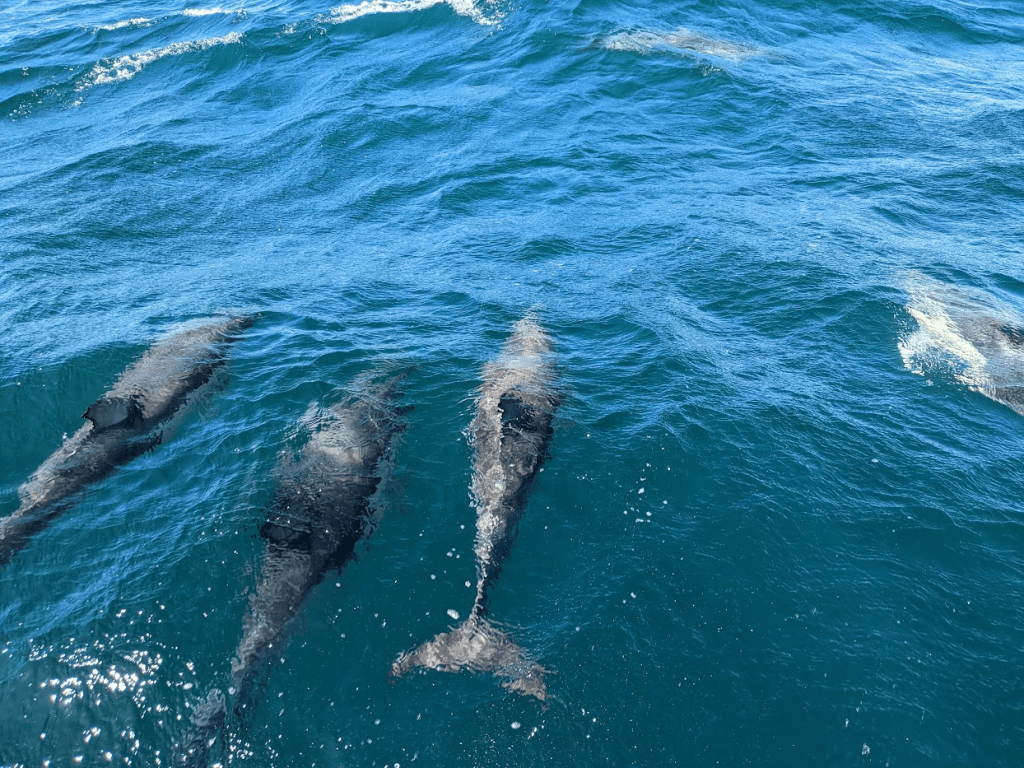
We had safely completed our voyage back across the Coral Sea from New Caledonia to Australia. The next leg was south, from Shellharbour to Eden, hugging the New South Wales coast. Unlike our outbound voyage, the whales were no longer in sight. They must have returned to Antarctica after having come north for calving. I was encouraged by the sight of dolphins accompanying us for spurts of the voyage.

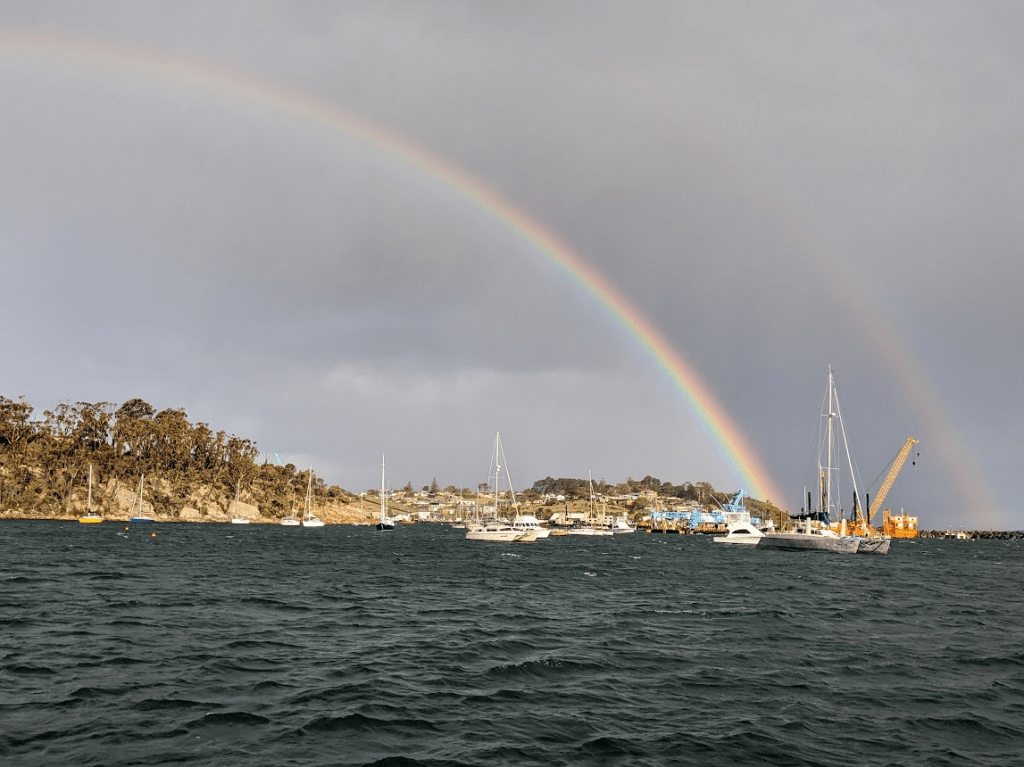
We had hoped to reach Eden by midnight but somehow the trip dragged on until 3.30 am. I wanted to pull my weight during the night sail but was overwhelmed by fatigue and fell into a deep sleep on the sofa. Meanwhile, Alex directed the vessel to a safe point in the bay and dropped anchor.

The next morning in the security of daylight we moved the boat closer to shore, and spied a cruise ship at the docks. It was such a surprise to see a vessel with a capacity of thousands at the wharf of a township of only around three thousand two hundred people.

We made our way to shore in the dinghy, then climbed the steep hills into Eden to provision our boat for the next few days. We noticed tandem cyclists in bright lycra outfits making their way up the hill from the wharf into the town. We greeted them and their accents told us that most of them were from America. Each cyclist had a place name emblazoned on the back of their shirt. Some read California, others the Netherlands. We walked up the main street towards the supermarket, making way for passing cyclists on the footpath.

After we emerged from the supermarket laden with shopping bags, the last of the tandem cyclists, an older couple, were struggling up the hill. Curious, we couldn’t help asking that tedious question that tourists are asked worldwide.

“Where are you from?”

“Colorado.”

“Wow!” I exclaimed. I had never met anyone from Colorado in Australia. Now that the borders were open after pandemic closures tourists must be eager to resume roaming the globe.

A workman in an orange, fluorescent jacket approached the tourists from Colorado.

“Are you with the cruise ship?” he enquired.

I assumed it was an innocent question, or at least a polite enquiry.

“Yes,” they confirmed.

“Can you please tell the cruise ship company to tell these cyclists how to mind their manners? Some of them are cycling on the wrong side of the road. Others are cycling through bitumen that we have just laid,” complained the workman.

“What did he say?” enquired the Colorado tourist of his wife,

She was better able to understand his accent than her husband, so she interpreted it for him.

“We are the last off the boat so there won’t be any more problems,” she reassured the workman, as they resumed their cycle.

“Enjoy the rest of your trip!” I urged them, trying to counter the rudeness of the workman.

“Thank you!” she replied, turning back and beaming at me.

I was surprised that the workman had chosen to berate the tourists. Perhaps he could have contacted the cruise ship managers. I hope the tourists received more civility at their next port of call. When you are a tourist and have no friends in the country you are visiting, it’s those unanticipated encounters with locals that form the lasting impressions.

Meredith Stephens is an applied linguist from South Australia. Her work has appeared in Transnational Literature, The Muse, The Font – A Literary Journal for Language Teachers, The Journal of Literature in Language Teaching, The Writers’ and Readers’ Magazine, Reading in a Foreign Language, and in chapters in anthologies published by Demeter Press, Canada.

PLEASE NOTE: ARTICLES CAN ONLY BE REPRODUCED IN OTHER SITES WITH DUE ACKNOWLEDGEMENT TO BORDERLESS JOURNAL

Click here to access the Borderless anthology, Monalisa No Longer Smiles

Click here to access Monalisa No Longer Smiles on Kindle Amazon International
Categories
Poetry

Slowly, but Surely

By Namratha Varadharajan

No
not love at first sight
nor in the first night

But slowly over the years

A walk in the neighbourhood
under monsoon skies 
when you made me laugh so loud 
it must have woken up the sky

A summer of growing tomatoes on the balcony
and harvesting four teeny tiny ones,
cooking rasam* with it and feeling so proud

Holding hands in a distant land
but never stealing even a peck outdoors
to slobbering over our babies 
until they scream “No more!”

Reading and writing 
in a silence that hugs

Slow dancing our way through life
until spooning grows to mean coming home

Slowly, but surely
moments weave us together
to be one in love

Slowly, but surely
till the end.


*Spicy South Indian soup


Namratha Varadharajan writes to explore human emotions and our connection with nature while trying to chip at prejudices that plague us, one syllable at a time. She has been published in The Yearbook of Indian Poetry 2021, The Kali Project, The Gulmohar Quarterly, The Alipore Post, among others.

Categories
Stories

Sparks

By Brindley Hallam Dennis

Courtesy: Creative Commons

It must be ten years ago now; thereabouts. It was the harshest winter we’d had for years, except for the one immediately before; or was it the one just after? There were two of them, one after the other, with snow that fell thick and lay for weeks; with frost that capped the pools and hung from the gutters and the eaves till the sparkling white had turned as rust brown as it was iron hard. Even the lake froze over, and in the mornings, just after I’d arrived at work, I’d watch the first boat of the day ice-break its way, sending from its bows slow motion waves that lifted and crackled in the sharp still air and crisped into perfect stillness, as if suddenly a film had been brought to a halt, though the boat would, almost literally, plough on. And circling cracks such as you might find on a window pane not quite broken, would spread out and set like sugar-work into the white-grey surface.

It was a part-time job on the minimum wage, two days a week, but I liked the work out there in the garden, looking down on the water. Besides, I needed the money and I got a good breakfast too for the house staff looked after me and were there even when no guests were staying.

We were two miles up the valley from the main hotel, but that was far enough to tell the difference where weather was concerned that winter, those winters. It got so bad that once or twice they ferried us up in the four by four and we left our vehicles on the main car-park. There was always something for the house staff to do, always something for me, if I played my cards right.

There was the garden furniture to sand down and re-stain for the wood, wire-brush and repaint for the metal. I’d eek out those jobs over the whole season, saving them for days when it was too bitterly cold or too rough to be outside. There were days when you could feel the air contract, feel it close in around you as the temperature dropped, and water droplets hanging from the little branches and the leaves would crystallize into globules of ice.

On bright days when the sun blazed and the sky was blue, the sheet-ice lake sparkled, and the mountains really did look like iced cakes. I’d work outside then. There was always the quarter mile drive up from the road to keep clear. Sometimes it could be knee deep in crunchy snow. And there would be a tight turning circle at the bottom, by the road, where the gates made their own angel-wings.

At six pound forty-nine an hour, or thereabouts, I still felt that it was mine. I knew that ground better than anyone else; knew where the fell wall was poised for a thaw that would bring twelve feet of it crashing down in the spring; knew where the crocuses and the primulas would appear. I knew where the insomniac red squirrel would run along the top of that dry-stone wall to get my feeders, and where the crows perched, waiting for the chance to break in and steal the nuts. I waited each Christmas for the snowdrops to show: a long procession of green robed acolytes, their white hoods not yet visible, winding along the hedgerow and spilling out onto the grass beneath the ornamental trees. There was a robin that fed from my hand until winter took him.

It was a fellside garden: steeply sloped, rhododendrons and laurel, ferns and bracken pushing their way in when my back was turned, old sycamore and pine marking its internal boundaries. Buzzards and kestrels would dog-fight the crows for mastery of the air above.

The owner visited several times a year. He had a couple of dozen similar assets, but said ours was his favourite. Celebrities came to stay: film stars, musicians, TV personalities, politicians not yet disgraced, has-beens and fat cats of one sort, or another. Some would chat, and perhaps bluff an offer to help out, trusting you to decline. Mostly, the owner would stay at the main building, but every now then he’d bring a little entourage for afternoon teas or private conferences in our big old dining room with its walk-in fireplace.

He paid such a visit during one of those winters. I can’t remember which, but it was a bright day and I was digging out the hard-packed snow half-way up the drive when the manager drove up. I walked down to where he waited at the gates. He looked up the drive and said, “Can I be a pain?”

“I have every faith,” I told him. When he’d recovered, he told me that the owner would be on his way in half an hour and expected to park up at the house. “Can you clear it in time?”

I could, but I made a point of taking a long panoramic look before I said, “I’ll do my best.”

The owner and his entourage ensconced themselves in the big room and I was called to bring in logs for that fire. He was on his knees in front of it. Twisted and scorched newspapers and broken sticks lay in the grate. Some of the sticks were charred. Spent matches littered the hearth. There was a smudge of soot on his cheek, and on that Armani cuff too I think.

“Do you know how to light a fire?”

I nearly laughed. He was a multi-millionaire.

“Yes,” I said. “I do.”

Shortly after that I moved on. My old boss sold the house to someone who quite literally had the slope on which I used to garden removed. Perhaps only I know what has gone.

Brindley Hallam Dennis lives on the edge of England where he writes occasional plays, poetry, and essays. His writing has been published and performed. He blogs at www.Bhdandme.wordpress.com 

.

PLEASE NOTE: ARTICLES CAN ONLY BE REPRODUCED IN OTHER SITES WITH DUE ACKNOWLEDGEMENT TO BORDERLESS JOURNAL

Click here to access the Borderless anthology, Monalisa No Longer Smiles

Click here to access Monalisa No Longer Smiles on Kindle Amazon International

Categories
Poetry

Musings on Night

Poetry by George Freek

Courtesy: Creative Commons
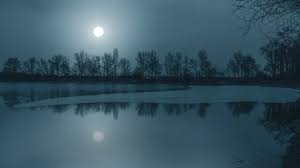
THE NIGHT MUSIC 

As I sit by the river
clouds soft as pillows
smother the moonlight.
All night I hear waves
beat the shore, as if
it were a door
that refuses to open.
Life is unclear.
I’m nearing sixty,
and I still have no idea
from year to year
who I am,
or why I’m here.


WINTER AT WEST LAKE 

The years pile up
like the snow on the roof.
As I look out my back door,
the moon seems
trapped like an insect
in a web of branches.
They say that Li Po
tried to express the sound
of a rising moon
in words. I don’t care.
I drink wine,
and listen to a dove
calling softly to
his unheeding mate. 
Is there a meaning for me?
The dove in frustration
abandons his tree.
What will be, will be.


A MOON POEM

Fall is as cold as the moon.
Angry clouds tell me
snow is coming.
It will be no surprise.
Monks, seeking comfort,
mutter to themselves incantations
in their selfless occupations.
In their trance-like silence,
they ignore the signs
in the sky. I watch
the moon as it dies.
Where does heaven lie?
I stare at that sky.
I wonder if life is a
terrible mistake for which
one must apologise,
but my answer would be a foolish lie.

George Freek’s poetry has recently appeared in The Ottawa Arts Review, Acumen, The Lake, The Whimsical Poet, Triggerfish and Torrid Literature.

PLEASE NOTE: ARTICLES CAN ONLY BE REPRODUCED IN OTHER SITES WITH DUE ACKNOWLEDGEMENT TO BORDERLESS JOURNAL

Click here to access the Borderless anthology, Monalisa No Longer Smiles

Click here to access Monalisa No Longer Smiles on Kindle Amazon International
Categories
Essay

The Wonderland of Pokhara

By Ravi Shankar

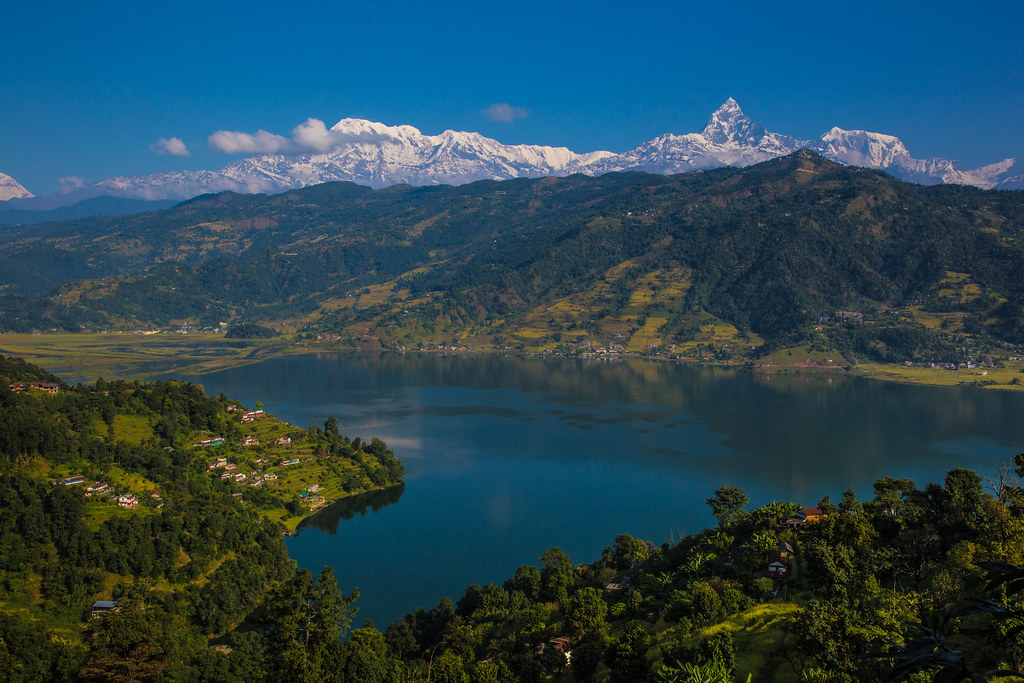
Pokhara, Nepal. Courtesy: Creative Commons

The view of the Himalayan ranges through the airplane window to the right was breath-taking. The February day was bright and sunny, and the Himalayan giants were clearly seen. I was flying on an ATR 72 aircraft from Kathmandu to Pokhara. The flight was short (around 20 minutes) and soon I could see the Pokhara valley and the town far below. The town is cut into deep gorges by rivers flowing down from the Himalayas. I could see the vast building of the Manipal Teaching Hospital at the base of a huge hill.  

Pokhara is a magical city located in the western region of Nepal. Unfortunately, many confuse it with Pokhran, the site of India’s nuclear tests. I faced some difficulty explaining the location of these two places and their stark differences. The town is located about 250 km west of the capital, Kathmandu. The altitude is lower at around 900 m (Kathmandu is at 1300 m). Winters are less cold but there are violent hailstorms and thunderstorms during summer. The view of the Annapurna Himals (snow-covered mountains in Nepali) from Pokhara is spectacular. The Annapurnas have several peaks – Annapurna I, II, III, Hiunchuli, and Gangapurna. The fishtail mountain, Macchapucchare dominates the view from Pokhara. The fishtail aspect with twin peaks is only seen once you leave the Pokhara valley. The face of a tiger is said be discerned on the face of the peak. I spent a lot of time and effort trying to discern the tiger’s face. Then, one day, after a few years sustained effort suddenly my efforts paid off. I was able to see the tiger!    

Dashain (called Dussehra in India) is Nepal’s most important festival and celebrations go on for over two weeks. During autumn and winter, the air is clear, the dust has settled and the mountain views are spectacular. In the morning the faculty gather for tea/coffee near the mess at the Deep campus of Manipal College of Medical Sciences and enjoy a spectacular view. Watching birds glide against the clear blue sky and the clouds slowly gathering on the Himals is a unique experience. You could spend hours sitting quietly drinking in the view in the warm winter sunshine.

There are several day hikes around Pokhara. You can walk down to Lakeside. This takes a good ninety minutes from Phulbari where the Manipal Teaching Hospital is located. You can continue walking past the lake passing through rapidly urbanising villages, tourist lodges and restaurants. Phewa Lake is the jewel of Pokhara though it may be becoming congested. A road has been constructed around the lake and the lakeside is full of tourist hotels. The Tal Bharahi temple situated in the middle of the lake can be accessed by boat. Dervla Murphy stayed in Pokhara during the 1960s and writes about the pristine Phewa lake without the tourist accoutrements in her book ‘The waiting land’.  

Phewa Lake. Courtesy: Creative Commons

Pokhara Thakali Kitchen located at Lakeside serves authentic Thakali food. Thakalis are an ethnic group from the Thak Khola valley north of Pokhara famous as innkeepers and restaurateurs. I enjoyed piping hot rice, green dhal (lentil curry), saag (green leafy vegetables), potatoes roasted in ghiu (clarified butter), tomato achar (pickle), and the wonderful chicken or mutton jhol (curry in Nepali). I am also partial to dhido — a paste made from either corn or buckwheat. Another favourite place was a restaurant located toward the end of the lake. The tables were placed in small, thatched huts and you could enjoy the view while food was being prepared. There were also a few cots to enjoy a siesta. Their daal-bhaat-tarkari (lentil curry, rice, vegetables) and chicken curry were exceptional. In Nepal, restaurants usually prepare orders fresh, and you can expect to wait up to an hour for your order to be prepared.     

Sarangkot located at the height of around 1500 m offers spectacular views of the Dhaulagiri Himals to the west, the Annapurna range, and even the Manasulu peaks to the east. The area can get crowded during winter mornings and evenings as tourists and guides gather to watch the mountains turning golden, and different shades of red during spectacular sunrises and sunsets. The Annapurna Sherpa Resort is close by, and my friends and I had spent several New Years’ Eves there. From Sarangkot, you can descend to the lakeside. The trail is steep and passes through several villages. You can watch the hang gliders taking off, their colourful canopies staying suspended in the air and eventually landing at the far side of the lake.    

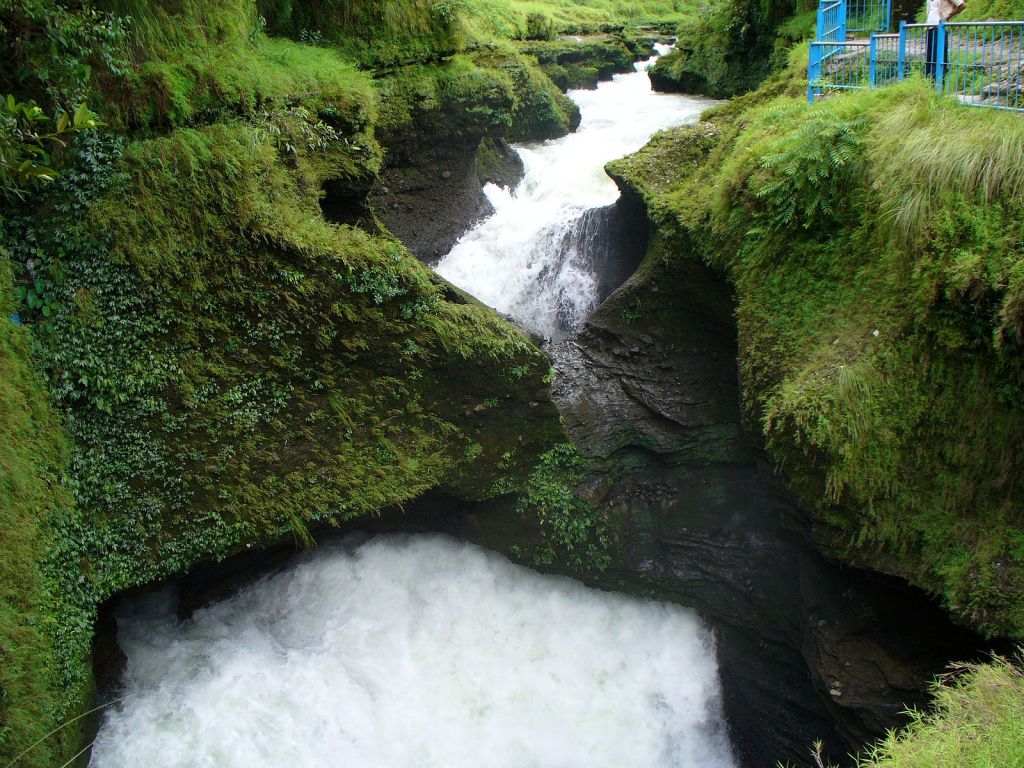
Kahundada is the mountain immediately behind the hospital. A road has now been cut to the top but two decades ago you had to climb up through stone staircases. There is a view tower at the top and you can enjoy the view of the Himals without the crowds. However, there are no hotels near the top so reaching the tower in time for sunrise is challenging. Devi’s fall is another attraction. In Pokhara, the ground in most areas is made of soft limestone and this can get dissolved in the acidic rainwater. In the Deep campus of Manipal, there were sudden cave-ins caused by limestone erosion. Devi’s fall is said to be named after a Swiss lady, Devine who went swimming in the fall but was swept away by a sudden gust of water. The Nepali name is Patale ko chango (underground waterfall).

Devi Fall. Courtesy: Creative Commons

The Gupteshwar Mahadev cave dedicated to Lord Shiva is nearby. This bat cave (chamere gufa in Nepali) is the habitat of the horseshoe bats. The exit requires some climbing and is narrower than the entrance. There is a belief that only those who have not sinned would be able to exit the cave. One of my favourite walks was to the village of Mauja. The trail climbs up through green forests and waterfalls. Mauja is a typical hill village and a good weekend hike. Another excellent hike is from Naudanda to the lakeside. You can take a bus to Naudanda and then walk down to the lake. You pass through several villages. Kaskikot was the old capital of the kings of Kaski. There is a fort on the hilltop with a good view over the valley. There is also a Kashyap hill where the rishi Kashyap is said to have meditated. A few high-end tourist hotels have now been established here. The view of the blue waters of Phewa lake get bigger as you slowly approach the lakeside.            

Begnas and Rupa lakes are two other lakes in the valley. Begnas lake is less crowded and is famous for its fish stalls. A small, forested hill, Panchabhaiya Dada, separates the two lakes. The waters of Begnas look darker and deeper. The International Mountain Museum was opened in Pokhara in 2004. The location offers spectacular views of the Annapurnas. The museum has three main exhibition halls: the Hall of Great Himalayas, the Hall of Fame, and the Hall of World Mountains. The cultures of the mountain people are also depicted. Bindhyabashini temple, the oldest temple in Pokhara was established in the 1760s. There is an interesting legend about the temple. The King of Kaski dreamt about establishing the temple. He had his men go to Bindhyachal Parbat and bring back an idol of the Goddess. While returning the men camped for the night in the current temple location. The next morning, they found they could not move the idol, and the king when informed ordered the temple to be set up at the current location.  

I enjoyed reading the fascinating book by Jagannath Adhikari and David Seddon, Pokhara: Biography of a Town. Pokhara is today one of the fastest-growing towns in Nepal. Ekai Kawaguchi, a Japanese monk was an early explorer of Tibet which he approached through Pokhara and the Thak khola. He was deeply impressed by the beauty of Pokhara. He mentioned in his writings that during all his travels he had never seen a place that rivalled the beauty of Pokhara. Magical Pokhara weaves its charm on visitors and residents alike!     

Dr. P Ravi Shankar is a faculty member at the IMU Centre for Education (ICE), International Medical University, Kuala Lumpur, Malaysia. He enjoys traveling and is a creative writer and photographer.

.

PLEASE NOTE: ARTICLES CAN ONLY BE REPRODUCED IN OTHER SITES WITH DUE ACKNOWLEDGEMENT TO BORDERLESS JOURNAL

Click here to access the Borderless anthology, Monalisa No Longer Smiles

Click here to access Monalisa No Longer Smiles on Kindle Amazon International

Categories
Poetry

Birds are Alive

Written by and translated from Korean by Ihlwha Choi

Courtesy: Creative Commons
When I was young, I chased birds day and night.
I looked up at trees and wandered through fields to find them.
That passion lives fully in a corner of my heart.
Birds were my friends.
They were my lovers for a long time.
They were the faith that breathed blue vitality into my free soul.

I tried to catch a bird that never came to my hand,
Countless times but failed.
That was the bird that built its home and fed its young,
The bird that lived like a king in the middle of the sky and earth.

To the bird, I was a dangerous beast,
But to me, the bird was an immortal soul and a magnificent dream.

Birds have their own personalities.
Each bird flaps its wings differently.
They sing with their unique voices.
They meticulously choose their housing lot and build the house geometrically.
They are experts in raising their young and brave soldiers.
They are faithful fathers and mothers who build their homes with trust and love.
When the time comes, they proudly let their children go.

Birds always live in places higher than humans.
They greet the morning and welcome spring before humans.
They live closer to trees than humans.
Loving birds is like loving stars.
I don't know how to love birds.
But those birds all live in my heart.
My life is a long journey to find birds.
Sometimes I close my eyes and look far away,
Because I want to apologise to the birds.
The birds never entrusted themselves to me.
They were never tamed by my touch.
Like the birds, dreams and love cannot be tamed.
The dream and poems that have never entrusted themselves to me resemble the birds.

Ihlwha Choi is a South Korean poet. He has published multiple poetry collections, such as Until the Time When Our Love will Flourish, The Color of Time, His Song and The Last Rehearsal.

.

PLEASE NOTE: ARTICLES CAN ONLY BE REPRODUCED IN OTHER SITES WITH DUE ACKNOWLEDGEMENT TO BORDERLESS JOURNAL. 

Click here to access the Borderless anthology, Monalisa No Longer Smiles

Click here to access Monalisa No Longer Smiles on Kindle Amazon International

Categories
Musings

Us vs Them

By Shivani Agrawal

The best example of escaping reality comes alive in our relationship with the environment. Its pervasiveness and service to us at all times at no cost, makes it one of the most granted entities in human affairs. The sheer ease, simplicity and inconspicuousness with which it surrounds us makes it terribly easy for us to not notice it. Even our day to day seemingly harmless acts like drinking from thermocol glasses and reckless usage and disposal of plastic carry bags go a long way in affecting the dynamics of environment, at least, within our local limits.

Recently, I had a revelatory moment. It was a thing so simple yet it struck me after such a long time and much intellectual struggle. I was having tea at one of the tea stalls near my university. Sitting on a chair, by myself, I was enjoying my free space. Just then, a few birds (common mynahs and jungle babblers to be particular) came near me, chirping loudly (read irritatingly for me) hoping for some fallen crumbs for their food. However, I was a little more open-hearted and threw some pieces of snacks I had bought. Needless to say, they ate them hungrily. I continued the process and the birds left no chance to leave their share.  Soon after, another group of men sitting near me started throwing pieces of their snacks a little further away to two opposing groups of birds. As soon as the pieces were thrown to them, they would squeak loudly and fought with each violently to get hold of the titbits. This whole procedure was irritating as well as amusing.

Their noise irritated me. I felt as if the birds did not want to let us enjoy our tea siesta in peace and were determined to spoil every minute of it by creating a ruckus with their banter. However, after a moment, it struck me that maybe it was not they who were trespassing their space but we were who were encroaching on theirs. I realised that if we look around carefully, there seem to be very few places that we have left for these biological friends of ours. With our endless, large-scale, and unplanned constructions and lifestyles, there are hardly free spaces anymore where they can nest.

We have not left spaces for them where they can fend for and take care of themselves comfortably and find their ways out; places where their food would be available easily, sufficient ground to hop and skip and jump, habitats where they could build their homes and protect their young ones. They need spaces where they could grow and live comfortably and not be tress passers all the time. The earth belongs as much to them as us.

The earth has been inhabited by human beings in a hegemonic and an insensitive fashion. The living styles of humans have been conceived in such a manner that they leave little space for other creatures as if we are the only ones living on this planet. The intricacies of the interconnections are lost in this process. The fact of interdependence in the biological world is hardly remembered. There is great amount of interdependence among the creatures of the world which makes the earth sustainable. Without it, there could be little scope for life. The fact that the existence and survival of one species is dependent on others can no longer be ignored. All creatures great and small need to share the planet.

Physical spaces are increasingly cleared to make way for human activities with little thought for the habitats of other beings and their presence is seen as an encroachment. As our biological compatriots, they have an equal right on this planet as us. It should always be remembered that their existence that is dependent on ours but rather our presence in a chain of inter-linkages which makes our survival plausible.

.

Shivani Agrawal is a Research Assistant on a project on Gujarat’s coastal security. She enjoys reading, writing, teaching, quizzing and playing table tennis.

.

PLEASE NOTE: ARTICLES CAN ONLY BE REPRODUCED IN OTHER SITES WITH DUE ACKNOWLEDGEMENT TO BORDERLESS JOURNAL

Click here to access the Borderless anthology, Monalisa No Longer Smiles

Click here to access Monalisa No Longer Smiles on Kindle Amazon International
Categories
Poetry

Life of a Poem by Sutputra Radheye

There is a poem that begins abruptly
like the destruction caused by bombs
being thrown from the planes hovering
over the sky in a formation of a triangle

the poem makes its place in the society
word by word like an immigrant family
through the voracity of their cheap labour
and silence while working under exploitation

the poem starts reaching its prime after years
like a person crossing a teenage river
to fall in love, to experience the carnal touch
to reproduce echoes of its own voice

the poem is often misunderstood and ignored
as a utopian dream of equality as it is
thought to be irrational and stupid to waste time
imagining a world where leaves are green for all

the poem dies in a clumsy alley, homeless
starving, its body becomes home of wounds
where microbes live, eating its flesh and bone

there is no one who writes an elegy for a poem

Sutputra Radheye is a young poet from India. He has published two poetry collections — Worshipping Bodies(Notion Press) and Inqalaab on the Walls (Delhi Poetry Slam)His works are reflective of the society he lives in and tries to capture the marginalised side of the story.

.

PLEASE NOTE: ARTICLES CAN ONLY BE REPRODUCED IN OTHER SITES WITH DUE ACKNOWLEDGEMENT TO BORDERLESS JOURNAL

Click here to access the Borderless anthology, Monalisa No Longer Smiles

Click here to access Monalisa No Longer Smiles on Kindle Amazon International

Categories
Review

A Dialogue with Stillness

Book Review by Basudhara Roy

Title: Ukiyo-e Days… Haiku Moments

Author: Bina Sarkar Ellias

Publisher: Red River

The wonder of art acknowledges and affirms the potency of stillness, its pregnancy vouching for a revelation that is both vital and imminent. Ambitious as the thought is, is it possible to engage in a dialogue with stillness, to distil the flurry of a day into the transcendence of a moment, and to transform that moment, in turn, into a metaphoric prism for the illumination of all our hereafters? In her recent collection of poems Ukiyo-e Days… Haiku Moments, Bina Sarkar Ellias can justifiably claim to have assayed each of these tasks with remarkable felicity and quiet grace.

A form of Japanese art that flourished between the 17th and the 19th centuries, ‘ukiyo-e’ is a composite of three words – ‘uki’ (floating), ‘yo’ (world) and ‘e’ (pictures), literally meaning “pictures of the floating world”. The ‘floating world’ referred to the theatre districts and (licensed) courtesan quarters that flourished in Japan’s major cities during the Edo period and constituted an important source of attraction for the nouveau-riche of the era. Inhabited largely by courtesans and the traditional kabuki actors, this floating world, despite its low status in the social hierarchy of the times, made its impact as valuable cultural capital, its sartorial customs and mannerisms becoming quite effectively, a rage among common people.

Since paintings could be afforded only by the prosperous, the ukiyo-e artists made a distinct historical move to democratise art by being the first to experiment with woodblock prints which could be produced cheaply and in large numbers, thus making ukiyo-e widely accessible to the  populace. Actors, courtesans, legends, folklore, and landscapes were some of the common subjects that marked this art, the heroic and the erotic being significant thematic notes within it.

Ukiyo-e Days… Haiku Moments revisits this memorable Japanese artform to bring to the reader a remarkable collection of 68 ukiyo-e by 28 artists from across the seventeenth to the early twentieth century, showcasing a delectable mix of the traditional and the modern in Japanese art and its unique blend of native and foreign influences. Compounding the effect of the Ukiyo-e here, is a set of 62 haiku by Bina that excavate, explore and expand the meaning and value of the artworks by bringing them into dense ekphrastic conversation with her own mind and times. “My haiku travels with each of the ukiyo-e works as a companion through this journey, responding with a deep kinship I feel with the artworks,” she writes in her Preface.

In this collaborative project of creativity, the haiku become a companion to the historical journey of the ukiyo-e, illuminating them in a transcultural framework which even as it asserts the omnipotent significance of art, helps draw attention to its omniscience across temporal and cultural divides. “To read a haiku,” says Jane Hirshfield, “is to become its co-author, to place yourself inside its words until they reveal one of the proteus-shapes of your own life.” As Bina places her contemporary and complex historical self within the sensibility of the ukiyo-e, her unravelling of meaning through the haiku becomes yet another act of seeking connection and consolation in an alienated world.

As a poetic form, the haiku establishes a constant romance with the brevity of expression on the one hand and the expanse of space on the other. Its sharp imagism helps to illumine both the moment and the emotional ambience that will render this moment organic in every context. Scale, speed, succinctness and surrealism can all work in concert within the seemingly fragile universe of the haiku to make it an emblem of and testimony to the wide-ranging historical forces within which it is birthed. The animated and tender conversation between colour, form and script in Ukiyo-e Days… Haiku Moments works similarly holding both word and beauty in suspension, mirroring the moment as self and self as moment, and asking us to return to the quintessential celebration of both:

you want to be free
but maya mesmerises-
locks all the doors

The haiku is, often, a lesson in perception. It is characteristic of the haiku to be profoundly epiphanic and in many of her pieces, Bina ascends to that level of quiet illumination wherein an inner truth becomes simpler by the sole virtue of its lucid expression. Art, life, hope, faith, poetry, war, human vulnerability — all emerge as important themes here. One cannot help noticing, however, the collection’s loving partiality toward women. Women and their myriad-layered lives constitute a recurrent thematic motif in these poems:

into the long night
her toil of pleasure-giving
a tale of two worlds

Since in much of the ukiyo-e, the women represented were courtesans, Bina brings a profound sense of tenderness and understanding in reinterpreting their situation for modern women whose lives, in different contexts, remain emotively the same. In their intensity and in the overall poignance with which these haiku delineate women’s ever-shifting roles in terms of profession, domesticity and relationships with the world, Bina evinces a deep knowledge of women’s spiritual multiplicity. To Torii Kiiyonaga’s delicate artwork ‘Bathhouse Women’, for instance, Bina, deflecting attention from the voyeuristic potential of the scene to give the bathhouse a larger cultural and political logic, responds:

a day for washing
wash away patriarchy
energise our souls

Another beautiful narrative turn in haiku is offered in response to Kitagawa Utamaro’s print ‘Naniwa Okita Admiring Herself in a Mirror’ in which Bina imagines a different (more youthful) face emerging from the mirror. While the mirror has mostly been used as a truth-telling device in literature and a means of shattering illusion, this particular mirror becomes a gateway to the discovery of the magical self within, unmarred by the winter of time:

i see a mirage
see my youth in winter years
does the mirror lie?

With Chobunsai Eishi’s ‘The Courtesan Hanaogi of the Ogiya Brothel’, Bina communicates thus:

within the prose
of her pleasure-house living
she breathes poetry

Here is a mature and perceptive weaving of art and life — a recognition of art as art and of life as life with the potential of building strong and tenable bridges across them. It is noteworthy how each haiku stands independently even as it adds a significant hermeneutic or experiential dimension to the ukiyo-e, imparting a certain luminosity to this book. There is a distinct sensation of time-travel in this collection, of moving through the slow whirl of centuries while remaining undivorced from the crises and flavours of the present:

realisation
we were not born violent
let’s repair ourselves

Empathy becomes a powerful voice in Ukiyo-e Days as Bina’s haiku touches raw spots within our shredding cultural fabric to draw attention to greed, war, exploitation and the relentless process of needing to find our integral human selves:

all the world’s armies
trained as cannon fodder
they live to die

In these delicate and consummately-crafted pieces, one finds doors open to deep investigation of the moment and what it stands for in life’s ever-shifting landscape. There is a stillness that the collection speaks from and to, a stillness that characterises both the ukiyo-e and the haiku as art forms. Invested with extraordinary visual and tactile charm and an interesting Preface that throws light on the genesis and growth of the ukiyo-e in Japan, this book accomplishes a unique synthesis between two valuable Japanese art forms, bringing to a connoisseur-reader the unforgettable enchantment of both.

Basudhara Roy teaches English at Karim City College affiliated to Kolhan University, Chaibasa. Author of three collections of poems, her latest work has been featured in EPW, The Pine Cone Review, Live Wire, Lucy Writers Platform, Setu and The Aleph Review among others. 

.

PLEASE NOTE: ARTICLES CAN ONLY BE REPRODUCED IN OTHER SITES WITH DUE ACKNOWLEDGEMENT TO BORDERLESS JOURNAL

Click here to access the Borderless anthology, Monalisa No Longer Smiles

Click here to access Monalisa No Longer Smiles on Kindle Amazon International