Categories
Excerpt

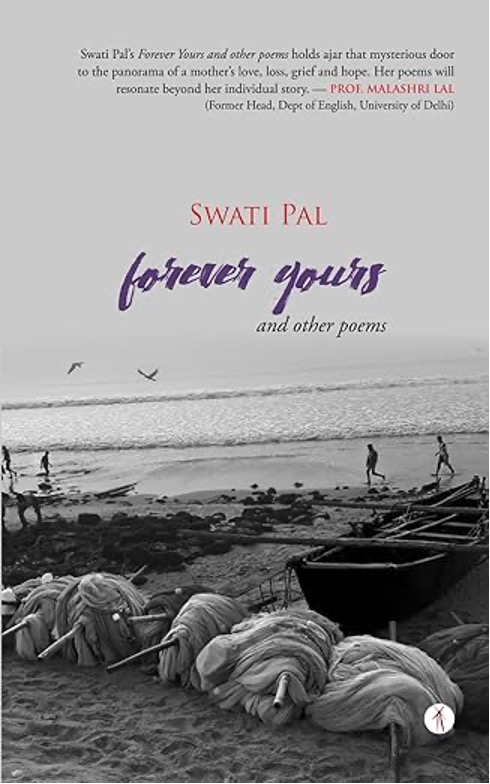
Forever Yours


Tite: Forever Yours and Other Poems

Author: Swati Pal

Publisher: Hawakal Publishers

A deathly pall

Sometimes

The silence creeps up

And deafens me,

Tearing into me

Slicing through me

And mincing me to bits

.

And from every bit

Of me

A cry so dark

So desperate

So alien

Longs to burst out

That you would shudder

If you heard it.

It’s as if

In some nightmare

That once I saw

In which

My severed head

Was in my hands

But my shrieks

Could be heard

Far and wide.

.

When my eyes

Opened,

A deathly pall

Hung low over me,

Until it swallowed me whole

And we collapsed

As one

Forever.

.

To be a firefly

Oh, to be

A firefly

Dancing

In the dark,

Spreading hope

With its

Brilliant light

Even as

It is enveloped

In blinding night,

To flash

Before the eyes

And soar

Higher

Into the skies…

.

I lie awake

And pray

I become

That firefly.

.

Whilst I live,

I wish only

To spread cheer

To do good

And then

To melt

Into the ether

And be

Not remembered

Yet not forgotten,

Like the firefly…

About the Book: “The deafening silence of a loved one’s absence turns the poet into the eternal Ma enduring separation. Swati Pal’s poetry also straddles the particular to the universal theme of grief and loss and symbolically suggests compassionate ways of healing the pain … Swati Pal’s Forever Yours and Other Poems holds ajar that mysterious door to the panorama of a mother’s love, loss, grief and hope. Her poems will resonate beyond her individual story.” — Prof. Malashri Lal (Former Head, Dept of English, University of Delhi)

About the Author:  Swati Pal, Professor and Principal, Janki Devi Memorial College, University of Delhi, is a Fulbright-Nehru fellowship scholar, a Charles Wallace scholar and the first Asian scholar to receive the John McGrath Theatre Studies Scholarship at Edinburgh University. Author of several books on theatre, creative and academic writing, her newspaper articles articulate her views on education. Her areas of research interest include performance studies and cultural history. She translates from Hindi to English and several of her translations have been published. She writes poetry and her poems appear in several anthologies; she also has two collections entitled In Absentia and Forever yours and a curated collection called Living On. She is the Vice Chair of the Indian Association for Commonwealth Literature and Language Studies and has been the recipient of several national and international awards, both as a teacher as well as an administrator. 

Click here to read an interview with Swati Pal.

.

PLEASE NOTE: ARTICLES CAN ONLY BE REPRODUCED IN OTHER SITES WITH DUE ACKNOWLEDGEMENT TO BORDERLESS JOURNAL

Click here to access the Borderless anthology, Monalisa No Longer Smiles

Click here to access Monalisa No Longer Smiles on Kindle Amazon International

Categories
Review

Contours of Him

Book Review by Meenakshi Malhotra

Title: Contours of Him: Poems

Edited and Introduced by Malachi Edwin Vethamani

Publisher: Hawakal Publishers

Contours of Him: Poems has been edited and introduced by Malachi Edwin Vethamani, a Malyasian academic of repute. The book has a rich assemblage of poetical voices — from both men and women — representing the contours and nuances of the many aspects and shades of masculinity. The poems explore the male body as a symbol of identity, art, and humanity, delving into themes of masculinity, strength, vulnerability, and beauty. It also examines the male body and psyche as the site of hurt and wounding. The book features poems that scrutinise the male form revealing or concealing it to explore these themes.

The focus on corporeality or the somatic coexists with the psychological in many poems in the anthology. Childhood innocence and curiosity coexist and yield to what could  be viewed as growing pains or  the challenges of maturation and understanding. There are several poems on the father-son theme, with poems  that express homage to the father. Christina Yin’s prose poem ‘To My Father’ and Gopal Lahiri’s ‘My Ideal Man’ are cases in point. Sudeep Sen in the poem, ‘Baba/Father’, captures the enormous vacuum left by the loss of the father as Sen completes the elaborate death rituals as the eldest son of his dead father, performed as per brahminical  prescriptions. In a gnomic and nuanced vein, Vethamani , the editor of the anthology, gives his take on father-son  intimacies. 

This book examines the contours of the male body and psyche at different stages of life and could be viewed as a psycho-somatic exploration of masculinity across diverse cultures. It also explores the strength and fragility of the male physique, occasionally dipping into cultural repertoires of  male archetypes, human and divine. At the same time, it acknowledges societal expectations from men and their concomitant cultural insecurities, particularly regarding their identity and the search for acceptance.

A common motif in many of the poems is about the unwitting and unwillingly borne burden and baggage of masculinity. The protagonists/personae of many of these poems seem to be conscious that masculinity is but a performance, involving the display of muscles and embodying a certain swag. Yet this definition of and  expectation from men within patriarchies, can be a cage and  straitjacket which binds, restricts and confines the human being. If patriarchies bind women, men are not exempt from it either. It is this theme that resonates(among others) in Angshuman Kar’s poem called ‘Tears’: “When mountains cry, rivers are born/From a woman’s tears, pearls have always been born/And when mothers cry, dormant volcanoes awaken…No one in the world knows/why a strong man cries/or why, when he does/he looks so sacred and beautiful.” 

The predominant focus, however, is on corporeality that has led to the exploration of its many aspects of the  body in the poems. The many facets locates the male body along a spectrum of materiality, vulnerability, relationality and the transcendental possibilities of the body. In recent years, there have been a plethora of poems by women discussing corporeality in multiple registers, exploring female subjectivity, desire and sexuality. Focus on the psychosomatic aspects of the gendered body has led to numerous explorations and analyses of femininity, on being/becoming women, on trans-identities. Many poems have been written on the human-divine aspect of the female body. Kamala Das and others (including Pakistani women poets) have written evocatively about the transgressive desires and  the many hungers of the female body .

Voices from the global south recording the voices of men was perhaps the need of the moment. The anthology includes a few poems on masculinity as a construct, especially focusing on the male body through various lenses — vulnerability, performance, shame, violence, and transformation. These poems offer a critical lens rather than idealising masculinity, exposing its social constructions and internal contradictions. They also highlight the relational nature of masculinity which are often traditionally embedded within family structures in South Asia. There are glimpses of guilt in Arthur Neong’s poem, “At this juncture of age, I feel like a teenager again,” where the persona/speaker seems keen to shed and slough off the burdens of masculinity and be in an escapist mode. He writes “At times I go to my wife for a little reprieve/Yet eyes open, think of ways to cheat”. Some of the poems read like love poems, like David C.E. Tneh’s poem, ‘Crossings’, that memorialises his dead friend. Tneh writes: “between the shared spaces and/ private moments come a synergy of collective memories/that I have  of you.”

 A writer writing on the  female body once referred to it as  a story discussed by men. Similarly, the anthology at hand discusses the contours of male corporeality and affect. The anxieties of masculinity, of literally not measuring up, pepper these poems and forms one of the vital themes of this anthology. Occasionally, a kind of narcissism creeps in, often giving way to musing or self-introspection. After voicing the common masculine concerns(and anxieties) of corporeal self-consciousness, the poet Kiriti Sengupta declares:

“I don’t look at veiled people anymore. 
It is either my age or my hormones.
I now look beyond the flesh, bone and keratin.”

In the last revelatory line, there is a movement towards transcendence: “I have been told /the finer body dwells undressed.”

In a different context but similar vein, Sandeep Kumar Mishra in ‘The Canvas of Form’ writes, “The naked body, stripped of all pretence,/Breathes honesty, raw beauty, fragile strength.” The profundity of the closing lines is inescapable: “The body, bared, is neither shame nor pride/But speaks of histories, of fears ,of love. It tells  of burdens carried, joys embraced/And in its stillness, whispers human truth.”

Much canonical poetry, including that of the famed  icon of modernist poetry, T.S.Eliot, writing a century ago, display a preoccupation with masculine anxieties in his iconic ‘The Love Song of Alfred J Prufrock’. The effete personae/protagonist , immortalised in the eponymous poem, Felix Cheong writes of ‘Middling Age’ that it’s “So unbecoming to have become so old? You’d sooner wear the ends of your frailty rolled”, lines echoing   T.S.Eliot’s The Love Song of Alfred J Prufock, “I will wear the bottoms of my trousers rolled.”

From Justin Baldoni’s Man Enough to Shyam Selvadurai’s Funny Boy, there are many coming of age stories  in our cultural landscape-on book lists and bestseller lists. While the sociology of sex and gender has long been a part of sociology and social psychology, the growth and development of a field of knowledge –gender studies– in the last four decades or so, has thrown into relief the fact that if femininity is a construct, so is masculinity.

Meenakshi Malhotra is Professor of English Literature at Hansraj College, University of Delhi, and has been involved in teaching and curriculum development in several universities. She has edited two books on Women and Lifewriting, Representing the Self and Claiming the I, in addition  to numerous published articles on gender, literature and feminist theory.  Her most recent publication is The Gendered Body: Negotiation, Resistance, Struggle.

.

PLEASE NOTE: ARTICLES CAN ONLY BE REPRODUCED IN OTHER SITES WITH DUE ACKNOWLEDGEMENT TO BORDERLESS JOURNAL

Click here to access the Borderless anthology, Monalisa No Longer Smiles

Click here to access Monalisa No Longer Smiles on Amazon International
Categories
Essay

Does the First Woman-authored Novel in Bengali Seek Reforms?

By Meenakshi Malhotra

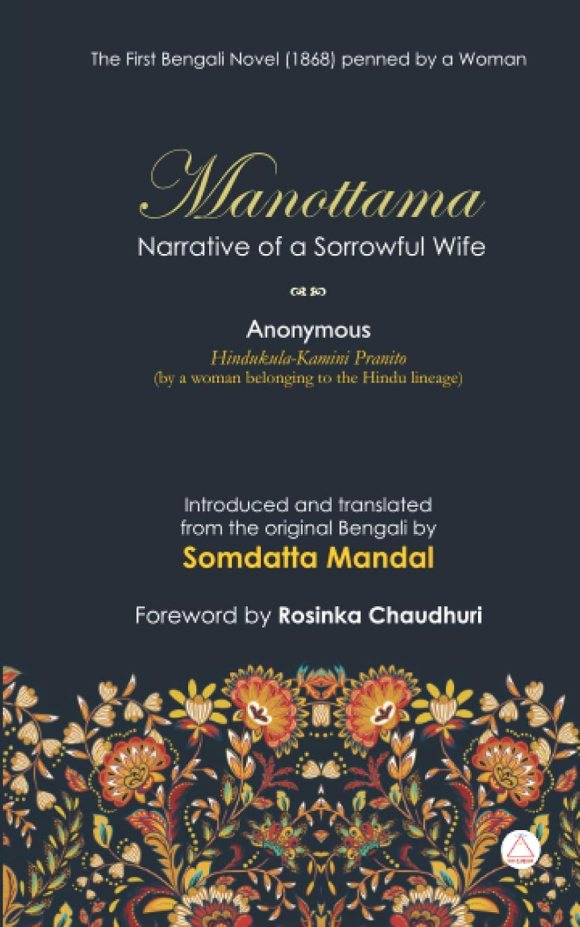
The translation published by Shambhabi The Third Eye in 2022

Published in 1868, Manottoma: Dukkhini Sati Charit (Manottama: Narrative of a Sorrowful Wife) the first novel written by an unnamed Bengali woman identifying herself as ‘A Woman belonging to the Hindu Lineage’, which is technically not a pseudonym, has been translated by Professor Somdatta Mandal and published recently in 2022. Somehow evading the attention of literary historians, the text, or any detailed information about it was unavailable for a long time till it was unearthed by a researcher in London only in 2010. In the foreword to the translated novel, Prof Rosinka Chaudhuri points out that the year 1868 was only a decade after the introduction of the main genres of modern Bengali literature: the modern novel, poetry and drama. This was a time of revision and reinvention, of recasting selves and literary forms and genres.   

Manottama narrates the sufferings of a educated and long-suffering wife who labours under the petty punishments meted out to her by her uneducated husband, depicting the conflict between patriarchal expectations and prescriptions and women’s education and presumably, agency. The eponymous novel depicts a situation where Manottama, an educated woman, is married to an uneducated husband. Because of the latter’s profligate ways, she is subjected to penury and untold hardships, which she seems to accept without demur.

The narrator of Manottama claims it’s a ‘history’. Cast in a dialogic format as a conversation between two friends, Jadhav and Madhav, (a common format in its time) the novel, in one interpretation, tells us about the pitfalls of female education in the nineteenth century, a period that also saw the emancipation of Bengali women through education in a significant way. Written in the traditional Indian Puranic style of narration, with plenty of sub-plots and digressions and without conforming to the western dictates of unity of time, place, and action, it provides a domestic picture where an educated wife has to compromise with the activities and worldview of an uneducated husband. At one level of interpretation, it seems to be an attack on patriarchy. As an early narrative by an anonymous woman, the  work needs — and in a way, demands — greater attention now after more than a century of neglect in order to reinterpret and reconfigure its didacticism and question its meek acceptance of status quo.

Can we accord this work the status of a novel? Also is there a way in which we can unpack the didacticism of the text and pave the way to a  subversive reading of patriarchies?

In showcasing a woman who seems to meekly accept her lot in life without complaint, the intention purportedly was to show the benefits of education and how an educated woman navigates her destiny.  There are many instances of rampant social injustices in the text. The husband’s profligacy, his marrying a second time and frittering away family fortunes — all these are accepted by the protagonist, Manottama, in a spirit of apparent equanimity. She seems to accept the social injustices meted out to her meekly, without demur or protest. She obeys and serves her father during his visit and continues to perform her conjugal and domestic duties vis-a-vis her undeserving  husband. If anything, she continues in her endeavour to instruct her children and the children of the quarrelsome second wife. No complaint against marital injustices pass her lips, even when her father expresses concern over the indigent condition of the household. Her behaviour is ideal in every respect and she is upheld as a paragon.  

Manottama” in Bangla can be translated into someone with a superior mind or soul and the protagonist named as such fits the bill. She keeps quiet about her individual woes while trying to ensure the well-being of the whole family.

The novel shows the impact of the many instruction manuals and advice/conduct books  that were plentifully available at the time and herein lies part of the problem of the book as a novel. For one, there is no attempt to depict the inner thoughts of the protagonist. She at times seems like a cardboard cutout, a compendium of all the virtues extolled by patriarchs and paternalists in 19th century Bengal and India. She is a stereotype and seems almost a parodic version of the ’good woman’ who sacrifices self-interest at all times. Whether this narrative qualifies/succeeds as a novel is something which has to be decided by the reader .She embodies the ‘patibrata’ or the devoted wife, a kind of woman who helps in the salvation of the husband and nation. To quote a writer at the end of the 19th century:

The Patibrata wife is the road to liberty and mobility of man. If the women of India follow the footsteps of Sita and Savitri, then this fallen country will be the blessed land  again. (Chandranath Basu, Bagchi 85)

The discovery of this text forms a story by itself and is a precious nugget as it was located in the British library relatively recently, in 2010. The significance of this text  is also that it is a woman’s voice addressing other women, advising them with a strong didactic intent. As readers, we can only speculate that the writer intends this homily as a form of advocacy to women that they should not abandon their traditions and customs, but use their education in order to better themselves, and devote themselves  to serving their husbands.  

The narrative in a dialogic style seems like an extended conversation or debate between a proponent of tradition and a spokesperson and modernity. Some of the conversation between Nilabrata, the irresponsible husband, and Manottama, echo aspects of this debate. According to Nilabrata, who is rendered somewhat insecure by his educated wife and voices the biases against women’s education, only foolish men will send their daughters to school in order to train their daughters as prostitutes. “Educating women and showing them the path to go astray are similar,” he asserts.

One is reminded of Bankim Chandra Chatterjee’s (1838-1894) essay on Prachina o Nobina or “The Traditional Woman and the New Woman”(Woman Old and New, 1879). The debate on whether to educate women were along the contours of conservatism versus progressivism, albeit with shades and finer nuances.We can suppose that the author is in conversation with a conservative perspective which argues against women’s education and where she attempts to demonstrate that tradition and women’s education are not mutually opposed or divergent.

Bengali literature offers many examples of women who were poised on the brink of the  paradoxical conundrum of modernity, which made them embrace education and reform without abandoning traditional values. This attempt to recast and position the ‘new’ Indian woman was a pre-emptive gesture  to counter the accusation of Westernization and deracination levelled against the reformist attempts to redefine gender roles and relations in late 19th century India.

While one can grasp the discursive aspect of the text, the lack of what we understand or perceive as a natural human response on Manottama’s part to any of her husband’s actions — misdemeanours, follies or vices —  leave us feeling deeply dissatisfied. If the novel as a form shows the interactions of the individual with other individuals or with society, the lack of any credible response from Manottama casts her in the mould of a ‘patibrata’   woman but stifles the text as a novel.

However, if we keep in mind that many great writers  novelists from Bengal and elsewhere — Bankim Chandra Chatterjee, Rabindranath Tagore and Sarat Chandra Chattopadhayay— have often used the novel as vehicles of ideas, which generate debate both within the world of the novel and in a larger socio-historical context, this  novel can surely be counted as a precursor and a prototype of the discursive/social discussion novel in Bengali. As for the other question raised earlier about the possibility of a subversive reading, Manottama by showing  the evils  besetting patriarchal systems, manages to show the untenable nature of the same and the fact that men like Nilabrata, for all their bravado, are liable to collapse, unless rescued and sustained by sensible wives. In that sense, it hold a lesson for men to marry wisely and recognise the true worth of educated wives, without getting lured either by false friends or duplicitous women.   

The book has received a fresh lease of life in the hands of a competent translator and commentator. The foreword similarly draws out the significance of the narrative, placing it in the context of its times and the larger context of Bengali literature. An exploration of its discursive trajectories and varying cartographies adds to the joys of discovering and reading the narrative.

.                

Meenakshi Malhotra is a Professor of English Literature at Hansraj College, University of Delhi, and has been involved in teaching and curriculum development in several universities. She has edited two books on Women and Lifewriting, Representing the Self and Claiming the I, in addition  to numerous published articles on gender, literature and feminist theory.       

.

PLEASE NOTE: ARTICLES CAN ONLY BE REPRODUCED IN OTHER SITES WITH DUE ACKNOWLEDGEMENT TO BORDERLESS JOURNAL

Click here to access the Borderless anthology, Monalisa No Longer Smiles

Click here to access Monalisa No Longer Smiles on Kindle Amazon International

Categories
Essay

Drinking the Forbidden Milk of Paradise…

By Meenakshi Malhotra

Mount Parnassus in Greece, where the muses were said to gather, was regarded as the home of poetry: From Public Domain

For the longest time, women were uncomfortable occupants of the house of poesy[1], particularly where there were existing canons of poetry established by the institutional gate-keepers and male custodians of literature. At best, they were viewed as Jane-come-latelies who sought to transgress the hitherto hallowed domains of high verse, interlopers to the hallowed heights of Parnassus who dared not “drink the milk of paradise”.

This ‘absence’ of women from the terrain of poetry is in spite of the fact that women have always written poetry, from ancient times to now. Sappho in the western tradition, was a Grecian poet from 5th-6th century BCE who was the pioneer of lyric poetry, a genre which apart from being set to music, also inaugurated the poetic ‘I’. In India, Buddhist nuns in the Mahayana and Theravadas who wrote poems known as the therigathas were early precursors of female poets. These early women poets engaged in the sometimes forbidden, sometimes lascivious charms of verse and versification. Down the ages, there were many others who joined them and kept the lamp of women’s versification lit. However, if women have always been versifiers, why has there been a  resistance and grudging admission for women to the poetic domain, which becomes a sort of “No (Wo)man’s land”? Why do women poets have only a token presence in traditional poetic anthologies?

Some reasons have been offered, not least among them being the preponderance of male poets who have often also been self-proclaimed and self-appointed guardians, legatees and arbiters of poetic tradition. Canonical poetic traditions, many claim, require a knowledge and understanding of Latin and Greek in the West while a knowledge of Sanskrit/Persian in the Asian context was deemed necessary. Thus women, who, for the most part, lacked formal education and had but small Latin and less Greek, could only hover around the margins and fringes of poetry. The situation with Sanskrit and Persian was similar and women remained mostly absent from or shadowy denizens of poetic terrains. Even if and when women were writing, they were doing so in colloquial registers and in the languages of the common people  and not in formal or decorative language, deemed essential for poetry, for the most part. Almost the first group of women writing poetry in India were Buddhist nuns who wrote in Pali, one of the many ancient languages in the ancient Indian subcontinent, which enshrined its own scholarly tradition. Sappho wrote in the Greek Aeolic dialect, which was difficult for Latin writers to translate.

Between 12th and 17th century, there was an advent  of devotional mystic poetry called “Bhakti” and “Sufi” poetry. While the poems were uttered/written in a devotional idiom, the poems and songs were often rebellious and iconoclastic, rejecting institutional religions and social norms. This poetry was rooted in personal and unmediated devotion and rejected formal languages and established societal norms. Some of this poetry was in an informal register, colloquial language and performative with a strong dramatic quality. Thus we have lines in Kannada from Akka Mahadevi (1130-1160) who rejects her earthly husband:

I love the handsome one: He has  no death decay nor form… no end no clan, no land.
Take these husbands who die, decay, and feed them to your kitchen fires.(Vachanas)

Women poets for the longest time had a crisis of identity, identification and non-belonging. They laboured under the anxiety of authorship where they felt the absence of precursors and fore-mothers and the lack of a poetic tradition to which they could belong. They were often made to feel as if they lacked genuine poetic talent or that they were transgressors against womanhood and femininity.

In Aurora Leigh (1855) by Elizabeth Barrett Browning, the eponymous title character, considers  the diverse fields of literature where women can exercise their talent and claim a space. The field of dramatic writing poses a challenge because the former demands that the woman writer be in the public eye in order to promote her plays. Further, to achieve or even aspire to the rank of Poet, Aurora must become capable of  “widening a large lap of life to hold the world-full woe”. Over the course of the long epic poem, she tries to reconcile her femininity with her artistic aspirations. In both cases, she is denied emotional fulfilment. She refuses to accept the role of an obedient wife, since it would mean foregoing the intellectual independence needed to develop as an artist, but then she must also refuse the love of a husband. In Book Five, she mentions three poets, none of whom she admires for their “popular applause”. Yet she admits that she envies them for the time they can devote to their chosen vocation and the adoring women that surround them and provide emotional support and fill their days with glory.

Another issue with women’s writing and poetry is the uncomfortable positioning of women in relation to patriarchal language or male centred language. If as Dale Spender  declares in “Man-made Language”, the masculine is asserted as the norm, where do we position women’s voices? While language is a universal medium of communication, man-made language is full of sexism and chauvinism and expresses reality from a predominantly masculine and patriarchal perspective. If language is a social system which women are persuaded or co-opted to use, how do they work within its confines to express their poetic aspirations? How do they stretch, bend, subvert language to express their own realities? Can we read techniques of irony, satire and other figurative and metaphoric strategies of defiance and subversion and an attempt to undermine from within?

Juliet Mitchell in her essay on ‘Femininity, Narrative and Psychoanalysis’ states that the woman writer/novelist must of necessity be a hysteric, straddling two opposed worlds. One world is that of male definitions and conceptions of femininity  and the other, a resistance and defiance of such conceptualising, accompanied by an attempt to undermine from within. Her defiance and resistance makes her character that of a hysteric, one who defies accepted notions and standards of femininity and is therefore considered transgressive. She troubles fixed gender categories, roles and definitions. She also disrupts and challenges the symbolic order of language, one which insists on rules of grammar and linguistic structures through the semiotic order which uses word play, repetitions and  childish rhymes, in order to express inner desires and drives. The symbolic order deals with the denotative aspects of language and the semiotic order with the affective aspect.

Women’s poetry often houses and accommodates the semiotic, seeming psychobabble that plays with and disturbs fixed notions of femininity and binary gender identities.

What are the popular themes that inform women’s poetry? Some themes are to with women’s search for authentic  self-hood and identity, their search for roots and a space of their own. As we see in Aurora Leigh, much of women’s poetry is self-conscious and self-reflexive, about the act of writing itself, the “awful daring of a moment’s surrender which an age of prudence could never retract.”(T.S.Eliot

Many contemporary women poets, across continents, have evinced a substantial  interest in exploring their poetic self  through their poems. On the one hand is the confessional poetry of Sylvia Plath and Anne Sexton, on the other the brief gnomic utterances of Emily Dickinson. Before the advent of the twentieth century, one hears of Barrett Browning, Emily Dickinson and Christina Rossetti, among many others. Names like Aphra Behn and Anne Bradstreet have been included in many syllabi, often as a token inclusion in an otherwise male centric course.

Women poets have talked about the horrors of war including rape, pillage and destruction. In their critique of war and violence, we find the forging of transnational solidarities, whether it is women’s poetry from Sri Lanka or Birangona (War heroines). 

In India the many names that come to mind are that of  Kamala Das, Eunice D’Souza, Meena Alexander, Sujata Bhatt and Sunuti Namjoshi. Women poets have employed effective means to explore the entire gamut of experience.The private  and the public domain, their process of  self-analysis; the process of poetic creativity and a probe into  poetic identities are all significant fields of exploration. For these women writers, analysing the creative process becomes much more than just a poetic theme. As they unravel the mystery of their poetic psyche in their writings, it becomes an epiphanic journey for the poets and their readers.

[1] Archaic word for poetry

Dr Meenakshi Malhotra is an Associate Professor of English Literature at Hansraj College, University of Delhi, and has been involved in teaching and curriculum development in several universities. She has edited two books on Women and Lifewriting, Representing the Self and Claiming the I, in addition  to numerous published articles on gender, literature and feminist theory.  Her most recent publication is The Gendered Body: Negotiation, Resistance, Struggle.

.

PLEASE NOTE: ARTICLES CAN ONLY BE REPRODUCED IN OTHER SITES WITH DUE ACKNOWLEDGEMENT TO BORDERLESS JOURNAL

Click here to access the Borderless anthology, Monalisa No Longer Smiles

Click here to access Monalisa No Longer Smiles on Amazon International
Categories
Poetry

Tomorrow We Will See

By Owais Farooq

Tomorrow we will see
When my solitude barks
And dances, the gift I’ll give,
To my awaited self.

It’ll be a small bouquet
Of tears stitched with a string,
Wrapped in the world’s eye.

Without your insisting, we will
See the house in which,
Next to memory’s sparrows,
Someday I will die.

Today, inside me the pigeons
Are dying, and I wonder
Who will gather their bones,
For the ultimate doomsday?

Between today’s dying
And tomorrow’s death we will
Watch the grand comedy,
On life’s psychiatric screen.

We will hear the laughter
To claim the evanescent tragedy,
And bury our unblinking,
Eyes in our hands.

Dr. Owais Farooq is an aspiring writer from Kashmir currently based in Delhi. He has done his PhD on the poems of Agha Shahid Ali from the University of Delhi.

PLEASE NOTE: ARTICLES CAN ONLY BE REPRODUCED IN OTHER SITES WITH DUE ACKNOWLEDGEMENT TO BORDERLESS JOURNAL

Click here to access the Borderless anthology, Monalisa No Longer Smiles

Click here to access Monalisa No Longer Smiles on Amazon International

Categories
Review

A Captivating Narrative Spread across Five Decades of Changes

Book Review by Bhaskar Parichha

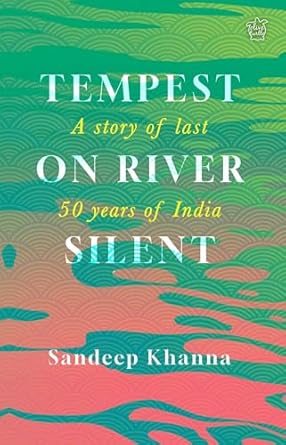
Title: Tempest on River Silent: A Story of Last 50 Years of India 

Author: Sandeep Khanna

Publisher: Niyogi Books 

From sipping Campa-Cola to buying only half a loaf of bread from TV serials like Hum Log [1]to the phenomenon of Tendulkar[2],  Tempest on River Silent – A story of Last 50 Years of India, takes you on a nostalgic and exhilarating journey through India’s transformative decades. 

Sandeep Khanna, a graduate of the Faculty of Management Studies and Shri Ram College of Commerce at the University of Delhi, conceived the idea for this novel during his extensive travels. His trips allowed him to explore the captivating socio-cultural diversity of India and the world while also recognising the commonalities that unite humanity. 

Devavratt and his companions embark on a remarkable journey through the swiftly evolving landscape of their native land, a journey that encapsulates the essence of a nation in transition. Their story begins in the vibrant hallways of schools and colleges during the 1970s and 1980s, a time marked by youthful idealism and a burgeoning sense of identity. In these formative years, the group, full of dreams and ambitions, navigate the complexities of education, friendships, and the socio-political climate of India. The classrooms buzz with discussions about the future as they grapple with the ideals of nationalism and cultural pride, often inspired by the rich tapestry of their heritage.

As they move into the 21st century, the energetic corporate workplaces becomes the backdrop for their evolving aspirations. The transition from the academic environment to the corporate world is both exhilarating and daunting. Devavratt and his friends find themselves at the intersection of tradition and modernity, where the values instilled in them during their school days clash with the fast-paced demands of contemporary life. The corporate landscape is rife with opportunities, yet it also presents challenges that test their resolve and redefine their understanding of success.

Throughout their journey, the characters engage in sincere discussions and lively debates that reflect the socio-economic transformations sweeping across India. They explore the impact of globalization, the rise of technology, and the shifting dynamics of class and privilege. These conversations are not merely academic; they are deeply personal, as each character grapples with their place in this changing world. The weight of their aspirations is often lightened by light-hearted antics and fond reunions, moments that remind them of the bonds forged in their youth and the importance of friendship amidst the chaos of adult life. 

As they navigate the complexities of love and relationships, the characters also delve into themes of spirituality and self-discovery. The pressures of the corporate world often lead them to seek solace in their cultural roots, prompting reflections on what it means to be truly fulfilled. Through their experiences, they learn that success is not solely defined by professional achievements but also by the depth of their connections with one another and their commitment to their values.

In this rich narrative tapestry, Devavratt and his companions embody the spirit of a generation that is both proud of its heritage and eager to embrace the future. Their journey is a microcosm of India’s evolution, a story of resilience, hope, and the enduring power of friendship in the face of change.

Khanna writes in the preface: “Tempest on the River Silent is a story of India as I have seen since the 1970s till present day. Overlaid on this factual story of India is a fictional account of a few imaginary characters, some of whom are portrayed as my friends. The third thread of the book is the spiritual lessons that I draw from the socio-economic changes in India and the tumultuous journey of my ‘friends’. Perhaps the word ‘spiritual’ is too big for me to use; it would be more appropriate to describe them as lessons of life that I have tried to unravel alongside the growth of a nation and the life stories of my ‘friends. The three threads hang off each other, and I narrate the book in the first person. Thus, the book is both a story of India and a story from India’s last 50 years.”

It’s a captivating work of fiction!

.

[1] We People, an Indian TV serial, 1984-85

[2] Sachin Tendulker, Indian Cricketeer and Parliamentarian

Bhaskar Parichha is a journalist and author of Cyclones in Odisha: Landfall, Wreckage and ResilienceUnbiasedNo Strings Attached: Writings on Odisha and Biju Patnaik – A Political Biography. He lives in Bhubaneswar and writes bilingually. Besides writing for newspapers, he also reviews books on various media platforms.

.

PLEASE NOTE: ARTICLES CAN ONLY BE REPRODUCED IN OTHER SITES WITH DUE ACKNOWLEDGEMENT TO BORDERLESS JOURNAL

Click here to access the Borderless anthology, Monalisa No Longer Smiles

Click here to access Monalisa No Longer Smiles on Amazon International
Categories
Review

…My Heart Wanders Wailing with the Restless Wind…

Book Review by Meenakshi Malhotra

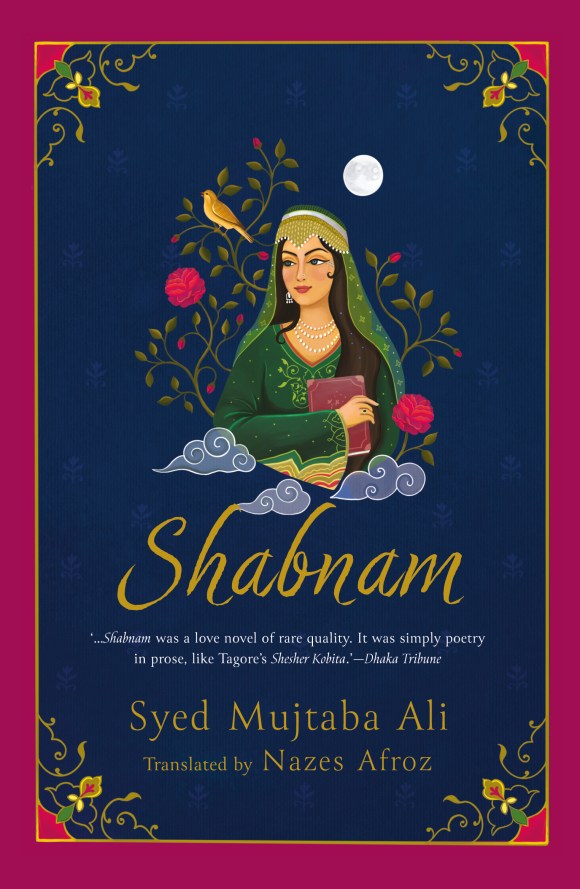
Title: Shabnam

Author: Syed Mujtaba Ali

Translator from Bengali: Nazes Afroz

Publisher: Speaking Tiger Books

Shabnam (1960) by Syed Mujtaba Ali is a love story that is set in the third decade of the 20th century. ‘Shabnam’ in Persian means a ‘dewdrop’. The polyglot scholar Mujtaba Ali’s love story becomes a vehicle for articulating the profundities of life which extends beyond the plot and the telling just like that of his teacher, Rabindranath Tagore. To quote the words of another reviewer: “His novel can be compared to a dewdrop which assumes rainbow hues during sunrise as it encompasses not only the passionate cross-cultural romance of Shabnam and the young Bengali lecturer, Majnun, but also shades of humanity, love, compassion set against the uncertainties generated by ruthless political upheavals.” Sweeping in scope, set against the backdrop of the Afghan Civil War (1928-29) and beyond, the novel narrates an epic love story. That this has recently been translated by a former BBC editor stationed in Afghanistan, Nazes Afroz, and published for a wider readership, emphasises its relevance in the current context, where regressive curtailment of human rights and liberties are evident on a daily basis.

Shabnam is a young, upper class and educated Afghan woman, fluent in French and Persian. As we learn in the course of the narrative, she is daring and apparently fearless. She is proud of her Turkish heritage as she invokes it while introducing herself: “You know I’m a Turkish woman. Even Badshah Amanullah has Turkish blood. Amanullah’s father, the martyred Habibullah, realised how much power a Turkish woman—his wife, Amanullah’s mother—held. She checkmated him with her tricks. Amanullah wasn’t even supposed to be the king, but he became one because of his mother.” Given the current context, with its attack on womens’ freedom, it is perhaps difficult to imagine that a woman like Shabnam or anyone with a similar persona or voice could be found at all. She seems at times to inhabit the rarefied realms of her author’s imagination, beyond the earthly realm.

Shabnam’s knowledge of history and the world is extensive. She actively chooses and decides about her surroundings and her own life, which is more than what many women can do in today’s Afghanistan. Characters like Shabnam are also the result of the varied travels of the author Mujitaba Ali, who traveled and taught in five countries. On the power wielded by women, Shabnam offers a rejoinder to her lover/narrator: “In your own country, did Noor Jahan not control Jahangir? Mumtaz—so many others. How much knowledge do people have of the power of Turkish women inside a harem?”

The novel has a tripartite structure. In the first part, is the dramatic meeting of the narrator, Majnun, with the striking and unconventional Shabnam at a ball given by Amanullah Khan, the sovereign of Afghanistan from 1919 to 1929. The novel’s narrative is dialogic in nature and the introduction and subsequent exchanges of the protagonists  are peppered with wit and poetry. The first part concludes with the two of them acknowledging their love for each other.

In the second part of this novel,we witness more developments in their relationship. Shabnam assumes an agential role and makes a decision to marry Majnun secretly with only their attendants looking on. And then later, this decision receives a legitimate sanction since a wedding is organised for them by her father, who does not know they are already married. Despite the xenophobic approach in those times of many Afghans (and other South Asian communities) against marrying their daughters to foreigners, her family decides to marry Shabnam to Majnun as they wanted her out of conflict-ridden Afghanistan and in a safer zone. Her father hopes she will go off to India with her husband. This seems unexpectedly progressive in the Afghanistan of  almost a century ago. But instead, in the third part, she is abducted by the marauding hordes while her beloved attempts to organise their return from Afghanistan.

The last part continues with Majnun’s quest for his beloved. His endeavour leads him to travel, hallucinate and drives him almost insane, reminiscent of the Majnun of Laila-Majnun fame, a doomed union that resonates in and forms a motif in the narrator/lover’s repeated conversations with Shabnam. At the end of the novel, Majnun ascends the physical realm of love. He says: “Now after losing all my senses, I turn into a single being free of all impurities. This being is beyond all senses—yet all the senses converge there… There is Shabnam, there is Shabnam, there is Shabnam.”

The novel concludes with the realisation that “there is no end” (tamam na shud). This feeling seems to echo the idea of  “na hanyate hanyamane sarire”(“It does not die”) in Sanskrit signifying that love is eternal, even beyond the material realm. Both the luminosity and fragility of love is represented in the novel.

Mujtaba Ali’s wide and varied experience is in evidence at several points in the novel, as is his wit and satiric sense, some of which filters through to his created characters.   This can be experienced in the dialogues and descriptions even in its translated form. In order to conceal her identity from the marching and rustic hordes, Shabnam comes to visit her beloved in a burqa. She argues that it is not a symbol of oppression but a self-chosen disguise: “Because I can go about in it without any trouble. The ignorant Europeans think it was an imposition by men to keep women hidden. But it was an invention by women—for their own benefit. I sometimes wear it as the men in this land still haven’t learned how to look at women. How much can I hide behind the net in the hat?”

A valuable addition to the rich corpus of travel writing in Bangla Literature, the book remained unknown to the world outside Bengal despite its excellence as there were no translations. In 2015, Afroz had translated and published this book as In a Land Far from Home: A Bengali in Afghanistan. It was subsequently shortlisted for the Crossword Book Award. That translations can provide a bridge across cultures is eminently clear from this work, which gives us a tantalising glimpse of a culture beyond our own and encourages us, the readers, to recognise that true love transcends borders or boundaries and that the language of true love is the same everywhere.

The novel’s title, Shabnam, is a natural choice, as the intelligent, courageous and beautiful Shabnam is the emotional centre of the novel. To describe her ineffable charm, we could draw upon Mujtaba’s teacher’s words, in Gitanjali (Song Offerings by Tagore):

She who ever had remained in the 
depth of my being, in the twilight of
gleams and of glimpses…

… Words have wooed yet failed to win
her; persuasion has stretched to her its
eager arms in vain.

Song 66, Gitanjali by Tagore

Majnun, the narrator lover is left, in Tagore’s words: “gazing on the faraway gloom of the sky, and my heart wanders wailing with the restless wind.” Romance by its very nature, is fleeting and  transient and romantic love in its literary avatars/depictions acquires a bitter-sweetness when its founded on loss and longing. So it is with Shabnam.

.

Dr Meenakshi Malhotra is an Associate Professor of English Literature at Hansraj College, University of Delhi, and has been involved in teaching and curriculum development in several universities. She has edited two books on Women and Lifewriting, Representing the Self and Claiming the I, in addition  to numerous published articles on gender, literature and feminist theory.  Her most recent publication is The Gendered Body: Negotiation, Resistance, Struggle.

.

PLEASE NOTE: ARTICLES CAN ONLY BE REPRODUCED IN OTHER SITES WITH DUE ACKNOWLEDGEMENT TO BORDERLESS JOURNAL

Click here to access the Borderless anthology, Monalisa No Longer Smiles

Click here to access Monalisa No Longer Smiles on Amazon International

Categories
Review

To her Great Grandfather from a Great Granddaughter

Book review by Bhaskar Parichha

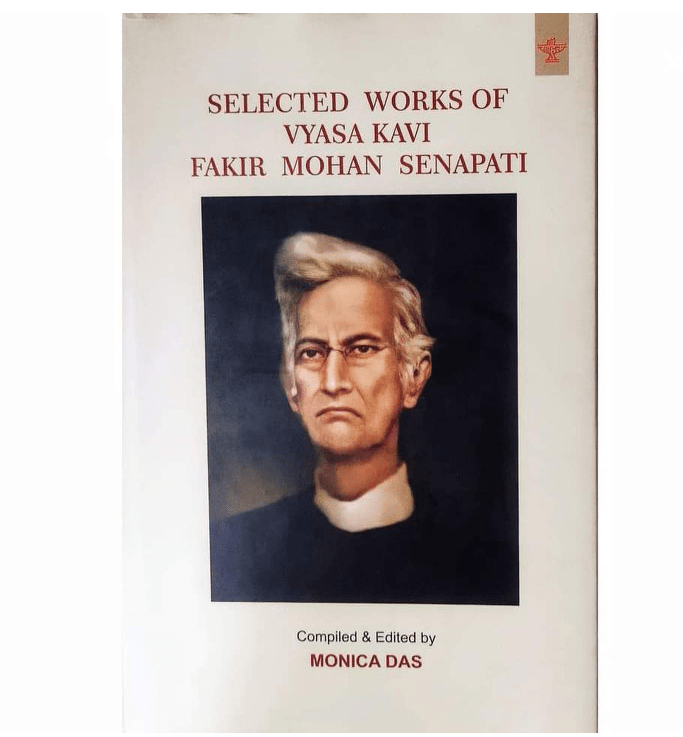
Title: Selected Works of Vyasa Kavi Fakir Mohan Senapati

Editor: Monica Das

Publisher: Sahitya Akademi

Fakir Mohan Senapati (1843-1918) is a prominent figure in Indian literature and a key advocate for Odia nationalism. Born in Mallikashapur, Odisha, he faced significant hardships, losing both parents by age two and being raised by his grandmother with limited education.

Senapati is celebrated for his pioneering works, including the first modern Odia short story, “Rebati,” and novels like Chha Mana Atha Guntha (Six Acres and a Third) , Mamu (Uncle), and Prayaschita (Atomement), which address social issues and the lives of ordinary people, emphasizing social justice and peasant struggles.

His impact transcends the realm of literature; he was instrumental in promoting the unique identity of the Odia language during times of external challenges. His literary contributions facilitated the de-Sanskritisation of Odia, thereby rendering literature more accessible to the general public. He continues to embody the pride and cultural identity of the Odia people.

Selected Works of Vyasa Kavi Fakir Mohan Senapati by Monica Das is characterised by its relevance and authenticity. The compilation and editing, originating from Sahitya Akademi, reflect a high level of quality, with the editor having meticulously attended to every detail.

Monica Das is an Associate Professor of Economics at Gargi College, University of Delhi, and a fellow at the Developing Countries Research Centre. Her research focuses on feminist economics, and she is involved with the International Association for Feminist Economics (IAFFE). Her own works include Tales of the Girl Child in India and The Other Woman, which examine the socio-economic impacts of underage marriage and polygamy on gender development. She also produced the film Anwesan, highlighting the life of her great-grandfather, Fakir Mohan Senapati. She oversees the Fakir Mohan Foundation, which promotes Odisha’s cultural heritage and addresses social challenges, particularly those affecting women.

Putting together a collection can be quite a challenge. It has to open up different viewpoints and styles for readers, deepening their grasp of literature and culture. Curators have to also add introductions that give context to the works, making it easier for readers to see the importance of each piece in the larger literary scene. Monica Das has successfully met these expectations. This Selection highlights Senapati’s creations that established a framework in which the ordinary individual became the focal point.

Says Monica in the introduction: “Fakir Mohan Senapati is a giant in the field of Indian literature, who belonged to Odisha. He brought about a revolution in novel writing by departing from romance and writing on social realism. His portrayal of the common man and his concerns predated those of Premchand and Rabindranath Tagore, the other giants of Indian literature.

“His writing had elements which, apart from promoting secular attitudes, helped bring about social changes, to which he also contributed directly as the Dewan of some of the princely states of Odisha in British India. Odisha is the first state in India to have been established on the basis of language, for which he laid the foundation.”

Fakir Mohan distinguishes himself from his predecessors in the field of Odia prose through his unique use of language: “His liberal use of terse proverbs and the folksy style of his writings is what catches the reader’s immediate attention. Besides this, it adds to the rustic wisdom of his characters. In his stories, one cannot miss the underlying concern with social reform. He always took care to depict an honest view of life. Though he takes a didactic stance in his writings, he took care to see that this did not militate against realism and the smooth flow of the narrative. Fakir Mohan’s characters were drawn from ordinary life from among peasants, weavers, barbers, milkmen, revenue clerks and teachers. Very few belong to the higher ranks of the society. He set the tone of the common man. For the first time, ordinary readers were touched by the fact that stories were written about them, about their concerns, their agonies, exploitations and bitter-sweet experiences. Fakir Mohan was indeed a consummate artist with a keen eye for minute details.”

The Selected Works of Vyasa Kavi Fakir Mohan Senapati spans approximately four hundred pages and presents the intriguing perspective of a remarkable individual. He was more than merely a writer; he was a social reformer, a patriot, and a cunning strategist, serving as the dewan of the princely states of Odisha during the period of colonial rule.

Concludes Monica in the book: “It’s a strife-torn world that we live in today. Fakir Mohan’s works, considered unparalleled internationally, hold even greater significance now because of the centrality of humane modes that form the essence of his writings. The compilation in the Selection presents all this and more.”

The volume serves as a comprehensive and curated resource on Fakir Mohan’s literary works, significantly enhancing the current body of literature dedicated to the father of Odia literature.

.

Bhaskar Parichha is a journalist and author of UnbiasedNo Strings Attached: Writings on Odisha and Biju Patnaik – A Political Biography. He lives in Bhubaneswar and writes bilingually. Besides writing for newspapers, he also reviews books on various media platforms.

.

PLEASE NOTE: ARTICLES CAN ONLY BE REPRODUCED IN OTHER SITES WITH DUE ACKNOWLEDGEMENT TO BORDERLESS JOURNAL

Click here to access the Borderless anthology, Monalisa No Longer Smiles

Click here to access Monalisa No Longer Smiles on Amazon International
Categories
In Memoriam

Memories of my Grandfather

By Alpana

From Public Domain

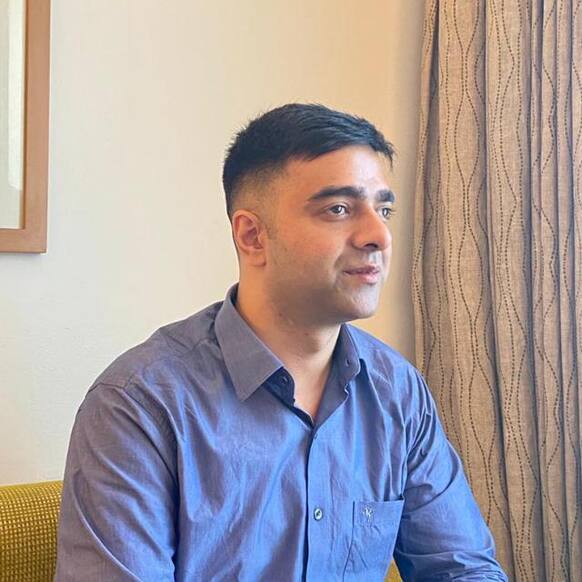
My memories of my Dadaji[1] are numerous — profound, etched and radiant. I lost my grandfather in March of 2023. Therefore, you will witness grief being poured in the garb of this write up. Emanating heartfelt respect and love his grandchildren preserve in their hearts, it is difficult to comprehend grief. Many being young and thriving in their adulthood, all my cousins reminisce the remains of the day he passed.

Being a married, working parent, life does not give much room to stop the grind and think. There is an unsaid, unwritten normative rush to sustain, to survive and to soar high. Nevertheless, the souls do get sun kissed, the rumbling tummies do find solace in a warm home cooked meal and the minds find sheer joy in observing the cheers and jeers of their kids. Amidst the routine hullabaloo, there are moments offering whiff of fresh air and a dash of seasonal fragrance.

March is followed by April. It’s the month of harvest, month of Baisakhi[2], reaping what was sown to make space for the new. That’s how didactic and instructional nature is in its true sense, gradually progressing at a slow and steady pace. Embracing the untimely rains and hailstorms and yet reviving to thrive in the new day. That’s how grief pertaining to the loss of a grandparent might look like. It pulls you back so that you can consciously chart your future trajectory. The force holds you back in order to pierce the sky with your flight because that force makes us move, march and advance. That’s what we learn from our grandparents. Their relentless effort, how small or minute it might be, helps us to garner the courage and thick skin we must develop to remain afloat.

My Dadaji was an old wise man, true to his words, cool headed and had no qualms about people being judgemental or nosey. Always calling a spade a spade, he would make a statement, almost as firm as a sermon, and take leave, without worrying about what turn his children’s responses.

The constant urge to jump to conclusions gives us major disappointments but my grandparents taught us how to lead a life, sans the hurry, the anxiety and the inevitable will to speed up the tasks. I recall an incident when my Dadaji accompanied me to a district level speech competition because my parents were posted in some other town for a certain period. He had never been to a school, didn’t know how to hold a pen and yet agreed to listen to my speech delivered in English in an assembly of teachers, parents and students. I secured third position in that competition but what stole the thunder was how he reviewed my performance before my parents. In his words, “Sabte badhiya boli. Baaki to ruke thi.” (She spoke flawlessly. Others fumbled many times.) The memory of such observation, coming from a man alien to the academics and yet giving feedback so constructive and encouraging, can never be erased. Such is the magic of grandparents, enchanting, uplifting and promising.

[1] Paternal grandfather

[2] Punjabi New Year

Alpana is an assistant professor in English at Pt. CLS Government College, Sec-14, Karnal, Haryana. She completed her higher education in English literature from University of Delhi. When not teaching or reading, she can be spotted collecting fallen flowers from garden with her toddler.  

PLEASE NOTE: ARTICLES CAN ONLY BE REPRODUCED IN OTHER SITES WITH DUE ACKNOWLEDGEMENT TO BORDERLESS JOURNAL

Click here to access the Borderless anthology, Monalisa No Longer Smiles

Click here to access Monalisa No Longer Smiles on Amazon International
Categories
Review

Portraying Urban Middle Class Life

Book Review by Meenakshi Malhotra

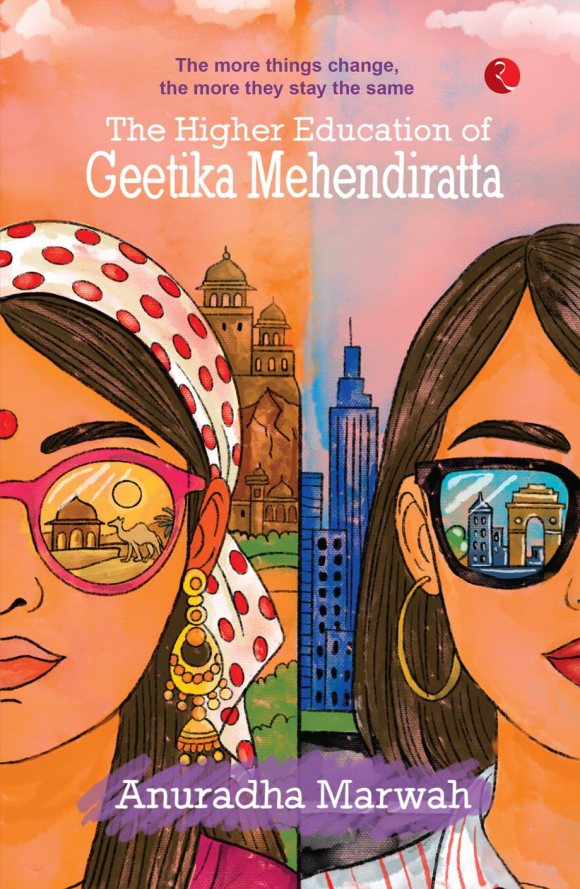
Title: Aunties of Vasant Kunj

Author: Anuradha Marwah

Publisher: Rupa Publications, India

A well-conceived and captivating take on the lives and circumstances of three different women who happen to inhabit  the same building in the middle class not so ‘posh’ locality in South Delhi called Vasant Kunj, Anuradha Marwah’s   observations  about  class, domesticity and “auntyhood” in the novel are both humorous and accurate. With three novels in her authorial bag, the fourth, Aunties of Vasant Kun,j revisits that time in a woman’s life when she is supposedly teetering on the verge of being middle-aged , somewhat on the wrong side of forty, except that the “aunties” are nowhere near “auntie-dom” understood in the conventional sense. In fact, in the  21st century urban churn, women and men are probably more unsettled than ever before, and often embrace that uncertainty. The subtle or not so subtle tension between traditional gender roles and expectations and the actual lives of urban middle class women is wittily and sensitively portrayed in this extremely readable novel.

The three women are almost wholly different from each other except in the fact that each of them is grappling with their own struggles where they have to juggle multiple  issues. The protagonists are  Shailaja, raw from her recent experience of betrayal by her long-standing boyfriend and facing harrassment at her workplace; Dini, in a demanding job with an international NGO,  a single-parented child, experiencing a half-acknowledged attraction to a handsome grass-roots activist and Mrs Gandhi who has subsumed her identity in the household resulting in a sense of neglect and loss of confidence. Ignored by her husband who seems to spend more time with his secretary  than with his wife, we realise that Sunil “Casanova” Gandhi has not only a roving eye, but is actively  engaged in pursuit of other women. In a clever sleight of hand, Anuradha Marwah turns a slice of life novel focusing on the everyday lives of women into a delicious take on the new modern woman as she navigates the quicksands of desire and domesticity, motherhood, meditation and professional commitments, simultaneously.

Shailaja, a newly single academic whose workplace woes are comparable to her messy not-quite-resolved (are they ever?) relationship with a recalcitrant ex who meanders in and out of her life, moves into Vasant Kunj which also houses the hospitable Mrs Gandhi, and the prickly Dini, who is fierce about guarding her privacy. The latter has also become equally adept at dodging both the hospitality as well as the probing questions thrown her way by the determined- to- be- friendly Mrs Gandhi.  Mrs Nilima Gandhi has her own share of troubles-a difficult mother-in -law, a cheating husband who has a roving eye that preys upon other women, a dismissive daughter who gangs up with her father to demean her mother — all these combine in varying degrees to further lower her already plummeting self-esteem. She is rescued from the throes of self-pity by the timely intervention of Mrs Malhotra and Navneeta Singh who encourage her to adopt the Buddhist practice of chanting as a way to address her problems. Listening to Mrs Singh’s optimistic projections, Mrs Gandhi experiences a twinge of doubt but nevertheless goes about it with single minded determination to transform her life and turn it around. As some things start falling into place for   her, Shailaja and Dini, the three women strike an unlikely friendship which provides a holding structure as they negotiate everyday challenges. Dini ‘succumbs’ to the abrasive charms of Radhey Shyam and Shailaja is able to shake off the vestiges of her previous relationship and take a bold new step forward. Mrs Gandhi is able to regain a sort of equilibrium.

As the women collectively register and celebrate their small and big victories in the course of the novel’s unfolding, we as readers are brought face to face with a relatively new sub-genre in the Indian English novel. It is the story of women by women narrated with both humour and compassion, occupying a niche in popular literature between chick-lit and mature women’s fiction, between popular and literary fiction. It actually challenges taxonomies of ‘literary’ vs ‘popular’ fiction. This is clear from the  choice of a title that is quite a masterstroke. Though it sounds subversive, the title seems to be the choice of an author who refuses to take herself too seriously. The  lightness of tone is sustained as the novel critiques societal attitudes towards single women and the entitled behaviour of men who are never held responsible or called to account within patriarchy.  Perhaps  the  only deviation from the lightness of tone is the autobiographical fragment towards the close of the novel which provides a sort of afterword articulating the impulse and desire to write the Aunties of Vasant Kunj. Post-publication, when the author was asked what impels her to create fiction, she replied that it was the hope of getting a glimpse of all the other lives that she might have lived. Marwah has achieved a fine balance in nuancing all her characters, making their stories at once convincing and identifiable.  

She has depicted the rhythms of everyday life and  nuanced the dialogues to suggest a bilingual sensibility. Cinematic and captivating, Aunties of Vasant Kunj provides plenty of fun and frolic without trivialising the serious concerns and conflicts of the three protagonists. Marwah’s humour is spot on, and she does not miss a beat in capturing the water woes and other roadblocks of quotidian life in the sprawling urban metropolis /megapolis of Delhi. The novel is likely to resonate with many readers in its highlighting of vital aspects of life in the city, along with the varied kinds of crises experienced daily.

The novel narrates the stories of its protagonists with verve and humour and with exactly  the ‘mot juste’ or the right words to irradiate them, creating a smorgasboard of delights for the reader.

Click here to read the book excerpt

.

Dr Meenakshi Malhotra is Associate Professor of English Literature at Hansraj College, University of Delhi, and has been involved in teaching and curriculum development in several universities. She has edited two books on Women and Lifewriting, Representing the Self and Claiming the I, in addition  to numerous published articles on gender, literature and feminist theory.  Her most recent publication is The Gendered Body: Negotiation, Resistance, Struggle.

.

PLEASE NOTE: ARTICLES CAN ONLY BE REPRODUCED IN OTHER SITES WITH DUE ACKNOWLEDGEMENT TO BORDERLESS JOURNAL

Click here to access the Borderless anthology, Monalisa No Longer Smiles

Click here to access Monalisa No Longer Smiles on Amazon International