Categories
Stories

Lending a hand

By Naramsetti Umamaheswararao

From Public Domain

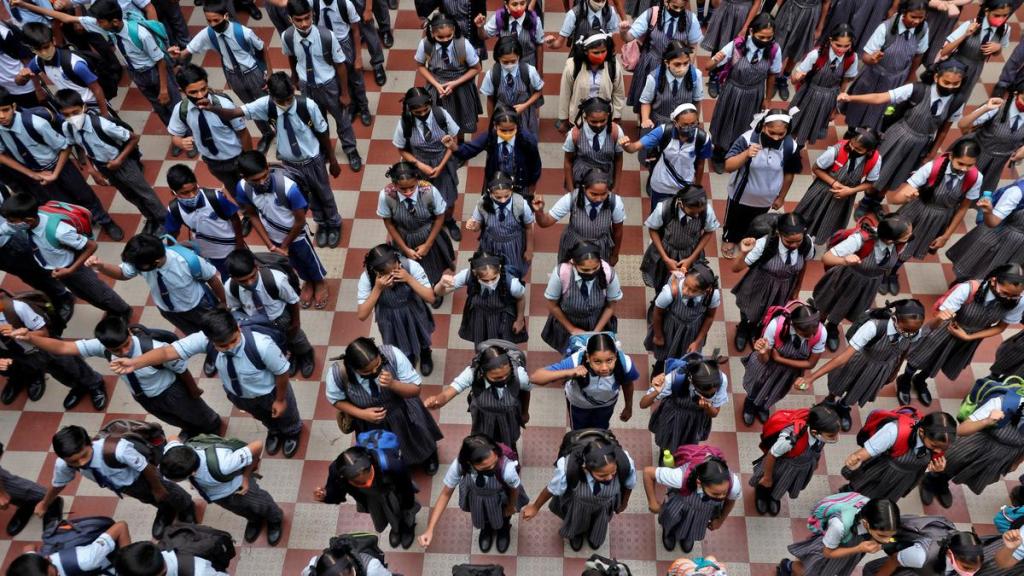
All the students of Seethanagaram High School stood in the playground for the morning prayer. The headmaster, along with the other teachers, was also present.

After the prayer, the headmaster addressed the students: “A new academic year began yesterday. Many new students will be joining us today. We will start lessons from tomorrow. For today, let’s spend the day playing games. Are you all ready?”

The mention of games excited the children. They enthusiastically replied, “Yes, Sir!”

“Alright! From where you are standing, try to reach the other end of the playground by hopping on one leg,” the headmaster instructed.

The students replied, “We can’t do that, Sir.”

“Don’t say that. You shouldn’t give up without trying. All of you, give it a shot,” he encouraged.

Some students stepped forward and tried to hop on one leg. A few managed to go a little distance before falling, while others gave up after a short while. The headmaster praised their efforts and asked them to return.

Next, the headmaster said, “Now, close your eyes and walk to the end of the playground.”

Just like before, the students shook their heads and said, “We can’t do that, Sir.”

“Don’t worry. We will be right behind you. No one should open their eyes or cheat,” the headmaster assured them.

Trusting his words, the students attempted the task. They walked slowly, but it was very difficult to walk with their eyes closed. They didn’t know what lay ahead—there could be stones or pits. They took each step with great fear. About three-quarters of the students gave up halfway, saying it was impossible. A few, with great difficulty, made it to the end of the playground. The headmaster praised their efforts and asked all the students to gather in the assembly hall.

Once all the teachers arrived in the assembly hall, the headmaster selected twenty students and paired them up to face each other. He tore some chits and wrote on them. Placing the chits in some of the students’ hands, he instructed them to convey the words in the torn scrap of paper to their partners using gestures. The students tried as instructed.

When asked if they understood what their partners were trying to convey, everyone said they did not.

Ravi, who had just started the tenth grade and was known for his courage, watched these games and asked, “Why did you have us do these activities, Sir? Do these games have anything to do with our studies? Walking on one leg, walking with eyes closed, and conveying messages through gestures were all very difficult. We struggled a lot, and some even fell. Why did you make us do this?”

The headmaster responded, “Ravi mentioned that walking on one leg, walking with eyes closed, and communicating through gestures were difficult. Do the rest of you agree?”

All the students nodded in agreement.

The headmaster then said, “You’re right. I agree with you. These tasks were indeed difficult. But due to the disabilities given to them by God, some people with physical impairments, like blindness or deafness, have to live their entire lives like this. Can we agree that their lives are more challenging than ours?”

The students remained silent, unable to answer. When the headmaster repeated the question, Ravi replied, “How would we know, Sir?”

“Didn’t you just experience what it feels like to be lame, blind, or deaf while playing those games? That should have given you some understanding. That’s why I asked,” the headmaster explained to Ravi, who nodded in agreement.

“Another question for all of you. If someone is in trouble, what should we do as fellow human beings?” the headmaster asked.

“We should help them,” the students replied.

“Good job! That’s the right answer,” the headmaster praised them, and the students responded loudly, “That’s right, Sir!”

The headmaster then asked, “We shouldn’t make fun of people like that, right?”

“No, Sir,” the students replied in unison.

At that moment, the headmaster called an attendant and had three students brought before the assembly.One student walked with the help of a stick. Another was visually impaired, and the third student’s disability was not visible but had a hearing impairment.

The headmaster showed these three students to the others and said, “These students joined our school yesterday. Two of their disabilities are visible, and the third has a hearing problem. They are already suffering from these disabilities. We should show compassion and offer our help to them. I have seen with my own eyes some students mocking and making them cry. That’s why I made you experience how difficult life is for those with such impairments through these games. These three students need your support and assistance. Not just these three, but anyone with disabilities, wherever they may be, should be helped. We should give them the assurance that we are here for them and give them moral support.”

The students responded loudly, “Yes Sir!”

At that moment, three students stood up and walked to the front of the assembly.

They said, “Sir, we were the ones who mocked them yesterday. We behaved wrongly because we didn’t understand their difficulties. Please forgive us.”

The headmaster advised them to help those in need and behave well in the future, and then he dismissed all the students to their classrooms.

Naramsetti Umamaheswararao has written more than a thousand stories, songs, and novels for children over 42 years. he has published 32 books. His novel, Anandalokam, received the Central Sahitya Akademi Award for children’s literature. He has received numerous awards and honours, including the Andhra Pradesh Government’s Distinguished Telugu Language Award and the Pratibha Award from Potti Sreeramulu Telugu University. He established the Naramshetty Children’s Literature Foundation and has been actively promoting children’s literature as its president.

.

PLEASE NOTE: ARTICLES CAN ONLY BE REPRODUCED IN OTHER SITES WITH DUE ACKNOWLEDGEMENT TO BORDERLESS JOURNAL

Click here to access the Borderless anthology, Monalisa No Longer Smiles

Click here to access Monalisa No Longer Smiles on Amazon International

Categories
Stories

Naughty Ravi

By Naramsetti Umamaheswararao

Ravi, a fourth-grade boy, could never sit still. His hands were always busy with some mischief. Whenever he found something at home, he would play with it, often damaging valuable items. Despite his mother’s occasional scoldings, Ravi never stopped his antics or playing around.

One morning, while playing with a ball inside the house, Ravi threw it at the television in the hall. The screen cracked, and his furious mother couldn’t hold back her anger. She hit him, but before she could deliver more blows, Ravi’s father intervened, rescuing the boy.

Through tears, Ravi said, “I didn’t mean to, Dad! I promise I’ll never play with a ball inside the house again.” His father calmed him down and persuaded his mother to forgive him.

But Ravi’s mischief didn’t end there. Another day, he saw a bug on the glass-top tea table in the hall. Picking up a cricket bat, he swung at the bug, but it flew away unharmed. Unfortunately, the table shattered under the force of his swing. The sound of breaking glass brought his parents running. They found Ravi holding the bat, standing next to the broken table.

Afraid of another scolding, Ravi glanced nervously at his mother. Before she could say anything, his father stepped in and asked, “Didn’t you promise not to play inside the house? What happened now?”

“I only used the bat to hit a big bug on the table, Dad. It got away,” Ravi explained, gesturing with his hands. His father patiently advised him, “Alright, but remember, no more damaging things at home.” Ravi’s mother, however, remained silent, visibly upset.

Another day, Ravi wanted a storybook from the shelf. Climbing onto a chair to reach it, he accidentally knocked down several books and other items. Hearing the commotion, his mother rushed in to find books and belongings scattered on the floor.

Frustrated, she scolded, “How many times have I told you to be careful? You’re always breaking or dropping something! Now clean this mess up!” Ravi tried to explain that the other items fell when he pulled out one book, but his mother refused to listen. Feeling deeply hurt, Ravi decided to leave the house for a while.

“If I go out, Mom will worry and search for me. She might even cry. That would make her stop scolding me,” he thought.

Ravi walked to the nearby park. Sitting amidst the greenery, he watched people, children playing in the distance, and ducklings swimming in a pond. Slowly, his irritation and sadness faded.

Just then, he noticed a baby bird falling from a nest in a nearby tree. The bird chirped loudly in fear. Ravi quickly ran to the tree and caught the bird in his hands before it could hit the ground. Gently stroking its wings, he calmed the frightened bird.

From Public Domain

Moments later, the mother bird flew down, circling Ravi and chirping anxiously. The baby bird flapped its wings joyfully at the sight of its mother. Ravi placed the baby bird carefully back near its nest. The mother bird covered it lovingly with her wings.

“The mother bird came back to protect her baby. Maybe my mom is already worried about me. I should go home and let her know I’m safe,” Ravi thought.

Ravi rushed back home. The moment his mother saw him, she smiled and said, “Where were you? I made some payasam for you. Come and eat.” Ravi sat down and narrated everything that had happened in the park.

Hearing his story, his mother’s face lit up with pride. She kissed his cheek and said, “You’re my precious little gem. You’re mischievous at home, but outside, you’re so helpful and kind.”

Ravi realised, “Mom scolds me when I do wrong and praises me when I do good. She truly loves me. I should never make her sad or upset again.” From that day on, Ravi started listening to his mother and became more careful both at home and outside.

Naramsetti Umamaheswararao has written more than a thousand stories, songs, and novels for children over 42 years. he has published 32 books. His novel, Anandalokam, received the Central Sahitya Akademi Award for children’s literature. He has received numerous awards and honours, including the Andhra Pradesh Government’s Distinguished Telugu Language Award and the Pratibha Award from Potti Sreeramulu Telugu University. He established the Naramshetty Children’s Literature Foundation and has been actively promoting children’s literature as its president.

.

PLEASE NOTE: ARTICLES CAN ONLY BE REPRODUCED IN OTHER SITES WITH DUE ACKNOWLEDGEMENT TO BORDERLESS JOURNAL

Click here to access the Borderless anthology, Monalisa No Longer Smiles

Click here to access Monalisa No Longer Smiles on Amazon International

Categories
Review

Hunger and Poetry of Afsar Mohammad

Book Review by Basudhara Roy

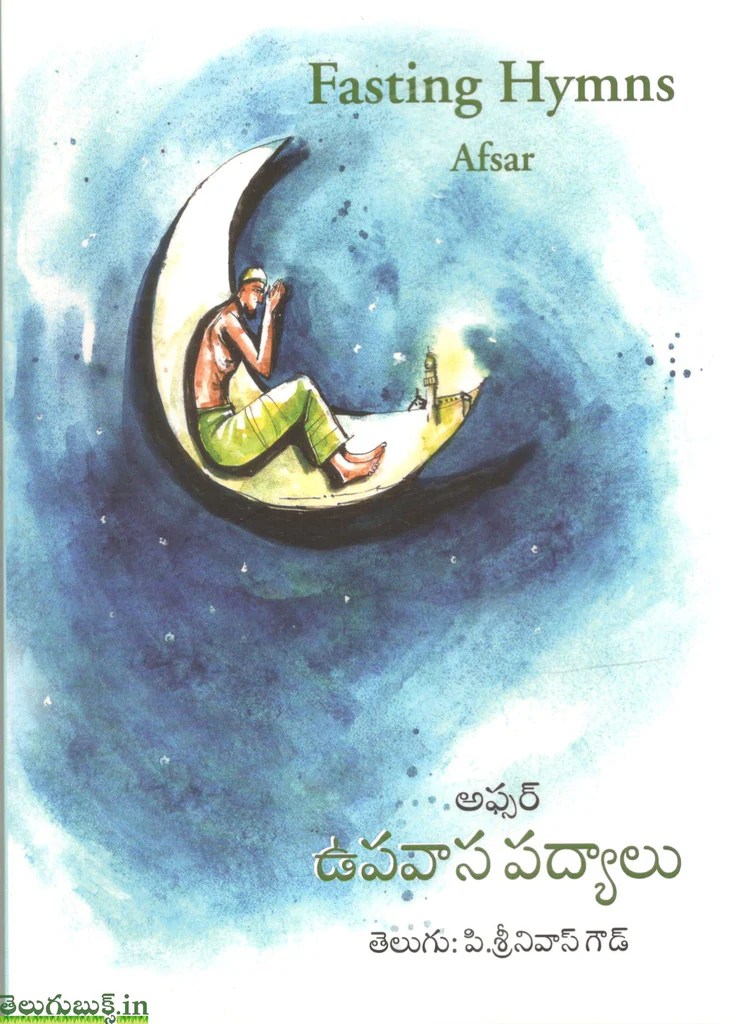
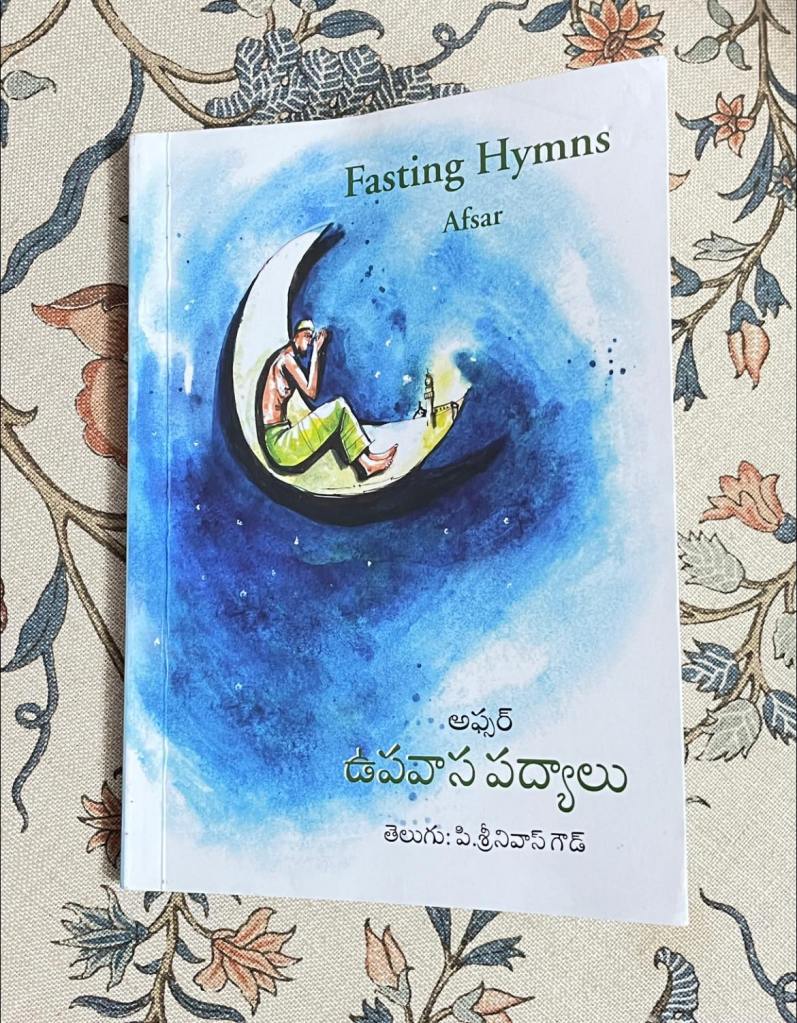
Title: Fasting Hymns

Author: Afsar Mohammad (translated to Telugu by P Srinivas Goud as Upavaasa Padyaalu)

Publisher: Bodhi Foundation

In the best of poems, the barrier between word and prayer crumbles, and in the greatest of them, it is dissolved into a timeless song of being. To name a collection of poems Fasting Hymns would be one thing but to summon and craft poems out of the very act of fasting is to elevate both poetry and prayer to a level of transcendence that only be accomplished by a world vision of the human soul. A collection of thirty poems, Fasting Hymns is Afsar Mohammad’s second book of poetry and invites comparisons in its honest sublimity with Rumi, and in its political engagement with the sinewy Bhakti poetry of the Indian subcontinent.

The ritual of fasting is of great significance in many traditions of thought. Valorised as an act of cleansing, of virtuous self-abnegation, of rest, sacrifice, healing and strength, voluntary and compulsive fasting constitute an important element of practice in several religions of the world. In contrast to the acquisition of physical energy through the act of eating, the act of fasting is believed to produce spiritual energy while also making for the rejuvenation and sustainability of the resources of production, including the earth and the body. Just as home reminds us of homelessness, fasting reminds us of food, of nourishment, of the body, and of the ways in which the body is negated, abused, denied, violated, punished and decimated by most discourses of power.

Most importantly, fasting recalls its close kin—hunger, for while fasting is a voluntary act of deferring consumption, hunger is an enforced act of deprivation and a stern reminder of the rampant food-wars and strategic starvation that a large part of the world’s population is led to regularly undergo for political and economic reasons. Fasting Hymns contextualizes the act of fasting within the month-long holy fast of of Ramadan and in underlining the centrality of this fast to Islamic ethics and philosophy.

There is a tranquillity to the book’s appearance–a visual script that overlaps reality, hope, and dream as its thirty poems commemorate the thirty days of fasting in the Islamic calendar. A linear travel of the consciousness meets us here, heightening in poem after poem as it widens to embrace larger spaces of geography and spirit. With each advancing day of the roza or fast, the poems travel deeper, unearthing spirit from body, soaring from ‘I’ to ‘us’, granting and seeking the essential solidarity of existence:

The sunken moon like
an empty stomach
Praying for a piece of bread. (Poem 1)

This collection, as the reader will note, is as much a journey into the world of the self as it is into the self of the world. Each untitled poem here ranges between three lines to twelve and becomes a hymn not just by virtue of its length or in being written by a fasting body but in being written by a searching soul. As one travels through them, there is a gradual building up of compassionate force, a slow summoning of the resources of the self:

Fazar: I begin my self-talk
Iftar: Not sure where
my self-talk ends.
If you can map my face,
Time and space fail. (Poem 9)

One is struck by this intense vigilance on the soul, this consistent observation of its workings, and this thorough and starkly honest ransacking of its contents to discover what it holds. Religion and humanity confront one another with determination in these hymns, the poet content to let the greater force win:

Amma would say,
“You earn ten nekis for
Offering water to a Rozgar.”

What would Amma say
if she knew an entire country was
cut off from water and food
during Ramadan? (Poem 17)

It is interesting to note that the Islamic holy month, in this book, is spelt in all its three major variants: Ramadan, Ramzan and Ramjan, pointing to the plural linguistic heritages of the Muslim community. However, what is assigned supreme value in these poems is not the ritualistic observation of fast but the profound spiritual experience that the month demands of its observers. The sharp interrogation of religion in the interests of humanity concludes, in this collection, with a complete subservience of the former to the latter. Between the first hymn and the last, the book covers a dense journey—physical, political, civilisational and human. There is no indignation in these poems, no overt moralising and no despair whatsoever. The book does not grieve an unliveable world or express helpless anger over its injustices. If anything, each of these thirty poems is a testimony to the spirit of human courage and endurance, its pace and measure acquired from a deep spiritual anchoring in the principles of humanity beyond religion:


I thought I know all my suras by heart.
now, each verse is a stranger and,
asks a hundred questions. (Poem 5)

If Afsar’s first collection of poems Evening with a Sufi sought to view the world through the Sufi gaze of oneness, these poems in Fasting Hymns seek to experience that oneness in the flesh and in the spirit through bonds of connection and empathy that the act of fasting fosters in the human body and soul. In Precarious Life: The Powers of Mourning and Violence, Judith Butler talks about the “public dimension” of the body: “Constituted as a social phenomenon in the public sphere, my body is and is not mine. Given over from the start to the world of others, it bears their imprint, is formed within the crucible of social life; only later, and with some uncertainty, do I lay claim to my body as my own, if, in fact, I ever do.”

For Butler, the fact of physical vulnerability makes the body a shared public space, connected and accessible to others. This fact of vulnerability is also the focal point of Fasting Hymns that transforms blood into bread and vice-versa. Afsar reminds us how we pay for everything with the currency of the body—with hunger, disease, guilt, grief and how it is the body that ties us to each other in unalienable ways so that each one of us is equally vulnerable to the violence of hunger:

Yes,
When I speak about the bread of Ramzan
I also speak about the
Blood of Muharram
Bread and blood are never
Separate in my world. (Poem 10)

Fasting Hymns is a distilled collection. There is nothing extraneous here in terms of either thought or language. The simplicity of diction in these poems makes for their steady luminosity–a subdued but patient burning that consistently lights up the fallible. While Evening with a Sufi was a translation from Afsar Mohhamad’s original poems in Telugu into English, this bilingual collection, born in English, has been expertly translated into Telugu by P. Srinivas Goud as Upavaasa Padyaalu, the very translation of ‘roza’ into ‘upavaasa’ bridging the aesthetic and ideological disparities between languages, cultures, and religions:

More than a hundred dishes
Compete in a political iftar.

I walk into a muhalla.

I see an empty plate
and a hungry face everywhere. (Poem 15)

While fasting, in general, might mean only the forgoing of food, the fasting during Ramadan is also a potent historical reminder of the scarcity of water and of thirst. While this collection offers rich food for thought, there is a grace to the poems that reminds one of water flowing from a tilted pitcher. A majesty of vision marks this collection along with a deep sense of personal responsibility to be accountable for the world and to account it, making this book both an intense soul-searching as well as an unsparing statement on things found.

At the day’s end Fasting Hymns brings both the calm of twilight and the restlessness of days to come–a restlessness that can be overcome only by the courage to struggle ceaselessly against undermining forces and, if necessary, alone.

Click here to read some verses from Fasting Hymns

Basudhara Roy teaches English at Karim City College affiliated to Kolhan University, Chaibasa. Author of three collections of poems, her latest work has been featured in EPW, The Pine Cone Review, Live Wire, Lucy Writers Platform, Setu and The Aleph Review among others. 

.

PLEASE NOTE: ARTICLES CAN ONLY BE REPRODUCED IN OTHER SITES WITH DUE ACKNOWLEDGEMENT TO BORDERLESS JOURNAL

Click here to access the Borderless anthology, Monalisa No Longer Smiles

Click here to access Monalisa No Longer Smiles on Kindle Amazon International
Categories
Poetry

Poems by Afsar Mohammad

Photo Courtesy: Afsar Mohammad
As I finish this morning prayer

And hold the bread
I see a Gaza in every crumb.

***

Hiding from the death,
Children seek each other in a rubble.
their shut eyes still ask:
whose game was that?!

***

The emptiness of a stomach
during fasting resonates deeply with me.

The heart pounds incessantly,
As though on the verge of shattering.

Words and images
gather around me
like famished birds, murmuring their tales.

***

I understand
you're curious about
what makes my Eid
so memorable.

I would simply state that
I feel the shoulders of my fellow people
touching mine
without any barriers
or boundaries.

***

so tired of sermons
that escape from reality
so drained of empty words
that repeat nothing.

Then, what do you pray for,
morning through evening?

just open the naked eye
and see the begging bowls
praying around you!
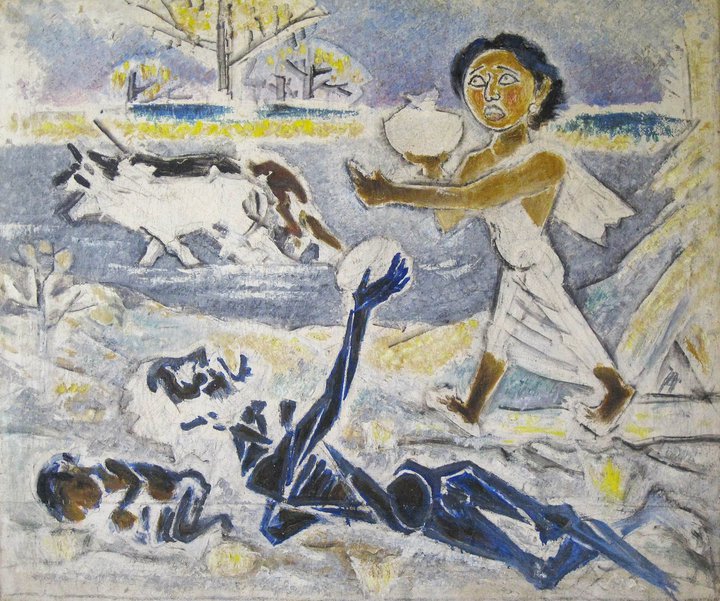
Painting by Ramkinker Baij (1906-1980). From Public Domain

Click here to read a review of Fasting Hymns

 Afsar Mohammad teaches at the University of Pennsylvania, and he has published five volumes of poetry in Telugu. He has published a monograph with the Oxford University Press titled, The Festival of Pirs: Popular Islam and Shared Devotion in South India. His Remaking History: 1948 Police Action and the Muslims of Hyderabad, has been published from Cambridge University Press.  His first poetry collection was Evening with a Sufi: Selected Poems.  These poems are from his second collection, Fasting Hymns, which has been translated to Telugu by P Srinivas Goud as Upavaasa Padyaalu. You can read a review of the book by clicking here.

.

PLEASE NOTE: ARTICLES CAN ONLY BE REPRODUCED IN OTHER SITES WITH DUE ACKNOWLEDGEMENT TO BORDERLESS JOURNAL

Click here to access the Borderless anthology, Monalisa No Longer Smiles

Click here to access Monalisa No Longer Smiles on Kindle Amazon International

Categories
Stories

Chintu’s Big Heart

By  Naramsetti Umamaheswararao

Chintu, a fifth-grader, was known for his intelligence beyond his years. Every day, he walked a mile to school by himself. When his parents offered to accompany him, he confidently replied, “I can go by myself. I’m grown up now.” Since their village, Seethanagaram, was a small town, there wasn’t much fear of children being abducted or harmed, so his parents didn’t object.

One day, Chintu woke up early and set out for school earlier than usual. He packed a small spade, a water bottle, and his books into his schoolbag and slung it over his shoulder.

His mother, who had been observing him, asked, “Why are you leaving so early? There’s still time for school.”

“I have some work, mother. I’ll tell you when I come back,” Chintu replied.

On his way to school, Chintu spotted some discarded mango seeds. He carefully picked out the good ones and walked a little further from the road. Using his small spade, he dug holes and buried the seeds. Then, he poured some water from his bottle over them.

As Chintu was about to leave, an old beggar woman sitting under a nearby tree called out, “Come here, boy.”

Chintu approached her and greeted her politely.

“I saw you planting those seeds. That’s a good deed. But who will water them every day?” she asked.

“I pass this way to school every day. I will water them,” Chintu replied.

While talking to the old woman, Chintu noticed she looked weak and was coughing frequently. Concerned, he asked, “Do you have a fever? Have you eaten anything?”

“I don’t have the strength to move. I haven’t gone anywhere and haven’t eaten anything either,” the old woman replied.

“Oh no, that’s not good,” said Chintu, opening his lunch box and offering her some food.

The old woman hesitated. “You’ll be hungry in school. Don’t worry about me, son. I’m used to this.”

“Don’t worry about me. My friends will share their food with me,” Chintu reassured her. He then gave her water to drink and asked some passersby to help take her to the hospital before heading to school.

After school, on his way back home, Chintu saw a small puppy being chased by a big dog. The puppy, terrified, ran in search of shelter, letting out pitiful cries. It squeezed through the gate of a house, but the house dog barked at it, causing it to retreat. The puppy then ran into an alley, where a pig scared it further. Not knowing what to do, the puppy let out a helpless whimper.

Seeing the puppy in distress, Chintu took out his spade and used it to chase away the big dog. He picked up the trembling puppy and comforted it, saying, “Don’t be scared. I chased it away.”

Just then, a woman from the house across the street came outside and noticed the puppy in Chintu’s arms. “Its mother died in an accident while crossing the road. You can take it home if you want to raise it,” she said.

Without a second thought, Chintu took the puppy home.

When Chintu’s mother saw him with the puppy, she frowned. “Why did you bring a puppy home? It will make a mess everywhere. Leave it where you found it.”

“Poor thing… its mother died, and a big dog and a pig were chasing it. It was so frightened. Let’s take care of it for a while. We can let it go later. First, give it some food and milk,” Chintu pleaded.

“You seem to be taking on more responsibilities than necessary. You should be focusing on school, not trying to act like a grown-up,” his mother scolded.

“But if everyone thought that way, who would help those in need? Grown-ups can’t always do everything, and if kids aren’t allowed to help either, then who will assist those in trouble? Remember when you asked me this morning where I was going early? Let me explain now. I heard my teacher say that many people throw away mango seeds after eating the fruit. He said they shouldn’t go to waste. So, I buried some seeds by the roadside, and I’ll water them every day. There was an old woman with a fever under a tree. I gave her my lunch, and she was so happy. She blessed me,” Chintu said, his eyes wide with excitement.

“Is that so? You did a good thing. Keep helping others whenever you can. I’ll get some food for the puppy. Don’t worry about it. We’ll take care of it for a while and then find it a good home,” his mother said kindly.

“Let’s do that. I didn’t tell you this morning because I thought you might scold me. But now I know you’re kind-hearted and will understand. From now on, I’ll tell you everything I plan to do,” Chintu promised.

“You’re my precious child,” his mother said, hugging him lovingly.

From Public Domain

Naramsetti Umamaheswararao has written more than a thousand stories, songs, and novels for children over 42 years. he has published 32 books. His novel, Anandalokam, received the Central Sahitya Akademi Award for children’s literature. He has received numerous awards and honours, including the Andhra Pradesh Government’s Distinguished Telugu Language Award and the Pratibha Award from Potti Sreeramulu Telugu University. He established the Naramshetty Children’s Literature Foundation and has been actively promoting children’s literature as its president.

.

PLEASE NOTE: ARTICLES CAN ONLY BE REPRODUCED IN OTHER SITES WITH DUE ACKNOWLEDGEMENT TO BORDERLESS JOURNAL

Click here to access the Borderless anthology, Monalisa No Longer Smiles

Click here to access Monalisa No Longer Smiles on Amazon International

Categories
Poetry

Poetry by Afsar Mohammad

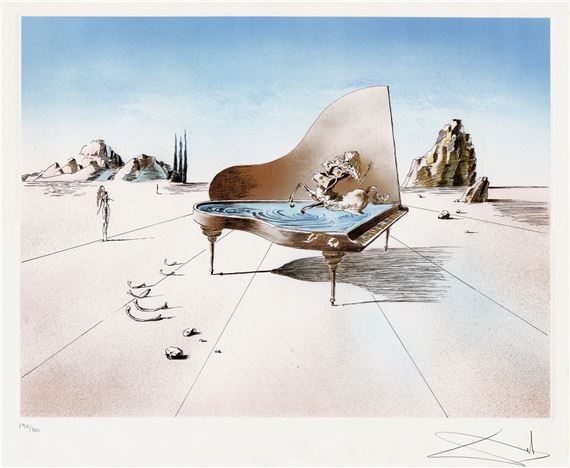
Art by Salvador Dali (1904-1989). From Public Domain
A LOVE SONG IN THE BATTLEFIELD  

1

we inhabit a battlefield,
blood and bodies around.
nothing to wrap except deadly weapons.

yet
our songs are flowery
hued in green
as we dream a quiet solitude.

2

we walk along the rivers
imagining an ocean at the end of our eyes,
never knowing
what connects a river and an ocean.

rivers end up in a desert and
oceans fly into unknown skies,

as our gods and goddesses await immersion.

3

we devour sacred foods
dance around all possible divinities,
and share a hundred stories
of joy or sadness that
flow into our blood, seeping deep
into the lower depths of the body.


4

we meet quite surprisingly at crossroads,
embrace each other.
we spread our arms to the horizon,
all set for the day of lights and kites
knowing fully well that
we’re those little lamps left in the glowing river.

5

breathing next to the bombshells,
limping around blood canals
we still walk through huge utsav pandals,
perform namaz amidst thousands of believers,

then, we vanish into our narrow lanes
shutting down every innermost chord of the heart.

6

didn’t you see that
me and you remain
all alone
on this day of
lights and kites…

*Utsav – festive/festival

Afsar Mohammad teaches at the University of Pennsylvania, and he has published five volumes of poetry in Telugu. His English poetry collection is forthcoming. He has also published a monograph with the Oxford University Press titled, The Festival of Pirs: Popular Islam and Shared Devotion in South India. His current work, Remaking History: 1948 Police Action and the Muslims of Hyderabad, has been published from Cambridge University Press.  His poetry collection, Evening with a Sufi, was published by Red River. 

PLEASE NOTE: ARTICLES CAN ONLY BE REPRODUCED IN OTHER SITES WITH DUE ACKNOWLEDGEMENT TO BORDERLESS JOURNAL

Click here to access the Borderless anthology, Monalisa No Longer Smiles

Click here to access Monalisa No Longer Smiles on Kindle Amazon International
Categories
Stories

The Mango Thief

By Naramsetti Umamaheswara Rao

Ricky was a boy known for his mischievous nature. Though he was in the eighth grade, he had the sharpness and boldness of someone older. Ricky rarely attended school, preferring instead to roam around the fields beside the road, cutting sugarcane and plucking groundnuts, causing damage to the crops.

In his class, there was a bright and studious boy named Anand. Ricky thought it would be advantageous to befriend Anand to get his notes. The next day, Ricky brought some guavas he had stolen and offered them to Anand, saying, “These are from our orchard. They’re very sweet; take them.” Although Anand initially refused, Ricky insisted and placed the fruits in his hands, and Anand, not wanting to seem rude, reluctantly accepted them.

Over the following days, Ricky brought sugarcane and groundnuts, further solidifying their friendship. Ricky began inviting Anand to accompany him when he went out, and Anand, hesitant to refuse, would often join him. Their classmates noticed this and warned Anand, saying, “Don’t hang out with him. Being with him could get you into trouble.”

But Anand dismissed their concerns, thinking, “I’m a good person, so nothing bad will happen to me. Maybe Ricky will change for the better.”

One day after school, as they were walking home, Ricky suggested they enter a mango orchard along the way. Anand hesitated, knowing it was wrong, but Ricky was persistent. Ignoring Anand’s reluctance, Ricky said, “If you’re so scared, stay here. I’ll go in alone.” Ricky then climbed over the fence, entered the orchard and began plucking ripe mangoes, stuffing them into his school bag.

What Ricky didn’t know was that the orchard’s caretaker had been keeping a close watch. He was already angry about frequent thefts and was determined to catch the thief red-handed. Seeing Ricky pluck the mangoes, the caretaker approached the tree with a stick in hand and shouted, “Hey, you little thief! Come down! I’ll teach you a lesson!”

Ricky, momentarily startled, quickly regained his composure. He was used to such situations. “What can you do?” Ricky challenged, “You’re all alone, and there are two of us. We could easily overpower you, and no one would know.”

The caretaker, growing more furious, demanded, “Where’s the other one?”

Ricky pointed towards Anand, who was outside the fence, and said, “He’s waiting over there, keeping an eye out for me.” The caretaker, not seeing clearly, took a couple of steps to get a better view and thought he spotted someone. But when he turned back to the tree, Ricky had already jumped down and escaped.

The caretaker, enraged, thought, “Not only does this kid steal, but he also dares to threaten me?” He chased after Ricky but couldn’t catch him. Frustrated, he decided to catch the other boy instead, thinking it would lead him to Ricky later.

Ricky saw the caretaker running towards Anand but chose not to warn him.

Anand, seeing the caretaker approaching, remained calm, thinking, “Why should I be afraid? I haven’t done anything wrong.”

But as soon as the caretaker reached him, he grabbed Anand’s hair and began hitting him on the back. “Why are you hitting me? What have I done? I didn’t even enter your orchard,” Anand cried.

The caretaker slapped him twice and said, “You dare ask what you did? No shame? You came here to steal, sent your friend inside, and stayed outside to keep watch? Come with me, I’ll tie you to the tree. You two have been stealing my mangoes every day. I won’t release you until my boss arrives,” he said, dragging Anand inside the orchard.

Despite Anand’s protests and pleas of innocence, the caretaker refused to listen and tied him to a tree.

Passersby noticed Anand tied to the tree and, shocked by the sight, informed his parents. They came and freed him, explaining the situation to the villagers. Anand insisted that he hadn’t done anything wrong.

The villagers scolded him, saying, “Your mistake was befriending a bad boy. What else did you expect?”

Regretful, Anand lamented, “Despite my friends’ warnings, I knowingly continued my friendship with Ricky. I’ve learned my lesson. I won’t make this mistake again.”

Naramsetti Umamaheswararao has written more than a thousand stories, songs, and novels for children over 42 years. he has published 32 books. His novel, Anandalokam, received the Central Sahitya Akademi Award for children’s literature. He has received numerous awards and honours, including the Andhra Pradesh Government’s Distinguished Telugu Language Award and the Pratibha Award from Potti Sreeramulu Telugu University. He established the Naramshetty Children’s Literature Foundation and has been actively promoting children’s literature as its president.

.

PLEASE NOTE: ARTICLES CAN ONLY BE REPRODUCED IN OTHER SITES WITH DUE ACKNOWLEDGEMENT TO BORDERLESS JOURNAL

Click here to access the Borderless anthology, Monalisa No Longer Smiles

Click here to access Monalisa No Longer Smiles on Amazon International

Categories
Stories

Speech Matters

Story by Naramsetti Umamaheswararao: Translated from Telugu by Johnny Takkedasila

Naramsetti Umamaheswararao

Naramsetti Umamaheswararao has written more than a thousand stories, poems, and novels in children’s literature over the past 42 years. He has 32 books to his credit. He was honoured by the Central Sahitya Akademi Award in Children’s Literature for his novel Anandalokam[1]. Naramshetty founded the Bal Sahitya[2] Organisation and is working for the promotion of children’s literature.

Photo from Public Domain

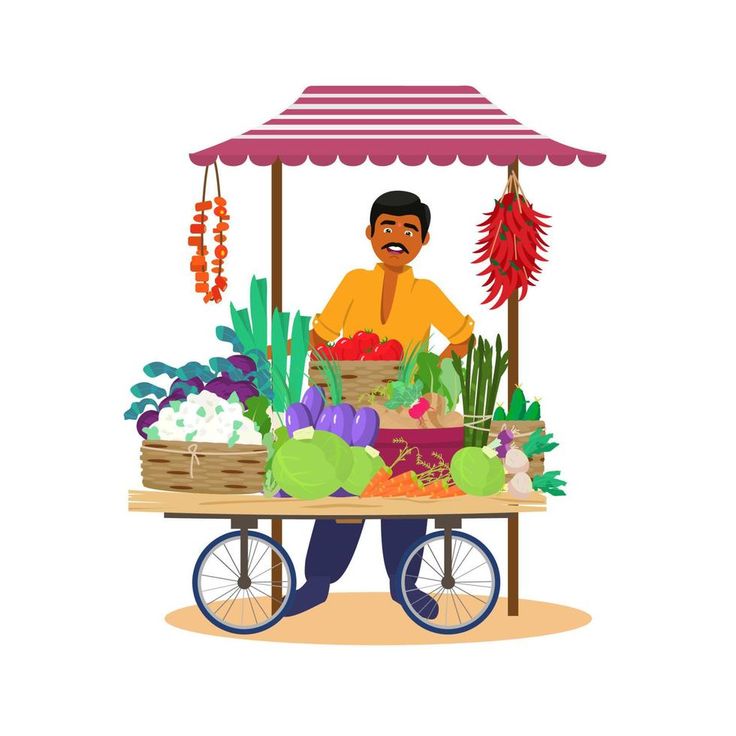
Parvathipuram’s Siddaiah roams the streets, selling vegetables and green leaves from a cart. He has two sons, Murali and Saradhi. Both are educated but idle, having picked up more bad habits from the street than good ones. Siddaiah also noticed an increase in their arrogance.

He called his sons and said, “We are poor people who need to be satisfied with what we have. I am afraid to see you behaving like this. You must be humble. We should learn to respect our elders.”

“Yours is an old way of thinking. Nowadays, we should be like this only. You should see us and change yourself,” replied the sons.

Siddaiah tried to convince his sons, but they did not listen. So Siddaiah asked Gangadharam, a teacher in their neighbourhood, for suggestions. Gangadharam gave him an idea to convince his sons.

The next morning, Siddaiah said to his sons, “I have brought vegetables, green leaves, and fruits for sale, but I am not feeling well and cannot go to sell them. If kept at home, they will lose their freshness by tomorrow. Can you both sell them?”

“We don’t know business. How can we sell these?” asked the sons.

“The saying goes that, ‘If you speak well, the village will thrive.’ Impress people with your speech and sell them at the prices I tell you,” Siddaiah retorted.

They took the cart and entered the streets, shouting, “Vegetables, green leaves, fruits.” Some women came out and asked their prices. Siddaiah’s sons told them the prices their father had set.

“How can you charge such a high price? If you reduce it by twenty per kg, we will buy one kg each,” said a woman.

“We do not lose if you buy or not, but we will not reduce the price,” Murali said.

“They are not harvested in the backyard. We also bought them. The prices can’t be reduced,” Saradhi said angrily.

She didn’t buy anything. Hearing their words, the other women also went away without buying. They said things like, “In business, there should be give and take,” but Murali and Saradhi went ahead without listening.

A woman stopped the cart on a side street and checked the freshness of the vegetables. “Your price is high… at least, will you weigh it properly?”

“How can we believe that you are giving real money?” Murali said angrily.

Even after asking the price, she did not buy it. She also told others not to buy from them. As the business did not work, they moved to another street.

The women started bargaining there too. This time Saradhi got angry and said, “People will post a WhatsApp status saying ‘Don’t haggle and buy from the small traders who come to the streets’. The true nature comes out only when you buy it.”

Everyone got angry. There was no business. They returned home without selling a single item.

Siddaiah, who saw his sons return in a hurry, said, “You are spoiling the business with your bad attitudes. I have been saying it from the beginning. You did not listen.”

“It’s okay, Dad. Even if you went, you couldn’t have sold it. None of them were ready to buy,” said both the brothers.

“Will you listen to me if I sell all the goods?” asked Siddaiah. Both sons agreed they would. Siddaiah told them to follow him to observe how he sold his goods.

First, Siddaiah went to a street and shouted that he had brought vegetables, green leaves, and fruits. Some women came to buy and asked the price. Siddaiah told them the prices. A woman among them said, “Some guys came earlier, their price is lower than yours. If you also give that price, we will buy it.”

“Buy it with your golden hands, mother. I just came into the street. If you buy first today, my business will be great,” said Siddaiah. She gave the money and bought the vegetables without saying a word.

To the second woman, he said, “Do you see the money, mother? Do you count ten or twenty for someone like me?” She also bought the vegetables without saying a single word.

“I will happily tell all others that Rangamma also buys vegetables from me only. So please don’t bargain and buy, mother,” he said. She bought vegetables with a happy smile.

“If you buy from me, other women in the street will also buy from me only. So please don’t ask me to lower the price. If I lower the price for you, I have to lower it for all,” Siddaiah pleaded. She also bought it.

After talking to each one of them, the sons saw Siddaiah had sold all the goods. “Didn’t you see what happened! Do you still think arrogance is necessary?” Siddaiah asked. Both nodded reluctantly.

“A friendly word we speak makes friends, and a hateful word makes enemies. Harsh words drive people away. Remember this,” said Siddaiah.

Later, Siddaiah noticed a change in his sons’ speech. Siddaiah didn’t forget to thank the teacher who gave him such a good idea.

.

[1] Abode of Happiness

[2] Children’s Literature

Johny Takkedasila is an Telugu poet, writer, novelist, critic, translator and editor from Andhra Pradesh, India. His literary journey, which began as a Telugu poet, has seen the publication of 27 books. He has received numerous awards for his contributions. The Central Sahitya Akademi Yuva Puraskar for 2023 (National Award) was awarded to Vivechani, a critical study book in the Telugu language.

PLEASE NOTE: ARTICLES CAN ONLY BE REPRODUCED IN OTHER SITES WITH DUE ACKNOWLEDGEMENT TO BORDERLESS JOURNAL

Click here to access the Borderless anthology, Monalisa No Longer Smiles

Click here to access Monalisa No Longer Smiles on Amazon International

Categories
Interview Review

Hyderabad’s History Retold by Common People

A brief introduction to Remaking History:1948 Police Action and the Muslims of Hyderabad, published by Cambridge University Press, and a conversation with the author, Afsar Mohammed

In a world given to wars and fanning differences, an in-depth study of history only reflects how we can find it repeating itself. In Remaking History:1948 Police Action and the Muslims of Hyderabad, academic and writer, Afsar Mohammad, takes us back to the last century to help us fathom a part of history that has remained hoary to many of us.

On 15thAugust, 1947, when India and Pakistan ‘awoke’ to a freedom amidst the darkness of hatred and bloody trains and rivers, there was a part of the subcontinent which remained independent and continued under the rule of a Nizam, Mir Osman Ali Khan, Asaf Jah VII. This was Hyderabad. Later, in post-Jinnah times, when India decided to integrate the independent kingdom, which had even found a name for its independent existence — ‘Osmanistan’ — what broke out was an episode called Police Action, code name Operation Polo. Mohammad’s book is an exhaustive relook at the integration of a people into the mainstream nation of India, using the voices of common people.

There were strands of communists in the Telangana movement and the mercenaries we know of as Razakars. His own family was involved in the events, and he had an uncle arrested for the performance of Burra Katha, a form of theatre used by Left to educate the audience, somewhat like a musical street theatre. Mohammad has interviewed survivors extensively and knitted into his narrative findings which make us wonder if religion or nationalism were used as a subtext of power play and greed. For, we have the local cultural lore where the people despite differences in faith had a tehzeeb or a way of life, where Hindu writers wrote in Urdu for the love of it and Muslims used Telugu.

Afsar Mohammad interviewing an activist from a basti in Old Hyderabad. Photo Credits: Sajaya Kakarla

Hyderabad was perceived by some as a sanctuary, like writer Jaini Mallaya Gupta. He contends: “Like me, many leftist writers and activists had migrated to the city at that point and they became popular by using pseudonyms. Hyderabad was like a sanctuary as it could hide us in its remote neighborhoods where we were supported by local Muslim community too. But we all became really closer to each other and more connected to the Urdu literary culture that indeed provided a model for our activities.”

But did things stay that way post Operation Polo? Razia, a witness to the police action, states: “It was a phase of unfortunate turns—everything so unexpected! Not about the Razakars or the Nizam, but most of the ordinary Muslims (ām Musalmān) whom I know fully well since my childhood had a hard time. Particularly young Muslim men and women … all suddenly became suspects and many of them from their homes leaving everything. They just wanted to live somewhere rather than dying in the bloody hands of the Razakars and Hindu fundamentalists.”

That cultural hegemony has a tendency of typecasting languages based on political needs is shown as a myth by Mohammad as both Hindu and Muslims used Urdu and Telugu in Hyderabad. His book revives Hyderabadi tehzeeb as the ultimate glue for defining a Hyderabadi. This is somewhat similar to what Bengal faced which had been divided along religious lines in 1947. Professor Fakrul Alam, a well-known academic, essayist and translator, tells us in his essay on the birth of Bangladesh in 1971, “The key issue here was language and the catalyst was the insistence by the central government of Pakistan that Urdu should be the lingua franca of the country…” Bangladesh emerged as a protest against linguistic and cultural hegemony. Eminent writer, Aruna Chakravarti, goes further back in history in her historical novel, Daughters of Jorasanko (2016), and shows how Tagore was involved in preventing the division of Bengal proposed by Lord Curzon in 1905. However, despite these historic precedents, we are seeing the world suffer wars from such divides and common people continue to be affected by the violence and bloodshed, losing their homes, livelihoods and often, their lives. What happened in the last century continues to reiterate itself more virulently in the current world. In times such as these, Remaking History surfaces as a book that has much to offer, perhaps if humanity is willing to learn lessons from history.

Your book is focussed on a small group of people, the common people of Hyderabad who suffered during the integration into a nation. Why would this be important in a larger context? How would it assimilate into stories of the world? By stories, I would mean plight of Rohingyas, Muslims, Jews … more or less plight of minority groups of people. Do you see any emerging patterns in all these stories?

In this work, I’ve consistently used the category of ordinary people as related to Hyderabad and Deccan. I needed this term to speak about both Hindus and Muslims as I was constantly reminded of the divisive politics persistent in this region and throughout South Asia. Despite the focus on the Muslims of Hyderabad, this work emphasises the inseparability of Hindus and Muslims when it comes to the violence and trauma of the Police Action of 1948. According to many interlocutors, the violence had inflicted the entire community — mostly the ordinary people of the Deccan.

I started writing this book with a primary idea that this lens of ordinariness helps us to not just this 1948 violence in Deccan, but many other religious conflicts now rampant through the globe. The examples you just mentioned above are not an exception. Since we’re blind to an ordinary person’s approach or emotional life, we totally failed to capture many dimensions of these violent events. Most patterns, either subjective or objective, that emerge out of this violence and trauma have their origins in this search for ordinariness.

Along with a few interviews, you have brought up the issues through writings of great Telugu and Urdu writers of that time. Can you tell us if literature actually translates to real life situations?

To be honest, being a writer and poet by myself, I’ve always believed that literature is half-truth which is filtered by multi-dimensional subjectivity of a writer. Specifically, when there’s a political situation, literary writings also tend to project a partial reality. However, these gaps could be filled by empirical evidence that we gather from the stories of ordinary people who not only witnessed the violence, but also suffered many setbacks caused by such violence. Yet, we require a balanced perspective to level these oral narratives and written materials. In this way, rather than relying fully on a singular story, we can explore the possibilities of multiple stories of a singular event.

Your family and you profess Leftist leanings. And yet, you write of religious minorities. Historically, the Left professes to be above traditional religions, like Hinduism and Islam. How do you integrate religion into communist ideology? Would you agree with Harari that Left is a religion unto itself?

One of the major critiques in this work is to contest the left-centric approach to 1948 and even the Telangana armed rebellion of 1946-1951. As I argued in this book, leftist writers, poets and ideologues completely failed to capture the reality of the day. I’ve presented evidence for this argument from various writings and witness narratives too. Since their high emphasis on economic determinism, many key social and religious dimensions remained their blind spots. Various religious and caste developments during the periods of the 1930s and 40s were determining factors of modern Indian history. Yes, of course, I still believe in the Leftist ideology, but never worship it though! To put it simply, I’m a critical Leftist and critical Muslim!

‘Popular understanding is largely shaped by what exists in circulation. This is what we see in the form of how people understand the Police Action across India as well as folklore, including the reconstructed folk narratives such as Adluri Ayodhya Rama Kavi’s burra katha. Such popular representations further reinforce the larger narrative peddled by the state.’ What exactly is burra katha? And what was your family involvement in it?

Burra katha was a popular storytelling and music genre in Telugu utilised by the leftist organisations to circulate their idea of resistance against the status quo in Telangana and elsewhere. Shaik Nazar was an icon of this radical narrative tradition and he also trained hundreds of disciples in this genre. Most artists and writers from the leftist camp were busy producing stories based on the Telangana armed rebellion and other resistance movements to gather the people in the public meetings between 1946 and 1952. My family also had some role in the production and circulation of this genre. However, it’s a story beyond my family’s history and had numerous political and performative implications that I’ve discussed in my book. I already have a detailed narrative of these personal and professional connections in my book and I encourage my readers to access them directly from the book. Just a brief note, many performers were arrested and put in prisons for months and months during this armed rebellion and they also suffered heavily due to the oppression of the Nehru’s government.

A burra katha performance

Do you see a parallel between what was happening then to such performers and protest writers in more recent times? Do you find still that popular opinion is being shaped by stuff circulating in media?

I see many parallels between the past and the present conditions of performers and writers who speak out against the hierarchies and status quo. Recent times, we see more strategic ways of silencing such protest and performance genres. Various apparatuses of the state have become extremely powerful and most writers/performers are being cleverly trapped into a governmental system. Nevertheless, there’re always exceptions. This book captures such intense moments that stubbornly contested the government-led media or privileges. We need more such strong voices to change the current state of things.

Were Razakars the Nizam’s army? I had been under the impression that they were mercenaries — irrespective of religion. But you say they were volunteers. Can you explain who were the Razakars exactly?

During the earliest phase of the Razakar activism, this was not Nizam’s army. It was supposed to be a group of young Muslims who volunteered to initiate radical changes in the Hyderabadi-Deccan Muslim community.  In that sense, Razakar was a “volunteer,” the actual literal meaning of the term. Later, when Kasim Razvi became the president of this group, it took on a totally different manifestation. Razvi promoted a version of the Razakar activism that eventually served the military needs of the Nizam. I actually tried to show these different faces/phases of Razakar activism by collecting evidence from various writings and oral histories.

Before the Indian government ‘integrated’ the state of Hyderabad, there seems to have been a simmering of resentment against the Nawabi lifestyle and the common people, irrespective of their religious beliefs as you have shown. Do you find in the world context such reactions against wars or cultural hegemony currently?

Before, during and after the integration of the state into the Indian national government, it was an extremely complicated situation which we could name it as a “transition” period. It was similar to many states in India, but Hyderabad state had a peculiar situation due to its local politics and Deccani identity. Of course, there was a resistance to the Nawabi lifestyle as the new generation Muslims were engaging with many facets of modernity and embracing a reformist version of Islam. Nevertheless, these changes were not merely the products of local Muslim life. As I argued in the book, local Islam and Muslim sense of belonging was in constant dialogue with the larger networks of Islam and Muslim politics. I see similar thread continuing in contemporary Muslim discourse since 1992 when Hindu nationalism became a defining factor for many identities.

Did and do common people resent the “integration” as they did the Nawab? What would be the cause of that? Was it religion or economic and social discontent that becomes the focal point of riots then and as of now?

Whereas the Nawab’s resistance had his own political and private reasons, as I noticed from the evidence, the resistance from ordinary people had more to do with the common good and also, there was a protest against the way the entire military invasion was initiated and promulgated. People were concerned about the atrocities of the military which were aimed at wiping out the leftist movement on the first hand. At the end of the day, the Nawab and the Nehru government remained safe and friendly, while thousands of people were killed for this power sharing. Despite several different viewpoints, most of the public opinion was against this military invasion and the killings.  

Why is evolving a Muslim, or for that matter any religious identity, important in today’s world? Will these not lead to conflict as we are experiencing in the post-pandemic twenty first century?

It’s not about a specific religious identity: now it’s high time for any identity to be discussed and disseminated. I see this more as a conflict resolution so that we become aware of our differences and learn the limits of our discourses. We’ve bigger issues that the pandemic. We’ve caste, religion, gender and regional issues that we need to sort out gradually. Many conflicts around us are due to our failure to acknowledge these identities and their role in the making of our community.

“The nationalist/textbook version of history is determined by the nation-state as is seen in how a nascent India emphasized and celebrated the ‘integration’ with an utter disregard for native opinion or the costs people paid associated with the bloody event.” Is this true not just in the Indian context but in context of the battles we see happening in the world?

Yes! Absolutely! The desire for “integration” is a product of hegemonic politics and turning into global phenomenon and we’re all plagued by the idea of nationalism and we’re forced to declare a singular nation, culture and language in many instances. We’ve too many examples right now to prove this and I don’t have to rehearse everything here.

Can you suggest a solution to finding and enforcing, peace, love, kindness and forgiving?

At first, we need to realise our mutual desire for such love and compassion. Our sheer dependence on political parties and making their goals as our own goals is a self-defeat by all means. I see community as a larger concept and we need to acknowledge its real sources of being and belongingness.

Thanks for your time and the comprehensive book.

.

PLEASE NOTE: ARTICLES CAN ONLY BE REPRODUCED IN OTHER SITES WITH DUE ACKNOWLEDGEMENT TO BORDERLESS JOURNAL. 

Click here to access the Borderless anthology, Monalisa No Longer Smiles

Click here to access Monalisa No Longer Smiles on Kindle Amazon International
Categories
Stories

The Monk Who Played the Guitar

Short story by S Ramakrishnan, translated from Tamil by T Santhanam

It was Malavika who sent me the video of the monk who plays guitar. Malavika is my daughter. She is pursuing fashion designing course in Kingston University, England. Her desires and interests are a puzzle to me. Some days ago, she sent a recording of a poem by William Blake in her voice. After that, she sent a photo of her carrying a placard in a demonstration against global warming. As clouds change to forms unimaginable, her interests keep on changing. After watching a butterfly, she had sent her impressions in writing. It seemed as though it was from a seasoned writer. 

Children who leave home for far off places, in a sense, leave us. She was no longer the girl she was in Chennai. The new country and new environment have changed her. The changes are reflected in her appearance and deeds. My wife did not like these alterations. Below the video of the monk who played guitar, she had given the caption: “Music is Meditation”. I could not understand her. At the age of twenty-two, I thought she would be fondly giving herself to worldly pleasure. But she was immersed in meditation, agitation and museum visits.

In the video sent by Malavika, the monk must have been about thirty years old. His head was tonsured. He wore a robe coloured orange. His ears were slightly big. He had a sharp nose and small lips where a smile was frozen. It was hard to find out if he was a Nepali or a foreigner. On his left arm, was tattooed the image of Buddha.

It was funny to see a Monk with a guitar. The image we have formed about saints and the looks of current day saints are not alike. Perhaps, we refuse to update that image. Perhaps, the meaning of sainthood has changed.

The musical piece was given the title “Falling flowers”. From the way he was playing, it seemed as real as the blossomed cherry leaves falling gently. The normal rapidity and gush associated with guitar music was not there. Like an insect that moves in the water, his fingers moved on the guitar strings. Music tunes to the past more easily than photographs. A small piece of music is enough to take us back to our school days.

I saw the video once or twice. I felt the urge to listen to it again and again. While listening at night, I felt as if the fragrance of incense was wafting into the vacant spaces of my heart. I found His name was Limang Tolma while searching for his other videos. There were hundreds of musical pieces by him. All of them were only seven minutes long. Evidently, he played the guitar for only seven minutes in a day. That too under the sal tree in Coben Monastery seated on a stool. Hundreds of people from various countries pour in to listen to his performance. All this I gathered while browsing the internet. His music was melodious and sweet. Why did he play for seven minutes only at each stretch was beyond comprehension.

To know more about Limang Dolma, I called Malavika on her mobile. She sent a message that she was observing silence for the past five days. Why this silence? Tongue can be tied down. But the mind? 

I told my wife. She responded that she had scolded Malavika and that was why she was doing this.

I could not understand. What was the skirmish between mother and daughter? I sent a message to Malavika asking her how long her silence would continue. “God only knows,” was her reply.

As I am a senior executive in an automobile company, I had to conduct two to three meetings in a day. My blood pressure sometimes would rise after returning from these meetings.Sometimes, I would have a headache too. At times, the meetings would last for ten hours. After the meeting, I would feel as if somebody has placed a pile of iron on my shoulders. I would feel sick, wondering why we could not conduct our work without talking, discussing or fighting.

One day, before the commencement of the meeting, I started to listen to the monk’s guitar music from my cell phone rather impulsively. I closed my eyes for seven minutes as though I was in a deep meditation. It was as pleasant a feeling as a moist breeze caressing my body. There was peace in my heart and an exhilaration I had never known before. On that day, I could sense the change in my voice and the way I was moving towards a solution. Somehow the officials of the sales department seemed to understand this. After the conclusion of the meeting while coming down in the lift, Amarnath said, “There was something new in your speech today. You spoke like a Zen Master.”

“Yes” I nodded approvingly with a smile. I was just wondering how a small piece of music could bring such a tremendous change in me.

I wanted to know more about Limang Dolma. Searching through the internet I was more and more astonished. The real name of Limang Dolma is Christopher Cane. He was born in Milan. He had pursued Anthropology. After coming into contact with a Buddhist monk, he has embraced Buddhism and become a monk in the Buddhist Monastery. He plays the guitar only under the tree of the monastery and nowhere else. Young people throng to him. They listen to his music. Some of them stay there for days together to savour his music. They wear T-shirts bearing his image with the words, “Buddha plays Guitar”. In an interview, a young lady asks him. “All saints in India hold one or other instruments. Why does Buddha not play any instrument nor is seen holding one?”

“He himself is a musical instrument. One who knows how to tune himself finds no need for a musical instrument. In the same way, Nature tunes itself. Is there any tune better than what the water plays?”

“Why do you play only for seven minutes?”

“Seven is the symbol of consciousness in Buddhism.”

“Seven minutes is not enough for us. Can’t you play more?”

“Will you take honey in a gulp? Is a spoonful not enough?” he asks.

I admired Limong Dolma fo his speech, poise and the way he handled guitar. I too felt like wearing a T-shirt bearing his image. I sent the video of Limang Dolma to some of my friends asking them to listen to his music. Only Mohan Muralidharan, a neurologist and my school mate, sent a reply saying that a man from Turkey played better than the monk and shared the video. Why should one musician be compared to another? Can’t this foolishness be avoided?

I called Mohan and blurted out my irritation. He said in a mocking tone, “You’re aging. That is why you listen to a monk playing the guitar. Music should make us feel young. It should twinge our nerves. You have never touched a musical instrument in your entire life. Can you whistle atleast?”

Mohan was right. I haven’t even played the mouth organ which many played during my school days.

I felt like owning a guitar. The same evening, I went to a musical store in Leo mall. I showed the video of Limang Dolma and asked for a guitar like the one in the video. The face of the girl at the counter brightened. “Limang Dolma?” she asked. I felt glad that she too has listened to the music. She brought a guitar from inside. I told her, ” I don’t know how to play guitar. This is for my daughter.”

The girl told with a smile, “Limang Dolma was a thief. He was in prison. After his release, he became a Monk. People say he speaks to Buddha through his music.”

“Really!”

“I overheard two girls talk of it when they came to purchase a guitar.”

“Do you believe that?”

“I believe it partially.”

“Which part?”

“That he speaks to Buddha,” she smiled.

She looked like my daughter when she smiled. Perhaps for young girls Buddha is a different personality. May be, the Buddha known by the ones who have crossed fifty years like me and the Buddha these young girls adore are not the same.

When I brought guitar home, my wife chided me.

“Why have you brought this? Who will play?”

“Just let it be,” I responded.

“Is it a show piece to be kept just like that?” she asked.

I did not reply.

I placed the guitar in Malavika’s room close to her bed. I had a feeling that Malavika had returned. I sent that night the picture of guitar to Malavika by WhatsApp. She sent an emoji of two clapping hands. Also, she sent a message “We are going to visit Limang Dolma.” 

Though I felt happy, I was eager to know who was the other in the ‘We’. I did not venture to ask Malavika. Instead, I asked, “When?” She did not respond.

After five days, she sent a picture to me. She was among the hundreds of youngsters before Limang Dolma, as he was playing the guitar. My eyes were cast on a young man with long hair, not on Limang Dolma. The young man hung his arms around Malavika’s shoulder.

Who was this fellow? How long had she known him? I could not see his face properly. I widened the image. An European face. Perhaps was he also a musician?  I thought of asking Malaviika. But I curbed that thought and went on to ask about the musical event, as I called her. She was full of cheer. She told me,” Listening to Dolma’s music, one feels like a kite fluttering in the air. I do not know what to say. Flying to heaven.”

“I read somewhere that he was a thief,” I said.

” Oh, that’s a myth constructed by magazines. When asked about this, Dolma says raindrops do not have a past. Jonah and myself were in the Monastery for three days. Wonderful experience!”

A question arose on my mind as to who Jonah was. I was not sure whether to ask her or not. Why wouldn’t she talk about him?

I asked, “Is Jonah a musician?”

“Dad, how do you know? Indeed, he is. He plays the guitar well. It was he who introduced me to Dolma’s music.”

“Is Jonah your classmate?”

“No, he works in a bar where I hold a part time job.”

“You didn’t tell me,” I pretended to be angry.

“Dad, don’t tell Mom about this.”

“About your working in bar?” I asked deliberately.

“About Jonah too?” she laughed. As she was so laughing, she seemed to be some other young girl. After she hung up, I was thinking about Jonah. Was he a good person or bad? Was he also a thief earlier? Or could he be a drug addict? Who were his parents? Was he in love with Malavika? Had I become old? Was Mohan right? I

 admired a Monk playing guitar somewhere. But I do not like Jonah who also plays guitar. Why? I was perplexed. Suppose if Limong Dolma put his arm around the shoulder of my daughter, would I dislike him too? I was confused.

Two days later, Malavika forwarded a video of Limang Dolma downloaded in her phone. Limong Dolma walked as though he was floating in the air. He sat under the tree. Peace was on his face as he tuned the guitar — the same music that I savoured earlier. No longer did I feel close to that music. Somehow, instead of Limang, Jonah’s face came before me. I felt as if a bitterness had settled down on my tongue.

The same night, Malavika called me. Before my asking anything, she said, ” After visiting Limang Dolma, I do not feel like listening to his music again”

 “Why?” I asked as if I did not know anything.

“I do not like it any more just the way I suddenly liked it before.”

“How is Jonah?” I asked intentionally.

“Do not talk about him. I hate him. I hate whatever he introduced to me.”

Inwardly I was happy.

” Any problem? Shall I talk to Jonah?”

“Why should you talk to him? The days I moved with him, it was a nightmare. Daddy, why do you not rebuke me?”

“You are not a kid, after all.”

“But you think of me as a kid only. You don’t know me as Mom does.”

I was flummoxed. I could hear Malavika sobbing for the first time ever. I did not know how to console her. I hurriedly gave the phone to my wife. She started walking towards the kitchen with her words of consolation. What has transpired between her and Jonah? Why was she weeping? I could not make out. At the same time, I was happy that she disliked the world she created for herself and moved back towards my world. A thought arose that she was coming home. I asked my wife what Malavika had said.

“That boy is not good. I told her from the beginning itself. But she did not pay heed.”

“Did you know about Jonah before?”

“She told me six months back. I scolded her saying that your Dad will not like this. I have spoken to Jonah also.”

“To Jonah? You?”

“Yes, I could not understand a bit of what he spoke.”

“What is the problem now?”

“It’s over. No use talking about it!”

I could not understand what happened. But Malavika had been closer to her mother than to me. She had shared everything with her mother. I was pained at this. Why then did she asked me not to tell her mother? Why this drama? Children after growing up, treat their father as a plaything. The daughter I know is now the girl I do not know. I could not reconcile myself to this.

I heard the guitar music of the monk that night. I was more attracted to the tree than to the music.

Leaves do not stay on the tree for long. When a leaf falls, the tree does not reach out to catch it. When falling leaves sail along the wind, the trees can do nothing but look at them in silence. Somehow, the music stirred a grief in me.

As I prepared to leave for office next morning, I saw my wife keeping the guitar next to dustbin. What was the fault of the guitar after all?

” What are you going to do with this?” I asked.

“Anish told me, he will take it. What do we do with this? Malavika does not want it any more.”

I nodded giving the impression that she was right. But I felt sorry while doing that.

.

S. Ramakrishnan is an eminent Tamil writer who has won the Sahitya Akademi Award in the Tamil Language category in 2018. He has published 10 novels, 20 collections of short stories, 75 collections of essays, 15 books for children, 3 books of translation and 9 plays. He also has a collection of interviews to his credit. His short stories are noted for their modern story-telling style in Tamil and have been translated and published in English, Malayalam, Hindi, Bengali, Telugu, Kannada and French. 

T Santhanam is a retired Bank Executive in Bangalore, India. He has a passion for literature with a special affinity for poetry. He writes poetry in Tamil. He is also a blogger.

.

PLEASE NOTE: ARTICLES CAN ONLY BE REPRODUCED IN OTHER SITES WITH DUE ACKNOWLEDGEMENT TO BORDERLESS JOURNAL

Click here to access the Borderless anthology, Monalisa No Longer Smiles

Click here to access Monalisa No Longer Smiles on Kindle Amazon International