Categories
Tagore Translations

Rabindranath’s Song about Surviving Conflicts

Tomar Kachhe Shanti Chabo Na (I Will Not Pray to You for Peace) by Tagore is a part Gitimalaya (A Garland of Songs) published in 1914.

           I Will Not Pray to You for Peace

           I will not pray to you for peace.
           Let me stay with my feeling of grief.
Amidst this wave of conflict, 
In the haze of the games you script, 
            I will swing towards my own dream. 

            Let the breeze blow off the lamplight,
            Let storms thunder in the sky —
Every moment in my heart,
I can sense your footfall. 
             In darkness, I strive to find my stream. 

You can listen to the song performed in Bengali by well-known artiste Swagatalakshmi here.

This poem has been translated by Mitali Chakravarty with editorial input by Sohana Manzoor on behalf of Borderless Journal

.

PLEASE NOTE: ARTICLES CAN ONLY BE REPRODUCED IN OTHER SITES WITH DUE ACKNOWLEDGEMENT TO BORDERLESS JOURNAL

Click here to access the Borderless anthology, Monalisa No Longer Smiles

Click here to access Monalisa No Longer Smiles on Kindle Amazon International

Categories
Tagore Translations

Rabindranath’s Hymn to an Autumnal Goddess

Written in 1908, Amra Bedhechhi Kasher Guchho (We have Tied Bunches of Kash) was published as a part of Gitanjali in Bengali in 1910.

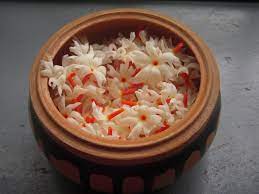
Kaash. Courtesy: Creative Commons
We have Tied Bunches of Kaash

We have tied bunches of kaash* and strung garlands of shefali.
We have decorated the wicker tray with new-sprung paddy. 
Welcome autumnal goddess on your chariot of white clouds! 
Ride on angelic azure paths,
Travel through clean bright glittering forested mountains.
Come wearing a crown of white lotus, sparkling with dewdrops. 
On the banks of Ganges, in a solitary bower
Carpeted with the flowers of fallen malati,
Swans flap their wings as your entourage. 
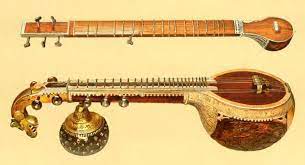
When you pluck the strings of your golden bina*,
Soft sweet notes, 
Usher laughter amidst transient tears. 
Like the magical parasmani* emanating light,
Stroke the flames of compassion in our hearts—
Brighten our thoughts and replace darkness with light. 

*kaash: Wild grass flowers
*Bina: Musical instrument 
*Parasmani: A magical touchstone

Bina. Courtesy: Creative Commons
A Bengali rendition of the song performed by a contemporary artiste, Rezwana Choudhury Bannya

In 1913, Tagore received a Nobel Prize for his own translation, Gitanjali: Song Offerings, published in England. Only 69 of the original 157 of the Bengali Gitanjali made it into the English translation.

An essay, ‘Publication of Tagore’s song offerings, the Gitanjali : A Study’ by Partha Pratim Ray, a librarian in Vishwa Bharati, contends: “Rabindranath Tagore himself took the task of the translation of Gitanjali (Song Offerings) when he sailed for England on 27 May 1912. There he handed over the poems to William Rothenstein whom he met earlier in Calcutta in the year 1911. Moved by the poems, Rothenstein in turn gave the poems to W.B. Yeats to read. The literary and artistic circle of Yeats decided to publish the poems after Yeats made a selection of them and wished to write an introduction to it. That is how Gitanjali was first published by India Society of London on November 1912.”

The article further elucidates: “The next edition of Gitanjali was published in the next year (March 1913) by Macmillan and Company, London. The number of poems in Bengali and English Gitanjali are not the same. In Bengali there were 157 poems, but in English it was 103. The poems were first published in different Kavyagrantha. At the end of the Indian edition of India Society or Macmillan there was a statement: ‘These translations are of poems contained in three books- Naivedya, Kheya and Gitanjali…’”

Yeats wrote the introduction for Song Offerings.  He wrote, “these prose translations from Rabindranath Tagore have stirred my blood as nothing has for years” and “Mr. Tagore, like the Indian civilization itself, has been content to discover the soul and surrender himself to its spontaneity.”

This poem has been translated by Mitali Chakravarty with editorial input from Sohana Manzoor on behalf of Borderless Journal

.

PLEASE NOTE: ARTICLES CAN ONLY BE REPRODUCED IN OTHER SITES WITH DUE ACKNOWLEDGEMENT TO BORDERLESS JOURNAL

Click here to access the Borderless anthology, Monalisa No Longer Smiles

Click here to access Monalisa No Longer Smiles on Kindle Amazon International

Categories
Tagore Translations

Sharat or Autumn by Rabindranath

Autumn expresses itself in Bengal as Sharat (early autumn) and Hemonto (late autumn). The Tagore pantheon of literature has much of seasons in it.  This poem, Sharat, was part of his poetry collection Kalpana, published in 1900.

Sharat by Sohana Manzoor.
Autumn 

I see your beauteous form
        In this autumnal dawn,
Oh! Mother Bengal, your green figure
          Is resplendent with radiance. 

The river cannot be contained in its bed. 
         The fields are overflowing with paddy. 
Robins chant and koels sing 
        In your graceful gardens.
Amidst this dawn of sharat,
        O Mother, you stand poised. 

Mother, the breeze chimes
       An auspicious onset —
Grains of new rice crops
        Fill homes with festivities.
You have no respite anymore.
        Sheafs of paddy move in bulk
Along rural paths wafting
          Their perfume in the draft. 
Mother, the zephyr sends you
          An intimation of the seasonal onset. 

The skies paint clouds 
      to welcome the season. 
Dewdrops have sprinkled
       Coolness on the green earth. 
The flute seems to play a melody that
        Wafts through the land, water and air.
Boats come crowding to your doorway
          From all directions. 
The sky is clear and blue. 
          The earth, soft and cool. 

The breeze starts to chill
       Refreshing tired bodies.
Every hut is filled with new hope,
         With the advent of new life. 
All over, Mother, abound events
           Organised by joyous faces. 
People grab fistfuls of happiness 
            From your overflowing granaries. 
The breeze rushes with anchals*
           Full of new life. 

Come, come, wherever you are, 
            Come running all of you —
Our Mother has opened her granary.
          Our grains are overflowing. 
Come by boat from the other bank,
           Mothers and daughters come.
Who cries in hunger under maternal care?
           Come running all of you. 
Our mother has opened her granary. 
            Our grains are overflowing. 
 
Our Mother wears a garland of shefali.
      Floral perfumes scent the earth. 
White, creamy cirrus clouds 
         Seem to stud her veil.
Crowned with a golden halo, 
       Sweet, glorious, green and resplendent, 
With feet dressed in blooms, 
        My mother stands poised. 
The whole world smiles at her illuminated
       With dewdrops, flowers and crops.


*Anchal is the loose end of a sari
Shefali or night jasmine. Courtesy: Creative Commons

This poem has been translated by Mitali Chakravarty with editorial input by Sohana Manzoor on behalf of Borderless Journal

PLEASE NOTE: ARTICLES CAN ONLY BE REPRODUCED IN OTHER SITES WITH DUE ACKNOWLEDGEMENT TO BORDERLESS JOURNAL

Click here to access the Borderless anthology, Monalisa No Longer Smiles

Click here to access Monalisa No Longer Smiles on Kindle Amazon International

Categories
Tagore Translations

Proshno or Questions by Rabindranath

Proshno or Question was written by Tagore somewhere between December 1931 and January 1932 and later published in 1932 in a collection called Parishesh[1]. The poem with its poignant overtones continues relevant to this date.

Art by Sohana Manzoor
Almighty, over eons, you sent emissaries
              To this ruthless world, 
They say: “Forgive everyone”, say, “Love only Love — 
               From deep within, toxicity purge.” 
In these cataclysmic times, I turn them away with a shamed bow
 For they now remain only as ideals to be revered, remembered.

I have seen the helpless persecuted by 
            Violence in the shadows of deceitful night. 
I have seen unprotesting truth victimised, 
             Justice weep secretly in plight.
I have seen passionate young men driven wild,
Beat their heads on rocks and tortured, die. 

Today, I am voiceless. My flute is stilled. 
            In the moonless night, who have filled 
 My universe with nightmares? 
            That is why cleanse with tears —
Those that poison the air, extinguish the light. O God, 
Have you forgiven them? Have you given them your love? 

One of the interesting things to note here is the reference to the flute player. Is he the same one who was evoked in his poem Ebar Phirao More (Take me back) written in 1894? That poem[2] starts with:

While the world moves busily
You play the flute, like a truant boy, 
Leaning under a shady tree in a field with 
The fragrance of the forest floating on 
A tired breeze. O, arise — there is a fire!

Is it the same flute player whose flute has been stilled?

.

[1] Translates to — At the End

[2] Our translation of Ebar Pherao More can be read by clicking here.

The poem has been translated by Mitali Chakravarty with editorial input by Sohana Manzoor on behalf of Borderless Journal

A video of Proshno recited by the poet in Bengali with subtitles by the you tuber, Swarup Dutta.

PLEASE NOTE: ARTICLES CAN ONLY BE REPRODUCED IN OTHER SITES WITH DUE ACKNOWLEDGEMENT TO BORDERLESS JOURNAL

Click here to access the Borderless anthology, Monalisa No Longer Smiles

Click here to access Monalisa No Longer Smiles on Kindle Amazon International

Categories
Tagore Translations

A Muslim Woman by Rabindranath Tagore


Translated from Bengali by Aruna Chakravarti, who adds: ‘The story, Musulmani’r Galpa[1], was published posthumously in July 1995 in the journal Ritupatra. In all probability, it was dictated from the writer’s sick bed just before his death in 1941.’

Veiled Woman, Ink on paper, by Tagore, National Gallery of Modern Art, New Delhi. Courtesy: Creative Commons

This is a story of long ago. Of a period in our history when the seeds of evil governance had sprouted thorns all over the land. When fear and anxiety had trapped the soul of the common man in the skeins of such a stifling web that all other emotions had dwindled and died. When imagined assault from demonic forces gripped all minds. When the simple act of living turned into a nightmare and trust could be reposed in neither God nor Man. When the line between good and evil had blurred and tears were the only reality…

In an age such as this, the presence of a girl was deemed a curse in a middle-class family. More so if she was beautiful. Porarmukhi![2]May your fair face burn to ashes! Curses such as these, bitter and stinging, were heaped on the poor girl. “If we could only rid ourselves of this accursed creature,” the women of the family wailed, “we might sleep peacefully in our beds.”

Such a situation, exactly, had arisen in the household of Bangshibadan, the talukdar[3] of Teen Mahala. His niece Kamala was beautiful. Worse, she was an orphan. Had she died along with her parents the family could have breathed easy. But she had lived on as a burden in her uncle’s household and was made aware of it every passing minute. “Just look at my luck sister,” her aunt was often heard complaining to the neighbouring women, “The parents dumped this monumental responsibility on my shoulders and left for the other world. Evil glances are cast at her from all sides. Anything may happen at any time. I have young children of my own and can’t sleep from fear of what will become of them. I live in constant dread…”

Bangshibadan didn’t share his wife’s annoyance at Kamala’s presence in his house. He loved her dearly and had brought her up with great solicitude. He kept her hidden from prying eyes, personally supervising her welfare and taking care of her needs. Life went on somehow but when a marriage proposal came for her, she couldn’t be kept hidden anymore. “I will wed her only into a family which has the means to protect her,” Bangshibadan was in the habit of saying, and now it seemed as though he had found what he was looking for.

The boy was the second son of Paramananda Seth, the zamindar of Mochakhali. People feared Paramananda for his money power but even more for the posse of hefty Bhojpuri lathiyals[4] he kept to guard his house and possessions. “There isn’t one son of a gun in the whole district,” the prospective bridegroom boasted to Bangshibadan, “who’ll have the gall to lay a hand on her.” He was very proud of his father’s wealth and had devised many ways of spending it. Falcon flying, gambling, bird fights…he was a master of all these pursuits. He was, as well, extremely susceptible to feminine charm. Though he had a wife already he was looking for another, younger, one and when reports of Kamala’s beauty reached his ears, he decided that she was the bride for him.

Kamala was appalled when she heard what her uncle had in mind for her. “Where are you sending me Kakamoni?” She burst into tears, “You may as well set me adrift in the river.”

“If I had the power to, protect you,” Bangshibadan replied sadly, “I would have kept you clasped to my breast for all time to come. You know that Ma…”

The arrival of the wedding party at the bride’s house was accompanied by a lot of fanfare. The sound of drums and pipes rent the air. Bangshibadan was alarmed. “Babaji,” he folded his hands before the groom, “It would be better if the noise was toned down a bit. It is unwise to attract too much attention.” But the groom was unfazed. “Let’s see which son of a gun…” he repeated his old line, his chest puffed out with importance.

 “I am a poor man with little clout,” Bangshibadan sighed and said, “I can’t vouch for the safety of everyone under my roof for long. I take responsibility only until the completion of the rituals. After that I will leave it to you to conduct your bride safely to your father’s house.”

“No need to worry. No need to worry,” The bridegroom twirled his moustache arrogantly and, watching him, the lathiyals were emboldened to twirl theirs as well.

It was nearing midnight when the wedding party set off with the bride for Mochakhali. A couple of hours later, while crossing the dreaded tract of land called Taaltarhir Maath, they were waylaid by the notorious dacoit Madhu Mallar and his gang. Bearing down on them with flaring torches and weapons far deadlier than lathis, the dacoits soon made short shrift of the lathiyals. The wedding guests fled in all directions abandoning the palanquin in which Kamala sat trembling with fear. Then, just as she was about to step out and try to hide in the bushes, she heard a man’s voice booming out of the dark. “Halt! Go back from where you came my sons. I am Habir Khan.”

Madhu Mallar and his gang stepped back instantly. They had great reverence for Habir Khan. In their eyes he was no less than a paigambar …a messenger from God.

“We can’t disobey you Khan Saheb,” Madhu Mallar said glumly, “but you’ve certainly ruined my business for the night.”

Habir Khan did not oblige him with a reply. Helping Kamala out of the palanquin he told her, “You are in great danger, child. You must leave this place at once. Come with me. I will take you to my house. It is only a short distance from here.” Seeing her shrink at his suggestion, he added, “I understand your reluctance. You are a Hindu, a brahmin’s daughter. It is natural for you to hesitate before entering a Muslim household. But let me tell you something. A truly devout Muslim respects a truly devout Hindu and won’t dream of harming him in any way. Trust me my child. You and your religion will be totally safe in my house.”

Habir Khan and Kamala walked through the woods till they came to a huge mansion. Leading her into one of its eight wings, he said, “This will be your home from now on. You will live here exactly as you did in your uncle’s house.” Kamala looked around. There was a yard with a temple at one end and a tulsi manch[5]at the other. The place looked no different from an upper-class Hindu abode. Everything she would need for her day-to-day living could be found here.

An elderly Brahmin came forward to greet her. “Come Ma,” he said in a kind voice. “Have no fear. This place is sacred. Your religion will be fully protected.”

Kamala burst into tears. “Please inform my uncle about what has happened. Tell him to come and take me home.”

“You are making a mistake child,” Habir Khan’s voice came to her ears, “After tonight’s incident you won’t find acceptance in any Hindu household. You’ll be thrown out into the streets.” He saw the expression on Kamala’s face and sighed. “Very well. I will take you there and let you see for yourself.”

Habir Khan led her to the door of Bangshibadan’s house and bade her go in. “I’ll be waiting here in case you need me,” he said.

Kamala flung herself on her uncle’s chest and wound her arms around his neck. “I have come back to you Kakamoni. Don’t send me away,” she begged. Bangshibadan’s eyes filled with tears. But before he could utter a word his wife burst into the room. “Throw her out,” she shrieked, “Throw the blighted creature out at once. She’s lived in a Muslim’s house. She’ll pollute us all.” Then turning to the weeping, shivering girl, she cursed and upbraided her in shrill penetrating tones. “Accursed one! How dare you show your face here after what you’ve done? Don’t you have any shame?”

Bangshibadan disengaged Kamala’s arms gently from his neck. “Forgive me Ma,” he said sadly. “I cannot take you back. I’m a Hindu. I’ll lose caste if I accept you. I’ll be ostracised by everyone in the village.” Kamala stood for a while, head bowed, then slowly made her way out of the house to where Habir Khan was waiting. She went away with him. The door of her old world was now shut against her for all time to come.

Kamala settled down in the rooms allotted to her. “All this is yours,” Habir Khan said to her waving his hands across the yard. “Not a single member of my family will set foot in this wing. Feel free to live in it the way you wish.”

This part of the mansion had a history. It even had a name. It was called Rajputani’r Mahal[6]. Many years ago, a nawab of Bengal had brought a Rajputani princess and installed her here. He had kept her with great dignity and made sure that she had no difficulty in practicing her religion. She was a very devout woman and an ardent worshipper of Shiva, so a temple was built for her in her own premises. She loved going on pilgrimages and arrangements for them were made with meticulous care. Over the years she became a role model for other Hindu begums and many of them found sanctuary under her sheltering wings.

Habir Khan was the Rajputani’s son. Though he followed his father’s religion he worshipped his mother like a goddess. He sought her guidance in every matter and it was from her that he had learned to respect the opposite sex. She had been dead these many years, but Habir Khan never forgot the vow he had made to her. To provide shelter to widowed and abandoned Hindu women. Scorned, persecuted, hated and stigmatised for no fault of theirs, many were forced to sell their bodies for a roof above their heads and a handful of rice in their stomachs.

As the days passed a realisation started dawning on Kamala. The freedom and comfort she enjoyed in this Muslim household was of a quality she hadn’t even dreamed of while living with her uncle. He cared for her but was powerless to protect her from ceaseless taunts, curses and abuses. She had grown so used to them… she had begun to think of herself as a blighted creature, a disgrace on the family, fit only to be thrown out on the streets. Here, in her new home, she was showered with luxuries. Every need of hers was taken care of by Hindu serving women. She was overwhelmed with kindness and love.

A few years went by. Slowly a change came over her. The winds of youth started to blow and her mind and body quivered with an unknown emotion. She fell in love with one of Habir Khan’s sons.

One day she opened her heart to her protector. Habir Khan’s face paled at her confession, but she went on calmly, “My love is my religion Baap jaan[7]. I have no other. I have worshipped many gods and goddesses in the past. I have poured out my heart and soul to them in prayer. I have begged for deliverance. Yet not one deity deigned to cast a glance at me or even send a sign that my prayer had been heard. What hope is left to me from a religion that leaves a poor, trusting, suffering girl rotting in a pit of abuse and persecution? I have known what it is to live, truly live, only after I stepped across your threshold. From you I’ve learned that even the lowest of human beings deserve love and protection.” Tears rolled down her cheeks. She wiped them away and continued, “From all the hardships I faced in life I have learned one lesson. The Lover and Protector is the true deity. He is neither Hindu nor Muslim. Baap jaan, I have given my heart to your second son, Karim, and my worship is now tied with his. In embracing Islam, I need not give up the faith I was born to. I can follow both.”

The marriage took place. Kamala’s name was changed to Meherjaan and she became a valued and integral part of Habir Khan’s family.

Now the time came for Bangshibadan to wed his own daughter. And history repeated itself as it is wont to do. While crossing Taaltarhir Maath the groom’s party was waylaid by Madhu Mallar’s men. They had been thwarted once. They were out for revenge. But as soon as they launched their attack a voice came out of the dark. “Khabardar[8]! Step back at once.”

Ore baba re[9]!” the dacoits ran helter skelter, “It’s Habir Khan!” Abandoning the bride to her fate the wedding guests did the same. Suddenly, a figure appeared on the scene holding a banner aloft on a spear. It was Habir Khan’s banner with his emblem, a half- moon, painted on it. But the bearer was a woman. Approaching the palanquin, she helped the trembling girl out of it. “Don’t be afraid Sarala,” she said, “Your elder sister is here to save you. From today you’ll be under the protection of the One who loves and provides sanctuary to all human beings irrespective of caste, creed or religion.”

Turning to her uncle she said, “Pronam kaka[10]. Don’t be alarmed. I shall not pollute you by touching your feet. Take Sarala home. No one has dared to lay a finger on her. She’s as pure today as on the day she was born. And tell kaki [11]that I never thought I could pay back the debt I owe her. The debt of food and shelter so ungraciously doled out while I was her dependent. I am doing so now.” Putting a red silk sari and an asan[12] covered with rich brocade into her uncle’s hands, she added, “I brought these gifts for Sarala. Take them. And remember, if she’s ever in trouble her Muslim sister will be there for her. To give her all the care and protection she requires.”

[1] Literal translation: A Muslim Woman’s Story

[2] An abuse which literally means burnt face

[3] Minor official

[4] Men wielding sticks

[5] Tulsi is Basil, holy for Hindus and manch is dias.

[6] Rajput princess’s palace

[7] Father

[8] Beware

[9] An exclamation of fear — Oh my father!

[10] Salutations uncle

[11] Aunt

[12] A small carpet

Aruna Chakravarti has been the principal of a prestigious women’s college of Delhi University for ten years. She is also a well-known academic, creative writer and translator with fourteen published books on record. Her novels JorasankoDaughters of JorasankoThe InheritorsSuralakshmi Villa have sold widely and received rave reviews. The Mendicant Prince and her short story collection, Through a Looking Glass, are her most recent books. She has also received awards such as the Vaitalik Award, Sahitya Akademi Award and Sarat Puraskar for her translations.

.

PLEASE NOTE: ARTICLES CAN ONLY BE REPRODUCED IN OTHER SITES WITH DUE ACKNOWLEDGEMENT TO BORDERLESS JOURNAL

Click here to access the Borderless anthology, Monalisa No Longer Smiles

Click here to access Monalisa No Longer Smiles on Kindle Amazon International

Categories
Tagore Translations

Megh or Cloud by Rabindranath

Published in 1906, Megh (cloud) can be found in Tagore’s collection called Kheya (boat).

Adrift, without a beginning and an end, 
With an awning of black and white blend, 
        The sky is dressed whimsically.
We are all merely mounds,
Stacks of wafting clouds. 
    I think only of him and his whimsicality. 
We have no boundaries nor home,
We come and we are gone. 

Suns, planets, stars shine bright.
Though they are garlands of lights, 
        They remain tied to eternal tasks.
With permanence, they grace
Words illuminating a dark page. 
         We are merely like drafts—
 With myriad of colours filled, 
Re-written and erased at will. 

Sometimes, when we are free, 
We call out in a spree,
              Smiling without a reason.
Does our caprice create an illusion? 
The rain still falls without evasion. 
            The lightning is not a diversion. 
Only, my friend, we do not stay.
With the breeze, we drift in or float away. 

(This poem has been translated by Mitali Chakravarty with editorial support from Sohana Manzoor)

PLEASE NOTE: ARTICLES CAN ONLY BE REPRODUCED IN OTHER SITES WITH DUE ACKNOWLEDGEMENT TO BORDERLESS JOURNAL

Click here to access the Borderless anthology, Monalisa No Longer Smiles

Click here to access Monalisa No Longer Smiles on Kindle Amazon International

Categories
Tagore Translations

Pran or Life by Rabindranath

Pran or Life by Tagore was published in 1886 as part of his collection called, Kori O Komal (Sharp and Flat). The book featured 83 poems by him.

Art by Sohana Manzoor
LIFE 

I do not desire death in this resplendent universe. 
I want to live amidst the ocean of humanity.
In this radiant sunny garden of floral swirls,
I yearn for acceptance from hearts filled with vitality. 
Life on Earth ebbs and flows in transient waves. 
Partings and meetings are filled with tears and joys. 
I want to bead these emotions into melodic strains,
To create songs that will be eternal and spirits buoy. 
If I cannot achieve that, then as long as I live, 
Let me find shelter in your midst. 
Let me, every morning and evening, give
Lyrics that bloom like flowers waiting for a tryst. 
Pluck the blossoms happily, and then, without a sigh, 
Throw them away, alas, if they wilt or dry. 

A recitation of the original poem in Bengali by Swati

(This poem has been translated by Mitali Chakravarty with editorial support from Sohana Manzoor)

PLEASE NOTE: ARTICLES CAN ONLY BE REPRODUCED IN OTHER SITES WITH DUE ACKNOWLEDGEMENT TO BORDERLESS JOURNAL

Click here to access the Borderless anthology, Monalisa No Longer Smiles

Click here to access Monalisa No Longer Smiles on Kindle Amazon International

Categories
Essay

Rabindranath’s Monsoonal Music

Professor Fakrul Alam brings to us a discussion on and translations of Tagore songs on the season that follows the scorching heat of summer months

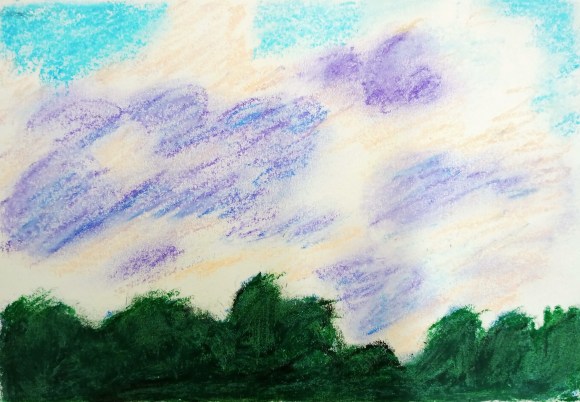
Art by Sohana Manzoor

A rough count of the songs collected in Gitabitan in the section titled “Prakriti” or “Nature” reveals that Rabindranath Tagore composed about sixteen songs of summer, more than 100 monsoonal ones, 33 songs of Sharat or early autumn, five of Hemonto or late autumn, and a dozen or so songs of winter. In addition, he has left us around 93 songs of spring. For many decades, I kept wondering how Rabindranath managed to end up with such a lopsided list as far as his songs of the six Bengali seasons are concerned. After all, late autumn and winter are enjoyable seasons when Bengal is blissfully heat-free and the weather quite mild and bearable; why, then, did he show such fondness for the wet monsoonal months and the rapidly warming and (at its end quite unbearably hot) springtime? But I am puzzled no longer by his preference for our Borsha, for it now seems clear to me that he had good reasons to prefer the monsoonal months over all else. In recent decades, now that I fancy I have something of what Wordsworth calls the “philosophic mind” (and in this age of global warming as well!), I can appreciate fully why the monsoonal months stimulated Rabindranath so continuously into songs.

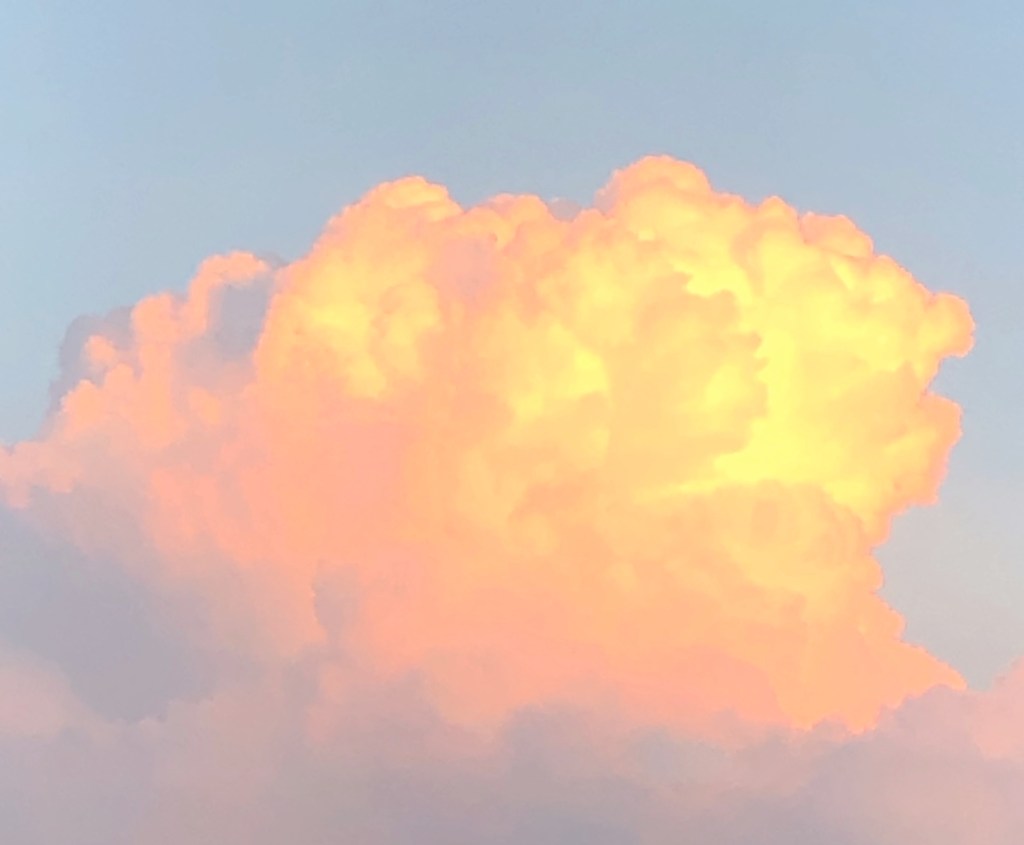
Think of the summer months. From mid-April till the second week of June, the weather torments us all over Bangladesh with stifling heat and unbearable humidity. Who in these weeks of scorching sun, steadily frying dampness and seemingly immobile and incredibly muggy air does not yearned for an ever-increasing cloud cover leading to sudden bursts of showers and rainy conditions? Isn’t the monsoon a huge relief after the summer months, despite the flaming krishnachuras [flame of the forest] and the seemingly endless stream of summer fruits that arrive in our market then?  Don’t we all look forward to the pitter patter of raindrops, even if accompanied by thunder and lightning, when hot and dry ourselves? And isn’t the fresh green look of nature after a burst of rain so very soothing?

As in his devotional and love poems, Rabindranath captures feelingly in his monsoonal song-lyrics a variety of moods.  One such mood is the longing for relief from an oppressive presence. Registering the cruel heat and humidity of our late spring and summer, his songs often exult in the respite that the monsoons afford us. Hear him thus dramatise the excitement all life forms feel just before, during and after the coming of the monsoons, in the opening two stanzas of the song-lyric ‘Oi Ashe Oi Oti Bhairob Horoshe’[i] [The Clouds Arrive Amidst Joy]

There, there they come — monsoonal clouds—
Exhilarating, awesome, moisture-laden,
Fragrant, earth-soaked, dense, rejuvenated
Dark-hued, somber, glorious— ready to burst!

Their deep rumblings quiver dark-blue forests
Tense peacocks out on strolls cry out,
The whole world is thrilled, overwhelmed. 
Intense, amazing—monsoon is on its way!

Indeed, song after song of Gitabitan record Rabindranath’s fascinated melodic outburst after a dramatic monsoonal outburst. Here is another example, ‘Prochondo Gorjone Ashile Eki Durdeen’, [Amidst Thunder comes a Dreaded Day].

Such a dreadful day, so full of rolling, thundering sounds
Disquieting cloud buildups, ominous endless outbursts!
Such a thick cloud cover; serpentine lightning, scarring night
Making the sky stream tears despite its totally blinded eyes!
But abandon all your fears; stir O scared and slothful ones.
Cheerfully, build up within yourself ample strength
To behold with resolute and wide open eyes His serene presence 
Behold Him seating superbly on his throne –defying death, fearless!

Completely committed to the notion of a Supreme Being in his works, Rabindranath conveys his wonder at the monsoonal drama of clouds, thunder, and lightning and rain in many a song, inspired by scenes that he sees in the last analysis as embodying the power and inspirational presence of the deity.

A sizeable number of Rabindranath’s song-lyrics are in this religious vein, but not all. In other monsoonal song-lyrics Rabindranath presents to us not only the awe-inspiring/ sacramental signs of the deity embodied in such seasonal storms, but also the frightening and intimidating aspects of our rainy season. He is well aware of the deep unease the monsoonal storm’s power and intemperate outbursts can cause, and the way it can scare all things in nature and make them aquiver. The foreboding created by the approach of an overwhelming and apocalyptic force is thus apparent in the concluding lines of the song ‘Hridaye Mondrilo Domoru Guru Guru’ (A Drum Rumbles in the Heart): 

The night is full of thunder and lightning;
The clouds are intense, startling.
Jasmine creepers tremble and rustle in melancholy notes
Woodlands fill with insects chirping in alarm!

In fact, Rabindranath is acutely aware of how the monsoon can disrupt lives, particularly those of people out in the open or men and women who have to travel in inclement weather despite the thunder, lightning, rain and flash floods that the monsoons invariably bring. His concern for such vulnerable people and concern at such intemperate weather comes out clearly in Jhoro Jhoro Boreshe Baridhara [The Rain Streams Incessantly]:

Rain streams down incessantly
Alas wayfarer; alas disabled, homeless ones!
The wind moans on and on.
Who is it calling out to in this immense, deserted, dismal landscape?
The night is pitch dark,
Jamuna restless; its waves agitated, endless; its shores have disappeared!
Dense dark rain clouds hover in the horizon, rumbling continuously.
Lightning darts restlessly, dazzlingly—no moon or stars in sight! 

On the other hand, the monsoons are also seasonal visitations for Rabindranath that induce in him desire for romance or romantic cravings that need to be fulfilled.  Note how intensely the yearning of a lover anxious to impart his feelings to his beloved in a rain-stirred mood is articulated in Emono Dine Tara Bola Jai [On Such a Day, They Say]:

On such a day she could be told
On such a dense, dark, wet day!
On such a day to her I could my mind unfold,
On such a cloudy, thunderous, showery day
		On just such a sunless, dense, dismal day!

I’d tell her what no one else would know
	Silence would us probably surround,
We’d face each other, each sobered by a deep wound.
	Incessant rain would from the sky flow; 
	Surely, no one then would be around.

	Societal and family life would feel unreal
	The hullabaloo of life too would feel surreal
What would only matter are eyes feeding on each other
	And two hearts savouring one another;
	All else would merge with darkness.
If in a corner of the house on such a rainy day,
	I had then a thing or two to tell her 
Why would anyone have anything to say?

	The wind blows with great force today;
	Lightning keeps flashing away
What I’ve been storing in my mind till this day
	Is something that I’d like to tell her today—
	On just such a dense, dark, wet day!

Not a few of the song lyrics collected in the ‘Borsha’ [Monsoon] part of Gitabitan depict such brooding and passionate thoughts and the intense yearning for the beloved brought on by the turbulence of the monsoonal breeze. Here is another such song, Mor Bhabonere Ki Haowa [What wind is it lilting my thoughts so amazingly]:

What wind is it lilting my thoughts so amazingly?
Its caress swings, swings my mind unaccountably.
In my heart’s horizon moist dense new clouds swarm,
			Stirring a shower of emotions.	
I don’t see her—don’t see her at all
Only occasionally in my mind I recall
Almost indiscernible footsteps sounding
And ankle bells tinkling, oh so tunefully!

A secret dreamscape spreads
Across the wet wind-swept sky—
A new and ethereal azure shawl!
Shadowy unfurled tresses fly,
Filling me with such intense disquiet
On this far-off ketoki-perfumed wet night.

All in all, Rabindranath’s inspired lyrical responses to the monsoons remind one that he is in some ways a poet following in the footsteps of William Wordsworth. One remembers, in this context, the English romantic poet’s lines in Book I of The Prelude where he conveys his ardent and positive response to the coming of the English spring after the English winter’s life-shrinking barrenness. Wordsworth sees the English spring ushering in a “correspondent breeze” that gives rise to poetry. To make the point somewhat differently, just as the spring breeze is Wordsworth’s metaphor for the muse, Rabindranath finds in the monsoons endless inspiration for composing song-lyrics and poetry. Here is a translation of one of his most popular ones Mono Mor Meghero Shongi [ My Friend, the Cloud]:

My mind is the clouds’ companion,
Soaring to the limits of the horizon
And crossing wide open spaces to sravan’s music 
Of rain falling pitter patter, pitter patter!
	My mind soars on crane-like wings
	To startling, streaking, lightning flashes,
	And rumbling, terrifying,
	Tumultuous, deafening sounds
	Responding to apocalyptic summons!
The wind blows from some eastern sea
Surging, rippling waves crest endlessly
	My mind is fascinated by their frantic motion
	By palm-fringed, dark-tamal tree forests
	And to branches fluttering frenziedly!

Space will not permit any more long extracts, but on the subject of inspiration I can’t resist including the concluding stanza of the much loved song lyric, ‘Hriday Amar Nachere’ (My Heart Dances):

Like a peacock dancing, my heart dances this day.
Showers stream down on newly sprouted branches,
Cricket songs stir forests,
The rampaging river roars over banks and floods villages,
Like a peacock dancing, my heart dances this day!  
 

No wonder then this monsoon-stirred poet has articulated for all Bengalis so melodically the many-sides and wonders of the season as no other writer has; no other writer from our part of the world has been so mesmerised by our rainy season and so stirred into unforgettable songs and poems by it!

[i] All translations from the Bengali song-lyrics are that of Professor Fakrul Alam.
(First published in Daily Star, 2019)

Fakrul Alam is an academic, translator and writer from Bangladesh. He has translated works of Jibonananda Das and Rabindranath Tagore into English and is the recipient of Bangla Academy Literary Award (2012) for translation and SAARC Literary Award (2012).

PLEASE NOTE: ARTICLES CAN ONLY BE REPRODUCED IN OTHER SITES WITH DUE ACKNOWLEDGEMENT TO BORDERLESS JOURNAL

Click here to access the Borderless anthology, Monalisa No Longer Smiles

Click here to access Monalisa No Longer Smiles on Kindle Amazon International

Categories
Tagore Translations

Aparichita by Tagore


Written in 1916 by Rabindranath Tagore, ‘Aparichita’ is a short story featured in his ‘Golpo Guchho’ (A Collection of Stories). It has been translated from Bengali by Aruna Chakravarti as The Stranger.

Goplo Guchho, a collection of 95 short stories was originally published in five parts by Indian Publishing House from 1908-1909

The Stranger

I am twenty-seven years old today. My life has been unremarkable, so far, both in terms of length and quality. Yet it is not without value. It can be compared to that of a flower on whose breast a honeybee had nestled once, leaving behind a faint glimmer that germinated and swelled into a tiny ball of fruit.

Something similar happened to me. The encounter was brief; almost ephemeral. In chronicling the events I shall be brief too. But make no mistake. Though short, my story should not be passed over unread. Those who take the trouble to go through it will find meaning in it.

I am well educated. I have passed all my college examinations with ease. I am good looking too. When I was a child my school masters would mock my pretty face. Simul phul they would call me. Makal phal. Simul is a flower and makal, a fruit. Both have gorgeous exteriors but are of no use to anyone. The first is totally lacking in fragrance and the second in flavour. I would shrink with shame and resent the unfairness of these remarks. But as I grew older, I told myself that if another birth was granted to me, I would like it to be a replica of this one. My face should be as handsome and those of my schoolmasters as twisted with derision as when I was a lad.

My father had been poor once. In later life he made a lot of money. However, his profession as a lawyer demanded so much time and effort that he never got a chance to enjoy any of it.  He must have heaved a sigh of relief when he died. For the first time he had been granted a rest.

My upbringing was left to my mother. Having come from a poor family she never lost sight of the fact that she was a wealthy woman. Nor did she allow me to do so. As an infant I remember being carried long after I had learned to walk. As a result, I never really grew up. I still look amazingly young for my age. I could easily pass for the elephant headed god’s younger brother nestling in his mother Annapurna’s lap.

After my father’s death, my maternal uncle took charge of our affairs and became my guardian. Mama[1] was only six years older than me. But, like the parched sands of a subterranean river, he  steadily sucked away everything we had… assets, liabilities, hopes, cares, dreams and aspirations. The draining had been so thorough that we were unable to access anything on our own. We had to dig into him for every drop. In consequence, I lived a life totally shorn of responsibility.

 Fathers of marriageable daughters could not but consider me a good catch. I had no bad habits. I’d never even touched tobacco. I was simple and good tempered. That’s because being simple and good tempered made life easy for me. I obeyed my mother because I lacked the guts to disobey her. I was prepared to allow this quality full play in future. Girls permitted to choose their own husbands would do well to keep this in mind, when making their choice.

As soon as the time was ripe, marriage proposals from the best families started to pour in. But my uncle, who was the Chief Agent of the Dispenser of my Destiny, had very definite ideas of what constituted a good match. The girl had to come from an impoverished family for only then would she keep her head bowed and be humble and obedient. On the other hand, what was the value of a daughter-in-law who didn’t bring a substantial dowry? My uncle’s requirements were simple. The father had to be poor yet ready to give him all the money he wanted. He must be the kind of man Mama could milk with ease yet wasn’t obliged to treat with respect. One who wouldn’t complain if he was offered tobacco in the coconut shell hookah meant for subordinates instead of the lordly silver albola he smoked himself.

My friend, Harish, works in Kanpur. On one of his visits to Kolkata, he said to me, “O hey! Speaking of brides, I know an excellent girl.”

I was in a state of limbo at the time. I had passed my M.A. some months earlier. Now there was nothing for me to do. I didn’t have to study or look for a job. Nor was I required to poke my nose into any of my financial affairs. No work, no worries, no opinions were expected of me. A desert of indolence and inactivity stretched before my eyes. I was consumed with thirst for something; someone… I had no idea who or what I was searching for.

 In this frame of mind Harish’s words struck a chord in me. My mind and body trembled with an unknown emotion — the way newly budding leaves on the boughs of a bakul[2] tree shiver and quiver with the first warm winds of spring, throwing dancing patterns of light and shadow on the ground. Harish had a romantic side to him, and he spoke with tenderness and passion. He described the girl in words that fell like a sweet shower on my shrivelled soul. I looked at him with star struck eyes, “Why don’t you speak to Mama, Harish?” I begged.

Harish was ready to oblige. He was a great entertainer, and everyone enjoyed his company including my uncle who, once they sat down to a chat, was loath to let him go. Mama, of course was more interested in the girl’s father than in her. From Harish’s description he came to know that, though wealthy once, the gentleman was now in straitened circumstances. However, there were still some good scrapings left in the pot of gold bequeathed to his family, years ago, by the goddess Lakshmi. Unable to keep up the lofty standards set by his forefathers, he had decided to leave his ancestral village and settle in a small town in the west where no one knew him and he could live a simple life, without worrying about lost prestige. He had just this one daughter, no one else, so he wouldn’t hesitate to pour the contents of the pot into the hands of one who ensured her happiness. What could be better? My uncle was thoroughly convinced that this was the man he was looking for.

So far so good. But there was one worrying factor. The girl was fifteen. Why had she been kept unwed for so long? Was there some flaw in the family? “Arre na na[3]” — Harish hastened to explain. The father was very picky. He hadn’t found anyone he considered worthy of her, so far. He didn’t mind waiting till the right boy came along. But the girl’s age did. Refusing to stop at her father’s command it had marched on at its accustomed pace. Harish’s ability to charm his listeners and lull their fears, worked. Mama was persuaded to look into the proposal.

 Mama considered any place outside Kolkata to be as alien and exotic as the islands of the Andaman. The furthest he had travelled in his life was to Konnagar. If he had been Manu[4], he would have forbidden the crossing of Howrah Bridge, in his Samhita[5], for who knew what dangerous territory lay beyond it? There was no question of his leaving Kolkata, so my cousin Binu was sent to Kanpur to conduct the negotiations and, if all went well, seal the new relationship by a ritualistic blessing of the bride. Mama had full faith in Binu da[6]’s good sense, good taste and sagacity. I would have liked to go with him and see the girl but couldn’t summon up the courage to ask for permission. I didn’t even dare ask to be shown a photograph.

Binu da returned satisfied. “She’ll do…,” he muttered, “pure gold.”

 He tended to speak in monosyllables and was extremely reticent in his praise. Where another would have exclaimed “Wonderful!” or “Excellent!” he mumbled, “Not bad”. His “She’ll do” was ample affirmation. It was clear to all of us that Fate had smiled on me. Prajapati, the God of marriage, had given the nod.

As was to be expected, Mama decided that the wedding would be held in Kolkata. The resultant effect was the bride’s father was forced to make all the arrangements in a city of which he knew nothing. Shombhunath Babu was a handsome man of about forty. There were traces of silver in his whiskers though not in his hair which was black and plentiful. He had the kind of good looks that compels attention even in a crowd. The immense trust that he reposed in Harish was evident from the fact that he agreed to the marriage without seeing me. He set eyes on the one who was to be his son-in-law only three days before the ceremony.

I fervently hoped that he liked what he saw. It was difficult to tell. He spoke little in a very soft voice and listened quietly when Mama’s tongue wagged vigorously with exaggerated accounts of our wealth and status and our reputation as one of the first families of Kolkata. I squirmed with embarrassment under that gentle, probing gaze. But Mama’s enthusiasm would not be dampened. He went on and on. He probably assumed, from Shombhunath Babu’s subdued voice and manner, that the man was spineless and easily intimidated. The thought must have filled him with glee for, in fathers of brides, this quality was deemed a virtue. He remained seated when his guest rose to take his leave. He didn’t think it necessary to escort him to his carriage.

The cash component of the dowry had been agreed upon already. Mama, who prided himself on his extraordinary skill in negotiation; his well-honed ability to extract the best deal for himself in any given situation, now turned his attention on the quality and quantity of jewels that would adorn the bride’s person. Polite but pointed questions elicited the response he desired. Enough would be given to satisfy the most determined of blood suckers. I had no idea of what was going on between the two guardians. To tell the truth I wasn’t interested. Financial affairs were not my business. Besides I was confident that, in any battle of wits, Mama would emerge the winner. It mattered little that we didn’t need the money or that Shombhunath Babu was being squeezed dry. I was proud of Mama as were we all.

The turmeric ceremony was conducted with a lot of fanfare. So many trays of gifts were sent to the bride’s house with so many maids and servants carrying them, that doling out the necessary tips must have been a financial drain on her father. Exchanging gleeful remarks about the poor man’s distress and helplessness, Ma and Mama had a good laugh.

The wedding day arrived. The bridegroom’s procession was led by a mighty concert of drums, trumpets, flutes and fiddles. This set up such a pandemonium of discordant sounds that the noise could be compared to a stampede into Saraswati’s lotus garden, by a herd of mad elephants, violent enough to force the goddess of music to flee to safer havens. Covered with brocade and precious gems, I looked exactly like a jeweller’s shop in the middle of an auction. I had to prove to the bride’s father, had I not, the worth of the son-in-law he had had the good fortune to acquire? It was a battle of prestige and I rushed headlong to win it.

Mama was not impressed by the wedding venue. The assembly hall, to which the bridegroom’s party was ushered, was small and the seating somewhat constricted for the number of guests we had brought. The arrangements were on an ordinary scale, hardly befitting our family’s wealth and position. He was also a bit miffed by Shombhunath Babu’s behaviour. He found it strange. Rather cold and distant. If it weren’t for another man’s servile bowing and scraping, oily smiles and folding of hands, Mama might have felt incensed enough to walk out of the house with the bridegroom in tow. This was a lawyer friend of the bride’s father—a hulk of a man with a huge bald head and a very dark complexion. That he was in charge of the logistics was obvious from the greasy sheet he had wrapped around his middle and the cracked voice that was clearly the result of having shouted orders all day. The good thing was that, unlike the bride’s father, he was aware of the niceties of social behavior and what was owing to the groom’s party. He smiled and swayed his heavy head at everybody and addressed strings of flattering words to each, from the cymbal player in the band to the most distinguished of the wedding guests.

Shortly after our arrival Mama took our host aside and whispered something in his ear. The two walked out of the room. I don’t know what transpired between them but, within a few minutes, Shombhunath Babu returned. “Babaji!” he said, “Your presence is needed. Please come with me.”

The problem was a simple one. Some persons, not all, are ruled by a single compulsion. Mama was one of them. He had a goal before his eyes of which he was determined never to lose sight. This goal, he would never forgive himself if he failed to reach it even in the tiniest degree, was that he would never allow anyone to get the better of him. He had a horror of being cheated. The bride’s father had promised a good amount of jewellery. But could he be trusted to keep his word? The man seemed somewhat tight-fisted judging from the tips and return gifts the servants, carrying the turmeric, had brought back with them. Who knew if the bridal ornaments were of the weight and purity of gold promised? The sensible thing to do was to have their worth assessed before the rituals commenced. To wait till after the ceremony would be an exercise in futility. Thus, with due caution and good sense, he had included our family goldsmith in the wedding party.

My future father-in-law led me to a small room. It was empty, except for Mama who was seated on a chowki[7], and the goldsmith who sat on the floor with his scales, weights and touchstones spread out before him.

 “Your uncle wishes to have the girl’s jewels tested before the ceremony,” Shombhunath babu looked at me with a strange expression in his eyes. “What do you say?”

I hung my head in silence.

“Why should he say anything?” Mama answered for me. “It’s what I want that counts.”

“Is that so? Do you endorse your uncle’s statement?” The gentle, thoughtful gaze unnerved me. Not knowing how to respond I tilted my head expressing assent. Financial affairs were handled by guardians. What right did I have to interfere?

“Very well.” Shombhunath Babu murmured. “The trouble is…it will take some time to remove the jewels. The bridal toilette is complete, and my daughter is wearing them already. Had I known….no matter… please stay here till I return.”

“Why?” Mama cried out surprised. “Why should he stay here? Go back to the hall, Anupam, and join the others.”

“No.” Shombhunath Babu’s voice was soft but firm. “He will stay here.”

He left the room and returned after half-an-hour with a bundle wrapped in a gamchha[8]. Spreading out its contents on the chowki, he invited the goldsmith to begin his examination. The goldsmith’s practiced eye told him the worth of what he saw in an instant. “There’s no need to examine anything,” he said, “The gold is hundred percent pure. Not a trace of alloy. Look.” Picking up a bangle he pressed it gently. A tiny dent appeared. “These are obviously from a bye gone era. Nothing like this is fashioned anymore. The girl’s grandmother’s perhaps?” He threw a questioning glance at our host.

The moment he heard this Mama whipped a notebook out of his pocket and started listing the ornaments one by one. He had to make sure that everything he had been shown would find its way into the family vault. A pleased smile appeared on his face. They were far more in number and of greater weight than he had expected.

Now, Shombhunath Babu picked up a pair of earrings from the pile. “Kindly examine these and let me know their value,” he said. The goldsmith turned them over in his hands. “Bought from an English shop,” he curled his lips disdainfully, “They have hardly any gold to speak of.” Shombhunath Babu took them from him and handed them to Mama. “Keep these with you,” he said. Mama’s face flushed a deep red with embarrassment. They were the earrings he had sent with Binu da for the bridal blessing.

“Go Anupam.” He tried to recover his composure. “Go sit with the others in the assembly—”

“No. No.” Shombhunath Babu interrupted smoothly. “There’s no need to go to the assembly hall just now. Dinner, for the bridegroom’s party, has been served and your guests have proceeded to the dining area. Let me take you there.”

“What!” Mama exclaimed, “Eat now? Before the ceremony begins…?”

“The auspicious hour is far off. Why wait till then? Please come with me.” There was something in his voice, a strength that came from a long habit of command, that compelled obedience. Mama rose meekly and followed him out of the room.

The meal, though not ostentatious, was well-cooked, neatly served and plentiful in quantity. The guests ate to satiety and were well content. Shombhunath Babu invited me to join them, but Mama was aghast at the suggestion. “What nonsense!” he cried forcefully, “How can the bridegroom sit down to a meal before the rites have begun?”

Shombhunath Babu ignored the outburst. “What do you say?” His eyes looked into mine thoughtfully. As though he expected a reaction. Any reaction. But I remained silent. What could I say? How could I go against the express wishes of my uncle and guardian?

“Very well then.”  Shombhunath Babu turned his attention back to my uncle. “You have taken a lot of pains and come a long way,” he said pleasantly. “My hospitality, I’m afraid, has not met the standards your illustrious family is used to. I’m a poor man. Please forgive me. I do not wish to trouble you any further.”

“It’s alright. It’s alright.” Mama waved his hands in the lordly manner he used to reassure his inferiors and demonstrate his generosity. “Let the ceremony begin. I’m ready…”

“It will take a few moments for your carriages to arrive. Kindly wait till then.”

“What!” Mama’s eyes nearly popped out of his head. “Is this a joke?”

“You are the one who has turned a serious affair into a joke.” Shombhunath babu answered calmly. “How could you even think that I would steal my own daughter’s jewels? What sort of people are you? I am sorry but I cannot give my daughter in marriage to a family like yours.” He looked straight into Mama’s eyes ignoring me completely. He didn’t glance at me even once or try to gauge my reaction. He seemed to have made up his mind that I was nothing.

What happened after that? As was to be expected the groom’s party shouted and cursed, broke the furniture, smashed the chandeliers and having completed the carnage to their satisfaction made their way home. The band that had pronounced its entry into the wedding venue with such a cacophony of sounds now slinked along the streets in funereal silence. The lamps had burned out and the only light that guided the mournful procession came from the stars.

The rest of the family was wild with fury. Had anyone even dreamed, let alone seen or heard, anything like this? Such arrogance in a bride’s father! What did the man think of himself? “Let’s see how he secures another match for his precious daughter,” the women cried out to one another, “The world doesn’t run according to his whims and fancies. Wait and watch. He’ll be taught the lesson of his life.”

Which was all very well. But what was the point of cursing a man with the eternal spinsterhood of his daughter if he was prepared to keep her unwed all her life?

In the whole of Bengal, I was the only bridegroom with the distinction of being turned away from the wedding venue. I, who was so eligible! Such an excellent catch! And to think that the stigma stamped on my brow had followed such a jingoistic display of wealth and status from our side! Everyone was laughing at us. Mama’s breast burned with rage and humiliation. The thought that stung him most cruelly was that the wily father of the bride had outwitted him. How cleverly he had managed to feed him and his party, keeping them in his debt forever, before sending them packing! The insult was not to be borne. “I’ll sue the scoundrel for defamation and breach of promise,” Mama shouted as he stomped about the house. “I’ll make sure he spends the rest of his days turning the grinding stone in jail.”

 At this point some of his well-wishers stepped in. If he tried anything of the sort, they warned, he would lose the few shreds of dignity he had left. The farce would be complete. 

Needless to say, I was fuming too. “If only some disaster were to strike the man,” I thought over and over again,” he would regret his folly and come rushing to my feet begging for forgiveness…” I wished fervently for something terrible to happen. I lined up all kinds of possibilities tugging at my whiskers in nervous anticipation.

Yet, running parallel to this dark stream of hate and malice, was another. Irradiated with light. My thoughts had been submerged in its waters all these months and would not be dismissed. No matter how hard I tried, I couldn’t pluck out the image of the unseen maiden which had taken root in my heart. Her face had possessed me entirely and continued to do so. I saw a brow adorned with sandal paste. Cheeks flushed a deep rose in shy expectancy. A form draped in red silk, glittering with jewels. In the fantasy world I inhabited she was a golden creeper, ready and waiting to shower her wealth of spring blossoms at my feet. One moment, another step, and I could have claimed her. But the moment had stretched to eternity. A mighty wall had appeared between us, and I had lost sight of her…

Ever since Binu da’s return from Kanpur I had made it a point to visit him, every evening, and pester him with questions. Being extremely economical in language and expression he had said little. Owing to that very fact, perhaps, the few words he uttered sent sparks flying into my soul and set it aflame. I was overwhelmed with a sense of the girl’s beauty. It was not of this world. It was ethereal.

I had waited patiently for the moment when the imagined would transform to reality. When I would see, with the eyes of the flesh, what I had only dreamed about. But alas! Fate had beguiled me with false hopes then dashed them to the ground. A thick veil of mist had risen between us. She had disappeared beyond it, and I was left on the other side, lurking like a ghost.

The girl had been shown my photograph… so I’ve heard from Harish. I’m sure she approved of what she saw. Why wouldn’t she? My heart told me that she has kept it hidden in a secret drawer. And on lonely afternoons, secure in her room with doors and windows locked against prying eyes, she would take it out and look longingly at it. I saw her bending forward to examine it more closely, her beautiful hair falling on both sides of her face in long shining strands. And the moment she heard footsteps, she would hide it quickly in the scented folds of her sari.

The days passed, one by one. No one mentioned marriage. Mama was still nursing his grievance and Ma thought it preferable to wait till people have forgotten my humiliation.

Harish told me that good matches were found for the Kanpur girl, but she had taken a vow to remain unwed. The news filled me with elation. My inner eyes could see her… pale and worn with longing for me. She ate little and that, too, when she was forced. Dusk[9] would set in but she would forget to braid her hair. Her father looks at her and wondered. “What has happened to my girl? Why is she so changed?”  Sometimes, he would walk into her room and find her sitting by the window, her eyes streaming with tears.

“What is the matter Ma?” he would ask tenderly. “Tell me the truth. Is something troubling you?”

“Why, no Baba.” She wiped her eyes quickly and rose to her feet. “Nothing is wrong.”

The father’s heart would sadden. She was his only child. His pride and joy. How could he bear to see her thus? How could he stand by and watch a delicate bud, just about to open its petals, wilt and wither in the hot dry winds of a rainless summer? He decided to swallow his pride. He would rush to our door and beg pardon with abject humility…

 After that…what? 

The stream of hate that lay coiled within me unwound and stretched to its full length. “Tell the girl’s father to make fresh arrangements,” it wouldhiss like a poisonous snake. “Let lights blaze and guests arrive from far and near. Then, just when the rituals are about to commence, gather the bridegroom’s party together and walk out of the wedding venue with a smile.”

 But the other stream, pure as a lover’s tears, appeared before me in the form of a milk white swan. “Set me free,” it pleads. “As I flew to Damayanti’s[10] garden, aeons ago, so let me wing my way to the beloved one and whisper the joyful tidings in her ears.”

 The dark night ended, new rain fell, the drooping flower raised its face. The wall crumbled and made way for me. Only me. The others were left behind. And then…?

My story ended here.

But no. It wasn’t the end. I’ll come to the point at which it was left hanging and conclude my narrative.

I was accompanying my mother on a pilgrimage to some holy cities of the north. I had been entrusted with the task since Mama, as I’ve said before, was so averse to travelling that he hesitated to even cross the Howrah Bridge. Tossed this way and that by the swaying of the train, I slept fitfully, dreams dancing in shards in and out of my head. Suddenly, it came to a halt, and I awoke. My eyes beheld an expanse of light and shadow the like of which I had never seen before. I was still in the throes of my dream, I think, because everything looked remote; unreal.  I felt I was in another world. Only the few lamps burning on the station platform seemed vaguely familiar.

I turned to Ma who lay sleeping on her berth, the green curtain shielding her eyes from the light. Boxes and bundles, dislodged from their places by the movement of the coach, lay scattered. I hadn’t come out of my dream fully, perhaps, because even this common place scene appeared surreal in my eyes. The scattered objects, the dim green light…I felt I was floating in a space between existence and non-existence.

Suddenly the silence of the night was broken. “Come,” someone cried out, “Come quickly. There’s space here.” My heart leaped upon hearing the Bengali language spoken in a feminine voice. Was what I had just heard a string of words? Or was it a song? I wondered at myself. Did I react the way I did because the voice belonged to a member of the opposite sex? No, I’m quite sure that wasn’t the reason. Perhaps I had been yearning to hear my mother tongue through all these months of staying away from my roots. Have I heard anything like this before? I asked myself, feeling awed and humbled. Opening the window, I looked out. There was no one there. The guard waved his lantern and the train started to move.

All my life I have found myself being moved by a beautiful voice. Beauty of face and form has its own attraction but the human voice, I’ve always felt, expresses that which lies deep within the soul. Though I could see nothing with the outer eye a form started taking shape within me. Like a star-studded sky which wraps one in its folds but does not brush the skin, it slid deep into my soul making music as it went. You who are so perfect; so complete! I called out to that divine melody. You bloom like a flower on the bruised heart of a capricious age and let its winds pass over you. Yet not a petal is blown away. Not a speck appears on your pristine purity.

The train picked up momentum. The rattle was as metallic as before, falling like strokes on an iron drum. But, strange to say, it made music in my ears. There’s space here… I heard with every beat… there’s space here. But was there a space? In this self-absorbed world did anyone concede space to another? Did anyone know the truth about another? Yet, this not knowing, I was convinced, was a web of mist; an illusion. Once torn apart all would stand revealed. Recognition would be complete.

“ I know you,” my heart murmured to the one who was once a stranger, “I’ve known you from the beginning of time. You called out to me, ‘Come quickly,’ you said. I’ve come to you. I haven’t wasted a moment.”

I couldn’t sleep the whole night. At every station I opened the window and looked out, fearing that the unseen one would depart unseen…

We got down, the next morning, at a junction station where we had to change trains. Since I had reserved seats in a first-class compartment, I was not worried about being caught in a crowd. But the sight that met my eyes filled me with dismay. The platform was choc a bloc with sahebs and their orderlies.  Some army general, out on a pleasure trip with his cronies, was waiting for the train which arrived, a few minutes later, crammed with passengers. I realised that travelling first class was out of the question and felt a stab of anxiety. Where, on this crowded train, would I find place? I ran up and down the platform peering into every window when a girl, standing at the door of a second- class compartment, called out to my mother. “Why don’t you come to our coach? There’s space here.”

I looked up startled. The same voice. The same words. There were only a few moments left for the train to leave. I helped my mother up then, climbing in, I called out to the coolies to stow the luggage. Just then the train started moving. Overcome with panic I stood helplessly, not knowing what to do. Who was worse equipped than me to deal with a situation like this? But the girl, with extraordinary dexterity, snatched the boxes and beddings from the hands of the running men and flung them on the floor. In the commotion of the moment, an expensive camera of mine was left behind. I made no effort to retrieve it.

What happened next? A perfect bliss pervaded my being of a kind impossible to put in words. How shall I even begin to describe it? Stringing a bunch of words together seems meaningless. They would express nothing.

The music I had only heard so far had assumed a shape and appeared before our eyes. I glanced at Ma. She was staring at the girl with such rapt attention that not an eyelash flickered.

She was about sixteen or seventeen. But the shy diffidence of approaching womanhood, so common in girls of her age, sat lightly on her. Her gaze was clear and unflinching, her gestures free, and there was a purity in her face and form the like of which I had never seen before. Not a trace of timidity or unease marred the natural grace of her movements.

What I felt at the time went beyond what I saw. To tell the truth, I can’t even recall the colour of the sari she wore. All I remember is that she was dressed very simply and that I was filled with a sense that externals held no meaning for her. She rose, slender and upright as a tuberose stalk, above the plant that had given her birth. Above the earth in which it was embedded. Her fragrance was hers alone and came from within.

I sat in one corner, my eyes glued to the pages of a book. But my ears were keenly attuned to the excited voices of the little girls who were travelling with her. I marvelled at the way she became one with them. Though considerably older she was totally at ease, and they laughed and joked merrily together. The little ones had an illustrated storybook out of which they were pestering her to read a story. I gathered, from their chatter, that they had heard it several times yet wanted to hear it again. I understood why. It wasn’t the story. It was her voice they wanted to hear; the golden voice that reinvented as it went along and made everything sound new. That, springing from the heart like a fountain, filled their ears with music. I found myself responding in much the same way. Her presence made my sun shine brighter. My sky was more intimate in its embrace. My heart was washed by the pristine waters that emanated from the one who was still a stranger…

At the next station she beckoned to a vendor and bought an enormous cone of spiced gram which the whole party proceeded to eat with gusto. My nature was so hedged in by restrictions that, though tempted, I couldn’t bring myself to ask for some. “Stupid me!”  I thought, “this was my chance of speaking with her. Of letting her know I wanted something from her…”

The moment passed.

From the expression on Ma’s face, I realised that she was puzzled. She couldn’t decide what to make of our travelling companion. The way she was wolfing down large handfuls of the crunchy mixture, that too in the presence of a male, was surely reprehensible in a girl of her age! Yet, and this too I saw in Ma’s eyes, one couldn’t really think of her as shameless and greedy. There was an innocence about her, a lack of self-consciousness that proclaimed the fact that, though adult in years she was a child at heart. Perhaps she didn’t have a mother and hadn’t been taught the niceties of feminine deportment. Ma is not a garrulous woman. She cannot converse easily with strangers. I could see that she wanted to find out more about the girl, but her natural reticence stood in the way.

The train stopped at a large station and a group of sahebs, clearly belonging to the general’s entourage, came in. Striding purposefully up and down the compartment they scanned the seats with eagle eyes. There wasn’t an inch of extra space and they left.

A few minutes later a railway employee, a native, entered with two name cards which he proceeded to hang on the seats we were occupying. “These are reserved seats,” he told me, “You’ll have to move to another compartment.” Ma’s face turned pale and even I felt a pang of apprehension. But before I could say or do anything someone spoke in Hindi. “No,” the familiar voice was cool and confident, “We won’t give up our seats.”

“You’ll have to,” the man answered roughly, “There’s no other way.”

The girl left the train and returned with the station master, an Englishman who was clearly embarrassed by what he was being forced to do. “I’m sorry,” he looked at me with a rueful smile, “But these seats are—”

 I rose to my feet and started walking towards the exit calling “Coolie! Coolie!” as I went. Suddenly I had to stop in my tracks. The girl was standing before me. “No,” she said firmly, “You’re not going anywhere. Please return to your seat.” Turning to the station master she said in flawless English, “That’s a lie. These seats are not reserved.” Plucking the name cards off the seats she flung them out of the window.

 The man who had been allotted the seats was standing at the door instructing his orderly to stow his luggage. He stared in shock at the cards flying out of the window and, unable to meet the fire raining eyes, turned away. Plucking at the station master’s sleeve he whispered something in his ear. I have no idea of what transpired between them. All I know was that the departure was delayed for a while and a new coach fitted to the train.

Kanpur station arrived. Our travelling companions rose and started gathering their belongings. My mother, who had sat in silence all this while, could hold herself in no longer. “What is your name Ma?” she asked.

“My name is Kalyani.”

Ma and I threw startled glances at one another.

“Your father?” Ma’s voice was a whisper.

“He’s a doctor. His name is Shombhunath Sen.”

CONCLUSION

Setting my mother’s wishes firmly aside, disobeying Mama’s express command, I went to Kanpur. I met Kalyani and her father and apologised on my own and my family’s behalf with folded hands. The latter’s heart seemed to melted but the former remained firm in her resolve. She would not marry.

“Why not?” I asked.

“I follow my mother’s command.”

But she didn’t have a mother. I was wild with desperation. Was there another maternal uncle, then, lurking somewhere? Was history repeating itself?

 It didn’t take me long to arrive at the truth. Her mother was Bharat Mata. After the fiasco of the wedding, she had taken a vow to dedicate herself to her country. And how better to do that than spend her life educating girls of the land?

 But I did not give up hope. A stream of music, the like of which I’d never heard before, had crept into my ears from out of the dark and seeped into my soul. That exquisite melody played in my heart, all day long, like the strains of a flute from another world. It became the lodestar of my being; the refrain of my life-song.

I was twenty- three then… I’m twenty- seven now. I have shed my uncle. He is no longer part of my life. And my mother, perhaps because I’m her only son, has preferred to remain with me.

If you are under the impression that I nurture hopes of marriage–you are wrong. All I live for is hearing that voice speak the same words There is space. Of course, there is space. There has to be. If there wasn’t, where would I find the ground to stand on?

Years have gone by. I’ve stayed on here. I see her from time to time. I hear her voice. She entrusts me with small tasks, and I carry them out. This is the space I’ve needed and dreamed about. “O stranger!” my heart calls out to her, “you will forever remain a stranger for there is no end to knowing you. Yet I’m grateful. My destiny has been kind to me. It has granted me the space I’ve yearned for all my life.”

[1] Maternal uncle

[2] Spanish Cherry tree

[3] Oh, no no!

[4] Manu was the author of Manusmriti, a Hindu text dating back to ancient times

[5] Manu Samhita is an ancient lawbook authored by Manu

[6] Elder brother

[7] A low stool

[8] Traditional thin, coarse cotton fabric often used in lieu of a towel

[9] Traditionally, women were supposed to tie their hair especially in the evening.

[10] Nala Damayanti, a story from Mahabharata, where the couple were parted before they were reunited.

Aruna Chakravarti has been the principal of a prestigious women’s college of Delhi University for ten years. She is also a well-known academic, creative writer and translator with fourteen published books on record. Her novels JorasankoDaughters of JorasankoThe InheritorsSuralakshmi Villa have sold widely and received rave reviews. The Mendicant Prince and her short story collection, Through a Looking Glass, are her most recent books. She has also received awards such as the Vaitalik Award, Sahitya Akademi Award and Sarat Puraskar for her translations.

.

PLEASE NOTE: ARTICLES CAN ONLY BE REPRODUCED IN OTHER SITES WITH DUE ACKNOWLEDGEMENT TO BORDERLESS JOURNAL

Click here to access the Borderless anthology, Monalisa No Longer Smiles

Click here to access Monalisa No Longer Smiles on Kindle Amazon International

Categories
Excerpt

Tagore’s Last Birthday Celebration

Title: Daughters of Jorasanko

Author: Aruna Chakravarti

Publisher: HarperCollins India

The twenty-fifth day of Baisakh dawned. A hot airless day when not a leaf stirred in the trees and the red earth burned like smouldering coals. Rabindranath was taken to the southern veranda in the morning as usual but he lay in his armchair so listless, so drained of energy, Nandita realized that something was wrong. ‘Let me take you back to bed, Dadamoshai,’ she said. ‘You had better rest the whole day and reserve your strength for the evening. The students have organized a programme for your birthday.’

‘I know.’ Rabindranath nodded. ‘I mustn’t disappoint the children. But I would like to give them something in return. Fetch a pen and paper. Closing his eyes, he sang slowly in an old man’s quavering voice. He nutan/dekha dek aar baar janmer pratham shubhokshan:

Oh ever new! 
Let my eyes behold once more 
the first blessed moment of birth.

Reveal yourself like the sun 
melting the mists that shroud it.

Reveal yourself
tearing in two the arid empty breast. 
Proclaim the victory of life.

Give voice to the voiceless that dwells within you; 
the eternal wonder of the Infinite.

From emerging horizons conches blow; 
resonating in my heart. 
Oh callout to the ever new! 
Twenty-fifth of Baisakh!

Rabindranath lay on his bed all day breathing heavily, the heat sapping his strength. He felt so exhausted that even to lift an arm or keep his eyes open was an effort. He could sense the activity that was going on around him. People were coming from far and near with gifts of flowers and fruit. They begged for a glimpse of him but he, who had never refused to meet anybody in his life, now lacked the energy to do so.

He felt a little better towards the evening when the heat of the day had dissipated and a cool breeze started to blow from the khowai. Then at dusk, Nandita came in. ‘Get up, Dadamoshai,’ she ‘ said brusquely. ‘You’ve rested long enough. Time to get dressed.’

Rabindranath sat up meekly and allowed her to put on him his birthday garments of silk dhuti and chador. He didn’t object even when she adorned his brow with sandal paste and hung a garland of fragrant juin flowers around his neck. But when Protima came in with a bowl of fruit he couldn’t stand the smell. ‘Not now, Bouma.’ He shook his head, ‘I’m not hungry.’

Protima wouldn’t go away. ‘You’ve hardly eaten anything today,’ she said firmly. Have a few pieces of mango. It’s your favourite himsagar. Prashanta brought a basketful.’

Lacking the strength to protest, he put a small piece in his mouth and shuddered with distaste. ‘The good days are gone, Bouma,’ he said sadly. ‘Else why does the king of fruits taste bitter in my mouth?’

‘But even last season you were eating five or six a day!’

‘I know.’ He smiled. ‘That is why I say the good days are gone.’

(Excerpted from Daughters of Jorasanko by Aruna Chakravarti, published by HarperCollins India)

About the Book:

The Tagore household is falling apart. Rabindranath cannot shake off the disquiet in his heart after the death of his wife Mrinalini. Happiness and well-being elude him. His daughters and daughter-in-law struggle hard to cope with incompatible marriages, ill health and the stigma of childlessness. The extended family of Jorasanko is steeped in debt and there is talk of mortgaging one of the houses. Even as Rabindranath deals with his own financial problems and strives hard to keep his dream of Santiniketan alive, news reaches him that he has been awarded the Nobel Prize for literature. Will this be a turning point for the man, his family and their much-celebrated home?
Daughters of Jorasanko, sequel to the bestselling novel, Jorasanko, explores Rabindranath Tagore’s engagement with the freedom movement and his vision for holistic education, brings alive his latter-day muses Ranu Adhikari and Victoria Ocampo and maps the histories of the Tagore women, even as it describes the twilight years in the life of one of the greatest luminaries of our times and the end of an epoch in the history of Bengal.

About the author:

Aruna Chakravarti  has been Principal of a prestigious Women’s College of Delhi University for ten years. She is also a well-known academic, creative writer and translator with seventeen published books on record. They comprise five novels, two books of short stories, two academic works and eight volumes of translation. Her first novel The Inheritors (published by Penguin Random House) was shortlisted for the Commonwealth Writers’ Prize and her second, Jorasanko (published by HarperCollins India)received critical acclaim and also became a best seller. Daughters of Jorasanko, a sequel to Jorasanko, (HarperCollins India) has sold widely and received rave reviews.Her novel Suralakshmi Villa, published by Pan Macmillan Ltd under the Picador imprint, has been adjudged “Novel of the year (India 2020)” by Indian Bibliography published in The Journal of Commonwealth Literature U.K. Her latest work, The Mendicant Prince, a semi-fictional account of the Bhawal legal case, was released by Pan Macmillan Ltd, in July this year to widespread media coverage and acclaim. Her second book of short stories Through a Looking Glass: Stories has just been released by Om International Ltd.

Her translated works include an anthology of songs from Rabindranath Tagore’s Gitabitaan, Sarat Chandra Chattopadhyay’s Srikanta and Sunil Gangopadhyay’s Those Days, First Light and Primal Woman: Stories. Among the various awards she has received are Vaitalik Award, Sahitya Akademi Award and Sarat Puraskar.

She is also a script writer and producer of seven multi- media presentations based on her novels. Comprising dramatised readings interspersed with songs and accompanied by a visual presentation by professional artists and singers, these programmes have been widely acclaimed and performed in many parts of India and abroad.

.

PLEASE NOTE: ARTICLES CAN ONLY BE REPRODUCED IN OTHER SITES WITH DUE ACKNOWLEDGEMENT TO BORDERLESS JOURNAL

Click here to access the Borderless anthology, Monalisa No Longer Smiles

Click here to access Monalisa No Longer Smiles on Kindle Amazon International