Categories
Contents

Borderless, March 2025

Happy Birthday Borderless… Click here to read.
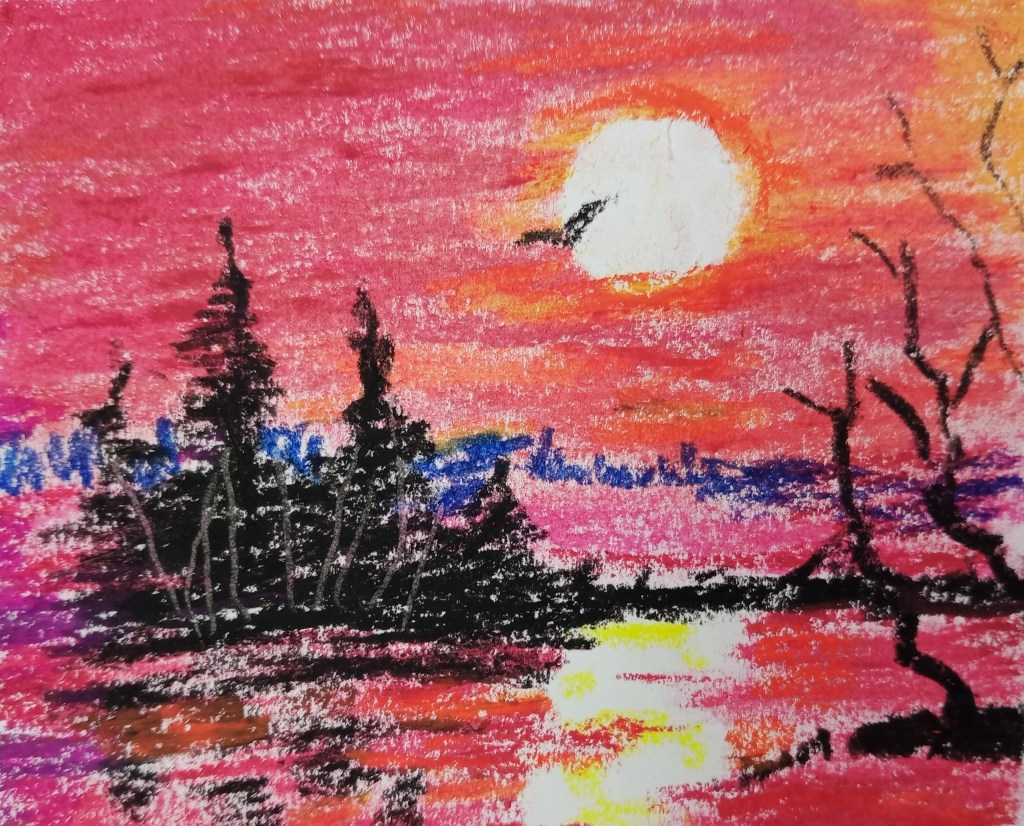
Art by Sohana Manzoor

Editorial

Celebrating a Borderless World… Five Years and Counting… Click here to read.

Translations

Jibanananda Das’ poems on war and for the common masses have been translated from Bengali by Professor Fakrul Alam. Click here to read.

A Scene with an Aged Queen, a poem by Ihlwha Choi  has been translated from Korean by the poet himself. Click here to read.

Tagore’s Esho Bosonto, Esho Aj Tumi (Come Spring, Come Today) has been translated from Bengali by Mitali Chakravarty. Click here to read.

Pandies’ Corner

For Sanjay Kumar: To Sir — with Love has been written for the founder of pandies’ theatre by Tanvir, a youngster from the Nithari village where pandies’ worked with traumatised victims. Over time, these kids have transcended the trauma to lead fulfilling lives. The late Sanjay Kumar passed on this January. This is a tribute to him by one of his students. It has been translated from the Hindustani original by Lourdes M Surpiya. Click here to read.

Poetry

Click on the names to read the poems

Luis Cuauhtémoc Berriozábal, Kiriti Sengupta, Ryan Quinn Flanagan, Snehaprava Das, Stuart McFarlane, Arshi Mortuza, George Freek, Jyotish Chalil Gopinathan, Ahmad Al-Khatat, Michael Burch, Bibhuti Narayan Biswal, Mark Wyatt, Owais Farooq, Adriana Rocha, Rakhi Dalal, Rhys Hughes

Musings/Slices from Life

Nobody Knows…

Farouk Gulsara muses on the dichotomies in life exploring beliefs that shape our world. Click here to read.

Beachcombing on the Abrolhos Islands

Meredith Stephens goes beachcombing in a thinly inhabited island. Click here to read.

As Flows the Gomti: A Monument of Tranquility 

Prithvijeet Sinha takes us to the past of Lucknow. Click here to read.

Musings of a Copywriter

In All Creatures Great and Small, Devraj Singh Kalsi talks of living in harmony with nature… is it tongue in cheek? To find out, click here to read.

Notes from Japan

In Haiku for Rwandan Girls, Suzanne Kamata writes of her trip to Africa where she teaches and learns from youngsters. Click here to read.

Essays

Take One

Ratnottama Sengupta takes stock of women in Bengali cinema over the last fifty years. Click here to read.

Drinking the Forbidden Milk of Paradise…

Meenakshi Malhotra explores the past of poetry and women writers. Click here to read.

Where have all the Libraries Gone?

Professor Fakrul Alam writes of the loss of libraries as we knew them. Click here to read.

Stories

In the Realm of Childhood

Paul Mirabile gives us a story set in Scotland. Click here to read.

The Appropriate Punishments

Naramsetti Umamaheswararao gives a fable set in a forest. Click here to read.

Eyes of Inti

Swati Basu Das shares a lighthearted flash fiction. Click here to read.

‘Solitude is a Kind of Freedom…’

Munaj Gul gives an introspective story set in Balochistan. Click here to read.

Why I Stopped Patronising that Cheese Maker’s Shop…

Zoé Mahfouz shares a humorous vignette of Parisian life. Click here to read.

Conversations

Ratnottama Sengupta discusses the famous actor, Soumitra Chatterjee, with his daughter, Poulami Bose Chatterjee. Click here to read.

Keith Lyons interviews Malaysian author and editor, Daphne Lee. Click here to read.

Book Excerpts

An excerpt from Frank S Smyth’s The Great Himalayan Ascents. Click here to read.

An excerpt from Rhys Hughes’ The Devil’s Halo. Click here to read.

Book Reviews

Somdatta Mandal reviews Tsering Namgyal Khortsa’s non-fiction, Little Lhasa: Reflections in Exiled Tibet and fiction, Tibetan Suitcase, together. Click here to read.

Malashri Lal reviews Rachna Singh’s Raghu Rai: Waiting for the Divine. Click here to read.

Bhaskar Parichha reviews Sandeep Khanna’s Tempest on River Silent: A Story of Last 50 Years of India. Click here to read.
Vignettes from a Borderless World… Click here to read a special fifth anniversary issue.
Categories
Notes from Japan

Educating for Peace in Rwanda

By Suzanne Kamata

In late September, I visited Rwanda with a professor of Naruto University of Education in Japan and two Japanese graduate students. We traveled from Kigali, the capital city, to the Kayonza District, a rural area, to learn about the 1994 Genocide against Tutsi which necessitated peace education in Rwanda. In one month, around a million Tutsis and their sympathisers were systematically and viciously slaughtered by members of the Hutu ethnic group following government directives. This “final solution” was enacted via machetes and spears, often by classmates, co-workers, and neighbors. Just about everyone in Rwanda was affected by the horror in some way. Our driver told us that his father, sister, and brother were murdered at that time. Our interpreter, Claude Mugabe, was also a genocide survivor. He had been eight years old at the time, and he said that he remembered everything.

The animosity between two ethnic groups may be traced to the colonial period, when Belgians favoured the Tutsi, who typically had tall, slender bodies, high foreheads, and narrow features, for prestigious positions and privileges. Periodic violence against the Tutsis began in the 1950s and continues to this day, but Rwandans have made great efforts to ensure that the events of 1994 never occur again. We learned that Rwandan citizens are no longer required to carry identity cards indicating their ethnicity.

We visited a center which is a part of the Peace Education Initiative Rwanda. The three pillars of their program are peacebuilding and reconciliation, youth empowerment, and social economic development. We first gathered in tent where some photos of the massacre were displayed. Some community members, including those who had been alive at the time of the genocide and high school students, were gathered to share their thoughts and experiences with us.

Photograph by Suzanne Kamata

As birds sang and chickens squawked in the background, Mugabe explained some ways in which the people of his community have sought reconciliation, including sharing goats, building together, and working alongside one another. He emphasised that it’s important that everyone have their basic needs met. To this end, the community members fight against malnutrition, which can lead to diseases, through gardening vegetables and rearing animals such as goats and chickens, which provide milk and eggs.

Another important part of reconciliation, as we learned, is forgiveness. We heard moving –and often shocking – testimonies from both a victim and a perpetrator. We first heard from a woman who was a victim. She told us how she was harassed by her teachers after they learned that she was a Tutsi, and ultimately forced to drop out of school. She said that she spent some days and nights hiding in the bush. Her house was burned, and nothing remained. On April 9, she left her hiding place and sought refuge in the Catholic church. It was full, however, so she went to the cinema. On April 14, the Hutus attacked the church. Although the woman lost her sight, she said that she later received health insurance, and “Today we’re living in peace and harmony.”

Next, we heard from a man who was 30 years old, with a wife and two children, at the time of the genocide. He admitted that he had critical thinking ability, but he participated in the attack on the church, anyway, along with other civilians and members of the military. They were armed with machetes, guns, and grenades, and given thirty minutes to exterminate everyone in the church. They surrounded the church and opened fire, but they “succeeded” in killing only thirteen people the first day. He did not return the second day because his wife was sick. Later, he fled to Tanzania, but after being repatriated to Rwanda, he, like many others, was arrested and sent to prison. “I internalized what I did,” he said through the interpreter. He was filled with remorse. When he was released, he bought a cow for the victims, and asked for forgiveness. In the beginning, only 12 people were involved, but now almost 3,000 participate in peace education in the village.

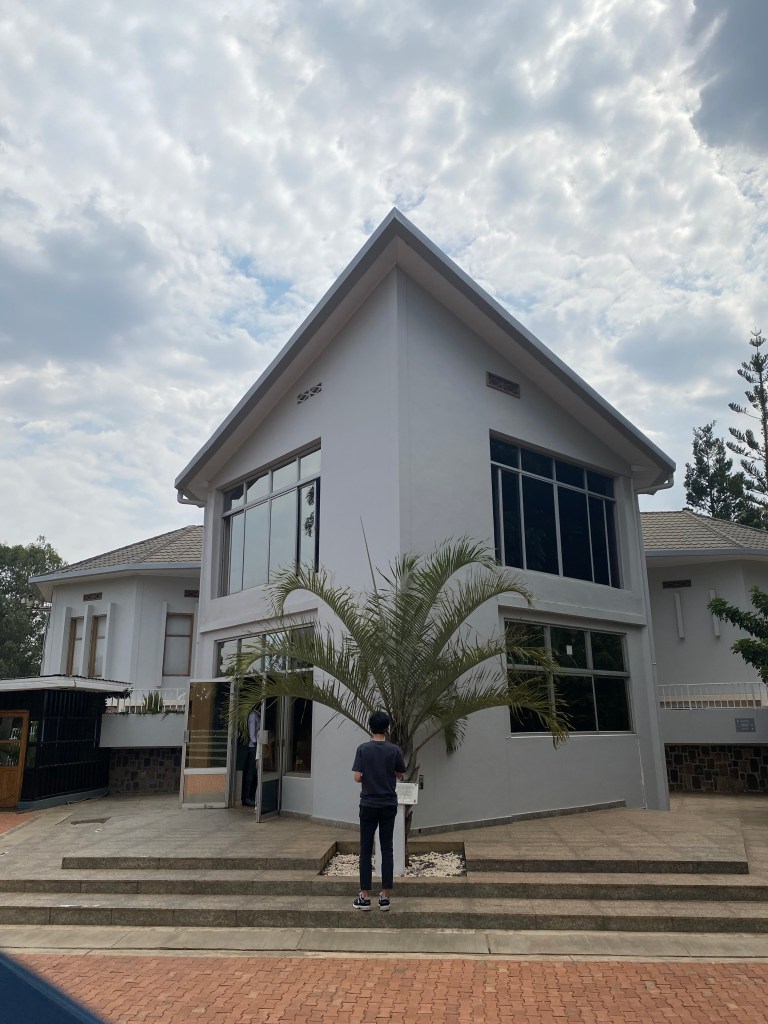
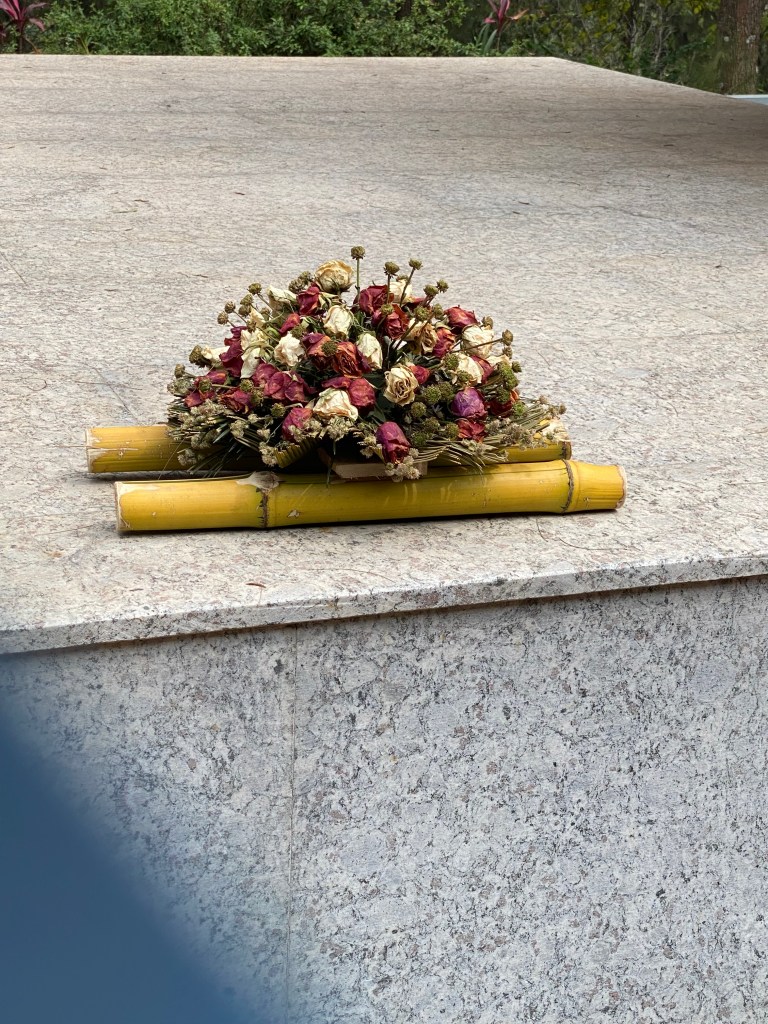
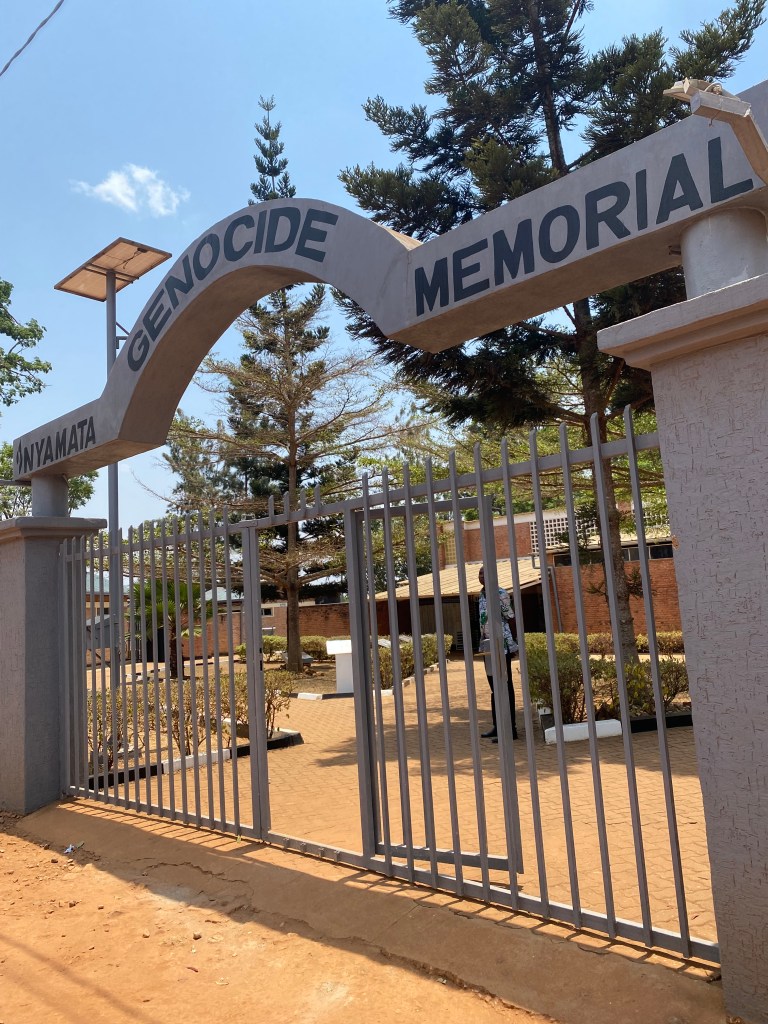
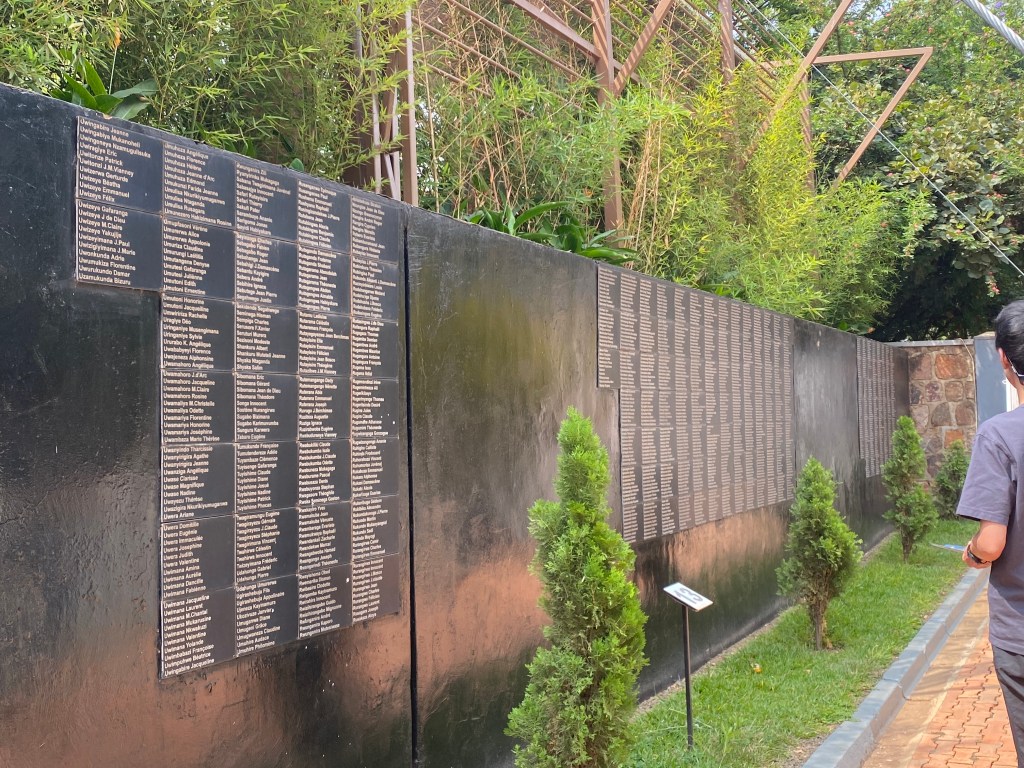
In addition to these community activities, peace education is an important part of the school curriculum in Rwanda. As in Japan, where students go on field trips to Hiroshima and Nagasaki to learn about the atomic bombing of those cities, Rwandan students visit sites related to the genocide, such as churches which now serve as memorials to those who died. We visited two such memorials. In one, the blood-stained clothing of the murdered was stacked on the church pews, while their photos were displayed on the wall. There were glass cases full of skulls, some with bullet holes, or larger gashes caused by clubs or machetes, as well as coffins full of bones. Though graphic and disturbing, these exhibits gave us an understanding of this particular tragic event and of the horrors of war in general.

As I thought about the divisions among people in my own country, the United States, all of the hate-filled rhetoric spewing from the mouths of politicians, and the move to silence voices from outside the mainstream, I couldn’t help thinking that some of these measures might be applied there, as well. What if we truly acknowledged that past? What if we shared our bounty? What if we asked for forgiveness? For now, I will remember what I learned in Rwanda. I will cling fast to hope. 

Suzanne Kamata was born and raised in Grand Haven, Michigan. She now lives in Japan with her husband and two children. Her short stories, essays, articles and book reviews have appeared in over 100 publications. Her work has been nominated for the Pushcart Prize five times, and received a Special Mention in 2006. She is also a two-time winner of the All Nippon Airways/Wingspan Fiction Contest, winner of the Paris Book Festival, and winner of a SCBWI Magazine Merit Award.

PLEASE NOTE: ARTICLES CAN ONLY BE REPRODUCED IN OTHER SITES WITH DUE ACKNOWLEDGEMENT TO BORDERLESS JOURNAL

Click here to access the Borderless anthology, Monalisa No Longer Smiles

Click here to access Monalisa No Longer Smiles on Amazon International