Meenakshi Malhotra writes of the diverse ways histories can be viewed, reflecting on the perspective from the point of view of water, climate, migrations or women. Click here to read.
Sometimes, we have an idea, a thought and then it takes form and becomes a reality. That is how the Borderless Journal came to be six years ago while the pandemic raged. The pandemic got over and takeovers and wars started. We continued to exist because all of you continue to pitch in, ignoring the differences created by certain human constructs. We meet with the commonality of felt emotions and aesthetics to create a space for all those who believe in looking beyond margins. We try to erase margins or borders that lead to hatred, anger, violence and war. Learning from the natural world, we believe we can be like the colours of the rainbow that seem to grow out of each other or the grass that is allowed to grow freely beyond manmade borders. If nature gives us lessons through its processes, is it not to our advantage to conserve what nurtures us, and in the process, we save our home planet, the Earth? We could all be together in peace, enjoying nature and nurture, living in harmony in the Universe if only we could overlook differences and revel in similarities.
A young poet Nma Dhahir says it all in her poem that is a part of our journal this month —
This is how we stay human together: by refusing the easy damage, by carrying each other without calling it sacrifice, by believing that what we protect in one another eventually protects the world.
Translations has more poetry with Professor Fakrul Alam bringing us Nazrul’s Bengali lyrics in English and Fazal Baloch familiarising us with beautiful Balochi poetry of the late Majeed Ajez, a young poet who left us too soon. Isa Kamari translates his own poems from Malay, capturing the colours of the community in Singapore to blend it with a larger whole. And of course, we have a Tagore poem rendered into English from Bengali. This time it’s a poem called ‘Jatra (Journey)’ which reflects not only on social gaps but also on politics through aeons.
Christine C Fair has translated a story from Punjabi by Lakhvinder Virk, a story that reflects resilience in women who face the dark end of social trends, a theme that reverberates in Flanagan’s poetry and Meenakshi Malhotra’s essay, which while reflecting on the need of different perspectives in histories – like water and nomads — peeks into the need to recall women’s history aswell. This is important not just because March hosts the International Women’s Day (IWD) but because one wonders if women in Afghanistan are better off now than the suffragettes who initiated the idea of such a day more than a century ago?
This time our non-fiction froths over with scrumptious writings from across continents. Tamara-Lee Brereton-Karabetsos muses on looking at numbers and beyond to enjoy the essence of nature. Farouk Gulsara ideates about living on in posterity through deeds and ideas. Gower Bhat shares how he learns story writing skills from watching movies. Meredith Stephens talks of her experience of a fire in the Australian summer. Bhaskar Parichha writes with passion about his region, Odisha. We have a heartfelt tribute to Mark Tully, who transcended borders, from Bhowmick. And an essay on Arundhati Roy’s memoir, Mother Mary Comes to Me, from Somdatta Mandal, which explores not just the book but also the covers which change with continents. Prithvijeet Sinha travels beyond Lucknow and Suzanne Kamata brings to us stories about her trip to Phnom Penh.
Keith Lyons draws from the current crises and writes about changing times, suggesting: “Changes aren’t endings, but thresholds.” Perhaps, if we see them as ‘thresholds of change’, the current events are emphasising the need to accept that human constructs can be redefined. I am sure a Neolithic or an Australopithecus would have been equally scared of evolving out of their system to one we would deem ‘superior’. Life in certain ways can only evolve towards the future, even if currently certain changes seem to be retrogressive. We can never correctly predict the future… but can only imagine it. And Devraj Singh Kalsi imagines it with a dollop of humour where tails become a trend among humans again!
Humour and absurdity are woven into a series of short fables by Hughes while Naramsetti Umamaheswarao weaves a fable around acceptanceof differences. In fiction, we have stories of resilience from Jonathon B Ferrini and Terry Sanville. Bhat gives us a story set in Kashmir and Sohana Manzoor gives us one set in Dhaka, a narrative that reminds one of Jane Austen… and perhaps even an abbreviated version of the 2001 film, Monsoon Wedding.
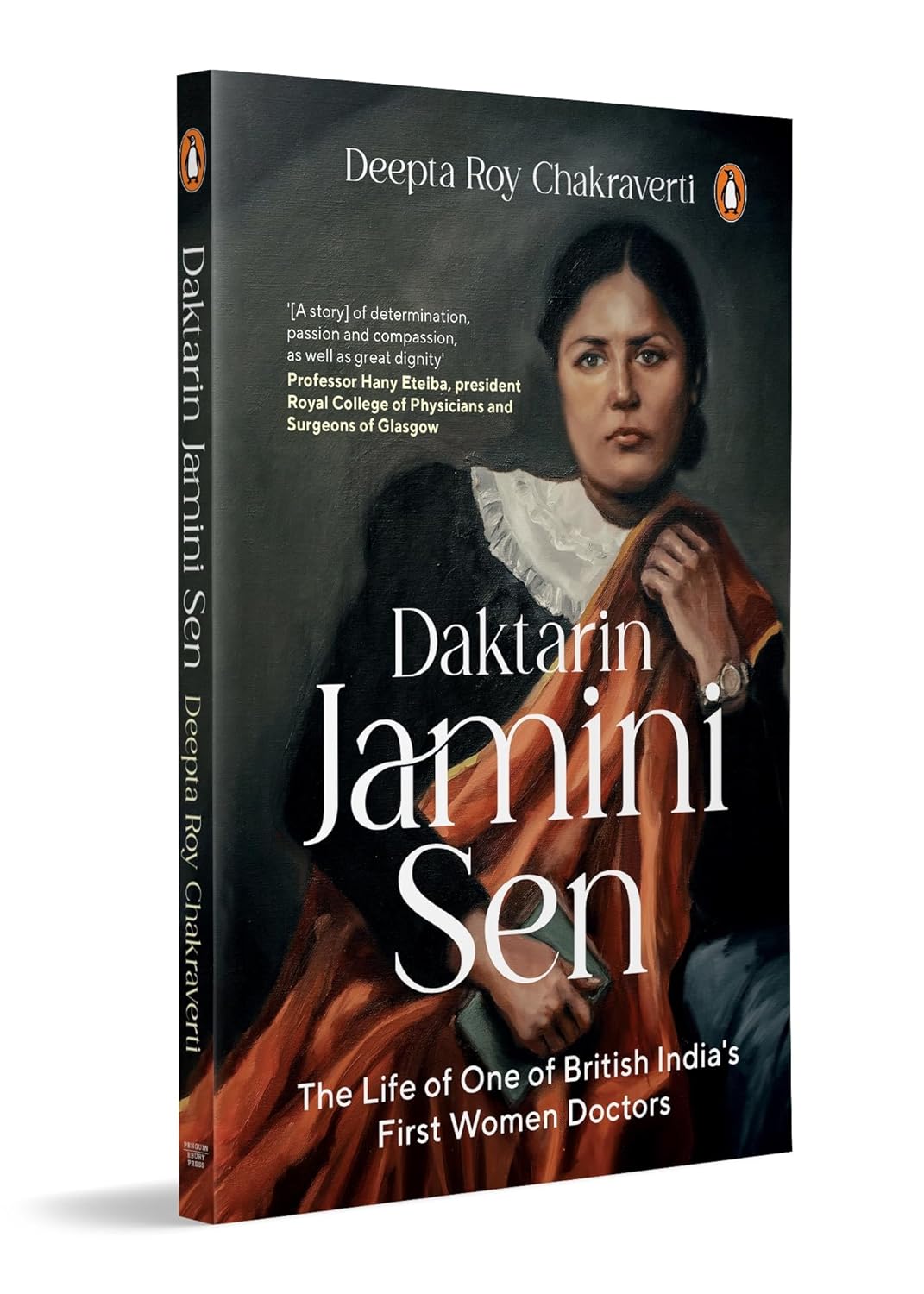
In reviews we have, Mohammad Asim Siddiqui discussing Anisur Rahman’s The Essential Ghalib. Rituparna Khan has written on Malashri Lal’s poetry collection reflecting on women, Signing in the Air. And Bhaskar Parichha has reviewed Deepta Roy Chakraverti’s Daktarin Jamini Sen: The Life of British India’s First Woman Doctor, a book that reflects on the resilience that makes great women. Thus, weaving in flavours of the IWD, which applauds women who are resilient while urging humans for equal rights for one half of the world population.
While we ponder on larger realities, Borderless Journal looks forward to a future with more writings centred around humanity, climate change, our planet and all creatures great and small. This year has not only seen a rise in readership and contributors — and the numbers rose further after our unsolicited Duotrope listing in October 2025 — but has also attracted writers from more challenged parts of the world, like Ukraine, Iran, Tunisia and Kurdistan. We are delighted to home writing from all those who attempt to transcend borders and be a part of the larger race of humanity. I would like to quote Margaret Atwood to explain what I mean. “I hope that people will finally come to realize that there is only one ‘race’—the human race—and that we are all members of it.” And I would like to extend her view to find solidarity with all living beings. I hope that there will be a point in time when we will realise there’s not much difference between, a lizard, a fly, a human or a tree… All these lifeforms are necessary for our existence.
I would want to hugely thank all our team for stretching out and making this a special issue for our sixth anniversary and Manzoor for her fabulous artwork. Huge thanks to all our contributors and readers for being with us through our journey. Let’s change the world with peace, love and friendship!
Title: Daktarin Jamini Sen: The Life of British India’s First Woman Doctor
Author: Deepta Roy Chakraverti
Publisher: Penguin/ EBURY PRESS
History often celebrates great events, revolutions, and institutions, yet it frequently overlooks individuals whose quiet determination helped shape the modern world.
Deepta Roy Chakraverti’s biography, Daktarin Jamini Sen: The Life of British India’s First Woman Doctor, seeks to restore one such remarkable figure to her rightful place in history. Through meticulous research and deeply personal storytelling, the book brings to light the life of a pioneering physician who challenged conventions, crossed borders, and carved a path for women in medicine at a time when such ambitions were rare.
Jamini Sen (1871- 1933) was among the earliest women doctors of British India and the first woman to become a Fellow of the Royal College of Physicians and Surgeons of Glasgow. In the late nineteenth and early twentieth centuries, when the world of medicine was overwhelmingly dominated by men, her achievement was nothing short of extraordinary. To study medicine, it required courage and determination; to excel in it and gain international recognition demanded a resilience that few possessed.
Chakraverti’s book traces Jamini Sen’s journey from the changing social landscape of Bengal to the complex and often dramatic world of royal Nepal. Born in a time when child marriage, strict gender roles, and social conservatism defined the lives of many women, Jamini’s life unfolded against the backdrop of a society in transition. The opening chapters evoke a Bengal negotiating between tradition and reform—where ideas of modern education, nationalism, and social change were beginning to challenge entrenched customs.
It was in this milieu that Jamini took her first steps toward a career in medicine. The path was far from easy. As a woman entering a profession dominated by men, she encountered skepticism, resistance, and prejudice. Yet the biography portrays her not as a passive victim of circumstance but as a determined individual driven by conviction and intellectual curiosity. Her pursuit of medical knowledge reflects both personal ambition and a broader spirit of reform that characterized parts of Indian society during the late colonial period.
One of the most fascinating phases of Jamini Sen’s career unfolded in Nepal. She was invited to serve as physician to the royal family during the reign of Prithvi Bir Bikram Shah. Nepal at that time was a kingdom cautiously opening its doors to modern influences, and Jamini’s presence there represented an important step in introducing modern medical practices to the royal court.
Serving in the palace required far more than medical skill. Court life was shaped by hierarchy, intrigue, and political sensitivities. Yet Jamini’s professionalism, discretion, and quiet confidence earned her the trust of the king and the respect of those around her. The biography suggests that her friendship with Prithvi Bir Bikram Shah was marked by mutual regard, and that she played a role in supporting his aspirations for a more modern Nepal.
But the story of Jamini Sen is not merely one of professional success. The book also reveals the personal costs that often accompany pioneering lives. Loss, loneliness, and emotional hardship form a recurring undercurrent in her journey. She endured the deaths of loved ones and navigated difficult relationships yet remained steadfast in her commitment to her work and her ideals.
Chakraverti’s narrative emphasises that Jamini’s resilience was rooted not only in determination but also in faith and introspection. Moments of spiritual reflection and philosophical questioning appear throughout the narrative, suggesting that her inner life was as complex as her public career. This dimension of the biography adds depth to the portrait of a woman who was not simply a medical pioneer but also a thoughtful and introspective individual.
The author’s own connection to the story lends the book a distinctive emotional resonance. Deepta Roy Chakraverti is the last of Jamini Sen’s descendants through the line of Jamini’s niece, Roma Sen Chakraverti. A lawyer educated at King’s College London with a first degree in mathematics from University of Delhi, Deepta writes not only as a historian but also as a custodian of family memory.
In the prologue, she reflects on the idea that our ancestors live within us—not only through blood and lineage but also through memory and spirit. Her decision to write about Jamini Sen arose from a growing sense of injustice. Why had a woman of such accomplishment been largely forgotten? Why had her life been reduced to little more than a historical footnote?
That question became the driving force behind the book. What began as a short story gradually expanded into a blog and finally into a full-length biography. Along the way, Chakraverti discovered family heirlooms, letters, and personal belongings passed down through generations—small fragments of the past that helped reconstruct Jamini’s life.
The author also drew upon anecdotes preserved in family memory and earlier Bengali writings by her great-aunt, Kamini Roy, which provided valuable insights into Jamini’s character and experiences. These sources give the narrative an intimate quality rarely found in conventional historical biographies.
Structured across twenty-five chapters, the book moves through the many stages of Jamini’s life—from her childhood in a changing Bengal to her years in Nepal, her struggles and triumphs in medicine, and the legacy she left behind. The chapter titles themselves hint at the drama and complexity of her life: ‘A Woman in a Man’s World’, ‘The Fight to Wield the Scalpel and Stethoscope’, and ‘Becoming British India’s Saree Wali Daktarin Sahib’.
A foreword by Hany Eteiba, President of the Royal College of Physicians and Surgeons of Glasgow, adds an important institutional recognition of Jamini Sen’s achievements. It situates her story within the broader history of global medicine and acknowledges the significance of her pioneering role.
Daktarin Jamini Sen is more than a biography. It is an act of historical recovery—a reminder that many women who challenged social boundaries and advanced professional fields were gradually erased from public memory. By reconstructing Jamini Sen’s life, Deepta Roy Chakraverti restores one such figure to the narrative of South Asian history.
Jamini Sen emerges from these pages as a courageous, intelligent, and deeply human figure—a woman who carried both the stethoscope and the burden of breaking barriers. Her story reminds us that the progress of society often begins with individuals who refuse to accept the limitations imposed upon them.
In telling that story, this book ensures that Jamini Sen will no longer remain a forgotten pioneer.
.
Bhaskar Parichha is a journalist and author of Cyclones in Odisha: Landfall, Wreckage and Resilience, Unbiased, No Strings Attached: Writings on Odisha and Biju Patnaik – A Political Biography. He lives in Bhubaneswar and writes bilingually. Besides writing for newspapers, he also reviews books on various media platforms.
PLEASE NOTE: ARTICLES CAN ONLY BE REPRODUCED IN OTHER SITES WITH DUE ACKNOWLEDGEMENT TO BORDERLESS JOURNAL
The narrative of Odisha post-1947 is one of change, unity, and strength, set against the backdrop of India’s fresh independence. Although Odisha was established as a distinct province from the Bengal Presidency in 1936, primarily based on linguistic and cultural factors, its evolution into a modern political and administrative entity truly commenced with independence.
On the Cusp of Independence
The foremost and most urgent challenge was the amalgamation of 26 princely states, collectively referred to as the Garjat states, each governed by its own ruler, administrative system, and local customs. These states were scattered throughout the hilly and forested regions of Odisha, and their unification required not just political acumen but also cultural awareness, negotiation skills, and strategic insight.
The responsibility of bringing Odisha together largely rested on Harekrushna Mahatab, the state’s first Premier, who collaborated closely with Sardar Vallabhbhai Patel and V.P. Menon from the central government. The discussions commenced in 1946–47, prior to India’s official independence, and extended into the early years following independence.
Several rulers quickly consented to join, swayed by enticing offers of financial rewards, ceremonial honors, and guarantees that their roles would be honored in a democratic Odisha. In contrast, some were hesitant, worried about the potential decline of their traditional power and local sway.
Mahatab skillfully blended diplomacy, patience, and strategic advantage, methodically uniting all 26 states under Odisha’s governance. This consolidation not only enhanced administrative efficiency but also set the stage for consistent laws, tax systems, and development initiatives throughout the region.
Democracy Finds Its Feet
In the political landscape following independence, Odisha experienced the formation of democratic institutions and practices. The Indian National Congress played a pivotal role in the early political scene, capitalising on its organisational strength and the heritage of the independence struggle.
Elections, local governance bodies, and legislative assemblies were created, providing citizens with a voice in governance and facilitating a gradual shift from princely rule and colonial frameworks to democratic self-governance.
The strengthening of political authority also enabled the formalisation of administrative practices, the modernisation of the bureaucracy, and improved coordination with the central government, which aided in developmental planning for both urban and rural regions.
Farmers First
Economically, Odisha grappled with the twin issues of historical underdevelopment and susceptibility to natural disasters. Agriculture, which employed the majority of the populace, relied heavily on monsoon rains, while traditional tools and methods hindered productivity. After gaining independence, governments focused on land reforms, including tenancy regulations and the redistribution of surplus land to small farmers, with the goal of reducing inequalities and empowering the rural poor.
Rise of Industrial Odisha
The enhancement of irrigation systems, canals, embankments, and reservoirs, especially along the Mahanadi, Brahmani, and Baitarani rivers, aimed to stabilise agricultural production and lessen the risks associated with droughts and floods. These initiatives established a foundation for sustainable rural development while ensuring food security in a state that has historically faced famine.
Industrialisation emerged as a crucial element of Odisha’s strategy following independence. The state’s rich mineral resources—such as coal, iron ore, bauxite, and chromite—served as the foundation for establishing heavy industries. Industrial hubs like Rourkela, which hosts India’s inaugural integrated steel plant, were developed with assistance from the central government and international partnerships, leading to job creation, urban expansion, and economic diversification.
The establishment of the Paradip port during the 1960s and 1970s enhanced the transportation of raw materials and finished products, connecting Odisha to both national and global markets. These industrial and infrastructural developments were part of a concerted effort to shift Odisha from a predominantly agricultural economy to one that is more varied and robust.
Furthermore, education and social reform played a vital role in Odisha’s growth after independence. Literacy initiatives broadened access to primary and secondary education, while improvements in teacher training and school construction elevated educational quality.
Tribal communities and marginalised groups were given focused support, including scholarships, vocational training, and legal protections aimed at helping them integrate into the broader economic and political landscape. Health infrastructure also saw significant growth, with the establishment of hospitals, primary health centers, vaccination campaigns, and maternal care initiatives that gradually enhanced life expectancy and lowered infant mortality rates, especially in remote and tribal regions.
Culture in Full Color
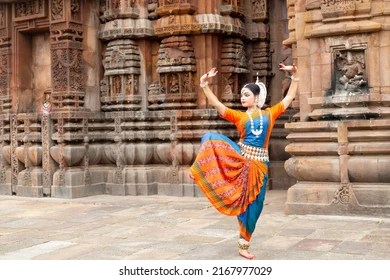
Oddisi dance at a temple
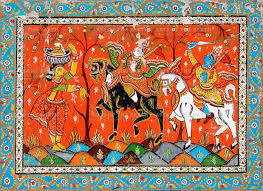
Cultural revival and the building of identity were closely linked to these economic and social changes. Odisha took active steps to promote Odissi dance, music, literature, and handicrafts, which not only bolstered regional pride but also created economic opportunities through tourism and the livelihoods of artisans. The state committed to preserving and promoting traditional arts like pattachitra painting, silver filigree, appliqué work, and handloom weaving, often facilitated by cooperative societies and government support.
Pattachitra Silver filigree work From Public Domain
Temple towns such as Puri and Konark have maintained their significance in spirituality and culture, with events like the Rath Yatra and the Konark Dance Festival serving as key highlights of both religious fervor and cultural tourism. This fusion of age-old traditions with contemporary elements has enabled Odisha to carve out a distinctive identity while also addressing the developmental needs of a modern state.
The political landscape in Odisha after independence has transformed over the years, influenced by a mix of national and local factors. Initially, the Congress party held sway, but the rise of tribal movements, regional activism, and calls for increased administrative autonomy posed challenges to central governance and enriched the discourse on democracy.
Local leaders from tribal and marginalised communities have stepped forward, championing the cause for representation and the fair distribution of resources to overlooked areas. As a result, Odisha has cultivated a diverse political environment, featuring a variety of parties, coalitions, and grassroots initiatives that mirror the state’s intricate social and geographical tapestry.
Nature’s Wrath
Odisha’s natural environment has consistently challenged the resilience of its people and governance. The state faces threats from cyclones, floods, and droughts, which have repeatedly resulted in catastrophic losses of life, property, and agricultural productivity. Significant cyclones in 1971, 1999, 2013, and 2020 caused tremendous devastation, underscoring the susceptibility of coastal and rural populations.
Each disaster led to improvements in early warning systems, disaster readiness, and coordinated relief efforts, gradually turning Odisha into a benchmark for disaster management in India. The involvement of communities, enhanced infrastructure, and strategic planning enabled the state to respond more adeptly to natural disasters over the years.
Mining Marvels
In the late 20th and early 21st centuries, economic development centered on industrial growth, mining, and energy generation. Odisha emerged as a center for steel, aluminum, and power industries, drawing both domestic and international investments. Urban areas like Bhubaneswar, Cuttack, Rourkela, and Sambalpur grew swiftly, transforming the demographic and social fabric of the region.
Industrialisation ushered in a wave of prosperity and job opportunities, yet it also introduced significant challenges, such as environmental degradation, community displacement, and the pressing need to balance economic growth with sustainable development. Efforts to address these issues included policies focused on corporate social responsibility, environmental regulations, and rehabilitation initiatives, although the struggle to harmonize development with conservation persisted as a continual challenge.
Connectivity and Integration
The evolution of infrastructure has been pivotal to Odisha’s transformation since independence. The expansion of roads, railways, ports, and communication networks has linked rural and urban areas, facilitating the flow of goods, services, and people. Notable projects like the Hirakud Dam on the Mahanadi not only offered irrigation and flood management but also produced hydroelectric power, playing a crucial role in the region’s industrial growth.
Ports like Paradip and Dhamra have enhanced trade and maritime links, while the development of rail and road networks has connected remote areas with urban centers and industrial zones. These advancements have contributed to the geographical and economic unification of the state, diminishing isolation and encouraging greater involvement in the national economy.
Social and cultural transformations progressed in tandem with economic growth. Literacy rates saw a consistent rise, particularly focusing on the education of girls. Women became more involved in education, the workforce, and politics, mirroring both national policy efforts and evolving social standards.
Tribal and rural populations maintained aspects of their traditional lifestyles while also embracing modern education, healthcare, and job opportunities. Folklore, languages, and ritual practices were safeguarded through documentation, festivals, and community-driven projects, ensuring that the process of modernisation did not obliterate local identities.
Multi-faceted Society
By the dawn of the 21st century, Odisha had transformed into a complex, multi-faceted society, striking a balance between tradition and modernity, rural and urban progress, and the management of natural resources alongside industrial expansion. Politically, the state had transitioned from a period of Congress dominance to a more pluralistic and competitive democratic framework, with regional parties and coalitions influencing policy and governance.
Economically, the state’s diverse foundation in agriculture, industry, mining, and trade enabled it to endure external challenges while fostering ongoing development. Socially and culturally, Odisha preserved a vibrant heritage, merging classical arts, festivals, and tribal customs with the requirements of a contemporary, globalised world.
The era following 1947 in Odisha embodies a tale of unity, strength, and change. It spans the intricate discussions with princely states leading to the formation of democratic frameworks, agricultural advancements, industrial growth, recovery from disasters, and a resurgence of culture. Odisha’s evolution mirrors the larger narrative of India’s shift from colonial domination to sovereign nationhood.
The state’s skill in managing natural disasters, economic hurdles, and societal shifts while maintaining its cultural essence showcases an extraordinary ability to adapt, positioning Odisha as a fascinating case of regional evolution in a swiftly modernising country.
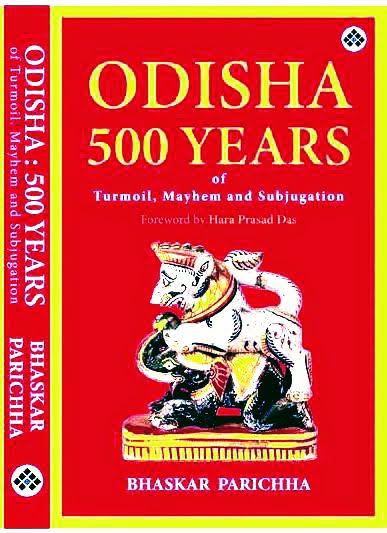
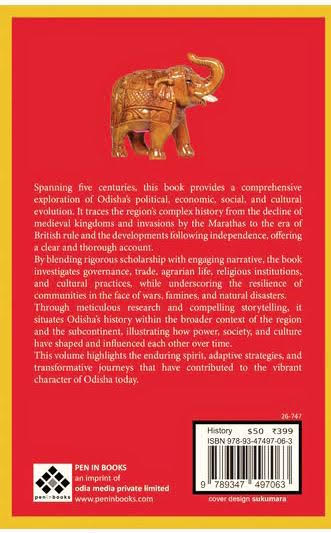
(Excerpted from the book Odisha – 500 Years of Turmoil, Mayhem and Subjugation by Bhaskar Parichha. Published by Pen In Books/Bhubaneswar)
.
Bhaskar Parichha is a journalist and author of Cyclones in Odisha: Landfall, Wreckage and Resilience, Unbiased, No Strings Attached: Writings on Odisha and Biju Patnaik – A Political Biography. He lives in Bhubaneswar and writes bilingually. Besides writing for newspapers, he also reviews books on various media platforms.
PLEASE NOTE: ARTICLES CAN ONLY BE REPRODUCED IN OTHER SITES WITH DUE ACKNOWLEDGEMENT TO BORDERLESS JOURNAL
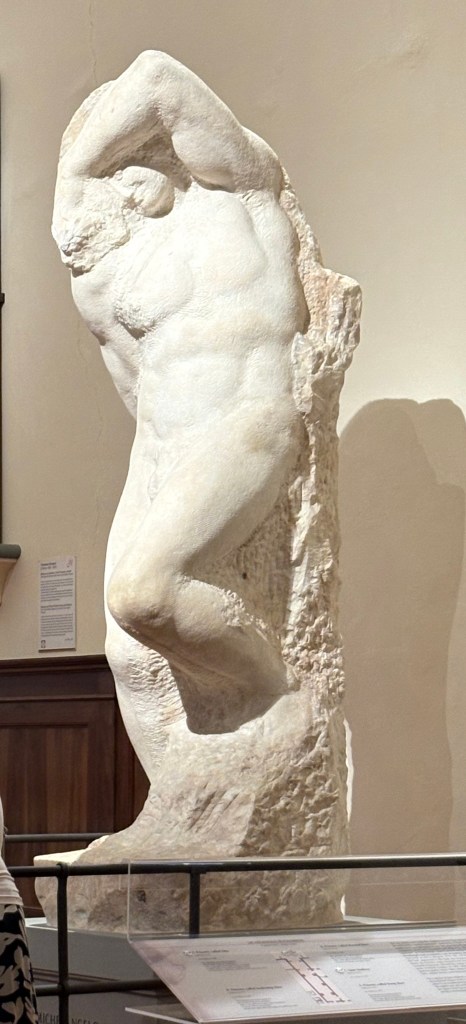
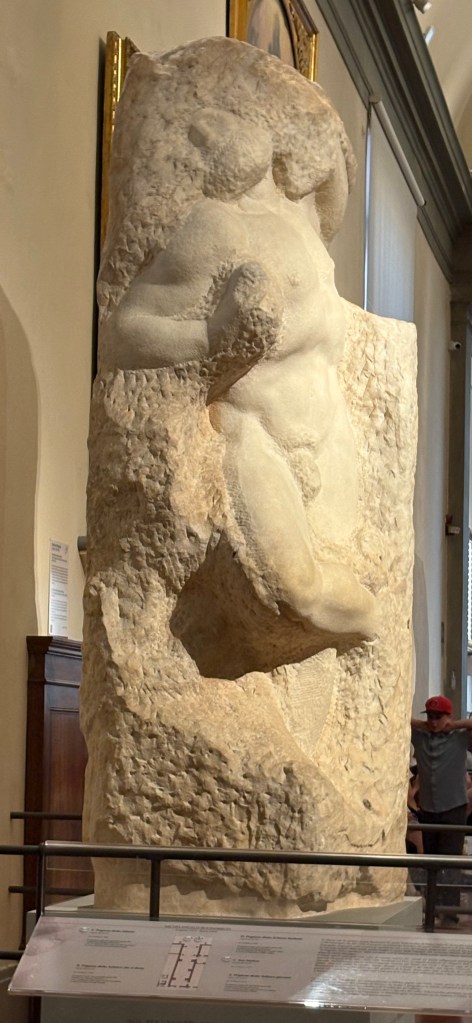
Incomplete statues of Michelangelo in Accademia Gallery, Florence
In the Accademia Gallery, Florence, are housed incomplete statues by Michelangelo that were supposed to accompany his sculpture of Moses on the grand tomb of Pope Julius II. The sculptures despite being unfinished, incomplete and therefore imperfect, evoke a sense of power. They seem to be wresting forcefully with the uncarved marble to free their own forms — much like humanity struggling to lead their own lives. Life now is comparable to atonal notes of modern compositions that refuse to fall in line with more formal, conventional melodies. The new year continues with residues of unending wars, violence, hate and chaos. Yet amidst all this darkness, we still live, laugh and enjoy small successes. The smaller things in our imperfect existence bring us hope, the necessary ingredient that helps us survive under all circumstances.
Imperfections, like Michelangelo’s Non-finito statues in Florence, or modern atonal notes, go on to create vibrant, relatable art. There is also a belief that when suffering is greatest, arts flourish. Beauty and hope are born of pain. Will great art or literature rise out of the chaos we are living in now? One wonders if ancient art too was born of humanity’s struggle to survive in a comparatively younger world where they did not understand natural forces and whose history we try to piece together with objects from posterity. Starting on a journey of bringing ancient art from her part of the world, Ratnottama Sengupta shares a new column with us from this January.
Drenched in struggles of the past is also Showkat Ali’s The Struggle: A Novel, translated from Bengali by V. Ramaswamy and Mohiuddin Jahangir. It has been reviewed by Somdatta Mandal who sees it a socio-economic presentation of the times. We also carry an excerpt from the book as we do for Anuradha Marwah’s The Higher Education of Geetika Mehendiratta. Marwha’s novel has been reviewed by Meenakshi Malhotra who sees it as a bildungsroman and a daring book. Bhaskar Parichha has brought to us a discussion on colonial history about Rakesh Dwivedi’s Colonization Crusade and Freedom of India: A Saga of Monstrous British Barbarianism around the Globe. Udita Banerjee has also delved into history with her exploration of Angshuman Kar’s The Lost Pendant, a collection of poems written by poets who lived through the horrors of Partition and translated from Bengali by multiple poets. One of the translators, Rajorshi Patranabis, has also discussed his own book of supernatural encounters, Whereabouts of the Anonymous: Exploration of the Invisible. A Wiccan by choice, Patranbis claims to have met with residual energies or what we in common parlance call ghosts and spoken to many of them. He not only clicked these ethereal beings — and has kindly shared his photos in this feature — but also has written a whole book about his encounters, including with the malevolent spirits of India’s most haunted monument, the Bhangarh Fort.
Bringing us an essay on a book that had spooky encounters is Farouk Gulsara, showing how Dickens’ A Christmas Carolrevived a festival that might have got written off. We have a narrative revoking the past from Larry Su, who writes of his childhood in the China of the 1970s and beyond. He dwells on resilience — one of the themes we love in Borderless Journal. Karen Beatty also invokes ghosts from her past while sharing her memoir. Rick Bailey brings in a feeling of mortality in his musing while Keith Lyons, writes in quest of his friend who mysteriously went missing in Bali. Let’s hope he finds out more about him.
Charudutta Panigrahi writes a lighthearted piece on barbers of yore, some of whom can still be found plying their trade under trees in India. Randriamamonjisoa Sylvie Valencia dwells on her favourite place which continues to rejuvenate and excite while Prithvijeet Sinha writes about haunts he is passionate about, the ancient monuments of Lucknow. Gulsara has woven contemporary lores into his satirical piece, involving Messi, the footballer. Bringing compassionate humour with his animal interactions is Devraj Singh Kalsi, who is visited daily by not just a bovine visitor, but cats, monkeys, birds and more — and he feeds them all. Suzanne Kamata takes us to Kishi, brought to us by both her narrative and pictures, including one of a feline stationmaster!
We've run away from the simmering house
like milk that is boiling over. Now I'm single again.
The sun hangs behind a ruffled up shed,
like a bloody yolk on a cold frying pan
until the nightfall dumps it in the garbage…

('A Poet in Exile', by Dmitry Blizniuk, translated from Ukranian by Sergey Gerasimov)
In translations, we have Professor Fakrul Alam’s rendition of Nazrul’s mellifluous lyrics from Bengali. Isa Kamari has shared four more of his Malay poems in English bringing us flavours of his culture. Snehaparava Das has similarly given us flavours of Odisha with her translation of Pravasini Mahakuda’s Odia poetry. A taste of Balochistan comes to us from Fazal Baloch’s rendition of Sayad Hashumi’s Balochi quatrains in English. Tagore’s poem ‘Kalponik’ (Imagined) has been rendered in English. This was a poem that was set to music by his niece, Sarala Devi.
After a long hiatus, we are delighted to finally revive Pandies Corner with a story by Sumona translated from Hindustani by Grace M Sukanya. Her story highlights the ongoing struggle against debilitating rigid boundaries drawn by societal norms. Sumana has assumed a pen name as her story is true and could be a security risk for her. She is eager to narrate her story — do pause by and take a look.
In fiction, we have a poignant narrative about befriending a tramp by Ross Salvage, and macabre and dark one by Mary Ellen Campagna, written with a light touch. It almost makes one think of Eugene Ionesco. Jonathan B. Ferrini shares a heartfelt story about used Steinway pianos and growing up in Latino Los Angeles. Rajendra Kumar Roul weaves a narrative around compassion and expectations. Naramsetti Umamaheswararao gives a beautiful fable around roses and bees.
With that, we come to the end of a bumper issue with more than fifty peices. Huge thanks to all our fabulous contributors, some of whom have not just written but shared photographs to illustrate the content. Do pause by our contents page and take a look. My heartfelt thanks to our fabulous team for their output and support, especially Sohana Manzoor who does our cover art. And most of all huge thanks to readers whose numbers keep growing, making it worth our while to offer our fare. Thank you all.
Here’s wishing all of you better prospects for the newborn year and may we move towards peace and sanity in a world that seems to have gone amuck!
Five poems by Pravasini Mahakuda have been translated to English from Odia by Snehaprava Das
Pravasini Mahakuda
YOUR POETRY

You do not get liberated by arguments.
Liberation isn’t on your mind,
Neither is it in your fortitude or your courage,
Nor in the tricky manoeuvring of your steps.
Liberation is in the challenges
Your soul ceaselessly confronts.
Salvation is in each line of the poem you write.
Do you know or do you not?
That even after you quit this beautiful earth,
Your poetry will live.
Readers of poetry will continue to be.
Your poetry will live forever because
You hold a timeless lover inside you,
And because of your love,
Which is liberation itself.
Your poetry will thrive as a green permanence,
Even on a blazing summer noon.
You and your poetry are one,
And have never existed apart.
 You yourself are poetry --
Only poetry, and nothing else.
Because like you, Poetry, too, is a woman>
And you, like poetry itself
Are the eternal Truth.

 THE REST OF THEM

Let the rest of them
Write about revolutions
And resistances,
About rights and responsibilities.
I write about life.
I write about love,
And things that happen around me.
I write about the changing seasons,
About the prices of goods,
Of the soreness hidden in the heart.
I write about the hopes and fears that
The heart incessantly wavers between,
Of an unseen wound that never stops to hurt.
I write about the eye that cannot see
The tears trickle down the other one,
Or the drenched pillow and the sari-end.
I write about a hand
That does not care to share
The ache in the other one.
I write about the song the dead river
That flowed once between us had sung.
Let others write about
What they won and lost.
I will write about the pain emanating from
An aspired for void.
Let others write about spite and disdain,
I will sing of life and love.

SHRAVANA*

For which Shravana must the woman
Write a poem now?
What kind of a poem of Shravana
Must she write to sprinkle life
Into the desert dying inside her
To cheer herself up?
Do you think it is easy to write poetry?
You do not know perhaps,
Only a drop of rain comes down
Against millions of palmfuls of tears.
In that lone drop of rain,
 Rings a primeval tune
That perhaps lay buried under
A century old rock.
You had never been in that song
In any phase of life,
Not as friend, a husband or a neighbour
Neither as a reader, nor a critic.
The agony is because
You were never a part of that song.
The Shravana is because
You were never a part of that song.
And the rain is because of that,
And the poem too!
It’s half-hour past eight.
On this evening of a Shravana Sunday
The Shravana pours generously.
Do you believe a woman somewhere
Still sits waiting for you on this evening,
Watching her own silent tears
Mingle in the Shravana rains outside?

*Month of July-August in the Indian calendar, normally monsoons in India.

GODDESS

She is not a goddess --
The one you invoked while
Immersing,
Or immersed while
Invoking.
She is a woman.
Perhaps you have not cared to see
The tears in the eyes of that goddess.
During those performances,
You have time and again played games
With her body and her tears.
Every night,
On the freshly made beds
And in freshly written verses too.
You always know that the
Finale of the game
Will be under your control
And by your choice.
Because you have ensured the result
Would be in your favour,
You have taken the game for granted.


SAREE

The pain and pangs I have lived through
Are as many
As the threads woven
In my saree.
The end of the saree fails to hold
the profusion of
All honour and dishonour,
All joys and sorrows,
Interest and indifference,
The ache of losing things
I had won,
The ecstasy of loving
And the agony of no response.
As I set out on a journey,
The sorrow-flowers bloom in a row
Along the border of the saree,
Spring into life.
As innocent symbols of that agony,
A scene floats past my mind in a flash
Where I find the whole of my being
Standing by the loom.
I marvel at the intimate emotion
Of a beautiful loving mind
Employed at the act of weaving
Such a saree of choice.
The threads in this saree
I am clad in are as many as
The sorrows and sufferings,
Joys and elations that roll
Inside me like the gentle undulations of
The middle notes of a song.
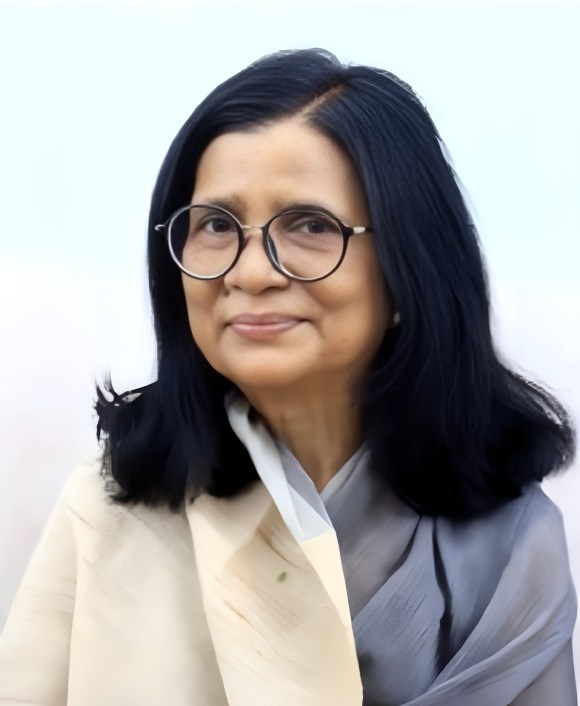
Pravasini Mahakuda is a distinguished Odia poet and translator with 18 original books and 8 books in translation from Hindi to Odia. She has received the Odisha Sahitya Akademi award, Jhankar Award and Junior and Senior Fellowships from the Ministry of Culture, Govt. of India. Her international engagements include participation in poetry festivals in Germany presenting her work in Berlin, Munich, Hamburg, Leipzig and Frankfurt. She regularly contributes poems in national magazines and attends seminars and poetry festivals across India.
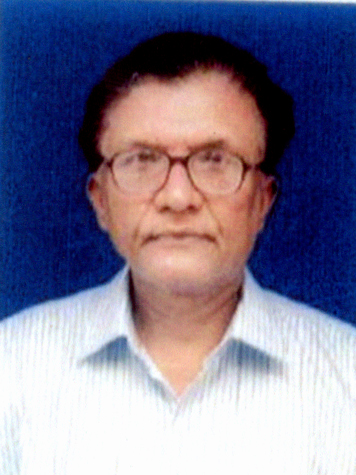
Dr.Snehaprava Das, is a noted writer and a translator from Bhubaneswar, Odisha. She has five books of poems, three of stories and thirteen collections of translated texts (from Odia to English), to her credit.
PLEASE NOTE: ARTICLES CAN ONLY BE REPRODUCED IN OTHER SITES WITH DUE ACKNOWLEDGEMENT TO BORDERLESS JOURNAL
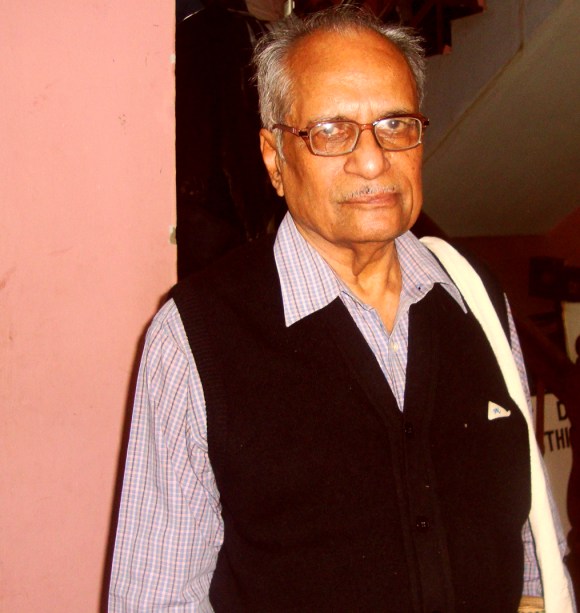
Bibhuti Patnaik (born: 1937). Photo provided by Bhaskar Parichha
Bibhuti Patnaik’s literary career unfolds like a long river—steady, persistent, and quietly transformative—running through the landscape of Odia literature for more than six decades. From the late 1950s onward, he wrote with a rare combination of emotional honesty and narrative discipline, giving voice to the evolving inner lives of middle-class Odias.
His writing emerged at a time when Odia literature was searching for a new expression after Independence, trying to reconcile classical traditions with modern psychological sensibilities. Into this space stepped a young writer who was not concerned with ideology or grand social systems, but with the stirrings of the human heart.
A defining feature of Pattanaik’s oeuvre is his meticulous representation of the Odia middle class. His novels, whether Aswamedhara Ghoda (Horse of Aswamedha), Sesha Basanta (Last Spring), or Prathama Sakala (First Dawn), foreground the ethical tensions, emotional fragilities, and moral negotiations embedded in quotidian life.
What distinguished Patnaik from many of his contemporaries was his unwavering commitment to emotional realism—a faith that the complexities of human relationships, especially love and desire, could carry as much literary weight as any political or social theme.
In his earliest works, Patnaik revealed a sensitivity to the fragile moral dilemmas that shape everyday life. His characters were not heroic figures or tragic archetypes; they were ordinary men and women negotiating expectations, impulses, and the confines of middle-class respectability. His prose, clean and unadorned, immediately established a new relationship with the reader—intimate, direct, and unpretentious.
For Odia readers of the 1960s, accustomed to more stylized narrative forms, this was refreshing. Young readers in particular embraced his novels, drawn to a writer who articulated emotional experiences with clarity and sincerity. Even at this early stage, Patnaik showed a remarkable ability to create female characters with depth and interiority, granting them agency in a literary culture that often placed women on symbolic pedestals rather than treating them as independent subjects.
As Patnaik moved into the 1970s and 1980s, his literary world expanded. The emotional tensions that shaped his early novels did not disappear, but they began to encounter new social realities. Odisha was changing—economically, culturally, and morally—and Patnaik’s novels became sensitive mirrors to these shifts. Urbanisation, job insecurity, the erosion of joint families, and the anxieties of modern aspiration found their way into his fiction.
He continued to write about intimate relationships, but these relationships were now embedded in broader pressures: generational conflict, economic burdens, and shifting gender dynamics. His characters struggled not only with their feelings but also with the demands of a changing society. Through this evolution, Patnaik maintained a narrative clarity that made his writing accessible to a wide audience, allowing him to be both widely read and critically noticed.
The 1990s marked a turning point in his career. While he continued to produce fiction, Patnaik increasingly turned his attention toward literary criticism and self-reflection. His essays—fearlessly honest, sometimes provocative—revealed a writer deeply engaged with the ethical health of the literary world. He wrote about the politics of awards, the failures of institutions, the erosion of literary standards, and the compromises that authors often make.
These writings unsettled the comfortable spaces of Odia literary culture but also enriched the discourse by demanding accountability and sincerity. At a time when many writers preferred diplomatic silence, Patnaik chose frankness. This choice, while controversial, made him an indispensable voice in understanding the dynamics of Odia letters in the late twentieth century.
His memoirs and autobiographical writings in the 2000s and 2010s further broadened his contribution. They are not mere recollections of a long literary life but important historical documents that offer insight into the personalities, politics, and conflicts of Odisha’s literary circles. The candour with which he narrates his experiences—sometimes tender, sometimes critical—makes these works stand apart in Odia autobiographical literature.
They reveal a writer who, despite being celebrated, never hesitated to critique himself or the milieu in which he worked. The tone of these later writings is marked by a late-style simplicity: calm, distilled, and enriched by decades of observation. Unlike many of his generation who grew stylistically heavier with age, Patnaik’s prose became lighter, clearer, and emotionally more resonant.
One of the most enduring features of his work is his representation of women. Throughout his career, Patnaik returned again and again to the complexities of female experience—women torn between personal desire and social expectation, women who resist, women who compromise, and women who assert themselves. His empathy for his female characters is evident not in idealisation but in the dignity he grants to their doubts, choices, and vulnerabilities. In a literary tradition long dominated by male narratives, this alignment with women’s emotional truth marked a significant departure and set a model for subsequent writers.
What ties Patnaik’s diverse phases together—novels, essays, memoirs—is an ethical thread. At the heart of his writing lies an insistence on sincerity: sincerity in feeling, sincerity in storytelling, sincerity in literary practice. His criticism emerges from the same commitment that shaped his fiction—the belief that literature must remain close to life, uncorrupted by pretension or institutional manipulation. Even when he critiques, he does so with the conviction that honesty is necessary for a healthy literary culture.
Today, looking back at his multi-decade journey, it becomes clear that Bibhuti Patnaik’s importance extends far beyond his widespread readership. He shaped the emotional vocabulary of several generations of Odia readers. He penned some of the most psychologically astute portrayals of love and moral conflict in Odia fiction.
He exposed the fissures in literary institutions through his bold essays. And he preserved the history of Odia literary life through his memoirs. His evolution—from a young chronicler of quiet emotions to a mature critic of cultural politics—mirrors the transformations of post-Independence Odisha itself.
Bibhuti Patnaik’s legacy is defined by this continuity of purpose. Whether writing a tender love story or a sharp critical essay, he remained committed to the integrity of human experience. His work endures because it speaks, with remarkable clarity, to the fears, hopes, and contradictions that shape ordinary lives.
In doing so, he carved a place for himself as one of the most authentic voices in modern Odia literature—unshakeable in sincerity, unafraid of truth, and unforgettable in the emotional clarity of his storytelling.
.
Bhaskar Parichha is a journalist and author of Cyclones in Odisha: Landfall, Wreckage and Resilience, Unbiased, No Strings Attached: Writings on Odisha and Biju Patnaik – A Political Biography. He lives in Bhubaneswar and writes bilingually. Besides writing for newspapers, he also reviews books on various media platforms.
PLEASE NOTE: ARTICLES CAN ONLY BE REPRODUCED IN OTHER SITES WITH DUE ACKNOWLEDGEMENT TO BORDERLESS JOURNAL
Five poems by Satrughna Pandab have been translated to English from Odia by Snehaprava Das
Satrughna Pandab
SUMMER JOURNEY

Does this journey begin in summer?
After the mango buds go dry
And the koel’s voice trails away…
When simuli, palash and krishna chuda
Blaze in red?
Does it begin when the blood
After reveling in the festivities of flesh
Crosses over the bone-fencing
And gets cold,
When the burning soul yearns for
The fragrant and cool sandalwood paste?

And the soothing monsoon showers?
 Where lies the destination --
At what border, which estuary,
Which desolate island of wordlessness?
The journey perhaps itself decides
The appropriate hour.
 You embark upon this journey alone --
Without friends, without kins,
Without allies without adversaries.

You yourself are the mendicant here.
You are the violin, you too are the ektara.
You are the alms too.
And what are the alms after all?
At that ultimate point,
When the end would wear the
Garb of blue ascetism,
The scorch of summer
Turns to
Sandalwood paste,
 Besmears the breath that
Leaves you overwhelmed
With its exotic fragrance.

A SKETCH OF FAMINE

The white wrap of the clouds
 Is ripped into shreds.
The pieces are blown away in the wind.

The sky spreads out like
A grey cremation ground,
Where the sun, like some kapalika
Performs a tantric ritual
A sacrificial act,
And slits the throat of a virgin cloud --
Moon:  The skull of a man just died,
Constellations: A crowd of beggars,
 Night:                        A Ghost Land
 Fissured farmlands: Human skeletons.

Flames leap.
Green vegetations char.
The blue of the sky turns ashy.
The tender earth
Lamenting its bruised honour
Sprawls in a pathetic, arid sprawl.

WAR (I)
 (FROM KURUKSHETRA TO KUWAIT)

All the Dhritarasthras
Between Kurukshetra and Kuwait
Are blinded kings,
Pride boiling in their blood,

Not a single weapon misses the target
Each Ajatasatru fights another
Ceaselessly,
Neither of them returns from the battlefield,

The weapons have no ears for
 The mantra of love
Or of brotherhood,
Nor does the blood recognise its kinsmen.
The battlefield does not care to know
Which warrior belongs to which camp.

Not a soul could be seen on the bank of
The bottomless river of blood
That flows across the battlefield
Desolate and forlorn.

And there is always an Aswatthama,
Ready with his Naracha, the iron arrow,
Awaiting the Parikshitas yet to be born.


AUTUMN

Is this river your body
Flowing, calm and pristine,
A translucent green?
Are the dazzling streamers of sunlight
Hanging from the sky of
Your glowing skin?
Are the rows of paddy fields
Stretching to the horizon,
Your sari?
Do you smell like the paddy buds?
Do the delicate murmur of the river waves
Or the cheery chirpings of the birds
Carry your voice?
The glimmering stars of the night --
Are they your ear-studs?
Do your eyes sparkle
Like those of some goddess?
Do you ever cry?
Really?
Are the dew drops clustering
On the grass your tears, then?

And the pool of blood under your
Lotus-like feet --
Whose blood is that?
Ripping apart the night
Coloured like the buffalo’s skin,
Your lotus-face gleams like stars,
My breath smells of the lotus, too.


A FAMILY MAN’S DAILY ROUTINE

The man stands
His back turned to the sun,
Or is it the wind?

A bare back, always
Rough hair, dry, windblown,
May be there is a hunch on his back,
Or, is it a load of some kind?
Heavy and sagging,
His toils do not show on his face.

He stands like a scarecrow,
Waving aimless, hollow hands
Warding off the emptiness
Around him, or the void within?

His face does not show it,
Or he does not have a face at all?
Just a headless body
Moves about here and there,
 Brushing the dust off,
Mopping the sweat beads away.
The cracks on his palms and his heels
 Could be seen, indistinct though.
There are, however, times, when
A face fixes itself to the headless torso,
When he comes to know
About the pregnancy of his unwed daughter,
Or, when he has to carry his dead son
Over his shagging shoulders,
The pair of eyes in that face look like marbles
 Deadpan, stiff and blank.

How does a family man take it
When the harvest succumbs
To the tyranny of flood and famine,
When a dividing wall is raised
 In the house or in the fields,
Does it matter to the family man?
May be,
A dagger rips his heart apart,
The pain does not show on the face.

Sometimes one can see something like
A basket on his back --
Who does the family man carry in that?
 His blind parents? His kids?
Perhaps his name is Shravan Kumar
And he is on a pilgrimage,
Perhaps not!

He buries his already sinking feet
Some more under earth,
Beads of sweat shine like pearls on him.
His beards hang off his face,
Like the aerial roots of a Banyan tree,
Does he move on carrying
A dead sun on his back?
His face reveals not much.

Who does the man stand
Showing his bare back to?
To the sun or to the wind?
Who knows?
Nothing shows clear on the family man’s face.
Satrughna Pandab is a conspicuous voice in contemporary Odia poetry. A poet working with an aim to define the existential issues man is confronted with in all ages, he adopts a style that embodies traditionalism and modernity in a proportionate measure. Highly emotive and poignant, his poetry that reveals a fine synthesis of the experiences both individual and universal, are testimonies of a rare poetic skill and craftmanship. A recipient of the Odisha Sahitya Akademi Award, the Sarala Award, and several such accolades the poet has nine anthologies of poems and several critical and nonfictional writing to his credit.
Dr.Snehaprava Das, is a noted writer and a translator from Bhubaneswar, Odisha. She has five books of poems, three of stories and thirteen collections of translated texts (from Odia to English), to her credit.
PLEASE NOTE: ARTICLES CAN ONLY BE REPRODUCED IN OTHER SITES WITH DUE ACKNOWLEDGEMENT TO BORDERLESS JOURNAL
Prof. Sarbeswar Das (1925–2009): A scholar of depth, a teacher of light. Photo Provided by Bhaskar Parichha
In the intellectual history of modern Odisha, Professor Sarbeswar Das stands as one of those rare figures who seamlessly bridged scholarship, ethics, and social commitment. A luminous teacher, an erudite writer, and a quiet Gandhian, his life and work embodied the moral seriousness and intellectual curiosity that marked a generation shaped by the freedom struggle and the promise of a newly independent India.
Born in Sriramchandrapur village in the Puri district of Odisha in 1925, Sarbeswar Das grew up in a milieu where simplicity, discipline, and community values were deeply ingrained. His brilliance shone early—he topped the matriculation examination across Odisha and Bihar, a distinction that foreshadowed a lifetime of academic excellence.
His educational journey took him first to Ravenshaw College, Cuttack, the cradle of higher education in Odisha, where he absorbed the liberal spirit and rigorous intellectual training that the institution was known for. He later studied at Allahabad University, one of India’s foremost centers of learning, before proceeding to the University of Minnesota, for advanced studies in English literature.
His exposure to American academia at a time when few Indian scholars ventured abroad profoundly shaped his intellectual orientation. The years in Minnesota opened to him a new world of thought—modern literary criticism, American fiction, and the philosophy of democratic humanism—all of which left a deep imprint on his teaching and writing in later years.
On returning to India, Das joined the teaching profession, which he would pursue with remarkable dedication and grace for several decades. He served as a professor of English in some of Odisha’s most respected institutions—Christ College (Cuttack), SCS College (Puri), Khallikote College (Berhampur), and Ravenshaw College (Cuttack).
As a teacher, he was known not only for his formidable command of English but also for his clarity of expression, quiet humour, and empathetic engagement with students. He could bring Shakespeare and Emerson alive in the classroom, weaving them into the moral fabric of everyday Indian life. His pioneering initiative was the introduction of American Literature as a formal subject of study in Indian universities, long before it became fashionable to do so.
In an age when English studies in Odisha were largely confined to the British canon, he expanded its horizons by introducing writers like Walt Whitman, Emily Dickinson, William Faulkner, and Mark Twain to Indian classrooms.
Das believed that literature must connect with lived experience. He often told his students: “Language is not just a means of expression; it is a mirror of our moral imagination.” This conviction shaped generations of students who went on to become writers, teachers, and civil servants. Among them was the late Ramakanta Rath, later one of Odisha’s most celebrated poets, who fondly remembered Prof. Das as a teacher who inspired intellectual courage and aesthetic sensitivity.
Alongside his teaching, Prof. Das was a prolific writer and scholar. He authored around twenty-five books spanning essays, literary criticism, translations, and reflections on education and society. His writings in English and Odia reveal a mind steeped in both classical and modern traditions. Fluent in English, Odia, and Sanskrit, he was at ease quoting from the Bhagavad Gita and Hamlet in the same breath.
His essays in English reflected on the role of language in education, the cultural responsibility of intellectuals, and the need for moral clarity in modern life. He consistently argued for a vernacular humanism—a belief that English education must not estrange Indian students from their cultural roots but rather help them view their own traditions through a broader, universal lens.
As a principal, he brought administrative efficiency and human warmth to his role. His tenure is remembered for reforms that encouraged academic discipline, faculty collaboration, and student participation. He believed that education was not merely about acquiring degrees but about shaping ethical citizens.
Prof. Das’s intellectual life was inseparable from his moral and civic commitments. As a young man, he participated in the Quit India Movement, aligning himself with the Gandhian values of simplicity, non-violence, and service throughout his life.
Late in life, Prof. Das turned inward to recount his journey in his autobiography, Mo Kahani (My Story), which has since acquired the stature of a modern Odia classic. Spanning eight decades of personal and social history, it offers not only a memoir of a life well-lived but also a vivid ethnography of Odisha across the twentieth century.
In Mo Kahani, he paints rich, affectionate portraits of his family—his parents and sisters, Suruji and Hara Nani—and evokes the rhythms of village life, with its festivals, hierarchies, and hardships. His account of the great famine of 1919, passed down through family memory, is a haunting narrative of suffering and resilience.
The autobiography captures the moral universe of rural Odisha—its compassion, faith, and silent endurance—while chronicling the social changes wrought by modernity, education, and political awakening.
The book transcends personal recollection to become a social document of rare authenticity, preserving the voices and values of an era in transition. Scholars have hailed it as a valuable resource for understanding Odia social and cultural history, as well as a significant contribution to Indian autobiographical writing.
Prof. Sarbeswar Das passed away in 2009 at the age of 84, leaving behind a legacy of intellectual depth and human kindness. Those who knew him remember his calm demeanour, his Gandhian simplicity, and his unwavering belief in the power of education as a moral force. His students and colleagues regarded him not merely as a teacher but as a guide who exemplified integrity and humility in every aspect of life.
His contributions to English literary education in Odisha were transformative. By introducing American literature, promoting cross-cultural study, and insisting on a pedagogy grounded in ethical reflection, he helped modernise the study of English in the state and inspired a generation to approach literature as a bridge between worlds.
Even today, his writings—both critical and autobiographical—continue to speak to the challenges of our times: the search for meaning in education, the reconciliation of global and local cultures, and the enduring need for moral clarity in a rapidly changing world.
In the final measure, Prof. Sarbeswar Das remains not only a scholar and educator but also a moral historian of his age—one who chronicled the soul of Odisha with the sensitivity of a poet and the precision of a teacher. His Mo Kahani endures as his final lesson: that learning is not a mere accumulation of knowledge, but a lifelong practice of understanding, empathy, and truth.
.
Bhaskar Parichha is a journalist and author of Cyclones in Odisha: Landfall, Wreckage and Resilience, Unbiased, No Strings Attached: Writings on Odisha and Biju Patnaik – A Political Biography. He lives in Bhubaneswar and writes bilingually. Besides writing for newspapers, he also reviews books on various media platforms.
PLEASE NOTE: ARTICLES CAN ONLY BE REPRODUCED IN OTHER SITES WITH DUE ACKNOWLEDGEMENT TO BORDERLESS JOURNAL
Five poems by Rohini K.Mukherjeehave been translated from Odia by Snehaprava Das
Rohini K.Mukherjee
AT THE MYSTICAL SANCHI

An unknown voice beckons
At the early hours of the morning.
Moved by a new surprise
Buddha relapses into meditation.
A crystal dawn, cold as marble,
Is traced
On his hands and feet
And his eyes and forehead.
Some instant, invisible signal prompts him
To turn on his side and sleep.

After Buddha’s Nirvana,
Calm settles in the valley, slowly.
Thousands of
Branches and branchlets
Radiate blissful divine light.
The trees too, in a lavish growth,
Spread out everywhere --
From the earth below to the sky above --
And meditate!


THE EXECUTIONER

No one could predict
The next scene.
But in the one enacted now
The executioner has
A prominent presence.

The executioner stalks the moon,
 His face hidden in the veil of clouds,
Knife in hand, a gleam of smile
On a phony face,
A sharp, keen gaze under the glasses,
Exuding the smell of
An expensive perfume.

The indistinct footfalls may
Prompt one to flick a look back
 But there would be no one behind
Only clouds clad in midnight blue
Sailing in the sky.
From somewhere far floats in the music
Of a mountain stream.
 Slowly, sorrow dissipates and a
 Path opens up for the spring,
 A wonderland of fairies.
In his unguarded moments,
The knife in the executioner’s grip
Glitters in the furtive moonlight.
Any moment that poison-coated knife
Could find the moon’s throat,
The moon knows that well.
But it forgives,
Because it also knows well
That the executioner cannot
Hide for long
And will be trapped in
The moonlit garden of tangled clouds.


THE DEATH OF A HAPPY MAN

One day, the eyes lost sleep
And all the locusts flew away,

Not one spectator had guessed
That one day
The man will sprawl out on
On the sea beach sands
Washed away by the waves
From distant lands.

The eyes lost sleep one day.
The flock of locusts flew away.

But no one could guess
The pains, the sobs
That seared that forlorn soul.

Petals drifted in piles
To make him a delicate shroud.
The smell of sandalwood came wafting
In the sea-breeze from the north.
Seagulls flocked around the body,
Unintimidated by the crowd in the beach,
Drowning the voice of
The living men there
With their loud squawks of dissent.
Ooh! What a long wished-for
Happy death
On a cool and blissful sea beach!

After the flock of locusts flew away
Carrying all the dreams back
On their wicked wings,
The eyes lost sleep!


ANKLETS OF THE NIGHT

There is still time for the nightfall.
But the air tinkles with the sound of
The anklets of the night
 As if someone is retreating from
An ineffectual, moon-washed garden,
 As if someone from the grave
Watching the landscape,
Or someone standing at the riverside
Hums the tune of a departed season,
Or someone hurrying aimlessly away
To escape the approaching dawn.

It is not yet night,
But the night’s anklets ring.
You are probably returning
To your shelter of old times
In search of a new hope.
Just take a look behind to see
The painting of a conflicting wind
Fluttering across the courtyard.

It is not yet night
But its anklets begin to jingle in the air.

How cool you appear in your
Evening chanting of the mantras!
 How calm and steady you are
In the pure fragrance of the descending steps
As you set out on the journey
Holding your heart on your palm
Like a burning clay-lamp.
May be when you arrive there
The dawn around you would be sonorous
With the notations of Raga Bhairavi.

There is still time for the nightfall
But the night’s anklets tinkle in the air!


THEY DID NOT COME

I waited for them, but
They did not come,
I waited all this time in vain, and
Knowingly, let myself fall a victim
To the first rays of the sun.
The sun’s whiplash spurred me on
To the jungle.
It forced me to cut wood
And tie them in bundles.
The hunger of the sunset hour
Prodded me back to where
I had started.
The smell of soaked rice, and the aroma of
Onions and oil
 Drifted thick in the air of my house.

The sun came in, an intruder,
Sat by me and watched.
Then it devoured all the food,
Leaving nothing,
Not even a single dried-up onion-peel.

Because they did not come,
For me the morning was
Meaningless in its futility.
I knew I was never one
In the list of their ultimate interests
When their tenure of life here ended.

The footfall of the light
Trod easy on my skin.
Days rolled on this way
In sun and light.
The sun was everywhere, all the time.
Whenever the door opened,
The sun stood there.
When the meteor came shooting down,
When words rode over
the waves of sleep to float in the air,
The treacherous sun always appeared.

And for me, there was
No hope of their coming back.

But, one day as I leapt up in a hurry
At the Sun’s summon,
I discovered the Sahara Desert
That I believed had
Remained hidden in my
School Geography book,
Lying face down all these days
Under my own hooves!
Rohini Kanta Mukherjee has authored, edited and co-edited several volumes of poetry and short stories in Odia and English. Many of his poems have been translated and published in various Indian languages , broadcast over several stations of All India Radio and Doordarshan . Some of his poems and translations have appeared in Wasafiri, Indian Literature, The Little Magazine , Purvagraha, Samasa among others. He retired as Associate Professor of English, from B.J.B Autonomous College, Bhubaneswar, Odisha.
Dr.Snehaprava Das, is a noted writer and a translator from Bhubaneswar, Odisha. She has five books of poems, three of stories and thirteen collections of translated texts (from Odia to English), to her credit.
PLEASE NOTE: ARTICLES CAN ONLY BE REPRODUCED IN OTHER SITES WITH DUE ACKNOWLEDGEMENT TO BORDERLESS JOURNAL





 Borderless