The tussle between the neoclassical economist [that stubborn, unyielding breed] and the ecological economist [the rebellious change-seeking breed] has been going on for several decades now, and now has reached a climax. As per the former – Robert Solow, Joseph Stiglitz and John Hartwick[1] among them –capital has to be interpreted as an aggregate of the natural and manmade varieties and as long as this sum total is constant, we are good. A decrease in the former can be made up for, by an increase in the latter – it is as simple as that, according to the neo-classicists.
Stress-free thinking? Just move on doing what you will, and the Universe will keep caring for you and protecting you. In fact, that is how a large majority of Homo Sapiens have been conducting their lives and livelihoods over the years, short-changing the conscientious ones in the process. Now this presents a disintegrated view – the adjective being important here. Disintegrated, ironically, even though the neo-classicists claim that what was not created by man can be balanced out by anthropogenic[2] assets, and one could claim that the total utility and happiness and welfare will remain unchanged.
Let me tell you a story – fiction, yes, but may well have happened somewhere in the world, or maybe in many places in the world, on several occasions. Say there was a forest yonder a few kilometres out of the city. A forest my grandpa used to take me to, for a stroll on weekends, when I was a school-goer. Communion with Mother Nature. Feet on the soil. Glimpses of songbirds, rabbits, squirrels, gurgling streams. Shady trees under which, I and my grandpa would sit and play Ludo. He would tell me stories from the Aesop Fables and I would visualise those animals in that very forest. He would sing for me in his mellifluous singing voice and I would be enthralled and that would develop in me an interest for singing and expressing my locked-up emotions in my adulthood to vent out my grief. We would sit there, and he would teach me how to sketch the elements of Nature. I would grow up to develop an abiding interest in drawing, sketching and painting. Grandpa is no more. But thanks to those strolls, I now think I am a well-diversified individual with multiple tastes and abilities, and also a leaning towards industrial ecology, ecological economics and the like.
That was then. Now, I am a city planner in the very same city I grew up in. I have forgotten those lessons from childhood, even though I retain the said abilities – sing, sketch etc. Grandpa watching from the astral plane is surely sad. But I decide not to care. I veer towards the neoclassical, as I come under pressure from the others I am working with. I cannot stand my ground like Howard Roark did in Ayn Rand’s The Fountainhead (1943). I give my consent to the idea that miners be allowed to prospect for gold in the same forest I used to go for strolls with my grandpa in the past. I visualise a stream of royalties and taxes for the city, which could be used to set up many parks. As the neoclassical theory goes, I would be convincing city-dwellers that I am creating easily-accessible capital for them right at their doorsteps!
The city parks styled as mini-forests, come up in due course of time [money loaned out by banks, which will be repaid thanks to the said royalties and taxes which are anticipated, as the miners have struck gold, literally]. I take my sons out to the park, and while telling them about how they came about and boasting about my planning skills, I slip into memories of the past and tell them how I enjoyed my strolls with their great grandfather long ago in those natural forests yonder. My younger son looks up at me and asks, “Why have not you taken us there? We wish to see where you used to go with your grandpa.” I am dumbfounded. An epiphany!
I have stolen from them what I enjoyed as a little boy. I have deprived them of what Mother Nature had bestowed upon all of us. Surely, people of my grandpa’s generation also used to visit the forest when they were young? And possibly their own ancestors too? Obviously, that is how grandpa knew of the value of the forest for holistic development? My sons have since joined the Greta Thunberg gang and they do not spare me in their criticism. I am proud of them while I am ashamed of myself, if at all these two feelings can arise in the human heart at the very same time. But what I have done, cannot be undone.
Well, the parks and the forests can surely co-exist, so that the aggregated capital can increase a bit and then saturate, instead of having to remain constant. After all, a conscientious city planner should realise that every inhabitant in the city may not have the time, energy or the wherewithal to go to the forest a few kilometres away [especially if he/she does not own a car and there is no public transportation out to the forest]. For such people [who may perhaps account for a sizable percentage of the city population], the city parks are indeed worthwhile investments the municipality can make. A poor substitute, yes, but something good better than nothing.
We came from the forests, right? Those of you who believe that God created Adam and Eve and we all trace our lineage back to a ‘poisoned apple in the Garden of Eden’ (now was that a park or a forest?) may take a hard left. But when you have already read through the article, maybe you have no choice but to pause and ponder. Then, head to the park for a quiet walk, or if there is a forest nearby, you could go there as well for some introspection.
[1] Robert Solow, Joseph Stiglitz and John Hartwick are economists known for their theory on economic growth
[2] of, relating to, or resulting from the influence of human beings on nature
G Venkatesh is a ‘global citizen’, currently serving at The Energy and Resources Institute’s School of Advanced Studies (New Delhi, India). Prior to this, he was Associate Professor at the Karlstad University in Sweden. has published a memoir, four volumes of poetry, four e-textbooks, numerous scientific publications, crosswords, and magazine articles over time. He is a ‘sustainabilist’ who sketches in his spare time, likes singing, and is a sports enthusiast, cricket in particular.
PLEASE NOTE: ARTICLES CAN ONLY BE REPRODUCED IN OTHER SITES WITH DUE ACKNOWLEDGEMENT TO BORDERLESS JOURNAL
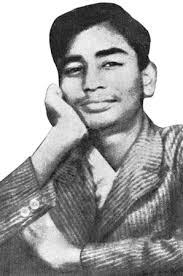
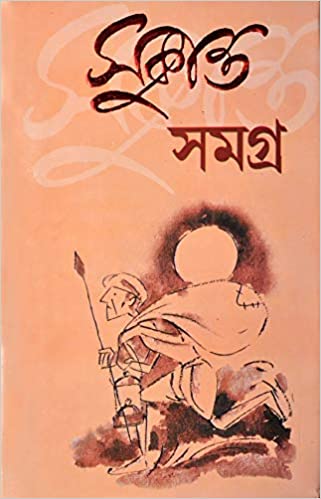
Sukanta Bhattacharya (15th August 1926-31st May 1947): Called “Young Nazrul” and Kishore Bidrohi Kobi[1], Sukanta Bhattacharya died at the tender age of twenty of tuberculosis. He, like Nazrul, wrote poetry to protest the colonial atrocities. His poems describe the suffering of common people and looked forward to a world free of exploitation. His writings were anthologised in Sukanta Samagra (Complete Works of Sukanta, 1967), published posthumously, simultaneously in East Pakistan and West Bengal.
The once-paved paths
 are now vitiated.
    How can I endure
       the trauma without
         divine intervention?

Death, death, everywhere...

Life's earnings
   must be renounced.
    When the means
      become futile,
       they are best discarded like tattered rags
[1] Youthful Rebel Poet: Nazrul was called the rebel poet of Bengal. He wrote a poem called Bidrohi or Rebel and his poetry had been that of rebellion like Sukanta Bhattacharya’s.
Kiriti Sengupta has had his poetry featured in various publications, including The Common, The Florida Review Online, Headway Quarterly, The Lake, Amethyst Review, Dreich, Otoliths, Outlook, and Madras Courier. He has authored fourteen books of poetry and prose, published two translation volumes, and edited nine anthologies. Sengupta serves as the chief editor of Ethos Literary Journal and leads the English division at Hawakal Publishers Private Limited, one of the top independent presses established by Bitan Chakraborty. He resides in New Delhi. Further information is available at www.kiritisengupta.com.
.
PLEASE NOTE: ARTICLES CAN ONLY BE REPRODUCED IN OTHER SITES WITH DUE ACKNOWLEDGEMENT TO BORDERLESS JOURNAL
A very wise, experienced scientist has recently decided that the day our world will be annihilated (we may call it pralay or roz-qayamat) is not really as far away as we think. Let us discuss this, keeping in mind all the discussions on the subject that have been unfolding over the last few years.
In the last half-century, it has been observed that the floating icebergs in the South Polar region are expanding continuously. Edmund Smitharth, captain of The Edmont, first sighted an iceberg 580 feet high. Subsequently, Mr Scott saw an iceberg even higher than 600 feet. But a sailor aboard The Edgenta discovered, even in the ocean, a floating iceberg higher than 1000 feet, and that left the whole world wonderstruck. It was later calculated that this iceberg was 9612 feet thick: in other words, it was more than a mile and three-quarters wide.
In the southern hemisphere, the number of gigantic iceberg-clusters has been steadily increasing. And it is for this reason that the temperatures in the South Polar regions are rising tremendously. The remote floating iceberg-clusters in the North have created extreme cold weather in South Africa and South America. Other places can’t compare with these regions when it comes to freezing temperatures. Buenos Aires has recently experienced a snowfall. The country had never witnessed a snowfall before.
What does all this mean? In the opinion of Professor Lewis and other great scientists, the second Great Flood or Great Destruction of our Earth is imminent. Even if the whole world is not destroyed, there is no doubt that at least part of it will be annihilated.
The vast, sky-high ice-cap that covers the South Pole is 1400 miles in length. There is no knowing how many hundred miles wide it might be! Now, what will be the result of this continuous, unbearable warming of the atmosphere at the South Pole? Everyone knows that ice melts when heated. Hence, on account of the extreme heating of the South Pole, those thousands and thousands of giant iceberg clusters covering immense expanses of space will break and dissolve, and a mass of waves, surging sky-high, like the Himalayas in motion, will spread in all directions, drowning everything in their wake. First of all, the low-lying parts of the world, the southern continents will be afflicted by this great deluge.
In ancient times, our ancestors were terrified of comets, for they did not know what comets are. Our forefathers of subsequent generations had acquired more knowledge on this subject, but they too were very afraid of comets and considered them inauspicious. For they believed that the head of such comets was solid, hence a chance collision when passing so close to Earth might destroy the whole world.
Now we have got to know that the comet is not a solid unit, but vaporous like the mist. Hence, if by chance the odd comet does collide with Earth, it would not smash a deep crater into any part of our planet, nor would it fling us out of Earth’s gravitational field.
But the famous French astrologer Monsieur Camilles Flammarionhas arrived at a dreadful conclusion. It is his belief that the vaporous tail of the comet is full of poisonous gases, and hence, if the comet once comes into contact with Earth, all life on our planet will be extinguished by those toxic gases, in a single instant. The beauty, flavour and fragrance of planet Earth will be wiped out forever!
The complete chemical explanation for the creation of comets is not yet within our grasp, but everyone can easily apprehend that the comet surely loads its tail with gas. This gas can easily suck the nitrogen from our Earth’s atmosphere, and if that were to happen, it would spell death for us, no matter what! It was not for nothing that our forebears disliked this thing called a comet so intensely! As the saying goes, ‘He appeared on the horizon of my destiny like a comet!’ For the fortunes of Earth, too, the comet is indeed inauspicious and harmful.
Anyway, if the comet sucks nitrogen from the air, then we will receive only oxygen. True, oxygen enhances blood circulation and physical as well as mental efficiency, but then, pure oxygen can be terribly dangerous. Hence, if we receive only volatile oxygen when we breathe, our body temperature will continue to rise, and eventually, we will burn to ashes.
In the Coal Age, the atmosphere of our Earth was heavily loaded with carbonic acid. In those times, humans could not have tolerated that air. Only fish and reptilian creatures survived in flowing waters and still air. Gradually, with the vast, extensive growth of plants, trees and vegetation, that poisonous still air began to disappear, the sky grew clear, and thus did this atmosphere become suitable for warm-blooded creatures.
At present, the human race is terribly busy mining coal and utilizing it. Do you know what age this coal belongs to? It can only be the legacy of that age many hundreds of thousands of eons ago when the atmosphere was full of carbonic acid, and of the trees and vegetation of those times, for even now, it is only the wild trees and vegetation that can absorb that carbonic acid.
Every lump of coal, every matchstick that is lit, depletes, daily, the oxygen that is vital for us. A famous English scientist has recently announced that the world’s supply of oxygen is continuously being dissipated, and therefore the air is also steadily becoming polluted. Hence the day is nigh when everything on earth will be transformed into the life forms of the age of carbonic acid.
Human beings will gradually become smaller and more fragile, until they begin to resemble Lilliputians and ultimately, they will become completely extinct! And then, it will end as it all began! In other words, just as fish and reptiles were the only life forms at the beginning, so also, in the future, the avatars of those humongous giant-fish and giant-reptiles will flourish again here, their health and vigour restored. Even the very thin, long, humble reptilian creatures of the prehistoric age, such as earthworms and snakes, will rule again over our mounds and ant-hills, in very large numbers.
If the human race gives up the harmful over-use of coal that we see today (just burning coal is wasting 1600 million tonnes of oxygen per year), and subsequently, if they manage with electricity as a substitute for coal, then we will again be forced to fall into the abyss of a new threat! In other words, whatever path you take, death is inevitable. We are caught between the devil and the deep blue sea!
The gradual transformation of the environment over time has become noticeable. Thunderbolts—especially, the incidence of thunderbolts in winter—are continually increasing. And the reason is simple: it is the clash between the electricity of the earth and that of the sky that is causing this barrage of thunderbolts! So, what is the way out? That is why, perhaps, Pannamoyi has already sung, as if to predict the future: “moribo moribo sakhi, nischoyei moribo!” (“I will die, I will die, O friend, for sure I will die!”)
Suppose, for instance, if we were to increase the current pressure on the atmospheric electricity a hundredfold or a thousandfold. Would flowers ever bloom again in basanta, the season of spring? Will new green leaves appear? Will the ardent downpour of varsha, the rainy season, ever moisten the earth’s bosom again? No, no, they wouldn’t! Instead, it is the thunderbolts that would become the regular daily occurrences on our Earth. Struck by hundreds of thunderbolts every day, the earth would be torn apart. An astute meteorological scientist says, “Yes, yes, that is what will happen, ultimately!” How horrifying! What we should do now is, to convince ourselves, collectively, that the gentleman’s words are untrue, and he has misinterpreted the situation. Look at Sujji Mama—Surya the sun, our maternal uncle—our source of life and light! He not only creates light and heat, but is also the progenitor of electric power. And he the only mama we have, who will move circumspectly, to maintain the balance of this mysterious unknown force of nature. Long live Mama!
At present, Sujji Mama’s power is so tremendously forceful, that if all his rays and brilliance were to fall solely upon this poor earth of ours, then in just a minute and a half, the giant ice-mountains I spoke of earlier would all melt down and begin to boil. And if it lasted another eleven seconds, the vast ocean stretches of this world would all dry up, the earth’s surface cracking open to reveal yawning chasms.
But even Sujji Mama is growing diffident, and shrinking day by day. We don’t know yet how much mass his giant bodyloses, little by little, each day. Professor Burns vehemently declares that this shrinking of Sujji Mama is progressing at a very rapid pace. So rapid that we can’t even hazard an approximate guess. In a very short time, observing the reduction in the sun’s heat, we will be able to understand whether it is actually shrinking or not.
Shrinking to a smaller and smaller size in this manner, when Sujji Mama gives up the ghost—in other words, when he ceases to exist— it is terrifying to even imagine what the plight of planet Earth will be. All the water will freeze and become harder than stone, but it will be a fine sight—dazzling as a diamond! This air, which we can’t see at present, will then descend in a shower of giant drops. These will again collect in the cavernous spaces, and turn into lakes clearer than glass, but waveless, indifferent, unruffled! For no breeze will blow then, after all. In the harshness of the merciless cold, the whole Earth will then become frozen, still, immobile. Only fog and a dim mistiness will remain.
The sun will gradually turn red, and remain the same hue of red all day. Just like a half-cooled, burning, molten iron mass! In the daytime itself, the whole sky will fill with even brighter stars! Let us pray to Allah the Great!
[From Selected Essays by Kazi Nazrul Islam. Translated by Radha Chakravarty. New Delhi: Penguin Random House & Nazrul Centre for Social and Cultural Studies, 2024. Published with permission from Penguin Random House India}
Born in united Bengal, long before the Partition, Kazi Nazrul Islam(1899-1976) was known as the Bidrohi Kobi, or “rebel poet”. Nazrul is now regarded as the national poet of Bangladesh though he continues a revered name in the Indian subcontinent. In addition to his prose and poetry, Nazrul wrote about 4000 songs.
Radha Chakravarty is a writer, critic, and translator. She has published 23 books, including poetry, translations of major Bengali writers, anthologies of South Asian literature, and critical writings on Tagore, translation and contemporary women’s writing. She was nominated for the Crossword Translation Award 2004 and the Pushcart Prize 2020.
.
PLEASE NOTE: ARTICLES CAN ONLY BE REPRODUCED IN OTHER SITES WITH DUE ACKNOWLEDGEMENT TO BORDERLESS JOURNAL
Story by Bitan Chakraborty, translated from Bengali by Kiriti Sengupta
Bitan Chakraborty. Photo Courtesy: Kiriti Sengupta
The black smoke rises in a straight line. It will fade into the air as it reaches a certain altitude in the sky. The wind feels still today, causing a grey layer to form. Not long ago, Lali experienced recurrent bouts of excruciating pain, but now it refuses to subside. She tries to relax, her spine loosely resting against the wall of the leather factory. Lali shrinks again as her little baby stretches its limbs inside her womb. In the distance, her husband, Fatik, is tending to their domestic belongings in the dilapidated house. He is vigilant, working hard to safeguard their utility items. He won’t let anyone take away their hard-earned household goods. Fatik does not know what will be put into the fire. A few government-appointed people collect the crushed bamboo walls from the ghetto and add them to the flames. The more they burn, the more smoke rises. At a safe distance, a curious crowd observes the unfolding events.
Fatik packs goods in small quantities and takes them to Lali, who is resting under the shade. He quips, “I could have packed up sooner if I had someone to help. You’re in pain, huh? Hold on for a bit; we will board the train shortly.”
“Hey scoundrels, that’s mine. Keep it there, I’m telling you! Otherwise, I’ll put y’all in that fire.” Fatik rushes to their ruined house. It’s not a house anymore! An empty stretch reveals the impressions of bricks laid down for years. Fatik’s shanty looks the same — a square piece of land with torn plastic sheets and scattered, fragmented earthen roof tiles.
Lali continues to endure pain. Fatik appears exhausted; he is busy organising goods. There’s no point in disturbing him further with another complaint of discomfort. Lali remains silent and attempts to sketch the new place they will inhabit for the next few months or possibly years. No one will be a stranger there; they cannot afford the luxury of exploring exotic living. Fatik once told her, “Shashthida has affirmed that we can come back here once the air cools down.”
It’s easy to earn a living in the city, but finding a job is difficult in the countryside, where opportunities are scarce. Once the flyover is built, Fatik plans to return and set up a small eatery for the evenings. In a tone filled with love and care, Fatik tells Lali, “No one can resist the mutton curry you cook. All visitors will become regular customers at our shop.” Lali adds a touch of sass to her response, “I won’t. I’d rather teach you the recipe. You can then cook and feed them.” Gazing at the ceiling with wide eyes, Fatik remains lying in bed.
Lali does not believe in Fatik’s words that they will be able to come back here again. A few minutes ago, Hema came to see her, “My bad luck; I won’t get a chance to see your child. But you never know if I will meet you again somewhere else.”
“Won’t you come back here?” Lali asks.
“They will not allow us here again,” Hema replies. “The officials informed us that they were planning to build a marketplace below the flyover after its construction.”
Mum’s the word when Lali relays the news to Fatik. He murmurs, “But then Shashthida[1] has assured…”
“You can pursue a small shop in the proposed market,” Lali advises.
“I can’t say; they might ask for a cash lump sum as advance payment.” Fatik appears worried.
The pain shoots once again. Lali flings her legs aimlessly. The dusty floor reflects her movements. She remains silent. On the other side, Fatik gets into trouble with Dulu and his family. Dulu’s mother seems to have taken Lali’s rice pot. Lali raises her voice, “The pot is mine!” Unfortunately, her words go unheard.
2
Fatik knocks Lali with his bag, “Come on, the Hasnabad local is at platform eight. Walk along the straight direction.”
Lali has heard of the Sealdah railway station, but she has never been there. It is a large station with several platforms, numerous trains, and huge crowds. Passengers jostle against one another. With great caution, Fatik quickly walks across the platform to board the train and get into a compartment by any means necessary. There are likely a few travelling ticket examiners around, but during this time, they usually don’t enter the coach. Lali is unable to keep pace with Fatik and remains far behind him, but she compensates for the distance by tightly gripping one side of the gamcha[2] draped around his neck. Fatik collides with the commuters approaching from the other end, and a few passengers express their annoyance with a word or two of irritation. Fatik does not respond at all. Lali pulls her saree to cover her breast. She has no control over the saree girded around her head, which has now slipped onto her back.
The train will start in ten minutes. All coaches are full; not a single seat is vacant. Fatik quickly decides on a favourable compartment and boards the train with his wife. Lali cannot stand any longer, so she sits on the floor beside the door, her hands resting on her belly. Fatik arranges their bags around Lali. An elderly gentleman asks, “Where will you get off?”
“Barasat,” Fatik answers.
“What the hell are you doing here? Get inside the coach. Have you lost your mind or what? How can a sensible man board the train in such conditions?”
Fatik turns to his wife and whispers, “There aren’t any vacant seats. Do you still want to go inside?”
Lali refuses to move. The spasm has taken over her body and mind. She cannot stand up. She wants to stretch her legs to give her baby more space. However, the situation does not allow for that privilege. With each passing minute, more passengers crowd the coach, and the draft is cut off. In a dry voice, Lali calls out to her husband, “I cannot breathe. I need some air.”
“Wait a moment. The crowd should thin out after we pass two stations,” Fatik says.
As soon as the train departs, more than a handful of late passengers hurriedly board the coach. They will travel a long distance and want to get inside. The bags and goods piled around Lali create an obstacle to their movement. One of them raises his voice, “Is this a place to sit?” Another man from the crowd yells at Lali, “Stand up, I said!” Someone empathetically informs, “Try to understand; she is carrying.”
“Oh! This is horrible. Hey brother, you aren’t pregnant, are you? Better you stand up. More passengers will enter the coach at Bidhan Nagar and Dum Dum. They will smash you to death.”
Fatik gets anxious and follows the instructions. Lali shrinks in fear, feeling breathless. In her womb, she carries their only child, who waits to see the world — as if the baby complains, “I cannot stay in this small dark space anymore, Ma!” The passengers become frightened as Lali lets out a low moan of pain.
“Are you okay?”
Fatik bends toward Lali as much as possible to ask, “I’m sure it’s terrible to bear any longer.”
“No air; it’s suffocating!” Lali sounds fragile.
“It won’t be long; I’ll take you to the hospital as soon as we reach there. Shashthida has shared the address.”
Lali’s facial muscles contort in extreme agony. Fatik isn’t sure whether she has heard him. Intoxicated, Fatik had seen her suffer from pain before; during those times, he did not feel her distress. Lali wept profusely. Fatik never intended to hurt her but lost control as he downed liquor. The very next day, Fatik committed to his wife, saying, “I won’t trouble you anymore. All I want is a son!”
With a hint of dejection in her eyes, Lali poked, “Right! So, he can run a liquor shop you longed for.”
“Shut up! I’ll make him a real gentleman,” Fatik readily addressed her concern.
3
Several travellers board the train as soon as it stops at the next stations. Lali, who somehow remains seated on the floor, gets pressed painfully against the legs. She feels worse than ever. Fatik seems restless and cautiously peeks out from behind the crowd to read the station names. At times, he turns to look at the goods around him. A few passengers become irritated, saying, “What’s wrong with you? Why don’t you stand still?”
“Be careful, dada! Take care of your pocket. You never know…Dasbabu lost three hundred bucks yesterday only.” Someone from the crowd airs the words of caution.
Fatik understands the meaning of such lines. He does not utter a word, for he knows if he begins an argument, they will forcibly push him out of the coach at the next station and beat him like hell. He requests the passenger beside him, “Dada, please let me know as we reach Barasat.”
“We are currently at Cantonment. Please be patient; it will take another thirty minutes or so to reach Barasat.”
4
Lali wants to scream. She feels thirsty. Amid the numerous legs visible to her, she cannot identify Fatik’s. Even when Lali looks up to see the faces, she is unable to locate her husband. The child in her womb revolts; it will not tolerate the torture to which the mother is subjected. The baby twirls, rapidly changing positions. Lali realises that her child is responding to the world — specifically, the passengers in the coach. The tiny tot wishes to emerge from confinement to greet them. Lali is afraid — will they treat the child as lovingly as their family?
Fatik bends down and says, “We will get off at the next station. Several others will disembark. I’ll first grab the bags, and then I’ll help you off the coach. Be careful.”
Lali gathers her courage and prepares for the exit. She moves her palm over her belly, saying, “A little more waiting, Baba[3]!”
The train halts at Barasat. Passengers disembark from the train like a vigorous flow of water. Fatik feels puzzled as the bags scatter. A few passengers are still getting off. Meanwhile, many commuters waiting to board the train begin to enter. Ignoring the chaos, Lali tries to stand but fails. Fatik quickly gathers their bags and helps them to ensure a swift exit. The passengers ready to disembark push him out of the coach. Fatik cannot withstand the force and is shoved away from the train. The coach has room for more passengers and fills up quickly. Lali crouches toward the gate and cries, “Help! I’ll get off; stop the train.” People leaning out of the coach warn her.
No one can hear Lali. Fatik rushes to the coach to grip the gate’s rod, but he fails every time he stretches his hand to grasp it. A guy leaning out of the coach holds it in such a way that Fatik cannot access the rod. He refuses to give up and keeps running alongside the train. The thick crowd challenges his swift movement. Amid several passengers inside the coach, Fatik sees his wife’s hands and the two pairs of bangles she wears. He reaches the far end of the platform.
Fatik breathes rapidly. He is exhausted and sweating profusely. He shivers while keeping his head lowered. A drop of sweat rolls down his forehead and falls onto the tip of his nose. Fatik can see the passengers hanging out of the coach, trying their best to get inside. Amid their relentless efforts, Lali’s hands disappear.
[1] Dada/Da: In Bengali, the elder/older brother is calledDada(Dain short).Dada or Daissuffixed to the first or last name when addressing an acquaintance, relative, or stranger during a conversation. Bengalis also suffix Babu to a name (first or last) to show respect.
[2] A traditional, thin cotton cloth (generally, a handloom product) of varyinglengths used in Bengali households to dry the body after bathing or wiping sweat. It is also used in several Hindu rituals.
[3] Baba is father. But parents often use this word affectionately to address their sons.
(Translated from the original Bengali by Kiriti Sengupta. First published in the EKL Review in December 2021)
Bitan Chakraborty is essentially a storyteller. He has authored seven books of fiction and prose, translated two collections of poems, and edited a volume of essays. Bitan has received much critical acclaim in India and overseas. Bougainvillea and Other Stories, The Mark, Redundant and The Blight and Seven Short Stories are four full-length collections of his fiction that have been translated into English. He is considered one of the flag-bearers of Indian poetry in English, being the founder of Hawakal Publishers. When Bitan isn’t writing or editing, he is photographing around Rishikesh, Varanasi, Santiniketan, among other places. He has successfully participated in the 3-day-long Master Class on Photography led by the legendary Raghu Rai. Chakraborty lives in New Delhi with Jahan, a pet Beagle. More at www.bitanchakraborty.com.
Kiriti Sengupta has had his poetry featured in various publications, including The Common, The Florida Review Online, Headway Quarterly, The Lake, Amethyst Review, Dreich, Otoliths, Outlook, and Madras Courier. He has authored fourteen books of poetry and prose, published two translation volumes, and edited nine anthologies. Sengupta serves as the chief editor of Ethos Literary Journal and leads the English division at Hawakal Publishers Private Limited, one of the top independent presses established by Bitan Chakraborty. He resides in New Delhi. Further information is available at www.kiritisengupta.com.
.
PLEASE NOTE: ARTICLES CAN ONLY BE REPRODUCED IN OTHER SITES WITH DUE ACKNOWLEDGEMENT TO BORDERLESS JOURNAL
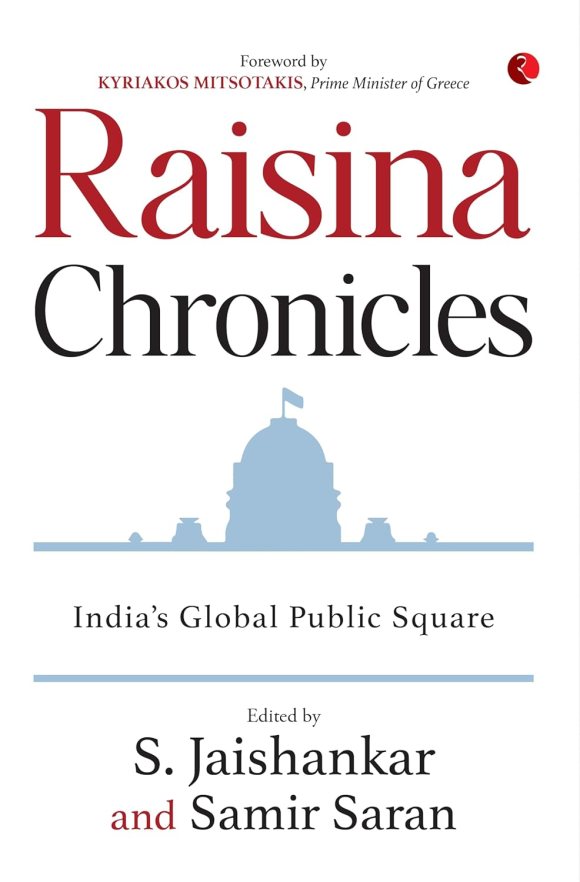
Title: Raisina Chronicles: India’s Global Public Square
Author: S. Jaishankar & Samir Saran
Publisher: Rupa Publications
Raisina Chronicles: India’s Global Public Square by S. Jaishankarand Samir Saran commemorates a decade of the Raisina Dialogue, India’s flagship geopolitical and geo-economics conference. The book reflects on the journey of the Raisina Dialogue and its impact on global discourse. It brings together contributions from leaders, thinkers, and diplomats, scholars, and policymakers worldwide, offering insights into addressing global challenges through collaboration and dialogue.
S. Jaishankar has been India’s External Affairs Minister since May 2019 and represents Gujarat in the Rajya Sabha. He was the Foreign Secretary from 2015 to 2018 and has held ambassadorial roles in the U.S., China, and the Czech Republic, as well as High Commissioner to Singapore. He authored notable books like The India Way: Strategies for an Uncertain World and Why Bharat Matters. Samir Saran is the President of the Observer Research Foundation (ORF), a leading Indian policy think tank. He has enhanced ORF’s influence in the U.S. and the Middle East and provides strategic guidance at the board level. Saran curates the Raisina Dialogue, co-chairs the World Economic Forum’s Global Future Council on Geopolitics, and serves on the Board of Governors of The East West Centre in the US. He has written five books, edited key monographs and journals, and contributed to numerous academic papers and essays, appearing in both Indian and international media.
The book brings together voices from across the world—of leaders and thinkers reflecting on the Raisina Dialogue’s impact on how we may navigate global challenges and create solutions that work. Putting India at the forefront of leading the change, the effect of these Dialogues is felt across policies and projections.
The editors emphasise that diversity, dissent, discord, and divergence of opinion make for the necessary ingredients for a sustainable future, shaped and owned by all. Ten years since its inception, the Raisina Dialogue has become the paramount platform for bringing together cultures, peoples and opinions. It is now India’s flagship geopolitical and geo-economics conference and has truly become a global public square—located in New Delhi, incubated by the world.
It emphasises the importance of diversity in thought, approaches, beliefs, and politics. It highlights how pluralism and heterogeneity contribute to resilience and societal evolution. Raisina Dialogue serves as a platform for inclusive participation, welcoming voices from underrepresented geographies and institutions.
While it showcases India’s emergence as a global leader in addressing development challenges and fostering international cooperation, it reflects the philosophy of Vasudhaiva Kutumbakam (the world is one family) and its efforts to harmonise local solutions with global needs.
Through initiatives like the G20 Presidency, India has shared transformative models such as digital public infrastructure (e.g., India Stack), offering templates for financial inclusion and tech-enabled development globally.
Alongside the carefully organised discussions, Raisina Chronicles examines the evolution of the Dialogue and presents its audience with a comprehensive volume that offers deep insights and an unwavering optimism for achieving shared solutions to worldwide issues.
As the globe approaches significant structural and historical transformations, the core aspiration of this work is to ensure that the voices of the populace are prioritised in global politics and policymaking, echoing through influential circles and reaching the broader community. For leaders to effect change, it is essential for society to unite and take a decisive step forward in the right direction.
Raisina Dialogue is also portrayed as a crucial venue for bridging divides in a fractured world. It fosters open discussions among diverse stakeholders—diplomats, scholars, business leaders, civil society members—to discover shared futures and solutions. The book underscores the importance of dialogue over polemics and inclusivity over exclusivity in shaping global policies.
Contributions from high profile global leaders such as Kyriakos Mitsotakis (Prime Minister of Greece), Mette Frederiksen (Prime Minister of Denmark), Penny Wong (Australian Foreign Minister) and others enrich the book with perspectives on international cooperation, climate goals, defence partnerships, and multilateralism.
The book serves as both a retrospective of the Raisina Dialogue’s achievements over ten years and a forward-looking guide for navigating global challenges. It positions India at the heart of global conversations, highlighting its role in fostering equitable dialogue and creating solutions that resonate across borders.
This volume is not just a collection of essays but also an intellectual testament to the transformative power of dialogue in shaping a sustainable future for humanity.
Bhaskar Parichha is a journalist and author of Cyclones in Odisha: Landfall, Wreckage and Resilience, Unbiased, No Strings Attached: Writings on Odisha and Biju Patnaik – A Political Biography. He lives in Bhubaneswar and writes bilingually. Besides writing for newspapers, he also reviews books on various media platforms.
.
PLEASE NOTE: ARTICLES CAN ONLY BE REPRODUCED IN OTHER SITES WITH DUE ACKNOWLEDGEMENT TO BORDERLESS JOURNAL
“My story should remain simple, step by step, click by click.” -- Raghu Rai
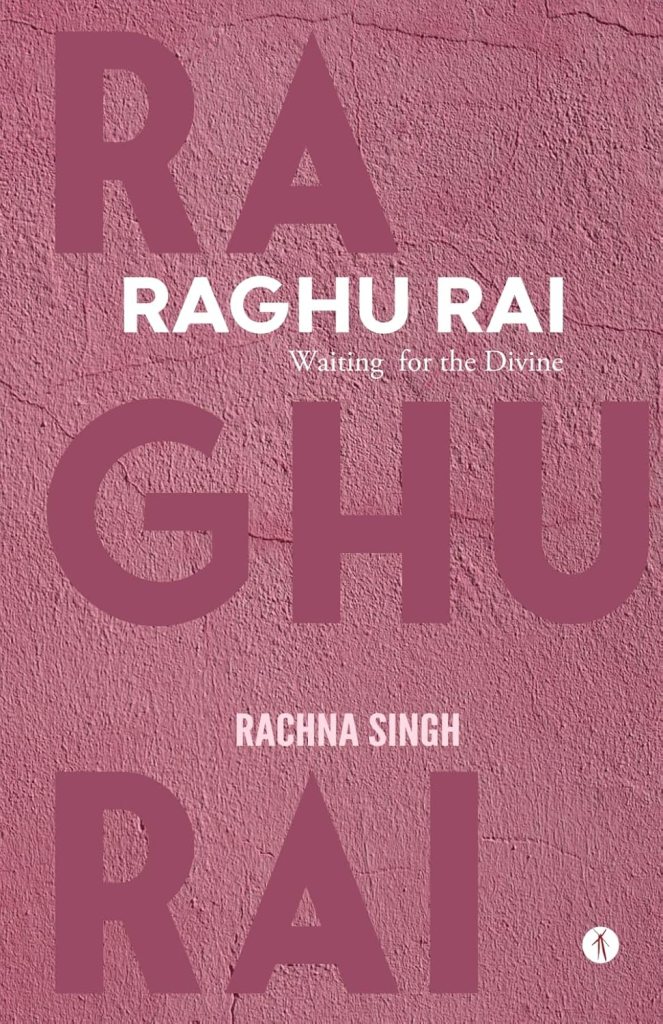
Rachna Singh, notebook and recorder tucked in her bag, pen in hand, first meets Raghu Rai in his picturesque home nestled in the Mehrauli forest of New Delhi, a landscape with occasional medieval structures peeping through the trees. Away from a concrete encrusted city, Rachna, a patient biographer, knows that the legendary photographer whose images shaped the visual progress of a nation, has his own deep stories. But will he reveal them? She pries the tales open by carving pathways through Raghu Rai’s photos— and a remarkable book about the person behind the camera is captured by a literary image-maker, in this sensitive, tender, and insightful biography. Rai permeates a series of chapters that play intricate games with memory because every frame in the camera is connected to myriad threads of experience.
Since the book is sub-titled “Waiting for the Divine”, I naturally look for references to Mother Teresa and the Dalai Lama to discover how the transcendent power of Raghu Rai’s photos of these two personages emerged. Entry into sacred precincts is never easy, and a camera in hand signals a definite obstacle. However, at the Sisters of Charity in Kolkata the photographer is permitted to follow the Mother unobtrusively. Yet, when a curtain flutters to reveal angel-like nuns and Rai dives to the floor to catch the best angle and the right light, even the Mother’s equanimity breaks and she is aghast! From such “shadowing” emerges the divine photograph titled “Mother Teresa in Prayer” with every crease in the luminous face catching the glow, an expression transporting her to realms beyond ordinary comprehension.
If Raghu Rai’s association with Mother Teresa is marked by reverence, his link with His Holiness the Dalai Lama is marked by friendship—one that extends to warm handshakes and brotherly embrace, informal conversations and a conviction about universal compassion. Says Rai, “His Holiness is an uninhibited, wonderfully loving man. How gracious of him to say he is my friend.” Again, it is the camera lens that reveals remarkable facets of the Dalai Lama– his childlike smile as also the sombre spiritual leader of a people in exile. Rachna Singh recounts an almost surreal story of a protective stone gifted to Rai by His Holiness that saw him survive a severe heart condition of ninety percent blockage while still chasing images of a crowded procession!
This takes me back to Rachna Singh’s intention, “My book is not a third-person memoir nor a chronological recounting of Raghu Rai’s life. Instead, it unfolds through candid conversations, inviting the readers into an intimate dialogue.” The reader’s response being part of her textual strategy, I too could add my account of the mystical energy felt in the presence of the Dalai Lama. The book’s attraction lies in this fluidity of the biographer, her subject and the reader being part of the evolving discussion of the deep philosophical pool from which photos are created. The trajectory of Raghu Rai’s life is well known—the photo journalist with The Statesman and India Today; his famous photo essays in the international magazines Time, Life, The New Yorker and numerous others, the award of a Padma Shri, his eminent friends and compeers, but Rachna Singh’s book probes Rai’s mind, his consciousness, his search and his beliefs. Therefore, it offers gems of information through anecdotes and the atmospherics of events, and some delectable quotations in Punjabi and English.
I turn here to Raghu Rai’s series on the Bhopal gas leak of 1984. “The black and white picture of a dead child, eyes open, staring sightlessly into space, lying in the rubble with a hand gently caressing the ravaged face in farewell,” describes Rachna, calling Rai a ‘Braveheart’ who painted a “searing picture of the tragedy.” The conversation is strangely matter of fact as though both the biographer and her subject are numbed by the enormity of that night of terror. Did Rai fear for his health or safety in the toxic air? The answer is “No” because the human pain around was greater than the instinct for self-preservation. All the journalists visited the mass cremations, the hospitals, the dead and the dying as though it was a “job”, Rai being practical enough to say, “You cannot let your spirit turn soggy with emotion.” Those of us who read of such tragedies and see photos in newspapers while sipping our morning tea should admire the intrepid people providing the raw material from ground zero.
Another memorable series was on Bangladesh refugees after the 1971 war—emaciated women and men often carrying sick children in baskets. Rai had been in the frontlines of the war and had once been surrounded by a hostile mob. Rachna is on tenterhooks as he narrates the details but he declared “I was more excited than scared … there was actually no time to feel scared.” At one time he even smiles and says, “It was a lot of fun.” Which brings me to probe the extraordinary grit and strength of photo journalists or reporters from war zones. Where does compassion and newsworthiness meet? Is image more important than the decimated human body? What lasting imprint does such witnessing leave?
Perhaps the answer lies in Raghu Rai’s quest for the Divine—beyond image, outside time. He was born in pre-partition India, in the village of Jhang that is now in Pakistan. He speaks haltingly of the childhood terrors—homes in flames, of escape in the pre-dawn—Rachna notes the tremor in his voice and the reluctance to recall those years. Yet she astutely links Rai’s portrayals of hurt and human sorrow, his sensitivity yet distancing from those early experiences. Finally, it’s been a holistic calm. Rai is quoted: “Photography has been my entire life—it has, in fact become my religion, a faith to which I have dedicated myself completely. My craft led me toward a meditative path that gave me insights to life and the divine.” And that quest bridges the beatific and the aesthetics in this most commendable book.
Malashri Lal, writer and academic, with twenty four books, retired as Professor, English Department, University of Delhi. Publications include Tagore and the Feminine, and The Law of the Threshold: Women Writers in Indian English. Co-edited with Namita Gokhale is the ‘goddess trilogy’, and also Betrayed by Hope: A Play on the Life of Michael Madhusudan Dutt which received the Kalinga Fiction Award. Lal’s poems Mandalas of Time has recently been translated into Hindi as Mandal Dhwani. She is currently Convener, English Advisory Board of the Sahitya Akademi. Honours include the prestigious ‘Maharani Gayatri Devi Award for Women’s Excellence’.
PLEASE NOTE: ARTICLES CAN ONLY BE REPRODUCED IN OTHER SITES WITH DUE ACKNOWLEDGEMENT TO BORDERLESS JOURNAL
Figures of speech can appear lifeless. Words matter while submitting to the tone. They resonate when time allows them to be companions.
CHRIST CONCIOUSNESS
My friend, you stand erect beyond the edge of life and death. — Rabindranath Tagore
A friend asked, “Who would you talk to among the deceased?”
I had to be quick. Several names crammed my crown, Dad’s included.
I answered, “God.”
IN A FOOL’S PARADISE
When legends depart, admirers claim, “They will come together in heaven, share everlasting bliss.”
Is there life after death? Did these idols commend one another when they were alive?
From Public Domain
Kiriti Sengupta has had his poetry featured in various publications, including The Common, The Florida Review Online, Headway Quarterly, The Lake, Amethyst Review, Dreich, Otoliths, Outlook, andMadras Courier. He has authored fourteen books of poetry and prose, published two translation volumes, and edited nine anthologies. Sengupta serves as the chief editor of Ethos Literary Journal and leads the English division at Hawakal Publishers Private Limited, one of the top independent presses established by Bitan Chakraborty. He resides in New Delhi. Further information available at http://www.kiritisengupta.com.
.
PLEASE NOTE: ARTICLES CAN ONLY BE REPRODUCED IN OTHER SITES WITH DUE ACKNOWLEDGEMENT TO BORDERLESS JOURNAL
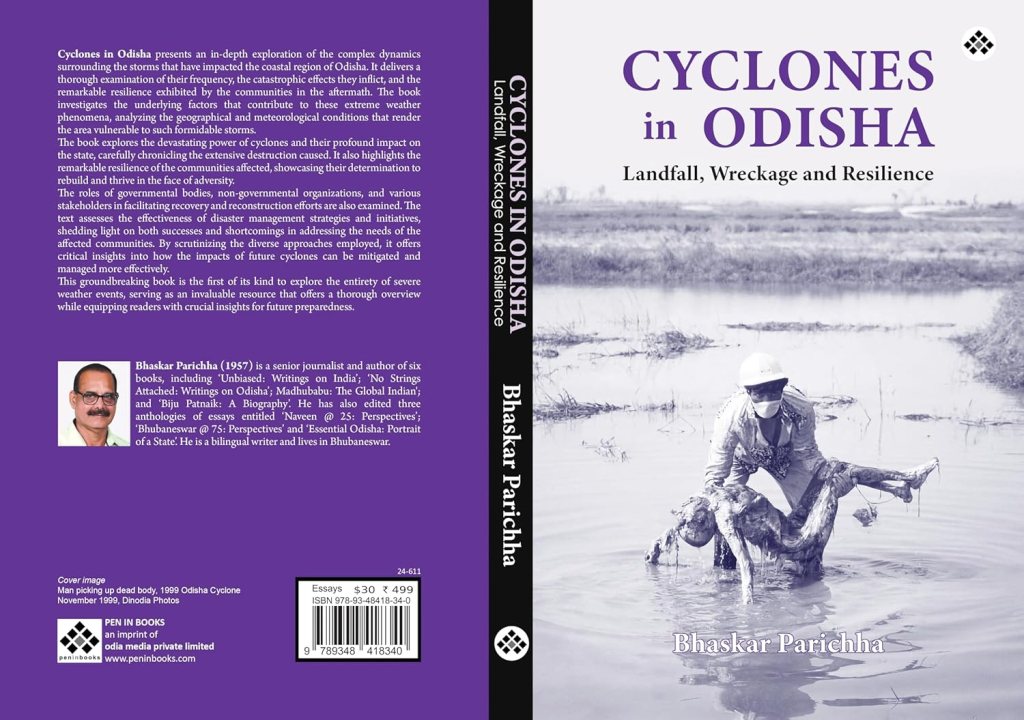
A discussion with Bhaksar Parichha, author of Cyclones in Odisha, Landfall, Wreckage and Resilience, published by Pen in Books.
While wars respect manmade borders, cyclones do not. They rip across countries, borders, seas and land — destroying not just trees, forests and fields but also human constructs, countries, economies and homes. They ravage and rage bringing floods, landslides and contamination in their wake. Discussing these, Bhaskar Parichha, a senior journalist, has written a book called Cyclones in Odisha, Landfall, Wreckage and Resilience. He has concluded interestingly that climate change will increase the frequency of such weather events, and the recovery has to be dealt by with regional support from NGOs.
Perhaps, this conclusion has been borne of the experience in Odisha, one of the most vulnerable, disaster prone states of India, where he stays and a place which he feels passionately about. Centring his narrative initially around the Super Cyclone of 1999, he has shown how as a region, Odisha arranged its own recovery process. During the Super Cyclone, the central government allocated only Rs 8 crore where Rs 500 crore had been requested and set up a task force to help. They distributed vaccines and necessary relief but solving the problem at a national level seemed a far cry. Parichha writes: “As a result, the relief efforts were temporarily limited. To accommodate the displaced individuals, schools that remained intact after the cyclone were repurposed as temporary shelters.
“The aftermath of the cyclone also led to a significant number of animal carcasses, prompting the Government of India to offer a compensation of 250 rupees for each carcass burned, which was higher than the minimum wage. However, this decision faced criticism, leading the government to fly in 200 castaways from New Delhi and 500 from Odisha to carry out the removal of the carcasses.”
He goes on to tell us: “The international community came together to provide much-needed support to the recovery efforts in India following the devastating cyclone. The Canadian International Development Agency, European Commission, British Department for International Development, Swiss Humanitarian Aid Unit, and Australian Government all made significant contributions to various relief organisations on the ground. These donations helped to provide essential aid such as food, shelter, and medical assistance to those affected by the disaster. The generosity and solidarity shown by these countries underscored the importance of global cooperation in times of crisis.” They had to take aid from organisations like Oxfam, Indian Red Cross and more organisations based out of US and other countries. Concerted international effort was necessary to heal back.
He gives us the details of the subsequent cyclones, the statistics and the action taken. He tells us while the Bay of Bengal has always been prone to cyclones, from 1773 to 1999, over more than two centuries, ten cyclones were listed. Whereas from 1999 to 2021, a little over two decades, there have been nine cyclones. Have the frequency of cyclones gone up due to climate change? A question that has been repeatedly discussed with ongoing research mentioned in this book. Given the scenario that the whole world is impacted by climate disasters — including forest fires that continue to rage through the LA region in USA — Parichha’s suggestion we build resilience comes at a very timely juncture. He has spoken of resilience eloquently:
“Resilience refers to the ability to recover and bounce back from challenging situations. It encompasses the capacity of individuals, communities, or systems to withstand, adapt, and overcome adversity, trauma, or significant obstacles. Resilience involves not only psychological and emotional strength but also physical resilience to navigate through hardships, setbacks, or crises.
“Resilience is the remarkable capacity of individuals to recover, adapt and thrive in the face of adversity, challenges, or significant life changes. It is the ability to bounce back from setbacks, disappointments, or failures, and to maintain a positive outlook and sense of well-being despite difficult circumstances.
“Resilience is not about avoiding or denying the existence of hardships, but rather about facing them head-on and finding ways to overcome them. It involves developing a set of skills, attitudes, and strategies that enable individuals to navigate through difficult times and emerge stronger and more capable.”
He has hit the nail on the head with his accurate description of where we need to be if we want our progeny to have a good life hundred years from now. We need this effort and the ability to find ways to solve and survive major events like climate change. Parichha argues Odisha has built its resilience at a regional level, then why can’t we? This conversation focusses on Parichha’s book in context of the current climate scenario.
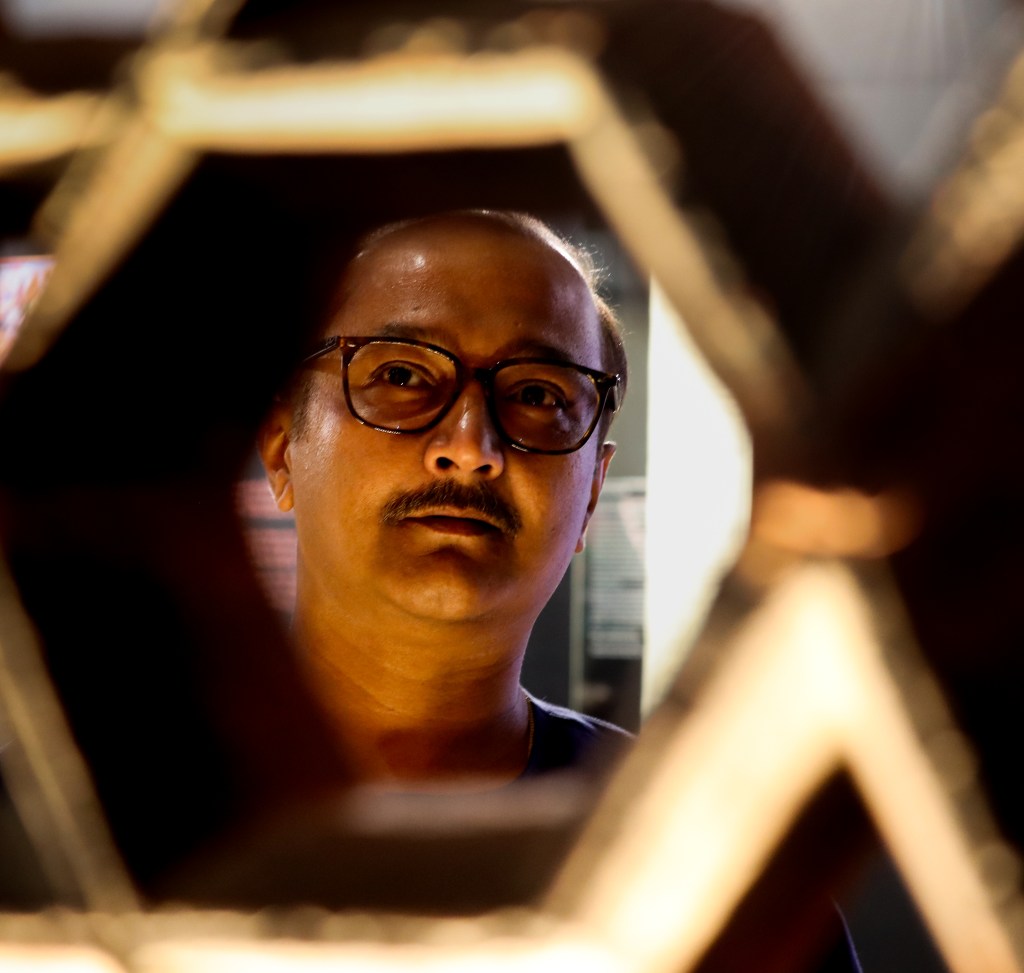
Bhaskar Parichha
What prompted you to write this book?
Odisha possesses an unfavorable history of cyclones with some of the most catastrophic storms. People suffered. My motivation stemmed from documenting this history, emphasising previous occurrences and their effects on communities, infrastructure, and the environment.
What kind of research went into this book? How long did it take you to have the book ready?
The idea for the book originated more than a year ago. It was intended for release to commemorate the twenty-fifth anniversary of the 1999 Super Cyclone and the cyclones that followed. Having witnessed the disaster first-hand and having been involved in the audio-visual documentation of the relief and rehabilitation initiatives in and around Paradip Port after the Super Cyclone, I gained a comprehensive understanding of the topic. The research was largely based on a thorough examination of the available literature, which included numerous documents and reports.
Promptly after you launched your book, we had Cyclone Dana in October 2024. Can you tell us how it was tackled in Odisha? Did you need help from the central government or other countries?
Cyclone Dana made landfall on the eastern coast on the morning of October 25, unleashing heavy rainfall and strong winds that uprooted trees and power poles, resulting in considerable damage to infrastructure and agriculture across 14 districts in Odisha. Approximately 4.5 million individuals were affected. West Bengal also experienced the effects of Cyclone Dana. After effectively addressing the cyclone’s impact with a goal of zero casualties, the Odisha government shifted its focus to restoration efforts, addressing the extensive damage to crops, thatched homes, and public infrastructure. The government managed the aftermath of the cyclone utilizing its financial resources.
Tell us how climate change impacts such weather events.
Climate change significantly influences weather events in a variety of ways, leading to more frequent and intense occurrences of extreme weather phenomena. As global temperatures rise due to increased greenhouse gas emissions, the atmosphere can hold more moisture, which can result in heavier rainfall and more severe storms. This can lead to flooding in some regions while causing droughts in others, as altered precipitation patterns disrupt the natural balance of ecosystems.
What made people in Odisha think of starting their own NGOs and state-level groups to work with cyclones?
The impetus for establishing non-governmental organisations and state-level entities in Odisha is fundamentally linked to the region’s historical encounters with cyclones, which have highlighted the necessity for improved community readiness. Through the promotion of cooperation between governmental agencies and civil society organisations, Odisha has developed a robust framework that is adept at responding to natural disasters while simultaneously empowering local communities.
What are the steps you take to build this resilience to withstand the destruction caused by cyclones? Where should other regions start? And would they get support from Odisha to help build their resilience?
Building resilience to withstand the destruction caused by cyclones involves a multi-faceted approach that encompasses infrastructure development, community engagement, and effective disaster management systems. Odisha has established a robust model that other regions can learn from. Odisha’s experience positions it as a potential leader in sharing knowledge and best practices with other regions. The state has demonstrated its commitment to enhancing disaster resilience through partnerships with international organisations and by sharing its model of disaster preparedness with other states facing similar challenges. Odisha can offer training programs and workshops based on its successful strategies, guide in implementing early warning systems, building resilient infrastructure and also collaborating with NGOs and international agencies to secure funding for resilience-building initiatives in vulnerable regions.
You have shown that these cyclones rage across states, countries and borders in the region, impacting even Bangladesh and Myanmar. They do not really respect borders drawn by politics, religion or even nature. If your state is prepared, do the other regions impacted by the storm continue to suffer…? Or does your support extend to the whole region?
Odisha is diligently assisting its impacted regions through comprehensive evacuation and relief initiatives, while adjacent areas such as West Bengal are also feeling the effects of the cyclone. The collaborative response seeks to reduce damage and safeguard the well-being of residents in both states. Odisha’s approach to cyclone response has garnered international acclaim.
Can we have complete immunity from such weather events by building our resilience? I remember in Star Wars — of course this is a stretch — in Kamino they had a fortress against bad weather which seemed to rage endlessly and in Asimov’s novels, humanity moved underground, abandoning the surface. Would you think humanity would ever have to resort to such extreme measures?
The idea of humanity seeking refuge underground, as illustrated in the writings of Isaac Asimov, alongside the perpetual storms on Kamino from the Star Wars franchise, provokes thought-provoking inquiries regarding the future of human settlement in light of environmental adversities. Although these scenarios may appear to be exaggerated, they underscore an increasing awareness of the necessity for adaptability when confronted with ecological challenges. The stories from both Kamino and Asimov’s literature act as cautionary narratives, encouraging reflection on potential strategies for human resilience in the future.
With the world torn by political battles, and human-made divisions of various kinds, how do you think we can get their attention to focus on issues like climate change, which could threaten our very survival?
A comprehensive strategy is crucial for effectively highlighting climate change in the context of persistent political conflicts and societal rifts. Various methods can be utilised to enhance public awareness, galvanise grassroots initiatives, promote political advocacy, emphasise economic prospects, frame climate change as a security concern, and encourage international collaboration.
Can the victims of weather events go back to their annihilated homes? If not, how would you suggest we deal with climate refugees? Has Odisha found ways to relocate the people affected by the storms?
Individuals affected by severe weather events frequently encounter considerable difficulties in returning to their residences, particularly when those residences have been destroyed or made uninhabitable. In numerous instances, entire communities may require relocation due to the devastation inflicted by natural disasters, especially in areas susceptible to extreme weather conditions. Odisha’s proactive stance on disaster management and community involvement has greatly improved its ability to address challenges related to cyclones. The state’s initiatives not only prioritise immediate evacuation but also emphasize long-term resettlement plans to safeguard its inhabitants against future cyclonic events. For instance, residents from regions such as Satabhaya in Kendrapara district are being moved to safer locations like Bagapatia, where they are provided with land and support to construct new homes. This programme seeks to reduce future risks linked to coastal erosion and flooding.
Thanks for your book and your time.
(This review and online interview is by Mitali Chakravarty.)
The daughter soaked joy for the past few days amidst her parents and children. When I woke up early, the trees, the leaves, and the grasses were damp. The rising sun parched them before late. I probed the air: Did the Mother weep as she left for Kailash?
The wife returned to her spouse.
Note: Hindu mythology holds that Goddess Durga brings her children when she visits her paternal home annually in autumn. After a designated period, she returns to her husband, Shiva, at Mount Kailash.
DURVA (for Durba Chatterjee | DOB: 25 September 2023 )
1 As I learn more about you, I'll pick up a batch or two wherever I reach.
2 The courtyard knew my boyhood days. You embraced my unshod limbs and healed my bruises as I slipped.
You made up the loving drape the earth donned for my convenience.
3 You taught us harmony. Resting in your mesh were the rice grains. Strengthened by prayers, you sat on my scalp for the nuptials. The bride held you in her hair.
4 You embody divine grace. You are more pristine than water that turns holy as it lets you sink.
5 You add to the sanctity of the soil. Blessed are the humans raising you in their yards.
Like Draupadi, the planet mourns when the veil is withdrawn.
Notes:
Durva or Durba is a common Bengali name for girls. It denotes Bermuda or Conch grass, known for its many therapeutic properties and frequent use in Hindu rituals. Numerous Puranic stories are linked to Durva grass.
In the Mahabharata, the Kauravas stripped Draupadi, subjecting her to great humiliation and distress.
Kiriti Sengupta has had his poetry featured in various publications, including The Common, The Florida Review Online, Headway Quarterly, The Lake, Amethyst Review, Dreich, Otoliths, Outlook, and Madras Courier. He has authored fourteen books of poetry and prose, published two translation volumes, and edited nine anthologies. Sengupta serves as the chief editor of Ethos Literary Journal and leads the English division at Hawakal Publishers Private Limited, one of the top independent presses established by Bitan Chakraborty. He resides in New Delhi. Further information available at http://www.kiritisengupta.com
PLEASE NOTE: ARTICLES CAN ONLY BE REPRODUCED IN OTHER SITES WITH DUE ACKNOWLEDGEMENT TO BORDERLESS JOURNAL
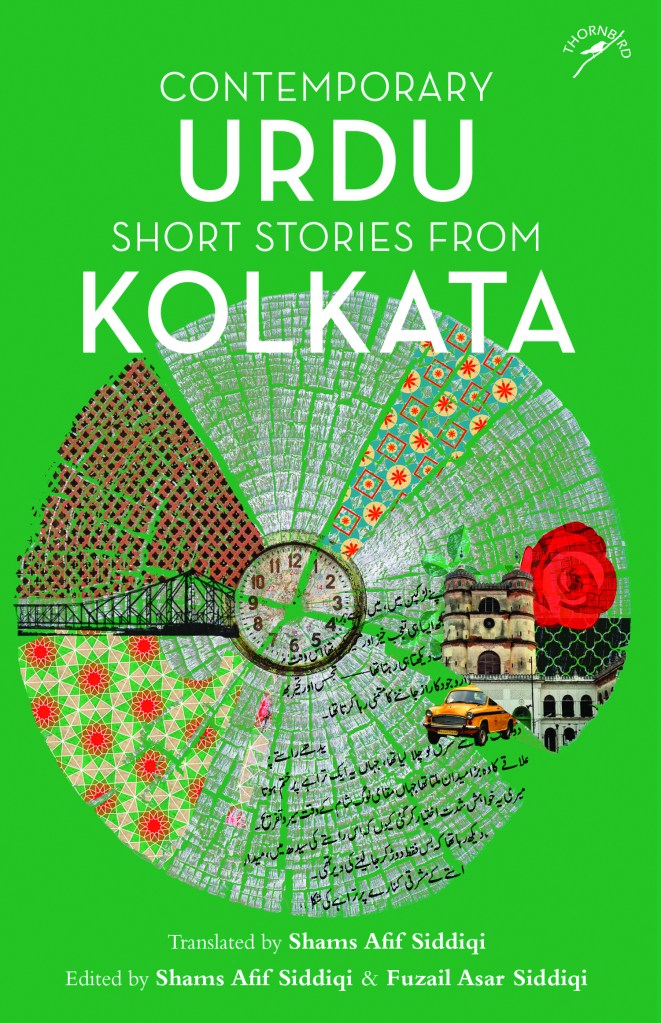
Translated by Shams Afif Siddiqi, edited by Shams Afif Siddiqi and Fuzail Asar Siddiqi
Publisher: Niyogi Books
The Stopped Clock
By Siddique Alam
The hands of the clock had stopped permanently at 13 past two and two seconds. Sitting on the bench under the shed, I am trying to understand the oval dial of the clock, the Roman letters of which had become dimmed and its edges covered with spider webs. I wonder when the clock might have stopped. I am 35 years old. Is there apparently any difference between us? Just like the clock, I have also stopped for a while because there was no announcement about the arrival of my train, its departure time being four hours ago.
I am trying to survey the place with wide open eyes. It is a usual day and an ordinary station that we are accustomed to see.
I have bid farewell to the city of my birth. I am leaving the city like a failure. But it seems after relinquishing me, the city, with a feeling of guilt, now wants to take me back. Its first step in this direction is to delay my train for an indefinite amount of time.
Despite being in the midst of a city, a station is free from its clutches. I am enjoying that freedom with a one-way ticket in my pocket. A bit of patience, I tell myself, and I would be far away. Nobody can stop me, neither by erecting obstacles in the way of the railway tracks nor by stopping the hands of the clock. Maybe I am a loser, but the journey of my life is yet to end. I am only 35 years old. I have to go far away from this place. The most important thing is that I am satisfied that the address I am carrying in my pocket is not my last destination.
It is a temporary waiting place that can help me make a new beginning. After all man is born free. The sun does not select a particular spot to shine, nor is every wave that dashes against the shore the last one, losing which the boatman would have to wait all his life for another wave.
An old coolie, wringing khaini[1] in the palms of his hands, passes by me. He is clad in a white banian and dhoti, his red flannel shirt thrown on his left shoulder.
‘Since when has the clock stopped?’ My question stops him in his stride. He turns around, his tired, thoughtful eyes staring at me. A sense of shame overpowers me. He may be an illiterate coolie, not a station employee who is answerable for such a question. ‘I am sorry,’ I quickly add, ‘I should not have put the question to you. I take back my words.’
‘Why sir?’ he stands by the side of the bench, and looks at me with a sense of intimacy. ‘People will be asking questions about a stopped clock, isn’t it? They cannot to be blamed. The story of the stopped clock is well known but only the signal man Gocharan Ray has the right to tell its tale. He had spent all his life showing green and red flags to trains and has retired today.’
‘Who has replaced him?’ my question betrays my foolishness. My imprudence had always entangled me in thoughtless acts.
‘Why don’t you ask the station master?’ The coolie moves away. ‘It’s a question that requires an answer; otherwise, you will regret it all your life.’
I was not ready for such an unexpected turn of events. I thought that my relationship with the city had been cut off forever. What do I make of a station that has ignored me, as if the ticket in my pocket is of no worth? Once again, I look at the dial of the clock hanging from the shed. It had stopped at 13 past two and two seconds. What might have happened when it stopped? Did an accident take place at the station? Had any incident of murder taken place? Was it at the time of the departure or arrival of an important leader? An attack by Naxalites? Or was the place the site of a communal incident?
The coolie returned again. This time he was wearing his shirt. ‘Unless you hear the story,’ he says, ‘your train will not arrive. This is the rule here. It may take weeks, months, or even years and you have to move from one platform to another with your suitcase. Once, a passenger alighted here to board another train. He faced a similar dilemma. He asked the same question about the clock but I do not know what happened and why he refused to listen to the story. Do you know what happened to him?’
‘How can I?’ I replied impatiently. ‘The city hardly gave me any time so that I could listen to stories.’
‘You are becoming irritated unnecessarily, Sir,’ he said. ‘I want to tell you about the man. The fact is nobody knows much about him. Some say he went to the city and did not return. Others say he took another train that never reached its destination. Some may even tell you that a prostitute took him to her house by the railway tracks where he developed leprosy and is slowly dying there. There is also no dearth of people who say he is still moving, suitcase in hand, amidst platforms, difficult to spot in the teeming crowd of passengers.’
‘You mean to say he can be anyone, even me?’
‘Did I say that, sir?’ He was on the verge of leaving. ‘It seems you have tasted bitter gourd.’
I was staring at the departing coolie’s back. The constant use of the flannel shirt had not only exposed its fibres, it had also thinned the material exposing the bones of the man’s neck. I have no hesitation in saying that I did not believe him. Since the time when suitcases developed wheels, the number of coolies has dwindled in stations. The last nail was the introduction of the backpack. Either passengers drag their suitcases on wheels, or carry luggage in their backpacks, leaving the coolies with little work. So, this may be their way of passing time.
About the Book
Dealing with love and loss, dreams and reality, as well as history and violence, this is a collection of best 19 short stories that encompasses the whole gamut of human experience, seen through the eyes of current Urdu writers from Kolkata.
Stories from Kolkata are often assumed to be about bhadralok culture and the Bengali way of life. But Kolkata is a city with amultiplicity of stories to share. Contemporary Urdu Short Stories from Kolkata highlights the diversity of recent Urdu short stories fromthe city. In one of these stories, a writer trying to escape the city wants to find the reason why the railway clock has stopped working, in another, a new friendship sours as soon as it blossoms, while some other stories show how the complexity of human relationships is explored. There is an experiment in abstraction, and legend and reality are brought together when three sleepers of an earlier civilization wake up in the modern world.
About the Editor and Translator
Shams Afif Siddiqi, former Associate Professor of English (WBES), author, short story writer, and literary critic, was born in 1955 in Kolkata. He taught in government colleges of West Bengal for 35 years and was a faculty member at MDI, Murshidabad. Khushwant Singh selected his short story for publication in The Telegraph in the 1980s. His publications include The Language of Love and other Stories (2001), a critical look at Graham Greene’s novels, Graham Greene: The Serious Entertainer (2008), and an annotated edition of G.B. Shaw’s Arms and the Man (2009).
Fuzail Asar Siddiqi is currently a PhD candidate at CES, JNU, New Delhi, researching on the modernist Urdu short story, in general, and short stories of Naiyer Masud in particular. The founder/editor-in-chief of an academic editorial services company, he has been an Assistant Professor of English at Gargi College, New Delhi.






 Borderless