Categories
Stories

After the Gherkin

Deborah Blenkhorn

A Mrs Tadpole Mystery by Deborah Blenkhorn

Parry Lines was an ordinary fellow, so much so that even his friends couldn’t be bothered to find out his actual name and were content to call him “Parallel,” his nickname since childhood.  Regular, indeed nondescript features were surmounted by his trademark bald pate; the most you could say was that occasionally he wore a bright plaid shirt in neon pastels to liven things up a bit.

Ten weeks A.G. (After Gherkin)

Yet his death (by gherkin) caused a butterfly effect that changed the world.  Until the incident with the gherkin, the most notable thing that had ever happened to Parry was when his surprisingly dashing teenaged son had consumed an entire teacup full of gravy during Thanksgiving dinner.  Honoured guests had watched in horror as Parry Jr. (PJ for short), notable for his twinkling hazel eyes and flowing chestnut hair, gulped down the rich, brown fluid–though they should have expected something of the kind when he poured the gravy from the pitcher on the table into the China cup ready at his place setting for after-dinner tea.

Present at that event, and at the gherkin incident as well, was Mrs. Honoria Tadpole, English professor and amateur sleuth.  Her demure, conservative appearance (she always wore a smart, tailored suit–or at least the best the local thrift shop could provide–and had her silver-blonde hair cut in a perky, short bob) and her self-effacing manner and diminutive (if plump) stature belied the sharpest mind north of California. It would fall to her to unravel the complicated mystery that the local paper dubbed “Gherkingate.” 

Interviewed by the features’ editor, as the criminal trial of the alleged murderer dragged on, Mrs. Tadpole was asked the inevitable question of how it had all started. The interview took place in Mrs. Tadpole’s well-appointed parlour, a room replete with Victorian bric-a-brac.  With characteristic hospitality, she poured out a strong brew of  BC Bold to accompany the delicate sandwiches (ham, egg, and cucumber) and homemade oatmeal cookies that were her signature “high tea,” known to local islanders as a four o’clock tradition at the old manse where Mrs. Tadpole rented a small suite.

“Now, Mrs. Catchpole, I understand you were part of the original party that travelled to Moany Bay,” the interviewer began.

“Tadpole,” Mrs. Tadpole corrected.  A veteran instructor of nineteen- and twenty-year-olds, she was used to misspellings and mispronunciations. Marpole, Rumpole, Toadpole: she had heard and seen it all, and could make the necessary correction without even flinching anymore.  She cast her mind back almost three months to a mid-summer weekend off British Columbia’s Sunshine Coast.

She began with an allusion to classic culture: “Just sit right back and you’ll hear a tale, a tale of a fateful trip…”

Sadly, the features’ editor of the Island Gleaner failed to catch the reference to Gilligans Island, one of the best sit-coms of the 1960s.  Mrs. Tadpole had been a toddler when the series was first aired, but its popularity throughout her childhood made it a touchstone for, really, almost everything in life, according to her observations.  She knew that some people accorded such a status to the iconic, original Star Trek, but what did Captain Kirk have that “the Skipper” did not?  Not much, thought Mrs. Tadpole.

The premise of Gilligan’s Island was classic: a small number of people, randomly-assorted, stranded on an island together with no real prospect of deliverance.  After all, wasn’t that just the paradigm of human existence?  You didn’t need to be an English proffessor (though Mrs. Tadpole was one, of course) to figure that out. 

That fateful weekend, when the seeds of the gherkin incident was sown, had been rife with undertones of Gilligan’s Isle.

Breathing deeply of the fresh Pacific breeze, the passengers sat out on the deck of the vessel as it hugged the rugged BC coastline. The rushing water behind the Skirmish flumed out into a fan of spray, while the murky depths offshore spat out seals and sealions–even the occasional humpback whale–with random irregularity.  Black bears hid among the rocks and evergreens in the uninhabited areas; cabins dotted the beaches in the populated areas of cottage country.  On the way up the coast, the party of friends and family had composed their own version of the theme song, with each member of the group assigned to a role from the original cast.  Mrs. Tadpole was the Professor, of course.  Never mind that the community college where Mrs. Tadpole worked had opted not to accord academic titles to their teachers, or that the original Professor in the TV series was a man.  (As Mrs. Tadpole had been known to say to her first-year college students, we live in a post-gender, post-glass-ceiling world. And if we don’t, we should).

Aboard the Bayliner, Skirmish, Parry Lines was the Skipper, and his hapless, gravy-drinking son was typecast as the irrepressible Gilligan, full of mischief and ridiculous ideas. Mrs. Tadpole could only hope that her adorable niece, Mary Anne (same name as her Gilligan’s Island counterpart!), was immune to his sauce-swilling charms.

The Millionaire role was assumed by the reclusive entrepreneur Deadhead, Mickey Garcia (if that were in fact his real name), accompanied by his charming wife, Penelope, a voluptuous brunette. Together they had built an empire founded on tribute bands and biopics.  The rumour mill had it that there was trouble in paradise, but no one outside his immediate family had seen Mickey for years, so it was difficult to substantiate the gossip.

The cast was fleshed out (so to speak) with a bona fide movie star, the internet sensation who began as one of the central figures in a YouTube series called Project Man Child (“For the price of a cup of coffee… you can buy this underemployed househusband a cup of coffee!”) and had gone on to a viral barrage of TikToks under the sobriquet of “The Naked Gardener”.  Mrs. Tadpole was relieved (as no doubt were the others) to note that all the passengers aboard the Skirmish, including this one, appeared to be fully clothed. 

At least, all whom she could see wore conventional travelling attire:  Mr Garcia, recovering from surgery and groggy with heavy opiates, was shrouded in a blanket and wearing dark glasses. He slumped a little to the side, and his heavy breathing attested to a well-earned reputation for napping as a pretense in order to ignore his surroundings.

As Mrs Tadpole later told the Gleaner interviewer, the real concern of the trip quickly emerged: not the rapprochement of Mary Anne and Parallel Jr., but the burgeoning, even violent antagonism between Parry Sr. and Penelope Garcia, whom the latter insisted on calling “Cherry” with a suggestive leer while her husband languished in his bunk.  “Is he grateful? Or just dead?” quipped Lines. One night, Penelope went so far as to brandish a knife in Lines’ general direction and had to be restrained by Mrs Tadpole and Mary Anne in tandem.

Although Madame Garcia was the only one to meet his taunts with open animosity, no one was spared the self-proclaimed wit of Parallel Lines.

He had the nerve to call Mrs Tadpole’s beloved niece, whose sunny disposition was outshone only by the sweet, fair face that perched above her perfect figure, “Mistress Mary, Quite Contrary” –nothing could have been further from the truth!  Of course, Mary Anne merely smiled and shrugged it off, as if no insult could penetrate her cheerful exterior … but others were less armour-clad.

The bully referred mercilessly to the Naked Gardener as “Jamie Oliver, the Naked Chef” (whom he slightly resembled) a slur that obviously got under the man’s skin (“I couldn’t boil an egg to save my life!” he protested angrily.  “That’s not my brand at all! He’d better watch his back…”).

Even Mrs. Tadpole (surprisingly resilient after having been bullied through her shy youth as resembling a chubby little toad) came in for her share of abuse, rechristened as “Mrs Toad” after making her one of specialties, toad-in-the-hole, for her shipmates. (Once she discovered that the galley of the Bayliner was stocked with a potato ricer and La Ratte potatoes, there was no holding her back.  A ring of caramelized onions surrounded each serving dish, with two nut-brown sausage-ends sticking out of the centre, for all the world like a couple of froggy eyes.) “No one calls me Toad,” she intoned ominously.

Cruelly and unaccountably, Parallel Lines saved his worst tirade for his own son.  Recalling that terrible moment of youthful folly, that mind-gripping shame that only time could heal, the father saluted the son like a champion hog-caller summoning his prize sow. “Sooooo-Eeeeee! Want some gravy with that?” Alternatively, he would break into song to the tune of ‘Hey, Jude’:

"Au jus,
Just make it fat,
Take some gravy
And make it wetter..."

It was pitiful to see the boy’s response, especially in front of Mary Anne. His pale face was suffused with a ruddy glow beneath his chestnut fringe, and hot, angry tears rose in his sensitive, hazel eyes.

“I’ll kill him,” PJ muttered under his breath.

And now the tranquil Mary Anne, who couldn’t have cared less about any vitriol directed her way, was at last roused to fury in defense of her maligned and helpless friend.  “I’ll do it for you!” she offered.  “By G—!”

Two Hours B.G. (Before Gherkin)

Suffice it to say, no one was all that distressed when Parallel Lines failed to return to the Skirmish after an afternoon in the seaside village of Egmont (pronounced with an “egg” and not an “edge”).

Penelope had steered Mickey off in a collapsable wheelchair they had stowed on the boat; “the millionaire and his wife” were off for lunch al fresco, heading for a picnic table in an accessible, though private, spot.  Roast beef sandwiches and condiments, along with champagne and a couple of plastic flutes, had been assembled into a decorative yet sturdy straw basket which the amazon-like Penelope slung easily over one arm as she manouevred the wheelchair down the forest path.

The movie star had gone in search of Egmont’s famous cream cheese cinnamon buns, hoping to be recognised at the Forest Cafe by someone who would do a double take and exclaim, “Hey!  Wait!  Aren’t you that man child?”

Mrs Tadpole and her niece decided to go for a refreshing swim in the brisk waters of the bay, washing off the grime of shipboard life before stopping at the Village Green Room for a bowl of veggie curry soup and some fresh, hot rolls.

As for PJ, he declared himself too upset to leave the Skirmish, and was hoping to curl up with a graphic novel, a diet soda, and a bag of Doritos, to forget all his cares for a few hours while the rest of the party looked around Egmont Village.

But where was Parallel? It was time to cast off. If they didn’t leave soon, they wouldn’t make it to the Coastal Lodge before dark.  And–not to mention–P. Lines was the skipper!

“I’m perfectly capable of getting us there,” insisted PJ, fortified by his power nap.  “I’ll bet you anything, dad’s holed up at the Drifter Pub, and he’ll crash at the hotel there. I’m sure he’s as tired of us as we are of him.  Let’s just go.  We’ll all have cooled off by tomorrow morning, and I’ll swing back and get him then, bring him up to the Lodge for the rest of the weekend.”

The plan sounded good, and all agreed to it willingly.  Off they set for the rustic cabin someone had dubbed the Coastal Lodge in hopes (quite justified, as it turned out) of charging a tidy sum in AirBnB rates.  Never mind that it featured a remote outhouse and a camp kitchen; the setting was beyond beautiful, and the (now) congenial group looked forward to beach and forest walks, blazing bonfires, and midnight swims.  Mrs Tadpole insisted on taking charge of the outdoor kitchen: she had brought the ingredients for her famous moussaka and looked forward to the challenge of cooking it in a casserole dish on the barbecue.  PJ and Maryanne diced feta, tomatoes, onions and cucumbers for a Greek salad, while the movie star tried in vain to get a cell signal and the millionaires played cribbage by the big bay window in the cabin. 

Parallel Lines could cool his heels at the Drifter until morning, thought PJ and crew.

G.T. (Gherkin Time)

“So,” said Mrs. Tadpole to her interviewer, “Can you guess who did it?”

“Uh,” said the Features editor.  “Nope.”

“I’ll give you a hint: don’t ask who was the perpetrator. Ask who was the victim!”

“Well, that would be Mr. Lines, would it not?”

“Would it?  What if the wheelchair-bound invalid, Mr. Garcia, was really Parallel Lines in disguise?”

“But–”

“He was wrapped in a blanket, wearing dark glasses and a mask, slumped in his chair.  And there was a switcheroo.”

“A what?”

“A switch.  In the forest.”

“Well, I’ll be jiggered. Why haven’t you said anything?”

“Blackmail.”

“You’re blackmailing the unlikely lovers? Parry Lines and Madame G?”

“No, they’ve been blackmailing me.  But it’s time to come out. My trans-formation is at hand!”

“Mrs Tadpole!  What a story for the Gleaner–and for the world!  May I be the first to congratulate you?”

“You may.”        


Deborah Blenkhorn is a poet, essayist, and storyteller living in Canada’s Pacific Northwest.  Her work fuses memoir and imagination, and has been featured in over 40 literary magazines and anthologies in Canada, the United States, Britain, the Netherlands, Germany, Australia, Brazil, India, and Indonesia.

PLEASE NOTE: ARTICLES CAN ONLY BE REPRODUCED IN OTHER SITES WITH DUE ACKNOWLEDGEMENT TO BORDERLESS JOURNAL

Click here to access the Borderless anthology, Monalisa No Longer Smiles

Click here to access Monalisa No Longer Smiles on Amazon International

Categories
Interview Review

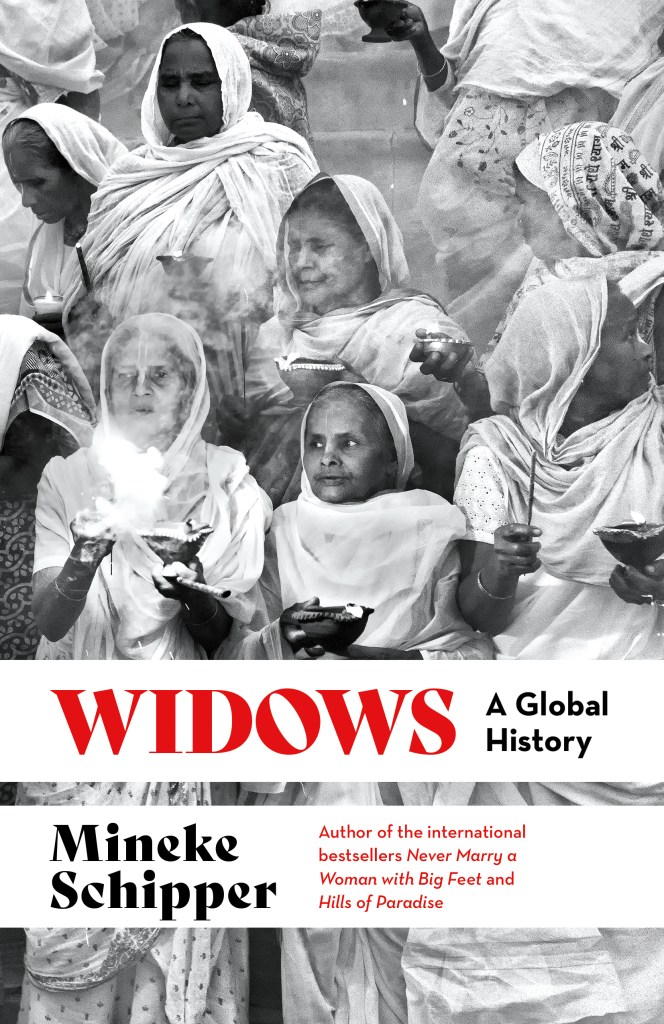
‘Looking to the Future with New Eyes’ with Mineke Schipper

A brief review of Mineke Schipper’s Widows: A Global History (Speaking Tiger Books, 2024) and a conversation with the author

To conquer fear is the beginning of wisdom.
—Bertrand Russell, Unpopular Essays (1950)

This is one of the dedications that precedes the narrative of Mineke Schipper’s non-fiction, Widows: A Global History. Her description of misapprehensions and the darkness around widowhood, as well as the actions that have been taken and suggestions on how more can be done to heal, weave a narrative for a more equitable society.

Starting with mythological treatment of widows, the book plunges into an in-depth discussion, not just with case studies but also with a social critique of the way these women are perceived and treated around the world, their need to heal from grief or a sense of devastation caused by their spouse’s death, concluding with stories that reflect the resilience of some of those who have overcome the odds of being repulsed. It is a book that inspires hope… hope for a world where despite all stories of misogyny covered in media, there are narratives that showcase both the human spirit and humanity where the ostracised are moving towards being integrated as a part of a functional social sphere.

Schipper, best known for her work on comparative literature mythologies and intercultural studies, navigates through multiple cultures over time and geographies to leave a lingering imprint on readers. She writes: “In Book V of his Histories, Herodotus (485-425/420 BCE) described life among the Thracians: Each man has many wives, and at his death there is both great rivalry among his wives and eager contention on their friends’ part to prove which wife was best loved by her husband. She to whom the honour is adjudged is praised by men and women alike and then slain over the tomb by her nearest of kin. After the slaying she is buried with the husband.” And yet she tells us of the dark past of Europe, “A Polish text asserts with great certainty that, after the burning of the body of her husband, ‘every wife allowed herself to be beheaded and went with him into death’.” She tells us stories of wife burning, killing and dark customs of yore across the world that seem like horror stories, including satis in India. The “motivation” is often greed of relatives or customs born of patriarchal insecurities. She contends, “wherever desperate poverty reigns, widows are at an increased risk.”

She argues: “The story is much the same everywhere; widows who are well educated know what rights they have or are able to find the right authorities to approach with their questions, while women with little or no education continue to suffer from malevolent practices.”

She has covered the stories that reflect the need for the welfare of widows, of how early marriages lead to widowhood even in today’s world ( “ Every year around twelve million girls under the age of eighteen get married, one in five of all marriages.”), of social customs like dowry, which can be usurped by a widow’s spouse’s family, of steps that are being taken and changes that need to be instituted for this group of women often regarded in the past and even in some places, in the present, as witches. In fact, she has written of such ‘witch villages’ in Africa, which have been developed to help widows who have been treated badly and turned away from their homes. Such stories, she tells us prevail all over the world, including India, where widows are sent or go to Varanasi.

She asserts that despite these efforts, “there is often still a significant gap between declarations of gender equality and their day-to-day enforcement and application.” She ends with case studies of four women: “Christine de Pisan, Tao Huabi, Laila Soueif and Marta Alicia Benavente examples of widows who dared to fully throw themselves into a new life following the death of their husbands.” And with infinite wisdom adds: “We cannot change history, but we can look to the past with new knowledge and to the future with new eyes.” She concludes with a profound observation: “Time does not heal sorrow, but out of the centuries-old ashes, grief, strict commandments and prohibitions, new prospects can also rise. The fact that every person’s life is finite makes every day unique and precious. The same goes for widows.”

In this interview Mineke Schipper (née Wilhelmina Janneke Josepha de Leeuw), an award-winning writer from Netherlands, tells us what started her on her journey to uncover the stories of this group of people.

What got you interested in widows as a group from around the world? Why would you pick this particular group only for a whole book?

Yes, whence this topic? The widow had been a tiny part of Never Marry a Woman with Big Feet. Women in Proverbs From Around the World (Yale UP 2004), an earlier book I wrote about proverbs referring to women’s lives, from girl babies to brides, wives and co-wives, mothers and mothers-in-law, grandmothers and old women. It was a long and breathtaking study about more than 15,000 proverbs, collected over many years, apparently widely appreciated and translated with two relatively recent editions published in India, in English and in Marathi. For those interested: the complete collected material is accessible and searchable at www.womeninproverbsworldwide.org, including proverbs about widows. That small but striking section about widows had made me curious, but other books, as it goes, pushed ahead, before I came back to them. In January 2020, I had to look up something in that book about proverbs, and the pages about widows looked so weird that I proposed the widow as my new topic to my Dutch publisher who responded enthusiastically.

You have written of so many cultures and in-depth. How long did it take you to collect material for this book and put it together?

All over I found obvious warnings and distrust viz a viz a woman whose husband dies. Interestingly, a widow was associated with death—and a widower was not. Take heed, suitor, when you replace the dead husband in the widow’s conjugal bed! Better not! Was it the fear that she had killed him? Or the creepy thought that the dead man’s hovering ghost was still hanging around? A widow was supposed to mourn intensely over her husband, preferably the rest of her life. In the meantime, proverbial messages openly expressed the widower’s happiness at the news of his wife’s death: ‘Grief for a dead wife lasts to the door’ (all over Europe) or ‘A wife’s death renews the marriage’ (Arabic). I came across well-known names—such as Confucius, Herodotus, Boniface, and Ibn Battuta—and lesser-known names of early travellers, historians, and philosophers with their commentaries on widows, compulsory or non-mandatory prolonged mourning, voluntary or prescribed chastity, and a surprisingly common choice of suicide as the best option for her. Amazingly many widows obediently followed their husbands to death. In all continents, monuments and documents witness how women joined dead men—buried or burnt alive, hanged, strangled or beheaded, drowned, stabbed or shot. A preference for strangling was inspired by the idea that the victim would enter the next world ‘intact’. So, from the narrow diving board of no more than a few dozen proverbs I plunged into the hidden history of widowhood for about three years.

How do women perpetrate the victimisation of widows? Would you say that widows as a group are more victimised against than other groups of women?

Conceptions about women as interchangeable objects were widespread. If a woman was ‘no longer of use’, a man would need to get a new one, much as you would do with a broken watch, rifle, knife or whip. A man cannot or will not do without a wife, but what about when the tables are turned? The need to present women without husbands as inept and dependent must have been great. A widow managing all by herself was rather met with obvious disapproval. Widowhood has traditionally been associated with emptiness. In Sanskrit, the word vidhua means ‘destitute’, and the Latin viduata (‘made destitute, emptied’) is the root of the word for widow in many European languages, including Witwe (German), veuve (French) and weduwe (Dutch).

Nonetheless there have always been plenty of widows who have lived wonderfully independent lives, but this is not the image seared into the public consciousness. The notion that a woman is unable to live her own life after the death of her husband is an amazingly deep-rooted one. The Japanese word for widow (mibōjin) literally means ‘she who has not yet died’, that is, a widow is simply sitting in Death’s waiting room for her own time to come. Interestingly, the status of widower on the other hand was usually so short-lived and temporary that some languages even lack a word for it all together!

What makes widows more vulnerable than others?

Every widow has her own story, but social systems play an important role. In traditions where goods, land and property are inherited through the mother’s family line with matrilocality, a groom comes to live with his bride’s family, although this often ended up working out slightly differently as men were not best pleased with this living arrangement, so in reality there would be negotiation. However, over the centuries patrilineal systems, lineage and inheritance significantly became the dominant system. According to the patrilocal rules, a man had to remain ‘at home’, a system which to this day obliges countless brides to move in with their parents-in-law, an environment foreign to them. They are forced to comply with the demands and expectations of their family-in-law, while the husbands remain comfortable in the familiar surroundings they grew up in, with major consequences for the lives of women who become widows. This patrilocal living situation has often resulted in greater inequality between marital partners and harsh rules for widows, often preventing a wife from any material heritage after her husband’s death. According to the work of evolutionary psychologists, married women who live with or in close contact with their matrilineal family run a significantly lower risk of violence in the form of (physical) abuse, rape and exploitation than those who move in with their husband’s family. This is all the more true for a widow with a distrustful family-in-law who accuse her of killing her husband, a danger that is greatest in areas where poverty reigns.

At a point you have said, “The Aryan period, which preceded later negative social developments, saw a differently structured society in which there was more space for women: to a certain extent women had religious autonomy, they were entitled to education at all levels (with some even becoming celebrated authors), they participated in public life and also held important positions… However, by the year 200 AD, their position had considerably worsened.” Do you have any idea why their condition worsened in India? What were the ‘negative social developments’ you mention?

In matters of religion the woman was increasingly dependent on the services of her husband or of priests, possibly also on her sons or male relatives, to carry out the rituals she required. Simultaneously she became largely excluded from all types of formalised education. This lasting effect can be seen even today in the global difference in the rate of female and male literacy. The negative stance towards women in India dates back to Brahmin commentaries of ancient Vedic texts, which referred to women as lesser humans; widows subsequently occupied an even lower rung on the social ladder and were forced to work hard towards their religious salvation through extreme asceticism. One example: ‘At her pleasure [after the death of her husband], let her emaciate her body by living only on pure flowers, roots of vegetables and fruits. She must not even mention the name of any other men after her husband has died.’ (Manusmriti Kamam 5/160) Patriarchal relations have developed gradually in different parts of the world and at different times, but not everywhere in the same rigorous forms.

In the Abron-Kulango culture in the northeast of his native Côte d’Ivoire, you have told us “[B]oth widows and widowers were required to accompany their spouse to the next world” but eventually due to societal realisations, such practices stopped. Do you think this can happen in other cultures too. Have you seen it happen in other cultures?

As far as I know, such practices do not exist anywhere anymore. The most problematic obstacle for the rights of widow’s in less-well off regions is the unfortunate combination of illiteracy, fear of witchcraft and covetous in-laws, particularly during periods of mourning and grief. The good news is that even in the most unexpected places initiatives are emerging to help inform women in rural areas of their equality before the law. Self-aware widows become inspiring role models; conscious of their rights, they share their knowledge with others so that more of their fellow widows can find the right legal aid when injustice rears its head.

Would you hold as culprit people who enforce the death of widows? Would you address these people too as criminals in today’s context? Please elaborate.

It wouldn’t help much to do this! Marriage is still frequently presented as the utmost peak that a woman can achieve during her life. From this supposed top spot married women often still look at single and widowed women in a new light—with pity, contempt, suspicion or even hostility: they are out to seduce your own husband! When death comes calling, not only men’s but also women’s negative feelings easily bubble up from the morass of fear at the dreaded prospect of becoming a widow. Over the centuries such reactions towards widows have become part of the constrictive hierarchy meant to keep so many women in their place.

Can sati be justified [1](even though they are deemed illegal as is suicide) by saying the widow immolated herself willingly? Please explain.

The social pressure on widows must have been immense, but we are living now and no longer in the past. It is true that in poorer regions far out of the reach of cities, countless numbers of widows still have to traverse a long road towards a humane and dignified existence. However, instead of justifying the willingness to immolate herself as her own choice, it is better to insist on the positive news that, after the loss of their partner, today not only men but also women have the right to stay alive and further explore their own talents and new possibilities.

You have told us dowry started as a European custom. Is it still a custom there as it is in parts of South Asia, even if deemed illegal? Was it brought into Asia by Aryans/colonials or a part of the culture earlier itself?

The dowry is the gift that the bride’s family would contribute to the couple’s new home. Even though colonisation may have reinforced this ancient custom, but in many communities, it was already a custom and still is in many parts of the world. In Europe it stayed on until the late nineteenth century. In cultures where the bride provided a dowry, the death of a wife would bring benefits to a widower, as a new wife with a new dowry would enrich his home with new assets such as silver tableware, jewellery, bed linen and other valuables. For centuries, among Christians, divorce was forbidden, and from the perspective of widowers the prospect of a second chance provoked a sense of euphoria, as expressed in quite some sayings where his sadness does not go beyond the front door. Across Europe such messages confirm a husband’s profit of his wife’s death: ‘Dead wives and live sheep make a man rich.’ (French; UK English). However, most widows were denied such liberating feelings or didn’t experience any profit from the change. Often, they did not even allow themselves to get over her loss and indulge in any new freedom. They usually were subject to the paralysing fear of other people’s gossip.

In many places a widow who remarried would even lose entitlement to her own dowry or other input she had contributed to her marriage. Many women who remarried felt unable to invoke any right they had on the property of their deceased husband. Little wonder, therefore, that widows were heavily discouraged from remarrying, for example in China. The use of far-reaching laws still re-enforced the highly recommended chaste and sexless existence of widows after the death of her husband. Of course, the considerable number of child marriages in sub-Saharan Africa and South Asia easily robbed child widows from the legal rights wherever they had. According to the World Widows Report, the situation for widows with children is still exceptionally alarming in many parts of the world. Daughters, in particular, remain a huge problem in traditions where women have to contribute a dowry when daughters get married. For this reason alone, poorer parents have a preference for sons: they are more likely to inherit from their father’s family, while their widowed mother can expect little.

Has the condition of widows across the world improved over time? Please elaborate.

Over the centuries far too many widows have been convinced that their only future was conditioned by their dead husband. In my book there are examples from different areas of courageous widows who changed their own lives. Looking around in one’s own neighbourhood, there are always exemplary models of independent widows who do not let themselves be deterred by the doom of whatever prejudiced people think or say.

All emancipation starts with the opportunity to acquire knowledge, but if we are to believe what tradition tells us, women had little need for that, based on an assumption that knowledge did nothing to encourage and promote female obedience, and even less for virtue. ‘Knowledge goes before virtue for men, virtue before knowledge for women’ is an old saying in Europe, while a Chinese saying also agrees that a woman without knowledge is already doing very well. The fact that this message has had such a wide-ranging effect can be seen in the vast difference in levels of education and training among boys and girls in global education statistics.

What did a man look out for when it came to finding a wife? In order to facilitate control over women, various warnings have been passed down to men. One such proverb found the world over clearly expresses this sentiment: ‘Never marry a woman with big feet.’ It comes from the Sena language in Malawi and Mozambique. In China, India and other parts of the world, I came across literal iterations of this proverb. In spite of geographic or cultural distances and differences, this saying reflects a widespread consensus: hierarchy in male-female relations seemed to be essential, and someone had to be in charge. Should he become the main breadwinner for the duration of their married life, his wife will be even more dependent on him.

Significantly the big feet metaphor points to male fear of female talents and power. Hardly surprising therefore that becoming a widow was the worst possible catastrophe for women. Worldwide the solidarity between wives and widows is growing and literacy support within local communities as well, while the former unwavering prejudices against widows are shrinking, and more and more widows with big feet do manage. The old anti-widow stronghold of local prejudice is slowly but surely crumbling into ruins. We cannot change history, but widows can look to the past with new knowledge and into the future with new eyes and new hope.

Thank you Mineke for your time and book.

Click here to read an excerpt from Widows

[1] https://theprint.in/ground-reports/sati-economy-still-roars-in-rajasthan-youtube-as-jaipur-court-closes-roop-kanwar-case/2331357/

(This review/interview has been written/ conducted by Mitali Chakravarty.)

PLEASE NOTE: ARTICLES CAN ONLY BE REPRODUCED IN OTHER SITES WITH DUE ACKNOWLEDGEMENT TO BORDERLESS JOURNAL. 

Click here to access the Borderless anthology, Monalisa No Longer Smiles

Click here to access Monalisa No Longer Smiles on Kindle Amazon International

Categories
Slices from Life

Colorado Comes to Eden

Photographs & Narrative by Meredith Stephens

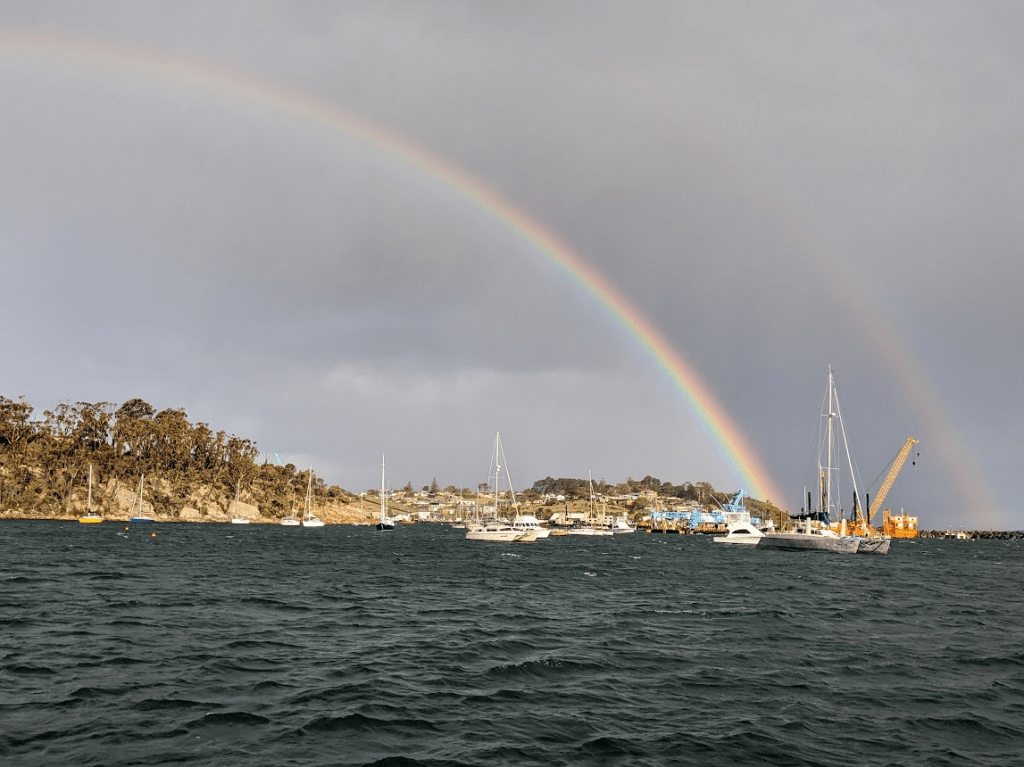
We had safely completed our voyage back across the Coral Sea from New Caledonia to Australia. The next leg was south, from Shellharbour to Eden, hugging the New South Wales coast. Unlike our outbound voyage, the whales were no longer in sight. They must have returned to Antarctica after having come north for calving. I was encouraged by the sight of dolphins accompanying us for spurts of the voyage.

We had hoped to reach Eden by midnight but somehow the trip dragged on until 3.30 am. I wanted to pull my weight during the night sail but was overwhelmed by fatigue and fell into a deep sleep on the sofa. Meanwhile, Alex directed the vessel to a safe point in the bay and dropped anchor.

The next morning in the security of daylight we moved the boat closer to shore, and spied a cruise ship at the docks. It was such a surprise to see a vessel with a capacity of thousands at the wharf of a township of only around three thousand two hundred people.

We made our way to shore in the dinghy, then climbed the steep hills into Eden to provision our boat for the next few days. We noticed tandem cyclists in bright lycra outfits making their way up the hill from the wharf into the town. We greeted them and their accents told us that most of them were from America. Each cyclist had a place name emblazoned on the back of their shirt. Some read California, others the Netherlands. We walked up the main street towards the supermarket, making way for passing cyclists on the footpath.

After we emerged from the supermarket laden with shopping bags, the last of the tandem cyclists, an older couple, were struggling up the hill. Curious, we couldn’t help asking that tedious question that tourists are asked worldwide.

“Where are you from?”

“Colorado.”

“Wow!” I exclaimed. I had never met anyone from Colorado in Australia. Now that the borders were open after pandemic closures tourists must be eager to resume roaming the globe.

A workman in an orange, fluorescent jacket approached the tourists from Colorado.

“Are you with the cruise ship?” he enquired.

I assumed it was an innocent question, or at least a polite enquiry.

“Yes,” they confirmed.

“Can you please tell the cruise ship company to tell these cyclists how to mind their manners? Some of them are cycling on the wrong side of the road. Others are cycling through bitumen that we have just laid,” complained the workman.

“What did he say?” enquired the Colorado tourist of his wife,

She was better able to understand his accent than her husband, so she interpreted it for him.

“We are the last off the boat so there won’t be any more problems,” she reassured the workman, as they resumed their cycle.

“Enjoy the rest of your trip!” I urged them, trying to counter the rudeness of the workman.

“Thank you!” she replied, turning back and beaming at me.

I was surprised that the workman had chosen to berate the tourists. Perhaps he could have contacted the cruise ship managers. I hope the tourists received more civility at their next port of call. When you are a tourist and have no friends in the country you are visiting, it’s those unanticipated encounters with locals that form the lasting impressions.

Meredith Stephens is an applied linguist from South Australia. Her work has appeared in Transnational Literature, The Muse, The Font – A Literary Journal for Language Teachers, The Journal of Literature in Language Teaching, The Writers’ and Readers’ Magazine, Reading in a Foreign Language, and in chapters in anthologies published by Demeter Press, Canada.

PLEASE NOTE: ARTICLES CAN ONLY BE REPRODUCED IN OTHER SITES WITH DUE ACKNOWLEDGEMENT TO BORDERLESS JOURNAL

Click here to access the Borderless anthology, Monalisa No Longer Smiles

Click here to access Monalisa No Longer Smiles on Kindle Amazon International

Categories
Essay

One Happy Island

Text and photographs by Ravi Shankar

Downtown Orenjestad

The plane was descending steadily. We were approaching an island. The sandy coastline and the hotels were now visible on the left. I was seated in the last row and luckily had the entire row to myself. The sand was white, and the waters of the Caribbean Sea were a deep turquoise blue. I was fascinated by the depth and translucence of the colours. A few boats and yachts were seen, cutting through the waters and we landed shortly.

Aruba, a small island located just off the coast of Venezuela is a part of the Netherlands. The island is a major destination for sun worshippers from North America. During the cold winter months, they do their surya namaskars (saluting the Sun exercise) in Aruba and other sunny places. The island is small at around 32 kilometres by 10 kilometres. The soil is sandy and there are no rivers. The island was considered useless by the Spaniards who termed it islas inutiles[1]. The origin of the name Aruba is debated. The most accepted version is that the name may have been derived from Caquetio Indian, Oruba meaning well situated. The island is mostly flat and there are four main settlements.  Oranjestad is the capital and the biggest city. San Nicholas is the entertainment hub, and Paradera and Santa Cruz are located more inland. Noord and Savaneta are the other settlements. The legal population is around 140, 000 though there may be several thousand undocumented immigrants.

Tourism has become a major source of revenue for the island like other islands and countries in the Caribbean. The island is well known in North America and the Netherlands and advertises itself as ‘One Happy Island’. During the pre-COVID days, the island used to receive nearly one million tourists yearly. Aruba is distant from South Asia; the most convenient connections are through Amsterdam and the United States (US). The island is well connected to the Eastern US and there is a US Immigration pre-clearance facility at the airport.

I was living in the capital, Oranjestad (orange city — named after the royal Dutch family, House of Orange),working at the Xavier University School of Medicine and my old friend from Nepal, Dr Dubey, was the Dean of Basic Sciences. I stayed near the school in a place called Paradijs.

Trade winds constantly blow across the island bringing down the temperature and keeping things tolerable. Walking in the housing colonies in Aruba can be a challenge. Most houses have aggressive dogs who seem to think their areas of influence extends right to the middle of the road. A house near mine had three dogs who always gave me a tough time.

Rains are not common in Aruba. Clouds gather but are blown away to the mainland of Latin America. Aruba is not built for rain. The streets flood and the college also used to get flooded after a downpour. I enjoyed walking along the seashore.

Once you leave the houses behind, the dogs are absent. A linear park runs from the airport to the cruise ship terminal. The path is paved with red stones and lined with divi-divi trees.

There is also exercise equipment installed at the surfside beach. The view of the sea is great and the sunsets on the island are spectacular. Divi-divi trees are common on the island and always point in a south-westerly direction due to the strong trade winds. Watching the planes land and take off at the airport is fascinating. KLM Royal Dutch Airlines flies the Airbus A330 which is the largest plane flying to the island.      

The carnival is a major celebration in Aruba and started as a series of street celebrations in 1954. The month of February is full of different carnival events. I attended a night parade one year and the event was spectacular. The sun can be hot and this needs to be factored in while watching the parades in the daytime.

San Nicolas has an oil refinery and is the fun side of the island. It also has a more Caribbean feel, and the cost of living is lower than Oranjestad. The oil refinery was once the largest in the Western hemisphere and was the target of German U-boats during WW II. There is a beautiful beach (Baby Beach) near the refinery.

Aruba has a Jekyll and Hyde personality. The Caribbean side facing Latin America has spectacular beaches and calm, turquoise waters. The Atlantic side is a different matter. The coast is rocky and splintered and the waters of the Atlantic Ocean crash with brute force.

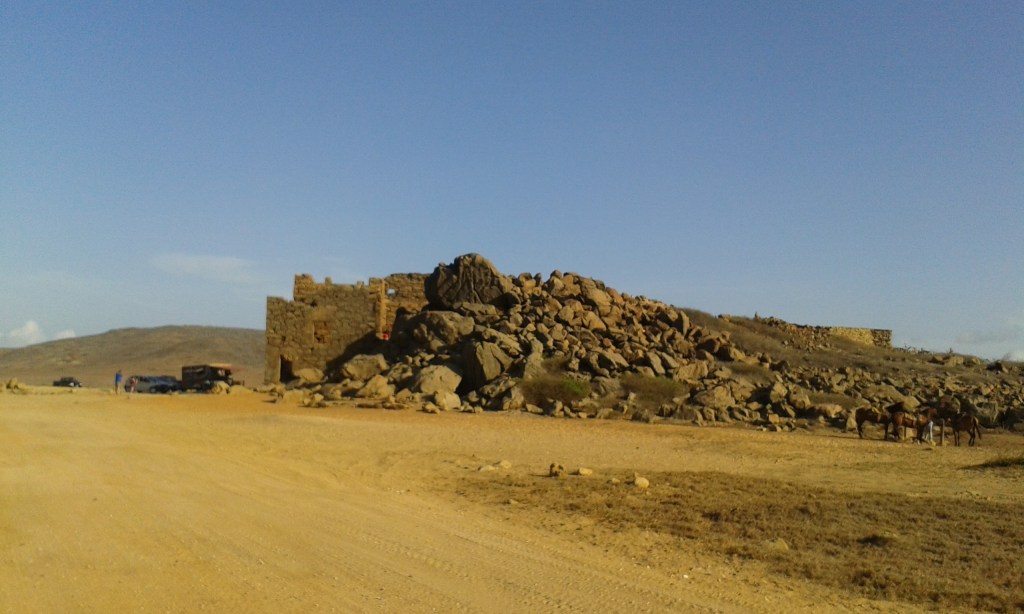
There is a gold mine and a natural bridge on the north and a large windmill farm. Semi-domestic goats graze in the arid landscape. I liked going to the wild side and watching the brute force of nature. The Arikok National Park occupies nearly a third of the island and has the highest peak, Yamanota (about 250 m), and spectacular cacti. It also has a cunucu, a traditional Aruban house. A Cunucu has thick walls that are whitewashed with small windows to stay cool in the heat.

Rainwater is collected for daily use. Today the water needs are met by desalinating sea water. The plant is located near Savaneta on the highway to San Nicolas. Water and electricity supply is stable, and disruptions are rare.

Most people have cars while the blue Arubuses provide public transportation. The bus frequency is low. Hooiberg is a mountain that rises steeply from the surrounding plains and climbing to the top provides excellent views of Oranjestad, the harbour, and the surrounding countryside.

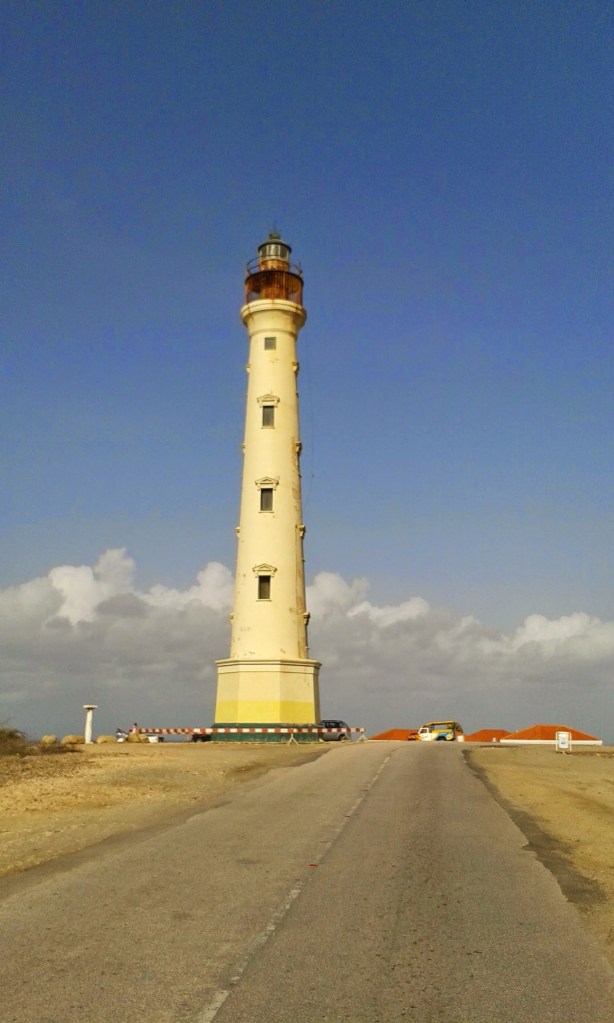
The area around Noord is the tourist heartland and the lemon-yellow California lighthouse is located here. The lighthouse is named after the steamship, California, which sank near these waters in 1891. The downtown area of Oranjestad has Wilhelmina Park, Fort Zoutman, and the Willem III tower. The fort was built in 1798 by African slaves. There is also a historical museum nearby providing an excellent overview of the island’s history and geology. The Alto Vista chapel has a spectacular view of the surroundings and was originally built in 1750 by the Spanish missionary, Domingo Antonio Silvestre.

Aruba may be the most Latinised of the Caribbean islands. There is also a strong Dutch influence. Dutch and Papiamento are widely spoken. Papiamento is a Portuguese-based creole language. English and Spanish are also widely understood.

A lagoon

Aruba grows high-quality aloe vera and Aruba Aloe founded in 1890 is the world’s oldest aloe factory.  Aruba has plenty of beaches, Druif beach, Eagle beach, Palm beach, Malmok beach, and others. The island has invested in equipment to maintain the beaches. Turtles lay their eggs in the white sand and hatchlings clumsily move back to the ocean. The natural pool or conchi is located on the north side. Butterfly farm, Philips’s animal garden, and the Donkey sanctuary provide shelter to the fauna. You can volunteer at the donkey sanctuary. In Aruba, many families camp out on the beach during Easter. My landlord and his family used to camp on the surfside beach near the airport.

Aruba has high human development indicators. Healthcare is provided by the government through a corporation financed by taxes. Alcohol is widely consumed but I did not see drunken fights or disorderliness during my time on the island. Drivers need to be careful on Friday nights when parties get going. This arrow-shaped island with a variety of cultures and influences is geographically sheltered from the worst hurricanes with the balmy weather, caressing winds caressing, and inviting waters. The people are friendly. The moniker ‘One Happy Island’ may be well deserved!         

[1] Translates to Islands Useless

Dr. P Ravi Shankar is a faculty member at the IMU Centre for Education (ICE), International Medical University, Kuala Lumpur, Malaysia. He enjoys traveling and is a creative writer and photographer.

.

PLEASE NOTE: ARTICLES CAN ONLY BE REPRODUCED IN OTHER SITES WITH DUE ACKNOWLEDGEMENT TO BORDERLESS JOURNAL

Click here to access the Borderless anthology, Monalisa No Longer Smiles

Categories
Stories

Of Days and Seasons

 A parable by Louis Couperus (1863-1923), translated from Dutch by Chaitali Sengupta

The forest was somber, and the air dark; it was a long night without the solace of the stars, it seemed to sink into infinity, sink deep into all that was mortal in this world. It was at a time like this when the young boy woke.

He was a boy of some years, and he did not remember anymore, whether he was lost or abandoned in that forest, because he had slept for such a stretching length of time. Shuddering, his eyes large and full of fear, he looked around himself. But the way forward was lost behind him.

“Where am I,” the little boy thought, in that soul-shattering darkness. “And who am I and where am I to go…”

A vague remembrance stole upon him, a memory of shimmering light and warmth. Like a weeping, wafting out of the warm sun palace. But more than the weeping, he remembered nothing much. Now, fully awake, he became aware of being alone, abandoned, lost in a forest of horror.

The very thought made the little boy cry out in childish despair. The fear of beasts and that of robbers assailed him. Then, he saw a silvery twilight moving across towards him, in silence. Was it the wild man, he wondered? In his deep consciousness, the thought rose death-like. His little heart throbbed wildly in his throat and his small eyes bulged out in terror.

Soon, he realized the beaming twilight, that glided on his way, was not the wild man; it was a white woman.

The little boy, in the twinkling of an eye, thought he recognized her: a woman, very white, the kind of white woman he liked. With mingled fear and expectation, the little boy ran up to her.

“White lady!” he begged, folding his hands in a gesture of prayer that perhaps he had been taught in the sun palace, many, many years ago.

Tall and slender, the white woman’s veils were the whitest white, flashing against the gloomy, dark depths of the forest. She bent over the child, and her gaze caught him through her veils; her white hands were briefly extended, as if she wanted to see better; better, with her deep dark eyes, as deep as the black, shadowy forest.

“White lady!”, the child pleaded again.

“Who are you, my child?” asked the white woman. Her voice sounded primeval, thick and dark. “And where have you come from and where are you going?”

The small boy began to cry again; the woman’s voice frightened him, and he did not know who he was, where he had come from, or even where he was going…

“Come with me then”, said the white woman gravely, and she stretched out her hand to him. The little boy held out his hand to her too, and went beside her, with weeping eyes.

“Don’t cry anymore,” said the white lady. “Hold my hand safely, let me lead you: do not be afraid. In this forest, there are no beasts or robbers.”

The child felt a gentle trust wash over him, especially now that the cold hands of the white lady were warmed by his own small, warm one, but he still stumbled very often, and his short legs grew tired soon.

“Then, let me carry you, my dear.” Saying so, she lifted the child to her breast and held him very lightly between her white veils: her footfalls were light, floating, like unheard-of steps. In her arms, the child fell asleep and dreamed of the sunshine and white women, and also of white children. She walked on.

 When he awoke, the child smiled and peered into the dark depths of her eyes.

“You are a good white lady, aren’t you?” asked the child, as confidence sparkled in him. He wrapped his little arms around her neck.

“Yes,” said the white woman. “I am a good white lady, my child.”

 “Are you not tired of carrying me, good white lady?”

“No, my child, I am not tired. I never rest, I always go.”

  “Always?”

 “Always.”

  “Through the whole forest?”

 “Through the whole forest. See, the morning breaks magnificently, through the branches, and the way ahead seems clearly visible.”  

 “Now I can walk again, white lady.”

The white lady put him down, carefully on his feet, and wrapped herself closer in her veils. The child walked on beside her, happy now that all the mystery of the night had been resolved in the smile of the morning.

“Oh!” cried the child; “See what a beautiful flower that is!”

“And there, what a beautiful butterfly!”

 “Oh!” said the child joyfully. “I would like to have them, the butterfly and the flower.”

 “I shall give you the butterfly and the flower,” said the white lady; “but then, you must also give me something in return.”

“And what can I give you, white lady?”

“In lieu of the butterfly and the flower, my child, you must give me this morning hour.”

 “Oh, beautiful is the flower, and beautiful is the butterfly: oh, white lady, I gladly give you this morning hour, in return!”

The white lady smiled. With a mysterious, dark look she looked at the child.

Then she caught the butterfly in her veil and bent over the precipice to pluck the blue flower. She offered both to the child, who rejoiced with happiness.

 “O white lady, O white lady,” the happy child spoke out in joy. “How happy I am with my flower and my butterfly!”

But in his joy, the boy squeezed the butterfly to death and the flower withered in his little hand. “Oh, but how soon, O white lady, is my flower wilted and my butterfly died!”

 “But dear child, butterflies do not live long, especially not in the hands of children, and flowers wither even faster. But if you give me this new day of spring, I will bring up thousands of butterflies and thousands of flowers, by magic, all along your path today.”

“A thousand of butterflies and flowers! Oh, white lady, for so many flowers and butterflies, I will gladly give you my day in spring.”

Now the glowing sun had completely burst forth, and the forest no longer wore a black garment; it sparkled with golden-green spring. And along the shining road, the child walked in springtime, and picked the blooming flowers and caught the colorful butterflies, for they bloomed and fluttered all along the road.

But by evening, the flowers had wilted, and all the butterflies were dead.

“Still, it was a lovely spring day,” said the cheerful child, now with sleepy eyes. Exhausted, he wrapped his arms around the white lady and slept on her heart, between her ephemeral white veils.

Night fell, the white lady walked on, and in the depths of her shadowy eyes, a peal of wistful laughter broke quietly. “But that glorious spring day is now mine!” murmured she, in a nameless, deep, dark voice.

The white lady took the little boy to the city, among other people and children. The child grew up there. He became big and strong among those he assumed were his parents, his brothers, and sisters, relatives, and friends.

Many seasons later, the white lady appeared to him again. The white lady of his yesteryears, the one whom he had forgotten completely. Now, her deep dark eyes frightened him, even though he was now a young man of eighteen.

“My son,” the white lady called him. “I have not forgotten you.”

“I was ungrateful, white lady,” confessed the young man. “You saved me, a lost and forsaken child, from the gloomy forest of night And, you gave me butterflies and flowers.”

“Yes, thousands of butterflies… in exchange for one spring day!”

“Yes… thousands… for one day in spring. You brought me to the city, and I found my parents.”

“And they fed you and cared for you until you became a man, my son, a young man of eighteen. But don’t you remember, the promise? What returns would you give me now?”

“Oh, yes, white lady, I remember very well. A spring day in exchange for the butterflies and flowers. I also remember the eighteen spring seasons of my life, which you demanded to bring me into the city where I could be with my parents, and they would raise me with my brothers and sisters, and with my relatives and friends.”

“If you still remember that promise, my son, the white lady is now content… And she’s happy. In exchange of just eighteen, withering spring seasons, you have received youth and a youthful time of pure happiness.”

“But now, white lady, my happiness is over, and I am bitter with grief,” cried the young man. “For I love a girl as beautiful and as soulful as no other girl in the world, and I should like to call her my wife. But alas! She does not love me. I have but little possessions and one among them is my anguish, that I cry out on my violin.”  

“My son, you know how much I love you. If you can give me, no more than twenty blooming summers of your life, I will gladly give you happiness, a consort, and money. Twenty blooming summers, in exchange for the bride, and the gold that will make you great among men. Do not lament in music anymore; music must fill the void and is more transient and rarer than what I’ve asked of you…. Your spring days and summer months…”

“But music has comforted me, white lady.”

“Yes, live happily then, my son,” said she. “Be happy with what I give you, with your bride and the money…”

“Oh, white lady, oh white lady, for so much I’d willingly give all my blooming summers to you!”

The white lady looked with deep dark eyes at the young man, and she did not come back in years.

The young man married the lady of his dreams, the one whom he desired much, and as the years slowly turned, he attained prestige, wealth and power, until the war erupted. Then, the country was in turmoil, and the smoke of crumbling, burning cities darkened the sky and the horizon.

The white woman appeared to her foster son for the third time. She looked terrible to him. Her face was lean and sunken, her arms bony and her outstretched hand, threatening.

“O white lady, O white lady,” exclaimed the man, full of passion. Worries had already wrinkled his face; pride was scorching his soul. “Years ago, you offered me happiness in exchange for twenty summers of my life. But I never found happiness… Like the flower and the butterfly, my love died and wilted, and my wealth never brought any joy. Now I only wish to be very powerful, for if I attain supremacy, that must surely bring happiness. I wish for a crown that would sit on my temple.”

“Foster son,” said the white lady, “my dear child, I never forgot you: if you will give me in exchange for the crown of this land, fifty purple autumn seasons of your life, I will cause a happy outcome in the war; it would make you the king of this land.”

The ambitious man hastily accepted the exchange, and a terrible battle raged for seven days. The battlefields were strewn with corpses: death seemed to reign supreme. The foster son of the white lady took a sword in his hand, fought fiercely in the front lines, and a mysterious power seemed to protect him and make him invincible in the heat of the war. He, at the head of the troops of the country, gained the victory, and they pressed the crown on his head.

He grew old under the weight of that crown, until war raged again, and rebellion broke out. Deserted by all his people, he fled the land half-naked, feeling miserable. He reached the same gloomy forest, collapsed there, where he had been once found as an abandoned boy by the white lady.

Old and dejected, he lay down in the twilight of the sinking evening, when she appeared before him, looking like a terror: gray hair fanned out around her face, which grinned like a skull; and now, she had hollow eyes.

“O white lady, O white lady,” cried the unhappy king.  “You thought to gift happiness to me with this crown. You turned the war in my favor, in exchange for fifty purple autumn seasons of my life. But this crown has only brought me trouble, nothing else. I’ve never known happiness, except perhaps for that very first day of spring, when you conjured up butterflies and flowers for me! And yet I considered you to be my life! Why have you been so cruel? O white woman, O white lady! Now that I lie here, feeling miserable, abandoned, I beg of you. You who are so powerful, please bring a glimpse of happiness and life, to my poor suffering subjects, to my children… in whichever form it may be, flower, butterfly, bride, gold, or crown…”

“O my son, O my son!” raved the white lady. “You’ve always been ungrateful.  You’ve cared neither for the flower, nor for the butterfly, nor bride or wealth, not even for the crown. But if you give me this last icy winter hour, well then, I’ll grant your children and your subjects life, and a glimpse of happiness.”

Helping him stand up, she led him on. Sobbing now, he entrusted his last winter hour to her. And she led him to a monument, whose bronze door she opened out for him.

“Get in there,” she said threateningly now. “So that I may receive everything: all the days of spring, summer and autumn, and also the last hour of winter: all that you have promised me, in exchange for my countless favors.”

The old king stumbled and staggered.

“But… but… this is a tomb!” he said, looking at the monument.

“This is a king’s tomb,” she corrected him. “Tomorrow your praise singers, O son, will engrave upon it, the words of glory, glorifying you for eternity. Get in there now, so that I may receive what you owe me.”

And she held open the bronze doors for him.

“Were you not my life then?” asked the King, on the threshold of the sepulcher. “Oh, tell me… Aren’t you, my life?

“No,” said the white lady gloomily.  “I was never your life. I am not Life. I am Death.”

And she pointed him to go inside.

He obeyed; slowly, she turned the bronze door, which creaked in heavy hinges.

“And my life?” asked the old king in a begging voice, anxious, as he peered through the still open crack of the slowly closing tomb door.

The white lady said more softly, “You’ll get your life, but only when you have paid me your debt of the days and the seasons…

Then she closed the door, for thousands of years.

Louis Couperus (1863-1923) is one of the foremost figures in Dutch literature. His oeuvre contains a wide variety of genres, including lyrics, poetry, short stories, fairy tales and historical novels. Over Lichtende Drempels (About luminous thresholds) is a collection of four fairy tales and an accompanying story by Couperus. Published in November 1902 by LJ Peat, in Amsterdam, “Of Days and Seasons” (Van dagen en seizoenen) is a parable from this collection.

Chaitali Sengupta is a writer, translator, a language teacher, and a volunteer journalist from the Netherlands. Her first prose-poem collection Cross-stitched Words was published in February, 2021. Her published works also include two translations “Quiet whispers of our heart” and “A thousand words of heart”.

.

PLEASE NOTE: ARTICLES CAN ONLY BE REPRODUCED IN OTHER SITES WITH DUE ACKNOWLEDGEMENT TO BORDERLESS JOURNAL