For 50 years now Ratnottama Sengupta has seen Haren Thakur adroitly create art from the humdrum of tribal life. And his stylised abstract of the dark-toned humans still makes her sit up and take note.
Haren Thakur with his painting. Photo provided by Ratnottama Sengupta
A dark, stick-like outline encompasses a human of the male species. A triangle, an oblong, a rectangle. A white patch in the midst of a sepia-green landscape. A drummer. A mother with a child holding aloft a balloon. Two women bathing in a primitive pond. A quizzical duck. A wriggling worm. Trees hills fish pigs cows fox… And, yes! A train zigzagging its way through a vast expanse of meadows. As we view the watercolours of Haren Thakur from Ranchi, you might think of the rice-white art of the Warli tribals characterised by geometric shapes that depict the rituals of everyday life. I might be inclined to revisit the painted layers on the 100,000-year laterite at the prehistoric rock shelters of Bhimbetka in the foothills of the Vindhyas in Madhya Pradesh. Another viewer might think of the ancient Sauras and the adornment of their walls in their adobe huts in Odisha. The artist himself might have recollections of the animated Santhal pats he saw being created during his student years in Tagore’s Santiniketan. However, none of Haren’s figures are simplistic. They are all stylised. And so adroitly that you are bound to sit up and take note of them no matter how many times you have come across the theme.
Art by Haren Thakur. Photos provided by Ratnottama Sengupta
Form and content come seamlessly together in the paintings that Haren Thakur will exhibit in Delhi’s Habitat Centre from April 15. The artist who mastered Art at Santiniketan — home to Santhals, the native dwellers of Bengal and Odisha — then made his living in Jharkhand, which is home to 32 tribes… Indeed, from his very beginning, the beauty in the dark skin-tone of the men and women going about their chores was the most natural rhythm of life in the bazaars and streets of Bankura Bishnupur, where his family hailed from, or in Purulia, where his father made his home.
Beyond doubt, Rabindranath’s deep affection for the Santhals and the Bauls reinforced this love. Much like Gurudev, Haren finds poetry in their tilling of the earth. In their mono-toned songs and the repetitive steps of their dance. In the fulfilment they find in the primeval life and archetypal love. And when, following in the footsteps of the Universal Poet, Haren finds beauty in a grain of sand, the everyday life ceases to be an essay in deprivation and rises to the level of art.
*
And his colour palette? That too came off the walls of his hostel in Santiniketan, from the frescoes and murals by Binode Behari Mukherjee. From the brick-toned ‘canvas’ that is the prehistoric rock painting of Bhimbetka. The pigment on Haren’s brush and tubes is never loud then, never grating. It is always muted, always mellow. And the impact is heightened by Haren’s utilisation of rice paper, and Chinese ink, on watercolour.
The Nepali rice paper became his signature in 1974. Prior to that he would work the rice paper in the tempera process that was ‘Master Moshai’ Nandalal Bose’s gharana, school – or Indian shaili, style. But in that process of painting layer by layer, the rice paper would lose its original character and serve merely as a background surface.
Then, in his fourth year, for a scholarship test of the Visva Bharati University, Haren experimented by soaking the rice paper in water. It became so pliant that he could spread it out like a piece of cloth. “And its texture!” It won him the scholarship — and immense appreciation from his teachers, Dinkar Kaushik and Somnath Hore. “They said, ‘Go ahead and explore this medium and this process further. It adds a dimension that has immense possibility.”
Art by Haren Thakur. Photos provided by Ratnottama Sengupta
Fifty years have gone by since, but Haren has not given it up. Sometimes, when painting on canvas, he does apply acrylic directly on its surface. But at times, even here, he pastes rice paper on the canvas, primes it with watercolour, then inks in the forms. However he adds, “when I paint on rice paper mounted on board, I do not – cannot – use acrylic. It simply doesn’t have the capacity to be absorbed by the rice paper the way watercolour gets absorbed.” So, in such cases Haren uses transparent watercolour.
Clearly the chemistry between rice paper and watercolour is amazing. Unique.
*
Circling back to the content: Haren’s understated pitch was reinforced by the Zen worldview of a teacher like Somnath Hore. The master minimalist’s use of the white, barely scratched by the red of a wound, spoke volumes — and it made Haren introspect. Once, while exhibiting the Wound series, Somnath Da had said, “I discovered such depth of emotion in the reticence of tones!” This soliloquy got deeply etched in Haren’s unconscious. And eventually it came to express itself in the rusty red of the iron oxide rich Birbhum soil; the roasted brown of Purulia’s rocky earth; the weathered green of the Bauls; the soothing blue of the open sky high above the woolly white of floating clouds.
Art by Haren Thakur. Photos provided by Ratnottama Sengupta
Flattened figures. Non-realistic features. Do you see a hint of Husain – or perhaps Paul Klee – in the abstraction of the human world? I notice a reflection of the figures encountered on Egyptian papyrus. Or the African world. Haren, on his part, reiterates his original inclination: the attraction towards the lack of artifice in Adivasi life. How else would the tribals go about their daily humdrum with a baby knotted to their back? Or float in an open pool under the sun-kissed sky? To the city-bred mind, this would be unthinkable — until Haren captions it ‘Nature’s Bathtub’!
But, notwithstanding my references, the art traditions of the indigenous people over the world have never influenced Haren. “Their art tradition is so rooted in their environment – be it of Jharkhand or of any other.” Even their pigments, brush, and surface are integral to their life. But he certainly derives inspiration from the lifestyle of the original inhabitants, he affirms.
“I have always admired their direct application, the spontaneity of their form,” Haren further explains. “But I am influenced rather by the uncomplicated lives they lead. Since I was in Santiniketan I have admired the way they connect with nature in everything they do. Their intimacy with animals is incredible – they seem to be in dialogue with the animals they domesticate! This became a part of my visual world, especially when I came to live in Ranchi. The same reality imbues the lives of the natives – Oraon, Munda, Ho, Sabar, Bedia, Lohar… They rest under the tree unconcerned about how the ‘civilised’ world looks at them. They speak with the hills, with clouds in the sky, with cattle and kids, trees and waters, rivers and streams!”
Art by Haren Thakur. Photos provided by Ratnottama Sengupta
This they do with no inhibition. Because this routine is a reality they have inherited from their ancients. “That is why I believe there is nothing more ‘Contemporary’ than this,” Haren asserts. This innate natural life, and the Santiniketan grooming, combined to forge his vocabulary, his visual language.
So, in the exhibits, you encounter an abundance of water bodies. Pools and ponds. Rivers and waterfalls. Lotus and lily. Big fish. Many small fish in its tummy. Ducks and kingfishers. Hyacinth and hayfield. All this is a natural part of the countryside that has made Haren theirs.
Interestingly there is also this play with size. In one of the frames an elephant walks down the road – and at every footfall he is greeted by a number of… ants?! Look closely and you will decipher that they are dogs!
Haren is giving you a worm’s eye view. And, in addition to the proportion, he is picturing the Hindi proverb Haathi chaley bazar, kutta bhaukey hazaar/ when an elephant walks to the market, a thousand dogs will bark! Political comment? You said it!
Stay tuned to the song of the Adivasi earth, Haren.
.
Ratnottama Sengupta, formerly Arts Editor of The Times of India, teaches mass communication and film appreciation, curates film festivals and art exhibitions, and translates and writes books. She has been a member of CBFC, served on the National Film Awards jury and has herself won a National Award.
.
PLEASE NOTE: ARTICLES CAN ONLY BE REPRODUCED IN OTHER SITES WITH DUE ACKNOWLEDGEMENT TO BORDERLESS JOURNAL
Rabindranath Tagore spells different things to different people: National Anthems; the Nobel, Rabindra Sangeet, a veiled woman, Sriniketan or Santiniketan. A cineaste might think of Charulata or Kabuliwala, Chokher Bali (Best Friend) or Kadambari. But the subject ‘Tagore and Cinema’ would mean talking of Tagore’s exposure to cinema, his interest in the medium, the fate of his involvement with celluloid, the films based on stories penned by him, their interpretation in a world that is so far removed from his, in historical, economical, and cultural terms… In other words, it would mean talking of what about Tagore endures — and why it reaches out to the wide world of humanity.
To me, it is Tagore’s awesome, inspiring humanism that offers us immense scope to transcreate, reinterpret, relocate the socially relevant developments and rooted characters again and again onscreen. Like Shakespeare, his works are universal in terms of age, geophysical location, terrain of the mind and tugs of emotions…
Rabindranath was almost seventy when he exhibited his paintings that were so radically different from the style associated with the Tagore family artists, Abanindranath, Gaganendranath, Sunayani Devi, or Nandalal Bose. For, if the Bengal School looked East and sought inspiration in delicate miniatures, Chinese watercolours or the sparseness of Japanese zen, Tagore absorbed the boldness of German expressionism and created a unique style. It’s impossible for someone so open to avant garde trends to take no interest in cinema, the 20th century art form that was silently taking its juvenile steps in India when Tagore won the Nobel.
When he visited Russia, he watched Battleship Potemkin, the classic ‘handbook for editors’ (to quote Phalke winner Hrishikesh Mukherjee) that influenced a long line of filmmakers in India too. By 1931, the year when Alam Ara (Hindi) and Jamai Shasti’(Bengali) turned ‘movie’ into ‘talkie’, Tagore was in the last decade of his life. So, when he directed Natir Puja (The Dancing Girl’s Worship) at New Theatres, he was substantially assisted by Premankur Atorthi, who was the first to direct a film based on a Tagore composition. This was the only time when the Renaissance personality directly interacted with the celluloid medium. His nephew Dinendra wrote the screenplay, albeit under Tagore’s guidance, and students of Santiniketan acted in it. More importantly, Tagore himself essayed an important role in the dance-drama which was shot with a static camera over four days. However, the result was more a staged play than cinema. A greater tragedy is that the reels perished within 10 years, when a fire ravished the New Theatres Studio in 1941.
Atarthi’s own direction of Chirakumar Sabha (1932) set off a tradition that received a robust boost, first in the 100th year of the poet’s birth, and again in 2011, when he turned 150 and further. If literary treasures like Gora (1938) and Chokher Bali (1938) were adapted onscreen by Naresh Mitra and Satu Sen, they were remade and reinterpreted by Rituparno Ghosh who veered towards Tagore rather than Saratchandra, the more popular litterateur of Bengal who was a staple of Tollygunge for years. In fact all major names of Tollygunge, from Nitin Bose, Agradoot, Tapan Sinha, to Purnendu Pattrea, Partha Pratim Chowdhury and Rituparno Ghosh have announced their coming of age in cinema with a film based on a Tagore composition.
It is interesting to note that when Tagore visited Russia in September of 1930 members of the Cinema Board who had a conversation with him regarding his “new film stories” were deeply impressed by the short versions of the stories (as narrated) by the Poet, and they met him at his hotel to discuss in detail the possibilities of filming them. Tagore himself had enough interest in cinema to visit the Amalgamated Cinema Union, where he was received by its president M Rutin and was shown Eisentein’s Battleship Potemkin and portions of Old and New, we learn from his Letters from Russia.
Although evoking the Bengal of his time in divergent hues, Tagore’s stories continue to inspire man to go beyond divisions of nation, religion, caste or gender, perhaps because they explore how society shapes our love and relationships. This essay dwells on films that highlight the pervading themes of feminism, humanism and universalism in Tagore’s literary works.
Not Slave, Nor Goddess
The champion of women tells us to enunciate aami nari, I am a woman … with pride, because a woman is not a slave nor needs to be the other extreme, a goddess. That it is right for a woman, whether young, maiden, or widowed, to be a person of flesh and blood. That Tagore empathised so deeply with his women characters that today’s social historians are talking of an androgynous strain in the humanist.
* When Satyajit Ray filmed Ghare Bairey (The Home and the World), we got a glimpse of the regressive practices that ailed even the wealthy and educated households. However the most symbolic scene was the one where Bimala is inspired by Nikhilesh to step out of the inner quarters of the zamindar’s household. Even Sandip, the false god, hails it as a ‘social revolution’. Tagore the author goes on to criticise the pseudo rebel but at no point does he criticise Bimala — not even when her sister-in-law cautions Nikhilesh about the freedom his wife is abusing. We find a repeat of this theme in Char Adhyay (Four Chapters) – but we’ll come to that later.
* Chokher Bali, first filmed in 1938, turned the spotlight on the deprivations young widows were subjected to even after the reformist crusades of Raja Ram Mohan Roy and Ishwar Chandra Vidyasagar. Very sympathetically, and most aesthetically, it held a brief for their sensuality — even sexual needs, especially when Rituparno Ghosh filmed it in 2003. But even here, before Mahendra’s mother dies, she urges that in her memory he should host a feast for widows — “people feed Brahmins, beggars, even animals, but never for the unfortunate widows,” he underscores.
* Nitin Bose’s bilingual Noukadubi was probably the first to take Tagore to Hindi cine-goers. Incidentally Rituparno and Subhash Ghai’s Noukadubi were also bilingual. In 1944, Milan afforded Dilip Kumar opportunity to mature as an actor, for here Ramesh upholds the flag of humanism. After being boat wrecked he comes home with Kamala, the ‘bride’ he has not deigned to look at, and realises that she is in fact someone else’s wife. The gentleman in him decides to take her to a convent and give her not just protection (from a par purush, stranger) but also proper education — even at the cost of his own spotless reputation and his chances of finding happiness with his beloved, Hem Nalini.
* In Charulata (1964), although Satyajit Ray continues to unfold her story from Amal’s point of view, his sympathy without reservation lies with the lonely wife. For half a century and more viewers have no doubt that Charu was an alter ego for Tagore’s Natun Bouthan – his sister-in-law Kadambari Devi, who took her own life. This story has inspired Bandana Mukherjee’s Srimati Hey and Suman Ghosh’s Kadambari (2015). Ray underscores this aspiration aspect in the film when Charu writes, gleaning from her experiences, and her writings are published in a magazine. This was unthinkable in the 19th century — and only a deeply humane soul could understand that a woman too needed to express her intellectual and creative self. (This aspect is completely missing in Charulata of 2011, directed by Agnideb Chatterjee, although it unfolds from the woman’s perspective and unabashedly speaks of her physical intimacy with Amal.)
* For Tagore, perhaps the stifling of this intellectual self was as great a tragedy as the ‘burying’ of her potentials within the walls of domesticity. In the poem ‘Sadharan Meye’ (Ordinary Girl), he urges his contemporary Sarat Babu to write a novel where the protagonist — a scorned woman — goes on to study, travel abroad, re-valued by several admirers, including the man who ditched her for being an ‘ordinary’ woman. The core thought of this poem had inspired a script by Nabendu Ghosh, an altered (and unacknowledged) version of which was made by Hrishikesh Mukherjee as ‘Pyar Ka Sapna’ (Dream of Love, 1969). In recent times the theme has been most successfully revisited in Vikas Bahl’s Queen (2014).
* In Megh O Roudro (Clouds and Sunshine), Rabindranath’s short story creates a protagonist whose struggle to affirm her dignity in the British ruled 19th century prompts her to read and write under the tutorship of a stubborn law student who is jailed for constantly challenging the discriminatory ways of the imperialists. By the time he is released, she is a prosperous widow who courteously acknowledges his role in her achieving self-confidence. In 1969, Arundhuti Debi, herself raised in Tagore’s ethos at Santiniketan, chose this for her second outing after Chhuti (Holiday) and her lyrical treatment brought her recognition as a director of substance.
* But what happens when a woman cannot fulfill her destiny, as in Streer Patra (A wife’s Letter, 1972)? How did Rabi Babu want his Mejo Bou — haus frau — to behave when the acutely male dominated household turns a blind eye to the injustice of marrying off the hapless orphan Bindu to a lunatic? Not drown her woes in the vast ocean at Puri but to slough off, in a moment of illumination, the shell of ‘Mejo Bou’ and become Mrinal, a woman with .her own soul and individual identity Why must she end her life like his Natun Bouthan — “Meera Bai didn’t,” he points out. And to us, even by today’s standards, it is the ultimate expression of feminism.
* Perhaps because of the class she belonged to, and with the support of a rebellious brother, Mrinal could do what Chandara couldn’t in Shasti (Punishment, 1970). Tagore knew that neither his ‘Notun Bouthan’ nor his own wife Mrinalini got the opportunities enjoyed by his ICS brother’s wife. Far from it: Chandara’s husband Chhidam places the burden of his Boudi’s death at the hands of his elder brother on his wife. In the prevailing patriarchal society it wasn’t unthinkable: a wife was expendable because you could get another, but not a brother. But the unlettered Chandara has her own estimation of the sanctity that is the conjugal bond. When her husband comes to meet the wife condemned to hang, she denies him the right of visitation by disdainfully uttering a single word: “Maran!” How should we read it today? Go, drop dead or go hang yourself!
* Jogajog (Connection) was written in 1929 in a society where there were caste/ class distinctions even amongst zamindars. Tagore had first-hand experience of this within his family. His crude protagonist is a johnny-come-lately who seeks revenge by marrying the educated and cultured Kumudini. He cannot stand any expression of respect for her brother and feels belittled at the slightest hint of will in his wife. Matters go so far that in the 2015 film, director Sekhar Das can effortlessly trace moments of marital rape in their conjugal discord.
* Chitrangada had poised the question: where lies a woman’s true beauty – in her outward appearance or her inner worth? Should the princess, raised to be as good as a prince, deny her essential self to please a man? Or is she wrong to sacrifice her being for one she loves? In 2008, Rituparno Ghosh gave a whole new androgynous reading of the dance drama, with Madan/ Cupid becoming a psychoanalyst.
Child — The Father and Mother of Man
Robi, who immortalised his childhood in Chhelebela (Boyhood), could never forget the restrictions imposed by adults and the suffocating effect it had on an imaginative soul. Therefore in Ichhapuran (Wish Fulfillment,1970), directed by Mrinal Sen for the Children’s Film Society of India, he effected a role reversal whereby their bodies get swapped. The naughty child Sushil becomes the father and the senior who covets the youthfulness becomes the free spirited son.
The comical confusion this ensues in the village leads both to realise the importance of their individual positions in life. They get back to their original self with the profound lesson for humanity – that each one of us has a place in the world no one else can ever fulfill.
* Of course the best known child in Rabindra Rachanabali (Creations of Tagore) is Amal. Essentially Dakghar (Post Office) was a testimonial against the crushing of childhood Tagore suffered. In the recent past actors Chaiti Ghoshal and Kaushik Sen have proved the enduring appeal of Dakghar — she in the form of a recorded audio play (CD); he on stage. Chaiti Ghoshal interprets the protagonist she had played with Shambhu and Tripti Mitra not as a Rabindrik character but as any child today, familiar with cricket and computer. Manipur’s Kanhailal has used elements of dance and drama to reinforce this message of freedom beyond frontiers. And, following the 2007 police firing in Nandigram (that killed 14 persons who were opposing state officials on land acquisition drive), Kaushik Sen had interpreted Amal’s desire to send a letter as a message to every household to raise awareness.
Sen’s Dakghar, then, was not about death but about liberation from life in bondage. “Perhaps that’s why, a day before Paris was stormed during WWII, Radio France had broadcast Andre Gide’s French translation of the play,” Kaushik had said while staging the play. “Around the same time, in a Polish ghetto, Janus Kocak had enacted the play with Jewish kids who were gassed to death soon after.” After such multi-layered readings of the text, Dakghar as filmed by Anmol Vellani in 1961 remains a simplistic viewing — perhaps because it was made for the Children’s Film Society.
* In The Postmaster the child – an illiterate village girl in this instance – metaphorically becomes a mother and a priya , or beloved, of the pedantic city boy who is stirred by beauty of the moon but can’t wait to go back. When he falls critically ill she dutifully serves him and cares for him like a wife. When he is set to depart by simply tipping her with silver coins, the child with a maturity beyond her years refuses to say goodbye. Rejection doesn’t need words: she can negate his very existence by her silence.
* Samapti (Finale) the concluding story of Teen Kanya (1965) remade by Sudhendu Roy as Upahaar ( The Gift, 1975), builds on the flowering of a woman in an unconventional girl child. Mrinmoyee is certainly not a Lakkhi Meye…a good girl , she’s a scandal in rural Bengal of 100 years ago. She escapes her wedding night by climbing down a tree, she spends the night on her favourite swing on the riverbank, she snatches marbles from her friend, a boy… When they try to tame her by locking her up in a room she throws things at Amulya. But when he returns to Calcutta and she’s sent back to her mother’s, she realises grown up love for the man she’s married to, and sneaks into his room by climbing the same tree!
* Buddhadev Dasgupta had woven Shey from Tagore’s late novel written for his granddaughter, and then scripted a feature based on 13 poems by the bard. When we read a poem, certain images arise before our mind’s eye. The director interprets Tagorean poetry through such images and experiences. “It is about how a poet responds to another poet,” he explains.
Of Zamindars and Servants
Robi, the ‘good for nothing’ youngest son of Debendranath, had to prove himself in his father’s eyes by successfully performing the job he was entrusted with – that of collecting taxes, ‘khajna’, from the ‘prajas’, subjects, no matter how impoverished they were. We all know that in doing the job he came across a vast cross section of people of the land whom he would not otherwise get to know so intimately. And while he could not be lenient as his father’s representative, he created caring characters like the zamindar in Atithi ( The Guest) who brings home a vagabond, gives him education, and even prepares to give his daughter in marriage to the free spirited boy whose restless soul drives him away…
* But having seen the reality of the lives of the subjects Rabindranath also created uncaring zamindars like the one in ‘Dui Bigha Jami’ (Two Bighas of Land) that had inspired the Bimal Roy classic Do Bigha Zamin (1953), set in a post-independence India that was rapidly industrialising. Debaki Bose attempted a more literal visualisation as part of Arghya, his Centenary Tribute to Tagore, along with his poem ‘Puratan Bhritya’, (Old Retainer).
* Robi, the motherless child who was raised in a large household in the rigid care of servants, said ‘Thank You’ to them through characters like Kesto, the old family retainer who refuses to leave even when he’s dubbed a thief or driven away. Instead, he saves his master from small pox at the cost of his own life. Tagore, in fact, goes a step further in his short story, ‘Khokababur Pratyabartan’. The trusted servant even raises his son to eventually give him up as the master’s child lost to a landslide in the river! Oppression of Religion
Pujarini (Worshipper) was immortalised by Manjushri Chaki Sircar’s dance. Although set in the revivalist times of Ajatshatru who was set upon putting the clock back and wipe out the Buddhist tenor of his father Bimbisara, we can easily identify with Rabindranath’s condemnation of any excess – violence in particular – in the name of Religion. Visarjan (Immersion) too raises consciousness against violence in any form, against even animals, in the name of religion.
* Nor can we overlook instances where he raises his angst ridden voice against the inhuman treatment of humans on grounds of caste or creed. In Chandalika, the untouchable gets a new mantra to live by when the Buddhist monk Ananda says “Jei manab aami sei manab tumi kanya (You, lady, and I are part of the same humanity).” The act becomes a beacon for Sujata, the eponymous protagonist of Bimal Roy’s film, who is on the verge of ending her life (following casteist discrimination).
* Tagore’s poem called ‘Debatar Grash’ (God’s Greed), lashes out against the cruelty people can unleash through the heart rending plight of the mother whose child is snatched from her and thrown into the raging waters to appease the villagers superstitious belief in god’s wrath. Shubha O Debatar Grash (Shubha and God’s Greed, 1964) remains a signature film of Partha Pratim Chowdhury.
* Tagore questioned the very concept of belonging to ideological boxes. His time-transcending novel, Chaturanga (Four Quartet), points out that human experiments (like, say, Communism) have failed because they put ideology in watertight boxes that do not have any room for flexibility. This inspired Suman Mukhopadhyay to film it in 2008. Tagore, who himself created walls and broke them, questions this through Jyathamoshai, his uncle, and Sachish, who invite Muslim singers and feed them at shraddha or funeral as much as through Damini, whom Sachish wants to domesticate much against her wish. She even questions her husband’s authority to will her away along with his property, to his religious guru. Tagore uses the graphic imagery of a hawk and a mongoose that Damini has as her pet (it is well known that these animals cannot be domesticated).
Nationalism to Internationalism
‘Where the world has not been fragmented by narrow domestic walls, and the clear stream of reason has not lost its way into the dreary desert sand of dead habits: into that heaven of freedom’ Tagore, forever and always, wanted his compatriots to awake. That is why Nikhilesh, in Ghare Bairey, does not condone violence even in the name of nationalism. That is why he decries Sandip, who uses the passion of young freedom fighters and the wealth of the poor to fill his coffers.
Beware the false god: Tagore repeats the criticism in Char Adhyay. In 2012 Bappaditya Bandopadhyay revisits the novel filmed by Kumar Shahani in 1997, the golden jubilee of Independence. But Ela’s Char Adhyay review it for its politics, its backdrop of ultras and violence, for the debate that acquired a new validity in the world after 9/11. Tagore was much in favour of non-violence, so much so that he criticised the nationalist movement too when it turned violent. How much of a visionary he was to ask a full century ago: “What will be the state of the nation that is based on violence?”
Young filmmakers are amazed by Tagore’s vivid criticism of the deterioration of party structures although he himself never belonged to any party. Sarat Chandra’s Pather Dabi (Demands of the Path), written about eight years before Char Adhyay, had taken a populist stand while Tagore didn’t hesitate to say through the protagonist Atin, ‘I am not a patriot in the sense you use the term.”
* That Rabindranath was against any form of regimentation is well established. His play, Tasher Desh or the land of cards, perhaps, written to criticise the submission of the conscience in Hitler’s Germany, remains the ultimate critique of regimentation. Directed by Q in 2012, the text layers his criticism of contemporary society by “trippy” visuals. By Q’s own submission, it is a “quirky” retelling of the Tagorean allegory.
* Gora (directed by Naresh Mitra in 1938) goes further: He bows to his adopted mother, hails her as his Motherland and says, every child is equal for a mother, she does not differentiate on any ground. Tagore here gives us a blueprint for an ideal Republic where a hundred flowers can fill the air with a hundred different colours.
* Perhaps the ultimate example of Tagore’s humanism is Kabuliwala, directed in Bengali by Tapan Sinha in 1958 and in Hindi by Hemen Gupta in 1961. An Afghan selling his wares in a Calcutta 150 years ago and striking a friendship with a child who reminds him of his own daughter back home, is a story that will strike a chord in anybody, anywhere in the world, at any given point in time — even in a world swamped with internet, chat rooms, mobile phones and multimedia messaging.
All of this reiterates the ‘forever-ness’ of Tagore. It also redefines the need to interpret his farsightedness, his comprehensiveness, his universality for our own times, in our own terms. Tagore himself had observed in a letter: “Cinema will never be slave to literature – literature will be the lodestar for cinema.” So we may conclude that since Tagore was primarily delving into human emotions, into the psyche of men and women placed in demanding situations that forced them to measure up to social, political, cultural or gender-based challenges, films based on his stories not only continue to be made but find an ever-growing audience in the globalised world.
(Courtesy: Tagore and Russia: International Seminar of ICCR 2011 held in Moscow. Har Anand publications, 2016. Edited by Reba Som and Sergei Serebriany)
.
Ratnottama Sengupta, formerly Arts Editor of The Times of India, teaches mass communication and film appreciation, curates film festivals and art exhibitions, and translates and write books. She has been a member of CBFC, served on the National Film Awards jury and has herself won a National Award.
.
PLEASE NOTE: ARTICLES CAN ONLY BE REPRODUCED IN OTHER SITES WITH DUE ACKNOWLEDGEMENT TO BORDERLESS JOURNAL
Eshechhe Sarat ( Autumn) by Rabindranath Tagore was published in 1937. The poem flows to describe the season of Sarat, or the early part of autumn, when Bengalis celebrated their major festival, Durga Puja
Autumn in Bengal by Sohana Manzoor
AUTUMN

A cool breeze awakens
Autumn anew.
At dawn, the grass rim
Is lined with dew.

The amloki groves shiver.
Their hearts pound like drums,
As they know the time to shed
Leaves has clearly come.

The shiuli branches are laden with buds.
The togor blossoms hold sway.
The bees visit sprays of the
Malatilata twice a day.

As the rains have ended,
The clouds roam the skies free.
They drift with the breeze,
At leisure and full of glee.

The ponds ripple with water.
Their banks bloom with flowers.
The young rice plants fill the fields
The wind swings the paddy bowers.

Wherever I look, a golden light
Suffuses a vision of holidays,
The festive sun rises in the woods
Of puja* blossoms drenched in gold rays.


------------------------------------------
Amloki is Indian gooseberry
Togor (genera: milkwood), shiuli (jasmine)and Malatilata (Rangoon creeper) are flowers that bloom around autumn
*Durga Puja
This poem was a part of Sahaj Path, a set of books created by Tagore to teach the Bengali language. The four books that constitute the set were illustrated by the famed artist Nandalal Bose (1882-1966), who was also a major part of Santiniketan.
Sahaj Path, Tagore’s Bengali primer, of which this poem was a part. Courtesy: Creative Commons
(This poem has been translated by Mitali Chakravarty with editorial backing from Anasuya Bhar and Sohana Manzoor)
.
PLEASE NOTE: ARTICLES CAN ONLY BE REPRODUCED IN OTHER SITES WITH DUE ACKNOWLEDGEMENT TO BORDERLESS JOURNAL
First published in 1915 in Sabuj Patra, ‘Hobe Joye (Victory will be ours)’, has been translated as ‘Song of Hope’
Sabuj Patra was a magazine in which Tagore published often. This is the logo designed by the eminent artist Nandalal Bose who was a close associate of Tagore. The lettering in Bengali gives the name of the journal, which translated means, Green Leaves.
SONG OF HOPE

Victory will be ours, victory will be ours, victory will be ours,
O valiant, O fearless!
Life will conquer — eternal life, the song of joy will triumph.
Love will win over anger. The enlightened will prevail.
This dusk too shall pass, shall fritter away.
O valiant, O fearless!
Awake, open your eyes, may your weariness fade away.
Let the light of hope illuminate a fresh dawn.
The song in the original Bengali had been rendered by the legendary Pankaj Mullick(1905-1978), who was impacted by Tagore and even gave the music for Diner Sheshe, Ghumer Deshe (translated as ‘The Last Boat’).
This has been translated by Mitali Chakravarty with editorial backing from Sohana Manzoor and Anasuya Bhar.
.
PLEASE NOTE: ARTICLES CAN ONLY BE REPRODUCED IN OTHER SITES WITH DUE ACKNOWLEDGEMENT TO BORDERLESS JOURNAL
Mahasweta Devi’s reminiscences about Santiniketan, where she spent some of her formative years, between early 1936 and the end of 1938, (almost three years between the ages of 10 and 13), is a beautifully written and luminous tribute to this unique educational institution.
The place, people, flora, fauna, educational method and curriculum (through co-curricular activities), the people it housed and the ideas it nurtured are described by Mahashweta Devi in loving detail, with great skill and observation. What makes these reminiscences even more remarkable is that the book Amader Santiniketan is based on memories of events which transpired almost sixty-four years before the book finally came to be written. A richly flavoured chiaroscuro of events, ideas and people all woven into the fabric of memory, Mahashweta compares her memories to a feather. “Like a dazzling feather that has floated down from some unknown place, how long will the weather keep its colours, waiting? The feather stands for memories of childhood. Memories don’t wait. Memories grow tired. They want to go to sleep”
Describing a life lived in the lap of nature, the book depicts the beginnings of her growing closeness with the natural environment and the eco-system it fostered before the depredations caused by man’s excessive needs and greed. Thus, she writes, “Santiniketan taught us to respect nature, and to love it.” Using two frames — of a dimly remembered past time steeped in nostalgia and a disturbing present — she voices her sense of disillusionment: “Now with each passing day, I see how humans destroy everything. Through the agency of humans, so many species of trees, vines, shrubs and grasses have vanished from the face of the earth-so many species of forest life! Aquatic creatures and fish, so many species of birds, have become extinct, lost forever.” Further, a great calamity has befallen the natural world and while science and technology have advanced, the “balance of nature can never be restored.”
The author’s sensitivity to and observation of animals is perhaps unusual and also prescient in its engagement. Thus, she recalls how she long harboured a “profound tenderness” towards donkeys. Her thinking seems to almost anticipate a trend in thinking that has increasingly been identified as post humanistic.
The translation captures the iridescent quality of the writing irradiated by flashes of memory as the ageing author is often assailed by amnesia. Thus, she writes, “I have travelled a long distance away from my childhood” and that her memories are losing their colour and their sheen.
A book by a trailblazing activist writer like Mahasweta Devi writing about Santiniketan, a unique educational experiment nurtured and fostered by Tagore, who was a world-famous poet and Asia’s first Nobel laureate, is a literary treat of a special kind.
Tagore was so prolific that it could be said of him, that not only was he great but also that he was the cause of greatness in others. Santiniketan was the privileged space which witnessed a cultural efflorescence, the full flowering of the 19th century Bengal Renaissance that started more than half a century before. Thus, it was a site where the creative arts, literature, painting, sculpture, music and dance flourished. The institution attracted new talent to itself, both from India and beyond. About the educational methods of Santiniketan, Mahasweta writes: “In Rabindranath’s time, Santiniketan offered independence and nurture.” And “those days, they did not teach us the value of discipline through any kind of preaching. They taught us through our everyday existence.” Precepts and ideals were instilled subliminally, “they (instructors in Santiniketan) would plant in our minds the seeds of great philosophical ideals, like trees.” She also adds that Aldous Huxley felt that Rabindranath’s major legacy lay in his thoughts on child education. The educational curriculum that was practised in Santiniketan taught students not just to know things, but to love nature and the universe. A vital question that she poses is: why does education in love not figure in today’s curriculum?
Time and again, Mahasweta bemoans the fact that the outlook and attitude towards education that is in evidence these days has entirely missed the point and the essence of Tagore’s teachings that were manifested and actualised in Santiniketan. This is not just nostalgia but a clear-eyed recognition of the quality of nurture — both physical and intellectual– offered by Santiniketan. It offered a wonderfully varied work schedule. It trained their vision and offered the valuable lesson that no activity is worthless.
At the center of her narrative is of course that colossus among men, the towering figure of Rabindranath Tagore, poet extraordinaire and visionary, carrying out a unique educational and pedagogical experiment. The author feels inadequate and unable to measure his greatness. She also describes with particular poignancy the eco-system devised by him which nurtured, honed and showcased the talents of others. Many luminaries figure in the book. Some hover in the margins of the texts -characters /personages whose achievements merit a narrative of their own. So whether it is the artists Kinkar (Ramkinkar Baij) and Nandalal Bose, singers like Mohor (Kanika Bandopadhayay) and Suchitra (Suchitra Mitra),a leader and nationalist like Sarala Debi Choudhurani, a writer like Rani Chanda and a dancer like Mrinalini Swaminathan (later Sarabhai)—Amader Santiniketan takes us through a veritable hall of fame.
The book is also interesting in the glimpses it affords into the formative influences of an important writer, Mahasweta Devi herself. Her writings constitute a unique blend of narrative and activism, theory and praxis and marks a strong sympathy with the dispossessed. She writes of tribal cultures with a strong conviction of their relationship with the land. In the Imaginary Maps (1995, short stories translated by Gayatri Spivak), Mahashweta Devi bemoans a lost civilisation:
“Oh ancient civilisations, the foundation and ground of the civilisation of India……A continent! We destroyed it undiscovered , as we are destroying the primordial forest, water, living beings, the human.”
There is a self-revelatory aspect to the narrative. Even as her reminiscences conjure up a glowing image of Santiniketan as an idyllic haven in a bygone era, there is a poignancy in the book’s dedication to Bappa, her son Nabarun Bhattacharya, when she writes “I gift you the most carefree days of my own childhood, let my childhood remain in your keeping.” Mahasweta’s son was estranged from her, since she left her husband and his father Bijan Bhattacharya, when Nabarun was presumably thirteen.
Radha Chakravarty is a fairly renowned translator with a vast repertoire of experience. She has translated many writings both by Rabindranath Tagore and Mahasweta Devi. That she has previously worked on Mahasweta Devi’s writing, adds to the nuanced quality of her translation and observations. Beautifully and sensitively translated by Chakravarty and produced/brought out by Seagull, the book is a collector’s delight.
While the book is not an autobiography in the traditional sense, it weaves together fact and affect, “a fragmented whimsical mode of narration” punctuated with digression and asides. A mixture of hazily remembered facts and sharp recollections, it is peppered by flashes of the author’s indomitable spirit. In the words of the translator, “Mahasweta Devi’s text draws us in what she tells, yet baffles us with what it withholds or reinvents, teasing us with its silences uncertainties and incompleteness.” Further, “vividly present to our imagination, yet beyond the reach of our lived reality, a remembered Santiniketan hovers in the pages of the book, just like the dazzling but elusive feather inside the locked up treasure box of Mahasweta’s memory.”
.
Dr Meenakshi Malhotra is Associate Professor of English Literature at Hansraj College, University of Delhi, and has been involved in teaching and curriculum development in several universities. She has edited two books on Women and Lifewriting, Representing the Self and Claiming the I, in addition to numerous published articles on gender, literature and feminist theory.
The last year and a half has seen exhaustive commemoration of the works Satyajit Ray (1921 – 92) as it marked his birth centenary. To us in India and to the world in general, Satyajit is now revered as a filmmaker, primarily. He has become a myth and a legend in the art of filmmaking, so much so that Akira Kurosawa has pleaded that the ignorance of the former’s art is comparable to not having seen the sun or the moon. Nevertheless, it would be highly unjust to his artistic persona if we study him merely as a film maker. He was a polymath intellectual who was versatile in several arts, where literature, visual art and music were only among a few of his talents apart from cinema. Satyajit had re-invented himself severally, in various times of his life and career.
The Beginnings
Born to the illustrious and talented family of the Rays of Gorpar in north Kolkata, Satyajit was grandson to Upendrakishore Ray Chowdhury (1863 – 1915) and the only son of Sukumar Ray (1887 – 1923), whom unfortunately Satyajit lost, when he was merely two and a half years old. The vein of versatility ran high in the family. Upendrakishore distinguished himself as a pioneer in the art of photography and later also in printing technology. In fact, to him we owe the science of half-tone printing and photography. His research papers were published in the prestigious Penrose journals of England. Upendrakishore also distinguished himself as a writer of children’s literature and published not only in Bengali journals like Mukul, Sakha and Sathi (in the nineteenth century), but also founded his own magazine for children in 1913, by the name Sandesh – a name indicative, not only, for a Bengali sweet meat, but also for information and news. Sukumar Ray was primarily a student of science, with a double B.A in Chemistry and Physics honours from Presidency College Kolkata. He, however, went to England to study Printing Technology with the long term goal that he would assist his father in their own press, U. Ray and Sons. Sukumar too, got his research papers published in prestigious scientific journals. He was in England at a time when Rabindranath Tagore, too, had made his visit in 1912 and was a witness to some of the poet’s reading of his poems from Gitanjali (1912) in the company of many influential people in that country. Sukumar returned to Kolkata and was compelled to take up the editorship of Sandesh from 1915, after the death of his father. Sukumar had already started the ‘Nonsense Club’ and his hand written journal Share Batrish Bhaja (Thirty-two and a half Fried Savories) even before he went to England. The vein of the ‘nonsense’ tradition only perfected itself after his return; his own poetry and prose began to see the light of day from the time he began to edit Sandesh. However, and rather unfortunately, his life and career too, came to an abrupt end in 1923. It was only a few years after this that the magazine Sandesh closed down.
Satyajit Ray was largely brought up in his maternal uncle’s home in Ballygunge, from where he completed his schooling at Ballygunge Government School and attained his B.A in Economics (Honours) from Presidency College Kolkata. His mother Suprabha Devi, preferred that Satyajit follow up his education under the guidance of ‘gurudev’ Tagore and hence cajoled him to join Kala Bhavana in Santiniketan in the year 1940. The reluctant Satyajit actually wanted to study ‘commercial art’, but was denied that opportunity in Santiniketan. Nevertheless, he was struck with the brilliance of Nandalal Bose and Binodebehari Mukhopadhyay, whom he got as his mentors in Kala Bhavana. Satyajit was steeped in the nuances of western art, music, films and books; ever since his childhood he was an avid listener of western classical music and a keen viewer of foreign films as they appeared in erstwhile Calcutta.
Santiniketan, for the first time, afforded a glimpse of the beauty of rural Bengal, a gift that he would utilise later when he would make films. While here, Satyajit still felt restless and left after completing only over two years of the course. He returned to Kolkata and joined the advertising firm of D. J Keymar in 1942 as Junior Visualizer, where D.K. Gupta was then Assistant Manager. Among his colleagues were the talented artist Annada Munshi and the younger O.C. Ganguli and Makhan Dutta Gupta. It may be mentioned here that Satyajit, at that point, was rather keen on getting a job and procuring an independent residence for himself and his mother. The scourge of having to labour without a father was quite evident. In 1943, the Signet Press was founded by D. K. Gupta and Satyajit was assigned several books to design. Thus began a career in book designing, which marks an interesting chapter in his artistic career.
The Composite Artist
Satyajit Ray has designed as many as over 300 book covers. The repertoire of Ray book covers is extensive and varied; he continued to remain a composite and wholistic artist throughout the span of his career when he evolved as a writer, mainly for children, even while continuing to make films. He designed books for a host of writers beginning with Sukumar Ray to Bibhutibhusan Bandyopadhyay, to Premendra Mitra, Jibanananda Das, to Lila Majumdar, while he worked for Signet, and later even for other publishers. Each of these covers were aesthetic statements linking themselves to the themes and the content within. The frontispiece as well as the illustrations inside, ranged from the linocut / woodcut designs to fine lines and geometric solid shapes. Each one of these designs proved beyond doubt his versatility, talent and uniqueness of vision. Some of Ray’s book covers found pride of place in internationally reputed journals like the Graphis (in 1950).
Book cover by Satyajit Ray from personal collection
Ray’s artistry found new space in the covers of Ekshan, a Bengali bi-monthly periodical edited by Nirmalya Acharya and actor Soumitra Chattopadhyay between 1961 and 1995. The periodical died an untimely death after the demise of Nirmalya Acharya. Satyajit designed several of its covers and each one of them is a masterpiece of visual jugglery. There are three letters in the title and Ray seems to act as a visual conjuror of these three letters using various planes, letterings, geometry and even characteristics of various art forms.
Ekshan journal, Photograph from Frontline Ray Commemorative Issue, November 2021
The 1950s saw Ray totally emerged in films and his own maiden attempt at a directorial venture took shape in 1955, with Pather Panchali (Song of the Little Road) Ray also designed his film posters, title cards and even fliers, apart from writing the screenplay himself. Later, he also graduated to composing his own music and writing his own stories; seldom do we see such a versatile artist.
It may be pointed out here that while we keenly study the various facets of Satyajit Ray, he was not alone in diversifying the art of design and illustration in books. One may mention here the works of Purnendu Patri, Pranabesh Maity and several others whose works are significantly remarkable in the history of book making. As mentioned earlier, Satyajit has constantly re-invented and adapted himself to the changing face of time. This has allowed him to survive several cultural and historical changes.
The Writer
Satyajit began writing consistently from his fortieth year, somewhat out of necessity. Before that he wrote sporadically. That year, 1961, saw the revival of the children’s magazine Sandesh under the entrepreneurship of Ray and his poet-friend Subhas Mukhopadhyay. The magazine, inactive since the thirties, saw a new lease of life when Ray and Mukhopadhyay decided to revive it in 1961. They were also the editors of the new Sandesh. Ray designed most of its covers and like the various letterings of Ekshan, he juggled with the masthead of Sandesh as well.
New Sandesh in 1961, experiments with masthead (3 Rays)
The magazine continues to be among the leading children’s magazines till date and is currently being edited by Sandip Ray, Satyajit’s son. In the first issue of the new Sandesh, published in May 1961, Satyajit decided to translate some of Edward Lear’s The Jumblies into Bengali, simply as a gesture of participation. The second issue of the magazine carried his first short story in Bengali along with his own illustration. That marked the beginning of a series intriguing literature primarily published in the pages of Sandesh in a Bengali that is modern, contemporary, smart, and attractive to the young and inquiring minds of children. Some of his works were also published in Anandamela, another children’s magazine in Bengali and Target, a children’s magazine in English, which was quite popular in the 1980s. The latter mostly published Ray in English translation, mostly made by himself. Some of his English translations were anthologised in Stories, published by Secker and Warburg in 1987. There are many more translations of Satyajit now available in English; those of the adventures of Feluda and Professor Shonku, and Fotikchand and many others are also published by Penguin.
Satyajit Ray’s books were a staple to the children of the eighties in the last century. Most of us then, welcomed our teenage with the scientific adventures of Professor Shonku and those of the private investigator Prodosh Mitter alias Feluda. These books were the repository of a variety of knowledge – one emerged cleverer and better enriched after regaling oneself with the exhilarating laboratory experiments of Shonku, while on the other hand, one cajoled one’s brains with the cerebral magic of Feluda. For children like us, Ray’s identity as a filmmaker came second to his writing, as we understood less of that art in that age. In fact, his stories were a rage among our contemporaries then, and we marvelled at his plots, along with his accurate illustrations and cover designs, all of which made him a supreme artist-figure in our childhood. There were also occasions when we connected his films on children with respect to his books. Hence, the adventure tales around the ‘golden castle’ (Sonar Kella, 1974) or those around in Benaras (Joy Baba Felunath, 1978), were only a derivative of what we perused in the books of the same names.
The Ray Generation
It would, perhaps, not be wrong to say that Ray’s writing created a brand in the genre of children’s literature. As contemporary and the immediate consumers of his books, some of us identify a part of our childhood with the Ray literature. He was a master in the handling of the bizarre and the fantastic, the investigative crime thrillers and also the evolution of the science fiction. Again, Ray may not be said to be a pioneer in any of these genres, but he made them highly palatable and attractive to the young minds. One would be guilty of falsification if one does not mention Sukumar Ray himself, or Hemendrakumar Ray and Premendra Mitra, who made, perhaps, the earliest forages into the art of the bizarre, the supernatural or the sci-fi in their own times and generations.
Satyajit Ray’s repertoire as a writer for children is extensive. He is credited to have composed thirty-eight adventures of Professor Trilokeshwar Shonku. In him, Ray creates a familiar Bengali with extraordinary scholarliness who was once a teacher in Scottish Church College Kolkata, but now resides in Giridi. Although his only companions are now his valet Prahlad and pet cat Newton, he has an elaborate family history which the author creates as a back drop for his readers. Professor Shonku’s various travel destinations offer extensive scope for young minds to travel within the safety of their homes. In creating the several marvels of science Satyajit must have surely drawn extensively from the works of Jules Verne, H.G. Wells as well as The Chariot of the Gods (1968) by Erich von Dӓniken – works with which he must have been familiar ever since his childhood. Scholars also propound similarities between Professor Challenger of Arthur Conan Doyle (The Lost World) and Professor Shonku. However, there is also reason to believe that Professor Shonku has a distant antecedent in the character of Professor Hushiyar (Heshoram Hushiyerer Diary) created by Sukumar Ray. With time, of course, Shonku evolves as a more serious and responsible, internationally acclaimed scientist. Ray had also wanted to make a film on aliens, with a sound background on science fiction, but this dream remained unexecuted. The first ever film on Professor Shonku was made by his son in 2019.
The Private Investigator Mr. Prodosh C Mitter first made his appearance in the arena of Bengali detective fiction in the year 1965. The Bengali readership was already accustomed to private detectives created by Niharranjan Ray (Kiriti Ray) and Sharadindu Bandyopadhyay (Byomkesh Bakshi) before Ray launched the career of Feluda, who emerged as a highly identifiable neighbourhood man with his nephew and assistant Topshe and their elderly writer-friend Jatayu. One may again mark the presence of other detectives in contemporary literature like Kakababu (Sunil Gangopadhyay), Gogol (Samaresh Basu) and the boy group of Pandava Goyenda (created by Sasthipada Chattopadhyay), which were also available to the young readers along with the adventures of Feluda. All of them were simultaneously popular among contemporary children, although Ray scored higher because of his razor sharp intelligence and complete artistic and aesthetic package that his books offered. Some, made into films, made him the most popular among children and adults alike. Apart from his series characters like Shonku or Feluda, Ray has created a host of other characters in numerous short stories and novellas, over a period of thirty years or more. There is, quite interestingly, very little adult fiction written by Satyajit, with the exceptions of Nayak (The Hero, 1966), Kanchenjunga (1962) and Pikoo’s Diary (1980), all of which have been made into films.
Ray as Translator and maker of Children’s Films
Ray distinguished himself as a translator as well. The first major translation done by Satyajit Ray was, perhaps, those of a selection of Sukumar Ray’s Aabol Taabol (‘Nonsense Verse’, 1923). About ten such poems were translated / trans-created in the pages of a radical weekly called Now, edited by Samar Sen during 1967-69. These poems were then noticed by P. Lal of Writers Workshop, a pioneering publishing enterprise which patronised (and still does), Indian writing in English, since 1958. They were brought forth as an independent collection by this house in much admiration for Satyajit’s skill in rhyme and meter, in 1970. The edition has remained a popular one and has recently suffered alterations in the fourth corrected and expanded edition in 2019. The text is also prescribed for study in a course on Popular Literature in the undergraduate syllabus of the University of Calcutta, since 2018.
A Page from Now featuring Ray’s Translations (3 Rays)The Writers Workshop book of Nonsense Rhymes, Personal Collection
Satyajit also translated some works of Upendrakishore along with other works of Sukumar into English in various times of his career. These are now available with the translations of his own works, in a compendious edition titled 3 Rays (Penguin Books, 2021) and edited by Sandip Ray.According to Sandip Ray, these were mostly done with a view to popularise the works outside Bengal and to a larger audience, mostly as recreational activities, which Satyajit undertook between the shooting of his films.
In 1969, Satyajit Ray directed Goopy Gyne Bagha Byne, a novella originally written by Upendrakishore Ray Chowdhury about two rustic simpletons Goopy and Bagha and their careers in music. The occasion was the birth centenary of Upendrakishore and was a result of requests from his teenaged son Sandip, to create something for children. The film was an improvement on the literary text, and continues to be a marvel in the study of the fantastic, given the limited means with which it was produced. Satyajit introduced in the film a dance – the sequence of the ghosts’ dancing – which remains a marvel of cinematography and an example of ingenuous thinking, intelligent editing and deft execution within a limited budget. As always, Satyajit creates a family pattern for Goopy and Bagha, too. They re-appear after a hiatus of ten years in Hirok Rajar Deshe (1980). By this time, the duo has earned fame as extraordinary performers, with magical powers to transfix their listeners and with uncanny powers to unravel the mysteries of state politics. On the domestic front, they are also married to princesses as well as proud fathers. Hirok Rajar Deshe or ‘The Land of the Diamond King’ is a study on an ugly regime of totalitarianism, where almost all are being brainwashed to worship a power hungry king. The film may be identified as a political satire under the garb of entertainment for children, where good eventually overcomes evil. Satyajit makes extensive use of fantasy and magic as well as creates a world where science is being used to destroy the good sense of people. It is the musical duo of Goopy and Bagha who re-affirm good sense and sanity in an anarchic and dystopian state. The duo returns in Goopy Bagha Phire Elo(Return of Goopy Bagha, 1991) and the setting now is influenced more by a sense of science fiction and fantasy. The last film of the trilogy was directed by Sandip Ray, who re-affirms his presence in a cyclical and metaphorical ‘coming of age’ marking himself as a filmmaker.
The cover page of the Commemorative Calendar celebrating 50 years of Goopy Gyne Bagha Byne
The enormity of the Satyajit Ray papers, letters, manuscripts, posters, notebooks, sketches, as well as his film prints are now being collectively maintained and conserved by the Society for the Preservation of Satyajit Ray Archives. The Society also organises regular lectures and exhibitions and looks to the publication of books on the maestro. It is significant that Penguin India has decided to dedicate a whole collection of books on Ray as ‘The Penguin Ray Library’. One must not fail to acknowledge the scholarship and hard work of his son Sandip Ray and Satyajit-scholars like Debashis Mukhopadhyay and Pinaki De, who mesmerise with their encyclopaedic knowledge on the master. The past year and half have seen innumerable lectures and scholarly interactions on Ray where the two have shone independently. The present author stands in awe of their scholarship.
( Note: All the photographs used in this article are taken by the author, except the one licensed under creative commons.)
References
Frontline – ‘The World of Ray: A Commemorative Issue’, November 5, 2021
Ray, Sandip (ed.). 3 Rays: Stories from Satyajit Ray. New Delhi: The Penguin Ray Library, 2021.
Ray, Sandip (ed.). Sandesh. Festival Numbers 2020 and 2021. Commemorative issues on Satyajit Ray entitled ‘Satyajit 100’. Kolkata.
In Conversation with Professor Uma Das Gupta, Tagore scholar, author of A History of Sriniketan: Rabindranath Tagore’s Pioneering work in Rural Reconstruction published by Niyogi Books, 2022
Tagore (1861-1941) has been celebrated as one of the greatest poets of the world, a great philosopher, a writer, an artist, a polyglot but what did the maestro himself perceive as his greatest ‘life work’?
He wrote: “My path, as you know, lies in the domain of quiet integral action and thought, my units must be few and small, and I can but face human problems in relation to some basic village or cultural area. So, in the midst of worldwide anguish, and with the problems of over three hundred millions staring us in the face, I stick to my work in Santiniketan and Sriniketan hoping that my efforts will touch the heart of our village neighbours and help them in reasserting themselves in a new social order. If we can give a start to a few villages, they would perhaps be an inspiration to some others—and my life work will have been done.” This was in a letter in 1939 to an agricultural scientist, Leonard Elmhirst (1893-1974), who helped him set up Sriniketan, a craft and agricultural development project for the villages which fell under the purview of the Tagore family zamindari.
To Tagore, his ‘life work’ lay in the welfare of humankind and poetry was just one of the things he did, like breathing. He told a group of writers, musicians, and artists, who were visiting Sriniketan in 1936: “The picture of the helpless village which I saw each day as I sailed past on the river has remained with me and so I have come to make the great initiation here. It is not the work for one, it must involve all. I have invited you today not to discuss my literature nor listen to my poetry. I want you to see for yourself where our society’s real work lies. That is the reason why I am pointing to it over and over again. My reward will be if you can feel for yourself the value of this work.”
Uma Das Gupta
These are all incidents woven into a book called A History of Sriniketan by historian and Tagore biographer, Uma Das Gupta, who did her post-doctoral research on the maestro and the history of the educational institutions he founded at Santiniketan and Sriniketan. She moved out of Oxford and pursued her studies in Calcutta. She has highlighted Tagore uniquely as an NGO (Non-governmental organisation) operator and also an educator. Mahasweta Devi (1926-2016) in her book Our Santiniketan, recently translated by Radha Chakravarty, focussed on his role mainly as an educator who sought to revive values, a love for nature along with rigorous academics to create thinkers and change makers like the author herself.
A History ofSriniketan is about his work among villagers to bridge gaps. Often, his poetry and writing expresses the empathy he felt for pain and suffering, his need to instil beauty and well-being into humankind so that they could evolve towards a better world — an ideal which he described to an extent in poems like ‘Where the Mind is Without Fear’ and India’s national anthem.
Dasgupta did this by not only delving into Tagore’s own writings but by devoting her life to unearth the depth of the maestro’s commitment and the hard work and money he invested in the project he described as his ‘Life’s work’. She even visited the villages and talked to the beneficiaries and workers. Her book is peppered with photographs of Tagore in Sriniketan. It is amazing to see pictures of the poet with people from Sriniketan sitting on the ground or celebrating festivities.
Tagore, Das Gupta tells us, poured all his Nobel prize money, into the Sriniketan Bank project which was led by his son, Rathindranath. The project hoped to free the peasant from debt. How well were these experiments received by Tagore’s contemporaries? Das Gupta writes in her book: “It would not be an exaggeration to say that Rabindranath had to encounter all of those things, that is, to ‘overcome opposition’ and to ‘conquer space and time’, in no uncertain measure. In short, he had to drive hard to do anything good for a better village life. As a first step, he insisted that Indians should unite to provide nation-building services to the village and not look to the State for doing what was our own duty towards our people. For him, this had to be the more important function of the Swaraj being sought from alien rule.
“In Rabindranath’s view, what had misled society in our transition to modernity was the introduction of the Western concepts of private property and material progress. What this led to was that mankind, though never free from greed, now crossed the limits, within which it was useful rather than harmful. What came about as a result was that property became individualistic and led to the abandoning of hospitality to our people and loss of communication with them. As a consequence, there was an increasing divide between city and village. He found all that to be the reality, when trying to bring about changes, both in his family’s agricultural estates and in the villages surrounding Santiniketan-Sriniketan.”
Tagore, Nandalal Bose & Leonard Elmhirst are together in this picture taken in 1924. Lord Elmhirst, then Tagore’s secretary/assistant stands at the back with Nandalal Bose between him and Gurudev. Courtesy: Creative Commons
To bridge this divide, Sriniketan was created with the involvement of more of the Tagore family, agriculturists, scientists from all over the world, like Leonard Elmhirst whom Tagore had invited in 1921 to lead the Sriniketan work, and artists, like Nandalal Bose. It was a path breaking experiment which found fruition in the long run. They adapted from multiple cultures without any nationalistic biases. Rathindranath brought batik from Indonesia into the leather craft of Sriniketan. We are told, “One of the early influences was from Santiniketan’s association with a group of creative thinkers from Asia, who were spearheading a Pan-Asian Movement that questioned Western hegemony in art and artistic expression. A pioneer of the Pan-Asian Movement was Kakuzo Okakura (1863–1913, Japanese scholar and author of The Book of Tea). He came to Calcutta in 1904, when he met Rabindranath, and they became friends. Okakura admired and supported Rabindranath’s Santiniketan school. Nandalal’s Kala-Bhavana syllabus included Okakura’s artistic principles of giving importance to nature, tradition, and creativity, which were the same as Rabindranath’s artistic principles.”
That Tagore’s effort was unique and overlooked by the mainstream is well brought out through the narrative which does not critique but only evidences. For instance, Das Gupta contends: “He (Tagore) wrote the same to Lord Irwin, the Viceroy, in a letter dated 28 February 1930, when appealing for a government grant towards agricultural research. ‘I hope I shall have the opportunity on my return for another talk with Your Excellency in regard to what has been my life’s work and in which I feel you take genuine personal interest.’ Lord Irwin had come for a visit to Sriniketan at the time and Rabindranath was told of his favourable impression of what he saw during his visit to Sriniketan. In his letter, Rabindranath wrote how he was doing the work ‘almost in isolation’, without any understanding from his people or from the government.” Does that often not continue to be the story of many NGOs?
Sriniketan by Dasgupta is a timely and very readable non-fiction which brings to light not just the humanitarian aspect of Tagore but the need for the world to wake up to the call of nature to unite as a species beyond borders created by humans and live in harmony with the Earth. It all adds up in the post-pandemic, climate-disaster threatened world. To survive, we could learn much from what is shared with us in this book. I would love to call it a survival manual towards a better future for mankind. Scholarship has found a way to connect with the needs of the real world. The book is reader friendly as Das Gupta writes fluently from the bottom of her heart of a felt need that is being voiced by modern thinkers and gurus like Harari — we need to bridge borders and unite to move forward.
Das Gupta retired as Professor, Social Sciences Division, Indian Statistical Institute. She was Head of the United States Educational Foundation in India for the Eastern Region. Recently, she has become a National Fellow of the Indian Institute of Advanced Study (IAAS), Shimla, and a Delegate of Oxford University Press. Her publications include Rabindranath Tagore: A Biography; The Oxford India Tagore: Selected Essays on Education and Nationalism; A Difficult Friendship: Letters of Rabindranath Tagore and Edward Thompson, 1913–1940; Friendships of ‘largeness and freedom’: Andrews, Tagore, and Gandhi, An Epistolary Account, 1912–1940. In this interview, she focusses mainly on her new book, A History of Sriniketan, while touching on how Tagore differed from others like Gandhi in his approach, his vision and enlightens us about a man who created a revolution in ideological and practical world, and yet remained unacknowledged for that as in posterity he continues to be perceived mainly as an intellectual, a poet and a writer.
Uma Das Gupta in the corridors of the Indian Institute of Advanced Studies (IIAS), Shimla, where she was visiting as a National Fellow (2012 – 2014) to advise on a permanent exhibit on Tagore’s life and work. The project was sponsored by the Ministry of Culture in celebration of Tagore’s 150th anniversary. This Institute is housed in the erstwhile Viceregal Lodge of imperial times. Photo provided by Uma Das Gupta
You are a well-known biographer of Tagore and have done extensive research on him. What made you put together A History of Sriniketan?
Grateful for your kind appreciation.
Writing a history of Sriniketan has been a priority for me. As a Tagore biographer, my dominant theme is about a poet who was an indefatigable man of action. His work at Sriniketan is of prime importance in that perspective. The secondary theme is of him as a poet and writer of many a genre, lyric, poetry, narratives, short stories, novels and plays. I had to make a choice of emphasis between the two themes since I did not intend to write a full-scale biography covering all aspects of Tagore’s life, equally. My choice was to explore his educational ideas and to examine how he implemented them at his Santiniketan and Sriniketan institutions. His work as an educator and rural reformer is even today hardly known because his genius as a poet and a song writer overshadowed his work as an educator, rural reformer, and institutional builder. That area of research was quite virgin when I started it as a post-doctoral project in the mid-1970s. For perceptions about his poetry and his large oeuvre I have drawn on the work of the scholars who know the subject better than I do.
My focus is on the concerns that featured persistently in Tagore’s writings and his actions. These were about the alienation in our own society between the elite and the masses, about race conflict and the absence of unity in our society, India’s history, nationalism, national self-respect, internationalism, an alternative education, religion, and humanism as elaborated by him in his collection of essays titled The Religion of Man (1931).
A History of Sriniketan is a detailed presentation about his ideas and his work on rural reconstruction. The idea of doing something to redeem neglected villages came to him when he first went to live in his family’s agricultural estates in East Bengal. His father sent him as manager in 1889. The decade that he spent there was his first exposure to the impoverished countryside. He was then thirty, already a poet of fame, and had lived only in the city till then. The experience played a seminal part in turning him into a humanist and a man of action. The closer he felt to the masses of his society the further he moved from his own class who were indifferent to the masses. His independent thinking gave him the courage of conviction to work alone with his ideas of ‘constructive swadeshi’.
As a pragmatist he knew there was not a lot he could do given his meagre resources as an individual in relation to the enormity of the needs. But he was determined at least to make a beginning with the work. His goals were a revitalized peasantry, village self-reliance through small scale enterprises, cottage industries and cooperative values. He wrote, “If we could free even one village from the shackles of helplessness and ignorance, an ideal for the whole of India would be established…Let a few villages be rebuilt in this way, and I shall say they are my India. That is the way to discover the true India.”
Disillusioned with nationalist politics he turned to his own responses to the many troubled questions of his times. Tagore was convinced there could be no real political progress until social injustices were removed. He pointed repeatedly to the sectarian elements of Indian nationalism which kept our people divided. He hoped that the Santiniketan-Sriniketan education would create a new Indian personality to show the way out of the conflict of communities. He thus brought a different dimension to nationalism by arguing for universal humanity. It led to doubts about his ‘Indianness’ among his contemporaries. He had the courage to defy the idea of rejecting the world as a condition for being ‘Indian’. In fact, he tried continuously to break out of the isolation imposed on his country by colonial rule. He had the foresight to sense that the awakening of India was bound to be a part of the awakening of the world.
What is the kind of research that went in into the making of this book? What got you interested in Tagore in the first place?
I am a historian by training. Historians have to back up every statement they make in their analysis by written documents. That is why the historian’s main source is the archives. Likewise, my research for this book has been mainly archival. I searched for written documentation from 1922 when the Sriniketan scheme of rural reconstruction work was officially launched. The documentation included the minutes of meetings, memoranda exchanged among the workers of the Institute of Rural Reconstruction, official notes, and annual reports written and filed.
In addition, I used to visit the villages in which the scheme was implemented to get an understanding of the ground reality. The work was started with six villages in 1922, extended to twenty-two more villages in the first ten years, and to many more villages afterwards. When the work was being run on a small scale, the Institute tried to post a village worker to stay in the village itself and work along with the villagers to implement the Sriniketan scheme. Some of these villages actually kept notes and records of their work which I could use as part of my local level research. I also interviewed some of the workers who had retired but who were still living around Sriniketan in their old age though their number was small. I have used those oral interviews in my documentation. Some of the Village Workers had their own private correspondence to which they gave me access.
There is also extensive personal correspondence in the Rabindra-Bhavana Archives between the leaders of the Sriniketan work. Among them first and foremost are Rathindranath Tagore and the British agricultural scientist, Leonard Elmhirst, whom Tagore had invited in 1921 to lead the Sriniketan work. Elmhirst had been to India earlier as a Wartime Volunteer during World War 1. When Tagore came to know of him through another British agriculturist working in Allahabad, Sam Higginbottom by name, he contacted Elmhirst with a request to come to Santiniketan and to lead the Sriniketan work. One of Tagore’s prime targets was to implement Scientific Agriculture in the villages. In fact, many years earlier, in 1906, he had sent his son Rathindranath and another student of the Santiniketan school, Santoshchandra Majumdar, who was Rathindranath’s classmate, to the University of Illinois at Urbana-Champagne to study Agriculture with the view that they would bring back the expertise for the Sriniketan work at the completion of their studies.
Elmhirst was in Sriniketan from 1922 to 1924 after which he returned to his work in England. He worked closely with the Sriniketan team even from far through the letters they exchanged. Rathindranath consulted Elmhirst regularly over Sriniketan’s work in progress and this correspondence is in the archives.
There is also a very charming body of personal letters between Tagore and Elmhirst. Tagore’s originals are among the Elmhirst Papers in the Dartinghall Hall Trust archives in Devonshire, UK, and Elmhirst’s original letters are in the Rabindra-Bhavana archives, Santiniketan. This correspondence has been published.
Another very important source of documentation is available in the Diaries of Leonard Elmhirst which he wrote from the start of the Sriniketan work in 1922. Elmhirst’s Diaries were published by Visva-Bharati titled Poet and Plowman. There are some day-to-day accounts of how the work was being done on the ground by a group of senior students from Santiniketan who had chosen this field for training and of course by the Village Workers who had been appointed by the Institute. There were other leaders who helped with the work throughout like Kalimohan Ghose who later carried out the pioneering Surveys of the Villages. I have included some of these path breaking Surveys in the Appendices of A History of Sriniketan.
Last but not the least important for my research were Tagore’s ideas of education and rural reconstruction about which he wrote several essays in two important collections, namelyPalli-Prakriti(Countryside and Nature) and Sikshya (Education). Some of the essays were autobiographical as to how he started the rural work in his family’s agricultural estates in East Bengal where his father sent him in 1889. He stayed at Selidaha, the Estates’ headquarters, with his family till 1900 when he moved to Santiniketan in South Bengal’s Birbhum district where his father had founded an ashram and called it Santiniketan, the ‘Abode of Peace’. It was not a monastic ashram but one for householders to spend some days in prayer and meditation away from their household responsibilities. This is where Tagore and his young family moved in 1900-01 with his plans to start a school for children in the heart of nature. It was to be a school where the children could learn to creatively assimilate the knowledge imparted to them instead of in the classroom that characterised colonial education. This was how his Santiniketan school was founded in 1901.
Santiniketan was located within two miles of the Bolpur Railway Station on the East Indian Railway Line. It was situated on high ground, in the middle of a wide plain, open to the horizon on all sides. There, father and son had planted noble groves of mainly mango and sal trees. There, in the heart of nature not far from a big city, Tagore had the advantage of being able to draw upon both raw materials and cultural products in equal measure as it were. There was the influence of trees, open fields, and the seasons changing so starkly on the one hand; on the other hand, there was the inspiration of artists, science teachers, libraries, and hand-made, machine-made, equipment.
You ask why I got interested in working on Tagore. There is a very personal story to share. When our son was born in Oxford where my husband and I were working with University Fellowships during 1972-73, we decided to move to Visva-Bharati on an invitation from the then Vice-Chancellor, the eminent historian Pratul Chandra Gupta. We were of course attracted to the possibility of being at Tagore’s institution and also to the prospect of raising our child in its pastoral environment. We did thus move to Visva-Bharati in 1973 leaving our Calcutta jobs at Presidency College, where my husband was Professor of History, and Jadavpur University, where I was teaching. Once we went Visva-Bharati, I began to explore the possibility of doing post-doctoral research on Tagore rather than on colonial history as was the area of my doctoral dissertation at the University of Oxford.
What would be the purpose of such a book? Do you think Tagore’s model would work if multiple NGOs adopted his ideas?
As I have already mentioned I am a biographer of Tagore’s educational ideas and the history of his institutions at Santiniketan and Sriniketan. To me writing this book on a history of Sriniketan was an integral part of my research. But at a personal level, I was concerned that the history of that practical and experimental work that Tagore did under the most difficult of circumstances might get completely forgotten if it were not documented. That was a genuine concern because of two reasons. Firstly, while Santiniketan has retained its charm as a popular tourist spot, and as Santiniketan’s oldest buildings of exceptional architecture had become heritage buildings, Sriniketan did not have anything to show or display for outsiders to connect with its one-time strident presence in bringing life and action to the villages. Secondly, Sriniketan never reinvented the wheel but just carried on from the 1950s as a unit of Visva-Bharati University to fill in for routine bureaucratic and funding purposes. Even its beautiful and thriving craft work that brought acclaim to Sriniketan from well beyond its precincts, would slowly but surely erode.
Therefore, the primary purpose of this book is to document a pioneering humanistic enterprise for posterity, and also for the next generations who were expected to be engaged in the field of rural development even though the original model was not necessarily practically and theoretically viable in today’s socio-economic scenario. The book is also for the scholar and for the generally interested person. When I was starting my work in the mid 1970s, there was no doubt in my mind that Sriniketan was becoming less visible.
As for whether multiple NGOs could use the Tagore model is for the NGOs to tell us, but I do know that in its neighbourhood, Sriniketan remains an important inspiration for mobilizing villages non-politically. There have been one or two such movements in the vicinity of Santiniketan-Sriniketan which are continuing to work actively at grassroots. One is Pannalal Das Gupta’s ‘Tagore Society for Rural Development’. Founded in 1969-70 as a registered society, the Tagore Society specialises in motivating villagers to take on environmental self-help projects. There is also the ‘Amar Kutir Society for Rural Develoment’ located very close to Sriniketan which was once a shelter for runaway political prisoners. Founded in 1923 by Susen Mukhopadhyaya, a young revolutionary freedom fighter then, who was attracted to Tagore’s work in rural reconstruction. We learn from his writing that he kept observing the work while coming in and out of jail himself. ‘Amar Kutir’ developed the work of organising local crafts persons, upgrading their skills, training them in design, and in marketing their products for economic rehabilitation. The Birbhum district had several families of traditional weavers. Some of them had been engaged in trade by the East India Company.
Another such non-governmental private initiative for rural development has come up more recently in 1984 in the outskirts of Sriniketan called the ‘Elmhirst Institute of Community Studies’, (EICS), whose members are working mainly in the areas of women and child development including family counselling, family adoption, de-addiction and rehabilitation, HIV/AIDS education and intervention. They were started with substantial moral and financial support from Elmhirst who was interested in spreading Sriniketan’s pioneering enterprise and taking the ideas further to meet the needs of the later day.
In other parts of India individual leaders were drawn to the work of building village self-reliance and a few had dedicated themselves to the cause in post-independence India. For his Ashrams at Sabarmati and Wardha, Gandhi himself kept closely in touch with Sriniketan which he visited several times even after Tagore’s passing and knew it well. Gandhi’s follower, Baba Amte, in Madhya Pradesh was a key worker in the field. More contemporarily one reads of the utopian commune ‘Timbaktu Collective’ in rural Andhra Pradesh where a husband-and-wife team, Bablu and Mary Ganguly, have organised the hapless farm labourers of Anantapur district to work for the regeneration of wasteland and start projects on organic farming, soil conservation, propagation of traditional food crops and have also taken steps for women’s and Dalit empowerment and rural health. Most of these ideas were at one time born and nurtured in the holistic laboratory for socio-economic development that Sriniketan was. Bablu Ganguly acknowledges Fukuoka as his mentor. Being Bengali by birth, it would not be surprising if he was aware of Tagore but perhaps only as a poet and songwriter.
Tagore withdrew from the national movement to develop villages, which is where, he felt lived a large part of India. Gandhi had a similar outlook. So, where was the divide?
With his deepening sympathy for the suffering millions of his country, Tagore became increasingly critical of the changes that Britain had brought to India. But he also felt strongly for the West’s ideas of humanism and believed they were of benefit to Indian society. Revolutionary changes were inescapably entering into our thoughts and actions. This was evident in the proposition that those whom our society decreed to be ‘untouchables’ should be given the right to enter temples. The orthodox continued to justify their non-entry into temples on scriptural pretexts, but such advocacy was being challenged and resisted. The people’s ‘voice’ had put out the message that neither the scriptures nor tradition nor the force of personality could set a wrong right. Ethics alone could do so.
There were important factors that led gradually to this new way of thinking. The impact of English literature was one such. Tagore pointed out that acquaintance with English Literature gave us not only a new wealth of emotion but also the will to break man’s tyranny over man. This was a novel point of view. The lowly in our society had taken it for granted that their birth and the fruits of their past actions could never be disowned; that their sufferings and the indignities of an inferior status had to be meekly accepted; that their lot could change only after a possible rebirth. Society’s patriarchs also held out no hope for the downtrodden. But contact with Europe became a wake-up call. It was no surprise that in his landmark essay Kalantar (Epoch’s End) Tagore recalled and endorsed the British poet Robert Burns’s unforgettable line, “A man’s a man for a’ that”.
It was in that longing to bring hope to the deprived people that Tagore and Gandhi felt really close. They were both carrying out rural reconstruction work because they knew that the majority of Indians lived in villages and wanted to bring awakening and national consciousness to the villages as the prime goal to freedom. Both men focused their attention on the peasantry as the largest class within Indian society who were paralysed by anachronistic traditions and weighed down by poverty and the absence of education.
The major issues on which Tagore and Gandhi differed were debated nationally. Before discussing the specific issues in the controversy, it would be useful to examine their general positions on freedom and nationalism. In The Religion of Man (1931), Tagore developed the position that the history of the growth of freedom is the history of the “perfection of human relationship”. Gandhi applied the same principle to resolving India’s racial conflict. Tagore took the idea further and challenged the credo of nationalism. Tagore argued that the basis of the nation-state was a menace to the ideal of universal harmony or to the “perfection of human relationship”. But to the nationalist leadership all over the country, including Gandhi, political self-rule or swaraj came to be understood as a necessary phase of spiritual self-rule, or swarajya, and nationalism as the first step towards attaining free human fellowship.
Tagore alone spoke out against that trend. He argued that the crucial stumbling block in India’s future lay in the social problems of the country such as the absence of human rights for the masses and the alienation between the educated classes and the masses. He emphasised what the country needed most of all was constructive work coming from within herself and the building of an ethical society as the best way for rousing national consciousness. The rest would inevitably follow, even political freedom.
In his novel, Ghare Baire (The Home and the World, 1916), Tagore seemed critical of Gandhi’s call for Khadi and burning of mill cloth imported from England. Yet, Sriniketan was a handicraft forum for villagers to find a way to earn a living through agriculture and craft. So, why the dichotomy of perspectives as both were promoting local ware? Where was the clash between Gandhi’s interpretation of Khadi and Tagore’s interpretation of selling indigenous craft?
There was never any conflict in their perceptions or feelings for the poor, Gandhi’s and Tagore’s. Other issues were stirred in relation to the Khadi campaign and the burning of foreign cloth. For instance, the Congress in 1924 moved a resolution under Gandhi’s recommendation enlisting its members to spin a certain quantity of cloth on the charka (spinning wheel) as a monthly contribution. The idea was to give the movement country-wide publicity, and also, to make spinning a means of bonding between the masses and the politicians.
Tagore was wholly opposed to the idea of using the charka as a political strategy for swaraj and explained his position in his 1925 essay titled ‘The Cult of the Charka’. He argued that there was no short-cut to reason and hard work if anything was to succeed; that nothing worthwhile was possible by mass conversion to an idea; that our poverty was a complex phenomenon which could not be solved by one particular application such as spinning and weaving Khadi. Tagore raised the question if our poverty was due to the “lack of sufficient thread”, or due to “our lack of vitality, our lack of unity”?
On burning clothes Tagore’s position was that such a method hurt the poor by forcing them to sacrifice even what little they obtained from selling those clothes. He concluded that buying and selling foreign cloth should be delegated to the realm of economics. In his reply Gandhi wrote, that he did not draw “a sharp or any distinction between economics and ethics”. He added that the economics that hurt the moral well-being of an individual or a nation “are immoral and therefore sinful”.
Is Sriniketan unique? Can it be seen as Tagore’s model for rural development?
To the best of my knowledge there is no parallel institution in India.
I am not aware if Tagore was ever talking of a ‘model’ that he expected others to follow. He was certainly hoping, as he wrote, that his work will help to establish an “ideal” [his word] for the rest of the country.
My own sense is that an “ideal” has been established given that empowerment of the villages through the Panchayats has become a nationwide project. Of course, the government’s approach is not fully in character with Tagore’s holistic vision for the individual’s humanistic development. Today the individual hardly counts, politics and economics are what matter. All the same it has to be said that the villages are getting some attention and are not left to rot as had been the case in the earlier century.
You have said that Tagore faced criticism for the way he used Nobel Prize money. Can you enlighten us on this issue? Tell us a bit about the controversy and Tagore’s responses.
As anyone would surmise the Nobel Prize money was very precious also to the Santiniketan community because the teachers and workers there had to struggle over the resources for the institution. But contrary to the community’s expectation, Tagore decided that the Prize money would be given to the cause of rural credit. He had started the Patisar Krishi (farmers’) Bank in 1906 followed by the Kaligram Krishi Bank. According to Tagore’s biographer, Prasanta Pal, the total investment in the rural banks in 1914 amounted to Rs 75,000 of which Rs 48,000 was invested in the Patisar Krishi Bank at 7% interest per annum and Rs 27,000 at the same rate of interest in the Kaligram Krishi Bank. Tagore decided that only the interest from those investments could be used to pay for the maintenance of the Santiniketan school. The actual purpose of the fund was to give loans to the poor peasants so as to relieve them from exploitation by moneylenders and some unethical landlords too. In order to repay their loans, the peasants had to sell their produce at a rate lower than the market price immediately after drawing the harvest. This phenomenon was causing them perpetual indebtedness. The Krishi Banks were to loan money to the peasantry at a lower rate than the money lenders and relieve them from the age-old exploitation.
Tagore was firm that the primary beneficiary of his Nobel Prize money would be the poor peasantry of his family’s estates, and the Santiniketan school would be only the secondary beneficiary. He tried thus to balance his two main concerns when settling the future of his Nobel Prize money.
It cannot be said there was a ‘controversy’ over this as Gurudev (which was how the community addressed Tagore) was too revered for a controversy to be raised about a decision that he had taken. But there was disappointment. It seemed strangely that even his inner circle had not realised his deep emotional attachment and ideological commitment to the cause of the impoverished peasantry. Perhaps, my response to your earlier question may explain why.
Tagore had noticed the gaps between the different strata of Indian society. Sriniketan was an attempt to bridge the gap. How far did his ideals succeed?
There was tremendous societal gap between the different strata of Indian society. With all of Tagore’s will and effort, it cannot be said that the Sriniketan ideals could bridge the gap. Even today, a perceptive visitor, who visits Santiniketan and Sriniketan, located only within two miles of each other, can tell the difference between the two. Santiniketan looks bright and thriving, but Sriniketan looks neglected.
Community life in the Indian villages was seen to break for the first time with the emergence of professional classes among the English-educated Indians. The city began to attract them away from the villages. Those Indians were happy to let the government take over guardianship of the people and relinquish to it their own traditional duties to society. The result was a widening gap between town and country, city and village. Tagore knew from his life’s direct experience that none of those who dominated the political scene in his time felt that the villagers ‘belonged’. The political leadership apprehended that recognising this vast multitude as their own people would force them to begin the real work of ‘constructive swadeshi’. They were not even interested to try. That was where the Sriniketan effort was invaluable to Tagore. He saw that the endeavour built at least a relationship with the village, if nothing else.
The Sriniketan scheme sought to bridge the gap by bringing to the village a combination of tradition and experiment. Tagore knew that a civilisation that comprises of only village life could not be sustained. “Rustic” was a synonym for the “mind’s narrowness”, he wrote. In modern times, the city had become the repository of knowledge. It was essential therefore for the village to cooperate with the city in accessing the new knowledge. One such vital area of expertise was in agriculture. His study of “other agricultural countries” had shown that land in those countries was made to yield twice or thrice by the use of science. A motor tractor was bought for Sriniketan in 1927 because he believed that the machine must find its way to the Indian village. He wrote, “If we can possess the science that gives power to this age, we may yet win, we may yet live.”
Your book tells us that Sugata Dasgupta’s publication, A Poet & A Plan(1962) showed that Sriniketan had benefitted the villages it adopted decades after Tagore’s death. Has there been further development of these communities or is it status quo?
No, it cannot be said that it is status quo from the 1960s. There have been changes for sure. There have been benefits to the villages from the Government’s projects. Indeed, the government had adopted some of their early projects from Sriniketan’s original work.
More interventions are needed of course but it has to be said something is being done. Of course, the changes I can mention that have benefitted the condition of the villages and therefore the villagers’ lives came well after Sugata Dasgupta’s publication. The three that I can mention are communications, roads, and electricity. Today there are more long-distance buses than ever before transporting people to and from the villages. Totos and cycle rickshaw-vans take passengers from the bus stands to the interior villages. Roads are another major development. Besides the highways, the mud paths in the villages are now being converted to metalled roads. There is electricity in the villages.
I should mention one other significant change which is that secondary education is now fairly common to the present-day rural populace. College education has also come within their reach.
What is the current state of the present day Sriniketan? What do you see as the future of Sriniketan?
Presently, Sriniketan runs as a department or unit of Visva-Bharati University and works according to the University’s requirements. I am not acquainted with the requirements. I continue to be a regular user of the University’s Rabindra-Bhavana archives even now. But I have not been connected with the University in any official capacity after the 1980s which is a long time ago.
Thank you for your time.
(This is an online interview conducted by Mitali Chakravarty.)
PLEASE NOTE: ARTICLES CAN ONLY BE REPRODUCED IN OTHER SITES WITH DUE ACKNOWLEDGEMENT TO BORDERLESS JOURNAL
Ratnottama Sengupta journeys to show how past and present are interlinked in artand pays tribute to a polyglot
I must have been six or seven years old then. I had already developed the habit of looking attentively at visual images even before I could discern the letters of the alphabet. For, even as a child I would leaf through Baba’s* books that were everywhere in our house — in the bookshelves, on the table, on the beds and even under the beds. So, when I loitered out of our home into those of our neighbours, I was drawn by the ‘Merry Christmas’ cards overflowing the mantel shelves of some and the ‘Diwali Greetings’ lining the walls of others. Later I started collecting them, and some years down, when my elder brother went off to medical school, I inherited his stamp collection. In all of these, I would involuntarily seek out Indian scenes: women plaiting hair, farmer ploughing his field, Koli* fisherfolks with their nets, boatman in the river, cow and calf, lady lighting a diya*, an itinerant sadhu, a Baul* singer…
Why was I drawn to these ‘Indian’ stories? I was, after all, growing up in Bombay of 1960s, where the citizens were commuting by train to eke out a livelihood in the mills and factories, in the corporate offices and film studios churning out tinsel dreams. I never posed these questions then but almost six decades later I have the answer:
In the rapidly industrialising country, people coming out of a glorious past were forging a new identity for another tomorrow. But even an India of new dreams could not be divorced from the lived reality of the forefathers, right?
This realisation came to me after I visited Santiniketan, had the good fortune to interact with pathbreaking artists like Sankho Chaudhuri, K Subramanian, Ramananda Bandopadhyay, Debabrata Mukherjee — and when I penned Krishna’s Cosmos on the art and life of pioneer printmaker Krishna Reddy. Through them all, I understood that the need for a self-perception of a ‘Bengal’ identity — both biographical and cultural — was very much alive post Partition.
Although Krishna Reddy had a divergent journey in Art, Maniklal Chatterjee, was also moulded in the same crucible as the printmaker, under the watchful eyes of the iconic Nandalal Bose. And, in a certain way, Maniklal carried on the famed Master Moshai’s* Haripura Congress tradition of capturing the everyday life of farmers and labourers, artisans and housewives. It came out of his innate love for nature and the pastoral world in the lap of mother earth. In other words, it was rooted in Life as it was lived in erstwhile East Bengal, that end of the land which was lopped off by the Radcliffe Line, forcing Maniklal to seek a new roof to shelter his homestead — and a new haven through lines and tints.
Krishna Reddy, moving in 1950 to post World War II London and Paris, realised that while Europe was seeking as escape from the horrifying memory of the holocaust, by negating human figures and going into Abstract art, Cubism, Op art and Pop art, India was looking back to its pre-colonial heritage in art: the Mughal miniatures, the folk traditions of Bengal, the bazaar art of Kalighat, the Patachitra of Puri and the homely Madhubani. It was this fount of inspiration that Maniklal Chatterjee appears to have made his own. He did not use his inborn skill to counter the influence of Academic training, nor was he being Progressive by adapting Modernism. Born of a different history and rooted in a different culture, he compulsively looked back to the home he had left behind in Barishal and drew upon the wash technique, the tempera and water colour of Santiniketan that has welded diverse art inheritances in its quest for an Oriental universality.
Paintings by Maniklal Chatterjee
In short, it was this artist’s way of retaining an identity that was as much him as his Bangal accent and his commitment to Communism. Yes, he committed his grasp over the formal and technical basics of the Santiniketan/ Bengal School of painting to talk about Everyman. His imprint of life of his suffering countrymen bore the aesthetic sophistication of the hallowed School but was charged by the love for an idyllic India. A withering workman’s India. An unspoilt India now relegated to memories.
But though he dipped his brush in the colour of nostalgia, Maniklal’s art was imbued with serenity and joy. The women and men, the kids and calf pulsated with lived energy. The ‘sarbohara‘ who has lost his all — the uprooted refugee as much as the man who has nothing to lose but his chain, these were the heroes for Maniklal Chatterjee.
Those were the glorious days of IPTA (Indian People’s Theatre Association). Remember the film, Do Bigha Zamin (Two Acres of Land)? The rickshawala on foot racing with his cart against a horse drawn carriage, not just to reach his human brethren to his destination but also to earn two square meals and — more urgently — to save his two acre land, back in the country’s hinterland, came to signify the rapidly industrialising India of 1950s. It was this set of lives that Maniklal Chatterjee chose to iconise. His art sang of those deprived, but not downtrodden. Not for nothing were these celebrated as ‘Postcards from Bengal’. The poet within the artist wrote, “Tomar kaachhe aajanma wrini aami — tumi je basundhara (I am beholden to you Mother – you are the Earth).”Age cannot wither nor time stale this luminous face of Mother India — be it for Maniklal Chatterjee or for you and me. Because art for him is the expression of a deeply rooted emotion. It is as personal a portrait of his life and times as the photograph of my parents taken in a studio after their marriage: It is a time wrap, but one we will always be grateful for.
*Baba: Father. Her father was the late Nabendu Ghosh, an eminent writer in Bengali and a personality in film scripting and directing.
*Koli: Fisherfolk in Mumbai.
*diyas: oil lamp
*Baul: mystic minstrels or bards in Bengal
*Master Moshai: Teacher or Maestro in Bengali
Ratnottama Sengupta, formerly Arts Editor of The Times of India, teaches mass communication and film appreciation, curates film festivals and art exhibitions, and write books. Daughter of Nabendu Ghosh, she has authored Krishna’s Cosmos, a biography of the pioneering printmaker Krishna Reddy, among many other books She has been a member of CBFC, served on the National Film Awards jury and has herself won a National Award.
.
PLEASE NOTE: ARTICLES CAN ONLY BE REPRODUCED IN OTHER SITES WITH DUE ACKNOWLEDGEMENT TO BORDERLESS JOURNAL
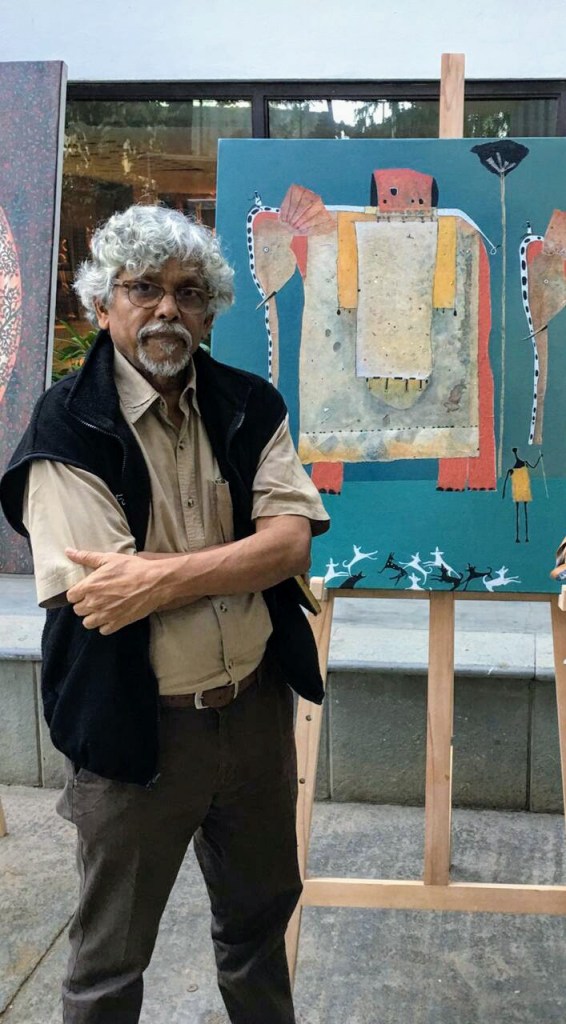
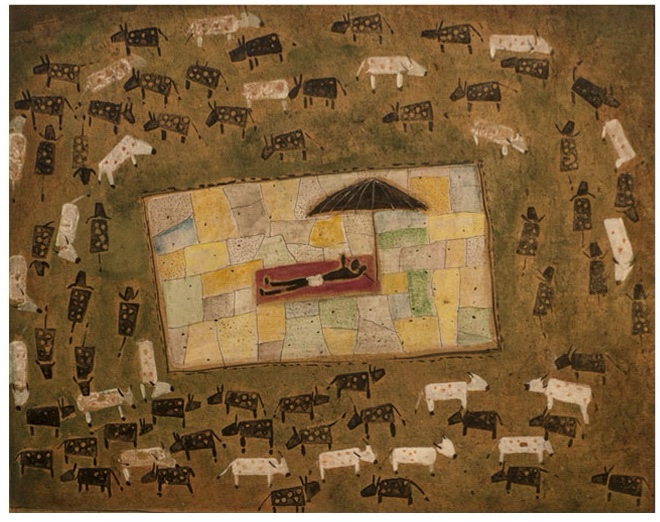
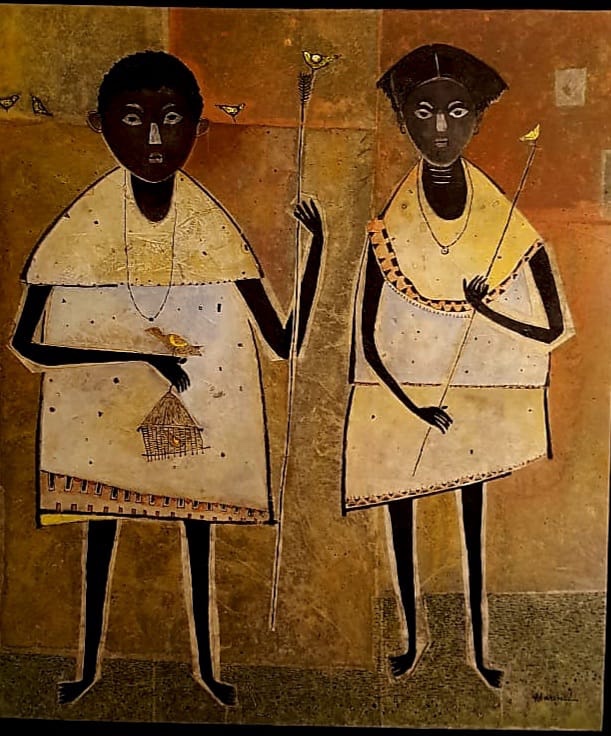
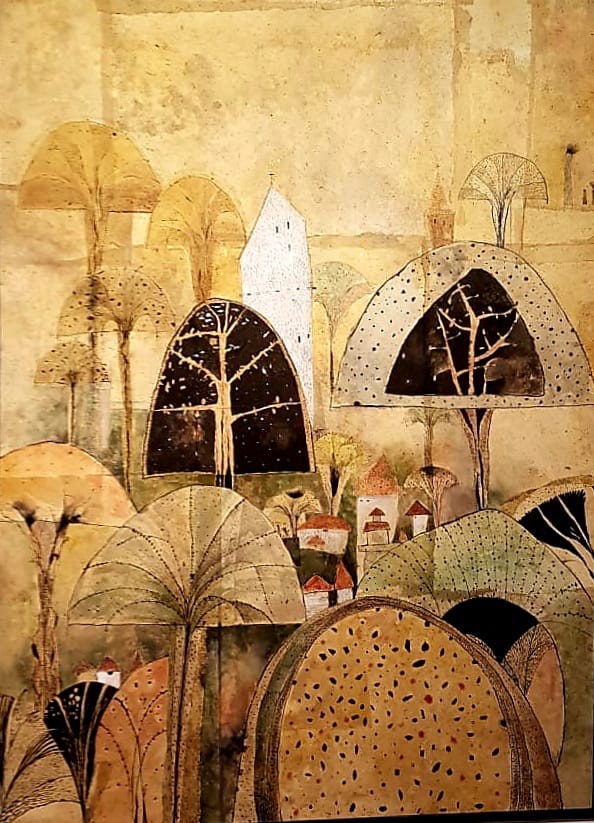
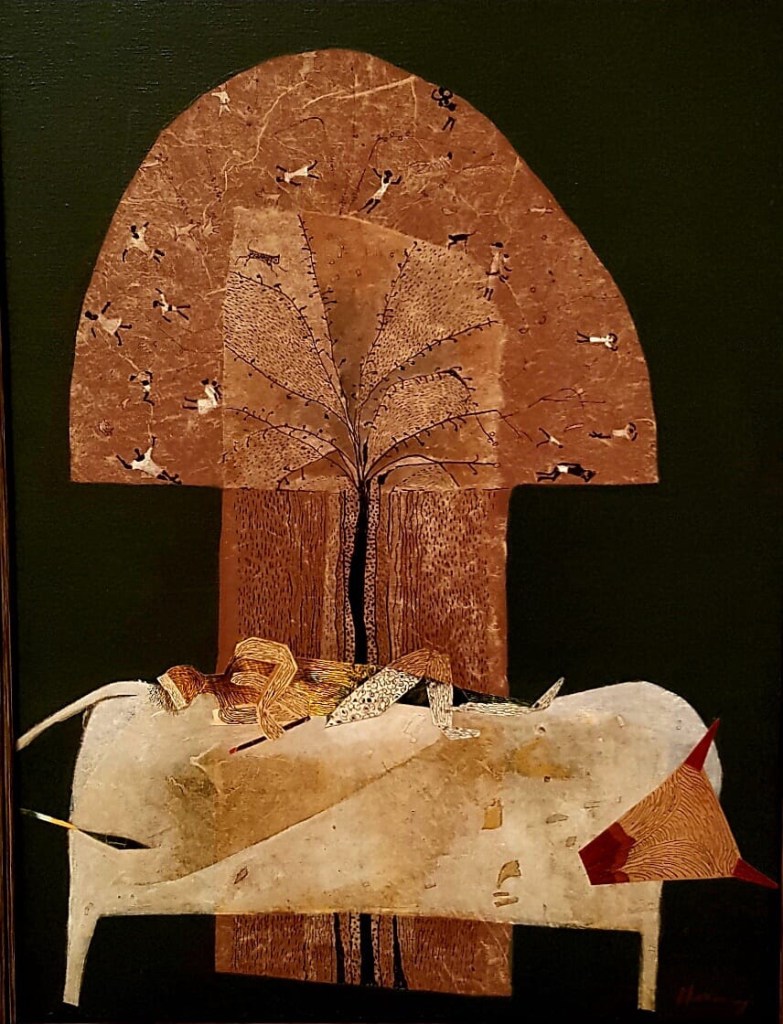
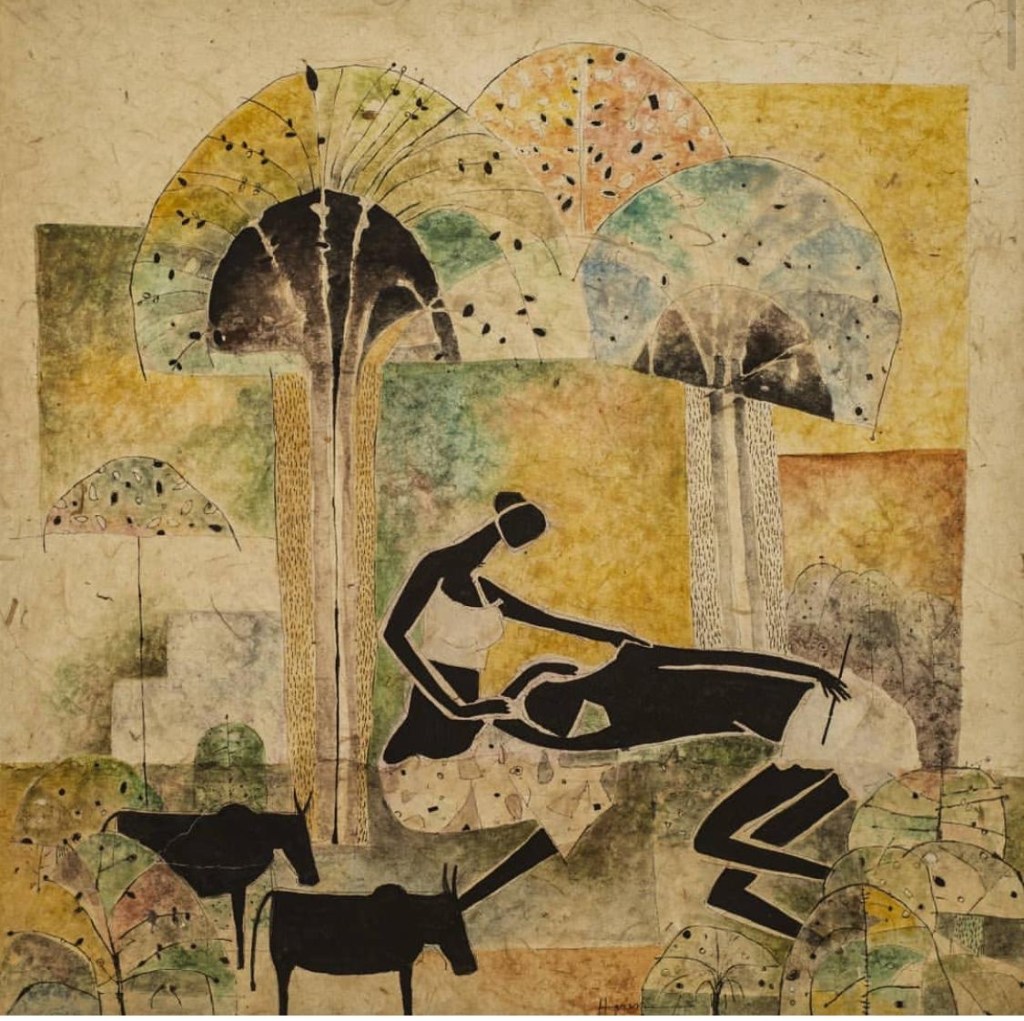
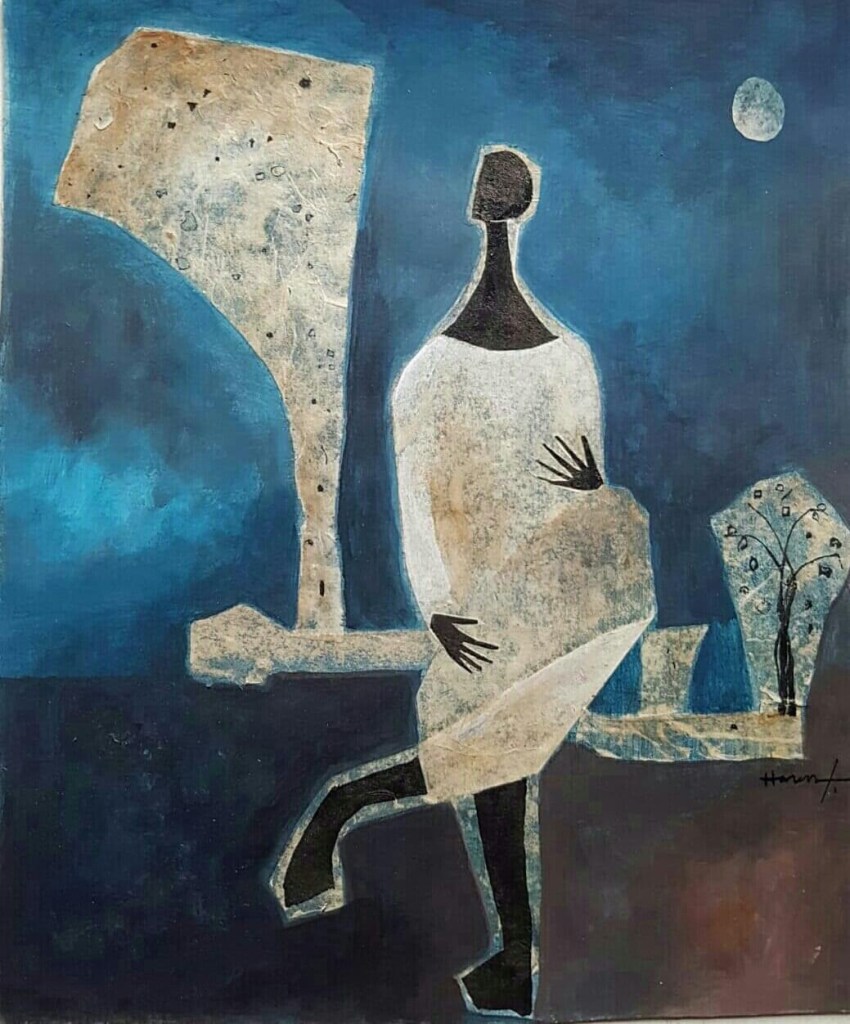
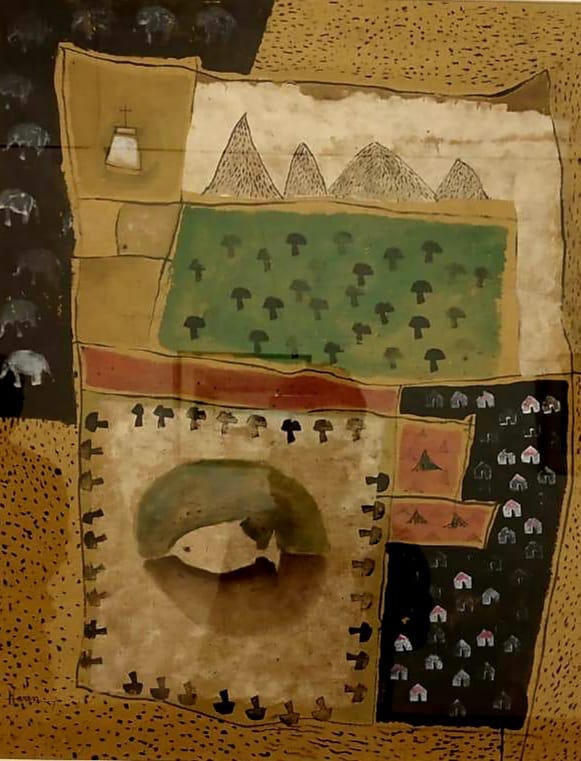
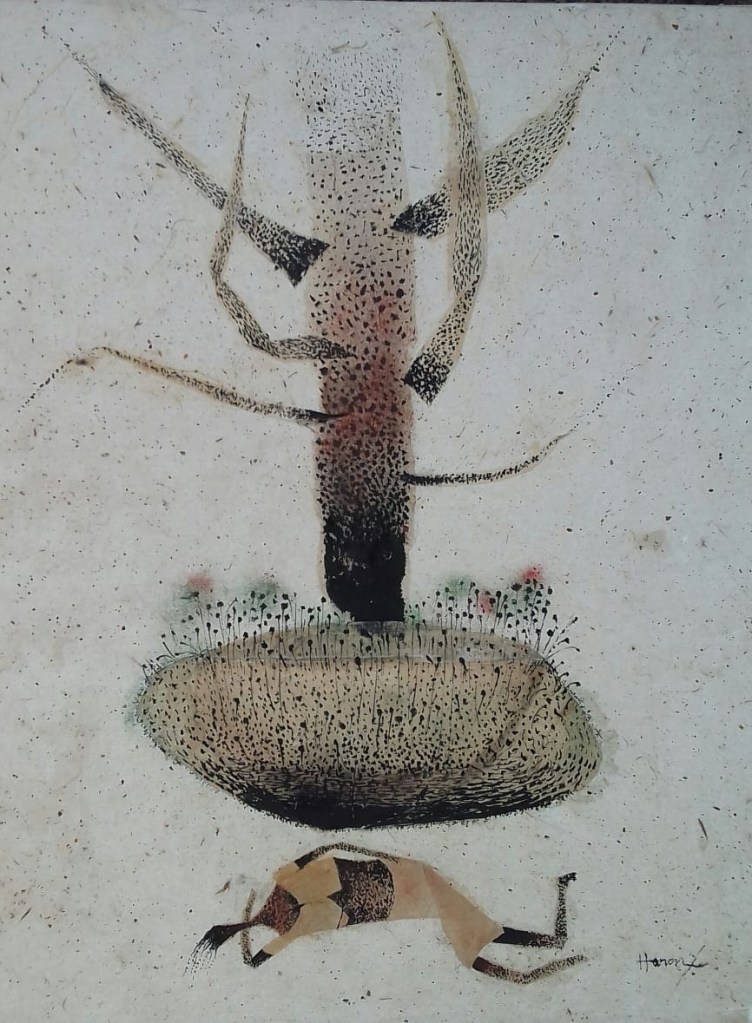


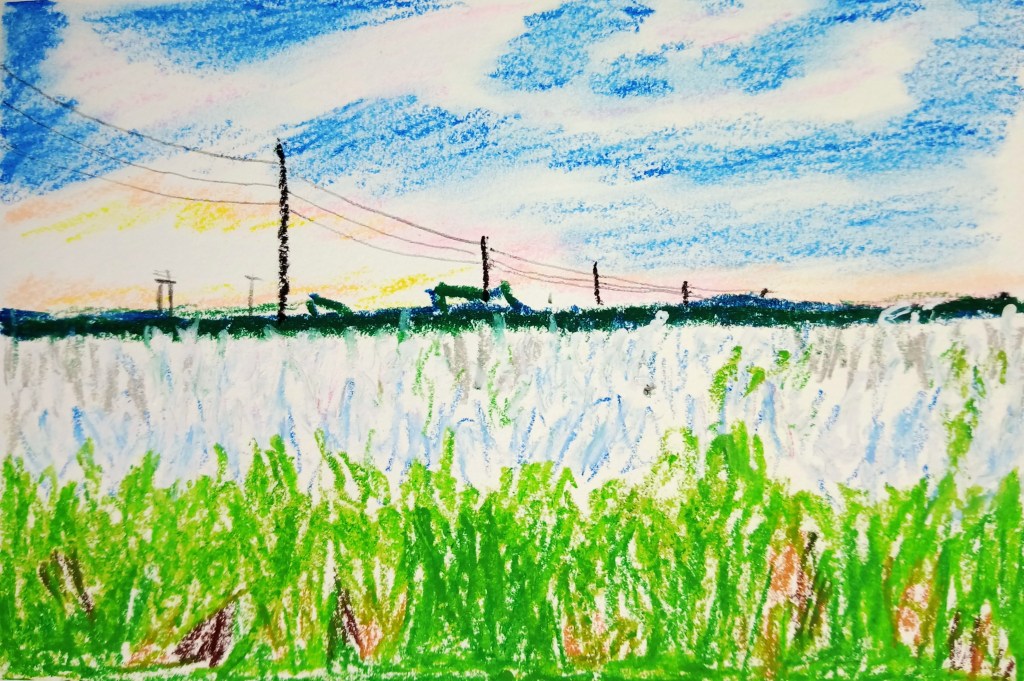


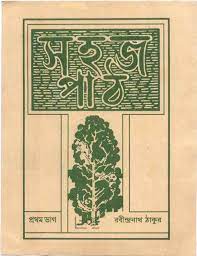
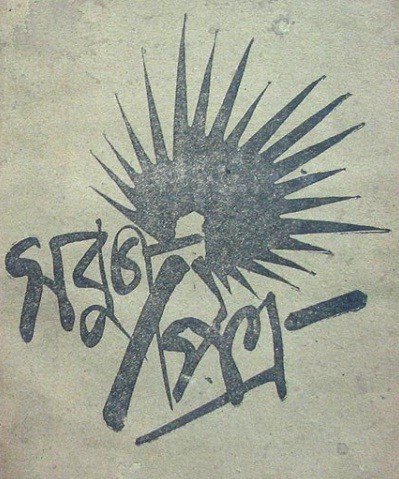
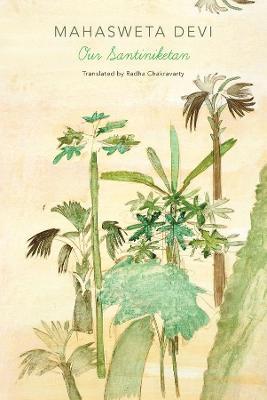

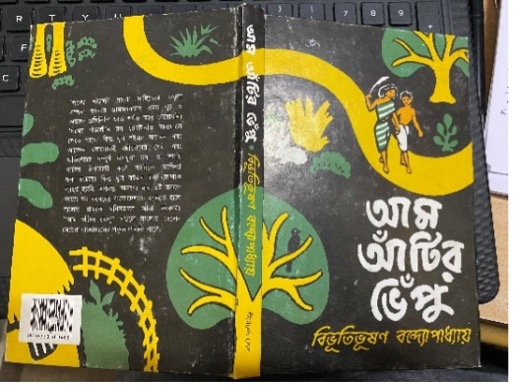
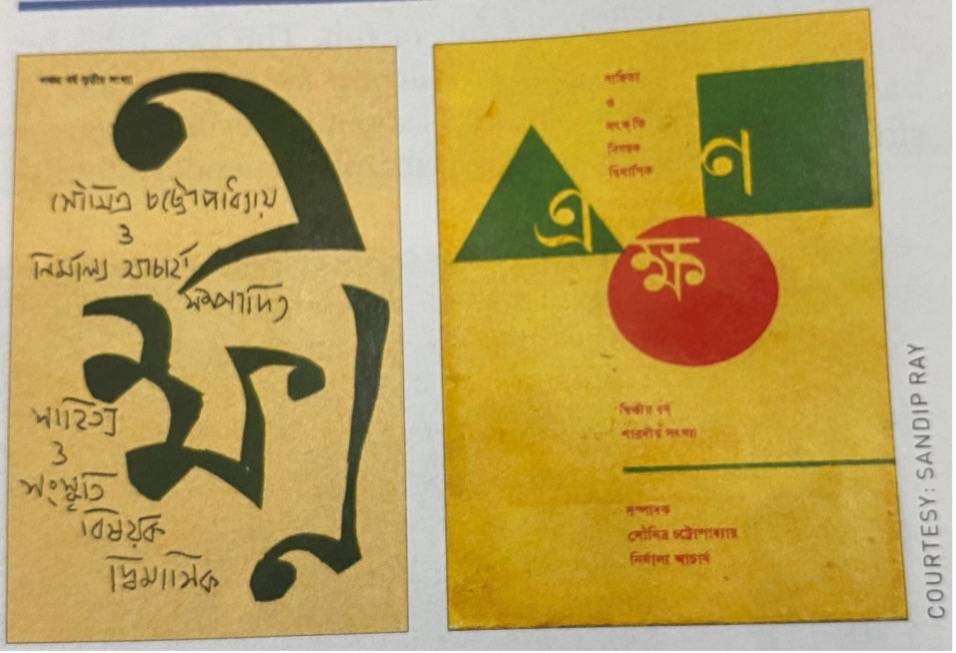
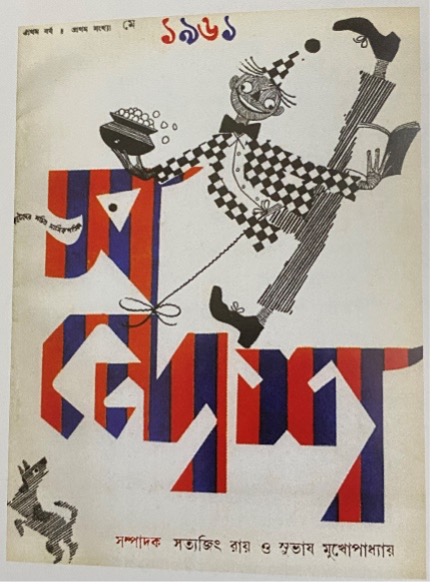

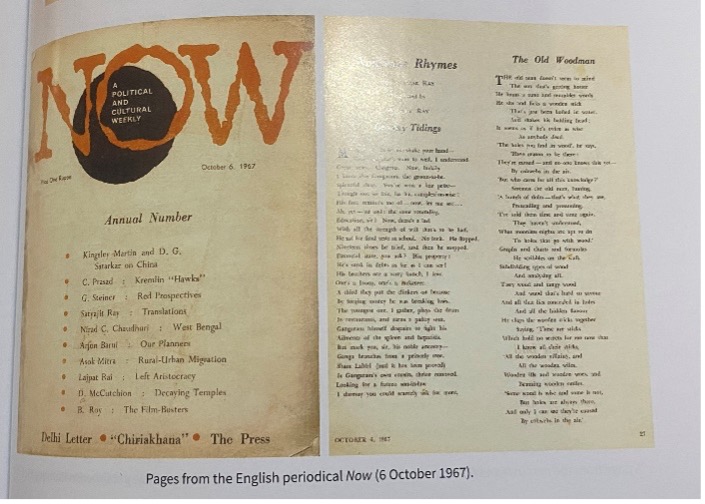
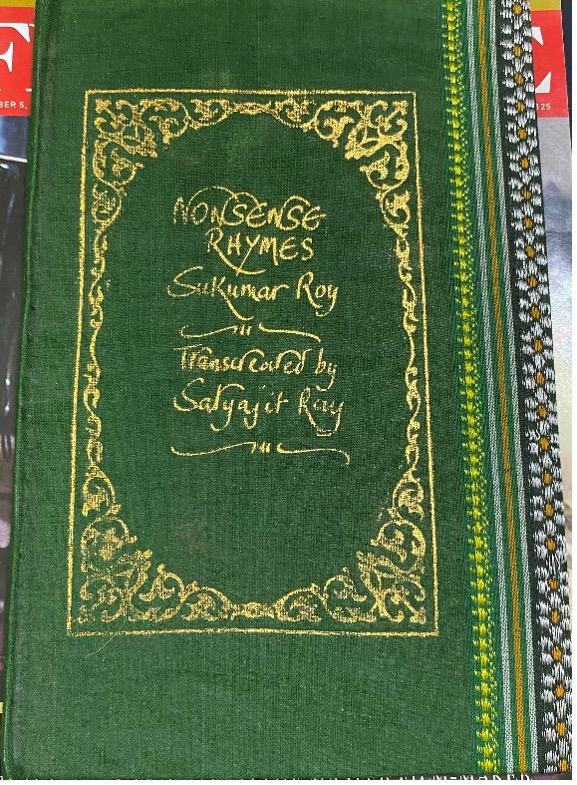
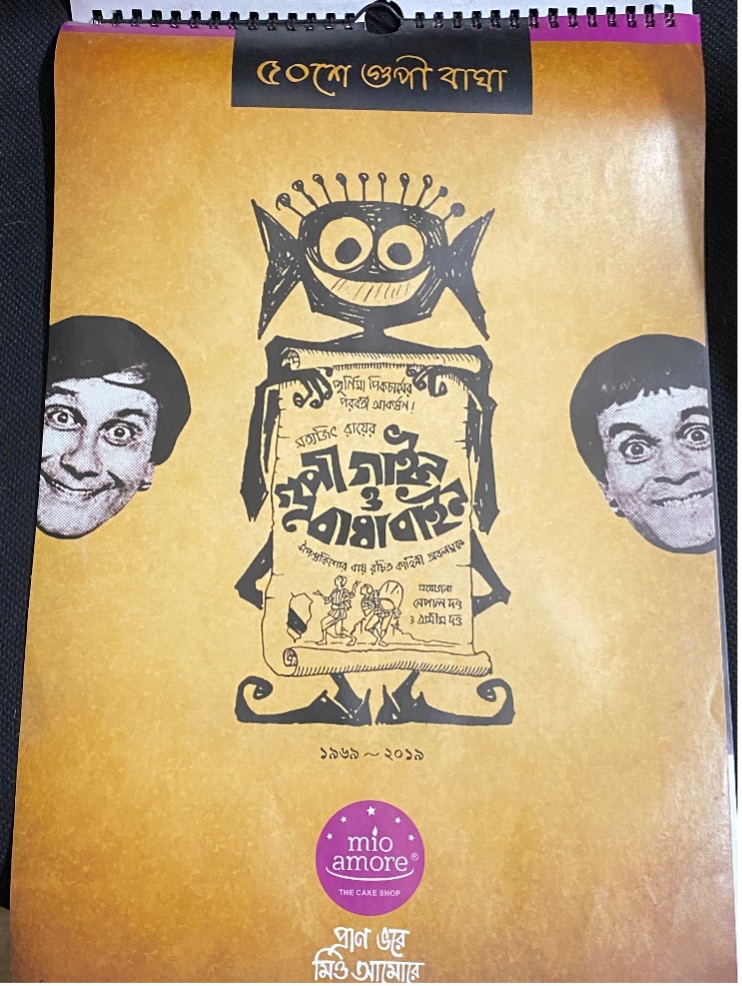
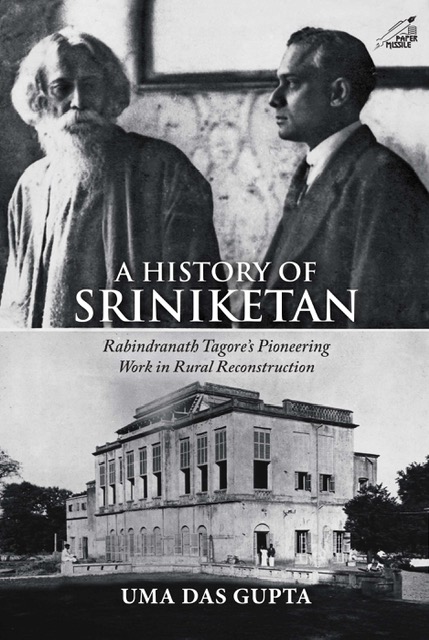
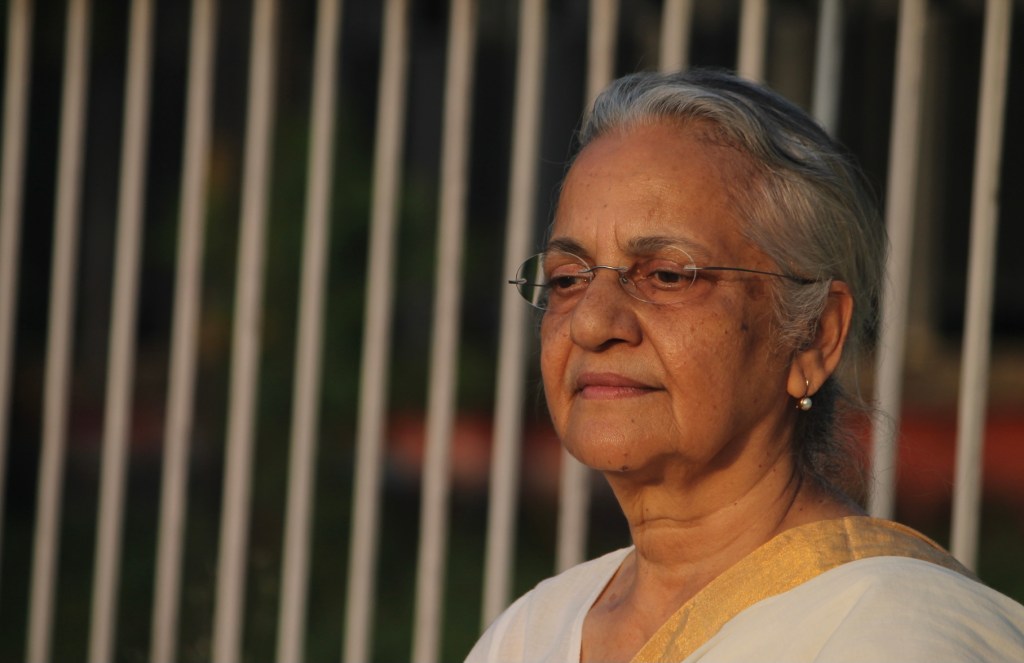


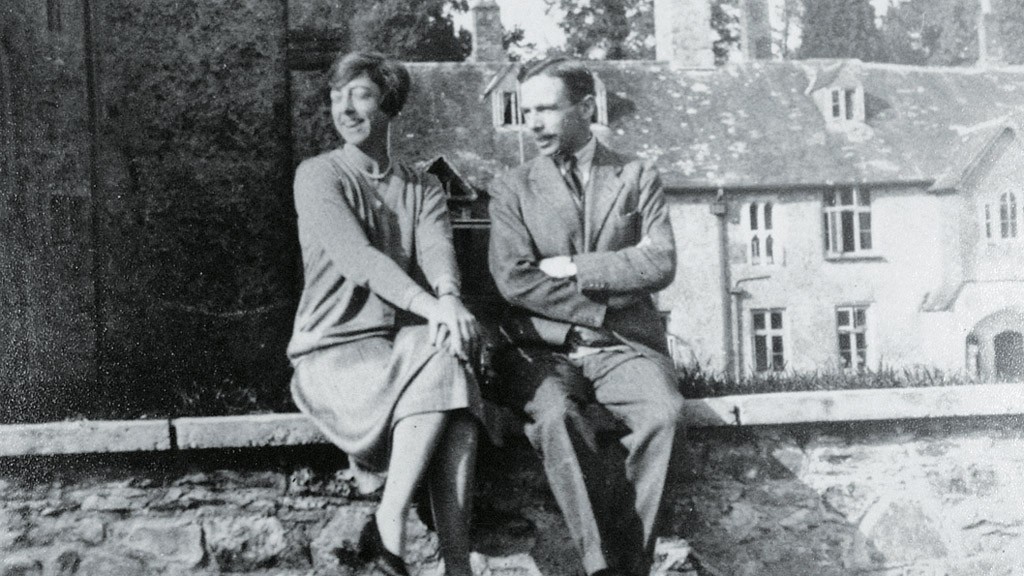

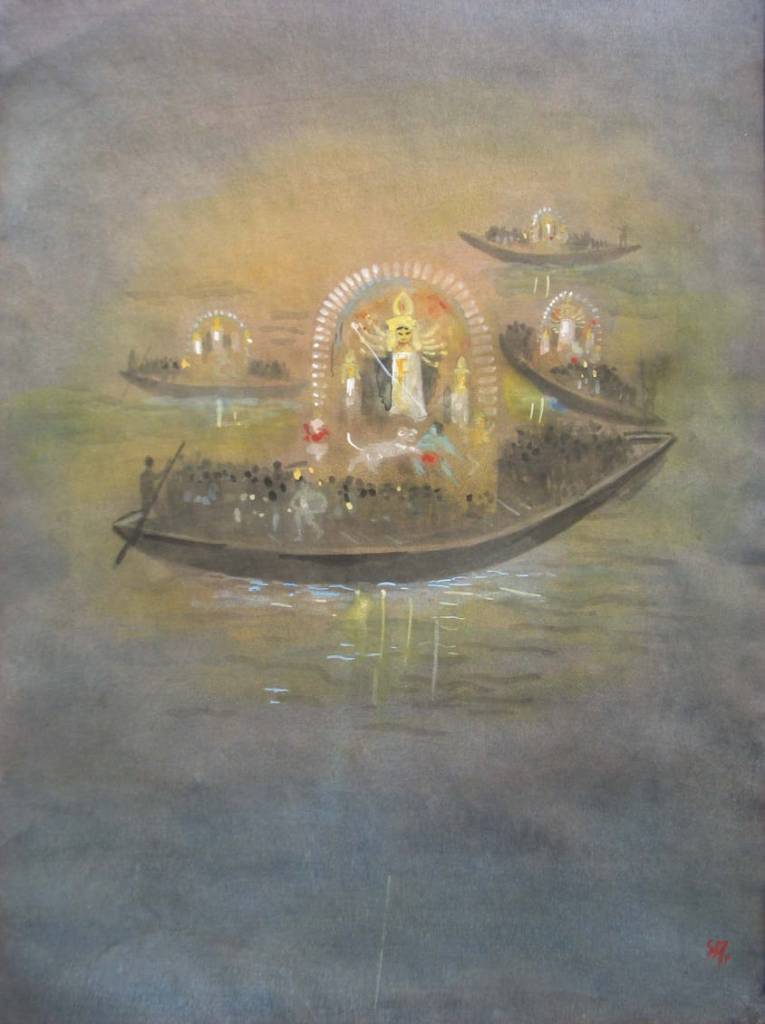
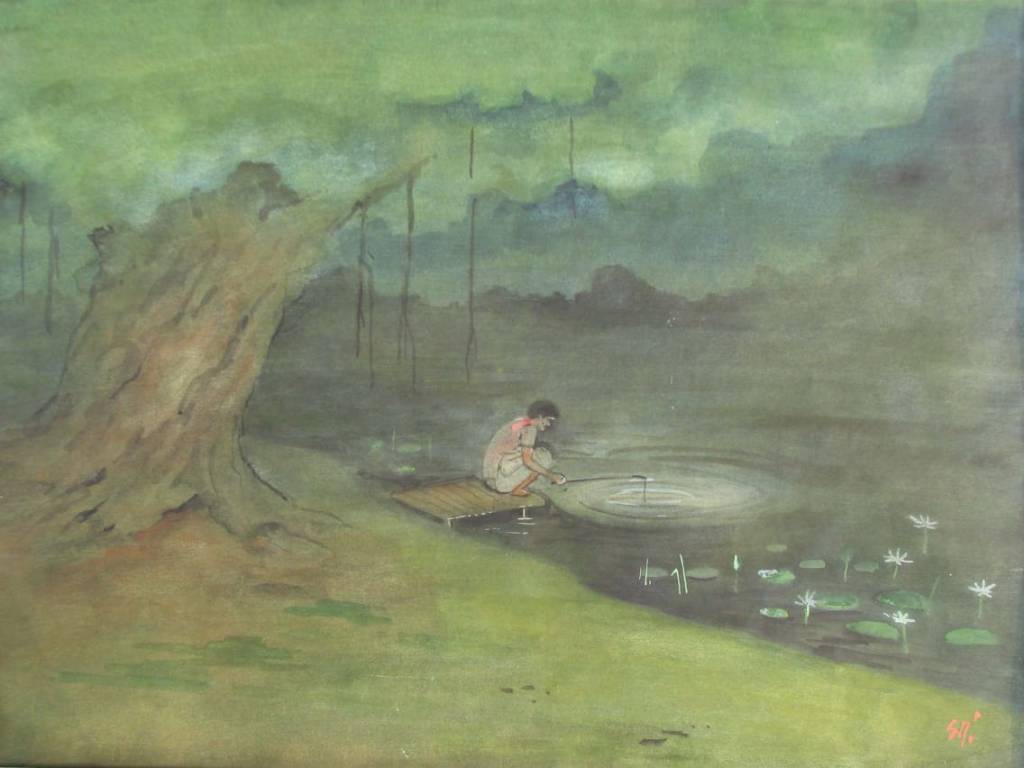
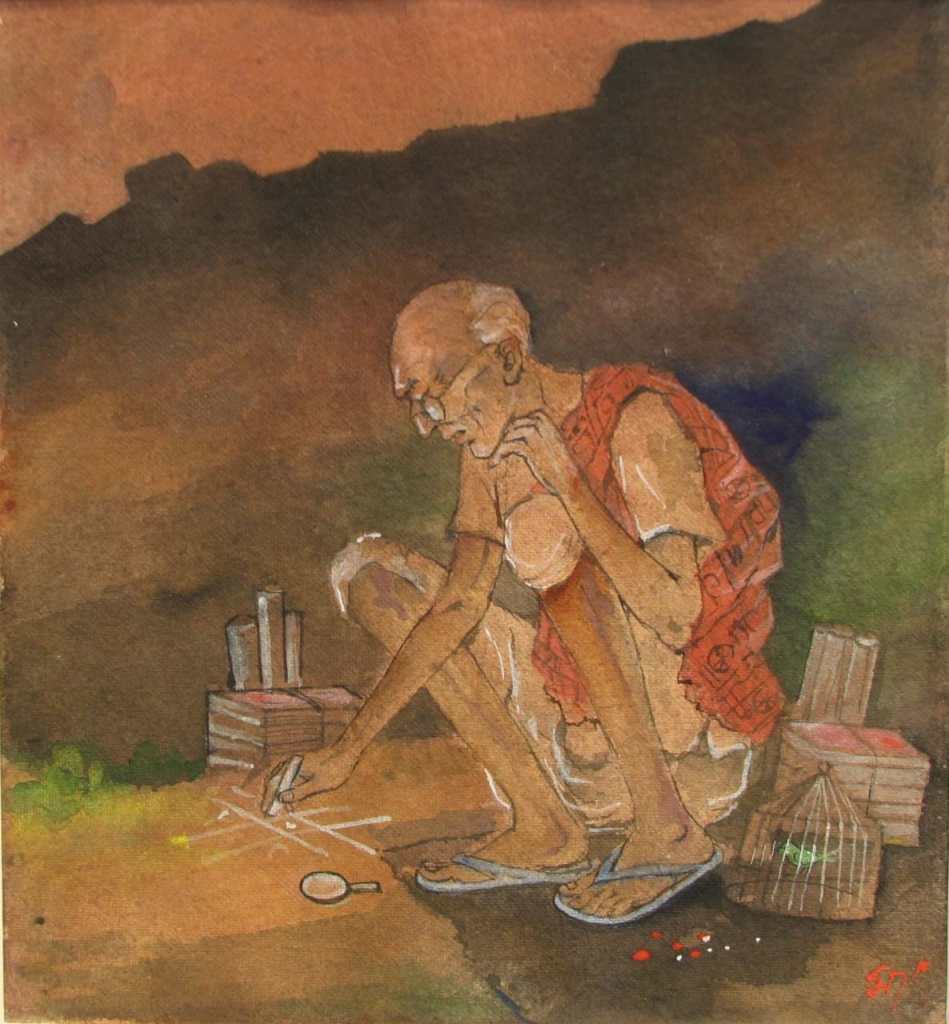
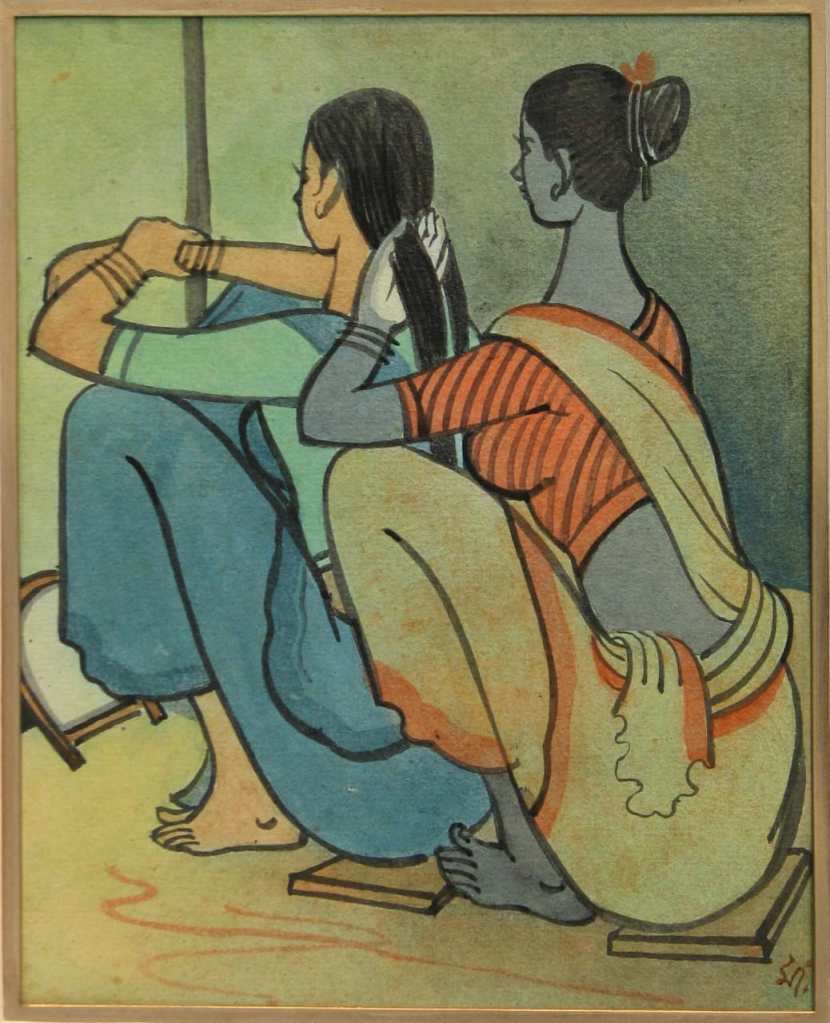
 Borderless