Categories
Interview Review

The Storyteller of Singapore: Suchen Christine Lim

Singapore moved from being a little island to a trading port to an affluent glamorous city that bridges the East and the West. Spanning the spirit of the wide expanse of this movement within a century are some iconic writers. One of them is Suchen Christine Lim, an award-winning author who writes narratives embedded in history, lined with hope and love — two values that need to be nurtured in today’s war-torn world.

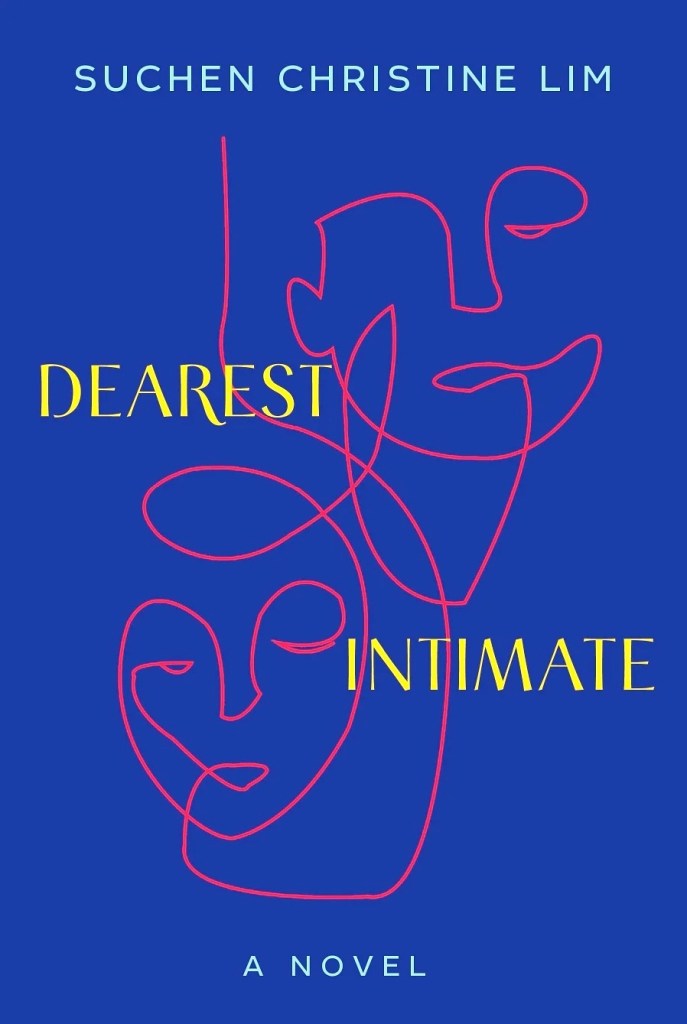
Dearest Intimate is her most recent novel that shuttles against the backdrop of Japanese invasion of not just China but of what was then Malaya and modern-day Singapore. The story revolves between the worlds of Chan Kam Foong and her granddaughter, Xiu Yin. A passion for Cantonese opera that spans across generations weaves all the threads together into a single multi-layered rich tapestry of life. That life is never about a single strand or a single facet is brought into play by her intricate craftsmanship.

Suchen has taken seven years to complete this novel creating a story that immerses the reader in different time periods. The time periods are congealed with a variety of techniques of narration. Both, the first-person narrative — the voice of Xiu Yin — and the third person — the diary which unravels her grandmother’s story — are seamlessly knit into a whole. Though to me, the diary is perhaps more compelling with its historic setting and its interludes of amazing passionate poetry, like these lines:

“Though hills and mountains, rivers and plains separate us,
nothing can separate our thoughts and dreams.
Though a thousand li separate our bodies, no mountains nor
rivers, not even the Four Mighty Oceans can separate our heart.”

As the book progresses, it unfolds Xiu Yin’s journey towards rediscovering her strength and love. She rises from the ashes of an abusive marriage which is in sharp contrast to the marriage of her grandmother, Kam Foong, arranged by the family in a traditional Chinese village in the early part of the twentieth century. That victimisation and abuse see no borders of education and can be born of a sense of frustration and an over-competitive outlook is skilfully reflected in the marriage of Xiu Yin, whose husband is from an educated Westernised Catholic background. She had been brought up on traditional lores among Chinese opera artists. Interesting observations on gender issues and local concerns — like the housing policies in Singapore — are wound into the narrative.

To me, one of the most enduring qualities of Suchen’s novels are that they deal with the common man against a historical backdrop. In an earlier interview, she had said: “I wanted to see the past from the perspective of coolies, the illiterate, who have largely been left out of history books. And yet without them, who would pick up the nightsoil?” In this novel too, she has dealt with the common man — farmers and opera singers only the historic setting and their responses have changes because of changed circumstances. We live, feel, emote with the common people before, during and after the second World War to the modern twenty first century Singapore. The author’s skilful characterisation enlivens her creations. The cruelty of Japanese invaders during 1940s is highlighted in the suffering of the people and their abuse. Published around the same time as Sumantra Bose’s Netaji Subhas Chandra Bose’s Life, Struggle and Politics, which shows how the Indian leader thrown out of Congress took support from the Axis powers (German and Japanese), it gives a contrasting perspective. Though this is fiction, Singapore history does corroborate that the Japanese invaders were extremely brutal in their outlook, even among the colonials.  Suchen’s reiteration of their cruelty is heart rending.

She has through her characters reiterated on the need of art not just to express but to make people laugh, give them hope and cheer them in dark times. This is an interesting theme which in itself makes one wonder if it is a comment on the perspectives of writers depicting unmitigated darkness. We find this strand of hope in great fiction from the last century — like JRR Tolkien’s Lord of the Rings series or Margaret Mitchell’s Gone with the Wind. They all end with hope as do Suchen’s works.

Suchen’s oeuvre very often encompasses the story of migrants as it has done here. And the interesting progression in this novel is the migrants’ complete acceptance of their new homelands — Singapore and Malaysia. In an earlier interview, Suchen had said, “A man can rise and go beyond borders but the land that he leaves will always be in his bones and heart.” And some of her protagonists had headed back to China. But in this novel, one is left wondering if the characters from China have not transcended their national frontiers to embrace the Cantonese opera, declared an intangible cultural heritage, like Durga Puja, by UNESCO.  Art and love have overridden all kinds of borders — and perhaps, that is why the name of the novel Dearest Intimate, which is used by Kam Foong for her love and for Xiu Yin by her beloved justifies the title. At the end, it is a heartfelt love story between humans and even between humanity and an art form that evolved to embrace the common man. Like all good books — it touches hearts across all borders with its message of love and acceptance as do Suchen’s other novels. To discuss, her world view and her novel, we had a brief conversation with Suchen —

What made you write this novel, Dearest Intimate? What led you to it?

I had a strange dream while I was on the Writers Immersion and Cultural Exchange (WrICE) residency in the ancient city of Hoi An in Vietnam. I dreamt of a pale orange pillow embroidered with two mandarin ducks and two rows of Chinese characters. When I woke up, I wrote down the two sentences in English, which eventually became the opening paragraph of this novel. So, you can say it was an unexpected gift from the universe that led me to write this novel.

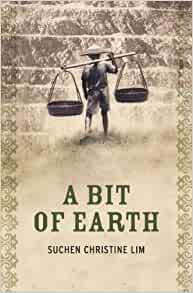
In your earlier novels like A Bit of Earth the protagonist always felt for part of their homelands. However, in Dearest Intimate, the protagonists dwelt on the theme of love and Cantonese opera, not so much on homeland. Has your world view changed since your first novel? How and why?

Well, I don’t think there is a quick easy answer to the how and why of change in worldview. The time gap between the publication of my first novel, Rice Bowl, and the latest, Dearest Intimate, is more than 30 years. Over that span of time my novels had examined issues of political /historical import, race and identity, moving from the past to the contemporaneous. Over the course of 30 years, it is natural for an author’s ideas and obsessions to change.  I would be very worried if I do not change, or my characters and themes do not change. For example, my sudden interest in the pipa led to the writing of The River’s Song, which in turn led me to Chinese music and Hong Kong Cantonese opera and the learning of Cantonese.

Tell us about why you took up the Cantonese opera in a major way in this novel?

It was the strange gift of a dream of two mandarin ducks embroidered on a pillowcase, which reminded me of the Cantonese operas I used to watch as a child with my grandmother and mother. Such pillowcases with embroidered mandarin ducks were symbols of love and fidelity and were sewn by young women in love in Chinese operas. Cantonese opera was a part of my childhood that was largely forgotten till this dream. Looking back, I think in writing Dearest Intimate I was reclaiming that forgotten part of my childhood.

Why did the novel take seven years to write? What kind of research went into the novel?

Partly because the research was such fun. I wasn’t concerned about deadlines. I had already flung away deadlines the moment I resigned from the Ministry of Education years ago. And I must admit I was fortunate that I didn’t have to write to fill my rice bowl. My research obsession began after I had watched a Hong Kong Cantonese opera troupe perform at the Kreta Ayer People’s Theatre, and later, other operas at the Esplanade during Moon Festival. Curious about the actors’ training, I went to the National Archives and listened to the many interviews with old opera actors and actresses of local Chinese opera troupes. Every year, I flew to Hong Kong to watch one or two Cantonese operas, and once I even met Chan Poh Chee and Bak Suet Xin, the icons of Hong Kong’s Cantonese opera. When I started writing the novel I would watch one Cantonese opera on YouTube every afternoon, even re-watching a few favourites. Unhappy that I could not understand the literary Cantonese used in the operas I joined a Cantonese class in Chinatown to deepen my understanding of Cantonese.

Why did the novel take seven years to write?  Well, one of the reasons is my troublesome health. I had several health issues to deal with. Very boring chronic issues which, naturally, gobbled up my time and distracted my attention. The most serious of these troublesomes was a minor stroke that affected my movement and speech for some months.

You have written many children’s stories, a play, short stories, non-fictions and novels. What is your favourite form of storytelling and why?

The novel. It is humanity’s greatest literary invention. Within the novel, raw messy lived experience is transformed into coherent narrative.

All your novels have a sense of hope and seem to reach out with the message of love and acceptance. Why is it you feel reiterating this is important?

I am glad you think my novels have a sense of hope. Hope is often the reason we live another day. Hope is what helps us to endure, to wait. To write, to make art is an act of hope.

What in your opinion is the purpose of art? You have repeatedly mentioned in your novel that people will respond better to hope or laughter in opera in dark times. Would you say this also applies to writing? Do you think people in dark times prefer books that give hope? Please elaborate.

I will quote Master Wu in the novel: “Play our music! Tell our stories! Sing our songs! Write our histories! Preserve our humanity! That is what the arts are for. Never, never for one moment forget who we are …”  in the age of robotics, story-generating AI and Twittering twitterati. 

Do you have any advice or message for budding writers?

Suffering is good for the writer. It will deepen lived experience and expand the heart’s empathy. 

Thank you for your wonderful answers and for giving us the time.

(The book has been reviewed and the interview conducted online by emails by Mitali Chakravarty)

Click here to access the Borderless anthology, Monalisa No Longer Smiles

PLEASE NOTE: ARTICLES CAN ONLY BE REPRODUCED IN OTHER SITES WITH DUE ACKNOWLEDGEMENT TO BORDERLESS JOURNAL

Categories
Slices from Life

The Death of a Doctor

By Ravi Shankar

Zhi-Khro mandala, a part of the Bardo Thodol’s collection, a text known in the West as The Tibetan Book of the Dead, which comprises part of a group of bardo teachings which originated with guru Padmasambhava in the 8th Century. Courtesy: Creative Commons

My friend, Dr Ramesh Kumaran first shared the shocking news with me on WhatsApp. Along with a recent photo, the caption mentioned ‘Mourning the sudden and untimely of our dear Joseph Francis (6th batch). May his soul rest in peace. 6th October 2022.’ I felt sick in the pit of my stomach. This was the first mortality among our MBBS batch mates. One of our friends died when he was studying for MBBS, but he had left the course and was suffering from a prolonged illness. Some of our batch mates had close encounters with death during the ongoing COVID-19 pandemic.   

I was reminded of my own mortality and the fact that we often forget that our time on earth is limited. None of us know when exactly or how we will die. This I believe is a good thing. Movies have explored the sad state of people who knew or supposed they knew when and how they would die. Humans stride through life assuming their immortality. We kill fellow humans indiscriminately. We learn to hate each other. We pursue wealth and power. When we leave our material existence on Earth, we can take none of the accumulated wealth and power with us. The ancient Egyptians believed otherwise and buried their Pharaohs with all they would need in the afterlife. Ordinary people had no such privileges. We do not know much about the afterlife. Here science ends and we enter the realm of religion.

I facilitated a module on Death and Dying for medical and other students and our ignorance about death is profound. Modern medicine has the motto of preserving life regardless of its quality. We have not been trained to let go and make a person’s remaining time on Earth worthwhile. This is slowly changing but change is slow. We do not live life assuming that any moment can be our last on Earth. The Tibetan Book of the Dead (Bardo Thodol) tells us to live each moment in a spiritually fulfilling manner and mentions that we all have the potential to break free from the cycle of reincarnation and become spiritually enlightened beings.

I first met Joseph when I joined the Men’s hostel and the undergraduate medical (MBBS) course at Thrissur, Kerala, India. Our seniors were prowling around our floor abusing us and one of my friends was crying as he had just been forced to take off his moustache. Ragging still exists in India and students who were abused by their seniors wait for the new intake to take revenge. You are not able to take revenge on the powerful, so you take out your anger on the powerless. We see this all around in the modern world.   

Joseph stayed in a room near mine, and we became friends though not extremely close. One of the things I still remember about him is that he used to write with a fountain pen and used black ink. Even in those days when writing was still common most of us used ballpoint pens. He had impeccable handwriting. Joseph was always a perfect gentleman and willing to help others. I believe we did a few of our internship postings together. We collaborated on skits and other presentations during the college day celebrations. I still remember our college trip to Trivandrum Medical College for the Intermedicos festival and we stayed and slept in the badminton court inside the Men’s hostel. Life was simpler in those days. We were beginning to see the end of the MBBS doctor and specialisation, and super specialisation was becoming common. I feel this is a sad development and an MBBS doctor is competent to treat most illnesses. In fact, evidence shows that most illnesses can be handled by a trained paramedic. In most European countries, care is mostly delivered by general physicians while in the United States care is mostly provided by specialists. The amount spent and the health status of these countries/regions tell their own story.  

During those days, failure in MBBS examinations was common. Anatomy at the end of the first MBBS and Medicine at the end of the Final MBBS had the maximum casualties. Grading was arbitrary and there were no clear rubrics to guide the scoring. I was lucky to have squeaked through the anatomy dissection and the medicine courses. Joseph was unlucky and mentioned this often as due to his failures, he could not appear for the entrance exam of PGIMER[1], Chandigarh, one of the top postgraduate institutes in the country. One could not appear for the entrance exams failing the MBBS. A lot of effort has gone globally into changing the assessment system in MBBS and making it fairer and more objective.

Joseph used to join us for an occasional game of basketball. I next met him at Ollur, near Thrissur, when I was doing my post-graduation. St Vincent de Paul hospital was a multi-specialty hospital. I had come down to Kerala for a few days and stayed with Job and Joseph, both medical officers with who I shared a large apartment.

Over the years I lost touch with Joseph, and I next interacted with him in 2018 when I joined a WhatsApp group of my classmates. Joseph was very active in the group and was working as an anaesthesiologist in the United Kingdom. Many of my batchmates were working in National Health Service (NHS) and they often would mention how the NHS is being steadily starved of funds. The COVID pandemic hit the medical community hard. Doctors in practice seem to be especially vulnerable. We discussed this and postulated that it could be because they are exposed to repeated doses of the virus in high concentrations from multiple patients. Many doctors had lost their lives; many others I know were in the Intensive Care Unit for prolonged periods of time. Two of my classmates in the UK had serious illnesses requiring hospitalisation and prolonged intensive care.       

I next interacted with Joseph when I was unable to make a bank transfer to the UK to pay for membership fees of a professional organisation. The transfer was not going through and eventually, I asked Joseph if he could do the transfer from his account in the UK, and I would deposit the money in his account in India. He readily agreed. Joseph was always very helpful. During the last two years, I have lost several friends. Two academic collaborators, one in Malaysia and the other in Yemen passed away. Colleagues I knew in Nepal died due to COVID complications.

Death can be a celebration of a person’s life. An Irish wake is one last party to honour the deceased. Unknown diseases plagued the Irish countryside causing a person to appear dead. Hence a person would be waked in the deceased’s home for at least one night. I had the exact fear while certifying death. What if the person then woke up and disputed my certification? I was very careful and meticulous while writing out a death certificate.     

These deaths have underscored my own mortality. As someone once said, death and taxes are inevitable. Accepting one’s own mortality and coming to terms with our eventual demise makes you aware of the folly of chasing power and glory and can contribute toward a gentler, more decent world. Climate change is a testament to human greed and folly. We are still uncertain how liveable Earth will be during the next hundred years. As Mahatma Gandhi said, we can satisfy human needs, but we cannot satisfy human greed!  

.

[1] Postgraduate Institute of Medical Education and Research

.

Dr. P Ravi Shankar is a faculty member at the IMU Centre for Education (ICE), International Medical University, Kuala Lumpur, Malaysia. He enjoys traveling and is a creative writer and photographer.

.

PLEASE NOTE: ARTICLES CAN ONLY BE REPRODUCED IN OTHER SITES WITH DUE ACKNOWLEDGEMENT TO BORDERLESS JOURNAL

Categories
Nostalgia

Dim Memories of the Festival of Lights

By Farouk Gulsara

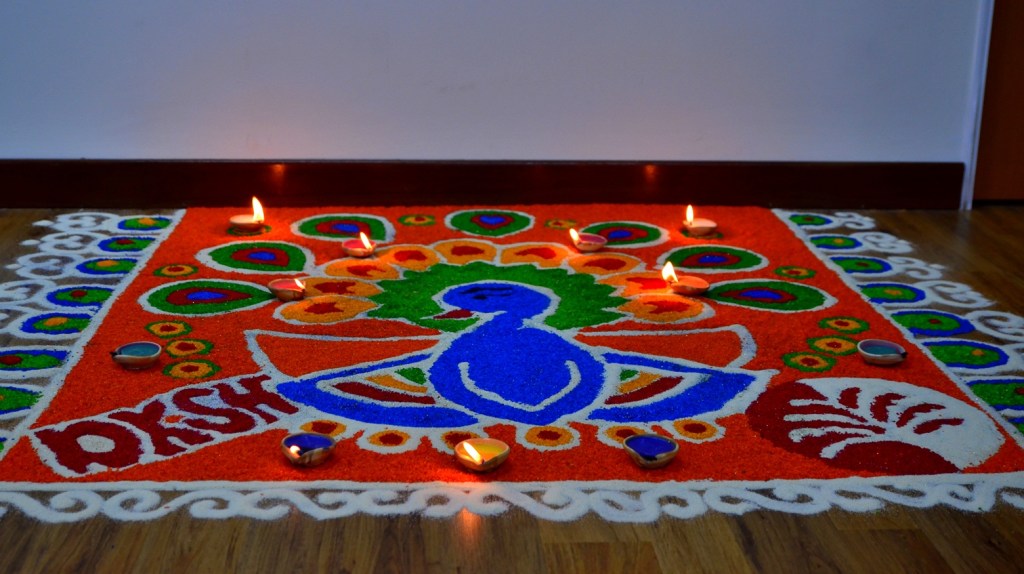
Deepavali Kolam in Penang, Malaysia. Courtesy: Creative Commons

In my naive childhood, I thought that Deepavali was one big celebration all over India and of those of the Indian diaspora the world over, at least of those of the Hindu faith. Bizarrely, I must have thought the whole of India would be up in jubilation anticipating the arrival of the festival of lights. Obviously not: the discussions surrounding the recent UNESCO recognition of Durga Puja as an Intangible Cultural Heritage are anything but unison. Now the Gujaratis want Navaratri[1] as a cultural loom. Interestingly, the people in power in Tamil Nadu want the harvest festival of Pongal as the main Tamil festival.

Indians who were brought in by the British to work in the Malayan rubber estates in the 1930s were mainly from Tamil Nadu. They celebrated Thaipusam[2] and Deepavali with much pomp and fanfare. Both days were soon declared holidays in many states of Malaysia.

I do not particularly remember my childhood memory of Deepavali being particularly joyous. Deepavali was another unnecessary expenditure in my home. We were a lower middle-class Malaysian Indian family of the 1970s. My thrifty Amma looked at this merrymaking as a hindrance. It was also the busiest time of the year for her. She was a kind of Indian Auntie Scrooge. She would drum up upon us at every moment that if one is healthy and wealthy, every day would be Deepavali. Deepavali comes once a year, right. But then, it comes every year.

Amma was a kind of local rock star amongst the flat dwellers when it came to stitching saree blouses. She was the go-to person for the aunties to enhance their assets and anatomy to look good in their sarees, even though most of them were overtly oversized and out of shape, to look trim and alluring, in their eyes, of course. Amma would use her talent to supplement Appa’s meagre take-home after the creditors’ scavenging.

She took in more orders than she could chew in her zeal to make hay while the sun was out. As the days grew nearer, she would become edgier and edgier. She would burn the midnight oil trying to finish the orders, as her customers would trickle in, demanding in desperation for their Deepavali blouses. She would smile apologetically to her clientele, but once they left, all of us, including Appa, would be the brunt of her frustrations. She would go on a monologue about the hopelessness of life, blaming all the people in her life, including God, for her miseries.

My sister, Sheela, grudging, had to help her, cutting loose ends, stitching buttons, edgings, and general tidying the blouses. Occasionally, Amma would cut or sew something wrongly, and that was when all hell would break loose. No one was spared of her screaming tirade. The smacking of children was legal then.

Deepavali was generally not what Malaysian Indian students, that is, those keen to score well in the Malaysian public examinations, looked forward to. Most, if not all, major public examinations were held at the end of the year. It made perfect sense as that was when the rest of the school would have finished their academic year, and there would be peace and quiet to conduct examinations. The trouble is that Deepavali mainly falls in late October or early November. Sometimes, the celebrations fell right smack between papers. The school would also be holding their end-of-year examinations if it was not for the public papers. Hence, we thought Deepavali was just another off-day to cramp up for the tests.

We, the children, could look forward to our annual sort of ‘pilgrimage’ thronging the bargain-hunting haven of Penang’s Campbell Street’s cheap sale’s stores two to three weeks before the auspicious day. We could look forward to the only two sets of new attire they would buy for the next twelve months. Seeing Amma bargain with the shopkeepers for the best price, I sometimes pitied the sellers. Sometimes, I feel like telling Amma to just pay what he asked. No, she would not do that. She would go to another shop, start another boxing match, loose, and return to the first shop smiling sheepishly.

As the days got closer, Amma would get even more and more high-strung. The children would be at the receiving end as the sewing orders piled up, and she could not find the correct thread colours for her blouses. In the midst of all that, some cloth piece or button would go missing, and then there would be a ruckus. Everyone would be roped in to search only to find the missing item right under her nose, where it would have been all the while.

Amma would become more desperate. The children, all preparing for the examinations, would be nagged for not helping enough, unlike other children – as if we were the only children in the world who needed to study! The sewing sessions would go on and on till the morning of Deepavali. On one occasion, probably due to fatigue, she actually cut out the wrong design for the wrong customer, and Amma had to replace the material later. Probably that customer must have ‘celebrated’ Deepavali that year with no saree blouse!  She might have passed it off as another new fad – as an empress in ‘new clothes’, perhaps!

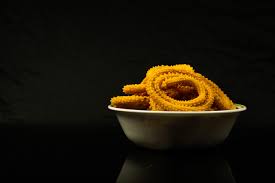
About a week before Deepavali, cookies would have to be prepared in the middle of this entire melee. By tradition, the first to be cooked must be oil based; hence the opening ceremony was done by pressing murukku (a deep-fried snack made from rice flour and spices) and ghee balls (ney orundei). With a traditional and cumbersome murukku squeezing device, I would be assigned to give my muscle power to press down the murukku dough. A few other cookies would be baked in the then-spanking-new electric oven. To add to the local flavour, Amma would stir up sticky glutinous in brown sugar for a delicacy called ‘wajik‘.

One particular Deepavali eve, I remember an incident that triggered a stir in my neighbourhood. We were living on the 15th floor of a 17-storey low-cost flat. Residents were packed into tiny pigeonholes we called home. Privacy was the most diminutive of the priorities as we paved through life. Sheela was left to guard the fortress as my parents went off to the evening market to get groceries for the big day. I had gone off to school. I was in the afternoon session[3] that year.

I returned home to a big commotion outside my flat. Most of the neighbours were standing outside the unit, banging on the door, calling for Sheela and talking loudly amongst themselves. I peeked through the blind panel of the door. I could see Sheela slouched cosily on a sofa with her hands on her right cheek deep in slumberland. The television in front of her was blaring loudly, further drowning all the commotion outside. She was not too far from the door, but she continued snoozing. I guess all the late nights helping Amma must have gotten to her.

 Residents getting locked out was nothing new in our neighbourhood. I suppose it is one of the events that got the neighbours together to mingle and get to know each other. Among us were self-appointed ‘specialists’ who devised their own gadgets to deal with any locked-out situation. The most typical item used by most was a charcoal stirrer. I guess that is how laparoscopic surgeons got the idea of performing keyhole surgery. One with hyper-flexible joints was sometimes sorted after to insert his hand through the door blinds!

Yours truly saved the day when I managed to manoeuvre my hand through the door to flip the lock open. All through the melee, my sister was in total bliss. Finding her snoring, oblivious to all the pandemonium outside, Appa went on to reprimand her in the usual way – KABOOM! (i.e. smack).

With all that build-up, preparation and countdown, Deepavali was actually an anti-climax – except for the new clothes, the food and the angpows (money packets) we received after distributing cookies to our neighbours. Amma would be sleeping after finally finishing her sewing and cooking. Appa would catch his forty winks on his easy chair, and we, the children, would watch all the special programmes on TV. Nobody actually came to visit us, even on Deepavali day. The afternoon would come, and the family would again manifest in front of the idiot box to watch the Deepavali special Tamil movie on TV. When this was over, essentially Deepavali was over and reality bit in. It was time to prepare for school the following day. On Deepavali nights, we would fire up a couple of Chinese sparklers.

All the money collected in the angpows would go straight into our Post Office Savings accounts in the next few days. The grand finale of the Deepavali curtain would fall a few days later with the family outing to the movies, a Tamil movie, packed with cookies that Amma had prepared as viewing snacks. Then, it was the school holidays, and another school year would come.


[1] A Western Indian festival in honour of the Goddess Durga, celebrated around the same time as Durga Puja

[2]  The festival in January- February (called Thai in the Tamil calendar) commemorates the occasion when Durga gave her son, Murugan (or Kartikeya) a divine spear to defeat a demon. It is also commonly believed that Thaipusam marks Murugan’s birthday. It is a national holiday in many countries such as Malaysia, Sri Lanka and Mauritius. In India, in Tamil Nadu, it  is declared as a holiday but not celebrated in other parts of India.

[3] Schools in Malaysia and Singapore often ran two session – morning and afternoon.

Farouk Gulsara is an occasional writer who blogs at riflerangeboy.com. Whenever he gets nostalgic about the time that whisked by, he pens down whatever his grey cells are still able to retrieve.

.

PLEASE NOTE: ARTICLES CAN ONLY BE REPRODUCED IN OTHER SITES WITH DUE ACKNOWLEDGEMENT TO BORDERLESS JOURNAL

Categories
Musings

The ‘New Kid on the Block’ Celebrates…

Dr Kirpal Singh, an eminent academic and writer, takes a nostalgic journey back in time to recall the start of Singapore as an individual entity.

The years 1964-66 were very interesting– not only because on 9 August 1965 we became the Republic of Singapore but also because of the events (some may even term these as “shenanigans”) surrounding to the lead-up to our final independence. I was a little more than fifteen years old and though not fully in the know or swing of things, it was pretty obvious real changes were afoot. The racial riots of 1964 left a deep impression– some may call it a “scar”—and many of us were truly worried and even frightened at what prospects lay in wait.

Nerves were running high and tension was palpable. Much as our teachers tried to hide hard truths, it was abundantly obvious that major changes were bound to usher a new and different ethos. My late Uncle was in the thick of things and though he did his best not to display anxiety, the various insinuations in the media– coming as they did from a variety of differing personalities with radically different perspectives — did not assure much comfort in what was to come. The hubbub left many wondering and many others questioning what had gone wrong. They demanded the “truth” be revealed.

And so it was. Mr Lee Kuan Yew addressed the nation and in-between wiping his clearly moist eyes told us that we had been kicked out of Malaysia! The shock took minutes even hours to sink home. Neighbours chatted across fences just to confirm what they had heard. But it was too late to do much by way of not accepting our fate: Singapore was now out of Malaysia and had to embrace the future alone, without the larger community that had formed in the two preceding years. It was the start of a new chapter in our short history– and a new beginning.

The new chapter in our history began with a clear glimpse of Lee Kuan Yew wiping his eyes. After all his long-cherished dream of a “Malaysian Malaysia” was now, in a sense, shattered. Whatever the details of that critical meeting that is said to have taken place in Cameron Highlands between the Tengku Abdur Rahman and Lee Kuan Yew one fact emerged: Singapore was on its own — no longer a part or partner of Malaysia.

Thus began the slow and arduous journey of our independent Republic of Singapore. In 1965, I was fifteen and though still a teen it was abundantly evident that a truly historic transition had taken place.

Whether it was Lee Kuan Yew’s oratory or his emotional self that made the impact, it was clear that most Singaporeans rallied behind him and resolved to ensure that we survived. Survival was our prime and major consideration, and all endeavours were directed to realising this goal. Crucial to this was the daily recitation of our National Pledge- “We the citizens of Singapore pledge ourselves as one united people…”. Whatever people may say our National Pledge remains sacred and sacrosanct.

As I look back at the tumultuous tensions and uncertainties we faced in those early years of our Republic’s nationhood, I can never state that we were despondent or unable to push forward. Yes, it will be folly to try and claim that everything was hunky-dory. No, far from it. But one thing was totally clear and universally accepted, as Mr Lee Kuan Yew said, we were now on our own and we had to shape our own destiny. All the doubts and unpredictable consequences notwithstanding Singapore was now the youngest new nation on planet Earth and her citizens were committed to ensure the nation survived.

And she did. Indeed, Singapore gloriously more than survived! She soared and within less than a decade of Independence– by 1975– we were showing ample signs of “earned success”, a reward that even opponents of Lee Kuan Yew had to acknowledge as “ real”.

There’s not much need for me to go into all the many new legislations and policies and rules and regulations that were mooted and passed in Parliament and embraced by all branches of our young Republic. The Legislature, the Executive and the Judiciary had to be built on strong and impartial foundations without regard to race or language or religion. It was for the young an exciting and sometimes bewildering phase of history. But Mr Lee kept sharing his vision of a thriving young nation bent upon making a mark in history. Slowly but surely, said Mr Lee, Singapore would build her muscles and demonstrate what is achievable when citizen and together in order not so much to “show off” but essentially to survive. Survival was the foremost goal– all else could come afterwards.

And so we worked hard– very hard — and despite all the trauma and pain, we pushed and pushed and soon began to experience for ourselves the fruits of our determination. More and more nations began to realise that there was indeed a new kid on the block in Southeast Asia and that this kid was unrelenting in its efforts to succeed and succeed with distinction.

And so, today, as we celebrate our 57th year of Independence we can proudly claim to have surpassed all expectations and put to paid any misgivings anyone might have harboured.

Before Mr Lee Kuan Yew passed on, he said, movingly, while strolling through our Gardens By the Bay, that looking around he was glad we did what we did. He felt all his sacrifices were more than worth.

And so here we are celebrating our National Day in joy and even glee.

But we cannot ever forget or ignore the harsh lessons we learned along our journey to full and complete Independence. We live in a world crippled by numerous setbacks — the pandemic just being one.

It remains for others to evaluate the progress and strides our young and tiny island nation has taken. For my generation our Singapore is a miracle — a miracle realised through hard sacrifice and unwavering faith.

Kirpal Singh is a poet and a literary critic from Singapore. An internationally recognised scholar,  Singh has won research awards and grants from local and foreign universities. He was one of the founding members of the Centre for Research in New Literatures, Flinders University, Australia in 1977; the first Asian director for the Commonwealth Writers’ Prize in 1993 and 1994, and chairman of the Singapore Writers’ Festival in the 1990s. He retired the Director of the Wee Kim Wee Centre.

PLEASE NOTE: ARTICLES CAN ONLY BE REPRODUCED IN OTHER SITES WITH DUE ACKNOWLEDGEMENT TO BORDERLESS JOURNAL

Categories
Mission Earth

On a Bamboo Bicycle from Thailand to Indonesia

Kenny Peavy, an environmentalist, revisits his trip across Asia, exploring the enormous biodiversity and conservation efforts.

Bamboo Bicycle. Photo provided by Kenny Peavy

An idea is born

Like all good adventures, it started in a pub.

I was attending a weekend workshop on service learning and how to implement service projects with students. One of the other participants, Jamie, had come into Kuala Lumpur from Japan. We’d partnered on a few of the activities during the day and hit it off immediately. I was eager to get to know him better so invited him out for a beer to show him around town. I always liked sharing local restaurants and watering holes with visitors and this time was no exception.

Jamie agreed and we visited a few trendy spots in Bukit Bintang, downtown Kuala Lumpur.

After a walking tour of a few famous walking streets, we hit the town for a bit of street food. As Fate would have it, we soon ended up sharing a couple of drinks at Little Havana, a cool hang out spot on the corner with live music and, pub grub and nice draught beers.

After a couple of drafts of Guinness Stout, I boldly announced to Jamie my intentions to leave classroom teaching and set out on an adventure. I was burnt out and needed a break.

Hiking across Malaysia was being floated around as an idea. Being from the USA, we have plenty of cross-country trails such as the Appalachian Trail and the Pacific Crest Trail that, in my youth, had inspired me as bucket list adventures I would aspire to complete someday.

Now was the time. I needed play time. I needed adventure time. I needed to explore and roam for a spell. Hiking across a rainforest didn’t seem as feasible since there really were no trans Malaysia trails to be found. Cycling was also tossed about as an idea. Cycling across Asia had been done before. It seemed a more achievable adventure.

Back in 2012, I was not very Internet savvy and the number of blogs, vlogs and social media sites with information about how to cross Asia on a bicycle was scarce. As a result, we had to rely on our imaginations, grit and a bit of pragmatic know-how and determination to figure out what we would do and how we would do it.

During the excited and rambunctious discussion in the pub we let every wild idea and notion fly. I could ride across China. I could ride around Thailand. Maybe I could venture into Vietnam, Laos or Cambodia. All sorts of options were tossed about and floated around.

After the weekend workshop, Jamie returned to Japan. We stayed in touch.

More ideas were thrown about, and we eventually decided that a trip from Thailand to Bali would be a good course of action and something that could be achieved. Soon thereafter, Jamie announced that he’d join me!

The plan was coming together slowly but surely. An idea was taking shape.

We wanted to do something centered around conservation or environmental issues. We could focus on that during our bike ride. The idea fit because cycling is eco-friendly. No fossil fuels. No pollution. Since Jamie was joining me, it would have to be done during the school holidays which meant we had approximately six weeks to complete the adventure in July and August. Yes. We could do it!

I talked to people in my network. Someone knew someone and they sent the word out to bike shops, cycling enthusiasts and adventurers. Shortly, Sunny from Singapore reached out to us and said he made bamboo bicycles. He asked if we’d like to try them out on our Thailand to Bali adventure.

Sure, why not?!

Sunny himself had ridden a bamboo bike across China and was designing and building bamboo bikes for long haul trips. We’d get to test one out and provide feedback. The experimental science guy in me said YES!

He sent us images and catalogues and we picked a mountain bike model since we figured the roads would get a bit messy at some point and we would want fat tires for any back roads, dirt roads, palm plantations, or gravel we might encounter.

We finally had bikes! Now we just needed a route!

We’d make our way through Thailand on to Malaysia across into Singapore and then onwards to Java and eventually end up in Bali for the grade finale.

We finally had a route! Now we just needed a name!

I honestly don’t remember how the name came about but I do remember quite a few failed attempts.

I wanted something that made us sound like superheroes! Green Warriors! Eco-Adventurers!

Eventually we settled on Green Riders.

It had a superhero kind of feel. Simple. Easy. Explained our mission. Done.

Yay! We finally had a name.

We were set.

On the road

We started at Khao Sok National Park in southern Thailand for two reasons.

Firstly, it was one of the oldest and most biodiverse rainforests in southeast Asia. Secondly, I knew a guy that had a resort, and he could sponsor our first night by giving us accommodation and food!

We spent the first night in a small bamboo chalet next to a gorgeous turbulent river amidst the sounds of cicadas, swirling rapids and a myriad of jungle critters making their nightly sojourn throughout the forest by moonlight. It was paradise on Earth. The next morning, the sound of gregarious chirping birds welcomed the morning through the open-air bamboo chalet and mosquito nets.

With brand spanking new bamboo bikes, way too much gear, an adventurous spirit, and no idea on how the adventure might play out, we hit the road. Within a hundred meters my bike rack fell off and eagerly dispersed its burdensome contents onto the rich humus of the rainforest floor! Apparently, the marriage between an overburdened metal bike rack and a bamboo bike frame was not a match made in Heaven.

With plenty of laughing onlookers from the launch of Green Riders, Jamie and I made short work of the repairs and set off on the road.

During the six-week adventure we saw numerous indescribably beautiful and wild places.

We made acquaintance with numerous interesting and intriguing people and immersed ourselves in a wide array of cultural diversity ranging from the village life of rural Thailand and Malaysia to the hyper-developed modern city state of Singapore on to the chaos of the port of Jakarta and finally the super touristy island of Bali. With a tip from a local at a roadside food stall and coffee kiosk, we ended up visiting the first rubber tree planted in Thailand. Apparently, the rubber sapling had been stolen from the botanical gardens in Singapore and smuggled across borders in 1899 that eventually resulted in the booming and habitat destroying rubber industry of the 1980’s and 1990’s.

We spent the night in a pristine an efficient locally run Eco-village situated in a mangrove on the Isthmus of Kra which lies on the border of Thailand with Malaysia. There children roamed freely playing, exploring, and jumping in the brackish water as part of their daily free time. A place where a deep connection with the rhythms of the tides, the moon and the daily fishing harvest are intimately woven in the psyche of the Thai villagers that inhabit that ecosystem.

With yet another tip from a local in a pizza joint in Krabi, we made an unplanned sidetrack to see a very cool playground in a small village in Thailand that had been built from recycled and repurposed tires pulled from their local river. We ended up helping a nearby village copy the design and build their own playground and plant shade trees at a local school.

We ferried from Singapore to Jakarta aboard a defunct cruise ship, full of deportees and work permit violators from Java and Sumatra that were being deported back to their country of origin. Another crazy adventure we could not have planned.

We learned the hard way that Baluran National Park in East Java was dry and had not even a single measly roadside stall to sell water or food, making an arduous trek uphill even harder. Within the first hour of that particular day, we quickly depleted our supplies and road around for six sweaty, throat parching hours in search of liquids and sustenance. On the last leg of the ride, we sprinted as fast as we could to exit the park and crashed into the first shop to empty their barren stock of the bottles, water and soft drinks!

When we finally landed on the shores of West Bali National Park, we stood in amazement of all we had seen, done and accomplished.

We spent the last days wallowing in the company of Menjangan deer, water monitors, mangrove trees, wild boar, ebony langurs, various shore birds and the coveted Bali starling, an endangered endemic species of gorgeous bird in its protected habitat. Green Riders provided more explorations and adventures that we had counted on or even imagined!

On the road, we became absorbed in a Zen like trance that comes from 8 to 10 hours of singular focus on pedaling and riding. We learned the value of clearing the mind through the monotony of riding all day every day with a single purpose to keep pedaling.

The experience of being connected with self, with others and with Nature were priceless and life changing.

Photo provided by Kenny Peavy

Kenny Peavy is an environmentalist who has a memoir called Young Homeless Professional. He has co-authored a pioneering environmental education handbook, As if the Earth Matters, and recently, an illustrated book, The Box People , was re-released digitally to enable children, young people and their parents and educators anywhere in the world to use the book. He also created Waffle House Prophets: Poems Inspired by Sacred People and Places

.

PLEASE NOTE: ARTICLES CAN ONLY BE REPRODUCED IN OTHER SITES WITH DUE ACKNOWLEDGEMENT TO BORDERLESS JOURNAL

Categories
Excerpt

Asian Anthology

Title: Asian Anthology, New Writing Vol. 1

Editor: Ivy Ngeow

Publisher: Leopard Print London

Spring Onions by Yang Ming

Like most devotees, Ning’s mother, Suyin, spent her Saturday afternoons visiting Singapore’s Chinese temples. For the past year, she had meticulously listed them on a piece of neatly folded foolscap paper and visited one each weekend after closing her steamed bun shop for the day. She arrived at the temple each week with two red plastic bags containing fruit. Ning stood next to her mother, hands clasped, observing her overturn the bags: apples and oranges tumbled out onto the table. Suyin assembled them on two paper plates in groups of five and placed them at the altar. It was done so mechanically that Ning swore her mother could have done it with her eyes closed.  

* * *

That Saturday, Ning had accompanied her mother to Thian Hock Keng for prayers. Ning was a month away from an examination that had the potential to define her future. After learning about her daughter’s dismal mid-year test results, Ning’s mother had found it hard to sleep. Ning’s older brother, Ren, on the other hand, had fared much better in his academic studies. A student highly regarded by his peers, Ning’s mother did not need to worry about her son. Ning had never wanted to be part of this prayer nonsense but, at her mother’s insistence, she dragged her feet to the temple. She considered it a waste of her time; she would rather film a series of life hack videos for TikTok than standing idly at the temple.  

“Ma, why do you offer spring onions to Confucius?” Ning asked. Instead of fruit, Ning’s mother had prepared a plate of spring onions and steamed buns as offerings to the Confucius statue. Outside, heavy rain fell on the ground like water gushing through a drain. Ning cast a glance at the temple’s rooftop, its curved ridges and elongated eaves with upturned swallow-tail decoration blocking the grey skies. Fat raindrops began to whip Ning’s legs, causing her to retreat further into the temple’s statue shelter. Ning’s mother had followed her usual practice of waiting for fifteen minutes for the gods to ‘eat’ the offerings before clearing them away. Ning wondered if they liked spring onions; she certainly did not. 

“Spring onion is 聪 in Mandarin. Cong. It means intelligence. You will need it for your exams,” Ning’s mother replied, folding her arms across her chest. 

The smell of the incense coil burning in the main hall spread through the air. Ning was surprised to find the smell soothing and she likened it to sandalwood incense sticks from her favourite aromatherapy shop. 

“My friends say praying to Confucius will help you in your exams,” Ning’s mother said as she rummaged in her bag for her phone. She fished it out and began to tap away. 

Ning wanted very much to tell her mother that she was going to fail her upcoming examinations, and no amount of prayers or offerings to any deities would work but she couldn’t summon the courage. 

“Time to clear the table,” her mother said, walking towards the altar. Putting her hands together, her mother uttered a few inaudible sentences and bowed to the statue three times before shoving the offerings into the plastic bags. Ning followed suit, bowing grudgingly. 

Under the minimal lighting, her mother had a pallid face; her yellow-stained nails and dark circles sagged under her eyes. She wondered why she hadn’t noticed those hands and face marked with endless strife and pain. 

On a one-way street, a solitary car lumbered past them. Ning sidestepped puddles of water scattered along the pavement while swinging the bag of spring onions recklessly. 

“Stop that,” her mother said, her voice echoing through the empty street. 

“It’s just spring onions!” Ning exclaimed in defiance. 

Her mother slapped her daughter’s head lightly. “I need to cook these tonight. You think what, I’m going to throw it away, is it?” her mother said, gripping a half-smoked cigarette between her forefinger and third finger. Ning heard her mother mumbling some words in Hokkien as she turned away. She rolled her eyes at the thought of eating a plate of stir-fry spring onions or any dish with spring onions in it. 

If Ning could harness any power from a higher being, she would remove every stalk of spring onion from existence. Her mother’s phone rang as they turned at the corner shophouse. Ning stepped back to give her some privacy. A group of young, giggling girls traipsed past them, enthusiastically discussing a hip coffee joint. Ning surreptitiously crept closer towards her mother, trying to listen in on the conversation. But she could only hear laconic replies that consisted of, “yes”, “no” and “I understand”. Her voice seemed restrained.  

“Who was that?” Ning asked. 

“Just somebody. Why so kaypoh?” Ning’s mother asked, clicking her tongue. 

Ning knew her mother deployed this snappy attitude to fob her off whenever Ning became too much of a busybody for her own good. The skies had finally cleared, releasing an earthy petrichor — a scent Ning secretly adored. The afternoon sun peeked out of the grey clouds, creating a golden halo with glorious rays of light around them.  

Ning watched snippets of TikTok videos on the train home. Images of a mother and daughter duo swaying and jumping in one frame and morphing into each other in the next frame. A muscular man struggling to tear into an apple with his bare hands while a young man used a knife to cut an apple. A middle-aged woman synchronising her dance moves with a little girl. These entertaining yet addictive videos usually amused her, but Ning couldn’t seem to shake that mysterious phone call off her mind. Why did her mother lower her voice? Or why did she sound so serious? The ‘whys’ inundated her mind throughout the entire journey, until her mother nudged her elbow to motion her to get off the train. 

“Make sure you finish up all the spring onions later,” Ning’s mother remarked as they ambled through the housing blocks. 

“I’m not going to eat any spring onions,” said Ning. Those words had rolled out of her mouth faster than her mind could stop them. 

Ning’s mother glared at her with an expression as stiff as a starched uniform and Ning knew what came after this was going to be torture. 

“Ma, I’m going to fail my exams next month. There’s no point for me to eat those awful vegetables,” Ning said, pursing her lips. She cast her eyes on the ground as though something incredible had just skipped across her feet. A group of boys ran past them, yelling, Eh, where are we going ah? Let’s go to the playground. Their voices echoed through the communal void deck. 

“And what are you going to do if you fail your exams?”

“Ma, I want to make buns, just like you.” 

Ning’s mother closed her eyes and clenched her hands into fists. The last time Ning had witnessed this inscrutable face was three years ago when she returned home from grandma’s place, and had seen her mother sitting on the kitchen stool, staring into nothingness. Ning had pushed open the door to her parents’ room, only to find it in a chaotic mess — a smashed family photo frame was on the floor. 

Before Ning could say anything else, her mother walked towards the lift lobby. She was surprised her mother hadn’t rebuked her for speaking out. 

* * *

In the kitchen, Ning quickly tore the omelette apart, only to discover an absence of spring onions. She grinned quietly to herself, thinking she had convinced her mother to exclude that awful vegetable.  

Later that week, Ning parked herself at the side table in the bun shop, working on her Maths assignment. The afternoon news on the radio blared loudly in the background. She stared at the Pythagoras Theorem question and doodled aimlessly on the foolscap paper until her mind was drawn to her mobile phone. She tapped her TikTok app when, out of the corner of her eye, she saw Mrs Lim peering into the shop. 

“Eh, ah girl, so hardworking! Where’s your mummy?” Mrs Lim asked, raising her voice above the static crackling noises. 

“Hi, Mrs Lim! She’s in the kitchen making baos with Chen,” Ning replied, pointing towards the back of their tiny shop, where their cramped kitchen was located. “Do you want your usual Char Siew Bao or Big Chicken Bao?”  

Mrs Lim, a regular customer of Tan’s Bun Shop for years, beamed upon hearing those words. Ning gave her a wide smile. Mrs Lim rarely hesitated to buy more steamed buns whenever she patronised the shop. 

“Just give me five Char Siew Baos and five Big Chicken Baos,” Mrs Lim said. 

Ning pulled out the second tier of the bun steamer display cabinet and used a pair of silver tongs to pick those flavours. She enjoyed giving those soft and fluffy buns a little squeeze on the side as she placed them into the polystyrene boxes. She felt that was the least she could do as a daughter – assisting her mother and, at the same time, learning the trade. Halfway through, she heard a series of quick footsteps from behind her and before Ning could turn around, her mother was already standing next to her. 

“Go and do your homework. I will help Mrs Lim with her order,” Ning’s mum said as she smoothed away a few strands of hair from her eyes. Ning gently placed the tongs on the table and nodded silently at Mrs Lim, whose face had already become annoyed. Ning grabbed her phone from the table and slunk away.

Inside the kitchen, a stack of large bamboo steamers formed a tower on an industrial stove. They were probably the last batch of assorted steamed buns that would be sold for the day, Ning thought. White steam swirled up in the clammy air. 

On the other side, Chen, the ever-loyal shop assistant, was cleaning a dough mixer as he whistled and swayed to a catchy Chinese tune. Originally from Johor, Chen had been crossing the Causeway to work at the shop since Ning was born. Two small portions of leftover dough and a small bowl of barbecue pork were left on the table. Usually, these remnants would be thrown away at the end of the day, as Ning’s mother believed in the freshness of ingredients. 

Ning whipped out her phone and filmed the first part of a video, cut out a tiny piece of the dough, flattened it with a wooden rolling pin and filled it with a spoonful of barbecue pork. For the second part, she slowly gathered the pleat of the dough to seal up the filling, but the pleat looked odd. Chen glided towards Ning and commented, “Not bad. But still need a lot more practice.”

Ning hushed him as the video was still recording. 

“But you are getting better now. In the past, your baos looked so funny. If I have more time, I can teach you more things,” Chen said, dousing the floor with warm water. 

“I’m free on weekends or when Ma goes out to buy Toto,” Ning said enthusiastically. 

“No point. I’m going to look for a new job.” 

“Why? Has Ma found someone to replace you?” Ning asked, giving a quizzical look. 

“She didn’t tell you anything?” Chen asked. Ning shook her head. “Your ma is going to sell this shop.”

Words became trapped in Ning’s throat. The air grew cold. Sell the shop? Why would her mother even consider selling it? Those questions whirled in her mind like a gale barrelling through an open field. Ning’s mother had barely scraped through her secondary school education. In her teens, she had repeatedly failed her exams and, like any hot-headed teenage girl with raging hormones, she got involved with boys and bad company. She eventually left school at the age of 15, much to her mother’s chagrin. No amount of words could persuade her to return to school, until her grandma received a call from the police late one afternoon, informing her that her granddaughter had been involved in a gang fight which had led to the accidental death of an elderly passer-by. 

Ning’s mother was sent to a probation home for girls for two years. It was at that place where she had encountered a God-loving youth worker who persuaded her to think about her future and about the people who loved her. Upon her release from the girls’ home, Ning’s mother trudged home, only to discover her family wanted nothing to do with her. Out of kindness, they provided her a bed in which to sleep. Due to her bad record and a lack of qualifications, she worked several odd jobs to get by, until a kind elderly man who owned a steamed bun shop had taken her in and imparted his bun-making skills to her. 

Those thoughts were interrupted when she heard a loud shriek floating from the shop front. Ning stepped out of the kitchen and caught Mrs Lim flinging her arms at her mother, remarking, “Crazy woman! You think your bao shop is the best in Singapore, is it?’ If not for your daughter, I wouldn’t even step into your shop.” Mrs Lim spat on the ground before stomping off. 

“She thinks she is a big shot! Everyone must kowtow to her,” Ning’s mother fumed, slapping the thick receipt book on the counter. It didn’t come as a surprise to Ning, as Mrs Lim was probably one of those disgruntled customers her mother had offended on a regular basis. Ever since Ning’s father had abandoned the family on the day her mother stared into nothingness, business had gone downhill. Multicoloured graffiti had repeatedly been sprayed across their shop’s rolling shutter with words like, O$P$ and Go to hell! Ning’s mother had surmised the vandalism was the loan sharks’ doing. 

Already bestowed with the moribund steamed bun shop and heavily burdened with two young children, Ning’s mother balanced her life between reviving the shop and paying off her good-for-nothing ex-husband’s mounting debts. Ning witnessed the relentless spirit of those loan sharks sauntering into their shop on random sultry afternoons. The men, no younger than twenty-five years old, had blond hair and a uniformed phoenix tattoo on their forearms. They appeared harmless at first but what came out of their mouths was nothing but coarse language. This had led Ning’s mother to a nervous breakdown, and she eventually became short-tempered. 

As years went by, customers dwindled. Ning found herself greeted by bags of cold steamed buns at home every day. Ning’s mother always shrugged it off with, “We made so many baos today. These were the leftovers.”

* * *

“But Ma, Mrs Lim was just…”Ning protested, still holding on to her phone. Her mother quickly interjected. 

“Stop playing with your phone. What’s the point of doing all those videos? Can earn money or not? Ning, my friend just recommended me a tutor for you. She said he’s a very good tutor. Can teach you Maths. I know it’s too late but at least he can teach you what he can.” 

Ning gasped. Tutor? But how could her mother afford it? 

* * *

Ning’s head weighed a ton when her best friend, Farah, rambled on about her latest TikTok and Instagram videos during recess. She raved about the number of views she had garnered in a day. Farah’s monologue suddenly changed subject, and she asked Ning if she’d like to study for their upcoming exams with her after school. Ning knew Farah was the more hardworking person of the two of them. Even her social media videos yielded more views and likes than hers. She forced a lop-sided smile. She wanted to tell her about the shop and the sudden change in her mother’s behaviour, but she couldn’t form the words in her mind. Before Ning could say anything, she saw their form teacher, Madam Nadia, walking towards them. Farah greeted her like any obedient child before slinking away. 

Madam Nadia pulled Ning aside to a quiet section of the corridor. She interrogated Ning about the Maths assignment — Ning had completely forgotten about it. She sheepishly replied and said she left it in the shop but it was a lie. Madam Nadia raised her eyebrows sceptically, and with a straight face, she broke the news to Ning that, if she failed her upcoming exams, she would have to repeat another year. Ning acknowledged it with a nod and disappeared, but not before Madam Nadia requested to see Ning’s mother, to which Ning lied that her mother was too busy. 

At 8 that evening, Ning’s mother returned to their modest three-room flat with a bag of assorted steamed buns. She was on the phone, speaking in a low voice. She didn’t notice Ning sitting on the sofa watching a variety game show where contestants had to guess the price of household items. Ning quickly lowered the volume of the television, when she distinctively heard her mother saying, “The price is too low. I will consider selling it if the price is higher.”

Ning was about to confront her mother when her brother, Ren, shouted at her for stealing his favourite blue gel pen. Ning glared at him, grabbed his pen from the coffee table and tossed it to him. Ning’s mother untied the bag of buns and passed her improved steamed Pork bun to them to try. But Ren scrutinised the bag before settling on the lotus flavour bun instead and disappeared into his room. Ning obediently picked the lukewarm bun off her mother’s hands. 

She sank her teeth into the bun. The more she chewed, the more she felt a strange and bitter taste on her tongue. She spat out a morsel of the filling and discovered a slimy green vegetable — spring onions! Ning’s mother scolded her for wasting the filling as she and Chen had spent the whole afternoon improving the flavours. A strange feeling inexplicably invaded Ning, and in one swift movement, she ripped the bun apart and threw it on the floor. 

About the Book: Crocodiles in the city, street food fandom, a psychic club meeting in a Penang beach resort. Asian Anthology: New Writing Vol. 1 is a showcase of short stories and place writing by both new and more established prize-winning writers. Some unexpected, a few surreal and others traditional, these are 23 compelling stories of irony, humanity and satire, exploring a range of subject matter to reveal a glimpse of modern Asian society and culture: a funeral in India, a hotel encounter in Japan, a sleepless night in Hong Kong. Modern themes such as the chilling consequences of the environmental impact of logging, deforestation and the barbarism of the shark’s fin soup delicacy press on our collective conscience. In the pieces on place writing, the outsider’s view gives insight into the white-guy-in-Asia trope: backpacker, courier and expat company manager. But no Asian fiction is complete without stories of food, family conflict, redemption and reconciliation. Surprising and entertaining, this anthology captures the paradox of richness, diversity and humour that is Asian culture.

Contributors: Rumaizah Abu Bakar, Patrick Burns, Cheung Louie, E.P. Chiew, Mason Croft, MK Eidson, Marc de Faoite, Jenny Hor, Nenad Jovancic, Lynett Khoh, Doc Krinberg, V.S. Lai, Ewan Lawrie, Winston Lim, Y.K. Lim, Yvonne Lyon, Sandeep Kumar Mishra, Ivy Ngeow, Krishnaveni Panikker, Sylvia Petter, Shafiqah Alliah Razman, San Lin Tun and Yang Ming.

Editor/Author’s Bio: Ivy Ngeow was born and raised in Johor Bahru, Malaysia. She holds an MA in Writing from Middlesex University, where she won the 2005 Middlesex University Literary Press Prize out of almost 1500 entrants worldwide. Her debut, Cry of the Flying Rhino (2017), was awarded the International Proverse Prize in Hong Kong. Her novels include Overboard (2020) and Heart of Glass (2018). She lives in London.

PLEASE NOTE: ARTICLES CAN ONLY BE REPRODUCED IN OTHER SITES WITH DUE ACKNOWLEDGEMENT TO BORDERLESS JOURNAL

Categories
Poetry

Who Said You Could Die…

By A Jessie Michael

Woman on her Deathbed,1777, Abraham Delfos. Courtesy: Creative Commons
Who said you could die Ma,
Just because you are old?
The Ganges is called mother.
Like her you have flowed long,
Tributaries and distributaries webbing 
wide around the world.

You have lived so long in this world,
How will we breathe Ma if you die?
Your blood in our veins is our webbing.
A river dos not dry up because it is old
So who said you could die mother
Just because you have lived so long?

We are mothers with a mother,
Living in another world.
We have missed so long
your laden table, dishes to die
for, and curry rice balls of old.
The stories of your history is our webbing.

We still do not know the webbing  
Of the food of the mother --
Land, recipes of old,
Food of the gods from another world.
Our taste buds will die
Not having tasted them so long.

We have loved you so long,
How will we mend the webbing
Of the delta when you die mother?
You are the Ganges of our world.
You are eternal, not old.

We have also grown old
and our shadows are long.
What will we do in this wide world
but cling desperately to tattered webbing
Please stay. Breathe mother
Who said you could die?

A. Jessie Michael is a retired Associate Professor of English from Malaysia. She has written short stories for online journals, local magazines and newspapers. She has published an anthology of short stories Snapshots, with two other writers and most recently her own anthology The Madman and Other Stories (2016).

PLEASE NOTE: ARTICLES CAN ONLY BE REPRODUCED IN OTHER SITES WITH DUE ACKNOWLEDGEMENT TO BORDERLESS JOURNAL

Categories
Interview

Nature & Kenny Peavy

Keith Lyons introduces us to Kenny Peavy, an author, adventurer, educator and wilderness first-aider who has travelled far and wide and wishes everyone could connect with the natural world right outside their door. 

American Kenny Peavy has spent three decades getting people outdoors. He believes that by playing in and exploring the natural world, we can discover or re-kindle a deep connection with Nature and learn to respect and take care of the planet we all share. 

For the last twenty one years, he’s been based in Asia, working in Thailand, Malaysia and Indonesia. He’s currently at possibly the coolest school in the world, made of bamboo and nestled in lush jungle, the Green School Bali. Kenny is an advocate for education and learning outside the classroom. 

In this conversation, we are going to learn about growing up in the South of the US, how his environmental awareness was instilled, what brought him to Asia, and some of the biggest cultural differences (including breakfast). In addition to his questioning memoir Young Homeless Professional, in 2007 Kenny co-authored the pioneering environmental education handbook, As if the Earth Matters, and recently, an illustrated book, The Box People , was re-released digitally to enable children, young people and their parents and educators anywhere in the world to use the book. He also created Waffle House Prophets: Poems Inspired by Sacred People and Places

In efforts to raise awareness about conservation and sustainability in Southeast Asia, he’s paddled around the island of Phuket in Thailand, and ridden a bamboo-frame bike from Thailand through Malaysia to Singapore and Bali. As well as being a nature guide, project fundraiser and science teacher, Kenny is also a qualified wilderness first responder and first aid trainer. In Bali, he had to flee with his family when an erupting volcano threatened their village. 

Kenny has some advice for city-dwellers afraid of the ‘sometimes scary’ world away from concrete and mobile phones.

Tell me about growing up in Georgia, as I only know it being famous for peanuts, and being the birthplace of Julia Roberts, Kanye West, Martin Luther King Jr, Ray Charles, and Hulk Hogan? 

I was born in 1969 so, essentially, I was a kid in the ’70s and ’80s. Since the ’80s were my high school years, I consider myself a child of the ’80s in all its hair metal, boom box, Pac Man and Donkey Kong glory!

It was very rural. A lot different then. We weren’t as aware of the outside world and didn’t have access to a lot of things like we do now. 

I distinctly remember going to my first ‘real mall’ in about 1984 or maybe 1985. It was Gwinnett Place Mall. A huge commercial shopping centre. Up until then, we only really had local mom-n-pop shops. So, it was astounding. One of my friends could drive and he had a car. 

None of us had much money so we all pitched in a couple of dollars for gas. The parking lot was dizzying and the mall was an amazing place to watch people. We tried this new thing none of us had ever heard of called a Gyro wrap and it was absolutely delicious and strange. Then afterwards I had an Oreo ice cream. Something I had never experienced before since we only had vanilla, strawberry and chocolate ice cream at the local shop. It was all brand new. 

Growing up in the countryside we didn’t have that sort of food or flavours so even those simple things we take for granted today were fascinating novelties back then!

Aside from that, as I said, it was very rural. Most folks had land and cows or chickens. A lot of pine trees which means pulp mills to make paper. Plenty of dirt roads. Atlanta was the BIG CITY and most of us were kind of afraid to go there because we never heard anything but bad news about city folks.

What was the environment you grew up in like

Most folks were into fishing, hunting and other similar recreations. I went to a public school and took the free bus to school. We definitely had jocks, hicks, geeks and other ‘distinctive’ social groups. Me and all my friends were into hard rock and heavy metal and we saved our money so we could see all the shows from AC/DC, Bon Jovi, Ozzy Osbourne and White Snake when they came to Atlanta (even though we were scared of the Big City and fast talking city folks).

Our big entertainment was cruising the strip mall where they had a McDonalds and a hardware store. We’d all just drive in circles wasting time and gas while blasting The Scorpions so we could wave at people we’d seen at school the very same day.

I think most families were basically Blue Collar with jobs in construction, factories or some kind of farming. We all grew up working and my first job at age fifteen was washing dishes at a steak house in town. Other jobs we had as teens were cutting grass, painting curbs, running cashier in a gas station and other similar tasks.

How did you get into writing, was it something you developed a talent for early on, or did you have some inspiration and guidance from others? 

I always wanted to be a poet and swoon the girls with poems and fancy quotes from far-flung novels. It never worked.

I also wanted to be that professor with the patches on the elbows of his tweed jacket and a pipe dangling from my mouth as I pontificated wise philosophical diatribes to impress the masses. I’m still working on that one!

Your interest in Nature, the environment and science, where did that come from? 

Essentially, from growing up and playing outdoors. We were always outside and not allowed in the house during the day. So, we’d get bored and flip over logs, explore the creeks, go fishing and ride our bikes all over the trails in the woods.

This lead me to get curious about the critters we found under the logs and hiding out in the rocks in the stream. Combine that with a love for hunting and fishing and I eventually studied biology at university.

I basically wanted to know how Nature worked. What made it tick? How did all the pieces fit together? That also lead to jobs at the Institute of Ecology at the University of Georgia where I learned a heap about aquatic macro-invertebrates, ichthyology (fish) and ecology — and had a private lunch with the Father of Modern Ecology and author of the very first ecology textbook, Professor Emiritus Eugene Odum.

That’s why I firmly believe that a childhood spent outdoors playing and exploring will later lead to an insatiable curiosity for Nature and an ethic for conservation and stewardship.

You document in your book Young Homeless Professional  about a time in your life when you immersed yourself in the natural world, and were searching for answers. What did you learn from that time about the world and yourself? 

I essentially have many of the same questions today. I think I understand the inner workings of Nature and life’s mysteries a bit better now. With a modicum more insight and quite a few more experiences under my belt than 20+ years ago, I think what’s most important is the process of questioning. The ability to stay open to life’s possibilities is key. We most likely will never fully comprehend or understand life, our roles in the cosmos and Nature’s mysteries, but if we stay curious, keep exploring, stay open to the possibilities and keep questioning then I think that’s the key to finding a place in this world we all share.

How did you end up moving from the US to teaching in Asia? 

On a whim. I wanted adventure. I wanted to see and experience new cultures, try weird foods, learn about different religions and philosophies. Speak strange languages. So with US$ 8,000 in the bank, a teaching degree and a hankering to see the world I set out for Kuala Lumpur in the year 2000: I’ve never looked back!

What are the biggest differences between life in the US and your current life and environment in Bali? 

The biggest difference has to be that it’s a majority Muslim country. My wife is Muslim and I’ve grown quite comfortable being married into a different culture and religion. And here in Bali, it’s mostly Hindu which is vastly different from Islam. Growing up in the Southern US, I was only ever exposed to Methodist and Baptist forms of Christianity. All of this was new to me 20 years ago when I moved here.

I think the tropical climate and easy-going beach lifestyle are also very different from growing up in the foothills of the Appalachian Mountains. 

Another HUGE difference is having rice for breakfast! I was always a hash browns and eggs or better yet, grits, kind of guy. We don’t really have either one of those here. But instead, they eat rice with a spicy sauce and crispy chicken or fish for a typical Indonesian Breakfast!

As well as being a teacher, you’ve done a lot of activities, organising events, initiating projects and raising funds. What’s your motivation for doing these? 

I feel like we should give back. Whatever we have to share, to teach, to give to others is valuable. Being part of something bigger than ourselves, whether it is a project, a group, a movement or an ideology is fundamental to achieving a sense of fulfilment and belonging. When we give, we receive back way more joy and happiness than we originally gave. It gets multiplied! Through giving of ourselves and sharing what we have, we receive a sense of being part of a larger cause and a sense of contentment which is multiplied many times over. 

One of your most notable achievements, in addition to your writing and educational work, is riding a bamboo bicycle across Southeast Asia from Thailand to Bali to raise awareness on sustainability. What was the hardest part of that adventure? 

It was all fun with plenty of excitement and adventure. There were actually very few hiccups and hardships. But I would have to say that cycling some of the monotonous palm oil plantations through peninsular Malaysia from the Thai border to Singapore was hot, boring and so sad. It was heartbreaking to see what was once a beautiful rainforest converted into endless palm oil plantations and a never-ending paved highway.

You also kayaked around the island of Phuket to raise awareness about marine conservation. How important is tangible action to bringing about change? 

Taking action is paramount. We can say anything we want. We can project an image of being eco-friendly and sustainable. We can GreenWash anything. But if you want to see what someone truly believes, watch what they do. Pay attention to their actions. Tangible action, hands-on, in the field, is where it’s at! Especially, if we truly want to bring about change and make a difference we have TO DO, not just SAY or BELIEVE.

Environmental education seems to be at the heart of your mission, how do you encourage students, teachers and adults to re-connect with Nature? 

Ironically, I spent 2 years researching this question as part of my MS degree and what I discovered and concluded after hundreds of peer-reviewed papers, conferences, surveys and questionnaires is that the best way to connect to Nature is simple… get outside and play!

Free time, exploring and playing in Nature are way more effective than any curriculum or lesson plan. When we take time to just wander and wonder we connect in ways that can’t be facilitated through constructed lessons or planning. It happens naturally and spontaneously when we get lost in play, discovery and exploration.

What are people’s (particularly city-dwellers) biggest fears about the natural world? 

I think the main thing people are afraid of is boredom. They don’t know how to wallow in boredom until the sense of wonder kicks in. We’re so used to instantaneous entertainment that we’ve become afraid to just sit, observe and take things as they come.

Another big one is mosquitos! And leeches. People are terrified of leeches!

Tell us about the environmental education book you co-wrote with Thom Henley As if the Earth matters?

It’s basically a teacher training manual and activity guide. We wrote it back before there were any resources to train teachers in Southeast Asia. So, the activities are meant to get kids connected to nature through exploration and engaging the senses. We put an emphasis on showing Southeast Asian flora and fauna as well as locals in Thailand, Malaysia and Indonesia as instructors and participants to make sure it would have a multi-cultural approach to environmental education.

I am hoping to take some of the activities in the book and update them and create a much smaller activity packet. I think it’s now more important and relevant than ever that we try to connect kids and adults to Nature. 

As well as working as a nature guide, trek leader, science teacher, you are also a wilderness first aid instructor. What inspires you to be so active? 

I think the main driver and inspiration comes from a sense of curiosity. I always wanted to be a National Geographic explorer, or some kind of adventurer!

When I was young, I was inspired by the Indiana Jones movies, David Attenborough and TV shows that featured people exploring exotic places, getting lost in mysterious jungles, landing in the middle of some kind of misadventure or a quest.

Those images stuck with me and keep me excited and curious to this day! There is always something new to learn, a new place to see, a new style of music to hear, and new flavours to be tasted.

You’ve also done some personal service projects, such as in Bali helping those affected by the volcano eruption. How challenging is it to initiate projects, particularly in a foreign country? 

It’s easy to do a project but it’s incredibly difficult to do it right.

The key seems to be relationships. If you have a relationship with someone in the village or even someone that knows someone in the village then things tend to go well.

The main issue I see is that many foreigners want to help in some way but they simply don’t know how. During the Mount Agung crisis, we were at a refugee camp and saw a car pull up and start tossing food into the crowd. The local villagers were then forced to run around and grab the donations up off the ground. It was very demeaning. I vowed to never approach any type of service project that way.

Essentially, you just need to ask the village what they truly need. This is the crucial step and it’s often overlooked. What I mostly see are people with good intentions making assumptions about what a village needs and then donating completely irrelevant or unwanted and unneeded stuff. Whether this is inappropriate food items that won’t be used, hot thick blankets in the tropics or painting a wall at a school when the funds and volunteer time could be used much wiser the missing ingredient is always communication with the locals to find out their true needs.

In the case of Mount Agung, what we discovered after meeting the heads of the villages is that they wanted fresh vegetables, fresh fruit, spices, electric fans and N95 masks. They said everyone had donated rice and instant noodles and that they needed something they could cook to go with it! In the end, we delivered those items based on their needs and wants not on assumptions.

So, if and when folks want to help out and do service projects it’s most helpful to find a trustworthy local that can help facilitate communications to ensure that the project is effective and truly wanted and needed.

How much do you feel you are an American in Asia, or a global citizen of the planet? 

I don’t feel very American anymore. Aside from my mom, dad and sister, I don’t have many connections to my country of birth these days.

I’ve been overseas for more than 20 years now. I’ve changed quite a bit personally and the USA has also changed a great deal in that time. 

I would say nowadays I definitely feel more like a global citizen and can be comfortable in almost any situation. These days I’m used to being surrounded by, working with and keeping company with locals of whatever country I am working in.

Being surrounded by people of diverse cultures, exploring and learning about different peoples, traditions, foods and ecosystems are what keep me happy!

When it comes to communicating and writing, what’s your process? 

Ideas always come to me at the strangest times. The best ideas seem to come when I am not thinking about writing but instead, when I am on the motorbike, bicycle, drifting off to sleep or distracted or focused on something entirely different. To catch those ideas, I always keep a pad of paper and pen next to the bed, my phone has a note-taking app and I have a zillion sticky notes. I even e-mail ideas to myself sometimes! So that’s step one. Catch the idea and record it. 

Then I tend to forget about it until I come across a similar thought or idea through reading, listening to a podcast or hearing something or someone that triggers more thought. That’s when I tend to gather up those ideas from the emails, sticky notes and note-taking app and start to map them out and write an outline. Then I forget about it again for a while.

Finally, when I revisit those ideas, I try to develop them into an essay, poem or even a book!

For the writing, I try to use my Southern American voice and interject colloquialisms. I normally write it. Edit it. Re-write. Edit again.

I find the editing is ongoing and every time you ‘rest’ in between versions and then look at your writing with fresh eyes you catch phrases that could be written better, sentences that can be shortened and different ways to say and express things that make them more interesting. Lastly, the thesaurus is my best friend!

What advice do you have some someone reading this, who wants to find their purpose, and also make a difference in the world?

Stay curious. Stay open. Seek out adventure. Don’t be afraid to fail. Keep learning new skills and spend long periods of time reflecting on who you are and what you have to contribute to the world.

Enjoy the adventure of being alive!

CLICK HERE TO READ HIS COLUMN, MISSION EARTH.

You can follow Kenny Peavy on Twitter @kenny_peavy or Instagram @kenny_peavy, and he will reply if you email him at kennywpeavy@gmail.com. Kenny also has a FB group about the Box People project (https://www.facebook.com/groups/boxpeopleunboxed ), and there is more information about the book on Amazon (https://www.amazon.com/Box-People-Out/dp/B09M4R6PRB/), or direct from Kenny via email kennywpeavy@gmail.com

Keith Lyons (keithlyons.net) is an award-winning writer who gave up learning to play bagpipes in a Scottish pipe band to focus on early morning slow-lane swimming, the perfect cup of masala chai tea, and after-dark tabs of dark chocolate. Find him@KeithLyonsNZ or blogging at Wandering in the World (http://wanderingintheworld.com).
.

PLEASE NOTE: ARTICLES CAN ONLY BE REPRODUCED IN OTHER SITES WITH DUE ACKNOWLEDGEMENT TO BORDERLESS JOURNAL

Categories
Poetry

Birds

By Vernon Daim

BIRDS

Tangled black ribbons knotting, 
Unknotting, in the fiery sunset sky.
Crossing seasons, the route in their blood.

Musical notation in mid-flight silhouettes,
Melancholic songs of lamentation,
Wind-teased susurration

Among mountains and along rivers
In countries broken and scarred.
See them return once again,

Wintering somewhere warm as blood,
Oblivious to unfolding bloodshed,
Altering borders on the map.

Vernon Daim is a Malaysian writer. His poems have appeared in local and international publications. As an English teacher, he has also presented papers at various ELT conferences.

.

PLEASE NOTE: ARTICLES CAN ONLY BE REPRODUCED IN OTHER SITES WITH DUE ACKNOWLEDGEMENT TO BORDERLESS JOURNAL

Categories
Nostalgia Slices from Life

A Tale of Two Houses

By P Ravi Shankar

I was extremely upset and howling my head off. My mother struggled to keep me quiet. My parents had just got down at the bus stop and it was raining. It was a short walk to Laksmi Nivas. My mother was dragging me along and I was trying my best to turn around and run back to my paternal grandmother. The bus journey to the village had been miserable. The bus had ploughed through heavy rains and waterlogged roads. There were occasional claps of thunder and the tarpaulin sheets covering the bus windows offered scant protection against the rain. The bus was crowded and leaking. Puddles were forming on the floor.

My maternal grandfather’s house was a two-story mansion located in Thiruvazhiad (turn-away-goat could be a literal English translation) village, Palakkad district, Kerala. He had built it in the 1960s and had named it after my grandmother. The house was a combination of living space and granary. There were long passages which were used to store the rice harvest. Wood was prominently used in the construction. The house sat in a huge plot of land. There was a front yard and a huge backyard. The house was large, but the number of rooms were limited. There were only three bedrooms on the ground floor, and they were all dark and scary. There was a traditional dining room and a wood burning kitchen. A well and a huge bathroom completed the amenities.

There were three bedrooms on the top floor and a small attic above that. The rooms on the top floor were small with wooden windows and had excellent views across the backyard to the hills beyond. The rooms opened on to a common corridor in front. This offered excellent views of the road to Nemmara, the main town in that part. Traffic was sparse and our attention was captured by the buses to Palakkad town which ran at hourly intervals during the hot, lazy afternoons and at half-hourly intervals during the morning and evening. The village was situated in a cul de sac, away from the main hustle and bustle.

During the seventies, my grandmother had three to four helpers working in the house. Traditional stones were used to grind dough for idlis and dosas and we had a smaller stone to grind masalas or spices. There was a huge mortar and pestle used to pound grain. Physical labour and strength were important. I do not remember my grandfather (mother’s father) much as he had passed away when I was very young. My grandmother was a religious lady who used to read the Hindu religious epics daily. Later (late seventies and eighties) she was mostly confined to bed and suffered from Parkinson’s disease.

I enjoyed climbing the wooden staircase to the first floor with its curved wooden banister. I believed the darkness of the house and the rooms scared me and contributed to my aversion. As I grew older I grew more adapted to this house. The house was dark but stayed cool during the hot summers. The red tiles on the roof were charming. The windows had no glass panes and once closed they let in very little light. The long corridors encircled the rooms on the ground floor letting in very little light into the inner rooms. The furniture was mostly wooden, locally made, solid and heavy. My grandma’s room had a massive valve radio. Evenings were spent listening to the news and other programs on the radio. Old houses had dark storerooms which both fascinated and scared me.

My father’s house was located inside East Yakkara near to Palakkad town and the holy Manapullikavu temple was nearby. It is believed Brahmins performed yagnas (prayers) on the holy riverbed and the place was named yaga-kara (do yagnas) and eventually came to be known as Yakkara. In the seventies, this was a peaceful place with traditional houses. The narrow winding lanes and the paddy fields lend a rustic charm to the place. My father’s mother had purchased a house after they moved back to India from Malaysia where my grandfather had worked as an estate manager. My grandfather had died when my father was young. The house was renovated and, to my childish eyes, was charming. There were windows with coloured glass panes in the drawing room. The floor was coated with a red oxide powder which had to be reapplied regularly. Pink bougainvillea grew over the welcome arch and the bright yellow front door welcomed visitors.   

The best part of the house were the two rooms in the wing adjoining the kitchen. The house had doors and windows which could be opened only half. This I felt was an ingenious arrangement. Both my mother’s and father’s houses had doorsteps which were massive, and I used to trip on these often. I was not used to them. There was a dark room that did not open to the outside. My cousin would study there. Wood was still the cooking material, took time to catch fire and burn. It was like an astringent to the eyes. I still remember the hot summer afternoons. We had lunch in the hot dining room and by the time we finished I would be soaked in sweat. The rice was hot, the fish curry spicy, the fish fry crispy, and the pickles incendiary. The roof had a few glass tiles to let in the light and I watched fascinated the path of the light beams being made visible by the kitchen smoke.

The rains were my favourite time of the year. In those days it used to pour in Kerala. The rains continued throughout the day, and I enjoyed creating and sending out flotillas of paper boats in the rapidly flowing streams of rainwater. The weather was cool, and the smell of the Earth (petrichor) was mesmerising. I also remember the smell of fresh paint as the windows and doors often would have a fresh coat of paint just before our visits. Now with the national highway (NH47) passing behind the house, the area has changed totally. So many new houses have sprouted. And there are two large apartment complexes.

These two houses had character and solidity. I regret not having the opportunity to interact with my grandfathers (the patriarchs). The houses reflected in many ways the matriarchs living in them. With their illness, being bed ridden and their eventual passing, an era came to an end. These houses no longer hold the same level of fascination they once exerted on my young mind!

.

Dr. P Ravi Shankar is a faculty member at the IMU Centre for Education (ICE), International Medical University, Kuala Lumpur, Malaysia. He enjoys traveling and is a creative writer and photographer.

.

PLEASE NOTE: ARTICLES CAN ONLY BE REPRODUCED IN OTHER SITES WITH DUE ACKNOWLEDGEMENT TO BORDERLESS JOURNAL