Categories
Conversation

Better Roses for a Warming World and Other Garden Adventures

Shantanu Ray Chaudhuri in conversation with M.S. Viraraghavan and Girija Viraraghavan

In their new book Roses in the Fire of Spring: Better Roses for a Warming World and Other Garden Adventures (Running Head, 2023), world-renowned rose hybridisers, M.S. Viraraghavan and Girija Viraraghavan, record their journey of over fifty years, creating more than a hundred new rose varieties, in a range of colours, shapes and types. The authors spoke to Shantanu Ray Chaudhuri on their lifelong passion for the rose.

The passion for roses goes back a long way – can you recall the first moments when you realised that this was a ‘calling’ you had to follow? Any epiphanic moment that leaps to the mind?

From quite a young age, Viraraghavan was fascinated with roses, but the epiphanic moment was really when his family spent summer vacations in Coonoor, staying at the government guesthouse within Sim’s Park, which overlooked a rose garden. Every morning, he would wander about this garden which was a blaze of colour of the new roses created from the golden rose of Persia, R. foetida by Pernet Ducher, a great French rose breeder. The brilliant, never-before-seen colours of these roses amazed him – from bright gold and apricot to dazzling oranges and reds. In particular, one of the golden roses took his breath away – ‘Julien Potin’, aptly named for a jeweller – its vivid colour was quite overwhelming for the boy of thirteen, already thrilled with roses. From this came the intoxicating thought: ‘If Pernet Ducher could do it, why not I?’

There’s a delightful little bit about Viraraghavan sir’s viva-voce for the IAS and how his knowledge of roses played an important part in him getting through that. Would you like to share that with our readers?

A difficult part of the IAS examination is the viva-voce, where a panel of senior administrators question the aspirant about various aspects of his or her life and ambitions. Viraraghavan was in the middle of this interview when the Chairman, by chance a learned rose grower, asked him what his hobbies were. ‘Growing roses,’ was the response. The next question was meant to be a googly to confuse a nervous candidate. ‘What roses can you grow in Madras City?’ But Viraraghavan had read the Complete Gardening in India by K.S. Gopalaswamiengar, well-known horticulturist of Bangalore, many times, so my answer was nearly verbatim from the chapter on various kinds of roses which do well in low-to-medium elevations, i.e., warm climates, so he reeled off the different rose classifications: Teas, Noisettes, Bourbons, Chinas, Hybrid Teas, Hybrid Perpetuals. The interview committee then decided it was prudent to go on to other questions rather than get a lecture from a young and seemingly unflurried candidate! But his capacity to master detailed information on various subjects had been noted, and he came through with flying colours (pun intended).

You mention making your presence on the world stage as late as 2000. Please give us a brief account of your work on roses before and after – a potted highlights package, if one can call it.

From the start, our rose breeding focused on creating better roses for warm climates based on the dictum of India’s pioneer rose breeder, B.S. Bhatcharji of Bengal and Bihar, who had stressed the need for a separate breeding line for warm climates as distinct from the Western focus on creating cold-hardy roses suitable for them. Thus, in the early years, our work was with those roses which, though Western, performed well in hot climates, and we had bred many which did well in Hyderabad where we lived. Then, after perusal of many books on roses, we realised the potential in two Indian rose species Rosa gigantea (from northeast India) and Rosa clinophylla (perhaps the world’s only tropical rose species). After getting them with great effort, we began to work with them. At every annual national rose convention in India we would present updates of our work. In 1999, at what happened to be a World Regional Rose Convention, in Jaipur, Viraraghavan’s talk, as always, focused on the breeding with the two rose species mentioned. After the talk, the World Federation of Rose Societies President, Helga Brichet, and Vice-President (South America), Mercedes Villar, came up to him and said they had never before heard of this kind of rose work or of these rose species and invited him to be a speaker at the next World Rose Convention to be held in May 2000 in Houston, Texas.

That was the start of a further phase of rose breeding with the realisation that other than India, several warm parts of the world were also looking for roses that would do well there. These two rose species had been personally collected by us from their native habitat. At Houston, and in other places, people were fascinated by this aspect, which no earlier breeder had undertaken, that is, personally collecting rose species in the wild, at great risk, growing them and using them in creating new roses; starting from scratch as it were. It made sense to them when Viraraghavan explained the dictum of that great German breeder Wilhelm Kordes I who said –‘The soup ladle will only bring out what is already in the tureen’, meaning that fresh genetic input was required if new and different roses are to be created. The enthusiastic response to his ideas strengthened his determination to go ahead with this new rose breeding line. There is nothing as intoxicating as the realisation that the rose world is watching our work with great interest.

One of the most fascinating sections of the book is the one titled ‘The Ones Who Came Before’. Please provide readers with a short account of these legendary influences.

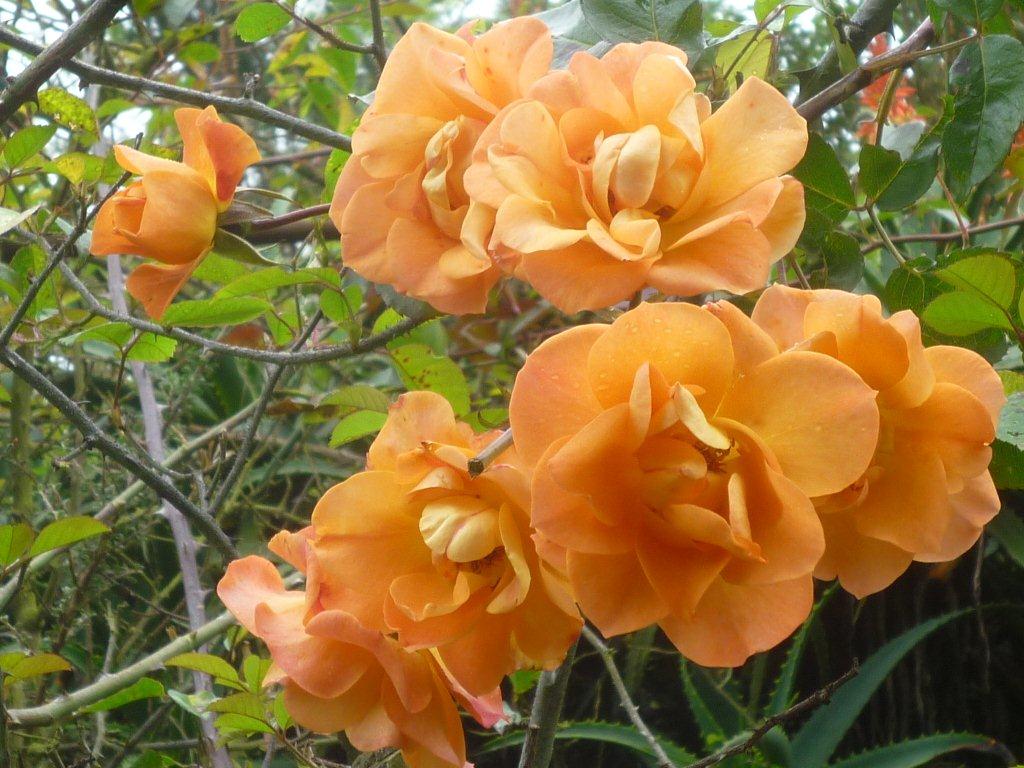
Karrie’s Rose. Photo courtesy: M.S. Viraraghavan and Girija Viraraghavan

We had noticed that invariably roses were named for famous people with often no connection to the world of roses. This made us think: why not name our roses for the intrepid plant-hunters who had discovered roses in the wild, on mountains and in forests, and botanists who had contributed to the knowledge on plants.

One wild Indian rose is R. gigantea, from our north-east, and Myanmar. Three great plant hunters were responsible for collecting this species in the wild – Sir George Watt, General Sir Henry Collett and Frank Kingdon Ward. We decided to name our rose hybrids for all three. Sir George was a medical doctor with an interest in botany, and worked as a surveyor with the British India government. During the course of his work, in the 1880s, he found Rosa gigantea growing on the slopes of Mt Sirohi, now in Manipur, and collected specimens. Almost simultaneously, so did Sir Henry Collett, except in the Shan Hills in what is now Myanmar. Both specimens were identified as being the same and named by the great Belgian taxonomist of the time, François Crepin. Climbing Mt Sirohi in 1990, we came across and collected plants from perhaps the precise location that Sir George had found Rosa gigantea. We named our first hybrid, a creamy yellow climbing rose, for him. We then felt it should be planted near his ancestral home in Scotland. With the help of the Royal Botanic Garden, Edinburgh, we managed to get this new rose planted in the Logan Botanic Garden, very near Sir George’s birthplace. Some years later we embarked on a sentimental journey, along with his descendants and his associates’ descendants, visiting his grave and the hospital he had worked in after retiring from India, to see the rose blooming in Logan.

We named a second seedling we had bred from R. gigantea for General Sir Henry Collett, a rose with big creamy white blooms that has been planted in suitable areas in Britain as well, and, gratifyingly, being grown by some of his descendants. A third rose, a climber with blooms of yellow-suffused pink, was named for Frank Kingdon Ward, the legendary and intrepid plant hunter who collected innumerable new and wild Himalayan plants despite his surprising acrophobia! We then came across a piece by the then BBC 4 gardening anchor, Matthew Biggs, who had visited Kingdon Ward’s grave in Grantchester near Cambridge. He wrote about the neglected condition of the grave of one of the world’s greatest plant explorers. So we decided to make amends by planting ‘Frank Kingdon Ward’ by the wall nearest his grave in the churchyard in a moving ceremony organised by Matthew Biggs, and attended by a number of well-known British horticulturists, as also the family. An urn with the ashes of Sheila Macklin, Kingdon Ward’s wife, for whom he had named a Himalayan lily, and who had died just the previous year, was interred near his grave, and close to where the rose was planted.

We have also named a rose for Leschenault de la Tour, the great French plant explorer who found a beautiful new rose species, called Rosa leschenaultiana after him, in the Western Ghats in the early 1800s; our rose named for him is a climber with pure white blooms.

And of course we have a rose to celebrate the remarkable life and career of the great Indian botanist and cytogeneticist, E.K. Janaki Ammal, who co-wrote the Chromosome Atlas of All Cultivated Plants in 1945. She studied botany at Michigan State University in the 1920s on a full scholarship, later receiving a PhD and DSc honoris causa. Back in India, she played a vital role in creating the ‘Noble’ strain of sugarcane – an extraordinary hybrid of sugarcane and bamboo leading to varieties thick as a man’s arm in contrast to the pencil-thin traditional varieties. But credit was stolen by seniors at the research station, and so she went off to Britain. There she worked at famous institutes, including John Innes, Kew and the Royal Horticultural Society. Later, she met the then Prime Minister Jawaharlal Nehru on a plane, and he put her in charge of reforming the Botanical Survey of India in Calcutta. But sadly she was a forgotten figure by the time of her death in 1984. Our rose named for her has the same colour hues as the saris she wore – orange yellow and saffron. A plant of this rose was planted in 2020 at the World Regional Rose Conference Kolkata, at the Botanical Survey of India garden. The rose has also been planted in the John Innes Institute, in Kew and the Royal Horticultural Society’s garden in Wisley in the UK.          

If one were to ask you of one moment each – one particular achievement in the journey and one abiding regret – what would these be and why?

There can be no doubt that the moment which was special in our rose breeding career was the moment described above, when Helga Brichet and Mercedes Villar came up to us in Jaipur in 1999, and said they had never heard such a new approach to breeding roses, pioneered by us, of using two Indian rose species to create a new line of warm-climate roses. It was their invitation to speak in Texas launched us on to the world stage of roses.

As for an abiding regret, that’s all too easy to answer. It’s the systematic neglect of Indian-bred roses by the rose-growing public of India, who remain fascinated by roses raised in Europe and the U.S. though they are utterly unsuited for Indian climates. This unreasonable preference for foreign rose varieties is part of the general craze for all things foreign. Fortunately, more recently, there has been a change, and young rose breeders and growers are realising that Indian bred roses do better in the heat and are slowly beginning to grow these.

Give us an insight into the challenges and pitfalls of growing and creating roses in India, as informed by your journey. Interesting story that highlighted these.

The main challenge was getting Indian roses accepted by the Indian rose growing public, as highlighted above. Indeed, now our roses are being grown in India, perhaps because they are being grown around the world! Another thing is one must learn patience. It takes us about eight to nine years to name and release a new rose. It is a long process, of the actual crossing of two roses, waiting for the fruit to ripen, then harvesting the fruit (rose hips), collecting the seeds, stratifying them in the refrigerator (if one lives on the hot plains), sowing the seed, waiting for the seedlings to sprout, growing the plant for a number of years to test its potential, and suitability, and only then finding a name and releasing it, by sending to a rose nursery to make more plants.

Our long career in rose breeding and our connected travels around the world has provided us with many interesting, even hilarious experiences. We were in Japan, at the Sakura Rose Garden. With us was a group of people including our friend, the well-known Japanese plant scientist, Dr Yuki Mikanagi. We were looking at a rose plant, with dark pinkish-red blooms with white on the reverse, bred by us and as yet unnamed. Yuki said she liked this rose very much. We immediately told her that we would name it for her. She said: ‘But this rose is red and white, whereas my name means “snow” in Japanese. Viru’s instant response was, ‘Then we will it name it Blushing Yuki,’ much to the delight of Yuki and everyone.

In his government service days, when we lived in Hyderabad, Viru would tend to his roses, watering and spraying them with fertilizers before leaving for office. There would be a number of telephone calls for him about some official matter. Girija would answer the phone (landline in those days), and when she told the callers he was busy spraying, they would hear it as ‘praying’ and immediately apologise: ‘Please do not disturb him when he is at his prayers’.

Both of us were hands-on gardeners, doing most of the work ourselves and you cannot garden without muddy hands and clothes. Very often visitors would mistake us for the garden help and request us to take them to the master or the mistress of the house. The looks on their faces when they realised who we were would make us laugh.

On one occasion, we were in California to receive the ‘Great Rosarians of the World’ Award. At the ceremony, we both first gave a talk on ‘Roses in India, Past Present and Future’. At the end of the ceremony, an earnest old lady came up to us and asked, in all seriousness, ‘Do roses grow in India?’

For most of us, roses are red and a Valentine’s Day Gift. Appendix 1 of your roses runs to 50 pages! Tell us briefly of some of the interesting ones, in particular the very evocative names you have, for example, Kindly Light, Meghamala/Wine-dark Sea, Twilight Secret. What goes into giving a name to a rose?

Apart from the roses we have named for friends, for other roses we like to give evocative names.

  • KINDLY LIGHT: we named this lovely white shading to soft pink rose after the hymn ‘Lead, Kindly Light’, a favourite of Mahatma Gandhi’s. We have the practice of giving two names to some of our roses, one better understood in India, if it is a Sanskrit word, and one for the West. This rose is named ‘Swami Vinayananda’ in India, for a monk of the Ramakrishna Mission order. He was great plantsman, his book on dahlias is a definitive work on all aspects of dahlia growing and he was very good rose grower.
  • MEGHAMALA/WINE-DARK SEA: One more example of two names for a rose. Meghamala translates as ‘garland of clouds’. The name for our rose was inspired by the purple garland-like pattern, reminiscent of clouds, on the petals of this rose, which otherwise are dark orange-red  in colour. ‘Meghamala’ is from a line by Devulapalli Krishna Sastri, beloved modern poet of the Telugu language, to whom the rose is a tribute. ‘Wine-Dark Sea’ derives from Homer’s epithet, in both the Iliad and Odyssey, of the purple shadows of approaching night on the orange-red waters reflecting the rays of a setting sun on the Aegean Sea.
  • ALLEGORY OF SPRING: We named a very special light-pink rose with intriguing pointed petals after the famous Botticelli painting La Primavera, also called ‘Allegory of Spring’.
  • INCENSE INDIGO: An indigo purple rose with an enticing fragrance was the inspiration for this name.
  • TWILIGHT SECRET and TWILIGHT TRYST: Two purple-hued roses that remind one of the late evening, shadowy light, romantic secrets and trysts.
  • AHIMSA: We gave this name to a golden yellow rose borne on a plant without any thorns (prickles), thinking of the Mahatma’s philosophy of non-violence.
  • KUSABUE’S GUARDIAN ANGELS: Kusabue is the name of a rose garden in Sakura City, Japan, entirely looked after by volunteers, all very senior citizens. This is our tribute to them.

Click here to read the excerpt

Shantanu Ray Chaudhuri is a film buff, editor, publisher, film critic and writer. Books commissioned and edited by him have won the National Award for Best Book on Cinema twice and the inaugural MAMI (Mumbai Academy of Moving Images) Award for Best Writing on Cinema. In 2017, he was named Editor of the Year by the apex publishing body, Publishing Next. He has contributed to a number of magazines and websites like The Daily Eye, Cinemaazi, Film Companion, The Wire, Outlook, The Taj, and others. He is the author of two books: Whims – A Book of Poems(published by Writers Workshop) and Icons from Bollywood (published by Penguin/Puffin).

.

PLEASE NOTE: ARTICLES CAN ONLY BE REPRODUCED IN OTHER SITES WITH DUE ACKNOWLEDGEMENT TO BORDERLESS JOURNAL

Click here to access the Borderless anthology, Monalisa No Longer Smiles

Click here to access Monalisa No Longer Smiles on Kindle Amazon International

Categories
Stories

The Japanese Maple

By Shivani Shrivastav

Courtesy: Creative Commons

I saw her again. She was wearing dark slacks and a loose top she was blowing leaves off her lawn and into a corner with a blower. I had been seeing her daily for almost six months now, mostly in her front yard or her porch, or sometimes slowly driving to or from her house. She also seemed to be of Indian descent, as I could make out from her features, and as was confirmed when once her Amazon package that was wrongly delivered to our house.  When I had gone to return it, she had been pleasantly surprised, telling me that it was an expensive coffee maker she had ordered, and not everyone would have sought out the rightful owner.

That’s how we got talking. After that, I would always wave to her — when I saw her doing her yard work, on my evening walks or when either of us drove by, on our way to get groceries. In the spring she would plant colourful flower beds, and could often be seen cleaning and watering them. On sunny days, she would be mowing her lawn or talking to the college kids who sometimes came to do her yard work. In autumn, I saw her raking out leaves, putting the garden waste into large brown disposal bags and decorating her porch with colourful wreaths of maple leaves and berries.  Winter saw her blowing fresh snow off her porch and lawn and clearing and salting her driveway, so that the garage pathway would be clear for her to take out her car. She would often be seen driving to and from the local grocery stores, where I met her at times. Gradually, as we got friendlier, she invited me over for tea and then later for potluck lunches and sometimes just for sharing something special she had made that day, or a new recipe she had tried.

I had a hectic schedule, with frequent out of town work trips. She would often tell me, “Tara, you eat very less! You should take care of yourself; you should put on a little weight.” and more along the same lines. My usual replies were, “Mrs. Sen, I can’t cook yummy food like yours!” or “I don’t usually have time to cook!” accompanied by an indulgent smile. Of course, these reasons were true, but there was also the fact that I really did not enjoy cooking. I would much rather spend my time reading a good book or indulging my leisure time activity of writing poetry, than slaving over a hot oven or cooktop! She, on the other hand, was an excellent cook and baker, having picked up various tips and tricks for making the most mouth-watering dishes out of almost the most basic ingredients. She shared these with her book club members in their weekly meetups as well as with some lucky neighbours, me being one of them.

One day, as we sat talking on her porch, surrounded by the sweet smells of the lush lavender growing in one of a flower beds, she shared, “I came to Canada with my husband, after my marriage in 1988. Two years later, my brother and my uncle shifted here to, along with their families. Those early years were beautiful. Although we didn’t have much back then, we were happy, happy to have each other in a new land. Many of us were not fluent in English, coming from rural Indian backgrounds. We practised with each other, to gain confidence in social interactions as gradually we enlarged our social circles. Once everyone started on their  respective jobs, they also shifted to other places. One of my sons is now in California, the older one. The younger one is in Vancouver.”

We were interrupted by the barking of her tiny wire-haired terrier who was fiercely protective of her. Mostly, he was almost like a therapy dog, sitting on her lap, or somewhere near her, where she could reach out and pet him often. Right now, he had seen a delivery guy approaching the house. She took a parcel from him, offered it to Mickey, her tiny self-appointed protector, to sniff and judge okay, for that was her practice, which she said made him feel included in all her day-to-day activities and interactions.

Placing it aside, she thanked the delivery guy with a smile. Sitting down on one of the two cherry red Adirondack chairs on her porch, she told me, “Nowadays I prefer having as much delivered as I can: it’s easier, particularly for the stuff not readily available at Costco or Home Depot.” I could only imagine how difficult it must be for a lady of advanced years living by herself.

“I go to Toronto almost once a week and also to one of the farmer’s markets nearby. If you want, you could come along if you have some work or want to buy something from there. I could even bring it for you if you so wish.”

Although it was not my intention to cause her any kind of pain, what I had said had seemingly touched her, for as she looked up at me, she had tears shining in her eyes. “Thank you, my dear, I can’t tell you how much it means to me. It has been more than five years that I have been by myself now. Usually it’s okay, but some days are just harder. When Sudhakar passed away I lost my best and oldest friend. He used to tell me – Maya, you should make more friends; you should have your own life too.”

I do have friends here, my book club people too, plus some relatives living in Toronto and some other nearby places, but it’s not the same.”

“I understand”, I could only pat her hand helplessly, wishing I could do more. Going with the change of mood, we picked up the tea things as the breeze turned colder and went inside. It was nearly autumn again and the October evenings were getting quite chilly. The red, orange and yellow autumn foliage had its  own grace and beauty, but I would miss the long summer evenings, when I could just sit out on the patio or enjoy working in the backyard garden or water the front lawn barefoot. Not to mention, the beautiful flowers summer brought. Mrs. Sen, or rather, Maya, as she had instructed me to call her, had beautiful gardens, both at the front and back of her house. These she tended meticulously, taking care of her perennials through the change of seasons and making sure to  plant various varieties of seasonal flowers and shrubs. She had two gorgeous Japanese maples in her front yard, and had a beautiful weeping willow in her back yard that fascinated me. The flowerbeds were populated with multiple herbs like lavender, thyme, sage and rosemary, as well as flowers like peonies, roses, pansies, violets, lilies, hydrangea etc. She also had some beautiful shrubs and flowering trees like lilacs and magnolias. It was a veritable dream for the most discerning of botanists, at the very least!

As we entered the house, I realised that this was the first time I had been inside her home. Somehow, most of our conversations till date had been outside, on our patios or in one of our backyards, while one of us worked in the garden. She had successfully transmitted her enthusiasm for flora to me too. This was a first for us. As I placed the tray of biscuits and cookies on the kitchen counter, I noticed the wall next to it filled with lots of pictures — pictures of Tara with her family and of her visits back to India and their travels to various places. I could see pictures in front of the Taj Mahal, the Notre Dame, the Sydney Harbour and more.

“Oh, these are so beautiful! It seems you travelled quite a bit!”

“Oh yes, when the children were young, we travelled during the winter and summer breaks. Mostly to India, sometimes to America and Mexico, sometimes to more exotic places like Egypt, Bulgaria etc. It was only when the children started their own careers and moved away that we stopped our frequent travels.”

She went quiet for a bit, looking off into the distance, reliving the past perhaps.  Maybe a past that brought back bittersweet memories. I felt a little guilty for having asked her about the pictures. Some moments later, I took her leave, wishing her well and promising to meet her soon after having mastered the new biscuit recipe she had shared.

As fall turned to winter and I returned from some work-related travel, I thought of her as soon as I had settled back into my regular routines. I decided to meet her in the evening, but being severely jet-lagged, had to postpone it a little.

I finally went after three days. I noticed that her driveway was freshly shovelled and salted. As I rang the bell, I admired the beautiful wreath on her door, with her trademark red winter berries and green ribbons. I knew that nearer to Christmas, she would add some striped candy canes to it.

I heard some shuffling steps and she came to the door.

“Oh hello Tara!  It’s been quite a while! Were you out of town?”, came her cheerful greeting.

She did seem a little frailer to me, and I noticed her favouring one leg more than the other.

“Hello! Yes, I came back from a ten-day work trip three days ago. Sorry I couldn’t visit earlier. How have you been? Is anything the matter with your leg?”

“Yes, I fell down and hurt myself. There was a patch of black ice in the driveway. Although I had cleared and salted it, there were more flurries that day, followed by some rainfall. When I came back from visiting a friend, who dropped me back to my place, she had to hurry back as she had received a phone call, and I got down from the car and had barely taken a step when I slipped and fell. I hurt my leg and my back. Worse was that after the fall, the ice was so slippery that I couldn’t get back up. I walked like a four-legged animal for a few steps till some neighbours who had seen me fall rushed out and helped me back up and took me inside the house. This was two days ago. Since then I have been resting. Yesterday I got groceries delivered here, once the snow stopped.”

Feeling bad that I had not been there for her at such a time, I escorted her inside and shut the door. I gave her a little Reiki healing and made her a little tea after the session. We sat and chatted for a little while, and then I came back.

As I was on the way back her word echoed in my head, “No one knows what life might bring. I had never thought I’d be alone at this age. Back in India, people say that a lady who has sons is very fortunate. Well, I have two sons. When I called them, they said that they were sorry to hear about my fall, but they would not be able to come till the weekend. For the first two days, during which it snowed heavily, the neighbours who had seen me fall were kind enough to bring food over, two times a day. I am fortunate to have good people around me.”

I reflected on my own situation. I was separated, with no chances or desire of a reconciliation. Having decided that I did not need anyone in my life who had the power to hurt me, I had walled myself off, interacting briefly with people and that too, only to the extent needed. Very rarely did I venture out of my comfort zone;  letting people within my walls was a risk which I could not bear to take. Maya was the first person in the last three years that I had spoken to with such an open heart. Maybe it was because I felt such comfort in her presence and understood subconsciously that she would never hurt me.

When I thought about her, I remembered all her acts of kindness – the food drives for the homeless, the collection drives for clothes for refugees she ran, offering to collect all the donated clothes at her  house and later on sort through them for distribution, her gardening and plantation drives etc. This year, on Canada Day, she had gifted many trees and plants to her neighbours, as per their choice and need. I had received a beautiful Japanese maple, a sapling from her one of her own trees. She had said that the trees were saplings created from the tree that she had planted in her first home in Canada. The sapling she gave me looked very promising and would definitely turn out to be a beautiful and healthy tree, vibrant with its deep red leaves. Whenever I looked at it, I was reminded of Mrs Sen’s spirit and her welcoming smile.

Through the next few days, I kept a regular check on Mrs. Sen. She recovered quite well and was soon back to her usual tasks.

One day as I came to her place to meet her before going away on another work trip, she opened the door with a big smile. I smiled and asked her, “Wow! You are really glowing today! What’s up?”

“I am going to visit my son in California. He is coming over the next week for some work to Canada. After that, I plan to take him to see our beautiful Niagara-on-the-Lake, then I’ll accompany him back to California. I plan to stay there for almost a month.”

“That’s great news! You haven’t meet him for such a long time!”

“Yes! I’m so excited I will get to meet the grandchildren again!”

The rest of my visit passed in discussions of her upcoming trip. I promised to take care of her mail and plants while she was away, then left.

When I came back from my office trip, she had already left for California. I dutifully collected her mail, laying it aside on my hall table to give to her once she was back. I took special care of her two red maples, knowing that  she was especially fond of them. They stood to either side of her driveway, forming a delicate arch over her garage door.

The season changed again and spring blossomed, bringing with it fresh leaves on all the plants. The Japanese maples sprang fresh with vibrant leaves. I liked overseeing her yard work, paying the college students who came to clean it every week from the fund she had left with me when she met the last time.

Sitting there on her porch, reading a book while waiting for the boys to finish, I often looked at the trees, which seemed like two sentient sentinels. Now lush, they merrily waved their branches with their cherry-red leaves in the spring breeze.

“How happy Maya would be when she comes back and looks at them again!” She had shared some photos of her son’s house in California; it was a condo — no garden or even house plants; ‘they didn’t have the time for frivolities’, as her son had said.

“That is the one thing I’m really going to miss when I’m there — my garden. These plans that I choose every year with care and the perennials are like my children too. I love them all — the daisies, the sunflowers, the weeping willow at the other end of my lawn, the many seasonal flowers I like to keep in my window planters, all of them! I’m really going to miss them all!

“Don’t worry, you’re coming back before spring will have passed. You’ll still have your lilacs in bloom when you come back, and your begonias, petunias and lilies would all be in full bloom too.”

She smiled but seemed a little unconvinced.

That day, she was supposed to return. She had been in the habit of brining me warm meals the days I returned from one of my trips, so that I would not have to cook immediately after having journeyed, and also to ensure that I ate well. Taking a leaf out of her book, I thought I would return the favour and cooked a hearty soup, along with some homemade pasta. Balancing the bag with the food, I rang her bell but receiving no reply, thought maybe she was sleeping and came back, thinking that I would try again a little later, or maybe the next day.

The same thing happened the next day and the next; no reply to the doorbell. I had tried calling her cell phone, but it always went to voicemail. The three messages I had sent were delivered but not answered. Now I was truly worried, but there was little I could do except wait. Maybe she had extended her stay, because she certainly didn’t seem to be in the house. Although the lights turned on and off, I knew it was the automated system I had helped her install before leaving, so that the house would not seem empty.

I continued the upkeep of her garden in the meantime, hoping that she would show up any day and  sit blissfully once again, in her lovingly created garden. I missed her more than I thought I would. She had taught me a lot, even without my knowing.

Feeling a little bit like a stalker, I went to her Facebook profile and also the profile on the neighbourhood app, and found her sons’ profiles and dropped them both messages related to the wellbeing of Mrs. Sen. After a week, I still hadn’t received any replies. Almost a month passed. One day, I saw a ‘For Sale’ sign put up in her garden, right in front of one of the maples. Shocked, I called the agent’s number written on the board and was told that her son had made the decision to sell the house. All her stuff would be going to Goodwill as both her sons had no intention of coming back there to live.

I was broken-hearted that they cared so little for the place hey had grown up in, and which was so loved by their mother. She would never again get to see her garden. The flowers were all there; the garden still bloomed, but its creator had gone.

Two days later, I got a letter from her in my mailbox. It was dated a month and a half ago, so as per  my calculations, must have been written mere days before she passed away. In it, she had thanked me for taking such good care of her garden in her absence. Showering me with love and blessings, entreating me to take good care of myself, she ended her letter with something that surprised me. She mentioned that there was a key enclosed; indeed, there was a small but intricate key in one corner of the envelope, that must have slipped back when I pulled out the letter. She had written that it was the key to a post office box in her name. She had said, “If I do not return, please collect whatsoever is there and distribute it to all our neighbours. It is nothing that my sons would value, as I have set aside all else for them, except this mail box and its contents, that I will to my neighbours, who have loved and supported me through my last years.”

With tears in my eyes, I clutched the key to my heart and remembered her love for all her neighbours, sent across the border, across the bounds of life itself.

The next day, I went to the post office to collect the gifts. To my surprise, they were heirloom seeds, along with carefully collected and preserved flower bulbs, both of which she had painstakingly collected over the years. I remembered her getting some from as far as Vancouver and Montreal; some were tulip bulbs from Holland. Coming back home with the precious living gifts, I framed a message to post on the neighbourhood app. Hitting send, I looked out of my window. My beautiful Japanese maple was dancing in the breeze; her blessings and legacy would live on, spreading to the four winds.

.

Shivani Shrivastav is a Reiki Master and Osho sannyasin. By profession she’s a UK CGI Chartered Secretary and a Governance Professional/CS. She loves meditation, photography, writing and French jazz.

PLEASE NOTE: ARTICLES CAN ONLY BE REPRODUCED IN OTHER SITES WITH DUE ACKNOWLEDGEMENT TO BORDERLESS JOURNAL

Click here to access the Borderless anthology, Monalisa No Longer Smiles

Click here to access Monalisa No Longer Smiles on Kindle Amazon International

Categories
Poetry

Entering the Exit & More…

Poetry and Visuals by Luis Cuauhtémoc Berriozábal

ENTERING THE EXIT 
 
Let’s not waste our time
anymore.
We are not going anywhere
in this life.
I am entering the exit soon.
There are green doors
that lead me to the sun.
 
There are lights that blind me,
like a candle magnified
and a fire that dances in my retinas,
like a flashlight and
flashing signals
slinging lightning bolts.
It is O.K. to say goodbye.
After all
you know nothing lasts.
The lightning bolts
are no rainbow.
 
Being alone is not so bad.
There is always music.
Soon we will be gone.


SMILE MORE 
 
He was just a little hungry.
This is what he told me.
Gary said he was a little lonely.
He seemed happy when he talked.
 
I listened to him as he asked
for a dollar. I handed him two
which is all I had in my pocket.
He told me to smile more and
 
he was speaking the truth.
I do need to smile a little more.
I prefer to live in silence most days.
Gary had a kind but anxious voice.
 
We will speak again soon he said.
It has been year since I’ve seen him.


THE SMOOTH LIFE

One time only
was my life smooth.
If my memory
was not so fickle,
the smooth life would
return and make
things easy. Sleeping
here, under the bed,
with the cats and
the shades blocking
the light away from us,
there is a certain intimacy
born in this room.
Our sonorous hearts
race with urgency.
Life is not clear or smooth.
The light frightens me.
Life is bizarre
like an escaped madman.
His filthy mind would 
make anyone blush.
I remain hidden
like a secret.
The poor cats are
here with me. They
scratch my face.
My selfishness is
far from lovely.
The day goes on.
Light fades away.
This makes me smile.
Our sonorous hearts
are bound to break.
Oblivion sets in.
Eternity awaits.
The moon shines on
like the glittering stars.
I lack the confidence
my heart requires.

Born in Mexico, Luis Cuauhtémoc Berriozábal lives in California and works in the mental health field in Los Angeles, CA.His poetry has been published by Blue Collar Review, Borderless Journal, Escape Into Life, Kendra Steiner Editions, Mad Swirl, SETU, and Unlikely Stories.

PLEASE NOTE: ARTICLES CAN ONLY BE REPRODUCED IN OTHER SITES WITH DUE ACKNOWLEDGEMENT TO BORDERLESS JOURNAL

Click here to access the Borderless anthology, Monalisa No Longer Smiles

Click here to access Monalisa No Longer Smiles on Kindle Amazon International

Categories
Slices from Life

Sleepless in the High Desert, Slumber in the Sierra

Narrative and photographs by Meredith Stephens

Alex and I had completed our road trip from California to Colorado and now it was time to make the two-day drive back along the interminable desert roads.

Every time we stopped, I would try to get into the driver’s side of the vehicle, thinking it was the passenger side. My brain would not adapt to a car with the steering wheel on the left. Once back in the passenger seat, the sun blazed on my temple, so I manoeuvred my visor to cover the right window to block it from penetrating my eyes. It was hard sitting still, so I stretched my legs before me, then slid them beneath me to elevate my height.

“As soon as we hit the Nevada border you will see a casino town,” Alex informed me.

Sure enough, we crossed the border into Nevada from Utah and a town immediately arose from the desert. Alex made a detour into the town to get some fuel.

“Can we drive down the strip?” I asked.

“Sure,” he replied. “Are you hoping to find a hotel here?”

Yes, I thought, but kept my silence. I was too proud to confess that I wanted to stay anywhere near a casino, but I would have welcomed clean sheets and hot water.

I took hold of Alex’s phone and searched for campsites en route, but they all involved deviations that would rob us of precious time.

“We can always stop at a rest area,” suggested Alex.

He searched his phone and found a rest area nestled into a hill, with outdoor tables surrounded by trees. We arrived at sunset and parked the car at the far end, away from other vehicles. We gratefully hopped out, picked up the ice box, and headed for the picnic tables, which we had to ourselves. No sooner had we started anticipating our picnic than we heard the murmur of a refrigerated truck.

“He probably has to keep his engine on to keep the food cool,” observed Alex.

The din was inescapable, so we decided to park back near the entrance to the rest area. I noticed a car parked with sheets draping the windows. Clearly, we were not the only ones seeking sleep in the rest area. Alex parked the car at an angle contrary to the parking lines so that nobody would be tempted to park right next to us. We hauled the icebox to a nearby picnic table to consume our leftovers. Alex proceeded to pour us a glass of wine, and we snacked on sourdough, cheese, avocado, deli meats, and corn chips.

I ate a little too quickly because it was getting late, and I was hungry. It was high desert, so the air was cool, even though it was mid-June. We packed up our picnic and headed for the car, where Alex moved all of our goods to the front seat and made up our bed in the back.

It was nearly 9 pm and we went to bed in the twilight. I revelled in the sensation of the thick flannelette cotton sheets, but I could not slip into a deep sleep. The overhead lights snuck through cracks in the fabric I had put up to cover the window, and the traffic rumbled on the adjoining freeway. Then, a few hours into the night, I heard a clanging outside the car. I peered myopically outside.

“That’s just a dumpster diver,” explained Alex, who turned back to sleep, obviously not too alarmed.

I had never heard that expression before, but I realised that some poor soul was working their way through the bins in the rest area in the wee hours when nobody could see them. I reflected on what I had thrown out after dinner, which had included a nectarine seed, and hoped their fingers did not come into contact with its slime. Then I started worrying whether the dumpster diver would come after us in the night. The next morning Alex explained to me that they were probably collecting cans to sell to a recycling centre. That, at least, was preferable to scrounging around in the bins for food.

We left early the next morning because Alex wanted to show me Lake Tahoe en route to California.

“That reminds me of Lac Leman in Switzerland,” I told him.

“Yes, there’s California on one side, and Nevada on the other. They share the lake.”

We stopped for photos, then resumed our way, winding through snowy mountains, and passing cattle, horses and foals down below. It was a huge relief after the deserts of Utah and Nevada. Then we wound our way through a canyon, following a rushing river, passing through picturesque towns adjoining Yosemite National Park.

“I need a coffee,” lamented Alex, typing ‘coffee shop’ into Google Maps. We entered the town of Columbia, heeding Google’s directions. We were directed down a narrow road through wooded hills. We passed a large car park the size of an oval, much too large for this rolling wooded area. Then Google Maps told us we had arrived. We parked under some shady trees to arrive at a tea shop from another place and time.

We wandered inside. They had a wide range of teas but no coffee, so we took our leave. The voice on Google Maps kept insisting we take a detour, so we followed her urgings past what seemed to be a historical town.

We turned the corner to find the coffee shop Google Maps had been directing us to. We entered and ordered Americano coffee, which despite the 19th-century decor was served in 21st-century paper cups.

We then realised in our quest to find a roadside coffee shop we had stumbled on Columbia Historic Park. The buildings which had been used in the town in the gold rush had been restored and made available to tourists. I wanted to linger in this authentic setting. Unlike a theme park, this was not a re-creation. Alex was worried that we still had several hours driving to go, so we had to resume our journey.

We wound back home through gentle valleys, passing cattle and horses. The sun in my eyes gave me an aura; a circle of lights started appearing in my vision. After 25 hours of driving, we arrived at our cabin at Shaver Lake. I crashed on the sofa, while Alex made a fire. He made up a bed in cotton flannelette sheets in front of the fire, and I rolled onto it from the sofa. What a relief it was to sleep in comfort, in contrast to the person in the rest area scrounging for cans in the wee hours. For us, sleeping in a rest area was a novelty, but for others, it was a way of life.

Meredith Stephens is an applied linguist from South Australia. Her work has appeared in Transnational Literature, The Muse, The Font – A Literary Journal for Language Teachers, The Journal of Literature in Language Teaching, The Writers’ and Readers’ Magazine, Reading in a Foreign Language, and in chapters in anthologies published by Demeter Press, Canada.

PLEASE NOTE: ARTICLES CAN ONLY BE REPRODUCED IN OTHER SITES WITH DUE ACKNOWLEDGEMENT TO BORDERLESS JOURNAL

Click here to access the Borderless anthology, Monalisa No Longer Smiles

Click here to access Monalisa No Longer Smiles on Kindle Amazon International
Categories
Slices from Life

Spring Surprise in the Sierra

Narrative and photographs by Meredith Stephens

Grief was something I thought I could run away from. If I created as much physical distance as I could from my place of loss, surely I could find healing. I had just lost my beautiful sister Stephanie after more than five decades of sisterhood and hoped that I could find healing in travelling to distant climes. There couldn’t be anywhere more distant than the Sierra Nevada Mountains in California. The time zone is sixteen hours behind Adelaide, and the season is contrasting. Surely by distancing myself in time and space I could recover from my grief.

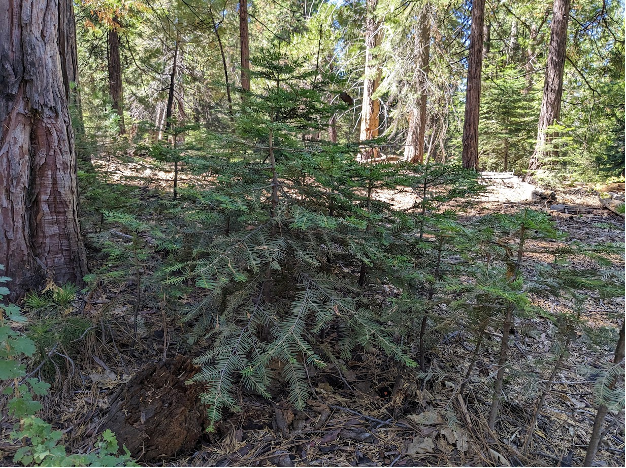
My partner Alex’s chief pleasures are planting trees, sailing, and hiking. In the Sierra Nevada, he could indulge his passion for hiking. We arrived in the Sierra in early June and stayed in a cedar house surrounded by ponderosa pines, Douglas firs and junipers, yawning into the sky. Every day we planned a hike along the numerous trails winding through the mountains. Even in June, it was pleasantly cool. Alex lit a fire in the fireplace every evening, and I donned a thick jumper. On our third day, our chosen hike followed a trail alongside the northern shoreline of Shaver Lake.

“If a bear approaches, the worst thing you can do is run away. Hold your ground and shout at them. Otherwise, they will think you are prey,” warned Alex.

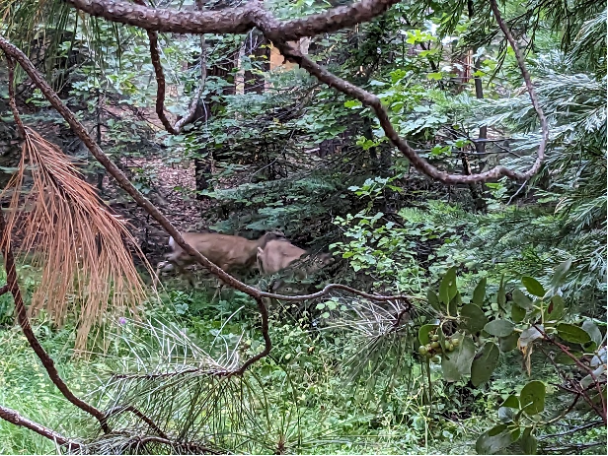
Till then, I had been enjoying my stroll through the mountains at an elevation of almost 1800 metres, and it never occurred to me that we could cross paths with a bear. In Australia we often crossed paths with kangaroos, who would hold our gaze for a few seconds before gracefully hopping away. I had never considered that wild animals could be predators. Then, on second thoughts, I thought it would be nice to see a bear, and with Alex alongside me, felt less vulnerable.

“You have encountered wild bears before in California, haven’t you?” I quizzed Alex.

“Oh yes, several times,” he confirmed.

“Wasn’t there one time when you were alarmed?”

“Yes. That was when I was hiking alone in Montana. They couldn’t hear me. If a bear can hear you, they are more likely to stay out of your way. Some people use whistles.”

I started scanning the hillside for signs of large moving creatures, but instead my attention was drawn to the abundant wildflowers that I had never seen in Australia. I noticed bright red flowers protruding beneath the huge pine trees, known as Snow plants.

Snow plant (Sarcodes sanguinea)

I kept longing to spot a bear, but instead continued to notice wildflowers. The most common wildflowers were sensed by smell before I sighted them, small creamy flowers with a heady fragrance of rich honey. I wished I could photograph the smell.

Buck brush (Ceanothus cuneatus)

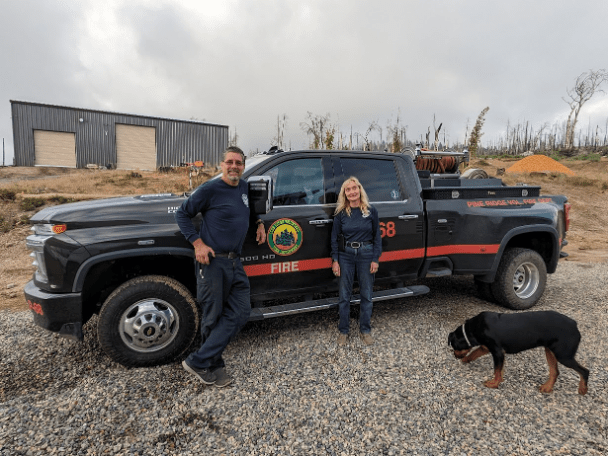
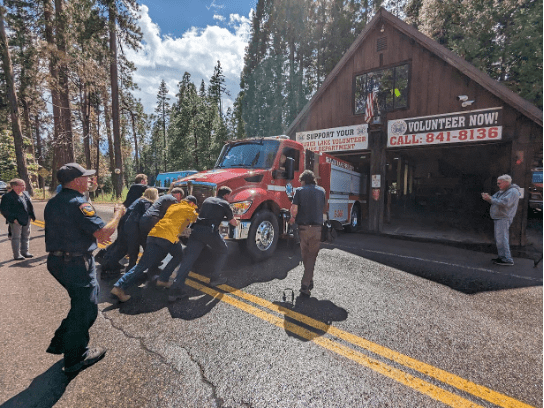
The nearby town of Shaver Lake had been saved by the firefighters in the 2020 wildfire known as the Creek Fire, the largest fire in California’s history. You could see the line where the fire had been stopped. On one side were scarred mountains which had lost their vegetation, and on the other remained majestic pine and fir trees.

Fire Devastation

On the side that had been spared, some pink flowers, known as mountain pride, asserted themselves through a crack in a boulder.

Mountain pride (Penstemon newberry)

I had been looking for bears, but instead found myself in the midst of a North American spring. Splashes of colour of ever more exotic wildflowers emerged along the roadsides and the trails.

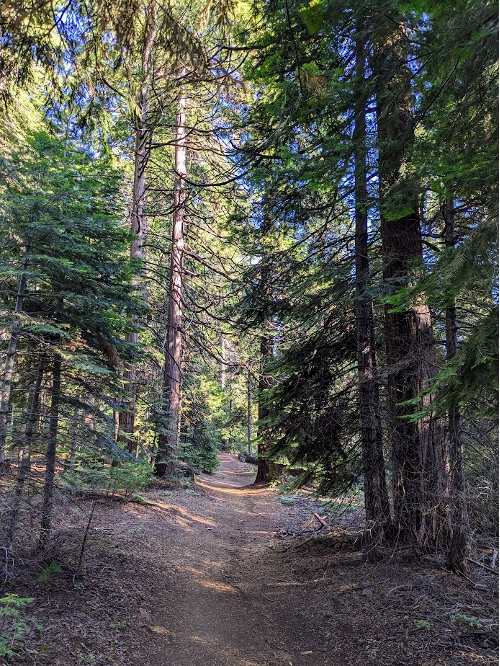
Path through the forest

My hope to overcome grief through travel to a distant land had been in vain. Moving from a southern hemispheric autumn to a northern spring, and moving back sixteen hours in time to yesterday, was not enough to relieve me of my mourning. I missed phone calls and text messages from my sister Stephanie, and especially the opportunity to recount the tales of my travels when I returned home. Stephanie was my most avid listener, and never expressed any envy when I regaled my travel tales. Her concentration propelled me to provide ever more details of my travels. Now, I honour her memory by continuing to pursue the kinds of activities that she took delight in and writing the kinds of stories that she enjoyed.

In Loving Memory of Stephanie, Entrusted to God’s Care

Meredith Stephens is an applied linguist from South Australia. Her work has appeared in Transnational Literature, The Muse, The Font – A Literary Journal for Language Teachers, The Journal of Literature in Language Teaching, The Writers’ and Readers’ Magazine, Reading in a Foreign Language, and in chapters in anthologies published by Demeter Press, Canada.

PLEASE NOTE: ARTICLES CAN ONLY BE REPRODUCED IN OTHER SITES WITH DUE ACKNOWLEDGEMENT TO BORDERLESS JOURNAL

Click here to access the Borderless anthology, Monalisa No Longer Smiles

Click here to access Monalisa No Longer Smiles on Kindle Amazon International

Categories
Slices from Life

Colorado Comes to Eden

Photographs & Narrative by Meredith Stephens

We had safely completed our voyage back across the Coral Sea from New Caledonia to Australia. The next leg was south, from Shellharbour to Eden, hugging the New South Wales coast. Unlike our outbound voyage, the whales were no longer in sight. They must have returned to Antarctica after having come north for calving. I was encouraged by the sight of dolphins accompanying us for spurts of the voyage.

We had hoped to reach Eden by midnight but somehow the trip dragged on until 3.30 am. I wanted to pull my weight during the night sail but was overwhelmed by fatigue and fell into a deep sleep on the sofa. Meanwhile, Alex directed the vessel to a safe point in the bay and dropped anchor.

The next morning in the security of daylight we moved the boat closer to shore, and spied a cruise ship at the docks. It was such a surprise to see a vessel with a capacity of thousands at the wharf of a township of only around three thousand two hundred people.

We made our way to shore in the dinghy, then climbed the steep hills into Eden to provision our boat for the next few days. We noticed tandem cyclists in bright lycra outfits making their way up the hill from the wharf into the town. We greeted them and their accents told us that most of them were from America. Each cyclist had a place name emblazoned on the back of their shirt. Some read California, others the Netherlands. We walked up the main street towards the supermarket, making way for passing cyclists on the footpath.

After we emerged from the supermarket laden with shopping bags, the last of the tandem cyclists, an older couple, were struggling up the hill. Curious, we couldn’t help asking that tedious question that tourists are asked worldwide.

“Where are you from?”

“Colorado.”

“Wow!” I exclaimed. I had never met anyone from Colorado in Australia. Now that the borders were open after pandemic closures tourists must be eager to resume roaming the globe.

A workman in an orange, fluorescent jacket approached the tourists from Colorado.

“Are you with the cruise ship?” he enquired.

I assumed it was an innocent question, or at least a polite enquiry.

“Yes,” they confirmed.

“Can you please tell the cruise ship company to tell these cyclists how to mind their manners? Some of them are cycling on the wrong side of the road. Others are cycling through bitumen that we have just laid,” complained the workman.

“What did he say?” enquired the Colorado tourist of his wife,

She was better able to understand his accent than her husband, so she interpreted it for him.

“We are the last off the boat so there won’t be any more problems,” she reassured the workman, as they resumed their cycle.

“Enjoy the rest of your trip!” I urged them, trying to counter the rudeness of the workman.

“Thank you!” she replied, turning back and beaming at me.

I was surprised that the workman had chosen to berate the tourists. Perhaps he could have contacted the cruise ship managers. I hope the tourists received more civility at their next port of call. When you are a tourist and have no friends in the country you are visiting, it’s those unanticipated encounters with locals that form the lasting impressions.

Meredith Stephens is an applied linguist from South Australia. Her work has appeared in Transnational Literature, The Muse, The Font – A Literary Journal for Language Teachers, The Journal of Literature in Language Teaching, The Writers’ and Readers’ Magazine, Reading in a Foreign Language, and in chapters in anthologies published by Demeter Press, Canada.

PLEASE NOTE: ARTICLES CAN ONLY BE REPRODUCED IN OTHER SITES WITH DUE ACKNOWLEDGEMENT TO BORDERLESS JOURNAL

Click here to access the Borderless anthology, Monalisa No Longer Smiles

Click here to access Monalisa No Longer Smiles on Kindle Amazon International
Categories
Poetry

Three Poems by Luis Cuauhtémoc Berriozábal

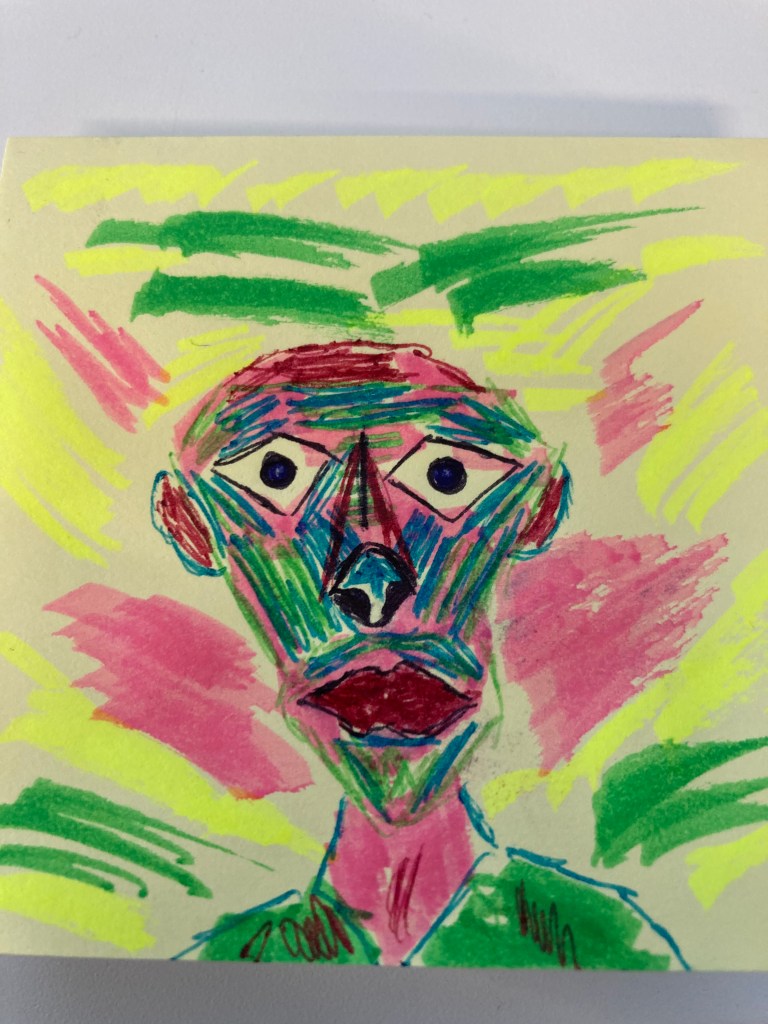
Drawing by Luis Cuauhtémoc Berriozábal
LONG NIGHTS

In their speaking,
long nights
can’t stop weeping,
their sorrow transforms
into song
no man could hum.

The white moon can
hear it
and weeps as well.
The stars shine on in
clear skies
with unseen tears.

Snow falls gently
at night
and in the day.
Time cries and cries.

In their speaking
long nights
can’t stop weeping.


WHEN MY DESIRES BEGIN TO FADE

When my desires begin to fade,
that is when my senses will return.
I will take a small breath, a sigh,
and let the darkness come. I will
listen to the melody of night birds,
and hope my desires do not return.

THE DEAD LIVE IN MY DREAMS

The dead live in my dreams.
They wait for me to fall asleep.
Some are dear to me and
some are diabolical.

Decomposed and frail, they
walk like children taking their first
steps. Some walk with a limp.
I find it disconcerting.

I talk to those I love
again. I ask them to pray for
me. They are always waiting
for my body to tire out.

I listen to their complaints.
I wake up and remember what
they said. Some talk without breath.
Others do not utter a word.

Born in Mexico, Luis Cuauhtémoc Berriozáballives in California and works in the mental health field in Los Angeles, CA.His poetry has been published by Blue Collar Review, Borderless Journal, Escape Into Life, Kendra Steiner Editions, Mad Swirl, SETU, and Unlikely Stories.

PLEASE NOTE: ARTICLES CAN ONLY BE REPRODUCED IN OTHER SITES WITH DUE ACKNOWLEDGEMENT TO BORDERLESS JOURNAL

Click here to access the Borderless anthology, Monalisa No Longer Smiles

Categories
Poetry

Performance Poetry by Dee Allen

Dee Allen
IMMENSE RIVER

On and off 
Erratic activity
Storm cloud convergence
Climate's hostility

This year's winter rain
Shown up full force
Descending upon us
Impaling pitchforks

Landslides, mudslides,
Service roads gone concave
Car sinks into gaping sinkhole
Stormwater comes in a wave

Flooded main streets
Arrive with merciless wind
Staccato rhythm of raindrops
The house roof might cave in

Leave town for higher ground
California's battered—disturbed climate's powers
Hot months—Cold months
Season of fires—Vicious showers

Outflow intense from the immense
River from the sky—
Continued use of coal and oil
Brought this on—some still deny.


LEAST LIKELY

Canyons have splendid broad-gauge views.
Beaches offered the same treasures, too,
As had forests where pine trees grew,
But see me in the desert? Not likely.

Sunny plains are pleasant—Not!
Treeless, unbearable, exceedingly hot.
Lack of lakes—what that terrain's got.
Will I visit the desert again? Not likely.

From longest road to highest bluff,
Every mile's similar—dry and rough.
Death Valley in Nevada—that was enough.
My chances of waltzing through desert again? Least likely.


BATDAWN

What makes this
New Mexico sunrise
So different
From others?

The bats
Are returning
En masse, animated
Cloud of leathery wings drift

To Carlsbad Caverns'
Caves from a long
Night's flight
Of freedom.

Dee Allen is an African-Italian performance poet based in Oakland, California USA, with 7 books and 67 anthology appearances, currently seeking a new publisher.

.

PLEASE NOTE: ARTICLES CAN ONLY BE REPRODUCED IN OTHER SITES WITH DUE ACKNOWLEDGEMENT TO BORDERLESS JOURNAL

Click here to access the Borderless anthology, Monalisa No Longer Smiles

Categories
Poetry

The Light, the Sun, the Stars…

Poetry & Photographs by Luis Cuauhtémoc Berriozábal

THE LIGHT

Who has seen the light?
Who has been blinded by the light?
The stars at night, the sun setting,
do you know it is not to be taken lightly?
Have you felt its significance?
Is the woman you love your light?
How much do you believe that?
You are surrounded by light.
Your head is filled with it.
There is a flash of light that shines on you
as your life is in danger.
You feel it on your skin.
It blinds your eyes, touches your heart.
If it ever goes away,
you will go away.
You must not take the light for granted.


MY LIKENESS

Dear, who are you?
My likeness and enemy.
Weaving false stories.
Who may you be?
Am I to blame?
Soft are your punches.
Almost like words.
You want to kill me.
I love you still.

Born in Mexico, Luis Cuauhtémoc Berriozábal lives in California and works in the mental health field in Los Angeles, CA. His poetry has been published by Blue Collar Review, Borderless Journal, Escape Into Life, KendraSteiner Editions, Mad Swirl, SETU, and Unlikely Stories.

.

PLEASE NOTE: ARTICLES CAN ONLY BE REPRODUCED IN OTHER SITES WITH DUE ACKNOWLEDGEMENT TO BORDERLESS JOURNAL

Click here to access the Borderless anthology, Monalisa No Longer Smiles

Categories
The Observant Immigrant

Sometimes Less is More…

By Candice Louisa Daquin

When you read sci-fi novels and they have most of the world living in small sections of the planet, in endless skyscrapers, the future can feel a little dystopian. As practical as living in close proximity is, some of us yearn to be away from the maddening crowd. As our world swells in number (7.753 billion as of 2020, projected to reach 9.8 billion in 2050, and 11.2 billion in 2100 according to UN statistics) is it feasible to live off the grid any more? Is it becoming more difficult not to be part of the mainstream?

During a time of illness, I watched a strange TV show Alaskan Bush People, I would not usually entertain. It was a wilderness show about a family who chose to live off-the-grid. I watched it the way we view any reality TV, with disbelief and morbid curiosity. However, with time, I began to get involved. I admired that these eccentric people — even if some of it was spoofed for the camera — could live in this way. They valued being able to live off the land. I began to wonder if we put too much onus on city-urban-dwelling to the detriment of other life-styles. If we judged those who lived more basically, assuming we were sophisticated. If the grid failed in some way, if electricity or the internet failed, or a giant EMP burst took everything out, we’d need those lost-skills, we’d value those kinds of people more. Maybe we should know that now, before it does, and not get caught up on judging people on how large their house is, or what car they drive. After all, we’re rapidly hurtling toward a future where ‘big’ is going to be problematic and finding alternatives will be prized.

When I moved from a large city to a smaller one, I felt completely cut off from what I termed the trappings of city living, such as the ballet, theatre, good book stores, interesting alternative restaurants. It took me some time to adjust and settle into a slower life with less options. Part of me never stopped missing the variety of a large city, its diverse heart. But I did appreciate the calm that came with a slower pace of life. Sometimes less is more. Moreover, when I met people from big cities, I noticed how their identities were hinged on their experiences of ‘culture’ and how judgmental they were about what counted and what did not. Even the use of words like ‘native’ or ‘naïve’ artist, seemed patronising and racist. Who said one culture or city had more value over another? When did we start respecting the business man over the farmer? When our very existence depends upon the latter? It’s a little like what happened during Covid-19. We realised the value of nurses and front-line-workers a little late in the day.

There are many reasons people crave moving from larger communities to smaller ones. The most obvious is retirement. You may live in a large city but it’s expensive and fast-paced and when you retire it is possible you need different things. You may swap the city for the beach, mountains or lakes. You may find a retirement community has more to offer at that juncture in your life, you may want to have a horse farm or live in another country with more sun. The retiring Baby Boomer generation has caused a massive uptick in house prices throughout desirable parts of America, as they take their affluence to other areas and bring their expectations with it. “Baby boomers held an average wealth of $629,683 in their 50s, equivalent to $704,158 in today’s value. Worse off is Generation X who, on average, owned $396,293 when they started reaching their 50s,” Boomers may be the last ‘affluent’ generation in America to have this mobility and generational wealth. It has changed the landscape of America in terms of house prices.

Take for example a town: New Braunfels was a sleepy little town with nothing to recommend it. Boring but by a river, with an outlet mall nearby. New Braunfels is currently growing at a rate of 5.96% annually and its population has increased by 76.03% since the most recent census, which recorded a population of 57,740 in 2010. It had nothing much to recommend it. Retirees began to move in because it was affordable, had year-round good weather, you could get a lot more for your money than if you chose the more traditional retiree communities in Florida and Arizona. This incoming wave perpetuated another; an exodus of large companies from expensive states like California, wishing to re-settle in cheaper ones. They brought jobs and housing. Before you knew it, this little town was one of the fastest growing towns in America, which is baffling given it has very little to recommend it. But like anything, exodus isn’t always based upon seeking the best, but seeking the most practical, which in some ways it was. More baffling; Texas is home to seven of the 15 fastest-growing cities, which when you compare the beauty of other states, seems non-sensical, but speaks to consumers need for less expensive, warmer states, seemingly at any cost.

However, some smaller communities exist by choice before retirement. Historically there have been reasons people have chosen to live separately. Not long ago, the majority of the world was rural and historically that historically the case. But in the last 100 years, this has drastically changed with more opting for urban living. Religious difference and cultural practice are among the most common reasons people have chosen to live apart. In the 1960s and 1970s ‘fringe’ groups and sub-culture became more familiar among the main-stream. Perhaps because in the 1950’s the idea of being a ‘teenager’ really took off and emancipated young people into being more diverse and following their own interests over their parents. This led to more sub-cultures popping up. That said, is it really such a recent phenomenon?

Alexander the Great was only eighteen when he ravaged a quarter of the planet with his conquests. Other famous historical conquests were at the hands of what we’d deem today, very young people. So younger people have always sought to strike out on their own and forge their identities. The suffragettes in the 1930s, the Zazou in France in WW2, Jazz Age of the 1920’s, the Fin de siècle amongst artists from 1880 onwards … the list is endless. Existentialists, LGBTQ, Nudists, Dadaists, counterculture in the 1960’s, there are so many explosions, one would be forgiven for thinking there is no mainstream, but in reality, these groups have always been the minority and often fleeting.

Youth and age aren’t the sole determinants for such sub-cultures to evolve. People seem divided into those who seek homogenisation and those who seek diversity. For some it may not be a choice, such as LGBTQ or those on the spectrum or isolated communities that were ‘discovered’. But for others, it’s a deliberate attempt to dislocate from the mainstream to express their individual perspectives.  Of those isolated communities and uncontacted people, it is hard to establish how many would have wished to become mainstream and how much choice they had in the matter. Some indigenous peoples are in voluntary isolation, and do not require ‘saving’ as per the modern cultural assumption. Some indigenous groups live on national grounds, such as the Brazilian Vale do Javariin and those who inhabit the North Sentinel Island in India.

I have visited Quaker, Shaker Mennonite and Amish communities as they have fascinating insights on how to live outside the mainstream. Some do without electricity, others have seemingly flexible prescriptions where their ‘young’ can leave the community once adult and spend time in the outside world before choosing whether to return or not, this is known as ‘rumspringa’. This seemed risky as many could seek the excitement of the unknown, but ironically more return to the community. It reinforces the idea that small communities have staying power, which large communities may dismiss.

There are groups of youth, doing one thing, middle-aged, doing another and a whole spectrum of interests in-between. I find this particularly interesting when you go to a fair or show, and suddenly thousands of people all interested in the same thing turn out. It makes you wonder, where have they been hiding? I have experienced this at rock concerts, medieval and renaissance fairs, comic con, tattoo exposes and vampire balls. I attended out of interest but as an outsider. Watching people who are committed to their passions, get together in fantastic outfits, is a fast insight into how many sub-groups exist. Perhaps all of us have within our main-group, sub-genre groups of interest.

Back in the day we called these cults, clans, cliques and (other) but most of those terms have become insulting to future generations, that saw the impact of labeling. After one of the first American mass murders committed at a school (Columbine), the two shooters were described as ‘Goths’ and consequently, many who dressed in Goth style, were attacked. Sadly the Goth movement had nothing to do with violence but this is what happens when we assume people different from us, must have negative attributes; “Qualitative results reveal that students themselves highlight the importance of exposure to diverse others, family upbringing, the media, and several other key factors as important considerations in how they treat other people; this suggests a multitude of ways that people create their beliefs.” The same happens in America with the church of Satan which does worship the fallen angel, Lucifer, as an alternative God-head, but does not condone or sanction many of the ‘evil’ practices associated with Satanism. It isn’t hard to understand why there would be misunderstanding with such extremes but what of less extreme smaller communities?

The Mormon church not only owns Utah but much of other states too. It is one of the richest religions based out of America and has a huge recruitment reach worldwide. When Mitt Romney, an elder in the Mormon church of America, ran for President, one of the reasons he lost was due to a fear of Mormonism. The ‘other’ aspect to their faith, set them apart from the more mainstream Christianity. However, this is shifting as more politicians of Muslim and Hindu faith are becoming key figures, the fear of ‘other’ is lessening. One could argue some fear of ‘other’ isn’t a bad thing, but it’s the extent to which we react to it, that matters. I may not approve of Mormonism, I may think it’s a phony made-up version of Christianity (The Book of Mormon talks of the history of two tribes of Israel—the fair-skinned, ‘virtuous’ Nephites and the dark-skinned, ‘conniving’ Lamanites. Much of its ‘story’ is a direct retelling of The Bible, unoriginally claiming the same events occurred in North America as in Israel. To me, it seemed like racism dressed up as scriptures). Mormonism has been said to act like a pyramid scheme, but should I be prejudiced against someone on the basis of their being Mormon alone? No. We can be cautious or disagree with a religion without being prejudiced against it. On the other hand, shouldn’t we be conscientious of trying to maintain truth, which means if something perturbs us, like the church of Satan or Mormonism, bringing that to light for others to make an informed choice? Perhaps with faith there is no room for choice, it is a matter of faith, and none of us can persuade another to change their perspective. This might be why wars are so often about faith.

Currently throughout America there are many sects and groups who thrive in relative obscurity and are untouched by the mainstream. Whilst group polarisation clearly exists, the famous stories of cults throughout the world committing mass suicide like the Branch Davidians, or fighting against authorities, isn’t as common place now, but that doesn’t mean they’re not out there. Social media has made it easier to be underground and thrive but people always find ways. Whether those communities can come together, depends upon how incompatible they are. Near where I live there is a conservative Jewish community where only conservative Jews live. They chose to live separately because of a high number of hate crimes throughout America, where Jews continue to be the #1 most attacked group.

Other groups have become more comfortable co-existing. Twenty years ago, you would not have seen as much diversity as today. In my neighborhood, there are people of every culture and skin colour — Sikhs, Jews, LGBTQ, single parents, tattooed bikers, affluent conservatives, communists. It has been interesting to see how they are able to come together over a mutual interest and get along. When it’s a special event like Halloween, everyone let their children free to trick or treat. They do not avoid certain houses like they once did. There is an acceptance that we have more in common than we have differences and even if we vote differently, look differently, believe differently, we can put some of that aside for a common good.

Just recently I was asked how I could tolerate someone who was say, a Trumpster. It got me thinking that there must be a cut-off in terms of what we do tolerate. For example, if someone were a racist, a Nazi, a pedophile, I would not wish to be in touch with them or live next door to them. But both my neighbors voted for Trump, and I didn’t vote for Trump, but that isn’t enough of an ideological divide for us to not run in the same circle. Interesting they are both Hispanic and there was this idea Trumpsters were Anglo which isn’t always the case. It is those perpetuated stereotypes that cause the most harm. We can get past differences in ideology but most of us have sticking points such as extreme hate, prejudice or harm to children that would be unrecoverable differences. This is how society polices itself to some extent and legitimizes blame. If we didn’t then racism would be more acceptable, but the nuance is sometimes subtle.

The media has a powerful influence on people and can be responsible for promoting a stereotype of a particular group or enhancing scapegoating behavior. People let loose on social media and are uninhibited in their vitriol. This can create more divisions between us. It is difficult to police prejudice because it involves opinion, which may not always show itself in ways that are unlawful. But when we consider communities; communities can thrive with difference, without becoming contentious. Perhaps because our wish to be united is greater than our wish for division. Secularism is misrepresented often. Although when you drive through parts of the American South as a person of colour, you could be forgiven for thinking ‘secular people’ can be hateful, because there are towns where you will definitely not be welcome. Some groups may not outright say they don’t accept others (people of colour for example) but they will actively encourage segregation through their secularity. This may be unavoidable as much as it is racist, but how can we really change that? Would it work to demand racists accept people of colour as next door neighbours? Would it be good for the people of colour to be part of that experiment?

Another concern is a subject brought up by famed linguist, Professor Anvita Abbi, in relation to bringing distant or smaller cultures into the mainstream and their impact. Dr. Abbi received her Ph.D. from Cornell University, USA and began teaching Linguistics at Kansas State University, where she says, she “realised that a large number of Indian languages especially those spoken by the marginalized communities are under-researched.” This led to Abbi wishing to “unearth the vast knowledge base buried in the linguistic structure of Great Andamanese before it is lost to the world.” In the process, as she recorded in her book, Voices from the Lost Horizon, she realised this language was “a moribund language of the only surviving pre-Neolithic tribe, the remnants of the first migration out of Africa 70,000 years ago.” Awareness of the Great Andamanese, resulted in invariable negatives; “Outsider-contact has brought diseases, subjugation, sexual assault, and ultimately decimation of the tribal culture, tribal life, and tribal language.” But what has been learned from this outside culture, is invaluable. Sadly as Dr. Abbi says; “Jarawas maintained the isolation and now they regret the interaction with us.” Which if we consider other ‘first contact’ scenarios, seems a universal response.

‘Mainstreaming’ is a colonial model, which can suppress the indigenous dignity of people in favour of assimilation. But assimilation isn’t the same as ‘fitting in’ because often, the qualities of incoming cultures are derided by this colonial model, leaving those incoming, feeing disrespected and alienated. In America, Mexicans are considered ‘less than’ other immigrants (Asian predominantly) because they may have lower education rates. This breeds a division between immigrants that undermines those least appreciated by the host-country. With Asians set to overtake Hispanics in America, this has been at the forefront of race-relations and considerations lately, with some tensions building up as for a long time it was anticipated America would become Hispanic. When Donald Trump was President, he actively encouraged immigration from certain countries over others, because he believed those countries had more valuable people. This sounds an awful lot like the argument for eugenics and, at its core, it shares a lot with racists who believe certain groups have more potential than others.

When Abbi was asked what the ideal way for Great Andamanese integration to occur where language and cultures were not eroded but blended with the mainstream, she said in her experience,“[t]he idea of mainstreaming and merging these tribes into our civilisation is nothing but usurping their rights to their land, forest, water, and way of life. ‘Development’ may kill these tribes. These tribes have amalgamated their life with nature so well that they are aware of secrets of life.  Any kind of interference will disturb this harmony.” Perhaps we can learn from the poor, exploitative outcomes of assimilation between developed communities versus those they perceive as less developed. The fault of perceiving difference as ‘less than’ is not appreciating the dignity and abilities of those cultures. Linguistically, socially, they may have many advanced ideas over mainstream culture, but are relegated to ‘less than’ in xenophobic or colonialist thought.

Take the Native Americans of America as one example. They believed the earth was for everyone and no one group should own the earth. They are often considered one of the first cultures to be environmentalists because of their acute awareness of balance and the need to give back to the land rather than rape it. When colonialists came to America, they didn’t respect that and demanded ownership of shared lands, as well as working the land sometimes to death. Slavery and mistreatment of land have that in common, the need to conquer, own and a capitalist model of growth. Those under the yoke of such tyranny do not thrive, only the ruling minority do. In this sense, it is not far removed from fiefdoms and seems to be a penchant of humans given the opportunity. But what happens when we visit cultures where a more egalitarian approach is mainstream? Less oppression and greed in favour of sharing?

It could be argued this is why capitalist model countries like America still fear Communism and Socialism. They recognise this alternative model would undermine the oppressive aspects of Capitalism. Whilst no one ethos appears to work without serious flaws and hypocrisy, we’d probably do better to work together, blending aspects of all, than continue a ‘cold war’ about our differences. When you look at the recent antagonisms between countries, it become apparent, war solves nothing, and the wealth which could be poured into helping countries, are being squandered on military posturing and grandstanding. Until larger communities respect the dignities of smaller groups, we cannot expect this to change. On the other hand, can we afford to give up that military grandstanding if other large countries insist on becoming the conquerors we once were? How can we unite together without becoming vulnerable?

Studies have shown that integration helps overcome prejudice and racism. When people have LGBTQ children, they are more likely to become accepting of LGBTQ and racists become less racist, when people of colour move into their neighbourhoods. This suggests some of the hate is more ignorance and fear although that doesn’t justify it. But should the minority have to stomach that hate to find acceptance for their progeny? Maybe they always have. If we consider the years it has taken some minorities to become more mainstream, it has always been through personal sacrifices. Even Martin Luther King Jr’s murder galvanised more social and racial change in America. Such tragedies create martyrs, harbingers of change, but at what cost? Should it take such extremes as assassinations and mass shootings to wrought change? It seems human nature only understands things when they’re extreme. A case in point is the environment and the long duration where campaigners have warned we’re dooming future generations but business interests were put first.

How with so much division even on subjects that can be proven, such a climate change, can we hope to lay down our differences and come together? Perhaps the best we can hope for, is if enough of us try to embrace difference instead of letting our xenophobic tendencies frighten us, we will do a better job.

Immigration in America is considered a ‘problem’, but it can equally be a solution if we redefine things. Immigration is the bedrock of how America came into existence — from the Native Americans who came across the Barring Strait and made a deserted land, home, to the European conquerors who stole it but equally populated it from diverse cultures. As much as we have fought and hurt one another, we have needed each other.

Each epoch in people’s lives, shifts what matters to that particular generation, and perhaps it is the fear of being obsolete or an inability to get onboard with new ideas (or a fear that old ideas will be ignored) that causes inter-generational strife. But again, if we balance and appreciate the diverse perspective, we all have something to offer, we are stronger together than apart. If we humble ourselves and remember to learn from those cultures that may not have had as much attention given them, but held great wisdom, we may learn alternate ways of cooperating and thriving. If harmony is the goal for most of us, we need to vote and avoid dictators taking that freedom away.
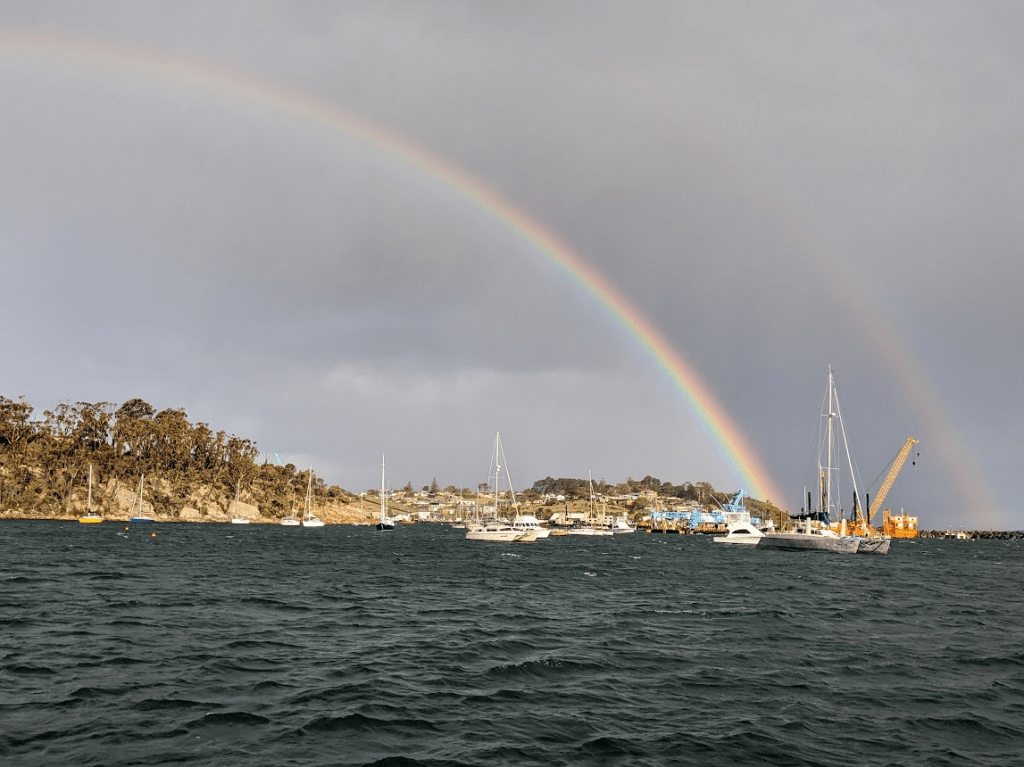
Candice Louisa Daquin is a Psychotherapist and Editor, having worked in Europe, Canada and the USA. Daquins own work is also published widely, she has written five books of poetry, the last published by Finishing Line Press called Pinch the Lock. Her website is www thefeatheredsleep.com

.

PLEASE NOTE: ARTICLES CAN ONLY BE REPRODUCED IN OTHER SITES WITH DUE ACKNOWLEDGEMENT TO BORDERLESS JOURNAL.