Categories
Stories

After the Gherkin

Deborah Blenkhorn

A Mrs Tadpole Mystery by Deborah Blenkhorn

Parry Lines was an ordinary fellow, so much so that even his friends couldn’t be bothered to find out his actual name and were content to call him “Parallel,” his nickname since childhood.  Regular, indeed nondescript features were surmounted by his trademark bald pate; the most you could say was that occasionally he wore a bright plaid shirt in neon pastels to liven things up a bit.

Ten weeks A.G. (After Gherkin)

Yet his death (by gherkin) caused a butterfly effect that changed the world.  Until the incident with the gherkin, the most notable thing that had ever happened to Parry was when his surprisingly dashing teenaged son had consumed an entire teacup full of gravy during Thanksgiving dinner.  Honoured guests had watched in horror as Parry Jr. (PJ for short), notable for his twinkling hazel eyes and flowing chestnut hair, gulped down the rich, brown fluid–though they should have expected something of the kind when he poured the gravy from the pitcher on the table into the China cup ready at his place setting for after-dinner tea.

Present at that event, and at the gherkin incident as well, was Mrs. Honoria Tadpole, English professor and amateur sleuth.  Her demure, conservative appearance (she always wore a smart, tailored suit–or at least the best the local thrift shop could provide–and had her silver-blonde hair cut in a perky, short bob) and her self-effacing manner and diminutive (if plump) stature belied the sharpest mind north of California. It would fall to her to unravel the complicated mystery that the local paper dubbed “Gherkingate.” 

Interviewed by the features’ editor, as the criminal trial of the alleged murderer dragged on, Mrs. Tadpole was asked the inevitable question of how it had all started. The interview took place in Mrs. Tadpole’s well-appointed parlour, a room replete with Victorian bric-a-brac.  With characteristic hospitality, she poured out a strong brew of  BC Bold to accompany the delicate sandwiches (ham, egg, and cucumber) and homemade oatmeal cookies that were her signature “high tea,” known to local islanders as a four o’clock tradition at the old manse where Mrs. Tadpole rented a small suite.

“Now, Mrs. Catchpole, I understand you were part of the original party that travelled to Moany Bay,” the interviewer began.

“Tadpole,” Mrs. Tadpole corrected.  A veteran instructor of nineteen- and twenty-year-olds, she was used to misspellings and mispronunciations. Marpole, Rumpole, Toadpole: she had heard and seen it all, and could make the necessary correction without even flinching anymore.  She cast her mind back almost three months to a mid-summer weekend off British Columbia’s Sunshine Coast.

She began with an allusion to classic culture: “Just sit right back and you’ll hear a tale, a tale of a fateful trip…”

Sadly, the features’ editor of the Island Gleaner failed to catch the reference to Gilligans Island, one of the best sit-coms of the 1960s.  Mrs. Tadpole had been a toddler when the series was first aired, but its popularity throughout her childhood made it a touchstone for, really, almost everything in life, according to her observations.  She knew that some people accorded such a status to the iconic, original Star Trek, but what did Captain Kirk have that “the Skipper” did not?  Not much, thought Mrs. Tadpole.

The premise of Gilligan’s Island was classic: a small number of people, randomly-assorted, stranded on an island together with no real prospect of deliverance.  After all, wasn’t that just the paradigm of human existence?  You didn’t need to be an English proffessor (though Mrs. Tadpole was one, of course) to figure that out. 

That fateful weekend, when the seeds of the gherkin incident was sown, had been rife with undertones of Gilligan’s Isle.

Breathing deeply of the fresh Pacific breeze, the passengers sat out on the deck of the vessel as it hugged the rugged BC coastline. The rushing water behind the Skirmish flumed out into a fan of spray, while the murky depths offshore spat out seals and sealions–even the occasional humpback whale–with random irregularity.  Black bears hid among the rocks and evergreens in the uninhabited areas; cabins dotted the beaches in the populated areas of cottage country.  On the way up the coast, the party of friends and family had composed their own version of the theme song, with each member of the group assigned to a role from the original cast.  Mrs. Tadpole was the Professor, of course.  Never mind that the community college where Mrs. Tadpole worked had opted not to accord academic titles to their teachers, or that the original Professor in the TV series was a man.  (As Mrs. Tadpole had been known to say to her first-year college students, we live in a post-gender, post-glass-ceiling world. And if we don’t, we should).

Aboard the Bayliner, Skirmish, Parry Lines was the Skipper, and his hapless, gravy-drinking son was typecast as the irrepressible Gilligan, full of mischief and ridiculous ideas. Mrs. Tadpole could only hope that her adorable niece, Mary Anne (same name as her Gilligan’s Island counterpart!), was immune to his sauce-swilling charms.

The Millionaire role was assumed by the reclusive entrepreneur Deadhead, Mickey Garcia (if that were in fact his real name), accompanied by his charming wife, Penelope, a voluptuous brunette. Together they had built an empire founded on tribute bands and biopics.  The rumour mill had it that there was trouble in paradise, but no one outside his immediate family had seen Mickey for years, so it was difficult to substantiate the gossip.

The cast was fleshed out (so to speak) with a bona fide movie star, the internet sensation who began as one of the central figures in a YouTube series called Project Man Child (“For the price of a cup of coffee… you can buy this underemployed househusband a cup of coffee!”) and had gone on to a viral barrage of TikToks under the sobriquet of “The Naked Gardener”.  Mrs. Tadpole was relieved (as no doubt were the others) to note that all the passengers aboard the Skirmish, including this one, appeared to be fully clothed. 

At least, all whom she could see wore conventional travelling attire:  Mr Garcia, recovering from surgery and groggy with heavy opiates, was shrouded in a blanket and wearing dark glasses. He slumped a little to the side, and his heavy breathing attested to a well-earned reputation for napping as a pretense in order to ignore his surroundings.

As Mrs Tadpole later told the Gleaner interviewer, the real concern of the trip quickly emerged: not the rapprochement of Mary Anne and Parallel Jr., but the burgeoning, even violent antagonism between Parry Sr. and Penelope Garcia, whom the latter insisted on calling “Cherry” with a suggestive leer while her husband languished in his bunk.  “Is he grateful? Or just dead?” quipped Lines. One night, Penelope went so far as to brandish a knife in Lines’ general direction and had to be restrained by Mrs Tadpole and Mary Anne in tandem.

Although Madame Garcia was the only one to meet his taunts with open animosity, no one was spared the self-proclaimed wit of Parallel Lines.

He had the nerve to call Mrs Tadpole’s beloved niece, whose sunny disposition was outshone only by the sweet, fair face that perched above her perfect figure, “Mistress Mary, Quite Contrary” –nothing could have been further from the truth!  Of course, Mary Anne merely smiled and shrugged it off, as if no insult could penetrate her cheerful exterior … but others were less armour-clad.

The bully referred mercilessly to the Naked Gardener as “Jamie Oliver, the Naked Chef” (whom he slightly resembled) a slur that obviously got under the man’s skin (“I couldn’t boil an egg to save my life!” he protested angrily.  “That’s not my brand at all! He’d better watch his back…”).

Even Mrs. Tadpole (surprisingly resilient after having been bullied through her shy youth as resembling a chubby little toad) came in for her share of abuse, rechristened as “Mrs Toad” after making her one of specialties, toad-in-the-hole, for her shipmates. (Once she discovered that the galley of the Bayliner was stocked with a potato ricer and La Ratte potatoes, there was no holding her back.  A ring of caramelized onions surrounded each serving dish, with two nut-brown sausage-ends sticking out of the centre, for all the world like a couple of froggy eyes.) “No one calls me Toad,” she intoned ominously.

Cruelly and unaccountably, Parallel Lines saved his worst tirade for his own son.  Recalling that terrible moment of youthful folly, that mind-gripping shame that only time could heal, the father saluted the son like a champion hog-caller summoning his prize sow. “Sooooo-Eeeeee! Want some gravy with that?” Alternatively, he would break into song to the tune of ‘Hey, Jude’:

"Au jus,
Just make it fat,
Take some gravy
And make it wetter..."

It was pitiful to see the boy’s response, especially in front of Mary Anne. His pale face was suffused with a ruddy glow beneath his chestnut fringe, and hot, angry tears rose in his sensitive, hazel eyes.

“I’ll kill him,” PJ muttered under his breath.

And now the tranquil Mary Anne, who couldn’t have cared less about any vitriol directed her way, was at last roused to fury in defense of her maligned and helpless friend.  “I’ll do it for you!” she offered.  “By G—!”

Two Hours B.G. (Before Gherkin)

Suffice it to say, no one was all that distressed when Parallel Lines failed to return to the Skirmish after an afternoon in the seaside village of Egmont (pronounced with an “egg” and not an “edge”).

Penelope had steered Mickey off in a collapsable wheelchair they had stowed on the boat; “the millionaire and his wife” were off for lunch al fresco, heading for a picnic table in an accessible, though private, spot.  Roast beef sandwiches and condiments, along with champagne and a couple of plastic flutes, had been assembled into a decorative yet sturdy straw basket which the amazon-like Penelope slung easily over one arm as she manouevred the wheelchair down the forest path.

The movie star had gone in search of Egmont’s famous cream cheese cinnamon buns, hoping to be recognised at the Forest Cafe by someone who would do a double take and exclaim, “Hey!  Wait!  Aren’t you that man child?”

Mrs Tadpole and her niece decided to go for a refreshing swim in the brisk waters of the bay, washing off the grime of shipboard life before stopping at the Village Green Room for a bowl of veggie curry soup and some fresh, hot rolls.

As for PJ, he declared himself too upset to leave the Skirmish, and was hoping to curl up with a graphic novel, a diet soda, and a bag of Doritos, to forget all his cares for a few hours while the rest of the party looked around Egmont Village.

But where was Parallel? It was time to cast off. If they didn’t leave soon, they wouldn’t make it to the Coastal Lodge before dark.  And–not to mention–P. Lines was the skipper!

“I’m perfectly capable of getting us there,” insisted PJ, fortified by his power nap.  “I’ll bet you anything, dad’s holed up at the Drifter Pub, and he’ll crash at the hotel there. I’m sure he’s as tired of us as we are of him.  Let’s just go.  We’ll all have cooled off by tomorrow morning, and I’ll swing back and get him then, bring him up to the Lodge for the rest of the weekend.”

The plan sounded good, and all agreed to it willingly.  Off they set for the rustic cabin someone had dubbed the Coastal Lodge in hopes (quite justified, as it turned out) of charging a tidy sum in AirBnB rates.  Never mind that it featured a remote outhouse and a camp kitchen; the setting was beyond beautiful, and the (now) congenial group looked forward to beach and forest walks, blazing bonfires, and midnight swims.  Mrs Tadpole insisted on taking charge of the outdoor kitchen: she had brought the ingredients for her famous moussaka and looked forward to the challenge of cooking it in a casserole dish on the barbecue.  PJ and Maryanne diced feta, tomatoes, onions and cucumbers for a Greek salad, while the movie star tried in vain to get a cell signal and the millionaires played cribbage by the big bay window in the cabin. 

Parallel Lines could cool his heels at the Drifter until morning, thought PJ and crew.

G.T. (Gherkin Time)

“So,” said Mrs. Tadpole to her interviewer, “Can you guess who did it?”

“Uh,” said the Features editor.  “Nope.”

“I’ll give you a hint: don’t ask who was the perpetrator. Ask who was the victim!”

“Well, that would be Mr. Lines, would it not?”

“Would it?  What if the wheelchair-bound invalid, Mr. Garcia, was really Parallel Lines in disguise?”

“But–”

“He was wrapped in a blanket, wearing dark glasses and a mask, slumped in his chair.  And there was a switcheroo.”

“A what?”

“A switch.  In the forest.”

“Well, I’ll be jiggered. Why haven’t you said anything?”

“Blackmail.”

“You’re blackmailing the unlikely lovers? Parry Lines and Madame G?”

“No, they’ve been blackmailing me.  But it’s time to come out. My trans-formation is at hand!”

“Mrs Tadpole!  What a story for the Gleaner–and for the world!  May I be the first to congratulate you?”

“You may.”        


Deborah Blenkhorn is a poet, essayist, and storyteller living in Canada’s Pacific Northwest.  Her work fuses memoir and imagination, and has been featured in over 40 literary magazines and anthologies in Canada, the United States, Britain, the Netherlands, Germany, Australia, Brazil, India, and Indonesia.

PLEASE NOTE: ARTICLES CAN ONLY BE REPRODUCED IN OTHER SITES WITH DUE ACKNOWLEDGEMENT TO BORDERLESS JOURNAL

Click here to access the Borderless anthology, Monalisa No Longer Smiles

Click here to access Monalisa No Longer Smiles on Amazon International
Categories
Poetry

Green by Mark Wyatt

Mark Wyatt
                GREEN

Mine is a diminishing language. Once universal, so
healthy and happy, I sang in the forests, had many
specialised terms for aspects of leaf that flutter
or cry in the tiniest wind. I gave oxygen, and not
botany classes, which come late to save ecosystems
now. I do my best to instruct, offering pot-plants
as semi-colons that help you to rest in your homes
but where is the weight of my vocabulary? I'm ever
shrinking, slinking away in Brazil, decapitated by
acid in Northern Germany. I am almost a leprechaun
trying to explain how an emerald isle is different
in feel to planet Uranus. Your mythology gone, how
will you cope with dryads in Greece or the outlaws
of Sherwood Forest, which exists only in verdigris
I wish my world was a young girl sick of chlorosis
as conservationists offer fruit, mowers brush hair

Mark Wyatt lives in the UK after teaching in South and South-East Asia and the Middle East. His pattern poems have appeared in or are forthcoming from Ambit, Full Bleed, Greyhound Journal, Hyperbolic Review, Ink Sweat and TearsOsmosis, P.E.N. New Poetry II (Arts Council/Quartet), Sontag Mag, Typo, and elsewhere.

.

PLEASE NOTE: ARTICLES CAN ONLY BE REPRODUCED IN OTHER SITES WITH DUE ACKNOWLEDGEMENT TO BORDERLESS JOURNAL

Click here to access the Borderless anthology, Monalisa No Longer Smiles

Click here to access Monalisa No Longer Smiles on Kindle Amazon International

Categories
Conversation

Peregrinations of a Diplomat’s Wife

Ratnottama Sengupta converses with Reba Som

Reba Som

“If Washington goes to Dhaka, there’s a chance that Paris might make it to Stockholm. And of course Moscow would be moved to Geneva!?”

Sounds like gibberish? But this is a piece of the speculative conversation on transfers and postings that is regular in the drawing rooms of embassies and consulates, Dr Reba Som found out on her very first posting after her marriage with Himachal Som.

Both were Presidency graduates pursuing higher careers — he in Foreign Service, she on the threshold of a doctorate. But life as the wife of an ambassador wasn’t only about glamour postings, fancy holidays and brush with celebrities. It was a mixed bag of blessings, as the woman who had grown up in Kolkata with a grounding in Tagore’s music would soon conclude. For, there were the dark clouds of life away from ageing parents and school going children; from the comfort of familiar food and mastered language; from developing your potential and crafting your own identity in the world out there.

In recent years we have read accounts of retired ambassadors and career diplomats’ experiences in diplomatic life. In her memoirs, Hop, Skip and Jump; Peregrinations of a Diplomat’s Wife, Dr Som’s is a woman’s voice, abounding in stories and observations about how the spouses keep a brave front in alien surroundings to hold up the best image of her country. In this conversation, she voices outmore about her encounters with racism, with political emergencies and exigencies. In short, about her lessons in a borderless world of multicoloured humanity.

You went to Brazil (1972), then to Denmark (1974), then Delhi (1976), Pakistan (1978), New York (1981), Dhaka (1984), then Ottawa (1991), Laos (1994), Italy (2002). Please share your gleanings from these lands.

The roller coaster ride was a saga of discovery. Travelling across expanses of the planet earth that we had seen only on the pages of geography books and atlases was a great learning experience. I gained an understanding of diverse cultures, imbibed social customs, became proficient in languages, and was exposed to exotic cuisines. At the same time I faced homesickness. Each posting entailed the challenge of uprooting oneself, finding schools for children, and reinventing oneself every time.

A large part of this life was in the years that had no mobile phones, no video calls, no social media, no internet communication. What did you thrive on?

Continents and hemispheres away from home, the only link with family and friends then was the diplomatic bag. The weekly mail service ferried across oceans by the ministry in Delhi contained letters and parcels from home. We were asked to judiciously use the weight allowed to bring spices, tea, condiments, clothing and other necessities. It became a ritual to write long letters and send them weekly by the diplomatic bag to Delhi from where they would be posted to respective destinations throughout India.

Along with letters would come bundles of magazines and newspapers. These brought us news of home from which we were truly cut off. With no television or internet or phone calls, we were in the dark about all news, be it political, social or entertainment. Every week on the bag day we waited anxiously to receive the newspapers – and the letters, which had instructions, news, recipes, advice, gossip. All of these were crucial for nurturing our souls.

One telegram from my father in 1973 carried the cryptic message: ‘Reba, solitary First class.’ These were the MA results of Calcutta University which were out after a delay of two years.

I was most taken up by the understated humour of some of your encounters in your memoir. Please recount some of them.

On our very first posting, to Brazil, not only our unaccompanied baggage but also our accompanied baggage did not arrive. Eventually when the lost luggage showed up, Himachal’s ceremonial bandhgala[1]was steeped brown — in the colour of the gur[2] my mother had lovingly packed in!

In Brazil, we found the people to be fun loving but too flamboyant. They made tall claims that their institutions were the biggest in the world. But reality often proved the claims to be hollow. Such was the Presidential bid to make the tallest flag pole in the world in Brazil’s new capital, Brasilia. A very tall flag mast was indeed built but the huge flag atop it was torn to shreds since the engineers had not factored in the wind speed at that height. Brazilians mirthfully called it the President’s erection!

And at Denmark. we were surprised by a sudden news of our posting to Mozambique. We had long realised that we were mere players on the chessboard of postings – we could be shunted off across continents at the whims of the powers that be. By the same token, a couple of phone calls by the newly arrived ambassador undid the mischief. We were happy to unpack and settle down again. The only guilt I felt was when I met the owner of Anthony Berg chocolates: I had in no time demolished the entire carton of chocolates he had sent as farewell gift!

You are among the few I know who have mothered in different continents. So how different is it to become a mother away from India?

I always felt that the best way to get to know certain nuances of a country’s cultural tradition was to have babies in them. My elder son, Vishnu was born in Copenhagen and Abhishek, the younger one, in New York — and my experiences each time couldn’t be more different.

In Copenhagen, a social democrat country, hospital visits for full term pregnant women were fixed on a certain day of the week. On the preceding day they had to collect their urine in a jerry can and present it for lab examination. I was confounded and not a little embarrassed to meet other mothers-to-be, swinging their jerry cans like designer bags without fail on the appointed day. I learnt only later that, from the urine examination doctors would note the condition of the placenta and not unnecessarily rush patients into childbirth with caesarean and surgical intervention!

In NY, on the day of my discharge, the hospital staff were highly excited because Elizabeth Taylor had come in for one of her facelifts. I could not forgive them their magnificent obsession when, along with a goodbye hamper, they wheeled in a bassinet with a different baby. On my protestation the nurse rudely shouted, “Can’t you read… the tag says Som Junior?” Shocked by the implication I said, I could not only read but also see! And it was not my child. While everyone was looking on in disbelief another nurse wheeled in my little one. The babies had their diapers changed and were put back in the wrong bassinet.

Years later, we discovered in an informal meeting with an American ambassador that Abhishek was indeed an American citizen. Because, at the time of the child’s birth Himachal was posted not to the embassy in Washington but to the consulate in New York. Only consulate children were given the privilege. This discovery, rechecked by State Department Records, gave our son the US passport. It was a windfall as Abhishek went on to graduate summa cum laude from a prestigious management school in the US and enter Wall Street as an investment banker.

I must also share another truth about birthing away from India. Before Vishnu’s birth, my parents had come to Copenhagen. When I was discharged from the hospital I received their care and being fed Ma’s cuisine was the best gift I could have. So, when phone calls came from hospital, followed by visits enquiring about my state of depression, I was totally confused. I realised how many mothers suffered from postpartum depression in a society bereft of nurturing family care.

How could you master languages as removed as Portuguese from Lao and Italian from Urdu? Is a flair for languages the key to this proficiency or the training imparted before each posting?

 I enjoy learning languages. My stint at learning French at Ramakrishna Mission Golpark stood me in good stead in grasping Portuguese in Brazil, French in Ottawa and Italian in Rome — all Latin languages. But there was also the hazard of mixing up some phrases and words, so similar yet so different! Like Bon Appetit in French and Bueno Appetito in Italian. Or Amor in Portuguese; amore in Italian and amour in French.

Sometimes though, I accidentally learnt how language travels. My mother had packed in many petticoats to match with my saris but without their cord. We went to a store that promised to hold all we need but all my sign language did not bring what I needed. “Phita is obviously not available here,” I told Himachal, preparing to leave. Suddenly the storekeeper perked up. ‘Fita, si senhora!” he said and produced bundles of cord.

In due time I found out that janala, kedara and chabi – Bengali for window, chair and keys – had travelled from India to become janela, cadeira and chavi.

What did Dhaka mean to one raised in West Bengal – per se the Ghoti-Bangal[3]divide, your roots  or the cultural side with Firoza Begum and Nazrul Geeti?

Dhaka was a great posting in so many ways. It was a hop, skip and jump away from my home town Kolkata, with the same language and culture and yet was a foreign posting with foreign allowances!

As you know, there’s a subtle cultural difference in East and West Bengal. Both speak Bengali but in East Bengal, it’s a colloquial rustic dialect while West Bengal speaks its refined cultural form. This formed the infamous ‘Ghoti-Bangal’ divide: Urban Calcuttans looked askance at their country cousins from the East.

The difference extended to the palate. East Bengalis flavoured their dishes with more chillies and West Bengalis, with a pinch of sugar. For the fish loving people, the two iconic symbols are Hilsa and Prawns, for East and West. Emotions soared high in Kolkata when the supporters of the football teams, East Bengal and Mohun Bagan, clashed, after intensely fought matches that spurred deadly arguments and bets.

Given this background, Himachal created a minor storm by announcing to his parents from Chinsurah, Hooghly in West Bengal that he would marry a girl whose parents were from Dhaka and Faridpur in East Bengal.  Ghoti-Bangal feud remained the subject of much friendly banter between Himachal and me until we were posted in Dhaka. There, in a diplomatic turnaround, Himachal played down his Ghoti background to announce that his mother’s family was from Chittagong and he was born in the principal’s bungalow in Daulatpur, Khulna, where his grandfather was posted.

To give a bit of Himachal’s family background: Dr Pramod Kumar Biswas, the first Indian doctorate in Agricultural Sciences from Hokkaido University in Japan, had settled in Dhaka as principal of the Agricultural College. His charming daughter Kana won the heart of Dr Rabindranath Som, a veterinarian who weathered the predictable Ghoti Bangal storm to win her hand in marriage. 

When my parents Jyotsnamay and Manashi Ray visited us, we couldn’t visit Patishwar in Rajshahi district, where my maternal grandfather Atul Sen had worked with Rabindranath Tagore before he was arrested for revolutionary activities with Anushilan Samiti, and exiled to Kutubdia, an isolated island in the Bay of Bengal. As a headmaster, he had given shelter to Jatirindranath Mukherji, popularly known as Bagha Jatin[4].

It was a breezy day when my octogenarian father revisited Faridpur Zilla School. The colonial bungalow had acquired a fresh coat of terracotta paint. Finding his way to the headmaster’s room, he announced with a lump in his throat that history had been rewritten, boundaries redefined and new national identities forged since 1923, the year he had matriculated.

The headmaster, delving through yellowing files, fished out the matriculation results for that year. My father’s face was that of an excited school boy impatient to show off his prowess: “Look at my maths marks! Oh yes, my English scores were a trifle lower than expected because I had a touch of fever, but look at Jasimuddin’s marks in English! Thank God, he passed it.” We looked around in hushed surprise. This isn’t The Jasimuddin, the beloved poet of Bangladesh? “But of course,” my father responded. “Jasim’s weakness in English was my strength!”

Dhaka was also personally fulfilling as my doctoral studies, which I had carried across three continents, found fruition at last! On another front, I met with success in gaining the confidence and blessings of Firoza Begum, the legendary exponent of Nazrul Geeti.

The songs of Kazi Nazrul Islam were a great favourite of my father. He often hummed those made famous by Firoza Begum. Since I had trained in Tagore songs from age five, I never aspired to master the distinctly different style of rendition. A chance encounter with the golden voice revived this desire. Firoza Begum bluntly refused. When I persisted, she wanted to hear me sing a few Tagore songs.

One morning I mounted three flights of steps, harmonium on my driver’s shoulder, to enter her flat with apprehension. At her bidding, I sang four songs of Tagore. She heard me without any comment, then she asked why I hadn’t been singing for Bangladesh television. My relief was palpable! I had passed her test.

Over the next two years, my weekly classes with her extended well beyond the music lessons to serious discussions on life itself and the meaning of religion. What began as a guru-shishya[5]relationship, transcended to deep friendship. She declined any remuneration and dearly wished that I should cut a disc. This wish of hers came true only when Debojyoti Mishra heard me and decided to record my Nazrul-songs for Times Music in 2016.

Food is perhaps the first face of culture. So please share with us some of your culinary adventures. Or should I say ‘fishy’ stories?

Adventures? I could talk about the chapli kebabs in Pakistan, or about putting samosas in Bake Sales. I could tell you about making rasgullas from powder milk. I could even tell you about our gardener in Laos who merrily collected every scorpion and caterpillar that came his way, “for snacks,” he told me. But let me focus on fish.

The very first party I hosted at home in Brazil led me to seek substitutes for Indian ingredients. Fish of course had to be on the menu, mustard fish at that. I had already learnt from the Brazilian ambassador in Delhi that surubim, being boneless, was the most suited for curries. So surubim it was for months until the day I had to go to the fishmongers – and found it was a monster of a whale!

In Pakistan, traversing the arid countryside of Sind, the train would stop at stations where fillets of pala were being shallow fried on large skillets. Savouring its delicate flavour we went into a discussion on the merits of pala versus hilsa. Both have a shiny silver body with thin bones, both swim upstream against current. The taste of hilsa steam-cooked in mustard sauce is a super delight in both Dhaka and Kolkata. There of course the discussions are on the merits of the hilsa from Padma and Ganga respectively.

In Laos I once called the plumber to ease the draining of the bathtub since the pipe had got clogged. He arrived with a live fish in a plastic bag and promptly emptied it into the pipe. It would eat through the slush as it travelled through the pipe, he assured me!

Post retirement, Himachal settled to honing his culinary skills. Cooking, which he had started in Ottawa, became his lasting hobby. He would shop for fish in C R Park or INA Market[6]. He would pore over cookbooks and plot innovative recipes. “Cooking,” he was quoted in Outlook magazine, “is art thought out with palate.” And his piece de resistance was the salmon baked whole.

Which was your most cherished, or striking, brush with celebrities in world history?

At one of the finest dinners in Copenhagen I found myself seated next to a countess. She invited me to visit her since she lived in the neighbourhood. The next day a liveried man arrived to escort us to an imposing manor house. We were welcomed with sherry and we had to select a card from a silver salver with the name of our partner for the dinner. I was escorted by a handsome young man who floored me when we exchanged names. He was the descendent of Count Leo Tolstoy!

Another memorable encounter was with a person straight out of the history books. I was strolling in a forested park outside Copenhagen. I noticed with a shock that I was looking into a glass topped coffin. The aristocratic face inside had an aquiline nose and a goatee that lent a refinement to the visage that still sported a faint smile. The starched lace collar was held in place by a jewelled button that showed impeccable taste. But the elegant hands tapered off to skeletal fingers, and the feet too had become skeletal.

The plaque at the bottom of the coffin informed us that this was James Hepburn, the Earl of Bothwell, with whom Mary, Queen of Scots had fallen in love. It was a fatal attraction since both were married. But soon her husband, Lord Darnley, the father of her son James, the future king of Scotland and England, was mysteriously burnt down in a manor, and Bothwell was granted a divorce. However, their marriage incensed Catholic Europe, so Mary gave herself up to buy the release of Bothwell, who fled to Denmark.

‘Whoever marries your mother is your father’: this dictum defines the acceptance of whatever political dispensation you are forced to live with, at home or abroad. So how did you cope with a turmoil like Emergency or antagonism in Islamabad? 

We had returned to Delhi in the midst of Emergency. We felt some relief to see trains running on time and punctuality being maintained in government offices. Corrupt officers were being hauled up and over-population being addressed. But the atmosphere was sombre and conversations hushed. The deep scar left by the Emergency saw Indira Gandhi being swept out of power the following year.

In Islamabad tension had mounted when I arrived over the imminent execution of Zulfiqar Ali Bhutto[7]. Our residence had become the favourite watering hole for Indian and international journalists who knew Himachal from his Delhi days. Animated discussions over drinks were followed by quick despatches typed out on my rickety typewriter. Unending speculations on the unfolding drama had kept us on tenterhooks. Then one morning in April 1979, the phone rang to say, “It’s done.” [8]

How did Italy change your life?

Italy was easily the best posting of my life in embassies, not only because of its rich history. There I found Italian artists painting inspired by Tagore’s lyrics, and singers like Francesca Cassio singing Alain Danielou’s translations. What made them take it on? The question led me to rediscover Tagore.

My singing of Rabindra Sangeet also found recognition in Rome. My first CD album was released there. I was in many concerts. It was so fulfilling when my translation of Tagore’s lyrics into English found appreciation. Tagore himself believed that his songs were ‘real songs’ with emotions that speak to all people. I began translation in earnest. And that led me to write Rabindranath Tagore: The Singer and his Song (Penguin 2009). The book, with my translation of 50 Tagore songs, was considered very useful to many performing artistes who could understand and represent Tagore better in their art forms.

Please tell us about growing up with Tagore.

Like many girls in Kolkata I began learning Rabindra Sangeet from the age of five. Over the years the songs grew on me. The unique lyrics conveying a gamut of emotions spoke to me when I was far away on postings abroad. I continued my practice of the music through the years and felt vindicated when I got the opportunity to perform to appreciative audiences abroad and back in India.

Why did you work on his songs rather than his poems or stories?

There’s something compelling about Tagore songs. Remember that Gitanjali, which won him the Nobel, was a collection of ‘Song Offerings.’ Songs had given Tagore the strength to ride over the tragedies that had beset his life. They not only helped him express his grief over the deaths and suicides in his family, they were also his mode of expressing his frustration over the political situation that obtained then. And he felt his songs would help others too. “You can forget me but not my songs,” he had written.

Did you ever feel the need to jazz up the songs for Western audiences?

Tagore’s songs are like the Ardhanariswar[9] – the lyrics and the music are inseparable. The copyright restrictions that prevailed after this death did not allow translations. And that was a handicap since his music cannot be appreciated without comprehending his lyrics which are an expression of his creative thoughts.

I would say his songs have near-perfect balance between evocative lyrics, matching melody and rhythmic structure. And the incredible variety of his musical oeuvre touches every emotion felt by any human soul, without jazzing up.

Tagore’s songs are the national anthem of India and Bangladesh, and have also inspired that of Sri Lanka. But will his internationalism hold up with the change of order indicated by the recent developments on the subcontinent?

Tagore was known to be anti-nationalistic. He believed no man-made divisions can keep people segregated. He did not agree with the Western concept of ‘nation,’ he was an internationalist who accepted the ideals of democracy – ‘aamra sabai raja[10], of gender equality – ‘aami naari, aami mohiyoshi[11]; indeed, in equality of humans. What he wrote in lucid Bengali suited every mood. Georges Clemenceau, who was the Prime Minister of France for a second time from 1917 to 1920, had turned to Gitanjali when he heard that World War I had broken out. Even today people can relate to what he wrote.

How did all the hop skip and jump shape the feminist within Reba Som?

The wives of Foreign Service officers are often seen as decorative extensions of their spouses. People only saw the glamour we enjoyed on postings abroad, not the heartbreaks and disappointments we battled. Despite their qualifications the wives were not allowed to work abroad. Instead they had to be perfect hostesses: clad in colourful Kanjeevarams they had to prepare mounds of samosas and gulab jamuns.

But there was little recognition, appreciation or compensation by the Ministry of External Affairs of all the hard work and struggle they put in. To settle down in different postings in rapid succession. To host representational parties where they had to conjure Indian delicacies with improvised ingredients. To raise disgruntled children on paltry allowances.

Once, as the Editor of our in-house magazine, I had floated a questionnaire to all the missions abroad asking about the changing perceptions of the Foreign Service wives. That had opened a Pandora’s Box. Eventually in response to our requests the Ministry relaxed service conditions and allowed the wives to work abroad if they had the professional qualifications and received the host country’s permission. This was a veritable coup!

My own act of rebellion was accepting the Directorship of the Tagore Centre ICCR Kolkata (2008-13) after we returned to Delhi on Himachal’s retirement. It became a challenge for me to try and get the Tagore Centre on the cultural map of Kolkata, proving to myself and my disbelieving family in Delhi that it was possible!

[1] Somewhat like a Chinese collared coat

[2] Molasses

[3] Ghoti – People from West Bengal state in India
Bangal – People from Bangladesh

[4] Bagha Jatin or Joyotinadranth Mukherjee (1879-1915) was a famous name in the Indian Independence struggle

[5] Teacher-student

[6] Markets in Delhi

[7] Zulfikar Ali Bhutto(1928-1979) was the fourth president of Pakistan and later he served as the Prime Minister too.

[8] Bhutto was executed on 4th April 1979

[9] Half man half woman

[10] We are all kings

[11] I am a woman, noble and great

Ratnottama Sengupta, formerly Arts Editor of  The Times of India, teaches mass communication and film appreciation, curates film festivals and art exhibitions, and translates and write books. She has been a member of CBFC, served on the National Film Awards jury and has herself won a National Award. 

.

PLEASE NOTE: ARTICLES CAN ONLY BE REPRODUCED IN OTHER SITES WITH DUE ACKNOWLEDGEMENT TO BORDERLESS JOURNAL

Click here to access the Borderless anthology, Monalisa No Longer Smiles

Click here to access Monalisa No Longer Smiles on Amazon International

Categories
Excerpt

The Wistful Wanderings of Perceval Pitthelm

Title: The Wistful Wanderings of Perceval Pitthelm

Author: Rhys Hughes

Publisher: Telos Publishing

There is a shop somewhere in this town that sells bittersweet longing and I decided to seek it out and buy enough for the afternoon and perhaps the evening too. I wandered the streets of Figueira da Foz and if I happened to meet a stranger I asked them for directions, but no one knew where it was, though most had heard of it.

My yearning to find and enter that shop grew steadily more intense, and it now occurred to me that I already had what I wanted, a bittersweet longing for the building and the product sold by its keeper to his clients. But this simply wasn’t sufficient.

Perceval Pitthelm is my name and I’m sure you already knew this and I am English and a writer of adventure novels. I came to Portugal because I had been told it was a more tranquil land than my own in which to write a new book. This turned out not to be quite true. Nonetheless I was fairly satisfied with my circumstances.

I was a little lonely, indeed, but my health had improved. Originally, I planned to stay three months, but I now felt I would be here until the day of my death. Of course, that day might come with any particular sunrise. It could even be today. Fate likes to take us by surprise and teach us useless lessons. Who can say why this is?

At last, purely by chance, I found the shop at the far end of a dark and narrow alley that went nowhere else. The low doorway was covered by a curtain that I realised was a ragged flag and it tickled the nape of my neck as I stooped to pass under. I emerged in shadows and it required a minute for my eyes to adjust to the gloom.

Then I saw I wasn’t alone and that a man was sitting on a chair behind a long counter on which stood rows of oddly shaped jars and bottles. His teeth shone faintly behind a wide but unjustified smile. Most illumination came from the vessels in front of him, an eerie phosphorescence of many shifting colours. I took a step closer.

‘There is bittersweet longing in the glass containers?’

He nodded slowly. ‘Correct.’

‘I didn’t realise it came in liquid form.’

‘You can freeze it if you wish, then it will turn solid. You may heat it over a flame and inhale the vapour. But at room temperature it is a liquid that emits the glow of its own sad craving.’

‘Shall I drink it neat?’

‘Not if you are unaccustomed to it.’

‘I am English, you see.’

‘Of course you are. Drink it mixed with tea. ‘Saudade’ in its raw form is too potent for you. The effects are dramatic. All day and night you will stand on the shore waiting for something you may not even recognise if it arrives. Your hair will grow long in hours and float in the wind, whipping your face and urging it to gallop off your head, even if there is no wind at the time. So many tears will stream from your eyes that your cheeks must go mad from the excess of salt.’

‘I’ve never had mad cheeks! My features are sane.’

‘Keep it that way, Senhor.’

‘Yet I wish to taste bittersweet longing …’

He sighed deeply and said:

‘I understand and I won’t try to discourage you, but imbibe it slowly, a few drops only. This stuff is lethal. Mad cheeks have been responsible for much mischief in the past.’

I was intrigued and asked him to cite examples.

‘Well,’ he continued, ‘there was once a man named Dom Daniel and he drank against my advice half a bottle of distilled saudade and went off to stand on the beach, to weep, wait and gaze at sea, and his cheeks went mad and began swelling with delusions of grandeur and they became too big for his face and gravity tore them off. The tide dragged them far out and he assumed they were lost forever. Back home he walked, ashamed to own a face without cheeks and dreading the anger of his wife when she found out, but those lost cheeks of his didn’t drown or sink to the bottom. They kept riding the currents.’

‘And were washed up on a remote island?’

‘Indeed, Senhor! How did you guess? On an island off the coast of far distant Brazil they reached a new shore and they took root in the sand and grew into cheek trees, extremely tall and festooned with cheeks for leaves and those cheeks blushed deeply like overripe fruits and they were visible to the crews of passing caravels.’

‘Do they still sail caravels in Brazil?’ I asked.

He shrugged. ‘Why not?’

‘We are living in the modern era, that’s why.’

‘Oh no, Senhor! Oh no!’

‘What did I say wrong? What is my blunder?’

‘Saudade doesn’t permit one to remain in the present. It takes us back, my friend, to a time that perhaps never was real but has been lodged in our hearts since we were children, to a time and to places from that time. The magical lands that filled our daydreams, those visions of wonder and marvels, those gentle golden easy places, when we knew that travel was a miracle that would take us there one day, always one day, one day, yes, but never now, never soon. We just had to wait to grow up and the power would be ours. But we did grow up and nothing was as simple or fine as it should have been. The lands were gone, we couldn’t locate them on any map, for we had forgotten to look into our hearts, where they really were, slumbering and fading all the while.’

‘But what happened to those giant cheek trees?’

‘Nothing at all, Senhor.’

‘Didn’t anyone climb them?’

‘To pluck unripe cheeks, you mean? No! The cheeks blushed and the blushes were visible for many leagues across the ocean. Burning blushes that pulsed in the night like lighthouse beams. How do you think it made sailors feel? Sure, they could navigate using the blushes, but cheeks will respond to other cheeks like brothers.’

‘And also like lovers?’

‘Exactly that way! You are no fool, my friend. I knew it before and I know it again. The cheeks of the cheek trees blushed and the cheeks of the sailors blushed in sympathy. How embarrassing for grown men! How humiliating that must be in front of their comrades, all together with their scarlet cheeks pulsing and burning!’

‘And they began to avoid that island, to sail far around it, to take long detours out on the open ocean?’

‘You are perceptive. And saudade was to blame.’

‘The tale is intriguing.’

‘This really happened,’ he told me, and he sighed again, ‘so take care if you sip saudade, even if you dilute it with tea. This isn’t fake stuff, the bittersweet longing of actors in films.’

‘I listen. I have no desire to lose my cheeks.’

‘Oh Senhor! This stuff is intoxicating and throbs your soul as well as your heart. It must be swallowed only in drops. As for cheeks, they are perilous and weird, but let me tell you something. Knees are worse, much worse. Knees! Bear this in mind.’

I said farewell to Old Rogerio, for I already knew his name and in fact had spoken to him at length before. But saudade cares not for precision. It prefers the vagueness that frames a longing. One must never be quite sure what exactly one is yearning for…

About the Book:

Writer, explorer, inventor, fantastist … join Perceval Pitthelm as he takes you on a journey in the township of Kionga, self-propelled on a pair of massive, mechanical kangaroo legs. His stories may be wild, but his adventures are even wilder. In a riot of imagination and literary sleight of hand, Rhys Hughes presents an old-style adventure set in East Africa, Brazil and the Sahara Desert in this novel. We’re talking Philip José Farmer crossed with H Bedford-Jones meeting James Hilton by way of Karel Čapek (in his War with the Newts phase). And with hefty chunks of Flann O’Brien and Boris Vian thrown in for good measure!

About the Author

Rhys Hughes has been writing fiction from an early age. His first book was published in 1995 and since that time he has published fifty other books, nine hundred short stories and many articles and poems, and his work has been translated into ten languages. He graduated as an engineer but currently works as a tutor of mathematics. Having lived in Britain, Spain and Kenya, he is now planning to move to India. His poetry tends to be humorous light verse and offbeat lyrical fantasy, influenced mainly by Don MarquisOgden NashEdward Lear, Richard Brautigan, Ivor Cutler and Spike Milligan.

PLEASE NOTE: ARTICLES CAN ONLY BE REPRODUCED IN OTHER SITES WITH DUE ACKNOWLEDGEMENT TO BORDERLESS JOURNAL

Click here to access the Borderless anthology, Monalisa No Longer Smiles

Click here to access Monalisa No Longer Smiles on Kindle Amazon International

Categories
Notes from Japan

A Visit to the Isamu Noguchi Garden Museum

Visiting a museum is serious business in Japan. Suzanne Kamata visits a Museum dedicated to an American Japanese artist

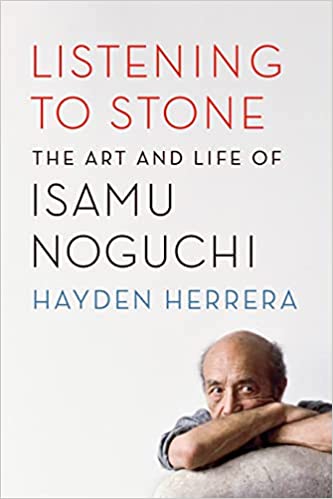
The famous American sculptor Isamu Noguchi (1904-1988) lived in the town of Mure, just fifty minutes by car from my house. Now it’s the site of an outdoor museum featuring his work. Although I was interested in seeing his stone sculptures, I had never been to the museum. I’d had just read Listening to Stone, Hayden Herrera’s fabulous new biography of the artist, which had reignited my interest in his life and his work. I knew that his mother, Leonie Gilmour, was American. His father, the poet Yone Noguchi, was Japanese.

I learned that he had once posed as the Confederate General Sherman for the sculptor originally commissioned to create the Civil War monument on Stone Mountain in Georgia. Also, I read that Noguchi volunteered to teach Japanese Americans interned during World War II. He was so handsome and charming that married women in the camp fought over him. I read about how he created his famous paper lanterns. I read of his tribute to Benjamin Franklin. I also learned of his affinity for the blue stones of Shikoku.

I decided that it was finally time to go to the museum. I invited my friend Wendy to go with me. She’s a college professor and a writer. Like me, she’s from the Midwest. She has also lived in Shikoku for over twenty years. Like me, she’s married to a Japanese man and has Japanese/American children. We often get together to discuss our writing, her pet goats, and other things. Wendy grew up in the town of Rolling Prairie, Indiana, which has a population of about 500 people. Coincidentally, when Isamu Noguchi was a boy, his mother sent him to an experimental boarding school in that very town. Wendy is also a fan of Noguchi. She had been to the Museum a few times before.

“I’ll ask Cathy to go with us,” she said.

Cathy is a Canadian translator who sometimes does work for the museum. She had translated a best-selling Japanese book about tidying up. This book was always popping up in my Facebook feed. The sight of this title always makes me feel as if I should be cleaning my house instead of writing books or reading Facebook updates. Housework is not my favorite thing. I had never met Cathy, but I’d heard of her. I worried that Cathy might be an extremely tidy person. She might not approve of me.

“That sounds great,” I said. “I’d love to meet Cathy.”

It takes some planning to visit the Isamu Noguchi Garden Museum Japan. For one thing, the village of Mure is not exactly a well-trodden spot. For another, the museum is only open three days a week — Tuesday, Thursday, and Saturday. Tours are held three times a day by appointment only. In order to make an appointment, potential visitors must write their preferred dates and times on a postcard and mail it. Email is not allowed, at least not for those living in Japan. Finally, the admission fee for adults is 2,160 yen (about $25), which is a bit pricey, as museums go. The barriers are intentional. They are meant to weed out people who are not serious about Noguchi’s art.

We made a reservation to visit on a Thursday at one p.m. Cathy suggested that we go out for udon[1] beforehand. The area is famous for its fat, doughy noodles served in broth. Cathy knew of a restaurant on a mountainside that we could reach by ropeway. I imagined slurping noodles while watching wild monkeys in the trees. We would have a leisurely lunch. Afterwards, we would admire the sculptures in the garden museum. How lovely!

The morning of our outing, a light rain was falling. I entered my destination in my cell phone’s navigation app and started the car’s engine.

“Turn right,” a woman’s calm voice said.

“Okay,” I replied, turning right.

The voice directed me onto the highway.

I drove and drove. I went past pine-covered mountains. I passed small villages nestled in valleys. The rain pattered against my windshield. A sign warned me to beware of wild boar which sometimes wandered onto the road. Off to the left, I glimpsed the Inland Sea, the tiny islands that seemed to be floating just offshore.

Although I knew that the village of Mure was only fifty minutes from my house, the voice on my app convinced me to keep going. When I was in the middle of a tunnel, far from any city, the woman’s voice said, “You have arrived at your destination.” Clearly, I was now lost.

I tried to send Wendy a message. She didn’t reply. After backtracking and driving around for another hour, I pulled over. I checked my phone. Foolishly, I had not given Cathy my phone number. Even so, she had managed to call me and gave me directions.

Time was ticking by. We wouldn’t be able to have lunch on the mountainside restaurant. We might even miss our long-awaited appointment at the museum. Why hadn’t I taken the bus? I scolded myself. Why hadn’t I studied a map? Why had I relied upon my stupid cell phone?

I got back on the road. As it turned out I was going in the wrong direction again. After another phone call, I turned around. I paid the man in the toll booth again, and drove on, finally arriving at our meeting place, a convenience store parking lot.

Wendy motioned me over to Cathy’s car. “Hurry.” She wasn’t smiling. Her voice was stern. “We are quite late.”

I climbed in the car, apologising profusely. Wendy seemed a bit angry. Who could blame her? She had arranged for me to meet the famous translator, who was probably an excellent housekeeper. Cathy had made a reservation at the exclusive museum. I was making a terrible impression.

“We’re just glad you made it,” Cathy said kindly. 

“We bought these for you,” Wendy said. She tossed a couple of rice balls and a sandwich into the back seat. They had already eaten lunch while waiting in the car. Once again, I regretted missing out on our ladies’ lunch in the restaurant on the side of the mountain.

Cathy called the museum and asked if it was okay to join the tour a bit late. She was on the board of the museum. She had even interpreted at the memorial service for Noguchi when he died in 1988. If she hadn’t been with us, I’m sure I would have been denied entrance.

“I’m so sorry,” I said again.

We pulled up in front of the building which housed the reception desk and gift shop. The rain had abated. Cathy parked the car. She went to buy our tickets. Our scheduled tour had already begun. We hurried to join the others who had made a reservation in the garden. As I followed Cathy, I noticed that there were piles of rocks everywhere. Somehow the grey sky and the wet stones made the scene all the more poignantly beautiful. 

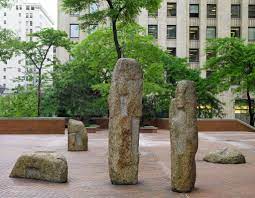
First, we entered the Stone Circle sculpture space. There were many stone sculptures. Some were finished at the time of Noguchi’s death and signed with his initials, some were not. Although the sculptures had been named, they were not labeled.

We asked the guide about some of them. She told us that one tall sleek stack of blocks was made partly of stones imported from Brazil. The area has a history as a quarry. Noguchi sometimes used stones from the nearby island Shodoshima. He also sourced his materials in Italy and other far-off places. Imagine the shipping costs!

We peeked into his workspace, housed in a weathered wooden shed.

“He was very particular about his tools,” I said. I had read that in the book. Yes, here were his carving tools, carefully aligned. They were just as they had been when Noguchi was alive.

“Yes, he was,” Cathy agreed, raising her eyebrow.

Red painted tubular-steel by Noguchi. At the 2021 Frieze Sculpture exhibition in Regent’s Park. London. Courtesy: Creative Commons
 

“Oh, and here is the model for his slide!” I recognised an image from the book I had just read. It was a white spiral, resembling a seashell. Noguchi believed that art should be part of daily life. He thought that art was for everyone, including children. He designed several playgrounds. Not all were constructed. This slide had been exhibited at the Whitney Biennial, one of the most prestigious art shows in the world.

We took a meditative stroll among the arranged rocks. Next, we climbed stone slab steps to a sculpted garden enclosed by a grove of bamboo trees. The space featured small grassy hills and a moon-viewing platform.

“I read that his ashes are in one of the stones here,” I said.

“Yes,” Cathy said, surprised at my font of Noguchi knowledge. “Up at the top of the hill. Shall we go pay our respects?”

As we climbed, Cathy explained how this space had been sculpted. Stones had been arranged to mimic the islands visible in the distance. Noguchi had been furious when someone had built a house higher up the mountain. Although it wasn’t on Noguchi’s property, it spoiled the view. Thus, it spoiled the work of art which was the garden. Traditional Japanese gardens often make use of “borrowed scenery.” Eventually, the house was bought by the museum’s caretaker and destroyed. Now, the view is as Noguchi intended it to be.

We paused for a moment before the giant egg-shaped rock at the top of the hill which had been cut in half. After Noguchi was cremated, some of his ashes were encased in the stone, and the stone was reassembled.

Next, we had a look at the house where he lived in the last years of his life. Inside, a paper lantern which resembled a jellyfish hung from the ceiling. The floors were made of straw mats. I knew from reading his biography that he had lived here with a Japanese woman who was married to a friend of his. Noguchi couldn’t speak much Japanese, and the woman couldn’t speak English. Even so, they were lovers. I imagined them sitting on the verandah, gazing out at the sculptures. Maybe they sat there sipping tea in silence. I thought of mentioning the lover to my companions, but I decided that it was too gossipy. I didn’t want them to think that I wasn’t serious about his art.

Afterwards, we decided to go to a café near Cathy’s house. We drank coffee and ate mango cheesecake. It occurred to me that my frustration from earlier that morning had disappeared. Wendy no longer seemed stressed and angry with me. Being in that beautiful, natural garden had made us all feel calm.

I was sure that I would be able to find my way back home.

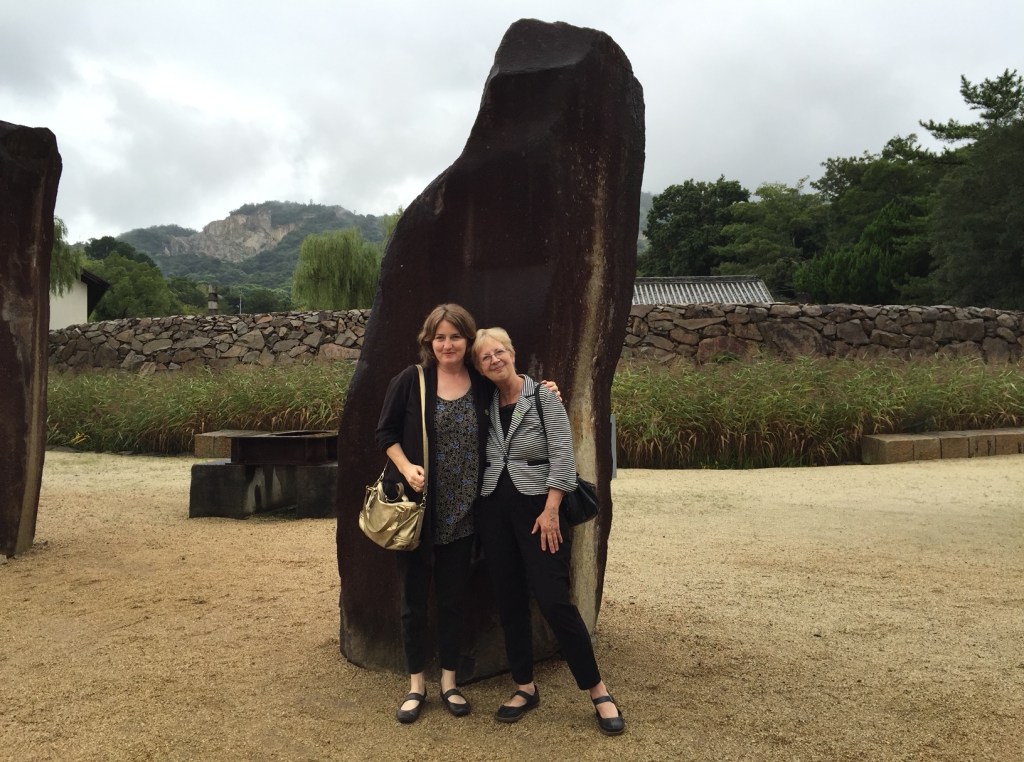
Suzanne Kamata with her friend, Wendy, outside the museum in Mure, Japan. Photo Courtesy: Suzanne Kamata

[1] Thick noodle made of wheat, Japanese Cuisine.

Suzanne Kamata was born and raised in Grand Haven, Michigan. She now lives in Japan with her husband and two children. Her short stories, essays, articles and book reviews have appeared in over 100 publications. Her work has been nominated for the Pushcart Prize five times, and received a Special Mention in 2006. She is also a two-time winner of the All Nippon Airways/Wingspan Fiction Contest, winner of the Paris Book Festival, and winner of a SCBWI Magazine Merit Award.

PLEASE NOTE: ARTICLES CAN ONLY BE REPRODUCED IN OTHER SITES WITH DUE ACKNOWLEDGEMENT TO BORDERLESS JOURNAL

Categories
The Observant Immigrant

A Post-Pandemic Future …?

By Candice Louisa Daquin

Courtesy: Creative Commons

Having been a reluctant fan of apocalyptic fiction since I read George Orwell’s Nineteen Eighty-four (1949), I had studied virology when the AIDS pandemic struck and read a great number of virus-related books on infectious diseases. Despite this preparedness and the knowledge that it was not a case of IF, but WHEN, the next virus would strike, I think I speak for most of us when I say we were still all unprepared for Covid-19.

What the pandemic has taught us thus far is immeasurable and I believe it will last several generations, or I hope so. That said, it’s our human nature to want to move on. Not because we don’t care, but part of being alive is putting trauma and suffering behind us and ensuring those who survive, truly survive, which means living. Is that insensitive or just the nature of the beast? It can be insensitive, especially to the millions who have lost loved ones, but it’s also how humans generally operate.

Is it possible to move on and live a full life irrespective of this global tragedy without losing our compassion and responsibility to stop this from ever happening again?

The reality is; it will happen again, and for many of us, in our lifetime. What we can do is be better prepared and all that this entails.

What are the steps being taken to move toward the new post pandemic future? What are we doing differently? And why?

The pandemic divided us, it physically kept us apart. Some who were well versed in social skills and true extroverts, struggled when they emerged from the worst of the pandemic. They found it hard to do the things they used to be so skilled at. From lack of practice. I recall sitting at lunch with a friend who used to be the life-and-soul of any social event. She struggled for, as she put it; ‘her words’. Having become so used to speaking less and not being face-to-face, she said it felt ‘overwhelming’, ‘strange’ and she looked forward to going home.

That is a habit we must break. The comfort of the living room and the immediate family is intoxicating. We can rapidly get used to living in a smaller-seemingly safer, changed world where we see less people, go out less, and become accustomed to an intimate circle. For some of us this was always our life, and maybe not as challenging — a shift as it was for those who previously socialised a great deal.

In a way the pandemic was harder on the extrovert than the introvert. Because while introverts aren’t averse to socialising, they can find it exhausting; whereas extroverts gain energy from it. When you put an extrovert in a forced setting without social opportunity, they may struggle more than someone used to their own company.

But it’s not as simple as extrovert and introverts. Many of us are a little of both, depending on the situation. I can go out with a big group one day. But on other days I want to be alone. Few of us are extremes. Most are like ‘ambiverts’ a combination of extroverts and introverts.

For those who do thrive on socialising, the pandemic was particularly challenging, but there are many ways to be affected, not least the tension and anxiety all of us picked up on or directly experienced.

Fortunately, technology became our best friend as we Zoomed more and met via video chats throughout the world. It opened up an international stage more than we’ve ever experienced and gave children a new normal in terms of how they learned online. Learning solely online had deleterious effects on underperformers. This ‘unfinished learning’ [1] particularly impacted youth who might have already been struggling in the educational system.

Having taught Critical Thinking online for years, I genuinely believe online learning cannot replace in-class learning. There are huge draws to learning from the comfort of home, especially for adult learners who do so after work [2]. “In comparisons of online and in-person classes, however, online classes aren’t as effective as in-person classes for most students. Only a little research has assessed the effects of online lessons for elementary and high school students, and even less has used the ‘gold standard’ method of comparing the results for students assigned randomly to online or in-person courses.” [3]The amount of information retained is drastically smaller and the social engagement of a classroom has benefits that are hard to quantify but necessary for social development. When you rob children of the opportunity to socialize with each other you isolate them at a crucial stage in their development.

Some kids with learning disabilities[4] are particularly affected by this, as are those who come from unsafe or impoverished backgrounds, where they may not have equal access to technology or reliable internet. They may not have parents who can help them if they are stuck or be able to work from home or have access to lunch. All those necessary elements to the education system were lost in our need to stay home and protect each other. A generation of children will always remember this time as a result.

On the other hand, they have mastered technology in a way that few older generations can boast of, and they are conversant in all the myriad ways of communicating with a wide range of technologies and devices. They are adaptable, versatile and fearless when it comes to tackling the rigors of online learning. For some who dislike social settings, it may also be a vast improvement[5].

Women left the workforce in droves [6]when the pandemic hit, with 2 million less in the work-force. The inverse of this was men began to return to work having been dropping in numbers whilst women rose. The Pew Research Center found “What accounts for the larger labor force withdrawals among less-educated women than men during the pandemic? It is complex but there seems to be a consensus that it partly reflects how women are overrepresented in certain health care, food preparation and personal service occupations that were sharply curtailed at the start of the pandemic. Although women overall are more likely than men to be able to work remotely, they are disproportionately employed in occupations that require them to work on-site and in close proximity to others.” Jobs men traditionally do like physical labor, were in high demand, whilst many jobs traditionally filled by women, were shut down, often not returning[7].

We can be glad our restaurants are open again; we’re opening borders, we’re flying abroad, we’re living again. But let’s also spare a moment to think of those who lost so much it’s almost impossible to conceive. Covid was the third leading cause of death in America during the height of the pandemic, how did this many deaths become normal? Covid killed an estimated 13% of people over 80. Aside the tragedy of a generation of elderly dying[8] and the loss of grandparents, and parents for so many, we’ve also seen younger people dying from a virus, which has shaken the belief younger people have that they are impervious to viruses similar to the flu, what effect with this have on their sense of safety going forward?

And what of the health consequences of those who technically survived bout of the pademic but developed ‘slow Covid’ or worse, the side-effects and lingering legacy of being seriously ill with the virus?[9] How many lung transplants will occur? How will ‘long haulers’ cope with lingering serious effects? What of those who live in countries where this isn’t an option? How many chronic illnesses will continue for decades as a result of this pandemic? It’s not enough to point to those who have died but also include those who survived but at such a high cost.

Financially we have collectively poured money into research, vaccines, countermeasures and prevention, but where has that money actually come from? And can we feasibly borrow that much money from our coffers without a reckoning? Economist Anton Korinek, an associate professor with a joint appointment in the University of Virginia’s Department of Economics and the Darden School of Business thinks: “People sometimes frame the policy response to COVID-19 as a trade-off between lives and livelihoods, and they ask whether it’s worth killing our economy to save people’s lives. But what they forget is that people won’t go back to a normal life and consumer demand won’t really recover if the virus is spreading through our country and killing people.” But the result of these hard choices and repeat closures, is they now predict an impending worldwide recession of global proportions, which had already been mounting prior to the pandemic, but promises to be far greater in its aftermath. I don’t think we’ve even begun to see the fall out; it begins with massive inflation but that’s just the start[10].

History tells us when we go through challenging times and survive, ‘the near miss experience’ as it’s known as, we want to live more than ever before[11], but economically this will not be possible for so many who are robbed of their financial security because of inflation, redundancy, underemployment and post-covid illness. We should be mindful that none of us are all right if many of us are still suffering and if we can support those who struggle, this battle with covid should have taught us all that we should care more about each other.

Perhaps these are the steps we can take to move toward a new post-pandemic future, where we consider ways, we may be better prepared for an invariable future of emerging viruses. We can try to find ways to avoid spilling into areas with high disease potential. “According to a group of UN biodiversity experts, around 1.7 million unidentified viruses circulate in animal populations, of which 540,000 to 850,000 have the capacity to infect humans.” So, we can avoid wet markets, and sloppy scientific research, both of which are vectors for the spread of viruses. We can pay more emerging virus hunters [12] to seek out those emerging viruses and begin work on treatments before they devastate countries. We can be borderless in our unanimous approach to equity for all, especially access to healthcare.

In America, we learned we were far from unassailable. In a New York Times article about Covid Deaths, the authors wrote: “For all the encouragement that American health leaders drew from other countries’ success in withstanding the Omicron surge, the outcomes in the U.S. have been markedly different. Hospital admissions in the U.S. swelled to much higher rates than in Western Europe, leaving some states struggling to provide care. Americans are now dying from Covid at nearly double the daily rate of Britons and four times the rate of Germans.” Nothing can diminish that fatal statistic or rectify the unnecessary deaths[13]. Our healthcare system, considered superior, proved to be full of holes. Without some type of socialised healthcare our costs and resources are too high and scarce. We don’t value the front-line workers like nurses, porters, assistants and care staff and we do not pay them for the risks they take, and whilst we do pay doctors good wages, we have severe shortages of knowledge and progress. Finding out we didn’t have enough ventilators, masks for medical staff, PCP equipment and beyond, exposed the shame of putting profit over people. [14]

It is no surprise then that the UK and USA were among the top offenders in the rise and spread of the pandemic and their death rates exposed this. No one ethnic group appears to be at greater risker of dying from the virus based on ethnicity alone, but Hispanic, Black, and native Americans or AIAN people are about twice as likely to die from COVID-19 as their White counterparts and that Hispanic and AIAN people are at one and a half times greater risk of COVID-19 infection than White people[15]. This is caused by social reasons (inequality) not ethnicity, as can be proven by Africa and some AIAN countries having some of the lowest Covid mortality rates. In the article ‘Racism not Genetics’ in Scientific American, the authors point out “the genes that influence skin colour are distributed independently of genes that influence the risk for any particular disease. Given the heterogeneity of groups we call “black” or “white,” treating those categories as proxies for genetic variation almost always leads us astray.”[16]

Even if there are increased susceptibilities related to blood type[17] and age (More than 81% of COVID-19 deaths occur in people over age 65. The number of deaths among people over age 65 is 97 times higher than the number of deaths among people ages 18-29 years). The real risk is how healthy the population is and whether they have safe access to healthcare[18]. Both America and the UK failed because they put profit above people and have large populations of sickly people[19]. Going forward this needs to change, which means redesigning what we prioritise. People need to have access to healthcare and make lifestyle changes that will reduce their risks which they cannot do if they cannot afford to see a doctor or in the case of the UK find it hard to see a doctor because of long wait times and reduced staffing. It’s not as simple as socializing healthcare as the UK proved, this alone doesn’t save lives, what saves lives is considering the larger picture.

But politicians gain from older populations dying, consider what happened in Brazil when the President denied the danger of Covid and for a time Brazil had the highest Covid mortality[20]. This is the harsh truism rarely mentioned: It benefits those in control of a society to lose the most fragile members who will suck up precious resources, much like a form of eugenics, it behooves them to let it happen and there are many examples[21]. For a politician who is looking for ways to reduce healthcare costs, what is better than some of the potentially most expensive ‘customers’ dying? This happened in France where number of elderly people died one Summer, shockingly little was said at the time, but all signs pointed to a collective signal of relief from those in power who benefited from less older people making claim on an already taxed medical system[22].

When Italy [23]and Spain [24] and Brazil [25] became epicenters of Covid 19 deaths, they did so because of ill preparedness and it’s a cautionary tale to witness which countries succumbed to the ravages of covid 19 repeatedly, versus those who learned from them. What we have learned is more, not less, needs to be done and if a country keeps its borders open including air-travel and business-travel, then as much as they hope to save their economy, they do so at the expense of their most vulnerable. For some countries this was a conscious choice (economy over lives) whereas for others it was poor communication and slow response times. For some a lack of money, for others a desire to gain at any cost. All this speaks of the tapestry that is the pandemic’s aftermath (and truly, is it really vanquished?)[26].

I’d love to say a new post pandemic future looks rosy, but the only way that happens is if we learn from our mistakes, which history tells us, we rarely do. The most important thing is empathy, when we saw others take their masks off and simply not care if the vulnerable died, we saw how bad we as humans can fall. But we also saw how wonderful humans can be, including the infinite sacrifice and compassion of thousands who sought to help strangers. If there is a way, we can reward the good and not the bad, if we can get our priorities right and stop paying sports figures astronomical sums but perhaps emphasise on compassion, kindness, and diligence, we can all grow together.

I was particularly moved by youth who in the turmoil of the pandemic created inventions or systems to help others[27]. Believing youth are our future, and thus, our hope, it gives me great faith in the future when I see those too young to vote, care for strangers and seek to do their part. We should always encourage this as we should encourage a continued dialogue into how we can create an international rapid response to emerging diseases. It is not if, but when, and now all of us should know this and have no excuse for putting our heads in the sand again. Yes, it hurts to think of it, yes, we’d rather go off and have fun, but what fun is it if we are only postponing the inevitable return of a lethal virus? Part of being responsible for our planet and each other, is not avoiding the harsh truths; of environmental changes and devastation, global poverty, continued inequality and elitism, and of course, the increasing risk of deadly diseases.

We have within us all, the power to effect change. The steps we should take to move toward a post pandemic future must necessarily include keeping our eyes open and not taking the easy road. Sure, governments don’t want to spend the money on research, science, virus hunters, predictions. And preparedness, but I challenge anyone to say this isn’t exactly what they need to do. It is necessary we keep this in mind when we vote and protest. We should be marching about this as much as any other cause, because it affects us all and equally, brings us all together with one cause.

Thinking in terms of one world, we are less divided than ever before and whilst we were separated, I think we also found ways to come together if we choose to. I say, we should. Because, together globally, we learn more than we ever would divided. With the offensive by Russia on Ukraine, we see the lunacy of war, the futility, the devastation and waste. Instead of pouring millions into wars and keeping the rich, rich at the cost of the poor and overworked, we should consider how we can all rise out of the mire and evolve towards a better future. But in order to achieve this we cannot be complacent, and we cannot let our guard down.


[1] https://www.mckinsey.com/industries/education/our-insights/covid-19-and-education-the-lingering-effects-of-unfinished-learning

[2] https://www.forbes.com/sites/dereknewton/2021/03/31/the-worst-of-times-for-online-education/?sh=401d57623a5a

[3] https://www.edweek.org/technology/opinion-how-effective-is-online-learning-what-the-research-does-and-doesnt-tell-us/2020/03

[4] https://www.washingtonpost.com/education/2021/05/20/students-disabilities-virtual-learning-failure/

[5] https://penntoday.upenn.edu/news/how-technology-making-education-more-accessible

[6] https://www.shrm.org/resourcesandtools/hr-topics/behavioral-competencies/global-and-cultural-effectiveness/pages/over-1-million-fewer-women-in-labor-force.aspx

[7] https://www.pewresearch.org/fact-tank/2022/01/14/some-gender-disparities-widened-in-the-u-s-workforce-during-the-pandemic/

[8] https://www.statista.com/statistics/1191568/reported-deaths-from-covid-by-age-us/

[9] https://www.hopkinsmedicine.org/health/conditions-and-diseases/coronavirus/covid-long-haulers-long-term-effects-of-covid19

[10] https://news.virginia.edu/content/economist-societal-costs-covid-19-outweigh-individual-costs

[11] https://www.psychologytoday.com/us/blog/understanding-grief/201803/aftereffects-the-near-death-experience

[12] https://www.france24.com/en/africa/20201218-gabon-s-virus-hunters-in-search-of-the-next-covid-19

[13] https://www.nytimes.com/interactive/2022/02/01/science/covid-deaths-united-states.html

[14] https://www.theguardian.com/us-news/2022/feb/06/us-covid-death-rate-vaccines

[15] https://www.cdc.gov/coronavirus/2019-ncov/community/health-equity/race-ethnicity.html

[16] https://blogs.scientificamerican.com/voices/racism-not-genetics-explains-why-black-americans-are-dying-of-covid-19/

[17] https://www.ncbi.nlm.nih.gov/pmc/articles/PMC8286549/

[18] https://www.bbc.com/news/world-us-canada-52245690

[19] https://theconversation.com/why-has-the-uks-covid-death-toll-been-so-high-inequality-may-have-played-a-role-156331

[20] https://www.thelancet.com/journals/lancet/article/PIIS0140-6736(21)00529-8/fulltext

[21] https://foreignpolicy.com/2021/03/18/china-covid-19-killed-health-care-workers-worldwide/

[22] https://www.nbcnews.com/news/world/hong-kong-covid-outbreak-rcna20033

[23] https://www.france24.com/en/tv-shows/revisited/20210528-covid-19-in-europe-codogno-the-italian-town-where-it-all-began

[24] https://www.nytimes.com/2020/03/13/world/europe/spain-coronavirus-emergency.html

[25] https://www.scielo.br/j/rsbmt/a/8FzbQZY57WRTwYL9MnBKBQp/?lang=en

[26] https://www.nature.com/articles/d41586-021-03003-6

[27] https://circle.tufts.edu/latest-research/deeply-affected-pandemic-youth-are-committed-helping-others

.

Candice Louisa Daquin is a Psychotherapist and Editor, having worked in Europe, Canada and the USA. Daquins own work is also published widely, she has written five books of poetry, the last published by Finishing Line Press called Pinch the Lock. Her website is www thefeatheredsleep.com

.

PLEASE NOTE: ARTICLES CAN ONLY BE REPRODUCED IN OTHER SITES WITH DUE ACKNOWLEDGEMENT TO BORDERLESS JOURNAL.