Categories
Essay

Does the First Woman-authored Novel in Bengali Seek Reforms?

By Meenakshi Malhotra
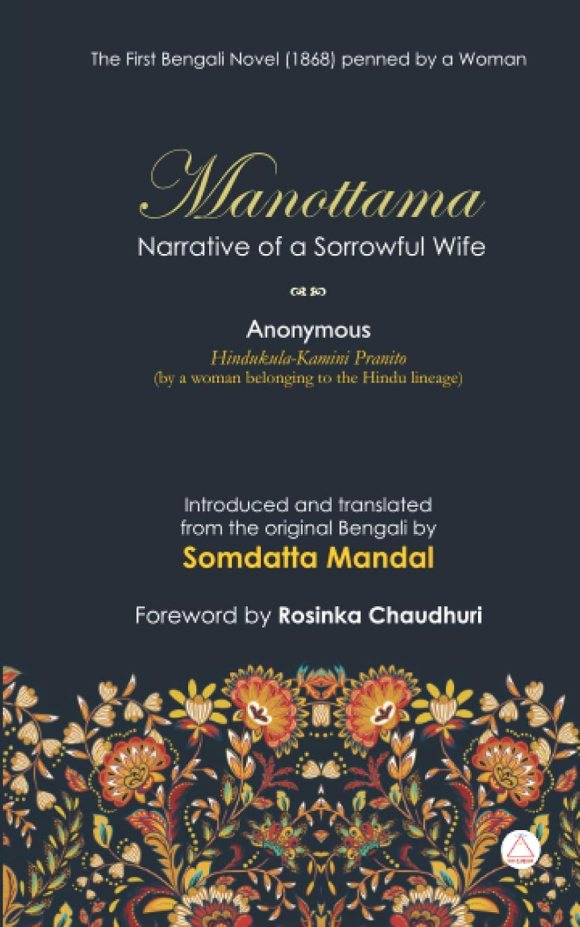
The translation published by Shambhabi The Third Eye in 2022

Published in 1868, Manottoma: Dukkhini Sati Charit (Manottama: Narrative of a Sorrowful Wife) the first novel written by an unnamed Bengali woman identifying herself as ‘A Woman belonging to the Hindu Lineage’, which is technically not a pseudonym, has been translated by Professor Somdatta Mandal and published recently in 2022. Somehow evading the attention of literary historians, the text, or any detailed information about it was unavailable for a long time till it was unearthed by a researcher in London only in 2010. In the foreword to the translated novel, Prof Rosinka Chaudhuri points out that the year 1868 was only a decade after the introduction of the main genres of modern Bengali literature: the modern novel, poetry and drama. This was a time of revision and reinvention, of recasting selves and literary forms and genres.   

Manottama narrates the sufferings of a educated and long-suffering wife who labours under the petty punishments meted out to her by her uneducated husband, depicting the conflict between patriarchal expectations and prescriptions and women’s education and presumably, agency. The eponymous novel depicts a situation where Manottama, an educated woman, is married to an uneducated husband. Because of the latter’s profligate ways, she is subjected to penury and untold hardships, which she seems to accept without demur.

The narrator of Manottama claims it’s a ‘history’. Cast in a dialogic format as a conversation between two friends, Jadhav and Madhav, (a common format in its time) the novel, in one interpretation, tells us about the pitfalls of female education in the nineteenth century, a period that also saw the emancipation of Bengali women through education in a significant way. Written in the traditional Indian Puranic style of narration, with plenty of sub-plots and digressions and without conforming to the western dictates of unity of time, place, and action, it provides a domestic picture where an educated wife has to compromise with the activities and worldview of an uneducated husband. At one level of interpretation, it seems to be an attack on patriarchy. As an early narrative by an anonymous woman, the  work needs — and in a way, demands — greater attention now after more than a century of neglect in order to reinterpret and reconfigure its didacticism and question its meek acceptance of status quo.

Can we accord this work the status of a novel? Also is there a way in which we can unpack the didacticism of the text and pave the way to a  subversive reading of patriarchies?

In showcasing a woman who seems to meekly accept her lot in life without complaint, the intention purportedly was to show the benefits of education and how an educated woman navigates her destiny.  There are many instances of rampant social injustices in the text. The husband’s profligacy, his marrying a second time and frittering away family fortunes — all these are accepted by the protagonist, Manottama, in a spirit of apparent equanimity. She seems to accept the social injustices meted out to her meekly, without demur or protest. She obeys and serves her father during his visit and continues to perform her conjugal and domestic duties vis-a-vis her undeserving  husband. If anything, she continues in her endeavour to instruct her children and the children of the quarrelsome second wife. No complaint against marital injustices pass her lips, even when her father expresses concern over the indigent condition of the household. Her behaviour is ideal in every respect and she is upheld as a paragon.  

Manottama” in Bangla can be translated into someone with a superior mind or soul and the protagonist named as such fits the bill. She keeps quiet about her individual woes while trying to ensure the well-being of the whole family.

The novel shows the impact of the many instruction manuals and advice/conduct books  that were plentifully available at the time and herein lies part of the problem of the book as a novel. For one, there is no attempt to depict the inner thoughts of the protagonist. She at times seems like a cardboard cutout, a compendium of all the virtues extolled by patriarchs and paternalists in 19th century Bengal and India. She is a stereotype and seems almost a parodic version of the ’good woman’ who sacrifices self-interest at all times. Whether this narrative qualifies/succeeds as a novel is something which has to be decided by the reader .She embodies the ‘patibrata’ or the devoted wife, a kind of woman who helps in the salvation of the husband and nation. To quote a writer at the end of the 19th century:

The Patibrata wife is the road to liberty and mobility of man. If the women of India follow the footsteps of Sita and Savitri, then this fallen country will be the blessed land  again. (Chandranath Basu, Bagchi 85)

The discovery of this text forms a story by itself and is a precious nugget as it was located in the British library relatively recently, in 2010. The significance of this text  is also that it is a woman’s voice addressing other women, advising them with a strong didactic intent. As readers, we can only speculate that the writer intends this homily as a form of advocacy to women that they should not abandon their traditions and customs, but use their education in order to better themselves, and devote themselves  to serving their husbands.  

The narrative in a dialogic style seems like an extended conversation or debate between a proponent of tradition and a spokesperson and modernity. Some of the conversation between Nilabrata, the irresponsible husband, and Manottama, echo aspects of this debate. According to Nilabrata, who is rendered somewhat insecure by his educated wife and voices the biases against women’s education, only foolish men will send their daughters to school in order to train their daughters as prostitutes. “Educating women and showing them the path to go astray are similar,” he asserts.

One is reminded of Bankim Chandra Chatterjee’s (1838-1894) essay on Prachina o Nobina or “The Traditional Woman and the New Woman”(Woman Old and New, 1879). The debate on whether to educate women were along the contours of conservatism versus progressivism, albeit with shades and finer nuances.We can suppose that the author is in conversation with a conservative perspective which argues against women’s education and where she attempts to demonstrate that tradition and women’s education are not mutually opposed or divergent.

Bengali literature offers many examples of women who were poised on the brink of the  paradoxical conundrum of modernity, which made them embrace education and reform without abandoning traditional values. This attempt to recast and position the ‘new’ Indian woman was a pre-emptive gesture  to counter the accusation of Westernization and deracination levelled against the reformist attempts to redefine gender roles and relations in late 19th century India.

While one can grasp the discursive aspect of the text, the lack of what we understand or perceive as a natural human response on Manottama’s part to any of her husband’s actions — misdemeanours, follies or vices —  leave us feeling deeply dissatisfied. If the novel as a form shows the interactions of the individual with other individuals or with society, the lack of any credible response from Manottama casts her in the mould of a ‘patibrata’   woman but stifles the text as a novel.

However, if we keep in mind that many great writers  novelists from Bengal and elsewhere — Bankim Chandra Chatterjee, Rabindranath Tagore and Sarat Chandra Chattopadhayay— have often used the novel as vehicles of ideas, which generate debate both within the world of the novel and in a larger socio-historical context, this  novel can surely be counted as a precursor and a prototype of the discursive/social discussion novel in Bengali. As for the other question raised earlier about the possibility of a subversive reading, Manottama by showing  the evils  besetting patriarchal systems, manages to show the untenable nature of the same and the fact that men like Nilabrata, for all their bravado, are liable to collapse, unless rescued and sustained by sensible wives. In that sense, it hold a lesson for men to marry wisely and recognise the true worth of educated wives, without getting lured either by false friends or duplicitous women.   

The book has received a fresh lease of life in the hands of a competent translator and commentator. The foreword similarly draws out the significance of the narrative, placing it in the context of its times and the larger context of Bengali literature. An exploration of its discursive trajectories and varying cartographies adds to the joys of discovering and reading the narrative.

.                

Meenakshi Malhotra is a Professor of English Literature at Hansraj College, University of Delhi, and has been involved in teaching and curriculum development in several universities. She has edited two books on Women and Lifewriting, Representing the Self and Claiming the I, in addition  to numerous published articles on gender, literature and feminist theory.       

.

PLEASE NOTE: ARTICLES CAN ONLY BE REPRODUCED IN OTHER SITES WITH DUE ACKNOWLEDGEMENT TO BORDERLESS JOURNAL

Click here to access the Borderless anthology, Monalisa No Longer Smiles

Click here to access Monalisa No Longer Smiles on Kindle Amazon International

Categories
Interview Review

The Subliminal World of Radha Chakravarty’s Poetry

In conversation with Radha Chakravarty about her debut poetry collection, Subliminal, published by Hawakal Publishers

Radha Chakravarty

Words cross porous walls
In the house of translation—
Leaf cells breathe new air.

We all know of her as a translator par excellence. But did you know that Radha Chakravarty has another aspect to her creative self? She writes poetry. Chakravarty’s poetry delves into the minute, the small objects of life and integrates them into a larger whole for she writes introspectively. She writes of the kantha — a coverlet made for a baby out of soft old sarees, of her grandmother’s saree, a box to store betel leaves… Her poetry translates the culture with which she grew up to weave in the smaller things into the larger framework of life:

Fleet fingers, fashioning
silent fables, designed to swaddle
innocent infant dreams, shielding
silk-soft folds of newborn skin
from reality’s needle-pricks,
abrasive touch of life in the raw.

--'Designs in Kantha’

She has poignant poems about what she observes her in daily life:

At the traffic light she appears 
holding jasmine garlands
selling at your car window for the price
of bare survival, the promise
of a love she never had, her eyes
emptied of the fragrance
of a spring that, for her, never came.

--‘Flower Seller’

Some of her strongest poems focus on women from Indian mythology. She invokes the persona of Sita and Ahalya — and even the ancient legendary Bengali woman astrologer and poet, Khona. It is a collection which while exploring the poet’s own inner being, the subliminal mind, takes us into a traditional Bengali household to create a feeling of Bengaliness in English. At no point should one assume this Bengaliness is provincial — it is the same flavour that explores Bosphorus and Mount Everest from a universal perspective and comments independently on the riots that reft Delhi in 2020… where she concludes on the aftermath— “after love left us    and hate filled the air.”

The poems talk to each other to create a loose structure that gives a glimpse into the mind of the poetic persona — all the thoughts that populate the unseen crevices of her being.

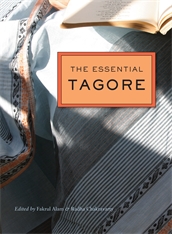
In Subliminal, her debut poetry book, Radha Chakravarty has brought to us glimpses of her times and travels from her own perspective where the deep set tones of heritage weave a nostalgic beam of poetic cadences. Chakravarty’s poems also appear in numerous journals and anthologies. She has published over 20 books, including translations of major Bengali writers such as Rabindranath Tagore, Bankim Chandra Chatterjee, Mahasweta Devi and Kazi Nazrul Islam, anthologies of South Asian writing, and several critical monographs. She has co-edited The Essential Tagore (Harvard and Visva-Bharati), named ‘Book of the Year’ 2011 by Martha Nussbaum.

In this conversation, Radha Chakravarty delves deeper into her poetry and her debut poetry book, Subliminal.

Your titular poem ‘Subliminal’ is around advertisements on TV. Tell us why you opted to name your collection after this poem.

Most of the poems in Subliminal are independent compositions, not planned for a pre-conceived anthology. But when I drew them together for this book, the title of the poem about TV advertisements appeared just right for the whole collection, because my poetry actually delves beneath surfaces to tease out the hidden stories and submerged realities that drive our lives. And very often, those concealed truths are startlingly different from outward appearances. I think much of my poetry derives its energy from the tensions between our illusory outer lives and the realities that lurk within. In ‘Memories of Loss’, for example, I speak of beautiful things that conceal painful stories:

In a seashell held to the ear
the murmur of a distant ocean

In the veins of a fallen leaf
the hint of a lost green spring

In the hiss of logs in the fire,
the sighing of wind in vanished trees

In the butterfly’s bold, bright wings,
The trace of silken cocoon dreams

So, when and why did you start writing poetry?

I can’t remember when I started. I think I was always scribbling lines and fragments of verse, without taking them seriously. Poetry for me was the mode for saying the unsayable, expressing what one was not officially expected to put down in words. In a way, I was talking to myself, or to an invisible audience. Years later, going public with my poems demanded an act of courage. The confidence to actually publish my poems came at the urging of friends who were poets. Somehow, they assumed, or seemed to know from reading my published work in other forms, that I wrote poetry too.

Did being a translator of great writers have an impact on your poetry? How?

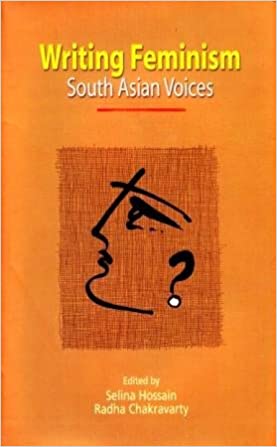
Yes, definitely. In particular, translating Tagore’s Shesher Kabita (as Farewell Song), his verses for children, the lush, lyrical prose of Bankimchandra Chatterjee (Kapalkundala) and the stylistic experiments of contemporary Bengali writers from India and Bangladesh (in my books Crossings: Stories from India and Bangladesh, Writing Feminism: South Asian Voices, Writing Freedom: South Asian Voices and Vermillion Clouds) sensitised me to the way poetic language works, and how the idiom, rhythm and resonances change when you translate from one language to another. Translating poetry has its challenges, but it also refined my own work as a poet. Let me share a few lines of poetry from Farewell Song, my translation of Tagore’s novel Shesher Kabita:

Sometime, when you are at ease, 
When from the shores of the past,
The night-wind sighs, in the spring breeze,
The sky steeped in tears of fallen bakul flowers,
Seek me then, in the corners of your heart,
For traces left behind. In the twilight of forgetting,
Perhaps a glimmer of light will be seen,
The nameless image of a dream.
And yet it is no dream,
For my love, to me, is the truest thing …

What writers, artists or musicians have impacted your poetry?

For me, writing is closely associated with the love for reading. Intimacy with beloved texts, and interactions with poets from diverse cultures during my extensive travels, has proved inspirational.

Poetry is also about the art of listening. As a child I loved the sound, rhythm and vivacity of Bengali children’s rhymes in the voice of my great-grandmother Renuka Chakrabarti. She has always been a figure of inspiration for me, a literary foremother who dared to aspire to the world of words at a time when women of her circle were not allowed to read and write. A child bride married into a family of erudite men, and consumed by curiosity about the forbidden act of reading, she took to hiding under her father-in-law’s four-poster bed and trying to decipher the alphabet from newspapers. One day he caught her in the act. Terrified, she crept out from her hiding place, and confessed to the ‘crime’ of trying to read. Things could have gone badly for her, but her father-in-law was an enlightened individual. He understood her craving to learn, and promised that he would teach her to read and write. Under his tutelage, and through her own passion for learning, she became an erudite woman, equally proficient in English and Bengali, an accomplished but unpublished poet whose legacy I feel I have inherited. Subliminal is dedicated to her.

As a child I absorbed both Bengali and English poetry through my pores because in our home, poetry, and music were all around me. I was inspired by Tagore and Nazrul, but also by modern Bengali poets such as Jibanananda Das, Sankho Ghosh and Shamsur Rahman. In my college days, as a student of English Literature, I loved the poetry of Shakespeare, Donne, Yeats, T. S. Eliot and the Romantics.

Later, I discovered the power of women’s poetry: Emily Dickinson, Sylvia Plath and Adrienne Rich, to name a few. I am fascinated by the figure of Chandrabati, the medieval Bengali woman poet who composed her own powerful version of the Ramayana. Art and music provide a wellspring of inspiration too, for poetry can have strong visual and aural dimensions.

You translate from Bengali into English. How is the process of writing poetry different from the process of translation, especially as some of your poetry is steeped in Bengaliness, almost as if you are translating your experiences for all of us?

Translation involves interpreting and communicating another author’s words for readers in another language. Writing poetry is about communicating my own thoughts, emotions and intuitions in my own words. Translation requires adherence to a pre-existing source text. When writing poetry, there is no prior text to respond to, only the text that emerges from one’s own act of imagination. That brings greater freedom, but also a different kind of challenge. Both literary translation and the composition of poetry are creative processes, though. Mere linguistic proficiency is not enough to bring a literary work or a translated text to life.

English is not our mother tongue. And yet you write in it. Can you explain why?

Having grown up outside Bengal, I have no formal training in Bengali. I was taught advanced Bengali at home by my grandfather and acquired my deep love for the language through my wide exposure to books, music, and performances in Bengali, from a very early age. I was educated in an English medium school. At University too, I studied English Literature. Hence, like many others who have grown up in Indian cities, I am habituated to writing in English. I translate from Bengali, but write and publish in English, the language of my education and professional experience. Bengali belongs more to my personal, more intimate domain, less to my field of public interactions.

Both Bengali and English are integral to my consciousness, and I guess this bilingual sensibility often surfaces in my poetry. In many poems, such as ‘The Casket of Secret Stories,’ ‘The Homecoming’ or ‘In Search of Shantiniketan’, Bengali words come in naturally because of the cultural matrix in which such poems are embedded. ‘The Casket of Secret Stories’ is inspired by vivid childhood memories of my great-grandmother’s  daily ritual of rolling paan, betel leaves stuffed with fragrant spices, and arranging them in the metal box, her paaner bata[1]. When she took her afternoon nap, my cousins and I would steal and eat the forbidden paan from the box, and pretend innocence when she woke up and found all her paan gone. Of course, from our red-stained teeth and lips, she understood very well who the culprits were. But she never let on that she knew. It was only later, after I grew up, that I realised what the paan ritual signified for the housebound women of her time:

In the delicious telling,
bright red juice trickling
from the mouth, staining
tongue and teeth, savouring
the covert knowledge
of what life felt like in dark corners
of the home’s secluded inner quarters,
what the world on the outside looked like
from behind veils, screens,
barred windows and closed courtyards
where women’s days began and ended,
leaving for posterity
this precious closed kaansha* casket,
redolent with the aroma of lost stories

*Bronze

But I don’t agree that all my poetry is steeped in Bengali. In fact, in most of my poems, Bengali expressions don’t feature at all, because the subjects have a much wider range of reference. As a globe trotter, I have written about different places and journeys between places.

Take ‘Still’, which is about Mount Everest seen from Nagarkot in Nepal. Or ‘Continental Drift’, about the Bosphorus ferry that connects Asia with Europe. Such poems reflect a global sensibility. My poems on the Pandemic are not coloured by specific Bengali experiences. They have a universal resonance. I contributed to Pandemic: A Worldwide Community Poem (Muse Pie Press, USA), a collaborative effort to which poets from many different countries contributed their lines. It was a unique composition that connected my personal experience of the Pandemic with the diverse experiences of poets from other parts of the world. The poem was nominated for the Pushcart Prize. I guess my poems explore the tensions between rootedness and a global consciousness.

What are the themes and issues that move you?

I tend to write about things that carry a strong personal charge, but also connect with general human experience. My poems are driven by basic human emotions, memory, desire, associations, relationships, and also by social themes and issues. Specific events, private or public, often trigger poems that widen out to ask bigger questions arising from the immediate situation.

Sometimes, poetry can also become for me what T. S. Eliot calls an “escape from personality,” where one adopts a voice that is not one’s own and assume a different identity. ‘The Wishing Tree’ and the sequence titled ‘Seductions’ work as “mask” poems, using voices other than my own. This offers immense creative potential, similar to creating imaginary characters in works of fiction.

There are a lot of women-centred poems in Subliminal. Consider, for example, ‘Designs in Kantha’, ‘Alien’, ‘River/Woman’, ‘That Girl’, ‘The Severed Tongue’ and ‘Walking Through the Flames’. These poems deal with questions of voice and freedom, the body and desire, and the legacy of our foremothers. Some of them are drawn from myth and legend, highlighting the way women tend to be represented in patriarchal discourses.

The natural world and our endangered planet form another thematic strand. I am fascinated by the hidden layers of the psyche, and the unexpected things we discover when we probe beneath the surface veneer of our exterior selves. My poems are also driven by a longing for greater connectivity across the borders that separate us, distress at the growing hatred and violence in our world, and an awareness of the powerful role that words can play in the way we relate to the universe. ‘Peace Process’, ‘After the Riot’ and ‘Borderlines’ express this angst.

How do you use the craft of poetry to address these themes?

Poetry is the art of compression, of saying a lot in very few words. Central to poetry is the image. A single image can carry a welter of associations and resonances, creating layers of meaning that would require many words of explanation in prose. Poems are not about elaborations and explanations. They compel the reader to participate actively in the process of constructing meaning. Reading poetry can become a creative activity too. Poems are also about sound, rhythm and form. I often write “in form” because the challenge of working within the contours of a poetic genre or form actually stretches one’s creative resources. In Subliminal, I have experimented with some difficult short forms, such as the Fibonacci poem, the Skinny, and the sonnet. Take, for instance, the Skinny poem called ‘Jasmine’:

Remember the scent of jasmine in the breeze?
Awakening
tender
memories
bittersweet,
awakening
buried
dormant
desires,
awakening,
in the breeze, the forgotten promise of first love. Remember?

The last two lines of the poem use the same words as the beginning, but to tell a different story. The form demands great economy.

I pay attention to the sound, and even when writing free verse, I care about the rhythm.  Endings are important. Many of my poems carry a twist in the final lines. I mix languages. Bengali words keep cropping up in my English poems.

Are your poems spontaneous or pre-meditated?

The first attempt is usually spontaneous, but then comes the process of rewriting and polishing, which can be very demanding. Some poems come fully formed and require no revision, but generally, I tend to let the first draft hibernate for some time, before looking at it afresh with a critical eye. Often, the final product is unrecognisable.

Which is your favourite poem in this collection and why? Tell us the story around it.

It is hard to choose just one poem. But let us consider ‘Designs in Kantha’, one of my favourites. Maybe the poem is important to me because of the old, old associations of the embroidered kantha with childhood memories of the affection of all the motherly women who enveloped us with their loving care and tenderness. Then came the gradual realisation, as I grew into a woman, of all the intense emotions, the hidden lives that lay concealed between those seemingly innocent layers of fabric. The kantha is a traditional cultural object, but it can also be considered a fabrication, a product of the creative imagination, a story that hides the real, untold story of women’s lives in those times. Behind the dainty stitches lie the secret tales of these women from a bygone era. My poem tries to bring those buried emotions to life.

As a critic, how would you rate your own work?

I think I must be my own harshest critic. Given my academic training, it is very hard to silence that little voice in your head that is constantly analysing your creative work even as you write. To publish one’s poetry is an act of courage. For once your words enter the public domain, they are out of your hands. The final verdict rests with the readers.

Are you planning to bring out more books of poems/ translations? What can we expect from you next?

More poems, I guess. And more translations. Perhaps some poems in translation. My journey has taken so many unpredictable twists and turns, I can never be quite sure of what lies ahead. That is the fascinating thing about writing.

Thank you for giving us your time.

[1] Container for holding Betel leaves or paan

(The online interview has been conducted through emails and the review written by Mitali Chakravarty.)

Click here to read poems from Subliminal.

PLEASE NOTE: ARTICLES CAN ONLY BE REPRODUCED IN OTHER SITES WITH DUE ACKNOWLEDGEMENT TO BORDERLESS JOURNAL. 

Click here to access the Borderless anthology, Monalisa No Longer Smiles

Click here to access Monalisa No Longer Smiles on Kindle Amazon International

Categories
Interview

In Conversation with Radha Chakravarty

Radha Chakravarty

Radha Chakravarty has, for many of us, been synonymous to translations that we read – excellent translations of Tagore, Bankim and Mahasweta Devi – major names from Bengal in Literature. A well-respected academic who specialises in translations, Tagore, Mahasweta Devi, Women’s Literature, South Asian Literature, Subaltern Writings and Comparative Literature, in this exclusive she talks to us of the multiple journeys in her development as a translator, critic and writer.

You are an eminent translator, editor, critic and writer. What started you out on this path?

These are separate yet interlinked roles, different journeys yet part of the same narrative of my involvement with the world of words. I started writing when I was a child, but came to think of publishing my creative work many years later, when journal editors began to solicit my poetry for publication. My poems have now appeared in many books and journals, in India and internationally. It was a wonderful collaborative experience to contribute to Pandemic: A Worldwide Community Poem (Muse Pie Press, USA), nominated for the Pushcart Prize 2020. 

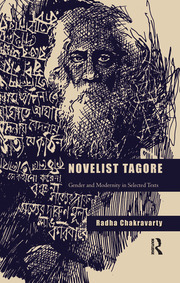
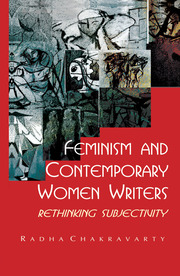
My work as a critic evolved through engagement with research. Feminism and Contemporary Women Writers (Routledge, 2008) for instance, emerged from my doctoral research, a cross cultural study of writers such as Mahasweta Devi, Anita Desai, Doris Lessing, Toni Morrison, Margaret Atwood and Buchi Emecheta. Novelist Tagore (Routledge, 2013) draws upon my research on gender and modernity in Tagore’s novels. My essays and reviews come from my areas of specialization, including Tagore Studies, women’s writing, South Asian Studies, Comparative Literature and Translation Studies.

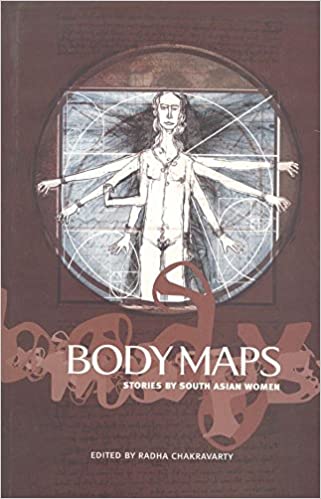
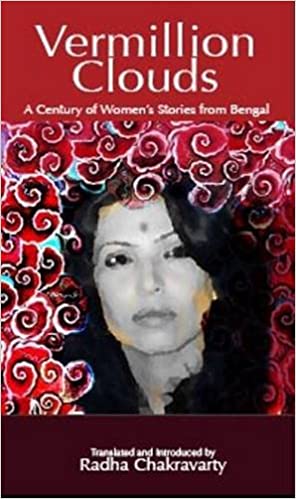
As an editor, my work is inspired by the idea of sahitya, the Bengali word for “literature” that Tagore interprets as “being with” or “being together”. This idea of collaboration and dialogue across heterogeneities fascinates me. My edited volumes, such as Bodymaps (Zubaan, 2007), a collection of South Asian women’s stories on the body, Vermillion Clouds (Women Unlimited, 2010), an anthology showcasing a century of fiction by Bengali women and Writing Feminism (co-edited with Selina Hossain; UPL, 2010), containing selections of South Asian feminist writing, are inspired by this principle. My most exciting collaborative project as an editor, so far, was The Essential Tagore (Harvard and Visva-Bharati, 2011), where my co-editor Fakrul Alam and I worked with thirty reputed South Asian translators located in different countries, on the largest anthology of Tagore’s writings across ten genres. The volume, named the ‘Book of the Year’ 2011 by Martha Nussbaum, has since become a standard reference for Tagore scholars worldwide.

As for translation, I started dabbling in informal translations, across Bengali, English and Hindi, even as a child. My grandfather, who taught me advanced Bengali at home, often involved me in these linguistic experiments. My first published translation happened almost by accident, in the 1990s. A friend, an Israeli art historian, asked me to explain the lyrics of the Bollywood song daiya re daiya re charh gaye papi bichhwaa (the poisoned scorpion climbed on me), because she was researching the scorpion motif in the Khajuraho scultpures. I ended up translating the entire song into English, in verse! My friend was amazed. She included my translation of the song with due credit, in her essay on the scorpion, published in the Journal of the Asiatic Society of India. As for my early books in translation, I must thank my friends, the editors and publishers who urged me to take up those projects. They saw in me a potential I had not fully recognised myself. Later, the overwhelming recognition that these books received transformed my self-image. I began to think of myself as a translator, among many other things.

You started by translating Mahasweta Devi. When and why did you start translating Tagore? What moved you from Mahasweta Devi to Tagore?

At the turn of the century, I was immersed in the challenge of translating into English the heterogeneities of contemporary Bengali fiction. Crossings: Stories from Bangladesh and India (2003), my first published book of translations, included the stories of twenty living writers. Alongside, I was working on In the Name of the Mother, my translations of some powerful, unusual stories about motherhood by Mahasweta Devi. The volume appeared soon after Crossings.

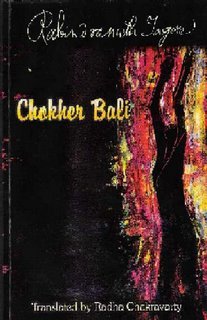
Meanwhile, I received a sudden call from Rani Ray—once my teacher, now a friend, mentor and figure of inspiration—urging me to translate Tagore’s Chokher Bali (A grain of Sand) an important but neglected text. I remember the shock and awe I felt at that moment. I protested that I was no Tagore expert, much as I loved and admired his work, but Rani di was adamant.  “I think you are the right person to translate this novel,” she insisted. I found myself promising that I would try. And that was how my journey as a Tagore translator began. I read the novel, was struck by its boldness as a path-breaking modern text, and felt daunted but also tremendously excited at the challenge of trying to translate this hundred-year-old text that was at once so rooted in its context, and yet so far ahead of its time. Translating Chokher Bali was an immersive experience. It transformed me, drew me into a lifelong relationship with Tagore, and there has been no looking back.

Was translating Tagore different from translating Mahasweta Devi or Bankim? How was it similar/ different?

As I said, I first translated contemporary writing before turning my attention to Tagore. My translation of Bankim’s Kapalkundala came in 2005, after I had also translated Tagore’s Shesher Kabita as Farewell Song. So the transition from Mahasweta and other contemporary figures, to Tagore’s early twentieth century texts, and then to Bankim’s nineteenth century novel was like a journey back in time, delving further and further into the Bengali literary past. Of late, I have been translating parts of the Chandrabati Ramayana, a sixteenth century composition. Each step in this journey has been a process of exploration and rediscovery through translation, of familiar and much loved texts that I had read avidly in my early life, never dreaming that I might one day aspire to translate these literary jewels.

After working with living writers, the transition to Tagore was not easy. When translating Chokher Bali, I felt the need to evoke the flavour of a bygone age, even in a contemporary translation for the twenty-first century reader. This involved complex creative experiments with style and vocabulary that stretched my abilities as a translator. One felt the importance of bringing to life the cultural ethos of Bengal in the late nineteenth century, a world in many ways unfamiliar to readers of our time. Simultaneously, I recognized the modernity of Tagore’s novel, the new element of interiority that transformed the Bengali novel at his magic touch. That needed to be brought to life too.

Moving from Tagore to Bankim offered a fresh set of challenges. The lyrical, Sanskritised cadences of Kapalkundala are far removed from the more modern idiom of Tagore’s novels. Bankim’s text is set in the Mughal period. Hence the translator must actually negotiate the past at a double level, to bring to the modern reader the late medieval ethos as represented through Bankim’s nineteenth century sensibility. Crossing these temporal and cultural divides demanded daring experiments with language, as well as considerable research to contextualize the source text. It was a learning process for me.

Working with the Chandrabati Ramayana is a different experience altogether. A radical text for its times, and one that challenges the mainstream literary tradition, it remains a text worth returning to in our own context, because it destabilizes monolithic conceptions of our premodern religious and social traditions. Finding in English an idiom that will capture the poetry as well as the content is a hard task though.

These adventures in translation have compelled me to read the Bengali literary tradition from a different angle, from a writerly perspective, as it were. I have realized that translation involves a creative element, but also works as a form of interpretation. It has become clear to me why translation can be described as the most intimate act of reading.

In the Jaipur Literary Festival (2017), you made a very interesting observation that if one does not get into the skin of a writer, one cannot capture the essence of the writer in entirety. Are all good translations more of transcreations that literal translations?

Translation often appears to me a form of ventriloquism, the translator’s voice making itself heard through the voice of the source text. It produces a double-voiced text. My endeavour, when translating, is to bring to life the spirit rather than the literal vocabulary of the source text. One struggles to apprehend, interpret, and then, through one’s own creative ability in the target language, to approximate the impulse behind the original. A doubleness comes into play here, due to the gap in time, location, language, culture and context that separates the translation from the source text. In this tension resides the dynamic potential of translation to simultaneously recognize and displace the original. The success of a translation often depends on the translator’s creativity, as well as the author’s.

What is your opinion of Tagore’s own translation of his works? Can you expand on that?

Tagore’s English translations of his own work shot him to international fame and led to the Nobel Prize. Yet he was diffident about his own command of English, and unsure about the quality of his translations. Some of these translations resorted to archaisms and a rather stilted style that did not weather the test of time very well. They were partly responsible, I feel, for the fluctuations in Tagore’s international reputation after the initial flush of success. Certainly, they are not close copies of the original Bengali texts; rather, they are re-creations in a different language, for a different readership. While some readers may cavil at the gap between the source texts and their English versions, these translations, in my opinion, remain important instances of the ways in which translation can connect different cultures through dynamic border crossings. The Kabir translations for instance, drawing upon the work of Kshitimohan Sen, and produced by Tagore in collaboration with Evelyn Underhill, provide a fascinating instance of the translingual and transcultural border-crossings that were involved in this process.

Sometimes Tagore adopted unorthodox collaborative measures when working with translations.

We know about the English translations of course, but it is worth remembering that Tagore also translated numerous premodern poets into Bengali and English, from a range of different languages, often drawing upon eclectic sources and relying on the assistance of others more knowledgeable about the languages and literary cultures of the source texts. I have recently published an essay on Tagore’s translations of medieval poetry, where I argue that these should be read, not as literal, faithful renderings that seek to cling close to the source texts, but rather, as transcreations that resituate these early texts in new, unfamiliar contexts. What takes place in his translations of Bhakti poetry, for instance, is also a meeting of different faiths, across diverse histories and geographies.

Can a translation be done from a translated piece into the same language? Would such a revision be of value?

Intralingual translations can be found in many literary cultures. Sometimes, texts in formal or classical versions of a language get translated into a modern, colloquial idiom, to reach a wider audience in a different time period. Often, these can be read as democratizing moves, arising from dynamic historical shifts that bring about an interrogation of social and linguistic hierarchies. The bridging of gaps between “high” and “popular” cultures can be attempted through such processes. These translations imagine into being new readerships for older texts, giving them a new and altered “afterlife”. The market also dertermines some of these things, especially when it comes to promoting modern versions of enduring texts that are regarded as classics. Intralingual translation can blur the borderline between translation and adaptation.

Can a translation to another language be done from a translation say in English, and still have the authenticity of the original writer?

It is currently a widely prevalent practice to use English translations as source texts for re-translation of texts into other languages. English as the language of global currency provides a useful medium for such translingual, often transnational interchanges. In India, despite our multilingual culture, there is dearth of translators who can work across Indian languages without taking recourse to English as a via media. This is part of the colonial legacy, which transformed our premodern polyglot culture through the compartmentalization and codification of the “modern Indian languages”. Today, bilingual and multilingual Indian scholars and translators are scarce. Hence, traffic across Indian languages tends to take place via English. The need of the hour is to regenerate a culture where the true potential of our multilingualism can be acknowledged, through a revaluation of polyglot scholarship.

Collaborative translation also holds immense possibilities for South Asian cultures, where diverse forms of linguistic and literary expertise can be harnessed, to work directly across our many languages, without always using English as a crutch. We already possess a rich history of collaborative translations in our literary past. This can inspire us to develop models for translation that involve mutual relationships between translators working in different languages.

How do you deal with translating multiple languages used by a writer into English? How would you indicate the presence of dialects or another language in the text you are translating from Bengali to English?

This question is particularly pertinent to the writings of Mahasweta Devi, where we find extraordinary instances of heteroglossia and multilingualism, in ostensibly monolingual texts. In a single story, such as “Draupadi”, we find chaste and colloquial Bengali, Santhal song, Hindi words and phrases, and English expressions, as well as quotations from various sources. Such texts challenge the monolingual paradigm to indicate that our cultural ethos, and also our sensibility, is always already multilingual. The idea of “pure” language is destabilized, to dramatize, in the words of the text, the dynamic interaction of various languages and linguistic registers. The social and political hierarchies that underlie this interplay of languages come to the fore through the rhetoric of the text. In such instances, the translator faces a tremendous challenge, especially with English as a target language so far removed from South Asian linguistic cultures. This tests the translator’s imagination and creativity, and demands the ability to summon up suitable strategies to deal with the challenges posed by the source text.

In my own translations, I prefer to highlight the forms of otherness operational in the source text, instead of erasing these markers of difference in order to create a smooth and easy style that would comfort a reader unfamiliar with written Bengali or South Asian cultures. To a great extent, I try to retain “untranslatable” cultural elements such as kinship terms, or names of trees, flowers, food and clothing. The use of italics also needs to be rationalised, depending on the demands of the source text, as well as the context, purpose and target audience for the translation. I prefer to keep notes and glossaries to a minimum, wanting instead that the reader engage actively in making meaning of the translation. In other words, I like to foreground the “translatedness” of the translation, as a text from elsewhere. At the same time, though, I don’t carry the process of defamiliarization so far as to completely destroy the readability of the target text. After all, I translate in order to be read. And I translate for the general reader, because I want my translations to have as wide and eclectic a readership as possible. It is my mission to bring writers from our own culture to the rest of the world, not just for a select coterie of erudite scholars.

Has translating all these writers impacted your own writing and thought processes as a critic? How?

As a critic, one reads a book from the outside, as it were. It is the analytical faculty that comes to the fore, even in close reading. When translating, something different happens. Translation, like literary criticism, involves close reading, interpretation and contextualization. But the actual process of translating also involves other faculties beyond the rational and intellectual. A feel for language is required, an element of emotion, and a creative ability to find strategies that will make the text viable in a new language for a new audience. One gets drawn into the source text through the process of rewriting or reinventing it, instead of striving for critical distance. Elements of affect, and the pleasure of the text, bring the process of translation alive. Criticism treats the text as a stable entity to be interpreted and analysed, while translation destabilizes the fixity of the “original” and makes us aware of its potential mutability. As a practising translator, I think I have become more sensitive to the “writerly” aspect of the texts that I read as a critic. I have also become more sharply aware of the way canons are formed, and the ways in which translation can trigger transformations in prevalent literary and linguistic hierarchies..

How do you find the time to juggle between academics, translations and writing?

It can be a tightrope walk. But if something matters enough, one tries to make time for it. Always, one is up against the feeling of racing against time. So much to do, and so little time. A lifetime is too short.

What are your future plans? Do we have anything new in the offing?

I find myself immersed in many different adventures with words. Currently, I am working on The Tagore Phenomenon (Allen Lane, forthcoming), a giant anthology that showcases Tagore’s works as a polymath whose oeuvre covers an extraordinary range of subjects, including nationalism, internationalism, education, social issues, nature and environment, spritituality, science, literature and the arts, rural reconstruction, religion, philosophy and humanism, to name a few. A new translation of Char Adhyay (Four Quartets), Tagore’s last novel, is on the way.

Our Santiniketan, to be soon published by Seagull, is my English translation of Mahasweta Devi’s recollections of her days in Santiniketan as a little schoolgirl. An entire ethos, a bygone era, comes to life in these memoirs, invoking the world of Santiniketan in the living presence of Rabindranath Tagore, during the 1930s. Mahasweta Devi: Writer, Activist, Visionary, an edited volume, will bring together scholarly essays and translations showcasing the writer’s life, work and critical reception across cultures. I am also translating selected essays by Kazi Nazrul Islam, whose prose deserves far more attention than it has so far received.

Alongside, my poetry continues to appear in print, in diverse forums. Translations of my poems have also been published. Drawing my poems together in a collected volume is a long overdue project, waiting to happen …

Thank you for giving us your time Professor Radha Chakravarty.

Click here to read Tagore’s prose translations by Radha Chakravarty.

Click here to read Tagore’s poetry translations by Radha Chakravarty.

.

(This is an online interview conducted by Mitali Chakravarty on behalf of Borderless Journal.)

.

PLEASE NOTE: ARTICLES CAN ONLY BE REPRODUCED IN OTHER SITES WITH DUE ACKNOWLEDGEMENT TO BORDERLESS JOURNAL