I wonder what people felt at the turn of the century, with Waterloo behind them now; and the Crimea and the hundred wars fought by men to prove I'm not sure what. I wonder what they felt as the thick black smoke of industry cleared now on the skyline; and there, for the first time, they saw the blue sky, the sunlight shining through. I wonder what they felt when they saw their century slip away, like a fine ship pushed out to sea. And there, before them, the great unknown; mile on mile of endless ocean. Did they feel hope or fear, I wonder? Or maybe both? And, seeing the gravestones in the rain, perhaps a sense of sadness, too, for those who had not made it. For many had lived, but many more had died.
II
We survived the shock of the millennium, with Passchendaele behind us now; and Auschwitz, Hiroshima, Korea, Vietnam. And, I wonder, as the years subside, what we will feel at the turn of our century... With Iraq behind us now, and Gaza and Ukraine and the hundred wars yet to be fought by men to prove I'm not sure what. I wonder what we'll feel as the thick clouds of radioactive gas clear slowly on the skyline. And there, for the first time, we see the blue sky, the sunlight shining through. I wonder what we'll feel as our century slips away, like part of a rocket jettisoned silently in outer space. And there, before us, the great unknown; a thousand light years, bright with stars; yet so very, very far away. Will we feel hope or fear, I wonder? Or maybe both? And, seeing the gravestones in the rain, perhaps a sense of sadness, too, for those who did not make it. For many will live, but many more will die.
Stuart MacFarlane is now semi-retired. He taught English for many years to asylum seekers in London. He has had poems published in a few online journals.
.
PLEASE NOTE: ARTICLES CAN ONLY BE REPRODUCED IN OTHER SITES WITH DUE ACKNOWLEDGEMENT TO BORDERLESS JOURNAL
Celebrating poetry around the world, our focus this year is on refugees, immigrants or poetry by migrants… In a way, we are all migrants on this Earth and yet immigration for both climate and war has created dissatisfaction in the hearts of many. Can mankind unify under the single blue dome which covers all our home?
“The Journey” by Alwy Fadhel, an asylum seeker to Australia. The piece is included in the Exile collection of the Refugee Art Project. Art from Public Domain.
We start by welcoming migrants from Jupiter but how do we react to human migrants within Earth… ?
All the Way from Jupiter

By Rhys Hughes

All the way
from Jupiter came the refugees,
their heads
made of hydrogen,
and helium, their knees.
No one cried:
depravity!
for we were pleased
to help them
relocate to Earth: we offered
them homes
inside plastic domes
uncrowded but
full of swirling clouds
blown by the music of
fierce trombones
to mimic the crushing gravity.

All the way
from one of our homegrown
war zones
came refugees on their knees
and we said:
no, no, no, and no again!
Go back home right now,
be killed,
assaulted,
it’s all your own fault
for being born here on Earth.
The newcomers
from Jupiter are tubular
like cucumbers,
but men, women and children
like yourselves
aren’t welcome.
And what do refugees from war-torn zones on Earth have to add?These are poems by those who had to escape to safety or move homes for the sake of conflict.
I am Ukraine brought to us by Lesya Bakun, while she was on the run from her home to a place of refuge outside her homeland. Click here to read.
Immigrant’s dream brought to us by Ahmad Al-Khatat, who migrated from Iraq to the West to find sustenance. Click here to read.
In some cases, the wounds lingered and the progeny of those who escaped earlier conflicts give voice to past injuries as well as some immigrants who wandered to find a better life share their experiences.
In 1947, Masha Hassan writes of her grandmother’s plight during the Partition of the Indian Subcontinent. Click here to read.
Birth of an Ally reflects Tamoha Siddiqui’s wonder with new flavours she experiences away from her original homeland. Click here to read.
Two Languages by Luis Cuauhtémoc Berriozabal explores linguistic diversity in immigrants. Click here to read.
These could be listed as turns of history that made people relocate.
Red Shirt Hung from a Pine Treeby Ryan Quinn Flanagan takes two issues into account — violence against humanity and colonial displacement of indigenous people — is that migration? Click here to read.
Products of War by Mini Babu talks of the displacement of humanity for war. Click here to read.
Some empathise with those who had to move and write of the trauma faced by refugees.
Migrant Poems by Malachi Edwin Vethamani reflect on migrants and how accepted they feel. Click here to read.
Birds in Flight by A Jessie Michael empathises with the plight of refugees. Click here to read.
The Ceramicist by Jee Leong Koh records the story of a migrant. Click here to read.
And some wonder about the spiritual quest for a homeland… Is it a universal need to be associated with a homeland or can we find a home anywhere on Earth? If we stretch the definition of homeland to all the planet, do we remain refugees or migrants?
Anywhere Particular by Wendy Jean MacLean reflects on the universality of homes — perhaps to an extent on nomadism. Click here to read.
Where is Home? by Shivani Shrivastav meditates on the concept of home. Click here to read.
Sparrows, a poem translated from Korean by the poet — Ihlwha Choi — questions the borders drawn by human laws. Click here to read.
Journey of Hope by Tagore has been translated from Bengali by Mitali Chakravarty. It explores the spiritual quest for a home. Click here to read the poem in English and listen to Tagore’s voice recite his poem in Bengali.
Some look forward to a future — perhaps in another galaxy — post apocalypse.
In Another Galaxy by Masud Khan translated from Bengali by Fakrul Alam wonders at the future of mankind. Click here to read.
And yet others believe in the future of humankind.
We are all Human by Akabar Barakzai, translated from Balochi by Fazal Baloch, is a paean to humanity. Click here to read.
We are all Human
By Akbar Barakzai...
Russia, China and India, Arabs and the New World*, Africa and Europe, The land of the Baloch and Kurds -- Indeed, the whole world is ours. We are all human. We are all human...
 Danka’s Poem

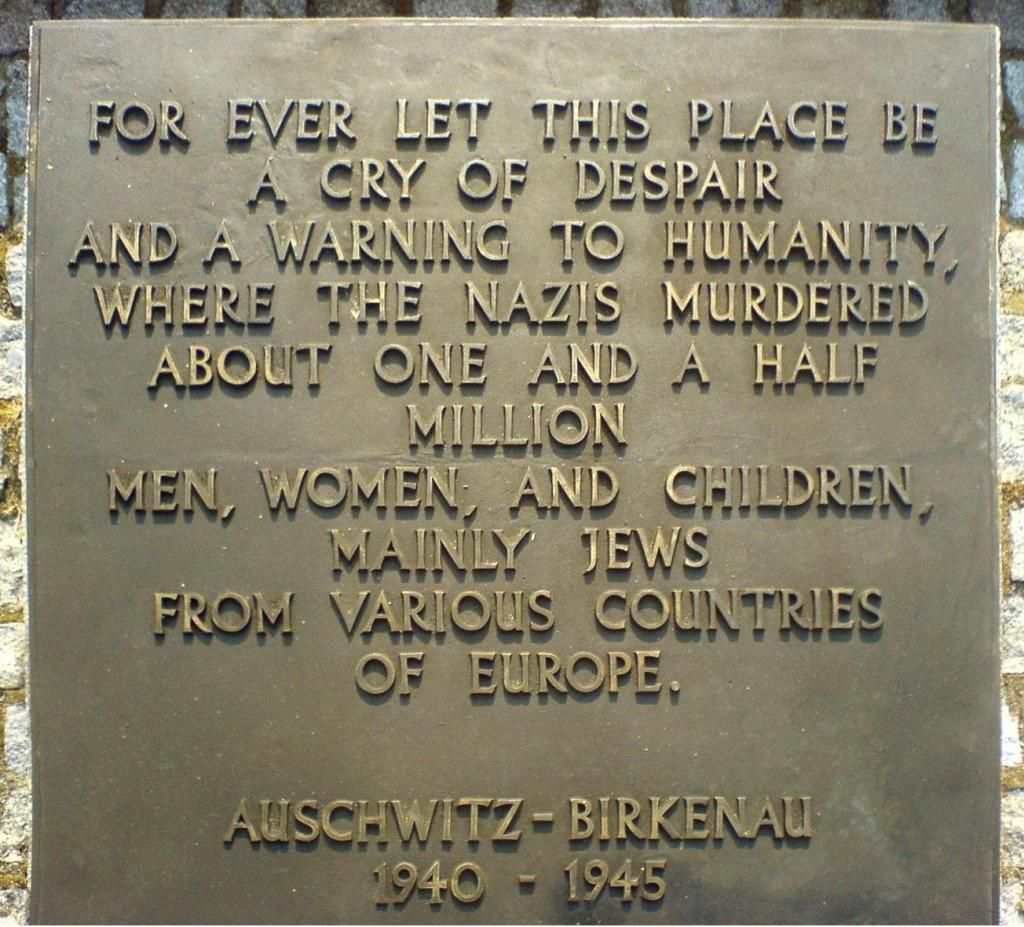
 It was at the Gates of Auschwitz.
 Or was it Auschwitz? I’m not sure.
 I said I was nine years old.
 My brother said I was ten.

 When I went to have my number erased
 The doctor got angry: You should be proud of it.
 I don’t remember my number now.
 John once wrote it down somewhere.

 A man in Holland discovered some papers.
 I was the first out of Belsen-Bergen.
 That’s how I came to know my age.
 I was in Auschwitz only three days.


 Włodka’s War

 She was in the Warsaw Ghetto
    and someone got her out
       over the wall.
   But she lost her shoes.

 They led her to a Polish village
    where a Catholic family
       took her in.
   But she had no shoes.

 Russian soldiers liberated the village,
    sang and danced and
       asked for food.
   But she had no shoes.

 Someone came, took her
    to a room in town.
 But she couldn’t go out
    for she had no shoes.

 And there her father found her.


 The Partition of India

 The neighbours were good to our family,
 Grandpa tells me,
 though of course we had to leave the house
 and everything that was in it.

 There wasn’t any trouble along the way
 that Grandpa can remember,
 though a lot of people were travelling
 and in a hurry.

 Of all the terrible things that happened
 at that time
 nobody says anything,
 they do not talk about it at all.

 What Grandpa does remember is
 wherever they went
 people came out in the streets
 and gave them ludoos*.
 He never ate so many in his life.


 A child’s vision? Songs of Innocence? Bland optimism?
*ludoos — Indian sweets
Cinna, the poet or John Drew has been a university teacher on both sides of the Himalaya and of the Atlantic.
First published in Points of Departure (CPW Eds, 2017)
.
PLEASE NOTE: ARTICLES CAN ONLY BE REPRODUCED IN OTHER SITES WITH DUE ACKNOWLEDGEMENT TO BORDERLESS JOURNAL.


 Borderless
