Proshno or Question was written by Tagore somewhere between December 1931 and January 1932 and later published in 1932 in a collection called Parishesh[1]. The poem with its poignant overtones continues relevant to this date.
Art by Sohana Manzoor
Almighty, over eons, you sent emissaries
              To this ruthless world,
They say: “Forgive everyone”, say, “Love only Love —
               From deep within, toxicity purge.”
In these cataclysmic times, I turn them away with a shamed bow
 For they now remain only as ideals to be revered, remembered.

I have seen the helpless persecuted by
            Violence in the shadows of deceitful night.
I have seen unprotesting truth victimised,
             Justice weep secretly in plight.
I have seen passionate young men driven wild,
Beat their heads on rocks and tortured, die.

Today, I am voiceless. My flute is stilled.
            In the moonless night, who have filled
 My universe with nightmares?
            That is why cleanse with tears —
Those that poison the air, extinguish the light. O God,
Have you forgiven them? Have you given them your love?
One of the interesting things to note here is the reference to the flute player. Is he the same one who was evoked in his poem Ebar Phirao More (Take me back) written in 1894? That poem[2] starts with:
While the world moves busily
You play the flute, like a truant boy,
Leaning under a shady tree in a field with
The fragrance of the forest floating on
A tired breeze. O, arise — there is a fire!
Is it the same flute player whose flute has been stilled?
Translated from Bengali by Aruna Chakravarti, who adds: ‘The story, Musulmani’r Galpa[1], was published posthumously in July 1995 in the journal Ritupatra. In all probability, it was dictated from the writer’s sick bed just before his death in 1941.’
Veiled Woman, Ink on paper, by Tagore, National Gallery of Modern Art, New Delhi. Courtesy: Creative Commons
This is a story of long ago. Of a period in our history when the seeds of evil governance had sprouted thorns all over the land. When fear and anxiety had trapped the soul of the common man in the skeins of such a stifling web that all other emotions had dwindled and died. When imagined assault from demonic forces gripped all minds. When the simple act of living turned into a nightmare and trust could be reposed in neither God nor Man. When the line between good and evil had blurred and tears were the only reality…
In an age such as this, the presence of a girl was deemed a curse in a middle-class family. More so if she was beautiful. Porarmukhi![2]May your fair face burn to ashes! Curses such as these, bitter and stinging, were heaped on the poor girl. “If we could only rid ourselves of this accursed creature,” the women of the family wailed, “we might sleep peacefully in our beds.”
Such a situation, exactly, had arisen in the household of Bangshibadan, the talukdar[3] of Teen Mahala. His niece Kamala was beautiful. Worse, she was an orphan. Had she died along with her parents the family could have breathed easy. But she had lived on as a burden in her uncle’s household and was made aware of it every passing minute. “Just look at my luck sister,” her aunt was often heard complaining to the neighbouring women, “The parents dumped this monumental responsibility on my shoulders and left for the other world. Evil glances are cast at her from all sides. Anything may happen at any time. I have young children of my own and can’t sleep from fear of what will become of them. I live in constant dread…”
Bangshibadan didn’t share his wife’s annoyance at Kamala’s presence in his house. He loved her dearly and had brought her up with great solicitude. He kept her hidden from prying eyes, personally supervising her welfare and taking care of her needs. Life went on somehow but when a marriage proposal came for her, she couldn’t be kept hidden anymore. “I will wed her only into a family which has the means to protect her,” Bangshibadan was in the habit of saying, and now it seemed as though he had found what he was looking for.
The boy was the second son of Paramananda Seth, the zamindar of Mochakhali. People feared Paramananda for his money power but even more for the posse of hefty Bhojpuri lathiyals[4] he kept to guard his house and possessions. “There isn’t one son of a gun in the whole district,” the prospective bridegroom boasted to Bangshibadan, “who’ll have the gall to lay a hand on her.” He was very proud of his father’s wealth and had devised many ways of spending it. Falcon flying, gambling, bird fights…he was a master of all these pursuits. He was, as well, extremely susceptible to feminine charm. Though he had a wife already he was looking for another, younger, one and when reports of Kamala’s beauty reached his ears, he decided that she was the bride for him.
Kamala was appalled when she heard what her uncle had in mind for her. “Where are you sending me Kakamoni?” She burst into tears, “You may as well set me adrift in the river.”
“If I had the power to, protect you,” Bangshibadan replied sadly, “I would have kept you clasped to my breast for all time to come. You know that Ma…”
The arrival of the wedding party at the bride’s house was accompanied by a lot of fanfare. The sound of drums and pipes rent the air. Bangshibadan was alarmed. “Babaji,” he folded his hands before the groom, “It would be better if the noise was toned down a bit. It is unwise to attract too much attention.” But the groom was unfazed. “Let’s see which son of a gun…” he repeated his old line, his chest puffed out with importance.
“I am a poor man with little clout,” Bangshibadan sighed and said, “I can’t vouch for the safety of everyone under my roof for long. I take responsibility only until the completion of the rituals. After that I will leave it to you to conduct your bride safely to your father’s house.”
“No need to worry. No need to worry,” The bridegroom twirled his moustache arrogantly and, watching him, the lathiyals were emboldened to twirl theirs as well.
It was nearing midnight when the wedding party set off with the bride for Mochakhali. A couple of hours later, while crossing the dreaded tract of land called Taaltarhir Maath, they were waylaid by the notorious dacoit Madhu Mallar and his gang. Bearing down on them with flaring torches and weapons far deadlier than lathis, the dacoits soon made short shrift of the lathiyals. The wedding guests fled in all directions abandoning the palanquin in which Kamala sat trembling with fear. Then, just as she was about to step out and try to hide in the bushes, she heard a man’s voice booming out of the dark. “Halt! Go back from where you came my sons. I am Habir Khan.”
Madhu Mallar and his gang stepped back instantly. They had great reverence for Habir Khan. In their eyes he was no less than a paigambar …a messenger from God.
“We can’t disobey you Khan Saheb,” Madhu Mallar said glumly, “but you’ve certainly ruined my business for the night.”
Habir Khan did not oblige him with a reply. Helping Kamala out of the palanquin he told her, “You are in great danger, child. You must leave this place at once. Come with me. I will take you to my house. It is only a short distance from here.” Seeing her shrink at his suggestion, he added, “I understand your reluctance. You are a Hindu, a brahmin’s daughter. It is natural for you to hesitate before entering a Muslim household. But let me tell you something. A truly devout Muslim respects a truly devout Hindu and won’t dream of harming him in any way. Trust me my child. You and your religion will be totally safe in my house.”
Habir Khan and Kamala walked through the woods till they came to a huge mansion. Leading her into one of its eight wings, he said, “This will be your home from now on. You will live here exactly as you did in your uncle’s house.” Kamala looked around. There was a yard with a temple at one end and a tulsi manch[5]at the other. The place looked no different from an upper-class Hindu abode. Everything she would need for her day-to-day living could be found here.
An elderly Brahmin came forward to greet her. “Come Ma,” he said in a kind voice. “Have no fear. This place is sacred. Your religion will be fully protected.”
Kamala burst into tears. “Please inform my uncle about what has happened. Tell him to come and take me home.”
“You are making a mistake child,” Habir Khan’s voice came to her ears, “After tonight’s incident you won’t find acceptance in any Hindu household. You’ll be thrown out into the streets.” He saw the expression on Kamala’s face and sighed. “Very well. I will take you there and let you see for yourself.”
Habir Khan led her to the door of Bangshibadan’s house and bade her go in. “I’ll be waiting here in case you need me,” he said.
Kamala flung herself on her uncle’s chest and wound her arms around his neck. “I have come back to you Kakamoni. Don’t send me away,” she begged. Bangshibadan’s eyes filled with tears. But before he could utter a word his wife burst into the room. “Throw her out,” she shrieked, “Throw the blighted creature out at once. She’s lived in a Muslim’s house. She’ll pollute us all.” Then turning to the weeping, shivering girl, she cursed and upbraided her in shrill penetrating tones. “Accursed one! How dare you show your face here after what you’ve done? Don’t you have any shame?”
Bangshibadan disengaged Kamala’s arms gently from his neck. “Forgive me Ma,” he said sadly. “I cannot take you back. I’m a Hindu. I’ll lose caste if I accept you. I’ll be ostracised by everyone in the village.” Kamala stood for a while, head bowed, then slowly made her way out of the house to where Habir Khan was waiting. She went away with him. The door of her old world was now shut against her for all time to come.
Kamala settled down in the rooms allotted to her. “All this is yours,” Habir Khan said to her waving his hands across the yard. “Not a single member of my family will set foot in this wing. Feel free to live in it the way you wish.”
This part of the mansion had a history. It even had a name. It was called Rajputani’r Mahal[6]. Many years ago, a nawab of Bengal had brought a Rajputani princess and installed her here. He had kept her with great dignity and made sure that she had no difficulty in practicing her religion. She was a very devout woman and an ardent worshipper of Shiva, so a temple was built for her in her own premises. She loved going on pilgrimages and arrangements for them were made with meticulous care. Over the years she became a role model for other Hindu begums and many of them found sanctuary under her sheltering wings.
Habir Khan was the Rajputani’s son. Though he followed his father’s religion he worshipped his mother like a goddess. He sought her guidance in every matter and it was from her that he had learned to respect the opposite sex. She had been dead these many years, but Habir Khan never forgot the vow he had made to her. To provide shelter to widowed and abandoned Hindu women. Scorned, persecuted, hated and stigmatised for no fault of theirs, many were forced to sell their bodies for a roof above their heads and a handful of rice in their stomachs.
As the days passed a realisation started dawning on Kamala. The freedom and comfort she enjoyed in this Muslim household was of a quality she hadn’t even dreamed of while living with her uncle. He cared for her but was powerless to protect her from ceaseless taunts, curses and abuses. She had grown so used to them… she had begun to think of herself as a blighted creature, a disgrace on the family, fit only to be thrown out on the streets. Here, in her new home, she was showered with luxuries. Every need of hers was taken care of by Hindu serving women. She was overwhelmed with kindness and love.
A few years went by. Slowly a change came over her. The winds of youth started to blow and her mind and body quivered with an unknown emotion. She fell in love with one of Habir Khan’s sons.
One day she opened her heart to her protector. Habir Khan’s face paled at her confession, but she went on calmly, “My love is my religion Baap jaan[7]. I have no other. I have worshipped many gods and goddesses in the past. I have poured out my heart and soul to them in prayer. I have begged for deliverance. Yet not one deity deigned to cast a glance at me or even send a sign that my prayer had been heard. What hope is left to me from a religion that leaves a poor, trusting, suffering girl rotting in a pit of abuse and persecution? I have known what it is to live, truly live, only after I stepped across your threshold. From you I’ve learned that even the lowest of human beings deserve love and protection.” Tears rolled down her cheeks. She wiped them away and continued, “From all the hardships I faced in life I have learned one lesson. The Lover and Protector is the true deity. He is neither Hindu nor Muslim. Baap jaan, I have given my heart to your second son, Karim, and my worship is now tied with his. In embracing Islam, I need not give up the faith I was born to. I can follow both.”
The marriage took place. Kamala’s name was changed to Meherjaan and she became a valued and integral part of Habir Khan’s family.
Now the time came for Bangshibadan to wed his own daughter. And history repeated itself as it is wont to do. While crossing Taaltarhir Maath the groom’s party was waylaid by Madhu Mallar’s men. They had been thwarted once. They were out for revenge. But as soon as they launched their attack a voice came out of the dark. “Khabardar[8]! Step back at once.”
“Ore baba re[9]!” the dacoits ran helter skelter, “It’s Habir Khan!” Abandoning the bride to her fate the wedding guests did the same. Suddenly, a figure appeared on the scene holding a banner aloft on a spear. It was Habir Khan’s banner with his emblem, a half- moon, painted on it. But the bearer was a woman. Approaching the palanquin, she helped the trembling girl out of it. “Don’t be afraid Sarala,” she said, “Your elder sister is here to save you. From today you’ll be under the protection of the One who loves and provides sanctuary to all human beings irrespective of caste, creed or religion.”
Turning to her uncle she said, “Pronam kaka[10]. Don’t be alarmed. I shall not pollute you by touching your feet. Take Sarala home. No one has dared to lay a finger on her. She’s as pure today as on the day she was born. And tell kaki[11]that I never thought I could pay back the debt I owe her. The debt of food and shelter so ungraciously doled out while I was her dependent. I am doing so now.” Putting a red silk sari and an asan[12] covered with rich brocade into her uncle’s hands, she added, “I brought these gifts for Sarala. Take them. And remember, if she’s ever in trouble her Muslim sister will be there for her. To give her all the care and protection she requires.”
Aruna Chakravartihas been the principal of a prestigious women’s college of Delhi University for ten years. She is also a well-known academic, creative writer and translator with fourteen published books on record. Her novels Jorasanko, Daughters of Jorasanko, The Inheritors, Suralakshmi Villa have sold widely and received rave reviews. The Mendicant Prince and her short story collection, Through a Looking Glass, are her most recent books. She has also received awards such as the Vaitalik Award, Sahitya Akademi Award and Sarat Puraskar for her translations.
.
PLEASE NOTE: ARTICLES CAN ONLY BE REPRODUCED IN OTHER SITES WITH DUE ACKNOWLEDGEMENT TO BORDERLESS JOURNAL
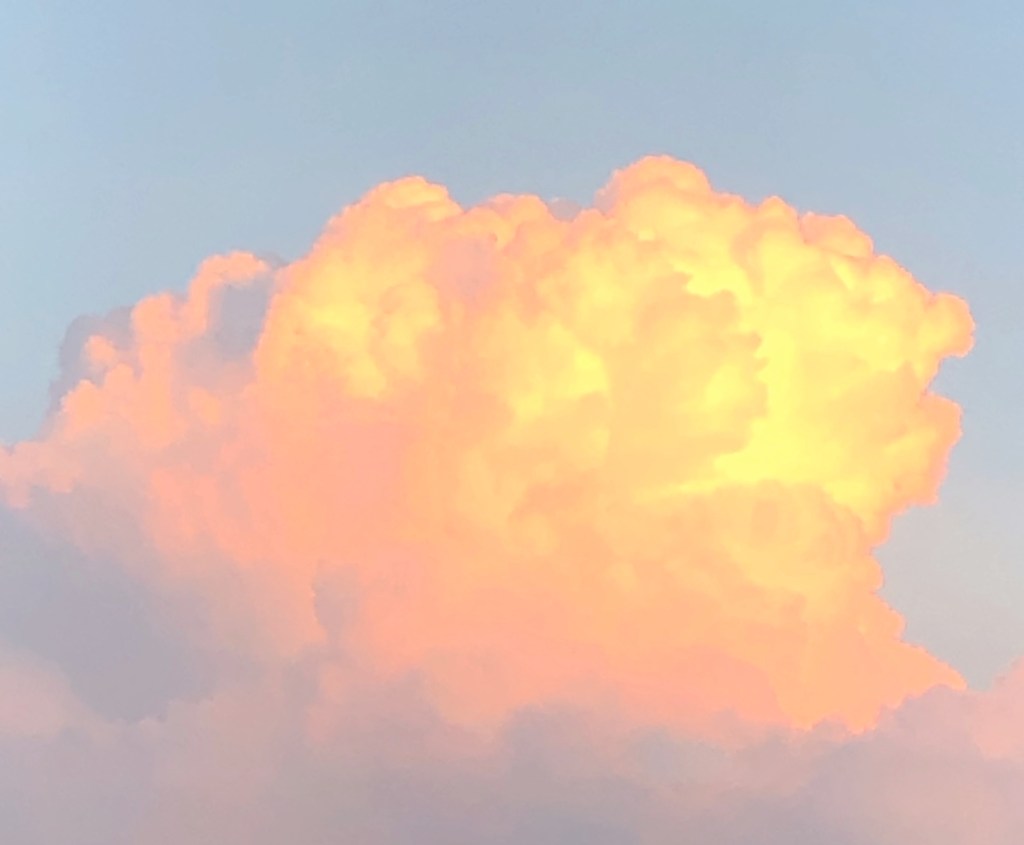
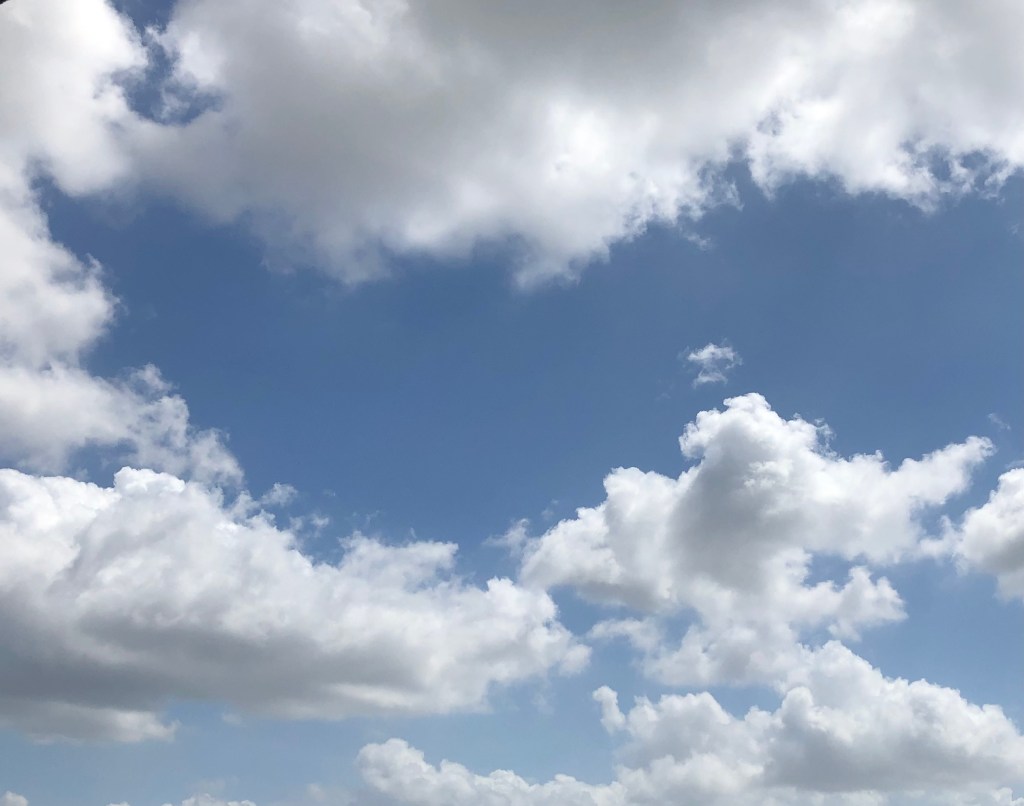
Published in 1906,Megh (cloud)can be found in Tagore’s collection called Kheya (boat).
Adrift, without a beginning and an end,
With an awning of black and white blend,
        The sky is dressed whimsically.
We are all merely mounds,
Stacks of wafting clouds.
    I think only of him and his whimsicality.
We have no boundaries nor home,
We come and we are gone.

Suns, planets, stars shine bright.
Though they are garlands of lights,
        They remain tied to eternal tasks.
With permanence, they grace
Words illuminating a dark page.
         We are merely like drafts—
 With myriad of colours filled,
Re-written and erased at will.

Sometimes, when we are free,
We call out in a spree,
              Smiling without a reason.
Does our caprice create an illusion?
The rain still falls without evasion.
            The lightning is not a diversion.
Only, my friend, we do not stay.
With the breeze, we drift in or float away.
(This poem has been translated by Mitali Chakravartywith editorial support from Sohana Manzoor)
PLEASE NOTE: ARTICLES CAN ONLY BE REPRODUCED IN OTHER SITES WITH DUE ACKNOWLEDGEMENT TO BORDERLESS JOURNAL
Pran or Life by Tagore was published in 1886 as part of his collection called, Kori O Komal (Sharp and Flat). The book featured 83 poems by him.
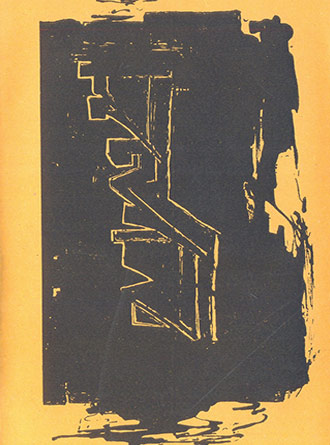
Art by Sohana Manzoor
LIFE

I do not desire death in this resplendent universe.
I want to live amidst the ocean of humanity.
In this radiant sunny garden of floral swirls,
I yearn for acceptance from hearts filled with vitality.
Life on Earth ebbs and flows in transient waves.
Partings and meetings are filled with tears and joys.
I want to bead these emotions into melodic strains,
To create songs that will be eternal and spirits buoy.
If I cannot achieve that, then as long as I live,
Let me find shelter in your midst.
Let me, every morning and evening, give
Lyrics that bloom like flowers waiting for a tryst.
Pluck the blossoms happily, and then, without a sigh,
Throw them away, alas, if they wilt or dry.
A recitation of the original poem in Bengali by Swati
(This poem has been translated by Mitali Chakravartywith editorial support from Sohana Manzoor)
PLEASE NOTE: ARTICLES CAN ONLY BE REPRODUCED IN OTHER SITES WITH DUE ACKNOWLEDGEMENT TO BORDERLESS JOURNAL
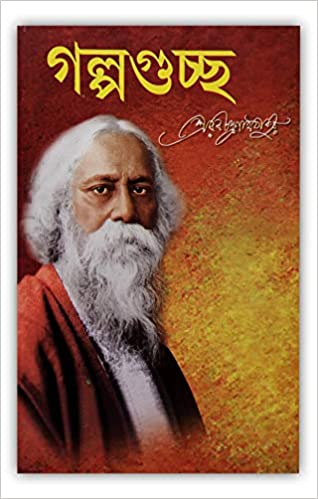
Written in 1916 by Rabindranath Tagore, ‘Aparichita’ is a short story featured in his ‘Golpo Guchho’ (A Collection of Stories). It has been translated from Bengali by Aruna Chakravartias The Stranger.
Goplo Guchho, a collection of 95 short stories was originally published in five parts by Indian Publishing House from 1908-1909
The Stranger
I am twenty-seven years old today. My life has been unremarkable, so far, both in terms of length and quality. Yet it is not without value. It can be compared to that of a flower on whose breast a honeybee had nestled once, leaving behind a faint glimmer that germinated and swelled into a tiny ball of fruit.
Something similar happened to me. The encounter was brief; almost ephemeral. In chronicling the events I shall be brief too. But make no mistake. Though short, my story should not be passed over unread. Those who take the trouble to go through it will find meaning in it.
I am well educated. I have passed all my college examinations with ease. I am good looking too. When I was a child my school masters would mock my pretty face. Simul phul they would call me. Makal phal. Simul is a flower and makal, a fruit. Both have gorgeous exteriors but are of no use to anyone. The first is totally lacking in fragrance and the second in flavour. I would shrink with shame and resent the unfairness of these remarks. But as I grew older, I told myself that if another birth was granted to me, I would like it to be a replica of this one. My face should be as handsome and those of my schoolmasters as twisted with derision as when I was a lad.
My father had been poor once. In later life he made a lot of money. However, his profession as a lawyer demanded so much time and effort that he never got a chance to enjoy any of it. He must have heaved a sigh of relief when he died. For the first time he had been granted a rest.
My upbringing was left to my mother. Having come from a poor family she never lost sight of the fact that she was a wealthy woman. Nor did she allow me to do so. As an infant I remember being carried long after I had learned to walk. As a result, I never really grew up. I still look amazingly young for my age. I could easily pass for the elephant headed god’s younger brother nestling in his mother Annapurna’s lap.
After my father’s death, my maternal uncle took charge of our affairs and became my guardian. Mama[1] was only six years older than me. But, like the parched sands of a subterranean river, he steadily sucked away everything we had… assets, liabilities, hopes, cares, dreams and aspirations. The draining had been so thorough that we were unable to access anything on our own. We had to dig into him for every drop. In consequence, I lived a life totally shorn of responsibility.
Fathers of marriageable daughters could not but consider me a good catch. I had no bad habits. I’d never even touched tobacco. I was simple and good tempered. That’s because being simple and good tempered made life easy for me. I obeyed my mother because I lacked the guts to disobey her. I was prepared to allow this quality full play in future. Girls permitted to choose their own husbands would do well to keep this in mind, when making their choice.
As soon as the time was ripe, marriage proposals from the best families started to pour in. But my uncle, who was the Chief Agent of the Dispenser of my Destiny, had very definite ideas of what constituted a good match. The girl had to come from an impoverished family for only then would she keep her head bowed and be humble and obedient. On the other hand, what was the value of a daughter-in-law who didn’t bring a substantial dowry? My uncle’s requirements were simple. The father had to be poor yet ready to give him all the money he wanted. He must be the kind of man Mama could milk with ease yet wasn’t obliged to treat with respect. One who wouldn’t complain if he was offered tobacco in the coconut shell hookah meant for subordinates instead of the lordly silver albola he smoked himself.
My friend, Harish, works in Kanpur. On one of his visits to Kolkata, he said to me, “O hey! Speaking of brides, I know an excellent girl.”
I was in a state of limbo at the time. I had passed my M.A. some months earlier. Now there was nothing for me to do. I didn’t have to study or look for a job. Nor was I required to poke my nose into any of my financial affairs. No work, no worries, no opinions were expected of me. A desert of indolence and inactivity stretched before my eyes. I was consumed with thirst for something; someone… I had no idea who or what I was searching for.
In this frame of mind Harish’s words struck a chord in me. My mind and body trembled with an unknown emotion — the way newly budding leaves on the boughs of a bakul[2] tree shiver and quiver with the first warm winds of spring, throwing dancing patterns of light and shadow on the ground. Harish had a romantic side to him, and he spoke with tenderness and passion. He described the girl in words that fell like a sweet shower on my shrivelled soul. I looked at him with star struck eyes, “Why don’t you speak to Mama, Harish?” I begged.
Harish was ready to oblige. He was a great entertainer, and everyone enjoyed his company including my uncle who, once they sat down to a chat, was loath to let him go. Mama, of course was more interested in the girl’s father than in her. From Harish’s description he came to know that, though wealthy once, the gentleman was now in straitened circumstances. However, there were still some good scrapings left in the pot of gold bequeathed to his family, years ago, by the goddess Lakshmi. Unable to keep up the lofty standards set by his forefathers, he had decided to leave his ancestral village and settle in a small town in the west where no one knew him and he could live a simple life, without worrying about lost prestige. He had just this one daughter, no one else, so he wouldn’t hesitate to pour the contents of the pot into the hands of one who ensured her happiness. What could be better? My uncle was thoroughly convinced that this was the man he was looking for.
So far so good. But there was one worrying factor. The girl was fifteen. Why had she been kept unwed for so long? Was there some flaw in the family? “Arre na na[3]” — Harish hastened to explain. The father was very picky. He hadn’t found anyone he considered worthy of her, so far. He didn’t mind waiting till the right boy came along. But the girl’s age did. Refusing to stop at her father’s command it had marched on at its accustomed pace. Harish’s ability to charm his listeners and lull their fears, worked. Mama was persuaded to look into the proposal.
Mama considered any place outside Kolkata to be as alien and exotic as the islands of the Andaman. The furthest he had travelled in his life was to Konnagar. If he had been Manu[4], he would have forbidden the crossing of Howrah Bridge, in his Samhita[5], for who knew what dangerous territory lay beyond it? There was no question of his leaving Kolkata, so my cousin Binu was sent to Kanpur to conduct the negotiations and, if all went well, seal the new relationship by a ritualistic blessing of the bride. Mama had full faith in Binu da[6]’s good sense, good taste and sagacity. I would have liked to go with him and see the girl but couldn’t summon up the courage to ask for permission. I didn’t even dare ask to be shown a photograph.
Binu da returned satisfied. “She’ll do…,” he muttered, “pure gold.”
He tended to speak in monosyllables and was extremely reticent in his praise. Where another would have exclaimed “Wonderful!” or “Excellent!” he mumbled, “Not bad”. His “She’ll do” was ample affirmation. It was clear to all of us that Fate had smiled on me. Prajapati, the God of marriage, had given the nod.
As was to be expected, Mama decided that the wedding would be held in Kolkata. The resultant effect was the bride’s father was forced to make all the arrangements in a city of which he knew nothing. Shombhunath Babu was a handsome man of about forty. There were traces of silver in his whiskers though not in his hair which was black and plentiful. He had the kind of good looks that compels attention even in a crowd. The immense trust that he reposed in Harish was evident from the fact that he agreed to the marriage without seeing me. He set eyes on the one who was to be his son-in-law only three days before the ceremony.
I fervently hoped that he liked what he saw. It was difficult to tell. He spoke little in a very soft voice and listened quietly when Mama’s tongue wagged vigorously with exaggerated accounts of our wealth and status and our reputation as one of the first families of Kolkata. I squirmed with embarrassment under that gentle, probing gaze. But Mama’s enthusiasm would not be dampened. He went on and on. He probably assumed, from Shombhunath Babu’s subdued voice and manner, that the man was spineless and easily intimidated. The thought must have filled him with glee for, in fathers of brides, this quality was deemed a virtue. He remained seated when his guest rose to take his leave. He didn’t think it necessary to escort him to his carriage.
The cash component of the dowry had been agreed upon already. Mama, who prided himself on his extraordinary skill in negotiation; his well-honed ability to extract the best deal for himself in any given situation, now turned his attention on the quality and quantity of jewels that would adorn the bride’s person. Polite but pointed questions elicited the response he desired. Enough would be given to satisfy the most determined of blood suckers. I had no idea of what was going on between the two guardians. To tell the truth I wasn’t interested. Financial affairs were not my business. Besides I was confident that, in any battle of wits, Mama would emerge the winner. It mattered little that we didn’t need the money or that Shombhunath Babu was being squeezed dry. I was proud of Mama as were we all.
The turmeric ceremony was conducted with a lot of fanfare. So many trays of gifts were sent to the bride’s house with so many maids and servants carrying them, that doling out the necessary tips must have been a financial drain on her father. Exchanging gleeful remarks about the poor man’s distress and helplessness, Ma and Mama had a good laugh.
The wedding day arrived. The bridegroom’s procession was led by a mighty concert of drums, trumpets, flutes and fiddles. This set up such a pandemonium of discordant sounds that the noise could be compared to a stampede into Saraswati’s lotus garden, by a herd of mad elephants, violent enough to force the goddess of music to flee to safer havens. Covered with brocade and precious gems, I looked exactly like a jeweller’s shop in the middle of an auction. I had to prove to the bride’s father, had I not, the worth of the son-in-law he had had the good fortune to acquire? It was a battle of prestige and I rushed headlong to win it.
Mama was not impressed by the wedding venue. The assembly hall, to which the bridegroom’s party was ushered, was small and the seating somewhat constricted for the number of guests we had brought. The arrangements were on an ordinary scale, hardly befitting our family’s wealth and position. He was also a bit miffed by Shombhunath Babu’s behaviour. He found it strange. Rather cold and distant. If it weren’t for another man’s servile bowing and scraping, oily smiles and folding of hands, Mama might have felt incensed enough to walk out of the house with the bridegroom in tow. This was a lawyer friend of the bride’s father—a hulk of a man with a huge bald head and a very dark complexion. That he was in charge of the logistics was obvious from the greasy sheet he had wrapped around his middle and the cracked voice that was clearly the result of having shouted orders all day. The good thing was that, unlike the bride’s father, he was aware of the niceties of social behavior and what was owing to the groom’s party. He smiled and swayed his heavy head at everybody and addressed strings of flattering words to each, from the cymbal player in the band to the most distinguished of the wedding guests.
Shortly after our arrival Mama took our host aside and whispered something in his ear. The two walked out of the room. I don’t know what transpired between them but, within a few minutes, Shombhunath Babu returned. “Babaji!” he said, “Your presence is needed. Please come with me.”
The problem was a simple one. Some persons, not all, are ruled by a single compulsion. Mama was one of them. He had a goal before his eyes of which he was determined never to lose sight. This goal, he would never forgive himself if he failed to reach it even in the tiniest degree, was that he would never allow anyone to get the better of him. He had a horror of being cheated. The bride’s father had promised a good amount of jewellery. But could he be trusted to keep his word? The man seemed somewhat tight-fisted judging from the tips and return gifts the servants, carrying the turmeric, had brought back with them. Who knew if the bridal ornaments were of the weight and purity of gold promised? The sensible thing to do was to have their worth assessed before the rituals commenced. To wait till after the ceremony would be an exercise in futility. Thus, with due caution and good sense, he had included our family goldsmith in the wedding party.
My future father-in-law led me to a small room. It was empty, except for Mama who was seated on a chowki[7], and the goldsmith who sat on the floor with his scales, weights and touchstones spread out before him.
“Your uncle wishes to have the girl’s jewels tested before the ceremony,” Shombhunath babu looked at me with a strange expression in his eyes. “What do you say?”
I hung my head in silence.
“Why should he say anything?” Mama answered for me. “It’s what I want that counts.”
“Is that so? Do you endorse your uncle’s statement?” The gentle, thoughtful gaze unnerved me. Not knowing how to respond I tilted my head expressing assent. Financial affairs were handled by guardians. What right did I have to interfere?
“Very well.” Shombhunath Babu murmured. “The trouble is…it will take some time to remove the jewels. The bridal toilette is complete, and my daughter is wearing them already. Had I known….no matter… please stay here till I return.”
“Why?” Mama cried out surprised. “Why should he stay here? Go back to the hall, Anupam, and join the others.”
“No.” Shombhunath Babu’s voice was soft but firm. “He will stay here.”
He left the room and returned after half-an-hour with a bundle wrapped in a gamchha[8]. Spreading out its contents on the chowki, he invited the goldsmith to begin his examination. The goldsmith’s practiced eye told him the worth of what he saw in an instant. “There’s no need to examine anything,” he said, “The gold is hundred percent pure. Not a trace of alloy. Look.” Picking up a bangle he pressed it gently. A tiny dent appeared. “These are obviously from a bye gone era. Nothing like this is fashioned anymore. The girl’s grandmother’s perhaps?” He threw a questioning glance at our host.
The moment he heard this Mama whipped a notebook out of his pocket and started listing the ornaments one by one. He had to make sure that everything he had been shown would find its way into the family vault. A pleased smile appeared on his face. They were far more in number and of greater weight than he had expected.
Now, Shombhunath Babu picked up a pair of earrings from the pile. “Kindly examine these and let me know their value,” he said. The goldsmith turned them over in his hands. “Bought from an English shop,” he curled his lips disdainfully, “They have hardly any gold to speak of.” Shombhunath Babu took them from him and handed them to Mama. “Keep these with you,” he said. Mama’s face flushed a deep red with embarrassment. They were the earrings he had sent with Binu da for the bridal blessing.
“Go Anupam.” He tried to recover his composure. “Go sit with the others in the assembly—”
“No. No.” Shombhunath Babu interrupted smoothly. “There’s no need to go to the assembly hall just now. Dinner, for the bridegroom’s party, has been served and your guests have proceeded to the dining area. Let me take you there.”
“What!” Mama exclaimed, “Eat now? Before the ceremony begins…?”
“The auspicious hour is far off. Why wait till then? Please come with me.” There was something in his voice, a strength that came from a long habit of command, that compelled obedience. Mama rose meekly and followed him out of the room.
The meal, though not ostentatious, was well-cooked, neatly served and plentiful in quantity. The guests ate to satiety and were well content. Shombhunath Babu invited me to join them, but Mama was aghast at the suggestion. “What nonsense!” he cried forcefully, “How can the bridegroom sit down to a meal before the rites have begun?”
Shombhunath Babu ignored the outburst. “What do you say?” His eyes looked into mine thoughtfully. As though he expected a reaction. Any reaction. But I remained silent. What could I say? How could I go against the express wishes of my uncle and guardian?
“Very well then.” Shombhunath Babu turned his attention back to my uncle. “You have taken a lot of pains and come a long way,” he said pleasantly. “My hospitality, I’m afraid, has not met the standards your illustrious family is used to. I’m a poor man. Please forgive me. I do not wish to trouble you any further.”
“It’s alright. It’s alright.” Mama waved his hands in the lordly manner he used to reassure his inferiors and demonstrate his generosity. “Let the ceremony begin. I’m ready…”
“It will take a few moments for your carriages to arrive. Kindly wait till then.”
“What!” Mama’s eyes nearly popped out of his head. “Is this a joke?”
“You are the one who has turned a serious affair into a joke.” Shombhunath babu answered calmly. “How could you even think that I would steal my own daughter’s jewels? What sort of people are you? I am sorry but I cannot give my daughter in marriage to a family like yours.” He looked straight into Mama’s eyes ignoring me completely. He didn’t glance at me even once or try to gauge my reaction. He seemed to have made up his mind that I was nothing.
What happened after that? As was to be expected the groom’s party shouted and cursed, broke the furniture, smashed the chandeliers and having completed the carnage to their satisfaction made their way home. The band that had pronounced its entry into the wedding venue with such a cacophony of sounds now slinked along the streets in funereal silence. The lamps had burned out and the only light that guided the mournful procession came from the stars.
The rest of the family was wild with fury. Had anyone even dreamed, let alone seen or heard, anything like this? Such arrogance in a bride’s father! What did the man think of himself? “Let’s see how he secures another match for his precious daughter,” the women cried out to one another, “The world doesn’t run according to his whims and fancies. Wait and watch. He’ll be taught the lesson of his life.”
Which was all very well. But what was the point of cursing a man with the eternal spinsterhood of his daughter if he was prepared to keep her unwed all her life?
In the whole of Bengal, I was the only bridegroom with the distinction of being turned away from the wedding venue. I, who was so eligible! Such an excellent catch! And to think that the stigma stamped on my brow had followed such a jingoistic display of wealth and status from our side! Everyone was laughing at us. Mama’s breast burned with rage and humiliation. The thought that stung him most cruelly was that the wily father of the bride had outwitted him. How cleverly he had managed to feed him and his party, keeping them in his debt forever, before sending them packing! The insult was not to be borne. “I’ll sue the scoundrel for defamation and breach of promise,” Mama shouted as he stomped about the house. “I’ll make sure he spends the rest of his days turning the grinding stone in jail.”
At this point some of his well-wishers stepped in. If he tried anything of the sort, they warned, he would lose the few shreds of dignity he had left. The farce would be complete.
Needless to say, I was fuming too. “If only some disaster were to strike the man,” I thought over and over again,” he would regret his folly and come rushing to my feet begging for forgiveness…” I wished fervently for something terrible to happen. I lined up all kinds of possibilities tugging at my whiskers in nervous anticipation.
Yet, running parallel to this dark stream of hate and malice, was another. Irradiated with light. My thoughts had been submerged in its waters all these months and would not be dismissed. No matter how hard I tried, I couldn’t pluck out the image of the unseen maiden which had taken root in my heart. Her face had possessed me entirely and continued to do so. I saw a brow adorned with sandal paste. Cheeks flushed a deep rose in shy expectancy. A form draped in red silk, glittering with jewels. In the fantasy world I inhabited she was a golden creeper, ready and waiting to shower her wealth of spring blossoms at my feet. One moment, another step, and I could have claimed her. But the moment had stretched to eternity. A mighty wall had appeared between us, and I had lost sight of her…
Ever since Binu da’s return from Kanpur I had made it a point to visit him, every evening, and pester him with questions. Being extremely economical in language and expression he had said little. Owing to that very fact, perhaps, the few words he uttered sent sparks flying into my soul and set it aflame. I was overwhelmed with a sense of the girl’s beauty. It was not of this world. It was ethereal.
I had waited patiently for the moment when the imagined would transform to reality. When I would see, with the eyes of the flesh, what I had only dreamed about. But alas! Fate had beguiled me with false hopes then dashed them to the ground. A thick veil of mist had risen between us. She had disappeared beyond it, and I was left on the other side, lurking like a ghost.
The girl had been shown my photograph… so I’ve heard from Harish. I’m sure she approved of what she saw. Why wouldn’t she? My heart told me that she has kept it hidden in a secret drawer. And on lonely afternoons, secure in her room with doors and windows locked against prying eyes, she would take it out and look longingly at it. I saw her bending forward to examine it more closely, her beautiful hair falling on both sides of her face in long shining strands. And the moment she heard footsteps, she would hide it quickly in the scented folds of her sari.
The days passed, one by one. No one mentioned marriage. Mama was still nursing his grievance and Ma thought it preferable to wait till people have forgotten my humiliation.
Harish told me that good matches were found for the Kanpur girl, but she had taken a vow to remain unwed. The news filled me with elation. My inner eyes could see her… pale and worn with longing for me. She ate little and that, too, when she was forced. Dusk[9] would set in but she would forget to braid her hair. Her father looks at her and wondered. “What has happened to my girl? Why is she so changed?” Sometimes, he would walk into her room and find her sitting by the window, her eyes streaming with tears.
“What is the matter Ma?” he would ask tenderly. “Tell me the truth. Is something troubling you?”
“Why, no Baba.” She wiped her eyes quickly and rose to her feet. “Nothing is wrong.”
The father’s heart would sadden. She was his only child. His pride and joy. How could he bear to see her thus? How could he stand by and watch a delicate bud, just about to open its petals, wilt and wither in the hot dry winds of a rainless summer? He decided to swallow his pride. He would rush to our door and beg pardon with abject humility…
After that…what?
The stream of hate that lay coiled within me unwound and stretched to its full length. “Tell the girl’s father to make fresharrangements,” it wouldhiss like a poisonous snake. “Let lights blaze and guests arrive from far and near. Then, just when the ritualsare about to commence, gather the bridegroom’s party together and walk out of the wedding venue with a smile.”
But the other stream, pure as a lover’s tears, appeared before me in the form of a milk white swan. “Set me free,” it pleads. “As Iflew to Damayanti’s[10] garden, aeons ago, so let me wing my way to the beloved one and whisper the joyful tidings in her ears.”
The dark night ended, new rain fell, the drooping flower raised its face. The wall crumbled and made way for me. Only me. The others were left behind. And then…?
My story ended here.
But no. It wasn’t the end. I’ll come to the point at which it was left hanging and conclude my narrative.
I was accompanying my mother on a pilgrimage to some holy cities of the north. I had been entrusted with the task since Mama, as I’ve said before, was so averse to travelling that he hesitated to even cross the Howrah Bridge. Tossed this way and that by the swaying of the train, I slept fitfully, dreams dancing in shards in and out of my head. Suddenly, it came to a halt, and I awoke. My eyes beheld an expanse of light and shadow the like of which I had never seen before. I was still in the throes of my dream, I think, because everything looked remote; unreal. I felt I was in another world. Only the few lamps burning on the station platform seemed vaguely familiar.
I turned to Ma who lay sleeping on her berth, the green curtain shielding her eyes from the light. Boxes and bundles, dislodged from their places by the movement of the coach, lay scattered. I hadn’t come out of my dream fully, perhaps, because even this common place scene appeared surreal in my eyes. The scattered objects, the dim green light…I felt I was floating in a space between existence and non-existence.
Suddenly the silence of the night was broken. “Come,” someone cried out, “Come quickly. There’s space here.” My heart leaped upon hearing the Bengali language spoken in a feminine voice. Was what I had just heard a string of words?Or was it a song? I wondered at myself. Did I react the way I did because the voice belonged to a member of the opposite sex? No, I’m quite sure that wasn’t the reason. Perhaps I had been yearning to hear my mother tongue through all these months of staying away from my roots. Have I heard anything like this before? I asked myself, feeling awed and humbled. Opening the window, I looked out. There was no one there. The guard waved his lantern and the train started to move.
All my life I have found myself being moved by a beautiful voice. Beauty of face and form has its own attraction but the human voice, I’ve always felt, expresses that which lies deep within the soul. Though I could see nothing with the outer eye a form started taking shape within me. Like a star-studded sky which wraps one in its folds but does not brush the skin, it slid deep into my soul making music as it went. You who are so perfect; so complete! I called out to that divine melody. You bloom like a flower on the bruised heart of a capricious age and let its winds pass over you. Yet not a petal is blown away. Not a speckappears on your pristine purity.
The train picked up momentum. The rattle was as metallic as before, falling like strokes on an iron drum. But, strange to say, it made music in my ears. There’s space here… I heard with every beat… there’s space here. But was there a space? In this self-absorbed world did anyone concede space to another? Did anyone know the truth about another? Yet, this not knowing, I was convinced, was a web of mist; an illusion. Once torn apart all would stand revealed. Recognition would be complete.
“ I know you,” my heart murmured to the one who was once a stranger, “I’ve known you from the beginning of time. You called out to me, ‘Come quickly,’ you said. I’ve come to you. I haven’t wasted a moment.”
I couldn’t sleep the whole night. At every station I opened the window and looked out, fearing that the unseen one would depart unseen…
We got down, the next morning, at a junction station where we had to change trains. Since I had reserved seats in a first-class compartment, I was not worried about being caught in a crowd. But the sight that met my eyes filled me with dismay. The platform was choc a bloc with sahebs and their orderlies. Some army general, out on a pleasure trip with his cronies, was waiting for the train which arrived, a few minutes later, crammed with passengers. I realised that travelling first class was out of the question and felt a stab of anxiety. Where, on this crowded train, would I find place? I ran up and down the platform peering into every window when a girl, standing at the door of a second- class compartment, called out to my mother. “Why don’t you come to our coach? There’s space here.”
I looked up startled. The same voice. The same words. There were only a few moments left for the train to leave. I helped my mother up then, climbing in, I called out to the coolies to stow the luggage. Just then the train started moving. Overcome with panic I stood helplessly, not knowing what to do. Who was worse equipped than me to deal with a situation like this? But the girl, with extraordinary dexterity, snatched the boxes and beddings from the hands of the running men and flung them on the floor. In the commotion of the moment, an expensive camera of mine was left behind. I made no effort to retrieve it.
What happened next? A perfect bliss pervaded my being of a kind impossible to put in words. How shall I even begin to describe it? Stringing a bunch of words together seems meaningless. They would express nothing.
The music I had only heard so far had assumed a shape and appeared before our eyes. I glanced at Ma. She was staring at the girl with such rapt attention that not an eyelash flickered.
She was about sixteen or seventeen. But the shy diffidence of approaching womanhood, so common in girls of her age, sat lightly on her. Her gaze was clear and unflinching, her gestures free, and there was a purity in her face and form the like of which I had never seen before. Not a trace of timidity or unease marred the natural grace of her movements.
What I felt at the time went beyond what I saw. To tell the truth, I can’t even recall the colour of the sari she wore. All I remember is that she was dressed very simply and that I was filled with a sense that externals held no meaning for her. She rose, slender and upright as a tuberose stalk, above the plant that had given her birth. Above the earth in which it was embedded. Her fragrance was hers alone and came from within.
I sat in one corner, my eyes glued to the pages of a book. But my ears were keenly attuned to the excited voices of the little girls who were travelling with her. I marvelled at the way she became one with them. Though considerably older she was totally at ease, and they laughed and joked merrily together. The little ones had an illustrated storybook out of which they were pestering her to read a story. I gathered, from their chatter, that they had heard it several times yet wanted to hear it again. I understood why. It wasn’t the story. It was her voice they wanted to hear; the golden voice that reinvented as it went along and made everything sound new. That, springing from the heart like a fountain, filled their ears with music. I found myself responding in much the same way. Her presence made my sun shine brighter. My sky was more intimate in its embrace. My heart was washed by the pristine waters that emanated from the one who was still a stranger…
At the next station she beckoned to a vendor and bought an enormous cone of spiced gram which the whole party proceeded to eat with gusto. My nature was so hedged in by restrictions that, though tempted, I couldn’t bring myself to ask for some. “Stupid me!” I thought, “this was my chance of speaking with her. Of letting her know I wanted something from her…”
The moment passed.
From the expression on Ma’s face, I realised that she was puzzled. She couldn’t decide what to make of our travelling companion. The way she was wolfing down large handfuls of the crunchy mixture, that too in the presence of a male, was surely reprehensible in a girl of her age! Yet, and this too I saw in Ma’s eyes, one couldn’t really think of her as shameless and greedy. There was an innocence about her, a lack of self-consciousness that proclaimed the fact that, though adult in years she was a child at heart. Perhaps she didn’t have a mother and hadn’t been taught the niceties of feminine deportment. Ma is not a garrulous woman. She cannot converse easily with strangers. I could see that she wanted to find out more about the girl, but her natural reticence stood in the way.
The train stopped at a large station and a group of sahebs, clearly belonging to the general’s entourage, came in. Striding purposefully up and down the compartment they scanned the seats with eagle eyes. There wasn’t an inch of extra space and they left.
A few minutes later a railway employee, a native, entered with two name cards which he proceeded to hang on the seats we were occupying. “These are reserved seats,” he told me, “You’ll have to move to another compartment.” Ma’s face turned pale and even I felt a pang of apprehension. But before I could say or do anything someone spoke in Hindi. “No,” the familiar voice was cool and confident, “We won’t give up our seats.”
“You’ll have to,” the man answered roughly, “There’s no other way.”
The girl left the train and returned with the station master, an Englishman who was clearly embarrassed by what he was being forced to do. “I’m sorry,” he looked at me with a rueful smile, “But these seats are—”
I rose to my feet and started walking towards the exit calling “Coolie! Coolie!” as I went. Suddenly I had to stop in my tracks. The girl was standing before me. “No,” she said firmly, “You’re not going anywhere. Please return to your seat.” Turning to the station master she said in flawless English, “That’s a lie. These seats are not reserved.” Plucking the name cards off the seats she flung them out of the window.
The man who had been allotted the seats was standing at the door instructing his orderly to stow his luggage. He stared in shock at the cards flying out of the window and, unable to meet the fire raining eyes, turned away. Plucking at the station master’s sleeve he whispered something in his ear. I have no idea of what transpired between them. All I know was that the departure was delayed for a while and a new coach fitted to the train.
Kanpur station arrived. Our travelling companions rose and started gathering their belongings. My mother, who had sat in silence all this while, could hold herself in no longer. “What is your name Ma?” she asked.
“My name is Kalyani.”
Ma and I threw startled glances at one another.
“Your father?” Ma’s voice was a whisper.
“He’s a doctor. His name is Shombhunath Sen.”
CONCLUSION
Setting my mother’s wishes firmly aside, disobeying Mama’s express command, I went to Kanpur. I met Kalyani and her father and apologised on my own and my family’s behalf with folded hands. The latter’s heart seemed to melted but the former remained firm in her resolve. She would not marry.
“Why not?” I asked.
“I follow my mother’s command.”
But she didn’t have a mother. I was wild with desperation. Was there another maternal uncle, then, lurking somewhere? Was history repeating itself?
It didn’t take me long to arrive at the truth. Her mother was Bharat Mata. After the fiasco of the wedding, she had taken a vow to dedicate herself to her country. And how better to do that than spend her life educating girls of the land?
But I did not give up hope. A stream of music, the like of which I’d never heard before, had crept into my ears from out of the dark and seeped into my soul. That exquisite melody played in my heart, all day long, like the strains of a flute from another world. It became the lodestar of my being; the refrain of my life-song.
I was twenty- three then… I’m twenty- seven now. I have shed my uncle. He is no longer part of my life. And my mother, perhaps because I’m her only son, has preferred to remain with me.
If you are under the impression that I nurture hopes of marriage–you are wrong. All I live for is hearing that voice speak the same words There is space. Of course, there is space. There has to be. If there wasn’t, where would I find the ground to stand on?
Years have gone by. I’ve stayed on here. I see her from time to time. I hear her voice. She entrusts me with small tasks, and I carry them out. This is the space I’ve needed and dreamed about. “O stranger!” my heart calls out to her, “you will forever remain a stranger for there is no end to knowing you. Yet I’m grateful. My destiny has been kind to me. It has granted me the space I’ve yearned for all my life.”
Painting by Tagore Tagore (1861-1941) Courtesy: Creative Commons
[8] Traditional thin, coarse cotton fabric often used in lieu of a towel
[9] Traditionally, women were supposed to tie their hair especially in the evening.
[10] Nala Damayanti, a story from Mahabharata, where the couple were parted before they were reunited.
Aruna Chakravartihas been the principal of a prestigious women’s college of Delhi University for ten years. She is also a well-known academic, creative writer and translator with fourteen published books on record. Her novels Jorasanko, Daughters of Jorasanko, The Inheritors, Suralakshmi Villa have sold widely and received rave reviews. The Mendicant Prince and her short story collection, Through a Looking Glass, are her most recent books. She has also received awards such as the Vaitalik Award, Sahitya Akademi Award and Sarat Puraskar for her translations.
.
PLEASE NOTE: ARTICLES CAN ONLY BE REPRODUCED IN OTHER SITES WITH DUE ACKNOWLEDGEMENT TO BORDERLESS JOURNAL
Written in summer of 1899, the poem, ‘Jonmodiner Gaan or Birthday Song’ by Tagore, was later converted to a song, ‘Bhoy Hote Tobo Abhayomaajhe’ (translates as ‘Amidst Fears, May Fearlessness’), by the maestro himself. It can be found in Gitabitan but was published originally as a part of his collection of poems called Kalpana, published in 1900.
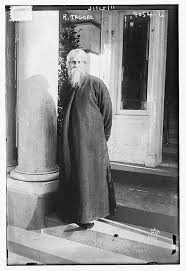
Rabindranath Tagore (7th May 1861- 7th August 1941) Courtesy: Creative Commons
BIRTHDAY SONG

Amidst fears, may fearlessness
             Find new life, O Lord.
May poverty be erased by inexhaustible wealth,
May doubt give way to the haven of truth,
Inertness to new-born vitality —
           Confer upon me new life, O Lord.

Amidst my self-centred desires,
          O Lord, may your benevolence
Kindle the yearning for
         Your divine work —
Unite us all;
Amidst joys and sorrows,
Help us find peace —
      Confer new life upon me, O Lord
Below is a rendition of Tagore’s song, Bhoy Hotey Tobo Abhayo Majjhe, by a well-known modern vocalist, Sahana Bajpaie.
(This poem has been translated by Mitali Chakravartywith editorial support from Sohana Manzoor)
PLEASE NOTE: ARTICLES CAN ONLY BE REPRODUCED IN OTHER SITES WITH DUE ACKNOWLEDGEMENT TO BORDERLESS JOURNAL
Written in April 1894 for the Bengali New Year, Tagore’s poem, Nobo Borshe, was part of his poetry collection called Chitra, published in 1896.
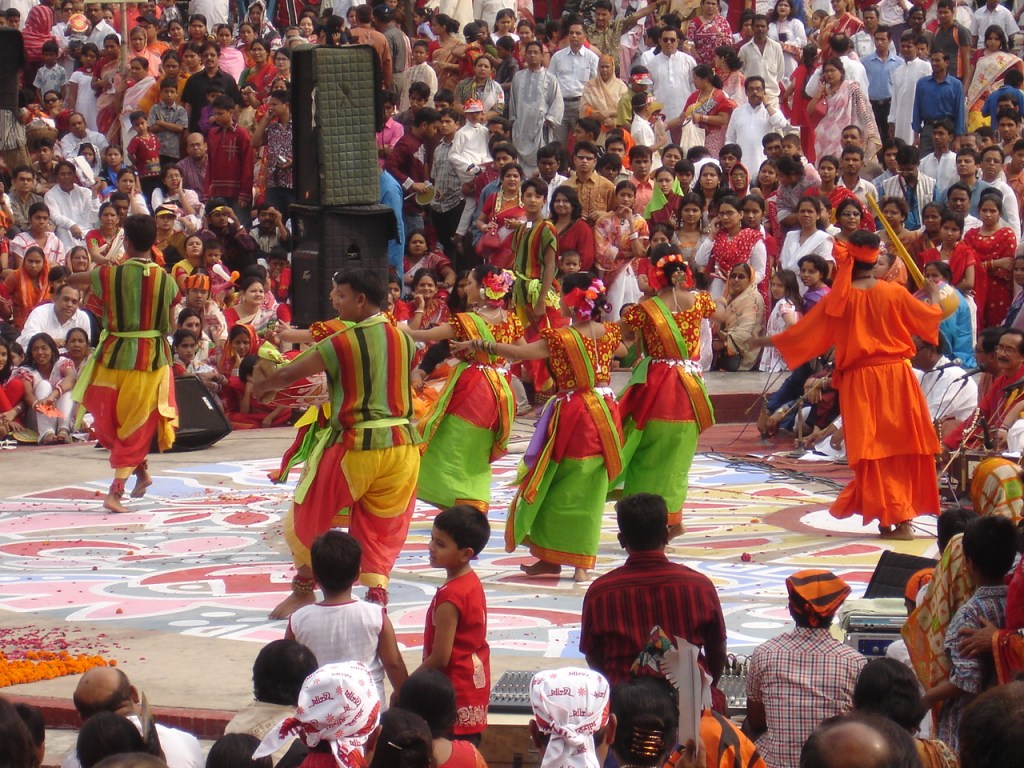
Bengali New Year Celebrations in Dhaka. Courtesy: Creative Commons. Poila Boisakh or Bengali New Year is celebrated in West Bengal, India and Bangladesh. Huge festivities are held in Santiniketan, the University started by Tagore. Multiple Asian New Years across Thailand, Nepal, India and more countries are celebrated mid-April.
The night has nearly come to an end.
The old year is almost past.
Under this dust, it will lay down
Its worn-out life at last.
Whether friend or foe,    wherever you go,
Old wrongs cast
Away. On this auspicious day,
Old grievances shed as the old year departs.

Today, I make new resolutions
Within my heart.
But, when I am reborn, maybe,
I will not recollect this part.
My judgement, perchance,    might be harsh.
Another’s tearful pleas thwart.
On this new-year’s morn,
I beg for clemency from the start.

As today blends into the morrow,
the future continues, unfathomable.
Will the current love and happiness
Still persist, be stable?
The flickering light     may stop tomorrow night.
Our home may be steeped with sable.
Come, this New Year’s Day,
Give what you are able.

Vast and limitless is this world.
There are so many countries.
Where will we find the confluence of
All these people and their synergies?
Spread good cheer,    with a smile appear,
Like flowers on the same trees.
If you cannot do this daily,
At least come close once please.

The time to meet will pass.
We do not know where we will go.
In the middle of eternity, we may
Never find friend or foe.
Joys and sorrows     will leave no furrows,
They will disappear like bubbles. So,
Glance at your beloved’s
Face forevermore.

For our own personal petty gains,
We raise a ruckus.
For self-conceit and blind beliefs,
We become unjust.
Today I give my best,     I dedicate
My life thus —
I will be content with what you give,
And not expect too much.

I will embrace with daily patience,
All burdens and sorrows.
I will tread the difficult path, my
Life’s mission follow.
If I break my vow,    weakened by this tired brow,
With humility, I will my head bow.
I will accept the burden
Of all my flaws.

If life seems meaningless, if there are sorrows —
They are all in transience.
It will all be wiped away in life’s
Futile insipience.
Are you alone on this earth?    Beauty, pain, hurts,
Can be found in all ambience.
You are but a tiny speck in the
Endlessness of human existence.

As long as you exist, shine
Like a star.
If you do not find happiness,
Let there be peace in your heart.
If you cannot survive,     timeless conflicts outlive,
If defeats bar,
Then learn to die with
Sincerity on your part.

In this life’s journey, who can say how
Far we need to go
While stepping on the razor’s edge of
Heartrending sorrow?
Again, in the dark,     we walk the fiery path.
At least on this day, please pardon.
With the old year
Let all the old grudges go.

There goes, there goes the time,
My past departs.
On this dawn, with tears express
Your indebtedness, O heart.
Fill the cup of life    with joys and strife.
Tell her, her memories will stay past
All times, forever.
I dedicate to you my past.

This dawn heralds new life in the
New Year.
I want to tie all lives with love,
But I hesitate, I fear.
Do not send away     visitors on this day.
Welcome the New Year,
Filling the pitcher with
Virtuous tears.
This poem has been translated by Mitali Chakravarty with editorial support from Sohana Manzoor and Anasuya Bhar
PLEASE NOTE: ARTICLES CAN ONLY BE REPRODUCED IN OTHER SITES WITH DUE ACKNOWLEDGEMENT TO BORDERLESS JOURNAL
Borondala(Basket of offerings) was written by Tagore in 1928 and published in a collection called Mahua in 1929.
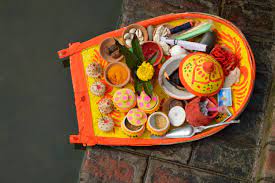
Mahua(1929), named after Madhuca Longifolia, a tropical treeBorondala or basket offerings. Courtesy: Creative Commons
BASKET OF OFFERINGS

Today, in this quiet bower,
Within my being
My offering has grown
Into a garland of light.
In this spring, with climbers
Of leaves and flowers,
My verses waft in the dawn
Of the golden rays.
My whole being dances
Swinging with rhythm.
If this song doesn’t find form
I will die of shame.
Oh beloved, my body reverberates
To the beat.
I have not got you an
external offering,
My prayer flows from my own
Being like a stream.
My heart leaps
Free of my being
Impatiently pleading
A meeting with you.
Just as the stars glimmer
With light in the dark night,
A spark awakens within
My body.
This luminosity illuminates
All my work.
This poem has been translated by Mitali Chakravarty with editorial input from Sohana Manzoor & Anasuya Bhar
PLEASE NOTE: ARTICLES CAN ONLY BE REPRODUCED IN OTHER SITES WITH DUE ACKNOWLEDGEMENT TO BORDERLESS JOURNAL
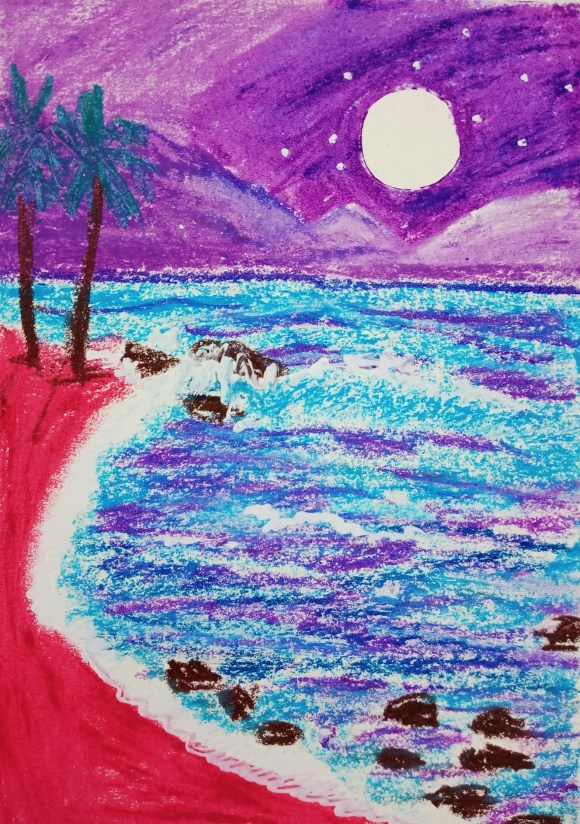
Why is the vast ocean restless?
What bonds does it want to sunder?
It howls like a child in distress.
With incomprehensible words, it blusters.
Over eons, it rises, it soars,
It swells with an exhilarated gait —
Turbulent and huge, it roars.
The calm sky silently hears it reverberate.
Crushing its heart, it flays, it beats,
Against the rocky seaside. At high tide, its waves
Rise to smash, heralding apocalyptic feats.
Yet as the tide ebbs, the ocean gently laves
The dark core of nature, bordered by mud.
The ocean of tears continues to sway.
Each moment, desires staunched at the bud
Want to cry and drench the world away.
I yearn to be the scribe who translates
The ocean’s upheaves for humankind,
Calm the eternal unrest that agitates
The sea breeze to swish, shush and pine.
I yearn that my song rings day and night
Harmonising tunes with the Earth’s infinite…
This poem has been translated by Mitali Chakravarty with editorial input from Sohana Manzoor and Anasuya Bhar & Art by Sohana Manzoor
PLEASE NOTE: ARTICLES CAN ONLY BE REPRODUCED IN OTHER SITES WITH DUE ACKNOWLEDGEMENT TO BORDERLESS JOURNAL
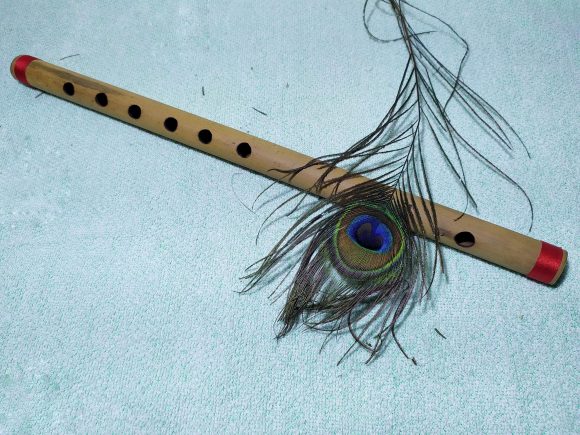
FLUTE

Your flute —
For a short while,
Pretend it's mine.
The sarat* morning flowed by.
The day grew tired nigh.
If you are weary
Of playing your flute,
Then please let,
For a short while,
Your flute be mine.

I will not do much with it.
I will only play
For part of the day.
Raising it high,
I will hold it to my lips
I will express my happiness
By playing many snatches —
In this way losing myself
I will only play
For part of the day.

Then as dusk descends,
I will get flowers in a basket
to make a necklace.
Adorning a garland of juthi*,
Filled with its heady perfume
I will pray with an
Offering of lamps.
That is why in the gloaming,
Fill a basket of flowers
To make a garland of juthi.

A half-moon will rise
Amidst the stars
To gaze at your path.
Then I will come to you
To return your flute.
And you will play a tune
Expressive of the depth of night —
A half- moon will rise
Amidst the stars
To gaze at your path.


*Sarat is early autumn.
*Juthi is a kind of Jasmine
This poem has been translated by Mitali Chakravarty with editorial input from Sohana Manzoor & Anasuya Bhar
PLEASE NOTE: ARTICLES CAN ONLY BE REPRODUCED IN OTHER SITES WITH DUE ACKNOWLEDGEMENT TO BORDERLESS JOURNAL





 Borderless