That day, the vast crowd on the road took me by surprise. I was riding back home from the school in the village where I teach. People had jammed the road near a cremation ground. I stopped my bike to ask a man: “What happened? Why are there so many people on the road? They must be thousands in number, don’t you think?”
“Don’t you know? Manglu died this morning. All these men have come to attend his funeral,” the man told me.
“Oh, was he a great leader or saint?”
“No, he was a great funeral attendee.”
“A funeral attendee! I had heard of poets, leaders, and saints whose funerals attracted a crowd like this but never of someone called a funeral attendee. What was so special about him?” I asked again.
“Manglu never left a funeral unattended if he came to know about any death nearby. It was his legacy.”
“Oh, achha[1]!” interjected I, and, having nothing to say more, started the bike.
“What is so great about that?” I thought. But the crowd I was moving amidst defied the arguments my thoughts provided. This dead man must have been a man extraordinaire in his lifespan.
But who cares?
I made my way somehow into the crowd and moved the bike ahead.
I came home. The day went as usual, but I realised that I could not stop thinking about that funeral attendee.
The next day, in school, during recess, when I put a question about the dead man while chatting with my colleagues, it at once caught everyone’s attention. The head teacher, a greybeard, and a native of the village knew about him. He narrated Manglu’s story:
“About thirty years ago, Manglu had to leave his native village Kherupura due to the disastrous flood. He could never return, for the flood had engulfed his village. The whole of it had vanished into the Rapti.
“Manglu had nowhere to go. His father died in that flood. His mother had died earlier — a few years ago, and, as he had no sibling, he was left alone with his wife, who was pregnant at that time.
“He had to move out. Destiny forced him to live a nomadic life. He came to live in Silva village near the main road, which connected two headquarters of the adjacent districts – Shravasti and Bahraich.
“At first, the couple lived under a tree, but later on, seeing the condition of Manglu’s wife, the village head gave him a small piece of land. On it, he built a mud house. They lived happily for a few months, but Manglu could not save his wife till the following year. She died, I believe, during her childbearing. Manglu was all alone after that tragedy. He had no one whom he could consider as a family. His relatives were living in different places. He could go to any of them, but he decided to live on his own in the village.
“To make ends meet, he worked as a woodcutter, a labourer, and a hawker, but he never left the village. After his day job, he actively participated in village life and attended every function and funeral, either invited or uninvited. Since he had no one he could call his own, he started regarding everyone as his own. No one took him seriously, but he maintained this routine.
“After many years, finding himself unable to do hard physical labor, he opened a kiosk-like shop by the roadside where he sold petty items like cigarettes, tobacco, and paan[2]. He made acquaintance with everyone who came to his gumti[3]. Motorcyclists, bus drivers, hawkers, rickshaw pullers, peddlers, and beggars – men from all walks of life were his friends. In a year or two, Manglu acquired such fame that people started talking about the directions and distances by referring to his kiosk as a distinctive landmark.
“Manglu never indulged in hoarding money; he devoted himself to making friends. Anyone could purchase from him on credit. And such a good-natured man he was that even the vilest man paid him back.
“He widened his social circle. People from adjacent districts knew his name and his thatched kiosk. I would say that he was more famous than a monument. In those days, too, he never left any funeral unattended, either in his village or in any other ones. If the dead belonged to another village, he would take a ride as soon as possible. Sometimes, people at the cremation ground wondered why he had not arrived yet, but he always arrived sooner or later.
“As he grew older, he found himself unable to run the shop. He took shelter in one of his friend’s houses to spend his last days. He could not walk straight then; he suffered from camptocormia–the bent spine syndrome, and he had to take the support of a bamboo staff. He roamed in the village all day with the bamboo staff in one hand and enquired about the well-being of whosoever came in his way. Even at that time, if someone died somewhere, he would try to go there to attend the funeral.
“The villagers thought he had a mania for attending funerals. And thus, in the last days of his life, people started calling him ‘the funeral attendee.’ He had become a piece of curiosity for the youngster in the village.
“And then, he died yesterday. The news of his death spread like wildfire. Can you believe that more than two thousand people attended his funeral? I am not sure what exactly all this resembles, but I would say that Manglu must be smiling in heaven.”
.
Glossary
[1] Connotes– Is that so? Literal translation from Hindi — yes.
Ravi Prakash teaches small kids in a rural primary school. He lives in a small town near the Indo-Nepal border in the district of Shravasti, Uttar Pradesh.
.
PLEASE NOTE: ARTICLES CAN ONLY BE REPRODUCED IN OTHER SITES WITH DUE ACKNOWLEDGEMENT TO BORDERLESS JOURNAL
Story by Shankhadeep Bhattacharya, translated from Bengali by Rituparna Mukherjee
I wake up with a start in the morning. Breathing deep, I realise that the essential substances are not permeating into my lungs in proper amounts. My limbs are turning a blackish blue. It seems as if someone is hammering my skull right behind my ears. My head, like a ticking bomb, is almost fit to burst. This claustrophobic, terrifying existence is of course not new to me. The scientists proclaim that they have recorded the highest degree of air pollution in the Babynamen region. It was Kikoro about a month or two back. I was there the last time. I reach Babynamen without wasting a lot of time. I sit there like an ancient monk and inhale deeply for seven hours. My body feels relaxed. The colour of my body turns normal, from a blackish blue to a healthy pink. I write the name of Babynamen right below Kikoro in my diary as well as the details of the day’s events.
My house is not near any human settlement. I don’t even know if there is any human activity nearby. My home is a twelve feet by twelve feet room made of porous, rough plastic. My routine happiness lies sedimented in the resting peace of the room. There are no windows in this room, not even the smallest hole lest the flies enter. There is a reason for such an arrangement. I don’t want the pure air — a rare treasure these days — that comes from the forest across the river, touching the lush trees, to enter my room. If that unadulterated air finds its place in my lungs, there will be trouble. The colour of my skin will immediately turn a blackish blue. I check the two sides of my abdomen just to be sure. There is a hint of red tinged with pink across my skin, which means my body is completely normal. I break into a song in joy. My song is interrupted by a knock on the door about a minute later. Someone is knocking gently at the door. I open the door and my body shivers with a feeling of deep happiness and sudden thrill. Samapti stands in front of my eyes.
I had first seen her around thirty years back. We were both twenty-one in the first year of the twenty-first century. Seeing her for the first time, I had felt that Samapti [1]was a beautiful young woman, a newly bloomed red oleander flower in flesh and blood. Samapti has always been my first and only love. The sunflower was our favourite. We used to listen captivated to Raga Hangsadhwani in dusk. We loved building shelters for birds and animals with the wet sand near the sea. We often travelled close to the mountains in search of pure air. We inhaled calming oxygen to our fill. We gazed silently at the mountains clad in clouds hand in hand, stared at the white stars twinkle in the black sky from tents in the middle of the forest.
Samapti used to speak of her work then. Her work comprised waking up the people from their untimely sleep, to ensure that their five senses worked properly. She was exceptionally good at keeping people alert and full of life, the very best in her team. When she would finish talking about her work, she would ask about mine. My task lay in spinning stories, poems and songs for these lively people, the history of human struggle, stories of the sea, poems of the river or the cuckoo’s songs. Listening to these, they would themselves inspired to write poetry about the squirrel at times or to empathise with the suffering of an unknown, distant humanity. Our work was a long process. We weren’t always successful in our work.
Initially our work had been very fulfilling. But after ten years or so, Samapti told me with a worried face, “Humankind is not waking up from its slumber anymore, Diganta [2].” I had also observed that the alert and lively human beings were no longer mesmerised by the songs or the stories of the trees or the dance of the peacock, neither were they moved by the suffering of others.
Another ten years later, our travel in search of pure air was also stopped. Humankind started living inside their homes. The entire world outside was plagued by a deadly disease. Samapti and I could not meet as well. I used to flap around claustrophobic in my house like a fish caught in a net. I found breathing normally inordinately difficult. My body would turn a blackish blue in absence of pure air. I would often think of Samapti then. I didn’t have a trace of her after that time. Today Samapti stands at my door, awakening the latent questions in my consciousness. Her face doesn’t look as lovely as before. Samapti used to be dark-skinned. Her skin has turned somewhat sallow now, sunflower yellow.
I say, “You have changed Samapti.”
Samapti laughs and says, “I have long been dead, Diganta.”
“Dead?”
“Yes, when we were cooped up in our homes, the disease outside found its way into my body. I could not be saved even after a lot of effort. I died from a lack of pure air. But you are alive Diganta, even after such a catastrophe. I am so happy to see you.”
“Why don’t you come inside Samapti?”
Taking her hands in mine I say, “Don’t leave me alone anymore, stay with me. Promise me you’ll stay.”
“I don’t have anywhere else to go. Diganta, tell me, how many times does a person die?”
“I don’t know.”
“Seven times if it’s a man, seventeen if it’s a woman. I have only one step left to reach seventeen.”
I didn’t really understand what Samapti is saying but I tried to figure out which of those seven stages of death I was in.
Samapti looks very thin. I think she is hungry.
I say, “Will you eat something?”
Samapti says, “I haven’t really eaten anything since my death. My tongue doesn’t feel taste neither can I smell anything. Everything I see is blurry. I don’t even feel hungry.”
I take out a watermelon, an apple and an orange, a few vegetables and some more delectable food items. Samapti is looking at me. She has deep love in her eyes, on her face a gentle smile. She watches me suck all the formalin and carbide from the watermelon and apple into my body. I have been doing this quite easily for a long time. I lick away the pesticides from the vegetables. I cook the clean vegetables, cut the fruits, and present a wholesome meal to Samapti.
Samapti says, “If you eat the food you have just given me, will you experience stomach pains, nausea, insomnia?”
I nod my head in agreement.
Samapti has her fill of all the food. She says, “I have eaten such uncontaminated food for the first time Diganta. I could taste and smell all the food items.” A sliver of memory makes its way into my mind at this moment. Samapti’s eyes and face used to be filled with pure delight on watching the rain. She would swim in the river on hot summer afternoons. She would not want to leave the water. I would join her. Not just that, I could feel in my very bones that even the simple act of drinking water would give her immense satisfaction.
I have heard water is hailed as life itself, an element without which human beings cannot survive. I pull away arsenic and other harmful chemicals from the life-giving water into my stomach and give Samapti the clean, fresh water in a brass tumbler. I realise she has been thirsty for long by the way she drinks water.
After drinking her fill, she observes, “You don’t drink pure water anymore Diganta. You might get rashes, problems in your kidney, even cancer, isn’t it?”
I nod my head again in agreement.
Samapti has tears in her eyes. Wiping her tears away, she says forlorn, “Why did everything turn to this Diganta? What was our mistake? We have spent our entire lives with the humankind. You would sit on a hunger strike in the streets for days on the disappearance of the honeybees. You would be heart-broken at the death of a butterfly. You gave your best to rejuvenate the sad humanity. Were you the only one to love nature? What about the rest of humanity?”
I take Samapti in my embrace. Breathing in her smell, I smile to alleviate her dismay, and say, “Do you remember Samapti, you had once cooked chital fishcakes for me? I had promised myself that I would treat you to steamed hilsa one day. But I could only feed you boiled rice and omelette. An omelette was the best I could do. Do you remember?”
Samapti laughs. She is still laughing. She must have remembered a lot of other things, which means I have succeeded. I relish these moments. We walk through the pleasant alleys and lanes of memory through the day. We stare at the star-filled night sky for a long time. The stars in the night sky, so many light years away, are the same still. Perhaps they are intact because they are away from the earth. Samapti holds my hand tightly and says, “Listen to me Diganta. The earth will heal itself and will again become what it used to be. I firmly believe it. It will come to pass. Humankind will return the earth to its former glory. A peaceful earth. An earth where children can play carefree. You will get untainted fresh air again, Diganta. It will happen. Just don’t give up hope.” Samapti hugs me and lies down very close. She falls into a deep sleep. Having spent many nights without sleep, my eyes become heavy with slumber soon.
When I wake up the next morning, Samapti is nowhere to be found. I can’t see her anywhere in the room. She has left. But where has she gone? She had said yesterday that she had nowhere to go. Is she then in the last rung of death…?
I am in pain. Salty tears form at the corner of my eyes and trickle down. I do not want to lose Samapti. How can I live without her! She has said that the earth would regenerate itself to its former glory! I will get fresh pure air back in my lungs! She has urged me not to give up hope.
I suddenly feel very scared, fear of death from the pure, fresh air. I usually avoid any contact with pure air. The hope in Samapti’s words has somehow channeled itself into my being. I am torn between unadulterated hope and terrifying fear of death. With an overwhelmed mind, I search for a small forest of green trees. By the time I make my way to the middle of the forest, the colour of my body begins to turn. My body temperature is getting warmer and the skin colour is rapidly changing to a blackish blue. My breath seems to be choking in my throat. I do not have much time on my hands. I do not want to die. I reach Babynamen as fast as I can. I fill my being with the most polluted air of the world. But even that cannot not allay my breathing troubles. The insides of my chest feel empty. Consequently, I lift the cover of a manhole on the street and put my entire face inside. I pull in deep breaths. The blackish blue colour seems to fade out a little. I am still not out of danger completely. An old matador stands near. As soon as it starts, the exhaust of the vehicle spews dense black smoke. I quickly take the exhaust pipe and shove it inside my mouth till it reaches my throat. I fill my lungs with the fumes like I was enjoying a hukkah.
The colour of my skin is now pink. The area around my navel is somewhat red. I feel healthy. My breathing is almost normal. I am calm. I return to the middle of the forest. I have not given up yet, Samapti. I touch the branches and leaves of the verdant trees; the fresh air seems to graze past my nose. Although it is risky, yet I splay my fisted hands to the sky as if I want to enfold the forest in my arms.
I breathe in with all my might. My body gradually turns a blackish blue. But I do not give up. Like one crazed, my burnt and withered lungs suck in the lost purity to return to a life, fresh and animated, as it used to be before lakhs were born and lakhs had died.
(First published in Bengali in 4 Number Platform in August 2021)
Shankhadeep Bhattacharya is a software engineer who is keenly interested in spreading awareness about the environment, society, the socio-economic impacts of technology through regular seminars and webinars. He likes writing for little magazines. He is associated in the editorial capacity with Pariprashna and Sangbartak magazines. He has strived to create narratives in his stories and personal essays that centre around the current realities. He was awarded the “Namita Chattapadhyay Sahitya Samman” in 2022. He has published three books so far: Parisheba Seemar Baire (a collection of short stories, Parashpathar publications, 2018), Manush, Samaj, Prakriti (a collection of essays, Sangbartak Publications, 2021) and Prayukti Tokko Golpo (theory fiction, Sopan Publications, 2021)
Rituparna Mukherjee is a faculty of English and Communication Studies at Jogamaya Devi College, under the University of Calcutta. She is currently pursuing Doctoral degree in Gendered Mobilities in West African and Afro-Diasporic Literature at IIIT Bhubaneswar. A poet and short fiction writer, she works as a freelance translator for Bengali and Hindi fiction and is an editor at the Antonym Magazine. She is also an ELT consultant and ESL author outside of her work and research schedule.
.
PLEASE NOTE: ARTICLES CAN ONLY BE REPRODUCED IN OTHER SITES WITH DUE ACKNOWLEDGEMENT TO BORDERLESS JOURNAL
I have a confession to make; I opened the suitcase you asked me not to. Well, it was a good two weeks after you were buried. While sorting a million things in your room with aunt and mom, I found it, a small, grey one stacked under the pile of boxes in the corner.
For as long as I remember, it had been there in the east corner of your wooden floored room and was out of bounds for adults and children alike. When I pulled it out, there were a few moments of silence in the room. I held the forbidden grey box and the three of us looked helplessly at each other, caught in between the right and wrong as Rumi would say.
When the burden of silence grew unendurable, we opened the suitcase. You may feel betrayed for the three women you trusted the most had the audacity to intrude your private space.
That night, while in bed, my body turned heavy as I sunk deep into the darkness and chaos of guilt. I gasped for air and the mountain wind heavy with moisture, did little to help. I ran helter-skelter through the chasm of my memory. Your ringing laughter guided my way and your stories echoed like strange noises that reverberate while you walk into a deep cave. The familiar name you had often uttered resounded as I traversed the dark channels. When did I first hear it? I don’t remember.
I do remember some instances of you mentioning the name. It was a random conversation of good-looking men in our vicinity and you did say, a certain someone’s son. On one evening while we were discussing the achievements of men and women in our neighbourhood, you mentioned that name again — a man in your neighbourhood, a certain someone’s son. You told us he was your playmate.
One summer evening, when the winds of the hills touched our skins gently as they basked in the last traces of light from the setting sun, you mentioned that name again. You said that my friend, seated next to me, dressed in a white shirt and beige trousers, reminded you of that man. “Majestic demeanour,” you looked into my friend’s eyes and said, “Yet spirit as gentle as the wind outside.” You smiled as you held his hands. Then, as you uttered the familiar name for the last time in my presence, your eyes turned moist — “You remind me of a certain someone’s son.”
Still wriggling in bed, as images and voices from the past haunted me, I thought of your prized possession, the suitcase. Aunt and mom watched that evening as I flipped opened the case. My hands failed to steady themselves. The three of us gasped as your precious box lay bare, revealing what it had steadfastly concealed all these years — a bunch of safety pins, bundles of ribbon, a crocheted purse with a tie-up opening, some old coins that carry no value, a few pebbles, a bizarrely shaped quartz stone with what looked like columns and faces on it and another crocheted purse with tie-up strings concealed underneath all this.
The quartz that has paled from its years in hiding fit perfectly in my palms. Amid the chaos of sharp edges on it was a central pillar, standing tall. There were odd figurines on either side. I left it on the table facing the window.
Finally, aunt laid her hands on the last item– a crocheted purse in a medley of colours. The pouch had the hues of the rainbow, held together intricately with a string in white. Aunt gave it to me to untie the white knot atop the small bag. We all knew that if there was one person who would be forgiven for trespassing, that would be me.
As I put my hands into the pouch, a palm-sized photograph in black and white print emerged. I held it between my fingers. A man dressed formally in a suit and tie with curls spilling over his forehead looked straight into my eyes. He was seated on a stool. The years between us melted as I gazed at his big, bold eyes, which were probably coffee brown, just like yours.
In an instant, I was transported into the room where the photograph was being taken. I asked him about the young girl I did not know– the girl who saw certain magic in him and carried it concealed deep within her even when her octogenarian memory failed her at times. He spoke of your smile and your innocence.
He told me stories about the blue Kurinji that blooms once every twelve years in the mountains and the anticipatory excitement that lingered in the air when the buds appeared, and then gradually how the stretches of the mountains turned an enchanting blue as the flower bloomed — a vision that no combination of words can do justice to. To him, the memory of appeasing blue was visceral and he elaborated how it pacified him during the dark moments when his strength had nothing to grasp. The Kurinji may blossom and spread its vigour just once in a decade, but he saw its unfurled radiance all the time; behind his closed eyelids, and that was his elixir, a perpetual force his life depended on. He believed that the bewitching plant was your totem, and your spirit lived in it.
Behind the photograph was a name written in blue fountain pen, the name from my distant memory that you had mentioned on a few occasions and beneath it, ‘son of ………………….’
As I left the room, a strange shadow reflected from the quartz stone on the table. A boy and a girl (with flowing hair) held each other’s hands from around the pillar. They could not see each other but both of them felt the other, all the time.
Love,
Your Doll
Kurinji blooms that flower in the Neelgiri hills of India. Courtesy: Creative Commons
Monisha Raman’s essays and short stories have been published by various magazines in Asia and internationally. Her first collection of short stories is being represented by Zuna Literary Agency, India. Her work can be found at https://linktr.ee/Monisharaman.
.
PLEASE NOTE: ARTICLES CAN ONLY BE REPRODUCED IN OTHER SITES WITH DUE ACKNOWLEDGEMENT TO BORDERLESS JOURNAL
She was as beautiful as a fairy-child. Her face was angelic as was her nature. She did not know jealousy and during the days of my childhood in that large palatial house of my stepfather, she was my only friend. She shared all that she had with me. Or, rather, she tried to share. Her mother, actually I should say our mother, tried to keep her away from me. After all, I was only her half-sister. I was a creature of wildernesses. My skin was darker, and I climbed the trees like a monkey. In return for her niceties, I shared with her all the fruits of the trees I had rampaged. We were both very young then. She was five and I, ten. Our mother often caught us in the garden rolling in the mud, stained with the color of blackberries or devouring green mangoes. Of course, I was the one who always got punished. She was the darling of her father’s eyes. Who would dare to touch her?
I often wonder if I loved Priya back then. I do not know. Do children love one another? Looking back on those years, I believe I treated her as a doll that was denied to me. I wanted to please her so that she would come to me behind our mother’s back. I knew as early as then that mother didn’t love me. My own father was twenty years older than her, and I was born to her when she was barely eighteen. But he had died in an accident before I was born, and she caught the eye of an extremely rich man, and they were wedded in no time. I was born six months after my mother’s marriage to her second husband. And mother made it very clear that the man she had married was not mine to claim even if he was my father in papers.
I can still recall that particular day I was leaning out of the living room door to watch the family tableau of father-mother-daughter and wishing I was part of it too. Suddenly, mother turned back and saw me. She hissed, “Get inside. What are you doing here?”
Then Priya and her father turned too. Priya waved and laughed, “Come, Apu[1]. Can’t she come too, Abbu[2]?” Her upturned face was radiant with expectation as she looked at her father who also smiled back. “Yes, of course. Come along, Nara.”
Mother glowered, but at Priya’s insistence she agreed to let me join them all on the terrace. Of course, I did not sit with them at the tea-table, but I did hang around them. I watched them contentedly as I had received more than I ever expected.
That was, however, only the beginning.
Up till this moment I only wished that he was my father too. But ma always made sure that I remembered my place. I was always the other sister, the other daughter, the other girl in the family. From this moment onward, I walked behind Priya as her shadow, taking care of her needs, and she depended on me as if I was a second mother. I believe, she loved me too because she knew that nobody else loved her as I did.
I remember the wedding ceremony of Atushi. Atushi was Priya’s cousin, the only daughter of Farzand Fuppi[3]. Priya was of course, as lovely as a rose. She wore a pink coloured lehenga[4] embroidered with seed pearls. It was outrageously expensive as her parents made sure that she had the best of things. But she was still a young girl of thirteen and it was I, the eighteen-year-old Nara, who caused a stir that evening. I was dressed in a peacock blue lehenga that my stepfather almost bullied my mom into getting for me.
“I won’t have one daughter wearing the most expensive thing and another dressed like a pauper,” he had bellowed.
Mother protested, “Nara’s not your daughter.”
He roared, “She’s mine as much as Priya. Don’t you ever say she’s not my daughter.”
Mother cringed and went as pale as a waif. She tried to say something but could not form a single syllable.
Some young male cousins of Priya wowed at our entrance and a female relative sneered, “Goodness gracious! Look at Nara! She just sailed in! Fayaz Uncle will have a Draupadi in his hands in no time.” At some innermost corner of my heart, I reveled. As I turned to look at my mother and Priya, I saw contrasting emotions. Priya was beaming with pure blithe, my darling sweet sister. But in mother’s eyes, I saw panic. She appeared like a terrified deer and clung to Priya. I could not understand why she was so afraid of her very own daughter. But I was naïve, and I did not know the world as she did. Nor did I know the darkest secret she held in her heart.
Priya
They called me a princess. From my childhood I was pampered like one and my mother guarded over me with utmost jealousy. I was an only child and the doctors had said that my mother could not bear another. But then I also had Nara Apu even though everybody called her my half-sister. Technically, she was my half-sister as we had different fathers. Mother always made it clear that she did not care for her at all. And she disliked her even more because I loved her to distraction. In that palace-like prison, she was the only person who cared for me truly. Love shone in her eyes like a beacon, and I cannot help wondering how Nara Apu, who got so little love herself, could love me with such abundance.
She had dark complexion, but that made her all the more beautiful. Her eyes were like pools of black water, the only feature she had inherited from our mother. My eyes are of greenish hue, the eyes that came from my father’s side of the family. When we were children, father was kind of indifferent toward Nara Apu. But Apu had such an unselfish nature that it was difficult to remain unresponsive towards her. And even though my father was a busy man, he did not miss how much she cared for me. Slowly, his attitude toward her changed.
And there was that one time when she practically saved my life. I jumped into the lake after being goaded by some of my cousins even though I did not know how to swim. I realised how stupid the move was as I gulped water and I saw my two dumb cousins standing by the shore gaping at me in horror. I heard a piercing cry, and I sensed it was my mother and then there were several splashes. Then someone got me by the hand, “Don’t grab me,” it said. “Just hold on to my hands.” I flailed and splashed and cried. Then two stronger hands got hold of me.
As I was lying in bed later with mother crying beside me, I learnt that I had two saviours—Nara Apu and Shahnewaz Uncle. It was Nara Apu who had reached me first, and Shahnewaz Uncle reached a few seconds later and grabbed us both and brought me ashore. From that day, everybody knew that Nara and Priya belong together.
By the time she was fifteen, Abbu made sure that mother was not mistreating her daughter from her first marriage. I heard him once telling her, “Salma, do you consider me such a petty creature that I would be jealous of that slip of a girl? You don’t have to treat her so bad, you know, to prove that you love Priya more.”
Mother wept and I could see she was disturbed. But she never really loved her. It is one mystery I never understood until years later.
I also formed a close bonding with Shahnewaz Uncle. Of course, he lived in the same house, but he was always busy with painting. He was Abbu’s younger brother, but they did not have a very close relationship. But he did take notice of me and sometimes patted me on the head. After this particular incident, he started taking interest in both me and Nara. He brought for us licorice of different shapes and tastes and other delicacies. My favourite was orange, while Apu liked peppermint. He laughed at her, “What an old woman you are!” Nara Apu made faces at him and grinned impishly.
During these times, I also started to note that Mother was actually afraid of Nara Apu. It did not make sense to me at all. But whenever Apu was around either Abbu or Shahnewaz Uncle, she would fidget uncomfortably and say nasty things. Once I heard her grumbling to herself that Nara Apu was out to grab men. Poor Apu was only sixteen years old at that time. Then on her nineteenth birthday Mother suggested that she could be married off to Rabbi, a poor relation who worked in our country estate. When Abbu realised that she was serious, he suddenly went very still. Then he said in a very low voice, “If you ever utter such nonsense, or if I ever hear that you’ve initiated something like that, I will have you drowned. Daughters of my family don’t marry servants…. And, from today, she is mine. Forget that you ever gave birth to her, you wretched woman.”
I don’t know what come over her, but mother just fainted away.
Nara
Mother was always a troublemaker. In those days, I could never understand why she hated me so. Our father (I had started calling him Baba[5] at some point; I did not call him Abbu though) was away on a business-trip. And that is when I discovered a terrible secret. I never knew the whole story, but I can still recall the strange conversation that night when Priya was raving in fever and Baba was away. I had fallen asleep in the sofa in Priya’s room and the words streamed into my consciousness:
“All these years, I’ve waited. I’ve waited for him to die. Is there nothing you can do? Priya will always be known as someone else’s daughter.” I heard the sound of muffled weeping of a woman. She whimpered as she said, “And I have to remember all the time that the child that is legitimate is actually the result of rape. I… I … can never love Nara… I was young and I didn’t want her… I hated that man… why couldn’t she die at birth…Why didn’t you let her die?”
Even in my sleep I went numb with pain. Until that moment I had resented that my mother never loved me. There in that nightmarish darkness, in a half-conscious state I learnt the nature of the relationship that existed between my mother and father. I knew, of course, that he was way older than she was. But I never knew that she was married off to him because he had raped her.
Then I heard the voice of a man. The voice was sad but steady, “He’s the rightful son of my father, Salma. I cannot do anything. Even if he dies, I won’t inherit the family property. My mother was only my father’s mistress, you know. Fayaz bhaiya[6] has been generous enough to let me live here. If his mother was alive, he would never be able to do so. You already know that. And Priya has to be recognised as his daughter, otherwise she will get nothing either.”
I was so shocked that a sound escaped my mouth, and my mother was at my side within a moment. In that semi-darkened room, I saw her dark eyes glazed with sheer terror. And I knew that a woman in her predicament would not allow anything or anyone to get between herself and her object of desire. I pretended that I had had a bad dream about Priya. Then we both ran toward Priya’s bed.
A week later, before Priya had completely recovered, mother fell from the stairs and was killed. But a lot of things started to fall in place. Since she could not have any more children, she was protective about Priya and so possessive too. She had no choice but to pass her off as the daughter of her husband. She also wanted to remain the wife of the man who was as rich as a king. She had nowhere to go either. The man she loved, she could not have. And the other daughter, that is me, was a child she never wanted. My father, she never loved. Poor woman! What a life!
It was a strange house after that—two brothers grieving for the woman they both loved. Shahnewaz Uncle suddenly seemed to have grown old. He reminded me of Tithonus bereft of his Dawn. And our stepfather seemed distant and gloomy like a thunderstorm. Yes, that’s how I started thinking. He was Priya’s father only as much as mine. Somehow, the running of the household fell into my hands and Priya became my shadow. She grew to be afraid of the dark. She saw mother’s shadow in the darkness, and I started sleeping in her room. We grew closer than ever. That’s the time when I learnt to love her truly, like my very own sister, without the slightest trace of jealousy.
Priya
I saw the woman in shroud for the first time about two weeks after Mother died. She was sitting in the veranda in the evening. I called out without thinking and when she looked back, I shuddered because she had no face. Yet I knew she was a woman. I heard a piercing scream and when two arms gathered around me, I realised that it was Nara Apu and that I had screamed. I think I fainted and when I woke up, I was in my bed and Apu was sitting by my bed, her eyes clouded with worry.
“I saw her, Apu,” I whispered. “I think I saw Ma.”
Apu’s face paled, but she shushed, “You saw nothing, darling. It was just a shadow. And don’t worry, I’m here. I’ll take care of everything.”
But I saw the woman again a few days later. She was watering the plants on the rooftop at the wake of dawn. I saw her from my window, and I knew it was her. Why was she haunting me? And why did nobody else see her?
Nara Apu made sure after that I was always surrounded by people, esp. in the evening. At night, she slept in my room. Initially, she slept in a cot, but later at my insistence, she slept in the same bed with me. During those days, Nara Apu was strong. She walked with grim determination; she protected me like a warrior-princess. I felt safe when she was around. During daytime, things were normal, but as soon as the darkness crept in, a fearful feeling rose in my heart. I was afraid of shadows. I realised I had to bring Nara Apu in. But how to tell her? I could not give away my secrets; hence I told her only what I could.
That night when we were getting ready for bed, I caught her hand and whispered, “Apu, I have to tell you something. Have you seen Shahnewaz Uncle’s mother?”
Nara Apu gaped at me in incomprehension.
“I saw her picture in his closet. He said it was the picture of his mother.”
Very slowly Apu got up and sat again. And then she said even more slowly, “She… was… drowned… in a… pond, they say. I wonder…”
I stuttered, “Nara Apu, she… looks … exactly… like me.”
Nara Apu did not say anything, but just looked at me. And I realised with a jolt that she knew. When did she come to know that? And she still protected me like anything? When did she learn about it?
I burst into tears, and she held me close like she always did. “Shush, shush, my pretty. You’re safe with me. None can harm you when I’m here. Shush…” What if she knew the truth? Could she bear it? Could I bear if she did not?
Nara
I had to be strong and brave for the sake of Priya. I could not tell her what Baba had told me. Sometimes I wonder how was it that my own mother never loved me, but I got so much love from a complete stranger. No, I am not talking about Priya, I mean Baba. That rainy afternoon when he called me to his study, haunts me still.
He was standing by the window watching the rain. When I entered, he bade me sit. He did not turn to look at me but spoke:
“Sit, Nara. I have some things to tell you.”
I waited patiently.
“We’re in a strange situation here, are we not? Your mother has died, and you are stuck within the walls of a strange house with people whose ties to each other are stranger.” I shuffled uneasily. What was he saying? What was he referring to?
“This is a big house. Do you know that walls have ears?” he ploughed on. “There are many secrets this house holds and even I do not know them all.” Here he turned to look at me. He had smoky eyes, eyes he inherited from his mother. He was a very handsome man even though he was in his mid- fifties. He sighed and said, “I know who Priya is.”
I bolted from my chair, and I knew my face had lost its colour.
He shook his head. “I have known it for quite some time now. Priya looks a lot like Shahnewaz’s mother. I had not realised when she was younger, but as she is growing up, I’ve been detecting the resemblances.”
I sat trembling. Was he planning to punish us? Why was he telling me all these?
“Sit, Nara. I am not going to hurt you or Priya for something your mother did.”
A terrible suspicion started to creep in my mind. And I had thought… “Did… you… you did not kill her, right?” the words tumbled out of my mouth.
He looked at me sadly. “I did not kill her.” He paused and searched my face. “But why do you say that, Nara? Your mother died in an accident, did she not?”
I remained silent.
“Nara, I want you to know that I have drawn documents with my lawyers and have divided my property equally between you and Priya. Both of you are my daughters, mind you. I do not care who the natural fathers are, I recognise you as my children. And I want you to take care of Priya, no matter what.” He paused again and asked, “Do you understand?”
I nodded mutely. Then I asked, “But why? I mean, are you going somewhere?”
He seemed lost in thought. But then he raised himself out of his reverie and smiled, “I guess, you can say that.” He paused and then added, “You can trust Shahnewaz. Like me, he loves both of you. I believe that he loves you even more because you are not his child. He has no hold over you and yet he owes you for saving his daughter’s life.” At that moment I realised how much he loved us both. I felt a wrenching pain for this man who was more than a father to us, and yet he was not our father.
As I was walking out of the room he called me back, “You’re strong, Nara. Far stronger than any of us. You’ll survive.”
Nara and Priya
There was total chaos in the family after Fayaz Chowdhury’s disappearance. The bulk of the property was left to Nara and Priya with Shahnewaz Chowdhury as the legal guardian. Neither Nara, nor Priya could claim their share until their 25th birthday. If either of them died before that, their share would pass on to Shahnewaz. Fayaz Chowdhury’s sisters could not make head or tail of their brother’s wishes. Why did he leave half of his property to Nara? Even though adopted, she virtually was no blood relation to him. Naturally, not any of them could accept that she had suddenly been elevated to the status of a princess.
Priya’s problem at this point was she still saw the shadow of a woman periodically. But by now they both had accepted that Priya would keep on seeing her. She became more and more dependent on Nara.
On that particular afternoon, Nara was making tea on the veranda. Priya was sitting on the small sofa when she just could not take it any more. “Apu, do you know that you are the most beautiful girl that ever lived?” she asked with an unnatural fervency.
Nara raised her dark eyes and laughed. “What got into you, sweetie? If I’m the most beautiful one, what are you?”
Priya smiled in spite of herself. “Apu, will you go away when you get married?”
“I’ll never get married,” Nara suddenly went somber.
“Why not?”
“I don’t trust men,” came the simple reply. She paused and then proceeded to say, “Our poor mother! I just feel so sorry for her.”
“Why do you feel sorry for her? She was a selfish bitch!” There, it was out in the open, thought Priya. It still bothered her that the wretched woman never learnt to love her elder daughter.
Nara shook her head. “No, Priya, she was just a miserable woman. She could not have the man she loved and had to deal with two other men.”
Priya’s eyes stung as the words tumbled out, “You loved her?”
“She was my mother,” said Nara matter-of-factly. “What she did was done out of her own miserable state of mind. I cannot help loving her.”
Priya’s face went as white as chalk. “Apu, I killed her.” The whispering confession was as soft as the first snow. Nara went still. When she turned to look at her sister, she said with a sadness that only tremendous love for a child can produce, “I know. Baba knew too, I believe.”
Priya cried with an abundance that knew no limit. “She hated you. That wretched woman! She wanted to kill you when you were born. Did you know that? Shahnewaz Uncle did not let her. Those two men—they have had so much love in them for that wicked woman. And you love her too? How can you love her? … Sh she was… a witch… an evil witch… I can never… forgive her… never…. Do you know she planned on killing you again? She… she had come to … sus… suspect that you knew the secret of… my birth. I p-pushed her d-down the stairs. I would n-never let anyone harm you… never…” by this point Priya had become hysterical.
Priya was still screaming when they took her away. Her mind had gone completely berserk. She certainly was not a criminal. No wonder the pressure she had retained through the two years after her mother’s death overwhelmed her completely. Nara pulled through the time, and she dragged her Shahnewaz uncle through it too. When Fayaz Chowdhury finally returned home, it was once again a strange household—two fathers held together by a daughter who belonged to neither. And yet, she was the daughter of the woman they both had loved. It is strange that Nara’s mother never loved the child begotten through rape and abuse, and yet Nara had so much to give. That made all the difference.
Sohana Manzoor is Associate Professor, Department of English & Humanities at ULAB. Her short stories and translations have been published in many journals and anthologies in South and South-East Asia. Currently, she is also the Literary Editor of The Daily Star, Bangladesh. This story was first published in Six Seasons’ Review.
.
PLEASE NOTE: ARTICLES CAN ONLY BE REPRODUCED IN OTHER SITES WITH DUE ACKNOWLEDGEMENT TO BORDERLESS JOURNAL
By S.Ramakrishnan, translated from Tamil by B Chandramouli
S Ramakrishnan
S. Ramakrishnan is an eminent Tamil writer who has won the Sahitya Akademi Award in the Tamil Language category in 2018. He has published 10 novels, 20 collections of short stories, 75 collections of essays, 15 books for children, 3 books of translation and 9 plays. He also has a collection of interviews to his credit. His short stories are noted for their modern story-telling style in Tamil and have been translated and published in English, Malayalam, Hindi, Bengali, Telugu, Kannada and French.
The Browless Dolls
Hasan Sikari’s house was the scene of a strange incident that seemed impossible.
Real-life is always more fascinating than fiction. The impossible happens more easily in reality than in fiction. Such an incident occurred at Hasan Sikari’s house.
We do not notice oddities until they are over. We only examine how they happened afterwards. Strange things happen only to show us we are not in control. What exactly happened at Hasan Sikari’s house?
Two dolls have come together.
One might wonder what is surprising about that.
That is because you have not known about these two dolls.
These were hand-painted white ceramic dolls. They said that the Chinese dolls were a gift to Hassan Sikari at his wedding; one is a man and the other a woman. The male doll wore a round cap. Around its neck was a handkerchief. A small belt circled its waist.
A red robe adorned the female doll’s body. Its left hand was visible in front, but it had the right hand hidden inside the robe. The woman’s hair bent forward like a crescent. Neither doll had eyebrows, giving them a distinct look. The doll’s expressions were alive, showing that the maker of these dolls was a gifted artist.
Those in Hasan Sikari’s household said the dolls were of a husband and wife. The dolls appeared normal, but a strange belief accompanied them. These dolls reunited by themselves if they were ever separated.
You must wonder how lifeless dolls could come together. Maybe, these dolls had fate as well, just like humans. If not fate, it was strange the way they stayed by each other’s side.
No one at Hasan Sikari’s house tried to test this theory by separating the dolls. Hasan Sikari was a silk merchant. Their family had moved to Burma from India to trade silk only. His family had been in the silk business for generations.
One of Hassan Sikari’s ancestors bought silk wholesale directly from China. The friendship that began then continued during Hasan Sikari’s time. Hasan Sikari is now eighty-six years old. However, he still visits his shop every day. The silk business still fascinates him. They no longer go to China to buy silk. They buy silk from Kashmir. Hasan Sikari would sometimes lament that artificial silk has ruined the greatness of silk.
Hasan Sikari was 18 when he got married. Quen Lee, a Chinese merchant, gave him the dolls as a wedding gift. Quen Lee, a family friend, was married to an Indian woman. While he gifted the dolls, he said nothing about their strangeness. Three months later, when Quen Lee came to me to tell Hasan about the flood in the Irrawaddy River, he said, “These dolls are an inseparable couple. They will definitely come together again, even if they are somehow separated”
Hasan Sikari’s response was sarcastic, “Even humans find it difficult to come together when separated. So why do you spin such a yarn about dolls?”
Quen Lee said in a firm voice, “No, what I say is the truth. They do not make these dolls anymore, but four centuries ago, the bride’s parents would give them as a wedding gift. These are also four hundred years old and have been in my family all this time. They are a gift of love from me.”
When Quen Lee said this, Hasan Sikari’s wife fell in love with the dolls. She cleaned them and placed them on a pedestal next to their bed. The doll husband and wife appeared meek. Touching the wife doll’s cheeks felt like touching a rose petal.
“Quen Lee was right. These dolls are strange,” Hasan Sikari’s wife told him one day.
“What happened?” he asked.
“The dolls are too shy to see our intimacy in bed. They turn their faces away by themselves.”
“No way it can happen. Why should dolls be ashamed?” Hasan asked.
“How can the dolls see our intimacy? You’re confused. Tell me what happened.”
“I’ve watched them for the past few days. The dolls look at the bed during the day but turn by themselves around at night.”
“Lie. I’ll hug you now and see if these dolls turn around.”
“Oh. Not now… you don’t know the time and place,” said Hassan Sikari’s wife after shyly shaking off his embrace. Both dolls remained motionless.
When Hasan Sikari went to bed at night, he noticed the dolls were facing the bed. He got up early in the morning and turned on the lights. All he could see were the dolls’ backs. The dolls had turned their faces. What a surprise! They were in fact, embarrassed to see our privacy, thought Hasan Sikari. He woke up his wife and told her so.
“At least now, do you believe what I said? The dolls are watching us.”
“Do you think they will hear what we’re saying?”
“I don’t know. There seems to be some emotion in the dolls. Your friend was right. These are not ordinary toys.”
Hasan Sikari’s wife blushed and transferred the toys from the bedroom to the hall showcase. The dolls stayed there together for twelve years.
One day, Hasan Sikari’s wife said, “These dolls have not aged at all. Same smile. Same youthful look. The same glowing blue eyes. Only we have grown old.”
Upon hearing this, Hasan Sikari said, “It is like our marriage happened just yesterday. But already marriage has become boring.”
Before he finished talking, she exclaimed in false anger, “A man who dislikes marriage should go into the forest. He has no business in the bedroom.”
Hasan Sikari laughed and said, “These dolls don’t even pick such petty fighting Shamima. Age is the gift of human beings. Age makes a guru out of a man. It is your age which makes you mouth off like this Shamima. The woman I married never used to argue.”
“I am like this because of habit,” Hasan Sikari’s wife laughed. Hasan Sikari believed they were as happy as the dolls given by Quen Lee. A bomb hit Rangoon during World War II. On the night Hasan Sikari attempted to leave the house and return to India, he missed the male doll from the pair.
Only the female doll was in their bamboo basket when they arrived back home by ship. Hasan Sikari’s wife was sad that the male doll had been left behind, but she did not express it.
As soon as they arrived in India, they bought a house in Lucknow and began living there. Only the female doll stood alone in their living room. Six years later, a man trading in old papers came to Hasan Sikari’s house. He bought old papers and empty bottles and left. A few hours after he left, Hasan Sikari’s youngest daughter announced,”The male doll is back.”
Hasan Sikari could not believe it. The dirtied male doll stood on the floor in a corner. How did the doll materialise? Was it brought by the old paper trader? Did he leave the doll by mistake?
Hasan Sikari’s wife almost cried when she saw the doll. Grasping the doll, she wiped it with her saree and placed it near the female doll. The male doll seemed to look longingly at the female doll.
Hasan Sikari’s wife said, “Did you see? after traveling here and there for so many years, it has finally returned to our home itself. We should not separate these dolls anymore.”
The return of the male doll gave Hasan Sikari a new hope, as if he had found all his lost assets. One day he himself wiped the dolls with his hand. Each morning before heading to work, he would stand beside the dolls for a minute, saying something to himself.
All the visitors to Hasan Sikari’s house heard about the dolls looked at them in amazement. A police officer’s wife wanted to buy the doll from Hasan Sikari. He flatly refused.
Hasan Sikari’s family went on a summer vacation to Nainital. The dolls were missing when they returned. Some workers in the house have stolen the dolls. Hasan Sikari notified the police. He questioned the workers and threatened them. However, they could never find the dolls. He suffered a great loss emotionally after losing the dolls and in the following weeks, he fell ill.
Hasan Sikari dreamt of the dolls one day. He lamented the loss even in his sleep. He spent a lot of money in search of the dolls. Hasan advertised in the paper as well. But the dolls could not be located. Six months later, a railway porter brought the two dolls, apparently found in a railway coach. The male doll had a slightly broken leg. Hasan burst into tears, unable to believe that he had the doll back. He gave the porter a reward of Rs. 2,000.
He decided not to display the dolls outside anymore and made a wooden box and hid them in his money locker. He took out the dolls and prayed every day before taking money. Then he would put them back inside and close the locker.
Hasan Sikari’s eldest daughter-in-law could not conceive for a long time. In the house, this grievance was discussed as a major issue. One day, in a fit of rage, the eldest daughter-in-law pulled out the two dolls and dumped them outside. Losing the dolls devastated Hasan Sikari and he fainted. Upon learning that the eldest daughter-in-law has done the deed, Hasan’s wife drove her out of the house. The eldest daughter-in-law never revealed what she had done with the dolls.
Three years later, during the de-silting of the well one summer, they found the two dolls, discoloured and soiled. When they brought out the dolls, washed and held them in their hands, the same blue eyes glowed motionless. When Hasan Sikari’s eldest daughter-in-law was asked about it, she replied: “I just put them in the trash. I wonder how they got into the well.”
It was impossible to determine who took the dolls and threw them into the well.
After that, Hasan Sikari never parted with the dolls. He always kept them with him. He would not give them to his grandchildren even if they asked him. The dolls were near his bed even when he was in the hospital. On the day Hasan Sikari underwent heart surgery, one of the dolls disappeared again. It was the girl doll. Not wanting to make his health worse, the family lied to him saying that the doctor told them to take the dolls home.
Then Hasan Sikari returned home, the first question he asked was, “Where are the toys?”
They brought only the male doll. He stared at all of them, not asking a single question. He told the male doll, “Wherever she is, she’ll come searching for you.”
It did not work out the way he had hoped. When he saw the male doll every morning, he assumed the female doll would arrive that day. But it never happened. That night, he would go to sleep with a heavy heart. Over time, the doll that disappeared became like his daughter. Hasan Sikari acted like a father looking for his lost daughter. The thought of the lost female doll drew him to tears.
One day, after seven years and thirty-six days, the female toy was on their doorstep, with her arm broken. How did it get there and who brought it? No one knew anything; Hasan had no desire to find out. Hugging the doll with the broken arm, he lamented that this had happened. Hasan Sikari’s wife cried also.
The next day, Hasan Sikari adorned the female doll with jewellery and took her to the male doll. He hosted a party at home to celebrate the reunification of the dolls.
Those who came to the party were all stunned by the story of the incredible dolls. A woman looked at the dolls and said,“In the past, these dolls must have been a real man and women who were unable to unite. When they turned into dolls, they will not stay separated”.
Her words seemed true to Hasan Sikari.
Hasan Sikari’s wife had a sudden heart attack one night, and she passed away before they took her to the hospital. Hasan Sikari, who lost his wife unexpectedly, found solace in the dolls. He kept the dolls by the pillow itself on the bed. Every day, he would tearfully tell the dolls of his wife’s love and their happy days, to relieve his misery.
The dolls seemed to have a sad expression on their faces.
One night, as he told the dolls about the behavior of his newly wed wife, the female doll accidentally fell from the bed and shattered into pieces. As he bent down to grab the doll, he saw the male doll jump out of bed and fall also.
There were two broken browless dolls scattered on the floor. When he saw them, he cried out loudly. Hasan Sikari had never cried so much, not even at the death of his wife.
.
Dr. Chandramouli is a retired physician.. . He has done several English to Tamil, and Tami to English translations. His Tamil translation of Jack London’s novel, White Fang, has been published recently.
.
PLEASE NOTE: ARTICLES CAN ONLY BE REPRODUCED IN OTHER SITES WITH DUE ACKNOWLEDGEMENT TO BORDERLESS JOURNAL
The ship hauled anchor then glid smoothly over the placid, thick black waters. Overhead, thousands of stars studded the midnight sky. Most of the passengers chose to sleep but not Reuven, who at starboard, leaning heavily on the railing, inhaled and exhaled that nocturnal air of sea lust he nurtured, yearned and desired. Reuven had walked the decks of so many ships at night. He slept restlessly during the day. For it was at night that the treasures of the sea beckoned him with their illuminating allure, whose phosphorescent radiance touched and tugged at his heart as he attempted to pry open the lid of that still undiscovered treasure hidden unfathomed within him.
The ship rocked ever so gently as he peered into the inky depths. Deeper and deeper Reuven sought to probe, to sound, to err amongst the phantoms. But as night advanced, and the air grew cooler and he had to stop. His lungs were at the point of bursting. He gasped for air. He had failed once again, panting breathlessly. It was only the first white ray of the morning that he returned to the surface, throbbing with anguish, shivering with cold, smelling of brine.
He would have to exercise himself more strenuously, discipline his breathing rhythms, purify his heart further in order to attain … to attain what ? The un-pried trove ? The entrance to the azure cave whose lithic cavities and chambers would deliver him to the heart of his ‘Quest’ ? “But all three are One !” he murmured to the morning light. “All three are decidedly One, I’m sure of it.” He concluded.
But was he absolutely sure ? Since the nineteen-seventies how many years, how many vessels, how many dives into the oceans and seas of the world had he waited, ridden out, taken in in search of the seemingly unattainable? How many nights aboard the rocking and rolling bridges, under the brilliant or luminous less skies had he held his breath and made the vital plunge ? At times, he felt that he had ‘touched’ something : shoals of darting fish, a school of breaching dolphins, curious at this interloper, a lone blue or white whale ready to swallow him up like Jonas, yet hesitant due to the urgency of the diver’s dive downwards, and perhaps also to the oddity of such a ‘mouthful’. Once a soft, silken squid touched him with its suction-cupped tentacles. This touch sent icy chills through his body. Other odd phantoms that wiggled through the depths eyed him with their bulging, bulbous eyes rolling in their protruding orbits as they rubbed noses with him. Alas, this was the furthest he had sounded: the crushing coldness of the sea enveloped his body, and his lungs, aching, failed him once again. His lungs and his will ! This lack of intestinal fortitude and energy in overcoming the frigid deep would bring tears to his red, fatigued eyes …
“How many plunges would it then take ? How many crossings and trials ? Confrontations with the phantoms of the deep ? Were these uncanny and oftentimes terrifying creatures the guardians of the cherished trove ? Were they responsible for my lack of will … my shortage of breath … my fear of limits ? But is not the tracing of a limit a means of surmounting it ?
“I class these plunges as voyages. They are extraordinary. Extraordinary because beyond what I may call ordinary reality. For this extraordinary reason I believe my will retracts, my lungs fail, my fear reaches an acme of indescribable terror. Yet, I persevere. No treasure chest is easily discovered and its lid pried open. This knowledge I acknowledge, and in doing so, have hurried half the way by overcoming the consensus of a sole vision of reality. For I have come to understand that the treasure I have so desperately sought lies not in an ordinary vision of things, but within them, through them, over and under them. There lies the treasure I am speaking about. There in a land or space of the ‘Other Reality’,” wrote the dauntless diver in his logbook.
“And this space exists ! I have plunged into it, but have been thwarted in my attempts to reach ‘the bottom’, if that is all possible. The ‘bottom’ where lies the treasure …”
And so many years passed. Many decks paced. Many plunges plunged. Many expectancies sunk …
“It was on this particular cargo vessel as we left Southhampton for Cape Town that my efforts would prevail …or I believed would prevail. At the equator, one very still and humid night, the waters of the Atlantic were as thick as molasses, as calm as a pond in a wooded glen, as black as pitch. I leaned at the railing, quite alone at late hours of the night. I peered down into this uncanny oceanic instant and a sentiment of great excitement crept up upon me …
“It was the instant expected : I plunged anew …
“As I slowly descended the stillness of the cool waters, the titillating sensation of my kindling blood awakened a contrast that my mind found difficult to organise. It were as if my subjective make-up, my ‘personal space’ lay exposed to the various living entities that either obstructed my way, obliging me to circumvent them, or rushed towards me as if to scrutinise this alien interloper that had trespassed their ‘personal space’. It was not an uncomfortable feeling at all, but the collision of the two ‘personal spaces’ seemed to meld into an ‘impersonal one’, drawing me now out of my self now drawing them into me. Beautiful crimson corals provided the backdrop of this alternating movement, aglow with bulbous branch tips that undulated at my approach ; its branches were aswarm with sponges, molluscs, star fish, sea urchins and sea spiders. The coral quivered and quaked under their continual agitation, a silent and stunning quavering as I passed them by, several detaching themselves to examine the diver! Yet, they kept at a reasonable distance, hardly inhospitable, even friendly, my ‘human aura’ perhaps attracting them as they slid through the myriad incandescent branches …
“I felt so relieved that these fellow creatures welcomed my presence amongst them, and I thanked them for not upsetting my rhythmic breathing as I descended. I broke through layers of soft, silent, swishy beds of seagrass of the most viridian green. Nothing stirred within them; only the strong current of waters tossed them to and fro — like the sea vessel that I had long since abandoned — or so it seemed. Here at these depths ,Time had lost its tick-tock humdrum. It had become Space.
“Gradually the waters became terribly cold. My heart was palpitating. At these inky depths, no ray of the sun penetrated. No sound, human or other, pervaded. Now the queerest of creatures swam in the wake of my vertical drop, glaring at me either through tubular eyes that swivelled or through telescopic ones with lenses. They appeared amiable, in spite of the fact that I had disturbed their environment. They meant me no harm, even a giant squid, terrifying creature, who had made a bee-line towards me, stopped a short distance away. The creature began to feel my body with the many suction cups that padded its lengthy tentacles. I imagine it was verifying whether I were friend or foe. After several minutes, it let me pass, its beady eyes encrusted in its bulbous mantle fixed on me as I drifted deeper into colder waters, waters that were compressing my body and soul more and more.
“The darkness became truly frightening. My drop slowed down as if the waters were solidifying, gripping me in some viscid, glutinous substance. An image from the past darted through my mind : it was in the Pacific, I had encountered the terrible phantom of the abyss and had skirted that danger, miraculously. All of a sudden I was shaken out of my reminiscence by many spots of soft ochre-yellow light that sluggishly trudged their way towards me : I believe they were lantern fish flashing upon their prey. They swarmed around me, training their luminous photophore organs into my face. What an unusual prey they had stumbled upon! So huge. So unappetising. So unlike their daily diet. I think I was dealing with a viperfish, whose enormous dagger-like teeth shone under the softness of its lantern organ. And there, to the left, swimming as speedily as the thickness would allow it, a humpback angelfish, an ugly beast indeed with its deadly spiked teeth ready to devour me. Both of them eyed me, until at length turned against themselves. The turbulence of the waters blurred my vision, thousands and thousands of bubbles jolted and jostled me from left to right, dragged me downwards, helplessly caught in the vortex of this bellicose maelstrom. When the tempest had abated, peace and darkness reigned once again. Regaining my composure, I ventured a peek upwards: nothing …
“Heavier and heavier my body weighed, lighter and lighter my head as I plummeted to deeper depths, quite unknown to me. I became estranged from my Self … from my human identity. I had never experienced such uncanny emotions in my former marine voyages. It were as if my body had blended into the environment, had become one with it, whereas my mind, quite lucid, refused to yield to this inhuman ‘It’. Was my body detaching itself away from my mind ? How could that be ? They are inextricably connected … or so I thought … How many hours now beneath the ocean ? How many days ? Would I have both the physical and mental strength to weather the fathomless Deep … the soundless ‘It’ ? To overcome the abyss ? To reach the treasured Depth ? Yes, I must advance wither : Had I any other chance ? It was too late to turn back … Yet I had to surface at some time …
“Ah ! Now what is this ? I’ve seen that bugger before in picture-books – the black swallower. This phantom of the deep can be a deadly adversary with its bloated, distensible belly that even swallows small whales. It’s coming straight at me and I have nothing to defend myself, only prayers, only a thought of the Absolute One whom I seek with firm resolution. And there, a blazing light burns through the thickness. Either it too is headed for me or for the charging black swallower. It’s the pelican eel that was going into battle against the other, brandishing a large photophore at the end of its tail to attract the terrible black swallower away from me. Its enormous mouth has dropped open and in a jiffy the unprepared black swallower existed no longer, gobbled up within the grinding cavity. The spot lights of the eel flashed on and off as it struggled to digest such a crude repast. All this emotion caused my heart to beat faster and faster … my chest ached and swelled. My breathing became more and more erratic, almost uncontrollable. As I witnessed these turbulent events a rather metaphysical thought crossed my mind : Are all these creatures not traces, imprints, vestiges of His Presence ? Are they not, in the chilliest depths of the deep, enigmatic signs, obscure indeed, even frightening, of my communication … no, of my communion with Him, however ugly, gruesome or hostile their appearance be to me ? They are the true signs that I am on the right road : the Royal Road …
“My eyelids no longer obeyed their nerve commands to remain on the alert. I wished to sleep. To lay down and doze off for a while … a long while. I’ve had enough. I’ve come too far and my quest has come to nothing. I long to see the light of day, to savour earthly creatures, to breathe an unsalty air. I yearned to return to humankind. To the colours and sounds of life … Yet, I’m still alive, or at least I believe I am alive, albeit everything I touch has no feeling. A numbness has settled into my drifting body ; so light, so weary, so empty … a floating debris from an embattled, erring vessel …
“The debris floats into the crevice of a sponge-like lithic palisade. I am penetrating some sort of grotto, drifting in an airless, soundless world, tugged along horizontally as if a strong current were tossing and rocking me gently from one wall to the other. The haze that had veiled my eyes slowly lifts, and I discern a phosphorescent glow of myriad colours. The colours played upon my sensations without disturbing the numbness that had seized my body. At last, the ‘Separate Reality’? The twilight of gleams and glimpses ? Of undulating figures or phantoms that emerge in my mind when I feel myself entwined within the fumes of sleep ?
“But I am fully awake to my novel surroundings: A purple haze has crept into this grotto, chandelier-like stalactites hang in series of threes, all perfectly symmetric in their sponge-like textures and forms. I reach out to touch them but I felt nothing, my arm balancing heavily in some sort airless vacuum. Gigantic stalagmites studded with bulging, knotty boles and prominent tumours soared high into empty chambers like frothy fairy chimneys, dripping colours of blue and green, fading fast as they penetrate the darkened upper cavities. And away I drift, billows of silken lithic walls roll by. I serpentine like a snake through this intestinal gallery, chamber to chamber, passageway to passageway, the air or water current conducting me deeper into intermittent contrasts of sapphire flush, ultramarine malachite and pall blackness. Air or water current ? My body breathes ‘normally’, although I cannot ‘feel’ the air through my nostrils or throat. Have I transcended the conditioned reality ? Have I identified myself with this unknown alienness … reached the ‘Separate Reality of the Divine One’? The Absolute One is indeed known to us naturally, but will I be able to recognise him ?
“Nothing moves: no fish, no reptiles. I myself cannot move, yet beyond the inertness of my corporality something enlightens me upon the marvels of this cavernous world. All beauty does have a sense of the physical. Alas, I am quite unable to participate ‘corporally’ in that sensation, for I possess at these very moments none. A tulle-like curtain is drawn before my eyes; but on each side of me what an enchanting view of so many enfiladed pillars, like ossified soldiers on guard duty. Are they real ? Am I dreaming them ? I must say, however, that in spite of my benumbed state, I do feel this polychromic beauty. A sort of conscious feeling of a penetration of colours and configurations that leaves trails and traces as I sail by them, or better put, as they engulf me then expel me further into the never-ending warren of passageways and chambers.
“Ah ! Wonders of wonders ! Here and there I discern mural drawings of the most exquisite artistic stamp : aurochs, bisons, horses, hands with thick thumbs, tiny ochre-coloured men shooting arrows … Perhaps these regions were inhabited by creatures like myself. Prehistoric or primitive artists carving out their visions of reality, real or imagined.
“Am I then dead to this forlorn world ? To mine ? Am I passing into the Other World ? Is this where the quest has brought me … to the end … or to the beginning ? The phosphorescence glows of melding colours: blues slipping into turquoise, greens into shades of violent. Slashing amber yellows drip into rushes of rusty reds, which in turn suddenly explode into large patches of black shutting out all until bursts of dulcet rose and bright orange bring tears to my half-closed eyes. This I sense but without a sense of being separate from it all.
“Yes, there is something eerie about this voyage, something uncommon. From one of the arched, vaulted chambers a shower of arrow-like sparks falls upon me ; yet I feel nothing. I speed through a maze of silver and gold. I circumvent a sulphurous gauze of stalagmites of the most confounding shapes: pillars whose capitals overflow with spongy tendrils and drooping pistils, sprouting mushrooms, swollen menhirs, frozen standing stones and other awesome monoliths coated with red damask, crustacean Moorish arches, spiky gold steeples and then the passage cleaves into opaque chambers, odourless, soundless, fraught with the feeling of hopelessness. From one of the greenish Moorish arches, I see a stone mouse hanging by its tail, or so it appeared, and from another, silken silvery threads of weird waning, waxing waterfalls.
“Here, afloat, I am spinning through a wondrous world quite impervious to its smells and touches, yet moved by it as if it were sheltered within me. Sheltered by the commotion of colours and the seductive shapes, the endless erring of the same patches of pitch black, exposed to the sudden bursts of iridescent colours, I turn and turn and turn in circles ever wider.
“The momentous moment has it arrived? The Great Encounter — I mean between myself and the Absolute. No, impossible, why all this turning and turning ? Why the intermittent snatches of blackness that smother the chromatic bursts of phosphorescent hope ? Why am I not able to voice or move within the vortex of the revelation ? And the sacred trove ? Am I not worthy of it ?
“My heart bursts with melancholic joy. Pangs of glee spill out … I sense the midst of mellow musings rising like a curtain; the lid has opened, and the image of the Invisible One has come upon me … I gasp in awesome delight: No more angry, reddening suns will henceforth set upon me…”
*
After several hours of searching the sailors finally found Reuven’s bloated body floating in the ocean. The crew and passengers had been searching for him since his disappearance on deck after midnight. The doctor aboard concluded that his lungs had burst. His body was filled with water and microscopic sea creatures.
When the cargo ship ported at Cape Town, the captain reported the incident to the police. A certain Reuven Whaler had apparently fallen overboard during their route, and not having been seen by either crew or passenger, had drowned. When the police enquired whether he might have committed suicide, the captain shrugged his shoulders. When asked about a possible murder, the good captain turned red and vehemently denied any possible attempt of murder, premeditated or not!
In spite of the captain’s affirmative disposition against any sort of mischief aboard his vessel, all the crew members and passengers were subject to long interrogations: No one was permitted to disembark for two or three days until the coroner’s inquest had been completed and delivered to the police aboard the ship. The inquest stated that the aforementioned passenger, Reuven Whaler, forty-nine years of age, had drowned by accident off the coast of Gabon. As he had no family or close relatives, no further enquiries were made.
Reuven’s death thus remained somewhat veiled in mystery. Whether his body was buried or thrown back into the sea is anyone’s guess …
Now the readers may be curious to know how is it that I have come to relate these incidents given the fact that Reuven vanished one balmy night off the coast of Africa quite alone. How is it that I can account with such precision and emotion his ‘plunge’. Fortunately I was Reuven’s cabin mate aboard that cargo vessel, and when his body was discovered, before the captain arrived to check his cabin belongings, I quickly recuperated the logbook that he had been keeping and hid it in my belongings. I do not consider it as a theft, but as a keepsake … a testimony to Reuven’s ardent quest for the Absolute.
Paul Mirabile is a retired professor of philology now living in France. He has published mostly academic works centred on philology, history, pedagogy and religion. He has also published stories of his travels throughout Asia, where he spent thirty years.
.
PLEASE NOTE: ARTICLES CAN ONLY BE REPRODUCED IN OTHER SITES WITH DUE ACKNOWLEDGEMENT TO BORDERLESS JOURNA
Durga Puja in KolkataEdinburghCourtesy: Creative Commons
Sulakshana looked outside her window. It was still dark outside. The 25th day of September, it was Mahalaya[1]. She had set her alarm for 4 a.m. and had woken up much before that. Her mind was a sea of thoughts that day, not anxious, she had a sense of excitement that she hadn’t felt in months. Somehow the night leading up to Mahalaya, and the sound of Birendra Krishna Bhadra[2] from her ear plugs filled her with a potent nostalgia.
She was hungry. She looked at the plums on her dining table. They embodied autumn to her and autumn, in Edinburgh, was truly one of a kind. She had loved the changing colours of the trees when she had first arrived in the quaint city to pursue her masters in biochemistry seven years ago. She had escaped the city she had grown up in. Not because she didn’t love it. She did. Dearly. But she felt constricted there. A deep introvert, she felt her voice stifled amidst the din of family and over-achieving friends. She had not considered it an escape of course. She believed she was fulfilling a very middle-class dream, that of being the foreign-educated daughter.
She had always felt somewhat burdened by her name. Her name to her carried the expectations of her parents and family, which restricted her already timid movements. In the early days in Edinburgh, her friends and professors would respectfully ask the appropriate pronunciation of her name. She would shyly oblige and after a few trials and errors she became Sue. She didn’t mind. She somehow found it liberating, as if her limbs were cut loose of the excess baggage. She enjoyed the anonymity, the distant politeness, the cleanliness of the place, the beauty of the countryside and the gorgeous cafes. But in the utter silence of the night, Kolkata whispered to her in her dreams like a capricious child. She would often see herself walking its streets on the way back home from school, especially in the month leading up to the Durga Puja celebrations — where the city itself like a beautiful maiden would prepare for the days to come, each day bringing in a new adornment, a banner in one corner, bamboo stands of the pandals[3], skeletal at first would be brimful of the local artistry. She would wake up suddenly to the smell of shiuli and kadam flowers in autumn and be a little dismayed to find herself in a cold and windy city with barely any known faces.
Mostly, she missed her grandmother and mother. They were mirror images of each other. Sometimes she liked to think of herself as their reflection, but she didn’t want to be as quiet. She had just submitted her doctoral thesis and was suddenly at a crossroad again. She would have to extend her visa to stay in this country and until that was resolved. She could not leave. She had been promising her mother that she would come home for a short while since pre-COVID times. Her mother had stopped asking after a few months. She never broached the topic herself. It lay fermenting like old rice. Sulakshana was both ashamed and afraid to touch it.
She was getting good job offers in multi-national conglomerates that would have made her life easier. But her heart lay in research. Her situation was peculiarly prickly. She had managed to save some money during her tenure, but she knew she was in for large expenses. She wasn’t sure if she had enough not to be billed an economic migrant. She could not stand the ignominy. She could only work for 20 hours per week that had largely limited her income. She had earlier applied for a U.S visa only to be refused for not having a CV[4] on her. Her stellar academic record had not mattered. She recalled her father’s worried face while adding up the numbers during her Master’s application. She had to show all the money upfront, the tiniest mistake would mean instant denial. She knew she was in for another round of the same sore process. It was a dead weight tied to her limbs. She longed to be free.
Meanwhile Birendra Krishna Bhadra was chanting- “Kuber dilen ratna haar”- the God Kuber gave the Goddess Durga a necklace of gemstones. She smiled. She would listen to the Mahalaya’s Mahisasur Mardini, the slokas or chants invoking the descent of Durga to Earth, from her childhood. The entire family would wake up at the crack of dawn and listen to the radio with rounds of tea and biscuit. She would sit huddled close to her grandmother, a part of her saree put protectively on her to prevent her from catching cold in the transitioning weather. Her grandmother would often ask her questions such as- “Accha[5], let me see if you have heard it well. What did the God Biswakarma give the Goddess?” Or, “Do you remember how many names the Goddess has?” She would never tire of these questions, or of making garlands out of shiuli flowers, her grandmother’s favourite. The other day when she spotted dhuna[6]in the incense department of the store in Edinburgh, her eyes watered with a pain she thought she would never know.
The Goddess had killed Mahishasur and was coming to her family. She knew she would have to decide soon. She could see the faint light of dawn spreading in the sky outside her window. That was the same everywhere. The story of the homecomingof Durga would always end with dawn, symbolic to her in so many ways. She felt a lump in her throat. Perhaps it was time to return home after all.
[1] The start of the descent of the Goddess Durga from her heavenly home to Earth, her paternal home.
[2]Birendra Krishna Bhadra (1905-1991), a writer, playwright and radio broadcaster whose rendition of evoking Durga on her journey to Earth is one of the best-known and best-loved by Bengalis across the world.
Rituparna Mukherjee is a faculty of English and Communication Studies at Jogamaya Devi College, under the University of Calcutta. She is a published poet and short fiction writer. She works as a freelance translator for Bengali and Hindi fiction and poetry and is an editor at the Antonym Magazine. She is also an ELT consultant and ESL author outside of her work and research schedule.
.
PLEASE NOTE: ARTICLES CAN ONLY BE REPRODUCED IN OTHER SITES WITH DUE ACKNOWLEDGEMENT TO BORDERLESS JOURNAL
Prafulla Roy. Courtesy: Creative CommonsNagmati By Prafulla Roy in Bengali
Prafulla Roy is a Bengali author. He traveled all over the country to experience the struggles of the people. He lived for some time among the indigenous people of Nagaland, the untouchables of Bihar and the rootless people of the mainland of the Andamans. He has written 150 books, received multiple awards like the Sahitya Akademi and the Bankim Puraskar. About 45 telefilms, tele-series, and feature-films were made based on his novels. He lives in Kolkata.Nagmati was first published in 1956.
Snake Maiden
Sonai Bibi’r Bil. A low-lying fen in a remote corner of the earth far away from the hustle and bustle of everyday life…
In the bitter cold of winter, when winds from the north blow hard and dry, Sonai Bibi’r Bil shrivels into herself like the rotting carcass of an old woman. All that is visible are her skeletal remains. Patches of water, green with scum, shimmer between masses of earth risen from her breast. And around them, as far as the eye can see, are unending sweeps of wild reeds, bulrushes and tussock grass. There are deep shadows here. Shadows and silence. Water and verdure are locked together in restful sleep.
When the first monsoon showers fall upon the earth Sonai Bibi’r Bil awakes. Shaking off her torpor, she raises her face to the sky and drinks great gulps of pelting rain. Her contours change. She stretches and expands. Her newly awakened limbs unfurl and spread in all directions. To the north, south, east and west… all the way to the horizon. The river Meghna helps her. Swelling and frothing in a demonic dance she bursts her banks and makes her way into the fen. Wrapping her in a fierce embrace she turns her into a great sheet of waving water. Sensuous, joyous, seductive…
Then, after autumn has waned and the fierce frosty winds of hemanta[1]have raped and battered her voluptuous form, Sonai Bibi’r Bil turns into a sad, withered replica of her once glorious self. The sap of youth drains away from her limbs and, who knows from what dark depths, stretches of virgin soil appear.
Winter follows. And now flocks of birds…katora, imli, jalpipi, and innumerable others come flying in from distant shores. They have many names. Many colours. Descending on her in sweeps, they turn Sonai Bibi’r Bil into a rainbow. With them come other migratory creatures. Bedeys, nomadic snake charmers, anchor their boats in her shallow waters. The sound of rushing wings and soft footfalls enters her ears. Delicious tremors rise from deep within and her land and water sway and shiver with ecstasy.
That they are here this winter, too, is evident from the many tents that have blossomed like land lotuses all over Sonai Bibi’r Bil. Other flowers can be seen. Along with the krishnakali[2]that dapples the breast of the fen with clutches of purple stars are snake maidens, winsome creatures in motley-coloured skirts rippling seductively from narrow waists to slim ankles. Bunches of golden flowers wave coyly from tangled locks. Their eyes are long and languorous. But, at times, a sudden flame can spurt into a dark iris and flicker and dance like the head of a deadly cobra. They wear ornaments made from the bones of snakes and birds. Imli wing necklaces and kuchila spine bracelets adorn long necks and arms. Danglers, fashioned from the delicate neck bones of a shankha nag, swing from tiny earlobes.
The short days of winter provide a welcome rest for the nomads… a brief diversion in their wandering lives. A time to suspend floating over turbulent waters and experience the joy of putting down roots. To revel in the comfort and security enjoyed by the householder. Nagmati bedeyni’s snake maidens sit all day long, basking in warm sunshine, weaving trays and baskets. The men squatting beside them peel reeds and twine feathery tussock into ropes. They are young men with stone-hard limbs and staring eyes…crimson from mahua wine. Their rough tawny manes are tied with lengths of entrails pulled out of chakrachoor snakes and dried to ribbons. Dark lips are parted in foolish smiles. But not all are employed thus. Some pursue more arduous tasks. Stealing sheaves of mustard, sesame and kaoon paddy from the waving fields on three sides of the fen, is one of them. Stalking wild geese and bringing them down with skilled throws of sharp-edged harpoons is another.
They come every winter. Winter stretches into Springon the wings of mellow breezes. Summer follows. The parched earth bakes and cracks, raising swirls of scorching dust. Still, the call to resume their roving lives doesn’t reach their ears. But when the first monsoon clouds rise from the horizon and cool winds laden with moisture come wafting into Sonai Bibi’r Bil, they shake off their languor and ready themselves for their tryst with the waiting waters. Sails are unfurled and oars mended. Towing ropes stretch and tighten in muscled palms. Muttering fervent prayers to Allah and Bish hari[3], their preferred name for the snake goddess Manasa, they set sail once more. Frail barks ride high on the waves as the ferocious Meghna comes swaying and swerving into Sonai Bibi’r Bil.
Reeds, bulrush, tussock and broom disappear. Sonai Bibi’r Bil turns into a sea of black water. Boats fly over foam tipped waves and down again. From the Meghna to the Padma. From the Padma to the Kalabadar mooring, from time to time, on alien banks. Then sky and water resonate with the echoes of sharp, sweet voices. “Bish pathor Ma! Khanti bish pathor! Bish hari’r doai shob bish uithya aashbo. Dudhraj, Chandrachud, Aalad, Gokkhur… Jodhi booti niba Ma? Jodhi booti?”
(Poison stones Mother! Genuine poison stones! Blessed by Bish hari herself. Guaranteed to draw out every trace of poison… be it that of adder, krait, python or cobra. Herbs and roots, Mother? Herbs and roots?)
Snake maidens hawking their wares. Calling out to the village women. To wives and mothers…
Hopes and dreams rise in heaving breasts. The nesting instinct pulls at their heartstrings. A slumberous numbness creeps into their veins and blood flows slow and heavy as though scented with opium flowers. The mind begins to send out roots and tendrils. But as soon the sky darkens with cloud and rain comes pelting down, they remember their ancestral promise to the waters of the earth and resume their drifting, roving lives.
.
This winter morning, as on all others, they sit with their backs turned to the sweet warm sun weaving dried grass and reeds into bins and baskets to be sold by the men at the weekly market in Kamalaganj. Their hands work swiftly for soon it will be time for them to walk down the village paths with their pouches of poison stones and baskets of snakes. To persuade wives and mothers to buy their herbs and roots, potions, charms and amulets. To entertain the villagers by making the deadliest snakes dance to their pipes. To return with fistfuls of silver joy…
Sonai Bibi’r Bil resonates with quick voices and shrill laughter. Mohabbat looks up from his task of peeling a bamboo cane and turns to one of the younger girls. “Ki lo Palanki?[4]” he asks with a mocking smile, “Where’s Shankhini this morning? She’s not to be seen anywhere. Has her position of Amma turned her into a star in the sky?”
Shankhini is the mistress of this band of bedeys. The Queen Bee. Comments like these are tantamount to treason. Besides no one has the right to take her name. She must be addressed as Amma. She can, if she wishes, split any heart in two with a deadly thrust of her javelin. But Mohabbat is foolish and reckless. Quite often he forgets his place.
Palanka darts a timid glance at Mohabbat. There is something about her that sets her apart from the other girls. She is like a wildflower, small and humble, that knows it was born in the dust. Her eyes are misty with a faraway look in them. A scent, faint and sweet as a musk deer’s, rises from her limbs. It spreads around and beyond her like a cloud, soothing and calming all those who come near her. Eyes grow soft when they meet hers and the soul is filled with tranquility.
She has no answer to Mohabbat’s question. Her heart beats fast and she lowers her eyes. Another woman is quick to respond. A cackle of fierce laughter bursts from Atarjaan’s lips … so loud and bitter that the heart of the fen trembles with fear. Atarjaan’s body is tight and well formed, but her face is black and crumpled as though ravaged by a phantom fire. “O re Mohabattya! Spawn of a slave!” she shrieks, her ugly mouth twisted in contempt, “The nesting fever has gripped our Shankhini. Don’t you know? She has worn a red sari and smeared sindoor[5] on her brow and parting. She’s standing before a mirror admiring herself. Go take a look. Hee Hee Hee!” Turning to the girl she screeches with laughter, “Ki lo Palanki You’re pining for a home and husband too…aren’t you? Go … go. Turn yourself into a wife and mother you slut. Hee Hee Hee!”
Five boats containing all the necessities of a nomadic life stand anchored in the shallow waters. An angry growl is heard from one of them. “Ke? Ke?[6]” Shankhini’s voice hits the ears like a clap of thunder. “Ei Mohabbatya, you dirty jinn! Ei Aatar… you whore! I’m coming…Just wait and see what I do. I’ll slaughter you two instead of a hen and drink your blood.”
Shankhini storms in, her young body swift as a flash of lightning. The sindoor in the parting of her hair blazes like a streaking flame. Deep red silk flows around her limbs like a river of blood. Her magnificent breasts, heaving with passion, move up and down with every fierce breath. Her long eyes glitter like the spitting tongue of a deadly krait.
The fire goes out of Mohabbat. Aatarjaan trembles and turns pale. The rest of the band are struck dumb with terror. Only Palanka gazes at Shankhini with wistful eyes. An intense yearning rises from deep within her at the sight of Nagmati bedeyni’s fiery daughter in a sari and sindoor. The humble flower’s eyes fill with tears. Her heart is consumed with longing.
A scent, fresh and earthy, comes wafting into her soul as though from a vast distance. It brings promise of love and protection. Of peace and stability. Somewhere, in some alien village, someone is waiting for her. A man with a broad chest on which she rests her head in sweet surrender.A child is suckling at her breast. She feels his soft damp mouth tugging at her nipples; sending tremors of joy running through her frame. She sees a tiny hut with a vine growing over the thatch. Bunches of beans speckled with gold dust dance in the breeze. A yard, neatly swabbed with cow dung is surrounded by mango and lemon trees. Doves fly in and out of their shadows and sing from their branches on warm somnolent afternoons.
Walking through the villages bordering the Meghna, Padma and Ilsha[7], Palanka has seen these scenes. She has heard the legend, integral to their worship of Manasa, of how Behula had sailed over these waters with her dead husband Lakhai till she reached the abode of the Gods and persuaded them to bring him back to life. This great stretch of land and water is rendered holy, to this day, by Behula’s chastity.
Palanka’s dream of a peaceful nest in some obscure corner of the earth; of lifelong faith and trust in a man she calls husband, has made her drifting blood yearn to drop anchor. Perhaps the samedream has begun to haunt Shankhini, she muses wistfully. To beckon to her with shadowy fingers. Even so, Palanka knows there is no escape for her. She’s a slave to Shankhini’s will. Dozens of eyes guard her all the time.
Shankhini glared at the assembled men and women. Her brows were knitted together like a pair of scorpions. Her slender limbs, swathed in crimson, raged like a forest fire. Tongues of flame darted from her eyes. She looked like a wild bird ready to swoop on her detractors and tear their flesh into shreds with her talons. But before she could do anything, a whirlwind came spinning through the bushes. “Amma! Amma!” A fearful voice pierced her ears as Sikander came charging in, his flying feet trampling reeds and grass. “Disaster has befallen us,” he cried, “Another band is in the fen. They’ve anchored their boats on the opposite side. I saw them myself…”
The irises of Shankhini’s eyes changed colour. They took on the tawny hue of a tigress lurking behind a clump of keya with spiky leaves and towers of flowers exuding a pungent sweetness.
“Zulfikar!” she hollered, her voice echoing like a roll of thunder.
Zulfikar, Chief of Shankhini’s warrior band, was lounging some distance away in the shade of some screwpine bushes. He had been drinking a local brew since morning and by now his stomach had swelled up like a barrel. He heard his mistress call out his name. There was something so immediate, so urgent, in her voice that his dim drowsy senses were shocked into a sudden awakening. The bottle got knocked out of his hand and its contents spilled out in spurts on the grass.
He rose to his feet. He was a huge hulk of a man. His face, which seemed cut out of a giant slab of coal, was devoid of brows and lashes, and his jawbones jutted out like mountain crags. Hibiscus red eyes glared malignantly. Grrrrrrr… a roar, like that of a lion rudely aroused from sleep, gathered in his throat and burst from his mouth.It was a war cry. The peace and serenity of the winter morning were shattered. Hands stopped their work and senses tensed at the sound.
In this land of swamp and river there was an unwritten law. No one knew who had thought of it first, or when, but it was part of a code of conduct followed by all bedeys irrespective of where they came from. No band ventured into a space already occupied by another.
Zulfikar had arrived on the scene by now. Mohabbat, Sikandar and the other men stood up. The women had risen too. The air was filled with hissing sounds as the angry breath left their nostrils. Snake maidens had turned into snakes…
The golden glory of the winter morning dimmed as though dark clouds had swooped on it with clashing wings. Everyone rushed to the boat where the band’s weapons were stored. Shankhini forgot her threat of tearing Mohabbat and Aatarjaan, limb from limb, and drinking their blood. Only Palanka sat immobile beside a heap of broom and dried grass. Conflict of any kind terrified her. Her heart quivered like that of a new-born egret. She shut her eyes in fear.
A sudden commotion startled Palanka. She opened her eyes to see Zulfikar marching towards the other side of the fen, a mighty lance held aloft in his hand. Shankhini was behind him followed by Aatarjaan, Dohor Bibi, Moina and the others. From Sikandar and Mohabbat to the youngest boatman…she could see the entire band. A contingent of men and women armed with weapons. Spears, axes and javelins glittered in the sun. Lengths of bamboo swung from powerful hands. The smell of death was in the air. Palanka held her breath till Zulfikar and his army disappeared behind a screen of trees.
The other group of bedeys had arrived only a couple of days ago. They hadn’t found time yet to put up their tents and settle down. As they stood surrounded by piles of bamboo and canvas, baskets of snakes and bundles of cooking vessels, a menacing roar reached their ears. “Ei bandi’r poot. Abba Amma’r shaadi dekhtey aichhos? Kalija phainrha dimu. (Sons of slaves! Have you come here to celebrate the nuptials of your parents? I’ll tear your hearts into shreds.)”
They looked up startled. A man of colossal dimensions stood before them. His mighty head nearly touched the sky. He was whirling a lance whose glittering edge seemed to be slavering at the mouth for blood. Some of the men ran towards the boats anchored haphazardly in the shallow waters. Others stared at the black mountain with bewildered eyes.
Now another voice rang in the air. ‘Sons of whores!’ Shankhini let out a yell that matched Zulfikar’s in power. ‘This is our fen. We come here every year. If you don’t disappear this minute, we’ll slit your bellies and pull the guts out.’
A deafening silence followed. But it didn’t last long. Shankhini’s adversaries had armed themselves in a twinkling and now they marched towards her with fire in their eyes and spikes and iron bars in their hands. The two armies advanced. Both were ready for battle.
A deadly combat could have followed. Heads, sliced from bodies, could have rolled on the forest floor. The waters of the fen could have turned crimson with blood. Hearts, lungs and livers could have been cut to pieces.
But the clash was averted by a voice from one of the boats, deep as thunder but astonishingly musical. Both groups froze in their tracks as a man came walking towards them, arms raised in command. He was six and a half feet tall with limbs that shone like burnished gold. Raven black hair fell to his shoulders in sleek shining waves and the vast expanse of his chest looked as though carved out of granite. A rare courage and strength radiated from every pore of his body. Yet his eyes had a faraway look in them. A look that was not of this world.
“Why take up arms?” the deep voice boomed. “Can’t we settle the matter amicably?”
Before anyone could respond, what seemed like a flaming meteor whizzed past Zulfikar and stopped before the dazzling presence. It was Shankhini. Ten years had passed. Ten summers and winters had gone by but she had no difficulty in recognising him.
“Raja saheb?” she murmured. There was a catch in her voice.
“Who are you?” A pair of arched eyebrows came together.
“I’m Shankhini. Don’t you recognise me?”
“You’re Shankhini! Is this your band?”
“Yes,” Shankhini’s eyes passed slowly over the stranger’s frame… as though seeking something.
“Isn’t it extraordinary?” A radiant smile lit up his countenance, “that we stand here today as enemies with sticks and lances in our hands?” Then, addressing both groups, he said in a commanding voice, “Drop your weapons. There’s no need to fight…”
Shankhini stood staring at him. Her mind had left the present and reverted to the past. When she and the man before her were in the first flush of youth. When he could leap into the swirling waters of the Meghna, split a crocodile’s heart in two with his lance, and swim to the bank carrying the creature on his back. When he didn’t fear to venture into the densest forests to hunt the spotted leopard and bring the carcass back slung from a pole. When the hint of a conflict made his blood simmer with pleasurable anticipation and a roar, like a storm cloud’s, gather in his throat. When every muscle of his beautiful body swayed and rippled like the hood of a deadly cobra. Those days were history now. Like fairytales heard long ago. Today, he cringed from a simple fight between two bands. Nagmati bedeyni’s daughter gazed at him with wonder in her eyes.
How he has changed… she thought…What divine snake charmer’s flute has subdued the snakes writhing and hissing inhis blood?
They had both been members of Asmani’s bedeyni’s band… so long ago…it seemed as though aeons had passed. A time when Raja saheb’s hard, gold, tiger-eyes had softened, as though misted with a film of wine, whenever they met her long dark ones. And Shankhini’s heart had hummed, like a young bee’s hovering over a flower, whenever he came into her presence…
And then… disaster struck. A terrible storm in Daulatpur, where they were spending the winter, shattered their fleet of boats. Torn to pieces, they sank to the floor of the raging Padma. Swept away by the current, the members of the band got separated and were carried to who knows what unknown destinations…
Shankhini had tried to forget this painful period of her life and succeeded. But she couldn’t forget Raja saheb.
“Look Shankhini,” Raja saheb said peaceably. “You were here first. The right is on your side. We’ll go away. First thing tomorrow we’ll set sail towards Char Sohagi and pitch our tents there. Happy?”
“No. Never!” A sharp exclamation, more like a cry of pain, escaped from Shankhini’s throat. “Don’t think of leaving. I’m seeing you after so long. S-o-o long. Can I let you go?”
“But two rival bands can’t stay in the same place. I don’t like squabbling and fighting. Those days are over…”
“I’m the leader of my band.” Shankhini’s eyes blazed with triumph, “What I say counts. No one from my side will challenge your presence in Sonai Bibi’r Bil.”
Raja saheb shook his head and remained silent.
“Let me ask you a question. What has changed you so? Since when has the thought of conflict become so fearful? Only a few years have gone by since we…”
“I’m weary Shankhini.” A melancholy smile appeared on Raja saheb’s lips, “I’m weary of this roving life. Here today, there tomorrow. Endlessly warring and killing one another! And for what? A little space in which, by the rules of our nomadic forefathers, we are forbidden to put down roots. Ordinary folk hate us. Snake charming and selling poison stones don’t provide a living any longer. If we steal, we end up in prison. Of what use is this existence? Far better to farm a bit of land somewhere, build a hut and live in peace.”
Shankhini was startled. So were all the others. What was he saying? How could he even dream of disregarding the edict, laid down by Bish hari herself, and followed by the nomadic race from time immemorial? What terrible blasphemy! Even hearing such talk was sin! The snake goddess would be outraged!
“Don’t utter such words,” Shankhini shuddered, “Don’t utter them ever again! Beware of Bish hari’s wrath. She’ll send her deadly, conch-skinned snakes to destroy you. Jai[8] Ma Bish hari!”
Jai Ma Bish hari! Loud voices echoed hers till sky, water and land resounded with the sound.
Raja saheb’s wan smile faded. “I understand your feelings Shankhini,” he said quietly, “but I can’t lie to myself any longer. This rootless drifting is not for me.”
“What has come over you?’ Shankhini broke the uneasy silence that had descended. ‘Are you ill? Or in some trouble? Come, open your heart to me.”
“I’m not the Raja saheb you knew. I’m a different man.”
Shankhini burst out laughing, “Don’t worry. I have a cure for your ills.”
“What cure?”
“I’ve learned the black art from a tantric sannyasi.” Peal after peal of merry laughter rang like bells from Shankhini’s lips as she continued, “I can change you to what you were with a handful of magic dust. Come to my boat tonight. We’ll dine together. And we’ll talk. I have so much to say to you… my heart brims over with ten years of unspoken words.”
Thoughts of Raja saheb kept Shankhini occupied for the rest of the day. What a fine figure of a man he had been in the past! His heart, mind and body intrepid and unflinching as though made of steel. The world had been his for the taking. She remembered the time he had murdered twelve men, buried their corpses on a bank of the Kaldighi river, and returned with one hundred rupees tucked in his waistband and a smile on his lips. That blood had cooled. The same heart yearned to put down roots. For a quiet peaceful life. Alas! Shankhini knew no charms that could change him back to the man she had known and loved.
It wasn’t as though she, herself, was not lured by the prospect of putting down roots. As though she wasn’t consumed with envy at the sight of a woman flaunting the badge of wifehood. Didn’t she drape a sari around her form, in secret, and fill her parting with sindoor? But she couldn’t give up the power and privilege of being the queen of a band. She wanted Raja saheb as her husband but was not prepared to pay the price he wanted. She had to do something to bring the simmer back into his blood. To revive the old ruthlessness and lust for power. But she didn’t know how…
Raja saheb is coming. Raja saheb is coming. A thousand bees hummed in Shankhini’s heart. Looking out of the window of her hajarmoni boat she felt her senses sway in harmony with the lapping water. The sun was about to set. A cloud of red gold dust was clinging to reeds and bamboo clumps, tussock and broom. Suddenly she felt a wave of love for everything around her. For the changing hues of the sky. For the emerald-tailed kingfisher sitting on the arjun tree. For her own sensuous body. Music welled up in her throat and she sang…
Shaap er bishe jemun temun; prem er bishe du gun dhai
Gourango bhujango hoye dangshiyachhe amaar gaye
Bish er jwala jemun jwala; prem er jwalai aagun dhai…
(Snake poison is but little; love’s poison is twice cursed
The fair one, turned serpent, has lashed my limbs and heart.
Snake poison may sting; love’s poison is a flame…)
Shankhini rose. Scrubbing her face with fuller’s earth she washed it clean. She smoothed her cloud of unruly hair with fragrant oil and stuck a green beetle’s wing between her brows. ‘Palanki!’ she called, her voice ringing with delight, “O re O Palanki! Come here. Come quick you foolish girl. Braid my hair and put it up in a khonpa[9].”
Hurrying to Shankhini’s boat, Palanka combed out the long, tangled hair with a wooden comb then, braiding it in seven strands, twisted it in an elegant coiffure. She watched wide eyed as the older girl lined her eyes with surma, decorated her forehead with sandal paste and tucked a cluster of scarlet mandar behind one ear. Clothes and ornaments came next. Securing her heavy breasts with a green and gold kanchuli, she hung a long skirt of saffron silk from her slim waist.
Shankhini had spent all afternoon weaving a chain of diamond teeth plucked from the jaws of a shankhamoni snake. This she wore around her neck. A topaz flower glimmered from one nostril and bunches of blood-red stones hung from her earlobes. Her wrists were heavy with mirror-shard bangles and a band of kunchila bones rippled over her rounded hips. On her feet, brass anklets jingled and jangled. Her shapely body dazzled and glittered, with every movement, like shafts of lightning.
Palanka was gazing at Shankhini with awe in her eyes. The snake maiden had turned into a being from another world. She was as beautiful as the apsara Tillottama[10].
“Ki lo!” Shankhini smiled. Palanka’s unconcealed admiration pleased her, ‘Do you like the way I look?’
“Hunh.” Palanka answered in a dazed voice.
“Oh! my little bird…you like me…do you want to marry me?” Bursting into a peal of brazen laughter, she added, “The trouble is you can’t marry me even if you wish. I’m a woman.”
Palanka hung her head and was silent.
“You want to turn yourself into a wife…don’t you, littlebird? To build a nest of your own?”
Palanka raised her eyes and shot a timid glance at her mistress. A faint sound, which might have been an affirmative, escaped her lips.
At any other time, Shankhini would have snarled with fury at this admission. She would have threatened the girl with severe punishment. Even death. But this green and gold evening was magical. It was meant for joy and laughter. She blew an indulgent kiss at Palanka.
“Listen Palanki,” Shakhini broke the silence that had fallen between them, “I know you dress like a bride in secret. You think no one is looking. But I’ve seen you. You look so pretty that sometimes I wish I could marry you. But beware. My lover is coming tonight. Don’t dare cast your eyes on him. If I catch you even…”
Shankhini stopped short. As suddenly as if she felt the forked tongue of a takshaka[11] lash her mouth. She was alarmed. Why had she uttered those words? Did she feel threatened by the lovely young girl? Her face hardened. Her indulgent tone became severe. “Go,” she commanded, “Get out of this boat.”
Shocked at Shankhini’s change of mood, Palanka hastened to obey.
The glimmering twilight faded. Dusk started to fall. Silhouetted against a sapphire and amethyst sky, a stream of ocean birds flew slowly towards the horizon. Shankhini stood by the window of her hajarmoni boat[12],waiting for her lover, as the shadows of night closed around Sonai Bibi’r Bil and the sound of rushing wings filled her air…
Mohabbat and the others had lit a fire on the bank into whose leaping flames they were throwing masses of waterbirds they had brought down with their harpoons earlier in the evening. Jalpipi, bakhari, dahuk and balihans — the flesh of these birds was plump and juicy.
Ha la la la! Ha la la la! Bedeys and bedeynis yelled in excitement. Hui dhinak dhin! Hui dhinak dhin![13]Some danced around the fire while others played drums and flutes. Zulfikar looked on with bloodshot eyes. In his arms, clutched with protective care, he held a dozen bottles of heady wine. Raja saheb was coming tonight and Shankhini was holding a feast in his honour. What could be a happier prospect? The drums beat harder and harder as the night advanced; the tunes from the flutes grew wilder. A drunken voice laden with nostalgia sang…Kemon koira thaki lo soi Shyam er bihaney[14]. An icy wind blew in gusts. But no one felt its bite. Ha la la la! Ha la la la! The night sky rang with intoxicated voices.
The long wait was over at last. At the sound of Raja saheb’s footsteps, Shankhini moved from the window and glanced at herself in the mirror. A deep blush rose from her neck and stained her cheeks. Her glowing eyes grew misty. A tremendous happiness surged through her limbs like the waving waters of the fen. Stepping out of the boat, she walked towards her guest and took his large cool hands in her small, fevered ones. “Come in Raja saheb,” she whispered, “It’s terribly cold outside…”
Hand in hand they walked into Shankhini’s hajarmoni boat. After the biting chill of the bank, it felt warm and welcoming. A double wicked lamp cast a soft orange glow on the two as they lay on a carpet, backs resting against silk cushions. Cuddling up to her lover, Shankhini whispered amorously. “I’ve been looking out for you since evening. You took so long in coming. S-o-o-o long.”
She waited for a reply then, receiving none, she added fretfully, “You don’t love me anymore. Some wicked woman has ensnared you. Changed you. But don’t forget that I’m Nagmati bedeyni’s daughter; well versed in black magic.I know how to dispel the witch’s charms and win you back. This night will be our night…”
At her words Raja saheb felt the old love of lust and power, bequeathed to him by generations of his nomadic ancestors, stir slowly in his blood. His eyes fell on the woman beside him. A snake maiden of incredible beauty! Sitting close…so close her scent filled his nostrils. The warmth of her limbs pervaded his. An unknown mystique clung to her like a gossamer web. She was saying something, but he couldn’t hear a word. The clash of cymbals and the beat of drums from his own heart filled his ears. He turned to her with infinite tenderness and drew her to his breast.
“Ten years have gone by,” Shankhini whispered ruefully. “Ten long years. If the storm hadn’t separated us; if we were still in Asmani bedeyni’s band, we could have been together for all time to come…”
Raja saheb had just opened his mouth to reply when Palanka walked in. Behind her were Atarjaan, Gahar and Dohor bibi. They carried wine bottles in their hands and clay pots full of different kinds of meat. There was khashi korma in one; roasted jalpipi in another. Imli bird curry, fried dahuk wings, juicy chunks of tender waterfowl cooked with garlic and spices, kunchila snake kababs. So much variety! So many flavours! Dohor Bibi spread a piece of cloth on the carpet and arranged the dishes with loving care.
Raja saheb’s eyes wandered all over the deck. To the bunches of roots and herbs piled on one side and baskets, full of deadly snakes, on the other. It was a picture he had seen many times before; typical of the way bedeys lived. Suddenly, his roving eyes fell on Palanka who stood behind the other women. A sweet, pretty girl in a red striped sari and hijal flowers in her hair. There was something about her eyes that made him think of a humble cottage at dusk. His own grew misty with yearning. It was through this girl, he realised suddenly, that his dream could come true. In the quivering shadows of her gentle soul, he would find sanctuary…
Two women…Shankhini and Palanka. He looked from one to the other. Shankhini fired a man’s blood, intoxicated him. Set his nerves on edge like a bow, strung taut. In Palanka he found a cool shadowy bower in which to rest them. Raja saheb’s gaze grew soft; his heart melted with love. Shankhini was lightning. Palanka a humble flower.
“Ei Palanki!” Shankhini’s voice, like the sudden growl of a wounded tigress, shattered the silence. “You whoring bitch! Get out of here. Get out this minute.”
Palanka had been gazing dreamily, all this while, at the man before her. She had read the message in his eyes and surrendered heart, mind and soul to him. Shankhini’s harsh command broke into her reverie, and she hastened to obey. But she was stopped. Putting out his hand Raja saheb gripped hers “Why do you run away dearie?” he smiled at the girl, “You’ve brought so much delicious food and wine. Stay and share some with us.”
“Let her go.” Shankhini laughed uneasily, “She doesn’t drink wine. And she has given up eating meat. The pretentious harlot has turned herself into a Boshtumi[15]. Hee hee hee!”
“I too have given up wine …”
“What?” Shankhini couldn’t believe her ears. Were they playing tricks with her? She sat dumbstruck for a few minutes, then burst into a peal of hyena like laughter. “Then you and the skinny myna-bird will make a wonderful pair. Boshtom[16]and Boshtumi! Hee hee hee!”
Raja saheb was startled. Shankhini’s laughter lashed at his eardrums like the deadly tongue of a hooded cobra, and he released Palanka’s hand. She hastened out of the boat with Dohorbibi, Gahar and Aatarjaan close behind.
Hours passed. The winter night grew colder and darker. The wind shrieked and howled like the agonized cries of a soul in torment. The fire outside had burned down and the men and women sitting around it huddled together for warmth. Their excitement had waned by now. Heads were lolling on breasts and the thunderous voices that had set the heart of Sonai Bibi’r Bil quaking with trepidation, were mute.
Shankhini moved closer to her lover and wound her arms around his neck. Her voice was drowsy with mahua[17] fumes as she murmured dreamily, “I can’t live without you Raja saheb. Be mine… only mine.”
“Do you really mean that?”
“I do. Ask me to swear on Allah or Bish hari… whoever you consider holier…and I’ll obey.”
“If that’s the truth; the way you truly feel,” Raja saheb sat up in excitement, “let’s build a home together. You’ve seen how village folk live. A deep bond of loyalty and faith binds couples till death. The husband loves and protects his wife. She serves him, bears his children and raises them. Doesn’t such a life attract you?”
“It does. But I love my life as a bedeyni even more. The danger and excitement of sailing over tumultuous waters, making snakes sway in rhythm to the tunes of my flute, preparing potions and working magic with poison stones…these things send a thrill through my bones and make my blood dance in ecstasy. We have been nomads for generations. A love of roving is in our blood. Don’t even think of another way of life, Raja saheb. If you deny your heritage, you will invoke Bish hari’s curse and all you hold dear will be destroyed. Be your old self again. Become the man you were when I saw you first.”
“I don’t believe in Bish hari.” Her companion said dismissively. “I have wanted to give up this wandering existence for many years. I haven’t been able to… so far. But I can’t wait any longer. I have to leave.”
Shankhini froze at these words. She lay in her lover’s embrace, limp and lifeless. She could scarcely breathe. She was a bedeyni; a devotee of Bish hari. Every muscle, tissue, cell and fiber of her being yearned for freedom. Freedom to sail her boat on uncharted waters. To weather storms and tempests. To feel the sun on her limbs and the wind on her face. Impossible for her to build a nest and stay confined within it. She couldn’t do it. No… not even for the man she loved.
Raja saheb stirred. “It’s time for me to go back,” he murmured, disengaging her arms gently, “Goodbye Shankhini.”
“But you haven’t eaten anything!”
“I’m not hungry.”
“You’re leaving!” A cry of pain escaped Shankhini’s lips. “One night! You refuse to be mine for even one night!” Tears clung to her eyelashes, like dewdrops on grass.
“You don’t need me.”
“I need you. More than anyone or anything else. But what do you want from me?”
“You must leave the band. The bedeyni must turn herself into a farmer’s wife.”
Shankhini was in a quandary. One half of her heart was drowned in love for Raja saheb. The tug of her roving blood and the rights and privileges she enjoyed as mistress of a band swamped the other. The two were mutually exclusive. She had to make a choice.
“Give me time to think,” she said, “You’ll come to my boat again, won’t you?”
“Of course, I will. I’ve discovered another love here.” A low, mysterious laugh escaped Raja saheb’s lips.
Shankhini shivered. An unknown fear took possession of her. She shut her eyes and tried to overcome it. There was something in Raja saheb’s voice. An insinuation. What was it? She mulled over his words for a long time but couldn’t fathom it.
She opened her eyes, after a while, to find him gone. She was alone. The boat was empty. As empty as her heart. She felt a bitter rush of bile in her throat. It corroded her mouth and set fire to her limbs. Suddenly a name rose to her lips.She spat into the food spread before her as she uttered it. Palanka. Every drop of her blood burned with hate. Her body swayed like a wounded snake with the pain of envy and thwarted love…
Raja saheb made his way carefully in and out of tussock clumps that stood as high as his chest. The merry chirping of crickets, alternating with the joyous croak of frogs from waterholes, came to his ears. Sonai Bibi’r Bil was wrapped in a shroud of dark mist. The only light came from clusters of glowworms glittering, like sparks of emerald fire, from trees and bushes. The air was so cold it cut into his skin like a knife. He had a long way to go. He had to cross several streams and acres of kasharh jungle before he reached his boat and found the comfort of a warm bed. He redoubled his pace.
Passing a piyal tree he stopped in his tracks. “Raja saheb,” a soft voice had called out from the dark.
“Who is it?” He looked this way and that.
“I’m Palanka.” A slight figure slipped out of the shadows and stood before him. “I’ve been waiting for you for hours.”
The light was so faint that he felt rather than saw the eyes fixed on his face. They were glowing like lamps. A pungent wild-flower scent, rising from her limbs, suffused his being.
Raja saheb felt as though he was in a dream. “I knew I would find you again,” he murmured.
“I heard what you said to Shankhini.” Palanka moved closer, “I hid behind the boat and heard every word. I want a home too. A home and a husband. I’m tired of drifting from bank to bank. Will you take me away from here? We’ll live like peasant folk do. Build a little hut and …”
“You’ll come with me?” Raja saheb felt the blood leap joyfully in his veins. Before he realised what he was doing he put out his arms and drew Palanka to his breast. Hours passed before Raja saheb released her. “I must go now,” he said, “The night is almost over.”
“You’ll come again?” Palanka’s voice throbbed with longing, “When will l see you next?”
“Every day. I’ll come to your band, every day.”
“Un hunh. Not to the band. Shankhini will be there. Come here again tomorrow. At dusk. I’ll be waiting. If you fail me, I’ll kill myself. I swear by Bish hari… I will.”
Raja saheb gazed at her wild-flower face with love. The love, untouched by lust, he had kept hidden in his heart for the one who would be his soul mate. She’s a bedeyni, he thought, yet the blood runs pure and free in her veins. Untainted by the venom of her inheritance…
“I’ll come,” he said, “if that’s what you wish. I’ll meet you here tomorrow.”
Raja saheb walked away. Palanka’s heart felt as light as a bird’s. Spreading her arms, like the wings of a dove, she flew through patches of light and shadow, over grass and water, towards the fleet of boats that belonged to Shankhini.
Next evening, in the green-gold dusk, Raja saheb met Palanka under the piyal tree. He came again the next day and the day after. Every evening. The scent of their love filled the air like fumes of heady wine.
“Come closer bedeyni.” Raja saheb held out his arms. “Come straight into my heart.”
“I am always in your heart Raja saheb. But don’t call me bedeyni. Call me wife.” Palanka whispered against his lips, “When will you make me yours? I can’t eat. I can’t sleep. Like a love-sick bird I long for my mate.”
“A few more months. We’ll leave after the rains. I’ll marry you and take you away. Far away.”
“Where?”
“To Char Behula. Some farming folks are setting up a village there. We’ll join them…”
“What will you do with your band? Your men, your boats, your snakes and weapons…?”
“I’ll give them all to Shankhini. She loves me but she’s unwilling to leave her band. It is more important to her. What can I do? Besides,” a shadow fell on Raja saheb’s face, “I’m taking you away from her. I must pay the price…”
“It is true that she loves you. Every evening, before I come here, I see her all dressed up waiting for you. She has begun to suspect me. She has set up spies everywhere. I have managed to evade them so far but only Bish hari knows with what difficulty! I’m afraid Raja saheb. Mortally afraid. She’ll kill me if she catches us together. She’ll tear my limbs to shreds.”
“Why?”
“Why not? I have taken from her the man she loves. Can she forgive me?”
.
Another evening comes. Palanka stands under the lengthening shadows of the piyal tree locked in Raja saheb’s arms. “I can’t bear being parted from you any longer,” she murmurs. Her tears fall on her lover’s chest like a monsoon shower.
“I can’t bear being parted from you.” Her own words accompanied by a screech of mocking laughter sizzles Palanka’s ears as the lithe form of Shankhini slips from behind the piyal tree, where she had been hiding, and stands before her. “Haramjadi! Whoring wench!” She mutters between gritted teeth. Her mouth is twisted and ugly. Palanka’s dream shatters into shards. Springing apart, the lovers stand like stone figures and stare at Shankhini with frozen eyes…
.
“Zulfikar!” Shankhini roared like a tigress whose cub has been snatched from her breast. The black mountain bulk of her right-hand man materialised from the shadows. His eyes sprouted columns of fire like twin peaks of a volcano. His giant fists clenched and unclenched with fury.
“Bajaan go[18]!” Palanka screamed and buried her face deeper in Raja saheb’s breast. Her frail body trembled like a leaf in a storm.
“Bajaan go!” Shankhini’s voice, hissing like an adder’s tongue, echoed through the trees. “No Bajaan can save you from my clutches Haramjadi[19]! I dress up every evening and wait for my lover and you, you loathsome spawn of a worm, dare to lure him away? You’ve struck a cruel blow at my heart. I’ll exact a terrible revenge. No, I shan’t kill you. It would be too easy a death. I’ll have vultures feed on your living limbs; gouge your eyes out with their beaks. Oof! So much venom lay concealed in your heart! I’ll drain every drop of it out of your blood. I’ll pull out your poisonous fangs from their roots. Take her away Zulfikar. Take her to my boat and keep her tied to the mast till I come.”
The suddenness with which all this happened had left Raja saheb in such a state of shock that he looked on, paralysed, as Zulfikar flew at the girl like an enormous bird of prey and snatched her away from his breast. Minutes passed. The feral glare in Shankhini’s eyes dimmed. Her heaving breast calmed and stilled. Her eyes turned dewy as she murmured in a honeyed voice, “Raja saheb.”
Raja saheb turned to her. She looked dazzlingly beautiful in saffron silk and snake-bone ornaments. The statue came slowly to life. “What is it?” he asked, his voice slurred as though still in a dream.
“Is Palanka more beautiful than me?”
“No.”
“Then why did you give her your heart? Be mine…only mine.” Shankhini came close, so close, he could feel her breath, hot and moist, against his lips.
“I will be yours. But you must be mine first. You must come with me to Char Behula.”
Shankhini’s limbs turned rigid. The colour left her face. “But what about our bands?” she asked in a frightened voice. “Our heritage, our livelihood, Bish hari… won’t her curse fall on us if we abandon them?”
“That’s the trouble,” Raja saheb’s voice was cold. Detached. “You are a bedeyni to the core. You cannot be a wife. You’ll never be able to leave your band…”
“Let me think about it. Give me a few days.”
“It’s no use. You are not made for a humble life.” Raja saheb took her soft hands and gripped them in his own hard ones, “Palanka is. Give her to me Shankhini,” he begged.
Suddenly, something like a bolt of lightning struck the snake maiden’s veins and, branching out in roots and shoots, struck her heart. She snatched her hands from Raja saheb’s grip and ran out of the forest with the speed of a fleeing doe. Raja saheb looked on. A little smile flickered at the corner of his mouth.
A week went by. The rising sun continued to spread a soft, red-gold radiance across the sky. Mellow afternoons followed. Then, with day’s end, a sad wan darkness fell like a mist over Sonai Bibi’r Bil.
That night, after Raja saheb begged her to give Palanka to him, Shankhini had fled like a hunted creature and, flinging herself on the deck of her hajarmoni boat, had broken into great shuddering sobs. Her lungs felt ripped and lacerated. Her heart burned with humiliation. Tears rained from her eyes, till there were none left. She was a bedeyni. She had been taught to endure the vagaries of nature. The assaults of the elements. Pain, sickness and fear. But she couldn’t… she wouldn’t endure defeat. Palanka’s small wild-flower face came before her eyes. To think that she with her timid eyes and tiny bird body had stolen her lover! That she was her rival! The thought was too painful to be borne.
It was true that Raja saheb had started tiring of the life their kind had lived from time immemorial. He wanted to put down roots. But Shankhini could have stalled him. She knew she could. It was Palanka who had stirred his emotions and encouraged him to follow his heart. The wretched harlot had tempted him; had offered to be his wife. She had to be punished. Shankhini knew that the slightest gesture from her would send Zulfikar charging towards Palanka. He would twist her head from her body, as easily as plucking a flower from its stem, and bring it to her. He would scatter her torn limbs over Sonai Bibi’r Bil as lightly as dron petals. But Shankhini bided her time. For the present she kept the girl locked in a dim dark cabin in the boat that housed the panha ghar …a temple dedicated to Bish hari. Every band had a panha ghar in one of the boats. Let the wretched creature spend a few days starving and pining for her lover she thought. She would think long and hard before deciding what to do with her.
Vengeance! What she needed was to wreak a terrible vengeance on the vassal who had betrayed her queen’s deepest trust. The girl was unaware of what she had done. She had stretched her hand out towards the cruelest, fiercest of fires. Shankhini would make every inch of her flesh burn with mortification; every drop of her blood turn to liquid flame.
A few days later Shankhini stood on the deck of her hajarmoni boat and called out to Zulfikar. It was a cold night. Dark and bitter, with a whistling wind. Instructions were given in sharp hissing tones.
An hour later the two stood outside the room in which Palanka had been confined. In his right hand Zulfikar held a metal rod the tip of which glowed with scarlet fire. In his other was a basin filled with coarse boiled rice. Shankhini unlocked the door. A lamp burned feebly in one corner. Palanka’s naked body crouched close to it, arched like a bow; half dead with cold.
‘Ei!’ Shankhini turned the girl over with her foot, ‘Get up.’
Palanka rose to her feet. What followed was a volley of agonised screams as Zulfikar drew a line across her brow with the burning rod. Again and again, seven times, till it was furrowed with crimson streaks.”Ki re!” Peals of demonic laughter burst from Shankhini’s lips, “Will you try to snatch my lover from me again… spawn of a serpent? Will you? Answer me. Is your mouth still slavering for a home and a husband? With the marks I’ve drawn across your forehead you look like a Boshtumi beggar. Not even a whore.” Shankhini dropped down beside the weeping girl. “I’ll bring a mirror tomorrow,” she said laughing, “You can see your face for yourself. Do you think Raja saheb will bother to cast another glance at you? Tell me little bird. Are you still in love with him?”
“Of course, I am.” Palanka raised her head and looked at her tormenter. Her eyes were still streaming but, with a fearlessness she hadn’t even known she possessed, she added, “And I’ll continue to love him till I die. You’ve lost him because there is no love in your heart. No…not for anyone. All you can do is take out your frustrations on others.”
“Arre arre! The worm turns into a snake!” Shankhini’s lips twisted with scorn. “You haven’t learned your lesson yet, I see. You need a little more teaching. Remember one thing. I’m the daughter of Nagmati bedeyni. I can root out every kind of venom. Be it snake or human.”
Leaving therice on the floor Zulfikar and Shankhini walked out of the room. Shankhini turned the key in the lock and looked at the sky, a dim sky streaked with mist. How Palanka had changed she thought with a pang in her heart. What was the source from whichthe broken bird was deriving herstrength?Could it be Raja saheb’s promise of a nest? What if she, Shankhini, followed her example? If she allowed her lover to lead her by the hand to a tiny hut in an obscure village by the bank of some distant river? If she turned herself into a loving wife and caring mother?
.
Next morning three men arrived with a message from the leader of the Barui community of Bajitpur. A snake had bitten a worker in his betel grove and Shankhini’s expertise was required to save his life.
Shankhini made haste to obey the summons. One of the tenets of their faith was rushing in answer to such a call. It was Bish hari’s implicit command. With a bag full of poison stones slung from one shoulder, a basket of roots and herbs on her head and an earthen plate in her hands, Shankhini came to the panha ghar.Dohor bibi accompanied her. Before venturing on an important task, members of her band came here to pay obeisance to Bish hari and seek her blessings. A clay image of the goddess they had moulded themselves, was set atop a coil of seven snakes. The giant hood of a kaliya nag formed an umbrella above her head. An udai nag hung from her neck like a garland and a khoijati was her bracelet. A kanchuli formed from the intertwining bodies of a chakrachud and a shankha nag covered her voluptuous breasts. Takshak and laudaga wove themselves into a skirt for her lower limbs and shuto shankha, thread-snakes, wound themselves into rings for her fingers. A couple of deadly danrash were her anklets and swinging merrily from her ears were the fanned-out hoods of white sada chiti. Incense burning in a censer filled the room with fragrant smoke.
Shankhini prostrated herself and touched the ground with her forehead. Her hands were folded in a humble plea. Drawing out snake venom was arduous; even dangerous. She could do it, she had done it often, but she needed the goddess’s blessing. She shot a glance at the image. And what she saw shocked her. The tender love that irradiated Bish hari’s face had vanished. A stern, cruel gleam had replaced the benign light in her eyes. Even the snakes around her coiled and uncoiled their bodies in agitation, fanned their hoods and spat venom from angry tongues. The air was full of hissing sounds. The incense burning before the image gave out clouds of evil smelling smoke. Shankhini’s limbs grew numb. Her senses swam. The blood running in her veins stood still.
“Make haste Amma,” Dohor Bibi’s voice came to her ears, as though from a vast distance. “We are very late as it is. Who knows what we’ll find on reaching Bajitpur.”
Shankhini shut her eyes and ran out of the panha ghar. She dared not stay there any longer. Anymoment now, she thought with dread in her heart, the snakes will come streaking out like meteors and crawl over me. They will lash my face with their hoods and dig their fangs into my limbs. Sweat ran down her body like rain. In her heart was the roll of distant drums. She realised the truth. Bish hari had turned away from her; had taken away the right to utter incantations in her name. Shankhini had lost her power. A scream, trapped in her chest, did not reach her lips…
Meanwhile, the men from Bajitpur were getting restless. “Make haste bedeyni,” they said, “We have a long way to go.”
Shankhini was in a quandary. She couldn’t refuse to go with them. It would mean disobeying Bish hari’s express command. She had to shed all her misgivings and rush to save a victim of snake bite. But could she do so without the goddess’s benediction? As though in a dream Shankhini followed the men, Dohor Bibi walking by her side, into the wilderness of thorn, tussock, screwpine and bulrush, till they reached the piyal tree. Here her footsteps stopped. Her eyes widened with horror. For what she beheld was another world. A world one entered only after death…
She had been trying all this while to compose herself. To clear her mind of doubts and fears. To concentrate on the incantations that would enable her to do her task. But the figure waiting under the piyal tree, as though on a lover’s tryst, drove everything out of her head. Raja saheb’s large dark eyes pierced into hers; held them with an unflinching gaze.
“Where is Palanka?” he asked her, “I haven’t seen her for a long time.”
The anger and frustration she had been trying to subdue all this while came gushing out of Shankhini like steam from a boiling kettle. Her fears vanished. Her listless spirit sprang to active life as though lit with a blazing torch. “Palanka is in her grave,” she muttered through clenched teeth, “Listen Raja saheb. You cannot stay here any longer. I’m on my way to Bajitpur. I wish to see the fen cleared of you and your band on my return.” She walked away without a backward glance. But, no matter how hard she tried to dispel it, a thought kept tearing at her heart. Torturing her. Did she really want Raja saheb to leave Sonai Bibi’r Bil?If so, why had she entreated him to stay that first day? Why?
Shankhini returned two days later, her limbs burning with fever, her eyes the flaming red of hibiscus flowers. Her hair was a tangled nest and her clothes soiled and disheveled. Like one possessed she ran to the panha ghar and threw herself on the floor at Bish hari’s feet.
It was late afternoon. The sun’s rays, hard and glittering like mica, enveloped the earth in white-hot light. The members of Shankhini’s band stood waiting outside the panha ghar. A little distance away Dohor Bibi stood weeping and trembling. All eyes turned to her. “Ki lo Dohor!” Mohabbat muttered uneasily, “You went with her to Bajitpur. What happened there? I don’t understand…”
Dohor Bibi threw a fearful glance in the direction of the woman in the panha ghar. Shankhini lay curled, like a snail afraid to come out of its shell. Her body shuddered with sobs. Tears streamed out of her eyes in an unstoppable flood. “Bish hari’s curse has fallen on her,” Dohor Bibi answered, “She was unable to utter a single mantra. She was speechless, unmoving, like a block of stone. She just sat by the boy’s side and watched him die.”
The faces around her turned pale. Eyes popped out of their sockets. “Bish hari appeared to her in a dream,” Dohor continued, “I heard her pacing up and down the room, all night, weeping as if her heart would break. By morning her body was shaking with a raging fever. Her eyes were fire-red. She ran all the way here swaying and staggering like a drunken woman. I tried to stop her, but she wouldn’t listen to a word. What could I do? I ran after her as fast as I could.”
Shankhini lay on the floor of the panha ghar all through the day, so still … life seemed to have left her limbs. Then, with the falling dusk, she rose to her feet. She had spent her tears. Her eyes burned like smouldering coals. But her mind was clear. She knew that she had committed a grievous sin and Bish hari had meted out a terrible punishment. She had taken away her powers. For the first time in her life Shankhini saw herself for what she truly was. A cruel, thwarted woman in the throes of an unrequited love. She realized that Raja saheb was a distant star she could never hope to reach. She had thought she could, through force of will. But it was only an illusion.
Outside, in the darkening forest, a pair of jackals were yelping love calls to one another. Between them, they sent eddies of sound across stretches of reeds and humps of earth that rose from the shallow water. Dohor bibi, Moina and Atarjaan sat outside the panha ghar with Shankhini in their midst. She had ripped off her skirt and kanchuli. Theylay by her side in a discarded heap. Her jewels she had flung all over the floor. The snake maiden’s nude body, lay coiled like a golden snake, in hibernating slumber.
Presently she rose. Taking up an enormous censor of burned clay in both hands she commenced waving clouds of incense smoke before the image of Bish hari. Dancing and genuflecting she offered obeisance. She had sinned. She had allowed herself to stray from the path laid down by the goddess. She had put her love of a mortal above that of the divine. She had desired her lover with so much passion that she hadn’t stopped to reflect on the cost. Stripping oneself in body before the goddess, surrendering all thought and feeling at her feet, was the way bedeynis had atoned for their sins from time immemorial.
The dancing went on through the night. Smoke from the censer clouded the room. The air in the panha ghar turned opaque and acrid. Then, with the first pearling of the east, Shankhini fell to the floor in a dead faint. The censer crashed and broke into shards. Pieces of burning husk flew about the room and dropped on her motionless form, scorching the silk-smooth skin; blistering it.
Her eyes opened to a flame of the forest dawn turning to liquid gold. She sat up. A deep peace, such as she had never known before, pervaded her being. She lifted her face to the sky and sang:
It is at Her bidding that the sun rises from the east.
Lakhai wakes from the dead, sits in his boat and smiles.
Ah me! So great is Bish hari’s mercy…
The sound of footsteps brought her out of her trance. Raja saheb stood before her. She felt the blood leap and whirl in her veins. A hundred joyous chords jangled in her ears. But only for a minute. Then her pulse fell into a gentle rhythm and her heart was still and tranquil.
“We would have left the fen just as you wished,” Raja saheb said, “Only…”
“I know what kept you,” Shankhini stopped him in mid-sentence. She felt a strange disconnect. As though she was speaking to a stranger. As though there had never been anything between them. “You’ve come to ask me for Palanki.”
“Yes,” Raja saheb exclaimed, his voice eager, “Let me have her. I’ll give you everything I possess in return. My band, my boats…”
“I don’t want anything. Except to be relieved of the burden I carry. The girl who never ceases to remind me of you. Take her away from here. Save me from Bish hari’s wrath. Only promise me one thing. That you two will never come into my presence again.”
“Do you really mean it? Do you? Swear on my head…” He moved towards her.
“Don’t come near me,” she shrank involuntarily from his touch. “You smell different. Of home and hearth. Go to Palanki. Tell her you’ll marry her tomorrow. I’ll make all the arrangements.” Seeing his bewildered eyes fixed on hers, she added, “Don’t worry. I’ll keep my word. A bedeyni does not lie.”
Raja saheb stood transfixed for a few moments. Then turning, he fled as though on wings into the forest. Shankhini watched him go. Waves of pain lashed against her heart, but she subdued them. Never again would she allow herself to weaken; to go against the laws framed by her ancestors.
Raja saheb and Palanka stood on either side of a waterhole the bedeys had dug earlier that day. A muga curtain separated them. Surrounding them in a ring were men and women from both bands. The bride’s petite form was wrapped in deep red silk. Sandalwood etchings marked her brow. A garland of white lotus swung gently on her breast and snake teeth jewels glittered from her neck and arms. Raja saheb was equally resplendent in a kingfisher blue silk lungi with peacock feathers waving from his raven locks. The two faces glowed in the amber-gold light of the setting sun. From the deck of the panha ghar, Shankhini watched the scene.
Homra bedey from Bhataar Mari’r Bil had been invited to perform the ceremony. His hair was the colour of straw, his eyes fogged with liquor fumes, and his skin so dry, it seemed to flake with every movement. A bow was fitted at his waist and a quiver of plumed arrows hung from one shoulder. Puffing out his stomach with self-importance he said,”The moment of Shanazar (the auspicious exchange of glances) has arrived. Are the bride and bridegroom willing?” Raja saheb swayed his head solemnly and Palanka trembled in response. Homra bedey lifted the curtain and the lovers saw each other’s face reflected in the clear water.
“The nuptial ceremony is over,” Homra announced, “The couple are married.”
A volley of delighted exclamations accompanied by bursts of song rose from the crowd. Sonai Bibi’r Bil shared their joy. Her trees swayed from side to side and her leaves and grass rippled with ecstasy.
Shankhini covered her ears and ran into the panha ghar. She sat, for hours afterwards, gazing at the goddess. Imploring her to take away her pain…
Outside, around a glowing fire, members of both bands were celebrating. Dozens of empty bottles rolled about on the bank. The sky reverberated with drumbeats and the music of flutes grew wilder with every passing hour. The heart of Sonai Bibi’r Bil rumbled with ecstasy akin to fear.
The bride and bridegroom sat in a vast grass boat, surrounded by bedeynis in motley-coloured skirts and kanchulis. The smiles on their faces glittered sharp as knives. Lightning darted from kohl lined eyes. Each was wrapped in a dream. A beautiful dream that had seemed unreal; unachievable so far but was no longer so.
Shankhini walked out of the panha ghar towards the group. Her eyes were fixed on Raja saheb as he sat among the women. Shafts of light flashed from his form as though from the petals of a diamond lotus. There was something strange about him. Unreal. As though he had appeared to her in a vision. Currents of illicit passion ran through her blood. All the vows she had made to the goddess receded. Bish hari’s warnings disappeared like lines drawn on water. ‘Listen Palanki,’ she whispered feverishly in the girl’s ears, ‘Come out for a moment. I have something to say to you.’
Shankhini’s breath, hot and stormy, blew in the girl’s face as they stood on the bank facing each other. Her eyes glittered like pieces of burning glass. Her limbs quivered as though snakes were wriggling in her blood stream.
“What is it Amma?” Palanka’s voice was a frightened whisper.
“I’ll give you my boats, my band, my jewels… everything I have. All I want in return is Raja saheb. Give him to me.”
“No. Never,” Palanka covered her ears and ran towards the boat. “I can’t. I can’t.”
Shankhini stared at the retreating form. “You think you’ll lie in my lover’s arms tonight, don’t you?” she muttered out of clenched teeth. “Be prepared for a shock.” She strode into the forest, determination stamped on every line of her face. She needed something. She had to find it before it was too late…
An important ritual of a Hindu marriage is the exchange of floral garlands by the bride and bridegroom. It is called mala badal. Nomads from the river-swamps of Bengal follow a similar custom. The only difference is that what the couple hang on each other’s neck are living snakes.
The night turned dense and dark. And now the women who had been humming like bees around the bride and bridegroom sat up. “It’s late.” Aatarjaan said yawning, “Time for the mala badal. Bring the snakes Dohor.”
“I’ve brought them,” Shankhini appeared suddenly in their midst, a basket balanced on each shoulder. “I’m the queen of this band. It is for me to do the honours.” The women noticed the secretive smile on her lips and the two tiny flames that flickered from the pupils of her eyes. They stared at one another in horror, but no one had the courage to utter a word.
“Come Raja saheb. Come, my little blackbird.” She held out a basket to each. “Take out the snakes and garland each other. The bridegroom, first, as is the custom.”
Palanka glanced fearfully at her mistress. Raja saheb appeared unfazed. His lips parted in a pleased smile as he took the basket from her. But the moment he pried open the lid the smile vanished. For, what shot up from the depths of the basket was an enormous kalchita, caught fresh from keya clumps growing in the heart of the fen. Swift as a blazing meteor, it stood on its tail hissing viciously, then, with a dart of its fanned hood, dug its fangs into Raja saheb’s brow. Two drops of blood, like glittering rubies, appeared on the golden skin as Raja saheb’s body swayed and fell to the floor. Palanka stood, as though paralysed, watching her husband’s limbs turning blue from the deadly poison. Her throat was choked. She could neither speak nor weep. An eerie silence fell on the wedding party.
It was broken by a peal of cruel laughter that tinkled like breaking glass. “Ki lo Palanki!” Shankhini mocked the hapless girl. “You wanted to take my lover from me, didn’t you? Take him. He is all yours. Embrace him. Enjoy his kisses.”
A moment later she threw herself at Raja saheb’s prostrate form with a blood curdling scream. “What have I done? Ma go! What have I done?” She leaned over him and shook him violently. But the man she was so desperately trying to bring back to lifelay motionless in her arms.She rose to her feet and looked this way and that, her eyes blank. The venom of kalchita isn’t so swift to act, she thought wonderingly, then why did Raja saheb succumb to it so quickly? Was the poison the reptile spewed in Raja saheb’s veins not its own? Was it mine? Was it I who gathered all the venom, that burned like fire in my heart and limbs, and thrust it under the kalchita’s tongue? Was it I who turned myself into the fanned hood of the creature I caught from the depths of the fen? Were those my deadly fangs that lashed my beloved’s brow?
Wave after wave of guilt and bitter regret passed over her as her body became as cold and lifeless as the one which lay at her feet.
(Translated and published with permission from the author)
Aruna Chakravartihas been the principal of a prestigious women’s college of Delhi University for ten years. She is also a well-known academic, creative writer and translator with fourteen published books on record. Her novels Jorasanko, Daughters of Jorasanko, The Inheritors, Suralakshmi Villa have sold widely and received rave reviews. The Mendicant Prince is her sixteenth book. She has also received awards such as the Vaitalik Award, Sahitya Akademi Award and Sarat Puraskar for her translations.
.
PLEASE NOTE: ARTICLES CAN ONLY BE REPRODUCED IN OTHER SITES WITH DUE ACKNOWLEDGEMENT TO BORDERLESS JOURNAL
The City Mall assistant walked behind Vikas up to the exit door and handed over a small pack of apples. Vikas climbed down the broad steps at a gingerly pace, walked through the parking area waiting for his cab to arrive. His cane vibrated and a cyclist brushed past him. The bag he was holding got entangled in the rear rack of the cycle, and Vikas loosened his grip and let it go. As he was regaining his balance, someone rushed towards him.
“Are you all right? It is a narrow escape.”
“No worries, I am fine, thank you.”
After five minutes, Vikas heard the same voice. “Wow, believe it or not. This is great. The cyclist, the poor boy, was frightened. He handed over your bag and rode off.”
Vikas thanked him and moved on.
At home, to beat loneliness, Vikas listened to the audio book, Anne Frank’s The Diary of a Young Girl. At 5 P.M he opened the bag, and took out one apple, and noticed that the apples were not the ones he bought. The stickers were intact. At the mall, every time he bought fruits, the mall assistants removed the stickers before packing. They knew that removing stickers would be a cumbersome affair to him.
So, my bag was lost. Out of pity, the man gave the apples he bought. He lost control over his thoughts and he felt depressed and angry. He wanted to tell everyone that at 25, he was the most accomplished singer of theme songs on TV commercials and he made a fortune, and was not living on charity.
The doorbell rang. When Vikas opened the door, Suresh started humming a tune. It was always how he announced his visit. “Yesterday I worked late in the night… Installed new music system in our studio.”
“Did the company send its audio engineer to help you?”
“No, just their electrical engineer and his assistants. I was the only audio engineer responsible for checking the sound quality. It was hectic.” Suresh went into the dining hall and brought two glasses of water and plates. “I brought snacks from our favourite restaurant. Guess what.?” When he opened the pack, Vikas could smell samosas.
“Today, I want to try The Bird’s Opening.” Vikas nodded his head. After 20 moves, Suresh said, “BXE5.” He waited for a few seconds. “I called out my move. It seems that you are not your usual self today. What happened?”
Vikas told him the trick played by a stranger at the City Mall, and societal categorisation made him feel humiliated.
“Weird! He tried to play smart. He may even post the incident on social media. Question of attitude. Don’t give it the colour of humiliation. That is nothing but your imagination. Cheer up boy.”
I shouldn’t blame him for ignoring my feelings. He didn’t face any serious challenge in life. I should never broach this subject again with Suresh. Vikas had a disturbed sleep that night.
.
In the studio, while singing a theme song, Vikas missed a beat, for the first time in his career. The time signature was set to a slow waltz. In his second attempt, the sliding from one pitch to the other was not smooth. His third attempt too was not satisfactory. The creative director, Sankar had remained with the sole option of rescheduling the recording.
That evening while Vikas was pacing the patio up and down restlessly, Suresh called him. “Geetha and I will be at your house at 7.30.”
“Did she sing her lines this morning?”
“No, some re jigging.”
“Oh!” Vikas paused. “7.30 dinner time. I’ll order dinner for three.”
“Not this time, Geetha will bring home made food, just for a change.”
While dining, Vikas’ phone started singing. “It is from Educational Trust for the Blind,” Suresh handed over the phone to Vikas.
“Oh my god, I was supposed to address the students this afternoon.” Vikas apologised. His voice was shaky.
After they settled in the living room, Suresh said, “Sankar sir was a bit upset this morning.”
“But that was not because of you, Vikas,” Geetha quickly added. “Multiple takes…natural in the music world. There is lot of pressure from our customer, in-charge of the political campaign.”
“Yes, Vikas,” said Suresh. The fight between political parties resulted in a tough competition between ad agencies.”
“This morning you were a bit distracted,” Geetha smiled.
“Sankar sir gave me a good break in my career. I won’t trouble him. If it is required, I’ll opt out of the campaign.”
“Cheer up, boy. The same team will be retained for the entire campaign. I’m sure about it.” Suresh tapped on the centre table. “We all had a very long association with Bhavana Ad Agency.”
“Just relax, things will fall in line soon,” Geetha gently touched his hand.
After they left, Vikas sat in the patio switching from one audio book to another till midnight.
Two days later, Vikas received a call from Sankar. “Tomorrow evening there will be a small party at my house at 5.30. My daughter’s birthday. please do come.”
Did he invite Suresh and Geetha too? Who else would be in the party other than his daughter’s friends? Would there be a music performance? Would he ask me to sing? Will he tell me I am out of the campaign?
On the way to Sankar’s house, Vikas bought a branded pen set. Sankar led him into his house. His wife Jyothi and their daughter Vani thanked him for sparing time and Vani introduced him to her friends. Vikas noticed that it was a small gathering and all the guests were Vani’s school mates. Sankar guided him to a corner table and said, “My childhood friend Dr. Pravin will join you soon.”
A couple of minutes later, Vikas heard footsteps. “I’m Dr Pravin.”
“Pleasure to meet you, doctor.”
“The pleasure is all mine. You know, I was caught in a traffic jam… a procession… some political party. Pravin lowered his voice and said, “I believe that the world will be a better place without most of these politicians.”
“Yeah, they whip up regional feelings simply to gain support from a section of the people.”
“Exactly, every day some kind of unrest somewhere. I feel that every morning before venturing out, we should check whether it is safe to go out or not,”
“The way people check in some regions whether it is snowing or not.” Vikas laughed.
“Snowing. It reminds me of beautiful places in Kashmir… You know there is a village in the eastern ghat of Andhra Pradesh, Lambasingi, the Kashmir of AP.”
“Lambasingi? I visited that place when I was in school. Those images are still fresh in my mind. Thajangi reservoir… Susan Garden…. Amber coloured flowers.”
“I understand you are not blind by birth.”
“How do you…”
Cutting in Dr Pravin said, “You told me just now.”
“Did I? …Yeah… I was normal till I finished my bachelor’s degree in music. One day I had some discomfort in my eyes. I was treated for macular degeneration but there was no improvement and after a few months I lost sight.”
“Visual impairment… Things changed. There were times when it was tough to handle even day to day activities like crossing busy roads or making a phone call. Those days have gone. Technology is of immense help now.”
“Yeah. The phone I use is voice activated, it has programmed buttons in Braille. Routine activities are not at all challenging to me. My real challenge is…” Vikas crossed his legs, uncrossed them, and leaned back.
“Go ahead Vikas.”
“I mean… I believe there is a mismatch between my self-image and social identity. Except my colleagues in the agency, others often times, in the name of helping me, place me in embarrassing situations.” His voice choked. “They give a fancy name to their behaviour… social etiquette.”
“I understand the lowered expectations offend you. You feel disturbed, agitated and you lost focus on your work. An issue, considered trivial sometime back, has grown into a serious problem now. Am I right?”
“I try to divert my thoughts but…” Vikas leaned forward. My colleague Suresh says it is in my head… cognitive dissonance. Is it not real?”
“There are several planes of consciousness. At one plane, it is real.”
“You mean?”
“Identity– psychological or social is a complex experience. It involves a host of things influenced by family values, beliefs, media and social interaction. The question, what is my identity, led many from physical to metaphysical…”
“Dr, I’m not bothered about…”
“Interact with people more and more. Socialise.”
“Will it solve my problem?”
“Certainly. Perceptions will change.”
The next morning Vikas went to the neighbourhood park and sat on a bench. He heard noises- children playing, adults jogging, some discussing politics. No one came to share the bench with him. After one hour, he noticed that the park was almost deserted. While returning home, he could exchange greetings with his immediate neighbour, but there was no more interaction. After four days, he stopped his morning visits to the park.
The park was a nice place to meet people, but in his case, Vikas had to find better ways to socialise. He thought of running chess classes for children… I could take Suresh’s help without disclosing the motive.Or, he will again come up with his imaginative theories…
On that Sunday, while playing chess, Vikas shared his idea with Suresh.
“Really!”
“Yeah, Sunday mornings.”
“Interesting. The patio is just enough for a small group. We’ll insist on nominal entry fee. You know, free coaching doesn’t carry any value.”
In the first session, Vikas explained to the boys the nuances of opening, middle and end games and about classical, rapid and blindfold formats. Suresh analysed the different strategies and tactics followed by world class chess players and asked them to start with foot soldiers. Despite their attempts to make the session interesting, none of the five boys turned up for the second session.
“Street cricket is popular here. The boys don’t want to miss it. We should have thought of it,” Suresh said.
.
Vikas woke up at 5.a. m to the devotional music that invaded his bed room from the new temple, about 100 feet to the north of the park.
I should tell the priest to lower the noise.
He had a bath and then waited till he felt the warmth of the sun. Then he went to the temple. When he entered, he noticed it was crowded. He heard adults guiding children, breaking coconuts and ringing the temple bell. Some devotees were chanting Durga ashtottram[1]. Puja was going on.
While he was wondering which way he to go, one devotee approached him. “For darshan[2], turn to your right and move on.”
“I’d like to wait for some time.”
“Come with me. I’ll show you a place where you can sit comfortably.”
Vikas was in a dilemma whether to lodge a complaint with the priest or not. After half-an-hour, Vikas noticed that except for the footsteps of an occasional visitor, there was silence.
“Did you have darshan? Are you waiting for anyone?” Vikas was startled. The voice continued, “I am the temple priest. Do you need any help in getting back home?”
“No, thank you. My house is close bye, the other side of the park.”
“Oh, you stay nearby. There will be a veena recital this evening. Please do come, sir.”
Veena recital! I can think of giving a musical performance in the temple. Festive season. Almost everyone in the neighbourhood visits the temple. Can there be a better place for socialising. Not the usual devotional songs? Must be different and fit into the festive theme and mood. How about folk songs?
When he shared his idea with Geetha and Suresh, they were not enthusiastic. “Folk music. I am not sure that the trustees of the temple and the priest will encourage the idea,” Geetha said.
“It is not easy to convince the devotees too,” Suresh said.
“Don’t feel disappointed Vikas. We are not giving up the idea. You know my brother Ravi. He is in event management. I’ll speak to him,” Geetha assured.
.
“It is possible if we can find a sponsor and a suitable venue. Temple premises are not ideal. Sponsors can’t erect banners and they don’t come forward if you tell them, you are invisible.” Ravi patted Vikas on the shoulder. “Any other venue? Not the expensive conference halls.”
“Park?”
“Park, yeah, brilliant idea. Now, I can look for a sponsor, and even cosponsors like ice cream stalls, coffee stalls. How about Bhavana Ad. Agency?”
Geetha laughed. “You are asking us about our own agency!”
“Why not? Your director will inaugurate. The local MLA[3] will be the chief guest. No doubt, we will get good media coverage.”
When Ravi raised the subject with ad agency, Sankar said, “I’m not convinced that the agency gets lot of publicity by just placing a few banners. The finance Dept. will object. The agency must be able to show case its achievements… an audio- visual show may be ideal. I’d like to involve local people by organising a slogan writing contest for the school children. Can we open a stall there?”
Ravi was taken aback. He asked for two days to look into the feasibilities. He and Vikas met the colony welfare association president and secretary and shared their idea with them. When Vikas and Ravi proposed to contribute generously to the association welfare fund, the president and secretary gave their consent.
“Now, we have to reschedule our plan. We should make the event more attractive to the business community. A few more stalls should come up. Otherwise, we just can’t organise it,” said Ravi.
Ravi contacted several business establishments and Vikas, Suresh and Geetha accompanied him for personal interaction with the heads of firms who showed some interest in the event. At the end of the third day, there was some clarity. Dealers of hand-loom sarees, handicrafts, children’s
books and confections agreed to open stalls. It turned out to be a mini exhibition that would run for three days with music performances in the evenings.
Suresh said, “Now I am confident. Yes, we can make it happen. I’ll take care of the sound system.”
“Ravi, please see that everyone gets due recognition,” Vikas said.
“Recognition… monetary benefit… we can discuss later.”
.
Geetha and Vikas selected a few folk songs highlighting Sankranthi[4] theme and practised. They added commentary to every song explaining the significance of the cultural traditions of India. One TV channel signed an agreement with Vikas and Geetha for telecasting one song a day for one month.
Though there were frequent references to his blindness in the media coverage, Vikas didn’t get irritated.
One morning, to gauge the mood of the people in the neighbourhood, Vikas went to the park and sat on a bench. Children surrounded him asking for autograph. Adults were eager to shake hands with him. One of them said, “I enjoyed the programme a lot. It was unique and memorable. Adding commentaries highlighting the profundity of the traditions is a wonderful idea. Most of us follow the traditions casually without paying attention to the message they carry.”
Vikas heard a faint and distant voice. “Do you know, he is blind. He lives around here; we didn’t even notice it. The other day, in the general body meeting, some questioned the colony welfare association president for granting permission for holding a commercial event like this. The president said he thought the residents would appreciate his decision for being sympathetic towards a blind man.”
.
Vikas remained cool and confident. The doctor said perceptions would change… But… but whose perception? Planes of consciousness…. Physical…. Metaphysical? I should delve deep into my inner being to know my reality, my true identity.
[4] An Indian festival to highlight different phases of solar transmigration
Chaturvedi Divi’s short stories and poems have appeared in the anthology of Only Men Please, Reading Hour, America the Catholic magazine, Twist & Twain, Spillwords and elsewhere. He has an MA in creative writing from The University of Wales. His doctoral thesis is on diasporic literature.
.
PLEASE NOTE: ARTICLES CAN ONLY BE REPRODUCED IN OTHER SITES WITH DUE ACKNOWLEDGEMENT TO BORDERLESS JOURNAL
By Haneef Sharif, translated from Balochi by Mashreen Hameed
From the world,
coldness,
autumn,
silence… intense silence.
My lord!
Fair wishes…
I am somewhere between the better and the best in this world. Safe and sound. Breathing. Every morning, I had walked to my job and the evening breeze had wafted me back home. Drifting like this, many times I pondered over penning down a letter to you but was held back…. lack of address ….my own fears…. dread of time…. Therefore, I never quite made up my mind to complete the task.
My Lord! Today I am feeling very dispirited. I have been expelled by the head of the post office from my job. He said, I happen to deliver the letters, orders, registry and parcels on wrong addresses. The recipients receive the wrong mail. He states, for three months I kept reiterating these mistakes.
I had never envisioned this situation.
Giving it some thought, I concluded that this is all because I did not write a letter to you. Thus, today, I am writing to you.
I apologise in advance for any errors in my penning.
The crucial thing is — My Lord! Tonight, is curtained by stillness, the fire is inhaling its final breath. After the fire dies, I remain with taciturnity alone at home. Whosoever obtains more power than others, will press them down, and you know well who is more powerful than me and who….
God Almighty! To say worthily, I love you a lot and very much —
like toys kept on carts,
like whirlwinds on mosques,
like ash that clings tired on jammed wheels,
like wandering cows on streets,
like the daughters of neighbours…
Almighty God! I love you limitlessly. I don’t know how to convince your ears about my profound affections. I love everything about you, I stoop to your every word, and your every creation is beyond examples, wordless and irreplaceable.
But my Lord! This is also true that you left nothing but confusion in this world, everywhere inconclusiveness, lack of fulfilment, no ins and outs but all the edges of incompletion.
My Lord, who are you? What are you?
The pouring light of lamp igniting before the home of Khuda Baksh[1], I wonder are you
the tyre-prints of police cars,
the pay-day for teachers,
the rock on the pavement of road,
or the first daily paper each morning?
Who are you? Where are you? In the skies…
No, I cannot admit this, how come my friend, my companion is so far? My Lord is not cruel. He is alone, childfree, poor, miserable like me… stricken by hunger, and knows that the most powerful thing in the world is hunger… hunger… ufff…. I cannot explain. But My Lord, what do you think, is the most powerful among your creations —
drug filled cigarettes,
leftovers of bread,
a cold, collapsed lonely road,
sunsets in summers,
or relics of autumn leaves?
As per my heart, these all are powerful, frightening, but tempting.
What do you say my lord?
What is your point of view?
Do you know one more thing Almighty God, you made abundant useless things in your world; they are meaningless, unimportant, but absurdly you are accountable for creating them.
Lord Almighty! Don’t you realise some surplus things remain unnoticed when you look at the world, like —
school going children in the morning,
busloads of travelers to cities,
‘wedlocks’ in marriages,
ventilators of bathrooms,
and traffic police on roads.
My lord!! These all are complaints, all protests. These are our grievances echoing before you.
We are wretched, distressed, dead hearted. Other people are engulfing us. We are being thrown out of the world. Lord, my heart has become the residence of hatred, enmity and envy; I feel jealous of everyone. I suffer in anguish. I am changing into a devil, converting to wickedness. In spite of all these, I am amazed to discover that, My Lord, I love you a lot, in fact, very, very much –
like a healthy fish,
like the last drop of wine,
like a full plate of curry,
like a room filled with water,
like… like…
God Almighty! There is nothing more vital to pen down except, the fire is dead now. My stomach is screaming, hunger creeps, cold extends, surfeits, magnifies and I am…
My best regards to all.
Your son,
And… actually…. I am handing over this letter to the breeze; I hope you will receive it.
Everything is pretty well.
.
(This story was first published in Balochi in Teeran Dask, a collection of stories by Haneef Sharif and is being published in translation with permission from the author and the Balochistan Academy of Literature and Research, Turbat.)
Haneef Sharif, born on December 25, 1976, is a well-recognised author, filmmaker, YouTuber, photographer and script writer. He completed his basic education in Turbat, Balochistan, and received his MBBS degree from Bolan Medical College, Quetta, in 2003. He currently lives in Germany. He has published a novel, Chegerd Poll enth ( The Chegerd Tree is blossoming), and a number of short stories in Balochi. Some of his short stories have been published in 3 collections: Shapa ke Hour Gwareth ( The Night When It Rains), Teeran Dask ( Teeran Dask) and Haneefnaam ( Hey you Haneef). He has also directed four films in Balochi. He also runs a YouTube channel Radio Balochistan where he publishes videos, short stories, interviews and lectures on miscellaneous subjects.
Mashreen Hameed is a fresh graduate of University of Turbat with a Masters’ degree in English literature. She is a writes fiction, poetry and translates from Balochi and English.
.
PLEASE NOTE: ARTICLES CAN ONLY BE REPRODUCED IN OTHER SITES WITH DUE ACKNOWLEDGEMENT TO BORDERLESS JOURNAL



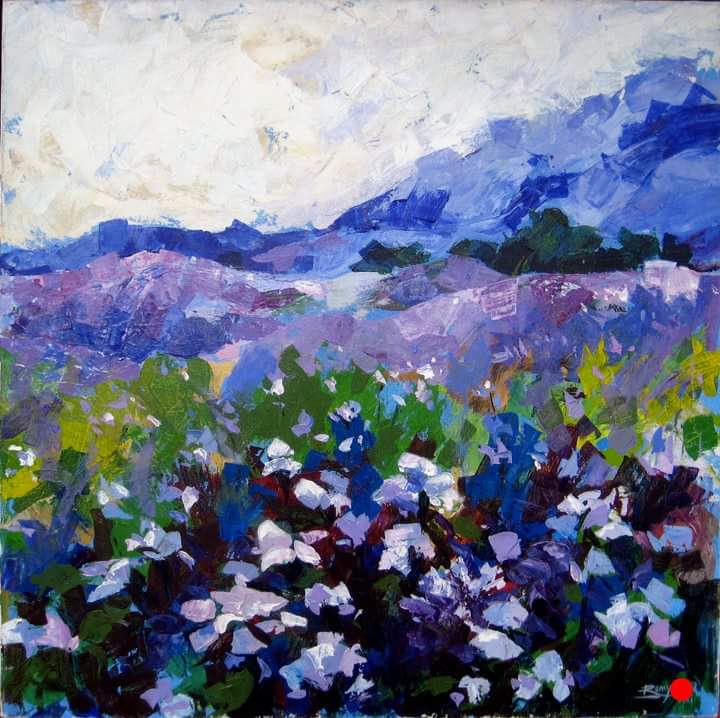
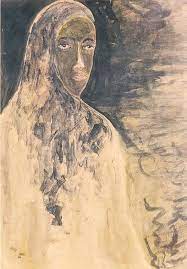
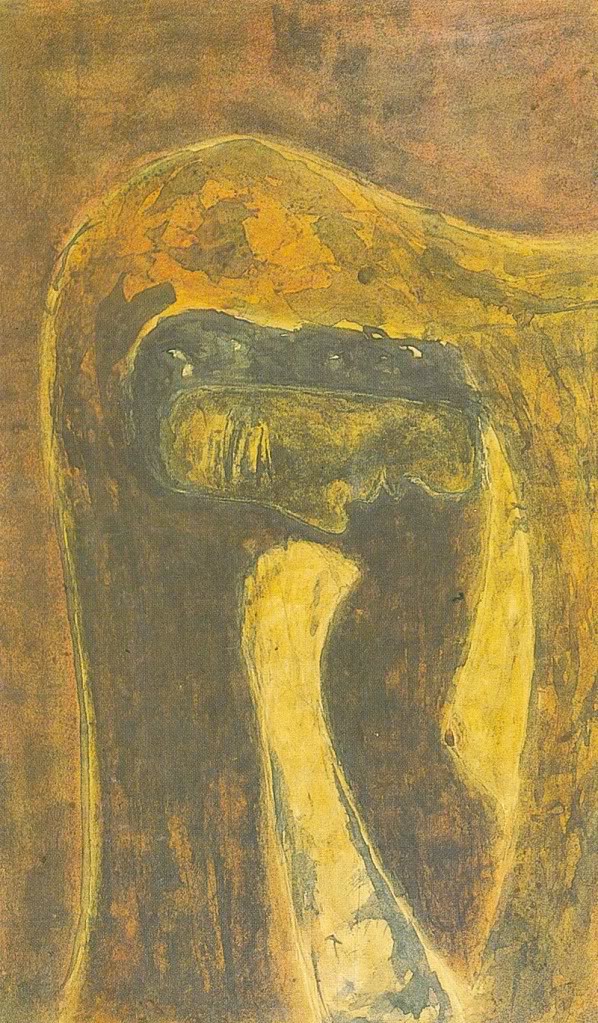




 Borderless