It took a couple of days to sink in, the serene beauty of the place on Summer Hill, Shimla, and the quiet atmosphere of the campus. Indian Institute of Advanced Study (IIAS), now housed in the regal ambience of the Viceregal Lodge[1], still wore its grandeur well, filtering into interior, the corridors, foyer and the conference room that had a stamp of history. Momentous decisions had taken place in this very room. The sylvan surroundings seemed to have rubbed off on the people too who worked in the offices, for they functioned with a quiet harmony, like it was an unstated requirement.
Tulsi Shankar’s paperwork went off smoothly in the office. She was given the keys to her allotted flat, a man was assigned to go along with her to help, and she was asked to tell the housing department if she would need anything more for her flat, the kitchen and the washroom. The man helped her unpack her big boxes of books and folders and set up her laptop. The vessels in the kitchen were minimal and very basic. She added the small items that she had got from her home, a saucepan, a ladle, spoons, cups, mugs, tea, coffee, sugar and milk powder. That would do. The man offered to fix a milkman who would deliver fresh milk every morning. The mess served two meals in a day, so there was nothing more to be done except rustle up an occasional upma or poha[2], if one fancied a change.
Tomorrow, she would explore the books for her area of research in the library, and start her work. She sank into her mattress and made a mental list of the reference books but soon slipped into a deep slumber.
The next few weeks rolled by in a rhythm of studies, notes, typing points on her laptop to draw a skeletal sketch of the chapters for her book. Little did she know how the details she sought would soon rain down on her and submerge her overwhelmingly in. They were right there, within her reach, in the huge library. Sure enough, there were some gaps, but she could always visit the Nehru Memorial Museum and Library at Teen Murti Bhavan in Delhi to fill them up.
She met the three other Fellows who were also working on their manuscript for their books. Whenever they met, at the dining area in the mess, or while strolling back to the institute after meals, or their shopping trips to the mall, the four Fellows exchanged notes about how much easier it was when they wrote their dissertation for Ph.D. years ago. They knew exactly what was expected from them — their chosen topic in itself ‘set limits’ for their scope and research took them forward with a controlled sense of direction. But a book? A BOOK? Good Lord, it seemed to be like entering an unchartered territory. It felt adventurous, thrilling even, but alternated with bouts of uncertainly and panic. It often loomed like a road not taken, yet to be explored. Exciting, and scary at the same time.
They decided to help each other with their research for the background. Sudipta Banerjee who taught history, offered to help Tulsi with Hari Mohan Maitee’s notorious case of brutally raping his eleven-year-old child bride, Phulmani Dasi, causing her death. The case was committed to the Sessions Court in Calcutta in 1890, but Justice Wilson let off Maitee lightly by saying that he had just committed ‘a rash and negligent act’. It was Gidumal Dayaram, a reformer from Bombay, who relentlessly pursued the case of Dasi. On his recommendations, Sir Andrew Scoble based his in 1891. Tripti Sharma from Political Science was equally interested in the steps that led to raising the ‘Age of Consent’ from ten to twelve years, from a legal angle. She had a project for which she needed to know more Sir Andrew Scoble (1831-1916), and the legal aspects of his contribution.
And all three of them took some lessons in yoga from the fourth Fellow Namrata Tripathi in her flat, just before dinner. She had trained in the Tushita Mahayana Meditation Centre. Namrata often warned them – and herself – of the hazards of sitting down on a chair for long hours to read or write. ‘We’ve to move our limbs and walk, or else we’ll become stiff,’ she laughed, even as she herself spent hours poring over her books for her research on the ghats in Varanasi. Sudipta, Tripti and Namrata looked to Tulsi, a published author, for help in writing their drafts.
“Please, Tulsi,” said Tripti. “We’re painfully conscious that we’re not here to write a Ph.D. dissertation. It is a book, a BOOK, for God’s sake.”
“Yes,” said Sudipta. “We’re anxious that thechapters are readable and don’t come across as boring information. You’re a creative writer, so you can tweak our lines.’
*
Then there were the Associate Fellows (called AFs) who could visit the IIAS three times in a span of three years or more, and were allowed each time to stay for one month to consult books in the library and work towards their M.Phil thesis. Hopefully, after their M.Phil, they would be admitted to Ph.D. programmes in their colleges. Each AF was given a single room in the hostel.
The women were nearly through with their lunch. Over the dining table, they whispered to each other about the time they would meet Namrata in her flat in the evening, for yoga lessons. Also learn some tips for meditation, a most elusive practice for them.
The Associate Fellow sitting across two tables was loud. No surprise. Ever since he came from Hyderabad, he has been the most vociferous critic of the food served by the Mess. He was unsuccessful in forming a lobby to join him in his protest and ‘do something’ about the ‘atrocious food’. The others AFs heard him out, some nodded in agreement, but carried on with their work.
Tulsi and her friends considered all that as noise and hurried through their meals.
The man from Hyderabad came over to their table.
“How can you stand this horrible food?” he asked.
“Well…it’s a change, certainly, from what we are used to,” said Namrata, in a placatorytone.
“A change! It’s appalling. You can do something about it. Each one of you haveakitchen in your flat,” he said.
“What!” said Sudipta, getting up from her chair.
“You’re four ladies. You can easily take turns and cook,” he said, glancing at the other AFs over his shoulder.
.
[1] Viceregal Lodge, formerly the residence of the British Viceroy of India, is the present Indian Institute of Advanced Study that has a library with archival acquisitions that go back to the times before the British rule in India. The magnificent building is also a tourist attraction for its stunningly regal structures designed by the British architect Henry Irwin, built in the Jacobean style during Lord Dufferin’s tenure as Viceroy.
[2] Upma—Semolina based savoury dish: Poha – A savoury preparation of flattened rice
Dr. Lakshmi Kannan is a poet, novelist, short story writer. Her recent books include Guilt Trip and Other Stories (Niyogi Books, 2023) and Nadistuti, Poems (Authors Press, 2024). For more details, please see http://www.lakshmikannan.in and her entry in The Routledge Encyclopedia of Indian Writing in English (2023).
PLEASE NOTE: ARTICLES CAN ONLY BE REPRODUCED IN OTHER SITES WITH DUE ACKNOWLEDGEMENT TO BORDERLESS JOURNAL
There is a large grey wave painted in the middle of the canvas. It is falling over a large group of people standing on the edge of a seashore. Many men wear skullcaps. The women have black burkas. The group has widened eyes and open mouths. Some have turned their backs to flee. Others have raised their arms and clenched their fists, as if they are about to break into a run.
At the bottom of the canvas, on the left, there is another group of people. They are also standing on another seashore, with windswept hair. There is a woman with a large sindoor in the middle parting of her hair. A young man, in jeans, has a necklace with a gold crucifix. A boy stands with a placard showing a dove with a leaf in its beak. The words, ‘Let’s all live in peace,’ are written in bold, red letters. Others raise placards with slogans like ‘Say No to communalism’, ‘Syncretism is in our DNA’, and ‘We are all brothers and sisters in this great nation’.
Painter Ashraf Mahmood steps back and stares at the image. A slight smile plays on his lips. He had woken up that morning and this image had come floating into his mental screen. Ashraf kept staring at it, eyes closed, lying on his back. His wife had got up and gone to the kitchen. Alia liked to make her tea using Tata Gold. He preferred Brooke Bond Red Label. So they made separate cups.
When he entered his studio on Mira Road, in Mumbai, at 9 am, he got down to work, using an easel and grey paint.
He worked steadily. It was silent inside. But Ashraf did register the outside sounds of a typical Mumbai street. The horns blowing. Tendrils of smoke from exhaust pipes floated in through the window. His nose twitched as he noticed a foul smell. It seemed as if somebody had thrown garbage on the street. Ashraf closed his nose with the tip of his fingers for a few seconds. “The crazy smells of Mumbai,” he thought.
He grew up near Mandvi Beach in Ratnagiri (343 kms from Mumbai). The air was fresh, and the wind blew constantly. The only sound was the roar of the waves and the beautiful sight of seagulls making circles as they flew above the sea. Ashraf’s father, Mohammed, was a government school teacher. His mother was a homemaker. He had two elder brothers and three sisters. Ashraf was the youngest. He displayed artistic talent from his school days.
Unlike most fathers, Mohammed encouraged his son. His father took him to an art teacher, who taught him how to draw and paint. Ashraf’s major breakthrough happened when he got admitted to the JJ School of Art in Mumbai. After that, there was no looking back…
It was evening when he finished the work. His soles ached. Ashraf had been standing for hours.
This image reflected all that he felt. The grey resembled the growing intolerance towards Muslims. This seemed to be overwhelming especially in places like Uttar Pradesh and Madhya Pradesh. There was the rise of majoritarianism. And the fracturing of relations between people of different communities. And yet, Ashraf felt that the DNA of the people over centuries was syncretic. A ready acceptance of people of all faiths.
It was only the hate campaigns, through speeches, social media, and songs, that had swayed the people. He was sure the fever would die one day. Syncretism would rise again. “After all,” he thought, “throughout human history, love always conquered hate. But it took time.”
Ashraf wanted to tell the viewers of his work not to lose hope. And hence the pigeon and the symbol of peace. For the title, he used a quote by the Greek philosopher, Aristotle, “Hope is the dream of a waking man.”
Ashraf rubbed his chin a few times and walked to a table on one side. A packet of fresh buns lay on the table. Ashraf opened a fridge. He took out a container which contained butter and a bottle of strawberry jam. He sliced the bun into half with a stainless steel knife, placed butter and jam in between, and began eating it. These were fresh buns from a nearby bakery. Ashraf had bought them when he had stepped out for lunch. He made tea on the gas stove. Then he sat on a stool near the table and sipped it.
This was his 35th year as a painter. Now, at 55, he could look back with reasonable pride. He took part in regular exhibitions and won a few awards and grants. Profiles of him appeared in the newspapers and on social media. His paintings sold, thanks to his realistic and simple style. An art sensibility was only gradually building up among the people. Ashraf knew that images drawn from his unconscious mind had a pulling power. Why this was so, he did not know. He remembered how one art critic described a David Hockney painting as having a ‘psychological charge’. Hockney was a renowned English painter. Ashraf realised that art needed to have a psychological charge if it had to have an impact.
But Alia had already made an impact on him. He met her when she came to view his exhibition one day at the Jehangir Art Gallery. She was slim and tall, with curves that were accentuated by the chiffon saree she wore. Like Ashraf, she came from a small town. Through grit and perseverance, she passed competitive exams and got a government job. They went for dates. Ashraf was smitten. Within a year, he proposed and they got married.
Alia was a superintendent in the sales tax department. She would earn a pension once her career got over. She had another ten years to go. Their two daughters had married and settled down in Aligarh and Delhi. Both had two children each, a boy and a girl.
Alia wanted Ashraf to earn more money. But he was not a hustler or a man who liked to build a network. If a buyer came and offered a decent price, he sold it. Most of the time, he remained isolated. Sometimes, he met other artists at exhibitions and art seminars. He would chat with them. But that was all.
He was not keen on extramarital flings or experimenting with drugs or drinking too much. Ashraf led a steady life. In many ways, he was happy with the way his life had turned out.
He washed the cup and the pans. Ashraf placed the cup on a hook which hung on a wall. He had yet to finish the bun.
He made his way back to the painting. It was 5.30 p.m. In half an hour, he would close his studio and walk back to his house, fifteen minutes away. The couple owned their apartment. Alia, with help from Ashraf, had cleared the bank loan over 15 years.
At this moment, he heard a murmur of voices from outside the door. Ashraf wondered what it was. The sound arose. “Was there an emergency?” he thought. “Is the building on fire?”
He came to the door. Ashraf saw that the lock was coming under strain. It seemed to be bulging backwards towards him. Somebody gave a violent kick and the door sprang open. Ashraf moved to one side.
A group of young men rushed in. Some wore red bandanas. Many were in T-shirts and trousers. Some had thick, muscular arms. They were shouting. It seemed like slogans. In his shocked state, Ashraf could not register the words. They rushed to the canvas on the easel. One man, using a long knife, sliced the canvas into two. He pushed the easel. It fell with a clattering sound to the floor.
There were a bunch of finished canvases placed on one side. Ashraf had been doing work to showcase in an upcoming solo exhibition. The group spotted it. They rushed there, pushed the canvases to the floor, and began ripping them one by one with their knives. Within a few minutes, the work of several months lay ripped out. Ashraf remained by the side of the door. He had not moved.
“Hey you Muslim kutta (dog),” one of them said. “We will come again if you carry on working. No art for Muslims. Clean the sewers. That’s the only job you are good at.”
Ashraf half-expected one of them to stab him. But they didn’t. They left as quickly as they came.
Ashraf felt as if a large, round ball had settled at the base of his throat. He could not swallow it nor could he spit it out.
He blinked many times. Ashraf wasn’t sure whether this event had actually happened. It took place so fast. But there was no doubt about the ripped canvases lying all over the floor.
He felt a pain in his heart. Ashraf rubbed the area. “I hope I am not having a heart attack,” he thought to himself, as he took in lungfuls of air to calm himself down. Employees from other offices on the same floor came to the door. They entered. Most had goggle-eyes.
“Sir, what happened?” one young man said.
Ashraf shook his head.
“I don’t know,” he said.
“Who were these people?” a woman said.
“No idea,” Ashraf said, as he surveyed the damage.
“Sir, you will have to call the police,” another man said.
“Yes, I will,” said Ashraf.
A couple of men shook his hand.
All of them surveyed the damage silently. Work was calling them. “All chained to their desks,” thought Ashraf. “At least, that way, I am free. No boss on top of me. No attendance marking every day. No targets to meet. No one shouting at me. But then, no steady income. And no camaraderie. Large amounts of time spent alone.”
Then he returned to the stool, returned to the present, and placed his head in his hands.
‘What’s happening to this country?’ he thought. ‘‘There seems to be a collective madness. Indians attacking Indians. And these young people were ruining their lives by working for political leaders. They will be used and discarded.”
He had not seen them before in the locality. They might have come from some other area. Was it a deliberate ploy to send a shock wave through him and the community? Who knew how they thought?
What should he do now?
Ashraf realised he had to think rationally. He stood up and went to the door. He realised immediately, he could not do anything immediately. A carpenter would have to be called tomorrow.
He called Alia and informed her about what had happened. She said she would come directly to the studio from the office. Ashraf called up his media contacts, both in the print and visual media. They said they would arrive with their photographers and cameramen. Ashraf took several photos and videos on his mobile phone, documenting the damage.
He would have to report the attack at the police station and file an FIR.
Ashraf realised his work had been ruined, but he would recreate it. He had photos of all the canvases.
To prove to himself, he had returned to normality, he went back to the table and finished the rest of the bun. He put the butter and the jam back into the fridge. He washed the plate and the knife.
Fifteen minutes later, Alia arrived.
In silence, she stared at the canvases lying on the floor. Ashraf saw her press her hand against her open mouth. He realised it was a silent scream.
In the end, she came up to Ashraf and said, “They have tried to violate your dignity as an artist and a person.”
The couple hugged.
After a while they broke away.
“Don’t keep the canvases here anymore,” she said.
Ashraf rubbed his chin with his fingers.
Finally, he nodded.
“There was something strange about the attack,” he said. “They didn’t overturn the table or the fridge. And for some reason, they did not assault me. It seemed to me they had to leave in a hurry. So I got saved.”
Alia said, “They are keeping a watch on everybody.”
“Yes, I read online there is a pervasive deep state,” said Ashraf. “In every neighbourhood there are spies who report about all that is happening.”
“What is the next step?” she said.
“I am waiting for the media to come. After that, I will file the FIR,” he said.
At that moment, a few print and TV journalists arrived.
Ashraf spoke to the reporters. The photographers and cameramen began recording all that had happened.
They left after half an hour.
The couple then shut the door, as best as they could. But there was a small gap at one side. They went to the police station. The police allowed an FIR to be filed against ‘unknown persons’. He faced no hindrances because, as Ashraf surmised, the police were aware of his reputation as an artist.
The couple took an autorickshaw and returned to their apartment.
Alia changed into a nightgown. She washed her face, and informed their daughters about what had happened on her mobile phone.
Ashraf changed into a T-shirt and shorts. He made a glass of whisky mixed with water for himself. Every night he had one peg.
As he sat on the sofa, nursing his drink and staring at the TV screen, he felt the pain arise in him. It was an ache in the middle of the chest. To see his work treated in such a callous manner was a calamity. He wondered whether he would ever overcome this fear that had come into him. Work on a piece the whole day and in the evening, somebody could come in and rip it up.
Closed doors did not offer any protection. It was a time of lawlessness. People with criminal behaviour could operate with impunity. Leaders wanted to instil fear in people.
And would he be able to recreate these ripped-up paintings with the same intensity? He was not sure.
On the screen, some leader was having his say. His eyes enlarged, he made violent movements with his hand, and spoke with a loud voice. “Horrific,” thought Ashraf. “How do you create art in this environment?”
Yes, indeed, how do you?
But it did not take long for him to tell himself, “But we must, whatever be the cost. Art is the candle that brings light to the darkness.”
.
Shevlin Sebastian has worked for magazines like Sportsworld, belonging to the Ananda Bazar Patrika Group in Kolkata, The Week, belonging to the Malayala Manorama Group, in Kochi, the Hindustan Times in Mumbai, and the New Indian Express in Kochi. He has also briefly worked in DC Books at Kottayam. He has published about 4500 articles on subjects as varied as films, crime, humour, art, human interest, psychology, literature, politics, sports and personalities. Shevlin has also published four novels for children.
.
PLEASE NOTE: ARTICLES CAN ONLY BE REPRODUCED IN OTHER SITES WITH DUE ACKNOWLEDGEMENT TO BORDERLESS JOURNAL.
The roughly hewn walls are damp, with patches of mold and fungus growing in the crevices. Water stains streak down, and the air is heavy with the scent of mildew and decay. The bricks are discoloured, their edges slicked by humidity. The dank, musty atmosphere lurks in every corner of the cell, sprawling to the skin and weighing down the spirits of the people living within.
These walls bear witness to the despair and suffering of those who ever had been confined in them, generation after generation. They hold their memories; hope, fear, determination, and regret. Their fabric is so coarse and patchy, it seems to seep in each man’s unfortunate personal history.
The thirty-seventh month. Is it spring?
Tiny ferns break through and grow out of the crevices on the walls. Their delicate fronds, in vibrant green, fan out like miniature umbrellas, waving gently in the rare breeze blown from the high window. Their stems are slender and wiry, weaving in and out of the cracks in the walls.
I was a journalist, and I am a political prisoner, for my freedom-of-speech and anti-authoritarian-regime campaign*. I lost almost all contact with the outside world, and don’t know how much longer I will be here.
I imagine the ferns clinging tenaciously to the rough surface of my cell, their roots burrowing deep into the cracks, and eventually shattering down the walls.
These ferns are my will of survival, my prison break.
.
*Author’s Note: According to the Reporters Without Borders (Reporters Sans Frontieres, or RSF), as of 2022, there are 533 media professionals imprisoned all over the world. China remains the biggest jailer of journalists, followed by Myanmar and Iran.
.
C. J. Anderson-Wu/吳介禎 is a Taiwanese writer, her short stories have been shortlisted for a number of international literary awards, including the Creative Award by the International Human Rights Art Festival. She also won the Strands Lit Flash Fiction Competition, and the Invisible City Literature Competition.
.
PLEASE NOTE: ARTICLES CAN ONLY BE REPRODUCED IN OTHER SITES WITH DUE ACKNOWLEDGEMENT TO BORDERLESS JOURNAL
There was a time when monsoon was known to be either parsimonious to Chennai or simply indifferent.
In the sixties and seventies, water scarcity was a byword in every household. The city evolved from independent houses to matchbox apartments extending its periphery to suburbs and beyond in the name of burgeoning real estate, but water scarcity continued a mole on the elbow.
Like in all commercial activity where promises mean more than performance, real estate developers too promised enough water supply to ensure bookings and until the housing was handed over. Few years after the handing over, the old complaints returned and the problem revolved around deepening or digging more bore wells manipulating the cross currents of water flow…….in the process digging their own grave.
In due course bore wells became economical with water, not costs.
They were not to be blamed strictly either because it was in the nature of demand and supply. Essentially it meant, rather sounded the missive, that planning was all fine on paper but when it came to reality, commercial exigencies and lobbies took over. It became then a case of passing the buck.
The city had long since graduated from the parsimony of monsoon. Now it was regular, buoyant and often uncomfortably bounteous. So much so that parked cars in the stilt space of apartments went for a swim in roaring waters that stretched to a height of 5 to 10 ft in some places.
One of the inmates from her window of the first-floor apartment saw her car transported to God knows where and screamed knowing full well she was helpless……could not get down into the vast sheet of water that left no sign of anything — let alone the road. And she hoped to find her car when the water level receded.
Just the night before, Ganesan, a young software engineer holding a senior position in a prestigious IT firm, had boarded the train to Srivaikuntam, a holy town close to Tirunelveli where Lord Vishnu held court. A devout believer and practitioner of sacraments that drilled into him the belief that men could succeed and achieve on the merits of brain and diligence but there was always a pervading force that guided him, he had prayed before boarding the train to Tiruchendur.
Four days back, the forecast of a formidable downpour had unnerved him but he wanted to see his parents after a gap of two years. They looked forward to it as much as he did. He was loath to cancel or put off the trip on the prevarications of nature. It could be sunny if the low depression changed its course at the last minute and veered away…not that he wished ill for his brethren in the neighbourhood.
So he took a chance, went ahead with the trip and saw the Tiruchendur Express chug slowly out of Chennai Egmore.
The weather was murky, stubbornly ominous. He shrugged his shoulders, smiled.
“It’s all in the game. Let us leave it to the on High!”
*
On the way the starless sky got darker still. Dark clouds raged viciously to pour with the chilling owl-like howl of the wind. It was December and the cold wind hitting the windowpane of the train chugging in a monotony of extreme caution, made Ganesan’s arms shudder. He could see nothing in the dark and barely could imagine the procession of dense vegetation and fields obviously drenched in the downpour.
He put on his sweater, but it proved to be no protective cloak and so he had to put on more. “God! It’s frightening… hope I reach my place in one piece.” His thoughts were as intimidating as the weather outside.
Thankfully the lights were on. All the shutters were down in the coach except his, where the glass pane was tightly secured. The biting cold penetrated the inside of the coach though there was balancing warmth due to radiation of body heat.
An elderly man, in his early sixties, was travelling with his wife. There were several families busy chatting about their kin or the functions to attend in Tiruchendur, including the celebrated Murugan temple, though inwardly their minds were filled with queasy churnings.
“Where are you bound, sir?” asked the elderly man with hesitation. Ganesan smiled though he could smell the palpable concern in his voice.
“Vaikuntam sir….to be with parents. I am visiting them after two years.”
The old man returned the smile. “I am a resident of Tiruchendur, have got land and a rice mill there. My daughter is in Chennai. We came on a holiday to be with our granddaughter.”
There were two families in front in the three tier AC[1] coach. Both the families had taken their dinner early in the evening as they were too wary of railway catering. The elderly man, who introduced himself as Muthuraman, was not finicky enough to insist on home made food and shun rail service and had, therefore, ordered. So did Ganesan.
As they dug into the dinner, Muthuraman broke the silence, aware that the inclement weather could make anyone off colour. Silence made it worse, of course.
“Sir! You must be in touch with parents. They would be worried. The cyclone had hit close to the Chennai coast a few weeks back but now it is pure monsoon fury. The earlier one affected Chennai badly and a lot of them are yet to come out of the trauma. I am worried about the open drains, small dams and culverts and lakes in southern part of the state which are all vulnerable.”
Ganesan, listening to him in rapt attention, said, “I know. A place like Vaikuntam cannot face up to persistent rain for a few hours, let alone the whole day or days. We own land very close to our home and the paddy will be submerged. My father told me just now he is bracing up to some severe loss of crop and money this year. We have been facing it regularly. A curse in what is otherwise a holy and fertile belt….”
Muthuraman’s wife nodded with lines of worry in her face. “What else could we do other than pray to Perumal?”
Muthuraman spat out in disillusionment. “In cities, they lay roads which cannot stand a day’s rain, metro rail and residential skyscrapers where a guy in the balcony is no proof against a bust of breeze. I know of a lady who lived on the 14th floor and wanted to enjoy the scene. She opened the door and stood close to it when the gust of wind, slammed the door on her face knocking her over. She fell into coma and died soon after. I mean…a city is unable to cope with the pressures of money and commercial lobbies which have their way. So, the less said about a rural town the better.”
“God! It is horrible to hear. Such occurrences are hard to believe,” said Ganesan. “Migration in search of a job across the country is inevitable and it adds to the pressure. You need to have a footing somewhere and if all things go well settle down there. You need to build a roof unless you are lucky enough to get back to where you belong.”
Just then, the train had halted at Villupuram for more than 45 minutes before easing into motion. The passengers were blissfully unaware of it, having been preoccupied in their own uncertain world.
“We didn’t even know we were tagged here for this long,” said an exasperated Muthuraman. Ganesan, who was equally chagrined, didn’t reply.
*
Most of the stations en route wore a deserted look except for the idle tea stalls, The passengers too, especially senior citizens, didn’t venture out even for a hot sip of tea apprehending wet and possibly slippery platforms. Inevitably the train ran late by an hour considering possible presence of water or even flooding of the track. Thankfully, signals were in place though the menacing purr of the dark outside continued with the trundle of the train.
“Are we closer to Kumbakonam?” enquired Muthuraman.
“We are, possibly will reach in a few minutes,” said Ganesan. “But the persisting rain worries me, sir. In some places ahead of us the track would be flooded, and it could delay us longer.”
“If the train drops us at our destinations, I will be more than happy, in fact thank God for it. It will be a blessing,” said one of the members of a family in front.
None of them however had any assurance that they would be blessed in some way.
*
Ganesan slept fitfully as he was accustomed to during train travel at night. “Cool, undisturbed sleep is a luxury,” he thought. Most of the passengers in the coach appeared to have slept well perhaps as a relief from the ordeal of the weather.
He looked at his watch and saw it as 6.30 a.m. He pulled up the shutters to see how the weather was and it was dull, wet and pouring. The train had stopped and he had no way of knowing the duration of the halt. He knew the train should have reached Srivaikundam by now but the stretching flooded farm fields on either side with sparse houses indicated that it was off schedule. There was no evidence of roads or pathways — had there been any.
“Srivaikundam is just a km away sir,” said a passenger who was bound for Tiruchendur. “The train got an alert and has halted. Seems the ballasts are off. I hope it will start moving again.”
Ganesan gave a sigh of near relief though he was not sure whether the train would move. He could see a sheet of water submerging the fields though the track appeared to be navigable. He could not help blurting out his concern though.
“The scene is scary sir. We can neither get down nor remain in the train.”
Muthuraman, who had got up, was slightly sullen, looking clearly unwell. “Mr. Ganesan, I am glad you are close to your destination….we are still 30 km away.” His wife looked crestfallen, at the end of her tether.
“He is a heart patient. I am only concerned about him.” To Ganesan’s relief the train creaked, began to move. It trundled at a snail’s pace and reached Srivaikundam.
But his relief was only palpable and short lived as the message came through that any further movement was risk bound and foolhardy. One of the railway staffers came to the coach to inform them that the train might remain there for some time before the weather eased or the flooded tracks were restored to usable.
The train had already been delayed by more than 90 minutes. Ganesan was embraced by his father who had managed to come to the railway station in his car driving through flooded roads in the town in meditative hermitlike composure and caution.
Ganesan found someone tugging at his shirt and turned back to find Muthuraman”s wife apprehensive and scared.
“Son! He seems to have symptoms of cardiac attack. I don’t know what to do….”
Ganesan’s father rushed into the coach while Ganesan ran into the railway staff room to look for instant health care.
A stretcher was brought to take Muthuraman and rush him to the nearest hospital. Thankfully Ganesan knew of a specialist hospital close to the station and took him there, having forgotten to even speak to his fretful mother about what had held him and his father back. He knew his mother would continue to worry but there was no time to even ring her up.
“We must know first this man is all right or is recovering,” he muttered. His father took care to let his mother know that an emergency (not related to their family) had occurred and it had held them up at the station.
Ganesan also came to know that the train would not proceed further and that the passengers were holed up there.
A crisis had come home to roost.
*
All the passengers shackled to Srivaikuntam for no fault of their own put it to a matter of a few hours but it seemed to stretch before the shadows of the night crept in. There was no let up in the rain and the southern belt was not equipped to handle nature’s unmitigated fury.
Thankfully the cafeteria run by a local rose to their needs and gave them breakfast but the railway catering service was not prepared for this eventuality. About 500 odd passengers, including the geriatric, needed round the clock vigil and sustenance though some were near breakdown amid symptoms of vomiting and diarrhea.
Ganesan and his father were faced with a task not of their own choosing and of the magnitude of a mountain to climb. They could not let it go either. The roads in the town were clogged with knee-deep or waist level sheet of water, hindering their drive to do their best.
“It is a test of our nerve, my boy! We have not spent all our lives to creep back into our shell and watch them suffer, possibly die. It was your good fortune you reached along with others but the rest of them are braving it out. We have to show we are not heartless, nor do we rely on external agencies for help. There is no time for it. Rather we help ourselves.”
Ganesan, who had learnt forbearance in his stint in IT firm and not given to wasteful emotions, nodded and raised his thumb to his father.
His father used his decades old connections in the town, comprising hoteliers, vegetable and fruit vendors, nursing staff to help the distraught.
The message from the railways was distressful and alarmingly ominous. “Sorry ladies and gentlemen. It will take a day or two. The track restoration is on in full blast and the signal system is in place. Please, please bear with us.”
*
The railway station was abuzz for the next prolonged hours with supplies of food, medicines and equipment being rushed to the respective coaches where the need was greater. It pertained to those who had symptoms of sudden dehydration, stomach disturbance, diarrhea and fatigue and stress related syndromes.
Ganesan and his father were on their feet all the time coordinating whatever they could with local connections of suppliers who rose to the occassion. Commerce took the back seat relatively to an extent.
Muthuraman showed signs of recovery a few hours later in the evening having gone through a CPR and defibrillation by the railway staff as was done in the event of unforeseen emergencies. His wife spoke to her daughter in Chennai who was almost ill with perplexity and worry since they left the city.
The news that the train had halted at Srivaikuntam and might not leave for a couple of days was less painful than one of father’s cardiac arrest which left the family in tatters. She could only hope her worst fears would not come true.
Muthuraman opened his eyes, took note of his wife’s presence before locking his hands in gratitude with Ganesan.
“No sir…this is no time for thanking me and my father. You must thank all the locals who rose as an army to support and bring relief to so many who are stranded in the train still because they are unable to move out. We have arranged a big hall where most of them could be fed in turns. I am amazed sir… unable to believe it. But I have learnt a world of things from this experience. That alone matters sir.”
His father laid a reassuring hand on Muthuraman’s shoulder. “They are still at work. Possibly the train may leave tomorrow morning. I hear the track has been restored. If you wish you can return in the train itself or you can have somebody from Tiruchendur to take you in a car.”
Muthuraman’s wife said “It will take three days as per medical opinion to discharge him. We will ask our cousin to take us home in a car.”
“We will take care of you till you leave for home,” smiled Ganesan.
He took leave of the couple as one of the hotelier’s employees came up to him. “Sir! We have the next consignment of water cans ready for the station. Care to join us?”
“Of course,” said Ganesan and hopped into the front seat of the van.
A cool breeze blew across the vast fields from a distance. The weather had improved beyond expectation two days after the train came to a halt at the station, looking sunny, soothingly warm and reassuring after the terrible onslaught of the monsoon the day they left Chennai.
Suddenly, nature seemed to have recovered from its surge of fury and had become benign and benevolent. But anything could have happened in the passing hours when the fury was in full swing and the aftermath would have been horrible to imagine, much less experience.
But what gave him succor and regeneration was the unstinted display of human kindness and concern in times of adversity. The whole village worked as an army to guard, nurse and redeem the afflicted from the depths of despondency.
“There is always a light in the tunnel” thought Ganesan with a smile. “If I had any cynicism about the milk of human kindness it is gone.”
K.S.Subramanian, a retired Senior Asst. Editor from The Hindu, has published two volumes of poetry titled Ragpickers and Treading on Gnarled Sand through the Writers Workshop, Kolkata, India. His poem “Dreams” won the cash award in Asian Age, a daily published from New Delhi. His essays and blogs can be found under his name in http://www.boloji.com.
.
PLEASE NOTE: ARTICLES CAN ONLY BE REPRODUCED IN OTHER SITES WITH DUE ACKNOWLEDGEMENT TO BORDERLESS JOURNAL
This was her second week in Siolim as a resident, in her aesthetically pleasing, slightly bohemian, rented two bedroom flat. The flat itself gave very tropical vibes with a host of plants – both real and artificial, enhancing the outdoorsy look. Though her building was part of a bigger residential complex, it was miraculously not blocked by views of other buildings. Instead, the windows at both ends of the flat faced east and west, providing stunning views of the morning sky change colour as the sun rose over the dense grove of coconut palms and as if that were not already enough to drive up the rent, a peek of the setting sun, from the opposite end. No less than three spacious balconies with French doors offered an unobstructed view of the quaint sloped roof homes of the ‘locals’, the villagers, bordered by paddy fields beyond.
Except for one house in their midst. From her bedroom balcony that faced east, Anika noticed the one slightly better and bigger home, built with concrete walls and a concrete flat roof, functioning as its terrace. It was not directly opposite but slightly to the right so that she could only see it only from the window or the balcony.
Every morning she would look out in hope of spotting the big fawn dog – the unknown ubiquitous mixed breed — on the terrace. She was always entertained by his movements. He would strut about for a bit, peering over the edge while woofing his alpha dominion over other dogs and cats he spotted. At other times, thinking himself unobserved, he would lie down flat on his back, utterly vulnerable with his legs up in the air, squirming about, tongue lolling, making her laugh.
She had seen the other residents occasionally: two teenage girls who would climb and sit together leaning against the water drum conversing in the evenings as the sky deepened it hues, probably out of the hearing distance of the lady who would sit by herself at the far end staring at the horizon. Anika imagined that this might have been her only place of escape from the endless chores and hubbub of daily life. At other times, a much younger boy of about five followed a slightly older girl, probably his sister (or cousin) of about seven. As she sat to read and do her homework, he would entertain himself skipping about the flat terrace or lolling about on a mattress placed there. After dark, however, the terrace was the domain of the men of the household. Though there were no lights on the roof, the occasional clink told Anika that feni or urak had been smuggled upstairs.
Local families here tended to be ‘joint’ ones with aunts and uncles, siblings and cousins included in the same household. Daily, a slim, capable lady would briskly hang clothes to dry on strings stretched out from stakes. So many clothes every day! The only times Anika didn’t spot too many visitors to the terrace was on extremely sunny days when cotton sheets would be spread out with a brick at each end. They would dry fish on the sheet. She could never identify which of them it was — kokum, shrimp, jambul — from the plethora of spices, fruit and and fish Goans loved to sun dry.
She would have loved procuring some of it straight from them but was still conscious of being the non Goan outsider. She had already experienced all types of opinions. Those who were hypocritical and contradictory – people who welcomed European expats but looked down upon Indians from other states. Those who lamented the growing population due to migration – yet, uncomplainingly, raked in profits from the meteoric growth of the square foot rate. She had also experienced the warmth and hospitality of the majority of the Goans who would go out of their way to help you settle in and make you feel like family.
*
The lady who sat by herself was back today sitting as usual at the very edge. She had the terrace to herself. Something about her intrigued Anika, who realised she had been staring at her instead of being at work on her laptop for the past few minutes. Was it because she was the most frequent visitor? She spent a lot of time staring out over the other end. Or was it because even if others were there, they barely acknowledged her, not even glancing in her direction, or exchanging a friendly word. Likewise, she too ignored them for most part. The only one who paid her any attention was the small boy, too innocent and young to pay heed to family politics, who would wave and go running towards her when he saw her. She seemed to be the family outcast yet was outwardly unperturbed, never getting confrontational, at least on the terrace, from what Anika could observe.
On this day, she was back, presumably ruminating about life. Hailing from a nuclear family herself, Anika mused over the conveniences that a joint family surely had, from shared expenses and chores, to child supervision and upbringing. As she looked at the lady on the terrace, she also thought about the difficulties that living in a large group in a confined space probably entailed, with no privacy, varying opinions and multiple imagined slights.
Today, she seemed restless as she was strolling on the terrace. Anika stepped out onto the balcony to get a closer look. The south-west corner of the terrace with the water drums was the closest point to her balcony. The lady was whiling away time by walking along the perimeter of the terrace. As she wandered closer to the south-west corner, Anika finally got a good look at her.
Her personality was apparent even from this distance, from the way she held her body upright to the confident yet feminine walk. She was neither slim nor thickset but somewhere in between. There was a certain sophistication to her gait. Anika watched as she turned the corner and continued her solitary stroll around the edge of the terrace.
*
The sound of loud arguments in male and female voices interrupted her work the next morning – the family members had reached the downward curve in the sine wave of highs and lows of joint family existence. Adding to the cacophony was a girl’s full-throated wail. Perhaps a fall, burn or injury, with the elders blaming each other for the oversight?
The staircase that the family used to ascend was on the far east side and never visible to Anika. She now saw a small head make an appearance at the flat edge followed by the body of the boy who had climbed up unobserved. His sister as the designated minder was the injured one then. He looked for the assortment of toys that always lay in a heap in one corner of the terrace. Soon he was revving the toy car and following it about as it raced forward a few feet. Anika was a little concerned and stepped out to the balcony. What if the child wandered too close to the edge? The roof edge was unprotected by any railing or boundary wall. She stood undecided and hoped that someone else would arrive soon. That’s when she saw the lady walk towards the boy. Anika sighed in relief. She had probably been sitting, leaning against the other side of the water tanker, that’s why she hadn’t spotted her. The boy would point the car in her direction and she would then send the car revving back to him. The game continued until she heard shouts and the mother climbed halfway up the stairs gesturing at them to come down. The lady and the boy complied. Anika noticed that as usual she didn’t convey her gratitude either by gesture or a word to the lady who had kept a watchful eye over him. She wondered what had caused the breach in their relations and felt the lady deserved at least some acknowledgement. Maybe she sensed her empathy because suddenly she turned and looked directly at Anika. Anika felt a voyeuristic warmth flush her ears and stepped back inside her bedroom.
*
Anika noticed over the next few days that the lady had started sitting closer to the south-west edge, closest to her balcony. She would occasionally glance towards Anika. Her eyes were dark, so dark that you couldn’t distinguish the iris from the pupil. Anika felt a little sorry for her unfortunate circumstances. The only time she noticed her smile was on the rare occasions the boy wandered onto the terrace alone. With nobody to stop him from interacting with her, he would sit beside her presumably listening to stories or they would chase each other.
Anika wondered why she didn’t leave this house – perhaps she had no independent income. Anika had been doing the cleaning herself in her apartment but now she took a decision.
*
Anika stood at the gate of the concrete house. One of the teenage girls came to the gate. Anika did not know Konkani, the local language, but it had similarities to Marathi and with that including a mix of Hindi and basic English, conveyed that she was looking for a daily help to sweep and mop the floors, do the dishes and some light dusting. Would anyone from this household be interested? “Okay! I tell to my mother, give me house number,” she replied. As she wrote down the apartment number behind a schoolbook she had got from inside, Anika tried to find a diplomatic way to say that the sturdy looking lady on the terrace who played with her younger brother would be better for this kind of a job instead of anyone else from the household. However, as the girl looked at her uncomprehendingly, she realised that this was a task beyond her communicative abilities and left.
*
It was not quite dusk when her doorbell rang. The younger, slimmer lady Anika had seen so many times on the terrace, stood at her doorstep. Julie spoke English quite well and understood it even better. Anika took her on a brief tour of the flat stopping at the balcony that overlooked her house. “I really enjoy your dog’s antics early in the morning!” she said, to break the ice. Julie laughed.
Anika noticed that the boy had found his way onto the roof again and was lying on his stomach with his head in his hands, absorbed in the story the lady was no doubt telling him. She sat cross legged in front of him, using gestures and making faces while telling the story, hugely entertaining him. Julie noticed them and her face changed to a scowl.
Anika gestured towards them, “What about her? Doesn’t she need a job? I have seen her on the terrace by herself so many times. She doesn’t seem to be as busy as you are — that’s why I approached your house to look for help.”
“Who? Her? Sheela?” Julie looked thunderous. “Look at her! Wasting time, always sitting on the terrace!”
Anika’s face looked a question. “Well, she seems to look after the boy so well.”
Julie turned towards her – the scowl changing to a confused look. “Her boy? How long have you stayed here?”
“Oh, this is my just my fifth week.” And now, leaping to her defence, Anika continued, “I’ll tell you something you don’t know, that boy has come to the terrace so many times on his own and if it were not for Sheela’s presence, God knows what accident might have happened! Why do you all treat her so badly? Look, even now only she is there with him on the terrace, no one else is supervising him!”
I knew I had probably crossed a line with this as it was none of my business to comment on their affairs.
Julie was struck dumb by my outburst, but her eyes changed. The anger was fading. “Boy?” she repeated. “She lost her five-year-old son three months ago. He drowned in the well behind the house.”
The anger had faded completely from Julie’s eyes to be replaced with fear. “Look at her — she keeps playacting like she’s doing now, as if she is talking to him and can see him, scaring the children — that’s why we argue. She spends all her time sitting on the terrace from where she can watch the well.”
Anika turned back to the terrace. Sheela had noticed them watching her and walked closer. She looked up at Anika with an appeal in her liquid black eyes, almost as if to say, “You can see him too, can’t you?”
.
Rakhi Pande, an experienced education professional, transitioned from a brand management career to become an award-winning teacher and school leader. An avid reader, she tries to write whenever time permits.www.linkedin.com/in/rakhi-pande
.
PLEASE NOTE: ARTICLES CAN ONLY BE REPRODUCED IN OTHER SITES WITH DUE ACKNOWLEDGEMENT TO BORDERLESS JOURNAL.
Ever since his boyish days at the Seminary in Zamora, Spain, Felipe Jimenez acquired an unsual passion for mediaeval Visigothic architecture. A passion rarely shown in the mid 1800s. Another passion, too, swelled Felip’s heart and pride, one seemingly incongruous to the first: his fascination for the Quinta del Sordo, or the Villa of the Deaf; the villa or country-house where Francisco de Goya[1], a famed painter, alone and dwelling in his soundless world, drove out the fears and torments that haunted his sleepless nights by depicting a series of the most incredible frescoes that any painter up till then had painted. Frescoes that came to be called ‘pinturas negras‘[2]. Why Felipe Jimenez had associated these two passions into one maniacal life project is the drama of his heart and of this tale …
In the mid 1800s the only means of exploring the Spanish countryside with any speed was on horseback. Felipe prided himself as an excellent horseman. He loved horses, especially his own, whom he named with endearing irony, Rocinante[3]. As he roamed Northern Spain in search of the three extant Visigothic churches, he himself questioned his love of mediaeval art: Was it his voracious readings of mediaeval castles and knights? The glorious battles between Visigoth Christians and Muslim Arabs? The silent stones of ruined churches, castles and hamlets to whose voices no one wished to lend an ear?
And Goya’s frescoes? The deaf Master’s tortured figures and thickly layered pigments impressed on the solitary walls might have reflected the bleak, lonely landscape that Felipe was now traversing speedily. Reflected the bleakness, too, of his soul for a reason that he could not understand. He thought, spurring his steed faster, that the oddity of his passions might have been kindled, unknowingly, by the unexpected encounter of two very apparently contradictory visions, yet out of which Felipe had been magically touched or enlightened because of their estranged association, because of their incompatible commonalities.
With a genuine thirst to sate these emotions, our rider rode on and on until he came upon the seventh century Visigothic church of San Pedro de la Nave in his own region of Zamora. A pure joy to lit up his eyes when he saw the sculptured capitals[4] of twittering birds and intoxicating flowers, of the beloved Daniel in the Lion’s den, soothing the roaring beasts with his melodious chanting, of Saint Philip’s outstretched hands conducting his chant to Creation. These tickled Felipe’s ears as he listened to their concerted canticle. He had never before experienced such fineness of hewn stone and arched forms.
From his shoulder-bag he procured a sketchbook and began drawing the animated capitals, one after the other, carefully noting each cry of the bird, each chant of Daniel and of Philip. When this task had been meticulously completed, he stepped outside into the blackness of night, breathed in the thick air, then retrieved his bed-roll, rolled it out and slept peacefully against the outer wall of the church, whose stones, still hot from the scorching afternoon sun, afforded him warmth against the chills of the early autumnal night. He awoke refreshed, bathed in the swathes of a pure, reddish, morning glow.
Now if these treasures aroused enthusiasm in Felipe’s heart, greater would be the treasure trove that awaited him to the south of the great city of Burgos, when some weeks later, he discovered the seventh century chapel of Quintanilla de las Viñas, perfectly intact. Dismounting from his trusty but fatigued steed, in awe he admired the outer friezes[5] of exquisitely sculptured partridges and peacocks, feasted his dust-filled eyes upon festoons of interweaving vines and clusters of hanging grapes. They were almost real to the touch those plump clusters! He listened in a sort of dazed ecstasy to the imagined screams of the partridges and peacocks as they paraded their plumage and fanned their tails inside the frieze. The sweetness of the grapes dripped off each pregnant cluster. How Felipe longed to quench his thirst by picking each one out of its stony bezel.
Unable to enter the chapel, the door being barred, Felipe brought out his sketchbook and reproduced those screams and sweet drippings as best as his artistic talents enabled him. He was an excellent artist. As he closed his sketchbook, a sudden thrill shot up his spine — a thrill that he had never experienced before. Felipe rode off filled with wonder, the early autumnal sun setting red and round over the arid plains of northern Spain. Had it all been an intimate communion with those birds and grapes? Had others bore witness to those storied stones? Felipe patted Rocinante’s jowls affectionately: all these questions remained enshrouded in the mystery of Spain … his own story within Spain’s …
Over the scorching plains Felipe galloped wildly in search of the last Visigothic church, San Juan deBaños, locatedin the region of Palencia. He arrived after five or six days of riding under the blazing sun, sleeping under the gelid stars.
This jewel outshone the other two: the basilica-plan church’s naves[6] were supported by the most perfectly intact groined vaults[7]: they left him breathless. He began sketching them in feverish excitement. But what really astounded the drawer was the triumphal arch that welcomed the church-goer within. An arch that he had never laid eyes on before.
Just then Rocinante began pawing the hard soil with the hoof of her foot. She snorted and pawed with steady blows in an unusual way. Felipe ran over to her. He noted that her horse-shoe had been displaced. As he bent to reshoe his horse, it occurred to him that Rocinante’s iron shoe bore an exact resemblance to the welcoming entry arch of the church. When he had finished the shoeing, he resumed his drawing, marking every detail of this incredible arch: It can’t be compared to the Moorish arch or to the Roman one- he mused. He then decided to coin this novelty the arco de herradura[8]; that is, the horse-shoe arch, for indeed unlike all the arches found in Spain, the opening at the bottom of this one was much narrower than its full span. But what attracted him most about this original work of art were the two abutting ends of the arches supported by the tops of the columns which gave the impression that they sought to join together to form a circle. Of course this impression was one of an artist’s …
Overjoyed by his coined expression, thanks to his trusty dark-maned Rocinante whose shoe had been properly shod, Felipe spent the rest of the day studying the church inside and out. When twilight set in he pulled out his bed-roll, lay down at the apse[9] of San Juan de Baños, imagining in his head his next and last halt, Recaredopolis, the only Visigothic town to be founded by the migrating Northern-Germanic peoples, built by King Leovigilda’s excellent craftsmen in 578 and finished by his son, King Recaredo, the first Catholic Visigothic king of Spain, baptised in 586. According to his map, Recaredopolis was located eighty kilometres from Madrid in a hamlet called Zorita de las Canes. According to several learned acquaintances, he had been informed that the hamlet lay in stoic silence, ignored by archeologists, unvisited by the curious. He liked that. He would ride to it at the red of dawn …
Five days later, the dark-maned Rocinante carried her exhausted rider, face-blistered and throat-swollen into Zorita de las Canas, then straight to Recaredopolis. Here the silence of the still standing stones welcomed the quester. Trotting through the remaining edifices he pulled up his steed before a horse-shoe arch, more or less identical to the one that he had admired and sketched at San Juan de Baños. The domed roofs of the churches and chapels had fallen into decay, but the untouched stones rang of a superior, magnanimous craftsmanship. This sixth century town had withstood the upheavels of History, the turbulence of Time, although the two-storey palace had lost its second storey entirely and the granary had been reduced to two walls and piles of heaped up stone.
The horseshoe arch at Recaredopolis. Photo Courtesy: Paul Mirabile
Felipe let his horse roam about looking for a good feed whilst he meandered in and out of the moss-clad walls of the dilapadated palace, granary and sanctuary, filling his sketchbook with copy after copy of this fabulous mediaeval architectural trove. It seemed to him that no one, besides the villagers, had stepped foot in these ruins. Felipe felt estranged from himself, staggering about in a queer trance-like state from wall to wall, all so silent, yet deafening to his ears, so lyrical, so ecstatic that they strove to enter into communion with him. He sketched until the advent of night …
The ever-standing mediaeval sanctuary walls. Photo Courtesy: Paul Mirabile
Felipe built a fire and cooked a few potatoes and green peppers over it on a make-shift spittle. Lying on his bed-roll as he had done for so many star-studded nights, hands behind his head, he scrutinized the Autumn moon’s face mottled with huge black spots, listening to the deep, warm silence that surrounded him. He suddenly sat up: Had he not heard a runeful moaning skipping over the dry, empty plains? He bit his lower lip. The night air began to chill him. He continued to listen, attentively, his heart pounding painfully. Nothing. No one. Something frightened him: The horrors of war. Of famine and poverty ? Of old age creeping up upon him ? Or the ugliness of human depravity ? But why are these thoughts plaguing him at this very uninvited moment, as he lay so peaceful in this lieu of broken stones and tales ?
The sanctuary rising over the dry, grass-swept plain. Photo Courtesy: Paul Mirabile
He counted the stars, mentally tracing the curved contours of the waxing alabaster moon. Nothing stirred. No breath of wind, no call or cry from animal or bird. Felipe felt a surge of loneliness here as if the slow decay and negligence of the ruins resembled his own, physically and mentally … He was well over fifty, and the hardships of aging were slowly creeping up on him. His hand trembled when he drew. His back hurt from riding. His mind thought thoughtless thoughts, adrift between the past and the present in some sort of dark chaos.
Felipe ignored the fact that no thought arises by thinking. Thoughts burst upon you at the most unsuspecting moments. They dance and whirl about then penetrate as quickly as that! The thinker must welcome them no matter how abrupt, unforeseen, painful. Yet, Felipe was keen on welcoming them, eager to decipher their subtle choreography.
He awoke in a dull trance. The sun rose lethargically over the voiceless ruins, the curling, misty plains. He watched its entrance into the world whilst the dancing thoughts that had spun him about during the night, and at present were jarring him out of sleep, grew brighter and brighter into figures of acts to be enacted. He threw dirt over the embers of the fire, rolled up his rug, saddled the munching Rocinante, and with a last glimpse of Visigoth Spain, galloped at full speed towards Madrid.
However, not to the big city. What had he to do with big cities ? No, Felipe Jimenez spurred desperately to Manzanares, twenty kilometres outside of Madrid, where there, the enigma of his quest would be resolved, or so he hoped! For a wild, dancing thought had overwhelmed him last night. A thought so feral that it would surely unlock the door to the mystery of an overt sense of hopelessness. Felipe imagined that hidden recess, heard its muffled invocations. To Manzanares he thus rode hard. To the Quinta del Sordo (Villa of the Deaf) where those welled up voices would overflow and spill forth the truth of centuries and centuries of silent exuberance, ecstasy and crime … To him and him alone ? That sacred communion remained to be seen …
Francisco de Goya’s voice, one that the great painter no longer heard since his deafness had severed him from the rest of the world, lay dorment in that villa; or so it was said. The great Master heard only faint murmurs of the Other World, murmurs that conducted his hand, steered his strokes, governed his unbridled imagination.
To those strange frescoes Felipe flew, thrilled that the hidden recesses of somber existence would be laid bare at that villa, illumined by the fourteen pinturas negras (black paintings), those black, ochre and brown pigments telling a tale that no historian, no archaeologist, no artist has ever told. Muteness, deafness, voicelessness — beacons of existential raison d’être …
Three days later, Felipe Jimenez and Rocinante arrived at the villa as wreaths of fog were lifting off the slow, rolling wavelets of the River Manzanares. He dismounted, tied his horse to a tree and stood for several minutes in front of a quaint, two-storey country house behind which rose a range of shaggy hillocks hardly visible in the morning haze. Between the wisps of mist he noted that the front walls were in a deplorable state, suffering no doubt from the humidity and heavy rains. The alabaster sheen of the roughcast had crumbled off in large, mossy patches into a front garden overgrown with yellowing quitch grass, spiky thistles and thorny nettles. Flower beds had become weedy, rank.
He walked up to the front door and knocked: once … twice … thrice: No one.
Felipe laughed and thought: “Of course, he can’t hear. He’s deaf !” Mustering a bit of courage, he pushed open the heavy door; it had been left unbarred. He peeked inside, then slipped in quietly. Once inside, the silence frightened him. All the shutters had been shut in the dining room. There was hardly any furniture. A foul odour of dissolution made him dizzy.
“Señor … Señor Goya?” Felipe called in a feeble voice unlike his own, the echo filling the room and his ears with unfamiliarity. “Are you out ? Yes, you must be out!” he assured himself, after which he rapidly threw open the shutters allowing streams of greyish, morning, misty light into the Master painter’s dining room. He gasped in disbelief. Painted on the dirty, unpapered walls were six frescoes that glowered at him in irate mockery. Yes, they eyed this intruder, this interloper’s every gesture with incensed scorn: there, the toothless guffawing of two old men hunched over their bowls slurping soup, fleshless faces sneering in gnarled lechery. Whether it was the dull light or the artistic acuteness of Goya’s brush work, their faces gave the impression of being embossed with warts or malignant tumours. Their clothes drooped on them like tattered rags (Dos viejos comiendo sopa)[10] !
Then Felipe approached a most peculiar scene: the mythological god of Time, Saturn, its eyes popping out of its sockets, was chewing one of his sons alive in bloody gluttony, the ruthless, long-haired creature believing that if he devoured his sons, one by one, he would never be dethroned by them, thus interrupting the course of Time (Saturno devorando uno de sus hijos)[11]. To his left, the most frightening of all frescoes: El Aquelarre[12]. Felipe drew closer. Yes, this was the Master’s most horrid depiction of his mindset: a black mass! It was a huge depiction of a motley crew, attired in tatters, gloating, mottled faces tormented, distorted by unhealthy beliefs, listening in starry-eyed reverence to a goat-like creature, yes, Satan himself, robed in black, horns held high in haughty hallowedness. Upon these dank, lonely walls Goya expunged from his tortured mind the two pillars of his psyche: the ecstatic and the grotesque …
In a state of feverish agitation Felipe took out his sketchbook and traced the six frescoes one after the other like a madman attempting to capture each frightful feature, every desperate detail, each and every harrowing stroke of the Master’s demoniacal brush.
Sketching as best he could, given the dusky dimness of the late morning light and the dark pigments of the paintings, Felipe, after having drawn the downstairs frescoes now rushed head-long upstairs to Goya’s study. He shrank back in a dazed shock overwhelmed by the sight of the other eight masterpieces. All of them depicted the dark recesses of a man’s deranged mind, a mind enmeshed in darkened recesses, questioning and questioning and questioning. Felipe went from one to the other gaping at the cheerless existence of an artist, whilst the artist’s cheerless figures gaped at him, at this unwelcomed stranger. With much difficulty he discerned two warty, bizarre figures suspended dreamily in mid-air as if set free from Earth’s weightiness, sailing over a battlefield where they observed the drama below in ecstatic grotesqueness. In the background upon a hill an embattled castle lent a glum foreboding to the outcome of the scene (Visión fantástica)[13]. And there, on the back wall, two men, buried up to their knees, battling to the death with cudgels, a delightful technique that only the Spaniards could have invented. (Duelo a garrotazos)[14].
“Hobgoblins, all of them!” Felipe cried out involuntarily in crazed delirium. He had lost control of himself, sketching and sketching the figures that glowered at him, talking aloud in an effort to expurgate the evil that gradually filled his soul. The horrors of war, death, violence.
The most phantasmagorical visions had been assembled here in this dreadful villa during the restless nights of a his heart, painted by the Master of painters who had shunned all contact with the outside world. A solitary, mute communion had occurred within these demented walls, whose commerce wallowed in the mire of old age decrepitude, of sickening lust for glorious butcheries and triumphant slaughtering. Did Francisco de Goya love the smell of blood?
Felipe hardly understood the obsession that had nettled him for so many years whilst he sketched until his wrist ached. The mute stones … the deaf ears … the pounding silence that had entombed the landscape with courtly crimes, pogroms and despot debaucheries, all of which had crumbled into speechless stone, into hollow, unspoken edifices. Indeed, all had fallen into decay, a slow decay, like the colourless figures painted on these waning walls ; like Goya’s mind ! “And mine ? Yes, mine too ! Ecstasy and grotesqueness : the mindset of our national character …” he acknowledged ingloriously.
Felipe, utterly exhausted, completed his sketching just before nightfall. He tip-toed down the stairway to the front door that he had left ajar. A last glimpse behind him saddened his heart; he had not met the Master. Yet, at the same time, a faint voice told him it would have been a fruitless meeting: the deaf have no one but themselves to converse with.
Furthermore, perhaps that meeting would have divulged the dreadful truth of Goya’s painted visions, and more importantly, the truth of those stones whose own untold story might have spoken a truth that only Felipe would have comprehended, enwrapping him thus in many veils of a strange, naïve self-satisfied truth. A truth that went beyond human reasoning, struggling in a twilight zone of Felipe’s own story within the quagmire.
It stands to reason that Felipe Jimenez had experienced what some call the ‘sense of the past’. A troubling experience that may occur at any instant of time or by incessant galloping between the past and the present. Nevertheless, it must be recorded that Felipe never really believed that he would fully join or unite the stony vestiges of a lost kingdom to the ‘black paintings’ by Francisco de Goya. Perhaps this sentiment or fantasy can be compared to the horse-shoe arch whose two bottom abutting stones sought to conjoin in a circle … in vain …
Be that as it may, our heroic Felipe died without friends or family. Only three of his sketches have been preserved. Oddly enough, they were discovered on the inside cover of a 1780 Royal Spanish Academy edition of El Ingenioso Hidalgo Don Quijote de la Mancha written by Miguel de Cervantes[15], edited by Joaquin Ibarra. In this same edition were also found several scattered notes in the margins presumedly jotted down by Felipe.
Felipe Jimenez’s tomb has never been located. Does this obliterate his existence ? I for one believe he did exist. However, many historians contend that he never existed at all …
.
[1] Francisco de Goya (1746 – 1828) born in Fuentedetodos, Spain died in Bordeaux, France.
[15]The Ingenous Gentleman, Don Quixote of La Mancha by Miguel de Cervantes Saavedra (1547-1616)
.
Paul Mirabile is a retired professor of philology now living in France. He has published mostly academic works centred on philology, history, pedagogy and religion. He has also published stories of his travels throughout Asia, where he spent thirty years.
.
PLEASE NOTE: ARTICLES CAN ONLY BE REPRODUCED IN OTHER SITES WITH DUE ACKNOWLEDGEMENT TO BORDERLESS JOURNAL
Every morning, around 9 a.m., the brown snake emerged from its cosy pit, slithered across the lush green grass, and found its way out of the bungalow through the lower rungs of the iron-grille door. Every evening, before sunset, around 6 p.m., the snake took the same path to return to its pit.
Adarsh followed the same routine without knowing that the resident snake was a keen follower of his schedule. One day, while taking the car out of the garage, he noticed the snake as it was moving out of the gate. He took his car out of the gate and looked around to trace the snake. But it was impossible to locate where it had gone.
While driving his car, Adarsh was worried that the snake would bite several people, regretting that he should have made some more efforts to find out where it had vanished. When he reached his office and took the elevator, he shed his skin and transformed into a toxic agency head smitten by the urge to lord over the subordinates. Despite the heavy workload, he could not clear his mind as the snake kept his slithering into his thoughts. He decided to find out whether it was just a one-off incident or whether the presence of the snake in his compound signified the growth of enemies and unrecognised threats.
Being curious to know more about the snake, he was ready to leave the house around the same time. The snake was also punctual and gave Adarsh had another encounter. This time, he was ready with the motorbike as he was prepared to follow the snake more closely and avoid getting stuck in a traffic jam.
As the snake slipped out of the premises and took the main road, Adarsh geared up his bike and tracked the snake moving at its leisurely pace. When he came close to the canal bridge, he saw the snake crossing it along with pedestrians, keeping to the concrete edge. So many people were walking but they were unaware of the snake taking the same route.
When he crossed the bridge, he looked around for a while, unable to see where it had slipped. Then he stood near the milk booth and asked the shopkeeper whether he had seen a snake. Before he could get any response, Adarsh spotted the snake moving up the stairs of the temple across the road. His curiosity doubled up now and he parked his bike right in front of the milk booth and rushed to the temple.
It had been several years since he had entered a temple. The pursuit of a snake had brought him close to the divine abode. He was eager to know why the snake frequented the temple – almost taking it up as an assignment to get to the bottom of the mystery. He hastened up the stairs to ensure he did not lose sight of the snake. For a few minutes, he pondered whether it was right for him to enter the temple atall as he was a man who, he felt, due to his profession had become poisonous, negative, and toxic. He wondered whether it was befitting for an evil guy to enter the pure, sublime space. Drawing solace from the fact that if a snake could enter the temple despite carrying venom in its body, he could also do the same without harbouring any guilt as the sac of poison resided in his mind.
Instead of folding his hands for prayer, he rang the bell and looked around for the snake. Considering it prudent to alert the priest, he said, “Pandit ji, I saw one long snake entering the temple so I came inside to inform you of the danger.”
“Oh! A snake has brought you here, Shriman[1],” the priest sprinkled holy water on his bald head and offered him flowers. He cupped those flowers in his palms, went ahead to bow down before the deity and offered the floral obeisance. Although he felt awkward doing this exercise, he did not know that this would bring him closer to the snake relaxing inside the sanctum area. Scared to find himself so close to the snake for the first time in his entire life, he gave a loud cry and made a quick attempt to rush out of its reach.
The priest was observing his nervous reaction. When he came out and stood in front of him, he was able to gather his composure.
“So, you finally met the snake you came looking for after a long search?” the priest poked him.
Adarsh did not know how to respond to this question. This question raised many other questions. But he touched the feet of the priest and sought his blessings. This act of surrender made the priest answer the most probable questions in his mind.
“You wanted to know what the poisonous snake was here for. Before I answer that for you, can you answer what you do the whole day? Hiss, sting, bite, bare fangs, to get work done or worse perhaps…”
Adarsh was silent for a while. His silence confirmed that the guess was correct. His job profile listed such toxic activities daily and there was nothing noble to mention with a glint of pride. It appeared that the priest was reading his dark mind and focusing on what had died within him over the years. He felt like running away to escape this examination. It would be equivalent to running away from the truth. His curiosity made him look for the snake, but the priest said it was the wish of the Lord that he came after a snake because the Lord wanted him to reform. Such a hard-hitting interpretation of a simple act of curiosity was as unacceptable to Adarsh as the will of God.
The priest continued despite Adarsh showing no interest, hoping that this information would make him rethink. “You wanted to save people from a poisonous snake and you wanted to know where it goes. You are not a bad human being at all, only driven by circumstances and environment to commit sins. Look at this truth now. The snake sits inside the whole day and when the temple doors close, it goes to the place where it comes from, without disturbing a single person along the way, without biting a single person despite carrying so much poison. Take it as an inspiring lesson that though there is poison in the mind, one can still keep it under control and ensure no harm is caused to fellow human beings. Perhaps the snake is in good company and has reformed its nature. Read it from this angle. You should also come to the temple every day and spend time here. The Lord will be happy to see you. He gives more blessings to those who are most unlikely to come.”
Without answering the priest, without promising anything to the priest, Adarsh turned around with folded hands and retraced his steps. While coming down the stairs, he remembered his recent misdeeds. He went home and dwelled on the priest’s words in his mind. The next evening, he left his office early and visited the temple. He met the priest, and the snake. There were many devotees singing bhajans and taking prasad. He sat alone in a corner for some time. The ambience seemed to have a transformative impact on him. For an hour, he discovered a new self – shed his old skin and found himself in a happy frame.
Inside the office, Adarsh was a reformed person as he became polite and respectful. His juniors and peers were surprised to find a new boss in just a week. Adarsh continued with his daily trips to the temple and he was close to achieving a month of decent behaviour at the workplace. He followed the path shown by the snake and felt lighter inside. However, he did not know whether he could retain this new avatar without divine intervention daily, fearing he would return to his previous self if he stopped visiting the temple. He imitated the habit of the temple-going snake.
After a few months, he asked the priest some hard-hitting questions during one such visit: “I did nothing wrong since I started coming here. But how long does it take to change one’s nature? I am a practical-minded person, and today, despite coming to the temple, I ended up sacking an employee I did not like to work with, on a very flimsy ground. I knew I was doing it wrong, but I could not stop myself from doing it. The evil had returned to me. I don’t want to nurture guilt, but I think I have failed the test I don’t know why the stupid snake keeps coming here. It should go and bite people, enjoy its toxic life, and keep sending people to hell instead of trying to change its basic character. I’m sure we all are not here to do good. Being good is so boring.”
Without waiting for the priest to answer, he stepped out of the temple premises. As he was coming down the stairs, he received a phone call from his office, and he was shocked to hear the urgent message. He slipped and fell, rolled down the stairs, landing in the hospital bed where he was declared to have suffered a severe spinal injury. Being wheelchair-bound, he sat in the blooming garden and observed the snake slithering out of the lush green cover to visit the temple, envying its luck every day. A poisonous life had turned pious whereas a life supposed to be pious had turned poisonous. The steps of the temple Adarsh was eager to climb down now became the steps he was eager to climb up once he got back on his feet again.
Devraj Singh Kalsiworks as a senior copywriter in Kolkata. His short stories and essays have been published in Deccan Herald, Tehelka, Kitaab, Earthen Lamp Journal, Assam Tribune, and The Statesman. Pal Motors is his first novel.
PLEASE NOTE: ARTICLES CAN ONLY BE REPRODUCED IN OTHER SITES WITH DUE ACKNOWLEDGEMENT TO BORDERLESS JOURNAL
By Haneef Sharif, translated from Balochi by Fazal Baloch
He had only two dreams in his life: first, to plant a yellow flower in the courtyard, and second, to die before the flower could bloom.
He wandered aimlessly through the streets. Just as he was about to turn the corner near the supermarket, he spotted a short-statured man with a bald head, wearing mismatched shoes, and carrying a briefcase. Memories of Mr. Hunchback flooded his mind, and he was nearly hit by a bus as he stood in the road absentmindedly. The driver slammed on the brakes abruptly, jolting all the passengers from their seats. Thus, he was saved. For weeks, he avoided going back, overwhelmed by fear. He dreaded the thought of venturing to the corner of the supermarket, fearing that he might meet with an accident and eventually die, unable to fulfill his desire of planting a yellow flower in the courtyard.
One day, however, he found himself wandering through those streets again. Whether it was a stroke of fate or a design of God, he spotted the same short-statured man who resembled Mr. Hunchback. The man was carrying the same briefcase he would take to the classroom. All the curious children wished that someone would open the briefcase so they could see its contents, but the fear of Mr. Hunchback kept them from getting close to him. Thus, nobody could ever discovered the secret hidden within the briefcase.
Out of the blue, he was startled by a loud honking horn. He faltered and almost fell down. A bus had stopped just before him. It seemed like divine intervention that he wasn’t run over. The driver looked at him with what appeared to be pity. He wondered why he wanted to die; what made him attempt suicide because the moment the bus took a turn he leapt in its path. If it was not for the bend in the road, causing the bus to slow down, he would have not narrowly escaped a second brush with death.
He moved away from the path of the bus, concealing his fear of death, holding his heartbeat, and resumed walking. As he distanced himself, his gaze fell upon a young girl standing on the balcony of her apartment. Her head was bowed, engrossed in something on her mobile screen. She wore blue jeans and a grey shirt, standing with one foot gracefully placed over the other.
He stood there for a while, captivated by the sight of the girl, who remained oblivious to his presence. Moments later, a young man of her age came in and wrapped his arm around her waist, startling her for a moment. Soon after, she leaned her head on his shoulder and their lips met for a fleeting moment him before they disappeared into the apartment.
He lingered there, waiting for someone to appear, but no one did. He remained fixated on the balcony, indifferent to the passing buses and pedestrians carrying briefcases. His attention was drawn to a vase on the balcony with a yellow flower. Yellow was a colour he associated with death. Whenever he spotted the colour, he would pressume someone must have died or was about to die somewhere. He avoided yellow taxis or buses and refrained from downloading anything of that hue. He was puzzled by those who chose to paint their houses yellow.
On that particular day, the balcony he had been observing was painted entirely in yellow, including the door and the entire building. He couldn’t explain why he hadn’t noticed this before, even the girl had worn yellow earrings. Despite regularly visiting the street after his initial encounter with the girl, she never appeared on the balcony again. He began to suspect that the girl had died, but he couldn’t fathom how it had happened. Then, that day, as he gazed at the balcony, contemplating death, the door suddenly swung open, revealing the very girl he had been musing about for several days. She stood there, surveying the street below.
“Did she see me or not?” He wondered without any reason.
As she glanced downward, a bus sped by, stirring in him a disdain for buses. He quickly redirected his attention to the girl, who then approached the yellow flower, gazing at it with sorrowful eyes. As she began to caress its petals, her eyes welled up with tears. And as she sobbed, her tears fell onto the yellow petals. In that moment, he thought someday, he would plant a yellow flower and before the flower could bloom, he would commit suicide.
(An Excerpt from Hanif Sharif’s recent novel “Afsanah” brought out be Adab Publisher in Balochi, translated by Fazal Baloch)
Dr. Haneef Shareef, a trained medical professional, is one of the most cherished contemporary Balochi fiction writers and film directors. So far, he has published two collections of short stories and one novel. His peculiar mode of narration has rendered him a distinguished place among the Balochi fiction writers. He has also directed four Balochi movies.
Fazal Baloch is a Balochi writer and translator. He has translated many Balochi poems and short stories into English. His translations have been featured in Pakistani Literature published by Pakistan Academy of Letters and in the form of books and anthologies. He has the translation rights to Haneef Shareef’s works.
.
PLEASE NOTE: ARTICLES CAN ONLY BE REPRODUCED IN OTHER SITES WITH DUE ACKNOWLEDGEMENT TO BORDERLESS JOURNAL
The good folk of Black Rock, Montana, USA, were not overly enthusiastic that a small, travelling circus would be coming to their peaceful town to make a one-night performance. They had heard disturbing stories about this circus from people out of state who had seen it or pretended to have seen it. Rip Branco, the mayor of Black Rock, felt a bit reluctant about authorising the performance, but the owners’ arguments won him over, half-heartedly. Besides, the children of Black Rock had never had the pleasure of seeing a circus, nor their parents for that matter.
So, many posters of the coming circus were nailed or pasted on the outer walls of the townhall, the school and at the farmers’ and factory workers’ cooperatives.
Strange tales circulated throughout the region: the performers originated from the Old World speaking alien tongues. Hearsay spread that many of the performers were abnormal individuals, freaks of nature, they said; and that the whole show was a razzle-dazzle of shamelessness, cynicism. What if this hearsay was the truth! The majority of the folks of Black Rock were convinced of its veracity.
In spite of all this hullabaloo the circus rumbled into town. Through the narrow, main avenue of Black Rock, lined with shops, banks, the townhall, the police-station and the Wednesday open-air market, crawled ten or eleven caravans painted in colourful figures of clowns, mountebanks, lions and elephants, and odd looking creatures whose appearances the townspeople, gaped at wide-eyed. They watched this slow-moving spectacle as they stood on each side of the avenue like rows of sentinels or pine-trees. The rear-guard of the caravan was composed of a cage with two dozing lions, behind whom plodded two baby elephants, lethargically swaying their trunks, every now and then emitting a trumpeting cry as if they were announcing the arrival of the courtly cortege …
No one uttered a word as the caravan disappeared into the weedy fields outside the town, designated by the mayor for their one-night performance.
Before the astonished eyes of the townsfolk, many of whom had rushed out to the field leaving their shops unoccupied, men, women and other ‘odd’ individuals scrambled to and thro, pitching, erecting, raising, until the top-tent loomed large and welcoming before them. Admission was a mere two dollars, a comfortable fee for the good people of Black Rock, a fee, too, considered a largesse on the part of the owners given the fact that the performers had no peer on earth … Or so they said.
At eight o’clock sharp the flaps of the big-top were flung open to the mistrustful but curious folks of Black Rock. Mayor Rip Branco, with his wife and two young boys, was the first to be admitted, then the town’s children, all to be seated in the first six or seven rows of the grandstand. Next to shuffle in were the farmers, factory workers, bankers and shopkeepers with or without their wives, conducted to the stalls flanking the grandstand. No animals were permitted. Many of the men grumbled protestations or sardonic remarks, but the ticket seller, a smiling dwarf sporting a torero costume, took no heed.
When the spectators had settled in comfortably the lights went out. A blast of music boomed out of the pitch black. Trombones, trumpets, hand-drums and tambourines filling the big-top with rhythms and melodies very foreign to the ears of the spectators. A huge spotlight fell on five or six colourfully-dressed individuals in the ring masquerading as some sort of rag-time band, blowing or banging their instruments as they danced about in happy-go-lucky abandon. The ring-master stepped out of this motley crew, pushing and shoving them aside, lashing out with his whip towards the more recalcitrant ones, who, in defiance of the snapping whip, blew out scales of disobedience. He bowed to the spectators in the most obsequious manner, doffing his black top hat. One of the musicians handed him a huge megaphone and he bellowed :
“Ladies and gents … and children too, tonight is the night of all nights, one you will never forget. All of you will witness the most rollicking merry-makers that have stalked our good earth; the most incorrigible buffoons who have ever lived. Your eyes will feast upon a jamboree of dancing, jestering and cavorting oddities whose dazzling shenanigans have always made children shriek, women scream, men doubt their senses. But I can assure you every stunt, every act, every gesture, however burlesque, is of the utmost authenticity.” Whether all the spectators were able to decipherthe ring-master’s opening tirade is difficult toassess. In any case, he went on: “ Now, let me present the strongest man on Earth, the nameless giant of Central Asia.” And as he cracked his whip the musicians fled into the darkness behind him. Out of that mysterious dark, the nameless giant charged into the middle of the arena like a raging bull. The master of ceremonies fled as if for his life. Snorting and grunting, the colossus, clad only in a tiger-skin loin-cloth, flexed his biceps, threw out his mighty chest, tightened his thigh muscles. He was indeed a mountain of muscle. Meanwhile popcorn and cotton candy were being distributed to the children, free of charge. Mayor Branco and his family also benefitted from this boon …
The strongman made horrible grimaces at the children who shrank back in their seats, squealing. He stomped about snarling and growling, flaunting his muscle-laden body until out rushed seven little dwarves dressed as toreros, all of them brandishing a bullfighter’s cape. They swarmed about the now enraged strongman, waving their capes and taunting him with obscene gestures and cuss words. The strongman charged into them head down like a bull, snorting and panting, swinging his bull-like neck from left to right, knocking a few dwarves to the sandy soil of the arena. Just as the crowd began to display overt displeasure at this unseemly spectacle with hoots and hollers (except the children who were cheering on both), two dwarves jumped up on to the strongman’s massive shoulders, followed promptly by all the rest, where gradually they formed a little pyramid atop this mountain of a man, who presently much appeased, pranced about in the spotlight with his ‘captured’ dwarves’, singing a song in some alien tongue. The dwarves hectored the dwarf-bearer, chaffing him with the crudest of names, smacking his massive face or slapping the top of his bald head with pudgy hands. With one mighty shake of the head, the strongman shook them all off into the air like so many swarms of flies, they, tumbling and rolling away, far enough from him where they continued to gesture indecorously.
Many spectators began to boo and hoot. Others laughed and cheered, especially the children, who munched happily on their cotton-candy and popcorn. “Shame! Shame!” cried out several women from the stalls. But their rebukes were drowned out by two or three applauding groups of farmers who apparently had been drinking before the performance. In fact many men were drunk, and the majority were taking much delight in this unusual spectacle …
Just then, at the crack of the ring-master’s whip, the dwarves rolled out of the arena and the strongman stomped away, bowing to the crowd. Into the ring now appeared five very weird-looking creatures, and behind them, as if by magic, a long, high tightrope that had been erected, held up by two very high wooden ladders. The spectators were baffled: humans or animals? Three, perhaps women, had faces of lions, whose ‘manes’ grew out of their cheeks, rolling in thick strands down to their feet. It was a horrible sight! But more horrible still were the two-headed and the mule-faced women, dark faces drooping down to their necks. Gasps rose from the crowd. Cries of indignation followed.
“Freaks ! Monsters!” they rasped and raged at the smiling ring-master who introduced his acrobats and trapeze performers, one by one, as the finest in the land whilst they speedily climbed up the ladders, three to the left, two to the right. At the top, they tip-toed out on to the thin wire where in burlesque abandon they danced and pranced and sang, the wire swaying to and fro. One or two juggled little red balls, tossing them over the heads of the others who attempted to catch them. Far below, the master of ceremonies whipped his whip and the merry acrobats danced and pranced all the more ardently, one or two on one foot, as the wire rocked, rolled and pitched like a boat. Terrified shrieks rose from the now standing crowd. Farmers and factory workers showed their fists. Women shouted abuse. As to the children and Mayor Branco, they clapped in rhythm to the singing quintet rocking and rolling on that tightrope.
At that point Mayor Branco turned towards the displeased crowd behind him, confused about what attitude to adopt. There was no doubt that the acrobats and trapeze performers were genuine artists ; their antics on that high wire brooked no belief of beguilement. And however ‘freakish’ they appeared to be, this awful birth-born deformity should welcome a hearty appraisal. Which the good mayor did from the bottom of his heart when the five performers had slid down the ladders, taken their bows in the middle of the ring and disappeared behind the rear flaps of the top-tent.
Much of the crowd were on its feet, red-faced (due to their drinking ?), shouting down to the ring-master as he cracked his whip violently: once … twice … thrice, signal which brought out two ferocious, roaring lions[1] shaking their manes. The spotlights followed their proud steps as they neared the front rows of the grandstands. There they sniffed the cotton candy of the now terrified children who recoiled in their seats. Their parents rushed to their rescue, but this was unnecessary, for another crack of the whip — and the accompanying spotlight — brought out a three-legged man and a pin-headed man. They strolled towards the sniffing lions, calling them by their names. One of the lions began lapping the popcorn out of the outstretched hands of several children who squealed in wary delight. Then the lion licked those charitable hands in grunting gratitude.
The pin-headed man whistled. The huge beast turned and trotted to him. He waved to the crowd then opened the lion’s mouth, pushing his pin head into it. As to the three-legged man, he had hopped on to the other lion’s back, two legs at its flanks and one lying over its fluffy mane. With a deafening yelp and roar, they galloped around the ring as if they were at a rodeo show, rushing around the pin-headed man whose whole tiny body had by now completely disappeared in that lion’s open mouth. The crowd held their breaths uncertain of the stance they should take on this stunt. Could a man possibly crawl into a lion’s massive maw ? The drunken farmers laughed grossly. Their wives sneered in contempt. The children sat in excited expectation.
Meanwhile another spotlight had fallen on a beautiful milky-white woman clad in a silken gown, standing upright against a large board placed behind her. Another spotlight swung to the left where a legless man, using his arms like a pair of crutches, had positioned himself ten or fifteen feet from the upright woman, a huge leather belt girding his chest from which hung dozens of kitchen knives. Between this scene and the lion-tamers’ antics, the spectators remained nonplussed, no longer hooting or hectoring.
The legless man swiftly took a knife and threw it at the lovely girl; it drove into the back board a quarter of an inch from the crown of her head. Here the crowd puffed in awe. Many women covered their eyes whilst the children were all eyes! He threw another and another. After each knife thrown, the crowd gasped a huge gasp! The legless man continued his act, each knife working rapidly downwards from the woman’s head, around her exquisite shoulders, along her slim, graceful hips, lengthwise her bare, slender legs until reaching those minute feet of hers. When he had finished his knife-throwing performance, the beaming, long-haired woman stepped out from the contour of the knives, the spotlight proudly exhibiting her ravishing silhouette configured on the board. With a gesture of triumph, she pointed to that silhouette, then glided over to the legless man, took him by the arm and both bowed reverently to the crowd. The men jumped up cheering wildly, either out of respect for the knife-throwing performer or for the ravishing beauty of the woman. As to their wives, they remained seated, smugly looking towards the ring, disregarding their drunken husbands’ sonorous applause. Mayor Branco was on his feet applauding along with his two boys, his wife tugging at his sleeve to sit so as not to make a spectacle of himself.
All of a sudden two spotlights swept over the galloping lion and the one that, it would seem, had all but swallowed the pin-headed man. But no ! Look … there … The lion yawned a wide yawn and out of that yawn the pin-headed man leapt, running about the ring crying out: “I’ve lost me head ! I’ve lost me head!” The crowd, stunned by these uncouth shenanigans, again began yelling insults. As to the galloping lion and its whooping cavalier, they darted to the right, where in front of them a huge hoop had been magically placed; a fiery hoop whose leaping flames hissed and sizzled. Through the hoop they jumped followed by the other lion, tailed by the waddling pin-headed man who dived through the hoop, tumbled over on the other side, got up, dusted himself off, then bowed to the hypnotised spectators. The children at once howled with joy. The adults, hesitant as to the ‘quality’ of this extravagant act, remained stoic, frowning.
The band struck up a local tune, horns and drums ushering in a motley gaggle of clowns rushing about the ring like escaped madmen from an asylum. In their frantic scuffle, two or three of them were tossing about a strange object, flinging it about like a football. A sudden shiver of horror swept through the crowd: those merry-making buffoons were passing a living torso to one another! A man without arms or legs! He had a huge smile on his face as he sailed in the air from one pair of arms to another. Then the clowns broke into a song: “ Zozo the clown and his funny hat, patches on his pants and he’s big and fat, long flappy shoes and a round, red nose, makes people laugh wherever he may go!” These lyrics were repeated without respite as they played football with the torso, who, and it must be stated here, was crying out for joy!
Enough was enough! “ Monsters! Monsters!” cried out groups of red-faced, infuriated men from the back of the stalls, screwing up their eyes. Rotten tomatoes were thrown at the shameless buffoons by the farmers who had brought them along for the occasion. Ladies screamed. The children sat in dazed awe, following each pass of the laughing torso as if they were following a football match. The frolicking clowns, undismayed by the tomatoes, performed cartwheels and somersaults from one end of the ring to the other.
But it was the following scene that left the crowd dumbfounded. As the laughing torso was thrown from clown to clown, spurts of orange flames spouted from his mouth! Long fiery flames that carved out tunnels of blazing light as he arched high in the air. This surreal scene rendered the crowd, momentarily, mute with puzzled, ambiguous emotions. They soon, however, regained their initial, infuriated state.
In the last rows of the stalls, rowdies were making a tremendous row, brawling with the bankers and notaries who had shown, up till then, an impassioned interest in these performances. Fisticuffs broke out. Faces were slapped or punched. Hair and beards were pulled. Clothes torn. Ladies knocked over. Things were indeed getting out of hand. Whistles blew. The local security guards rushed into the upper stalls roughly handling the more pugnacious men, untangling the tangles of rioters one by one, unknotting the knots of brawlers that rocked the stalls.
At that stormy moment, trumpets, trombones, drums and cymbals sounded below, silencing the brawlers for a brief moment. Then from out the side flaps two baby elephants charged, trunks held high, trumpeting louder than the fanfare! Atop them, seated in howdahs apparelled in the most royal regalia were yelping mahouts fitted out in cowboy costumes, waving their huge cowboy hats at the now stupefied spectators. The elephants chased the clowns around the ring, grabbing a few with their trunks, rolling them up then flinging them into the air. The elephants had gone amok, lifting their trunks for all to see their huge flabby smiles. The living torso was passed high over the mahouts’ reach, mouthing furious flames galore, landing with a thud in the arms of a receiving clown on the other side. The children in the front rows were on their feet howling with merriment, laughing along with the clowns and elephants as the chase continued on its merry-go-round way. And here the band struck up a favourite tune to which all the clowns sang: “Zozo the clown and his funny hat, patches on his pants and he’s big and fat, long flappy shoes and a round, red nose, makes people laugh wherever he may go.”
This boisterous chorus was joined by children, some of whom had internalised the tune. Their voices rose in unison, rising far above the brawling, bickering and rioting behind them in the upper stalls. To tell the truth, some of the farmers, factory workers and bankers had also joined in the singing. How they enjoyed those yelping ‘cowboys’ whooping it up atop the baby elephants.
Mayor Branco sized up the maddening bedlam, reluctant to decide who were the madder: the performers or the crowds! Yet, deep down, oh how he was enjoying himself that evening. For him, it would be the most memorable night of his life. And I will add here, for most of the other good folk of Black Rock, be they the howling children, the appalled women or the obdurate men …The madness grew even madder when from out of the side flaps the seven little dwarves scrambled, dashing up to the elephants, waving their capes. One or two of these mischievous acrobats had been on stilts and were trying to distract the rampaging mahouts with their capes. The mahout-cowboys riposted by letting fly their lassoes, the nooses catching one or two of the rascally dwarves who were toppled from the stilts and dragged mercilessly in the wake of the plodding elephants. The ring had become a veritable pandemonium of lunacy and delirium …
Suddenly all the spotlights went out. A sudden lull crept over the ring, creeping stealthily up into the stands. A deep lull during which time not one drunken cry from the adults, not one choking laughter from the children, not one trumpet from the elephants nor yelp from either the cowboy-mahouts or clowns or dwarves were heard. The lull must have lasted a minute or two …
The lights suddenly flooded the ring where all the performers and animals had mustered in humble expectancy. Silently they stood (or were held!) searching out the crowd for compassion, understanding, appraisal. The master of ceremonies stepped out from amongst them. He doffed his top hat :
“Ladies, gents and children. The performances that you have experienced tonight will not go unnoted in the chronicles of Black Rock.” (Whether this opening remark meant to be ironic is not for your narrator to say. In any case, it provoked a few snickers from the upper stalls.) “Yes, many of you have exhibited displeasure and resentment. Monsters you cry out? Freaks you bellow in bitter tones! Well, yes, if by monsters you mean these humble unfortunates who have had the courage to show themselves, to exhibit themselves to the public as true artists, and not sulk in self-pity or hide out like criminals or unwanted wretches out of the righteous eye of the public. But why display such ill-feelings towards them, may I ask? Because many of my performers suffer from birth deformities? Because they are physically unlike normal people? No! Their terrible deformities do not, and will never deprive the public the goodness and nobleness of their hearts of gold … their feelings of sincerity when performing for you. But this sincerity must be reciprocal. If not, their disfigurement will be interpreted as a ticket to the streets, a paid fare for lethal medical experiments in clinics, tearful departures for the zoos where they will be put into cages like savage animals … We are a grand and hard-working family whose every member holds equal status. But their livelihood, ladies and gents, depends on your good will, your protection against dangerous individuals whose illicit, murderous intentions would have killed them off long ago or maimed them even more. Here, within the sanctuary of this vast tent, look not at those deplorable disfigurements, but consider fairly and honourably their long, long hours of labour, their unquestionable talent, their dauntless courage and human dignity.”
The fanfare struck up one of rag-time tunes to whose familiar melodies all the children stamped and clapped. Their mothers and fathers also clapped. Farmers, shop-keepers, bankers and factory workers alike imitated the gaiety of the children. Even the security guards joined in the revelry. As to those adamant hooters and rioters, they stalked out of the top-tent, raising their fists, spitting out drunken obscenities … Which were drowned out by the general mirth and merriment.
All the performers bowed. The baby elephants held their trunks high, the lions shook their proud, bushy manes. With the crack of the whip the lights went out.
The good folk of Black Rock Montana filed out of the top-tent singing the Zozo tune. Mayor Rip Branco was the last to leave, a bright, beaming smile on his round face.
And as Shakespeare once had occasion to record: All’s well that ends well.
[1] The story is set in indeterminate times (the author claims around 1970s) before animals were banned from performing in circuses.
Paul Mirabile is a retired professor of philology now living in France. He has published mostly academic works centred on philology, history, pedagogy and religion. He has also published stories of his travels throughout Asia, where he spent thirty years.
.
PLEASE NOTE: ARTICLES CAN ONLY BE REPRODUCED IN OTHER SITES WITH DUE ACKNOWLEDGEMENT TO BORDERLESS JOURNAL
“Kaki[1], do not worry. Will you not go to Ajmer Sharif just because you do not have money? No, no. As long as I am to support you, you are going to Khwaja’sDargah[2]. I will give you the money. Lose not this chance. When the Khwaja has summoned you, how can you deny? And, that too, because of money! No, no – never. Tomorrow is the final hearing of a case, and I will get a good sum. Pack up your luggage and be ready. I will arrange for the expenses. Take no stress. You are going to Ajmer Sharif, okay?” Mishraji said to his neighbour, an old Mohammedan widow.
Mishraji was an advocate by profession. His law practice in the district court paid well, but to assume him rich would be an exaggeration. He was not poor either; his wife wore jewellery and he had a 110-cc Honda bike.
The old widow lived alone. Her husband had died two years ago, and her two sons, too, had gone to Saudi Arabia for earning a better livelihood. Such migrations for getting a better pay were not new in the village. One or two from every family had migrated elsewhere to overcome the persecutions of poverty.
The widow, Saliman, had taken a vow that if her sons started to earn there, she would offer a Chadar[3] at the shrine of Khwaja Moinuddin Chishti in Ajmer. Apparently, she needed the money for the pious journey. Her sons had promised to send as soon as they got their first pay, but even after three months, she had not received a dime.
Maybe her sons had squandered the money away, or it might also be that they had not got it themselves yet. The widow subsisted on the rations she got from the PDS (Public Distribution System) and the vegetables in her kitchen garden. As for cash, she had little money she used to get as rent for her fertile land, less than an acre. The rent she got was just enough for the daily expenses, not for the pilgrimage she had taken upon herself.
Now, when the time to go had come closer, she had almost nothing except two hundred rupees she had saved somehow. She knew it would not be sufficient even for the bus fare to the dargah.
Since many of her acquaintances were going, whenever someone asked, “Kaki, have you done your packing for Ajmer Sharif?” She would humbly reply, “Not this time. I will go next year.”
When Ramakant Mishra, the advocate known as Mishraji among the villagers, got this news from his wife, who must have heard this at Kaffu’s confectionery – the one and only one in the village, he offered to help Saliman kaki. In good will, of course.
(2)
The next day was Monday. The court was in session. He pleaded his client’s case. After the closing argument, he was waiting for the decision. The decision was in his favour. The client, who had just been cleared of robbery charges, handed him a bundle of cash amounting to ten thousand rupees. Mishraji’s eyes smiled; the crispy notes had tickled his senses.
To keep his promise, Mishraji left the court early and started on his bike towards the village. He wanted to give the money to kaki in time for her to catch the bus.
Sixteen kilometres separated the town from his village. A dilapidated zigzag road, full of potholes and hairpin bends connected both. It ran between paddy fields, hamlets, shops, temples, and mosques. Had a photographer taken an aerial shot from a minaret, the photo would have looked like a reticulated python coiled between green and grey spots.
Mishraji set out for the village at three in the afternoon. He had to reach kaki before a quarter to four because the bus was scheduled to leave at four. He was in a hurry to get to her in time.
(3)
By quarter past three, Mishraji had covered almost half of the distance; the old peepal tree, taken as the abode of a Brahmarakshasa[4]by the villagers, the brick kiln which provided work to destitute men and women and school dropouts, and the chai tapri[5] – also used as a gambling den by the idlers, all these landmarks were left behind as the bike sped past. Now, Mishraji was passing by a temple, situated near a well on his left side; but right then, a truck overloaded with cement sacks came from the opposite direction. He had to stop to let it pass. It went on rambling and trembling and leaving a cloud of dust thick enough to make him cough. These were the day-to-day realities of his life. He had forgotten that these were the problems to think about, complain about, and raise questions about.
When the truck went away, Mishraji sped off on the bike again. He could see the next hairpin turn in a distance of a few hundred meters and a boy of fourteen or fifteen riding a mule cart loaded with sun-baked bricks. The boy must have been a daily wage labourer from the nearby kiln, Mishraji thought, and he was probably going to deliver the bricks there. The boy and the mule cart were the only objects of his undivided attention then, for the boy’s focus wasn’t on the road but on the mule. He was in a hurry. He was using the whip as an accelerator on the poor mule. As the boy whipped, the mule would start braying and tried to drag the cart with greater force. The mule slobbered and writhed in pain. Mishraji wanted to stop the boy and slap him for this cruelty. But fate had some other plans.
At the turn lay a deep pothole in the middle of the rutted road. No sooner did Mishraji turn his bike than the mule cart arrived close to him, and before he could pass, the right wheel went into that pothole. The mule, already exasperated, came down on its knees. The brick stacks, at rest earlier on the plain surface of the cart, plunged with a fierce thud on the right where Mishraji was. A few bricks fell on his thigh. And a few on the wheel guard, petrol tank, and windscreen, too. The result was an instant damage. The bike skidded off, and Mishraji fell before he could control himself. His left leg rasped against the loose gravel of the road. It tore off his pants, and the abrasion against the gravel made him bleed. He also got scratches on his elbow and knee. However, his head was safe because of the helmet.
The lad, no less responsible than the road and the turn, stood on the other side of the road with a flabbergasted face. Scared to death.
The villagers working in the nearby fields ran for help when they saw the mule cart collapsing. At first, they supported Mishraji, and then, one of them straightened the bike and put it on the stand. Misraji was 46, but he had maintained his body through yoga. He stood up and walked a few steps just to check for any fractures. He was fortunate, there were none.
A searing pain tormented him, but an abrupt rage had halted on his face. He pointed the people towards the mule – still kneeling under the weight of the cart. While they ran to balance it, his eyes looked for the real culprit.
He saw the boy standing on the other side of the road and beckoned him with a wave to come to him. The boy was shivering with fear; he had not imagined that something like this could happen. He started slowly and, with measured steps, came near. When he came close enough, without asking or saying a word, Mishraji held his hand and hit a hard slap on his face. Tadaak! It at once reddened his grimy cheek; a five-fingers-mark emerged on it as if the lightning flash were imprinted on the cloud; then another slap with the same force, and then again, a third one. The boy bellowed and cried for help. Mishraji growled, “Bastard, you almost killed me! Guttersnipes like you have oppressed the whole country.” He went on abusing with the same rage. And the boy kept crying.
Someone in the crowd ran towards him, and said, “Sahib, this boy is unfortunate. Mustaqim, his alcoholic father, beats him and his mother daily; his master, Chobe Singh, at the kiln, beats and abuses him if he arrives late. The master does not tolerate a late delivery. Forgive him, please. Who knows, but maybe God saved you from a greater danger.”
The rage Mishraji felt did not calm. Though he wanted to keep slapping the boy, since he had to reach the village on time, he jerked the hand of the boy and said, “Get last, and never show me your face again. Otherwise, I’ll wring your neck off. Buzz off!”
The boy, sobbing and wiping tears on his dirty sleeve, went to collect the scattered broken bricks. Apart from the recent slapping, he was much more afraid of the upcoming insults and scurrilities from the master waiting at the kiln. He gathered and stacked the bricks and started the cart. The mule limped at first but picked up pace after a slash of the whip.
For a few minutes, Mishraji watched the boy and said nothing. The crowd had already started to disperse. Since he had to reach on time; without giving much thought, he moved towards the bike. The accident had damaged it enough. The indicator, the headlight, and the visor were broken. The wheel guard had a crack; the petrol tank, an ugly scratch; and the front number plate had twisted off in such a way that it was hard to read the numbers from afar. Nonetheless, the bike started on the second attempt and carried the angry and injured advocate to his destination.
(4)
Seeing Mishraji’s condition, Saliman Kaki guessed at once that he must have had a narrow escape from an accident. As he came near, she hugged him and started weeping. Tears rolled down her cheek, and between the sobs, she said, “For me, you had to go through this. Allah, why did You punish this kind-hearted man for my sins? How unfair it is that You always test good men!”
Mishraji tried to console her, but she kept on crying and sobbing. Tears choked her. People on the crossroad, where the driver had parked the bus, watched the emotional scene in amazement. When the driver honked a fourth time, Mishraji realised the urgency of the situation, and taking out five thousand rupees from the bundle, handed them to the widow, saying, “Kaki, do not worry about me. I just got some scratches; they will heal in a day or two. Take care of yourself and eat well. Relax. Relax and call me when you reach Ajmer.”
She was just speechless. She said, in the end, while parting from him and stepping on the bus, “I will offer a Chadar for you, too. I will also pray for you. You are also like my son.”
The bus started, and Kaki stood at the entrance doorway looking at Mishraji until he was out of sight. He stood there, oscillating between joy and joint pains. He felt happy; he had forgotten about the boy.
He came home. His wife was sad and angry and cursed the boy who caused the accident. She also cursed Saliman Kaki. Mishraji bathed, put some bandages on the scratches, and gulped a few painkillers. After dinner, he fell asleep soon.
(5)
The next day, at the breakfast table, he saw the newspaper. He was dumbstruck after reading a short report in the corner of My City page. The headline read, ‘Man Beaten to Death. Accused is Absconding’. The report read thus:
‘Shravasti: A 50-year-old brick-kiln manager was allegedly beaten to death by a teenage daily wage labourer in Angadpur village of Ranipur block on Monday. The police said that the incident took place at four in the evening when the labourer arrived at the brick kiln with his mule cart to deliver the sun-baked bricks. The manager was angry due to the late delivery and tried to hit the alleged teenager by throwing a rosewood baton at him. When the baton missed the aim, the manager ran and caught the labourer and beat him black and blue. When the labourer fell, the manager moved back and went to his shanty chamber. While the manager was busy with his notebook, the labourer came into the chamber with the baton in hand and hit him on the head. He kept hitting until the manager was unconscious. Within an hour, the manager was taken to the District Hospital by people working around, where the doctors declared him dead. The primary cause of the death happened to be the skull fracture and severe brain haemorrhage, as told by the doctors. The accused teenager is absconding. According to the police, he must have crossed the border by now.’
Ravi Prakash has spent thirty years of his life in a small town near the Indo-Nepal border in the district Shravasti. He now lives in Meerut and teaches English in a Government Inter College. Although, he has left the place, it has not left him yet; and possibly, will never leave him. Ravi tries to narrate the stories that haunt him day and night. A few of his stories and poems have been published in several online journals.
.
PLEASE NOTE: ARTICLES CAN ONLY BE REPRODUCED IN OTHER SITES WITH DUE ACKNOWLEDGEMENT TO BORDERLESS JOURNAL
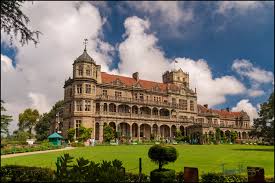

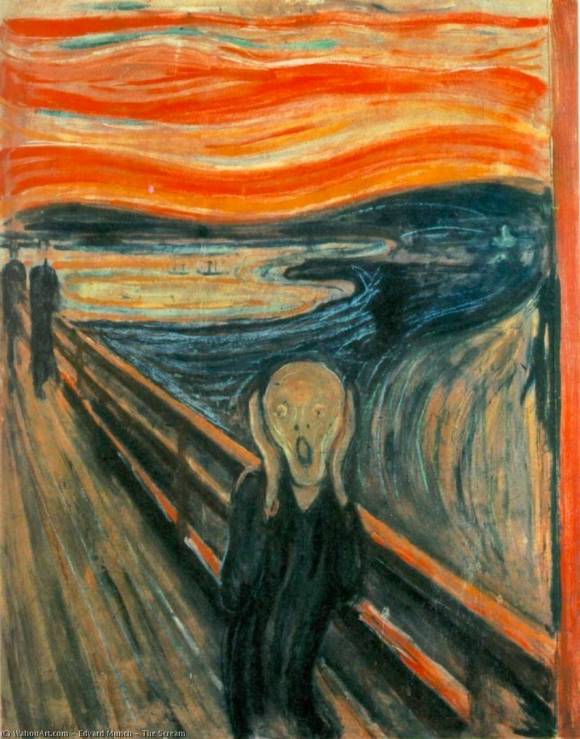

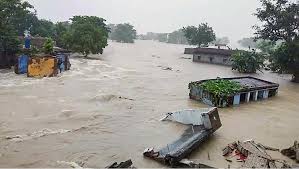
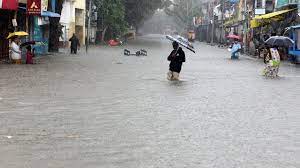
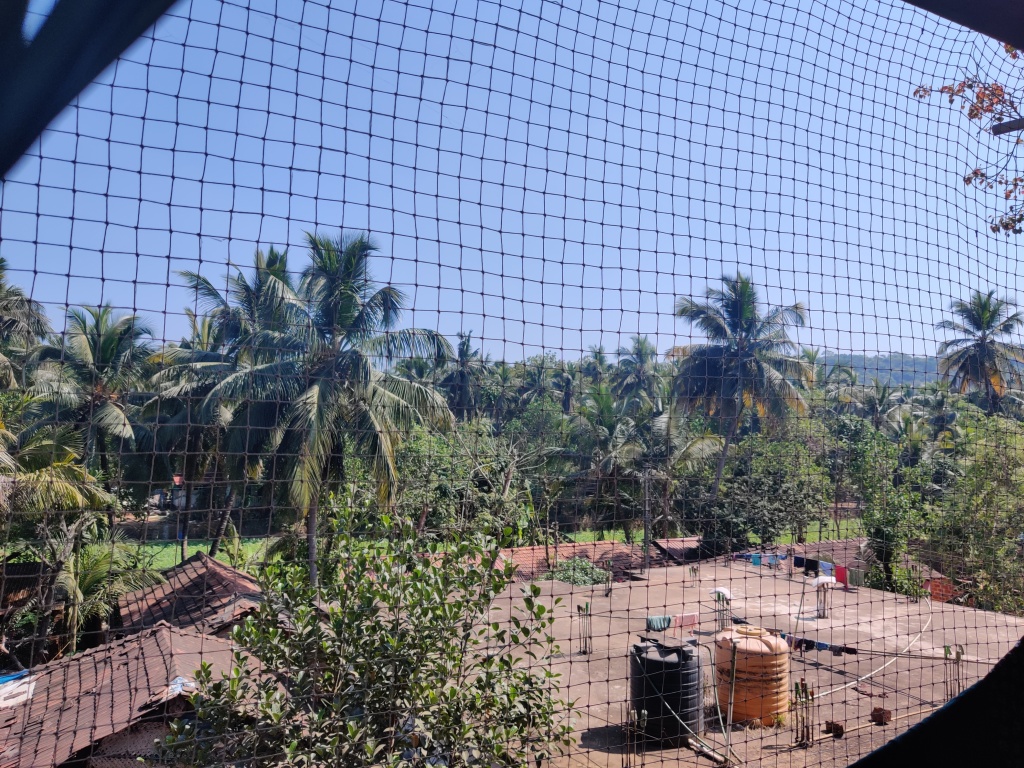
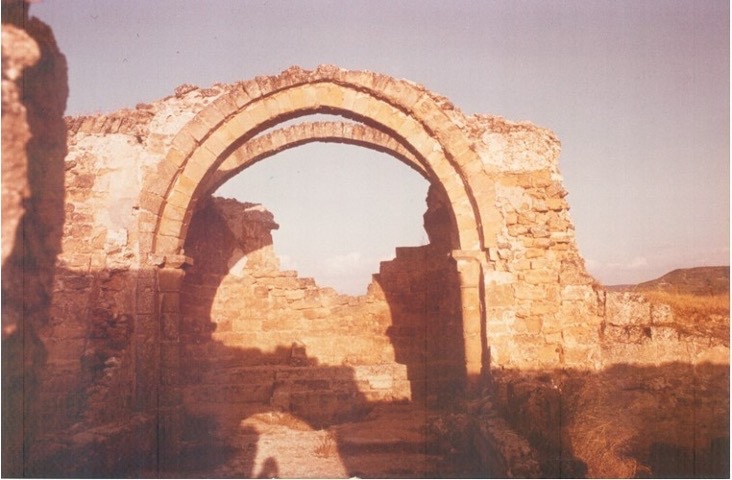
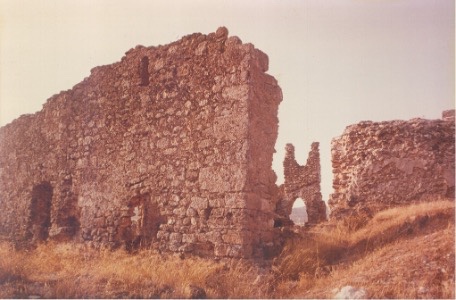
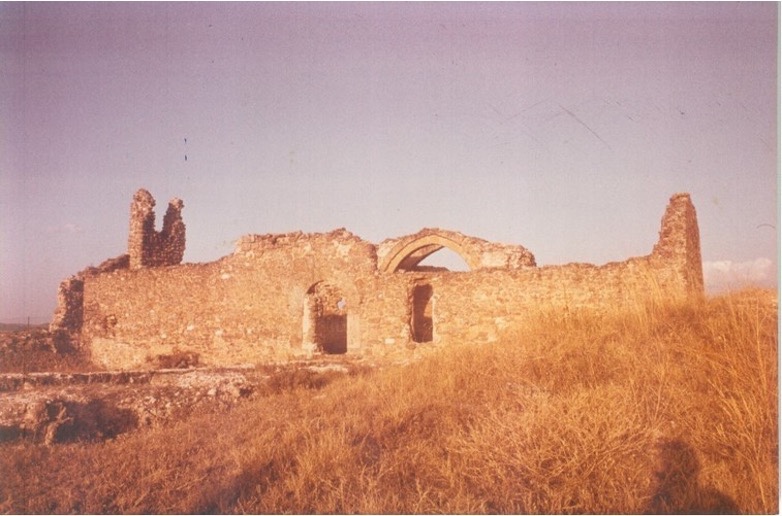



 Borderless