Categories
Stories

Just Another Day

 By Neeman Sobhan

These days, it seems to sixty-year-old Husna that the past is clearer than the blur of her mirror…

The black Morris had come to a halt near the major crossing on Top-Khana road. In the back seat, feeling as plump as the upholstery, Husna was sweating and dabbing her pretty twenty-year-old face and neck with the anchal end of her cotton Jamdani sari.

Pregnancy had made it hard for her to fit into the long tunics and gathered pants of her hitherto comfortable shalwar-kameez outfits. Beside her lay the folded newspaper that Baba, her father Dr. Rahman, had left behind that morning, when he got dropped at the Dacca Medical College. She picked it up to fan herself. It was the Bengali language daily, Azad[1], dated February 20, 1952. The headlines wafted back and forth, screaming in print the news of the continuing agitations around Dacca, East Pakistan, on the language issue.

Without needing to look at the paper, she knew about the meeting that day of the Language Action Committee from her youngest brother Shonju, the student activist. She knew that they were meeting to discuss a nationwide hartal[2] scheduled for tomorrow, a general strike against the government’s repressive policies and disregard for the legitimate demand of the people that their mother language be given its rightful place as one of the two state languages of the country.

Since January, when she had returned home from West Pakistan for her confinement, all the discussion around the family dinner table involved the Prime Minister Khwaja Nazimuddin’s reiteration of Governor-General of Pakistan, Jinnah’s enraging declaration of two years ago that “Urdu, and only Urdu shall be the state language of Pakistan.” 

She glanced at driver Rashid Miya. The middle-aged man seemed unaffected by the heat, unlike Husna. She was due for delivery in a “matter of days”, as Daktar Chacha[3], her father’s MD friend, had promised during the last check-up, patting her head as if she were still the teen-aged, newly married bride, who had left for West Pakistan a year ago with her banker husband, Jamil.

In a way she was glad that Jamil and she had left their familiar world of Dacca immediately after their arranged marriage, helping two newlywed strangers to bond over the shared adventure of starting life as Bengalis new to the quasi-foreign, Urdu-speaking territory of Karachi in West Pakistan.

Not that Urdu was unfamiliar to Husna. Despite problems with gender in the language, she could manage basic social conversation (though, it annoyed her that she never found any Urdu speaking Pakistani who could utter even a word of Bengali, or tried to). But she was proud that just by listening to the radio she had learnt to sing the popular film ghazals of her favourite Indian playback singer Talat Mahmood, or Noor Jahan, now a Pakistani singer, who migrated to Lahore recently, after the Partition of India five years ago.

It was a bit disappointing that Jamil preferred her to sing the Tagore and Nazrul songs her music teacher had taught her since childhood, when all along her heart hummed with film songs. Songs from Bengali and Hindi films that her strict mother had seldom allowed her to see, unless escorted to the cinema halls by friends and relatives, and on special occasions, like Eid.

She had hoped to right this wrong immediately upon getting married. After all, Ma always said, “Do whatever you wish….after you’re married.” And Jamil did take her to the cinema, though, mostly to see English films. Matinees or late shows at the Rex or Ritz, or an early show at the Odeon followed by dinner in a hotel like Beach Luxury. Once she had seen a belly dancer from Beirut or Cairo perform there and had felt embarrassed yet fascinated by the lissom female body, the unfettered, uninhibited moves. She had felt a dizzy sense of freedom just watching the dancer.

She sighed, running her hand over the watermelon that was her belly! Today she didn’t feel like that bright eyed young girl in Karachi anymore. Nor even a mother-to-be. She just felt like a bloated animal, she sulked looking out of the car window. They were at a standstill for what seemed like an hour. Minutes crawled like the runnels of sweat under Husna’s new high-necked blouse, inspired by the popular Indian Bengali actress Suchitra Sen. She dabbed the constant beading of her nose and upper lip that Jamil always said he found endearing.

She started a mental reply to his last letter. “Dearest one. . . ” She began, then floundered. This would be her third letter to him since she arrived in Dacca, but she was still not convinced about how to address him in writing. Some of her Urdu-speaking female acquaintances in Karachi called their husbands by name, though often using the polite pronoun “aap[4].” Ma always called Baba “Ogo[5]” or “Shuncho?” as in “Are you listening?” That was funny because even if Baba were not listening, Ma would chatter on.

She felt awkward and insincere mimicking the spontaneous affection in Jamil’s letters, calling her “Beloved” and his “Myna bird” and so many other endearments, while she was unable to address him in a way that felt comfortable and not a lie. As usual, she settled for no salutations but an outright “Kemon acho?”

How’re you? I’m as well as can be expected. It’s only February and already Dhaka is uncomfortably warm. How is Karachi? Here, it’s not just the weather that’s heating up, but the political environment as well. The ‘bhasha andolon’, which the English newspapers refer to as ‘the Language Movement’ is going on full force. Baba and Ma are always worrying about Shonju, who is out on the streets every day and in student meetings at all hours. He creeps home late and stores all his protest posters and fliers under my bed and fills me in on what’s going on. I often have to cover for him to the family….”

She pulled forward the end of her sari and tried to cover her belly and wipe her glistening face. Oh! Pregnancy was so boring; and this heat was claustrophobic. If only she could be like Shonju, free to just come and go, walk the streets or ride the cycle or take a rickshaw.

Ki holo, Rashid Bhai? What’s up?” she asked, as she wound the window all the way down.

Apa[6], I think there’s a procession approaching. I feel we should take a side street. This road is blocked.” Rashid was already turning the steering wheel.

“Oh! Then, no New Market today? I wanted to collect my harmonium that I left for tuning.” Husna’s voice was lost in a volley of shouts that came from somewhere ahead. Meanwhile, a rickshaw edged close to the car, and two boys, possibly students, with cloth bags hanging from their shoulders, started throwing pamphlets through the windows of a few buses and into other rickshaws that were milling around.

One pamphlet landed on Husna’s lap like the silly, anonymous love-note she had once received while being driven to college, just two years ago. She smiled. She had often wished the author had been her elder brother’s friend and her girlhood crush, Farid. But he was hardly the type to write something romantic to her. Certainly not “Beloved one” or “My Myna bird.” No, it was hard to imagine that serious, brooding, good-looking face bent over anything but medical books. 

Rashid stopped to make way for a group of demonstrators, banners folded under their arms. Some raised a slogan and the rest joined in. “Manbo na! Manbo na! Never will we accept!”  Husna’s heart pumped. Ah! Unlike her, these boys dared to proclaim that they rejected whatever was being imposed on them. Was this possible? She wished she could get out of the car and walk with the boys, raise her voice in slogans. Unthinkable and unladylike, of course; plus, she was a waddling, pregnant beast.

Rashid Miya swung the car around and they entered a narrow street that led out to a wider road. He braked to give way to a truck that sped past, full of khaki-uniformed police, their rifles flashing in the sun. “Too many demonstrations today near the university, Apa. I hope tomorrow, your father will not go to Medical College. And our Shonju Bhaiyya should be careful. He and his friends were getting on a rickshaw at the gate this morning, when I was wiping the car, and they were talking about processions tomorrow. I kept hearing the date. 21st…Ekushey February. God only knows what will happen!”

“We better go home, Rashid Bhai. Shall we pick up Baba?”

“No, it’s only past 5. I’ll come for him later. Let me drop you first.”

Suddenly, preceded by the rumble of microphone, a van came into view. As it crawled past, it left the sputtering debris of words in crackling Bengali. She could decipher only: Section 144 imposed in the city… for 30 days…a ban on gatherings of more than 4 people in public places…processions or demonstrations to be severely punished…

Husna grew restless for Shonju. She prayed he would come home safely and not get embroiled in something foolhardy. He usually confided in her. At least, he used to till Husna got married. They were the closest among their many siblings. Even on the eve of her wedding, it was he and not one of her sisters who had insisted that if she had any doubts about this arranged marriage, it was not too late to speak up.

But she had never mustered enough courage. Or conviction. After all, Farid had not really confessed his feelings for her, and, from what she discovered about Jamil, he was a perfectly decent human being. In fact, she had no complaints about her husband, except that he was not the one her heart had chosen. If only she had met him on her own, and he had not been imposed on her, as if by state decree: “Jamil, and only Jamil shall be your husband!” And… if only elusive Farid had been clear about his feelings. Even if it were non-reciprocal, she would have felt free. Her heart would not now feel so mute.

Why was the language of the heart so complicated, so hard to decipher? It was as if its familiar truths, which could be accessed non-verbally, instinctively, were now locked in a foreign alphabet that she had to relearn in order to decode their meanings. Almost like that ridiculous proposal in the Legislative Assembly two years ago that Shonju had laughed with her about, regarding the use of Arabic script to write Bengali!

“Just imagine, Bubu, the word ‘mother’ would still be pronounced ‘Ma’ but not written ‘moye-akar’ but ‘meem-alef’! Our Brahmi script curling and prancing forward gracefully from left to right would be attacked from right to left by the slanting arrows of the Nastaliq squiggles, and then both colliding explosively in the middle!”
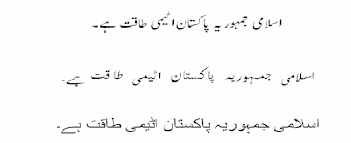

Oh! Shonju was so dramatic! A laugh escaped Husna, then she fell silent.

They were driving past the Ramna Racecourse. Her baby shifted in her womb. Later. . . many years later, she would think that her son Azeem knew that they were passing what in two decades would be a historical spot: the pulse point of an unprecedented political gathering on a March morning in 1971. On the seventh day of that month, a voice would rise like a colossal bird filling the Dhaka sky with its fateful, uncompromising call, announcing that the time had come “for the ultimate struggle, the struggle for freedom”: Ebarer shongram, shadhinotar shongram!  

Had she been clairvoyant, known that the heady creature would swoop down and snatch her son and hurl them all into the whirlpool of destiny, perhaps she would have told Rashid Miya to change route, take another road. But would that have changed the course of history, erased the scribbling of fate?

For the moment, the Black Morris like a rigid pen on paper drives inexorably forward, and the future is drowned out by the sporadic shouts in the distance of “Rashtro bhasha Bangla chai! We demand Bangla for national language!”

The baby came early. In fact, the very evening after she returned from her outing, the pains started. There was no time to shift her to the maternity ward of the private clinic of Daktar Chacha, so he sent a nurse over to help deliver her baby at home. Early in the morning of February 21, her baby son arrived.

A trunk call was made to Karachi to give Jamil the good news. Then there was much rejoicing in the house with relatives dropping in to see the baby. By late afternoon, however, the atmosphere in the house became subdued as disturbing news from the streets filtered through.        

The police had opened fire on protesting students. There were hushed discussions so she would not hear. But she overheard the day nurse telling the night nurse before she left that injured students had been taken to the Medical College. The very next day, Husna’s elder brother, the final year medical student, Monju Bhaijan, had come to the breakfast table shouting in rage that a student had succumbed to his wounds, and the body of another had been found on the floor behind the Anatomy room. Baba confirmed it with sadness.

Even Jamil’s letter to her after the joy of the news of Azeem’s birth contained a postscript: “Stay safe. These are volatile times. Worried about Shonju. The Dawn newspaper here carried an editorial saying that the people of West Pakistan have no objection to Bangla getting a status equal to Urdu. Why is there always such a divide between the wielders of political power and the populace?”

A few days later, Husna wasn’t sure if it was the 25th or 26th, Ma and the nurse had just taken away the baby when Shonju arrived. He was carrying a box of sweets. “Moron Chand and Sons” it said on the box. Inside were her favourite sweets: the soft, creamy white, renin-based balls of rose-scented pranhara-shondesh.

Ma must have bought the sweets and forced him to come visit his newborn nephew. Husna breathed a sigh of relief, seeing her brother, who paced restlessly, refusing to sit.

“I saw the baby in Ma’s room on my way in. Looks like Dulabhai.”

“Really? I think he has our family nose.”

“Poor kid! Hope not.” Shonju finally grinned, but his mind was elsewhere. He was wearing a black badge of mourning on his white kurta sleeve.

Husna stretched her arm and took his hand: “My heart aches for those who died, Shonju. But I’m so grateful you are okay.”

He didn’t let go of her hand but turned his angry face away.

“We students are still in battle mode. It will continue, the andolon, the protests, the confrontation. The Shaheed Minar memorial we constructed outside Medical College was destroyed, but we will rebuild it.”

Shabdhan[7], Shonju!” Husna cautioned.

He pulled his hand away, clicking his tongue: “Oh! Don’t worry. Nothing will happen to me. When you fight for a cause you feel superhuman, invincible. The collective spirit strengthens us, makes us feel immortal. We are more than an individual life. What will our enemies do? Kill or wound one person, right? But the cause… they can’t defeat that. We are the multitudes… ”

Uff!  Stop this speechifying!” Husna rolled her eyes. “Mothers don’t want multitudes. They just want their sons. Sisters want their brothers. Yes, even though you’re a moron, I’d rather have you than a street full of heroes.”

Shonju laughed. “In that case, Bubu, you better start speaking only in Urdu. Sell your mother tongue to these politicians.”

After Shonju left, the nurse brought the baby to be fed. Husna touched baby Azeem’s toes, his petal-like fingers. Once, she had laughed at her elder sister for her incessant baby talk when her son was born. Now it spilled out of her, and she felt no embarrassment. Soft, mashed up balls of Bengali words lisped with maternal love, sweeter, and more tender than the pranhara in the box.

Was that how all mother tongues started? With silly, besotted mothers cooing to the babies in their language? She realised that if she had to make up baby talk in another language, she probably couldn’t do it. There was something about expressing oneself in one’s own tongue, heard from infancy. It was the home that one carried within, because the earliest memories of the mother’s voice absorbed from the womb animated it. It was a birth right that no one could be permitted to take away or undermine.

But was it worth dying for? Worth being martyred like the student the police had shot on Thursday, the twenty-first?

A week later, after lunch, the house suddenly filled with voices. Shonju entered, followed by Monju Bhaijan, and Farid. Husna looked at him surreptitiously. His face was impassive and he gave her a distracted nod. What else could he do, or say, Husna could understand. After all, there she was, much married and a mother, to boot.

Loudly ordering tea to be served, sounding like a housewife, she left the room, disappointed in herself that despite her show of poise and indifference, her heart still ached in a dim way.

She asked herself, if, in the past, she and Farid had been granted the opportunity and the courage to express to each other what she was certain was a mutual attraction, would her life be different? Would the knowledge that her feelings were requited, or not, have made a difference to her sense of self?

When Jamil’s proposal of marriage came to her parents, and they had accepted on her behalf. It was too late. Farid was not around, having gone to visit his parents in Barishal, so nothing had been acknowledged. There had been no beginning, and subsequently, no closure. 

During her impending wedding she had to make sure her feelings did not go into a Bhasha Andolon of sorts within her, agitating and demanding the right of her heart’s true language to be respected. Instead, she had gagged her heart, imposed on herself another language: a formal, emotionally correct, and socially acceptable language. The vocabulary of wedded propriety appropriate to an obedient daughter and daughter-in-law. An official language, foreign to her, like Urdu.

She sighed. Language supposedly empowered humans and differentiated them from animals. But if, despite the ability to verbalise, people could not make their wishes known or heard, were they not equal to dumb beasts? What use was the mother tongue when ones’ own mother had not understood her daughter’s unspoken wish just because she could not speak out: “I don’t want to marry, yet. I want to wait! Manbo na! Manbo na!” And what use was language when Farid too, had failed to use his tongue, express himself at the right time, ask her clearly to wait and not accede to the arranged marriage.

*

No, it was better that the Bengalis had spoken out. It was better that they had taken to the streets. This andolon would lead them to express their rights and desires, claim what was true. Of course, it would take four more years for Bengali to be constitutionally recognised as a state language of Pakistan, along with Urdu. But time was a tiny link in the cosmic chain of historical and personal events. Obviously, this last was not something thought up by Husna at the time, but by the Husna of today, watching her past self.

Today, she observed herself through the telescope of time, on the first day the young mother Husna nursed her baby son. Surely, she was unaware at that moment that everything was connected: her breast milk and baby talk in Bangla nourished not just her child, Azeem, but through him later, Shonju’s “multitudes” of a future generation, as a whole nation journeyed from Ekushey or twenty-first, to Ekattor or seventy-one: from the upheaval for language of February 21, 1952 to claiming a home for it in the war of independence of 1971. All were linked, even if separated by time and generation. In the end, everything existed in a grand NOW, where past and present simmered together.

Needless to say, all this was what she would think many years later, as an older sixty-year-old woman, looking back on her life as she wrote her journal, sitting in her room in her daughter’s suburban home in Maryland, in the US.

She dusted the photo frames on the painted bureau. Her doting late husband Jamil, and her gentle yet impassioned elder son Azeem looked at her from the distance of lost eras. One was gone in 1966 in a helicopter crash. The other in 1971, as a freedom fighter.

Farid, unframed, was a forbidden, almost forgotten memory. Lost like an unspoken language. Lost, because she had never fought for him.

She has a fanciful wish: in some after life she would like to ask those who had agitated and fought for a cause, and even laid down their life for it: in the end, was the sacrifice worth it?

“Today is February 21, 2002. Commemorated as Omor Ekushey in Bangladesh. But just another day here…” She wrote in her diary in Bangla, a language that her grandchildren could not speak.

She pulled out from under her bed the harmonium her daughter had recently bought for her from an Indian family that was moving back to India. She sat down on the rug, stroking the black and white keys with one hand and pumping lightly on the bellows at the back of the instrument.

On top of her harmonium lay open her old songbook, marked and written on by the music teacher of her childhood. She was a trained singer, and in 1950, she with a group from her school had performed some mass anthems and marching songs on what was then Radio Pakistan Dacca. There, they had met a musician named Abdul Latif, who would later put to melody a poem written by a journalist named Abdul Gaffar Choudhury for the student who had died on February 21. Later, the song would be recomposed by a noted composer named Altaf Mahmud and emerge as an anthem for what became Mother Language Day.

For her, of course, the day had a different and personal significance. It was the sacred anniversary of her motherhood that she had entered so reluctantly. On this day, every year, she sang to the son who had taught her the ultimate lesson of love and sacrifice and of never forgetting.

She started to hum the familiar refrain as she tried out a few chords.

Her granddaughter Zainab peeked through the door.

“What’re you singing, Nani[8]?” She said in her American accent.

“It’s a song about love, sweetie. About loving one’s language.”

“Which language, Nani?”

“Any language that you love, sweetheart. For me it’s Bangla, which you hear me speak with your mom.”

She sang the first lines. Zainab sat down beside Husna, gazing at her moving fingers.

“Cool! It’s like a portable piano! Can I learn to play it?”

“Well, only if you also learn to sing this song with me.”

“Deal!”

In bed that night, Husna wrote in her journal: “Today is February 21. International Mother Language Day. Today Zainab learnt to sing the Ekushey song, especially the refrain ‘Ami ki bhulite pari?’ And when I tested her on what it meant, she got it right as she ran away giggling and yelling: ‘Can I ever forget it?’

So, today turned out to be. . . not just another day, after all.”

Husna closed her eyes with a smile on her face. Just before she fell asleep, she felt as if she understood the world not with the uttered meanings of any language, but like an unborn baby breathing in the womb its mother’s voice, dreaming his or her first spoken word.

Dreaming in whatever language would become their home, their motherland.

.

[1] Literal translation of Azad is free

[2] Strike, translated from Bangla

[3] Doctor uncle, translated from Bangla

[4] Formal way of addressing in Urdu or Hindi — You

[5] Informal way of addressing a husband in Bangla as taking a husband’s name was seen as disrespectful and harmful

[6] Elder sister

[7] Careful, translation from Bangla

[8] Maternal grandmother, translation from Bangla

Neeman Sobhan is an Italy based Bangladeshi writer, poet, columnist and translator. Till recently, she taught Bengali and English at the University of Rome. She has an anthology of columns, An Abiding City: Ruminations from Rome; fiction collection: Piazza Bangladesh; Poetry: Calligraphy of Wet Leaves. Armando Curcio Editore is publishing her stories in Italian. This short story was first published in Ekhushey Anthology 1952-2022, edited by Niaz Zaman, writers.ink in 2022.

.

PLEASE NOTE: ARTICLES CAN ONLY BE REPRODUCED IN OTHER SITES WITH DUE ACKNOWLEDGEMENT TO BORDERLESS JOURNAL

Click here to access the Borderless anthology, Monalisa No Longer Smiles

Click here to access Monalisa No Longer Smiles on Amazon International

Categories
Stories

Echoes in the Digital Expanse

By Apurba Biswas

In the heart of a bustling metropolis, where neon signs battled the stars for supremacy, stood a high-rise that pierced the sky. On the 42nd floor, amidst the hum of advanced technology and the glow of omnipresent screens, lived Michael and Apollonia. Their apartment, a futuristic enclave, was filled with gadgets and gizmos that spoke of an age where technology reigned supreme.

Michael and Apollonia, once a couple whose love story could have inspired poets, now found their bond fraying in the unrelenting embrace of the digital world. Their home was an altar to the modern age, with walls adorned with the latest ultra-thin screens, surfaces cluttered with virtual reality gear, and AI assistants that responded to their every whim.

Michael, a software engineer with a passion for gaming, spent his days and nights in alternate realities. His VR headset was more a part of him than his own limbs. In these digital realms, he was a hero, a conqueror, a legend. Apollonia, a digital marketing strategist, found her solace in the lives of others through her social media feeds. Her world was one of perfectly curated images, witty captions, and vicarious living through the adventures of influencers.

Their apartment, high above the city’s ceaseless rhythm, had become a silent bubble. Conversations, once filled with laughter and shared dreams, were now a series of emotionless texts and emojis, even when they lounged on the same sofa. Dinners were silent, save for the soft tapping of their devices; their eyes rarely met, each lost in a personal digital labyrinth.

.

Michael’s world was one of fantastical landscapes and impossible quests. His laughter, once a melody that Apollonia adored, was now a rare sound, often drowned out by the synthetic scores of his games. Apollonia, whose zest for life and storytelling had captivated Michael, now channeled her creativity into crafting an enviable online persona, her real emotions hidden behind a filter of digital perfection.

Their home was a stark reminder of a past filled with genuine connection. Framed photographs of their early adventures — hiking trips, impromptu road trips, and lazy Sundays in the park — were now just relics of a bygone era. Michael’s guitar, once a source of serenity, lay in a forgotten corner, its strings still. Apollonia’s collection of travel books, which had fueled her wanderlust, now served as mere decorative trivia, untouched and gathering dust.

.

It was on a stormy evening, as the city beneath them was a spectacle of rain-drenched lights, that their worlds momentarily collided again. Michael, his VR adventure paused due to a rare glitch, noticed Apollonia. She sat curled on the couch, her face illuminated by the soft light of her tablet, scrolling endlessly. For a fleeting moment, he saw not the Apollonia lost in the digital world, but the woman he had fallen in love with.

Moved by a surge of nostalgia, Michael reached out and gently touched her shoulder. Apollonia looked up, her eyes wide with surprise, as if seeing Michael for the first time in ages. Their eyes locked, and for a brief moment, the digital fog lifted, revealing the raw, vulnerable humans beneath. A torrent of memories flooded back — their first date, the late-night talks, the tender moments.

But the magic of the moment was fleeting. Apollonia’s gaze shifted back to her screen, the ghost of a smile fading as she immersed herself once again in the digital stream. Michael, a wistful sigh escaping his lips, re-entered his virtual world. The screens that had grown between them were too strong, their digital habits too ingrained.

Their night did not end in a dramatic confrontation or a tearful goodbye. Rather, it faded, like the last bars of a forgotten melody. They continued to share their high-rise haven, yet their worlds were galaxies apart. Their love, once vibrant and tangible, had dissolved into the ether of cyberspace. Around them, the city throbbed with life, but in their high-rise sanctuary, they existed in a state of digital solitude, side by side yet worlds apart. As the city lights flickered and danced below, they sat together in their digital cocoon, a testament to a world where hearts beat in sync with bytes, and love stories are written in the code of a bygone era.

Apurba Biswas is a Ph.D. scholar at the School of Humanities and Social Sciences, National Institute of Science Education and Research Bhubaneswar (An Autonomous institute under the Department of Atomic Energy, Govt. of India), and an OCC of Homi Bhabha National Institute, Mumbai. Apurba Biswas specialises in bridging gaps between science and humanities.

.

PLEASE NOTE: ARTICLES CAN ONLY BE REPRODUCED IN OTHER SITES WITH DUE ACKNOWLEDGEMENT TO BORDERLESS JOURNAL

Click here to access the Borderless anthology, Monalisa No Longer Smiles

Click here to access Monalisa No Longer Smiles on Amazon International

Categories
Stories

Two Countries

By Ravi Shankar

The decision to retire was a long, tough, and protracted one. The traditional wisdom always gave out doctors never retire. But we needed time to ourselves. We had long and fulfilling lives and now was the time to take things slow. The body was ageing and required more time to complete various activities. Some tasks were no longer possible.

I still remember the first day I met Rajendra on the orientation day of the Family Medicine residency program in upstate New York. Rajendra was from Jiri in the Himalayan country of Nepal. For a few decades, Jiri was the gateway to the Everest region. Then the hikers and mountaineers started flying to the air strip at Lukla. Roads were also progressing further and further in the country. We grew closer during the residency. We shared many interests including nature, hiking, photography, creative writing, and a strong empathy for the underdog. Our friendship slowly deepened, and by the end of the residency we decided to spend the rest of our life together.

We were also different in so many ways. I was a girl of mixed German and Colombian heritage. My family was well-to-do, and I had a privileged childhood. Raj was from a poor family and had to face many struggles in his life. He went to medical school on a government scholarship. Like most graduates of the Institute of Medicine in Kathmandu he then concentrated on being selected for a residency in the United States. Even in the early eighties this was a long, hard struggle.

He did a few ‘observerships’ and research attachments. He eventually went on to become a chief resident and we both worked for around two years in the Northeast health system after residency. Soon we had to decide on what to do next. I would have liked to continue in the United States. Raj however, was increasingly considering whether we should go back to Nepal. I told him that though I had never even visited Nepal I was OK with whatever he decided.

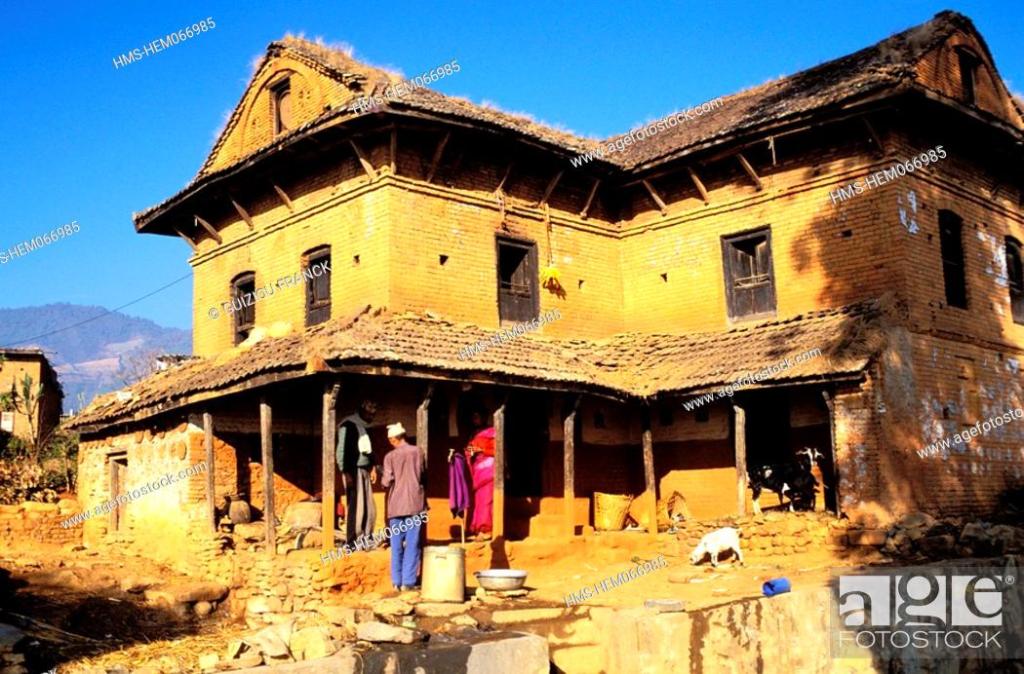
Though his family had settled in Jiri, Raj was a Newar. His full name was Rajendra Shakya. The religion of the Newars was complex tapestry of Hinduism and Buddhism. His family home was at Bungamati, a Newar village in Lalitpur district at the southern part of the Kathmandu valley. Newar Gods and Goddesses were complex and had both good and more wrathful aspects. Women were considered ritually impure during menstruation and were not allowed into the kitchen during this period, and they could not visit temples. In some rural parts of the country, the Chaupadi system was still followed, and women were banished to a cow shed during their periods. The Newars had their own caste system, and the concept of purity was important. In the Kathmandu valley the Newars had their ritual feasts (bhoj) and the buffalo was the most important animal in Newari cuisine.

The cow was sacred and killing one was a grave sin, but the poor black buffalo was fair game. I often reflected on this injustice. We first worked at the United Missions to Nepal hospital at Tansen at the foothills of the Himalayas. Tansen was a small town with a significant Newari influence and the hospital was the major and often only source of health care for a large population. The hospital was overcrowded, and we had to deal with a variety of patients. The houses for the doctors were lovely and picturesque, and we had a great community of both Nepalese doctors and expats. We stayed in Tansen for nearly a decade. There were delightful walks in the surrounding hills and a rather long hike to the Rani Mahal on the banks of the Kali Gandaki, often called the Taj Mahal of Nepal.

There was an opening for a doctor couple at Khunde hospital in the Everest region and as he was from Jiri, Raj wanted to apply. The hospital was at a height for around 4000 m and was set up by Sir Edmund Hillary. The hospital provides care to local residents, hikers, mountaineers, and porters from the lowlands. Initially it was a very isolated existence. Later a satellite phone was set up and eventually an internet connection followed. We dealt with all kinds of patients. The weather was cold, but I loved the picturesque cottage near the hospital. The region was becoming a popular trekking region and during the peak seasons of autumn and spring several thousand trekkers passed through.     

Patan hospital is one of the old and famous hospitals of Nepal located in the city of Lalitpur also known as Patan in the Kathmandu valley. Migration of doctors to developed nations was a major challenge for Nepal and the Institute of Medicine was not very successful in producing doctors for the country as most graduates left for developed nations. The importance of a family medicine/general practice programme was understood by the policy makers and the Patan Academy of Health Sciences (PAHS) was set up. MD was the postgraduate medical qualification in the country and a MD in General Practice and Emergency Medicine (MDGP) was started in this institution.

We were among the faculty for this program, and we were now working at Patan hospital. We had some family land at Bungamati and built a traditional Newari style house. There were smiling mustard fields around though the area was rapidly urbanising. Flowers grew well. In winters, the Himalayas could be seen on a clear day but air pollution and dust made this a rarer phenomenon.

My brother had retired and settled in our family land on the outskirts of Albany, New York. We had a rather large plot of land, and I was thinking of settling near him. We had followed different life trajectories, and it would be nice to spend some together in the autumn of our lives.    

Our work at Patan Hospital was hectic. After long conversations we decided to retire from the hospital and offer our expertise to the MDGP program as Emeritus Professors. Raj’s sister and brother had retired and were now living in Bungamati. Patan hospital would have loved for us to stay on.

We decided to divide our time between Albany and Bungamati. Summers in Albany and winters in Bungamati. Winters in upstate New York can be harsh and unforgiving. The long flight between the two locations will be a challenge as we did not handle long flights well. Let us see what fate had in store for us. Our son was a vascular surgeon in New York and we could be near to him. We were happy that we finally decided to retire and spend time with our families and our grandchildren. It was time to explore the road less travelled!      

.

Dr. P Ravi Shankar is a faculty member at the IMU Centre for Education (ICE), International Medical University, Kuala Lumpur, Malaysia. He enjoys traveling and is a creative writer and photographer.

.

PLEASE NOTE: ARTICLES CAN ONLY BE REPRODUCED IN OTHER SITES WITH DUE ACKNOWLEDGEMENT TO BORDERLESS JOURNAL

Click here to access the Borderless anthology, Monalisa No Longer Smiles

Click here to access Monalisa No Longer Smiles on Kindle Amazon International

Categories
Stories

The Gift

By Rebecca Klassen

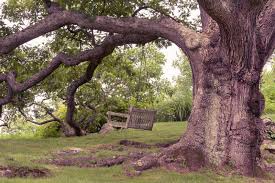
The oak stood in the field at the end of their parallel gardens, just over the fence. The branch stretching out over Orla’s lawn creaked like a rocking chair as she swung back and forth on the rope swing her mum had made years ago. The creak had grown louder since she’d turned nine. She watched her mum talk to their neighbour Ray over the fence, which had once come up to his chin. Since he’d walked with a cane and his wife had died, he could just about see over it on tiptoes. When her mum folded her arms, Orla stopped swinging and listened to them talk.

“I can’t get out there anymore.” Ray’s voice was strained. “I’ve only managed the trip twice since I scattered Hetty’s ashes.”

“I’ll take you out there on Sundays, Ray. I’m more than happy to drive you.”

“I couldn’t be a burden to you like that, Tamara. It would be easier if we just cut it down. England has millions of oaks.”

Orla’s mum looked over at her, noticing the creaking had stopped. Orla began to swing again, the branch speaking over the rest of her mum and Ray’s conversation. She looked up at the pistachio-coloured leaves whispering above her, some yellowing at their tips.

.

After lunch, Orla took her crayons into the garden and peeled the papers off them like sweet wrappers. Gathering some of the oak’s fallen leaves, she rested them on a paving slab near the swing and placed sheets of paper over them. Rhythmically, she rubbed the crayons back and forth, the spines and veins blooming on the paper.

“You’re a big girl now, aren’t you? Too big for that swing.”

Ray’s white fingers gripped the top of the fence, knuckles peaked, watching her beneath crêpe eyelids.

Orla had liked Ray’s wife, Hetty. She’d regularly made Orla biscuits, given in a biscuit tin with robins on it. Whenever Hetty went on a trip, she’d always bought Orla a little present; a magnet of an ‘O’ for Orla from Blackpool, a bottle of multi-coloured sand from the Isle of Wight, a keyring with a plastic wedge of cheese on it from Cheddar Gorge. They were always wrapped and sealed in bright tissue paper. Once, Hetty had brought back a red kite’s feather from her Sunday walk. Even that, she’d wrapped in pink tissue paper and brown twine before giving it to Orla.  

Sometimes, when Orla played with the oak, she would hear Hetty humming in the garden, and she’d stare at the trunk, imagining Hetty’s song was fairies’ singing as they worked.

Orla guessed that all these beautiful things about Hetty were why she had barely noticed Ray until the day she’d seen him crying in her kitchen, her mum patting his papery hand as he clutched his handkerchief. Orla had lined up all the trinkets from Hetty on her windowsill. That had been over six months ago.

“A swing is for tiny ones. You’re all grown up now.” The effort to make his voice singsong made Ray cough.

Orla watched the swing’s wooden seat pendulum in the breeze, her leaf rubbings fluttering on the ground.

“I like my swing. Even Mum goes on it sometimes. I don’t think you can be too grown up for a swing.”

Ray sank behind the fence momentarily, muttered something, then pulled himself back onto his toes. “You remember my lovely Hetty? Her ashes are scattered up on the hill over there.” He lifted a shaky finger from the fence towards the hill beyond the field. Orla had seen the hill in winter through the oak’s spiny boughs. “I want to see my Hetty every day from the window. I can’t see the hill with this great thing in the way.”

Orla continued pushing the crayons across the paper, her eyes down. She imagined Hetty on the hilltop and opening the robin biscuit tin, letting Orla take some lemon shortbread, fresh slithers of zest zinging on her tongue as Hetty smiled at her. Orla felt a knot in her chest and squeezed her crayon. She knew the knot in Ray’s chest was bigger and tighter, so she didn’t mention that he wouldn’t see Hetty up on the hill, tree or no tree in the way.

Ray coughed again. ‘I need to get this tree out of the way.’

Orla didn’t hear him, the leaves shushing in the wind, drowning out his voice.

“Pardon?”

“I said the tree needs to go!” His voice bounced off their houses, and birds flew from the treetop.

“What about the squirrels?” Orla asked.

“I put nuts out for them.”

“They can’t live in a dish of nuts.”

She knew she had been cheeky, so she didn’t look up until his tapping cane faded away.

.

The next day Orla took some paint pens to the end of the garden. She harvested twelve acorns from the grass and slotted them into her front dungarees pocket. Laying them in a line on her paving slab, she coloured them in pastel shades. Then she turned them upside-down and drew faces on them, their cupules acting as jaunty hats. Herby scents from the greenhouse behind her made her hungry, and she wondered what an acorn tasted like, even though she knew they were poisonous. Finding one in the grass without paint, she rolled its smoothness across her lips, the tip of her tongue licking it. Orla felt a sharp smack on her head. A twig with a cluster of leaves and acorns had fallen, reprimanding her. She tossed the acorn, shiny with her spit, over the back fence into the field.

Footsteps came down the path, accompanied by a familiar beat. It was Mum, followed by Ray with his cane. Her mum looked weary.

“Orla, Ray has said he’s going to buy you a present. A swing set. Isn’t that kind?”

Ray rested on his cane with a clownish grin.

“Yes, that’s kind. Thank you,” Orla said as enthusiastically as possible. “I can still keep my tree swing, though?”

Her mum sighed. “I told you she’d want to keep it, Ray. Honestly, it’s no bother to drive you up the hill every week. Besides, having that tree felled will cost you a lot more than a swing set, and I’m not convinced the council will give you permission anyway.” She looked up at the tree, and Orla watched the dappled sunlight flash across her mum’s face. “It would be a shame to see it go. Don’t you think it’s beautiful?”

“Hetty was beautiful!”

Ray threw his cane to the ground. It hit the path, making Orla jump, a couple of her acorn people rolling away. Ray took his handkerchief from his pocket and covered his face.

.

Orla dreamed she was aboard a boat on a rough sea, a pirate ship chasing her vessel through a dark night. Relentless rain pummelled the creaking deck, and the sails whined against the fierce gusts. The chasers fired a single cannon shot – a crack and wail in the night. Her ship had sunk, icy waves pulling her down as the groaning boat went under with her.

Morning brought peace and land as she awoke in her bed. A storm and a lethal shot had been true. Orla’s swing branch had ripped from the trunk and landed on her paving slab, splitting it in two. The splintered swing lay under the branch’s body, sodden rope snaking across the puddled grass. The branch’s crown had shattered the greenhouse. Glass shards and acorns sprinkled over toppled tomato vines and pots of mint, basil, and thyme. The back fence of Orla and Ray’s gardens had been thrown down, the trunk base and roots exposed for all to see.

Orla watched the two men with their chainsaws from her bedroom window, their woodchipper spraying bark fragments like snow. She traced the spine of the red kite feather from Hetty with her finger as she heard her mum talking with workmen. “That branch could’ve fallen on my daughter. What if the whole damn thing comes down?”

One of the men said, “It’s a strong tree; it just needs proper maintenance, regular pruning.” Her mum had sounded uncertain. When they left, Orla heard Ray at the front door. He sounded cross and mentioned the fallen fence several times.

“I’ve filled in the council application to have it felled. I just need your signature too, Tamara.”

“Fine, Ray,” her mum said. “It can go.”

When her mum came to her room later, Orla wouldn’t remove the pillow from her face.

Ray was impatient for the repairman to arrive. He didn’t like the idea of walkers gawking into his garden or dogs darting in and peeing on his flowerbeds. The repairman couldn’t make it until next week, suddenly overwhelmed with work delivered by the storm. Ray surveyed the fallen panels. Two of the fenceposts had snapped at the bottom, clearly rotten. He wondered if he could prop some panels up on the remaining posts to give himself some privacy. Holding his cane with one hand, he bent down and grabbed a fallen panel. The weight was unexpected, but he anticipated the fall, managing to roll and land on his back in the grass. He panted, waiting for pain, but it didn’t come.

“Stupid fool!”

His cane had gone one way, and he’d gone the other. He tried to turn and bring his hands under him.

“I’m like a bloody capsized tortoise!”

He called for help, shouting for Tamara before he remembered seeing them go out in their car earlier. He kept shouting, hoping a passing walker might hear him from the field. His throat began to hurt, and he knew he should slow his heart rate down.

It was a grey day, and the news had forecast showers. The freshness in the air told him they were on their way. Oak leaves trembled above him. Hetty had often admired the tree. He didn’t think she’d have wanted it gone, but he knew she’d understand why he would.

“I know I’m right. You’ve got to go. Supposing the branch had fallen on the girl.”

He heard the rain pattering above, but he didn’t feel it, the oak sheltering him. Two squirrels rushed up the trunk and screeched at a wood pigeon who took flight, sending acorns to the ground. Ray shielded his face, but none of them hit him. A single leaf landed on his chest, and he ran his thumb repetitively along its crinkled edges. Dots of honeybees explored the oak’s limbs, and bluetits hopped about at its crown.

“You’re a busy tree, aren’t you. So big. You’re still huge even looking at you from far away up on that hill.”

He remembered standing on the hill with Hetty on their Sunday walks, roast gammon and apple crumble heavy in their stomachs. Shielding their eyes from the sun’s glare, Hetty would point to the oak and say, “The perfect beacon to find our way home.” They’d walk back across the field, the oak guiding them home.

A red kite soared above the oak into the field to search for mice and voles. Remembering Hetty giving Orla the feather, he ripped the leaf in his hand again and again until it was mulch in his fingertips.

.

When Orla and her mum found Ray, it was getting dark. They warmed him up and fed him tomato soup, bread and butter, and tea and biscuits. Her mum called the paramedics. They came and said his stats were normal. As they left, Orla heard her mum speak quietly to them at the door.

“He doesn’t seem himself. He’s barely said a word.”

They said he was in shock, he’d had a long afternoon, and he’d recover.

Orla sat with Ray while her mum washed up.

“I’m sorry you fell,” she said. Ray kept his eyes on the newsreader on the television, and she wasn’t sure if he’d heard her. “The tree didn’t mean to drop the branch.”

He stroked the hot water bottle in his lap like a cat. Orla spotted the council form on the coffee table. She stood up.

“You don’t need to get me a swing set.”

She waited by the front door until her mum was ready to go.

.

At midnight, Ray couldn’t sleep. The soup and bread had made him feel stronger. Taking his cane with him, he went out into his dark garden. The clouds covered the stars, and the earlier rain soaked his slippers. He went to the shed and got a length of rope and a small step ladder. Draping the rope around his shoulders, he dragged the step ladder to the tree, dropping his cane.

.

The next morning was Sunday. Orla got up early to watch television while her mum lay in. Something caught her eye through the patio doors.

The base of the oak’s trunk shimmered with silver.

Orla put her wellies on and went outside. Foil was wrapped around the trunk’s bottom half and lashed down with a spiral of rope. It had been tied off in a bow at the centre of the wrappings. She ran to it. The foil chimed against the tree bark in the wind as though the tree approved of its new attire.

Tucked into the rope was an envelope with Orla’s name on it. Inside it were confetti-sized shreds of paper. She pieced some together and recognised the print, saw the word council. It was the felling application torn into scraps.

Rebecca Klassen is from the Cotswolds and is co-editor of The Phare. She has had over forty publications in journals and anthologies, and recently won the London Independent Story Prize. The Gift was shortlisted for this year’s Laurie Lee Prize.

Categories
Stories

Healing in the Land of the Free

By Ravi Shankar

The wind blowing across the Long Island Sound chilled his bones. The day was cloudless and the sky blue, but the sun lacked warmth. New York. Dr Ram Bahadur had called the big apple home for over three decades. Winters were cold and snowy. There were cold snaps and the dreaded northeaster brought snow and freezing temperatures. Summers could be surprisingly warm. February in New York was the depth of winter.

Long Island was blanketed in snow. He had spent the morning clearing snow from the driveway of his home. The suburb of Woodbury was quiet and peaceful. The trees had lost their foliage and were waiting for the warmth of spring to put on a new coat of green. He had a large house with floor to ceiling picture windows. The house was two storied with an attic. There were two bedrooms on the ground and three on the first floor. He had done well in life and was now prosperous.

He still recalled his first days in the big apple. He had just come to the United States from Nepal after completing his postgraduation in Internal Medicine. The first years were tough. He had some seniors doing their residency in New York city. The state of New York offered the largest number of residencies in the country. He did his residency again in internal medicine and then a fellowship in endocrinology.

All his training was completed in New York. He worked for over two decades in large hospital systems. But, for the last five years he started his own private practice. Compared to most other countries medicine in the States paid well. Private practice was certainly lucrative, though the cost of living in New York was high.

He did sometimes think about his home country of Nepal. The Kathmandu valley was still a beautiful place. His visits were few and far in between. Unplanned urbanisation had made the valley dusty and dirty. Winters in Kathmandu were cold but milder compared to New York. The Institute of Medicine (IOM) was the first medical school established in the country. The original intention was to create doctors for rural Nepal. The selection was tough and competitive. He still remembered his joy on learning that he had been selected for the medical course. During the closing decades of the twentieth century Nepal was in turmoil. The insurgency was ongoing, and blockades were the order of the day. Violence was rife and a lot of blood was spilled. 

Most doctors from IOM migrated in search of greener pastures. The others mostly practiced in the valley, the historic heartland of the country. Ram was originally from Gorkha, in the centre of the country but his family had migrated to the capital when he was a few years old. His father was a civil servant while his mother was a housewife. Civil servants did not make much and money was always in short supply. His father was a man of principle and never accepted bribes or tolerated corruption. He still remembered the argument he had with his father when he put forward the plan to migrate to the United States (US) to pursue his residency.   

His parents had both passed away and his siblings were also settled in North America. He rarely visited Nepal these days. The insurgency was followed by the overthrow of the monarchy and then a new constitution was promulgated. A federal structure was set up and while this did have benefits, the expenditures also increased. Each state had to set up an entirely new administrative machinery. He married an American academician who taught Spanish literature at the City University of New York. His wife’s family hailed from the country of Colombia.

New York had a substantial Hispanic population these days. He was now fluent in several languages: Nepali, his mother tongue; English, Spanish and Hindi. He also understood Newari, the language of the Newars, the original inhabitants of the Kathmandu valley. He did think on and off about his motherland. Many Nepali doctors left the country. Working conditions were hard and the pay was poor. To advance, you required political patronage. The frequent changes in government required you to be on good terms with several political parties.

He still missed the food of his childhood. New York was a very cosmopolitan place. There were several Indian restaurants and even a few Nepali ones. He was very fond of bara (a spiced lentil patty) and chatamari (Newari pizza), traditional Newari foods. These had earlier not been available in New York. Luckily for him, two years ago a Newari restaurant had opened in Queens. He was also particular to Thakali food. The Thakalis were an ethnic group who lived in the Kali Gandaki valley north of Pokhara. He particularly fancied green dal, sukuti (dried meat), kanchemba (buckwheat fries) and achar (pickle). Anil was a decent cook and had learned to cook a decent Nepali thali[1]and dhido (thick paste usually made from buckwheat or corn). He also made tasty momos (filled dumplings that are either steamed or fried) and these were much in demand among his companions.

Ram loved the professional opportunities that his adopted homeland provided. He had become a US citizen. Working in the US was more rewarding though the paperwork associated with medical care had steadily increased. Many of his batchmates and seniors lived and worked in New York state and across the state border in New Jersey.

Many of them did miss their homeland and had a vague feeling of guilt for not contributing their share to their original homeland. A few of them were working on a proposal of developing a hospital at the outskirts of Mahendranagar in the far west of Nepal. The Sudurpashchim province had a great need for quality medical care. The details were still being worked out. There were about twenty IOM graduates involved and they decided on an initial contribution of a million dollars each. Despite inflation twenty million dollars was still a substantial sum in Nepal. 

This group of friends collaborated on different social projects. They were also active in promoting a more liberal America where each citizen and resident had access to quality healthcare. The hospital would be their first project outside the US. A strong community outreach component was also emphasised in their project.

The US had made him wealthy. He was a proud American. However, he also owed a deep debt to his home country for educating him and creating a doctor. Now was the time for him to repay that debt, not wholly or in full measure but substantially to the best of his abilities! 

[1] Plate made of a few courses, completing the meal

.

Dr. P Ravi Shankar is a faculty member at the IMU Centre for Education (ICE), International Medical University, Kuala Lumpur, Malaysia. He enjoys traveling and is a creative writer and photographer.

.

PLEASE NOTE: ARTICLES CAN ONLY BE REPRODUCED IN OTHER SITES WITH DUE ACKNOWLEDGEMENT TO BORDERLESS JOURNAL

Click here to access the Borderless anthology, Monalisa No Longer Smiles

Click here to access Monalisa No Longer Smiles on Kindle Amazon International

Categories
Stories

Pigeons & People

By R Srinivasan

The following story is an intertwined thread of two independent narratives. The odd numbered paragraphs concern the title Pigeons while the even numbered ones are to be read with the title People.

[1] It was in early November that I saw a pigeon perched on our balcony’s sunshade. It was on our neighbour’s sunshade, to be more precise, which adjoins ours. It was an ember breasted grey one. A common variety which I had seen afar many times. Not the one with a fan tail or some exotic racing varieties which were more prized. Soon it was joined by what I assume was its partner. Now, I’m no ornithologist to point out which among the two was the male or female but I can tell you that they wanted to make the barren flowerpots on our balcony their nesting ground.

[2] The farms and fields were lying barren for quite some time. No cultivation had been done on these barren lands for the lack of manpower as most of the folk who had once cultivated it had moved to the cities. So, it was with some interest that I watched the immigrant farmer who had leased these barren lands for cultivation from the council. Now, I’m not familiar with his native land or his native tongue but something about his appearance seemed exotic. Soon he was joined by his partner, and they built a home for themselves on these lands.

[3] The pigeon pair went about their work with alacrity and within a few days they had a nest and the dull looking pigeon, which I rightly assumed was the female, sat on the nest for hours together. The ember breast went about collecting food or doing whatever it is that the male kind of its species do all day. Soon, the pigeon nest was the talk of the house.

“They look stupid to me,” my son said. “Why don’t they talk with us?”

“You want the pigeons to talk to you? Have you tried talking to them instead? “ I told him.

“My friend has a parrot, and it talks to him,” he said.

“Parrots are different, they like humans and are comfortable to handle. These are wild pigeons. Not exactly domesticated.” I told him.

“I don’t like them.” He stated.

[4] The first thing that the immigrant farmer did was to put a fence made of dried thorn bushes around the perimeter of the farm. Locals frowned at the sight of this new fence.

“Why do they have to put a fence?” Their immediate neighbours frowned.

“Good fences make good neighbours I suppose,”  I said.

“No one has ever put a fence in the village, not with thorns at least. Grazing flocks may brush up against it,” he said.

“Maybe we should talk to them,” I suggested. 

“Can you speak, whatever it is that they speak?” he asked.

“No but you can just mime it and probably they would understand,” I responded.

“Mime? do I look like a clown?” he asked.

[5] The female pigeon soon laid two eggs. As she brooded on her eggs, we soon discovered, to our surprise, that there were now not one but two adult pigeons that accompanied her. Those occupied the adjoining pots, some of which still had healthy plants in them. My wife, who till recently was tolerant of the pigeon family, now started showing signs of uneasiness.

“Did you notice? now there are three? Soon there will be five!” she said.

“Yeah, I noticed. Five? That would take some time,” I said.

“Our maid told me that these things usually take only around two weeks or so from the time they hatch to being fully mature,” she added.

“How does she know? She keeps pigeons?” I asked.

“She’s from the village and she’s more knowledgeable than you are in these things.”  She looked at me with scorn.

“So, should I call for help and move the nest while they are breeding?” I asked.

“No, that would be cruel,” She said.

[6] No one in the village had noticed the arrival of the two young men. So, when the neighbour saw them working the fields along with the man, they began talking.

“Where did those two come from?” he asked.

“Probably their sons…” I responded.

“Soon they are going to swarm this place,” he grumbled.

“Swarm a twenty-five-acre farm with four people? Aren’t you overdoing it?” I asked.

“Sam told me that these people are up to no good,” he said.

“Does he know their native land or speak their tongue?” I asked.

“Probably. He’s well-travelled you know, better than you and me,”

“So, should I inform the village committee that we should have a word with them about the fence?” I asked.

“No, they’ve leased land. We will wait and watch.”

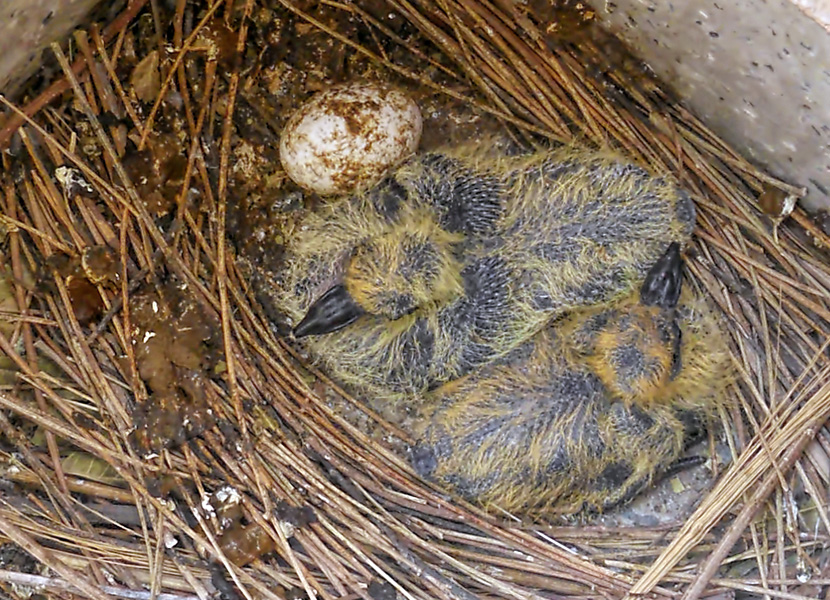
[7] When the female pigeon left the nest in short breaks, probably foraging for food, I had a chance to look at the eggs and the nest. Littered within the straw and some unidentifiable earths, were two eggs. Strewed around them were little feathers and the whole nest had a pungent smell. It’s just the way they are — I thought — but the sight of pigeon droppings and small unfinished food lying around made the place a mess.

“Our maid says that it’s going to get worse,” my wife told me when I told her of my inspection.

“It’s better that we keep the balcony door shut,” she continued.

“You want to shut the sun out of the house just because a pigeon built a nest in the balcony?” I asked.

“What if they fly inside the house and don’t know the way out?” she asked.

“Try hanging some signs saying “EXIT” pointing to the nearest door,” I told her as her insinuations irritated me.

“You don’t take these things seriously. What if this thing flies inside the house and gets itself killed by the ceiling fan? I am not the one picking it up.” She raised her voice.

“What do you want me to do? Call the bird gypsies and make them catch these for pigeon biryani?” I could not resist this.

Chhee[1]! Don’t talk such things at the dinner table. Do what you want. I am not going in that balcony anymore.” She said with an air of finality.

“It will probably fly away once the egg hatches and the fledgelings are able to fly,” I said.

“You wait and see,”she said.

[8] The village councillor knocked the entrance gates of the farm and waited for a response. Seeing that no one answered and since we knew that there were no dogs, we decided to enter. The one storey house was more of a log cabin. The yard leading up to the house was unkempt. Farm tools, a wooden plough, and some odd unidentifiable things were scattered along both sides of the staircase leading up to the front door which was bolted from outside with a lock. An unfamiliar smell of broth came from the kitchen. The counsellor peered inside the house which only had a living room, a bath, and a kitchen. From the signs on the floor, we could make out that animals, probably sheep and poultry, also made their home with the folks inside the house.  

“How could they live like that?” enquired the councillor.

“They are probably used to having animals around them.” I suggested.

“What kind of people bring sheep and poultry into the living room?”  he wondered. A faint smell at the back of the house beckoned us to that place.

“Is that a dump? That explains why they don’t hand over anything to the municipal garbage van,” he continued.

“There is nothing wrong in composting organic waste. In fact, it’s a good farm practise.” I responded.

“So, you just let your bathroom sewage mix with the kitchen waste and pour the rotting mess in your field?” He pointed towards the heap.

“It’s probably a cultural thing. It may be common practise in their native land. Organic farming, it is called,” I said.

“Well, not here” – He said.

[9] It was late in the evening when I reached home and found that both my wife and son were waiting for me in the hall. Wife was agitated and I could see that my son was scared about something.

“They’ve hatched. The eggs, I mean and now they are five and counting,” my wife started.

“Counting? Are there more in the nest?” I asked.

“Don’t know. Why don’t you go and check?”

“Can’t you or your son, do it? Why should I do everything around here?” I said. The long work hours made me irritable.

“He did and those flying mongrel bats attacked him. See the bruises he suffered? You don’t care about us at all,”  She whimpered.

“Bruises? Show me. How did that happen?”I asked my son.

“He went to the balcony out of curiosity and those wretched things attacked him.” My wife sounded upset.

“Attack? Why should they? They are not eagles. He probably scared them or something.”

“It flew right at me, the chic, it jumped out, stumbled and fell down and its father came flying and attacked me!” my son exclaimed. What he failed to tell me was that he went too close to the fledgelings.  

“Didn’t I not warn you not go near them? They are young…”  I was not allowed to finish.

“And he’s not?” my wife said pointing at my son.

“You don’t seem to take it seriously at all. I’m unable to go the balcony and water the plants. The roses have all but died. We are not even able to use the cloth hangers in that balcony… Look at the mess these things create on the floor and now this attack…”  She was at the point of hysteria.

“Listen, don’t shout at me. I’m not a pigeon catcher. Just wait till they are old enough to fly by themselves and they would go away.” I shouted.

“You are not a pigeon catcher, but how do you know that they will fly away after some time? That balcony smells like a… I don’t know what but smells bad and their droppings are everywhere. My aunt tells me that pigeon droppings can cause avian flu. Some kind of insect breeds in it and causes skin irritation and asthma.” She turned pale while saying this.

“Don’t act up. Do all those pigeon breeders drop dead in their scores?” I asked.

“Yeah, keep talking. When I or your son are hospitalised, you will understand.”

I wanted this thing settled so I said, “Okay. I will see what I can do. I will ask the pet shop owner if he can catch them.”

“I want it done by tomorrow,” my wife said.

“Alright. Alright.” I said not wanting to escalate it further.

[10] When I entered the meeting hall, it was already noisy. Most of the village folk had gathered and there was pandemonium everywhere.

“What happened?” I asked.

“Those immigrant rats have blocked the way to the riverbed. How are we supposed to fish?” one of the farmers shouted.

“There are other places to fish too and why should you go through their farm to the river?” I asked.

“What are you saying? Don’t you not know that the fishing pier is on their side of the river? This is trout season and that’s the best place to fish. They are not opening their gates,” the councillor said. What he failed to say was that the immigrant farmers had found out about our visit had refused to open the gates out of fear.

“Did you speak to them about this? I mean that it is not proper to close a public path?” I asked.

“Yeah, we tried and that’s when they attacked us,” one of the farmers said.

“Attacked? Really?” I queried.

“The man shouted some gibberish, and his sons came charging at us,” the farmer reiterated.

“Probably they too did not understand what we were trying to say,” I told them.

“This must stop. Either they come out and mend their ways or they can go back to wherever they came from,” the farmer concluded forcefully.

“I don’t see how we can drive them back. The council has leased the land to them,” I said.

“You care more about them than about your own folk? Why don’t you go speak to them? I want them out and now.” The farmer was now shouting. I could hear a murmur of approval from others.

“They keep animals in their living rooms. Pestilence spreads from animals to humans. Who knows what they carry?” another farmer added.

“Don’t we not keep the very same animals in our farm and tend to them?” I asked.

“Not in the living room. In pens and stables,” the farmer replied.

“Alright, let me talk to the council,” I said.

[11] “It would cost you two thousand rupees,”  the pet shop owner said.

“Alright. Just get it done.”  I wanted it over.

I told my family that coming morning that the pet shop owner would catch the pigeons and take them away.

“How do you know that they won’t come back? Pigeons have a way of returning to its nests” my wife said.

“Should we change houses then?” I asked.

“No, we need put a metal mesh outside the balcony,” she said.

“Do you even know how much it costs? I don’t have that kind of budget.” I was irritated.

“Okay. Have it your way but when these things come back, you are going to need another two thousand. Why don’t you understand? Spend some more now and protect the house rather than taking such half measures.” She was unrelenting in her offense.

“Alright. I will talk to the metal framer.”

It would cost the upward of twenty-five thousand rupees to fully fence off the balconies with a steel mesh which would allow sun and rain but no pigeons.

[12] “They are willing to let go of their land, but the cost is exorbitant. As per contract, we need to pay them back five years of their lost revenue. But the council has decided to raise taxes and borrow funds to take the land back,” the councillor stated.

“That would only be a temporary measure. How do you guarantee that more such people don’t grab our lands?” a farmer asked.

“Should we put up a barbed fence and a warning sign?” I asked.

“No, we need a law which forbids them from buying or leasing our land.” The farmer’s stance had vocal support from others.

“That needs a bill in parliament. It needs overall approval, and it costs a lot,” I argued.

The counsellor said: “It is better that we spend now to protect our lands than to take some ad hoc measures.”

A bill was later passed in the parliament barring non-natives from buying or leasing cultivable land.

*

A ship load of immigrants just drowned in the channel trying to cross and a flock of pigeons flew southwards trying to find new nesting grounds.

[1] An exclamation of disgust

.

Srinivasan R is an engineer by profession and short story writer by passion.

.

PLEASE NOTE: ARTICLES CAN ONLY BE REPRODUCED IN OTHER SITES WITH DUE ACKNOWLEDGEMENT TO BORDERLESS JOURNAL

Click here to access the Borderless anthology, Monalisa No Longer Smiles

Click here to access Monalisa No Longer Smiles on Amazon International
Categories
Stories

Phôs and Ombra

By Paul Mirabile

My name is Phôs, and for the love of life I have no idea where I am, or how I came to be in this nowhere. I lie on my back, the earth a spongy bed of unusual odours; above me, a narrow, circular vault, where behind a veil of sailing cumuli shine a moon of alabaster and a steady caravels of stars. So narrow is this vision that I feel terribly compressed, as if trapped within some sort of cistern or pit … perhaps a well …

My body suffers no pain. No one has hurt me. I simply lie here surrounded by narrowness, daring not move lest someone or something be alerted to my presence and attack me; or worse still, that I touch something or someone alien to my daily wont. No, better to count the stars. Which I did … until daylight.

It was the azure that woke me, so bright, so cerulean. And the sun, filling my … my prison ? Perhaps I am in a prison and a well to boot ! A very deep well, perhaps twenty or twenty-five metres deep. Around me are scattered broken stones and bones of animals and humans; little leather pouches, too, here and there, which, when I opened a few held the remains of bread, cheese and dry fruit. Several jugs lay broken or chipped near the bleached bones. They must have been thrown or lowered down here: But by who and why ? In one pouch I discovered two apples and several slices of cheese that smelt edible. About to devour them a sudden rustling from behind interrupted my ‘breakfast’. I swung around. A girl! There lay a tiny young girl. Sleeping or dead? No. She was sleeping, her chest rhythmically heaved to some disturbing dream or nightmare. Her little mouth emitted bird-like sounds, and her face — a doll’s face — was streaked with mud, a clown-like contrast to the whiteness of her almond-shaped face.

I dropped an apple in the pouch, crawled over to the girl and shook her gently out of sleep. Her eyes  opened in wild astonishment, green eyes staring up at me as if I were a monster. I recoiled a few paces and from that tiny, O-shaped mouth. “Who are you ?” flew out like the twitter of a bird from her.

I stood: “My name is Phôs and we are in some sort of well,” I stammered. “I have no idea why we are here.”

The young girl sat up, a look of incredulity cast a shadow over her face : “A well ? Why do you say a well?”

“Just look up at the blue sky. Just look around you: cold, polished stone, a pungent smell of clayish soil. A soil that seems to have marked your face.” I grinned. She immediately rubbed it off with the sleeve of her thread-bare vest. Her face did indeed resemble that of a living doll.

“My name is Ombra,” the girl said, getting to her feet with some difficulty. She screwed up her eyes, looking hard at me. “Odd really, when I see your face I have a strange feeling that I see mine. Like a tainted mirror.”

I stepped back: “But I don’t know what or who I look like. My face has no fixed image in my mind.”

She laughed feebly.

“Of course it has: almond-shaped green eyes, high cheek bones and forehead, a small, pug-nose and oval mouth. So, if you want an image, I’ve just given you one … mine, more or less! Who knows, you may be my brother!” Ombra smiled, but it soon faded as she glanced at the dark walls. “I’m so hungry, so hungry!”

I hurried to the pouch and took out an apple, a slice of bread and cheese. She devoured it all like a wild animal. I followed suit, helping myself to another pouch of bread and stale scones. Ombra moved closer to me: “The exiled. The criminals. The premature dead have been lowered or thrown into this place,” she whispered gravely, examining the skulls. “These scraps of food ; all these whitened and brittle bones belong to the Forgotten Sinbads, Josephs and Orhans … all those Devoid of Light.”

“But why us Ombra ? I am not a Sinbad or a Joseph or an Orhan ! Have I been exiled ? Am I devoid of light ? And you ?”

“Me,” she giggled dollishly. “A mysterious force has illumined our plight, Phôs. Our circumscribed confinement has drawn us together for some reason … For some unknown mission. And this well, if it very well be a well … Well, it has become our meeting place, perhaps even our final resting place.” Ombra pouted in a very coquettish way.

“No! There is no mission! No mysterious force!” I lashed out furiously, shuddering at my own violence. I regained my composure: “Look, at the top, a halo of greenish glow has formed the coping of the well. That is a good omen, believe me. All we have to do is reach the glowing green.”

“The green ? However can a colour become a sign of salvation ? And even if it were a good omen as you say, how are we ever to reach it ?”

It was a pertinent question. Ombra appeared to be very down-to-earth, perhaps a bit too straight forward for my taste, but nevertheless, a wonderfully sensible person. I myself have always been a bit too optimistic, too whimsical! Perhaps she is my sister after all! Notwithstanding…

I jumped to my feet and carefully began inspecting the texture of the circular walls: smooth, nickel-like silver smooth, like a cylinder. Not one rough stone. Odd really for a well, no rough or broken stones, no  chinks or fissures. Every stone as smooth as porcelain. It were as if the whole wall had been glazed or polished. I turned to Ombra, she was crying silently.

Was there no way out then? I stared at my companion with deep sympathy. 

“If only we were winged birds. Birds of lyrical tunes twittering out and far above the shadows of the under-world into the celestial rays of the universe above,” Ombra mused dreamily in a whispery voice, wiping dry her rosy-red cheeks.

A sudden deep vibrating sound, perhaps that of a gong, whose rolling undulations filled the well with reverberating tremors, caused us both to tumble to the bony soil where we cupped our ears and grimaced, so loud was the infernal vibrations: once … twice … thrice. The rolling trailed off into the distant twilight sky whose canvas-like backdrop painted a cartoon moon and isles of stars.

“What was that?” Ombra asked, trembling from the tremors of the unearthly sound.

“A gong of some sorts. A sign of night, I suppose. How strange that night should fall so quickly.” I  searched out an answer on my companion’s face. There was none. “And who struck that gong?”

“The warden of our keep,” Ombra mourned.

“Warden? Keep? Then you really think we are prisoners?”

She nodded. “I’m sure without being sure. You know, I recall nothing of my being here, nor of my childhood. The past becomes hazy whenever I try to recollect it.” She lay on her back using an empty leather pouch as a pillow.

“Yes, neither do I. My childhood has become nebulous since I found myself lying on my back in this awful boneyard. Only the passing of day and night has any signification for me. Look, Ombra, has night not come upon us so unexpectedly?” The young girl groaned without answering.

So in awe we observed the swimming moon in a dark sea of resplendent, floating stars that gradually lost their splendour, descending into a void that our weary eyes could neither follow nor fathom.

Ombra turned to me: “Water? How are we to drink in this dungeon? Food there is, but water?”

I peered at her in the shifting shadows: “Well, it is a well, I think. Yes, but on the other hand it appears to be a cylinder … “

She sat up, her face now bathed in shadows, although her green eyes shone like embers of a once singing flame: “Do you remember how Joseph[1] survived when his jealous brothers threw him into the well like a sack of rocks ?” Ombra suddenly asked me out of the shadows.

“A passing caravan going to Egypt retrieved him.”

“Yes, like those passing stars above us!” Her voice gathered strength. “And how about Orhan’s Red[2], tossed into a well and thought to be dead?”

“Red was stone dead, but somehow his memory or subconscious outlived his corporeal existence and he was able to narrate his tragic tale,” I narrated.

“Exactly!” Ombra’s voice doubled in tone and volume: “Let us not forget Sinbad the mighty sailor [3]; he would have perished in that bone-filled pit if he hadn’t beaten the other widowers or widows to death, taken their jugs of water and loaves of bread and finally escaped…”

“Sinbad wasn’t imprisoned in a pit or well but in a cave … The Cave of Death,” I added.

She sized me up: “Tell me, Phôs, is there any difference between a well and a cave?” She stood, arms akimbo. “Just set the cave vertically and the well horizontally and there you have it!” Ombra pronounced this platitude with considerable aplomb, and rather pedantically, too. I smiled meekly. “Ah, that was truly a miraculous escape.” she intoned. “But tell me, what about the exiled, those poor creatures dumped into the shadowy folds of death by kings, queens and princes. How did they manage their freedom?”

“They hearkened to the chanting of the hoopoe and espied the dense green rays that streamed into their sorrow from the benevolent sky.”

She laughed and concluded gayly: “Well, we are certainly well-versed on the subject of wells ! Now I really understand our mission.”

“Our mission?” I raised an exasperated eyebrow.

“Because we are so well-versed in wells, so well-informed about those fabulous figures of well adventures and misadventures, it seems that it is now our turn to fill the pages of fabled lore. Don’t you see?” I didn’t. All those stories and figures were literary or fictitious. Ombra and I were certainly not a storied couple. Then again, her vibrant voice did indeed seek to enlist my sympathy.

“Perhaps. But I’m no fabulous figure, believe me.” Ombra giggled so loud that her echo raced up the wall of the well, fading into the reddening dawn. 

I sighed, exhausted by all these enigmatic impasses. I wished to lie back and day-dream of green pastures or rye-filled fields. My energetic companion interrupted my drowsiness, but in more subdued tones: “And the dolls, Phôs. We forgot the dolls.”

“The dolls? I know nothing about dolls.”

“Well then let me refresh your memory. Five or six circus-like people found themselves trapped in a cylinder. They had no idea how they had come to be there. One of them, a tiny ballerina, because she was strong and nimble, managed to climb to the top, but once there she toppled into a snowy street like a tiny ballerina doll; a doll with tears running down its plastic-red cheeks.” I frowned at this foolish doll narrative, remarkable though it be. I lay back and ruminated our predicament.

I strained to conjure up one clear image of my past life, hoping to glimpse a scene or two. Nothing. Only bits of knowledge that I must have learnt at school, promptly awakened by Ombra’s unusual questioning. And now, here I am, an unfortunate soul without a history at all. I turned my head to my companion: Was she meditating upon her own amnesia?

Dawn … midday … night sheathed in moonlight were bright. No gong to usher in the twilight! Soon, however, blackness cloaked us as sleep overcame our troubled spirits and souls.

Daylight burst into our confinement like a shower of phosphorescence. I jumped up, mouth parched, eyes puffy from a restless, dream-filled night. I pricked up my ears: to my left, high up on the wall, a dripping, slipping, slithering sound filled my imagination with confused hope. I placed my hands on the smooth stone and through my fingers small runnels of water slipped. Yes, two or three runnels trickled down ever so slowly from between the stones midway up the well wall. I licked the smooth stone, lapping it up as best I could. Then I ran to Ombra, shook her awake and led her to the trickling runnels. She too licked the wall, sating her thirst savagely, heaving and panting with each lap licked.  We were saved … For the moment …

I scoured about the bones and pouches and found some more bread, cheese and dried fruit. Had they been lowered during the night ? Our circumstances had become terribly enigmatic …

As we munched on our meagre breakfast, the violet of dawn grew bluer and bluer, the rays of the sun, hotter and hotter. They warmed our chilly bones. Glancing up at the coping, I again espied that green glow encircling it. A halo of throbbing green. Odd that light, I mused to myself as Ombra washed her face with the clear dripping water. That must be a sign … I’m sure of it ! All of a sudden that hellish roll of the gong buffeted us from left to right: once … twice … thrice … Then it stopped as suddenly as it began. Why had it rolled at dawn? There must be some logic to that vibrating roll! Was the gong-beater confusing us purposely by confounding the signs?

“Are we not in hell?” queried Ombra, refreshed after her ‘morning wash’. “That gong may be the Devil’s instrument to enlighten us on our former faults or delinquencies.”

“Nonsense! What faults or delinquencies? And why Hell, what have we been punished for? Are we a pair of abject criminals? Do we deserve such inhuman treatment?” I responded with more questions.

Ombra shrugged her shoulders, searching about the well for more titbits.

“How can you be sure since your past remains in some sort of veiled unknowingness?” she said. I clenched my fists in contained anger. Ombra responded in an eerie, hollow voice: “The exiled. The forgotten. The unfortunates.” She keened in a soothing liturgical rhythm. I suppressed a desire to jolt her out of that sullen, dull, monotonous dirge. But I ignored that and sat down to brood over our unfair dilemma.

That day was spent poking about pouches and bones, wordless, soundless, helpless, both of us wrapped up in his and her inner world of phantasy and fugitive illusions.

The inky obscurity of night succeeded the bluish light of day. Rosy stars waned. The silver moon waxed. So night after night, day after day we endured our imprisoned existence, two desperate souls forgotten by the outside world. Neither of us had family or friends to rescue us. Neither of us could recollect our past lives, good or bad, no matter how hard we plumbed our memories. It were as if the present alone existed; the past submerged in Lethe’s watery vapours; the future, a glimmer of green light swallowed up daily by the darkling evening tide.

Then it happened! My hands under my head, observing the rotating vault of night, I immediately sat up, for something had caught my eye. Yes, the rays of the moon, now white, now yellowish, now green fell upon several uneven and jutting stones on one side of the well wall; stones fissured, too, whose cleaved spaces allowed fingers to grasp, feet to prod and cling. Exalted, I mentally marked each and every stone of deliverance as the green slipped away into darkness.

At dawn, all agog, I shook Ombra awake and excitedly related my fabulous discovery. And although the uneven, chinked stones could no longer be seen with the naked eye, I had memorised their placements on the wall.

“But how are we to reach them so high up?” Ombra lamented.

“Not we, but you! You alone, Ombra, will make the climb. You, Ombra, will deliver us from this infamy. Your tiny, nimble fingers and feet will slip into those cleaved stones and fissured spaces. Mine are much too big. You will shimmy up that wall and once at the top find rope and get me out. Or you can run for help. Where there is a well there is a village, no?” I was in a state of great excitement, contagious indeed, because Ombra’s face showed signs of warming up to my plan; a face that now beamed with renewed hope, the white of her cheeks crimsoning.

“The plot of our mission is thickening,” Ombra chuckled in a playful tone. “But how are we to reach those first stones?” She looked up and sighed. Suddenly that devilish gong sounded, sending us to the walls where we cupped our ears until once … twice … thrice… the undulating vibrations gradually trailed off, leaving behind a strange humming that quivered within the circumferential stones of the well.

In a flash I had the solution : ‘Ombra, get up on my shoulders, be quick. I’ll lift you up to the first stones and there you can manage on your own, I’m sure of it!”

No sooner was it said than done …

Upon my shoulders, then holding her feet with the palms of my hands Ombra reached the first jutting stones. From there, the agile Ombra climbed, stretching her unusually long arms towards the height of the other fissured stones. She grasped them like a professional alpinist, and with a nimbleness that amazed me, my companion slowly but surely zig-zagged her way from left to right, right to left, clambering ever higher. I cried out encouragement after encouragement as she crept up that wall like a bat, crawling and slithering and creeping. Hours and hours, too, crept by, or so I thought. As Ombra struggled ever upwards, stretching herself towards those liberating stones, seeking them with a strained, panting excitement, I had a weird vision of her body joints stretching like a series of elastic-bands, elongating in some doll-like dislocation. Was I hallucinating ? Her forearms and biceps appeared to draw out then draw in at the elbow with each thrust upwards. Her calves and thighs, too, protracted and contracted at the knee-caps with each salvaging step. I rubbed my eyes to rid myself of these burlesque images. 

“Ombra! Ombra! Have you reached the top? What do you see?” I yelled out far, far below, my voice, hollow like a death rattle.

At this point, the omnisceint narrator intervenes for the faraway Phôs had no idea what his companion had seen or felt as she clung to the green glowing coping of the well. There the exhausted young girl, mouth agape, set her tear-welling eyes on a gigantic void! Yes, their well lay in the middle of nothing! It was a tower some hundreds of metres above … above what she could neither discern nor imagine. No mountain of mirth. No plain of pleasure. No forest of festivity barred the tears from rolling down her crimson-coloured cheeks. Speechless she clung, peering into nothing, only an infinite, horizonless void. The poor girl, overcome by such a tragic spectacle, involuntarily swung a leg over the now greenless coping, and like a broken doll let herself drop, falling … falling into the clamorous silence of the black, bottomless void.

As to Phôs, his arms finally drooped in exhaustion. The green of the coping had long since vanished into night and his companion with it. There was no sign of Ombra …

He stood crestfallen, utterly alone, the expectancy of escape waxing as a dense darkness stole upon him like a shroud of death … 

[1]          Genesis 37-50 (The Torah or First Testament).

[2]          From Orhan Pamuk’s novel My Name is Red, 1998.

[3]          In Arabian Nights, The Viking Press, 1952.  pp. 428-429.

.

Paul Mirabile is a retired professor of philology now living in France. He has published mostly academic works centred on philology, history, pedagogy and religion. He has also published stories of his travels throughout Asia, where he spent thirty years.

.

PLEASE NOTE: ARTICLES CAN ONLY BE REPRODUCED IN OTHER SITES WITH DUE ACKNOWLEDGEMENT TO BORDERLESS JOURNAL

Click here to access the Borderless anthology, Monalisa No Longer Smiles

Click here to access Monalisa No Longer Smiles on Kindle Amazon International

Categories
Stories

No Man’s Land

By Sohana Manzoor

“How long do we walk?” The boy asked.

The old woman with disheveled hair squinted her eyes while surveying the barren plain that lay around them. Finally, she looked at the sulking boy and said, “It hardly matters. We’ll just walk till we get there.”

The girl in her late teens looked warily at the singed-brown landscape. She could not spot a single tree or a blade of grass, let alone any other living creature. Finally, she said, “This place looks worse than the Sahara Desert. It’s like we can just die here and nobody would know.”

The woman giggled. “Die? You mean, disappear? You think it will happen anytime soon? That would be such a relief!”

The siblings looked at her with uncertainly.

As they walked, the boy said, “Did mom ever tell you about this place, Rumu Apu[1]? Why… this …” he looked about with distaste and finished the sentence with vehemence, ‘Ditch! Yes, that’s what it is – a ditch!”

His elder sister shook her head, “No, Pappu. I don’t think I ever heard of this area.” She wondered where their parents had disappeared. And where was their elder brother? Why would they just leave them at this God forsaken place in the middle of nowhere?

“We didn’t do anything bad, did we?” Pappu asked. Yes, he and his sister Rumu were having a bit of bickering in the car, but that was nothing new between the two of them.

The old woman walked ahead of them unperturbed.

Rumu said, “So, where are we headed again? Why don’t you just take us to Tilkati Lake? We can find our way from there.”

The woman stopped and looked at them with a big grin. The siblings realised with a shock that she did not have a single tooth in the cave of her mouth. Earlier, they had thought that like other village women, her teeth were plain black from chewing betel leaf with zarda[2]and tobacco leaf. For the first time, they also noticed her strange attire. Instead of a saree, she wore a greyish sack. The two shuffled uneasily and finally Pappu puffed up his chest and asked, “You know Tilkati Lake, right?”

The woman merely stared at them.

“It can’t be far from here,” Pappu persisted. “Our dad was saying that we were only a kilometer away from Tilkati Lake.”

Rumu added, “It’s very close to our grandparents’ house. You know the Chowdhuries? Hisham Chowdhury is our maternal grandfather.”

The woman finally said, “Once you’re here, you can’t go back. I will take you to the Old Man.” She turned around and said, “Follow me.”

Pappu cried, “What are you talking about? And what old man?”

Rumu clasped her brother’s hand and said, “I think she is a bit crazy. But let’s follow her— we need to get out of here.”

Rumu and Pappu trudged along with the strange woman through the parched wildernesses.

Then Pappu yelped, “What’s that?”

“Where?” Rumu looked around perplexedly.

“There, near that large rock on the left,” Pappu pointed to a boulder about twenty yards away from them.

At first, Rumu did not see anything. But as she looked carefully, she thought she saw something bright floating in the air. There was a pair of them, white and shimmering, and suddenly they flickered and disappeared.

Their companion held out her palms in a strange gesture and muttered something under her breath.

“Yes, you’ll see them sometimes,” she said.

“But what the hell are those?” Pappu was on the verge of tears.

The woman looked at them mournfully and said, “Eyes.”

Suddenly, Pappu started to bawl. He was only ten years old after all. He was also the darling of his family, born as a “sweet mistake” on his parents’ part. Used to having his wishes fulfilled all the time, the situation drove him crazy. He wanted his mother. Rumu vaguely recalled that they were driving to their grandparents’ place on the outskirts of Kumilla. Something happened when they were half a mile away from Tilkati Lake, but she could not remember exactly what.

When she woke up, she was sitting on a dirt road and the familiar green fields were replaced by a barren landscape. Pappu was lying near her on the ground and there was no sign of her parents, elder brother, or their car. She never wore a watch herself, and her mobile phone was in her purse, which was probably in the car. She tried the watch on Pappu’s hand, but it was smashed. Rumu looked up at the sky—what kind of a lurid color was that? And where was the sun?

Pappu’s incessant sobs brought her back to the present and she held him close. “There, there, don’t cry, Pappu. We’ll make it, I promise.” She looked at the woman and said sternly, “If you can’t say anything helpful, just keep quiet. Don’t scare my little brother.”

The woman shrugged and said, “But I was trying to help.”

Somewhere in the distance something howled. It was eerie and inhuman. It sounded like the lamentation of many people. Pappu sprang up and Rumu froze. They stood still hugging each other until the sound died down.  Then they gritted their teeth and kept on walking.

Finally, however, they were brought to an abrupt halt in front of a tall building with an open door. Rumu looked up and realised it was not a building, but the facade of a mountain. She recalled the story of the Pied Piper of Hamlin who took the children of the town to such a mountain and disappeared through a door. She shivered, but slowly followed the woman and dragged Pappu after her. At least, they would be able to rest. Rest? She realised with a jolt that she was not actually tired. Nor was she thirsty. Yet they had walked for hours without any food or water. She bent down to look at Pappu. Unlike her, he seemed exhausted.

Rumu whispered to the woman, “Can we have some water? Pappu is tired. He needs water. And food too.”

For the first time, the woman was ruffled out of complacency. Her eyes widened as she bent down to examine Pappu. Muttering something to herself she bade them in. On entering the place, Rumu saw a long tunnel diving endlessly into some dark interior. There were small oval shaped openings on both sides of the tunnel. She ushered Rumu and Pappu into one of those holes and hurried off.

The small room was roundish in shape and the floor was smooth. There was, however, no bed or chair. Rumu sat on the floor and put Pappu’s head on her lap. After a while, the woman returned with an earthen jug. She was followed by an old man. He was small and thin and carried a staff in hand. For some reason, he reminded Rumu of Yoda from The Star Wars. The woman sat before them and poured water between Pappu’s lips, Rumu noted detachedly that there was no glass.

As Pappu slowly woke up, the woman brought out a small bowl with some fruits in it. Rumu did not recognise any of the fruits. As Pappu munched on his food, Rumu stared at their hosts who were speaking in low voices.

“Where did you find them?”

“The usual place.”

“Hmm, but the boy is not supposed to be here…”

After that Rumu could not hear anything clearly.

By then Pappu was done with eating, and he wanted to sleep. They brought out some ancient looking bedding and tried to make him comfortable. Then the old man asked Rumu to go with him. Rumu was reluctant to leave Pappu, but the old man said with a smile, “He will be safe here. Don’t worry.”

Unlike the woman, the old man seemed kind and concerned. Rumu turned to look at her brother who had already fallen asleep on the makeshift bed. She felt an acute pain in her chest as she was convinced that she would never see him again. But she had no will to protest. She felt she was living in a dream and she surrendered herself to the inevitable.

Rumu and the old man walked through the endless tunnel which looked dark. However, after a few steps, things seemed tolerably clear. The ground probably was an uneven black surface smoothed by years of usage. The walls emitted a greyish light, and they could see in the dark. But the girl suspected that her companion knew the path well and probably did not even need the light.

After a long, long walk, without any warning they reached an opening.  Turning right Rumu found herself out in the open. Her feet touched something soft and she saw that she was standing on a bed of pale blue grass. Rumu realised that though the sky was still lurid, the garish landscape had softened into pastel shades here. Not too far away, there were clusters of people.

For some reason, she felt a strong urge to remember what had happened before she and her brother arrived here, but everything seemed hazy. She shook her head and went closer to the old man. She could see the people more clearly now– one woman was crying for her jewelry, another weeping over a lost child. Suddenly, a young man appeared before them and said, “Hey oldie, can’t you send me back? I just got married. I can hear my wife crying everyday.”

The old man replied, “No going back. Even if you go back, she won’t recognise you.”

The man covered his ears with both hands and howled. Then he sat down on the ground and started to sob. Rumi slowly stepped forward and asked the old man, “Can you please tell me where we are?” Her voice sounded hoarse even to her own ears.

The old man remained silent.

“Am… am I dead?”

The old man turned to look at the girl and said, “We have to wander around till we forget everything about the world we come from. No hunger or thirst. No need to rest or sleep. Here it’s all about waiting.” He raised his staff and pointed to something in the air. As Rumu squinted her eyes to see better, she noticed those strange bright things again. They shone for one last time before vanishing into the air.

“Those are the last remnants of what you call human. Once the eyes disappear, the owner of the eyes will enter the realm of the dead.”

She stared at the bright things mesmerized. “How long does it take?” she whispered.

The old man shrugged. “There’s no way to count time. No watch. No sun. But the sooner you forget the world you left the better.”

“How long have you been here?” the girl asked. “And what’s your name?”

“Time does not matter. Names neither. All those belong to the other world.”

She remembered Pappu. “Pappu…? He’s not dead, is he?”

The old man smiled. “You’re sharp. No, he’ll go back. He’s gone to sleep, and he’ll soon wake up somewhere in the old world with his family.

In the distance, she saw some people who were very small in size, and yet they were not children. Her companion said quietly, “They are closer to getting to the other side. Very soon, their bodies will disappear and only the eyes will remain. Once the eyes are gone, their journey here is over.”

“How long…” then she remembered there was no way to measure time here.

The old man said, “All you can do is wait. That’s why it’s also difficult to forget the world you left behind. But forget you must. Or you will be swirling around in this no man’s land forever.”

“No Man’s Land!” The words sounded like some kind of enchantment.

“What’s on the other side?” she asked softly.

“I don’t know. Nobody does.”

[1] Elder sister

[2] Dried and boiled tobacco leaves, limes, arecca nut, additives, spices, and tannins – used to flavour paans or betel leaves.

Sohana Manzoor is an Associate Professor at the Department of English and Humanities at ULAB, a short story writer, a translator, an essayist and an artist. 

PLEASE NOTE: ARTICLES CAN ONLY BE REPRODUCED IN OTHER SITES WITH DUE ACKNOWLEDGEMENT TO BORDERLESS JOURNAL

Click here to access the Borderless anthology, Monalisa No Longer Smiles

Click here to access Monalisa No Longer Smiles on Kindle Amazon International

Categories
Stories

The Untold Story

By Neeman Sobhan

She is wondering how to enter the story, if she were to write it. The story she has been circumambulating in the last few days, ever since the encounter at the Bar in her piazza.

Was it possible to enter any story directly, as if through a front door? It occurs to Naureen that there might be as many doors and windows to a tale, as there actually were in any house. Her own, for example, here in a suburb of Rome, as also in all those houses she had inhabited in her childhood and growing years, all over undivided Pakistan before 1971.

In West Pakistan, there was the red brick colonial house in Multan of the late fifties, the modern bungalow in Nazimabad colony in Karachi of the early sixties, or in East Pakistan, the pink and grey two-storey house next to a boys’ school in Dhaka Cantonment, when the city was still written as Dacca, and the school was owned by the powerful Adamjees of West Pakistan and not a college yet, and the momentous seventies had not started. East Pakistan was not Bangladesh yet, and still yoked to its bullying Western half.

Naureen brushes off her thoughts about the past and returns to the story nagging her, which was not about houses. But wasn’t every story like a house? The house of an amnesiac who enters it as if it were an unfamiliar space, till certain things made him realise that this might be a place he knew well: a piece of furniture, a smell, a view, adding up to a sensation of déjà vu.

Or it could be an oddly familiar face. Or a voice, husky and wounded, whispering, even laughing, hiding its unspeakable pain.

*

A week ago, Naureen adjusted her mask and entered the Bar in the piazza near her house.

Un caffè Americano, a tavolo.” She ordered her coffee at the counter and went outside to sit under the striped awning. The August heat, like clockwork, had turned after the middle of the month and it was cool in the shade. She opened her laptop but her eyes scanned the streets of her neighbourhood. Things were almost normal now, more people were out and about, wearing masks. Since the lockdown in Rome in March, her university had shut physically, but till June, Naureen had taught on-line her classes of English and Bengali to her Italian students. Now, finally, she was free.

A writer friend in Dhaka, editing an anthology dedicated to the fiftieth anniversary of Bangladesh’s independence had requested her to translate into English a Bengali story submission, and Naureen had been happy to return to the world of fiction.

The story, based on facts, the editor friend mentioned in his email, concerned the experience during the war of liberation in 1971 of a teenage girl abducted from a high school in a district town by collaborators and brought to a military camp. A rape camp. A harrowing, yet ultimately redeeming story. How could such a cruel fate end in redemption? Naureen started to read.

She had barely finished reading the first page of the story when she heard a voice across the street from the Bar.

Apu[1]!” Naureen turned around. On the pavement, under the Nespole fruit tree stood Sadia with a pram. She looked plump since the birth of her baby. The last time she had seen her young compatriot was the year before, when Sadia had regretfully announced that due to her pregnancy, she could not continue the lessons of Italian and English that she loved taking with Naureen. Those two hours once a week were something even Nareen had enjoyed. Then came Covid. So, they had not seen each other for a long time, even though they lived in the same zone, different neighbourhoods.

Standing beside Sadia was another Bengali woman, in shalwar-kameez. Despite the mask, and her head loosely covered in a scarf, Naureen could see she was an older person, Naureen’s age, or a bit more. Possibly in her late sixties. Sadia waved with genuine delight at Naureen and whispered to her companion, who took off her mask and nodded in Naureen’s direction.

The woman looked strangely familiar. Where had she seen her? Naureen knit her brows, before she produced a polite smile. Meanwhile, Sadia left the pram with the other lady and crossed over. She walked up to Naureen’s table and beamed.

Apu, how have you been? You never came to see my baby.”

“I know, Sadia. But with this Corona virus situation…” Naureen rose saying, “But let me see the baby now.”

“Oh! Stay where you are, Apu. Let them walk over. I’ll introduce you to my mother.” She signalled and the mother ambled over pushing the pram. Naureen cooed appropriately and forced a fifty euro note into Sadia’s reluctant hands.

“It’s for the baby,” Naureen said.

“Your blessings would have been enough, Apu,” Sadia protested.

The lady kept a smiling but dignified distance. They exchanged formalities, and the mother said: “My daughter has mentioned you often. How special you are, your home…”

Naureen kept looking at her, not listening to her words but absorbing that husky, bruised voice. “When did you come from Dhaka? Didn’t you have problems with the visa, and with quarantine?” Naureen asked.

“Oh! I don’t live in Bangladesh. I live in London. I have a small tailoring shop there in a Bengali neighbourhood. Brick Lane. I came to Rome early this year, before the corona problem started. I am now stuck here. But happily, of course, with the baby….”

Naureen was only half listening.

Somewhere, through a cloudy window she peeked into another era. Dacca, 1972, the year after Bangladesh’s tumultuous birth. Naureen and her young aunt Fahmida, a doctor and social activist, had gone to the Dhanmandi Rehabilitation Centre to interview some of the rescued rape victims….

The baby was getting cranky. Sadia was saying “Apu, you have to come over to my flat and have tea with us one day.”

“I will,” Naureen said, then turned slowly to the mother. “Is your name by any chance, Shopna?”

Sadia laughed, “No, her name is Shamima Akhtar Begum, Shumi.”

The lady turned placid eyes to Naureen, a glint of recognition surfacing. They locked eyes for a second. She said, “Sadia, you can’t just ask your teacher to drop by. Invite her for a meal.”

Sadia joined her effusively. Naureen said, “You should bring your mother to my place, too. But I will come over for tea very soon.”

After they left, Naureen sat over her coffee, her laptop, and the world of stories waiting to be uncovered. She was thinking, after fifty years, everything becomes fiction: our past, our lives, our dreams, our struggles and pains, our joys and triumphs. It all transforms into story.

Story. History. His-story. Her-story. Everyone’s story. All we could do was to preserve it by narrating and transmitting it to each other.

*

Why the hell was she talking so much? The bitch. Spawn of bloody Hindus, or sister of some ‘Mukti’ for sure. Traitors! Bastards all

“Shut the hell up!” He didn’t want to hear her voice, especially her pleading, broken Urdu. Nor look at those limpid, fraught eyes. Already it was diluting his rage, his fire.

No. He had been told while being posted to Jessore, these Bengalis needed to be a taught a lesson. . .  His slap knocked her down, her head hitting the floor.

“Oof! Allah!” She cried out, and instead of terror she looked up at him with wild, angry eyes, as if she would jump up to his throat, kick and slap him back. Just the way his younger sister, Laali, would as a kid. Lalarukh, far away in Quetta.

Instinctively, he was on his knee. “Oh! God, I’m sorry.”

In a flash the expression in the girl’s eyes changed from anger back to fear. Her cracked lips trembled and so did her hand as it lifted to wipe a trickle of blood from her forehead.

But before he could pull her up, they froze on the floor listening to heavy footsteps coming up the corridor outside. The boots stopped at the door next to their room. The door handle rattled as voices jeered.

‘Oye yaar! Let us in. Why is the door locked?”

“How many do you have there? Come on, give us a share.” There were thuds, sounds of laughter interjected with the sharp notes of women’s screams and wails.

He pulled her up. She was shaking and clung to him. He held her for an instant then moved her away and said, “Listen, see that door at the back. It leads out. Just go.”

She looked at him blankly.

He repeated, “Go!”

“Go where?”

He shrugged, “Kaheen bhi. . . wherever. Just leave. Now.”

She turned her face away. “Yes, and have a whole battalion of grizzly animals descend on me. I’d rather be protected by someone decent like you.”

“I can’t protect you and I am not decent. In war, we are all barbarians.” He sat down on a chair, face in hand. She stood before him her shoulders sagging, her dupatta pooled at her feet. 

*

“And then? What happened?” Seventeen-year-old Naureen asked.

Shopna gazed unseeing outside the windows of the Dhanmondi Rehab Centre and let out a shuddering sigh.

Fahmida said. “It’s okay. Shopna, you don’t have to tell us more, if you don’t want to.”

“It’s not that.” The dark eyes were strained but tearless. Her voice was low and scratchy. “It’s just that this is not a ‘story’ but things that actually happened to me, so in my mind it’s all jumbled up. Some parts are erased, others sharp as a knife. What we saw and endured…no language has words to describe these. . .”  

Shopna started to sway from side to side. “We were a dozen women, all herded like cattle in that room…. One woman was fortunate and died after being assaulted repeatedly. Her body was hauled away like a sack of rice . . .” Her voice was thin and low as a keening.

Fahmida stroked Shopna’s head. “It’s okay, dear. We don’t want you to dig into anything you don’t want to. Unless it helps you.”

Naureen wiped her eyes and whispered to her aunt, “Khala, I just can’t process what she went through! Imagine, her husband brought her, a newlywed bride, to be safe with her parents in Dacca and went to join the guerrillas, and a neighbour betrayed her!”

Shopna raised stony eyes to them and muttered, “Yes. I will never forget that morning. It started as any morning. How was I to know what destiny had in store for me by day’s end?”

*

Yet the girl knew how lucky she was not to have been herded into the other crowded rooms where they took the rest of the girls brought in military trucks. She was deemed more educated and pretty, so reserved for officers. Thus, she was in a separate room. 

And she survived to narrate her story.

Early the next morning, it was still dark when the officer opened the back door and smuggled her out to the compound outside. She hid behind a drum while he went and got a jeep. He backed to where she was. She scrambled in and lay low at the back. There was only one sentry at the check post at that hour, who saluted and then they were out.

She stayed hidden till he stopped the jeep. It was near a road edged with paddy fields. This was the road going out of the cantonment. He asked her to sit up. She peeked out and saw in the distance two figures: old men, farmers, watching them from the field. Nearer to them, across the road and beside a ditch stood a little boy.

O Ma! Military!” She heard him say as he ran into the grove of thatched houses. She hid her face in her hands. He observed her reaction and understood. It would not be safe for either of them. He drove further off to a more isolated spot, took his jeep down the earth track and stopped under a tree. He let her out. She barely had time to utter her gratitude before he turned the jeep sharply around, said, “‘Forgive me.” and drove off.

*

Teenaged Naureen let out her breath. She felt she had aged since she entered the Rehab Centre that morning.

Fahmida whispered, “I wonder what happened to him.”

Shopna was far away, silent. And within the silence, each moved further into the untold story.

*

A month later the girl was in her uncle’s village home. It was a safe zone, far away from Jessore, near a Mukti Bahini training camp. Some freedom fighters including her brother and cousins had come to stash arms. She was in the kitchen boiling rice and dal for a quick khichuri for the men when she heard shouts. Then grunts, groans and sounds of jostling and kicking came from the courtyard. Her brother and his group of freedom fighters had captured a Pakistani soldier.

They dragged him to the inner courtyard and were beating him with the butt of a rifle. One of the men held up his head by his forelock. She glimpsed his terrorized, bewildered eyes in his bloodied face. In an instant, she ran outside leaving the pot simmering on the fire.

“Stop. Oh! Please stop.” She screamed and dashed between the attackers and the prone body. “Let him go.” She shouted, beating at the others.

“What?” Her brother motioned the others to stop.

“Don’t touch him. Please! He… saved my life. A month ago, in Jessore. . . before I came here.” She sank to her knees and started to weep. The soldier’s left eye was puffed, a side of his face bloated and bruised. He looked at her blankly.

The beating had stopped. “What the hell do you mean?” her brother shouted.

The girl wiped her tears and said, “Bhaiyya[2]. You have not been in touch with our mother, and when I came here, I only told you that I was with my friend Mubina at her aunt’s house outside Jessore and had come here directly to be safe. That’s true, and I told Uncle to tell Amma that also. But there was one day and night, earlier in Jessore town, when Amma was desperately searching for me since I did not return from school.” Her lips trembled. “Bhaiyya! I was abducted and taken to a military camp by someone. . .”

Her brother yelled, “Which haramjada bastard did this…? I’ll rip out his. . .”

“Bhaiyya! Listen. Nothing happened to me. It was the new chowkidar of the school. He said that Amma was seriously ill and had asked me to come home quickly. He whisked me away in a three-wheeler. With his beard and prayer cap, I trusted him Bhaiyya!” Instead of tears, her eyes are aflame with loathing.

She continued steadily, “Luckily, I was spared, because this soldier saved my honour. He helped me escape. I recognised him.” The brother, still breathing heavily kept his rifle pointed at the soldier but told the others they needed to discuss. The others turned away, all shouting and gesticulating, and motioned the brother to follow. “Lies!” One of them spat on the soldier’s boots before he left. They stood not too far away, keeping an eye on the soldier. When they came back, they told the girl that they had decided to tie his hands and feet, blindfold him and set him adrift on a boat.

“He will die,” she cried.

“Oh! Don’t you worry. Every village, every riverbank is crawling with collaborators. Some bloody razakar[3] will find him and help him get back to his camp. It’s only important that we obliterate our tracks.”               

While the freedom fighters discussed the proceedings among themselves, the Pakistani soldier turned to whisper to the girl in Urdu. ‘I don’t know why you saved my life. I can never repay you for your humanity.”

She put a warning finger to her lips and muttered. “This is what I owe someone.”

He looked at her baffled. “You said I saved your life. I don’t understand. But God bless you, my sister.”

The men came back with a bundle of rope and a thin, chequered gamchha[4]. Before they dragged him away, he turned to the girl and said, “Khuda hafez[5].”

“You too. God be with you. . . and with him,” she whispered.

*

Naureen opened the windows of her study room wide to get some air to dispel the August heat and sat down at her desk computer to look at her translation so far. The rawness, the immediacy in the Bengali narrative was not coming through in English. It was sounding trite. The fault was hers. She could not improve it, because another story was fidgeting within her. She wished she could write that: Shopna’s untold story that Naureen could not even begin to imagine.

Still, she was wondering how she could enter that tale, if she were to write the story. Not through doors or windows, but possibly by burrowing through like animals, tunnelling underground, and re-imagining the trench of captivity. The grave-like penumbra, the women not knowing if it was night or day, summer or winter. A dozen half-naked ravaged females with unseeing eyes lying like corpses, wishing they were properly dead and buried, and not awaiting the shame of light, of discovery, the world outside.

Naureen got up. She needed to talk to Sadia’s mother. Not to Shamima Akhter Begum, Shumi, but to Shopna.

*       

Naureen calls Sadia for directions. Her flat is near the Viale dei Caduti per la Resistenza — “The Street of Those Who Fell during the Resistance.” — the Italian struggle against the enemies during the Second World War. Naureen finds these long street names both musical and moving. How painful must have been the path of those who fell during any struggle, whether men or women. But in Italy, the “Fallen” had been elevated and preserved in public memory, and they had shady avenues dedicated to them, lined with pine trees and flowering oleander bushes.

In 1971, the struggle for freedom was fought not just by men; countless women had made sacrifices. Remembering and honouring them was of fundamental importance. Naureen feels excited that today, this peaceful street named for the spirit of resistance was leading her to Shopna. For her Italian students of Bengali, she could translate that name as “she who dreams.” But how would she tell the story of dreams mutating into nightmares?

*

Sadia’s flat is on the third floor of a well-maintained, middle-class apartment block between a supermercato[6] and a shady children’s park. 

Naureen is welcomed by Sadia and ushered directly into the main bedroom.

Apu, the room at the front, we have rented to two Bengali bachelors who work in a restaurant nearby. We hardly see them.”

The bedroom Naureen enters is well lit and airy. Next to the neatly made-up bed is a two-seater sofa facing a TV on a laminated bureau. Once Naureen is settled on the sofa, Sadia goes to the kitchen to make tea. Naureen watches Sadia’s mother put the baby in her cot in another room.

“I keep the baby in my room,” she says coming back to sit on the bed.

Without preliminaries, Naureen says, “So, Shopna, tell me your story since we last met.”

Shopna’s head is uncovered today. She takes time to knot her loose hair into a bun. There are some grey strands. “Sister, I am no longer the person you met with your aunt that day in Dhaka, fifty years ago. That Shopna died in 1971 and was reborn since then. A cruel rebirth. Still, here I am, sitting before you, smiling.” She looks out at the view of the distant hills.

Sadia returns with a mug of milky tea. It’s sweet. Naureen only drinks black sugarless tea. But she sips it to not make a fuss.

“Have you taken your mother to the hills?”

“What’s there to see, Apu?”

“You have never been there?”

“Well, my husband is so busy all week working at the petrol station that on Sundays our only outing is to go shopping.” Sadia laughs.

“Those hills that you see in the horizon, that’s where the Pope’s summer palace is. You know, the Pope? The Vatican? Anyway, in summer he lives there, overlooking a volcanic lake . . .”

Sadia is listening gravely, trying to absorb all the information.

Naureen rushes on. “Anyway, it’s a scenic place. Go there sometime.” Naureen ends, feeling slightly foolish.

Sadia says eagerly, “Apu, please write down the name of the place. I will ask my husband to take us next week. I always learn so much from you.”

Shopna smiles. “Actually, even in London, I hardly go anywhere. Once a nephew took me on the bus and showed me the Queen’s palace. Otherwise, I only know Wembley and my area.”

They are quiet for a while. Sadia goes to check on her baby, saying, “Apu, it’s her feeding time. I hope you don’t mind. It takes a while. You two chat.”

After Sadia leaves, Shopna says, “Sadia’s father, my present husband, was a widower when I met him. He married me after my first husband abandoned me. Another day, I will tell you about my life. I had thought, the ordeal I went through with the army animals during 1971 was hell. But another fiery dozakh[7]awaited me when my husband came to see me at the Rehabilitation Centre. He and his family could not accept me. To be fair, they tried at first, but could not when they found out I was pregnant. I, too, wanted to die, but failed. I recovered from the abortion. And the day after your aunt and you came to the Rehabilitation Centre, I joined a sewing course and decided to live in a women’s hostel. I started to work as a seamstress. One day, I met Sadia’s father. He had a small business in London…”

Shopna pauses and looks towards the open window. “Some might consider Sadia’s father to be an ugly man. But I only saw a beautiful heart. He came like a fereshta, an angel who took me away. I was granted a new life.”

Naureen follows Shopna’s gaze, directed, she realizes now, not at the lofty faraway hills. Shopna, a smile like a tremor on her lips, is looking nearby, at a shard of sunlight on the open windowpanes, one of them reflecting a tiny balcony with baby clothes drying on a stand.

*

That long ago February winter morning in Dacca was not as chilly as Shopna’s eyes were, as she recounted her ordeal, in bits and pieces. The room at the back of the Dhanmandi Rehabilitation Centre was quiet at this time.

Fahmida put her hand on Shopna’s head and said, “You must allow the tears to come.”

Shopna let out a hysterical laugh. “I watched my parents being shot dead in front of me, my mother’s blood and father’s brain splattered on the verandah by the military. I was dragged away to the hellhole of the army camp. For months we women underwent torture. All my tears dried up. Forever. Even on the day we heard ‘Joy Bangla’ shouted all around us and we were released and rescued by some Bengali brothers and kind Indian officers who wrapped us in blankets, I had no tears of joy. And the day my husband sent me the message to not return home, I had no tears of sorrow.”

Suddenly Shopna burst into tears. Wild tears. She howled in fury. Her eyes were molten lava: “If only one day I could find that razakar, the neighbour who betrayed my family, led the military to our house as the family of freedom fighters, thrust me into hell fire…. and if I could avenge myself, that day I would find peace.”

“Do you know his name, where he lives?”

Shopna sighed. “Yes. But he’s not there. He escaped.”

Naureen blinked back tears and let out her breath.

Fahmida said, “I wonder what happened to him…and to other devils like him….”

Shopna was silent. And each of them burrowed into the silence of untold, unspeakable stories.

[1] Elder sister

[2] Brother

[3] Vernacular, mercenary soldiers

[4] A lightweight cotton towel

[5] Vernacular, goodbye. Persian word for ‘May God be your Guardian’

[6] Supermarket, Italian

[7] Hell

Neeman Sobhan, Italy based Bangladeshi writer, poet, columnist and translator. Till recently she taught Bengali and English at the University of Rome Publications: an anthology of columns, An Abiding City: Ruminations from Rome; fiction collection: Piazza Bangladesh; Poetry: Calligraphy of Wet Leaves. Armando Curcio Editore is publishing her stories in Italian. This short story was first published in When the Mango Tree Blossomed, edited by Niaz Zaman, for the 50th anniversary of Bangladesh.

.

PLEASE NOTE: ARTICLES CAN ONLY BE REPRODUCED IN OTHER SITES WITH DUE ACKNOWLEDGEMENT TO BORDERLESS JOURNAL

Click here to access the Borderless anthology, Monalisa No Longer Smiles

Click here to access Monalisa No Longer Smiles on Kindle Amazon International

Categories
Stories

Heather Richards’ Remarkable Journey

By Paul Mirabile

Bangkok

Mrs Heather Richards’ aeroplane landed at the Bangkok airport after a gruelling eleven-and-a-half hour flight.

Her initial enthusiasm since leaving Stevenage and England seemed to flag a bit even before the landing. The uninspiring food lay heavy on her stomach, the people sitting by her – mostly Brits — made no attempt at casual conversation. The choice of pictures bored her to sleep. Mrs Richards squirmed in her seat as the faces of Francis and Jonathan floated queerly in her somnolence; the first in grievance, the second in indignation. Had Jonathan found her quickly scribbled note? Would he ever understand her sound resolution, however painful for him? Thick clouds suddenly hid the late afternoon sun. The aeroplane began to descend. How glad she was when they finally landed and could rid her mind of these disturbing, contorted faces.

Bangkok’s early evening heat and humidity made her gasp for breath as she stepped out of the airport into a taxi which wildly drove her to the Lamphu House. The sultry air seeped into her hair, silkily, penetrated the pores of her kneaded, wizened skin like the bites of tiny insects. She rolled down the window but the hot, oily air left her panting. She felt like candle wax melting under the ardour of the flame.

Shown to her pleasant, airy room at the Lamphu House, Mrs Richards dropped onto the bed and stared blankly at the slow turning sails of the ceiling fan, turning and turning lethargically. –No, there was no other choice — a fey voice reminded her. No other choice ! She pricked up her ears. Let Jonathan relish his despondency, you must bear the burden. You must now find what has gone so mysteriously missing.

After a cold shower she felt much relieved. Then at the downstairs café-bar she ordered a fine dish of Pad Krapow Moo[1] which she enjoyed immensely. At the reception desk she enquired about buses to the coastal town of Mawdaung in the province of Prachuap Khira Khan where her son had been teaching. According to her plan, she would begin her investigations there. She refused to believe that Francis had become a monk to hide from the law; refused to think of him as a criminal, although she was perfectly aware of the accounts of the drowned children at his school through newspapers and her hired detective’s report. But she wanted details of these facts. Where that evasive detective had failed she would prevail. Mrs Richards knew her mission would not be a sinecure, but it was her only hope; perhaps her last gesture of maternal love towards her only son, whom she believed to be still alive.

And this gesture of maternal love brooked no concessions … no repining after-thought.

Bright and early the next morning Heather Richards, dressed in a flowery robe of light cotton, agreeable to the skin, sandals and a huge straw hat, made for the bus terminal. The heat had already begun to rise. “Was it possible that Francis relinquished his British upbringing to embrace Buddhism?” she mused as her clear, blue eyes followed the swaggering gait of a bow-legged dwarf crossing the dusty street. His hunched back oscillated wavily through the particles of dust that his erratic movements caused. The sun rose ever higher. She stopped to wipe the perspiration off her wrinkled forehead.

Soon, through a concussion of vehicles, animals, men and women in sarongs, and locals in Western clothes, Mrs Richards caught sight of the bus terminal wavering dreamily amongst the colours of this moving spectacle. It all so amazed her. The scents, too, of juniper and camphor from the temples, jasmines, all amazed her. She experienced moments of unexplicable excitement, of enigmatic fervour; an almost religious experience.

The man at the ticket office spoke excellent English. She bought her ticket without even queuing up, an exploit she considered odd, given the fact that her guide book warned visitors to South-East Asia that queuing up at train or bus stations could last hours ! Be that as it may, armed with her ticket, she regained her hotel, had a quick lunch of tom yum goong[2] at the café-bar and packed her meagre belongings. She would leave on the morning bus.

Indeed, she had chosen to travel light and fast. Heather Richards had not come to Thailand as a tourist but on a mission … a very special mission. On the bus speeding to Mawdaung the morning sun, glowing orange, crept slowly over the crests of the bamboo forests. She brooded over Francis’ misfortunes, his mysterious disappearance. Intuition told her something had gone amiss. Something had not been touched upon during the investigations. All her thoughts converged on that ‘something’

The bus didn’t pull into the Mawdaung terminal until the following afternoon due to several unexpected delays and two flat tyres. Exhausted but determined, Mrs Richards followed the indications on the map and notes she had taken in England until she spotted Francis’ school perched on the brow of the hill overlooking the tragic bay, now, however, having regained its initial configuration, although the scars of that terrible event could still be detected here and there. The security guard escorted her to the office of the headmistress, a certain Anong Saetang, who on the phone two days back sounded not overly enthralled to meet Mrs Richards, judging by the frostiness of her voice.

Her ‘welcoming’ phrase stunned Heather as she strode deferentially towards the woman who throned behind her majestic mahogany bureau: “What did you expect by coming here, Mrs Richards, a letter of recommendation for your son’s exemplary teaching and moral qualities?” Mrs Richards stopped dead in her footfalls, stunted by the violence of such a ‘greeting’; Her face sunk. “The deep wounds of the parents who suffered loses of their loved ones remain open,” rasped the headmistress. “Do not expect any help from them nor from our school. Besides, your son has gone fugitive for over eight years, and I can assure you not one of the parents who lost their loved ones caused his equivocal disappearance.”

These words, spoken with pontifical stiffness, jolted Mrs Richards to the core of her pride. She had not come either as a defender or accuser of her son’s conduct, but only to learn more of Francis’ flight. To call his disappearance equivocal made her blood boil. She clenched her fists …

“He ran off like a coward,” pursued Miss Saetang, happily noting her ‘guest’s’ surging rage. “And perhaps like an arrant renegade he is still hiding behind his monkish mask.” She snarled. “And I will also inform you that because of your son’s irresponsible attitude, the headmaster was sacked!” 

Mrs Richards’ glowered at her, eyes ablaze. She thrust out her square jaw in defiance: “Well, I’m sure you had no qualms about that since you’re now seated in his fine cushioned chair!” she riposted with overt disdain. Miss Saetang, shocked at the barely disguised insinuation was about to retort but her ‘guest’ put up an authoritative hand: “I’ve heard enough of your overbearing uncouthness towards my son. Whatever had been the fault which caused such a tragedy, I apologise for him. But do not try to overwhelm me with your supercilious self-importance and contemptuous righteousness.” Miss Saetang remained stoic in her sephia-upholstered chair. “And may I ask what has been done with his belongings?” Mrs Richards added tersely, staring at the headmistress with overt contempt.

The other threw back her haughty head: “They’ve been burnt and his bungalow fumigated with juniper leaves. At present, a pleasant gentleman from Scotland is teaching at our school, and I will add, is doing an excellent job of it.”

Mrs Richards jeered : “I’m sure he is!” She turned her back to the headmistress and walked out of the office without a goodbye, leaving the door wide open …

Infuriated but undaunted by the unsophisticated welcome of that brazen hussy, Mrs Richards took a last glance at the lieu of her son’s mournful destiny, and that too of those poor school children, a shared destiny that only an act of God could have brought about … and perhaps, too, a bit of heedlessness on the part of her son …

Although weary from a sleepless night and from that woman’s disdainful bantering, she directed her footsteps to the bus terminal, bought a ticket for Bangkok, and waited patiently for the night bus, a three hour wait, time during which she struggled with her thoughts. She needed to travel to Laos, but first had to meet the Laotian consul, Mr Inthavong, who had issued the visa to Francis. He would surely provide her information about her son … information and hope! As she ruminated these thoughts, she ploughed through a delightful dish of gaeng daeng or red curry. Indeed, the former barmaid was beginning to enjoy Thai food, spicy though it be. More tasty than that British Airways slop or that over-cooked fodder at the Lawrence’s Duck or Grouse

Once in Bangkok, she bought a ticket for Wiang Kaen where the Laotian consulate was located. She had to change buses, but thanks to the smooth roads she was there the following afternoon and lost no time in locating the charming two-storey bungalow. She had spoken to Mr Inthavong on the phone from the Lamphu Guest House and he was expecting her, his voice as excited as hers to get to the bottom of Francis’ imbroglio, which he considered scandalous given all the rumours that his name had produced in Laos and abroad.

To tell the truth, bus travel in Thailand had become somewhat of a second nature to Mrs Richards. Those passengers who spoke a smattering of English greeted the ‘old lady’ from England warmly, plied her with coconut milk and gaeng daeng. She was beginning to feel quite at home here ! Some passengers even taught her several words in Thai, especially the names of the savoury dishes she now so relished. The ‘old lady’ from England began to sense her son’s fascination for this country, for Southeast Asia. There was something large and generous about the inhabitants, and the looming mountains mantled in thick forests, something so unbridled. A something that lacked in England, so regulated, so close-fisted. Francis had deciphered this nobleness of spirit, this betokening loftiness. Was this why she too had come ? And Jonathan ? She hadn’t written one letter to him as of yet. Well, he would just have to wait …

Before meeting Mr Inthavong, Mrs Richards indulged in her favourite dish at an outdoor eatery near to the consulate, a sai gok [3]! Delicious. How Mrs Richards loved those sausages …

At nine o’clock sharp she was at the consulate gate. The same puffy-eyed, indifferent security guard who had sized up her son some eight years back now sized up his wizened-face mother. She quickly explained (or rather gestured) her urgent need to see Mr Inthavong. The guardian nodded lethargically, then shuffled off to the front door of the consulate with her passport. Several minutes later Mr Inthavong came flying out to greet his friend’s mother. All agog, he ushered her into his spacious, air-conditioned office.

“How delighted I am! How delighted!” an enthusiastic Mr Inthavong tooted sonorously. Mrs Richards smiled unable to put in a word. For the loquacious consul had read the police reports, had even made enquiries with the secret police in Laos, coming to the conclusion that Mr Richards had not been abducted and was alive, living in Upper Laos in one of the Mekong River temples. Mrs Richards’ eyed glowed with renewed hope. She even stamped her feet in joy.

However, in order to ferret out the whereabouts of her dear son, Mr Inthavong would arrange for her to be accompanied by one of the monks at the Jin Jong Jaong Temple in Pak Beng where Francis had been studying. The proposition brought tears to Mrs Richards’ sleepless eyes. She did not know how to thank the kind consul, given the fact, too, that his non-stop volubility left no intervals to do so.

He picked up the phone and called his wife upstairs, notifying her that they would have a very important guest with them for a few days.

Mrs Richards objected: “But sir, truly … “

“Please … Please, it is our pleasure. We had your son stay with us for three or four days. Our conversations were most illuminating. He even played with our two children like a big brother.” Mrs Richards hardly believed that one could converse with the winsome Mr Inthavong. Nevertheless, the consul’s wife, a middle-aged woman of exceptional beauty, attired in a silken sarong of ochre, over which she had thrown a beautifully embroidered black shawl led her upstairs to the guest room of their lightly furnished flat.

Heather Richards spent a wonderful three day sojourn at the Inthavong’s, listening to Mr Inthavong enlightening her about her son’s prodigious teaching talents and odd, but heroic plunge into Buddhahood. Mrs Richards and Mrs Inthavong, tea-cups held high, sat politely, nodding their heads in approval, oftentimes quite perfunctorily. As to the children, they ran amok, upsetting furniture, fighting over toys or books, much to the stoic displeasure of their mother and to the manifest joy of their father.

To make her stay all the more enjoyable, Mrs Inthavong, a marvellous cook, served her guest with mok pal[4], tam mak hoong[5], and her very favourite dish, sai gok, those mouth-watering sausages served with khao niaw, sticky rice. And the more Mr Inthavong jabbered on, the more Mrs Richards’ images of Jonathan, Stevenage and England faded from her mind. It were as if she had returned home after having spent many years as an immigrant in the West. An odd sensation really that she herself could not quite fathom …   

With many tears shed by both parties, Mrs Richards parted from her benefactors and boarded the same Nam Ou boat that had eddied her son to Laos. Whilst the sturdy vessel cleaved the waters of the Mother of all rivers, Heather let her thoughts drift back to Jonathan. How was he spending his time? In idle gloom, drowning himself in self-pity, wandering aimlessly from one room to another … from one pub to another, pissing it up with that fatuous Andy, plunging into the hissing cauldron of lust? She knew that leaving Jonathan alone for so long would be devastating to their marriage, but Francis … Yes Francis … He was alive somewhere in the wilds of Northern Laos, waiting for his mother’s maternal embrace. This she knew. And this Jonathan never understood. Would she ever write him a letter to explain this inexplicable presentiment ? She pursed her lips. As to Francis, he had been right from the very beginning: their home, neighbourhood, England as a whole had been too tiny for his august ambitions and dreams. “I’m sure he takes after me,” she gloated aloud as Ban Houei Sai rose to her extreme excitement.

The same collective taxi that sped the ‘Western monk’ to Pak Beng now sped Mrs Richards. The sun rose high. The heat too. She patted her neck and cheeks, fanning herself with her straw hat.

Stepping daintily out of the packed taxi at Pak Beng, she was warmly welcomed by two monks and quickly escorted to the Satu or Venerable Father. There in a spacious room for visitors, the ceiling fan stirring up the midday heat, he reminisced over her son’s seven-year sojourn at the temple. The wiry Father did not believe that Francis had been killed at the Pak Beng Grand Hotel, nor that he had been kidnapped by a group of Thais. Witnesses confirmed his presence in Upper Laos, albeit the reasons for his leaving the temple and travelling to Northern Laos remained obscure.

“And where would my son be?” implored Mrs Richards, wringing her knotty hands. The Venerable Father eyed her compassionately and in a mild voice intoned :

“Reports from wandering monks say that he may be living in the temples of Hatsa, Chao Dan Tra or U-Thai. I have received several letters from Mr Ithavong and assured him of my staunch collaboration in helping you locate your son. Please, stay with us several days and gather strength, the journey up north will be strenuous. You will be accompanied by Jai, one of your son’s former students at Luang Prabang.”

Mrs Richards clasped her hands in gratitude and stammered humbly that she would be honoured to spend a few days at the temple. “You will be given Francis’ cell, quite comfortable if you are not too accustomed to five-star hotels.” She smiled, waving her hand. The Satu stood, a sign that their audience had come to an end. She immediately rose out of her cane chair, bowed and was escorted to the ‘Western monk’s’ cell by Jai, who an hour later, knocked at her wooden door with a huge dish of tam mak hoong and khao niaw.

For those three days Mrs Richards did indeed relax, partaking of the temple’s excellent food, sauntering in the gardens, observing the monks’ morning and afternoon exercises. On the second day of her stay, she strolled to the Grand Pakbeng Hotel and thought of doing some enquiries there, but on second thought let it drop. No doubt, the staff would have changed by now, and the personnel would not even understand her questions. 

On her last day at the temple before setting out with Jai, the Satu offered his honourable guest an ochre-coloured robe of pure cotton and a new pair of sandals. She placed a hand to her forehead and bowed, so beholden was she to this revered, saintly man.

Like snakes slithering with difficulty upstream, Mrs Richards and her guide Jai, slid their way upon the sullen waters of the Nam Ou River on an eight-padded chaired vessel. They were the only passengers. The stoic Jai. The uncanny silence of the surrounding jungle. The muteness of the navigator frightened her. Jai sat alongside her, face taunt, eyes alert, back straight as an arrow. His English was excellent. But his translated information to her was always measured in a very bland, monotonous tone, like a machine registering the input and output of data. She wondered whether or not the monk had chosen to accompany her or was chosen, against his will. He never sought to converse with her, nor did he ever smile, unless perfunctorily. Mrs Richards did not take this badly ; it was no doubt Jai’s personality, and she respected that. His presence alone comforted her in the mission to be completed. Nevertheless, Mrs Richards experienced this ghastly silence as an equivocal omen; a silence mantled by thick wavy wisps of mist through which oftentimes she caught fugitive glimpses of frail floating barks or dugouts, catamarans, rosy water buffaloes bathing, gigantic rhizomatous configurations of elephant ear leaves arching over the swirling waters.

The navigator had heard of this ‘Western monk’ praying in the temples of Nong Kiaw further upriver. But this was a few years back. Mrs Richards winced. Jai nodded his tonsured head.

The days wore on and on. They slept in village guesthouses, or in temples, eating sticky rice and fish served by monks clothed in saffron-coloured gowns whose velvety footfalls stealthily stole across the marble floors of the temples, their tonsured heads blending dreamily into dim corridor frescoes as the sun set behind the incandescent forests.

At Muang Khwa, Mrs Richards hired a dugout paddled by a huge muscular man. Here the river churned up a frightening white foam. The brittle hull shook at each cross-current, at each turbulent whirlpool of the dappled greys of the dangerous shoals of sunken rocks. The towering cliffs cast ominous shadows on their frail vessel. The sun was at its zenith. The courageous Heather beheld the most startling images: gutted jungles, lush foliage suddenly illumined by flaming orange foliage, bevies of buffaloes bathing in the mud of the banks, kingfishers perched on their coarse backs. Her eyes feasted on these primeval scenes, and with each lattice-work of aerial or gossamer vines, with every grunt of the black pig or sight of a stilt-home precariously sinking into the ever shifting clayey banks, she became more and more fascinated by the marvels of this living spectacle; by the savage vortex of energy into which she felt drawn. She no longer envisaged a Jonathan … a Stevenage … an England. She had penetrated the pristine world of Francis! Yes, she knew she was drawing nearer and nearer to him. She felt the horrors of his forced solitude, his lonely struggle for survival … the horror! The horror!

Meanwhile the dugout struggled upriver where former guesthouses lay in ruins, covered with thick vines. Where the eateries were scarce. Rare were the temples that offered them food.

One morning, the dugout hauled on to the bank, the navigator ran off to fetch water whilst Jai to gather mangoes and papayas. Mrs Richards sat upright in the dugout, weakened by a diet of one meal a day, exhausted by lack of sleep and the incessant mosquitoes. Haggard, her face red and sore from the heat, her lips swollen from insect bites, she had the nerve-racking impression that the jungle was closing in around them … slowly … ever so slowly. The navigator suddenly emerged from a thicket, threw a gourd of water into the dugout and pushed it out into the current.

“The Western monk is at U-Thai!” he shouted out hoarsely as he turned to her.

Words that Mrs Richards hardly understood but whose coarse inflexions she deciphered instinctively. He began paddling in strong strokes, the muscles of his naked back breaking into runnels of sweat. But where was Jai? She looked back towards the bank: No one! Nothing! She tapped the navigator on the shoulder. He smiled, nothing more. The dugout waded through a gaggle of reed and thistle. Above, the spiralling precipices arched over them, the sun had long since vanished, and a creeping blackness enshrouded them. Mrs Richards was now on her own … all alone, like Francis. She fixed her fatigued eyes on each bend of the great river, on each scene of their long-awaited reunion rehearsed again and again … and again …

As the steaming mist of evening tide rose off the white-crested waters, Mrs Richards’ vessel disappeared into their thick folds, the splashing of the navigator’s paddle fading … fading away, borne into the darkness and distance …  

[1] Stir-fried basil and pork.

[2] Hot and sour shrimp soup.

[3] Sour sausage

[4] Steamed fish.

[5] Green papaya salad

.

Paul Mirabile is a retired professor of philology now living in France. He has published mostly academic works centred on philology, history, pedagogy and religion. He has also published stories of his travels throughout Asia, where he spent thirty years.

.

PLEASE NOTE: ARTICLES CAN ONLY BE REPRODUCED IN OTHER SITES WITH DUE ACKNOWLEDGEMENT TO BORDERLESS JOURNAL

Click here to access the Borderless anthology, Monalisa No Longer Smiles

Click here to access Monalisa No Longer Smiles on Kindle Amazon International