Categories
Review

A Technocrat Who Tended Many Gardens

Book review by Satya Narayan Misra

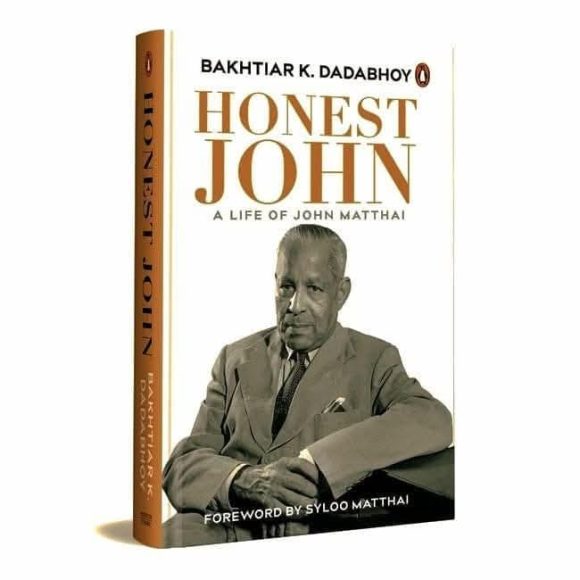
Title: Honest John – A Life of John Matthai

Author: Bakhtiar K Dadabhoy

Publisher: Penguin Random House

John Matthai’s name has little resonance for today’s generation, but he was one of the brightest stars in the firmament of his time, and even in retrospect. He cultivated many gardens, starting his life as a lawyer and later becoming a professor, administrator, banker, corporate leader, and Minister. In this delightful biography of Matthai, whom Nehru called “Honest John”, Bakhtiar K Dadabhoy tells us of the different hats worn by him. For his students in Madras, he was a shy professor who was one of the most lucid exponents of a dry subject like economics. JRD Tata would always turn to him for sagacious advice.

For Nehru, who greatly respected his ability and integrity, Matthai filled two cabinet posts, even though the parting was somewhat unpleasant when Matthai resigned as Finance Minister, as he feared that the newly created Planning Commission would be a ‘parallel cabinet’ and would be in perennial conflict with his department. CD Deshmukh, the redoubtable civil servant who succeeded him as FM in the Matthai Memorial Lecture said: “He was one of the most cultured products of India, having a perceptive and thoughtful mind, a sobriety of judgment of men and affairs, a rare concern for principles, scholarliness, with its flames kept lit by regular reading.”

He was the first Indian to get his DSc from LSE in 1916 and worked under Professor Sidney Webb, a Fabian socialist, who was at the height of his powers and fame. Though Webb was his guide, he was at no time a Leftist or socialist Professor of Economics. He had a thorough understanding of what free enterprise could do. He was one of the principal authors of the Bombay Plan, a memorandum submitted to the government in 1944 led by Tata, Birla and Thakurdas.  

The Bombay Plan represented a search for a new style of capitalism that would chart a middle path between state-led planning and private enterprise. This was in the background of a fierce intellectual debate fought in England between two towering economists, Hayek and Keynes.

While Keynes advocated active state intervention and the desirability of state-funded programs, Hayek favored non-interventionism and free trade. It was to the credit of Matthai that the planners envisaged a mixed economy, in which the state and the private sector would play a complementary role, thus proposing a visionary compromise between two systems, free market and state control.

Ironically, he resigned as Finance Minister after failing to reconcile with Nehru on the setting up of the Planning Commission. According to historian Rakesh Ankit, it was an individual and an institution that made the widening differences unbridgeable. It was Trone, born to Jewish parents and an engineer with General Electric involved in an electrification drive in the USSR, who impressed Nehru with his All India Plan of a ‘managed mixed economy’ that was sufficiently controlled to ensure equity.

While Nehru was taken by Trone’s view that a Planning Commission would reflect regional aspirations and diversity, and his view that Indian capitalists were only out to make profits, Matthai did not share his enthusiasm. In a letter to Nehru, he wrote that the Indian economy was like a “damaged ship and our job is to repair it and not as naval architects but experienced, competent workmen.” Nehru responded by defending planning as ‘a positive active policy’, giving examples of planned progress made by England, Germany, Italy, the Soviet Union, and Japan since the war.

Unlike Patel, who was a hard-headed realist, Nehru loved the abstract argument and delighted in drawing generalised inferences from situations that offered the slightest provocation to his nimble mind. Speaking six years later, after the Planning Commission was formed, Matthai said that “the planning commission has become a body of amateurs, with whom, for all practical purposes, the final decision rests in matters of economic development.” Most of Matthai’s fears about the Planning Commission proved to be well-founded. Critics like Kripalini and Rajagopalachari openly showed their displeasure. Rajaji founded the anti-socialist party.

Dadabhoy also gives a glimpse of how Liaquat Ali Khan, as FM in the interim government, proposed a business profits tax, an increase in corporate tax, a dividend tax, capital gains tax and a high-powered tribunal to deal with tax evasion. Matthai was the only non-league cabinet minister to defend the budget in public. But Patel and Rajgopalchari, who made no secret of being pro-capitalist, saw the budget as a way of harassing businessmen.

Ventilating his frustration with the hegemony planning enjoyed, he wrote to Nehru: “I fear a church is growing around the God of Planning”. However, planning remained the master narrative, and the plans laid the foundation for infrastructure in sectors like steel, fertilizers, cement and chemicals, promoting agricultural self-sufficiency and focusing on inclusive growth and social justice.

 Wavell noted in his diary on 5th March 1947, “Nehru, Patel & Bhabha find that the budget is not popular with their big business supporters and are trying to rat or hedge.”Matthai abolished the capital gains tax and reduced super taxes. Pandit Kunzru doubted, “If such reductions would lead to greater productivity. A time has come if free enterprise is to be given a free hand or the country should opt for a socialist economy.” It was only a decade ago that Prime Minister Modi abolished the Planning Commission without any discussion.

Matthai had an unconventional approach to budget presentation. He is the only railway minister to deliver a budget speech without a prepared text. In 1950, he chose to deliver his Union Budget speech extempore. Dadabhoy also brings out unknown facets of Matthai’s personality. He approached Nehru and Patel to bail out his son, who had run over someone while driving his car in Allahabad. Nehru was reluctant to help, but Patel intervened, and Matthai’s son was bailed out and quietly sent to England to escape the net of law. Matthai was known for his honesty and uprightness, but his fondness for his son blinded him to those values.

Matthai, despite his serious differences with Nehru on the issue of the Planning Commission, was a great admirer of Nehru. He wrote after his first meeting with him, “If he ever asked me to go to prison with him, I should find it difficult to refuse.” Mathai considered his long association with the Tatas to be the happiest period of his life. Sir Homi Mody, a Tata luminary later to become the governor of Uttar Pradesh was known for his wit. Homy contended, “Matthai had all the advantages of face, figure, manner, and voice and invested everything he said with an air of profundity. Matthai was a technocrat of different timber who did not mix personal respect with policy differences.”

Though trained under Fabian socialist, Sydney Webb, whom Nehru adored, he did not jump into the trap of socialism. He was a pragmatist who looked at India’s damaged ship, post-Partition, through the lens of competent workmen. Judging a visionary like Nehru and a pragmatist like Matthai can be a nightmare for any biographer. However, Dadabhoy skirts the issue with skill.       

.

Professor Satya Narayan Misra is a distinguished expert in Public Procurement & Contracts with over three decades of experience in the Indian Economic Service & Indian Defence Accounts Service. He has made significant contributions in drafting a manual for defence procurement and bolstering self-reliance in critical technology. He has authored seven influential books and published 127 research articles, including 18 in prestigious Scopus-indexed journals such as the Economic and Political Weekly (EPW) and Defence Studies (UK). He looks at macroeconomic issues through the lens of Constitutional expectations. He is a Professor Emeritus and a sought-after speaker on public policy, budget, development issues, and Constitutional Cases.

.

PLEASE NOTE: ARTICLES CAN ONLY BE REPRODUCED IN OTHER SITES WITH DUE ACKNOWLEDGEMENT TO BORDERLESS JOURNAL

Click here to access the Borderless anthology, Monalisa No Longer Smiles

Click here to access Monalisa No Longer Smiles on Kindle Amazon International
Categories
Review

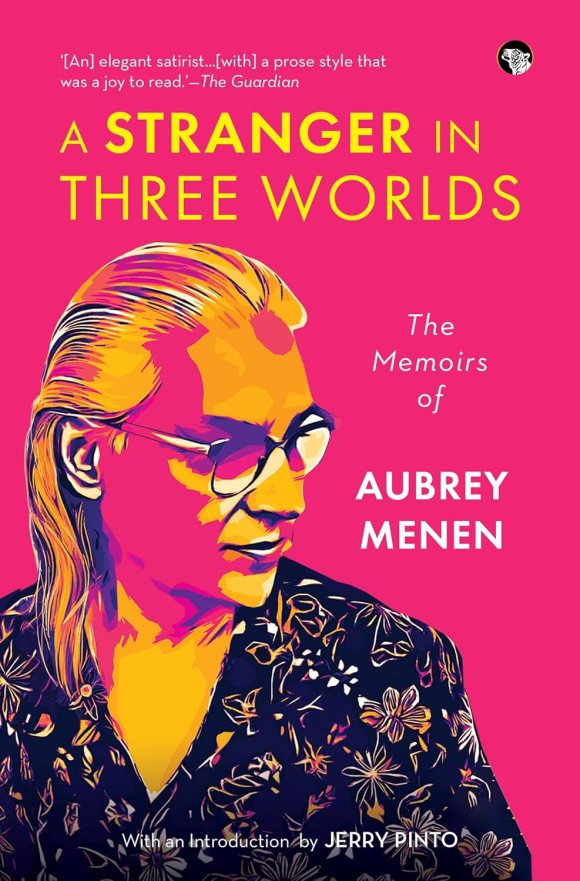
A Stranger in Three Worlds

Book Review by Bhaskar Parichha

Title: A Stranger in Three Worlds: The Memoirs of Aubrey Menen

Author: Salvator Aubrey Clarence Menen

Publisher: Speaking Tiger Books

Salvator Aubrey Clarence Menen (April 22, 1912 – February 13, 1989) was a British author, novelist, satirist, and theatre critic. Born in London to Irish and Indian parents, he studied at University College, London, before becoming a drama critic and stage director. During World War II, he was in India, organising pro-Allied radio broadcasts and editing film scripts for the Indian government.

After the war, he returned to London and worked in an advertising agency’s film department, but the success of his debut novel, The Prevalence of Witches (1947), led him to write full-time. Menen’s satirical works explore themes of nationalism and the cultural contrast between his Irish-Indian heritage and his British upbringing.

Menen, a remarkably gifted author who frequently goes unnoticed, adeptly delves into the intricate themes of identity, nationality, and the sense of belonging. He does so with his signature blend of irony and profound insight in his two acclaimed autobiographical pieces. A Stranger in Three Worlds: The Memoirs of Aubrey Menen is an exceptional autobiographical account that spans multiple continents. Menen’s writing is noted for its irony, insight, and a nuanced exploration of themes such as belonging and the quest for the self in a multicultural context.

Menen’s life narrative is defined by his experience as an outsider, or a ‘stranger,’ within the three distinct cultures of England, Ireland, and India. This position of being an outsider enables him to keenly observe and critique the social and cultural norms prevalent in each society with remarkable clarity and humor.

 The memoir explores the inherent tensions and contradictions that arise from possessing multiple, often conflicting, identities, as well as the difficulties of establishing a coherent sense of self when one does not entirely belong to any particular group.

The book’s narrative style is marked by irony and a keenly humorous outlook on the absurdities of the social conventions and biases he encounters across these cultures. His insights are both deeply personal and widely relatable, resonating with anyone who has navigated the complexities of multicultural or diasporic identity.

The essays featured in Dead Man in the Silver Market, originally published in 1953, analyse themes of jingoism, social class, and the absurdities associated with national pride, intertwining personal stories with sharp social critique.

Written shortly after World War II, his irreverent insights into English society, colonial history, and human nature continue to resonate powerfully in contemporary discourse. ‘The Space within the Heart’, authored in 1970, presents a more personal and philosophical exploration of existence, love, and self-awareness.

Infused with humour and gentle satire, it contemplates the essence of the soul, drawing from the Upanishads and European literary traditions. Menen’s seemingly straightforward yet deeply impactful writing encourages readers to transcend rigid identities and appreciate the fluidity inherent in the human experience.

With an introduction by Jerry Pinto, this omnibus edition functions as a memoir, offering personal reflections and experiences, while simultaneously serving as a critique of imperialism, examining its impacts and consequences.

Furthermore, it thoroughly explores the intricacies of identity, rendering it an exceptional piece of literature that is both informative and captivating, prompting readers to engage in deep reflection on its themes.

.

Bhaskar Parichha is a journalist and author of Cyclones in Odisha: Landfall, Wreckage and ResilienceUnbiasedNo Strings Attached: Writings on Odisha and Biju Patnaik – A Political Biography. He lives in Bhubaneswar and writes bilingually. Besides writing for newspapers, he also reviews books on various media platforms.

.

PLEASE NOTE: ARTICLES CAN ONLY BE REPRODUCED IN OTHER SITES WITH DUE ACKNOWLEDGEMENT TO BORDERLESS JOURNAL

Click here to access the Borderless anthology, Monalisa No Longer Smiles

Click here to access Monalisa No Longer Smiles on Amazon International

Categories
Review

The Phantom’s Howl

Book Review by Somdatta Mandal

Title: The Phantom’s Howl: Classic Tales of Ghosts and Hauntings from Bengal

Translator: Arundhati Nath

Publisher: Speaking Tiger Books

Bengalis have always had a curious relationship with the supernatural and so stories of ghosts or bhoots are omnipresent in Bengali literature through generations. The Phantom’s Howl: Classic Tales of Ghosts and Hauntings from Bengal brings us a new collection to savour this genre once again. Written for adults and children by some of the best writers in the language, these stories have entertained generations of readers since they first appeared. Comprising eleven stories in all, from legendary authors such as Rabindranath Tagore, Bibhutibhushan Bandyopadhyay and Hemendra Kumar Roy (who contribute two stories each) to lesser-known writers like Jogeshchandra Bandyopadhyay, Niradchandra Majumdar and Amarendranath Munshi, the stories elucidate the supernatural elements in different forms. Manik Bandyopadhyay and Pramatha Chaudhuri, though well-known for writing in other genres, have also contributed their share in creating spooky tales.

Rabindranath Tagore’s immeasurable talent as a storyteller is well-known. In both Konkal (The Skeleton) where a vainglorious skeleton reminisces about her past beauty, and Kshudito Pasan (The Famished Stone), the supernatural element takes over in a slow burn and our understanding of the other-worldly is a cerebral exercise that is an interplay between emotion and intellect. Bibhutibhusan Bandyopadhyay’s repertoire of ghost stories is well-known. Two of his short stories about hauntings included in this anthology are Bhoutik Palonko (The Spectral Bed) and Paitrik Bhita (Paternal Legacy), and both have an enticing and intangible everyday quality in them. In the first story we are told of a mysterious cursed bed of a Chinese man whose dissatisfied soul still lurks every night and disturbs anyone who sleeps on that bed. In the other story, the generations-owned massive homestead of Radhamohan is inhabited by the ghost of a young girl Lokkhi, who happened to be their youngest paternal aunt who died at the age of twelve and she slips in and out of his conscious memory.

Hemendra Kumar Roy is known for adapting many Western writings of his time and creating his own brand of short stories. In his Bari Buro Bhoot (The House, the Old Man, the Hunting Boots), the ghost has ‘sahebi’ chops and in Bhooter Raja (The King of Ghosts), Mr. J. Taylor is a typical British Raj prop who being posted as the Police Superintendent of Santhal Pargana, had access to encountering the bizarre after spending the night in a hunting lodge in the jungle.

Manik Bandyopadhyay’s horror stories explore the psychological underpinnings of supposed ghost sightings and examine what the mind can do to the perception of a lived experience – something that stands out in Pora Chhaya (The Singed Shadow). In a totally different vein, Pramatha Chaudhuri in First Class Bhoot (The First-Class Ghost) tells the story of a proud English ghost who creates trouble on a train from Kolkata to Kashi and it is steeped in humour.

As the translator mentions, she discovered the three lesser-known writers from the pages of the Bengali magazine Shuktara with its special collection of 101 ghost stories. In Bon Kolmir Bile (Inside the Water Spinach Forest Marsh), Amarendranath Munshi creates a ghostly ambience where the lonely spirit of a young girl forever rows its boat in the marshes. In Sanket (The Signal), we are told of two friends who land up in a remote corner of Aara district and take up residence in an old, rambling, dilapidated house and are narrowly saved after they come across an innocuous black cloth that spells danger for all who wave it.  In Preter Kanna (The Phantom’s Howl), Jogeshchandra Bandyopadhyay tells us how the protagonist Debkumar was trapped motionless in a maze of indescribable fear and horror only to discover how the skeleton of a dead lady’s dissatisfied soul left her secret hideaway and then whatever happens is probably a re-enactment of reality.

Though most of the eleven stories that have been included in this collection are well-known to Bengali readers who grew up during the forties and fifties decades of the 20th century, The Phantom’s Howl is a quintessential representation of Bengal and its fascination with its many ghosts and stories of haunted houses. Basically, Arundhati Nath’s translations bring these household favourites to a new generation of readers. Most of the selected stories have undergone translation several times and even non-Bengali readers might already be familiar with some of them and therefore, for many readers they would seem like warmed up fare. In the translator’s note at the beginning of the text, Nath mentions her personal choices as she began listening to ghost and horror stories from her grandmother and reading some of them in Bangla from the books her parents bought for her as she grew up outside Bengal. So, the selection was ‘tinged with the wistfulness of memory.’ But unlike the stories of Dracula, we really do not find these stories ‘as thrilling and sometimes as spine-chilling’ as she claims them to be. At best they give us a lucid picture of the different kinds of ‘bhoots’ and some spooky tales prevalent in Bangla literature.

.

Somdatta Mandal, critic and translator, is a former Professor of English at Visva-Bharati, Santiniketan, India.

.

PLEASE NOTE: ARTICLES CAN ONLY BE REPRODUCED IN OTHER SITES WITH DUE ACKNOWLEDGEMENT TO BORDERLESS JOURNAL

Click here to access the Borderless anthology, Monalisa No Longer Smiles

Click here to access Monalisa No Longer Smiles on Amazon International

Categories
Review

In the Waiting Room of Hell…

Book Review by Andreas Giesbert

Title: The Devil’s Halo

Author: Rhys Hughes

Publisher: Elsewhen Press

Imagine standing at the gates of hell only to be told that you are not one of the clear cut cases that immediately get a circle of hell assigned. As the judgment of a life is “morality, not calculus”, this process can take some time. Not less than 24 Aeons in the case of our morally ambiguous protagonist. Quite a long time in the waiting room that is at least better than boiling in hell. His first task is getting to his place in line. As his name is Montgomery Zubris and the waiting spots are in alphabetic order, it’s only a matter of 380.5 years of walking. Thus our poor Monty invents a number of contraptions to hasten his journey. 

Hughes paints a surreal but somehow plausible image of an endless waiting room with its own logic. It is up to Montgomery to understand its innerworkings: the hatches that deliver food and drinks and the rules that the ever-watching angels enforce. “This afterlife is a riddle.” And even if death itself is of no danger anymore, “the afterlife [still] contains risks. People who say that the dead have no more troubles are talking nonsense. There are worries down here too, lots of them. Worries are one of the fundamental constants of the universe, just as photons and neutrinos are.”

The endless room itself and the unsettling surreal angels aren’t what make for the core of the book though. It is the stories that his chance encounters have to tell. As time is abundant and entertainment scarce, the inhabitants of this limbo indulge in storytelling. “Everyone tells tales down here. It’s a compulsion.”

The ten chapters are in some way a short story collection connected through the overarching theme of afterlife’s waiting room and how its inhabitants ended there. The range of stories is quite impressive. They range from the silly to the serious and all convincing by playing out a core idea to its full consequences. For instance, we have a fire fighter who sees fire as a living being and kindles it like a pet; an abbot who becomes a rocket scientist or the struggles of a migrant in a world that’s no longer welcomes those that cross borders. And then there is Marcus Fakus Aurelius, a perfect Stoic robot and of course in the end, awaits the devil himself …

In addition to a shared theme, the stories intersect. We learn different perspectives on the same stories and get to know characters that are part of other stories. It’s entertaining literature that is lightened up by occasional philosophical observations but mostly shares a humorous level of surreality. It’s safe to say that Hughes is a master of taking words and phrases literally. Whenever he catches an odd phrase he hoboes the train of thought and shovels deep for its meanings. That technique leads to a humorous and creative set of somehow surreal stories. The prolific author is truly one of a kind. His books are driven by a genius ability to connect dots between ideas that seem far apart and create a unique story by being blended together.

I have to admit though, that somewhere in the last third, I lost interest in some of the stories as I was looking for some deeper revelations. The last few pages do not disappoint in this regard, but it takes some time to get there and the stories don’t necessarily contribute to it. This is my subjective experience of a technically very well written and designed entertaining book though. With Hughes you get an original author with the unique ability to play out the surreal of our world, even if that means stretching the inner workings of our reality by some lengths. That’s no  issue though as Monty clarifies at the start: “If some of this seems unlikely or even a little silly, please bear in mind that you haven’t really yet questioned the fact I am dead and wandering through the astronomically long Waiting Room of Hell, and if you can accept that, then you should be able to accept anything.“ Welcome to a journey beyond our imaginative restrictions!

Andreas Giesbert is a reviewer of speculative fiction, board games and more based in the Ruhr Valley. He mostly writes for online magazines such as www.zauberwelten-online.de and  Lovecrafter-Online.

PLEASE NOTE: ARTICLES CAN ONLY BE REPRODUCED IN OTHER SITES WITH DUE ACKNOWLEDGEMENT TO BORDERLESS JOURNAL

Click here to access the Borderless anthology, Monalisa No Longer Smiles

Click here to access Monalisa No Longer Smiles on Amazon International

Categories
Review

‘A Journey Beyond Imaginary Borders’

Book review by Somdatta Mandal

Title: Miss Samuel: A Jewish Indian Saga

Author: Sheela Rohekar

Translator from Hindi: Madhu Singh

Publisher: Speaking Tiger Books

India is perhaps the one country where the Jews have maintained their identity without ever being exposed to antisemitism at the hands of their host. Although representing a microscopic segment of the Indian population, the Bene Israel is one of the largest and oldest of the three major Jewish communities of India, the other two being the Cochin Jews of the Malabar Coast and the Baghdadi Jews of Bombay and Calcutta. The Bene Israels arrived at the Konkan coast, shipwrecked, and have lived in India for more than 2,000 years and claim descent from the ten lost tribes of Israel. After they had settled down permanently in the Konkan villages of Western Maharashtra, the Bene Israels were called ‘Shaniwar Telis’ or Saturday oil pressers – a relatively low-caste designation – by the local population because they refrained from working on Saturday, the Jewish Sabbath. Later, they also farmed their land, peddled produce, and took up petty jobs, with the majority working as clerks in government offices and private firms. With time, they adopted Hindu names similar to their Biblical names and took up Marathi surnames such as Rohekar, Penkar, Palkar, and Ashtamkar by adding the suffix ‘-kar’ to the villages and town they came from. They adopted Marathi, the local language, as their mother tongue, and to outsiders, became physically indistinguishable from the local population. But within the village society, the Bene Israels were clearly differentiated from others because they adhered to Judaism. Initially overtones of a caste system coloured the Bene Israelis but they changed with time. Intermarriages between other Jewish communities became common.

With the formation of the nation-state of Israel in 1948, the exodus of the Jews of India took place on a very large scale, and only a few hundred members were left in Gujarat. Initially the integration of the Bene Israels into Israeli society was not easy and many of them returned to India but re-emigrated to Israel later after 1964 when their religious status was finally accepted.

Miss Samuel: A Jewish Indian Saga is written by Sheela Rohekar, a Bene Israel Jew, who is probably the sole-living Jewish Hindi author, and she managed to recreate the distinct identity of her own community. Bearing across life histories of her ancestors, she seeks answers to those questions that troubled her in the novel.  Originally written in Hindi, it is aptly translated into English for the first time by Madhu Singh, a professor of English teaching at the University of Lucknow. The novel is narrated by Miss Seema Samuel, an almost 70-year-old Bene Israel living at an old age home called Parisar on the outskirts of Pune, and it portrays her unsuccessful struggle to fit into a majoritarian Hindu society along with the plight of being an unmarried woman in India. She tells the story of her community, of their trials and tribulations, love and loss, and their longing for ‘Aliyah’ — the return to the Promised Land of Israel. Shifting from the Konkani shores to the bustling streets of Ahmedabad (called Amdavad in the local parlance), and finally to the tranquility of an old-age home, each generation of Seema’s family grapples with the tension between their Jewish faith and Indian identity, struggling with their fear of persecution on the one hand and a yearning for acceptance on the other.

In the novel, apart from giving a macrocosmic view of the Bene Israel community which makes its members victims of isolation and alienation from mainstream Indians, and depicting their ancient history and present status, Sheela Rohekar also very deftly presents the microcosmic view of the extended family of her community along with the problems of cross-cultural liaisons and the problems each individual member of her family faces. She states: “But some images embed themselves in the mind, not in the eyes, and chase you – all your life. The role of time in fusing images is not much but the trick of a fading memory. They light up in a flash!”

Since her narration spans six generations and moves deftly backwards and forwards in time, in some places it becomes difficult for the readers to keep track of who’s who in the narrative and occasionally one must go back to the family tree chart at the beginning to place the characters in their proper perspective.

Miss Seema tells the story of Isaji Eloji, who, having married a Hindu woman named Narayani, is believed to have ‘blackened’ the Jewish name. Two generations later, burdened by his grandfather’s transgression, David Reuben stops at nothing to keep his Jewish identity pure, even poisoning his daughter Lily for loving a non-Jewish man.

Again, years later, his son Samuel David (Miss Seema’s father) finds that his Jewish identity makes him an outsider in his own country; and his grandson, Bobby, faces persecution of the worst kind – when he is murdered by a mob in Ahmedabad. It is through reading the loose notes and a long essay that Bobby had left behind that Seema manages to tell us the background history of their community. With his collection of yellow, crumbling newspaper cuttings about the Jews, old coins, badges, awards, certificates, degrees, and moth-eaten black and white photographs that were around 150 years old, Bobby tried to illuminate the path taken by the fellow members of his community – the Bene Israel, the pardesi, the foreigners – whom the people of Amdavad did not know in the twentieth century and believed to be Maharashtrians or converted Christians. The story of how his brother, David, and his Hindu wife. Jyotsna Prajapati, managed to throw Seema out of their apartment in Gitanjali Society also reminds us about such machinations that prevail in our Indian society in general. Through the different tales, the narrator remains a constant, and her memories commingling the past with the present are deftly handled by the novelist.

Further, Miss Samuel becomes a key novel to understand not only for its Indian-Jewish identity but also its multicultural Indian identity and its challenges in the present time. The old age home, Parisar, is not at all a closed space and it opens to new forms of solidarity among elderly abandoned women who, though belonging to different faiths and identities, abandon their frustration with the twists of patriarchal society to discover the meaning of friendship, love and solidarity.

Seema writes: “The campus where I live is surrounded by hills. There is silence, always. I can see residents of my age, some even older, shuffle from one room to another. Constructed at a distance of two hours from Pune, all stories seem to end up here, in this building.”  Parisar is thus a model of a tolerant society that not only accepts differences but even respects, maintains and transcends them at the same time. The translation is lucid, and the translator labels her endeavour as ‘interpretive performance’ and a journey beyond imaginary borders. A good read indeed.

.

Somdatta Mandal, critic and translator, is a former Professor of English at Visva-Bharati, Santiniketan, India.

.

PLEASE NOTE: ARTICLES CAN ONLY BE REPRODUCED IN OTHER SITES WITH DUE ACKNOWLEDGEMENT TO BORDERLESS JOURNAL

Click here to access the Borderless anthology, Monalisa No Longer Smiles

Click here to access Monalisa No Longer Smiles on Amazon International

Categories
Review

Needle at the Bottom of the Sea

Book Review by Gracy Samjetsabam

Title: Needle at the Bottom of the Sea: Classic Bengali Tales from the Sundarbans

Translator: Tony K. Stewart

Publisher: Speaking Tiger Books

What comes to mind when we think of the Sundarbans? Verdant mangroves, elusive Bengal tigers, and the mystique of the Bay of Bengal. But the late Tony K. Stewart’s Needle at the Bottom of the Sea reminds us of another legacy—its rich cultural heritage. Stewart, a Gertrude Conway Vanderbilt Chair who did pioneering work in Bengali narratives, passed on in October 2024. This vivid collection of five timeless kathas (stories), one co-translated with Ayesha A. Irani, a scholar from University of Massachusetts, starts with a compelling introduction to the diverse syncretic traditions of the region.

The anthology has five stories that are translated lyrically in the form of story poems filled with suspense and surprises. The opening verse from the first translated katha “The Auspicious Tale of the Lord of the Southern Regions — the Rāy Maṅgal of Kṛṣṇarām Dās” poetically sets the mood of the genre and gracefully takes the reader to familiar and unfamiliar grounds and it goes as follows —

With palms pressed together in respect,
I praise the lotus feet and magnificent girth of
the Lord Dakṣiṇ Rāy, Master of the Southern Regions, …
Against Baḍa Khān Gāji, the Great Sufi Warrior,
You waged war throughout the territory’s canals and channels,
but in the end you became close, fast friends.

The narrative depicts the incredible sophistication of the diversity in India with relatable characters and compelling themes, evoking emotions that we feel at different junctures of life, between life and death irrespective of religion, caste, culture or creed. Stewart uses vivid imagery and figurative enhanced with rhyme and rhythm to bring just enough for the reader in English without diluting the beauty of the language or history and culture of the original work. The beauty and quality of the literature is translation set in the beginning is maintained throughout the five sections. The rich mystical and spiritual spirit of the region is evoked in the coming together of the cultural elements in Hinduism and Sufism. As the introduction is named, the book is truly a unique flavour that brings “Bengali Tales from the Land of Eighteen Tides”      

In these tales, the mythic meets the moral. Demigod Daksin Ray and Sufi warrior Bada Khan Gaji clash on the battlefield, commanding armies of tigers, until God intervenes as Satya Pir to mediate peace. They cross paths again when Gaji battles for his beloved Princess Campavati, and once more during Ray’s confrontation with Bonbibi, the forest’s matron-protector—each time with Gaji or Satya Pir stepping in to guide or save. Other stories follow Madansundar’s search for his lost brothers with Satya Pir’s help, while Khwaja Khizr aids Gaji in retrieving a needle from the sea, affirming his identity as a living saint, or “jinda pir”.

Stewart’s translation is a triumph of linguistic artistry. He brings alive a world of talking tigers, floating rocks, flying trees, giants, miracle-working saints, and more. These fantastical elements coexist with deeply human struggles, as the characters strive for honor and morality in a corrupt and chaotic world. The stories, drawn from 16th- and 17th-century oral traditions, are richly interwoven with both Hindu and Muslim worldviews, offering a textured portrayal of a pluralistic Bengali society.

The tales are full of romance and adventure—unlikely heroes and heroines, ocean-faring merchants, whimsical gods, revered prophets, and powerful zamindars. They reflect familiar events and cultural motifs of the Bangla-speaking world, infused with imaginative solutions and heroic feats. Stewart captures the emotional and linguistic nuance of the original Bangla, carefully preserving idioms and explaining cultural references to ensure resonance with an English-speaking audience.

The result is not just a literary collection, but a vital cultural document. It offers anglophone readers insight into the everyday lives, beliefs, and spiritual practices of the Sundarbans’ inhabitants, where Islam and Hinduism blend in creative harmony. These tales situate the Sundarbans within the broader currents of South Asian and Indian Ocean history, illustrating how Islamic narratives became integral to the Bengali literary imagination.

Needle at the Bottom of the Sea is a scholarly feat and a literary delight. Stewart’s careful and rich translations open a portal to a fantastical world grounded in real human values. These stories resonate across boundaries, blending chaos with compassion, conflict with harmony, and myth with morality. A remarkable contribution to Bengali literary studies and interreligious history, this book is essential reading for anyone interested in Translation Studies, South Asian literature, folklore, or cultural syncretism.

.

Gracy Samjetsabam  is a freelance writer and copy editor. Her interest is in Indian English Writings, Comparative Literature, Gender Studies, Culture Studies, and World Literature. 

.

PLEASE NOTE: ARTICLES CAN ONLY BE REPRODUCED IN OTHER SITES WITH DUE ACKNOWLEDGEMENT TO BORDERLESS JOURNAL

Click here to access the Borderless anthology, Monalisa No Longer Smiles

Click here to access Monalisa No Longer Smiles on Amazon International

Categories
Review

Proclamation for the Future

Book Review by Bhaskar Parichha

Title: Raisina Chronicles: India’s Global Public Square 

Author: S. Jaishankar & Samir Saran

Publisher: Rupa Publications

Raisina Chronicles: India’s Global Public Square by  S. Jaishankar and Samir Saran commemorates a decade of the Raisina Dialogue, India’s flagship geopolitical and geo-economics conference. The book reflects on the journey of the Raisina Dialogue and its impact on global discourse. It brings together contributions from leaders, thinkers, and diplomats, scholars, and policymakers worldwide, offering insights into addressing global challenges through collaboration and dialogue.

S. Jaishankar has been India’s External Affairs Minister since May 2019 and represents Gujarat in the Rajya Sabha. He was the Foreign Secretary from 2015 to 2018 and has held ambassadorial roles in the U.S., China, and the Czech Republic, as well as High Commissioner to Singapore. He authored notable books like The India Way: Strategies for an Uncertain World and Why Bharat Matters. Samir Saran is the President of the Observer Research Foundation (ORF), a leading Indian policy think tank. He has enhanced ORF’s influence in the U.S. and the Middle East and provides strategic guidance at the board level. Saran curates the Raisina Dialogue, co-chairs the World Economic Forum’s Global Future Council on Geopolitics, and serves on the Board of Governors of The East West Centre in the US. He has written five books, edited key monographs and journals, and contributed to numerous academic papers and essays, appearing in both Indian and international media.

The book brings together voices from across the world—of leaders and thinkers reflecting on the Raisina Dialogue’s impact on how we may navigate global challenges and create solutions that work. Putting India at the forefront of leading the change, the effect of these Dialogues is felt across policies and projections.

The editors emphasise that diversity, dissent, discord, and divergence of opinion make for the necessary ingredients for a sustainable future, shaped and owned by all. Ten years since its inception, the Raisina Dialogue has become the paramount platform for bringing together cultures, peoples and opinions. It is now India’s flagship geopolitical and geo-economics conference and has truly become a global public square—located in New Delhi, incubated by the world.

It emphasises the importance of diversity in thought, approaches, beliefs, and politics. It highlights how pluralism and heterogeneity contribute to resilience and societal evolution. Raisina Dialogue serves as a platform for inclusive participation, welcoming voices from underrepresented geographies and institutions.

While it showcases India’s emergence as a global leader in addressing development challenges and fostering international cooperation, it reflects the philosophy of Vasudhaiva Kutumbakam (the world is one family) and its efforts to harmonise local solutions with global needs.

Through initiatives like the G20 Presidency, India has shared transformative models such as digital public infrastructure (e.g., India Stack), offering templates for financial inclusion and tech-enabled development globally.

Alongside the carefully organised discussions, Raisina Chronicles examines the evolution of the Dialogue and presents its audience with a comprehensive volume that offers deep insights and an unwavering optimism for achieving shared solutions to worldwide issues.

As the globe approaches significant structural and historical transformations, the core aspiration of this work is to ensure that the voices of the populace are prioritised in global politics and policymaking, echoing through influential circles and reaching the broader community. For leaders to effect change, it is essential for society to unite and take a decisive step forward in the right direction.

Raisina Dialogue is also portrayed as a crucial venue for bridging divides in a fractured world. It fosters open discussions among diverse stakeholders—diplomats, scholars, business leaders, civil society members—to discover shared futures and solutions. The book underscores the importance of dialogue over polemics and inclusivity over exclusivity in shaping global policies.

Contributions from high profile global leaders such as Kyriakos Mitsotakis (Prime Minister of Greece), Mette Frederiksen (Prime Minister of Denmark), Penny Wong (Australian Foreign Minister) and others enrich the book with perspectives on international cooperation, climate goals, defence partnerships, and multilateralism.

The book serves as both a retrospective of the Raisina Dialogue’s achievements over ten years and a forward-looking guide for navigating global challenges. It positions India at the heart of global conversations, highlighting its role in fostering equitable dialogue and creating solutions that resonate across borders.

This volume is not just a collection of essays but also an intellectual testament to the transformative power of dialogue in shaping a sustainable future for humanity.

Bhaskar Parichha is a journalist and author of Cyclones in Odisha: Landfall, Wreckage and ResilienceUnbiasedNo Strings Attached: Writings on Odisha and Biju Patnaik – A Political Biography. He lives in Bhubaneswar and writes bilingually. Besides writing for newspapers, he also reviews books on various media platforms.

.

PLEASE NOTE: ARTICLES CAN ONLY BE REPRODUCED IN OTHER SITES WITH DUE ACKNOWLEDGEMENT TO BORDERLESS JOURNAL

Click here to access the Borderless anthology, Monalisa No Longer Smiles

Click here to access Monalisa No Longer Smiles on Amazon International

Categories
Review

Little, Lhasa, Shangrila and More in the Heart of India

Books Reviewed by Somdatta Mandal

Titles: Little Lhasa: Reflections in Exiled Tibet and Tibetan Suitcase

Author: Tsering Namgyal Khortsa

Publisher: Speaking Tiger Books

Following the forced escape of His Holiness the Dalai Lama in March 1959, thousands of Tibetans were forced to flee Tibet, and it was these refugees who formed the early exiled community. The refugee community now stands at a figure of around 130,000, with Tibetans spread across numerous settlements in India, Nepal and Bhutan, and thousands more displaced all around the world. The Tibetan government in exile is based in Dharamsala, India. It is called the Central Tibetan Administration (CTA) and was founded in 1959 by the 14th Dalai Lama. In the 1980s, a second wave of Tibetans fled due to political repression. The CTA advocates for human rights, self-determination, and the preservation of religion and culture for Tibetans. The CTA has a parliament, judiciary, and executive branch and its principles include truth, non-violence, and genuine democracy. The Dalai Lama has said that the exile administration would be dissolved as soon as freedom is restored in Tibet.

After over seventy years of being in exile, a whole generation of Tibetans have come of age in a land far from home. With the Dalai Lama and other great masters as their spiritual guides, they have grown up cut off from their homeland. Their experiences have been unique, as they have, despite globalization, kept alive their religion and culture. In Little Lhasa: Reflections in Exiled Tibet, Tsering Namgyal Khortsa writes comprehensively about the different aspects of their life today. Comprising of ten essays and six interviews, this volume becomes an eye-opener on the multifarious aspects of the present situation of Tibetans at large. Beginning with different writers writing about Tibet and exile in the very first essay titled ‘Little Lhasa’, the next one ‘Shangrila Online’ tells us about the role of social media, internet cafes and how technology in remote Dharamsala often enables one to participate in other people’s experiences in real time. The writer describes in detail how such lifestyle changes in contemporary times have enabled the creation of a “virtual Tibet”. In the next essay ‘Buddha’s Children’, Khortsa describes the young generation of exiled children in India and how their religious identity has triumphed over all other identities. We are also told about the different kinds of foreigners who come to India to take religious courses, and the writer wonders whether they go home feeling merely inspired by their visit to India and their meetings with Tibetan masters or whether such exposure and experience actually triggers a paradigm shift in the way they view the world.  

In the next essay we are told how Tibetans lead demonstrations in Dharamsala and other parts of India every year, especially the one held on March 10th  that commemorates the anniversary of the failed uprising against Chinese invasion. ‘Movies and Meditation’ mentions a film festival in Dharamsala which reveals how recent Tibetan films highlight a growing and vibrant filmmaking community within the Tibetan diaspora, but Khortsa laments the paucity of full-length films about Tibetans in exile and the issues they confront, namely patriotism, individualism, and reconciliation of personal fulfilment with the Tibetan cause. The titles of the three following essays, ‘Dharma Talk’, ‘The Lure of India’ and ‘The Monk at Manali’ are self-explanatory. The last essay of this section ‘Nation of Stories’ tells us about writers who write and publish in the English language, and though diverse in terms of their education, upbringing, background and geographical location, one common condition that they all share is the collective trauma of the Chinese occupation of Tibet, which is invariably a leitmotif in Tibetan literature.

Part Two consists of six interviews, each one different in perspective than the other, and they must be mentioned here to understand the kaleidoscopic nature of the people involved in the Tibetan cause. Thus, we have conversations with Lisa Gray as ‘A Western Buddhist’, Ananda Nand Agnihotri as ‘An Indian Tibetan Buddhist,’ Ngawang Woeber, ‘An Ex-Political Prisoner’, Nyima Dhondup, ‘A Swiss Tibetan’, Tenzing Sonam, ‘A Tibetan Writer and Filmmaker’ and Tenphun, ‘The Tibetan Poet’. All in all, Little Lhasa becomes a valuable record of the life of a people who refuse to bow down or forget, and even while adapting to a rapidly changing world, continue to nurture their roots.

II

After the non-fiction, Tsering Namgyal Khortsa comes up with a brilliant piece of fiction and read together, each text complements the other beautifully. In the ‘Editor’s Note’ at the very beginning of the novel Tibetan Suitcase, Tsering Namgyal Khortsa tells us that while he was working as a business journalist in Hong Kong he once ran into Dawa Tashi, an old acquaintance and an aspiring novelist from Dharamsala, India who was working as a meditation teacher and was quite busy with his job. He had a suitcase full of letters and documents and wanted him to turn the contents of the suitcase into a book. After going through the collection, Khortsa discovered that the contents of the suitcase, if organized with care and discipline, could indeed make for an epistolary novel. So, he declares that except for correcting a few typos here and there and add note and datelines to the letters, he had not done anything. He also categorically states, “None of the letters are mine, except some entries that I wrote, making the book partly fictionalized.” He also wanted to leave room for readers to imagine (or ‘feel’ for themselves) what is not mentioned in the book, in deference to the Tibetan culture of reticence and taciturnity, rather than turning himself into an all-knowing chatterbox.

Tibetan Suitcase is a remarkable novel about the peripatetic Tibetan community in exile. It is divided into six parts, beginning roughly from 1995 to 2000. It opens in Hong Kong where a tycoon Peter Wong opens a meditation centre and employs Dawa Tashi, our protagonist as a meditation teacher and a guru, though he is not really trained to be a lama. Dawa Tashi is an India-born Tibetan. His parents fled Tibet when the Chinese invaded, and Dawa has grown up in the quiet, verdant Indian Himalayas. When Dawa applies to a well-known university in America (Appleton University in Wisconsin) to pursue a course in creative writing, his hitherto ordinary life changes dramatically. At the university he befriends, and falls in love with, Iris Pennington, an unusual American student who is studying Buddhist literature. He also comes in contact with Khenchen Sangpo, a renowned scholar of Buddhism and a reincarnated Rinpoche himself. Circumstances lead Dawa back to India too soon, but the connections he makes take his life into many new directions. Some, with Iris and Khenchen, take him deeper into the mystical and mysterious world of Buddhist scholarship. Other journeys take him back to his roots, making him question his life’s directions.

Apart from the interesting incidents and characters we meet in the first four parts of the novel, Part Five is an exceptionally engrossing to read. Beginning with the reportage in the Fall Issue of the journal Meridian, which is edited by Brent Rinehart, we are told that on his seventy-ninth birthday Khenchen decided that he had to go back to Tibet to see his native land. Having gained a quick residency status in the United States, and possessing an American passport, Khenchen still had many relatives in Tibet, some of them quite alive and well, despite the Chinese occupation. He travels to Lhasa in 1996 and goes for a trip to Lake Manasarovar but things take a different turn when he is arrested by the Chinese authority because he was apparently “endangering national security”. What follows are different press releases from the US Statement Department, reports from the International Association of Tibetan Studies in London, address by the President of Appleton University and as Iris writes to Dawa, she never expected herself to be so politically involved and “did not realize Tibet was such a political subject”. It was ironic that one of the world’s most spiritual places was one of its most burning political issues. Tibet might be a small place, but it has a reasonably big space in the collective consciousness of the world. Of course, Khenchen Sangpo is ultimately released and without disclosing the actual ending of the novel, which in a circular fashion ends in Hong Kong from where it began, many loose ends are tied up and life came to a full circle for everybody, especially for Iris Pennington who finally managed to find her roots.

Both the non-fiction and the fiction book by Tsering Namgyal Khortsa prove to be eye-openers for all readers who have very little knowledge about the sorrow and plight of the uprooted Tibetans who live in exile and many of whom do not even have a country to call their own. Based in Dehradun, India at present, Khortsa’s narratives are so powerful that it has aptly prompted Speaking Tiger Books to reprint the updated versions of both the books in 2024 and one can call it a yeoman service to readers both serious and casual. A must read.

.

Somdatta Mandal, critic and translator, is a former Professor of English at Visva-Bharati, Santiniketan, India.

.

PLEASE NOTE: ARTICLES CAN ONLY BE REPRODUCED IN OTHER SITES WITH DUE ACKNOWLEDGEMENT TO BORDERLESS JOURNAL

Click here to access the Borderless anthology, Monalisa No Longer Smiles

Click here to access Monalisa No Longer Smiles on Amazon International

Categories
Review

A Captivating Narrative Spread across Five Decades of Changes

Book Review by Bhaskar Parichha

Title: Tempest on River Silent: A Story of Last 50 Years of India 

Author: Sandeep Khanna

Publisher: Niyogi Books 

From sipping Campa-Cola to buying only half a loaf of bread from TV serials like Hum Log [1]to the phenomenon of Tendulkar[2],  Tempest on River Silent – A story of Last 50 Years of India, takes you on a nostalgic and exhilarating journey through India’s transformative decades. 

Sandeep Khanna, a graduate of the Faculty of Management Studies and Shri Ram College of Commerce at the University of Delhi, conceived the idea for this novel during his extensive travels. His trips allowed him to explore the captivating socio-cultural diversity of India and the world while also recognising the commonalities that unite humanity. 

Devavratt and his companions embark on a remarkable journey through the swiftly evolving landscape of their native land, a journey that encapsulates the essence of a nation in transition. Their story begins in the vibrant hallways of schools and colleges during the 1970s and 1980s, a time marked by youthful idealism and a burgeoning sense of identity. In these formative years, the group, full of dreams and ambitions, navigate the complexities of education, friendships, and the socio-political climate of India. The classrooms buzz with discussions about the future as they grapple with the ideals of nationalism and cultural pride, often inspired by the rich tapestry of their heritage.

As they move into the 21st century, the energetic corporate workplaces becomes the backdrop for their evolving aspirations. The transition from the academic environment to the corporate world is both exhilarating and daunting. Devavratt and his friends find themselves at the intersection of tradition and modernity, where the values instilled in them during their school days clash with the fast-paced demands of contemporary life. The corporate landscape is rife with opportunities, yet it also presents challenges that test their resolve and redefine their understanding of success.

Throughout their journey, the characters engage in sincere discussions and lively debates that reflect the socio-economic transformations sweeping across India. They explore the impact of globalization, the rise of technology, and the shifting dynamics of class and privilege. These conversations are not merely academic; they are deeply personal, as each character grapples with their place in this changing world. The weight of their aspirations is often lightened by light-hearted antics and fond reunions, moments that remind them of the bonds forged in their youth and the importance of friendship amidst the chaos of adult life. 

As they navigate the complexities of love and relationships, the characters also delve into themes of spirituality and self-discovery. The pressures of the corporate world often lead them to seek solace in their cultural roots, prompting reflections on what it means to be truly fulfilled. Through their experiences, they learn that success is not solely defined by professional achievements but also by the depth of their connections with one another and their commitment to their values.

In this rich narrative tapestry, Devavratt and his companions embody the spirit of a generation that is both proud of its heritage and eager to embrace the future. Their journey is a microcosm of India’s evolution, a story of resilience, hope, and the enduring power of friendship in the face of change.

Khanna writes in the preface: “Tempest on the River Silent is a story of India as I have seen since the 1970s till present day. Overlaid on this factual story of India is a fictional account of a few imaginary characters, some of whom are portrayed as my friends. The third thread of the book is the spiritual lessons that I draw from the socio-economic changes in India and the tumultuous journey of my ‘friends’. Perhaps the word ‘spiritual’ is too big for me to use; it would be more appropriate to describe them as lessons of life that I have tried to unravel alongside the growth of a nation and the life stories of my ‘friends. The three threads hang off each other, and I narrate the book in the first person. Thus, the book is both a story of India and a story from India’s last 50 years.”

It’s a captivating work of fiction!

.

[1] We People, an Indian TV serial, 1984-85

[2] Sachin Tendulker, Indian Cricketeer and Parliamentarian

Bhaskar Parichha is a journalist and author of Cyclones in Odisha: Landfall, Wreckage and ResilienceUnbiasedNo Strings Attached: Writings on Odisha and Biju Patnaik – A Political Biography. He lives in Bhubaneswar and writes bilingually. Besides writing for newspapers, he also reviews books on various media platforms.

.

PLEASE NOTE: ARTICLES CAN ONLY BE REPRODUCED IN OTHER SITES WITH DUE ACKNOWLEDGEMENT TO BORDERLESS JOURNAL

Click here to access the Borderless anthology, Monalisa No Longer Smiles

Click here to access Monalisa No Longer Smiles on Amazon International

Categories
Review

Mapping Raghu Rai: A Photo Journalist’s Journey

Book Review by Malashri Lal

Title: Raghu Rai: Waiting for the Divine

Author: Rachna Singh

Publisher: Hawakal Publishers

“My story should remain simple, step by step, click by click.”   -- Raghu Rai

Rachna Singh, notebook and recorder tucked in her bag, pen in hand, first meets Raghu Rai in his picturesque home nestled in the Mehrauli forest of New Delhi, a landscape with occasional medieval structures peeping through the trees. Away from a concrete encrusted city, Rachna, a patient biographer, knows that the legendary photographer whose images shaped the visual progress of a nation, has his own deep stories.  But will he reveal them? She pries the tales open by carving pathways through Raghu Rai’s photos— and a remarkable book about the person behind the camera is captured by a literary image-maker, in this sensitive, tender, and insightful biography. Rai permeates  a series of chapters that play intricate games with memory because every frame in the camera is connected to myriad threads of experience.

Since the book is sub-titled “Waiting for the Divine”, I naturally look for references to Mother Teresa and the Dalai Lama to discover how the transcendent power of Raghu Rai’s photos of these two personages emerged. Entry into sacred precincts is never easy, and a camera in hand signals a definite obstacle. However, at the Sisters of Charity in Kolkata the photographer is permitted to follow the Mother unobtrusively. Yet, when a curtain flutters to reveal angel-like nuns and Rai dives to the floor to catch the best angle and the right light, even the Mother’s equanimity breaks and she is aghast! From such “shadowing” emerges the divine photograph titled “Mother Teresa in Prayer” with every crease in the luminous face catching the glow, an expression transporting her to realms beyond ordinary comprehension.

If Raghu Rai’s association with Mother Teresa is marked by reverence, his link with His Holiness the Dalai Lama is marked by friendship—one that extends to warm handshakes and brotherly embrace, informal conversations and a conviction about universal compassion. Says Rai, “His Holiness is an uninhibited, wonderfully loving man. How gracious of him to say he is my friend.” Again, it is the camera lens that reveals remarkable facets of the Dalai Lama– his childlike smile as also the sombre spiritual leader of a people in exile. Rachna Singh recounts an almost surreal story of a protective stone gifted to Rai by His Holiness that saw him survive a severe heart condition of ninety percent blockage while still chasing images of a crowded procession!

This takes me back to Rachna Singh’s intention, “My book is not a third-person memoir nor a chronological recounting of Raghu Rai’s life. Instead, it unfolds through candid conversations, inviting the readers into an intimate dialogue.” The reader’s response being part of her textual strategy, I too could add my account of the mystical energy felt in the presence of the Dalai Lama. The book’s attraction lies in this fluidity of the biographer, her subject and the reader being part of the evolving discussion of the deep philosophical pool from which photos are created. The trajectory of Raghu Rai’s life is well known—the photo journalist with The Statesman and India Today; his famous photo essays in the international magazines Time, Life, The New Yorker and numerous others, the award of a Padma Shri, his eminent friends and compeers, but Rachna Singh’s book probes Rai’s mind, his consciousness, his search and his beliefs. Therefore, it offers gems of information through anecdotes and the atmospherics of events, and some delectable quotations in Punjabi and English.

I turn here to Raghu Rai’s series on the Bhopal gas leak of 1984. “The black and white picture of a dead child, eyes open, staring sightlessly into space, lying in the rubble with a hand gently caressing the ravaged face in farewell,” describes Rachna, calling Rai a ‘Braveheart’ who painted a “searing picture of the tragedy.” The conversation is strangely matter of fact as though both the biographer and her subject are numbed by the enormity of that night of terror. Did Rai fear for his health or safety in the toxic air? The answer is “No” because the human pain around was greater than the instinct for self-preservation. All the journalists visited the mass cremations, the hospitals, the dead and the dying as though it was a “job”, Rai being practical enough to say, “You cannot let your spirit turn soggy with emotion.” Those of us who read of such tragedies and see photos in newspapers while sipping our morning tea should admire the intrepid people providing the raw material from ground zero.

Another memorable series was on Bangladesh refugees after the 1971 war—emaciated women and men often carrying sick children in baskets. Rai had been in the frontlines of the war and had once been surrounded by a hostile mob. Rachna is on tenterhooks as he narrates the details but he declared “I was more excited than scared … there was actually no time to feel scared.” At one time he even smiles and says, “It was a lot of fun.” Which brings me to probe the extraordinary grit and strength of photo journalists or reporters from war zones. Where does compassion and newsworthiness meet? Is image more important than the decimated human body? What lasting imprint does such witnessing leave?

Perhaps the answer lies in Raghu Rai’s quest for the Divine—beyond image, outside time. He was born in pre-partition India, in the village of Jhang that is now in Pakistan. He speaks haltingly of the childhood terrors—homes in flames, of escape in the pre-dawn—Rachna notes the tremor in his voice and the reluctance to recall those years. Yet she astutely links Rai’s portrayals of hurt and human sorrow, his sensitivity yet distancing from those early experiences. Finally, it’s been a holistic calm. Rai is quoted: “Photography has been my entire life—it has, in fact become my religion, a faith to which I have dedicated myself completely. My craft led me toward a meditative path that gave me insights to life and the divine.” And that quest bridges the beatific and the aesthetics in this most commendable book.

Malashri Lal, writer and academic, with twenty four  books, retired as Professor, English Department,  University of Delhi. Publications include Tagore and the Feminine, and The Law of the Threshold: Women Writers in Indian English. Co-edited with Namita Gokhale is the ‘goddess trilogy’, and also Betrayed by Hope: A Play on the Life of Michael Madhusudan Dutt  which received the Kalinga Fiction Award.  Lal’s poems Mandalas of Time has recently been translated into Hindi as Mandal Dhwani. She is currently Convener, English Advisory Board of the Sahitya Akademi. Honours include the prestigious ‘Maharani Gayatri Devi Award for Women’s Excellence’.

PLEASE NOTE: ARTICLES CAN ONLY BE REPRODUCED IN OTHER SITES WITH DUE ACKNOWLEDGEMENT TO BORDERLESS JOURNAL

Click here to access the Borderless anthology, Monalisa No Longer Smiles

Click here to access Monalisa No Longer Smiles on Kindle Amazon International