To embark on a relationship with a meaningful collection of short fiction is to hone one’s awareness of the world that shapes us and is, in its turn, shaped by us. A well-conceived short story is a sharp ray of light that undertakes to illuminate a particular plane of the compound and poly-faceted experience that reality will always be. Urging us to concentrate on that angle alone, the short story crucially assists in peeling off our familiarity with life at that point of being and invites us to locate new meaning in what we might have long known.
In the company of Sunil Sharma’s Burn the Library and Other Fictions, a collection of twenty dense pieces of short fiction, one is on a riveting journey into the physical and psychological entrails of a society that is blissfully absorbed in plotting the architecture of its own doom. Sunil Sharma is an academic from Mumbai who has relocated to Toronto post-retirement. Acutely conscious of the subtle but definite ways in which social life, interaction and communication are being endangered by stereotypes, prejudices, capitalist strategies, ICT, artificial intelligence, eroding faith, self-doubt and the surrender to myopia, Sunil Sharma attempts, in these tales, to not merely draw our attention to what ails us as a society but also offers valuable possibilities of grace and redemption.
Ranging in form from flash fiction to full-length short stories, the themes in this collection are eclectic. Dreams, conjugal relationships, diasporic intimacy, the plight of migrants, women and elderly people, the breakdown of the family, the disruption of social cohesiveness and harmony, the threat of being transformed from consumers to victims of hyper-functional gadgets, and the consistent search for meaning amidst life’s ruins contour this collection through angst, satire, tenderness and hope.
What immediately draws one towards Sharma’s style is his capacity for intricate observation and his incisive, almost brutal honesty in his descriptions. Here is a writer who does not hesitate to call a spade a spade without resort to satire, irony or humour to dilute the effect of his statements. In fiction where it is easy to camouflage and refract ideas, Sharma impresses and inspires by keeping critique frank and unencumbered by location, ideology or craft.
In ‘Love: Beyond Words’, the reflective narrator-husband observes:
“Our worlds, exclusive, were held together by an arranged marriage and later on, by the kids only…like rest of the middleclass Indians. Two perfect strangers brought together by common practices who discovered each other in initial years of marriage and then lost by the pressures of work and antiromance conditions of our living in an Indian metro…like others of our ilk.”
In the poignant flash fiction ‘Skeleton in the Attic’, once the skeleton has been identified as that of the paternal grandmother whom the family forgot to unlock from the attic when it left for its vacation in a hurry, the omniscient narrator quietly points out, “Once the shock was over, food was ordered and video of the visit played out and they forgot the skeleton.” In ‘Beware! Migrants are Coming!’, the interrogator minces no words in establishing the migrant’s statistical invisibility and thereby his ontological dispensability:
“You are a scum. A bloody scum. You come first to our holy land. Then you bring your entire hungry village that sucks us dry. We will no longer tolerate this N-O-W. The thieves are disposable. None cries for a thief. You are not human. You are not us, your death will not affect us, or anybody here, or anywhere.”
Concern for the margins remains central to Sharma’s intellectual, emotional and moral vision of a sane and progressive society. In story after story, it is these interstices that he examines, emphasizing their structural importance to the well-being of the centre. The malady, as the writer establishes, is rampant and global. Whether it is women, the poor, the elderly, the disabled or the migrant, the health of the margins directly determines the health of the centre. In ‘Two Black Stones and an Old God’, for instance, faith in divine reward and punishment becomes a device of empowerment for the grandmother and granddaughter both of whom are victims of the family’s neglect. In ‘The Street’, the narrator maps the entire cultural change that has taken place in his native town of Ghaziabad by observing the difference in the metrics of spatial arrangement and communication. The transformation of the public space that once symbolised community, shared concern and active empathy into a space of inequality, indifference and social apathy marks, for the narrator, the apotheosis of postmodernist social fragmentation and alienation.
However, the most stringent and memorable critique of postmodern and posthuman culture is perhaps put forward through the eponymous story ‘Burn the Library’. Though the setting of the story is 2071, around fifty years into the future, the conflict that it explores between information and knowledge, between programmed intelligence and creative thinking and between human growth and entropy is vital to the fabric of contemporary intellectual debate. What is the future that we are enthusiastically chasing, the writer seems to ask. Does it promise an unfolding of our rational and emotive powers or does it seek to arrest and freeze them unconditionally? For Sharma, the possibility of resistance to the omnivorous challenges of technology usurping humanity lies only in and through the circulation of ideas via writing. Ideas alone, for Sharma, are indestructible and even if all libraries were to be burnt and all sources of information were to be destroyed or corrupted, new knowledge could be founded and resurrected in the world through the strength of individual creative thinking alone. The Advanced Homer (AH) virus that seeks to alter “consciousness about culture” says, “Wake up! Find out authenticity. Life. Real life beyond the wired universe. Think – alternatively. Subdue the dominant of technology. It is not our master anyway. Go human. Re-think culture.”
‘Go Human’ is a powerful slogan, lethal in its simplicity as it indicates how far we have strayed from what we were meant to be. For me, it richly encapsulates the vision of the entire collection since it is only by the reclamation of our own humanity and that of others around us that we can battle the evils of discrimination, prejudice, violence and self-destruction.
Basudhara Roy teaches English at Karim City College affiliated to Kolhan University, Chaibasa. Author of three collections of poems, her latest work has been featured in EPW, The Pine Cone Review, Live Wire, Lucy Writers Platform, Setu and The Aleph Review among others.
.
PLEASE NOTE: ARTICLES CAN ONLY BE REPRODUCED IN OTHER SITES WITH DUE ACKNOWLEDGEMENT TO BORDERLESS JOURNAL
How does one write about the experiences of war, escape and migration? For one who has not died and has lived on to tell the stories, what form of language can justifiably give voice to the atrocities endured or horrors encountered? Can the ugliness of wars be borne by poetry or the distress experienced, articulated reasonably by prose?
Ramy Al-Asheq, a Syrian-Palestinian poet who writes in Arabic, was born in Yarmouk camp for Palestinian refugees in Damascus. In 2011, during the Syrian revolution, he was imprisoned and persecuted by the Assad regime. After being released from jail, he was recaptured and imprisoned in Jordan again. He escaped the prison and spent two years under a fake name in Jordan during which he won the Heinrich Böll fellowship, which allowed him to move to Germany in 2014. He currently lives in Berlin. He has founded a German-Arabic cultural magazine, called FANN, and is a curator for Literaturhaus Berlin. Ever Since I Didn’t Die was written between 2014 and 2016 and was published in 2016. It has now been translated into English. His most recent poetry collection, My Heart Became a Bomb, was published in 2021.
Refusing to classify this collection as prose or poetry, in the preface of the book, the author says:
“I gather these texts like someone collecting body parts. Here are the pieces of my body, haphazardly brought together in a paper bag. This randomness of body parts is real in its destruction. Bloody at times, violent, honest, imaginary, personal. It looks like me with all my madness and sickness, how the revolution made me grow, what the war broke inside and what exile chipped away.”
The author’s voice aches with pain. In a world where nations are maddened by the desire to seek control and exercise unquestionable power, war ‘reaches across the horizon, loftier and older than peace’, leaving behind lives fractured by violence, displacement or exile, lives shattered and left crippled; their stories do not belong to an individual but map out the collective grief of all those forced to flee their homes.
Al-Asheq recounts the tragedies brought about by wars and oppression, by militarisation which seeks to replace the God of people by God of death, resulting in a place inhabited not by those living but by people dead-alive, turning a paradise into a wasteland. Those who escape the paradise are compelled to find shelter in distant camps. He also writes about the othering of refugees in a refugee camp, about how even after being born or living in a camp for decades, they are still seen as others, as people from distant lands who do not belong and cannot become citizens of the country they seek shelter in.
He writes of a mind in delirium which after having witnessed a massacre, becomes frenzied as if touched by jinn. His pen assumes the identity of a woman who cuts her braid and fights for revenge against the oppressor. With trembling words, he speaks of the bodies of women which are turned into sites of violence, where ‘from head to toe, the body turns into openings for death to penetrate’. He does not shy away from admitting his own cowardice which made him flee even when he wanted to scream with revenge, anger and hatred.
Al-Asheq tries to conjure up his lover as if to meet her in the sentences he weaves. His words reverberate with a yearning ‘like the sound of a lute when strummed’. Conversely however, they also deliberate on killing loved ones in his imagination, if only to get rid of their memories which do not leave him.
The seventeen texts which make this collection are marked by dualities which become part of everyday living of those wrecked by the violence. They cling to life in the face of death, their moments of relief tinged by the pain of loss, the longing for love accompanied by a despair as dark as a bleak night in prison.
In his narrative, the idea of homeland doesn’t assume the accepted notion of a place of belonging. He believes in the idea of a world where countries are without borders and humans can travel as freely as the migratory birds do.
For someone who did not die and lived on to tell his stories, Al-Asheq admits that fear has been the most honest feeling he has known. If not for that, he would have died and become a hero. And because ‘there can be no hero on a land sown with injustice, he thinks there is nothing deserving in heroism’.
“Ever since I did not die, I have lost my identity” he declares in the last chapter, an identity which was imposed upon him by a totalitarian regime and an affiliation to which only meant a life threatened by violence and shadowed by death. Loosing that identity and transformed by his experiences, the author returns to life to chronicle those sketches which may be identified with stories of millions of displaced people around the world. Perhaps texts like these can give voice to those voiceless and move the humankind to heal this world broken by injustice.
.
Rakhi Dalal is an educator by profession. When not working, she can usually be found reading books or writing about reading them. She writes at https://rakhidalal.blogspot.com/ .
.
PLEASE NOTE: ARTICLES CAN ONLY BE REPRODUCED IN OTHER SITES WITH DUE ACKNOWLEDGEMENT TO BORDERLESS JOURNAL.
Tulip of Istanbul was originally written in Turkish in 2009, is a historical novel by Iskender Pala. The translation to English by Ruth Whitehouse and its publication by Niyogi Books in December 2021 has put it within the reach of the larger community of Anglophone readers.
Iskender Pala is a professor of Turkish (Ottoman) Divan Literature, an author, and a columnist. He is a recipient of the Turkish Writer’s Association Prize (1989), The Turkish Language Foundation (1990), The Turkish Writer’s Association Essay Prize (1996), and was honoured with The Presidential Culture and Arts Grand Award in literature in 2013. He has been conferred the title of “The People’s Poet” by popular vote in Usak, Turkey. Ruth Whitehouse is a scholar of Modern Turkish Literature and translator with multiple translations from Turkish.
Tulip of Istanbul , a fictionalised historical romance, is a murder mystery that is woven to highlight the period that followed the Treaty of Passarowitz in 1718. The story spans 1729 to 1730. Also known as the Tulip Age, this was a time when the glory of the peaceful period since the 1718 treaty was interrupted by an outbreak of a public revolt that showed resentment to over-indulgence and wastage, leading to social and economic downfall. The book has 66 brief chapters that seek to answer a question that is set as the title of each chapter. In the ‘Preface’, the author claims he wrote the book under the influence of a handwritten anthology of Turkish poetry by an anonymous compiler from an “Auction of Stamp Collections and Old Books” outside Istanbul’s Marmara Hotel. Impressed by the book, he wanted to showcase part of the Ottoman history as a storyteller. Thus was born the One Murder, Sixty-six Questions in Turkish translated as the Tulip of Istanbul.
The ‘Prologue’ reveals that “truth must not remain concealed” and so, the story is told two weeks after the October Revolution that deposed Sultan Ahmet III and slayed his son-in-law Grand Vizier Ibrahim Pasha of Nevsehir. The book opens with the question, “Is There No Limit to Self-Sacrifice?” The mysterious murder of Naksigul, the bride with heavenly beauty on the first night of the wedding, left the husband, Falco, distraught and deranged. The death of his wife had him thrown to prison as the prime suspect. Naksigul was holding a rare and beautiful purple twin bud tulip when she died. Two lovers were brought together by fate when Falco escaped the jailors. They jointly set out to solve the mystery.
In the story, Pala beautifully alludes to the rich culture and history of Istanbul. He manages to introduce the readers to the ninth-century music therapy called “Farabi”; historical figures who visited the empire of the time, the poet Nedim, the painter Van Mour and dignitary Lady Wortley Montagu; and to the Empire’s culture of maintaining insane asylums, prisons, lodges, and coffee houses. The narrative is interestingly infused with plots that are a story-within-a-story about the social life of the Ottoman Empire, the accounts behind the architectural beauties of the walled city of Istanbul, the picturesque sunsets of the Turkish straits be it by the Bosporus or sea of Marmara, the magnificent domed mosques, and palaces with fashionable gardens.
The action peaks to an important juncture at the house and garden of the most coveted tulip cultivator Hafiz Celebi. In the story, Pala includes mesmerising tales on the nomenclature, symbols, and meanings of the “Tulip” flower, which metaphorically and literally relate to the flourishing business, architectural beauty, and exchange of politics, art, and aesthetics of the Empire with the countries like Iran, Austria, Holland or Crimea. Through the story, Pala aptly accommodates how the Horticulturist community indirectly played a role in the policies and well-being of the state. Tulips are strewn through the story binding it into a poetic whole. Pala mentions the upgrade in information sharing with the coming of the first printing press in Turkey and succeeds in connecting it to the ongoing social unrest and the gruesome revolt that ensued in the Tulip Era. The mystery livens up till the end of the story where love guides and transforms, its own meaning and the seeker.
The language used by the translator in the story aids in understanding the appreciation for elegance and perfection in the art and aesthetics of the Ottoman Empire. Tulip of Istanbul is a potent read with a capacity to broaden the perspective about a culture one knows less about, a perfect springtime read. Changing seasons and social change serve as the backdrop to the dreamlike story filled with intrigues of royal secrets and suspense wreaths with those that pursued power alongside those that pursued love.
.
Gracy Samjetsabam teaches English Literature and Communication Skills at Manipal Institute of Technology, MAHE, Manipal. She is also a freelance writer and copy editor. Her interest is in Indian English Writings, Comparative Literature, Gender Studies, Culture Studies, and World Literature.
.
PLEASE NOTE: ARTICLES CAN ONLY BE REPRODUCED IN OTHER SITES WITH DUE ACKNOWLEDGEMENT TO BORDERLESS JOURNAL
Several books have been brought out on Indian women, coinciding with International Women’s Day this year. These books, in their own style tell the story of how women have shattered glass ceilings and have ventured into what had been perceived earlier as ‘men’s domains’.
In today’s India, women exercise their right to vote, contest for Parliament and Assembly, seek appointment in public office and compete in other spheres of life with men. This inclusivity shows women enjoy more liberty and equality than a hundred years ago. They have gained the freedom to participate in affairs of the country, whether it is science, technology, finance and or even defense.
Rising: 30 Women Who Changed India by Kiran Manral looks at what moulded these women: the challenges they faced, the influences they had, the choices they made and how they negotiated around or broke boundaries that sought to confine them, either through society or circumstances. The book is an ode to inspirational women who transformed India in a variety of ways. It is a chronicle of valiant achievers and also a depiction of stories about those who swam against the tide.
From diverse backgrounds and different generations, they have risen through sheer grit, determination, bolstered with passion, and are, today, names to look up to, to be mentioned as examples to the next generation, giving them courage to reach out to their dreams. From politics to sport, from the creative and performing arts to cinema and television, from business leaders to scientists, legal luminaries and more, this book features the stories of these much celebrated, fabulous women: Sushma Swaraj, Sheila Dikshit, Fathima Beevi, Mahasweta Devi, Amrita Sher-Gil, Amrita Pritam, Sonal Mansingh, Lata Mangeshkar, Anita Desai, M.S. Subbulakshmi, Harita Kaur Deol, Madhuri Dixit, Bachendri Pal, Rekha, Chhavi Rajawat, Karnam Malleswari, Shailaja Teacher, Hima Das, Naina Lal Kidwai, Shakuntala Devi, P.T. Usha, P. V. Sindhu, Ekta Kapoor, Kiran Bedi, Mary Kom, Menaka Guruswamy, Tessy Thomas, Aparna Sen, Kiran Mazumdar-Shaw and Gayatri Devi, among others.
Mumbai- based Kiran Manral is a writer, author and novelist. In previous avatars, she has been a journalist, researcher, festival curator and entrepreneur. A recipient of multiple awards such as the Women Achievers Award by Young Environmentalists Association in 2013 and the International Women’s Day Award 2018 from ICUNR, Kiran has authored a couple of fictions and non-fictions too. Her interests are eclectic.
Writes Kiran in the introduction: “Every story is replete with takeaways, lessons to be learnt, not just professionally but otherwise too. These women have lived life on their own terms, becoming a beacon of hope to many others, women and men alike. If after learning about these inspirational women, a young girl, anywhere in the country thinks to herself that could be me! 1f she can do it, so can I, this book would have served its purpose.”
About Fathima Beevi she writes: “Even before the phrase ‘glass ceiling’ entered common parlance, we had a female judge in the Supreme Court already smash it. With a quiet efficiency that defined her career, on 6 October 1989, M. Fathima Beevi became the first female judge in the Supreme Court, a position she held till her retirement on 29 April 1992.For all her achievements, she remains an enigma, shunning the spotlight and living a quiet life in her hometown post her retirement. Her photographs show a determined expression: her head firmly covered with her saree’s pallu, spectacles lodged on the bridge of her nose and her matter-of-fact demeanour.”
Written in a crispy style loaded with factoids, the book makes for an enthralling read. The story of Hima Das — who rose from obscurity to international acclaim, a journey that took her from a small village in Assam to the podium of international athletic meets — is as absorbing as realistic.
“There’s an iconic photograph that encapsulates Hima Das. Her eyes are twinkling with joy, she’s holding the Indian flag aloft behind her, an Assamese gamusa (a piece of red and white cloth, a cultural identifier) draped around her neck. It had been a long journey from the muddy fields she started training in back in her village near Dhing, in Assam. Back then, she ran barefoot. Basic running shoes was an indulgence, branded shoes were a dream. She ran first for her school, then her district, and when she reached the state level, she got her first pair of real sports shoes. They were an ordinary pair of running shoes, but she wrote ‘Adidas’ on them, along with its logo. One day, she would be able to buy herself a pair of Adidas shoes. Years later, Adidas would name an entire line of shoes after her, but she had to earn that, through struggle, sweat and blood.’
On 31 August 2019, Amrita Pritam was commemorated by Google, her centenary birth anniversary, with a doodle. It wrote: “Today’s Doodle celebrates, one of history’s foremost female Punjabi writers, who dared to live the life she imagines.”
Kiran says in her book: “In her writings and her life, she leaves behind a legacy for women writers in India which urges them to defy social constructs and constraints, challenge them, and to live and write as she did — unencumbered.”
The book about thirty most successful women makes for an interesting read.It is a glorious tribute to the womenfolk who have shattered all maximums and have spurred others to claim individual space.
.
Bhaskar Parichha is a journalist and author of Unbiased, No Strings Attached: Writings on Odisha and Biju Patnaik – A Political Biography. He lives in Bhubaneswar and writes bilingually. Besides writing for newspapers, he also reviews books on various media platforms.
.
PLEASE NOTE: ARTICLES CAN ONLY BE REPRODUCED IN OTHER SITES WITH DUE ACKNOWLEDGEMENT TO BORDERLESS JOURNAL
There are people who write poetry, and there are great poets. By great, we speak of those few capable of transcending above the multitudes with their mastery of the word, imagination and homage to the interior and exterior worlds. An academic and writer, Marjorie Maddox, is such a poet. When you read her, you feel almost angry at her unbridled ability to speak to things you couldn’t begin to evoke yourself. She’s fleet of tongue in her assessment of the world, and does so without a shred of arrogance.
Begin with a Question is a clever collection of spiritual, religious and lived in moments. Whether you believe in a higher power or not, you may find yourself falling for Maddox’s quick wit, keen eye and erasable wordplay. Maddox explores existence from a multitude of directions. These are real moments, most of us have lived in some form. Who hasn’t sunk to their knees and asked;
“affirmation its own negation of belief— ‘no,
I do believe your unbelief’ —the tangles already
tugged and tied into a complicated Yes.”
-- Begin with a Question
It’s such an honest reflection, painfully so — querying the very reasons we could wish to believe in a God juxtaposed against the real reasons we may not — ending in the all-abiding faith we want to, even if to do so is searingly hard at times. As much here is unsaid as said. There is a sensibility to the journey from first line to last that echoes a refrain, a favourite choral song, something holy and human being implored from a deep place.
This first poem sets the compass for the rest of the journey, this books intention is attuned to the whole with each poem. Structured collections don’t lose something by their intentionality, they often hone the message to greater clarity and this is the case with the poem ‘Begin with a Question’.
“by your own single note of joy:
You stop moving. And that is when you begin.”
This deliberation comes from experience, knowledge and the craft of writing. Maddox’s years spent teaching and writing are evidenced in the flow of her message. That said, she’s not sterile in her precision, there is an abundance of passion, intensity and emotion throughout, it’s just placed rather than flung. For some, the adherence to a spiritual theme, may be off-putting, though this would be a mistake, given one’s personal faith doesn’t have to alienate the worth of a story. We can all read about someone who has a different life and gain from it. Whether atheist, agnostic or spiritual, Maddox asks you to consider the story within the story, a story we all share. A search for the meaning of our existence and what matters along the way as found in the poem ‘YourGodmother, almost blind’:
“no promises,
but it gets easier.
If you are left-
handed, reverse
everything.”
This poem has many layers. The same is true of the poem ‘During My Daily Phone Call to Her Assisted Living Facility, My Mother Explains That She Is Slowing Fading Away …’. The title itself is searing, liminal and the subsequent poem equal in measure. Maddox knows how to open a poem like nobody else with unforgettable lines like:
“And it is not the light but the dust in the light
that rises, plunges, plateaus on the short hhhhh
of my exhale, less final than a sigh that dies
from hopelessness but, still there…”
It’s devastating in its rendering, there are no unnecessary words. This poem is emotions in a capsule that reaches inside and rips out stifled feelings. The power it possesses is otherworldly, magnificent, terrifying:
“And it is not
the distance between words,
between parent/child, not the desert under the plane,
or the plane cursing above and past the jagged mountains,
the wholesome prairies, the vast expanse of flat nothing
I’ve come to expect from questions…”
This poem cuts in half any pretence. You just hang your jaw and drink it in. It’s only once in a lifetime someone can write a poem with this kind of truth.
Maddox knows her history of literature and many will feature in this collection, with the ease of a well-versed lover of stories. Few read like this anymore and even if you are not familiar with all the characters, you may appreciate this nod to them. She does this without a hint of pretension, naturally as if they represent in metaphor, our own lives. From her poem ‘Gardens and Farms’:
“Which we, weary Anno Domini gardeners,
expatriates of Eden”
Whether you believe Eden on a metaphysical plane, you can appreciate the idea of having fallen to Earth and the subsequent toil, versus the dream of an ideal. Each observation is achieved with the fluidity of a natural observer. Maddox reminds of the pastoral poets of the 18th century who transcended their descriptions with the heraldry of their spiritual quest. When Maddox writes:
“Fear tangles every root of prayer;
all I can mutter is Why? How?”
 -- Without Ceasing
I heard the universal howl into the abyss, the raw cry of pain, unassuaged, lost and wandering. It felt both Biblical, as in Christ in the Wilderness, and also deeply human, the purpose of Christ being among humanity. Without obviating the religious undertones, Maddox piques the question we all have, when suffering, ‘Why? How?’ – echoing the universal refrain when faced with terror, pain, suffering. Paraclete Press who published this collection, is the publishing arm of the Cape Cod Benedictine community. Given that much published poetry today is based upon ‘trending’ themes, I am glad such publishers exist to ensure we are not blinkered in whom we publish:
“No longer partitioned off
by sin, by regret, by self-righteousness...”
 -- Voices Raised
It could be argued, Maddox achieves the impossible, a meshing of past and present, in appreciating both. Paring a Leonard Cohen song with the story of Joseph and Mary. The poignant story of Mary finding ‘no room at the inn,’ is one that struck me as a small child (even as I was Jewish) because it spoke to me of human cruelty. It is that great story of overcoming, endurance, love, and something more than humanity. When Maddox writes:
“and still
convinced of the predestined
roll of dice chrismated with Miracle—
keeps walking with his-not-his woman
forever strangers in this hometown
that will not welcome them, will
not lay them down to sleep.”
-- Traveling Man
It’s truly clever to juxtapose Leonard Cohen’s prescient lyrics against a story we know relatively well. The bittersweet, the ideas of not being welcomed, nowhere to sleep. A powerful parallel between that and other acts of selfishness committed by humanity, how often we close doors and bar entry can be seen. There are universal themes here that haunt and force thought beyond comfort zone, which is exactly what poetry at its most powerful, can do. Saying so much in so little, is both reflective, achingly transposing and deft in its precision. Often, I am struck by how closely Maddox’s work feels like a prayer, incantation, yearning for … betterment. And I take solace in this because I share its intention.
“What does the world weight
slit this way; infused with sorrow?
The bones of betrayal are wood
nailed with pain.”
-- The Five Sorrowful Mysteries
Maddox ends with her poem And All Shall Be well. The title alone moved me. It soothes that entombment that haunts our peace, when we have been hurting and believe it will never end. We seek the solace of hope, and kindness. In many ways, whether we acknowledge it or not, this is a step Jesus would have taken, because all who live in the West are influenced by the teachings of Christianity even if we’re unawares. The infiltration of those simple morals and codes to live by, are often a solace without our knowing.
“Begin
where there is no beginning, where refrain neither breaks nor mends
what you once knew as discipline. The middle is where we start from—”
-- And All Shall Be Well
.
Candice Louisa Daquin is a Psychotherapist and Editor, having worked in Europe, Canada and the USA. Daquins own work is also published widely, she has written five books of poetry, the last published by Finishing Line Press called Pinch the Lock. Her website is www thefeatheredsleep.com
.
PLEASE NOTE: ARTICLES CAN ONLY BE REPRODUCED IN OTHER SITES WITH DUE ACKNOWLEDGEMENT TO BORDERLESS JOURNAL.
Mahasweta Devi’s reminiscences about Santiniketan, where she spent some of her formative years, between early 1936 and the end of 1938, (almost three years between the ages of 10 and 13), is a beautifully written and luminous tribute to this unique educational institution.
The place, people, flora, fauna, educational method and curriculum (through co-curricular activities), the people it housed and the ideas it nurtured are described by Mahashweta Devi in loving detail, with great skill and observation. What makes these reminiscences even more remarkable is that the book Amader Santiniketan is based on memories of events which transpired almost sixty-four years before the book finally came to be written. A richly flavoured chiaroscuro of events, ideas and people all woven into the fabric of memory, Mahashweta compares her memories to a feather. “Like a dazzling feather that has floated down from some unknown place, how long will the weather keep its colours, waiting? The feather stands for memories of childhood. Memories don’t wait. Memories grow tired. They want to go to sleep”
Describing a life lived in the lap of nature, the book depicts the beginnings of her growing closeness with the natural environment and the eco-system it fostered before the depredations caused by man’s excessive needs and greed. Thus, she writes, “Santiniketan taught us to respect nature, and to love it.” Using two frames — of a dimly remembered past time steeped in nostalgia and a disturbing present — she voices her sense of disillusionment: “Now with each passing day, I see how humans destroy everything. Through the agency of humans, so many species of trees, vines, shrubs and grasses have vanished from the face of the earth-so many species of forest life! Aquatic creatures and fish, so many species of birds, have become extinct, lost forever.” Further, a great calamity has befallen the natural world and while science and technology have advanced, the “balance of nature can never be restored.”
The author’s sensitivity to and observation of animals is perhaps unusual and also prescient in its engagement. Thus, she recalls how she long harboured a “profound tenderness” towards donkeys. Her thinking seems to almost anticipate a trend in thinking that has increasingly been identified as post humanistic.
The translation captures the iridescent quality of the writing irradiated by flashes of memory as the ageing author is often assailed by amnesia. Thus, she writes, “I have travelled a long distance away from my childhood” and that her memories are losing their colour and their sheen.
A book by a trailblazing activist writer like Mahasweta Devi writing about Santiniketan, a unique educational experiment nurtured and fostered by Tagore, who was a world-famous poet and Asia’s first Nobel laureate, is a literary treat of a special kind.
Tagore was so prolific that it could be said of him, that not only was he great but also that he was the cause of greatness in others. Santiniketan was the privileged space which witnessed a cultural efflorescence, the full flowering of the 19th century Bengal Renaissance that started more than half a century before. Thus, it was a site where the creative arts, literature, painting, sculpture, music and dance flourished. The institution attracted new talent to itself, both from India and beyond. About the educational methods of Santiniketan, Mahasweta writes: “In Rabindranath’s time, Santiniketan offered independence and nurture.” And “those days, they did not teach us the value of discipline through any kind of preaching. They taught us through our everyday existence.” Precepts and ideals were instilled subliminally, “they (instructors in Santiniketan) would plant in our minds the seeds of great philosophical ideals, like trees.” She also adds that Aldous Huxley felt that Rabindranath’s major legacy lay in his thoughts on child education. The educational curriculum that was practised in Santiniketan taught students not just to know things, but to love nature and the universe. A vital question that she poses is: why does education in love not figure in today’s curriculum?
Time and again, Mahasweta bemoans the fact that the outlook and attitude towards education that is in evidence these days has entirely missed the point and the essence of Tagore’s teachings that were manifested and actualised in Santiniketan. This is not just nostalgia but a clear-eyed recognition of the quality of nurture — both physical and intellectual– offered by Santiniketan. It offered a wonderfully varied work schedule. It trained their vision and offered the valuable lesson that no activity is worthless.
At the center of her narrative is of course that colossus among men, the towering figure of Rabindranath Tagore, poet extraordinaire and visionary, carrying out a unique educational and pedagogical experiment. The author feels inadequate and unable to measure his greatness. She also describes with particular poignancy the eco-system devised by him which nurtured, honed and showcased the talents of others. Many luminaries figure in the book. Some hover in the margins of the texts -characters /personages whose achievements merit a narrative of their own. So whether it is the artists Kinkar (Ramkinkar Baij) and Nandalal Bose, singers like Mohor (Kanika Bandopadhayay) and Suchitra (Suchitra Mitra),a leader and nationalist like Sarala Debi Choudhurani, a writer like Rani Chanda and a dancer like Mrinalini Swaminathan (later Sarabhai)—Amader Santiniketan takes us through a veritable hall of fame.
The book is also interesting in the glimpses it affords into the formative influences of an important writer, Mahasweta Devi herself. Her writings constitute a unique blend of narrative and activism, theory and praxis and marks a strong sympathy with the dispossessed. She writes of tribal cultures with a strong conviction of their relationship with the land. In the Imaginary Maps (1995, short stories translated by Gayatri Spivak), Mahashweta Devi bemoans a lost civilisation:
“Oh ancient civilisations, the foundation and ground of the civilisation of India……A continent! We destroyed it undiscovered , as we are destroying the primordial forest, water, living beings, the human.”
There is a self-revelatory aspect to the narrative. Even as her reminiscences conjure up a glowing image of Santiniketan as an idyllic haven in a bygone era, there is a poignancy in the book’s dedication to Bappa, her son Nabarun Bhattacharya, when she writes “I gift you the most carefree days of my own childhood, let my childhood remain in your keeping.” Mahasweta’s son was estranged from her, since she left her husband and his father Bijan Bhattacharya, when Nabarun was presumably thirteen.
Radha Chakravarty is a fairly renowned translator with a vast repertoire of experience. She has translated many writings both by Rabindranath Tagore and Mahasweta Devi. That she has previously worked on Mahasweta Devi’s writing, adds to the nuanced quality of her translation and observations. Beautifully and sensitively translated by Chakravarty and produced/brought out by Seagull, the book is a collector’s delight.
While the book is not an autobiography in the traditional sense, it weaves together fact and affect, “a fragmented whimsical mode of narration” punctuated with digression and asides. A mixture of hazily remembered facts and sharp recollections, it is peppered by flashes of the author’s indomitable spirit. In the words of the translator, “Mahasweta Devi’s text draws us in what she tells, yet baffles us with what it withholds or reinvents, teasing us with its silences uncertainties and incompleteness.” Further, “vividly present to our imagination, yet beyond the reach of our lived reality, a remembered Santiniketan hovers in the pages of the book, just like the dazzling but elusive feather inside the locked up treasure box of Mahasweta’s memory.”
.
Dr Meenakshi Malhotra is Associate Professor of English Literature at Hansraj College, University of Delhi, and has been involved in teaching and curriculum development in several universities. She has edited two books on Women and Lifewriting, Representing the Self and Claiming the I, in addition to numerous published articles on gender, literature and feminist theory.
Title: The Tombstone in My Garden: Stories From Nagaland
Author: Temsula Ao
Publisher: Speaking TigerBooks
The problem with any place that’s politically disturbed is that the rest of the aspects of the place – its culture, society, myths, beliefs – are obscured to outsiders. The place comes to be seen only through the prism of the disturbances and not savoured for its characteristics, its turmoils casting an impregnable shadow on its people, myths, its flora and fauna. Slowly even literature gets so obsessed with its ‘issues’ that it becomes difficult to find anything to read on the place which doesn’t talk about them or delves deeper.
Temsula Ao’s The Tombstone in My Garden cuts through that roughage and takes its readers to the soul of Nagaland – to its villages, tribal myths, social practices that have been woven into five short stories that light a torch into every aspect of society in Nagaland. Without the pretence of being a social observer or commentator, the narratives unfold with the unobtrusiveness of a storyteller who doesn’t highlight social practices judgementally but as ordinary things — unworthy of special attention. The perniciousness can be felt only after they arrive at their narrative outcomes.
A very significant voice from Nagaland and contemporary Indian literature, Temsula Ao, has won several prestigious awards including the Padma Shri in 2007 and the Nagaland Governors’ Award for Distinction in Literature in 2009. Her Laburnum for My Head, a collection of short stories, won her the Sahitya Academy Award in 2013.
The opening story, ‘The Platform’, takes us into the world of Nandu, a Bihari migrant to Nagaland who earns his living working as a coolie in Dimapur railway station. Promoted to become a senior among other porters for his hard work and his knowledge of various languages, including Nagamese, one day Nandu picks up an abandoned Muslim boy from the platform. He, slowly, develops paternal feelings for the waif despite a constant tension between the two due to their religious differences.
But life in a railway station is hardly far from the lives who make a living from vices. As the boy grows up, he falls into the company of Shankar, a pimp. One day a fight breaks out between the boy and Shankar over a prostitute – and it ends in the boy’s carefully guarded religious identity getting exposed. The next day Nandu sees a crowd in the platform. He goes to find out what it’s about – and finds the boy dead.
‘Snow-Green’, the third story in the collection, is thematically an open-ended story – where enthusiasts of many stripes will find something for them. The fate of the self-centred mistress will warm the cockles of the environmentalist’s heart. When Snow-Green’s trauma starts, the climate enthusiast will feel vindicated about his convictions about human treatment of nature being responsible for our current climate-induced miseries. The turn of the events at the end is impressive.
In the ‘Saga of a Cloth’, when a brawl becomes the last straw, leading the village Council to expel Imlijongshi from the village, you will feel a bit vindicated: Imlijongshi, the self-destructive fool has finally got what he deserved. However, when the story makes a complete U-turn after that, you will feel you should have held back your judgement.
“In a small voice almost breaking with grief and perhaps regrets too, Otsu addressed the departing figure, ‘Jongshi, wait, I have something important to tell you which you must know; do not leave me to die alone with this secret’.”
This passage brimming with suspense is almost a start to another story retreating three generations, to a different time and space, when Otsu was a young girl dating Imdong and being stalked by Lolen unaware of what the future held in store. By the time the narrative descends three generations and returns to Imlijongshi, your feelings about the boy, his fate, his grandmother and the whole business of life — will be much more introspective, much more nuanced, much less stereotypical.
‘The Tombstone in my Garden’, the title story of the collection, has some similarities with ‘The Saga of Cloth’. Both are long stories spanning generations; both have a woman at the centre suffering because of marriages to men they hadn’t intended to marry. But there the similarities end. Whereas ‘The Saga of Cloth’ has a rural, rustic setting, ‘The Tombstone in my Garden’ has an urban setting. Whereas Otsu is rooted in Naga traditions, Lily Anne is just the opposite, an Anglo Indian who deals with jibes about her dual cultural identity her whole life. But that is just one aspect of ‘The Tombstone in my Garden’.
A first-person narrative, the story starts on a suspenseful note, an old lady explaining her relationship with a tombstone, the graveyard of her husband, in her garden. Using the tombstone as a starting point, she slowly meanders into her story. The reader is kept guessing till her narrative is complete. The story has a feminist touch.
The stories in The Tombstone in My Garden may be short but they are very unlike short stories. They don’t rely on snappy twists in the tale to keep them going. Instead the plots move at an unhurried speed, one subplot making way for another seamlessly and gracefully. For instance, the impact of Lolen’s contempt for Otsu’s life riles not so much while reading of the deeds, their immediacy and narrative pace preoccupying the reader, but impacts when Otsu’s entire later life seems mangled by Lolen’s intemperate actions. Similarly, the reader is miffed not so much by the supercilious indifference of the mistress to the Snow-Green, a flowering plant of rare beauty but how a shallow human need of the mistress — her desire to win the first prize in the annual flower show — towers over the most existential concerns of the flowering plant.
You may argue this is the nature of all narratives – to take you to extraordinary outcomes through seemingly ordinary occurrences – but where Tombstone In My Garden differs is that it acquaints with the ‘ordinary’ things about a place where we have come to believe the ordinary is always in short supply.
At the end, almost all the stories have clearly demarcated epilogues narrating the later fates of the characters. This helps remove the conclusions from the immediacy of the preceding story leaving the reader ruminating with the advantage of hindsight and a melancholic feeling, like an aftertaste of a novel.
As time goes short stories are moving away from their parental identity – the novel. They are getting shorter all the time and are being seen as tools for instant gratification. The current song and dance over flash fiction is an example. Temsula Ao’s collection of short stories makes the reverse journey, taking the short story back to its parental origin – the novel.
.
Indrasish Banerjee has been writing and publishing his works for quite some time. He has published in Indian dailies like Hindustan Times and Pioneer, and Café Dissensus, a literary magazine. Indrasish is also a book reviewer with Readsy Discovery. Indrasish stays and works in Bangalore, India.
.
PLEASE NOTE: ARTICLES CAN ONLY BE REPRODUCED IN OTHER SITES WITH DUE ACKNOWLEDGEMENT TO BORDERLESS JOURNAL
Title: Why They Killed Gandhi; Unmasking the Ideology and the Conspiracy
Author: Ashok Kumar Pandey
Publisher: Speaking Tiger Books
One of the most controversial political assassinations in contemporary Indian history is that of Mahatma Gandhi. Several books have been written on this earth-shattering killing with varied interpretations, and every so often with overt ideological moorings.
Why They Killed Gandhi; Unmasking the Ideology and the Conspiracy by Ashok Kumar Pandey is a fresh and bold account of the assassination of the ‘Father of the Nation’. Translated from the original Hindi version of the book by the same author, the narrative lays bare the facts of the murder, and offers a zealous defence of the Mahatma and his politics. It delivers a trenchant polemic against the ideology of intolerance and perpetual ferocity that killed Gandhi. Delhi-based Pandey is an author and historian whose work focuses primarily on modern India. To that extent, this book has a different explanation.
Reads the blurb: “Three bullets were shot into the chest of Mahatma Gandhi by a certain Nathuram Godse on the evening of 30 January 1948. His true motivations, however, are today actively obscured, and his admirers sit in the Indian parliament as members of the ruling establishment.”
Writes Pandey in the Preface: “Gandhi’s life has never been a mystery. He bared open every aspect of his life, as seen in the ninety-two volumes of the collected works of Mahatma Gandhi and various other books/booklets written by him or people like Mahadev Desai and Pyarelal, who accompanied him as friends and personal assistants, and kept track of every activity of his.
“The details of his death, however, are for most people somewhat obscure. We do, of course, know that a certain Nathuram Godse fired three shots to take his life, but the conspiracy behind it largely remains hidden from greater public scrutiny.”
Divided into three sections and comprehensible chapters on the whole sequence of events leading to Gandhi’s death, Pandey has taken the help of court documents, the Kapur Commission Report, and other relevant papers to substantiate his thesis. He has also tried to show the ideological conflict between the various political forces during India’s struggle for freedom.
Argues the book: “The men who stood trial for the murder of Gandhi claimed that they were acting for a stronger, more united, India. Their 78-year-old peace-loving target, they felt, was the single biggest impediment to achieving that goal. They accused him of dishonesty and treachery; he was blamed for the Partition of India, for appeasing’ Muslims; and condemned for ‘fail[ing] in his duty’ to the people of this nation. To them, Gandhi had to die because ‘there was no legal machinery by which such an offender could be brought to book. Do any of the accusations have any claim to truth whatsoever? If not, what, then, was the actual intention that these arguments made by Godse were attempting to hide?” It further questions: “Was V.D. Savarkar, among others, involved in the conspiracy?
“The last days of Gandhi were ones of disquietude and loneliness. He repeatedly tried to lead an apolitical life. Attempting to provide equal facilities to the poor at a naturopathy center in Poona, or migrating to an unknown village, he was constantly trying to adopt social work as an alternative to politics. He resigned from the primary membership of the Congress in 1934, but after being in politics all his life, politics was not ready to leave him in this period of turmoil.”
In an attempt towards addressing the deficiency of knowledge on the subject, Pandey painstakingly puts the facts in the correct perspective. According to him, “since the conspiracy was not merely a criminal one but had an ideological dimension as well-something that portends greater danger in the long run-the events need to be understood.”
What this 250-page book attempts is to remind us that Gandhi’s killing was “not a random act of a mindless killer”. It was the culmination of a cold-blooded conspiracy. Pandey in this book has tried to dissect the ideology of religious extremism. What Pandey does in this book essentially is to present a narrative based on historical facts and research in ‘the so-called post-truth age’. He intends to rip to shreds the abhorrence emitted against the likes of Gandhi, Nehru and other makers of modern India.
The finest point about this book is its storytelling. The facts, incidents, and references have been woven in such a way that it doesn’t appear as a mere chatterbox. Neither is it loaded with only factoids. Other than mere facts and references, the book also throws light on the paradigm and tries to uncover the bluff which has been existing on the assassination of Gandhi.
.
Bhaskar Parichha is a journalist and author of Unbiased, No Strings Attached: Writings on Odisha and Biju Patnaik – A Political Biography. He lives in Bhubaneswar and writes bilingually. Besides writing for newspapers, he also reviews books on various media platforms.
.
PLEASE NOTE: ARTICLES CAN ONLY BE REPRODUCED IN OTHER SITES WITH DUE ACKNOWLEDGEMENT TO BORDERLESS JOURNAL
Title: Asian Anthology: New Writing Vol. 1: Stories by Writers from Around the World
Editor: Ivy Ngeow
Publisher: Leopard Print London
Probably my first taste of Asia came when as a 12-year-old, a family friend returning from Singapore gave us a gift box of Asian desserts. Inside the ornate box were individually wrapped sweets, each different in appearance, scent, flavour, and texture. One at a time, my siblings and I cautiously opened the exotic items, nominating each other to try a tiny bite before the cube, roll or round was divided up for the sample tasting every evening or so. Some morsels, featuring jellied lychee, shredded coconut, or egg custard were savoured due to their sweetness and slight familiarity. Other desserts, which we later worked out from the inner menu card were made from green tea, black sesame, or durian fruit were more foreign to our taste buds.
When, several weeks later, we eventually finished the last one in the box, we agreed it has been an interesting experience in curious expectation, overcoming resistance and expanding our food horizons.
Asian Anthology: New Writing Vol. 1 is a little like that exotic gift box, full of surprises, with no two stories alike. Rich and vibrant, the collection of stories explores an assortment of perspectives and experiences, revealing the diversity of Asian culture as well as its many contradictions and enigmas. With twenty-three stories by a selection of new and established writers, the fiction and non-fiction tales range from traditionally-structured pieces to more experimental works, from firmly grounded real-life and realistic stories to jumps into fantasy and the surreal. The variety on offer and variable story length mean the anthology has its own momentum, and is quite compelling, though there does not appear to be any thematic order in their curation. The result is that the reader is taken on many different journeys and in different directions. Almost without exception, the writing is well-crafted, accessible and touching. Picking up this collection you are transported into the lives and cultures of others. Spoiler alert: some of the subject matter is heavy or distressing but handled with sensitivity.
Many of the pieces in the collection revolve around family and food, some challenging traditional roles and raising awareness of larger issues. There are gatherings, and fallings apart, with street food having more than cameo roles. Some of the stories are entertaining, others enlightening — there are quite a few nostalgic reflections on the past as well as numerous strange happenings and breaking of rules. Stories illustrating environmental havoc and greed feature in the collection, as well as the ‘foreigner in a strange land’ type.
The contributing authors are from around the world, with a concentration of writers from Malaysia. One editorial choice I am unsure of is the hands-off editorial approach, which sees variations in British and American English, as well as the non-italicising of non-English words, most often in food terms. With all the authors either born in Asia or having lived and worked across Asia, there’s a broad range of perceptions and insight, and ultimately, some universal lessons for anyone who cares to explore these pages. If the anthology opens readers’ eyes to the fresh literary talent of Asia, then it will have achieved its purpose. Published in early 2022, and showcasing some new voices, perhaps Volume 2 will cast its net even wider.
Editor Ivy Ngeow, who now lives in her fourth culture, is spot on when she declares in the Introduction, “I have found that humanity is more similar than not.”
Asian Anthology: New Writing Vol. 1 is an eclectic collection of poignant and unexpectedly moving stories. Like a gift box of weird and wonderful novelties, your worldview may never be the same after trying it.
Keith Lyons (keithlyons.net) is an award-winning writer, author and creative writing mentor, who gave up learning to play bagpipes in a Scottish pipe band to focus on after-dark tabs of dark chocolate, early morning slow-lane swimming, and the perfect cup of masala chai tea. Find him@KeithLyonsNZor blogging at Wandering in the World (http://wanderingintheworld.com).
In Conversation with Professor Uma Das Gupta, Tagore scholar, author of A History of Sriniketan: Rabindranath Tagore’s Pioneering work in Rural Reconstruction published by Niyogi Books, 2022
Tagore (1861-1941) has been celebrated as one of the greatest poets of the world, a great philosopher, a writer, an artist, a polyglot but what did the maestro himself perceive as his greatest ‘life work’?
He wrote: “My path, as you know, lies in the domain of quiet integral action and thought, my units must be few and small, and I can but face human problems in relation to some basic village or cultural area. So, in the midst of worldwide anguish, and with the problems of over three hundred millions staring us in the face, I stick to my work in Santiniketan and Sriniketan hoping that my efforts will touch the heart of our village neighbours and help them in reasserting themselves in a new social order. If we can give a start to a few villages, they would perhaps be an inspiration to some others—and my life work will have been done.” This was in a letter in 1939 to an agricultural scientist, Leonard Elmhirst (1893-1974), who helped him set up Sriniketan, a craft and agricultural development project for the villages which fell under the purview of the Tagore family zamindari.
To Tagore, his ‘life work’ lay in the welfare of humankind and poetry was just one of the things he did, like breathing. He told a group of writers, musicians, and artists, who were visiting Sriniketan in 1936: “The picture of the helpless village which I saw each day as I sailed past on the river has remained with me and so I have come to make the great initiation here. It is not the work for one, it must involve all. I have invited you today not to discuss my literature nor listen to my poetry. I want you to see for yourself where our society’s real work lies. That is the reason why I am pointing to it over and over again. My reward will be if you can feel for yourself the value of this work.”
Uma Das Gupta
These are all incidents woven into a book called A History of Sriniketan by historian and Tagore biographer, Uma Das Gupta, who did her post-doctoral research on the maestro and the history of the educational institutions he founded at Santiniketan and Sriniketan. She moved out of Oxford and pursued her studies in Calcutta. She has highlighted Tagore uniquely as an NGO (Non-governmental organisation) operator and also an educator. Mahasweta Devi (1926-2016) in her book Our Santiniketan, recently translated by Radha Chakravarty, focussed on his role mainly as an educator who sought to revive values, a love for nature along with rigorous academics to create thinkers and change makers like the author herself.
A History ofSriniketan is about his work among villagers to bridge gaps. Often, his poetry and writing expresses the empathy he felt for pain and suffering, his need to instil beauty and well-being into humankind so that they could evolve towards a better world — an ideal which he described to an extent in poems like ‘Where the Mind is Without Fear’ and India’s national anthem.
Dasgupta did this by not only delving into Tagore’s own writings but by devoting her life to unearth the depth of the maestro’s commitment and the hard work and money he invested in the project he described as his ‘Life’s work’. She even visited the villages and talked to the beneficiaries and workers. Her book is peppered with photographs of Tagore in Sriniketan. It is amazing to see pictures of the poet with people from Sriniketan sitting on the ground or celebrating festivities.
Tagore, Das Gupta tells us, poured all his Nobel prize money, into the Sriniketan Bank project which was led by his son, Rathindranath. The project hoped to free the peasant from debt. How well were these experiments received by Tagore’s contemporaries? Das Gupta writes in her book: “It would not be an exaggeration to say that Rabindranath had to encounter all of those things, that is, to ‘overcome opposition’ and to ‘conquer space and time’, in no uncertain measure. In short, he had to drive hard to do anything good for a better village life. As a first step, he insisted that Indians should unite to provide nation-building services to the village and not look to the State for doing what was our own duty towards our people. For him, this had to be the more important function of the Swaraj being sought from alien rule.
“In Rabindranath’s view, what had misled society in our transition to modernity was the introduction of the Western concepts of private property and material progress. What this led to was that mankind, though never free from greed, now crossed the limits, within which it was useful rather than harmful. What came about as a result was that property became individualistic and led to the abandoning of hospitality to our people and loss of communication with them. As a consequence, there was an increasing divide between city and village. He found all that to be the reality, when trying to bring about changes, both in his family’s agricultural estates and in the villages surrounding Santiniketan-Sriniketan.”
Tagore, Nandalal Bose & Leonard Elmhirst are together in this picture taken in 1924. Lord Elmhirst, then Tagore’s secretary/assistant stands at the back with Nandalal Bose between him and Gurudev. Courtesy: Creative Commons
To bridge this divide, Sriniketan was created with the involvement of more of the Tagore family, agriculturists, scientists from all over the world, like Leonard Elmhirst whom Tagore had invited in 1921 to lead the Sriniketan work, and artists, like Nandalal Bose. It was a path breaking experiment which found fruition in the long run. They adapted from multiple cultures without any nationalistic biases. Rathindranath brought batik from Indonesia into the leather craft of Sriniketan. We are told, “One of the early influences was from Santiniketan’s association with a group of creative thinkers from Asia, who were spearheading a Pan-Asian Movement that questioned Western hegemony in art and artistic expression. A pioneer of the Pan-Asian Movement was Kakuzo Okakura (1863–1913, Japanese scholar and author of The Book of Tea). He came to Calcutta in 1904, when he met Rabindranath, and they became friends. Okakura admired and supported Rabindranath’s Santiniketan school. Nandalal’s Kala-Bhavana syllabus included Okakura’s artistic principles of giving importance to nature, tradition, and creativity, which were the same as Rabindranath’s artistic principles.”
That Tagore’s effort was unique and overlooked by the mainstream is well brought out through the narrative which does not critique but only evidences. For instance, Das Gupta contends: “He (Tagore) wrote the same to Lord Irwin, the Viceroy, in a letter dated 28 February 1930, when appealing for a government grant towards agricultural research. ‘I hope I shall have the opportunity on my return for another talk with Your Excellency in regard to what has been my life’s work and in which I feel you take genuine personal interest.’ Lord Irwin had come for a visit to Sriniketan at the time and Rabindranath was told of his favourable impression of what he saw during his visit to Sriniketan. In his letter, Rabindranath wrote how he was doing the work ‘almost in isolation’, without any understanding from his people or from the government.” Does that often not continue to be the story of many NGOs?
Sriniketan by Dasgupta is a timely and very readable non-fiction which brings to light not just the humanitarian aspect of Tagore but the need for the world to wake up to the call of nature to unite as a species beyond borders created by humans and live in harmony with the Earth. It all adds up in the post-pandemic, climate-disaster threatened world. To survive, we could learn much from what is shared with us in this book. I would love to call it a survival manual towards a better future for mankind. Scholarship has found a way to connect with the needs of the real world. The book is reader friendly as Das Gupta writes fluently from the bottom of her heart of a felt need that is being voiced by modern thinkers and gurus like Harari — we need to bridge borders and unite to move forward.
Das Gupta retired as Professor, Social Sciences Division, Indian Statistical Institute. She was Head of the United States Educational Foundation in India for the Eastern Region. Recently, she has become a National Fellow of the Indian Institute of Advanced Study (IAAS), Shimla, and a Delegate of Oxford University Press. Her publications include Rabindranath Tagore: A Biography; The Oxford India Tagore: Selected Essays on Education and Nationalism; A Difficult Friendship: Letters of Rabindranath Tagore and Edward Thompson, 1913–1940; Friendships of ‘largeness and freedom’: Andrews, Tagore, and Gandhi, An Epistolary Account, 1912–1940. In this interview, she focusses mainly on her new book, A History of Sriniketan, while touching on how Tagore differed from others like Gandhi in his approach, his vision and enlightens us about a man who created a revolution in ideological and practical world, and yet remained unacknowledged for that as in posterity he continues to be perceived mainly as an intellectual, a poet and a writer.
Uma Das Gupta in the corridors of the Indian Institute of Advanced Studies (IIAS), Shimla, where she was visiting as a National Fellow (2012 – 2014) to advise on a permanent exhibit on Tagore’s life and work. The project was sponsored by the Ministry of Culture in celebration of Tagore’s 150th anniversary. This Institute is housed in the erstwhile Viceregal Lodge of imperial times. Photo provided by Uma Das Gupta
You are a well-known biographer of Tagore and have done extensive research on him. What made you put together A History of Sriniketan?
Grateful for your kind appreciation.
Writing a history of Sriniketan has been a priority for me. As a Tagore biographer, my dominant theme is about a poet who was an indefatigable man of action. His work at Sriniketan is of prime importance in that perspective. The secondary theme is of him as a poet and writer of many a genre, lyric, poetry, narratives, short stories, novels and plays. I had to make a choice of emphasis between the two themes since I did not intend to write a full-scale biography covering all aspects of Tagore’s life, equally. My choice was to explore his educational ideas and to examine how he implemented them at his Santiniketan and Sriniketan institutions. His work as an educator and rural reformer is even today hardly known because his genius as a poet and a song writer overshadowed his work as an educator, rural reformer, and institutional builder. That area of research was quite virgin when I started it as a post-doctoral project in the mid-1970s. For perceptions about his poetry and his large oeuvre I have drawn on the work of the scholars who know the subject better than I do.
My focus is on the concerns that featured persistently in Tagore’s writings and his actions. These were about the alienation in our own society between the elite and the masses, about race conflict and the absence of unity in our society, India’s history, nationalism, national self-respect, internationalism, an alternative education, religion, and humanism as elaborated by him in his collection of essays titled The Religion of Man (1931).
A History of Sriniketan is a detailed presentation about his ideas and his work on rural reconstruction. The idea of doing something to redeem neglected villages came to him when he first went to live in his family’s agricultural estates in East Bengal. His father sent him as manager in 1889. The decade that he spent there was his first exposure to the impoverished countryside. He was then thirty, already a poet of fame, and had lived only in the city till then. The experience played a seminal part in turning him into a humanist and a man of action. The closer he felt to the masses of his society the further he moved from his own class who were indifferent to the masses. His independent thinking gave him the courage of conviction to work alone with his ideas of ‘constructive swadeshi’.
As a pragmatist he knew there was not a lot he could do given his meagre resources as an individual in relation to the enormity of the needs. But he was determined at least to make a beginning with the work. His goals were a revitalized peasantry, village self-reliance through small scale enterprises, cottage industries and cooperative values. He wrote, “If we could free even one village from the shackles of helplessness and ignorance, an ideal for the whole of India would be established…Let a few villages be rebuilt in this way, and I shall say they are my India. That is the way to discover the true India.”
Disillusioned with nationalist politics he turned to his own responses to the many troubled questions of his times. Tagore was convinced there could be no real political progress until social injustices were removed. He pointed repeatedly to the sectarian elements of Indian nationalism which kept our people divided. He hoped that the Santiniketan-Sriniketan education would create a new Indian personality to show the way out of the conflict of communities. He thus brought a different dimension to nationalism by arguing for universal humanity. It led to doubts about his ‘Indianness’ among his contemporaries. He had the courage to defy the idea of rejecting the world as a condition for being ‘Indian’. In fact, he tried continuously to break out of the isolation imposed on his country by colonial rule. He had the foresight to sense that the awakening of India was bound to be a part of the awakening of the world.
What is the kind of research that went in into the making of this book? What got you interested in Tagore in the first place?
I am a historian by training. Historians have to back up every statement they make in their analysis by written documents. That is why the historian’s main source is the archives. Likewise, my research for this book has been mainly archival. I searched for written documentation from 1922 when the Sriniketan scheme of rural reconstruction work was officially launched. The documentation included the minutes of meetings, memoranda exchanged among the workers of the Institute of Rural Reconstruction, official notes, and annual reports written and filed.
In addition, I used to visit the villages in which the scheme was implemented to get an understanding of the ground reality. The work was started with six villages in 1922, extended to twenty-two more villages in the first ten years, and to many more villages afterwards. When the work was being run on a small scale, the Institute tried to post a village worker to stay in the village itself and work along with the villagers to implement the Sriniketan scheme. Some of these villages actually kept notes and records of their work which I could use as part of my local level research. I also interviewed some of the workers who had retired but who were still living around Sriniketan in their old age though their number was small. I have used those oral interviews in my documentation. Some of the Village Workers had their own private correspondence to which they gave me access.
There is also extensive personal correspondence in the Rabindra-Bhavana Archives between the leaders of the Sriniketan work. Among them first and foremost are Rathindranath Tagore and the British agricultural scientist, Leonard Elmhirst, whom Tagore had invited in 1921 to lead the Sriniketan work. Elmhirst had been to India earlier as a Wartime Volunteer during World War 1. When Tagore came to know of him through another British agriculturist working in Allahabad, Sam Higginbottom by name, he contacted Elmhirst with a request to come to Santiniketan and to lead the Sriniketan work. One of Tagore’s prime targets was to implement Scientific Agriculture in the villages. In fact, many years earlier, in 1906, he had sent his son Rathindranath and another student of the Santiniketan school, Santoshchandra Majumdar, who was Rathindranath’s classmate, to the University of Illinois at Urbana-Champagne to study Agriculture with the view that they would bring back the expertise for the Sriniketan work at the completion of their studies.
Elmhirst was in Sriniketan from 1922 to 1924 after which he returned to his work in England. He worked closely with the Sriniketan team even from far through the letters they exchanged. Rathindranath consulted Elmhirst regularly over Sriniketan’s work in progress and this correspondence is in the archives.
There is also a very charming body of personal letters between Tagore and Elmhirst. Tagore’s originals are among the Elmhirst Papers in the Dartinghall Hall Trust archives in Devonshire, UK, and Elmhirst’s original letters are in the Rabindra-Bhavana archives, Santiniketan. This correspondence has been published.
Another very important source of documentation is available in the Diaries of Leonard Elmhirst which he wrote from the start of the Sriniketan work in 1922. Elmhirst’s Diaries were published by Visva-Bharati titled Poet and Plowman. There are some day-to-day accounts of how the work was being done on the ground by a group of senior students from Santiniketan who had chosen this field for training and of course by the Village Workers who had been appointed by the Institute. There were other leaders who helped with the work throughout like Kalimohan Ghose who later carried out the pioneering Surveys of the Villages. I have included some of these path breaking Surveys in the Appendices of A History of Sriniketan.
Last but not the least important for my research were Tagore’s ideas of education and rural reconstruction about which he wrote several essays in two important collections, namelyPalli-Prakriti(Countryside and Nature) and Sikshya (Education). Some of the essays were autobiographical as to how he started the rural work in his family’s agricultural estates in East Bengal where his father sent him in 1889. He stayed at Selidaha, the Estates’ headquarters, with his family till 1900 when he moved to Santiniketan in South Bengal’s Birbhum district where his father had founded an ashram and called it Santiniketan, the ‘Abode of Peace’. It was not a monastic ashram but one for householders to spend some days in prayer and meditation away from their household responsibilities. This is where Tagore and his young family moved in 1900-01 with his plans to start a school for children in the heart of nature. It was to be a school where the children could learn to creatively assimilate the knowledge imparted to them instead of in the classroom that characterised colonial education. This was how his Santiniketan school was founded in 1901.
Santiniketan was located within two miles of the Bolpur Railway Station on the East Indian Railway Line. It was situated on high ground, in the middle of a wide plain, open to the horizon on all sides. There, father and son had planted noble groves of mainly mango and sal trees. There, in the heart of nature not far from a big city, Tagore had the advantage of being able to draw upon both raw materials and cultural products in equal measure as it were. There was the influence of trees, open fields, and the seasons changing so starkly on the one hand; on the other hand, there was the inspiration of artists, science teachers, libraries, and hand-made, machine-made, equipment.
You ask why I got interested in working on Tagore. There is a very personal story to share. When our son was born in Oxford where my husband and I were working with University Fellowships during 1972-73, we decided to move to Visva-Bharati on an invitation from the then Vice-Chancellor, the eminent historian Pratul Chandra Gupta. We were of course attracted to the possibility of being at Tagore’s institution and also to the prospect of raising our child in its pastoral environment. We did thus move to Visva-Bharati in 1973 leaving our Calcutta jobs at Presidency College, where my husband was Professor of History, and Jadavpur University, where I was teaching. Once we went Visva-Bharati, I began to explore the possibility of doing post-doctoral research on Tagore rather than on colonial history as was the area of my doctoral dissertation at the University of Oxford.
What would be the purpose of such a book? Do you think Tagore’s model would work if multiple NGOs adopted his ideas?
As I have already mentioned I am a biographer of Tagore’s educational ideas and the history of his institutions at Santiniketan and Sriniketan. To me writing this book on a history of Sriniketan was an integral part of my research. But at a personal level, I was concerned that the history of that practical and experimental work that Tagore did under the most difficult of circumstances might get completely forgotten if it were not documented. That was a genuine concern because of two reasons. Firstly, while Santiniketan has retained its charm as a popular tourist spot, and as Santiniketan’s oldest buildings of exceptional architecture had become heritage buildings, Sriniketan did not have anything to show or display for outsiders to connect with its one-time strident presence in bringing life and action to the villages. Secondly, Sriniketan never reinvented the wheel but just carried on from the 1950s as a unit of Visva-Bharati University to fill in for routine bureaucratic and funding purposes. Even its beautiful and thriving craft work that brought acclaim to Sriniketan from well beyond its precincts, would slowly but surely erode.
Therefore, the primary purpose of this book is to document a pioneering humanistic enterprise for posterity, and also for the next generations who were expected to be engaged in the field of rural development even though the original model was not necessarily practically and theoretically viable in today’s socio-economic scenario. The book is also for the scholar and for the generally interested person. When I was starting my work in the mid 1970s, there was no doubt in my mind that Sriniketan was becoming less visible.
As for whether multiple NGOs could use the Tagore model is for the NGOs to tell us, but I do know that in its neighbourhood, Sriniketan remains an important inspiration for mobilizing villages non-politically. There have been one or two such movements in the vicinity of Santiniketan-Sriniketan which are continuing to work actively at grassroots. One is Pannalal Das Gupta’s ‘Tagore Society for Rural Development’. Founded in 1969-70 as a registered society, the Tagore Society specialises in motivating villagers to take on environmental self-help projects. There is also the ‘Amar Kutir Society for Rural Develoment’ located very close to Sriniketan which was once a shelter for runaway political prisoners. Founded in 1923 by Susen Mukhopadhyaya, a young revolutionary freedom fighter then, who was attracted to Tagore’s work in rural reconstruction. We learn from his writing that he kept observing the work while coming in and out of jail himself. ‘Amar Kutir’ developed the work of organising local crafts persons, upgrading their skills, training them in design, and in marketing their products for economic rehabilitation. The Birbhum district had several families of traditional weavers. Some of them had been engaged in trade by the East India Company.
Another such non-governmental private initiative for rural development has come up more recently in 1984 in the outskirts of Sriniketan called the ‘Elmhirst Institute of Community Studies’, (EICS), whose members are working mainly in the areas of women and child development including family counselling, family adoption, de-addiction and rehabilitation, HIV/AIDS education and intervention. They were started with substantial moral and financial support from Elmhirst who was interested in spreading Sriniketan’s pioneering enterprise and taking the ideas further to meet the needs of the later day.
In other parts of India individual leaders were drawn to the work of building village self-reliance and a few had dedicated themselves to the cause in post-independence India. For his Ashrams at Sabarmati and Wardha, Gandhi himself kept closely in touch with Sriniketan which he visited several times even after Tagore’s passing and knew it well. Gandhi’s follower, Baba Amte, in Madhya Pradesh was a key worker in the field. More contemporarily one reads of the utopian commune ‘Timbaktu Collective’ in rural Andhra Pradesh where a husband-and-wife team, Bablu and Mary Ganguly, have organised the hapless farm labourers of Anantapur district to work for the regeneration of wasteland and start projects on organic farming, soil conservation, propagation of traditional food crops and have also taken steps for women’s and Dalit empowerment and rural health. Most of these ideas were at one time born and nurtured in the holistic laboratory for socio-economic development that Sriniketan was. Bablu Ganguly acknowledges Fukuoka as his mentor. Being Bengali by birth, it would not be surprising if he was aware of Tagore but perhaps only as a poet and songwriter.
Tagore withdrew from the national movement to develop villages, which is where, he felt lived a large part of India. Gandhi had a similar outlook. So, where was the divide?
With his deepening sympathy for the suffering millions of his country, Tagore became increasingly critical of the changes that Britain had brought to India. But he also felt strongly for the West’s ideas of humanism and believed they were of benefit to Indian society. Revolutionary changes were inescapably entering into our thoughts and actions. This was evident in the proposition that those whom our society decreed to be ‘untouchables’ should be given the right to enter temples. The orthodox continued to justify their non-entry into temples on scriptural pretexts, but such advocacy was being challenged and resisted. The people’s ‘voice’ had put out the message that neither the scriptures nor tradition nor the force of personality could set a wrong right. Ethics alone could do so.
There were important factors that led gradually to this new way of thinking. The impact of English literature was one such. Tagore pointed out that acquaintance with English Literature gave us not only a new wealth of emotion but also the will to break man’s tyranny over man. This was a novel point of view. The lowly in our society had taken it for granted that their birth and the fruits of their past actions could never be disowned; that their sufferings and the indignities of an inferior status had to be meekly accepted; that their lot could change only after a possible rebirth. Society’s patriarchs also held out no hope for the downtrodden. But contact with Europe became a wake-up call. It was no surprise that in his landmark essay Kalantar (Epoch’s End) Tagore recalled and endorsed the British poet Robert Burns’s unforgettable line, “A man’s a man for a’ that”.
It was in that longing to bring hope to the deprived people that Tagore and Gandhi felt really close. They were both carrying out rural reconstruction work because they knew that the majority of Indians lived in villages and wanted to bring awakening and national consciousness to the villages as the prime goal to freedom. Both men focused their attention on the peasantry as the largest class within Indian society who were paralysed by anachronistic traditions and weighed down by poverty and the absence of education.
The major issues on which Tagore and Gandhi differed were debated nationally. Before discussing the specific issues in the controversy, it would be useful to examine their general positions on freedom and nationalism. In The Religion of Man (1931), Tagore developed the position that the history of the growth of freedom is the history of the “perfection of human relationship”. Gandhi applied the same principle to resolving India’s racial conflict. Tagore took the idea further and challenged the credo of nationalism. Tagore argued that the basis of the nation-state was a menace to the ideal of universal harmony or to the “perfection of human relationship”. But to the nationalist leadership all over the country, including Gandhi, political self-rule or swaraj came to be understood as a necessary phase of spiritual self-rule, or swarajya, and nationalism as the first step towards attaining free human fellowship.
Tagore alone spoke out against that trend. He argued that the crucial stumbling block in India’s future lay in the social problems of the country such as the absence of human rights for the masses and the alienation between the educated classes and the masses. He emphasised what the country needed most of all was constructive work coming from within herself and the building of an ethical society as the best way for rousing national consciousness. The rest would inevitably follow, even political freedom.
In his novel, Ghare Baire (The Home and the World, 1916), Tagore seemed critical of Gandhi’s call for Khadi and burning of mill cloth imported from England. Yet, Sriniketan was a handicraft forum for villagers to find a way to earn a living through agriculture and craft. So, why the dichotomy of perspectives as both were promoting local ware? Where was the clash between Gandhi’s interpretation of Khadi and Tagore’s interpretation of selling indigenous craft?
There was never any conflict in their perceptions or feelings for the poor, Gandhi’s and Tagore’s. Other issues were stirred in relation to the Khadi campaign and the burning of foreign cloth. For instance, the Congress in 1924 moved a resolution under Gandhi’s recommendation enlisting its members to spin a certain quantity of cloth on the charka (spinning wheel) as a monthly contribution. The idea was to give the movement country-wide publicity, and also, to make spinning a means of bonding between the masses and the politicians.
Tagore was wholly opposed to the idea of using the charka as a political strategy for swaraj and explained his position in his 1925 essay titled ‘The Cult of the Charka’. He argued that there was no short-cut to reason and hard work if anything was to succeed; that nothing worthwhile was possible by mass conversion to an idea; that our poverty was a complex phenomenon which could not be solved by one particular application such as spinning and weaving Khadi. Tagore raised the question if our poverty was due to the “lack of sufficient thread”, or due to “our lack of vitality, our lack of unity”?
On burning clothes Tagore’s position was that such a method hurt the poor by forcing them to sacrifice even what little they obtained from selling those clothes. He concluded that buying and selling foreign cloth should be delegated to the realm of economics. In his reply Gandhi wrote, that he did not draw “a sharp or any distinction between economics and ethics”. He added that the economics that hurt the moral well-being of an individual or a nation “are immoral and therefore sinful”.
Is Sriniketan unique? Can it be seen as Tagore’s model for rural development?
To the best of my knowledge there is no parallel institution in India.
I am not aware if Tagore was ever talking of a ‘model’ that he expected others to follow. He was certainly hoping, as he wrote, that his work will help to establish an “ideal” [his word] for the rest of the country.
My own sense is that an “ideal” has been established given that empowerment of the villages through the Panchayats has become a nationwide project. Of course, the government’s approach is not fully in character with Tagore’s holistic vision for the individual’s humanistic development. Today the individual hardly counts, politics and economics are what matter. All the same it has to be said that the villages are getting some attention and are not left to rot as had been the case in the earlier century.
You have said that Tagore faced criticism for the way he used Nobel Prize money. Can you enlighten us on this issue? Tell us a bit about the controversy and Tagore’s responses.
As anyone would surmise the Nobel Prize money was very precious also to the Santiniketan community because the teachers and workers there had to struggle over the resources for the institution. But contrary to the community’s expectation, Tagore decided that the Prize money would be given to the cause of rural credit. He had started the Patisar Krishi (farmers’) Bank in 1906 followed by the Kaligram Krishi Bank. According to Tagore’s biographer, Prasanta Pal, the total investment in the rural banks in 1914 amounted to Rs 75,000 of which Rs 48,000 was invested in the Patisar Krishi Bank at 7% interest per annum and Rs 27,000 at the same rate of interest in the Kaligram Krishi Bank. Tagore decided that only the interest from those investments could be used to pay for the maintenance of the Santiniketan school. The actual purpose of the fund was to give loans to the poor peasants so as to relieve them from exploitation by moneylenders and some unethical landlords too. In order to repay their loans, the peasants had to sell their produce at a rate lower than the market price immediately after drawing the harvest. This phenomenon was causing them perpetual indebtedness. The Krishi Banks were to loan money to the peasantry at a lower rate than the money lenders and relieve them from the age-old exploitation.
Tagore was firm that the primary beneficiary of his Nobel Prize money would be the poor peasantry of his family’s estates, and the Santiniketan school would be only the secondary beneficiary. He tried thus to balance his two main concerns when settling the future of his Nobel Prize money.
It cannot be said there was a ‘controversy’ over this as Gurudev (which was how the community addressed Tagore) was too revered for a controversy to be raised about a decision that he had taken. But there was disappointment. It seemed strangely that even his inner circle had not realised his deep emotional attachment and ideological commitment to the cause of the impoverished peasantry. Perhaps, my response to your earlier question may explain why.
Tagore had noticed the gaps between the different strata of Indian society. Sriniketan was an attempt to bridge the gap. How far did his ideals succeed?
There was tremendous societal gap between the different strata of Indian society. With all of Tagore’s will and effort, it cannot be said that the Sriniketan ideals could bridge the gap. Even today, a perceptive visitor, who visits Santiniketan and Sriniketan, located only within two miles of each other, can tell the difference between the two. Santiniketan looks bright and thriving, but Sriniketan looks neglected.
Community life in the Indian villages was seen to break for the first time with the emergence of professional classes among the English-educated Indians. The city began to attract them away from the villages. Those Indians were happy to let the government take over guardianship of the people and relinquish to it their own traditional duties to society. The result was a widening gap between town and country, city and village. Tagore knew from his life’s direct experience that none of those who dominated the political scene in his time felt that the villagers ‘belonged’. The political leadership apprehended that recognising this vast multitude as their own people would force them to begin the real work of ‘constructive swadeshi’. They were not even interested to try. That was where the Sriniketan effort was invaluable to Tagore. He saw that the endeavour built at least a relationship with the village, if nothing else.
The Sriniketan scheme sought to bridge the gap by bringing to the village a combination of tradition and experiment. Tagore knew that a civilisation that comprises of only village life could not be sustained. “Rustic” was a synonym for the “mind’s narrowness”, he wrote. In modern times, the city had become the repository of knowledge. It was essential therefore for the village to cooperate with the city in accessing the new knowledge. One such vital area of expertise was in agriculture. His study of “other agricultural countries” had shown that land in those countries was made to yield twice or thrice by the use of science. A motor tractor was bought for Sriniketan in 1927 because he believed that the machine must find its way to the Indian village. He wrote, “If we can possess the science that gives power to this age, we may yet win, we may yet live.”
Your book tells us that Sugata Dasgupta’s publication, A Poet & A Plan(1962) showed that Sriniketan had benefitted the villages it adopted decades after Tagore’s death. Has there been further development of these communities or is it status quo?
No, it cannot be said that it is status quo from the 1960s. There have been changes for sure. There have been benefits to the villages from the Government’s projects. Indeed, the government had adopted some of their early projects from Sriniketan’s original work.
More interventions are needed of course but it has to be said something is being done. Of course, the changes I can mention that have benefitted the condition of the villages and therefore the villagers’ lives came well after Sugata Dasgupta’s publication. The three that I can mention are communications, roads, and electricity. Today there are more long-distance buses than ever before transporting people to and from the villages. Totos and cycle rickshaw-vans take passengers from the bus stands to the interior villages. Roads are another major development. Besides the highways, the mud paths in the villages are now being converted to metalled roads. There is electricity in the villages.
I should mention one other significant change which is that secondary education is now fairly common to the present-day rural populace. College education has also come within their reach.
What is the current state of the present day Sriniketan? What do you see as the future of Sriniketan?
Presently, Sriniketan runs as a department or unit of Visva-Bharati University and works according to the University’s requirements. I am not acquainted with the requirements. I continue to be a regular user of the University’s Rabindra-Bhavana archives even now. But I have not been connected with the University in any official capacity after the 1980s which is a long time ago.
Thank you for your time.
(This is an online interview conducted by Mitali Chakravarty.)
PLEASE NOTE: ARTICLES CAN ONLY BE REPRODUCED IN OTHER SITES WITH DUE ACKNOWLEDGEMENT TO BORDERLESS JOURNAL


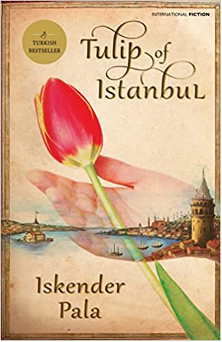
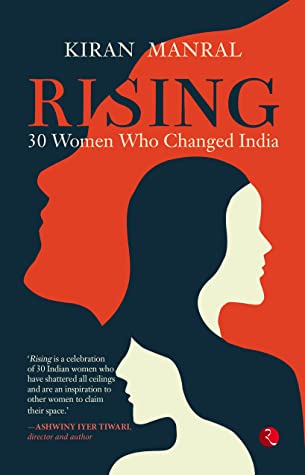
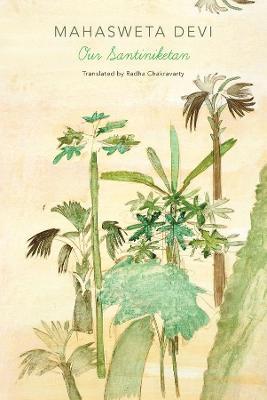
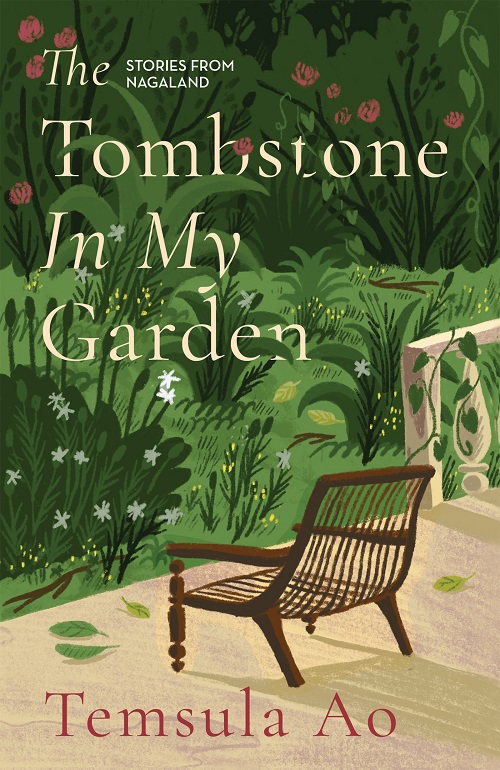
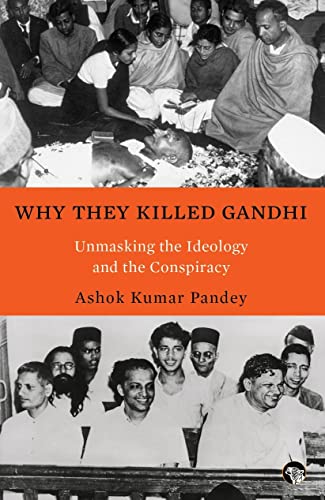
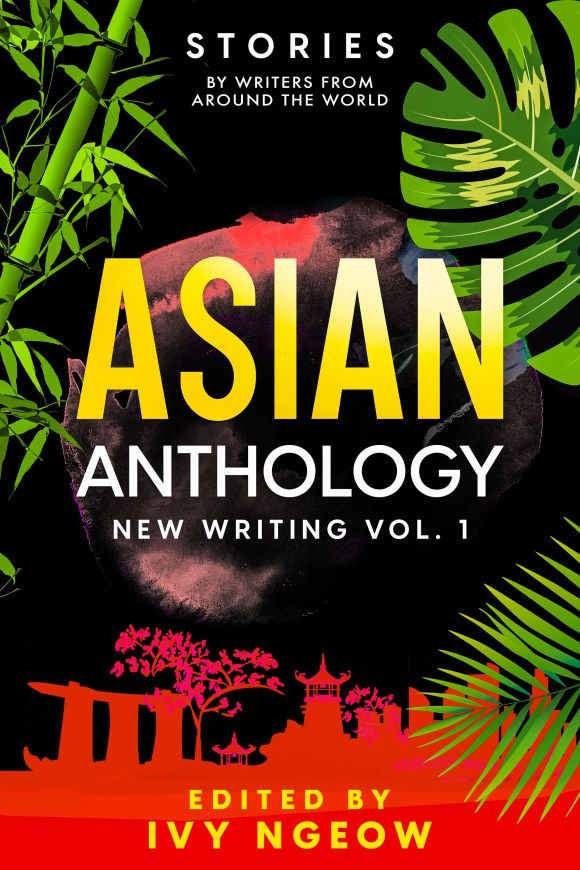
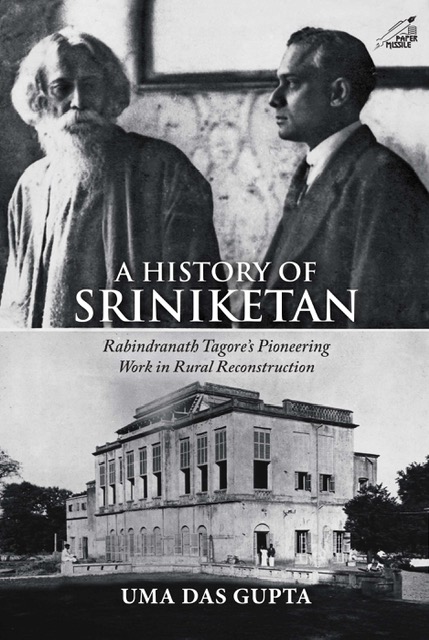
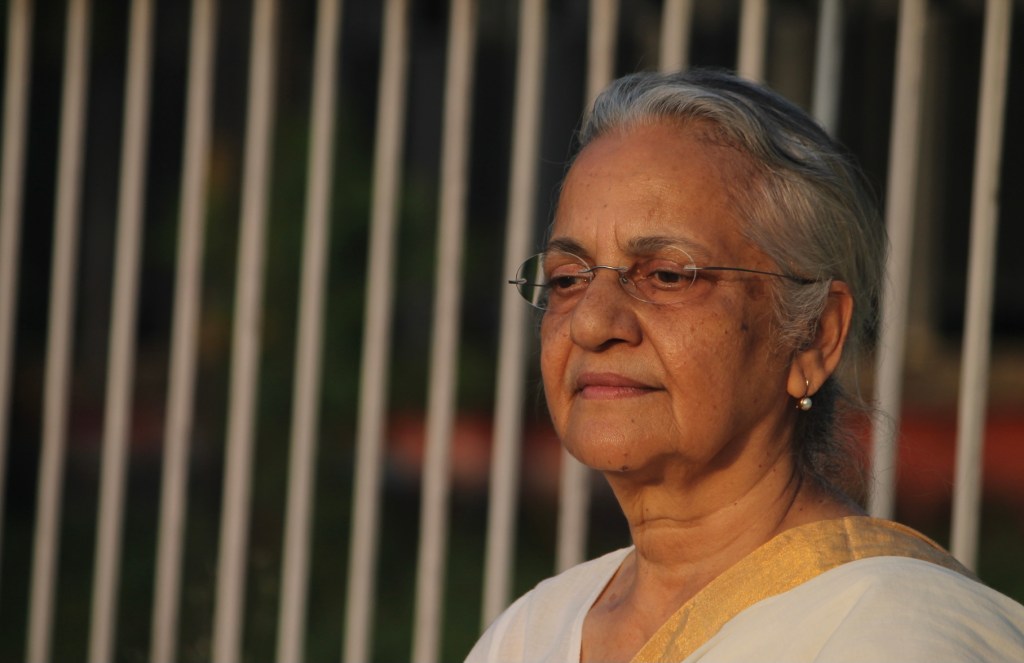


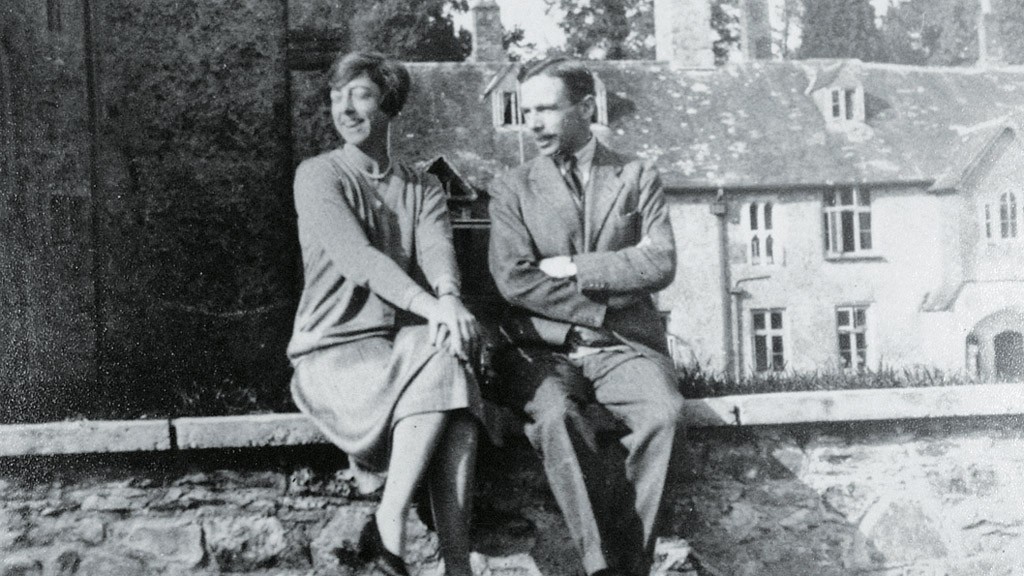
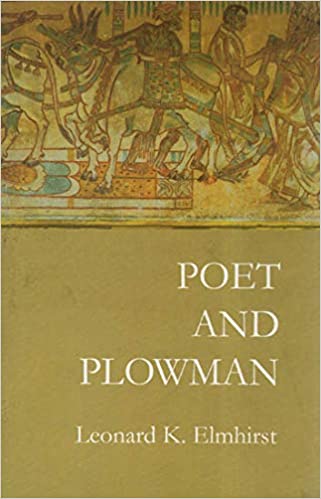
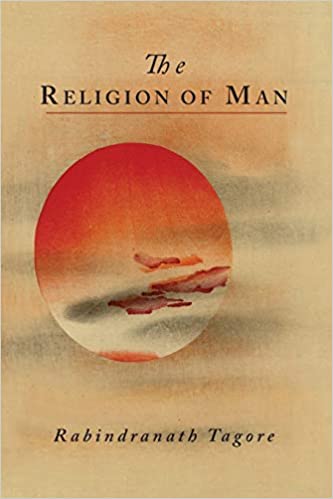

 Borderless