There are good days, bad days, and then there are moderate days. What do we do on moderate days? These are days that don’t smell of cakes and candy, days that don’t bask in the glory of boisterous get-togethers, and that don’t have you running around in anxiety. They aren’t spent in hospital corridors and don’t promise hope and certainty.
Life, on most days, is a moderate one—rooted in mundanity and tied to the fabric of monotony. Routine allows us to remain distracted from issues that could consume us, provided we had the luxury of time. A great way to deal with the problems in our lives is to become so immersed in time that, when we finally come up for air, we are more concerned about breathing. Rough phases are accentuated by holidays. Your mind takes charge, playing Sisyphus, rolling up heavy boulders and then doing it all over again. There is no progress, no growth, no work happening, and yet you don’t feel relaxed because your mind is at work all the while—jumping from one thought to another, building bridges between past and future, thinking of what-ifs and what-cans, traversing distances within oneself.
We have been fed narratives on how to stay productive all our lives. Our social media platforms remind us of fancy vacations, celebrity-like dress-ups, mandatory postings on birthdays, festivals and events. So, we know the drill. We know that important days have to be documented, registered, laminated, and polished to make them even bigger. We learn how to hold ourselves together on rough days, and when we fail to do so on our own, we look around for company, securing ourselves in the den of familiarity. But what do we do about moderate days when life seems a humdrum affair, when the daily grind tastes dry and drab, when the clock ticks sound a tad bit slower, making us pine for ‘special days’?
On moderate days, we watch the world go by slowly. We sit with our cups of coffee or tea and let them brew a little longer. We indulge in small talk and greetings, building on past conversations. We catch trains, buses, and cabs as we gradually perfect the art of negotiating between the private and the public worlds. We wear our not-so-favourite clothes, which are dipped in comfort and familiarity, allowing us to blend into the larger crowd with nonchalance. We polish our to-do lists, letting them become maps to guide us in our future. We say our daily prayers and bless or curse people with equanimity. On moderate days, we let the world take us on a ride. On such days, we are mostly content with our lives. We are passive; we do not sit in the driver’s seat. Moderate days are forgettable, yet they are steeped in efforts, commitment, and drive. We do a lot, and yet nothing ‘significant’ happens.
Moderate days are for marinating—letting our lives soak in diverse hues, taking in flavour and texture, while we remain slightly detached from the end product. These are days when one would just sit laidback in chequered pajamas and unkempt hair mindlessly scrolling a social media page or sipping on the homely chai/coffee with some munchies. On days like these, we chat and gossip about anything under the sun and forget the conversations in the next instant. On moderate days, we blend, simmer, and evaporate, leaving behind traces of routine in the form of empty tea cups and several good morning greetings.
.
Priyanka Panwar is an Assistant Professor of English at Motilal Nehru College (Evening), Delhi University. When she isn’t reading or teaching, she likes to travel and observe. A movie buff and a voracious reader; on most days she dreams of coffee and mountains.
.
PLEASE NOTE: ARTICLES CAN ONLY BE REPRODUCED IN OTHER SITES WITH DUE ACKNOWLEDGEMENT TO BORDERLESS JOURNAL
According to Australian author Frank Moorhouse, a short story is like a beautiful handmade toy — a specialised craft requiring talent, originality, creativity and skill. Not surprisingly, many of today’s successful writers have used this medium to launch their professional careers. And for good reason. Short stories have helped them hone their writing skills, develop the writing habit and inculcate a sense of discipline in their writing schedules.
Contrary to what some editors and publishers believe, there is a growing market for the short story. Modern technology has offered a tremendous boost to the short story genre. The short story today can be made accessible to readers in a much quicker time frame and at a much lower cost. With so many online magazines, it’s now cheaper to produce and distribute more short fiction than ever before. This flexibility makes it possible to download a short story on a website, on a mobile phone or on a tablet; and a short story can be read and enjoyed anywhere and anytime – during a lunch break, in a doctor’s waiting room, on a short journey or a commute, or even whilst waiting in a queue!
From the reader’s point of view there are several other advantages to a short story. One of the major strengths of the short story lies in its brevity and compactness, providing a punch that is so different from a novel. The theme of the story, the setting, the plot, the characters, the conflict, the turning point and the resolution are all contained in a short space. And it is precisely this compactness that makes this form of writing so appealing. A short story provides a quick and easy read from start to finish in a short period of time, and often in a single sitting. In the words of Neil Gaiman, “Short stories are journeys you can make to the far side of the universe and still be back in time for dinner.”
Apart from that, because of the media overload in today’s world, our attention spans are shrinking. This is why it is important to condense the message in a short and concise form that catches the attention of the reader and stimulates his curiosity. They could be a way towards inculcating the reading habit. They are great for reluctant readers, slow readers or anyone intimidated by books.
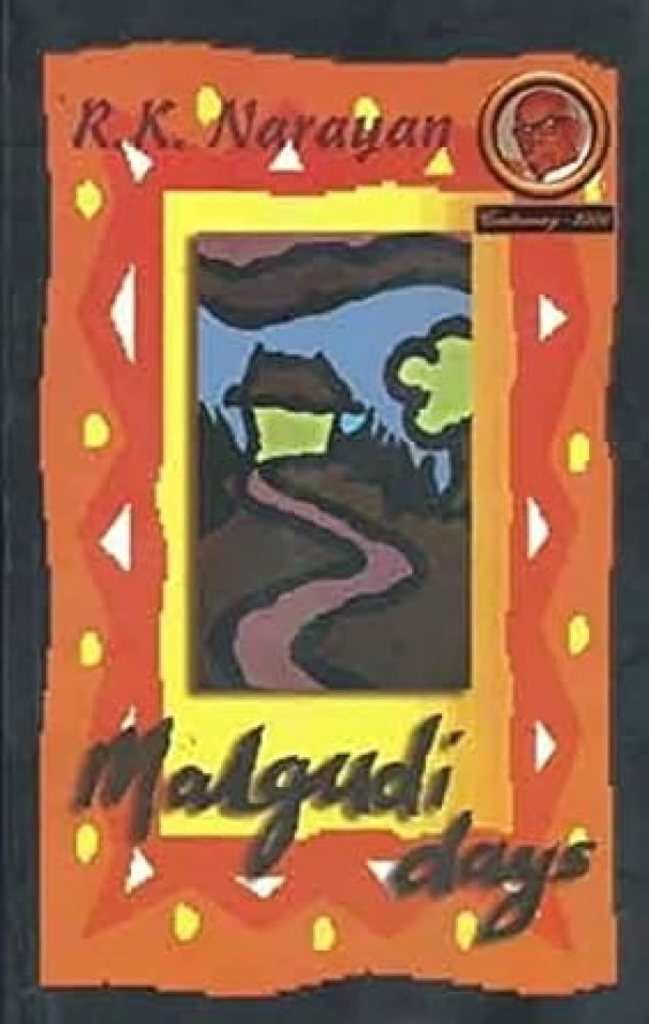
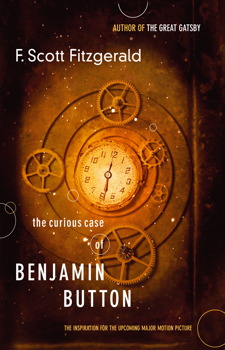
The lasting power of the short story is so well illustrated in the fact that many famous and successful films and television series were based on short stories. The Curious Case of Benjamin Button, for instance, was an award-winning film inspired by F Scott Fitzgerald short story of 1922 and released 86 years after the original story was written. Malgudi Days was made into a television serial of 54 episodes and four seasons and had become a household name in India. It was inspired by a series of 32 short stories written in 1943 by celebrated author, RK Narayan.
So if you are an aspiring young writer, the short story would be a good means of kick starting your writing career. We all have a story inside us waiting to be told. And who knows, that yet to be written masterpiece may well find its way to a block buster series on Netflix!
Saeed Ibrahim’s family saga, Twin Tales from Kutcch, and his book of short stories, The Missing Tile and Other Stories, have had successful runs both in India and overseas. He continues to write newspaper articles, travel essays and book reviews for various Indian and international publications.
.
PLEASE NOTE: ARTICLES CAN ONLY BE REPRODUCED IN OTHER SITES WITH DUE ACKNOWLEDGEMENT TO BORDERLESS JOURNAL
We live on a huge planet, a watery world, which is a small cosmos in itself.Keith Lyons discovers humanity in his local swimming pool.
In recent years, I’ve increasingly sought an elixir of life. Even though I know this magical potion won’t grant me eternal life — not even eternal youth. The elixir doesn’t even promise to cure all diseases, though it seems a lot of other people are taking this tonic as treatment for every kind of ailment.
My pursuit of this higher realm means that most days, if I am able, I take a break from work, life and the busy-ness of it all to replenish, relax, and rejuvenate. My woo-woo astrological friend reckons that because my star sign is Cancer (one of the three water signs along with Pisces and Scorpio), I am drawn to water. But then, we all need water. Water is Life. It keeps all life going – for without water, life cannot exist. As the saying goes, “No Blue – No Green.” We need water to survive, to thrive, for our hygiene, for our wellbeing, and for the ice cubes in our virgin piña colada cocktails.
When I heard about the prospect of a new swimming pool opening up nearby my home, in the dark days of the Covid-pandemic, I was doubly happy and expectant. I even turned up to the new venue before it had actually opened, when they were still finishing the build and checking all the systems worked. The local government funded facility offered not only a swimming pool, but also a point of contact for interactions with the council, and the pool was twinned with a modern library. In my mind, I imagined that it might be possible to go swimming, then to glide over to a cafe or bar to get a drink, and then to select a book to read while reclining on an in-water lounger. Could it possible? I know I had stayed at a fancy hotel with a wet bar in Macau, where the bartender served cocktails to me and a photographer as we lived our best lives — until the next morning when we didn’t feel so flash.
Water, as you may know, makes up over 70% of the Earth’s surface. Up to 60% of the human body is actually water — depending on how much fluids you’ve drunk. A cucumber is made up of around 96% water. I recall these facts from a high school science project as I push the button of the water dispenser and a half circle of cool water arcs up for me to catch as much as I can in my mouth. I’m thirsty and know I need to drink lots of fluids, as I’ve just spent the last 80 minutes exercising and soaking in warm water. And I feel like I’m dehydrated from all the exertion.
Ever since a new indoor swimming pool opened in my neighbourhood, I’ve been making the effort to go as often as I can, to move and stretch in the warm hydrotherapy pool and then relax in the even-hotter spa. It has become something of a pilgrimage for me, even on the coldest, rainy days of winter. My route there from my house goes along a new cycleway, through a park (where a dog recently tried to attack me on my bike) cuts through a local ‘secret shortcut’ beside offices and a new church, then tracks along an industrial area of factories, warehouses, and commercial premises. After 6pm, the road to the pool has little traffic, just the occasional truck and security vehicle. If road conditions, traffic and winds are favourable, I can be door-to-door in under 10 minutes. But once I enter the new complex, change into my swimming gear, and walk down the ramp of the hydrotherapy pool, time becomes less important. I change from the demands of a busy world to more me-time.
But there’s more than devoting an hour to honour and exercise one’s physical body. Moving in water offers benefits beyond the physical realm, whether one’s aim is to help the heart, the waistline or the body’s strength. Because water is a lot denser than air, water provides more resistance — around 12-14% — compared to doing the same exercises on land. That resistance assists cardio and strength training. There’s another factor for water-based activities: buoyancy. The feeling of being lighter or weightless when submerged in water means you take the pressure off bones, joints and muscles. It is the closest thing you or I might get to being in space. You don’t even need one of those NASA t-shirts with the iconic blue, red and white logo of the National Aeronautics and Space Administration.
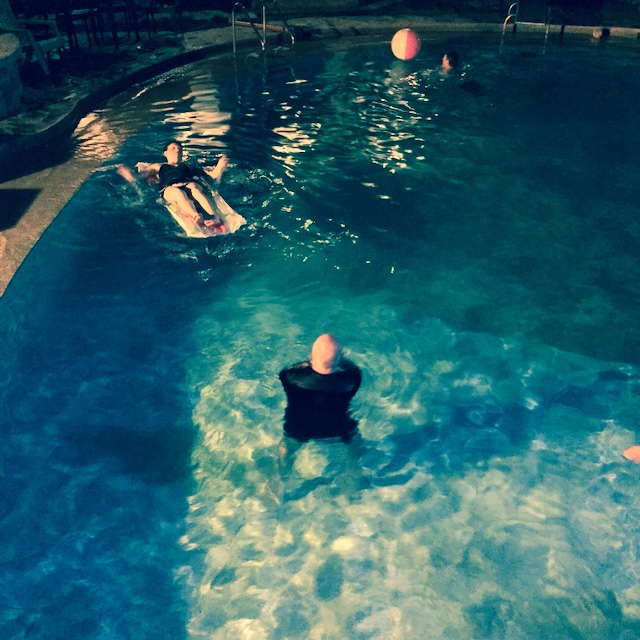
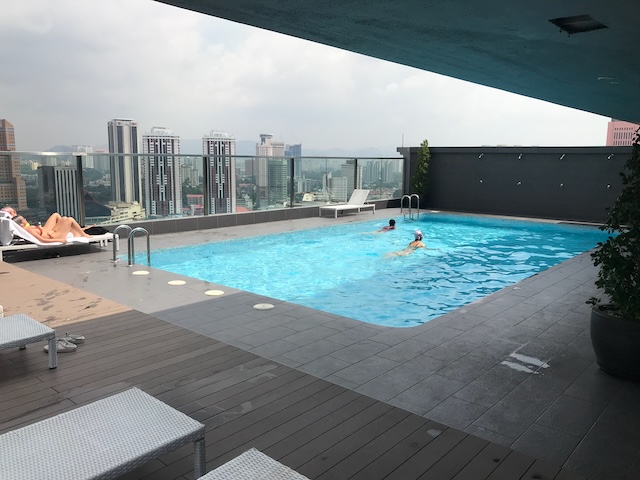
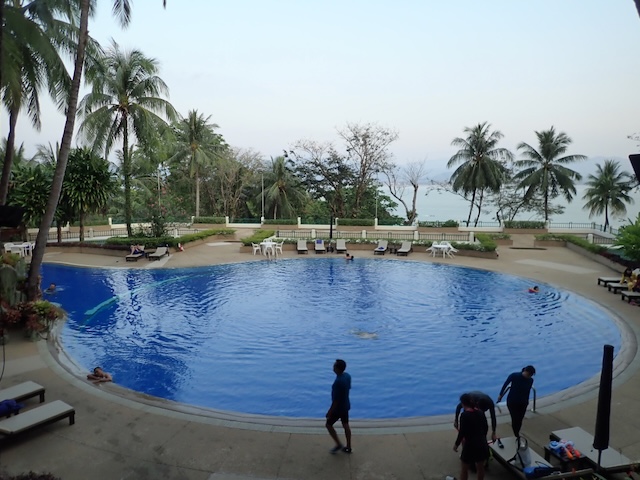
The 1.4-metre-deep hydrotherapy pool, which is kept at 33-36C, sits alongside the traditional 25-metre swimming pool, which is kept at 26-28C. The therapeutic pool’s inclusion in the new community complex was the result of lobbying by locals, who previously had to drive across to the opposite side of the city to access a suitably warm pool.
Photo Courtesy: Keith Lyons
It has only been a few months since the pool opened, but already many come to the waters, from when it opens at 5.30am each weekday (7am weekends) to when the last are forced to leave at 9.30pm (8pm in weekends). I’m more of an afternoon and evening swimmer, preferring to go to the pool after work or at the end of the day. Some attend the twice-a-week gentle exercise class, where the average age is 65+. Others visit almost every day at nearly the same time.
Some arrive in wheelchairs, pushing walking frames, or hobbling on crutches. Others walk from the changing rooms to the water smiling expectantly as they pace towards the transformative pool. At mid-morning, with the light from the wall-to-ceiling windows slanting across the pool, it could easily be a scene from the 1985 movie, Cocoon, where the retirement home pool helped them rediscover their youth (it was full of aliens). If you had to paint the scene, there would be a lot of blue hues, along with off-white and grey tones, with silvery reflections off the water.
While some exercise by themselves, focusing on their routines, the set prescribed by their physiotherapist, or whatever takes their fancy, for many it is also a social time, as they aqua jog up and down the lengths, or stand at the sides doing calisthenics. If you listen carefully over the music soundtrack of upbeat, positive songs playing over the public speakers, you can hear the water gushing and flowing. It bubbles up from the floor of the pool. Jets roll in from the sides of the hydrotherapy pool. In the spa pool, there’s a force field strategically placed around the pool. Modern water treatment means there’s no smell of chlorine.
The pool is a very tactile, sensual in-body experience. It is also somewhat humbling. Patrons must change into suitable bathing costumes, which can be as skimpy and revealing as bikinis and togs, though some prefer full body covering for modesty or self-perceptions. The water in the hydrotherapy pool is so warm that there’s never any hesitation on entering. People are only limited by the speed at which they can move from the air environment to the watery world of buoyancy and drag.
My local swimming pool is a microcosm of the wider community, and the big wide world. As where I live has experienced significant migration in recent decades, it is certainly a diverse multi-national cross-section of the community. Chinese are the largest group, with a swim school, coached sometimes in Mandarin, operating most weeknights. There are also families from the Philippines, a group of learn-to-swimmers from Nepal, and occasionally a non-swimmer from India who needs to be rescued from the deep end of the main pool by lifeguards. On one afternoon and evening, the whole pool becomes ‘women-only’, with the blinds drawn so women can use the pools without the glare of men. With more refugees from other countries now making up our neighbourhood, there are often people from Afghanistan, Eritrea, Kurdistan, Ethiopia, Somalia and Bhutan venturing into the pools for the first time.
Is the swimming pool I go to special? Can such a multi-sensory, multi-cultural, relaxing-yet-reviving experience only be found in my swimming pool? Nope. Seek out a public swimming pool in your area and discover another world.
Photo Courtesy: Keith Lyons
.
Keith Lyons (keithlyons.net) is an award-winning writer and creative writing mentor originally from New Zealand who has spent a quarter of his existence living and working in Asia including southwest China, Myanmar and Bali. His Venn diagram of happiness features the aroma of freshly-roasted coffee, the negative ions of the natural world including moving water, and connecting with others in meaningful ways. A Contributing Editor on Borderless journal’sEditorial Board, his work has appeared in Borderless since its early days, and his writing featured in the anthology Monalisa No Longer Smiles.
.
PLEASE NOTE: ARTICLES CAN ONLY BE REPRODUCED IN OTHER SITES WITH DUE ACKNOWLEDGEMENT TO BORDERLESS JOURNAL.
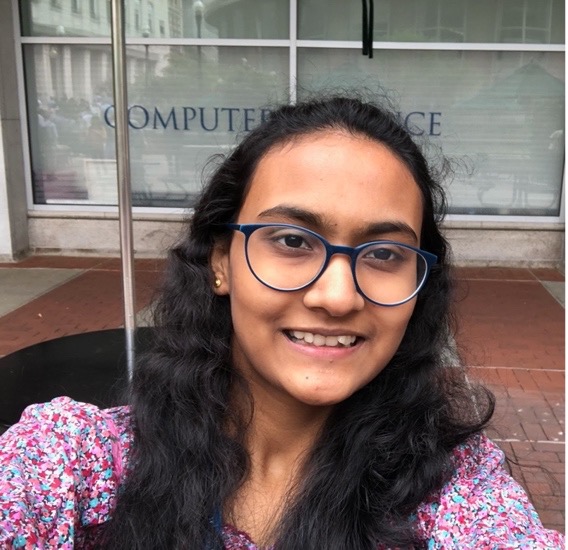
An eight-year-old girl stands near the bustling confines of an airport: her eyes are wide, her smile bright. However, beneath that radiant smile lies subtle hints of deeper emotions known only to the girl herself.
The discovery of this photograph had been an accident as I was sifting through a neglected box of keepsakes. The moment my eyes met the image, a floodgate of memories unleashed. I could feel myself stepping off the plane and onto American soil, the soft glow of the cabin lights, and the sea of unfamiliar faces. The conversations flowed around me as I stumbled blindly into a linguistic labyrinth.
The memory of that first day in American school etched itself in my mind. The teacher introduced me, and I blushed as the other kids looked upon me with fascination. I felt like an outsider unable to fit in. My thick Indian accent, which I had never thought about, was now a stain that separated me from others. My tongue stumbled over words spoken with the cadence of another world. The perplexed gazes of strangers mortified me. That day I made a promise: I would do anything and everything to fit in and change my accent. It was an instinctive reaction, born out of my desire to be native in a foreign land. It was a survival mechanism, a way to navigate the social structures that formed the scaffolding of this new world.
Beyond verbal communication was the challenge of writing and spelling. On the first day, we had a benchmark spelling test. I performed miserably. Growing up in India, I was educated in the British English system. Words like “colour,” “favourite,” and “theatre” adorned my vocabulary with their extra “u”s and “re”s. These linguistic quirks had been ingrained in me since childhood, and I had never questioned their correctness. Soon I realised that my spelling, which I considered impeccable, was peppered with these “mistakes.” I was embarrassed. I developed an obsession with consciously correcting my old habitual spellings, like “colour” to “color,” and “favourite” to “favorite.” Like leaving behind my Indian accent, I sought to rewrite this part of my identity.
I grew up to become a chameleon, forever adapting my linguistic hues to blend seamlessly into the ever-changing landscape of my life. In a peculiar dance of identities, I became a performer mastering the art of disguise. Even now, I marvel at my own adaptability, at how I can effortlessly switch between rhetorical worlds. It’s as if I have a wardrobe of culture, with an American accent for the world outside and my own familiar Indian accent tucked away at home. When I’m with my family, when I return to the comfort of my roots, the switch is automatic. The words flow with the rhythms of home, and my voice reverberates with the echoes of my heritage. It’s a return to a world that doesn’t require adaptation, a place where I can be unapologetically myself.
In this continuous performance of linguistic acrobatics, I’ve realised that my identity is not fixed but fluid, a reflection of the multiple worlds I inhabit. I am the chameleon, forever changing and adapting in this intricate dance between accents and authenticity. I’ve found a new version of myself—a person who can navigate two cultures, seamlessly switching between accents yet remaining true to my unique identity. I was neither wholly Indian nor entirely American; I was the synthesis of these two worlds, a living metaphor of cultural fusion. As the years passed, I found solace in the poetic beauty of my dual identity. In the end, I realised that it was in this tapestry of language, accent, and identity I had truly discovered myself—a narrative still being written, a story still unfolding, a girl who had found her place in a land of dreams.
.
Chinmayi Goyal, a student at Yorktown High School in New York, is passionate about writing. She serves as editor-in-chief of a newspaper called VOICE and has published several of her piecesthere.
.
PLEASE NOTE: ARTICLES CAN ONLY BE REPRODUCED IN OTHER SITES WITH DUE ACKNOWLEDGEMENT TO BORDERLESS JOURNAL
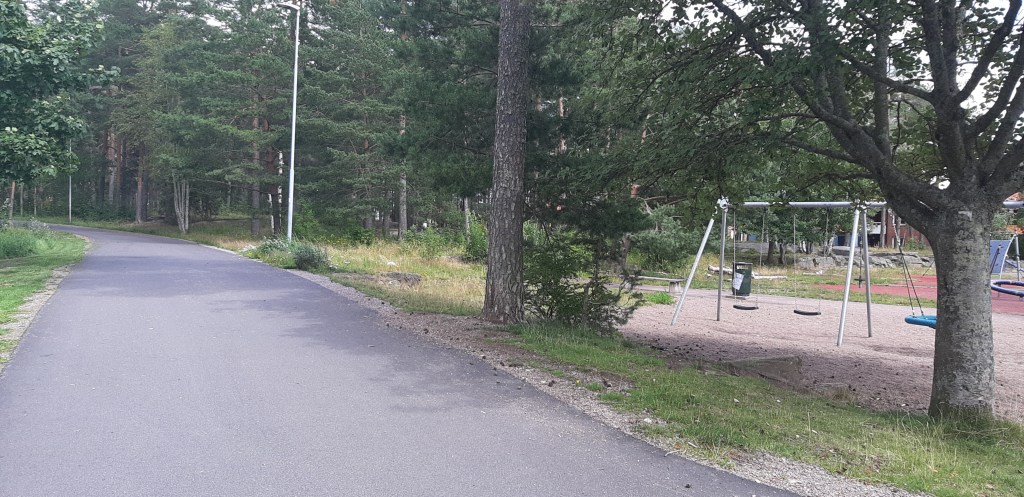
I walked down the forest path in Karlstad, Sweden, wondering how best I could ensure that a box of 36 colour pencils (used to different degrees), when given away could continue to be used so that they could fulfil the purpose they were fabricated for, as completely as possible. I recalled a tarot reader having said that ideas do not come to us when we think, but rather when we have stopped doing so. They come unbeckoned from somewhere beyond the astral realm. I stopped the train of thought in its tracks, to let the engine cool down a bit, and surrendered to the divine process of ideation and inspiration.
The next day, I was walking down the very same path – this was a routine after a couple of surgeries, for the purpose of recovery and regaining strength in my lower torso – when I saw two little girls (less than 6 years old, perhaps) playing in the garden to my left. An idea bubbled up. I hastened to my apartment, fetched the box of colour pencils and rushed down to the garden where I had seen the little girls. They were still there, on the swings. I walked up casually, making sure not to scare them (my bearded foreign face told me that I need to be careful here), and called out from a distance, in Swedish – “Hallo, vill ni gärna ha den? (Hello, would you like to take this?)”
The younger of the two came a bit closer, looked at the box in my hands, and asked curiously – “Vad är det? (What is it?)”
I explained that it was a box of 36 colour pencils, some used more than the others, and that I wished to gift it away to them. As more and more questions were hurled at me, I could not help but smile and recollect Rudyard Kipling’s poem:
I keep six honest serving-men
   (They taught me all I knew);
Their names are What and Why and When
   And How and Where and Who.
The elder of the two girls then came down to brass-tacks, and asked, “Är det verkligen gratis? (Is it really for free?)”
I said yes, and she took it from my hands.
As I was about to turn around and walk away, I heard some murmured whispers behind me. I thought they would have opened the box, started counting and marvelling at the various shades of blue, red, green and yellow in there.
“Vänta, vänta…(Wait, wait).”
I turned and they came running towards me. The younger one was now holding the box of pencils in her hand.
“Vi vill gärna betala dig (We would like to pay you for this).”
I repeated that it was a gift and one does not have to pay for gifts.
“Nej, nej…vänta (No, no, wait).”
The older one then started searching in the little pouch she had around her waist, and fished out a 2 SEK coin. Summertime in Sweden, and little kids are provided with some money by their parents, which they carry around in these mobile piggy-banks strapped around their waists. Once they have accumulated enough, they spend the money on purchasing ice-cream or chocolates or candies.
“Här, (Here),” she said proudly with a smile across her face. “Den är för dig (This is for you).”
I accepted it with a smile, which hid mixed feelings. I did not wish to deprive the little one of the feeling of pride which she was experiencing – of having put aside money to ‘buy’ this gift from a stranger.
What it was that triggered the desire to monetarily compensate me for the gift I gave them, I would never know. I would also not wish to know. Maybe because I was a stranger to them, who also looked a bit bedraggled after the surgery. Maybe it made them feel good to also give me something in return for what I had given them. That would be another thing I would surrender to the realm of ideas, which had played a part in bringing these two little girls momentarily into my life that day – the invisible hand of God, of ideas floating around in the ether ready to inspire those who are fit to receive them.
Photo Courtesy: G Venkatesh
G Venkatesh is an Associate Professor in Karlstad University, Sweden. E-mail: Venkatesh_cg@yahoo.com
PLEASE NOTE: ARTICLES CAN ONLY BE REPRODUCED IN OTHER SITES WITH DUE ACKNOWLEDGEMENT TO BORDERLESS JOURNAL
Here I am, waiting in my car, clutching my steering wheel. It has been a good five minutes, and I am at a standstill. There are no vehicles in front of me. It is a T-junction with traffic lights. There is no traffic on either road, but I have no choice. I have to wait.
It does not matter whether I have a medical emergency or that there is a raving lunatic after my scalp. Laws are laws and have to be obeyed. Logical wisecracks and rationalisations do not work. Realistically, if the road is clear and there is no imminent danger of a collision, I should be good to go. Logically, that is. Reasoning does not work here. A set of closed-circuit systems records your every wrong move like a hawk. And diligently, the system would send a ticket directly to your mailing address, and viola, the rule of law prevails in the land. A potential offender is snipped in the bud. As the broken window theory of criminology dictates, getting away with minuscule wrongdoings would eventually snowball into something cataclysmic. Thank God for automation; another serial offender has been prevented. Everyone should be happy, right? So, everyone’s job is just to follow?
That is when my Dionysian mind grew antennas. My grey cells started buzzing, and their neuroelectric activities went on an overdrive.
The system is understandably flawed. At a time when everything is becoming more intelligent, something is not correct. What is naturally lacking is artificially enhanced. Artificial intelligence has superseded natural stupidity. If self-thinking automatons and machines can improve by self-learning and pass the Turing Test, why not our traffic lights?
Intelligent traffic signal lights are not alien to road traffic controllers worldwide. Automated light changes to keep up with altering traffic volume are nothing new. Many developed nations have been implementing this for ages. At an age when we are concerned about vehicle emissions worsened by repeated stops and starts, introducing the ‘green wave’ could help reduce congestion and the need to repeatedly slow down or stop at lights.
Returning to my situation at the traffic light, I am still stationary after what feels like ten minutes.
Coming to think of it, Adolf Eichmann and all his colleagues in the Schutzstaffel (SS) completed all their nefarious activities by being sticklers for rules and followers of protocols. By paying undivided attention to completing their paperwork and targets set for the day, they gave a new perspective on how banal evil can be. The rule of law did not prevent a maniacal figure like Hitler from being the Fuhrer. The citizens who followed the herd in not questioning the status quo lived to regret their apathy.
Spending less time at the traffic light is not going to prevent a Holocaust, but we should ask ourselves to change a system that does not work for us. We are already wasting enough time listening to guised automated messages, which actually eat on your phone bills, why do we need to waste time, petrol and sanity by just waiting and listening to screaming cicadas at a traffic junction without any traffic?
Honk, honk! Time for me to move on…
.
Farouk Gulsara is a daytime healer and a writer by night. After developing his left side of his brain almost half his lifetime, this johnny-come-lately decided to stimulate the non-dominant part of his remaining half. An author of two non-fiction books, Inside the twisted mind of Rifle Range Boy and Real Lessons from Reel Life, he writes regularly in his blogRifle Range Boy.
.
PLEASE NOTE: ARTICLES CAN ONLY BE REPRODUCED IN OTHER SITES WITH DUE ACKNOWLEDGEMENT TO BORDERLESS JOURNAL
Ratnottama Sengupta muses on the ongoing wars and violence as acts of terror and gazes back to an incident in the past which resulted in a powerful Bengali poem by Tarik Sujat that she has translated here
The world is in the grip of violence, Rabindranath Tagore wrote on March 5, 1927, sitting in the abode of peace – Santiniketan. Full 97 years later, the world is still in the grip of violence?
It’s Gaza today. Ukraine yesterday. Afghanistan some days ago. Sri Lanka not so long ago. Sometimes it is Bosnia. At other times, it’s Vietnam. Lands far flung and near adorn themselves with blood-red mark of hatred. Religion. Self-seeking dictators. Communism. Global lust for power. No matter what is at stake, the pawn is an innocent life. Always. A woman. An elder. An unborn child…
Tagore wrote Hingshay unmatto prithibi[1]– “The world is in the grip of violence as a prayer to the Almighty. The delirium is leading to conflicts, cruel and ceaseless… Crooked is the world today, tangled its philosophy. No bond is sacred.” And the anguish of such a state of affairs? It led even the Eternal Bard of Bengal to pray for a new birth of ‘Him of Boundless Life.’ “Save them,” Tagore had prayed to the Serene, “raise your eternal voice of hope” so that “Love’s lotus, with its inexhaustible store of nectar” may open its petals in His light. In His immeasurable mercy. To wipe away all dark stains from the heart of the continents.
In vain he prayed.
“Forgive them!” Jesus said, for “They know not what they do!” And what did the soldiers do? They gambled for his clothes by throwing dice! (Luke 23:34)
Forgive them? “Have you forgiven those who vitiated the atmosphere and snuffed out light for innocent lives?” Tagore asked the Almighty, in ‘Proshno (Question)‘. Have you forgiven those who deal hate in the secret hours of night? Have you embraced with love those who murder the helpless in broad daylight under the cover of ideology? Don’t you wince when a pregnant Bilkis[2] is gang-raped? Why do you shed silent tears when elected rulers choke people’s voice with furtive use of power?
And like his Prayer, Tagore’s ‘Question’ too has remained unanswered. And dumb sit the messiahs when men with mistaken notion of mission kill, maim, mutilate hostages who become mere numbers in newspaper headlines – until a new dateline wipes it off our collective memory. Thus, once again, the world was shaken by brutalities carried out in the name of God, in Dhaka’s elite neighbourhood, Gulshan.
On July 1, 2016, before the Cinderella hour struck, five militants entered the Holey Artisan Bakery with bombs, machetes, pistols, and opened fire on men and women, from Italy, Japan, India, Bangladesh. Sunrise. Sunset.. Sunrise… unsuccessfully the police tried to secure the hostages. An elite force of the Bangla Army had to raid to put an end to what BBC News described as “the deadliest Islamist attack in Bangladesh”. Meanwhile? The toll had risen to 29 lives, totaling 17 foreigners, three locals, two policemen, five gunmen, and two bakery staff who were trying to earn their daily bread!
Since Gulshan is home to many embassies and high commissions in the capital of the secular nation, the news stirred up the world in no time. And prayers poured in – over cellphones, on Facebook, television and newspapers too. Prayers of wives for their husbands. Prayers of mothers for their sons. Prayers of a niece for her aunt. Prayers of American friends for their Indian batch mate. But once again, prayers went unanswered…
Among those who did not survive to tell the story was Simona Monti of Italy who worked in textiles. Then 33 years of age, Simona was soon to go to her home an hour away from Rome, to deliver the child she had nursed in her womb for five months. But Michelangelo too did not live to breathe in the world vitiated by hatred. When the news reached her brother, he prayed his Simona’s bloodshed would make this “a more just and brotherly world.”
His prayer, too, remains unanswered.
But poets and other men of conscience did not remain silent. Within days of the incident Tarik Sujat wrote Janmer aagei aami mrityu ke korechhi alingan (Even before my birth I embraced death, July 6, 2016). No diatribe in his words, but the muted cry of an unborn being jolts us. That cry left me with a tear in one eye and fire in the other…
On my very first reading I was touched, I was moved, I fell silent. The pensive mood of the embryonic life turned me reflective. Anger, rage, fury was not the answer to hostility, loathing, abhorrence, I realised. So will you, as you go through the poem that was handed out in Magliano Sabino when Simona’s hometown prayed for her eternal rest.
I Embraced Death Before Birth

Even before my birth I embraced death.
I have no nation, no speech,
No stock of my own.
No distinction between Holy-Unholy,
Sin and Virtue, Sacred or Cursed.
Having seen the ghastly face of life
I've swallowed my last drop of tear...
My first breath did not pollute
The environs of your earth.
My last breath was the first gift
Of this planet to me!

Maa!
You were my only playhouse,
My school, and my coffin.
I had yet to open my eyes -
And still I saw
The sharp nails of executioner
Ripping apart my naval cord.
My ears were yet to hear sound,
Still I could catch bells
That summon lads to schools...
The obscure sound echoed
Through churches, temples,
And minarets of masjids
Until, slowly, it fell silent...

My first bed was my last.
My mother's womb was
My only home
In the unseen world.
On that nook too, darkness descended.
Floating down the river of blood
I groped for my umbilical cord
To keep me afloat...
My tiny fingers, my soft palm
Could find nothing to clutch.

In that Dance of Death
My unseeing eyes witnessed
Koran, Bible, Gita, Tripitak
Bobbing in receding blood.
In the achromatic gloom
Of my chamber
I got no chance to learn
A single mark of piety!

Still...
I embraced death before I was born.
My mother's womb is my
Grave, my coffin, my pyre.
The world of humans
Is enveloped in fire -
A few droplets of my meagre body
Does not quench its thirst!

(Translated from Tarik Sujat’s Bengali poem by Ratnottama Sengupta)
Why has this portrayal of a tormented soul found voice in French, German, Swedish, Italian, English…? Why has it been translated into 17 languages? In the answer blowing in the wind lies hope for mankind. For, the answer is: Not every man is created in the image of Lucifer. That is why, when Giulia Benedetti learnt that she will never again see her aunt Nadia Benedetti, that “she will not talk, will not comment on fashion, will not sing together again…” she wrote on Facebook: “Do not forget. Do not lose her memory. Do not let crazy people massacre. Do not let them win…”
And I immerse my voice in the Bard’s to say: “Let life come to the souls that are dead…” And I pray, bring harmony, bring rhythm, bring melody in our lives, O Serene! Wipe away every dark cloud from the world yet to dawn!
Ratnottama Sengupta, formerly Arts Editor of The Times of India, teaches mass communication and film appreciation, curates film festivals and art exhibitions, and translates and write books. She has been a member of CBFC, served on the National Film Awards jury and has herself won a National Award.
.
PLEASE NOTE: ARTICLES CAN ONLY BE REPRODUCED IN OTHER SITES WITH DUE ACKNOWLEDGEMENT TO BORDERLESS JOURNAL
Tagore would have been 163 years old this year. In fact, he is that old this year. That is because he did not die in 1941. When poets pass away, they merely pretend to die, leaving mortals to bear the weight of their non-passage. In my case, at the age of 66, the happy punishment for being a Bengali is to be tied to a childhood spent in the lap of Tagore’s poems. That lap gets younger as I grow older.
I remember listening to Phagun, haoai haoai[1], Tagore’s ode to the winds of spring, on the radio in the attic of my ancestral village home in West Bengal’s Hooghly district. My home bordered a vast, circular expanse of agricultural land contoured by villages that included mine. Sitting in the third-storey attic, next to a terrace that overlooked the fields, I was transformed by the song. It turned vision into movement. The song’s opening lines speak of the poet making the gift of his carefree and untamed soul to the flow of the eager spring winds. Those lines might have added that Tagore had cast my soul as well to his winds. I leapt out of myself: I gladly yielded to my capture by the elements. I looked out, imagining that the spring winds would carry me across the vast fields into the homes and lives of the people who were participating in the rituals of spring, one of which was Tagore’s song itself.
There were many other songs in the same vein that accompanied me into youth. Among them were Tomar khola hawa[2], where Tagore welcomes a fresh gush of wind to his waiting sails and promises the elements no regret even if his boat sinks; and Nil Digante[3], where the blue horizon catches fire from the rioting colours of flowers and even the sun asks for itself in the brightness of the earth. Such were the poetic conceits that lent the urgency of understanding to the passage of my youthful days. To lead the imaginative life was to consign oneself to the youthfulness of Tagore.
My spring is over: Those days have passed, taking a happy Tagore with them. Now, what appeal to me are his sombre songs that deal with mortality and the divine. Tai tomar ananda amar por[4] is an outstanding example of what I would call the Late Tagore in me. Essentially, Tagore says to God: “You are the Creator only because I am the created.” Can you imagine the degree of self-certainty that allows a human to address God so fearlessly? I do not share Tagore’s devout hubris but I listen to that song over and over again to reassure myself that my days have not been useless because they have been inhabited by God-created hours. And, of course, with Jokhon porbe na more payer chinho[5], Tagore turns death itself into a romance with the endless interplay of time and space that defines life. I stand redeemed by his lines.
But I am growing old. I am not conveyed out of myself by the spring poems any more: I prefer to age, as wildly as health and imagination allow me to, within myself. Tagore accompanies me still, but what confounds me is how young he remains even in his constancy to the maturity of my withering years.
Phagun, haoai haoai: Tagore is exulting in the colours of this spring, this very year, even as I accept my autumnal steps to the final winter.
When I was growing up, the radio was the musical score constantly playing in the background. Blaring between Tamil movie songs and radio dramas were news of the hour and current issue discussions. The things that got imprinted on my impressionable mind as I was transforming from a teenager to a young adult were about violence, wars and bombings. I remember about the war in Vietnam as it was close to home. For every peace talk and the end of war announcement, there would pop up another bombing and a barrage of casualties. My simple mind wondered when the war would end, but it never did. It went on for so long that they had a Tamil film in 1970 named Vietnam Veedu (House of Vietnam), referring to a household forever in family feuds and turmoil.
Along with the war in Vietnam, people came by boat to the shores of Malaysia. The then leaders, in the late 1970s, dealing with a poor economic climate as they were reeling from a devastating racial riot, were not so cordial with their arrival. Malaysia went into the bad books of the international arena when the Marines were issued a ‘shoot-at-sight’ order on Vietnamese boat people by the then Deputy Prime Minister, Mahathir Muhammad. The refugees were eventually placed in barb-wired concentration camps-like holding centres. The last of the boat people left Malaysia in 2005. Even today, many former refugees who had started life anew elsewhere return to Pulau Bidong to perform ancestral worship or to remind themselves and their descendants of the hell they escaped.
Just as I thought Malaysia had seen the last of the people displaced from their homes gracing their shores, Malaysia had to play host to economic refugees from Myanmar, the ethnic Myanmarese and the Rohingyas. And the cycle of not wanting to spend the country’s precious resources and accepting them on humanitarian grounds continues to date.
My ever optimist friend is dreaming of a utopia on Earth. Her idea of utopia is one where people are kind to each other, not hurling grenades or aiming intercontinental missiles at each other and accepting each other’s citizens with open arms. In fact, in her world, there would be borders. She dreams of a world where people are happy, able to enjoy the fruit of their existence, a world where there is no destruction of Mother Earth and none of the species of plants and animals go extinct. She envisages a space where everyone communicates with one another with kindness without hurting their psyche. The search is still on, where people do not look at each other with scorn and suspicion and are willing to accept another as a fellow sibling from a common mother. She dreams of a borderless world where heart, mind and territories are a continual flow of ideas and messages for the betterment of humankind. Unfortunately, despite all the strides the world has seemingly made, she remains unhappy and is getting more discontent by the day.
“Why is there so much hate? Why is there war after all the wisdom we have supposedly learnt as evidenced by our scientific advancements?” she asks. “Are we just developing creative ways to annihilate each other until the whole race reaches the point of no return?”
I see our newspapers and digital media. I became convinced that humans are evil and anthropocentric. They do not bother about other living beings. They are only interested in fending for themselves, fattening themselves, usurping treasures and fattening their coffers, and rapaciously wanting to leave a legacy for their descendants to savour to eternity. In typical situations, the world can accommodate all of Man’s needs, but not their greed.
Innately, I reminisce about the times when I was young, trees were tall, the air was clean, and adults were trustworthy. We long to go back to those innocent days.
Upon closer scrutiny, we realise we were presented with a false image of serenity. Beneath the surface of sobriety, even then, trenches were built to gun down brothers and chemical factories to neutralise them biologically. We think we are in the worst of times, but historians differ. Our current era is the most peaceful and safest throughout our existence. The chance of an average man in the current time, unlike his ancestors, to be directly involved or affected physically by wars is quite remote.
Our ancestors did not need the media to know the world’s plight because it often happened at their doorstep. The swords carved out people’s fate line, not consensus or democracy.
Life is cyclical. Peace and chaos have alternated all through our history. Like a phoenix, we keep rising from the rubble of destruction only to be broken to smithereens. Torrents of events around us bear testimony to this fact. It has been like this since time immemorial.
There was a time when Angkor Wat was the talk of travellers who could not stop praising man’s colossal achievement. With mind-binding engineering marvels, it testified to what the human mind could think next. Then, it got lost in the folly of human activities, only to be discovered as an ancient relic by passing foreigners.
Isfahan, an essential stop along the Silk Road, was once hailed as heaven on Earth with the highest level of culture. People with exquisite taste for art, literature, music and architecture made it their second home. Babur, who established the Mughal Dynasty, never synced with India as he felt the Indians were less cultured than the Persians because of what he was exposed to in the Safavid capital. Isfahan’s own glory brought its destruction.
All through Man’s sojourn on Earth, it has been anything but peaceful. The funny thing is that, amid all the destruction, we still managed to bring up our humanity and the science that would save us from extinction. In spite and amidst all the mayhem, we kept famine at bay, found cures for many infectious diseases and sent rockets to the moon and beyond. Paradoxically, the science that saved us becomes a thorn in our progress. From muskets to rifles to intercontinental missiles to the press of a red button, it is becoming easier to plan out our destruction.
So, the world has never been peaceful, and humans have not been kind. What can we do about it? Do you brood at our shortsightedness, or are we like Sisyphus? Knowing pretty well that, Sisyphus destined for life with the punishment of pushing a boulder up a hill only to see it roll down and for him to repeat the whole exercise again and again, he can take two paths. He can perform the task without thinking, like an automaton, go mad and die, or the alternative is finding simple pleasures in the seemingly mundane task. He could challenge himself to do it faster, explore newer routes to roll the boulder or experiment with various tools to aid in his task.
We continue doing our bit for humanity, knowing very well that it is just a drop in the ocean. Our efforts to promote peace and brotherhood will trigger small pockets of change and hopefully snowball into something earth-shattering for a good reason.
War, hardship and tragedy are bound to continue. It is too intertwined in our DNA. Many are even convinced that for seismic changes to occur, we need jolts and uncertainties. All these wars may be part of our search for a perfect system to pave Earth’s peace. A war to end all wars? Now, where have we heard that one before?
All through its existence, the Universe has seen it all before. If one were to believe Graham Hancock, the documentary maker or a pseudo-historian as some may call him, then one would be convinced that the world has experienced all these and even greater things before, only to lose everything because of human greed. Some other belief systems are confident that time does not go in a linear fashion but rather in a cyclical fashion. All that is happening today gives the Universe a deja vu.
.
Farouk Gulsara is a daytime healer and a writer by night. After developing his left side of his brain almost half his lifetime, this johnny-come-lately decided to stimulate the non-dominant part of his remaining half. An author of two non-fiction books, Inside the twisted mind of Rifle Range Boy and Real Lessons from Reel Life, he writes regularly in his blog, Rifle Range Boy.
.
PLEASE NOTE: ARTICLES CAN ONLY BE REPRODUCED IN OTHER SITES WITH DUE ACKNOWLEDGEMENT TO BORDERLESS JOURNAL
My aunt Ranjita and uncle Praphulla Ghosh were tenants of a barsati[2] at 4A Motilal Nehru Road. Next door lived Padma Khastagir, who would become the first woman chief justice of West Bengal. And if you walked through the gate separating the two houses, you would walk into the house owned by Purabi Chakladar — Khokondi to us.
One day, while we were visiting from Bombay, Baba abruptly stopped in his track. “Mrinal Babu!!” he called out. The gentleman in white kurta and Aligarhi churidar spun around, and responded at the same pitch, “Nabendu da[3]!!”
I was taken aback. I did not know Mrinal Sen then. Instead, I knew his lanky young lad, Kunal, though only by sight. I knew him because, as my friend Haabu — ‘good name’ Tapan — told me, he used to call his dad ‘bandhu[4]‘. In return, his father too calls him bandhu, Haabu had added, to my amusement and intrigue. Leapfrogging through time, I am now reading with a smile on my lips that Bandhu is the title of the biography of Mrinal Sen penned by his worthy son Kunal…
I also knew that Kunal’s mama[5], Anup Kumar, lived with them in that house. So was the actor famous as ‘the’ Palatak[6] really his maternal uncle? Naah! But I wasn’t intrigued. After all, Dulal mama and Amal kaku[7] and Sudhir mama too lived with us, in our tiny house in Bombay…
Soon I got to know Mrinal Sen. The director. Because I got to watch Bhuvan Shome[8]in a private screening at Indrapuri Studios. I had tagged along with baba[9] for the screening where the only other viewers were the Hrishi kaku — the famous Hrishikesh Mukherjee — and the lights wizard, Tapas Sen, and the man who had played the eponymous role of Bhuvan Shome. Yes, Utpal Dutt. And let me excerpt from my piece in Sillhouette and my piece in Blue Pencil’s Tribute to Mrinal Sen and provide a glimpse of that evening.
*
It was the summer of 1968. Hrishikesh Mukherjee, Nabendu Ghosh, Utpal Dutt, Tapas Sen and Mrinal Sen had gathered in Indrapuri Studios. A special preview had been organised for a film Mrinal — an associate of the other four from those IPTA [Indian People’s Theatre Association] days at Paradise Cafe — had just completed for Film Finance Corporation [FFC]. A 12-year-old – me – had tagged on. They watched in complete silence as the strict bureaucrat [Bhuvan Shome] from a metropolis took a break from his Rail Board office in the Kutch Backwaters, went on a wild duck shoot, was charmed by an innocent village belle and pardoned her husband, a corrupt ticket collector. The viewers were engrossed in the pristine landscape, the unspoilt villager, the incorrigible bribe-seeker. And they laughed when the quirky disciplinarian stood before a mirror, stripped, made faces, yelled and danced in joy, feeling liberated from the harness of doing the ‘right’ thing.
The scene was straight out of Mrinal’s own life: he’d enacted it in 1951, when he quit as a medical rep in Jhansi. All through the evening at Indrapuri, Mrinal was tense, wondering how the viewers would respond to the Bonophul story he’d wanted to make since 1959. The seasoned group of writers, directors, actors and theatre persons were a barometer the director trusted completely. Although he had eight films behind him, Mrinal was starting from a ‘zero point’. It was a radical departure for even him — and Indian viewers had certainly not seen such idyllic outdoors, such visual poetry, such disregard for romantic conventions. No sets, no stars, no songs, no happy endings, the dark comedy thumbed its nose at morality. FFC had agreed to fund it only because the amount was so low. But after the failure of the Oriya Matira Manisha (1966), Mrinal was sitting idle, with no Bengali producer willing to back him. He simply had to prove himself with this Hindi film.
Little did the man with salt-n-pepper hair, silver sideburns, rumpled kurta and Aligarhi churidar know that the evening’s youngest viewer — who had been completely ignored by the grey heads — could indicate the popular response to Bhuvan Shome. Here was a movie that had thrown traditional narrative to the winds and replaced it with a sweeping vision! It would sweep off its feet an entire generation of filmgoers who had no affection for mainstream affectation, social tragicomedies, or action drama. Unwittingly, Mrinal had ushered the New Wave in Indian cinema.
*
Wind the clock and set it forward by a few years. Mrinal da‘s biography was being launched at Kolkata’s Park Hotel. Baba arrived at the venue accompanied by me. Mrinal da got off the stage and headed straight for him. On his own he signed a book and placed it in Baba’s hand.
On the 90th birthday of Nabendu Ghosh, 27 March 2007, Mrinal Sen wrote:
“As a writer and a creative individual, Nabendu Ghosh has never believed evil is man’s natural state. Along with his characters, he has been confronting, fighting, and surviving on tension and hope.”
That same year, on 15 December 2007, Baba passed away. The minute he got the news, Mrinal da called me up. “Where are you people going (to take him)? Keoratala? I will be there.”
Without waiting for anybody — from the family or the press — he rushed to the cremation ground.
When we reached there, that presence was a balm for us in our bereavement.
[1] These musings are occasioned by the ongoing Birth Centenary of Mrinal Sen, which has seen the publication of two books on the cine maestro this month. These are Blue Pencil’s ‘Tribute to Mrinal Sen’ in English, and Bally Cine Guild’s Prasanga Mrinal Sen in Bengali. It is a matter of great joy for me that my writing is part of both the books.
Of equal joy to cineastes is that three films have been made in the Centenary year – by contemporary masters. Palan is Kaushik Ganguly’s sequel to Sen’s Kharij (1982). Padatik is Srijit Mukherjee’s biopic of the master featuring Chanchal Chowdhury of Bangladesh. And Chalchitra Ekhon traces Anjan Dutta’s journey with his mentor that started with Chalchitra/ The Kaleidoscope (1981).
But let me circle back to the very beginning – the story of Mrinal Sen and Nabendu Ghosh…Clickhere to read an excerpt from Nabendu Ghosh’s autobiographywhere he describes his interactions with Mrinal Sen.
[2] Rooftop housing, literal translation, a shelter from rain
[3] A respectful honorific for someone older – elder brother.
[6] Translates to Runaway, 1963 Bengali movie is the title of a Bengali movie by Jatrik, remade by Tarun Majumdar in Hindi as Raahgir/ The Traveler (1969)
[9] The late screenwriter and director, Nabendu Ghosh, is Ratnottama Sengupta’s father
Ratnottama Sengupta, formerly Arts Editor of The Times of India, teaches mass communication and film appreciation, curates film festivals and art exhibitions, and translates and write books. She has been a member of CBFC, served on the National Film Awards jury and has herself won a National Award.
.
PLEASE NOTE: ARTICLES CAN ONLY BE REPRODUCED IN OTHER SITES WITH DUE ACKNOWLEDGEMENT TO BORDERLESS JOURNAL




 Borderless