Categories
Author Page

Somdatta Mandal

Somdatta Mandal is a former Professor of English and ex-Chairperson, Department of English, Visva-Bharati, Santiniketan, India. A recipient of several prestigious fellowships like the Fulbright Research and Teaching Fellowships, British Council Charles Wallace Trust Fellowship, Rockefeller Residency at Bellagio, Italy, Salzburg Seminar and Shastri Indo-Canadian Faculty Enrichment Fellowship, she has been published widely both nationally and internationally. She has also an award from Sahitya Akademi for the All India Indian Literature Golden Jubilee (1957-2007) Literary Translation Competition in the Fiction category for translating short stories series ‘Lalu’ by Sarat Chandra Chattopadhyaya.

Interview

Where the Whole World Meets in a Single Nest

In Conversation with Somdatta Mandal, a translator, scholar and writer who has much to say on the state of Santiniketan, Tagore, women’s writing on travel and more. Click here to read.

Translations

Baraf Pora (Snowfall) 

This narrative gives a glimpse of Tagore’s first experience of snowfall in Brighton and published in the Tagore family journal, Balak (Children), has been translated by Somdatta Mandal . Click here to read.

 Himalaya Jatra ( A trip to Himalayas) 

This narrative about Tagore’s first trip to Himalayas and beyond with his father, has been translated from his Jibon Smriti (1911, Reminiscenses) by Somdatta Mandal. Click here to read.

Travels of Debendranath Tagore 

These are travel narratives by Debendranath Tagore, father of Rabindranath Tagore, translated from Bengali by Somdatta Mandal. Click here to read.

Travels & Holidays: Humour from Rabindranath

Translated from the original Bengali by Somdatta Mandal, these are Tagore’s essays and letters laced with humour. Click here to read.

Letters from Japan, Europe & America

An excerpt from letters written by Tagore from Kobi & Rani, translated by Somdatta Mandal. Click here to read.

Letters from Tagore

An excerpt from Kobi’ and ‘Rani’: Memoirs and Correspondences of Nirmalkumari Mahalanobis and Rabindranath Tagore, translated by Somdatta Mandal, showcasing Tagore’s introduction and letters. Click here to read.

A Bengali Lady in England by Krishnabhabini Das

An excerpt from Somdatta Mandal’s translation of A Bengali Lady in England by Krishnabhabini Das (1885). Click here to read.

Playlets by Rabindranath Tagore 

Two skits that reveal the lighter side of the poet. They have been translated from Bengali by Somdatta Mandal. Click here to read.

The Ordeal of Fame

A humorous skit by Rabindranath, translated by Somdatta Mandal. Click here to read.

The Funeral

A satirical skit by Tagore, translated by Somdatta Mandal. Click here to read. 

Tagore’s Gleanings of the Road

Book excerpt brilliantly translated by Somdatta Mandal. Click here to read.

The Welcome

A skit by Tagore, has been translated by Somdatta Mandal. Click here to read.

 The Treatment of an Ailment

A humorous skit has been translated by Somdatta Mandal. Click here to read.

Essay

Bengaliness and Recent Trends in Indian English Poetry: Some Random Thoughts

Somdatta Mandal browses over multiple Bengali poets who write in English. Click here to read.

Book reviews

Somdatta Mandal reviews Wooden Cow by T. Janakiraman, translated from Tamil by Lakshmi Kannan. Click here to read.

Himadri Lahiri reviews Somdatta Mandal’s ‘Kobi’ and ‘Rani’: Memoirs and Correspondences of Nirmalkumari Mahalanobis and Rabindranath Tagore. Click here to read.

A review by Meenakshi Malhotra of Somdatta Mandal’s The Last Days of Rabindranath Tagore in Memoirs, a translation from a conglomeration of writings from all the Maestro’s caregivers. Click hereto read.

Somdatta Mandal has reviewed BM Zuhara’s The Dreams of a Mappila Girl: A Memoir, translated from Malayalam by Fehmida Zakir. Click here to read. 

Somdatta Mandal has reviewed Shehan Karunatilaka’s The Birth Lottery and Other Surprises. Click here to read. 

Somdatta Mandal reviews  The Shaping of Modern Calcutta: The Lottery Committee Years, 1817 – 1830by Ranabir Ray Chaudhury. Click here to read.

Somdatta Mandal reviews Priya Hajela’s Ladies Tailor: A novel. Click here to read. 

Somdatta Mandal reviews Sudeshna Guha’s A History of India Through 75 Objects. Click here to read. 

Somdatta Mandal reviews Baba Padmanji’s Yamuna’s Journey, translated from Marathi by Deepra Dandekar. Click here to read.

Somdatta Mandal reviews Chitra Banerjee Divakaruni’s Independence. Click here to read.

Somdatta Mandal reviews KR Meera’s Jezebel translated from Malayalam by Abhirami Girija Sriram and K. S. Bijukumar. Click here to read.

Somdatta Mandal reviews Behind Latticed Marble: Inner Worlds of Women by Jyotirmoyee Devi Sen, translated from Bengali by Apala G. Egan. Click here to read.

Somdatta Mandal reviews The Past is Never Dead: A Novel by Ujjal Dosanjh. Click here to read.

Somdatta Mandal reviews Amitav Ghosh’s Smoke and Ashes: A Writer’s Journey Through Opium’s Hidden Histories. Click here to read.

Somdatta Mandal reviews Begum Hazrat Mahal: Warrior Queen of Awadh by Malathi Ramachandran. Click here to read.

Somdatta Mandal reviews Usha Priyamvada’s Won’t You Stay, Radhika?, translated from Hindi by Daisy Rockwell. Click here to read.

Somdatta Mandal reviews Ali Akbar Natiq’s Naulakhi Kothi, translated from Urdu by Naima Rashid. Clickhere to read.

Somdatta Mandal reviews Indian Christmas: Essays, MemoirsHymns, an anthology edited by Jerry Pinto and Madhulika Liddle. Click here to read.

Somdatta Mandal reviews Sudha Murty’s Common Yet Uncommon: 14 Memorable Stories from Daily Life. Click here to read.

Somdatta Mandal reviews The History Teacher of Lahore: A Novel by Tahira Naqvi. Click here to review.

Somdatta Mandal reviews Ilse Kohler-Rollefson’s Camel Karma: Twenty Years Among India’s Camel Nomads. Click here to read.

Somdatta Mandal reviews Radha Chakravarty’s translation of Selected Essays: Kazi Nazrul Islam. Click here to read.

Somdatta Mandal reviews Maya Nagari: Bombay-Mumbai A City in Stories, edited by Shanta Gokhaleand Jerry Pinto. Click here to read.

Somdatta Mandal reviews Knife:  Meditations After an Attempted Murder by Salman Rushdie. Click here to read.

Somdatta Mandal reviews Upamanyu Chatterjee’sLorenzo Searches for the Meaning of Life. Click hereto read.

Somdatta Mandal reviews Karan Mujoo’s This Our Paradise: A Novel. Click here to read.

Somdatta Mandal reviews Ammar Kalia’s A Person Is a Prayer. Click here to read.

Categories
Excerpt

Somdatta Mandal’s translation of A Bengali Lady in England by Krishnabhabini Das (1885)

Title: A Bengali Lady in England by Krishnabhabini Das (1885)

Translator: Somdatta Mandal

Publisher : Cambridge Scholars Publishing

Foreword

When, in 1882, teenage Krishnabhabini Das (1864-1919) left for an extended trip to England with her husband, leaving behind her six-year-old daughter, she regarded this as her self-sacrifice in the service of her long-suffering Bengali people.  Even before leaving home, she took on uncomfortable English-style clothing, diet and deportment in order to prepare herself for that alien Western world.  She determined to use her own challenging experiences in order to awaken and uplift her nascent nation, especially by improving the customary roles of women like herself.  She wrote and published her discoveries and evaluation of Britain as a book, England-e Bangamohila, in 1885, even before her own return home.  She would remain in Britain for a total of eight years, even as her in-laws married off her own distant daughter at age ten.  

With this current volume, Professor Somdatta Mandal has added to her already impressive body of books and other publications by making accessible for the first time to Anglophone readers this significant book by Srimati Krishnabhabini Das.  This translation enables non-Bangla readers to deepen our understanding this key transitional period in India’s and England’s connected histories from the acute first-hand perspective of a woman traveller and published author.

One of the striking features of Krishnabhabini’s fascinating account is how genuinely new and unfamiliar to her were her journey and life in England.  By that time, men and women from India had been venturing to Europe for more than four hundred years.  Even over the decade prior to Krishnabhabini’s own visit, many Bengali men and at least half a dozen Bengali women had preceded her.  Indeed, this was the second trip for her husband, Debendranath Das, having returned only months earlier after six years in England where he had narrowly missed entry into the Indian Civil Service and had taken a degree in mathematics from Cambridge University. 

Krishnabhabini, although married at nine and home schooled by her in-laws, had herself long read and heard about England.  But, even to educated middle-class Indian women, distant imperial Britain still seemed overwhelmingly intimidating.  Determined to enlighten her Bengali sisters through her book, Krishnabhabini still seems to have hesitated to assert her own authority to do so, publishing anonymously.  Even her first publisher in Kolkata condescendingly prefaced the book by apologetically asking tolerance from readers for her misperceptions and simple language but applauding her sincere attempt.

In her account, Krishnabhabini repeatedly raises two central dilemmas.  First, how can she and her compatriots preserve their own culture and values while simultaneously becoming Anglicized.  As an example of this danger, she criticizes her contemporary, Ms. Pandita Ramabai (1858-1922), for having abandoned Hinduism to become a Christian ‘and hence degraded the Hindu race’.  Initially, Krishnabhabini laments with shame how, through her own adoption of a ‘memsahib’ Englishwomen’s dress, she had distanced herself from her Hindu Bengali sisters.  But she takes heart from her conviction that she has done so for their sake. 

Krishnabhabini’s second dilemma is who should be included in her vision for the nascent Indian nation.  As she first leaves Bengal and journeys by train to Mumbai, she notes both the stereotypical differences and also the foundational commonalities among middle-class Hindu women and men of India’s diverse regions.  But she does not identify with people of lower classes or other communities living in India.  Thus, her evocative account tells us much about her own personal perceptions and cultural journeys and those of many comparable people of her time and status.

Through Krishnabhabini’s thoughtful ethnography, we also learn much about English Victorian society and culture.  Insightful outside observers like her can note and record customs and details that are so commonplace for natives that they often remain unremarked.  Her descriptions of the world of middle-class English households, as well as the indigenous racial and other cultural attitudes toward Indians and other foreigners, thus enrich our understanding of this transitional period for imperial England.

Readers of Krishnabhabini’s fascinating and significant book will therefore find much to learn from and savour.

Michael H. Fisher

Robert S. Danforth Professor of History

Oberlin College, USA

January 2015

Chapter Twenty

Last Words

I have seen so many new things in this country and have gained knowledge on so many new subjects; but the more I see and learn about it, the longer I am living here, the more I am remembering India and this makes my heart ache. As I compare this country with that, I understand the great differences between them even more. I am also suffering a lot of mental pain on seeing the pitiable condition of India. Sometimes, I feel totally frustrated and feel India’s sorrow will never be reduced. At other times, I feel a little hopeful and think just as I am feeling for my country, similar feelings are also reverberating in many people’s minds back there. Like me, many people are mentally suffering after seeing the miserable condition of my country and so, hopefully they will compare both the good and bad aspects of the homeland and foreign lands and try to do something for the well-being of our country.

After reading about the knowledge, trade, labour, and women’s education in England, every Indian will understand how much more developed England is in comparison to India. Again, when you read about the English society, domestic life, personal independence of every individual, their love for the motherland, self-respect, etc., you will understand how different English life is from the Indian one. We Hindus are the descendants of the famous Aryans. Right from ancient times, even before the Greeks, our civilisation, religion, knowledge and learning have been famous in the world. We admired truth and courage. Even when all civilised nations had the practice of owning slaves, the Hindus were the only people who restrained themselves from such a heinous act as they did not believe in keeping another fellow human being bonded for life. Their brave deeds and fame spread across the world and their excellence in ancient mathematics, astrology, and philosophy acted as a leading light for other civilised races to follow and get inspired from to make new discoveries. We are the children of those Hindus but why are we in such a state now? Today, we have lost our courage, strength, wealth, prestige, independence, and complete happiness. Why are we residing in our own country in such a pathetic condition? Why have we forgotten the great achievements of the Hindus in cities like Kashi (Varanasi), Prayag (Allahabad) and Mathura today and are paying all our respects to Calcutta only?  Everyone knows the reason why but no one is willing to give the answer or wants to listen to the answer. No one will even admit that this has happened due to our own fault. The English people have two hands, two legs, and no part of their body is different or superior to that of the Indians. Isn’t it our fault that now we are subservient to them?

The Hindu women who undauntedly committed themselves to the fire in order to maintain their sanctity when their husbands left for the battlefield were also, at one point of time, known in all corners of the world because of their bravery. Their religion, chastity and bravery were ideals to be followed but today we, their daughters, are subservient and are being crushed underfoot. Isn’t this the fault of India’s own sons and daughters? Where is the bravery and courage of the Indian women today? Where is their zeal today to offer all the jewelry for procuring food for the soldiers? Today, when we see the sons of India sitting idle like cowards, we ask: where is the zeal to ignite their minds once again? We have nothing now and we have lost everything due to our own fault.  Lack of unity, like an evil serpent, has caused our destruction. It is because of this lack of unity that India is divided into so many parts and after the rule of the Muslims, she has now fallen under the control of the English. It is because of their unity that the people of this very tiny island could defeat the huge Hindustan and rule over it completely. It is because of this lack of unity that we are now turning poor and powerless and in spite of being civilised, we are subservient and considered uncivilised. Tiny termites get together and create huge molehills and if man tries to torture them in any way, instead of getting scared of huge human beings, they come out aggressively in hordes and start taking revenge for the torture inflicted upon them. But we human beings, with huge bodies, do not get together to protest but are afraid to face our rivals instead. 

The Hindus were worshipped throughout the world at one point of time for their civilisation and repository of knowledge; but now they are considered uncultured, lifeless cowards who are subservient to the independent races of people. They are looked down upon and in spite of being creatures of flesh and blood, they remain complacent about it and endure all humiliation. Isn’t it our own fault that we do not even feel insulted about it? The Bengalis are the most intelligent and learned among all Indians but they are cowards and lack bravery. So, what is the necessity for all their wisdom and learning? Other people in different parts of India are not crushed under the feet of the British as the Bengalis are, nor do they quiver in fear after seeing a white man’s face.

These people behave very strictly with women. The educated Bengali youth are busy acquiring degrees and seeking their own pleasure but they are incapable of seeing the silent tears that the Bengali woman keeps on shedding while being confined in a cage. The English women are now struggling to become members of parliament, are creating a lot of commotion and trying very hard to win power for themselves. In a similar manner, if we could strike at the heart of each Indian and ask for women’s liberation, if we did away with our docile and tender nature, and instead of keeping all our sorrows confined within our hearts, could shout and create a commotion in front of them, probably the Bengalis would lend ears to our pain and suffering. But by remaining subservient for a long time, we have lost all our power and strength for an independent life and that is why we are incapable of being equal to men in all respects as the English women are attempting to be. 

There are so many kinds of pleasurable sights in this country but what I prefer to see most are the meetings where men and women participate equally, play games together and also, grown-up women going to school. I love to see how all of them move around like brothers and sisters and play and laugh together. Which Indian’s mind would not be filled with joy after seeing this? But after looking at their happiness, instead of forgetting our sorrow, we become doubly sad.  The more I see the mark of independence on the face of the English woman, the sad and demure face of the Indian woman arises in my mind even more.

Many people lack racial strength, intelligence or unity; but the firm love for their nation has helped them to uplift themselves from a miserable and subservient state. But we do not even know the meaning of what love for the nation is. We spend our days complacently and do not get excited or eager to sacrifice our leisure even when we see the torture being inflicted upon our homeland. Like animals, we only prefer self-gratification and are totally oblivious of the welfare of India. We do not sit down together to have serious discussions on issues that would either develop the nation or bring more harm.

To conclude, I want to say that it is no use lamenting ancient times. Instead, we should specifically think of the present and the future. A truly knowledgeable person should understand the issues related to the past and then, act carefully now as well as in future. When we consider both our homeland and the foreign land together, we understand the reality of the present condition. We should constantly evaluate and then, adopt methods that will improve our present condition and also be beneficial in the future. If we analyse the history of civilised and prospering nations, we find that they have been continuously changing. This change has come very slowly and the gradual development has brought in a new countenance. We also see that those races which have not undergone any change at all and have remained in the same static position for a long time are now declining to a worse position and moving towards an imminent downfall. Just as man, animals, trees etc. change continuously, in the same way the main goal of every race is also to bring forth change. So, the only way to rectify the current miserable state of our country is through change and development.

Many people are excited by the idea that “we have to become independent” and ignite false hopes in the minds of others. But we must first consider whether we have the requisite qualifications to become independent, whether we can retain that independence and whether we have the strength to gain that independence. Before succeeding in our goal, we should know the ways and means to be adopted to achieve that goal. We should know whether we possess the virtues of the race we want to defeat and bring them down from their position as rulers. We have to ascertain whether we have sufficient power, knowledge, and tactics within ourselves. If we don’t have those qualities collectively, instead of showing false chivalry, we have to do away with superstitions and all old and harmful traditions and try our level best to inculcate all their virtues.  

Leaving behind all my friends and relatives, I bade farewell to my loving motherland with a lot of difficulty and am now living in this foreign land. I don’t even know whether I will be able to see my birthplace and my loving friends and relatives again. Many thoughts have been disturbing my mind for a long time and at times, I cannot control the pain and anxiety within me. That suffering has doubled after coming to this foreign land and I am expressing parts of it in this book in order to offer solace to my own mind. If any part of this book seems bad to my fellow countrymen, they will hopefully pardon me by thinking that the more one is hurt, the more loudly one speaks out. Many people could have written this book in a more refined language, expressed the inner thoughts of my mind in better words; but no one else could experience the mental stress and turmoil that this Bengali woman is undergoing for residing in a foreign land.  My readers can discard the bad sections and select only the good portions, if there are any. If even one person is inspired by new thoughts and feelings after reading this book or thinks about his homeland and the foreign land, I will know that all my labour has been successful.   

Here, Mother! I have come to independent Britain
With lots and lots of hope
I thought I will win eternal peace
But Mother India! Where is the happiness?

The more I listen to songs of independence here
The more I see jubilant spirits all around
The more my heart breaks into hundred pieces
And flows away in tears.

This Britain, like your daughter
A tiny country, but vigorous in spirit
Shakes the earth with its strength and bravery
Humanity is scared in fear
Of its courageous feats.

But no one fears us
Finding us cowards, they chase us far away
Mother! They take away all your wealth
And chain you instead.

As I look at this zealous spirit
This great pleasure, rich in wealth,
I despise myself and loathe to remain alive
In low subservient disgrace.

If you were ugly, and
Only with deserts full of sand,
Even that was better than this slavery
And to live a life of abject disgrace.
Only the weak tolerate such torture.

Mother! It would even have been better
If we were all caught in a web of ignorance
If we were savages like the Zulus,
And possessed the wealth of freedom,
We would be free of all pain.

Of what use is the wealth of knowledge
Of art and civilisation
If the priceless wealth eludes us
And glorifies the whole world?
Only heartache abounds!

I can see you suffer
With greater clarity from this distance
But alas! This merely doubles the pain
And increases it further.
Mother! It’s a terrible Bengali life.

So I think once more
If we were seeped in sea of ignorance
I would not cry ceaselessly
Sitting with a broken heart,
In this distant land of free Britain.

I see lots and lots of wealth
In Britain that has come
Floating from India,
Leaving the country forever in poverty
They will never go back again.

I also see the flag in the distance,
Flying with pride on top of the palace.
Inside sits Queen Victoria,
Ruling from Britain our mother India
With the Kohinoor crown on her head.

But, as I contemplate how
The Kohinoor becomes your jewel
And finds a place in the heart of England,
I remember this and such events in history.
And feel overwhelmed.

The goddess of Britain is not above you
O Mother! What injustice!
Even now I cannot think of it
The jewel of Ranjit Singh on her head.
Blood boils in my veins.

About the Book

This is a translation from Bengali to English of the first ever woman’s travel narrative written in the late nineteenth century when India was still under British imperial rule with Bengal as its capital. Krishnabhabini Das (1864-1919) was a middle-class Bengali lady who accompanied her husband on his second visit to England in 1882, where they lived for eight years. Krishnabhabini wrote her narrative in Bengali and the account was published in Calcutta in 1885 as England-e Bongomohila (A Bengali Lady in England). This anonymous publication had the author’s name written simply as “A Bengali Lady”. It is not a travel narrative per se as Das was also trying to educate fellow Indians about different aspects of British life, such as the English race and their nature, the English lady, English marriage and domestic life, religion and celebration, British labour, and trade. Though Hindu women did not observe the purdah as Muslim women did, they had, until then, remained largely invisible, confined within their homes and away from the public gaze. Their rightful place was within the domestic sphere and it was quite uncommon for a middle-class Indian woman to expose herself to the outside world or participate in activities and debates in the public domain. This self-ordained mission of educating people back home with the ground realities in England is what makes Krishnabhabini’s narrative unique. The narrative offers a brilliant picture of the colonial interface between England and India and shows how women travellers from India to Europe worked to shape feminized personae characterised by conventionality, conservatism and domesticity, even as they imitated a male-dominated tradition of travel and travel writing.

About the Translator

Somdatta Mandal is former Professor of English and Chairperson of the Department of English and Other Modern European Languages at Visva-Bharati University, Santiniketan, India. Her areas of interest are contemporary fiction, film and culture studies, diaspora studies and translation. A recipient of several prestigious awards and fellowships, she has been published widely both nationally and internationally. She has also an award from Sahitya Akademi for the All India Indian Literature Golden Jubilee (1957-2007) Literary Translation Competition in the Fiction category for translating short stories series ‘Lalu’ by Sarat Chandra Chattopadhyaya. She has written two academic books and edited and co-edited twenty books and journals, including three anthologies, Indian Travel Narratives (2010), Journeys: Indian Travel Writing (2013), Indian Travel Writing: New Perspectives (2021) and “India and Travel Narratives” for Rupkatha Journal on Interdisciplinary Studies in Humanities Volume 12 (3), May 2020.

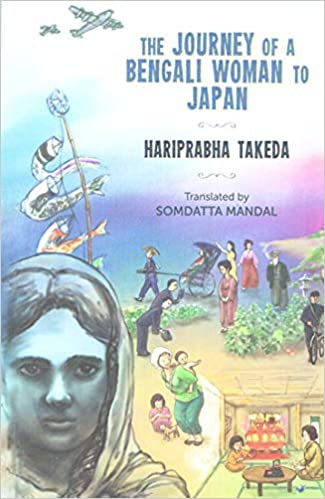
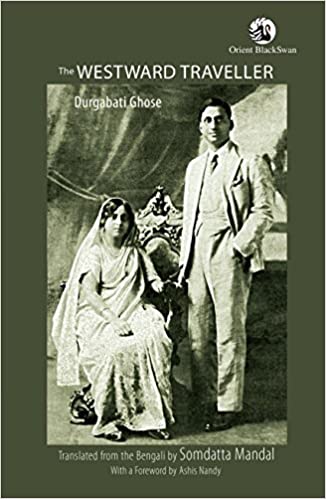
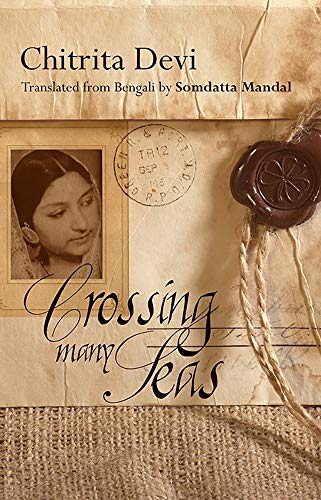
Among her translations on travel writing are The Westward Traveller by Durgabati Ghose with a foreword by Ashis Nandy, Wanderlust: Travels of the Tagore FamilyEnglande Bongomohila (A Bengali Lady in England) by Krishnabhabini Das, Bangamohilar Japan Jatra (A Bengali Lady’s Trip to Japan and Other Essays) by Hariprabha Takeda with a foreword by Michael H. Fisher, Chitrita Devi’s Onek Sagar Periye (Crossing Many Seas), Rabindranath Tagore’s Pather Sanchoy (Gleanings of the Road), and two travel memoirs of Nirmalkumari Mahalanobis along with Rabindranath Tagore, Kobir Shonge Europey (With the Poet in Europe) and Kobir Shonge Dakkhinattey (With the Poet in the South).

.

PLEASE NOTE: ARTICLES CAN ONLY BE REPRODUCED IN OTHER SITES WITH DUE ACKNOWLEDGEMENT TO BORDERLESS JOURNAL
Categories
Stories

Rakhamaninov’s Sonata

A short story by Sherzod Artikov, translated from Uzbeki by Nigora Muhammad

Nilufar was overjoyed. Finally, sitting in front of the piano she was able to play the sonata of her favourite composer without a score and without making a mistake anywhere. She was excited as she had not been able to master it for weeks, and no matter how hard she tried, her efforts were in vain. In the end, her relentless and hard work paid off, lo and behold.

Now she could easily perform Rakhmaninov’s famous “re-minor” sonata in a long-waited first concert program without a score. She felt very happy. Sometimes she would go to her red piano, sometimes she would stare at the picture of composers hanging on the walls of the room and she would walk back and forth. She even wanted to dance on tiptoe like a ballerina. But she was ashamed and changed her mind. If her twins had been there, no doubt she would have embraced them, kissed their faces, and shared her joy with them. Unfortunately, they were in a boarding school. They would come during the weekend.

She wanted to share her joy with someone while she was preparing dinner. She could not contain it. That’s probably why she often glanced at the black telephone set on the shelf in the hallway. After a while she went to the phone. She picked it up and dialed the required numbers. Then the connection was restored, and a familiar voice was heard from the receiver.

“I’m in a meeting.”

“Are you coming home early today?” she said, not caring that her husband was at the meeting.

“What’s up?” her husband asked in surprise.

“Everything is good,” she continued. “If you come, I will tell you. I have a wonderful surprise.”

“Okay, I will come.”

Her husband’s voice stopped. She assumed the connection was lost. Although she was a little upset that the connection was lost, she dwelt on her success again and was in a good mood. She smiled contentedly as she looked in the hanging mirror in the hallway.

Nothing and no one could hurt her at the moment. Because she felt she had achieved a huge success for herself. To that day, she could only perform Beethoven’s sonata dedicated to Eliza, Brahms’ waltzes, and two or three of Chopin’s small nocturnes without score. But they were short musical compositions that any amateur pianist could perform. They did not require extra training or talent. Rakhmaninov’s sonata, on the other hand, was longer and more complex structurally. If these two elements was neglected, it would confuse the performer and force her to make a mistake, even when performed with a score.

“What’s the matter?” her husband said.

He had fulfilled his promise and returned early from work. Nilufar saw him and applauded with joy.

She was imagining that on the day of the concert she would be beautifully dressed and with a bouquet in her hands. This dream would soon come true too, she thought. She gently took her husband’s hand and walked towards the room where the piano was waiting. She entered the room and pushed the brown chair close to the piano. She asked her husband to sit on it. Her husband, who didn’t understand anything, sat helplessly in the chair. She stopped in front of the piano.

“I will play Rakhmaninov’s “re-minor” sonata without a score,” she said, sitting in a chair. “Listen carefully!”

 She pointed her index finger at her husband like a child, her cheeks flushed with excitement. Then she put her finger in front of her nose and jokingly said “tss” to her husband. Then she began to play the sonata without a score. The mystery of music, which for centuries had shaken the human heart, comforted her and made her happy, embodied her pure love and painful hatred. The notes spread quietly through the room. This time the melody embodied the memories of the past in the human heart. The sonata always reminded her of her childhood. When she was a student at the conservatory, she was included in her personal program in various competitions. She remembered her all those performances during her childhood. It was the same a while ago and yesterday. It is the same now.

She would move her long and slender fingers over the black and white keys and play it flat. And sweet memories of a distant carefree and happy childhood wafted into her mind. Wrapping a white handkerchief around her mother’s forehead and baking hot bread in the oven, her heart sank for a moment as a prelude to memories. As a child, her mother always baked bread in the oven on Sundays. She was carrying a basket that was bigger than she was, and she couldn’t move anywhere near it. After the loaves were toasted and swollen, her mother would cut them up and throw them in the basket. And she would spread them out to make the bread cool faster. In the meantime, Nilufar would put cake bits in the pocket of her jacket. After that, she would enjoy eating these leaning on the apricot tree.

When the sonata reached halfway, the memories became more vivid. Lo and behold, she was tapping on the rotten wire in the street. She was small, like a squirrel. Her hair was blonde. Even then, everyone called her “blonde”. She was counting numbers non-stop, and her friends were hiding. After a while, she was looking for them everywhere. “Berkinmachoq,”* she sighed, her hands, which were constantly moving on the keys, suddenly weakened.

On summer days, she would not come from the street, ignoring the cherries hung by her father on her ears, and waving her hair, which was braided like willow twigs by her mother. She was much more playful.

If it snowed in the winter, it would be a holiday for her. She would make a Father Christmas with the kids in the middle of the street or play snowballs with endless fun. She would be on the sledge her father had brought her until the evening.

Not long after, she went to her uncle’s shop. He sold nisholda*. As a child, during the months of Ramadan, that uncle would always fill her bowl with nisholda . By the time she got home, she was licking the top of the nisholda with her finger. She would have a dirty doll in her arms and shoes with water on her feet.

“It would have been so sweet the nisholda,” she said casually. Then she recalled the days when she would go into every house with the children on the streets on the evenings of the holy month and sing the song of Ramadan.

We have come to your home saying Ramadan,
May God give you a son in your cradle...

They would sing that song. The song was long. Unfortunately, she only remembered the beginning. That’s how it would start. They would say it together with the children. Boys and girls sang Ramadan songs in unison, holding a long tablecloth from the corners, spreading it to collect money, sometimes sweets, fruits given by neighbours. The tablecloth was soon filled with what they had given. Then, sitting on a rock at the corner of the street, the children would evenly share the gifts. She often got apple and chocolate chip cookies. The coins were taken by boys.

Tears welled up in her eyes as the sonata was ending. The tears were for her childhood had that been left behind the parents who had died. Her bereavement was recent.

The sonata made her nostalgic and that is why she felt the need to master it. She had been performing this sonata a lot lately and with passion because she missed her childhood. This was also the reason why she decided to give a concert as a freelance artist. Probably, Sergei Rakhmaninov also missed his childhood in the United States during his years in exile. This is why he performed this sonata many times on tours in American cities and received applause. He deserved recognition. She looked at her husband questioningly after playing the sonata. There was a question in her eyes. The question was not “Did I perform well?”  But, “Did you remember your childhood, too?” She also wanted to tell him about her forthcoming concert at the city’s House of Culture. Her husband was ignoring her. There was no interest in his eyes. Maybe, he was anxious or thinking of his own past.

“I play the sonata without a score,” she said with an open face because her husband didn’t speak. “I wanted to tell you that. I also wanted to say that next week will be my first concert in the House of Culture.”

Hearing her words, her husband stood up like a man in despair. He came to her, scratching his forehead and loosening his tie.

“I hate that habit,” he said, pressing the piano keys once or twice as if for amusement. “You always bother me for trivial things. For instance, I will not be able to attend the presentation of our new product tonight. I’m missing such an important event just to satisfy your whim!”

Nilufar sighed and bit her lips hard. She whispered as “I wish they were bleeding”, she didn’t want to let go of her lips between her teeth. Then she laughed sarcastically in her head and closed the piano indifferently. Her hands and red lips trembled. Her husband shook his head when he saw that she was silent and walked towards the door.

“By the way,” he said as he walked out of the door. “I have to go in the morning tomorrow. There will be a wedding at our general manager’s house. So, iron my gray suit. It has been on the shelf for a long time without being worn. It may be wrinkled.”

Involuntarily, Nilufar looked at her husband sadly. There was no trace of the joy that had filled her heart. She did not want to get up, she could not move at all, She felt as if a stone were tied to her legs.

“I’ll iron it until you’re done eating,” she said in a broken voice.

She tried not to hear the sounds ringing in her ears. But it was useless. The happy, spotless, and carefree voices of herself and the children, which had remained under her ear as a child, did not go away.

We have come to your home saying Ramadan,
May God give you a son in your cradle...

Glossary:

*Berkinmachoq: the game of hide & seek

*Nisholda:  a sweet made in the month of Ramadan

Sherzod Artikov is from Marghilan of Uzbekistan. He was one of the winners of the national literary contest in 2019. In 2020, he published The Autumn’s Symphony in Uzbekistan. His book was translated to Spanish and English and republished in Cuba. His writing has been translated and published in anthologies from Bangladesh, Egypt, India and Canada.

Nigora Muhammad is from Namangan city of Uzbekistan. She studies at Namangan State University.

.

PLEASE NOTE: ARTICLES CAN ONLY BE REPRODUCED IN OTHER SITES WITH DUE ACKNOWLEDGEMENT TO BORDERLESS JOURNAL
Categories
Poetry

The Weather was Indoors with All the Best Deceptions 

By Ryan Quinn Flanagan

The Weather was Indoors with All the Best Deceptions 

 
The first time I rolled into a Fritz Lang movie, I was stringing up those balls the professionals would later use for tennis and resilient acts of lust. Cold calling butt-less chap ladders out of their unassuming altitude. The weather was indoors with all the best deceptions, pinching shadows right on the fibbery. No goose for fleshy gander, it was a real shindig of blossoming malcontents. All those close-ups and no evidence of anything. A man can try himself out of boredom while the lucky 13 of the alphabet is off stoking foolish superstitions into brand new sprawlings. And my iron hull for plasticine yogis. Borders and 80-year-old women refusing to change. I was chuffed to be in hiding. Not a screen writers' guild pen in sight, a flotsam time to be alive. Huzzah! Huzzah! Warn Lady Chatterley's bedroom Lilliputians. I'm sorry, Blefuscu is Romanian, as though Swift wasn't even trying. Like all those jubilant car wreck cymbals that want to announce the end of everything.

Ryan Quinn Flanagan is a Canadian-born author residing in Elliot Lake, Ontario, Canada with his wife and many bears that rifle through his garbage.  His work can be found both in print and online in such places as: Evergreen Review, The New York Quarterly, Borderless Journal, GloMag, Red Fez, and The Oklahoma Review

.

PLEASE NOTE: ARTICLES CAN ONLY BE REPRODUCED IN OTHER SITES WITH DUE ACKNOWLEDGEMENT TO BORDERLESS JOURNAL
Categories
Poetry

Christmas Cheer

By Malachi Edwin Vethamani

Christmas Cheer

The familiar sounds of carols 
and hymns are distant 
as are the smells of 
curries and freshly baked cookies. 

Boyhood memories warm the spirit
but the passing of the years
missing loved ones
brings a chill to the heart. 

The present so varied
and so unfamiliar 
of the once held dear
Christmas joy. 

A chef is roasting the turkey.
A waiter is pouring my wine.
Text messages are streaming in 
but give little Christmas cheer.

Malachi Edwin Vethamani is a poet and writer. His poetry publications include: Life Happens (Maya Press, 2017) and Complicated Lives (Maya Press, 2016). His edited volume of poems entitled Malchin Testament: Malaysian Poems (Maya Press, 2017) won the Best Book prize in the English Language category for the Malaysian Best Book Award 2020 organised by the Malaysian Publishers Association. His latest publication is an edited volume of poems entitled Malaysian Millennial Voices (Maya Press, 2021). His poems have appeared in various literary journals. He is Founding Editor of Men Matters Online Journal.

.

PLEASE NOTE: ARTICLES CAN ONLY BE REPRODUCED IN OTHER SITES WITH DUE ACKNOWLEDGEMENT TO BORDERLESS JOURNAL

Categories
Author Page

Suzanne Kamata

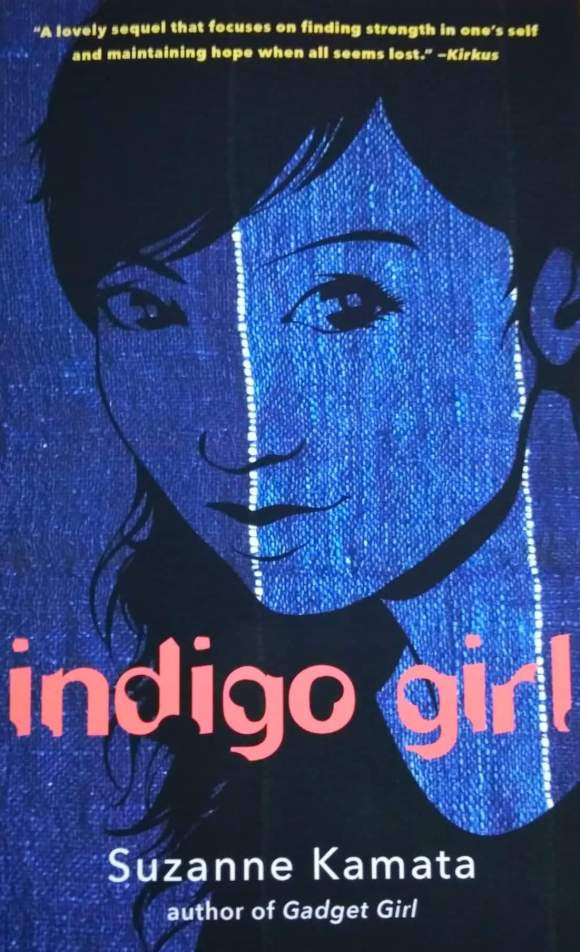
Recipient of a number of prestigious awards, Suzanne Kamata represents the best in the mingling of the East and the West. Her writing flows well and is compelling — exploring areas that are often left untouched by more conventional writers. Kamata has lived in Tokushima Prefecture, Japan, for more than half of her life. She is the author or editor of 14 published books including, most recently, The Spy (Gemma Open Door, 2020), a novella for emerging readers; the middle grade novel Pop Flies, Robo-pets and Other Disasters (One Elm Books, 2020) which won an American Fiction Award and was recently released as an audiobook; and Indigo Girl (GemmaMedia, 2019), winner of an SCBWI Crystal Kite Award and named a Freeman Book Awards Honor Book, as well as one of the Best Children’s Books of 2019 by Bank Street College. Suzanne has a poetry book called Waiting forthcoming in January 2022 from Kelsay Books.

Interview

In Conversation with Suzanne Kamata

Click here to read.

Poetry

Commemorating Hiroshima: Poetry by Suzanne Kamata

Click here to read.

Book reviews

Suzanne Kamata reviews Iain Maloney’s Life is Elsewhere/ Burn Your Flags. Click here to read.

Gracy Samjetsabam reviews Suzanne Kamata’s The Baseball Widow. Click here to read.

Gracy Samjetsabam reviews Suzanne Kamata’s Indigo Girl . Click here to read.

Book Excerpt

Suzanne Kamata’s The Baseball Widow. Click here to read.

Suzanne Kamata’s Waiting. Click here to read.

Notes from Japan

Suzanne Kamata’s column on Japanese culture and life. Click here to read.

Categories
Poetry

The Leopard & the Skylark

Written in Korean & translated to English by Ilwha Choi

Long Continuous Battle 
 
I have been battling for a long time.
There live two wild animals in my mind.
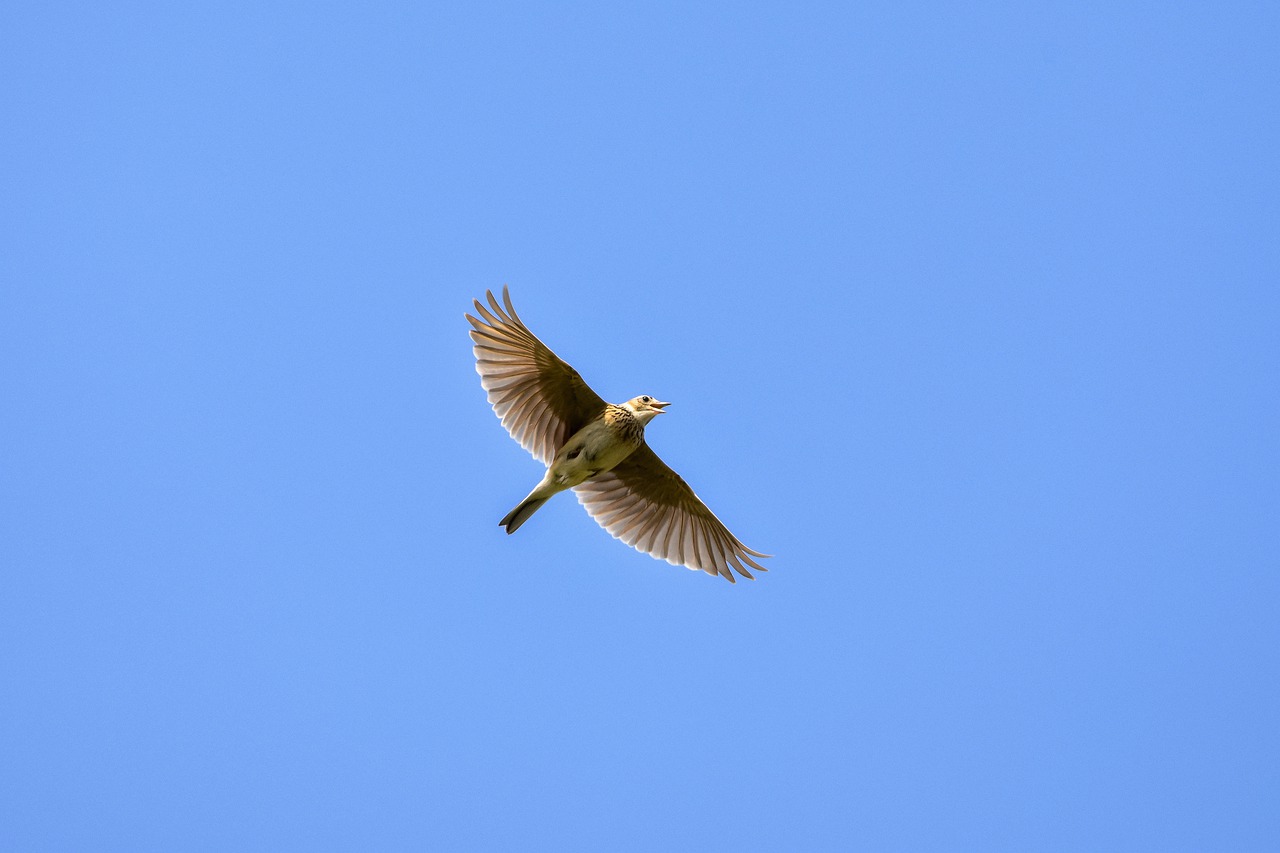
One skylark flying high with blue wings,
The other black leopard roaring with sharp teeth.
 
When the skylark finishes its song, the black leopard begins to roar.
When the leopard finishes its roaring, the skylark sings merrily in the sky.

I love the skylark, also I believe in the black leopard.
The world does not change though the bird sings merry songs
and the wild beast roars for a long time.

There is no other way but to love in order to forgive forever.
Departing forever is another way to love.

The black leopard on the Earth and the lark in the sky,
I am choked by their faithfulness.
There live two faithful animals in my inner world.

Ihlwha Choi is a South Korean poet. He has published multiple poetry collections, such as Until the Time, When Our Love will Flourish, The Colour of Time, His Song and The Last Rehearsal.

.

PLEASE NOTE: ARTICLES CAN ONLY BE REPRODUCED IN OTHER SITES WITH DUE ACKNOWLEDGEMENT TO BORDERLESS JOURNAL

Categories
Excerpt

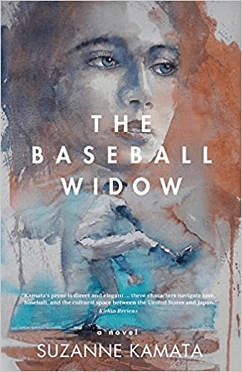
The Baseball Widow

Title: The Baseball Widow

Author: Suzanne Kamata

Publisher: Wyatt-MacKenzie Publishing (2021)

Christine loved Trina’s oak table. She loved this kitchen with its American-sized refrigerator decorated with animal magnets and children’s art, its scent of baked bread, and the cross-stitch samplers on the wall. She loved Trina’s dishes, painted with blue Chinese landscapes, like the ones that she ate from at her grandmother’s house when she was a child. She remembered that once her oyster casserole or Thanksgiving sweet potatoes were cleared away, she’d wondered about the pagoda on her plate, wondered what it would be like to visit such a place. And then finally she had. She’d been to China, Thailand, Singapore, Malaysia, and of course, Japan, where she now lived. Ironically, although Christine had fled America in search of the exotic and adventurous, Trina’s Blue Willow patterned dishes, this room itself, now filled her with yearning for all that she had left behind.

“How was the send-off?” Elizabeth asked from across the table, snapping Christine out of her daydream. Elizabeth looked great, as usual. Even though she’d given birth just a little over a month ago, she managed to keep her bottle-blonde hair touched up, and her poplin blouses ironed and unstained. Right now the baby slept nestled in her arms.

Christine smiled. “It was fine. Nobody cried. Not even me.” She’d thought that sending her son off on his first day of elementary school – on foot no less, since the children were required to walk to school in groups — would have been more wrenching, but what she’d felt was mostly relief. For the first four years of her life, her daughter Emma had been in and out of hospitals, and then there was that one terrifying week when both kids were in the ICU at the same time with pneumonia. But now they were healthy and sturdy and ready to be out in the world. Plus, it was nice to finally have some time for herself.

Trina gently tapped a spoon against her “Support Our Troops” mug. “I hereby call this meeting of the American Wives’ Club to order,” she said.

Christine raised her coffee cup to Trina in a toast. “The American Wives’ Club” — AWC for short — wasn’t an official organization. There was no club secretary, no president. They got enough of protocol with the Japanese P.T.A. and Kodomo Kai and other Japanese mothers’ groups. In reality, the AWC was composed of the three of them – Christine, Elizabeth, and Trina, wife of a Japanese professor, whose two chestnut-haired children, not yet school-aged, were now under the table clawing at knees. Elizabeth’s eldest child, a daughter, was in the second grade at a private academy with an English immersion program.

Although coffee was enough of an excuse for a gathering, on this morning they’d gotten together to give Elizabeth a baby shower. According to Miss Manners, a baby shower was supposed to be held in the eighth month of pregnancy, but etiquette be damned; the members of the AWC put enough time and energy into keeping track of and adhering to Japanese customs (exactly how much to spend on a summer gift for one’s boss, where to stand in an elevator, which days were inauspicious for hospital visits, etc.). Sometimes a little anarchy was just the right thing. The belated celebration was also out of deference to Christine, whose daughter had been fourteen weeks ahead of schedule, during Christine’s seventh month of pregnancy. For days, weeks, months, Emma had struggled in an incubator at the university hospital, and they had all learned not to take a baby’s easy delivery and good health for granted.

The doorbell rang then, and Trina jumped up. “Oh, I forgot to tell you all. I met a woman at the library the other day. I thought she might like to join us. She’s Canadian, but I think we can make an exception. We can be the North American Wives.”

“Yes, of course,” Elizabeth said. “The more, the merrier.”

Trina went to open the door, and the others moved their chairs to make room for another guest. Their heads turned when a slender, pale woman with strawberry blonde hair stepped into the room. She held a little boy of about three by the hand. Christine could tell by his eyes and brownish hair that he was biracial (“hafu” as the Japanese said) just as all of their children were.

“Hi, I’m Sophia Lang,” she said. She extended her hand to Christine, and then to Elizabeth.

“Sophia has just signed on as an adjunct at Tokushima University,” Trina said. “Her husband is a scientist at Otsuka.” Christine nodded. They were all familiar with the pharmaceutical company, one of the area’s largest employers, and maker of that ubiquitous, ridiculously named sports drink, Pocari Sweat. Elizabeth’s husband worked there, too. “They just moved here from – where was it?”

“Maryland,” Sophia said. “My husband is originally from Tokushima. We thought it’d be nice for Kai, here, to get to know his father’s family better. And also, work on his Japanese language skills. My husband asked for a transfer, and here we are!”

She had that fresh-off-the-plane look about her. Christine had read somewhere about the stages of culture shock – she’d experienced them herself. First, was the euphoric falling-in-love stage, where everything was new and exciting. Pretty soon the shine would wear off, and irritation would set in. She’d get sick of having little kids point at her hair, and of people asking if she could use chopsticks. She’d discover that the bank machines closed early, at nine p.m., and that if she didn’t have her laundry out by eight in the morning (so late!), the neighbours would chat about her.

“Have a seat,” Trina said, ushering Sophia into a chair. “And Kai, maybe you’d like to go play with Misa and Kenta. Kids! Out from under the table! Show this nice little boy your toys!”

Trina’s two and three-year olds emerged, giggling and ran out of the room. Kai looked up at his mother for confirmation, before scrambling after them.

“Ah, peace at last,” Trina said, pouring coffee for Sophia into a University of Virginia mug.

They went around the table and introduced themselves.

“I’m Elizabeth Tanigawa, from Kentucky. I’m doing some research about expatriates in Tokushima,” she drawled. “I’m planning on writing a book or an essay or something.” She was always immersed in some project. For awhile, it had been indigo dyeing, and before that pottery, and even longer ago, she’d been obsessed with local folklore. During the latter phase, she’d compiled dozens of stories about trickster raccoon dogs, but she’d never tried to publish them. It was just something to keep her busy.

“Well, that sounds interesting,” Sophia said politely. “I didn’t know there were enough expats here for a book.”

It’s true that there were hardly any foreigners in Tokushima Prefecture. Christine had gone days without seeing another non-Japanese in the capital city, weeks, even. Although bridges now linked the island of Shikoku via sparsely populated Awaji Island with Honshu, there were no high speed bullet trains zipping across the island. There were few jobs for foreign women outside of teaching English or pouring drinks in hostess bars, and tourists from abroad rarely added the island to their agenda.

“Oh, but there have been lots,” Elizabeth said, and here, she nodded at Christine, “missionaries from South Carolina, an entire camp of German Prisoners of War, and there was also a Portuguese sailor who settled here and married the little Japanese girl that was his housemaid. Kinda like Madame Butterfly. There’s a museum about his life up on top of Mount Bizan.”

“A girl?”

“She was quite a bit younger,” Christine put in. “But she was an adult. I’m sure she knew what she was doing.” In truth, Christine thought the sailor, who appeared in photos with a long white beard, was way too old for his bride, but she suddenly felt perversely defensive of all things Tokushima. It was her home now, after all.

When it was her turn, she said, “I’m originally from Michigan, most recently from South Carolina. I’ve been living here for ten years. My husband is a high school baseball coach.”

“We call him the ‘imaginary husband,’” Trina said, “because no one has ever seen them together.”

Christine forced herself to join in the laughter, even though she was the one who’d first come up with the moniker. 

“She’s a baseball widow,” Elizabeth explained to the bemused Sophia, who hadn’t been in Japan long enough to understand how demanding high school sports could be. There was no such thing as a baseball season. Once students joined the club, they were busy practicing and playing all year round. The only days off were during the ten days of winter vacation. The rest of the time, even during the “off-season,” from the end of October till about the beginning of February, they had training sessions every day after school and on weekends. Hideki was almost never home.

“I saw your husband on television,” Elizabeth said. “Just a couple of weeks ago. His team made it to the quarter-finals, didn’t it?”

Christine nodded. “Yeah, I was there. Up in the bleachers.” Before the kids had come along, she’d gone to all of his games, but they were too young to enjoy baseball. The one time she’d brought Emma to the stadium, she was dismayed to find that there was no wheelchair access, even though the arena was relatively new. She’d had to ask a couple of high school boys to help carry Emma and her wheels up the concrete steps, into the stands. And then of course, after glimpsing Daddy at the sidelines and waving furiously with no response, both Emma and Koji had grown quickly bored. Now Christine mostly watched the games on TV. Once the number of teams was whittled down to eight, the games were broadcast on the local NHK station, or at least public access TV. It was hard to concentrate, though, when Koji and Emma were grabbing at the remote control, pushing for cartoons. The other day, Christine had asked her mother-in-law to babysit so that she could watch Hideki’s team live. Even though they’d lost, she’d felt emotionally involved in the game. Being there made her feel closer to Hideki, almost as if they were in it together.

“Do you have any children?” Sophia asked, bringing her cup to her lips. Christine saw that her fingernails had been manicured. A diamond glinted off her ring finger. In a couple of months, she won’t be wearing that, Christine thought. She’d figure out that it was way too gaudy for rural Japan.

“Yes, two. A boy and a girl.”

“Do they go to school?” Sophia asked.

“Koji’s at Aizumi West. He just started first grade today.”

“And your daughter? You said you have a little girl?”

Christine nodded. “Her name is Emma, after Queen Emma of Hawaii.” Christine and Hideki had gotten married at a plantation on Oahu. Afterwards, they’d done some sightseeing around the islands, and Christine had become captivated by the biography of Queen Emma, who was both Anglo and Hawaiian – a multicultural woman who did good deeds, a mixed race royal. The perfect role model and namesake, Christine thought. “My daughter goes to the kindergarten at the School for the Deaf.”

“Oh!” Surprise and pity flashed across Sophia’s face. By now, Christine was used to apologies and embarrassment at the revelation of her daughter’s disabilities. She forced a smile to show that it was no big deal, that there was no need to feel sorry for them. Everything was fine!

“Have you thought about taking her to the States?” Sophia asked. “My husband and I had a little scare after an ultrasound, and we decided that if our child had any handicap, we would stay in the U.S. Japan is a couple decades behind in that area, isn’t it?”

Christine felt the blood rush to her face. “We’re keeping our options open,” she murmured, though that wasn’t exactly true. Hideki was passionate about his job and she would never ask him to quit. He had become something of a local celebrity. People respected him, just as they seemed to respect her for being married to him. Whenever she dropped by the baseball field, say, to bring Hideki his forgotten cell phone, or drop off Koji to “help out” with Saturday afternoon practice sessions, the players doffed their caps and bowed to her, the coach’s wife. It made her feel like a First Lady. More importantly, as a public school teacher, Hideki was assured lifetime employment, and he also had good health insurance. With a kid like Emma, you had to have ample coverage. Christine suspected that with all of her pre-existing conditions, Emma was uninsurable in the States. And last, but not least, as the only and eldest son of his widowed mother, Hideki was expected to look after her and act, when necessary, as head of the family, representing the Yamada clan at weddings and funerals that his mother didn’t want to attend. He had responsibilities.

Not every family had the resources – or desire – to up and move across the world every time circumstances changed. And yet, Christine had often wondered if Japan was the best place for their daughter. Or for their son, for that matter. At times, she thought they’d be better off in Sweden, where parents were required by law to teach their deaf children sign language. (Here in Japan, Hideki was too busy to study anything but baseball stats, and Christine often had to interpret between father and daughter.) Other times she fantasized about moving to Hawaii, where multicultural was the norm.

 “Well, then, ladies,” Trina said, clapping her hands together. “I think it’s time for some games.”

About the book:

When Christine, an idealistic young American teacher, meets and marries Hideki Yamada, an aspiring Japanese high school baseball coach, she believes that their love with be enough to sustain them as they deal with cultural differences. However, Hideki’s duties, and the team of fit, obedient boys whom he begins to think of as a surrogate family, take up more and more of his time, just as Christine is struggling to manage the needs of their multiply-disabled daughter and their sensitive son. Things come to a head when their son is the victim of bullies. Christine begins to think that she and her children would be safer – and happier – in her native country. On a trip back to the States, she reconnects with a dangerously attractive friend from high school who, after serving and becoming wounded in Afghanistan, seems to understand her like no one else.

Meanwhile, Daisuke Uchida, a slugger with pro potential who has returned to Japan after living abroad, may be able to help propel Hideki’s team to the national baseball tournament at Koshien. Not only would this be a dream come true for Hideki, but also it would secure the futures of his players, some of whom come from precarious homes. While Daisuke looks to Hideki for guidance, he is also distracted by Nana, a talented but troubled girl, whom he is trying to rescue from a life as a bar hostess (or worse). Hideki must ultimately choose between his team and his family.

The Baseball Widow explores issues of duty, disability, discrimination, violence, and forgiveness through a cross-cultural lens. Although flawed, these characters strive to advocate for fairness, goodness, and safety, while considering how their decisions have been shaped by their backgrounds.

About the author:

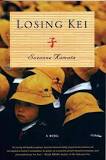
American Suzanne Kamata has lived in Japan for over thirty years. She first arrived in Tokushima Prefecture as an Assistant Language Teacher in public schools. In her second year in Japan, she met her husband, a Japanese high school teacher (and later, high school baseball coach). While raising twins, she wrote and published Losing Kei (Leapfrog Press, 2008), her first novel for adults. Since then, she has published several more award-winning books including the novel Gadget Girl: The Art of Being Invisible (GemmaMedia, 2013) which was awarded an Asian Pacific American Librarians Association  Honor Award for Young Adult Fiction; Indigo Girl (GemmaMedia, 2019), winner of a Gold Nautilus Award and an SCBWI Crystal Kite Award; and Squeaky Wheels: Travels with My Daughter by Train, Plane, Metro, Tuk-tuk and Wheelchair (Wyatt-Mackenzie Publishing, 2019) winner of a CIBA Hearten Award and a Next Generation Book Award.  She is an associate professor at Naruto University of Education.

.

PLEASE NOTE: ARTICLES CAN ONLY BE REPRODUCED IN OTHER SITES WITH DUE ACKNOWLEDGEMENT TO BORDERLESS JOURNAL

Categories
Poetry

Poetry of Pain

By Harsimran Kaur

The Last Time I Saw You Alive Was on St. Valentine's Day

Red.
Beneath the couch, mattress, table, kitchen slab, the Shakespeare guide. 
Irksome lads on a sudden Sunday evening.
Debris. Tired walls of the restaurant.
Dome-inspired heart shapes,
Hollow cards, kisses, hugs, chocolates.

Pink.
Skin to skin, flesh to flesh,
Scattered dreams. A dinner for two. Falling apart.
The last time I saw you alive was on St. Valentine’s Day,
The day of love. Love?

Harsimran Kaur is an author of The Best I Can Do Is to Write My Heart OutI am Perfectly Imperfect, and Clementines on My Poetry Table

.

PLEASE NOTE: ARTICLES CAN ONLY BE REPRODUCED IN OTHER SITES WITH DUE ACKNOWLEDGEMENT TO BORDERLESS JOURNAL

Categories
Essay

The Incongruity of “Perfect” Poems 

Rakibul Hasan Khan discusses Sofiul Azam’s poetry collection Persecution from a postcolonial perspective

Sofiul Azam is one of the most important English language poets from Bangladesh. Persecution (2021) is his fourth poetry collection, which has recently been published by Salmon Poetry (Ireland). His poetry has already appeared in some of the leading poetry or literary journals across the globe, including Prairie Schooner, North Dakota Quarterly, The Ibis Head Review, and Postcolonial Text, to name a few. In Persecution, Azam shows an astonishing poetic talent, offering some wonderful poems on the themes of love, war, and politics, among others. If we read the poems of this volume purely from an artistic viewpoint, we will find most of them as what might be called “perfect” poems, but we may find the same poems somewhat problematic if we read them from certain political perspectives.  

The volume has recently come to me travelling a long distance from its publishing house in Ireland to my present residence in New Zealand. This journey, which began in Bangladesh where Azam lives, has covered three different countries of three continents. Such a transnational breadth is the main motivation for writing in English for many South Asians today, who have internalised English as a language of their own for their creative expression, inherited from their colonial past.

These poets capture the complexity and multiplicity of South Asian life with the common thread that binds them all — the language, English. Their expressions are somehow distinctly South Asian. This fact makes Azam stand apart from many of his counterparts in Bangladesh. Very few English language poets from Bangladesh, especially those who were born and brought up there, write such “perfect” poems in English. But Azam’s perfectly written poems in “native” like English with somewhat Western outlook and a poetic expression deriving from Western literary canon make some poems of Persecution incongruous in the South Asian context. In this essay, I will shed light on this incongruity while exploring some other features of his poetry.    

The most obvious influences on Azam in this collection are Eliot (1888-1965), Auden (1907-1973), and Walcott (1930-2017). Perhaps, among them his true poetic inspiration is Walcott, who is sometimes alleged to be more an English poet  than a Caribbean. This is somewhat true about Azam as well, but his situation is, of course, unlike Walcott. Azam is a self-made poet who has mastered his art of writing poetry in English through reading, overcoming his spatial “limitation” of living his whole life in a Bangla dominant country like Bangladesh where English is no more than a foreign language. Therefore, it would be an injustice not to recognise his extraordinary achievement in mastering the language to write like a ‘native’. But his poetry is not all about language. Azam’s success in Persecution lies in the fact that almost each poem is neatly written, maintaining outstanding poetic and artistic expressions. If the poems were decontextualised from their social, political, cultural, and historical backgrounds, this would be a collection of “perfect” poems. Azam in Persecution is like Walcott – more an English poet than a Bangladeshi! It is, of course, an overstatement, but there are some truths behind this assertion. To illustrate my point, I quote some lines from his poetry:

I tell myself that I can afford to be happy
like a grizzly bear only having to feast on salmon
moving upstream through shallow creeks to lay eggs and die.
I need to act like a hiker does, getting all he needs
On the wild shrubbery dense paths in Yellowstone. 

(“The Capitoline Wolf,” 14-18, pp. 15)

In the quoted lines, no one can doubt the mastery of Azam’s versification. If one is not informed of who is the writer of these lines, it would be hard to imagine these were written by a Bengali (English) poet. Objects and images like “grizzly bear”, “salmon fish”, “hiking” and “Yellowstone” are so foreign in the Bangladeshi or even in South Asian context that they seem to be incongruous in an otherwise perfect poem.  

But Bangladesh is not untraceable in Persecution, particularly in the part entitled “Heat of Interrogations”, where Bangladeshi landscapes reappear time and again through the poet’s nostalgic recollection of his childhood life in his hometown near the Garo Hill. The hill and a backyard pond in his grandparents’ house are the two most frequented places for the poet to escape from the complexities of metropolitan life of Dhaka where he lives. There is a clear undertone of English romantic poetry in the poems of this section. The quoted lines below may clarify my point:

I grew up picnicking in the Garo Hills.
In summer, I saw trees and clustered vines
dance in the wind and get covered with red dust. 

One day we will go there, to see together
the rain falling and washing the dust 
off their green foliage. 

(“Rain,” 28-33, pp. 17)

This superb poem somehow reminds me of Yeats, especially the early Yeats of romantic phase. I quote some lines from “Coming of Age,” another poem from this part, which casts a shadow over a nostalgic recollection of childhood event through the experienced poet’s realisation of its innocent cruelty:

Even as a child, I did atrocities like floating rat pups
in a coconut shell on a pond’s calm water.
I hear their sqeaks though I’m not degaussed
to such evils yet, drifting far from atonement. 

(11-14, pp. 12)

Such memories are the backbone of his poetry. In retrospect, he offers a profound insight into his life, which has a general appeal: “What am I but an accumulation of memories, / each of which is surmounted with unsuccess?” (16-17). It is true that every individual is an accumulation of memories.

This is a prominent feature of Azam’s poetry to attempt to give vent to some sad truths of human lives in general terms, especially in this part of the volume. The following lines from “The Pond at Grandpa’s House” may support my claim:

                       But I
Remain tensed like a hyacinth
Worrying about the lowering water. 

(17-19. pp. 19)  

This “lowering water” perhaps makes all of us tense, humans whose existence is as uncertain as that of a hyacinth and threatened by the drying up of water – the most vital source of existence. It is more so for Azam who does not want to strike his root in any particular place:

                              I don’t ever relish
the singular idea of being rooted in just one spot;
I rather feel like a rhizome branching out new roots
from its nodes, trying out its various potential climates
for the plurality is itself a self-renewing adventure.
Losing faith in those too preachy about the singular,
I prefer to be an unpaired jerk lusting for the plural.
If I say this planet is where I began and my windows
open into the universe, would I be allowed to belong? 

(“Earth and Windows”, 22-30, pp. 30) 

This is an unequivocal statement of Azam’s internationalism or transnationalism, renouncing any specific national identity.

Azam’s preference for a transnational identity is a common choice among many poets and writers of the so-called postcolonial world. It makes them different from the traditional postcolonial poets who usually express their deep desires to be rooted in their lands and cultures. Therefore, Azam’s choice of a transnational identity, against the backdrop of his ancestral home that he often revisits, can be interpreted as the conscious choice of a poet whose writing in an adopted language opens up before him an outstanding opportunity to explore other horizons. But there are scopes for raising questions about the intention of such transnationalism. Is it an opportunity for the poet to make his poetry more presentable to an international audience, since creative writers in English from Bangladesh and South Asia in general inevitably sense the shadow of an international as well as an unknown readership at the back of their minds?

I am aware that I am making a clichéd and contentious claim, and I may even be charged for being a nativist for raising such questions. Therefore, I must clarify my discomfort in coming to terms with the idea of transnationalism, which I think is largely confined to privileged people who can afford to assume multiple identities. This is perhaps a narrow and simplistic view of transnationalism, but it cannot be denied that those who adopt transnational or multinational identities are generally from privileged social positions. However, one particular feature that intrigues me the most is Azam’s romantic recollection of the past often with a profound attachment to nature. It makes him, to me, the last romantic of the post-postmodern age!

Part two of the book, “The Flames of Desire,” also exemplifies his romanticism. It is the spiciest part of this volume, but some of the poems in this part slightly disappoint because they do not fulfil my expectation of capturing the complexities of human relationship that I expect from the twenty-first century love poems. I am quite sure that many readers will differ and I admit that what makes me critical of Azam in this volume is essentially because of our ideological differences; his poetry as a form of art has mostly nothing to do with it. However, an exciting feature of this part is Azam’s experiments with metaphysics. This part brings out the influence of English canonical literature in shaping his poetic sensibility and artistry. On the one hand, the erotic and sensual images that he creates with an abundant use of conceits may remind one of John Donne, on the other, the rendering of the metaphysical elements in a modernist vein will remind one of T.S. Eliot who rejuvenated metaphysics in modernist poetry. The following lines from “Krishna’s Return Home” show evidence of his use of metaphysics:

As I reluctantly walk out of your woolen warmth
far worthier than the promise of a kingship
in heaven, I see washing on the line under the sky
with a few stars peeping like pot-bellied spies
through the curtains of dark clouds. (1-5, pp. 37)

These lines, once again, reflect the impressive craftsmanship of Azam who succeeds in matching the poetic talents of the English poets who influence his poetry.  

The extramarital sexual trysts that Azam accumulates in this part may titillate readers. But while emulating the erotic art of a seventeenth century poet like Donne who is notorious for his misogyny, Azam also falls into the same trap of presenting women as an object of men’s sexual pleasure, without any agency. The poem “Who Doesn’t Want to Make Love to Someone’s Wife?” is a case in point, from which I quote the following lines:

Could I borrow you?
I promise you will be returned unhurt to him
who’ll know nothing of rain’s work on a taro leaf. 

(10-12, pp. 47)     

This wonderful poetic expression is problematic for its gendered undertone. Although it may sound like making a gross interpretation of a love poem, I cannot overlook the fact that the quoted lines’ that show women are men’s possessions and they can be borrowed like any other objects. It sounds like a very offensive idea to me. Similarly, in some other poems, he compares different parts of a female body with fruits to be consumed by men.

The third part of Persecution, “Embers of Disappearance,” contains the most politically conscious and powerful poems. I enjoyed the poems of this part the most, but some of those are, unfortunately, problematic for being Eurocentric in outlook. One example of Azam’s Eurocentrism or a Western attitude is his treatment of wars, which is a recurring theme of this part. Surprisingly, Azam does not look beyond the world wars of the twentieth century to reincarnate the horror of war, assumably because of his politically apolitical and liberal humanistic Western outlook. Here lies the main incongruity of his poetry, at least from my ideological perspective. I think it is incongruous of a twenty-first century Bangladeshi poet to rely so heavily and uncritically on the World Wars to reflect on the horrors of wars, whereas there are so many ongoing and past wars in his part of the world, so many struggles of the oppressed.

Even his so-called transnationalism and lack of belonging to any particular place perhaps do not justify his stand because there are also many poems in this volume that reflect his awareness of place and time. Therefore, his position is curiously ambivalent in relation to his homeland. This kind of ambivalence is often considered to be a quintessential characteristic of the so-called postcolonial poets, but the paradox is that Azam does not seem to be very keen to identify himself as a postcolonial poet.  

Azam’s treatment of wars also indicates the influence of modern English poets on him. The following lines from “Requiem for the Undead” reflect his reminiscence of Eliot’s rendition of the horror of the First World War in “The Wasteland”: “A desert greens with corpses planted as seedlings. / Did dry sands wish to be washed out with blood?” (11-12, pp. 76). In the same poem, Auden’s account of his devastating experience of the Second World War in “The Shield of Achilles” is echoed:

Weary footfalls, the oars knifing the watery flesh.
The dreams that linger are burst-out bubbles
or hollowed-out conches washed on alien shores.
Batons, barbed wares, and the cold greet the future.

(21-24, pp. 76) 

Similarly, in another poem, he echoes the final line of Walcott’s famous poem “A Far Cry from Africa.” Walcott writes “How can I turn from Africa and live?” and Azam writes “How can I write poems and think of beauty alone?” (“Worries at a Hilltop Resort”, 27, pp. 89). Such kind of “intertextualities” are often intentional. They are undoubtably very artistic and evocative expressions, but the problem is neither the intertextuality nor the art, rather the context of the time and place when he wrote these poems. Do I sound like a nationalist now? I would rather call myself a postcolonialist. However, the influence of classic English war poets like Wilfred Owen or Keith Douglas, or the Cold War period’s poet Boris Pasternak, or the holocaust theme of Auschwitz in his poems indicates not only his inclination to present twentieth century modernist themes but also his Western point of view of meditating on his own experiences and perspectives. In this sense, he is a twenty-first century modernist poet from a postcolonial location, although it is not unusual among the Anglophone postcolonial poets to embrace Western modernism as Jahan Ramzani explains in his comprehensive study on such poets in A Transnational Poetics (2009). The irony is that Azam and many others seem to reject the identity of the “postcolonial,” but that identity persists to hang stubbornly around their necks like the dead albatross.

The most ambitious poem of this volume is “Prayers to the God of Jihadists.” In this poem, Azam deals with the issue of Islamic radicalism, which is a pressing concern for the contemporary world, particularly for the West. Azam also writes the poem largely from a Western perspective, which is evident in his use of the word “jihadist” – a popular Western coinage to describe the radical Muslims, and it is sometimes indiscriminately used to label Muslims in general. For many in the West, Islamophobia has ominously led to suspect every Muslim as a potential jihadist, and by writing this poem from their perspective, Azam seems to simplify a complex issue. The poem thus turns out to be a problematic one despite having enormous potentialities to become a great poem.    

Nonetheless, there are many poems or short expressions in Persecution which save Azam from doing injustice to his poetic merit. “Persecution” and “The Photographer” are two such poems. In these poems, Azam offers exemplary political consciousness, being fully aware of his time and place. I quote some lines from “Persecution”:

In the wake of the Confederate flags flying
o’er the land of the free and the home of the brave!
I know brown won’t ever be de-browned to white. 

I’m a genealogist, cracking the encryption codes
of all those suspicions under my critical lenses.
Oh, don’t let colour and culture make distance between us.

Elsewhere lines of sanity are now increasingly blurred.
Erich said Hear, O Israel! A new Holocaust is raging on.
So between an anvil and a hammer I stammer:

For Jews in Hitler’s war my sad tears drip,
Also for kids bombed out in the Gaza Strip.
Not anti-Semitic but you know Zionists never get it. 

(43-54, pp. 93)  

Whereas the above lines from “Persecution” express Azam’s consciousness of international politics, the “The Photographer” represents his awareness of national politics. In the latter poem, Azam makes a bold statement about political persecutions in Bangladesh. The photographer in the title of the poem alludes to a renowned photographer and political activist in Bangladesh named Shahidul Alam, who was arrested on the ground of sedition during a time of political unrest in 2018. In the following lines from the poem, Azam asserts his support for the photographer, protesting the repressive political regime that restricts freedom of speech:

                         I want caged birds
to sing their dreams out loud so that captors

feel the horror of wings being of no use.
Palmyra palm trees, though rooted,
make wings of their fronds. And only freedom

gets us on the wing. But in this country,
rules from their laboratory rain down on us
clay subjects and wash away what we made

solid with labour. I wonder if they’ll wise up
to the light brewing under darkness.
Those mute photographs will be vocal soon. 

(“The Photographer”, 17-27, pp. 104)

Thus, Azam expresses his solidarity with an artist who fights for freedom of thoughts and expressions through photography. This poem of a national subject matter has an international significance, for nowadays persecutions for dissents are very common everywhere around the world. It also justifies the titling of the volume.   

In fine, I repeat that Persecution is a collection of “perfect” poems. There are some problematic areas in this volume, but those are hardly because of any artistic weakness of the poems; rather, Azam’s ideological position sometimes weakens his political stance. His over cautiousness with form and expression is probably another reason of his political compromise. There is hardly any contemporary issue that he does not deal with in this relatively thin volume. Though I have not mentioned it in my discussion, his ecological consciousness is another highlight of this book. Therefore, I warmly accept this collection, keeping in mind the way the speaker of one of his poems asks his beloved to accept him with all his imperfections:

                        I am not

requesting you to accept me as a gem
you might have lost by mistake on the way,
rather as one humanly rife with imperfections. 

(“Who the Hell Benefit from Denials?,” 51-54, pp. 60)

Rakibul Hasan Khan is a PhD Candidate in English at the University of Otago, New Zealand. He can be reached at rakib.hasan82@gmail.com.

.

PLEASE NOTE: ARTICLES CAN ONLY BE REPRODUCED IN OTHER SITES WITH DUE ACKNOWLEDGEMENT TO BORDERLESS JOURNAL