Categories
Slices from Life

Messages through Space and Time

Meredith Stephens explores letter writing as an art that can stretch beyond a person’s lifetime and across borders of all kinds

I walked out to the end of the driveway of my Adelaide house, unlocked the letter box, and among the flyers and political brochures, I found a New Year’s card from a Japanese student called Mutsumi. It had been two years since the beginning of the pandemic, and I have been teaching on Zoom ever since. I have never met Mutsumi in person but have taught her for the two years online. When I taught in person in Japan, students would sometimes send a New Year’s card to my local Japanese address, but I had never received one at my Australian address.

New Year is just as important in Japan as Christmas is in my home country of Australia. In the pre-digital age we would send Christmas cards to friends and family destined to arrive on December 24th at the latest. They never arrived on Christmas Day because it was a public holiday. In contrast, in Japan, New Year’s cards are delivered on New Year’s Day and never any earlier. They may arrive later though, as receivers scramble to reply to those from whom they had not anticipated receiving a card. Although I had often received cards as late as the end of the first week in January, I had never received one in February. During the pandemic, international deliveries were experiencing considerable delays and some were even returned to the sender. I was grateful the New Year’s card had traversed the seven thousand kilometres to reach me at the southern coast of the southern Australian continent.

I looked at Mutsumi’s card and realized that the presentation of calligraphy was just as important as the message. Written Japanese is not just a means of relaying a message but also an art form. Primary school children must purchase a calligraphy set and are issued a calligraphy textbook to be used in their weekly calligraphy lesson. Fifteen years ago, when my daughter was in primary school, her homework was to create a piece of calligraphy which read Yama nobori, or ‘Climbing a Mountain’. The image below shows her doing her homework on the kitchen table, carefully pressing the calligraphy brush into the ink before she writes the characters on the rice paper.

English handwriting was also elegant in the writing of our forebears, although it wasn’t written with a brush. Here is a postcard written by my great great grandfather to my grandmother when she was about five, around 1907 when they cost only one penny to send. It reads, “Dear Emilie, Hope you had a good sleep last week and that you are feeling fit for school again next week. Love to all, From Grandfather.”

Although the writing is ornate the content is quotidian. The affection for his granddaughter is revealed not just in the message but also in the handwriting style.

A handwritten postcard, whether it is written in Japanese in 2022 or in English in 1907, may be considered an aesthetic work. Handwriting conveys both the literal meaning of the words and the feelings for the recipient. As Kathleen Parker reminds us[1], the pleasure of receiving a letter is that both the sender and the receiver have touched the same piece of paper. The postcard above has been touched by both my great great grandfather and me, at an interval of 115 years. I am sure that when he was writing to his granddaughter asking after her health in 1907, he never imagined that his great great granddaughter would be touching and reading it in 2022.

I rarely have a chance to put pen to paper these days, other than when writing a shopping list. My fingers fly across the keyboards almost as quickly as I can think, in a qwerty fingertip language. That’s why I appreciate those who take the time to select and purchase a postcard, and choose a fine pen or brush to produce an elegant written message that I may fondly linger over for years to come.

[1] Kathleen Parker, 2010, as cited in Baron, S. (2015). Words onscreen: The fate of reading in a digital world. Oxford University Press.

.

Meredith Stephens is an applied linguist in Japan. Her work has appeared in Transnational Literature, The Blue Nib, The Font – A Literary Journal for Language Teachers, The Journal of Literature in Language Teaching, The Writers’ and Readers’ MagazineReading in a Foreign Languageand in chapters in anthologies published by Demeter Press, Canada.

.

PLEASE NOTE: ARTICLES CAN ONLY BE REPRODUCED IN OTHER SITES WITH DUE ACKNOWLEDGEMENT TO BORDERLESS JOURNAL

Categories
Pirate Poems

Pirate Blacktarn Fights Pollution

By Jay Nicholls

PIRATE BLACKTARN FIGHTS POLLUTION


Pirate Blacktarn, Terror of the Lemon Seas 
Stopped eating his dinner of green, mushy peas. 
“I’m tired of this, I want some fish,”
He complained to the cook, waving his dish. 

“There aren’t any fish,” said Big Bob the Cook, 
“Just go up on deck and take a good look.” 
The crew dangled their nets far over the side, 
But no fish came to bite and the hungry group sighed.
 
“Why is the sea the colour of murk?”
“Well if you ask me, it’s pollution at work,”
Said Bosun Mick, who knew about things. 
He pointed to a bird with sticky black wings. 
“There’s some nasty poison dumped in the sea,
Killing all the fish and it could kill you and me. 
The Lemon Seas are in a gruesome mess, 
I don’t know what we can do unless…”

“What?” asked Blacktarn, thinking of his dinner. 

“Unless we can catch the no-good sinner 
Who’s dropping the poison and spoiling the water 
And causing all this harm and slaughter.”

“Er, that’s a bit much,” muttered Blacktarn in fear. 
“Yes, yes,” yelled the crew, “what a great idea.”

So away they sailed, with a brisk wind behind them,
Hunting for polluters and all set to find them. 
They hadn’t sailed far when they saw dark smoke 
And sniffed a whiff that made them choke. 
Then a dirty old ship came close into view
With a mean and moody and miserable crew. 
Stacked on the deck stood barrels of gunge
All lined in a row and ready for the plunge
Into the sad Lemon Sea, all grimy and greasy. 

But Pirate Blacktarn was feeling uneasy. 
“That ship’s got guns,” he said as he stared. 
“Come on Captain, we’re not scared,”
His crew all called, “STOP YOUR POLLUTION, 
You’ll have to find a better solution.”

“STOP  STOP  STOP  STOP!”

BANG!  Went the dirty ship’s guns in reply, 
BANG! BANG!  And fiery flames shot high. 

Blacktarn quavered, “I think we’d better go.” 

“No,” said Stowaway Fay, “no, no, no.” 
“No,” said the crew, “are you a wimp or what?” 
“A wimp, me? Nonsense of course not. 
But what shall we do? You tell me that.” 

“Perhaps it’s time we had a little chat,” 
Said Parrot Tim and away he flew. 
“What on earth is he going to do?” 
Wondered Bosun Mick as he flew ever higher,
Weaving and swerving to avoid the gunfire. 

Tim reached the dirty ship and perched on the mainstay. 
“I think you’d better listen to what I have to say
Or a horrible harm might come your way. 
You must take those barrels of poison away.” 

The dirty crew laughed, “Let’s shoot that bird, 
In case it thinks we haven’t heard.”
“Your last chance,” said Tim with a warning squawk.
“Huh,” jeered the crew, “this is just parrot talk.” 

“Right,” said Tim and he began to sing. 
Now a parrot song is not a nice thing. 
The dirty crew groaned and covered their ears. 
“Shoot this parrot, it’s reducing us to tears.”

But as he sang, the sea seemed to bubble. 
The dirty crew were worried, “Is this trouble?” 
For a monstrous shadow loomed beneath the waves.
“Get ready,” called Tim, “for your grisly graves.” 

Down in the deeps a strange thing stirred. 
Slowly, slowly, to the surface it whirred, 
And a hideous head burst above the seas. 
The dirty crew trembled, weak at the knees. 
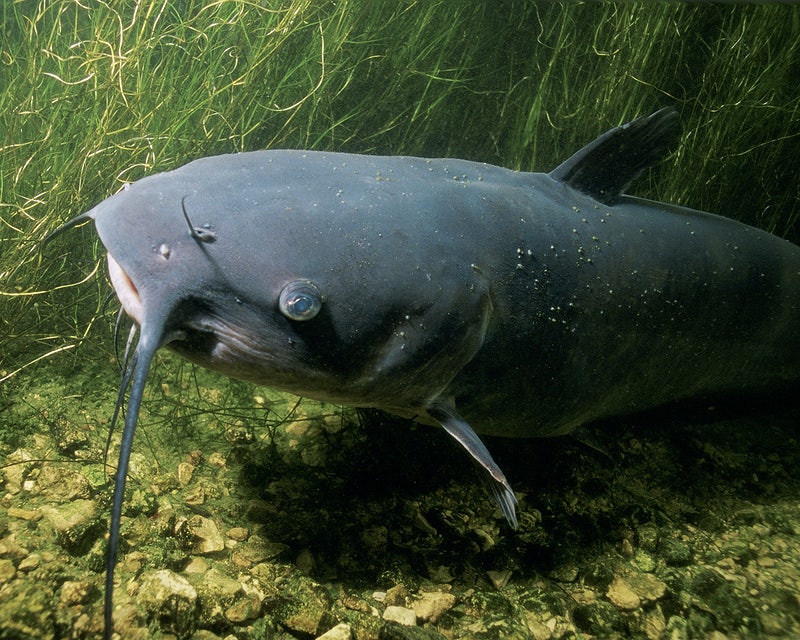
They saw a massive catfish, bigger than the ship, 
All whiskers and fins, from tail to tip. 
All scaly and bumpy 
And ugly and lumpy 
And grimy and grumpy. 
Its big fat lips sucked like a vacuum. 
“Help,” cried the crew, “is this our doom?” 

For the mighty catfish scavenges the seas 
And eats all the dirt to clear the water of disease. 
It opened its great big mouth very wide
And the dirty crew screamed, all terrified. 
WHOOSH! SLURP! The crew vanished inside
The monster’s mouth. “Ow,  help!” they cried 
As they slithered down its throat. 
But the great fish swallowed them and their boat, 
Then began to suck all the sludge from the water, 
Till the filth was gone from every quarter. 

His big belly grew and swelled until 
The mighty catfish had chomped its fill. 
Then with a gentle belch and a sigh
And a slow, slow wink of his muddy brown eye
He started to sink back down to the seabed
To digest his dinner and rest his head. 
And there he would stay until trouble arose
But he is there to this day, as Tim Parrot knows, 
To make sure the Lemon Seas are clean and clear
And poison and dirt never reappear. 

“Wow!” said Blacktarn, most amazed. 
“Well done Tim,” the crew all praised. 
“What luck that we had a catfish to help us 
And mop up pollution before it got worse.” 

“Yes, poisonous dirt gets dumped every day
And in other seas there’s nothing to clean it away,”
Said Rakesh the mate, looking very upset.
“Soon all the oceans will be black as jet.” 

“Well at least we can sail on our clean Lemon Sea
And I needn’t eat one more green mushy pea,
Come, let’s get sailing,” said Blacktarn joyfully.
Courtesy: Creative Commons

Note: The ‘Pirate Blacktarn’ poems were written in the early 1990s but were never submitted anywhere or shown to anyone. By lucky chance they were recently rescued from a floppy disc that had lain in the bottom of a box for almost thirty years. There are twelve poems in the series but no indication as to what order they were written in and the author no longer remembers. However, they seem to work well when read in any order. They all feature the same cast of characters, the eponymous pirate and his crew, including a stowaway and an intelligent parrot. The stories told by the poems are set on a fictional body of water named the Lemon Sea. (Dug up by Rhys Hughes from the bottom of an abandoned treasure chest).

Jay Nicholls was born in England and graduated with a degree in English Literature. She has worked in academia for many years in various student support roles, including counselling and careers. She has written poetry most of her life but has rarely submitted it for publication.

.

Categories
Musings of a Copywriter

Visit to a Book Fair 

By Devraj Singh Kalsi

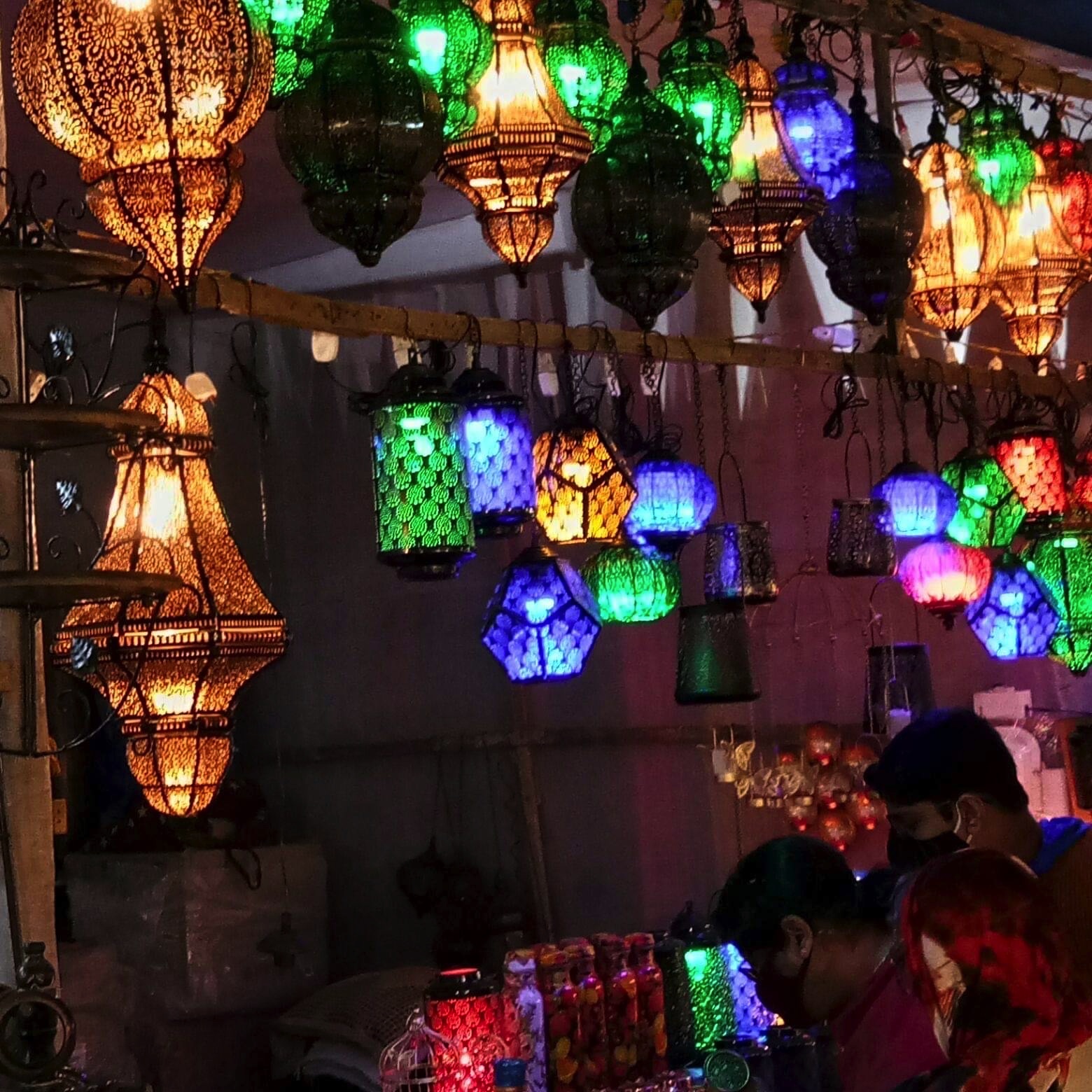
I went to the local Book Fair and bought ceramic coffee mugs. There was a big stall selling woollen garments. I chose a comforter. Wrap myself in it and sit in the balcony area, holding a coffee mug and a good read. 

I came across another stall selling holidays. A travel and tour agency reviving itself after the pandemic. It offered discount packages to distant places of interest. The nearby places were more expensive. A tour to Bangkok was cheaper than a tour covering North Bengal. The images of reading books on a hammock by the seaside seeded my desire to try out such a holiday. During winter, the package tours to the seaside were also sold out. I took some pamphlets and compared the best value offers that I could browse when I reached home and decide where to unwind in the company of books, where to swing in the delight of reading under the shady palms and bask in the winter sun. Reading was not the concern, the spot for reading was more important. The perfect backdrop for photo albums.

Some stalls were selling casual wear. I made up my mind to try something chic and warm for the winter months. Sometimes, I have to take a selfie while reading and post it on social media handles. I have to be careful about the quality and colour. It should be sober and sombre. I came across a furniture store selling bean bags. I decided to buy one for a cosy corner in the living room. For some weeks, it would become the hangout zone. I booked one as it was offering free home delivery. 

My next stop was a new stall of a branded lens for glasses. It was offering free eye testing facility and a free frame on the first order booked at the fairground. I lapped up the offer of a free computerised eye test without knowing anything about its reliability. The result was disappointing. My vision was faulty. He gave me a slip, asking me to meet the optician at the brick and mortar store within seven days and order progressive spectacles. The onset of bifocal vision was certainly not an indicator of any progress in my vision or career. 

As I was battling this new reality, I came across a stall selling brand new noodles. A free trial offer made me stand in the queue that was longer than a noodle. Accessories matter a lot. Somewhat old-fashioned when it comes to displaying a writing instrument in my shirt pocket, I hovered around the stationery stall selling dot and gel pens, colourful pencils, sharpeners, erasers, and markers, jostling with a group of school kids, reaching out to grab as many as possible from the tempting ‘Buy One Get Free’ baskets before the stock disappeared. I took some notebooks and notepads for portable use, to jot down those fleeting thoughts that assail me during my long walks. There was another section selling cover files. I took some transparent ones to keep the rejection letters intact, just like prized academic degrees. Some were fit to archive the printouts of the sample chapters.

My next stop was a store selling lampshades and fancy reading lamps. My strategy of picking up the profitable buys guided me to opt for a hefty one with a hefty discount. I felt happy to get one for my writing desk, good to place it in a corner. This would brighten up the table though it would occupy a lot of space. Its strong metal base would keep it steady – to resist the winds of change blowing in through the wide window kept open almost the entire day. The dark corners of the imaginative mind would also be lit up well.

I had done lots of impulsive shopping. But thankfully, most of the selected items in my cart were related to books. My last stop was bookstores now. Whatever energy I was left with, I wanted to spend it on books. I visited some book stalls to look for new arrivals. I found no offer better than the online ones. Standing in front of a bookshelf, I checked the discounted price and compared it online. I placed an order online as it was cheaper than the price inside the book fair. But the store gave easy access to find a list of good books. After placing online orders for some fiction titles, I decided to lessen my guilt. By seeking rare titles not found on any online platform. These high-priced books do not sell much. But publishers carry them to the book fair stall. I checked many times and found out-of-stock responses from the online stores. But those books turning yellow were right there in front of me. I stopped myself from buying these because of very low or zero discount.

I was carrying a full shopping bag made of eco-friendly jute but without any books in it. No, I was not assailed with guilt. It was a fully justified and meaningful shopping spree. Most of the things I purchased were related to the reading process. I should not blame myself for wasting money on irrelevant items that one should not buy – not at least from a book fair. 

Near the exit gate, there was a fast-food stall selling egg rolls. I gobbled up a spicy double egg roll really fast, to beat hunger pangs. I quenched my thirst with a bottle of chocolate flavoured drink. Instead of feeding the insatiable hunger for books and quenching the thirst for reading books. I left out books from the list of purchases at the book fair I visited and felt closer to large crowds of people who visited the book fair to buy everything except books.

.

Devraj Singh Kalsi works as a senior copywriter in Kolkata. His short stories and essays have been published in Deccan Herald, Tehelka, Kitaab, Earthen Lamp Journal, Assam Tribune, and The Statesman. Pal Motors is his first novel.  


PLEASE NOTE: ARTICLES CAN ONLY BE REPRODUCED IN OTHER SITES WITH DUE ACKNOWLEDGEMENT TO BORDERLESS JOURNAL. 

Categories
Poetry

Poetry by Kirpal Singh

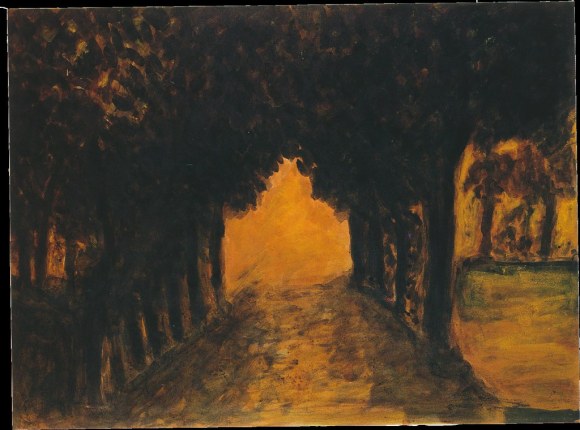
Painting by Tagore. Courtesy: Creative Commons
THE TIMES, THE MORALS
(After Ee Tiang Hong)

Testy times
Tempers flake, bruise
Blood swells veins
As memories burn.

Times were
When reason prevailed
And men talked --
Eyes glittering.

Now it’s tit for tat
No relenting
Frayed nerves
Know no restraint.

We pray n plead
For sanity’s return
As pall bearers 
Carry another dead.

Kirpal Singh is a poet and a literary critic from Singapore. An internationally recognised scholar,  Singh has won research awards and grants from local and foreign universities. He was one of the founding members of the Centre for Research in New Literatures, Flinders University, Australia in 1977; the first Asian director for the Commonwealth Writers’ Prize in 1993 and 1994, and chairman of the Singapore Writers’ Festival in the 1990s. He retired the Director of the Wee Kim Wee Centre.

PLEASE NOTE: ARTICLES CAN ONLY BE REPRODUCED IN OTHER SITES WITH DUE ACKNOWLEDGEMENT TO BORDERLESS JOURNAL

Categories
Poetry

Whistle & Fly

By Shaza Khan

UNESCO calls bird language a 'strong indicator of human creativity'*

Whistle to me. 
Tell me what you want me to be,
while sitting with you near the Black Sea.
Whistle to me,
the needs of your hearth.
Now, there are just ten thousand of us on Earth.
Make the tune perfect.
Gently fold your lips.
Sharpen the air in your mouth. 
Whistle to me your kiss.
I am an emotional ornithologist.
As the birds have left Kuskoy* to tell stories of their immigrancy, 
Study their flight as a behavioural psychologist.
Whistle to me your findings.
The mountains are waiting.
The foliage is coaxing these humans.
Be a bird and fly. 
See the Earth from above and cry.


*Daily News
* Kuskoy literally means village of birds, Located in Turkey, the village is famous for its 400-year-old whistled language.

Shaza Khan identifies herself as a hermit who had to become a human and remain one due to continuous and unavoidable natural calamities. She is an educator, yoga instructor, writer in progress, poet and a watercolour miniature artist. Shaza wants to keep writing therapeutic literary fiction. 

.

PLEASE NOTE: ARTICLES CAN ONLY BE REPRODUCED IN OTHER SITES WITH DUE ACKNOWLEDGEMENT TO BORDERLESS JOURNAL

Categories
Review

An Exotic Box of Treats

Book Review by Keith Lyons

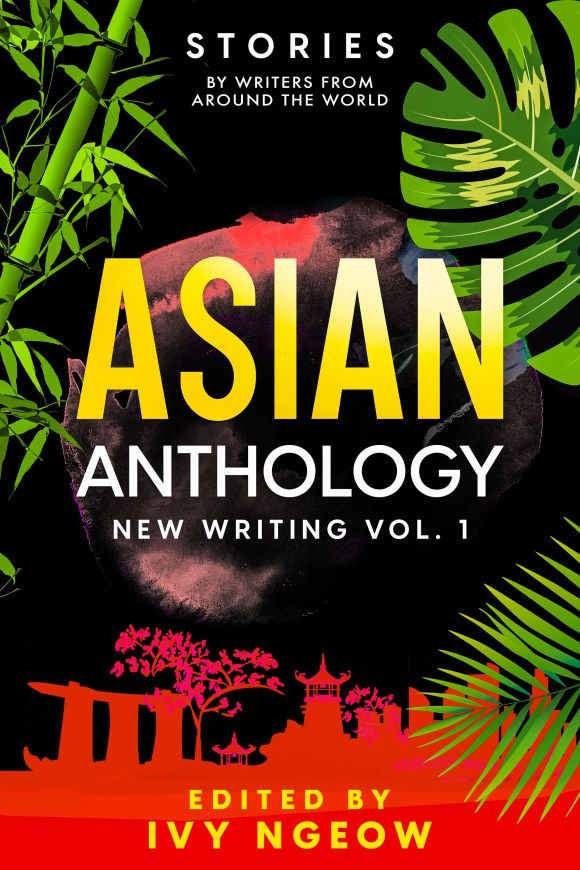
Title:  Asian Anthology: New Writing Vol. 1: Stories by Writers from Around the World

Editor: Ivy Ngeow

Publisher: Leopard Print London

Probably my first taste of Asia came when as a 12-year-old, a family friend returning from Singapore gave us a gift box of Asian desserts. Inside the ornate box were individually wrapped sweets, each different in appearance, scent, flavour, and texture. One at a time, my siblings and I cautiously opened the exotic items, nominating each other to try a tiny bite before the cube, roll or round was divided up for the sample tasting every evening or so. Some morsels, featuring jellied lychee, shredded coconut, or egg custard were savoured due to their sweetness and slight familiarity. Other desserts, which we later worked out from the inner menu card were made from green tea, black sesame, or durian fruit were more foreign to our taste buds.

When, several weeks later, we eventually finished the last one in the box, we agreed it has been an interesting experience in curious expectation, overcoming resistance and expanding our food horizons.

Asian Anthology: New Writing Vol. 1 is a little like that exotic gift box, full of surprises, with no two stories alike. Rich and vibrant, the collection of stories explores an assortment of perspectives and experiences, revealing the diversity of Asian culture as well as its many contradictions and enigmas. With twenty-three stories by a selection of new and established writers, the fiction and non-fiction tales range from traditionally-structured pieces to more experimental works, from firmly grounded real-life and realistic stories to jumps into fantasy and the surreal. The variety on offer and variable story length mean the anthology has its own momentum, and is quite compelling, though there does not appear to be any thematic order in their curation. The result is that the reader is taken on many different journeys and in different directions. Almost without exception, the writing is well-crafted, accessible and touching. Picking up this collection you are transported into the lives and cultures of others. Spoiler alert: some of the subject matter is heavy or distressing but handled with sensitivity.

Many of the pieces in the collection revolve around family and food, some challenging traditional roles and raising awareness of larger issues. There are gatherings, and fallings apart, with street food having more than cameo roles. Some of the stories are entertaining, others enlightening — there are quite a few nostalgic reflections on the past as well as numerous strange happenings and breaking of rules. Stories illustrating environmental havoc and greed feature in the collection, as well as the ‘foreigner in a strange land’  type.

The contributing authors are from around the world, with a concentration of writers from Malaysia. One editorial choice I am unsure of is the hands-off editorial approach, which sees variations in British and American English, as well as the non-italicising of non-English words, most often in food terms. With all the authors either born in Asia or having lived and worked across Asia, there’s a broad range of perceptions and insight, and ultimately, some universal lessons for anyone who cares to explore these pages. If the anthology opens readers’ eyes to the fresh literary talent of Asia, then it will have achieved its purpose. Published in early 2022, and showcasing some new voices, perhaps Volume 2 will cast its net even wider.

Editor Ivy Ngeow, who now lives in her fourth culture, is spot on when she declares in the Introduction, “I have found that humanity is more similar than not.”

Asian Anthology: New Writing Vol. 1 is an eclectic collection of poignant and unexpectedly moving stories. Like a gift box of weird and wonderful novelties, your worldview may never be the same after trying it.

Keith Lyons (keithlyons.net) is an award-winning writer, author and creative writing mentor, who gave up learning to play bagpipes in a Scottish pipe band to focus on after-dark tabs of dark chocolate, early morning slow-lane swimming, and the perfect cup of masala chai tea. Find him@KeithLyonsNZ or blogging at Wandering in the World (http://wanderingintheworld.com).

Click here to read an excerpt from the anthology.

PLEASE NOTE: ARTICLES CAN ONLY BE REPRODUCED IN OTHER SITES WITH DUE ACKNOWLEDGEMENT TO BORDERLESS JOURNAL

Categories
Excerpt

Asian Anthology

Title: Asian Anthology, New Writing Vol. 1

Editor: Ivy Ngeow

Publisher: Leopard Print London

Spring Onions by Yang Ming

Like most devotees, Ning’s mother, Suyin, spent her Saturday afternoons visiting Singapore’s Chinese temples. For the past year, she had meticulously listed them on a piece of neatly folded foolscap paper and visited one each weekend after closing her steamed bun shop for the day. She arrived at the temple each week with two red plastic bags containing fruit. Ning stood next to her mother, hands clasped, observing her overturn the bags: apples and oranges tumbled out onto the table. Suyin assembled them on two paper plates in groups of five and placed them at the altar. It was done so mechanically that Ning swore her mother could have done it with her eyes closed.  

* * *

That Saturday, Ning had accompanied her mother to Thian Hock Keng for prayers. Ning was a month away from an examination that had the potential to define her future. After learning about her daughter’s dismal mid-year test results, Ning’s mother had found it hard to sleep. Ning’s older brother, Ren, on the other hand, had fared much better in his academic studies. A student highly regarded by his peers, Ning’s mother did not need to worry about her son. Ning had never wanted to be part of this prayer nonsense but, at her mother’s insistence, she dragged her feet to the temple. She considered it a waste of her time; she would rather film a series of life hack videos for TikTok than standing idly at the temple.  

“Ma, why do you offer spring onions to Confucius?” Ning asked. Instead of fruit, Ning’s mother had prepared a plate of spring onions and steamed buns as offerings to the Confucius statue. Outside, heavy rain fell on the ground like water gushing through a drain. Ning cast a glance at the temple’s rooftop, its curved ridges and elongated eaves with upturned swallow-tail decoration blocking the grey skies. Fat raindrops began to whip Ning’s legs, causing her to retreat further into the temple’s statue shelter. Ning’s mother had followed her usual practice of waiting for fifteen minutes for the gods to ‘eat’ the offerings before clearing them away. Ning wondered if they liked spring onions; she certainly did not. 

“Spring onion is 聪 in Mandarin. Cong. It means intelligence. You will need it for your exams,” Ning’s mother replied, folding her arms across her chest. 

The smell of the incense coil burning in the main hall spread through the air. Ning was surprised to find the smell soothing and she likened it to sandalwood incense sticks from her favourite aromatherapy shop. 

“My friends say praying to Confucius will help you in your exams,” Ning’s mother said as she rummaged in her bag for her phone. She fished it out and began to tap away. 

Ning wanted very much to tell her mother that she was going to fail her upcoming examinations, and no amount of prayers or offerings to any deities would work but she couldn’t summon the courage. 

“Time to clear the table,” her mother said, walking towards the altar. Putting her hands together, her mother uttered a few inaudible sentences and bowed to the statue three times before shoving the offerings into the plastic bags. Ning followed suit, bowing grudgingly. 

Under the minimal lighting, her mother had a pallid face; her yellow-stained nails and dark circles sagged under her eyes. She wondered why she hadn’t noticed those hands and face marked with endless strife and pain. 

On a one-way street, a solitary car lumbered past them. Ning sidestepped puddles of water scattered along the pavement while swinging the bag of spring onions recklessly. 

“Stop that,” her mother said, her voice echoing through the empty street. 

“It’s just spring onions!” Ning exclaimed in defiance. 

Her mother slapped her daughter’s head lightly. “I need to cook these tonight. You think what, I’m going to throw it away, is it?” her mother said, gripping a half-smoked cigarette between her forefinger and third finger. Ning heard her mother mumbling some words in Hokkien as she turned away. She rolled her eyes at the thought of eating a plate of stir-fry spring onions or any dish with spring onions in it. 

If Ning could harness any power from a higher being, she would remove every stalk of spring onion from existence. Her mother’s phone rang as they turned at the corner shophouse. Ning stepped back to give her some privacy. A group of young, giggling girls traipsed past them, enthusiastically discussing a hip coffee joint. Ning surreptitiously crept closer towards her mother, trying to listen in on the conversation. But she could only hear laconic replies that consisted of, “yes”, “no” and “I understand”. Her voice seemed restrained.  

“Who was that?” Ning asked. 

“Just somebody. Why so kaypoh?” Ning’s mother asked, clicking her tongue. 

Ning knew her mother deployed this snappy attitude to fob her off whenever Ning became too much of a busybody for her own good. The skies had finally cleared, releasing an earthy petrichor — a scent Ning secretly adored. The afternoon sun peeked out of the grey clouds, creating a golden halo with glorious rays of light around them.  

Ning watched snippets of TikTok videos on the train home. Images of a mother and daughter duo swaying and jumping in one frame and morphing into each other in the next frame. A muscular man struggling to tear into an apple with his bare hands while a young man used a knife to cut an apple. A middle-aged woman synchronising her dance moves with a little girl. These entertaining yet addictive videos usually amused her, but Ning couldn’t seem to shake that mysterious phone call off her mind. Why did her mother lower her voice? Or why did she sound so serious? The ‘whys’ inundated her mind throughout the entire journey, until her mother nudged her elbow to motion her to get off the train. 

“Make sure you finish up all the spring onions later,” Ning’s mother remarked as they ambled through the housing blocks. 

“I’m not going to eat any spring onions,” said Ning. Those words had rolled out of her mouth faster than her mind could stop them. 

Ning’s mother glared at her with an expression as stiff as a starched uniform and Ning knew what came after this was going to be torture. 

“Ma, I’m going to fail my exams next month. There’s no point for me to eat those awful vegetables,” Ning said, pursing her lips. She cast her eyes on the ground as though something incredible had just skipped across her feet. A group of boys ran past them, yelling, Eh, where are we going ah? Let’s go to the playground. Their voices echoed through the communal void deck. 

“And what are you going to do if you fail your exams?”

“Ma, I want to make buns, just like you.” 

Ning’s mother closed her eyes and clenched her hands into fists. The last time Ning had witnessed this inscrutable face was three years ago when she returned home from grandma’s place, and had seen her mother sitting on the kitchen stool, staring into nothingness. Ning had pushed open the door to her parents’ room, only to find it in a chaotic mess — a smashed family photo frame was on the floor. 

Before Ning could say anything else, her mother walked towards the lift lobby. She was surprised her mother hadn’t rebuked her for speaking out. 

* * *

In the kitchen, Ning quickly tore the omelette apart, only to discover an absence of spring onions. She grinned quietly to herself, thinking she had convinced her mother to exclude that awful vegetable.  

Later that week, Ning parked herself at the side table in the bun shop, working on her Maths assignment. The afternoon news on the radio blared loudly in the background. She stared at the Pythagoras Theorem question and doodled aimlessly on the foolscap paper until her mind was drawn to her mobile phone. She tapped her TikTok app when, out of the corner of her eye, she saw Mrs Lim peering into the shop. 

“Eh, ah girl, so hardworking! Where’s your mummy?” Mrs Lim asked, raising her voice above the static crackling noises. 

“Hi, Mrs Lim! She’s in the kitchen making baos with Chen,” Ning replied, pointing towards the back of their tiny shop, where their cramped kitchen was located. “Do you want your usual Char Siew Bao or Big Chicken Bao?”  

Mrs Lim, a regular customer of Tan’s Bun Shop for years, beamed upon hearing those words. Ning gave her a wide smile. Mrs Lim rarely hesitated to buy more steamed buns whenever she patronised the shop. 

“Just give me five Char Siew Baos and five Big Chicken Baos,” Mrs Lim said. 

Ning pulled out the second tier of the bun steamer display cabinet and used a pair of silver tongs to pick those flavours. She enjoyed giving those soft and fluffy buns a little squeeze on the side as she placed them into the polystyrene boxes. She felt that was the least she could do as a daughter – assisting her mother and, at the same time, learning the trade. Halfway through, she heard a series of quick footsteps from behind her and before Ning could turn around, her mother was already standing next to her. 

“Go and do your homework. I will help Mrs Lim with her order,” Ning’s mum said as she smoothed away a few strands of hair from her eyes. Ning gently placed the tongs on the table and nodded silently at Mrs Lim, whose face had already become annoyed. Ning grabbed her phone from the table and slunk away.

Inside the kitchen, a stack of large bamboo steamers formed a tower on an industrial stove. They were probably the last batch of assorted steamed buns that would be sold for the day, Ning thought. White steam swirled up in the clammy air. 

On the other side, Chen, the ever-loyal shop assistant, was cleaning a dough mixer as he whistled and swayed to a catchy Chinese tune. Originally from Johor, Chen had been crossing the Causeway to work at the shop since Ning was born. Two small portions of leftover dough and a small bowl of barbecue pork were left on the table. Usually, these remnants would be thrown away at the end of the day, as Ning’s mother believed in the freshness of ingredients. 

Ning whipped out her phone and filmed the first part of a video, cut out a tiny piece of the dough, flattened it with a wooden rolling pin and filled it with a spoonful of barbecue pork. For the second part, she slowly gathered the pleat of the dough to seal up the filling, but the pleat looked odd. Chen glided towards Ning and commented, “Not bad. But still need a lot more practice.”

Ning hushed him as the video was still recording. 

“But you are getting better now. In the past, your baos looked so funny. If I have more time, I can teach you more things,” Chen said, dousing the floor with warm water. 

“I’m free on weekends or when Ma goes out to buy Toto,” Ning said enthusiastically. 

“No point. I’m going to look for a new job.” 

“Why? Has Ma found someone to replace you?” Ning asked, giving a quizzical look. 

“She didn’t tell you anything?” Chen asked. Ning shook her head. “Your ma is going to sell this shop.”

Words became trapped in Ning’s throat. The air grew cold. Sell the shop? Why would her mother even consider selling it? Those questions whirled in her mind like a gale barrelling through an open field. Ning’s mother had barely scraped through her secondary school education. In her teens, she had repeatedly failed her exams and, like any hot-headed teenage girl with raging hormones, she got involved with boys and bad company. She eventually left school at the age of 15, much to her mother’s chagrin. No amount of words could persuade her to return to school, until her grandma received a call from the police late one afternoon, informing her that her granddaughter had been involved in a gang fight which had led to the accidental death of an elderly passer-by. 

Ning’s mother was sent to a probation home for girls for two years. It was at that place where she had encountered a God-loving youth worker who persuaded her to think about her future and about the people who loved her. Upon her release from the girls’ home, Ning’s mother trudged home, only to discover her family wanted nothing to do with her. Out of kindness, they provided her a bed in which to sleep. Due to her bad record and a lack of qualifications, she worked several odd jobs to get by, until a kind elderly man who owned a steamed bun shop had taken her in and imparted his bun-making skills to her. 

Those thoughts were interrupted when she heard a loud shriek floating from the shop front. Ning stepped out of the kitchen and caught Mrs Lim flinging her arms at her mother, remarking, “Crazy woman! You think your bao shop is the best in Singapore, is it?’ If not for your daughter, I wouldn’t even step into your shop.” Mrs Lim spat on the ground before stomping off. 

“She thinks she is a big shot! Everyone must kowtow to her,” Ning’s mother fumed, slapping the thick receipt book on the counter. It didn’t come as a surprise to Ning, as Mrs Lim was probably one of those disgruntled customers her mother had offended on a regular basis. Ever since Ning’s father had abandoned the family on the day her mother stared into nothingness, business had gone downhill. Multicoloured graffiti had repeatedly been sprayed across their shop’s rolling shutter with words like, O$P$ and Go to hell! Ning’s mother had surmised the vandalism was the loan sharks’ doing. 

Already bestowed with the moribund steamed bun shop and heavily burdened with two young children, Ning’s mother balanced her life between reviving the shop and paying off her good-for-nothing ex-husband’s mounting debts. Ning witnessed the relentless spirit of those loan sharks sauntering into their shop on random sultry afternoons. The men, no younger than twenty-five years old, had blond hair and a uniformed phoenix tattoo on their forearms. They appeared harmless at first but what came out of their mouths was nothing but coarse language. This had led Ning’s mother to a nervous breakdown, and she eventually became short-tempered. 

As years went by, customers dwindled. Ning found herself greeted by bags of cold steamed buns at home every day. Ning’s mother always shrugged it off with, “We made so many baos today. These were the leftovers.”

* * *

“But Ma, Mrs Lim was just…”Ning protested, still holding on to her phone. Her mother quickly interjected. 

“Stop playing with your phone. What’s the point of doing all those videos? Can earn money or not? Ning, my friend just recommended me a tutor for you. She said he’s a very good tutor. Can teach you Maths. I know it’s too late but at least he can teach you what he can.” 

Ning gasped. Tutor? But how could her mother afford it? 

* * *

Ning’s head weighed a ton when her best friend, Farah, rambled on about her latest TikTok and Instagram videos during recess. She raved about the number of views she had garnered in a day. Farah’s monologue suddenly changed subject, and she asked Ning if she’d like to study for their upcoming exams with her after school. Ning knew Farah was the more hardworking person of the two of them. Even her social media videos yielded more views and likes than hers. She forced a lop-sided smile. She wanted to tell her about the shop and the sudden change in her mother’s behaviour, but she couldn’t form the words in her mind. Before Ning could say anything, she saw their form teacher, Madam Nadia, walking towards them. Farah greeted her like any obedient child before slinking away. 

Madam Nadia pulled Ning aside to a quiet section of the corridor. She interrogated Ning about the Maths assignment — Ning had completely forgotten about it. She sheepishly replied and said she left it in the shop but it was a lie. Madam Nadia raised her eyebrows sceptically, and with a straight face, she broke the news to Ning that, if she failed her upcoming exams, she would have to repeat another year. Ning acknowledged it with a nod and disappeared, but not before Madam Nadia requested to see Ning’s mother, to which Ning lied that her mother was too busy. 

At 8 that evening, Ning’s mother returned to their modest three-room flat with a bag of assorted steamed buns. She was on the phone, speaking in a low voice. She didn’t notice Ning sitting on the sofa watching a variety game show where contestants had to guess the price of household items. Ning quickly lowered the volume of the television, when she distinctively heard her mother saying, “The price is too low. I will consider selling it if the price is higher.”

Ning was about to confront her mother when her brother, Ren, shouted at her for stealing his favourite blue gel pen. Ning glared at him, grabbed his pen from the coffee table and tossed it to him. Ning’s mother untied the bag of buns and passed her improved steamed Pork bun to them to try. But Ren scrutinised the bag before settling on the lotus flavour bun instead and disappeared into his room. Ning obediently picked the lukewarm bun off her mother’s hands. 

She sank her teeth into the bun. The more she chewed, the more she felt a strange and bitter taste on her tongue. She spat out a morsel of the filling and discovered a slimy green vegetable — spring onions! Ning’s mother scolded her for wasting the filling as she and Chen had spent the whole afternoon improving the flavours. A strange feeling inexplicably invaded Ning, and in one swift movement, she ripped the bun apart and threw it on the floor. 

About the Book: Crocodiles in the city, street food fandom, a psychic club meeting in a Penang beach resort. Asian Anthology: New Writing Vol. 1 is a showcase of short stories and place writing by both new and more established prize-winning writers. Some unexpected, a few surreal and others traditional, these are 23 compelling stories of irony, humanity and satire, exploring a range of subject matter to reveal a glimpse of modern Asian society and culture: a funeral in India, a hotel encounter in Japan, a sleepless night in Hong Kong. Modern themes such as the chilling consequences of the environmental impact of logging, deforestation and the barbarism of the shark’s fin soup delicacy press on our collective conscience. In the pieces on place writing, the outsider’s view gives insight into the white-guy-in-Asia trope: backpacker, courier and expat company manager. But no Asian fiction is complete without stories of food, family conflict, redemption and reconciliation. Surprising and entertaining, this anthology captures the paradox of richness, diversity and humour that is Asian culture.

Contributors: Rumaizah Abu Bakar, Patrick Burns, Cheung Louie, E.P. Chiew, Mason Croft, MK Eidson, Marc de Faoite, Jenny Hor, Nenad Jovancic, Lynett Khoh, Doc Krinberg, V.S. Lai, Ewan Lawrie, Winston Lim, Y.K. Lim, Yvonne Lyon, Sandeep Kumar Mishra, Ivy Ngeow, Krishnaveni Panikker, Sylvia Petter, Shafiqah Alliah Razman, San Lin Tun and Yang Ming.

Editor/Author’s Bio: Ivy Ngeow was born and raised in Johor Bahru, Malaysia. She holds an MA in Writing from Middlesex University, where she won the 2005 Middlesex University Literary Press Prize out of almost 1500 entrants worldwide. Her debut, Cry of the Flying Rhino (2017), was awarded the International Proverse Prize in Hong Kong. Her novels include Overboard (2020) and Heart of Glass (2018). She lives in London.

PLEASE NOTE: ARTICLES CAN ONLY BE REPRODUCED IN OTHER SITES WITH DUE ACKNOWLEDGEMENT TO BORDERLESS JOURNAL

Categories
Poetry

If My Life were Only a Dream

By Pramod Rastogi

Courtesy: Creative Commons
IF MY LIFE WERE ONLY A DREAM

How much would I feel unburdened
If my life were only a napping dream?
I would simply be a handful of water 
That springs from the melting glaciers
And flows down to embrace the ocean. 
 
But life as real as the sun and the moon
Is more like a candle flame
That a man carries within him
Always. Storms and typhoons rage.
If the flame blows away, life goes away.
 
The plot of life is as simple as it is tender.
Smiling joy and deepest despair are so visible
When we view life as a sheet of glass;
Yet, life is also as brittle. 
It could fall and shatter. 
 
The Creator has made man a part of His dream, 
And the dream on His part to accompany him.
Dreams are neither on sale, nor on barter.
They must be built, nurtured, and lived.
Dreams are of infinite shades, vivid and coloured,
And can silently fall asleep but never die.
 
Is dream an illusion, delusion, or reality?
It is all that and more, tethered in its veiled silence.

Pramod Rastogi is an Emeritus Professor at the Swiss Federal Institute of Technology (EPFL) in Lausanne, Switzerland. He is a Member of the Swiss Academy of Engineering Sciences. He is the 2014 recipient of the SPIE Dennis Gabor Award. He is currently a guest Professor at the IIT Gandhinagar, India.

.

PLEASE NOTE: ARTICLES CAN ONLY BE REPRODUCED IN OTHER SITES WITH DUE ACKNOWLEDGEMENT TO BORDERLESS JOURNAL
Categories
Poetry

Do You Dream of People in Masks Now?

Ryan Quinn Flanagan

Courtesy: Creative Commons
DO YOU DREAM OF PEOPLE IN MASKS NOW?

We were almost two years into some blurry day drinking 
pandemic that had failed everyone
when she asked me that question.
	
Do you dream of people in masks now?
she asked.
	
I had never thought of it,
but told her I dreamt of them the old way.

I could see the surprise on her face.
I could tell that she did not.
Not anymore.

It was probably another six month before 
I had my first masked dream.

Then I started to see them everywhere.
Jumping out of the popcorn ceiling overhead.

When I told her I finally saw them,
she seemed to feel a little better.

Not that I was seeing what see was seeing,
but that she was not alone.

All that wine.
The way you start to clank 
when you walk.

Ryan Quinn Flanagan is a Canadian-born author residing in Elliot Lake, Ontario, Canada with his wife and many bears that rifle through his garbage.  His work can be found both in print and online in such places as: Evergreen Review, The New York Quarterly, Borderless Journal, GloMag, Red Fez, and The Oklahoma Review

.

PLEASE NOTE: ARTICLES CAN ONLY BE REPRODUCED IN OTHER SITES WITH DUE ACKNOWLEDGEMENT TO BORDERLESS JOURNAL

Categories
Musings

An Existential Dilemma

By G Venkatesh

Thermodynamics’ – the word itself evokes images of entropy and chaos (heat and disorderly motion). However, it is a science which looks for the elusive order in the chaos its name evokes. There is classical thermodynamics – the macroscopic sister to statistical thermodynamics which is the bottom-up approach to understanding the behaviour of systems (studying the parts with the expectation of understanding the whole). While the classical is a mere approximation (better than not able to describe at all), the statistical is a mere prediction (something close, but not exactly).

During a period of intense and painful introspection in a coffee shop in Karlstad, Sweden, an idea perhaps floating around in the realm above the astral, settled on yours sincerely.

Picture a closed cylinder filled with ‘ideal’ gas. Students of thermodynamics often befriend the ‘ideal’ gas ideally, even though this friend is just an illusion. The gas is composed of numerous molecules, which are moving around at random, colliding with each other and with the walls of the cylinder. Indeed, over any period of time, all the molecules do not suffer the same number of collisions with others, or for that matter, do not ‘bang’ into the inner wall of the cylinder to be ricocheted back into the pack, at identical frequencies.

If the cylinder is opened for a short period of time, and then closed, some gas would leak out. Of course, while all molecules may look alike, what they experience within the cylinder is never the same for all of them. Some molecules would leak out into ‘freedom’. That seamlessly brings us to our analogy with souls on Earth.

Now, replace the small cylinder with our planet Earth. And the gas molecules with individual human souls. Pause for a minute and you would perhaps be able to visualise. Souls trapped in human bodies wander about on Earth, interacting with others (analogous to the collisions among molecules), supposedly reaping the rewards of their  karma, repeatedly. Let us assume that the law of action and reaction holds good, indisputably, the reaction in this case being from the universe or God. Just as one defines the quality of energy as ‘exergy’, if one conceives a property which represents the qualities (degrees) of good deeds, bad deeds, rewards and punishments, and labels the same as ‘exergy’ then, it must follow that:

  1. Exergy (Good deeds) = Exergy (Rewards)
  2. Exergy (Bad deeds) = Exergy (Punishments).

In other words, the higher the quality of a good deed, the better the reward, and the graver the bad deed, the more serious the punishment. Now, does this apply to every individual soul during its sojourn on earth in a specific bodily envelope? Does one find a perfect correlation? Definitely not. After all, the equations used to understand the state and behaviour of gases, do not apply to every single molecule, do they? We tend to easily tide over this impasse, just as we do in thermodynamics, by theorising that:

3. Σ Exergy (Good deeds) = Σ Exergy (Rewards)

4. Σ Exergy (Bad deeds) = Σ Exergy (Punishments)

If someone wishes to know the time period over which these summations apply, one will say that this would be the entire length of time humankind will walk on Terra Firma, and for all the reincarnations of all the souls.

Indeed, I or you will not be able to test this in any way, just as we would never be able to summarily and conclusively prove that there is life after death, while we are walking around on Earth. Further, how does one define the quality factor of good deeds and rewards, punishments and bad deeds? Who decides? So, that is that! We then turn to the Bible or the Gita or the Koran or the Zend Avesta or the Guru Granth Sahib or the Torah or any other religious text just as we refer to textbooks of thermodynamics for those equations.

For generalisations. To simplify and pretend that we understand everything, or to be humble enough to admit that we do not. To calm our minds and believe that our turn would come. We would never know where we are placed in the queue to receive rewards or accept punishments. After all, like those molecules inside the cylinder, we are tossed about here and there, and find ourselves at the wrong place, at the wrong time, with the wrong set of ‘molecules’ around us. ‘My turn would come’, implies being in the right place, at the right time, with the right people. They give this a name – divine timing. Is it random? I do not know. Neither do you.

Which souls (molecules) would ‘leave deceitful knaves for the higher and better society of gods and goddesses’ (from a play referred to by Ralph Waldo Emerson in his essay called  ‘Heroism’ in The Essential Writings of Ralph Waldo Emerson) and when, none knows. Surely, the equations (1) and (2) will never hold true for you when the time comes for you to ascend to the astral realm. You may either have been very fortunate or extremely unfortunate; may have got a fair-enough deal, or may have been scapegoated ever and anon. You would need to return to help equations (3) and (4) to manifest themselves at the fag end of the human race – perhaps at the Big Crunch or much before that….again, just as the gas molecules which are ‘freed’ may be brought down by rain again to the terrestrial hydrosphere, to cycle back and forth.   

.

G Venkatesh (50) is a Chennai-born, Mumbai-bred ‘global citizen’ who currently serves as Associate Professor at Karlstad University in Sweden. He has published 4 volumes of poetry and 4 e-textbooks, inter alia. 

.

PLEASE NOTE: ARTICLES CAN ONLY BE REPRODUCED IN OTHER SITES WITH DUE ACKNOWLEDGEMENT TO BORDERLESS JOURNAL