Post-humanism and the Anthropocene epoch have undermined the notion of human exceptionalism, the feeling that as a group or a species, human beings are superior to other species. It is time to interrogate the hierarchy of human/animal where we understand the category of the human as undoubtedly superior. One view is to see the human as a posthumous category, not just post-human. Most civilisations and philosophies across the world have privileged one set of values/qualities at the cost of another-thus categories like human-animal, man-woman, reason-passion, good-bad have become binaries where one term is considered better than the other.
It is in this context that I turn to Catherine MacKinnon’s work, Are Women Human? (2006). In her book, she poses the question of women’s relationship to the category of the human.
After almost a century from the Universal Declaration of Human Rights, which defined what a human being is and is entitled to, Catharine A MacKinnon asks: ‘Are women human yet?’ If women were regarded as human, would they be subjected to the privations and oppressive practices perpetrated in cultures? Would they, for instance, be sold into slavery and sexual slavery worldwide; would they be “veiled, silenced, and imprisoned in homes; bred, and worked as menials for little or no pay; stoned for sex outside marriage or burned within it; mutilated genitally, impoverished economically, and mired in illiteracy–all as a matter of course and without effective recourse?”
In the wake of recent events which have once again highlighted the scant regard in which women are held across nations and in societies, it is instructive to revisit the fundamental questions posed by Mc Kinnon. The Nirbhaya, Asifa, Unnao, Priyanka Reddy, Hathras cases in India, events that unfolded recently in Afghanistan and innumerable instances the world over, are traumatic and traumatising as they are instances where violence has been unleashed, consciously and deliberately, on women, children and whole communities. These significant events can be called ‘critical’ since they raise some crucial questions on the category and definition of the notion of the ‘human’ itself.
The category of the ‘human’, as Yuval Noah Harari and many before him discussed, became associated, in terms of evolutionary biology, with a large brain, an upright gait and other specific characteristics. Whatever its genealogies in scientific or anthropological parlance, the word acquired a specific set or cluster of meanings. The notion of ‘human’ gets associated with a set of inalienable rights(as in human rights), a set or cluster of affect/s such as kindness, compassion and sympathy/empathy. And yet, this is a term we revisit time and again, at important historical conjunctures. Sadly it is a term which emerges more in the breach than the observance. Further, it is one that seems to be taxonomically problematic and perplexing and shores up the category in a peculiarly exclusionary way. To substantiate and cite an instance, inter alia, were the Jews admitted in the category of the human by the Germans, the Dalits by upper castes and women by men? The problem here is not just of ‘othering’ but the fact that the persistence of asymmetric power relationships robs one group of a sense of agency and the power to name themselves and their experience. The other group, which calls the shots on how humanity is to be defined, becomes blind to its own oppressive behaviour, perpetuates atrocities and is condemned by posterity. It becomes a case where, in a manner of speaking, all of us are human but some are obviously more human than others. Thus the suspicion that peppers our mind when we come across liberal terms like ‘equality’ and ‘freedom’ also extends to the ‘human.’
Working with issues that are sited on the cusp of law and culture and that are a vital aspect of transnational feminism affecting the status of women, McKinnon in her essays takes her gendered critique of the state to the international plane. Her book/essays is/are a trenchant critique of the inequalities of international politics, which turns a blind eye to the consequences and significance of the systematic maltreatment of women and its condoning by a skewed system. Her sharp critique points toward fresh ways—social, legal, and political—of “targeting its toxic orthodoxies”.
McKinnon takes us inside the workings of nation-states, where the oppression of women is the common factor that defines community life and distributes power in society and government. She takes us to Bosnia-Herzogovina for a harrowing look at how the wholesale rape and murder of women and girls there was an act of genocide, not a side effect of war. She takes us into the heart of the international law of conflict to ask—and reveal—why the international community can rally against terrorists’ violence, but not against violence done to women. A critique of the transnational status quo that also envisions the transforming possibilities of human rights, this book makes us look as never before at an ongoing war too long undeclared, unspoken and relegated to silence..
It is important to recover voices like that of McKinnon since the self-appointed custodians of the ‘human’ are more often than not dyed-in-the-wool liberals, paternalists, self-appointed purveyors of law and morality. Most of them are so entitled that they are entirely blind to their own privilege as they declare themselves to be the champions of human rights, having practised and perpetuated the wrongs that need to be set right.
As we ‘celebrate’ the month of the Woman in March, we need to revisit these questions which have gained a new urgency in our time. Only then can we perhaps understand the full implications of the human and work towards making it a truly inclusive category.
.
Dr Meenakshi Malhotra is Associate Professor of English Literature at Hansraj College, University of Delhi, and has been involved in teaching and curriculum development in several universities. She has edited two books on Women and Lifewriting, Representing the Self and Claiming the I, in addition to numerous published articles on gender, literature and feminist theory.
.
PLEASE NOTE: ARTICLES CAN ONLY BE REPRODUCED IN OTHER SITES WITH DUE ACKNOWLEDGEMENT TO BORDERLESS JOURNAL
In Conversation with Sangita Swechcha, a writerfrom Nepal
Dr Sangita Swechcha
Nepal conjures up images of Himalayas, Mount Everest, Kathmandu and unique cultures. From Nepal, a writer called Sangita Swechcha, moved to United Kingdom. With her she took the flavour of the hills, the stories, the breeze, coloured them with Western veneer to create more literature that mingles the two lores.
Swechha has published a novel, Pakhalieko Siundo (Washed Vermillion), authored Gulafsanga ko Prem(The Rose: An Unusual Love Story), and co-authored Asahamatika Pailaharu(Hoofmark of Discord) – both collections of short stories. Her short stories, poems, and articles have appeared in various international journals and online portals. She was the guest editor for the ‘Nepali Literature Month – Nov 2019’ held at Global Literature in Libraries Initiative (GLLI), a US-based organisation working towards the visibility of world literature. Two of Sangita’s latest literary works are The Himalayan Sunrise: Exploring Nepal’s Literary Horizon and A Glimpse Into My Country, published by Bookhill International in London. Swechcha, who is now located in London, has been working in the international development sector for more than fifteen years as a Communications Expert outside of her literary commitments.
In her interview, she tells us about her life in the UK and introduces us to the newly-fledged Nepali literature.
Since when have you been writing?
I started writing when I was in school and used to be quite active during college days as well. However, I could not keep pace with everything. Juggling between family life, studies as well as career, I slowly left creative writing. At some point, I stopped. Then it took several years to get back to writing again. Now, I am here to follow my passion once again.
What languages do you write in? Why?
I love writing both in Nepali and English. Nepali, being a native language, I am emotionally connected to it. On the other hand, writing in English gives me wider audience and helps broaden literary landscape where my emotions and words traverse.
I have published a novel, a collection of short stories and several other literary articles and poetry in Nepali. Short stories and many literary write-ups in English have been published in various international portals and journals. I recently edited two anthologies in English and they have been published from London.
You live in England now. How long have you been living here? Does this impact your writing?
I have been living in England since 2007. Living in here has given me more exposure to different cultures and people of diverse backgrounds. It has helped me in my writing as I have learnt more about languages and cultures living outside my country.
Is life different here from the life you led in Nepal? How?
It is not very different. I live with my family, work as I did in an international development organisation. My work is pretty much the same as it was in Nepal. Yes, I do miss my parents, close friends, family and being surrounded by beautiful mountains. That is something I find different here.
What are the themes you favour while writing? Why? Expand on that.
My writings flow in different directions, and I have written on various themes. My poetry, stories and novels focus on love, friendships, women, individualism, social identity, revenge, power imbalance and struggle, death and dying, family conflicts, trusts etc. In this sense, there is no specific theme I favour. I love exploring different themes and my writings try to capture various aspects of people’s lives.
There seems to be some amount of writing about women in Nepal, including your own. What kind of issues do women face when it comes to education, career as well as other areas?
I think women not just in Nepal but around the world have more responsibilities when they have family, mainly children. Time management becomes the main issue while one tries to balance between family life, career, and other interests. Therefore, prioritising things in life is a challenge.
What is the literary community like in Nepal? Tell us a bit about literature from Nepal.
There are many literary communities, groups, and societies in Nepal. They promote Nepali literature within the country through various programmes, publications, literary awards, workshops, conferences, etc. Some of these groups also host literary festivals where writers from other countries also participate. In today’s globalised world, Nepali writers are spread around the world and various literary circles have been formed in different countries too. In order to bring Nepali writers around the world onto one common platform, an institution like the International Nepali Literature Society (INLS) was established, which has chapters in over 80 countries.
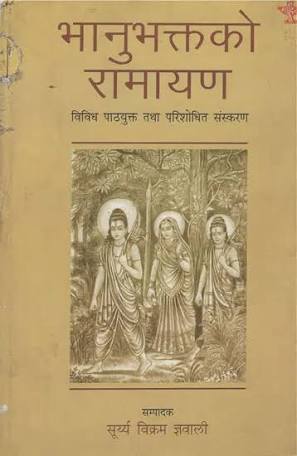
Bhanubhakta’s Ramayana. First Nepali book published in 1887
Literary writing in the Nepali language only began in the 19th century. Prior to this period, Nepali literature was in Sanskrit. The first written literary work in Nepali was Bhanubhakta’s Ramayana(1887). As such, our literature has a history of more than a hundred years. During this time, literature from different genres has been published and proliferated rapidly. Since most of these are written in Nepali, the world outside of the country doesn’t know much about the richness of our literature, although through translation to other languages, we slowly hope to transmit our stories to the world and join the global community.
We see mainly translations in English from Nepal. Do you have major writers who write directly in English like we have English and anglophone writers in other countries?
Not only are the number of Nepali writers who write in English slowly growing, but the translation of literary works from Nepali to other languages is gaining momentum too. Yes, there are several writers in Nepal who directly write in English and contributed to publications of novels, collection of short stories, poetry books, travelogues etc. Especially, the past decade has also seen a significant rise in the number of writers outside Nepal too.
‘Perhaps the Last Kiss’ by Bhupeen, spoke of how Nepalis went to Chennai to study. Is it a norm that Nepalis go to another country to study? Or is that true only for some?
The trend of going abroad for studies is ever growing in Nepal. Just like people’s movement and migration for better employment opportunities around the world, for better education too, you can see Nepalis moving from villages to cities or to Kathmandu valley or from different parts of Nepal to other countries.
You have published two anthologies in English recently. Tell us a bit about these anthologies.
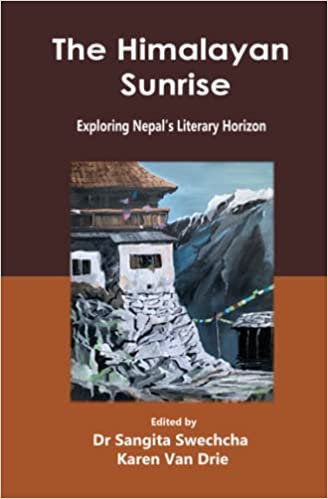
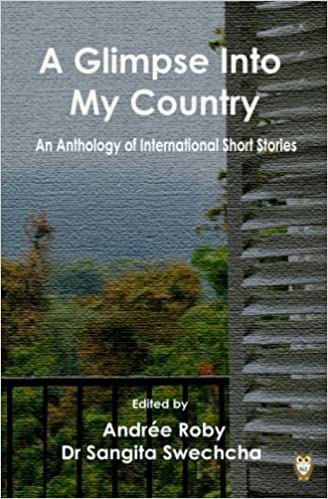
The Himalayan Sunrise: Exploring Nepal’s Literary Horizon co-edited with Karen Van Drie and A Glimpse Into My Country co-edited with Andrée Roby are my two recent publications.
The Himalayan Sunrise: Exploring Nepal’s Literary Horizon is a unique collection of interviews, book reviews, features on literary books, poetries and artworks that will take you on a virtual trip to Nepal’s literary landscape of indigenous flavours.
A Glimpse Into My Country is a collection of international short stories by writers from Nepal, India, Bangladesh, England, France, South Africa, and Zimbabwe. Both the books have been brought out by Book Hill International.
What are your future projects?
I recently completed a novel. I am revising it to get it published this year or the next. A translated collection of poetry is getting ready too. Hopefully, I can get this printed too.
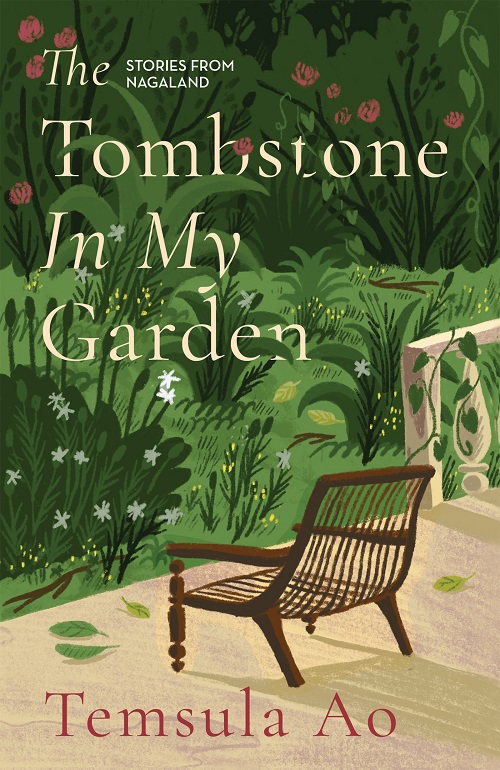
Title: The Tombstone in My Garden: Stories From Nagaland
Author: Temsula Ao
Publisher: Speaking TigerBooks
The problem with any place that’s politically disturbed is that the rest of the aspects of the place – its culture, society, myths, beliefs – are obscured to outsiders. The place comes to be seen only through the prism of the disturbances and not savoured for its characteristics, its turmoils casting an impregnable shadow on its people, myths, its flora and fauna. Slowly even literature gets so obsessed with its ‘issues’ that it becomes difficult to find anything to read on the place which doesn’t talk about them or delves deeper.
Temsula Ao’s The Tombstone in My Garden cuts through that roughage and takes its readers to the soul of Nagaland – to its villages, tribal myths, social practices that have been woven into five short stories that light a torch into every aspect of society in Nagaland. Without the pretence of being a social observer or commentator, the narratives unfold with the unobtrusiveness of a storyteller who doesn’t highlight social practices judgementally but as ordinary things — unworthy of special attention. The perniciousness can be felt only after they arrive at their narrative outcomes.
A very significant voice from Nagaland and contemporary Indian literature, Temsula Ao, has won several prestigious awards including the Padma Shri in 2007 and the Nagaland Governors’ Award for Distinction in Literature in 2009. Her Laburnum for My Head, a collection of short stories, won her the Sahitya Academy Award in 2013.
The opening story, ‘The Platform’, takes us into the world of Nandu, a Bihari migrant to Nagaland who earns his living working as a coolie in Dimapur railway station. Promoted to become a senior among other porters for his hard work and his knowledge of various languages, including Nagamese, one day Nandu picks up an abandoned Muslim boy from the platform. He, slowly, develops paternal feelings for the waif despite a constant tension between the two due to their religious differences.
But life in a railway station is hardly far from the lives who make a living from vices. As the boy grows up, he falls into the company of Shankar, a pimp. One day a fight breaks out between the boy and Shankar over a prostitute – and it ends in the boy’s carefully guarded religious identity getting exposed. The next day Nandu sees a crowd in the platform. He goes to find out what it’s about – and finds the boy dead.
‘Snow-Green’, the third story in the collection, is thematically an open-ended story – where enthusiasts of many stripes will find something for them. The fate of the self-centred mistress will warm the cockles of the environmentalist’s heart. When Snow-Green’s trauma starts, the climate enthusiast will feel vindicated about his convictions about human treatment of nature being responsible for our current climate-induced miseries. The turn of the events at the end is impressive.
In the ‘Saga of a Cloth’, when a brawl becomes the last straw, leading the village Council to expel Imlijongshi from the village, you will feel a bit vindicated: Imlijongshi, the self-destructive fool has finally got what he deserved. However, when the story makes a complete U-turn after that, you will feel you should have held back your judgement.
“In a small voice almost breaking with grief and perhaps regrets too, Otsu addressed the departing figure, ‘Jongshi, wait, I have something important to tell you which you must know; do not leave me to die alone with this secret’.”
This passage brimming with suspense is almost a start to another story retreating three generations, to a different time and space, when Otsu was a young girl dating Imdong and being stalked by Lolen unaware of what the future held in store. By the time the narrative descends three generations and returns to Imlijongshi, your feelings about the boy, his fate, his grandmother and the whole business of life — will be much more introspective, much more nuanced, much less stereotypical.
‘The Tombstone in my Garden’, the title story of the collection, has some similarities with ‘The Saga of Cloth’. Both are long stories spanning generations; both have a woman at the centre suffering because of marriages to men they hadn’t intended to marry. But there the similarities end. Whereas ‘The Saga of Cloth’ has a rural, rustic setting, ‘The Tombstone in my Garden’ has an urban setting. Whereas Otsu is rooted in Naga traditions, Lily Anne is just the opposite, an Anglo Indian who deals with jibes about her dual cultural identity her whole life. But that is just one aspect of ‘The Tombstone in my Garden’.
A first-person narrative, the story starts on a suspenseful note, an old lady explaining her relationship with a tombstone, the graveyard of her husband, in her garden. Using the tombstone as a starting point, she slowly meanders into her story. The reader is kept guessing till her narrative is complete. The story has a feminist touch.
The stories in The Tombstone in My Garden may be short but they are very unlike short stories. They don’t rely on snappy twists in the tale to keep them going. Instead the plots move at an unhurried speed, one subplot making way for another seamlessly and gracefully. For instance, the impact of Lolen’s contempt for Otsu’s life riles not so much while reading of the deeds, their immediacy and narrative pace preoccupying the reader, but impacts when Otsu’s entire later life seems mangled by Lolen’s intemperate actions. Similarly, the reader is miffed not so much by the supercilious indifference of the mistress to the Snow-Green, a flowering plant of rare beauty but how a shallow human need of the mistress — her desire to win the first prize in the annual flower show — towers over the most existential concerns of the flowering plant.
You may argue this is the nature of all narratives – to take you to extraordinary outcomes through seemingly ordinary occurrences – but where Tombstone In My Garden differs is that it acquaints with the ‘ordinary’ things about a place where we have come to believe the ordinary is always in short supply.
At the end, almost all the stories have clearly demarcated epilogues narrating the later fates of the characters. This helps remove the conclusions from the immediacy of the preceding story leaving the reader ruminating with the advantage of hindsight and a melancholic feeling, like an aftertaste of a novel.
As time goes short stories are moving away from their parental identity – the novel. They are getting shorter all the time and are being seen as tools for instant gratification. The current song and dance over flash fiction is an example. Temsula Ao’s collection of short stories makes the reverse journey, taking the short story back to its parental origin – the novel.
.
Indrasish Banerjee has been writing and publishing his works for quite some time. He has published in Indian dailies like Hindustan Times and Pioneer, and Café Dissensus, a literary magazine. Indrasish is also a book reviewer with Readsy Discovery. Indrasish stays and works in Bangalore, India.
.
PLEASE NOTE: ARTICLES CAN ONLY BE REPRODUCED IN OTHER SITES WITH DUE ACKNOWLEDGEMENT TO BORDERLESS JOURNAL
(1)

when she walks away
she melts the snowflakes
as raphael stares
to draw lines and exhibit
in a gallery in Paris
where woody allen would
direct a film on her untamed
skin before the midnight grows
old and falls down

she causes earthquakes
in multiple planets
with each step marching
forward as eyes gather
to glimpse the art
that inspired raphael
to move away from God
and draw Eve


(2)

If anyone asks you
Who are you?
Tell them
You are violence
The violence of the sickle
That a farmer carries
The violence of the hammer
That a majdoor uses
The violence of words
That Paash vomited
The violence of dissent
That proletariats hold
In their warm hearts

*majdoor is a labourer
*Paash is a Punjabi poet
Sutputra Radheyeis a young poet from India. He has published two poetry collections — Worshipping Bodies (Notion Press) and Inqalaab on the Walls (Delhi Poetry Slam). His works are reflective of the society he lives in and tries to capture the marginalised side of the story.
.
PLEASE NOTE: ARTICLES CAN ONLY BE REPRODUCED IN OTHER SITES WITH DUE ACKNOWLEDGEMENT TO BORDERLESS JOURNAL.
IN THE LAST ANALYSIS
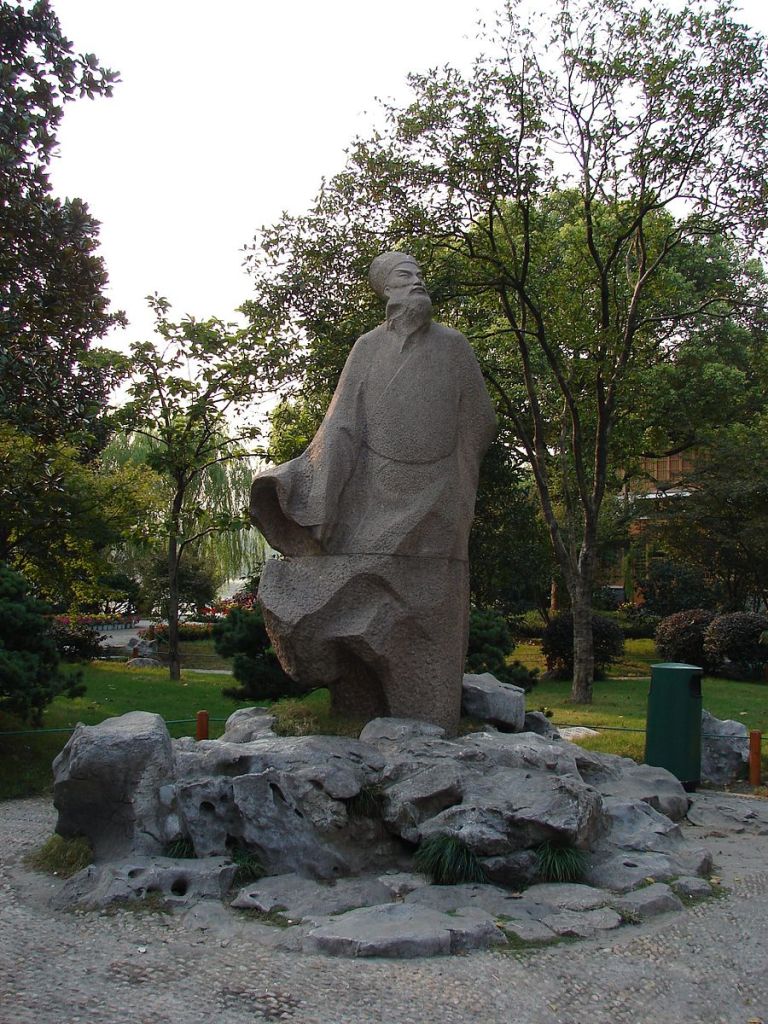
(After Su Tung Po)

The sky is a vast table
I’m hiding under,
but it seems fragile as glass.
Clouds drift through its cracks,
and when night arrives,
another day is lost.
A star flickers. Then
like this fleeting day,
it simply burns away.
It’s what we’re made of.
It does what it was
meant to do. It rises.
It flickers and it dies.
It was only meant
for me to wonder why.
Su Tung Po (1037-1101) Chinese writer, poet and governor. Courtesy: Creative Commons
George Freek’s poetry has recently appeared in The Ottawa Arts Review, Acumen, The Lake, The Whimsical Poet, Triggerfish and Torrid Literature.
.
PLEASE NOTE: ARTICLES CAN ONLY BE REPRODUCED IN OTHER SITES WITH DUE ACKNOWLEDGEMENT TO BORDERLESS JOURNAL
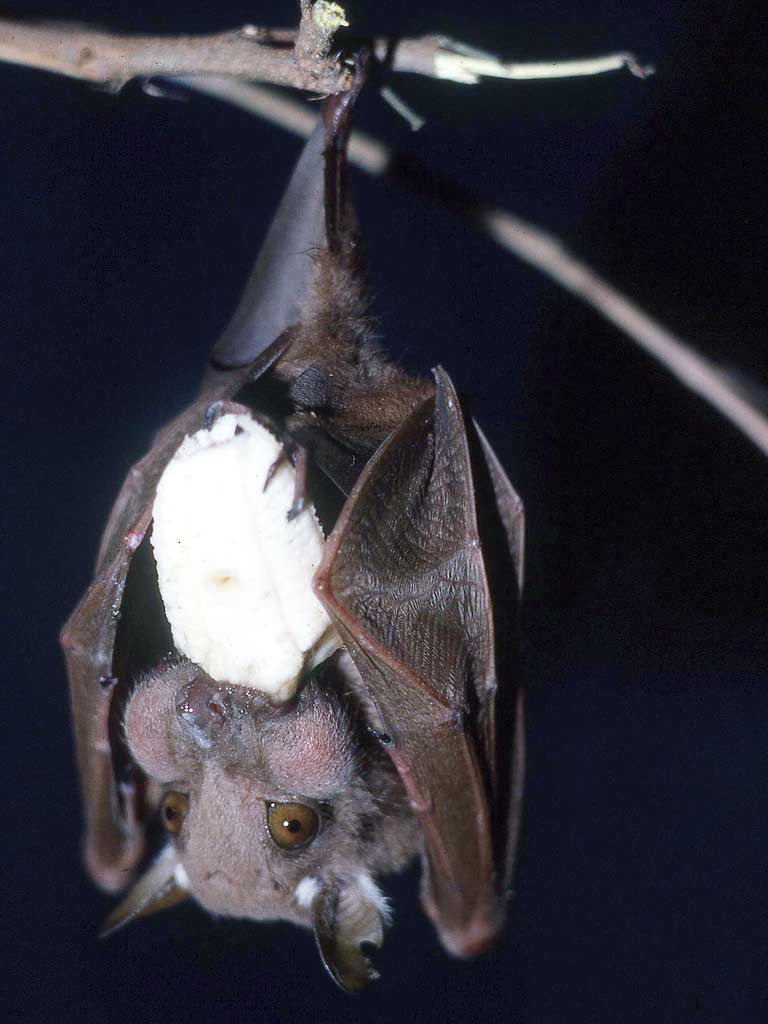
He left the pavilion and strode onto the pitch holding a gigantic banana. We were surprised and frowned as he took his place before the wickets. Most of the spectators fell silent but one of us who had travelled the world muttered that this banana was a totem of the monkey god, Zumboo, and that he hadn’t seen such a thing since exploring Borneo. I wondered what was left to explore on an island that had been inhabited for tens of thousands of years. The very densest jungle, was the unspoken answer. The bowler remained calm, took a slow run up, let loose a ball with a wildly erratic spin, but the banana connected with an audible squelch and the ball flew over the pavilion for a score of six runs. We settled back in our seats confident of a very entertaining innings but before the bowler could launch a second ball, the banana suddenly grew wings and flew out of the batsman’s grasp. We gasped. The umpire insisted that the match be abandoned immediately. We all went home. I am no cricket historian, nor an explorer. I am not even a zoologist. But I knew I had just seen a very unusual thing that fateful afternoon. The rarest species of fruit bat.
There was a king who feared invasion of his lands and defeat but he feared assassination even more. To guard himself from these dangers he moved his throne to the centre of an island in the middle of a large lake. But this lake lay at the centre of a larger island that reared from the waters of a bigger lake. Needless to say, this bigger lake was located at the centre of an island that was the size of a small country and this island could be found in the middle of a lake that was like a small sea. The king believed he had chosen the most secure place in the world and he relaxed just a little but he never slumped on his throne. He remained rigid, peering with his keen eyes in every direction, knowing that any invader or assassin would have to cross many bodies of water alternating with rough terrain in order to reach him, giving him plenty of time to prepare his defences. He had a rifle with an extremely long barrel and a tripod to rest it on and he was able to cover any approach with deadly fire. This is how he passed his days. But at night the moon rose slowly over the horizon and standing on the surface of that celestial object was the true enemy, a giant archer who lurked in the shelter of a crater and drew back his bowstring. The heavy arrow was nocked and he was carefully aiming at his obvious but oblivious target, the king who never looked up but who, sitting there, was a perfect bullseye at the dead centre of a series of concentric circles.
The Milk Truck
Travelling in a taxi from our small apartment in Bangalore to the airport, we hurtled along the highway, our driver weaving through the traffic with skill. We passed a stationary vehicle and at first I thought it had broken down on the side of the road. It was a large lorry, a cylindrical container on wheels. The words Milk Truck were written on the side in blue letters and then I saw an old woman on a stool near the rear of it. She was leaning forward, her gnarled hands reaching for the underside of the huge machine. It was just a glimpse, the merest flash, but I had the impression she was milking the truck’s udders into a bucket. How ludicrous! Sitting in the back of that taxi, I exchanged glances with my partner and I saw in her eyes that she shared my thoughts. We had both seen it. Metallic udders! I turned my head to look back but the truck already was out of sight, obscured by other vehicles. Our driver continued and it was impossible for us to know if he had noticed it too, or whether he would care even if he had. This is all the story, nothing else happened. We reached the airport early and had coffee while we waited but it was black coffee, which is both safer and saner.
Rhys Hughes has lived in many countries. He graduated as an engineer but currently works as a tutor of mathematics. Since his first book was published in 1995 he has had fifty other books published and his work has been translated into ten languages.
.
PLEASE NOTE: ARTICLES CAN ONLY BE REPRODUCED IN OTHER SITES WITH DUE ACKNOWLEDGEMENT TO BORDERLESS JOURNAL
SPRING WAS DELAYED

Winter came early:
the driving snows,
the delicate frosts
that crystallise

all we forget
or refuse to know,
all we regret
that makes us wise.

Spring was delayed:
the pallid rose,
the orchid-like sun,
the wind’s soft sighs,

all we omit
or refuse to show,
whatever we shield
behind guarded eyes.

THERE'S A STIRRING AND AWAKENING IN THE WORLD

There’s a stirring and awakening in the world,
and even so my spirit stirs within,
imagining some Power beckoning—
the Force which through the stamen gently whirrs,
unlocking tumblers deftly, even mine.
The grape grows wild-entangled on the vine,
and here, close by, the honeysuckle shines.
And of such life, at last there comes there comes the Wine.

And so it is with spirits’ fruitful yield—
the growth comes first, Green Vagrance, then the Bloom.
The world somehow must give the spirit room
to blossom, till its light shines—wild, revealed.
And then at last the earth receives its store
of blessings, as glad hearts cry—More! More! More!
Michael R. Burch’s poems have been published by hundreds of literary journals, taught in high schools and colleges, translated into fourteen languages, incorporated into three plays and two operas, and set to music by seventeen composers.
.
PLEASE NOTE: ARTICLES CAN ONLY BE REPRODUCED IN OTHER SITES WITH DUE ACKNOWLEDGEMENT TO BORDERLESS JOURNAL
It was a quiet pleasant evening with an unending essence of hopelessness. Mahi was drained and unable to reply to her own self. It was about six in the evening. The breeze carried a soulful fragrance within its whispers. Mahi was sitting on the edge of Neheng River. The sparkle of the setting sun with the pleasing breeze solaced her and revived her, raising her out of her weariness.
She remembered the sunset when she would sit a little distance away from Hasnain and stare at him. Hasnain was dispirited and was waiting to befriend death. So was death.
Hasnain’s tempting smiles and innocent face were forever visible within her tear-filled eyes. Mahi wandered why like a doomed soul he was unable to adjust himself to dwell in peace.
Mahi closed her eyes and scrutinised the jarring memories that wavered through her mind, remembering all those peaceful moments which were spent with him. The boy had died a year ago. His voice still haunted her. His image still drifted before her eyes. His grief was apparent in such visions and each of his words wafted back to her.
She was bound to suffer. She still heard the voice of his wretchedness as he screamed out loud.
“Is there anyone to free me from this torture-cell? I am suffocated here. I no longer want to resist my own departure from myself. Neither have I had an existence nor a non-existence. I befriended nothingness.”
These words of Hasnain made Mahi suffer till her last breath. She was dead silent after witnessing the misery and soreness of the blue boy as he tussled with death and lost himself.
It was the same day. It bound each life within death. Mahi was submerged with suffering, and she befriended death. So did death.
The graveyard is proud to own deaths that had befriended lives and exposed souls.
.
Munaj Gul Muhammed from Turbat, Balochistan, has been writing since 2017 on various educational, social and gender issues in different newspapers such as The Daily Times, Balochistan Voices, The Baloch News, Balochistan Point and other outlets. He has also won Agahi Award in the category of Human Rights in 2018.
PLEASE NOTE: ARTICLES CAN ONLY BE REPRODUCED IN OTHER SITES WITH DUE ACKNOWLEDGEMENT TO BORDERLESS JOURNAL
AUTUMN IS LONG

Until the farmers finish their harvest
Until the boats laden with fish reach the harbour
Until the oaks of the hill fully ripen
Until the squirrels finish their storing of winter foods
Autumn stretches long enough
Until all the peppers on the straw mats are dried
Until the drops of sweat on grandma's forehead evaporate
Until the seeds of the wildflowers ripen
Until the migratory birds finish their long journey
Autumn stretches long enough
Ihlwha Choi is a South Korean poet. He has published multiple poetry collections, such as Until the Time, When Our Love will Flourish, The Colour of Time, His Song and The Last Rehearsal.
.
PLEASE NOTE: ARTICLES CAN ONLY BE REPRODUCED IN OTHER SITES WITH DUE ACKNOWLEDGEMENT TO BORDERLESS JOURNAL
Neeman Sobhan is an expat who shuttles between Italy and Bangladesh and writes. She has a knack of making herself at home in all cultures and all spheres. Having grown up partly in Pakistan (prior to the Liberation War in 1971), Bangladesh and completed her studies in United States, she has good words about time spent in all places. Her background has been and continues to be one of privilege as are that of many Anglophone writers across Asia. Her stories have been part of collections brought out to celebrate the fiftieth anniversary of Bangladesh.
One of her most memorable stories from her short story collection Piazza Bangladesh, located around the 1971 war takes on an unusual angle, where the personal seems to sweep the reader away from the historic amplitude of the event into the heart-rending cries of women at having lost their loved ones in a way that it transcends all borders of politics, anger and hate. The emotional trajectory finds home in a real-world event in the current war. The fate of innocent youngsters dying while not being entrenched in the hatred and violence wrings hearts as reports of such events do even now. I find parallels in the situation with the young Russian soldier whose mother did not know he was in Ukraine and who was killed while WhatsApping his mother his own distress at being there. And yet her stories stay within certain echelons which, as she tells us in the interview, are the spheres that move her muse.
When and how did you pick up a pen to write?
I have always written. The written word has always held a powerful fascination for me, which has not dimmed at all. From my childhood through my teens, I was a voracious and precociously advanced reader, as well as a passionate writer of poetry, and a keeper of a daily journal. My poetry was regularly published in The Pakistan Observer’s Junior page. I don’t dare look at them now to even assess whether they were embarrassingly bad or surprisingly good enough to be salvaged and resurrected now! I preserved them as the earliest evidence of my continuing evolution as a writer and a poet today.
During those early days, I also won the first prize in a national essay writing competition sponsored by the newspaper. The Pear’s Encyclopedia I won still holds a precious place on my bookshelf.
English was my favourite subject in school and college, and I knew I would study English literature at university. I started out at Dhaka University in 1972 but by some perverse logic, I actually enrolled in the newly opened International Relations department and not the English Department (in which I had applied and been accepted). The reason, I now recall is because the English department was over-flowing with students, while the International Relations department was something exclusive and admitted a handful of students. However, after a few months I realised I had made a disastrous choice.
Meantime, my marriage was arranged, and I was whisked away to Marlyland, U.S. My husband, Iqbal, an ex-CSP officer (the Civil Service of Pakistan) was a Ph.d student of Economics at the University of Maryland, and in no time I enrolled as an undergraduate student and blissfully went on to study English and Comparative Literature, graduating eventually with a Masters in English Literature.
That I was going to be a writer was for me, even as a teenager, like a pre-ordained and much desired fate. I never wanted to pursue any other vocation.
What gets your muse going?
Anything, and everything. A view, a scent, an overheard conversation, a line of poetry, a memory……If I’m angry and seething, I write; if I’m sad or grieving, I write; if I’m joyous or ecstatic, I write; if I feel aa surge of spiritual bliss, I write; if I’m confused, I write. What form that writing takes is unpredictable. It could become a poem, or a paragraph in my notebook, which later could be part of my fiction, or a column. I wrote a regular column for the Daily Star of Bangladesh.
Writing is my food and nourishment, my therapy, my best friend, my passion. The writer-Me is the twin that lives inside me. It’s my muse and guide that defines my essential self. I am a contented wife of almost 50 years of marriage, a mother of two sons, and a grandmother of four grandsons (aged 5-4-3 & 2). These gratifying roles nourish my spirit, give me joy and inspiration, teach me lessons that help me grow as a human being. But my writer-self exists in its own orbit, proceeding on its solitary journey of self-actualisation, following its inner muse.
You have written of Italy, US and Bangladesh. How many countries have you lived in?
Yes, I have lived in Italy, US and Bangladesh, which makes 3 countries. But, in fact, I have lived in 4 countries.
Remember that I was born not just in the undivided Pakistan of pre-71, when present day Bangladesh was East Pakistan, but I was actually born in West Pakistan, present day Pakistan, in the cantonment town of Bannu, near the borders of the Khyber Pass and Afghanistan, (formerly, the NWFP or NorthWest Frontier Province, presently KPK or Khyber Pakhtun-Khwa). Although my parents were Bengalis from Dhaka, my father’s government job (not in the army but under the Defence department, ‘Military Lands and Cantonments Services’) meant being posted in both wings of the then Pakistan. So, during my childhood and girlhood, I grew up in Karachi (Sindh), Multan and Kharian (Punjab) and Quetta (Balochistan). As a family of five siblings and our adventurous mother, we always accompanied our father on his official tours, by car or train, over the length and breadth of that country.
In the English medium school I was enrolled in, I had to choose Urdu as the vernacular subject, since Bengali was not taught in West Pakistani schools, though the opposite was not true! Anyway, I have no regrets. I am proficient in both Urdu and my mother tongue Bangla/Bengali, which I learnt at home from my mother, who in Quetta actually set up a small Bengali learning school for Bengali Army officers’ children. I am proud of the fact that I carried my mother’s tradition when I taught Bengali to Italians at the University of Rome, many decades later!
What is it like being an immigrant writer? Which part of the world makes you feel most at home? Why?
To start with, and to be honest, I do not really consider myself a true immigrant — someone who bravely and definitively leaves his familiar world and migrates to another land because he has no other options nor the chance or means to return; rather, I feel lucky to be an ex-patriate — someone who chooses to make a foreign country her home, with the luxury of being able to revisit her original land, and, perhaps, move back one day. In fact, I have dual nationality, and am both an Italian citizen, and continue to hold a Bangladeshi passport. I might be considered to be an Italian-Bangladeshi writer. I consider myself a writer without borders.
I feel equally at home in Italy and in Bangladesh. Before the pandemic, my husband and I would make an annual trip to Dhaka for two months from December to February end, since my classes started in early March. Presently, I am back in Dhaka, after two almost apocalyptic years.
Despite the continuing hurdles of mastering the Italian language and trying to improve it constantly, we love our Roman home as much as our Dhaka home. Still, living away from ones’ original land, whether as an expatriate or an immigrant, is never easy, beset by nostalgia for what was left behind and the struggle to create a new identity of cultural fusion within the dominant and pervasive culture of a foreign land. But in this global age, it’s quite usual to live in a mix of cultures and live in a borderless world where ones national or cultural identity is not so clear cut. (I have a daughter-in-law who is Chinese, and another who is half-English, half-Thai! And my grandchildren are the heirs to a cornucopia of cultures and are true global citizens). Nevertheless, in the four and a half decades of my living away from Bangladesh, the eternal quest for that illusory place called home has shaped the sensibility that nourishes my creativity and compels me to write. Often, it’s the pervasive and underlying theme in my columns, stories and poetry. There is a poem of mine, “False Homecoming” which underlines the poignant sense of displacement a person can feel, not in a foreign land but in ones’ own motherland, or the version from the past. After all, many people who live away, exist in a time-warp.So, no matter which part of the world you feel at home in, it’s temporary. For me, as a writer between countries and homes, it is an external and internal odyssey.
It is the endless journey of a writer in constant evolution.
Tell us a bit about your journey.
I realised early on that our real world being increasingly borderless, it’s not a tract of land that makes me feel at home. It’s my writing. The Mexican poet Octavio Paz once said, “Words became my dwelling place.” This has always resonated deeply with me, because for me, too, language and literature have been my sanctuary and true homeland. I have lived in that comfort zone at the heart of my creativity, imagination and writing: my dwelling place of words.
Of course, there are as many shapes to the sheltering place of language as there are literary forms. My nest of words was also feathered by my particular exigencies, followed a particular route and journey.
Though I speak various languages, my mother tongue is Poetry. For as far back as I can remember I have always written poetry, like writing in a journal, considering it to be the shorthand of my heart, a secret language. I am a reticent person, and there are writers like me who are content to use writing, whether poetry or prose, as a tool for self-exploration, self-knowledge, self-definition, with no thought of being published. At least, not my personal poems.
Yet with poetic irony, despite being a private person, my career as a writer started when I was jettisoned into that most public form of literary expression: the world of weekly column writing. At the urging of a friend, the editor of the Bangladeshi national daily The Daily Star, I turned into a public chronicler of the minutiae of my world, my life and times. Now I discovered my professional language, my father tongue if you will, the language of prose and my journey as a writer started.
When one reads your writing, it is steeped in a number of cultures. Which culture is most comfortable for you while writing and which one for living?
There’s no place as beautiful and pleasurable to live in as Italy. Except for two or three months of winter, the climate during the rest of the year is perfect; the natural beauty and historical and artistic richness are unsurpassable, the food is delectable whether it’s based on nature’s bounty or the simple elegance of its distinctive cuisine. But for a writer who is also a housewife, the most comfortable country to write in, for me, is Bangladesh. With the culture of household helps abounding, I often get more writing done in two months of living in my Dhaka apartment than a whole year in Rome. My domestic staff are like family to us, and valued parts of our life. They sustain us and we sustain them, helping them educate their children to stand on their own feet. I miss this support network in Italy.
What are your favourite themes and your favourite genre? Expand on that a bit.
My favourite genre to both read and write is the short story, poetry, humorous essays, travel writing and insightful book reviews. I read fewer novels now, and I have been writing and struggling to finish my first novel for years. I suspect, this is because I am temperamentally more attuned to the short sprint dash of producing a discrete work of imagination than the long-distance run of a lengthy work. But I am determined to conclude this opus before it becomes an unfinished relic.
I never approach fiction-writing through themes. But in non-fiction prose writings, like essays and articles for columns, I love to write about certain topics, or about books, places, and people, from all walks of life. I also love to write about nature, food, history and traditions, about how to improve our world, our lives and our relationships; and the happy, hopeful moments of life. As far as reading goes, I love reading about travel, love and friendship, human compassion, and anything with a happy ending.
You seem to have centred much of your work on people who are affluent. What about the rest — especially the huge population who serve the affluent? Have you written on them? Tell us why or why not.
That is an incomplete picture, and a wrong perception of my writing. To start with, as a writer I am more interested in the richness of the inner lives of human beings, and less so in the outward, economic and class differences. To me, no one is merely affluent or poor, but human and worthy of a compassionate gaze. The diversity and motivations of characters, whichever strata of society they belong to moves my imagination. I do not write to either preach or disseminate ideas of social justice or to right wrongs, but to explore and present the world we live in, in all its complexities and subtleties, the joys and ugliness, the small dreams and grand passions, the disappointments and triumphs of individuals and generations. I like to delve into the psychological or political motivations of human behaviour, especially within the domestic sphere, the family, an ethnic community.
I have many stories about those who serve or are not from privileged classes. My story ‘A Sprig of Jasmine’ is about a sweeper woman at a school in Bangladesh. Then there is the story ‘The Farewell Party’ about a temporary domestic help in a Bangladeshi home in Rome, suspected of stealing. I also have a sequel to that which explores the life of the same Bengali help now working as a nurse-companion to an old Italian woman. These and many more are awaiting to be published soon in another collection.
But I never consciously choose a subject or set out specifically to tell the story of an under-privileged, oppressed, or marginalised person. It can happen that the story turns out to be about them, but for me a story reveals itself randomly, through an image or scent or a view or an overheard conversation, once I witnessed a slap being delivered, etc, and I follow its trail till it leads me to an interesting bend where it starts to shape into a story. I never know how a story will start or end. It grows in organic but unpredictable way. That is the challenge, and adventure of writing a story.
For example, one of my most newest stories, titled ‘The Untold Story’, (published in a recent anthology for Bangladesh’s 50th anniversary, When the Mango Tree Blossomed, edited by Niaz Zaman), is two parallel tales of two Birangonas (‘war heroines’ or raped victims during the Bangladesh liberation war ), but it came to me more as a way to explore the craft of storytelling, which is something that always engages me: how a story is narrated, as much as what the narrative is about.
By and large, I like to write stories about the world I know, and the people in my own milieu because no one writes about the expat society of Europe. I like to write about my world in all its details and extrapolate from its larger truths about humanity in general.
Jane Austen wrote about the landed gentry and her corner of England, but the stories ultimately reach our hearts not merely as stories of the affluent but of human foibles. John Updike wrote about his American suburban world. Annie Proulx writes about Wyoming. Alice Munro about the middle-class world of her neck of the Canadian world. Henry James focused on American aristocrats. But what is human and vulnerable, or worthy or unworthy, transcends class barriers. People are interesting, subtle, unpredictable, noble or wicked, no matter whether they are affluent or of straitened means. Tagore’s tales of women trapped in their roles in rich households are just as moving as those among the poor and underprivileged.
There are plenty of writers with a sociologist’s background who can chronicle the lives of the downtrodden whom they meet. I applaud them. My younger son works with the Rohingyas; my brother-in-law, a doctor worked for years with children of addicts. They have their stories to tell. I have mine. I’m interested in humanity, wherever I find them.
In the little I have read of your stories, Bangladesh is depicted in a darker light in your narratives — that it is backward in values, in lifestyles etc. Why?
I don’t know which particular story or stories you have in mind where you felt that this impression was consciously created. Unless the story was indeed about a backward area, like the dingy alleys and neighbourhoods of old Dhaka in the 60’s and 70’s. Or, the murky values resulting from the explosion of wealth and the rise of corruption, undermining civic and ethical values in the rampantly urbanised zones.
In which case, it’s an unavoidable fact and not a depiction.
However, since I write more in a nostalgic light about Dhaka past rather than the reality of the present, I actually have not really written about the darker sides of the country; and which country or society does not have its seamy side. A good question would have been why I have not depicted Bangladesh in a darker light as contemporary writers of Bengali fiction do, dealing courageously with sinister aspects of politics and corrupt moral values at every level of society.
There is much in the Bangladeshi culture that we are proud of, beautiful traditions, and so much beauty in our natural world. I like to weave these into my narrative. So, I’m surprised that you found my stories to be dark.
What are your future plans?
One of my most urgent projects is to get my novel-in-progress published.
I’m also planning to come out with another collection of stories, and a collection of my columns on travel, and an Italian and Bengali translation of my fiction.
So far, my three published books, and all the stories that have appeared in various anthologies are just a few milestones but do not define my journey as a writer. Daily I grapple with the insecurities of a writer, and daily I learn new things that help me grow towards being the writer I aspire to be. It’s still a long way to a full flowering, but each passing day I dabble in words, I feel the creative petals unfolding, slowly but surely.
Thank you for your time.
(This is an online interview conducted by Mitali Chakravarty.)
PLEASE NOTE: ARTICLES CAN ONLY BE REPRODUCED IN OTHER SITES WITH DUE ACKNOWLEDGEMENT TO BORDERLESS JOURNAL







 Borderless