Wednesdays at the art gallery are free
and this muted street girl in rags files in
just after open, the old docent with veins like curdled milk
sees her there all the time, standing with a smile,
truly admiring the art, these sores all over her face,
not at all like the many oil models in the pictures,
but she seems happy, almost delighted!
The old docent starts bring coffee they can share,
then homemade sandwiches for the girl.  She says
her name is Ashley and that the Italian Renaissance rooms
are her favourite.  The old docent not wanting to spook her,
so she never tries to pry.  Under that sprawling Diego Rivera
mural in the atrium with so many
busy bronzed men at work.
Ryan Quinn Flanagan is a Canadian-born author residing in Elliot Lake, Ontario, Canada with his wife and many bears that rifle through his garbage. His work can be found both in print and online in such places as: Evergreen Review, The New York Quarterly, Borderless Journal, GloMag, Red Fez, and Lothlorien Poetry Journal.
.
PLEASE NOTE: ARTICLES CAN ONLY BE REPRODUCED IN OTHER SITES WITH DUE ACKNOWLEDGEMENT TO BORDERLESS JOURNAL.
Ratnottama Sengupta shows the impact of Gandhi and his call for non-violence on her father, Nabendu Ghosh as she continues to emote over his message of Ahimsa and call for peace amidst rioting
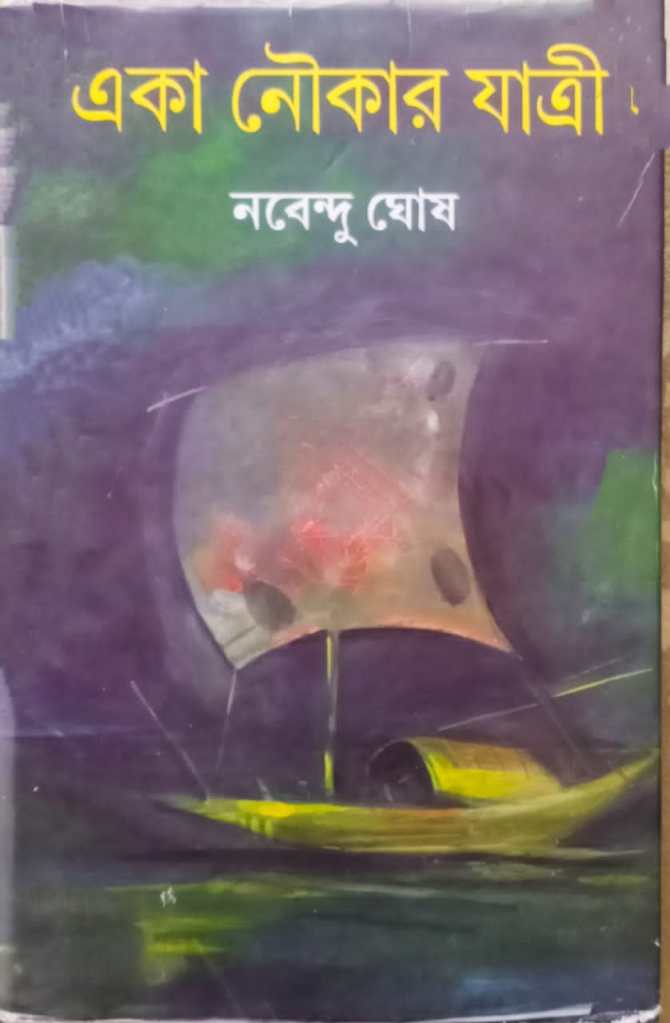
Eka Naukar Jatri (Journey of a Lonesome Boat)Gandhi. Courtesy: CReative Commons
The ferocity and senselessness of riots — Nabendu Ghosh had personal experience of both. In his autobiography, Eka Naukar Jatri (Dey’s Publication, 2008, Journey of a Lonesome Boat), he writes at length about grappling with the riots that had rocked Calcutta, Bengal — nay, the entire Subcontinent on 16th August 1946.
The Direct Action Day call was given out by Mohammad Ali Jinnah to press the demand for a separate Muslim State, Pakistan. The epicentre was Calcutta, a flourishing centre of business and education, that had Suhrawardy of Muslim League as its chief minister. On that black Friday, they unleashed unprecedented bloodletting along communal lines. At least 4000 deaths were reported on the very first day of the ‘Great Calcutta Killing’ that continued for more than four days. Many women were raped, many were kidnapped, many killed and hung naked in public areas… Dismemberment, forced conversion, bustees set on fire… Violence spread to Khulna in East Bengal, and Bihar. Within a year the hatred ignited on religious grounds culminated in the Partition of India.
The savagery of the mindless bloodbath had left such a deep dent on the yet-to-be-thirty writer, that he wrote a number of stories and novels on the theme: Phears Lane, Dweep, Trankarta, Ulukhar, ‘Chaaka’(Full Circle), and ‘Gandhiji’.
Gandhiji builds majorly on the author’s own memories of a darshan[1]of Mohandas Karamchand Gandhi while he was passing through Patna, sometime in early 1931. This is how he records his ‘encounter’ with the Saint of Sabarmati who worked magic on the masses with the mantra of Ahimsa, non-violence.
“By 1930 all of India and its British rulers too were uttering one name with awe: Gandhi. One evening it came to my ears that the Mahatma would reach Patna at 7 am the next morning, spend the day in the city and leave by the Punjab Mail at night.
“I did not sleep well that night. I was up at the crack of dawn and left home at 5 am on the pretext of getting a book from a friend. But I could not get anywhere near the Patna railway station, which was teeming with people who had arrived before sunrise. It was no different along the path he would be driven down. I hung around at one end of the platform, eyes glued to the exit gate.
“Policemen on horseback trotted past me. A police van was parked close by. Those patrolling the platform carried bayonets and batons. Because of my green years and my small built, I was allowed to inch ahead. From time to time the sky was rent with the cry of ‘Mahatma Gandhi ki jai! Long live the Mahatma!’
“All of a sudden, perhaps to steel myself, I started to whisper: ‘Vande Mataram! I salute you, my Motherland!’ As if on a cue, the man next to me cried out aloud: ‘Vande Mataram!’ The crowd roared in an echo: ‘Vande Mataram! Vande Mataram!!’
“Suddenly a train rolled in with a long whistle. And people all around me broke into the cries of ‘Mahatma Gandhi ki jai!’ ‘Bharat Mata ki jai!’ ‘Vande Mataram!’ I found myself matching their voice…
“Soon people started saying, ‘There he goes…’ Some cars came forward with Gandhi-topi clad volunteers. And then, there was the face so familiar from the newspapers, peering out of a hood-open Ford. Mahatma Gandhi, clad in a knee-length khadi dhoti, a chadar draped over his bare torso, a volunteer on either side, was greeting everyone with folded hands. What an inspiring image!
“I also broke into the cry of ‘Mahatma Gandhi ki jai!’‘ The crowd had started running behind the moving car. I joined them, without a pause in the slogan. A few paces later, I bumped into someone and fell down by the wayside. As an elderly gentleman lifted me up and soothingly dusted me off. I felt a resolve surface in my thoughts: ‘Freedom must be won!'”
*
Nabendu Ghosh may or may not have had another prototype for the protagonist Ratan in Gandhiji. But it is said there actually lived close to College Street — where Nabendu lived at the time — a person named Gopal Mukherjee who owned a meat shop. He was a devotee of Subhash Chandra Bose and a critique of Gandhi. Reportedly this ‘paatha‘ — butcher — was funded by some Marwari businessmen and he led his team to retaliate from the fourth day of riots. After Independence, when he was urged to surrender his guns, knives and sword to Gandhiji, he apparently refused, saying, “I would willingly lay down my arms for Netaji, but not for Gandhiji. Why didn’t he stop the killings in Noakhali?”
The author may have woven in some traits of Gopal Paatha but, like a mirror image that is identical yet opposite, his protagonist Ratan is transformed by the iconic personality so that he surrenders his weapons — expressed symbol of violence — at the feet of the Mahatma.
*
As I watched Kamal Hasan’s Hey! Ram (2000), I was reminded of this story, ‘Gandhiji’ that was published in the collection Raater Gaadi (The Night Train) in 1964. Perhaps unknowingly the character played in the film by Om Puri reflects the protagonist Ratan.
In Hey! Ram, A rioteer who has snuffed out scores of lives walks up to the fasting Gandhi in Beliaghata, throws a roti towards him and says, “I have bloodied my hands with many lives but I will not have your death on my conscience.” He resonates Ratan, the butcher who finds his biggest high in draining out human blood but once he rests his eyes on the frail sage, something happens deep inside him. He who wondered why his taking a life should matter to ‘Gendo’, stakes his own life to protect a Muslim.
*
Nabendu Ghosh experienced the magic of the Mahatma at age fourteen, long years before he became my father.
I felt the magic of the man whom Rabindranath Tagore gave the name of Mahatma when I was well into my forties, and was doing a Fellowship in Oxford, on a Charles Wallace award, on John Ruskin and his Influence on Gandhi and Tagore.
Then, almost 20 years later, we were at the critical juncture in time when we were completing 70 years of Gandhi’s passing and approaching his Sesquicentennial Birth Anniversary. That is when I started wondering: “What does Mohandas Karamchand mean to those acquiring voting rights in India now? Is he only the face on every Indian currency note? Is he only ‘M G Road’ — the high street of every city in India? Is he a boring memory who forces every one of his countrymen to shun drinking on his birthday?”
Or, is there any valid reason to recall what he said — in Natal and Transvaal and Pietermaritzburg; in Kolkata and Noakhali, Chowri Chowra and Dandi, Bombay and Delhi? Is there anything in his actions that can change the lives of not only Indians but everywhere in the world where people are tired of terror strikes and gunshots and discrimination in the name of caste or creed or colour?
For, influence he certainly did, the lives of so many personalities… Not for nothing was Mohandas of Porbandar to become Gandhiji, Mahatma, Bapu, Father of the Nation.
Ratnottama Sengupta, formerly Arts Editor of The Times of India, teaches mass communication and film appreciation, curates film festivals and art exhibitions, and translates and write books. She has been a member of CBFC, served on the National Film Awards jury and has herself won a National Award.
.
PLEASE NOTE: ARTICLES CAN ONLY BE REPRODUCED IN OTHER SITES WITH DUE ACKNOWLEDGEMENT TO BORDERLESS JOURNAL
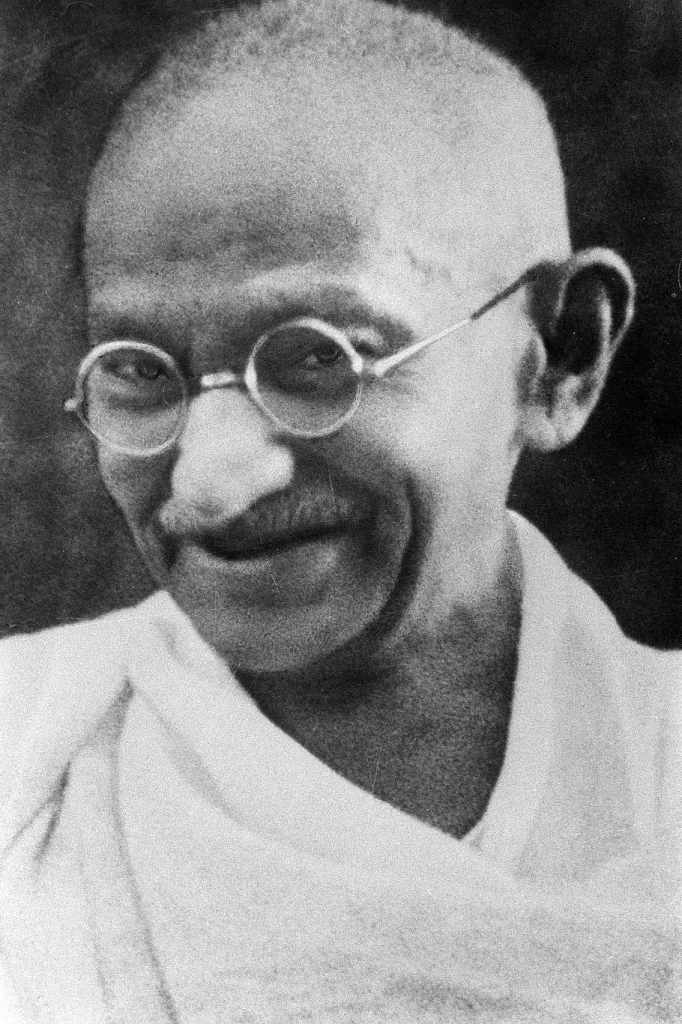
Gandhi (1869-1948)The victims of the 1946 riots in Calcutta (now Kolkata)
The sun went down.
One after another the lamp posts in the winding lane sprung to life. Their brilliance was dimmed by the smoke from the homely clay oven, sigri. The darkening sky above got dotted by a glittering star or two. And that is when Ratan’s feet became unruly like a wild steed. Donning a mulmulkurta he got ready to go out for the evening.
Jasoda had entered the room to pick up something. She came to an abrupt halt.
“Off?” she asked, her voice laced with sarcasm. “Can’t stay put at home any longer, can you?”
Solemnly Ratan nodded his head. “Yes, just need to take a round.”
Jasoda knitted her brow, “Just take a round? Chhee! Don’t do that. Pour some down your throat too, okay?”
“Jasoda!”
“Why? Am I saying something wrong, haan[1]? Something not quite done?”
Ratan did not utter a word in reply. He only glared at Jasoda for a second before walking out in rapid steps.
He didn’t stop until he reached Jatin’s house. His friend Jatin who sells fish every morning and evening. He has no family save his aged mother – he had married but his wife died years ago, and he made no attempt to have another after that.
They all gather in his house – Haaru, Potla, Jaga, Radhu and a few others. Since most of them are in the business of selling fish or meat, they have cash in their pockets. They easily turn uproarious as mutton chops and prawn cutlets stream in to enhance the pleasure of downing country liquor.
In a room foggy with fumes of cigarette, they settle down to a few games of card. They play as long as they feel like; when they don’t want to, they storm the cells of Gendi or Bunchi in the dark of the night. Or, when they are told to, they dive into the alleys of the Muslim neighbourhood and toss a few hand grenades.
Yes, the responsibility to curb the riot – a euphemism for hunting down Muslims – has suddenly come to rest on their able shoulders. They didn’t anticipate or expect it to, but it did. All of a sudden the wealthies of their end of the city started to pamper them. They raised funds through donations, to arm Ratan and his friends with small weapons so that they could protect the prestige of the Hindus, and of the womenfolk.
The way things were going, this was bound to happen. They had outdone everyone in severing head from the torso of walking talking men.
*
They were all there. Haaru, Potla, Jaga, Radhu – all of them had showed up. Ratan lent the final touch.
“Come in saala[2], come!” Jatin affectionately welcomed him.
Laughter and banter followed.
There was a sudden lull in the spate of riots that had been on sporadically for a year since the Direct Action Day, and had got a spurt when the country won its freedom on 15th August. But God knows what went wrong? All of a sudden the darkness of hatred started to melt, and the two warring units that had been at each other’s throats, suddenly saw themselves in the mirror: they embraced each other in brotherhood.
Since that day their ‘work’ had gone down. Further calm has descended since Gandhiji appeared in the city. He is camping in Beliaghata. He has been saying that he will not go anywhere until there is peace. Why, he has even staked his life! He will give up his life if he has to, to stop the riots! That is why Ratan and his company are spending more hours in downing liquor and visiting the sluts in the forbidden quarters, singing in their hoarse voice and walking with unsteady steps.
The chops and cutlets from Nitai’s shop were hot off the oven. The air thickened with the smell of blended oil. And their eyes sparkled with the spirit.
“Abey Jatin, get the bottles out…” Ratan urged.
“Haan bey,” Jatin was most willing to oblige.
A bitter-sharp smell spread through the room. The earthen cups filled to the brim were emptied in no time. The world before their eyes started dancing like a flame. Nasha… stupor.
“Bring out one more bottle, saala…” Ratan nudged Jatin.
“Haan bey, I will…”
“Arre call for more chops and cutlets.”
“O-K-K Sa-a-la…”
Jaga suddenly sprung to his feet. “I’m off, bye…”
“Where to?” Jatin wanted to know.
“To Bimli’s…he-he-he…”
“Get back to your chair” – Jatin barked at him. “We will all go in a group.”
Jaga wasn’t too pleased, but he sat down again. “Okay baba, that’s what we will do. Meanwhile let me have a bite of the cutlets…”
The room was filled with the odour of country liquor and smoke. Reddened eyes and numbed responses. Tidbits dropped on the floor, empty bottles and used cups and dishes piled up. Vegetable salad and sauces dripped to stain their clothes. None of them cared to wash their hands, silently they went on downing the liquid fire. Periodically they pulled their faces and uttered satisfaction, “Aah!”
“Hear that?” Ratan turned to gaze at Jatin.
“What?”
“All of you here can hear this?”
Potla shook his head, “How can we hear if you don’t spit it out, saala…”
Ratan crinkled his face, “This Gendo[3] of yours has thrown a spanner in the wheel, re…”
A gentle murmur coursed through the room. Almost as if a gentle breeze had rustled dry leaves.
Gandhi – yes, Gandhi! Superannuated Gandhi, old rascal Gandhi. This Gendo chap is a fraud. He is in cahoots with the Muslims, enemy of the Hindus, foe of the Bengalis…
“Yes, he has thrown us off-gear,” Jatin spoke through gritted teeth. “But for how long can he stymie us? He can’t get away with his bujruki, his hoax …”
Jaga spoke in a tired voice, “I just want to see Bimli for a while…”
“Sit, you owl!”
“Whatever you may say,” Haru spoke in a soft voice, “Gandhiji is a good soul, hanh?”
“Good soul?” Ratan roared out a nasty abuse, “My foot! All of us can sing bhajans and paeans to Ram if we had a life of comfort like him, buddy! And this guy alone is responsible for the Muslims daring to go so far as to demand a separate land. But this can’t go on! Now we have gained Independence. This is Hindustan – we will put an end to the last Muslim standing here!”
“Right! Right you are!!” they chorused in their boozy voice.
“Riot! We must hack every invader, every single Yavan!”
“Listen!” Jatin ran his eyes over them, “What Ratan is saying is hundred percent correct. Gendo can’t have a run of the state. No. D’you know what that chap is up to now? He’s saying he will bring back every single Muslim and rehabilitate them in the bustee[6]at Beliaghata. Why, I ask you dear, why couldn’t you say this to our people? What did you, all told, achieve in Noakhali?”
Ratan nodded in agreement and let out a mouthful of smoke. “No, such humbug will no longer work here. Enough. The guy wants to unite Ishwar and Allah[7]! As if you can do that at will!”
“Shut up bey!” Jatin cackled.
“Tomorrow. We will rake it up tomorrow itself. The Babus had sent for me today – everything is fixed.”
“All fixed?” Ratan’s face brightened at this, “Good. I’m relieved.”
“Oh, good. Come on, baba Jatin…” Haru called out, “bring out another bottle Jatin!”
“Die, you pests!” Jaga stood up and spoke in excitement, “None of you are sober. I’m off to Bimli’s.”
“Saala can’t wait to get there,” Ratan chuckled. “Arre baba, we’ll all go with you…” They all got to their unsteady feet.
*
Ratan couldn’t contain his glee. As he strode forward he kept thinking, “So there’ll be riots again – good!”
The lull in the violence these past few days was most irritating. He simply couldn’t take it anymore. He had tasted blood – and that is a dangerous addiction. For years, he had been a butcher and beheaded goats and lambs. But the thrill of killing a man, a live human being, was something else.
The first day he stabbed a man he understood that this was the king of highs. Day after day, he had sought out Musalmaans and delighted in putting the knife into them – and now it had spread through his veins. Now he felt out of depth on the days when he did not snuff out a life. He felt rather unwell.
He had a faint recollection of one particular afternoon.
He was sipping tea in Bipin’s tea stall.
All of a sudden some boys dragged in a young Muslim fellow. They told Ratan, “Now you have to finish the job Dada[9]. We are exhausted.”
Ratan grinned, “What’s so tough, idiots?”
“You’re mistaken bhai[10]…” the young man broke into tears. “I’m a Hindu!”
“Really?” Ratan laughed uproariously. “I’ll check that out once I’ve finished with you.”
The youth was dragged to a dark end of the lane and done with. After the job was over, a curiosity gnawed Ratan. He was absolutely certain that the kid had claimed to be a Hindu out of sheer fear. Still… He bared the body and checked the genitals of the naked corpse. “Shhuh, I got fooled!! This guy was actually a Hindu…”
They were outside Bimli’s door. There was no one else in the gully but them. The entire city was holding its breath, too scared to breathe in the riot-torn air. And then, it was late in the night. The gaslight was casting eerie shadows. Silence ruled.
*
Jatin’s words came true. The riots broke out the very next morning. And there was severe rioting. But this time around it was the Hindus who were aggressive, not the Muslims. The bombs and sten guns resounded across the sky and the air was rife with fear.
Ratan finished one round and returned home. Aah ! He felt somewhat relieved today.
But Jasoda was furious and would not relent. “So! You do have to come home to Jasoda, yeah? So liquor and sluts are not your cup of tea round the clock!”
“Jasoda!”
“But why are you losing your cool? I’ll get it for you – after all, you have been doing so much work! Boozing… whoring… killing…”
“Jasoda I’ll knock your head off!”
“Don’t I know that?” Jasoda’s fiery eyes bored through him, “The day you will fail to find a human to stab, you’ll twist your knife into me to satisfy your thirst for blood…”
Jasoda walked out of the room.
After a while she sent a khullar[11] of tea through her little boy but she herself stayed away.
Ratan was displeased. He spent the rest of the afternoon sleeping. Let the others take the responsibility to keep the fire aflame; now that it has been lit again, it will spread on its own steam.
That’s exactly what happened. By nightfall the riots took a sinister turn. Tension gripped the air of the city, dread filled the dark of the eyes. There was hardly any footfall in the streets.
*
When they met in the evening, Jatin said, “See how easy it was to rekindle the flame! But…”
“But?”
“It seems that Gendo chap is fasting since morning.”
“Fasting! Really?”
“Yes. Crazy, this man is. He will fast unto death, he won’t eat a morsel until the riots stop, he has said.”
“Arre let him!” Ratan hissed. “Let the oldie die. This is how he has been pampering the Musalmaans. Forget him – he should die!”
“Right you are,” Jatin nodded in agreement, “let him die. You come with me, there’s work to be done.”
A while later the sky lit up with the blaze of a burning slum. The fire brigade rushed to the spot with sirens blaring. The city cowered, trembled with fear, as the sound of bombs rent the air every now and then.
Coming home, Ratan was again subjected to the tongue lash of Jasoda. What is this vixen, a virago? No fear in her soul!
“So you’ll kill him? You will kill Gandhiji?”
“And what if I kill him?”
“What if you kill him! Are you a human being? You’ll kill a sage like him? You’ll rot in hell if you do that, understand? You’ll burn in hellfire…”
“Piss off! Just shut up and go. Get lost — ”
“Chhee! What are you, a man?”
“Jasoda!”
“What? You’ll kill me too? Go ahead, do that!”
But what good was silencing Jasoda? Ratan simply couldn’t sleep that night.
That Gandhi has gone off food?! What stuff is the man made of? If I kill two men, you’ll fast yourself unto death? What a dissembler. But otherwise the man has done so much! That the country has gained independence – it is largely due to this man, they say. So what? Why must he pamper the Muslims to this extent? If he’s really so bothered, why doesn’t he go fast to stop the riots in Punjab? Humbug. Let him rot.
*
The same story repeated itself the next day. The sacrificial fire kept devouring human flesh.
“What a hassle,” Jatin grumbled. “This Gendo simply won’t eat a bite, I hear! He’ll kick the bucket day after if not tomorrow.”
“All this is willed by Goddess Kali, d’you realise Jattye?” Ratan added with a wave of his hand, “It’s best he shuffles off his mortal coil and drops dead.”
Stray incidents filled the day. Then it started to pour. They couldn’t do very much after that. When the rain stopped, Ratan stepped out to stretch his legs. He noticed that people were gathering here and there, reading newspapers, discussing something in a grave voice. Gandhiji, the name, kept recurring. They all looked worried, sounded concerned, crestfallen.
All his countrymen genuinely worshipped Gandhi. He has actually done a lot – gone to great length to gain independence for the people. Not just the Lord Saheb, even the King of the British rulers held him in deference!
Suddenly Ratan hastened his pace. Why not go upto Beliaghata and take a look at Gandhi? To this day he had not set his eyes on this man, what was the harm in sizing him up? Ratan was not enamoured of Gandhi, he didn’t care two hoots whether he lived or died. Still, a peek at the man would do no harm. All said and done, he’d made a name for himself, perhaps even a place in history.
Ratan was overcome by a strange emotion. Inscrutable. Without much thinking he showed up in Beliaghata for the evening prayers. There was a large crowd waiting outside the house. He nudged and pushed to wend his way and find a footing in the front row. After a long wait he got to see Gandhiji.
A short statured, dark complexioned ageing man with the radiance of a child on his face. Bare bodied, Khadi-clad, he had a meditative calm about him. So this was the magnanimous Gandhiji!
A tremor passed through Ratan. It was as if he had suddenly come face to face with a morning sun. As if he was standing on the shore of the Pacific Ocean, as deep as its boundless expanse.
In a flash something happened deep within Ratan. Everything turned topsy turvy as if shaken by an earthquake high on the Richter scale. He realised he had finally encountered a magnificent personality. One who would not bow his head to anything unjust or immoral. One who would not daunted by guns and bullets.
As he looked on, Ratan turned misty eyed. Who said Gandhi was a pygmy? To Ratan he seemed like the Himalayas piercing the sky. Ratan trembled, he panicked, he fled.
All kinds of thoughts beset Ratan and he became restless. He headed straight for Jatin’s house. He felt like settling down with bottles of the fiery stuff. As he felt the liquid sear down his throat, the daze cleared somewhat.
“Know what Jattye?” he tried to draw his friend’s attention.
“Seems a sadhu, right? Yes, the fellow has actually done a lot for the country…”
“That’s what I hear. So many times he has been incarcerated and been to the jail. So much suffering he has put up with…”
“But that one failing! He has spoilt all his good actions by pampering and mollycoddling the Muslims, over-indulging them…”
“You have hit the nail on its head!”
One by one the others joined them. In no time the place was abuzz with food from Bipin’s Stall and bottles of country liquor. Downing the liquid in rapid succession they were quite a boisterous crowd.
“Follow me, Ratnya?” Jatin slurred, “this…”
“Unh?”
“Gendo is fasting, let him. He won’t kick the bucket in a day or two, will he? Old bones are sturdy – he’ll last. Meanwhile, in two days we’ll clear out all the ragheads, won’t we?”
“Yes Jatye, spot on…”
“Here, some more… f-o-r youuu…”
“Yeah… g-i-v-e mee…”
Ratan could not walk straight when he reached home.
“Why?” Jaosoda came at him like a bull at a gate, “Why are you back here? Was there no space for you in Chandravali’s love nest?”
“Shut your trap Jasoda!”
“The frigging bastard won’t let me be in peace.. Maa-go!”
Ratan flopped in his bed and murmured, “Q-u-i-e-t Jasoda! Shut up and keep quiet bhai…”
“Bhai! Bro? Shame upon you, no-good burnt-face monkey! You see a brother in me?”
Jasoda kept on muttering long after Ratan had started snoring.
*
Next morning the rioting picked up in momentum.
Ratan and his chums returned to action big time, complete with sten guns. From the rooftops, on the streets, wherever they were, they kept firing towards the Muslim shanties. After almost three hours there was a lull in the firing. The police and military forces had arrived and by afternoon things were quiet again.
Vans with loudspeakers were blaring that, unless the riots came to a stop, Gandhiji would cease to be. He would end his life.
The peaceniks took out a procession. The violence started to wane.
“That was quite a blast, wasn’t it Ratnya?” Jatin was smiling ear to ear when they met in the evening.
Ratan simply nodded.
Jaga returned from the paan[14] shop with a fresh stock of bidis[15]. “Folks have you heard this? Gendo is about to snuff out!”
“Who said that?” Ratan was startled.
“The newspapers have headlined, it seems, that Gendo has refused to relent in his fasting because there’s no let-up in the riots.”
“Ohh!”
“Arre that’s bullshit!” Jatin reacted. “Two more days of action at this level and all the Mullas will be shown their place.”
“Hunh!” Ratan nodded unmindfully, “but Gandhi is in such a poor shape, he’ll conk out, they’re saying…”
“Arre forget it! Rumour – that’s all it is. Come, let’s have a toast.”
“Well then, let’s go.”
*
Ratan joined Jatin to open a liquor bottle long before sunset. The tumult in the morning had left him exhausted. A few drops of hard core liquor might just be the tonic. But Gandhiji? There’s something about him… a halo. He had touched the heart of thirty crore men and women. Ardently they cried out, “Mahatma Gandhi ki jai [16]!” All-pervading emperors and powerful lords had not succeeded in intimidating him. Mahatma Gandhi!
At this point Madhu ran up to them. “Hey guys, come fast! I’ve cornered one of them…”
“What?!”
“Bastard!”
Suddenly the thirst for blood got the better of him. Sitting bolt upright Ratan said, “Come on Jattye.”
The three of them strode forward. Jaga, Haru and Potla were waiting round the corner, a middle-aged Muslim in their grip. They’d got the better of the man who was walking down the street lost in thought.
“Please let go of me bhai !” the man pleaded.
“Let go of you?” Jaga laughed out loud, “Why? Are you my wife’s brother, saala? Does your sister sleep with me?”
In silence Ratan went up to the man and grabbed him by his hand. Agitation tinted the blood that was coursing through his body. Blood! Unless he spilled blood his head might burst!
“Who’ll twist the knife in – you?” Jatin asked. Ratan nodded, “Yes.”
“How many will this be in your count of heads?”
“Maybe a score and half…”
“Well then, go on. Get over with it.”
“You’ll kill me?” The man wailed out, “Please let go of me baba – I implore you! Believe me, I have a son at home who is critically ill – I came out only to buy some medicine for him…”
“Shut up!”
Just then a voice floated across from a loudspeaker being played from a van: “Gandhiji is in a critical condition…”
Ratan pricked up his ears. Jatin looked towards the van, “Hey, what are they saying?”
“Gandhiji’s priceless life is in your hands today…” the voice was faint but the words were clear. “If you don’t stop killing, Gandhiji will not return to life. Stop now – and bring Gandhiji back to life…”
The voice receded in the distance.
“Go on, finish the job at hand Ratnya,” Jaga spoke, “or leave it to me.”
Ratan looked at the man.
Instantly the man smiled. “You’re determined to kill me, Baba?”
“Abey why are you showing your teeth?” Potla rudely demanded.
“Kill me,” the man said. “But don’t forget, killing me means stabbing Gandhiji.”
“Shut up!” Jaga roared, “not a word more…”
Still the man went on, “Listen to me Baba, now I’m not speaking for myself. Don’t kill me – let Gandhiji live!”
“Enough! Don’t want to hear the devil quote scriptures – hold your tongue.”
“Kick the rascal!”
“Go for it Ratnya!”
‘What’s holding you Ratnya??’
“Go go go…”
Unexpectedly Ratan turned around. He stood in front of the Muslim guy and said in a determined voice, “No.”
“Meaning?!” Jatin was stupefied, “What’re you saying Ratnya?”
“You heard me right Jatye — I’ll let this man walk.”
“Nope.”
“Yes, I’ll let this fella go Jatye. If you try to stop me, you’ll have to fell me first.”
All the others moved back a few steps.
“Have you gone out of your mind ?!” Jatin couldn’t make head or tail of it. “What’s the matter, I say?”
Ratan didn’t reply. Instead he addressed the man, “Come Mian[17], let me take you to the high road.”
The two of them took a few steps forward.
“Bah ! Won’t you even tell us why you’re letting him off? Hey Ratnya?”
“Ratnya! Hey bugger!”
Without a pause in his walk Ratan said, “Don’t call out to me.”
After escorting the fellow to the safety of the main street Ratan headed home.
*
Soon the night set in. The curfew hour started. The roads emptied out. From the lane they could make out that the military trucks and police vans were whizzing around the city. Some light escaped the windows of neighbouring houses. A handful of faces peeped out now and then. Swiftly, a dopey silence engulfed the habitat. The city seemed to be drained of vigour. The yellow gaslights on barren roads imparted a ghostlike ambience. The night deepened.
Jasoda noticed the worry lines on her husband’s visage and frequented her rounds of the room.
Out of the blue she even asked him, “What’s the matter with you, go[18]?”
“What? Nothing!” Ratan responded.
“Today you didn’t down bottles of liquor. Such good fortune!” She grinned at him, then wondered, “Why, you’re not even angry!”
“Hunh !”
“Feeling unwell, are you? So you’re missing your Chandravali Brigade! Care for a cup of tea?”
“Get it.”
Jasoda left to get the tea. Today Ratan was happy to see Jasoda.
Amazing! Something was the matter with him surely. He just could not bring himself to stab the man! One man’s life is so precious? People were correct about him. They worry for him, to protect him. To save his life, they appeal to all and sundry, even to strangers!
Yesterday he had visited that One Man. Short of height, dark of complexion, an octogenarian with a halo about him. A man like the Ocean, like the Himalayas, like the Sun. Boundless his sacrifice; immense his patience, unending his hope. Forgiveness, compassion, truth, love, ahimsa [19]– he defined all these virtues.
Magician, he was! He had crazed thirty crore men and women who chanted in unison ‘Gandhiji Ki Jai! Victory for Gandhiji!’ He has made them fearless, and independent. Yesterday he saw his Ram with his own eyes. It was all rubbish, he was no one’s enemy. He was ajatshatru, his enemy had yet to be born. Everyone in the country was his child, his progeny. He did not punish one for the failings of another. The punishment due to everyone he placed on his own head – a crown of thorn.
The night deepened and darkened.
Lying in his bed Ratan started to leaf through the album of his life. Alcohol, meat, women, neglect of a wife like Jasoda, butchery, rioting and killing more than a score of lives… And that enlightened Old Man? He had won the country, the world, in the brief bracket of a lifetime.
The night rolled on, towards sunrise.
At daybreak Ratan rose from his bed. He searched through his house and pulled out every piece of hand grenade, bullets, knife, and tied them into a bundle. Jasoda was still not up. Ratan cast a silent look at her and stepped out of the house.
The sky had not yet lit up, but the curfew hours were over. A handful of souls had stirred out on the streets here and there. A few cars had set out for some destination.
Ratan took full strides eastward. That’s the direction from which a red sun would rise. But Ratan was not headed towards that sun. He was thinking only of the sun fasting in a dilapidated house in Beliaghata. Ratan would go to him and lay down the bundle of his sins at his feet and pray to him, “Oh sun! Please end the fasting soul within me and light up the inner soul so far deprived of light…”
Nabendu Ghosh’s (1917-2007) oeuvre of work includes thirty novels and fifteen collections of short stories. He was a renowned scriptwriter and director. He penned cinematic classics such as Devdas, Bandini, Sujata, Parineeta, Majhli Didi and Abhimaan. And, as part of a team of iconic film directors and actors, he was instrumental in shaping an entire age of Indian cinema. He was the recipient of numerous literary and film awards, including the Bankim Puraskar, the Bibhuti Bhushan Sahitya Arghya, the Filmfare Best Screenplay Award and the National Film Award for Best First Film of a Director.
.
Ratnottama Sengupta, formerly Arts Editor of The Times of India, teaches mass communication and film appreciation, curates film festivals and art exhibitions, and translates and write books. She has been a member of CBFC, served on the National Film Awards jury and has herself won a National Award.
We took to not talking in the easy hours
of walking. Worry days, study days, days
like wasps that never pause, that made life sour
with fret and flit... out of those woods we came

to fallow fields loitered with restless rooks,
then through a brambled kissing gate and found
a bridge, and from the rushing river leapt
a trout with appetite, its nature bound

in blood to hide and seek. We wandered back
along a pockmarked lane, tufted with grass,
hedge-tight. An unmapped night, the sky crow-black,
no moon disclosed. Not talking, just walking.
Phil Wood was born in Wales. He studied English Literature at Aberystwyth University. He has worked in statistics, education, shipping, and a biscuit factory. He enjoys watercolour painting, bird watching, and chess. His writing can be found in various places, including recently : London Grip, Noon Journal of the Short Poem, Borderless and a featured collaboration with photographer John Winder at Abergavenny Small Press.
PLEASE NOTE: ARTICLES CAN ONLY BE REPRODUCED IN OTHER SITES WITH DUE ACKNOWLEDGEMENT TO BORDERLESS JOURNAL
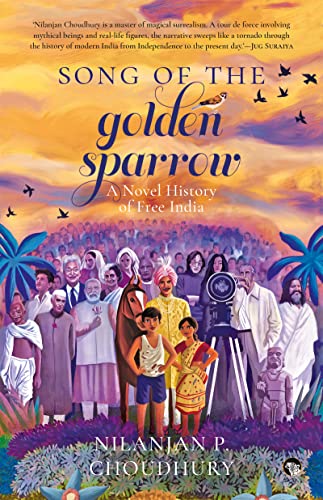
Title: Song of the Golden Sparrow – A Novel History of Free India
Author: Nilanjan P. Choudhary
Publisher: Speaking Tiger Books
Song of the Golden Sparrow by Nilanjan P.Choudhary is a defiant and gripping novel set in independent India, of its many successes and failures, and of its spirit – often battered by its own people. Choudhury is a new voice from the Northeast. His most recent book, Shillong Times, has been widely acclaimed. His debut novel, a mythological thriller entitled Bali and the Ocean of Milk, was a best-seller.
Placed within the period 1947 to 2022, the Song of the Golden Sparrow sets out to chronicle the history of India as witnessed by a sparrow named Prem Chandra Guha, who is actually a yaksha banished from the kingdom of Alaka by Lord Kubera and punished with the task of writing the history of India. The yaksha, a shape-shifter, finds it convenient to take the form a sparrow, a little bird for the task. Exactly when India enters its tryst with destiny, this sparrow reaches the small town of Netrahat near the forests of Chhota Nagpur and meets Manhoos and Mary. As the fates of Manhoos and Mary take them to various places across India, the sparrow follows too, covering in its wake the important events from their lives; events intertwined with the fate of independent India itself.
Manhoos is an illiterate and orphaned boy, working at a garage. Mary is a spirited tribal girl from a nearby Santhal village. Both are good friends and almost meet every day until they are separated by circumstances. Taken in by a Prince, Manhoos, later Manu, moves to the city of Calcutta from Netrahat, where he learns to read and write and takes on enterprises with the motive to earn money. Mary’s village, on the other hand, is destroyed by the government to make way for land mines. Time brings them together again and they make efforts to stay together. Their lives, however, knotted by various events taking place in the country, diverge to different paths.
The yakhsha or sparrow, who is their constant companion, observes the turns in their lives brought about and affected by larger events like industrialisation, liberation of Bangladesh, rise of Naxal movement[1], imposition of emergency, birth of Jana Sangh, chipko andolan[2], fall of a mosque, liberalisation of economy, IT boom, development of Silicon Valley of India, 2002 Gujrat, upheaval of 2014 and pandemic of 2020.
Choudhary employs the tools of magical realism to blend the historical facts with mythology and satire, creating a narrative that not only lets us imagine the lives of ordinary people, carving their own way after independence but also to visualise the many complexities and contradictions which were not only inherited but also turned inevitable as India marched on to the path of progress after attaining freedom from colonial rule.
Figuratively, Manu and Mary represent two distinct facets of independent India which has co-existed amid the incongruities brought about by the political and economic events and has largely shaped the realities of everyday life of common people. Whereas Manu symbolises the progressive, liberal and democratic spirit of the country which desires to advance, to progress and become wealthier by taking every opportunity that arises, Mary is the voice of oppressed people. Manu belongs to the India which made advancement through industrialisation, IT or real estate and cashed on the economic boom brought about by liberalisation of economy. Mary belongs to the India which keeps fighting the system that continues exploiting them whether by displacing them from their homes, their forests, their lands or by not giving them due share in the profits of development whose wheels are turned by them. Their final separation signifies the divide which overtime became even more difficult to address and heal.
The progressive Manu becomes disenchanted with wealth after his wife Sayoni is brutally killed during 2002 Gujrat riots. He returns to his roots and tries to make a meaningful life by devoting himself to the preservation of forests of his homeland. He adopts Ismail, an orphan like him, who is a brilliant young boy and has dreams of pursuing higher education. In 2016, Ismail is heckled to death on the suspicions of cow smuggling. This leaves Manu shattered. And he dies soon afterward.
Through the portrayal of disenchantment and despair of Manu, the author sketches the gloom which has shrouded the country in the last decade. Towards the end, the yaksha sparrow also experience anguish on having to observe and chronicle events which have bloodied the land and the spirit of the country over and over again. As a historian, despite all this, his task is far from over. For he has to keep recording all the incidents for the posterity. It is a tale that asks to be read.
[2] The Chipko andolan was a non-violent social and ecological movement by villagers, particularly women, in India in the 1970s, to protect trees and forests slated for government-backed logging.
.
Rakhi Dalal is an educator by profession. When not working, she can usually be found reading books or writing about reading them. She writes at https://rakhidalal.blogspot.com/ .
.
PLEASE NOTE: ARTICLES CAN ONLY BE REPRODUCED IN OTHER SITES WITH DUE ACKNOWLEDGEMENT TO BORDERLESS JOURNAL.
Magic(Leela)
Like when a piece of iron falls in love with a piece of wood
Causing the iron to float on water,
Or like when the magic of love casts a spell
Making stone float on liquid,
For ages, in nation after nation,
People contrive to float stones,
For diverse reasons and occasions,
Letting love and desire take diverse forms
In manifold texts and discourses...
A Fragrant Tale(Sugandho-kahini)
The world is full of misleading, minus signs and foul smells
At times, the world feels as heavy and unbearable
As the weight of a son’s dead body on his dad’s shoulder,
Or as stressful as playing the role of a dead soldier,
Or as formidable as a physically challenged person’s ascent up a mountain
Or as painful as caring for a precocious, traumatised child...
Nevertheless, occasionally such stress-laden memories will blur,
And suddenly, wafting on the wind’s sudden mood swing,
A fragrant moment comes one’s way!
Love(Prem)
‘After all words die away, the heart starts speaking.’
When all heartbeats and hullabaloo die down,
Little by little the heart starts fluttering in a distinct metronome
When all words ends, silence begins to reign.
Where mathematics ends, music begins.
Gradually the Role of the Third Actor Becomes Clear(Kromosho Spasto Hoye Othe Triteeyo Praneer Bhumika)
Like in magic, in a seemingly miraculous move,
Two strangers will come together
While a third will have to disappear
To remain awol forever— in reality!
Masud Khan (b. 1959) is a Bengali poet and writer. He has, authored nine volumes of poetry and three volumes of prose and fiction. His poems and fictions (in translation) have appeared in journals including Asiatic, Contemporary Literary Horizon, Six Seasons Review, Kaurab, 3c World Fiction, Ragazine.cc, Nebo: A literary Journal, Last Bench, Urhalpul, Tower Journal, Muse Poetry, Word Machine, and anthologies including Language for a New Century: Contemporary Poetry from the Middle East, Asia, and Beyond (W.W. Norton & Co., NY/London); Contemporary Literary Horizon Anthology,Bucharest; Intercontinental Anthology of Poetry on Universal Peace (Global Fraternity of Poets); and Padma Meghna Jamuna: Modern Poetry from Bangladesh(Foundation of SAARC Writers and Literature, New Delhi). Two volumes of his poems have been published as translations, Poems of Masud Khan(English), Antivirus Publications, UK, and Carnival Time and Other Poems (English and Spanish), Bibliotheca Universalis, Romania. Born and brought up in Bangladesh, Masud Khan lives in Canada and teaches at a college in Toronto.
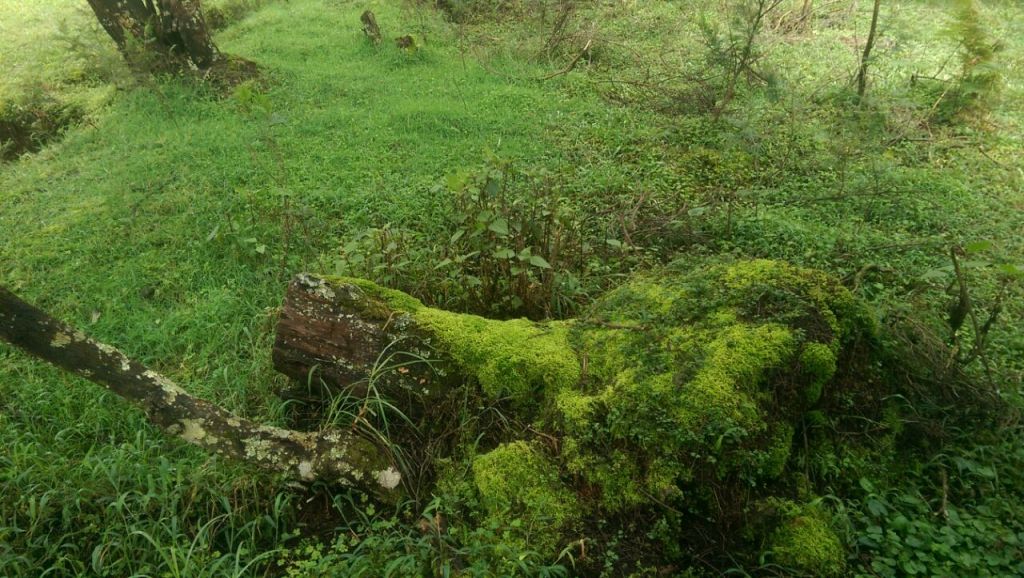
A moss-grown tree stump. Photo courtesy: PG Thomas
Ouseph’s gloom was accentuated by the rustling of dry leaves in the yard of his ancestral home. It was twilight and a movement near his feet made him glance down. He froze as he saw a little chameleon, climb up onto his designer shoe. It climbed up to his right toe, and tilting its head, looked at Ouseph with one bulging eye. Ouseph kicked wildly to dislodge the creature, and panting with fright, he found his gloom had been replaced by a series of shivers down his body.
“What am I doing here?” he wondered. He had last visited his ancestral house more than ten years ago, dragged there from Bombay by his father, who was keen on his child connecting with his roots. As a young boy, he had detested the countryside and his relatives; with their rustic stories and weird humour. Now a quirk of fate and the unexpected death of his bachelor uncle, had found the ancestral property bequeathed to him.
Ouseph lived ensconced in his techie world in Bangalore, where he spent his free time playing music and reading from his surprisingly large collection of books. His inheritance had come to him with the jarring notes of a thunderclap. But his now widowed mother had been firm, “Just go down, see the place and complete the legal formalities to make the property yours. Your father was attached to it and its worth quite a lot. Be practical and we can decide what to do with it later.”
He had travelled down from Bangalore to reach the remote countryside in Kerala at dusk. Pulling himself together from the reptilian shock, he knocked on the thick wooden weather beaten front door of his ancestral home. The door had creaked open into a dimly lit room, to reveal servants seemingly as old as the house itself. They had expected their new master to be young, but their incredulity at the sight of this gangly young man with tousled hair showed in their eyes. One obligingly took his suitcase from his hands but was surprised when he refused to part with his knapsack containing his laptop. He had been led to a musty smelling room, which did nothing to improve his mood.
The next morning, the sound of a broom swishing over the yard floor woke him up. Yawning and scratching his head, he stumbled into the smoky kitchen. A wood fire was burning, and Mariamma the elderly cook gave him a kind smile, and asked if he would like tea. With mug in hand, he stepped out of the house into the still misty morning. He wandered around the compound and looked anew at his inheritance. Noises unfamiliar to a city dweller assaulted his ears. The cow’s lowing seemed like a long drawn complaint, amidst which a rooster crowed, only for it to be picked up and repeated by another some distance away.
A sudden flurry of flapping wings drew his attention to the roof. He saw a startled covey of pigeons rise from the terracotta tiled roof. His eye then caught a single short piece of wire, suspended from a rafter under the eaves of the roof. He wondered if it was the remnant of an aerial wire from the bygone days of the wireless radio. He paused as he noticed a shabby looking ball attached to the end of the wire.
“It’s a sunbird’s nest,” whispered a voice from behind. He turned to see a sweeper women looking at him with laughing eyes.
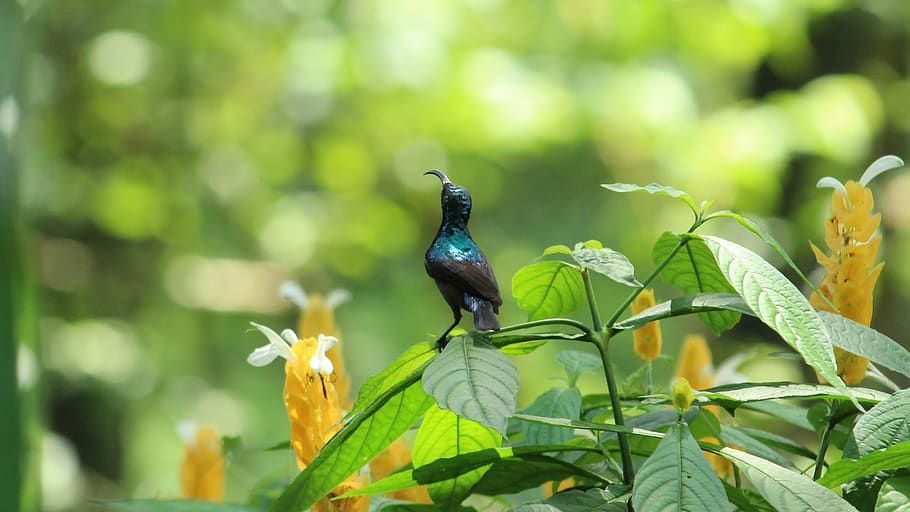
“Oh!” was all Ouseph could muster. But as he gazed up again, he was rewarded by the sight of a little purple bird with a curved beak pop out of the opening in the nest. It sat there an instant; shimmering in the morning sunlight, and then with a whirr of its wings it flew away. “Oh!” said he again.
The sweeper smiled and said, “This pair has been nesting here for years, and has raised so many chicks in it.”
“Oh.”
He had wrangled leave from his software company on the condition of continuing to work online. But he now felt so befuddled with his bizarre inheritance in the countryside. He struggled to handle its finances and could not figure out how the place worked. “I might as well have landed on Mars,” he grumbled.
Rummaging through a list of relatives, Ouseph reached his cousin Anish, who readily offered to introduce him to his lawyer. The lawyer, a frail elderly man with an old world charm in his manners, took the proffered will and asked, “You’re Jacob’s son, aren’t you?”
“You knew my father?”
The lawyer’s eyes twinkled, and he said, “Your father and I were schoolmates here.”
This little exchange was inexplicably comforting to Ouseph. The lawyer asked for two days time to offer his legal opinion. Anish and Ouseph walked back along the narrow country road. Noting Ouseph’s anxiety, Anish said, “We’re glad you are here and the property has come to you.” They walked on under the canopy of trees over the road; Ouseph in his designer clothes and Anish in his home tailored short sleeved shirt and a cotton dhoti (a wrap-around lower garment).
They parted at the gate to Ouseph’s place. As Ouseph walked through the tree shrouded compound to the house, his phone rang. It was his mother from Bombay.
“Yes Amma, I met the lawyer. It looks like it will take a few days.”
A lunch of steaming rice, a coconut milk based chicken curry and a clutter of home grown vegetables done, Ouseph wandered out into the compound. He found a quiet place under the wood apple tree. The tall tree threw a filigreed crown of gnarled branches and tiny leaves against the blue sky. Ouseph sat down on a moss covered uprooted tree stump. The floor was thick with layers of shed leaves. Its soft cushiony feel reminded him of his boss’s carpeted office in Bangalore. But here the similarity ended. The cry of cicadas filled this place, and a crow pheasant’s ‘oopoopoop’ sounded through the thick greenery. He let the events of the past few days run through his mind.
The days following were consumed by visits to sleepy government offices. His cousin guided the process and taught Ouseph the art of greasing the wheels of the government machinery. But strangely, Ouseph found himself looking forward to returning to his ancestral house, and to his evening walks through the quiet of the verdant house compound. He did attend to his work online, but his metabolism seemed to have synchronised itself to the pulse of this ancient house.
For Mariamma the cook, with her plump face and grey streaked hair, her new geek master had roused all her latent mothering instincts. But she now observed him with concern. Ever pragmatic, she decided he needed tethering, and began by suggesting he visit his neighbours.
The first was the Ayurvedic apothecary and doctor. There was no response to Ouseph’s knock on the front door. But the noise of grinding and thumping drew him to the side of the house. He walked into a drying yard, where medicinal herbs of various colours and aromas were drying in the bright sunlight. He saw an old man on the side verandah, bent over a mortar and pestle. He worked at a steady pace and seemed totally absorbed in his work. Fairly certain that the old man was his neighbour Krishna Vaidyan (an Ayurvedic doctor), he volunteered a hello, and was waved to a seat on the verandah. The grinding and pounding continued for a few more minutes. The Vaidyan then stopped his work and looked up. A pair of keen eyes from between an aquiline nose and bushy white eyebrows scrutinised Ouseph, “Well?”
“Oh, I’m Ouseph, your new neighbour.”
An expression of confusion was soon replaced by a smile of comprehension and a friendly laugh, “Yes, yes, I heard you had come.” And after a pause he added, “This is your home, this is your land. I am happy you are back.”
.
The phone vibrated irritatingly, “Ouseph, this is your uncle Scaria. I’ll be there by eleven tomorrow. I am coming to help sell the property.” Scaria was his mother’s brother, for whom Ouseph had evinced a distaste when just an infant. He was the last person he had wanted to meet. Politeness prevented him raising any objections to his uncle’s visit.
The next day a car drew up, and his uncle Scaria stepped out in an orb of strong perfume. Furtive eyes from below a sweat speckled bald dome crawled over Ouseph, and then Scaria patted his shoulder patronisingly. Drawing himself up, Scaria looked around the compound, and nodded in approval at what he saw, “How many acres did you say this was?”
The two of them spent an hour walking around the compound. Ouseph was impressed by his uncle’s detailed scrutiny of the place. “You have quite a bit of valuable timber here,” and then he indicated he would like to see the house.
Over steamed tapioca, red fish curry and fierier chutney, Scaria delivered his seemingly implacable verdict, “You will not be able to manage this house and property. It will be a white elephant to you. Sell it at the best offer you get, and go back to your computer world, Ouseph.”
The last sentence was tinged with scorn, but Ouseph ignored it with, “The paper work is not yet complete.” He did not feel the need to elaborate. His uncle left him with a foul taste in his mouth, and Mariamma who overheard the conversation, looked anxiously at Ouseph’s face.
.
Ouseph began to get unsolicited enquiries for the property. He called his uncle and told him that he had not consented to sell the property. It had ended unpleasantly with implied threats and ingratiating offers from his uncle of a good price. Ouseph had complained to his mother, she merely replied, “You know your uncle. I can do nothing from Bombay. Think about It.”
His uncle’s perfidy had stunned him, and he began to feel bullied and pressured. He met and poured out the story to Anish and the lawyer. The lawyer couldn’t hide his amusement at the predicament of his innocent young client, “Your uncle is an artful crook. We will have to watch him.”
As they walked back, Anish, far more experienced in the ways of the world, threw his arm over the shoulders of his young despondent cousin, “Don’t worry, we are all here with you.”
Dusk was approaching as the two of them walked past the temple compound. There was an unusual buzz around the temple. Anish mentioned that a temple festival was on that night. Ouseph gazed at the temple with its age old banyan and peepul trees, now silhouetted against a red evening sky. The raucous cry of flocks of mynas roosting in the trees filled the air. Hundreds of lit oil lamps lined the walls and the walkway to the temple. It was all doubly lit up in the reflection of the temple pond.
“Looks like a big do Anish!”
“Yes and there will be night long performances too.”
That night, as the lights in his house were doused one after another, Ouseph lay back in his bed and listened to the night noises emanating from his compound. The drone of cicadas had become therapeutic to him now. There were screeches from the mango tree, as fruit bats squabbled over the ripe fruit, and a great Indian horned owl kept up its forlorn hooting above it all. And then, a ripple of drums carried over to him from the temple. “Must be the Kathakali dance ensemble warming up,” thought Ouseph.
And in a while, the distinctive percussion music of the Kathakali dance began to pulsate through the night. It was mesmerising. Ouseph knew only a little about this traditional dance of Kerala. But he knew that it portrayed archetypal characters and situations from Indian mythology and folk lore. The stories were told through the medium of dance and music. The archetypal characters portrayed were always dressed typically, to make identification easy for the audience. A green painted face signified divinity, shining makeup purity, and black demonic and so on.
Ouseph wondered at the enduring appeal of this art form among the local populace. He thought of his own problem with his uncle Scaria, and fantasised dressing him up as a Kathakali artiste, “Maybe I’ll give him the demon’s black face. Or maybe the red beard of a villain would be more suitable.” Ouseph in his fantasy finally picked the black bearded villain, for that signified a scheming villain.
He put his hands behind his head and listened to the distant drum beats. He fancied his uncle Scaria gyrating and dancing with theatrical gestures of a slimy schemer. Ouseph had to admit his phantasm danced well; and at this he began to giggle. Ouseph’s giggling increased and he thought he was becoming hysterical. His giggles became guffaws and he rolled over and buried his face in his pillow to smother them. His paroxysm abated and he drifted into a peaceful slumber. His pillow was wet with the tears of his laughter.
.
Ouseph leapt out of bed in the morning with the thought that Benji and Maya would be there that day. They arrived to voluble greetings and back thumping. In the lazy afternoon, the three of them sat on the tree stump under the shade of the wood apple tree. Ouseph took his friends through the details of his difficulties with his conniving uncle, and of how he struggled with his unexpected inheritance. He said his mother too, was not sure he could manage the property.
Benji said, “Ouseph, this place is most unusual. Think well before you do anything.”
Maya agreed too, “This place has great bones for a resort.”
Ouseph knew he too was falling under the spell of the place. But he needed to make a pragmatic decision. As they walked back to the house, he showed them the sunbird’s nest. He got them to be silent long enough to hear the cry of chicks from within the nest.
Ouseph had come prepared to handle the legal aspects of his unexpected inheritance. But as he stayed on, the house and its world, began to appeal subtly to his imagination and emotions in ways unexpected. The old house, with its moss grown tiled roof sat amidst the trees. The smell of some blossom or other invariably lingered in the air. The cry of birds and farm noises seeped through the rich vegetation. An irresistible, palpable primal energy seemed to flow from the compound. And all of this seemed to exist within an intense quietness; like the brooding silence of a sacred grove. And within this nestled the ancient house, an inseparable part of it all.
The place whispered to any that cared to listen. The house built in the distinctive wood architecture style of Kerala, nevertheless showed Chinese and Arabic influences too; influences that had permeated because of the ancient maritime spice routes. Inside, paintings and fading photos of ancestors stared from their frozen frames.
The compound also had traces of the more recent past. A curious seeker would find here, growing cheek by jowl with indigenous trees, breadfruit from the Pacific islands, nutmeg and mangosteen from Southeast Asia, clove trees from the Molaccas[1] and so on. It was a reminder of colonialism’s great botanical transplants of the past centuries. The heritage of his ancestral house was etched on it in myriad ways.
“Gosh!” exclaimed Maya, “it’s as if the house will always be here, and we are just passing through.”
It was then that Ouseph had this surrealistic feeling; the inkling that in the end, the decision would not be his. It seemed to have already been made in some strange way. This ancestral house seemed to be claiming him as one of its own, and every circumstance seemed to prod him to stake his claim and fight for things that he had earlier been indifferent to.
.
If some power grew this new symbiotic relationship between Ouseph and his heritage, then it seemed that events came cascading down to rivet it firmly together. It came on a morning as Ouseph was on the front verandah speaking with one of the servants. A white car drove up. The rapid opening of all its doors and the climbing out of several men set off alarm bells in Ouseph’s head. But he waited quietly for the people to approach him.
The leader smirked, “We have come to see a certain Ouseph.”
“I’m Ouseph; and what do you want?”
They climbed onto the verandah uninvited and sat down. “Scaria, your uncle sent us to look at the timber here. We understand it is for sale.”
Ouseph flushed and his voice rose, “Uncle Scaria has nothing to do with this property, and I have no timber to sell.”
The leader chuckled, rolled his eyes and tugging at the ends of his long mustache said, “We were warned that you would play games.”
“Games?”
Benji and Maya heard the altercation. Benji wondered if he should intervene, but Maya was out in a flash. She walked up to the chair besides Ouseph, sat down, crossed her legs and looked the apparent hoodlum in the face. Benji joined them too, and the sudden appearance of strangers, particularly of a determined young woman momentarily threw the visitors off balance. The leader began to say something, and then thought the better of it.
Ouseph saw one of his servants make a dash for the gate, but was too preoccupied to wonder why. He heard a shuffle behind him and turned to see the wide girth of Mariamma his cook behind him. She carried a wooden ladle in her hand.
“Who are you?” asked Ouseph.
“I am Chellapan.” The speaker then leaned back, as if awaiting a reaction. The name didn’t mean anything to Ouseph, but he heard Mariamma behind him draw in a sharp breath.
By ones and twos the servants and neighbours began to congregate. They stood quietly listening, but their faces glowered. Ouseph saw Krishna Vaidyan approach slowly. He was using a walking stick. Without a word, he climbed the steps to the verandah, and seated himself on Ouseph’s side. There was no mistaking his intention.
Chellapan made another attempt, “I know that you have made a commitment to Scaria, and I have paid him an advance for the timber here.”
Ouseph was surprised by the change in the tone of his own voice as he answered, “For the last time I tell you, Scaria has nothing to do with this property. If you have given him money, then take up the matter with him.” Then Ouseph heard himself distinctly say, “This property came to me through my ancestors, and I will not sell it during my lifetime. I will not violate it. I will pass it on as it is, to those that follow me.”
The visitors rose threateningly, but seemed unsure for the first time.
“And what is going on here?” It was a voice that was used to being obeyed. It was Lakshmiamma, the matriarch of the nearby Nair household. She was accompanied by two young men and she was sweating profusely from her barefooted walk to the house. All rose as she climbed the steps with difficulty. She lumbered across the verandah to the chair that Benji had vacated for her. She reached out and took hold of Ouseph’s wrist, and drawing him close to her asked the visitors, “Who are you?”
Mariamma sidled up to Lakshmiamma and whispered, “Its Chellapan.”
Lakshmiamma let out a short derisive laugh. Her snow white hair and the large vermillion dot on her forehead, set off her blazing mascara lined jet black eyes. She pointed at Chellapan and said, “I have heard of you. But before we drive you out, I want you to know something. We are here not just for our Ouseph. We are here because your conduct is a threat to us all. We will not permit such lawlessness in our area. So, when you go back to your rat hole, tell your bandicoot friends there, that we will break the legs of anyone attempting any such thing in future here… Now get out.”
Chellapan was quivering with rage and humiliation. But he looked around at the gathering of neighbours and servants. They reminded him of a wild elephant herd gathering around a vulnerable elephant calf. He was smart enough to know the game was up. Lakshmiamma had been explicit. But it was the unexpressed, simmering outrage of the gathering that really unnerved him. He turned his ire elsewhere and spat out, “We were set up by Scaria. Come on,” he roared, “Let’s go see Scaria.”
He strode out muttering obscenities under his breath. The crowd silently parted to let him and his lackeys through. And as Ouseph watched the retreat, somewhere in his own fevered imaginings; a Kathakali chant began. The accompanying drums and cymbals rose in throbbing waves to a crescendo. It was building up for the climax of Uncle Scaria’s final dance.
.
The storm broke at midnight with a crackle of thunder. It was followed by a wind that whistled through the many chinks in the old house and lashed at the trees in the compound; ruffling and driving their dry leaves in a stream. And then the rain came in as a steady downpour; and it lulled the household back to sleep.
Ouseph awoke to a pristine rain washed morning. He found his friends awaiting their morning cuppa in the dining room. Mariamma fondly served the kids, and just as Ouseph lifted his cup to his lips; Maya tremulously asked, “Would the sunbird’s nest have survived the storm?”
Leaving their tea steaming on the table, the trio scrambled out. They reached the nest and looked up anxiously. The nest, tucked under the eaves of the roof showed no damage. Amidst relieved laughter, Benji murmured, “Well, it seems that millions of years of evolution have taught the sunbird to build its nest in safe places.” Shining faces and gleaming eyes concurred.
Ouseph gave a little gasp and pointed up to a nearby windowsill. On it sat the brown and yellow mother sunbird, and next to her sat a chick. The chick was a male, and white downy feathers stuck out irregularly through his purple plumage. He was moulting. The mother bird signalled some anxiety at the chick’s first outing with little flutters of her wings. But the chick sat there calmly, as if he knew, that all he needed to do was to be true to that instinct within him; and then he would grow to be a perfect little purple sunbird.
They met in an alien city
After thirty years.
At first it seemed unreal --
She hardly had any expectations.
The other girl, now a woman,
Hardly emoted, but was civil,
Something that her corporate and rational
Mind taught her well
Over the years.
They were classmates, friends –
She thought she was more
And also wrote a few letters
Which went unanswered.
Life intervened –
Careers, marriages, children
After years of hearsay that are
Now so regular over social media,
The girl, now woman, called her up.
It was another girl, now her daughter
That needed help with literature.
Shakespeare and the rest,
Poems and the prose,
Who made sense of them all
Beyond the ken of rationality,
Or even of correct exactitude,
Who could ever fathom what
Magic words could do?
She was stunned –
But she was a teacher, and not less
A dealer of words, a reader
Of poetry, a lover of the arts –
It could only be an exercise of pleasure.
She did, the daughter succeeded.
The arrow had hit the target.
But this became a matter of course.
When the other day,
The day of colours,
They met, it was the same correctitude
From the other woman and the daughter,
Merely a recollection of other fellow mates
Never an introspective look or a glance.
She recollected, travelled back
To moments of past warmth
Expectations, and dried up memories.
Of course, there was no hint
Of all this in conversation.
Thirty more years may pass
In the neverland of meeting,
She hardly cared, anymore.
It was important, perhaps,
To say the proper goodbye,
Between wine and the splendour of
Five-star accommodation.
There were many Tinigaons within the city of this name. ‘Three Villages’ was the meaning in the local language. A small city in the folds of a valley in the middle of Assam. There was the Tinigaon that was still a small town, not in terms of size, but in the attitudes of the people. It was not just the middle-aged and older people who clung to tradition. Quite a few younger people did, too. And it was not always bad, this conservatism. Indeed, sometimes this unshakeable belief in the sanctity of the past was beautiful and illuminating. It was this conservatism that preserved the precious heritage of the past and kept it alive, preventing it from passing into oblivion.
But at other times, when conservatism became rigid, and sought to impose its beliefs on those who had a different mindset, dictating how they should behave, dress, what relationships they could or could not have, it could become a prison that prevented any kind of progress from taking place. As with much conservatism, the greatest restrictions were placed on women. There were strict codes of conduct for women and girls, codes that varied from age group to age group, but were authoritarian, nevertheless. Individual freedoms were always secondary to the ‘expected’ modes of conduct. ‘It’s always been like this,’ was a refrain often heard to justify the many rules which had lost all relevance in a swiftly changing world. If, indeed, they had ever been relevant at all.
The rules for girls and young women, though unyielding, at least took into account the rebelliousness of youth. ‘You are young, that’s why you think like this,’ was a sentence that was spoken grudgingly by parents or uncles and aunts, to people who were, in their eyes, guilty of ‘errant’ behaviour. But young people went outside the city, outside the state, to study, to work, and who knew what their lifestyles were there? Preferring to turn a blind eye to many rumoured ‘goings-on’ in the metro cities, goings-on in which their children were willing, even enthusiastic participants, they were for the most part relieved that at least when they came home, they behaved in ways ‘expected’ of them.
And so, even though they spoke viciously of that girl, WhatWasHerName, who was now living in with some boyfriend in Delhi, they preferred to keep silent about their own daughter who was doing the same. Grateful for small mercies, they pretended not to know anything when they visited her in the flat she rented in Gurgaon. They kept a deadpan face when they came across a shirt in size 42 hanging, forgotten in the cupboard in the second bedroom. They tried not to notice the other telltale signs that their daughter had been ‘cohabiting’ with a male, and refrained from asking where he had gone, now that they were here for three weeks. They did not ask about the long phone conversations that stretched to well past midnight and were only grateful that their daughter had been ‘considerate’ enough to spare them the trauma of meeting some unknown boy with whom she had been sleeping for the past so many months. They even pushed into a dark recess that worry of pregnancy, and the even greater worry of ‘WhatWillPeopleSay?’
Yes, in these changing times, people were learning, slowly, to ‘adjust’ to the fact that the younger people now were prone to living their lives in ways that were different from what was deemed to be ‘allowed’. But when it came to older people, things still remained as rigid as they had been for centuries. Especially for women. And especially, very especially, for widows.
True, Hindu widows were no longer expected to live a life that was, virtually, a death sentence. Younger widows, especially, ate non-vegetarian food, though their mothers, after the deaths of their husbands, still did not. They wore coloured clothes, though again, their mothers wore pale, traditional clothes, even though during the lifetimes of their husbands they had worn the most vibrant colours under the sun.
But there were, still, many restrictions on single women, widows, even divorcees or never-marrieds, in Tinigaon. They could go out in mixed groups, but never in a twosome with a man not closely related. They could not ‘date’ a man, and go out with him, even if it was as innocent as an outing to a theatre, or a music concert, or having a meal at a restaurant. There were always prying and peering eyes around who would ‘see’ what was happening, magnify it many times, load it with all kinds of intent, and then broadcast it with relish to salivating friends at the next kitty party that took place.
Mihika remembered the time a recently divorced forty-something mother of two had accepted a lift, two days running, from her superior, a married, fifty-plus man. Without a car at that time just after her divorce, she had been waiting on the pavement, in pouring rain, for a bus or auto or ricksha to take her home. As time passed and no vehicle stopped for her, she was growing increasingly desperate. The nanny who looked after the children would be leaving at six-thirty, and it was almost six already. She was greatly relieved, therefore, when her boss’s boss, whom she knew only slightly, stopped and asked her if he could drop her anywhere. It turned out her apartment was on the way to his house and she had gladly accepted the offer of the lift.
(Extracted from What Will People Say? A Novel by Mitra Phukan. Published by Speaking Tiger Books, 2023)
About the Book
When Mihika, 56 and a widow, gets drawn into a relationship with Zuhayr, a 60-year-old divorcee who was her late husband Aditya’s friend, it doesn’t seem to her like an event that should cause more than a raised eyebrow or two. Not in the twenty-first century, and not when their grown-up children are happy that their parents have found a second chance at happiness. But inTinigaon—a small town in Assam—it is just not done for a woman of Mihika’s age to have a romantic relationship—that, too, with a man from the Other Religion: a Muslim.Tinigaon’s Old Guard is scandalized as Mihika and Zuhayr are seen together in restaurants and cinema halls,‘flaunting’ their affair. And a nosy neighbour, Ranjana, keeps the moral brigade busy with juicy details of Zuhayr’s late-night comings and goings from Mihika’s house. Mihika decides to ignore the gossipmongering and slander and remain true to her relationship with Zuhayr, who has filled a void in her life after Aditya’s death five years ago.As long as her four closest friends,Tara,Triveni, Shagufta and Pallavi, stand by her, she doesn’t care if others turn away. But when the gossip turns into something more sinister that could threaten her daughterVeda’s happiness, Mihika is forced to take a call—should she give up the man she loves for her daughter’s sake, or is there an alternative that could give them both what they want? Writing with great sensitivity and gentle humour, Mitra Phukan proves once again that she is an extraordinary chronicler of the human heart. Rooted, like all her fiction, in the culture and sensibilities of Assam, What Will People Say? speaks to all of us, wherever we are, whoever we are.
About the Author
Mitra Phukan is an Assamese author, translator and columnist who writes in English. Her published works, fourteen so far, include children’s books, biographies, two novels, The Collector’s Wife and A Monsoon of Music, several volumes of translations from Assamese to English and a collection of her columns, Guwahati Gaze. Her most recent works are a volume of her own short stories, A Full Night’s Thievery, and a translation of a volume of short stories, by Sahitya Akademi Award-winning author, Harekrishna Deka, Guilt and Other Stories, both published by SpeakingTiger.
The wound of exile refuses to get healed.

The ghost of one’s nostalgic past;

the fairy of glorious future, designed

a division that refuses to get sealed.


I think of wanderers sometimes,

who went far and wide in search

of a mirage called “home” --

a piece of land that one calls one’s own.


Irony is that no true “home” exists

anywhere in the bounds of mind.

It is built, demolished and abandoned

to the storms of vagabond passion.


Isolation, inner or outer, will coexist,

No matter how far you go. She knows no border;

no human is foreign to her, the enchantress

of alienation will bewitch you,

haunt you and embrace your heart.


I think of those who wander in exile,

Perhaps they had to run for sanity,

Perhaps they had to choose between

death and life, and they chose life in exile.


Their owned world turned hostile,

That insane world didn’t spare their smiles;

didn’t house their self-esteem;

chased their aspirations and dreams.


Being exiled from a place was better

For them than exile in life.
Vipanjeet Kaur resides in India. Her poems have been published in Tangled Locks Journal, Hidden in Childhood anthology, White Enso, Cajun Mutt Press, Lothlorien Poetry Journal and Fevers of the Mind Poetry and Art Group.
.
PLEASE NOTE: ARTICLES CAN ONLY BE REPRODUCED IN OTHER SITES WITH DUE ACKNOWLEDGEMENT TO BORDERLESS JOURNAL






 Borderless