Categories
Musings of a Copywriter

Byline Fever

By Devraj Singh Kalsi

From Public Domain

Newspapers with audited accounts of circulation and readership surveys gave the opportunity to claim that your piece was read by millions of readers. Even though the metrics did not suggest how the individual piece performed in terms of garnering readership, the millions of people who bought the newspaper were assumed to have read what you wrote. Unlike the digital space where the complete picture of reads, likes, and shares is accessible, the traditional media platforms provided a cover to indulge in tall claims of popularity and the collective statistics delivered a high to those who dabbled in writing to see their name in print. Even if the truth was that your piece was the least read one, there was no way to establish that in the editorial room where the high-brow editors cherry-picked on the basis of quality of writing and the relevance of the topic.

Bouquets and brickbats in the form of letters to the editor was the only reliable way to assess the merit or demerit of the piece, but these letters were dashed off as reactions to columns by leading commentators in the belief that the editor would grant space for the feedback on what the heavyweight columnists churned out. Readers were apprehensive that their letters would end up in the slush pile if they focused on newcomers. This fear was not unfounded as the interactive engagement often appeared limited to luminaries and experts on the edit pages.

Being published next to a syndicated column meant the equivalent of placing your debut novel on the same bookshelf where the works of a bestselling novelist were displayed. As neighbours, you had the liberty to brag about enjoying the same status even though your readership was negligible. You rushed to the newspaper vendor to buy additional copies of the same edition and keep it archived in your portfolio of published works. Printing xerox copies for circulation in your group of friends and relatives was the next big activity but the target group pricked your ego by saying that they do not read the newspaper that carried your piece. It was a polite way of saying that your breakthrough was no big achievement as they did not consider that newspaper suitable for reading.  

The desire to see your name in print again and again was a good motivator in the initial stage. Since you never knew you would get the same space twice in a month, it was a struggle to try another kind piece to ensure you were carried on some other supplement page in the next week. You wanted readers of all age groups to notice your name in the newspaper, to register it in the list of frequent contributors. The easiest way to do so was to keep writing on a diverse range of topics. The byline fever gripped you and a week without a piece in the same newspaper or its competitor felt like a long gap of staying away from the limelight. Writing in a hurry also involved the risk of getting your piece rejected. Maintaining the same quality of writing and factual accuracy through proper research work was important because the team of editors should not get disappointed with any of your submission. As a precautionary move, bombing them with low quality pieces for the sake of byline was ruled out. But the obsession to become a regular contributor with a dedicated space led to several attempts across multiple genres to find your strengths. Even though you were able to find out what worked better in terms of flow and engagement, it was not possible to share the same observations with editors who drew their own inferences.

To keep struggling to write with no reward meant sustenance despite all odds. In such a situation, the byline was a big attraction to continue writing. If journalistic writing led to occasional disappointments, you had the freedom to turn to middles and infuse a dose of humour. There was further scope to write short stories and create a new world of awe, with the illustrator adding visual attraction to the theme of your fiction. This was a great opportunity to find your creative bent and, in case, it clicked, you could submit more elsewhere before getting a solo book of short stories published. Writing for some years in this fashion gave you adequate exposure and you turned confident enough to switch from regional publications to national dailies. Listing these achievements in the resume managed to draw the attention of an employer who himself was keen to get published in the same newspaper without releasing advertisements.

There was anxiety and depression every weekend as the expected publication of your piece was delayed due to editorial discretion. You went to browse at the nearby bookstall to know if you were inside the pages. The joy of seeing your name in print lit up your eyes and you picked up extra copies of the same publication without explaining to the vendor what made you do so. If you were lucky to find space for some weeks at a stretch, you chose to subscribe to it. But when you fell out of favour due to changes in the editorial policy or on account of a new editor storming in with his loyal team of freelancers, you felt like cancelling the subscription plan and never writing again. This temporary phase was soon over – when you found another piece of yours getting picked up by a rival publication. You felt buoyed again, determined to get your byline pieces carried to various homes. Your family was glad you were getting published so they did not discourage you. But they were aware you were getting close to the space where politicians dominated. They were convinced you had a future in writing even if it was an unstable one.

Although the honorarium was a modest amount, the thrill of getting paid for the piece was intense. You felt encouraged to write more to get those cheques and line up for encashment in MNC banks. The recovery of courier and stationery expenses from the published works removed the guilt of suffering losses in case of rejections. The newspaper stayed the whole day on your desk and additional copies were displayed in the lobby or the entrance, to let the guests or visitors catch a glimpse of the edition becoming special with your piece. The frisson of delight petered out as the frequency of publication gathered pace. Many readers, including friends and relatives, wrote to the editor in praise of your piece even though you never got to read those flattering comments in print.

When a delighted reader approached the newspaper office to gather your postal address and mailed a long epistle in appreciation of the style, it was an out of the world experience in the pre-digital era. When the elderly reader requested you to meet him at his residence, you did not feel shy to reach out to a stranger. Despite the wide age-gap, the conversation flowed well on writing issues as he was curious to find out whether it was a flirtatious relationship with writing or something more serious and everlasting would flower. Without confirming anything, you let it remain open-ended and interpretative. Despite your best efforts, the elderly reader inferred it was going to be an enduring relationship. When he confessed he was a writer with a book out of print, it was a humbling experience as you sat in front of a published author whereas you had no such credit. He got up and offered a signed copy and sought candid feedback on his work. You felt being the chosen one who could revive his interest in writing and motivate the septuagenarian.

You were also reminded of similar moments of frustration and encouragement from multiple sources. In his case, the story was different as he was battling health issues and yet seeking out advice pertaining to whether he should pursue writing or quit the domain. You felt like saying the magic of creativity should be kept alive even if there is nothing rewarding in the pursuit. You did not need to read the book to deliver this piece of advice. Whether he took it seriously or brushed it aside as a generic observation could not be ascertained. Later attempts to communicate proved futile. Perhaps he was gone, from the city or left the world, or maybe, the landline phone was dead. Searching for his byline in the newspapers and tomes in the bookstores produced no result. You did not feel like trudging up to the same apartment to uncover a bitter truth.

Your friends in the varsity were the most critical readers who always found something lacking in your piece but were also generous to appreciate the attempt. Some were jealous and competitive – driven by the urge to appear on the same page – and they went to the same editor with their submissions. Unable to bear rejection, they spread the word that the editor sought freebies to publish opinion pieces and it was the surest way to get a byline. Despite getting featured in multiple publications, the child-like curiosity to see your name again and again retained its flavour. Writing became a habit as a result, and the desire to be published generated the desire to write. Sustaining the urge to write was immense and, once it became a regular habit, everything else ceased to matter. You were confident of facing the blank page despite flak and rejections. Even if you wrote five pieces in a month and four of them were spiked, you had the satisfaction of seeing one in print. This was good enough to keep the pen flowing. You became more risk-bearing and tried out other avenues and other forms of writing at the same time. As the digital world opened up more options, you began exploring the writing opportunities on a global scale.

Years of honing your craft offered a better understanding of the writing world and the real world. When a young person read your piece against dowry and went to the newspaper office to collect your address and visit your residence and offer you a proposal to marry his sister, it was a moment of realisation how writing shapes perspectives and the immense responsibility it carries. It was an episode to remind you that good writing is read and the writer must pen his words with social responsibility. Such early encounters made you understand the value of writing beyond the power of bylines.

The writer must be prepared to reach a mature stage when the byline fever subsides. Whether you acquired a thousand bylines becomes immaterial after a certain stage, but the role of byline in offering you anchorage and encouragement cannot be sidelined in the formative years of your writing career.

Devraj Singh Kalsi works as a senior copywriter in Kolkata. His short stories and essays have been published in Deccan Herald, Tehelka, Kitaab, Earthen Lamp Journal, Assam Tribune, and The Statesman. Pal Motors is his first novel.  


PLEASE NOTE: ARTICLES CAN ONLY BE REPRODUCED IN OTHER SITES WITH DUE ACKNOWLEDGEMENT TO BORDERLESS JOURNAL

Click here to access the Borderless anthology, Monalisa No Longer Smiles

Click here to access Monalisa No Longer Smiles on Kindle Amazon International

Categories
Poetry

Threads of Time

By Rajeev Borra

THREADS OF TIME

In the quiet corner of a sunlit room,
Lies a quilt of stories, a tapestry of blooms.
Each patch a memory stitched with care,
Whispers of laughter, moments we shared.

A faded square from a summer’s day,
A child’s handprints in play.
Next to it, a heart stitched with love,
Warmed by the whispers of stars above.

There’s a square of grey, a stormy night,
A tear-stained patch, yet it still feels right
For woven with sorrow, the resilience shows.
With every stitch, its beauty grows.

As seasons change and threads unwind,
Life’s fabric weaves, each moment enshrines.
The quilt tells a story of joy and strife,
A reminder that love is the thread of life.

Here in this quilt, my heart finds a home,
A legacy of laughter, a place to roam.

Rajeev Borra is a young writer who lives in the southern part of India and loves to write fiction and poems. His other hobbies include reading, cycling and watching movies.

.

PLEASE NOTE: ARTICLES CAN ONLY BE REPRODUCED IN OTHER SITES WITH DUE ACKNOWLEDGEMENT TO BORDERLESS JOURNAL

Click here to access the Borderless anthology, Monalisa No Longer Smiles

Click here to access Monalisa No Longer Smiles on Amazon International

Categories
Excerpt

The Naipauls of Nepaul Street 

Title: The Naipauls of Nepaul Street 

Author: Savi Naipaul Akal

Publisher: Speaking Tiger Books

CHAPTER ONE

Cunupia, Chaguanas, Chandernagore, Caroni . . .

My father seemed destined to be surrounded by women. At first there were four aunts, a sister and four female cousins. There was a mother too, but no father he could or would recall.

Seepersad Naipaul was born on 14th April 1906 in the settlement of Cunupia in rural Trinidad. On his birth certificate, his name is ‘Supersad’. The name and occupation of the ‘informant’ (normally the husband or father) is given as Nyepal. He is identified as a labourer. His mother’s name is Poolkareah, with no occupation cited for her. Most likely she was wife as well as mother – occupations daunting enough.

Nyepal, our Pa’s father, was not intended to be a labourer. An only child, he had come from India with his devoted mother, an indentured servant. In other words, she came under an agreement that would oblige her to work on the land, mainly in the sugar-cane fields. Why did she and so many others leave India in this way? Perhaps she had committed some indiscretion, or was running away from a bad marriage. After her term of indenture expired, she had the choice of going back to India or staying in Trinidad. She decided to stay, along with her son. Devoted to him, and a proud Brahmin, she sought to have him trained as a pundit. (In Hinduism, only Brahmins can perform the most sacred rites.) To that end, he travelled to Diego Martin, the large valley immediately west of our capital, Port of Spain, to sit at the feet of a venerable pundit. Being a pundit meant having knowledge and understanding of the sacred texts and rituals, and thus the ability to read and write Sanskrit and Hindi. Whether Nyepal ever practised as a pundit we never knew, but he apparently sold goods and supplies used in pujas, or sacred rites.

His mother also found him a wife. On the ship coming from India there were two brothers from Patna. They, too, were Brahmins. One of them had six daughters and one son. Pa’s mother chose one of the girls, Poolkareah, as her son’s bride. The wedding took place, and Nyepal and Poolkareah went on to have three children of their own: Prasad, Prabaran and Seepersad (or Supersad).

When Seepersad was two, his father Nyepal died. Did he drown? There is a vague story of a diver who drowned. Nyepal’s mother was distraught after the death of her one and only precious son, whom she had nurtured and cared for during those challenging and difficult years. Inconsolable, she drifted into her own world and became something of a recluse and an eccentric. She appears never to have remarried or formed a new alliance with another man. Curiously, my own mother Droapatie remembered this woman well. Tiny in size and very fair of complexion, she wore nothing but white clothing after her son’s death (white being the Hindu colour of mourning). She lived in or around Chaguanas, where young Droapatie would have seen her, and sometimes came into the town. Other children would sometimes jeer at her as she walked about waving a wand in front of her to protect her from unclean shadows, from people of lower caste. She spoke to no one, did her business, and then disappeared until her next visit. Droapatie would never have imagined that one day she would marry this strange woman’s grandson, Seepersad. But the caste was always right.

Death was not a subject my father liked to dwell on. Several years after his father’s passing, his mother died of an unspecified illness. Unlike his father’s death, Seepersad was evidently old enough to feel this second loss keenly. In the early nineteen-forties he wrote a five-page letter in an old ledger book to the doctor who had not saved his mother. The doctor was late in responding to their call for help, my father wrote in anger; he had not seemed to care about Poolkareah’s crisis; evidently, in his selfishness and arrogance, he was not suited to his profession. The gist of the letter was that his mother had died because she was a poor woman and therefore unimportant to the self-important Dr. Ramesar.

Perhaps the letter was never transcribed, never posted. The written word may have expiated Pa’s anger and supplanted his sense of primal loss. Could my grandmother have been saved? Her five sisters, his aunts, lived on and on despite their emphysema and other medical issues. They took a long time to ‘pop off’, he would say.

Soon after his father’s death, a half-brother was born. He was called Hari, or Hari Chacha to us children. Pa’s mother, Poolkareah, a widow with three children, would have been a burden on the closest relatives. Another liaison would have been encouraged. In my own family, all these details were rather vague. For example, it took us many years to learn that Hari Chacha was Pa’s half-brother.

The older Indian people were tight-lipped about the family’s history. They never spoke about my paternal grandfather, Nyepal, and Hari’s father never had a name. Hari’s son George carried the title or surname Persad. This seemed to fit, as Pa’s elder brother, Prasad, carried the surname Rampersad. Pa, however, eventually called himself Naipaul. He was the only one in his family who carried that name. Even the name Naipaul seems irregular. In its exact form, it does not appear to be previously used in India, or among Indians in Trinidad. In all of his early purchased books, he wrote his name as Naipal: Seepersad Naipal. The change to Naipaul took place, apparently, in the early forties, after he began work at the Trinidad Guardian, our leading newspaper. On Pa’s first driver’s licence, dated 22nd August 1928, his name is given as Bholah Supersad (not Seepersad), and his residence as Tunapuna. However, on its renewal on 24th January 1944, his name is Seepersad Naipaul (of Luis Street, Port of Spain).

About the Book

This is a moving story of a Trinidadian-Indian family’s beginnings, growth and its inevitable dispersal. Savi Naipaul Akal’s memoir pays tribute to extraordinary parents: Her father Seepersad Naipaul, virtual orphan in a dirtpoor rural Indian family, one generation away from indentured migration, who through self-education became a remarkable journalist and writer. And her mother Dropatie, who displayed remarkable diplomatic skills in sustaining a relationship with the large, prosperous and inward-looking Capildeo clan, of which she was the seventh daughter, whilst loyally supporting her husband’s insistence on independence and engagement with Trinidadian life. After Seepersad’s tragically early death, Dropatie held the family together, so that all seven children achieved university education.

It is an account of family loyalty, sacrifice, and sometimes tensions; pride in the writing achievements of her brothers Vidia and Shiva, and sorrow over estrangements and Shiva’s premature death. The memoir also gives a sharply observed picture of cultural change in Trinidad from colony to independent nation, of being Indian in a Creole society, and of the role of education in migrant families.

Elegant and lucid, written with a distinctively personal voice, the book is further enhanced by the generous quantity of family photographs that say so much about these people and the times they lived through.

About the Author

Savitri (Savi) Naipaul Akal, the fifth child of Seepersad and Dropatie Naipaul, sister of V.S. and Shiva Naipaul, was educated in Port of Spain, Trinidad and Edinburgh, Scotland. She was a school teacher, teaching geography and sociology, and retired as vice-principal in 1980. After retirement, she ran a boutique for several years. She lives with her husband in Trinidad.

PLEASE NOTE: ARTICLES CAN ONLY BE REPRODUCED IN OTHER SITES WITH DUE ACKNOWLEDGEMENT TO BORDERLESS JOURNAL

Categories
Poetry

Streets of the Strange

By Thompson Emate

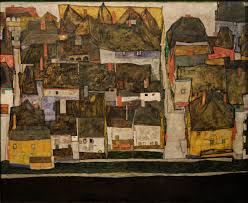
Art by Egon Shiele (1890-1918)
It was a small town,  
Its pristine beauty served as an endearing force.
The people appeared happy,
Seemingly embraced by nature.

It was a peaceful town,
With no absurdity in its complexity.
Nothing seemed out of place;
It was paradise in summer.

It was a town where imagination flowed freely,
Bringing home its radiant hues.
Creativity spun effortlessly,
Always a willing companion.

It was a town where twilight evoked a strange feeling.
The streets were deserted,
Though it was safe to walk alone,
If you didn’t mind the footsteps behind and beside you

Thompson Emate spends his leisure time on creative writing. He has a deep love for nature and the arts. His work can be seen in Poetry Potion, Poetry Soup, Written Tales magazine, Writer Space African magazine and elsewhere. He lives in Lagos, Nigeria.


.

PLEASE NOTE: ARTICLES CAN ONLY BE REPRODUCED IN OTHER SITES WITH DUE ACKNOWLEDGEMENT TO BORDERLESS JOURNAL

Click here to access the Borderless anthology, Monalisa No Longer Smiles

Click here to access Monalisa No Longer Smiles on Kindle Amazon International

Categories
Stories

Significance

By  Naramsetti  Umamaheswararao

Once, while a bird was searching for food, it spotted a  berry under a banyan tree. As the bird grabbed the berry with its beak and flew, it slipped and fell. The place where the berry landed was a field next to a village. On the same day the berry fell, a strong storm brought rain, causing the soil to cover the berry.

Two days later, the berry rotted, and the seeds inside began to talk to each other.

One seed happily said, “We are alive thanks to our luck! Otherwise, we would have been digested in the bird’s stomach within a week.”

Another seed replied, “That’s true. If we had gone into the bird’s stomach, we would have died. We wouldn’t even have had the chance to talk like this.” The other seeds nodded in agreement.

After two more days, one seed sprouted. The sprouting seed excitedly jumped and said, “Look, everyone! I’ve sprouted!”

Seeing the sprout, the other seeds warned, “Pull that sprout back! If you grow, you will change your form and rise above the ground. You will face many hardships while growing. Sometimes, humans might uproot you. Other times, animals might trample or eat you. You must overcome all this to grow into a plant. If you grow, you need sufficient water. If you don’t get enough water, you will wither and die. You cannot endure all these hardships, so it’s better to remain as we are and enjoy our time together.”

The sprouting seed listened but did not respond or pull back its sprout. After a few days, the banyan plant emerged from the soil and began to grow. Its stem grew straight, branches spread out, and many leaves sprouted. Years passed, and it grew into a large tree.

To escape the heat, farmers and travelers rested in the shade of the banyan tree. Animals found shelter beneath it during the night and when it rained. Birds built nests on its branches. The banyan tree provided refuge to many, making the area lively.

Occasionally, indigenous doctors came to the banyan tree to collect its bark, leaves, and buds for medicinal use. Children played in the field, swinging joyfully on swings hung on the banyan tree. The banyan tree felt happy.

Many years went by. One day, a terrifying storm struck. Strong winds blew, and it rained heavily. Many trees were uprooted by the storm, and the banyan tree was among them. The people were deeply saddened by the fall of the banyan tree. The birds and animals living in its branches mourned silently.

After a few days, when the greenery of the banyan tree faded, villagers used axes to cut its branches and trunk for firewood. Everyone who carried the wood remarked, “It was useful even after it died.”

Meanwhile, the remaining seeds in the ground, which had stayed behind selfishly, felt happy hearing their sibling’s praises but were also ashamed. One seed said, “We all made a grave mistake. We remained as we were and couldn’t help anyone. We didn’t do anything worthy of remembrance. Every life should have significance, but our life has been wasted. Although we had a great opportunity to be born, we squandered it. Our sibling, however, did something good. Even in death, it lives on in the hearts and homes of people. Our sibling’s legacy uncovered the true significance of life.”

Hearing this, another banyan seed replied, “Some people also live cowardly lives. They continue to make the same mistake we did. They waste their lives, not realising that a life dedicated to helping others brings true satisfaction. If we understand that helping others leads to everlasting fame and support one another, it would be much better.”

The banyan seeds lamented, “We cannot bring back what has passed, so this is all we have in this life.”

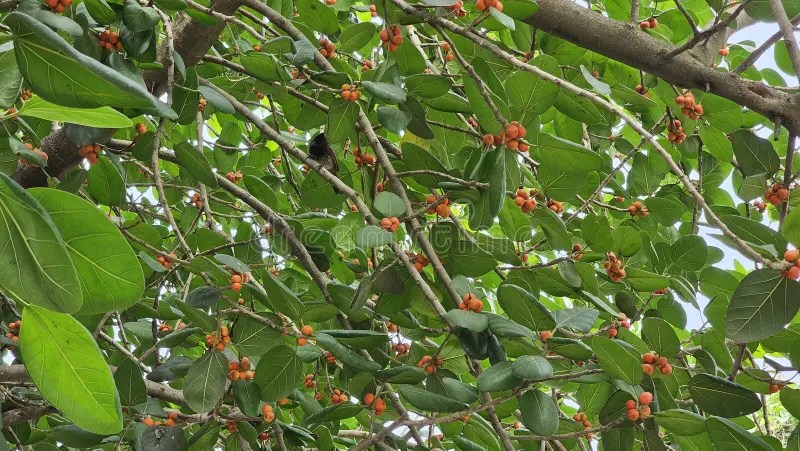
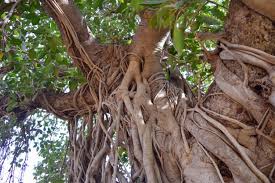
Banyan Berries: Fom Public Domain

Naramsetti Umamaheswararao has written more than a thousand stories, songs, and novels for children over 42 years. he has published 32 books. His novel, Anandalokam, received the Central Sahitya Akademi Award for children’s literature. He has received numerous awards and honours, including the Andhra Pradesh Government’s Distinguished Telugu Language Award and the Pratibha Award from Potti Sreeramulu Telugu University. He established the Naramshetty Children’s Literature Foundation and has been actively promoting children’s literature as its president.

.

PLEASE NOTE: ARTICLES CAN ONLY BE REPRODUCED IN OTHER SITES WITH DUE ACKNOWLEDGEMENT TO BORDERLESS JOURNAL

Click here to access the Borderless anthology, Monalisa No Longer Smiles

Click here to access Monalisa No Longer Smiles on Amazon International

Categories
Poetry

I Envy My Cat

Poem by George Freek

I ENVY MY CAT

Leaves drift peacefully
under a blue sky
to fall into eternity.
Death should always
come so easily.
Flowers lie comfortably
in their beds,
when they’re dead.
Change is imperceptible from
moment to moment.
My cat plays in the grass,
as if this moment
would never pass.
He’s happy that way.
Ignorance is bliss,
and if he could,
that’s what he’d say.

George Freek’s poetry has recently appeared in The Ottawa Arts Review, Acumen, The Lake, The Whimsical Poet, Triggerfish and Torrid Literature.

PLEASE NOTE: ARTICLES CAN ONLY BE REPRODUCED IN OTHER SITES WITH DUE ACKNOWLEDGEMENT TO BORDERLESS JOURNAL

Click here to access the Borderless anthology, Monalisa No Longer Smiles

Click here to access Monalisa No Longer Smiles on Amazon International

Categories
Review

The Bookshop Woman

Book Review by Aditi Yadav

Title: The Bookshop Woman

Author: Nanako Hanada

Translator: Cat Anderson

Publisher: Brazen

There is a unique charm around books that talk of books and bookstores. Nanako Hanada’s The Bookshop Woman is an honest and touching memoir where she recounts and reflects on real life incidents that transpired in the rock-bottom phase of her life. Seamlessly translated from the Japanese by Cat Anderson, the narrative opens on a certain night in January 2013, with a distraught Nanako sitting listless and dejected in a restaurant at 2 a.m. in Yokohama. She had parted ways with her husband, and moved out of their flat. Living out of a suitcase, she moves through cheap hotels and public bathhouses, like a homeless drifter with an uncertain future.

Nanako is a manager at a branch of  Village Vanguard, a bookshop chain. She is depressed with the thought that there’s a lot lacking in her life. However, as we flip through the pages, we see the resilient side of Nanako. She intends to rise above the mess and her depression. She learns to walk with her head held high without feeling sorry for herself. She moves into a cramped apartment near Yokohama station, and also happens to join a new social networking site, the ‘Perfect Strangers’, which provides dating services. She embarks on her ‘Perfect Strangers’ journey with a profile that reads, “I’m the manager of a very unusual bookshop. I have access to huge database of over ten thousand books, and I’ll recommend the one that’s perfect for you.” Although a trivial trend of the modern times, joining this new virtual platform proved a turning point in Nanako’s life.

Through several encounters with random strangers, Nanako discovers a world beyond her broken relationship and self doubt. Meeting new people puts her social skills to test and starts her on a journey of self-discovery. She learns to open up without being over-conscious of herself. In the larger picture, she understands that accepting changes in life is the right way to embrace it. The discussions that Nanako holds with people provide insight into the conditions of the modern day world and human relationships. However, through the eyes of Nanako, Tokyo which “had only felt cold and inhospitable” turns interesting beyond her dreams when she just “tried opening! What freedom there was here!” , and all she wanted to do with this freedom was to introduce more people to new books.

Meanwhile, as the manager of the Village Vanguard, she passionately continues to do her best, innovating with selling strategies and tending to her customers. She gradually learns to “discern what was special about books that perhaps didn’t look so promising at first, and to distil their charm in words”.  She talks of the ‘joy of bookselling’ and gives a first-hand account of the challenges of her business. Nanako introduces readers to a host of books through the recommendations she offers during her Perfect Stranger sessions. There is even an appendix in the book that provides more details about these recommendations.

Experimenting with her ideas, Nanako also holds book jam sessions where people come over at a designated spot at an assigned time and share about their favourite books. These book jam sessions humbled her, as she realises that she had hitherto been ‘slightly condescending’ in recommending new books to people. This realisation transforms her outlook immensely.

Weaving through myriads of book suggestions and social meet-ups, Nanako evolves as a person and finds her footing in the real world. Even in the professional sphere she follows her heart and makes changes that resonate with her personal evolution. Her love for books and devotion to bookselling make her empathetic to the extent that she “would inadvertently get a glimpse of something deep in a person’s heart”.

Within a year of that dreary lonesome night in Yokohama, life comes a full circle for Nanako. As a result of her adventures and experiments, she finds peace within herself. Her divorce gets amicably finalised and she even quits the virtual platform to immerse herself in the natural flow of the delightful world she’d discovered — one full of meaningful human connections, friendships, the warmth of books and bookstores. We see Nanako wondering about the day when someone else would pick her books and recommend it to others, triggering an infinite loop– such is the power of books that turns drifters into trendsetters and dreams into reality. The book is indeed a must read to discover this incredible power and reaffirm one’s faith in resilience of human spirit!

Aditi Yadav is an amateur writer from India. She is also a South Asia Speaks fellow (2023). Her works appear in Rain Taxi Review, EKL Review, Usawa Literary Review, Gulmohur Quarterly, Narrow Road Journal, Borderless Journal and the Remnant Archive.

.

PLEASE NOTE: ARTICLES CAN ONLY BE REPRODUCED IN OTHER SITES WITH DUE ACKNOWLEDGEMENT TO BORDERLESS JOURNAL

Click here to access the Borderless anthology, Monalisa No Longer Smiles

Click here to access Monalisa No Longer Smiles on Kindle Amazon International
Categories
Poetry

Running by Kelsey Walker

Kelsey Walker
RUNNING TO; RUNNING FROM

Running ______ _________ a challenge _________
_________ snot drips ______ breath shortens ____ ____
Toenails dig ______ into ______ puffed skin ______
grip _________ _________ the phone tighter, a reminder
Blood pumps _________ _________into my cheeks,
_________my body _________ energizing itself _________
I choose to move _________each _________leg _________forward
delicious limitlessness, achieved ______ _________ ____.

Destination ahead, continued _________ _________
These gravel roads _________ _________take me home
_________ _________ resisting the slow-down inside.
_________ in this _________ ______ _________
______ pushing _________, past _________ old times
because I cannot ______ finish ______ that to-do list now.
_________ the ache of unresponse _________ _________

Running ______ ______ an achievement ______
The simplicity _________ _________ _________is the lure
Knowing _________ when I stop ______ the burn
_________ in my chest ______ stops, too _________
Unlike _________ the stride of _________ a long day,
The unanswered texts _________ _________
the emails I never wrote _________ _________
the friend waiting for my call _________ _________
No matter what_________ I do _________there is always more
faster _______ _________ the time, _________
quicker to outrun _____ _________ ____ _________

the demons inside.

Kelsey Walker is a secondary literacy coach in rural Wyoming. She has an M.Ed in curriculum and instruction and is currently a doctoral candidate at the University of Nebraska.

PLEASE NOTE: ARTICLES CAN ONLY BE REPRODUCED IN OTHER SITES WITH DUE ACKNOWLEDGEMENT TO BORDERLESS JOURNAL

Click here to access the Borderless anthology, Monalisa No Longer Smiles

Click here to access Monalisa No Longer Smiles on Kindle Amazon International
Categories
Slices from Life

Straight Back Across the Strait

By Meredith Stephen

“So relieved that we will make good time today,” I declare. “I’ve had enough of arriving in the dark.”

“We have to stop to get diesel on the way but that won’t make too much of a difference,” Alex reminds me.

We head south of Adelaide to the most fertile part of the state. The coast is lined with stately Norfolk pines, and further south there are rolling green hills lined with heritage gums. There are more cattle than you could count, mobs of kangaroos, and horses wearing coats to protect them from the winter chills. We arrive in Yankalilla, the last town before our departure point, and fill the jerry cans with diesel. There is no fuel at Wirrina Cove, as the marina went out of business a few years ago, so we have to haul diesel to the boat.

We leave Yankalilla and head past yet more horses. After the turn-off for Wirrina I catch a glimpse of my favourites, two Clydesdales, one of whom has a forelock that reaches down past his nostrils. At the marina, we park in front of a tree to protect the car from the harsh marine environment. It’s mid-morning so there should be plenty of time to arrive in Kangaroo Island before darkness. My border collie, Haru, springs from the car, and happily trots down the finger wharf behind me as I carry my luggage to the boat. It’s hard for me to make the leap onto the boat from the finger wharf but Haru skips in while I am still worrying about how not to fall in the water.

“There is less wind than forecast. We’ll have to motor-sail,” bemoans Alex.

I move to the trampoline at the bow to savour the view of boats in their berths opening out in front of me as we exit. Haru sits next to me and whinges every time I stop patting her. Once we are in open water the boat starts rocking, and I walk back along the side of the boat, all the while gripping the side with my right hand, until I am safely inside. Haru trots lightly alongside me.

The waves become increasingly bouncy and Haru frowns. She eyes her crate which is sitting just inside the doorway. I open the flap, and she heads in and curls herself on the old silk cushions and Alex’s old woollen jumper lining the bottom of the crate. She prefers the safety of the crate to sitting outside with the possibility of being splashed.

I abdicate the task of sailing to Alex and watch him at the helm, while I settle myself on the couch, placing cushions behind my head and covering myself with a blanket. I can’t confidently move around on the boat when it is rocking this much, so I stretch my headphones over my head and listen to music, while watching Alex raise the sails and maneuver the boat towards Kangaroo Island. I feel a twinge of guilt at lying down in warm comfort while Alex busies himself with sailing, but he doesn’t seem to mind, so I close my eyes and revel in the music.

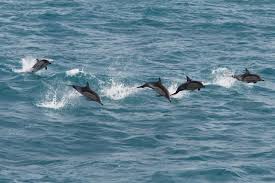
After several hours, we reach the middle of Investigator Strait. I glance outside and can see dorsal fins rising from the waters. As much as I like lying down with a blanket and listening to music, I cannot ignore pods of dolphins. I rise and brace myself for the cold and wind outside the boat. I head towards the bow, but the rocking motion and the cold winds defeat me. From the stern I can see dolphins swimming alongside the boat, and as I gaze into the distance yet more dolphins are breaching as they head towards us. Of our many crossings of Investigator Strait there has never been a time when I have not witnessed pods of dolphins, but the sense of wonder never diminishes.

Despite my determination not to arrive in darkness, by late afternoon the sun begins to slip into the horizon and Point Marsden is still well in the distance. The sky erupts in bright orange, and I hope the light will hold out till we reach our mooring. Heading for Point Marsden is like trying to reach the summit of a mountain. Finally, we pass the point and head into the bay, but darkness has already fallen. Alex locates the mooring buoy in the distance. I grab the boat hook and head to the bow. I crouch on the trampoline and stretch the hook out in front of me over the dark water. Haru crouches at my side and brushes herself against me, willing me to hook the buoy on the first attempt. I stretch forward, hook the buoy, and drag it up to the bow. I call Alex, and he leaves the helm to secure it.

Alex lowers the dinghy, and we prepare to alight. We lift our bags in, and I carefully place one leg into the centre and ease myself in. Meanwhile, Haru has delicately skipped into the dinghy behind me. Finally, Alex enters, unties the ropes, turns the outboard motor on and takes us to the shore. We shine the torch in front of the boat and locate the cove. It’s high tide. Alex hops out into chest-high cold dark waters. He pulls the dinghy towards the rocks and secures it. I clamber out and perch myself on a rock. Alex hands me the bags. I place them on a higher rock just behind me. Then he hands me his backpack containing our laptops. I hold on to them tightly, afraid to place them on the rock in case water rushes over them. Alex picks up Haru and holds her above the water, before placing her on the shore. Then he takes the backpack from me, picks up the bags, and returns to the shore. I pick my way in the dark over slippery rocks, not moving one leg until the other has been firmly anchored. We reach the sand and walk up the switchbacks. Haru delights in running along the switchbacks after having been confined to the boat.

I tread carefully in the dark up the hill, Haru brushing her side against my calf. The holiday house is in sight, and just as I am about to reach the road leading to the house I fall over a boulder and gasp. How did I manage to navigate the submerged rocks in darkness and yet stumble on land?

‘“Oh sorry!” exclaims Alex. “That’s because I wasn’t holding your hand.”

He grabs my hand, and we walk up the last part of the track to the house. We enter and I make a doggie dinner for Haru. Then I collapse on the sofa and Alex makes a fire. After the adventure of arriving by boat and walking up the steep hill in the dark, the pleasure of lounging on a sofa and warming to a fire is multiplied. I am looking forward to spending the next day curling up on the sofa, reading a book in the sunshine, and taking Haru for walks.

A few minutes later the phone rings.

“Auntie May is not doing well. You have to come home as soon as you can!” urges my sister Jemima.

Great Auntie May, aged 103, is my oldest living relative. She was in the nursing home for two decades, even outliving her sons, before moving to the palliative care ward of the hospital. I remember the card from the Queen which she posted on her dressing table three years earlier. She once said that she had lived too long, because her sons and friends had passed. Because her grandchildren are interstate, it is up to her grand-nieces and grand-nephews to visit her.

“OK. We’ll be there as soon as we can!” I reassure Jemima.

“Alex, Auntie May is doing poorly. We have to get back to the mainland as soon as we can.”

“I’ll just check the weather,” he replies. “The wind is in the wrong direction. It’s a north-northeasterly. It may be too rough.”

His brow furrows as he scrutinizes the forecast.

“Can we fly home instead of sailing?” I ask.

“The weather will be getting worse over the week, so it won’t even be safe to let the boat stay on its mooring. Perhaps we can sail to the marina in Penneshaw and leave the boat there. Then we can catch the bus home from there.”

We decide to leave the next morning, but it is noon by the time we lock the front door. I dress Haru in her lifejacket, and don mine as well. We head back down the hill, and down the switchbacks to the shore. Alex picks up Haru and places her in the dinghy. She stands tall, ears pricked, the wispy hairs on her forelegs blowing in the wind, trusting that we will join her.

Alex places the bags in the dinghy. It’s too far away for me to board. If I walk to the dinghy in freezing water, I won’t be able to hop in from water at chest height. Alex pushes the dinghy to the rock I am standing on, and I leap in. He switches on the outboard motor, and we bump over the waves to the boat. Haru is at the front, and she winces as sprays splash onto her face. I pull her back against me to protect her from the sea-sprays. The boat is bobbing in the water. Alex grabs the rope to secure us. I stretch my left leg onto the boat, but the dinghy moves away, and my legs are thrown apart. I don’t want to fall victim to the cold water below. I move my left leg back into the dinghy. The waves are thrusting the dinghy towards the stern.

“Move back. It’s safer to alight from further back,” advises Alex.

Meanwhile Haru jumps effortlessly onto the boat, undeterred by the rough conditions.

“Now!” urges Alex, during a lull in the waves.

This time I extend my left leg onto the boat and somehow the rest of my body follows. Haru is standing expectantly at the bow wondering what all the fuss has been about. Alex raises the dinghy, then the sails, and we head towards Investigator Strait. Once we are in the boat the sea conditions are not as difficult as we had anticipated.

“I think we can sail across to the mainland in these conditions. We don’t need to leave the boat at Penneshaw after all,” Alex informs me.

The sea is bumpy but not enough to make me seasick. I bring Haru inside, and swaddle myself in blankets and locate my headphones, leaving Alex to manage the sailing. Six hours later we arrive at Wirrina Cove and drive back towards Adelaide in darkness.

“Let’s head straight to the hospital!” I urge Alex. “We can’t afford to waste any time.”

Alex floors the accelerator on the freeway, weaving past slow coaches who are blocking our way. Haru curls herself up on the back seat, oblivious to the drama around her.

We arrive at the palliative care ward and enter through the back door where visitors are allowed to enter with their dogs. Will Auntie May have waited for us? We make a beeline for her room. Auntie May is propped up on pillows and beams when she sees us. Haru jumps onto her bed and lies down facing her waiting for a pat.

“I had a bad turn, but I am feeling better today. Did you sail all the way back from Kangaroo Island to see me?”

“Yes, we did.”

“I’m sorry to have put you out. I’m feeling much better now.”

Alex and I glance at each other, and I catch the relief in his eyes. Even though she is 103, we aren’t ready to say goodbye. We hope she will make at least 110.

A few days later the phone rings. It’s the nurse from the palliative care ward.

“Would you come and pick up your Great Aunt May please? She is doing much better than expected and we need to move her out of the palliative care ward. The social worker has found a room with an ocean view for her in the Star of the Sea Nursing Home.”

Later we celebrate Auntie May’s 104th birthday at the nursing home, and next year we look forward to celebrating her 105th birthday. We continue to sail back and forth to Kangaroo Island, choosing our weather to only sail in favourable seas, never hurrying back. Haru continues to sail with us and enjoys visiting Auntie May just as much as we do.

.

Meredith Stephens is an applied linguist from South Australia. Her recent work has appeared in Syncopation Literary Journal, Continue the Voice, MickingOwl Roost blog, The Font – A Literary Journal for Language Teachers, and Mind, Brain & Education Think Tank. In 2024 her story Safari was chosen as the Editor’s Choice for the June edition of All Your Stories.

PLEASE NOTE: ARTICLES CAN ONLY BE REPRODUCED IN OTHER SITES WITH DUE ACKNOWLEDGEMENT TO BORDERLESS JOURNAL

Click here to access the Borderless anthology, Monalisa No Longer Smiles

Click here to access Monalisa No Longer Smiles on Amazon International

Categories
Poetry

Poetry by Farah Sheikh

A LABYRINTH OF MAYHEM 

I sit down to remember myself
Who and what I could’ve been
Had I not fought countless wars in my head
An arrow here and a canon there

I sit down to remember myself
A master raconteur I could have been
Seeking stories and spinning tales
An anecdote here and a narrative there

I sit down to remember myself
A gifted painter I could’ve been
Colouring memories and sketching days
An impasto here and a splattering there

I sit down to remember myself
A talented musician I could have been
Composing melodies and singing ballads
An anthem here and a medley there

I sit down to remember myself
The butcher I became
Slaughtering thoughts, identity and experiences
Into a stagnant river of nothing
To be lost in a labyrinth of mayhem

Farah Sheikh is a freelance editor based in Bangkok, Thailand. After studying at Lady Shri Ram College and Jamia Millia Islamia, she worked with Dorling Kindersley Publishing and the Rekhta Foundation. She thrives on Urdu poetry and world cinema.

.

PLEASE NOTE: ARTICLES CAN ONLY BE REPRODUCED IN OTHER SITES WITH DUE ACKNOWLEDGEMENT TO BORDERLESS JOURNAL

Click here to access the Borderless anthology, Monalisa No Longer Smiles

Click here to access Monalisa No Longer Smiles on Kindle Amazon International