Have you got a window? That window … To your dreams To your world To yourself To you!
. You all know that window — That takes you to places you want to be, That helps you see the beautiful, wondrous things, That is the bridge, the string, To Nature and to your Nature.
. We all have that favourite spot — That favourite view. Sometimes … it’s – A foggy day, A rainy day, A translucent day, Or, an opaque day.
. Remember … You just have to reach out. Clear the fog, the mist, And wipe the charcoal film – Swipe it, sweep it, wipe it. Till you can see – The light; the green, the red, and all. The frame isn’t complete – Without the onlooker.
. There isn’t beauty – Without the appreciator. Have you got that window? That window … That window to the Beauty, Your kind of beauty.
. That window to the Nature, That is yours! Have you got the window? The window that is yours. Remember … We all have one.
. It can appear and disappear, It depends on the atmosphere of the day. Remember — You are the portal keeper. Only you have the magic — To let it stay, Or, to unlatch it.
. Remember … Always keep it open. Remember … The breeze that blows through that window – Is just for You!
.
*Note: This poem on hope and reassurance dawned onto me as we walk through the trying days of the global pandemic. Irrespective of age, class or creed, we all have hardships and points in life that let us down and tax us on our dreams and aspirations. Besides the pandemic that can make us physically low, unmet expectations due to prevailing circumstances may make us financially or mentally low and lessen our hope and faith in life, but hope and happiness equally expects us to have credence and allow a chance to show that the magic works at any cost, and that, life goes on.
.
Gracy Samjetsabam teaches English Literature and Communication Skills at Manipal Institute of Technology, MAHE, Manipal. She is also a freelance writer and copyeditor. Her interest areas are Indian English Writings, Comparative Literature, Gender Studies, Culture Studies, and World Literature. When not reading or writing, she loves to indulge in being with Nature.
.
PLEASE NOTE: ARTICLES CAN ONLY BE REPRODUCED IN OTHER SITES WITH DUE ACKNOWLEDGEMENT TO BORDERLESS JOURNAL.

They too are at the receiving end of an abusive relationship.
Yet, some colours are so vibrant,
they invigorate, soothe, motivate.
They are the colours of friendship, love, trust.
Colours of positivity, peace and harmony.
.
Cobwebs
Stepping out after a month of lockdown,
I spied cobwebs hanging defiantly,
on the back of the door.
The master designer was missing.
Must have gone elsewhere,
to create its new masterpiece.
Cobwebs are metaphors,
for strained relationships,
for broken promises.
Cobwebs can settle on anything.
Relationships are not spared,
if covered in the dust
of negativity, insensitivity, mistrust.
They can turn a friend into a foe,
if the vision is clouded,
by the hues of insincerity, selfishness.
Do not let the cobwebs become stagnant,
in your mind, heart and soul.
Dust the cobwebs away.
Purge the demons of prejudices, intolerance,
discrimination and hatred.
The world will surely become a better place to live.
.
Mrs. Navneet K Maunwas born in West Bengal. Did her initial schooling from Oak Grove School, Jharipani, Mussoorie. She furthered her education from Regional College of Education, Bhubaneshwar. She did her Graduation and BEd from there. She did her Masters in English Literature from Banaras Hindu University, Varanasi. She has vast experience in teaching andhas retired as a Senior Teacher from a Public School in Delhi. Her hobbies include reading, travelling, writing and cooking.”
.
PLEASE NOTE: ARTICLES CAN ONLY BE REPRODUCED IN OTHER SITES WITH DUE ACKNOWLEDGEMENT TO BORDERLESS JOURNAL.
Bookosmia and Ms Sara are back bringing us a magical collection of young person’s writings. And this time some of it really takes us into a wonderland where candyfloss can give fibres and unicorns can party! I hand over the introductions to the fabulous Ms Sara.
Poetry
Hellooo everyone, your best friend Sara here! Here is a heartfelt prayer from 11 year old Hitansh Kedia from Kolkata towards a ‘minor’ change in our diets. What can I say? Amen!
To those ugly vegetables!
If chocolates were healthy, and vegetables junk, Healthy foods children would love to eat. With bitter vegetables off our plates, Every meal would be a treat.
We’d no longer hear our doctors say, “You’re not getting enough protein.” Or hear our mothers tell day and night, “You need to change your diet routine!”
Carbohydrates and energy we’d have in plenty, Getting our fibre from cotton candy. And whenever we’d need some extra vitamins, Some lollipops would come in handy.
Eating our dream meals every day, We kids would smile with glee. From all the vegetables that haunted us, We’d finally be free!
I hope this happens, And it happens fast. To those ugly vegetables, I’d say goodbye at last!
Here is yet another delectable poem on my, or rather, ‘our’ beloved mangoes. Clearly it is turning little kids, like 7 year old Darshali from Bhilwara, into budding poets!
My Mango
Mango, mango very sweet
My favourite fruit,
I love to eat.
Mango green, mango yellow
They are delicious ,even when mellow.
Mango juice, mango slice
Everything is very nice.
I wish I had a mango tree
Everyday I would get mango free.
Ready for a good laugh?Make way for some first class kids’ humour, in this amusing poem by 8 year old Shifa from Lucknow.
BDG (Big Disgusting Giant)
Being friends with a giant
Is my greatest fear
Especially if the big man has diarrhea.
.
He may be a big friendly fella
But I have to stand under an umbrella.
It’s no fun, I can tell you
Being washed away in a river of poo.
.
I am scared of drowning in a big smelly stink
So I ask you all to carefully think,
If your friend is a giant, don’t think its funny
To invite him to tea and feed him spicy curry.
Ayraa Shriwardhankar from Mumbai sends in this lovely poem, as lovely as the peacock itself. Read for yourself.
Peacocks
Peacocks are pretty as a queen,
Royal green, blue and brown.
When they opens their feathers,
They have a crown.
Peacock is the national bird of India.
I love the way it opens the feather and dances when happy.
Birds are beautiful but peacocks fascinates me the most.
Stories
Here is a beautiful story by 9 year old Arnav Prasanna from Bangalore. Dont miss this tooth fairy story, with a twist!
What does the tooth fairy do with our teeth?
One day there was a girl named Akansha. Akansha was a very nice girl. She did her chores everyday. One day, her tooth fell out. She was so excited because she knew that the tooth fairy would come. She brushed the tooth with lots of toothpaste and kept it under her pillow.
She couldn’t sleep at night because she was so excited. She thought what does the tooth fairy do with all the milk teeth?Does she make milk out of them and drink? Is that why they are called milk teeth? All those questions made her sleepy.
Soon, she went to sleep.
That night, the tooth fairy came slowly into her room and took the sparkly tooth under the bed. But as she flew out of the window, her wand fell out from her pocket.
The next morning, Akansha woke up and checked under the pillow. The tooth was gone and there was money there. She was very happy. But next to the window she saw something shiny. It was a magic wand.
Akansha understood that it was the tooth fairy’s wand. She wanted to give it back to the tooth fairy but how to give it? She thought the tooth fairy will realize her wand is missing and come back that night. Maybe she could meet the tooth fairy. Akansha was so excited! That night she tried very hard to stay awake but she was so sleepy.
The next morning, Akansha woke up and saw the magic wand was gone. She checked under her pillow and saw a note.
‘Thank you for finding my wand. I turned your tooth into a star. Hope you can see it in the sky. Love, tooth fairy’.
Akansha was very happy. Every night after that she looked out of her window and saw her tooth as a shiny star in the sky. Now she knew what the tooth fairy does with the teeth, she makes them into stars!
Have you ever been to a unicorn party. Read through this very creative story by 8 year old Vachi Aggarwal from Jaipur
The day I got invited to a unicorn party
I don’t know how but one night I found myself in the land of unicorns There, I could see millions of unicorns. The unicorns were speaking.
“Welcome Vachi,” one unicorn said. “My name is Eliza.” Another one said her name is Monica.
Eliza bought some cake and pastry for me.
I asked Eliza how I came here. She said, “Darling, you are the chief guest of our annual unicorn day. It is a party where lots of fairies, gods and stars come and have lots of fun.” It was very strange but I went along with it.
All the fairies and unicorns looked happily at me. We were enjoying the night, we were dancing, asking questions to each other and singing songs. All of a sudden a very bright light appeared. I could see many fairies and wizards coming on their vehicles like elephants, birds etc.
Then the big wizard called me and told me why I was invited as the chief guest.
He said that back on earth, people think small actions do not matter but actually it is the small action that leads to big changes. He reminded me that last week when I had seen an injured bird, I had given it first aid and not ignored or just seen from a distance like others had. Seeing me, many others followed to help.
He said he saw an honest girl in me and that’s why he invited me to the party.
Then we had a gala dinner. Before leaving, I asked the wizard if he could use his magical powers to cure coronavirus patients. The wizard said that he had actually given those powers to everyone, especially children,
“By staying at home, helping their parents and keeping their hands clean, children can help make the world a beautiful and safe place,” he said.
I came home with a new learning – do good, be good. Even a small act means a lot to the world.
Ready for some thrills? Here is a wonderfully written story by Aarya from Kolkata which will made me feel I am there with him through all the action! Tell me how you felt.
The Secret Bunker
It was a fine Sunday afternoon, me and my brother were taking a stroll down the park near our house.That is when my brother found something very old rusty, but something made us stop and look closer. It reminded us of the treasure in a movie we had watched during the summer break.We got excited that we had discovered a Secret Bunker!! We decided to gather some of our friends and come check out the bunker the next day.
Next day, I packed all the equipment and called up some of my friends. We sneaked out during the night.With full enthusiasm we reached the park and then tried opening the bunker.The bunker lid was so heavy that it took two of my strongest friends to prise it open.
We were amazed to see that it opened to a tunnel! I beamed my flashlight around.There was a ladder. We were almost sure that we had found a treasure. We climbed down the ladder and were very disappointed to find nothing, nothing at all.
We were just about to go back disheartened, when my brother screamed in joy! He had spotted something. It was a door with a code hidden behind the ladder. The code was covered with a thick layer of dust. We tried to see the code with the help of flashlight.To our surprise there was a number lock on it. There were a few symbols inscribed just above the lock. One of my friends who was really interested in ancient symbols and scripts jumped in to interpret the code. Now was his time to shine. He entered the code in the lock and the door creaked open. We were fascinated by the sight we saw in front of us.
There was a huge room with many intelligent looking people, all going about their work and too busy to even notice the door was open. There were test tubes, chemicals on one side and huge charts hung on the other. There were huge tables with many devices like microscopes on a far end of a room. We just couldn’t believe what we were seeing. It was the biggest research center ever! We took out my spy device to record the voices of scientists. That was enough for that day’s work. We slowly closed the door and came out of the box.
The next day, we decided to go again to the secret place and get the ultimate proof of the secret organisation. This time, we took a camcorder with us and recorded the whole place. After we got back up we ran to my house. We posted everything online and it went viral in a day. Now everybody knew about
bunker. It was not long before everyone was caught and brought under custody. Next day the news came that the government had taken over the organisation.
That was not the end we were invited by the president to present the medals of honour. So it was a happy ending. I guess…
Why does God get no chocolate? Eleven-year-old Varnika from Delhi wants to change that..read this story to know how.
Why doesn’t God get chocolate?
WHY DOESN’T GOD GET CHOCOLATE?
Have you ever wondered why God doesn’t eat chocolate? Do you think that he doesn’t like it or do you think that people believe that chocolate is not meant for gods? Let’s find out what Mona thought.
She was a very inquisitive girl. Always having unimaginable questions in her tiny head and without getting the answer, she would be pondering on that for as long as it took. Once in a dark and sleepy night, Mona was sleeping and dreaming that she was in Choco city, a whole city made of candy and chocolate. The houses were made of chocolate cake with vanilla icings as their roof. The river made of chocolate milk in which fish made of chocolate cereals swam and floated.
The tall, colourful lollipop trees and the clouds which were actually cotton candy, of a dreamy pink shade. And Mona was eating it all up, filling her heart’s content! Ah… what a dream! She was floating in her dreams when suddenly, “MONA!!! Time for school!! Come on, don’t be lazy! You have 45 minutes sharp to get ready!” It was Mona’s mom. Mona groaned and very slowly, brushed her teeth, took a bath and went to say her morning prayers.
She was so engrossed in continuing her dream, the small temple in front of her, where she was standing, started looking like a cake! When she was about to finish, she had another question, as usual.
“Why doesn’t God get chocolate?! ”
When she did well in school, scoring A or B grades in every subject, she was given a treat by her parents which was usually a trip to the bakery. Well, God had done the biggest thing, made the universe and… no treat for Him!
Chocolate is, anyways, a necessity of life! You can’t possibly live without it. It is like a sky without a moon and an ocean without water. But all he got was- a cheela (a pancake made of gram flour) for breakfast, rice for lunch and a roti for dinner! If you or I were in His place, our life would be so boring.
So, when she was walking down the stairs, she asked her mother, “Momma, why don’t we serve God chocolate?”
“Maybe because…”, her mom started wondering. Even she did not know the exact answer, so she tried to take advantage of the situation by ending it with some morals for Mona. “Because God needs to be very healthy as he is the one who works the world! If he became lazy, like you, he would never be able to do anything! What will happen then? Sweets make you lazy and unhealthy which is very bad,” she said as if giving a lesson.
But Mona didn’t believe it! She wanted proof and she thought that the most convincing proof wouldn’t be with her Momma. So she pretended to be convinced and agreed.
After a week, the results of the test she gave arrived and…she got a perfect A+! Her parents took her to her favourite café for a lovely lunch. There she bought a muffin and packed it for home. At home she opened the muffin box.
“Are you sure you want to eat it now, Sweetie? You just ate a pastry in the café?” asked her father. Mona didn’t reply and kept the muffin in front of the altar in her home. Her father started to wonder, why does Mona want to serve a muffin to God?
Mona sat in front of the altar and recited the Gayatri Mantra. And you know what happened? She noticed that a big pink rose fell close to her on the ground. She assumed it was God’s blessing to her and was overjoyed and showed it to everybody.
But Mona, you and I do know the actual reason for God’s blessing to Mona, don’t you?
Essay
Dont miss reading this yummy essay by 10 year old Ananya from Kochi on how a milk drop transforms into a delightful ice cream!
From a drop, to a delight!
Once there was a drop of milk called Milky. She lived in a container with other drops of milk. One day she slipped into another container, it was shaking so much that she got sick. After a pretty long time, it stopped shaking.
Milky was transferred into another container. It was very cold. Suddenly lots of sugar fell on her and she was startled. Then Vanilla fell on her and finally she was showered with lots of Choco Chips!
Suddenly the temperature turned freezing cold! She was then scooped out of the container. She flew into a cone and that was a very fun filled flight.
Voila! She had turned into an ice-cream!!
.
PLEASE NOTE: ARTICLES CAN ONLY BE REPRODUCED IN OTHER SITES WITH DUE ACKNOWLEDGEMENT TO BORDERLESS JOURNAL.
Words from more than a century old play which could well voice the mood of 2020, the year that will go down in history as of a pandemic that not only connected the world but demanded a change in our way of life, perhaps even suggesting we evolve a new way of living. August is also always a happening month, heralding, at times, demanding changes — of season, of historic events that altered our way of life and thought. We tried to capture a whiff of this spirit in this month’s issue of Borderless Journal along with humour, another mood-changing, fay figment that breathes hope.
We start with the commemoration of an event which lasted a short time but changed the world forever — the seventy fifth anniversary of the Nuclear holocaust that ripped through the twentieth century, on 6th August 1945 at Hiroshima, Japan. It ended the Second World War and a way of life. The impact continues to stagger as we read in the interview with Kathleen Burkinshaw, the author of The Last Cherry Blossom and a survivor’s or hibakusha’s daughter. Archana Mohan reviewed her book for us. The book focuses on the story of Burkinshaw’s mother before and after the bomb blast. When I think of the staggered suffering of the survivors of the holocaust, the subsequent generations and the impact of that bomb on the world, I wonder if the coronal virus will change humanity and our world order in the same way. After all Bill Gates did say that future wars will not be with arms but against biological deviations.
The next and the last nuclear explosion during a war rocked Nagasaki three days later. On that date, 9 th August, two decades down the line, was born a nation that has become the gateway of all Asia to the rest of the world, Singapore. Celebrating Singapore’s 54 th birthday, Kaiyi Tan, a local author of dark fiction, takes us on a scintillating journey in quest of a new world beyond the reaches of a morose pandemic. Singapore, like America, gained its strength from immigrants. We have a thought-provoking piece from Pakistani immigrant author, Aysha Baqir. As she muses over this event , she gives a fleeting wistful glance towards another Independence Day on 14 th August, 1947, that of her home country, Pakistan, which was given a free reign just before India was born on 15 th August with a soulful, famous speech by the first Indian Prime Minister, Jawaharlal Nehru, ‘Tryst with Destiny’ . In that speech, he said: “…A moment comes, which comes but rarely in history, when we step out from the old to new, when an age ends …” Are we at a similar point in history now — one wonders!
To jubilate India’s 74th Independence Day, we have a musing from Nishi Pulugurtha who pensively glances at present day India to pause and ponder over the future of the children growing up in these hard times. We have poetry around this, hovering around themes of war, refugees, partition and life as it is in Kashmir and Kolkata by established writers like Paresh Tiwari, Laksmisree Banerjee, Mosarrap Khan, Gopal Lahiri and youngster Ahmed Rayees.
From history, we move to humour, a much-desired commodity in the current cacophony of darkness. We start with fun poetry by Vatsala Radhakeesoon, Santosh Bakaya, Aditya Shankar, Dustin Pickering, Sunil Sharma and many more; move on to limericks, humorous stories and musings by a number of writers, including surprises from Sohana Manzoor and Devraj Singh Kalsi.
Then we have our usual variety of reviews, poetry and stories. We carry the protest poetry of Melissa Chappell which she wrote after protesting what she felt was flawed and wrong. Hat’s off to her courage — a true protest poet!
On our pages also is Meenakshi Malhotra’s review of a book which had been on the top ten of the best seller lists for ten weeks. Avik Chanda, the author of this historical narrative — Dara Shukoh: The Man who Would be King, was kind enough to do an essay for us rounding up the current outlook for jobs in India. We also had more essays by Dustin Pickering and Bhaskar Parichha.
Bookosmia, Nidhi Mishra and Archana Mohan have again kindly hosted a lovely young people’s selection for us as usual. For all the contributors I have mentioned, so many remain unnamed in my inadequate listing here. We have a fabulous collection awaiting readers, who are indispensable to our survival.
I would like to offer them a buffet of laughter and tears in Borderless Journal. A mixed oeuvre awaits their palate.
On May 31st 2020, Zohra Shah, an eight-year old domestic worker in Pakistan was beaten to death by her employers. Each year over one billion children across the world experience physical or sexual abuse.
Dear Zohra,
I am sorry you are not Black. I am sorry the police have not released the video of how your employers, Hassan Siddique and his wife Umme Kulsoom, caged you, abused you and beat you to death for freeing a few parrots. I am sorry that no statues fell for you. I am sorry that your murder has failed to free over eight million child workers in Pakistan or over two hundred and fifty million child workers across the world.
Zohra five days before you died, a Minneapolis policeman, Derek Chauvin pushed his knee into the neck of a 46-year-old black man for nearly nine minutes while he pleaded, “Please, I can’t breathe.” George Floyd’s death sparked protests and rage across the country. Tens of thousands of protestors marched into the streets of Minneapolis. The protests spread to over a hundred cities in the United States including New York, Philadelphia and Washington. Within days, the movement Black Lives Matter transformed into a global struggle and protestors surged out in the UK, France, German, Spain and Australia. Gathering momentum, the crowds tore down statues of slave traders and white supremacists. Some of the biggest brands pledged support to the movement, Black Lives Matter. Other companies fired their CEOs and Executives for racist and insensitive remarks. Chauvin has been charged for second degree murder. Some countries, states, and cities forced police departments to ban chokeholds and neck restraints. Many cities outlawed unannounced police raids, known as “no-knock warrants”. The George Floyd’s Memorial Fund raised over 14 M for his family and his GoFundMe page is supported by over five hundred thousand contributors.
George Floyd’s crime was that he bought cigarettes with a counterfeit twenty-dollar bill. Zohra, your crime was that you freed a few parrots. The day after you died, tweets and posts flooded social media. Many even changed profile pictures. A few days later you disappeared from news like the parrots you released.
The Ministry of Human Rights promised reform. However recent tweets hint towards tweaking the out-dated Employment of Children Act, 1991, to include Child Domestic Labour (CDL) to the list of banned occupations (applicable only to Islamabad) while overlooking excluding far more dangerous occupations such as kilns, mines, mechanic shops. There has been no attempt to change the age of a child from a person who is younger than fourteen years to a person who is younger than eighteen years. To date thousands of children under the age of sixteen years continue to work in hazardous occupations.
Zohra, I am sorry no media, corporate Mughal or minister took up your cause. Some renowned civil society members organized a protest but less than twelve protesters showed up. There is lesson to be learnt from the family, friends, and community of George Floyd. Are our lawmakers are purposefully silent. Can we steal their silence? What if you were my daughter? Would tears, posts, vigils have been enough then?
Zohra, when I read the news of your death, I couldn’t stop trembling. I shouted at the universe. Stop it. No more. You understand. Enough. Silence. The universe was silent. It had not answers. I had not spoken. The words were inside my head. Biting. Gnawing. And with chilling certainty I knew that the pandemic was not outside, it was within me.
It is easier and more convenient for me to look outwards and to condemn others. It absolves me. But the problem is not out there it’s within me. It is difficult and uncomfortable to look inside because I am part of the problem. I am part of complex social economic system that that perpetuates discrimination, poverty, violence and forces millions of children into forced labour. If I am part of the problem can I even be part of any solution?
Not if I continue to exclude the poor and vulnerable populations from the decision making process and appoint myself as their representative or spokesperson. Not if I continue to excuse the culprits because they are rich, powerful, my friends, friends of friends, or someone or I don’t want to offend. Not if I leave the millions of child labourers to be physically and sexually abused without taking any action. A viable, sustainable and progressive movement rests on the voices of all stakeholders committed to the cause.
The human rights movement will never progress if the poor and vulnerable are not part of the discussions and consensus building process. Stakeholders working towards human rights must facilitate the poor and vulnerable to be included in conversations about their rights even at the risk of losing their privilege. The goal is development not dependence. The worlds doesn’t need one Iqbal Masih, it needs millions of Iqbal Masihs. It needs us to protect the Iqbal Masihs.
Some claim that the poor and vulnerable are uneducated and illiterate and unable to contribute towards the right decisions. However, in my over twenty years of working with the poor in low-income communities in the field of development, I have found that majority of the poor are bright, determined, resilient and waiting for opportunities and initiatives to improve their lives. The uneducated and illiterate argument is an excuse to control and manipulate vulnerable populations and is strikingly similar to the justification of the East India Company and the British Raj to colonize the Sub Continent.
Our actions have a consequence, as does our apathy. Zohra, your future was stolen away from you. But, we still have a choice that can change many futures.
Note: A note of thank you to Mr. Naeem Sadiq for his precise and updated posts of the Zohra Shah case.
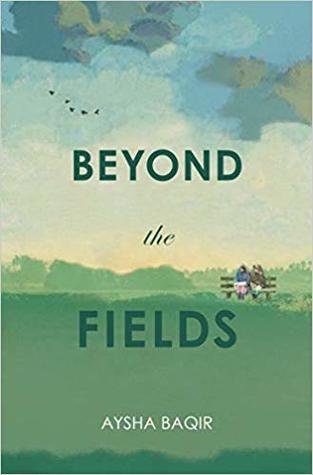
Aysha Baqir grew up in Pakistan. Her time in college sparked a passion for economic development. In 1998 she founded a pioneering not for profit economic development organization, Kaarvan Crafts Foundation, with a mission to alleviate poverty by providing business and marketing training to girls and women in low-income communities. Her novel Beyond the Fields was published in January 2019 and she was invited to launch her book at the Lahore and Karachi Literary Festivals and was featured in the Singapore Writers Festival and Money FM Career 360 in Singapore. Her interviews have appeared in Ex-pat Living, Mount Holyoke Alumnae Quarterly, Kitaab, and The Tempest. She is an Ashoka Fellow.www.ayshabaqir.com
.
PLEASE NOTE: ARTICLES CAN ONLY BE REPRODUCED IN OTHER SITES WITH DUE ACKNOWLEDGEMENT TO BORDERLESS JOURNAL.
A common concept today about the children portrayed in Victorian literature is that they are innocent in spite of their sufferings and brutalization by the society. One can refer to an apotheosis of childhood innocence through characters like Dickens’s Oliver Twist, Little Nell in Old Curiosity Shop, and Pip in Great Expectations, or Charlotte Brontë’s Jane Eyre. During the Victorian era morality and didacticism were appended to the Romantic imagination, and these childhood victims of social injustice were redeemed by their inherent sense of goodness and modesty. Consequently, later on in life these victims of tyranny did not turn into tyrants themselves.
Emily Brontë’s Wuthering Heights, however, treats children and their sufferings in a very different manner. Peter Coveney observes, “the symbol which had such strength and richness in the poetry of Blake and some parts of the novels of Dickens became in time the static and moribund child-figure of the Victorian imagination” (33). Emily Brontë perhaps captures this idea more acutely than any other of her contemporaries.
When it comes to the novel, most people visualize a grand romance on the Yorkshire moors as portrayed in Hollywood movies by the same name. But I wonder how many actually realize that the heroine of that romance died when she was just over eighteen and Heathcliff had left home three years before that. Doesn’t that make it more of a romance of adolescence or even childhood?
The pain and anguish represented through the two characters is more about the loss of a love that belonged to the freedom of childhood and was lost as they encountered social segregation and class-conflicts as they grew older. In this article, I have chosen to look at those troubled children of Wuthering Heights whose childhood was virtually disrupted by the adult figures surrounding them. The sufferings they encountered as teenagers or adults are rooted in the cherished and tortured existence they led as children.
The popular belief today is that the horrors of the World Wars, concentration camps, and other nightmarish situations took away that world of innocence from the modern child. Such an assumption suggests that nineteenth-century children were more innocent than the children of the twentieth century because they did not experience the horrors of the Great Wars. But standing in mid-nineteenth century England, Brontë shows with brutal honesty that a child’s world might be simpler and less complicated than an adult’s but is still far from being innocent and guiltless.
In ‘Le Chat’, one in the collection of The Belgian Essays, she draws an analogy between a cat and a child. When a child comes to his mother with a crushed butterfly in hands, she hugs him praising his efforts. For Emily Bronte, however, the scenario is reminiscent of a cat “with the tail of a half-devoured rat hanging from its mouth” (58). Using the metaphor of a predator she thus brings forth another aspect of “childhood innocence” which can be cruel and terrifying. And hence, the youngsters in Wuthering Heights torture and kill helpless animals on different occasions. They are reported to kill birds by hanging traps over their nests, and to strangle puppies from the back of chairs.
Early in Wuthering Heights the uninvited guest Mr. Lockwood has a nightmare during his stay at the Heights which in crucial ways sets the tone of the novel. He dreams of someone or something knocking on his windowpane, and when he tries to close the window, a cold little hand grabs his wrist and begs for entrance:
Terror made me cruel; and finding it useless to attempt shaking the creature off, I pulled its wrist on to the broken pane, and rubbed it to and fro till the blood ran down and soaked the bed-clothes: still it wailed, “Let me in!” and maintained its tenacious gripe, almost maddening me with fear. (20–21)
The dream, or rather the nightmare is fearful in its realistic description and neither the author nor the narrator attempts to interpret it except in incoherent blabbering. His fear makes him act irrationally and thus the readers are made to enter a world where children are treated unkindly, cruelly even.
While cruelty toward children is not all that unusual in Victorian novels, the problem with Wuthering Heights is that here it seems rampant. The houses in Emily’s novel are not work-houses or orphanages as one can find in the novels of Dickens. And yet the way children are reared and treated here can hardly be described as benevolent or nourishing.
The idea that children are to be treated kindly, a theme repeatedly emphasized by the Victorians, seems to have gone completely awry in Wuthering Heights. Children are mostly treated whimsically by adults as if they are mere playthings. Moreover, because the purveyor of ill-treatment is a parent or guardian, there is nobody to interfere, nobody to question the authority of the wrongdoer.
Old Earnshaw takes a fancy to the foundling Heathcliff but turns against his own son, Hindley. So much so, that in order to have peace in the house after his wife’s death he sends Hindley away to college. Not once does he consider the way he as a father has allowed an outsider to usurp his son’s rightful place. On the contrary, he blames Hindley for unruly behavior. Naturally, when Hindley returns home after his father’s death, he has no compassion for his usurper of a foster brother, Heathcliff.
Then we have old Mr. and Mrs. Linton, generally known as kind and just people. And yet during Catherine and Heathcliff’s nocturnal adventure at the Grange, they are unperturbed by Catherine being bitten by their watchdog, Skulker. It is only later when Edgar identifies her as Miss Earnshaw, they tend to her wound. Mr. Linton allows young Cathy to be welcomed inside, but Heathcliff is turned out because he does not conform to the behavior or appearance of an ideal child as Mr. Linton observes:
“Oh, my dear Mary, look here! Don’t be afraid, it is but a boy—yet, the villain scowls so plainly in his face, would it not be a kindness to the country to hang him at once, before he shows his nature in acts, as well as features?” (39)
Instead of the angelic golden looks of Oliver Twist, or Edgar Linton, Heathcliff possesses the dark appearance of a gypsy; he swears, and often speaks gibberish instead of clear English. To be welcomed as a cherished child, however, one would have to appear and act as a perfect child, and not just have the size and looks of any child. He is younger than Edgar, is still in his adolescence, yet the Magistrate of the province wants him hanged—Linton’s real feelings here survive his irony—based on his gipsy-like looks.
Oliver with his innocent appearance earns occasional compassion even from the master criminal Fagin, but Heathcliff with his dark countenance fails to gain an iota of sympathy from either Mr. or Mrs. Linton. They never attempt to understand Heathcliff’s plight or Hindley’s tyranny. On the contrary, they also seem to feel that the “little Lascar” deserves that kind of treatment because of his unbecoming appearance and unruly behavior. Such an attitude toward children indicates a problematic aspect about Victorian England. Often characters were decided based on physiognomy, just as Mr. Linton assumes Heathcliff to be a criminal.
Nelly, who presents herself to be better than most in her appreciation of Heathcliff, admits that Hindley’s treatment of Heathcliff “was enough to make a fiend of a saint” (51). And yet she too often confides in her audience that Heathcliff might very well have been a devil’s child, as she says, “where did he come from, the little dark thing, harbored by a good man to his bane?” (252). Such concerns against Heathcliff are uttered by almost all characters of the novel on different occasions, throwing light on a very provincial attitude of contemporary England. Even children could not escape the clutches of such convictions, and therefore, were treated accordingly. The problem with Heathcliff is not just that he is a foundling, but also that he is a foundling with non-English physical attributes. Moreover, he often resists social decorum and takes a perverse joy in acting wicked. It matters little, therefore, that he is a child; more important is the fact that he does not fit the criteria set for an adorable child.
Thus, it obviously seems that in spite of promoting innocent childhood, nineteenth-century England could very well have been a challenging sphere for children. Religious beliefs encouraged strict discipline but there was nobody to oversee the tyranny practiced in the name of religious teaching. So, while young Heathcliff and Catherine are bullied into reading the Bible by Joseph in a cold fireless room, Hindley and his wife enjoy themselves in idleness, resting by the fire.
Furthermore, Emily Brontë questions the traditional understanding of a good child and a bad one. Heathcliff tells Nelly that the reason behind his and Catherine’s nocturnal visit to the Grange was to find out if the Linton children are treated as badly as they are. When Nelly sinks into the purely conventional again [and], says that they are good children and therefore do not need punishment, Heathcliff scoffs at her for being partial to the Linton children because she thinks it is acceptable: “‘Don’t you can’t, Nelly,’ he said. ‘Nonsense!’” (38). Soon and often it becomes apparent that there is nothing so extraordinarily good about Edgar and Isabella. They are the children of a local, influential man, and therefore, petted by everybody around them. They are taught to be polite in company and dress well. In spirit, however, they are no better than the children of Wuthering Heights.
Another interesting aspect about the children of this novel is that they are all are left without the care and protection of their mother. Not a single one of them approach adulthood with their mother to protect them.
It indeed seems that Emily Brontë’s world is a place where children are left without the protection of their guardians, and “normal” emotions are reverted (144). In some significant ways, they pose as a commentary on the children of Charles Dickens who are idolized as perfect children. This is how even some of Brontë’s contemporaries looked at her work, and failed to understand the meaning of such random atrocities. The Victorian mind probably expected a kind of pattern of stable life which Emily’s novel refuses to provide.
Sohana Manzoor is an Associate Professor of English at the University of Liberal Arts Bangladesh.
.
PLEASE NOTE: ARTICLES CAN ONLY BE REPRODUCED IN OTHER SITES WITH DUE ACKNOWLEDGEMENT TO BORDERLESS JOURNAL.
Title: The Other Side of the Divide – A Journey into the Heart of Pakistan
Author: Sameer Arshad Khatlani
Publisher: Penguin Random House, 2020
Journalist Sameer Arshad Khatlani’s maiden book, The Other Side of the Divide – A Journey into the Heart of Pakistan, published end February 2020, seemed to, at the outset, suffer the fate that the India- Pakistan relationship has continually suffered – whatever could go wrong, did! COVID19 almost did the distribution of the book in. But like the legendary resilience of the people of the subcontinent, and because of the inherent quality of what his intrepid journey into Pakistan was able to produce, the book made it through alternative channels, and is sure to be talked about for many years to come.
Khatlani, a Kashmiri, is a Delhi based journalist. More than his bio, it is the dedication that caught my eye, “For my son, Orhan Ahmed Khatlani, and kids of his generation. May they grow up to live in a peaceful and prosperous South Asia free of bigotry and conflict.” Wonderful words! Also written with sincerity. As you read deeper into the book you understand one thing about the author: That he is a young journalist cut in the traditional mould, the type that is fast disappearing in an increasingly polarised world. The intrepidity of perusal and perusal, the cultivation of people across political and cultural divides, the search for objectivity and truth, the erasure of one’s own biases, and the courage and resilience of conviction that forces one to take positions when push comes to shove marks out an honest journalist. Khatlani ticks all these boxes.
To be frank, the book suffers from many editorial glitches and unnecessary typos, like this line by way of example: “Not surprisingly, the country (Pakistan) comes across as a hopelessly dark land because to its (sic) portrayal in the news media …”. The word ‘due’ has been carelessly substituted by the word ‘because’, rendering the sentence nonsensical. Enough to put me off and set a wrong note to the reading experience. But as I entered the heart of the book, even as Khatlani dived deeper into the other side of the divide, I realised nothing, but nothing could take away from the richness of the information it was unearthing, the depth of its historical exploration, the breadth of the issues and the personalities it was reaching out to, and most importantly, the chord of personal reflection and poignancy it was touching.
The last point is important. Pre-Partition, the author’s grandfather, of limited means, had fled the oppressive feudal rule of the Dogra king to seek a better life in Lahore. Ultimately, due to pressing circumstances the patriarch returned to Kashmir before 1947. Lahore always had a strong Kashmiri presence. These were people who abandoned the oppressive taxes and strong biases of the existing rulers in Kashmir to seek a better life elsewhere. This was a world when the Hindu rules of Kashmir were oppressing its Muslim citizens. Many ‘Punjabis’ settled in and around Lahore were of Kashmiri origin, though they now primarily spoke Punjabi or Urdu and had little of the Kashmiri left in them.
In fact, Nawaz Sharif, Pakistan’s iconic politician traces his roots to Kashmir, though his family settled in Amritsar a long time back, and from there moved to West Punjab. The interlocking of the writer’s personal narrative with that of a general observation about a rather little known socio-cultural reality, and the search for those lanes where his grandfather might have roamed especially in the now drastically altered Anarkali Bazaar, present a storyline that is extremely catchy.
The conversational style (after all he is a journalist) comes off easily, as does the South Asian predilection for digressions when names and places are evoked. One name dropped becomes the point of departure to connect events and places from far away. One set of friends introduces him to another. Then the second set introduces new facets to his story, which essentially is to write deep pieces for the Times of India, datelined Lahore, as part of the ‘Aaman ki Aasha’ (the ‘hope for peace’ drive between India and Pakistan, during the last Congress Government) initiative. The excuse for the journey is to cover a Punjabi cultural event. Though to be honest there is enough mention of the Punjabi language and cultural predilections to justify the excuse!
As you read further into the book this particular aspect of the style quite catches you. What earlier might have appeared unnecessarily digressive, grows into you and you begin to realise this story could have been told no other way. The frenetic swamping of emotions, the bitter regret of missed opportunities, the cornucopia of details that mark the stories of both separation and oneness are as fervent as they are insistent – they can only be told breathlessly if they are to be shorn of artfulness. The writer must at times bow before the sentiments of the storyteller. The story is often so powerful that it almost takes over the storytelling. This is said by way of praise. When you have the book in your hands you’ll understand exactly what is meant herein.
Khatlani’s book is modelled around his discovery of Lahore and its people. Each discovery follows the hub and spokes theory. Every discovery is the hub. And the stories that emanate from these hubs are the spokes. In this he touches all the right chords. There is the Bollywood connection, the history of the army and its ubiquity in Pakistani life, the cricket connection, the stories of shared miseries and standout acts of personal friendship, there is the story of alcohol and conservatism, the liberals of Pakistan and their sentimental pro-India politics, and the special story of minorities, especially the Sikhs.
These stories slip in and out of the ten chapters, and in no particular order. In each of these particulars, Khatlani shapes his narrative with great background stories, provides rich historical accounts, and at times manages searching insights into the intricate sentiments that guide the existing reality between the two nations.
The Other Side of the Divide is an important intervention at a difficult time. The dateline is 2013 when things were better. Better despite the numerous setbacks, not in the least the attack on Mumbai in 2008 November, or the attack on the Sri Lankan cricketers outside the Gaddafi Stadium in 2009.
In 2020 another world has overtaken us. We inhabit a world that is shriller than ever before, a world in which India is fast giving up its secular and liberal credentials, and instead turning sharply right. As some have observed, new Pakistan looks more like old India, and unfortunately, new India like old Pakistan. Bearing the cross of a fractured history we continue to inherit each other’s loss. Amidst this, Khatlani’s book is an invaluable source of solace and possibilities.
.
Debraj Mookerjee has taught literature at the University of Delhi for close to thirty years. He claims he never gets bored. Ever. And that is his highest skill in life. No moment for him is not worth the while. He embraces life and allows life to embrace him.
.
PLEASE NOTE: ARTICLES CAN ONLY BE REPRODUCED IN OTHER SITES WITH DUE ACKNOWLEDGEMENT TO BORDERLESS JOURNAL.
It is difficult for you to write about love. And now, it has become even more difficult for you to read about love as well.
But, it isn’t as though you haven’t written about love before. You have written many a poem about your son’s wide eyes that were nothing short of almond shaped resemblances of the sky, at least for you. You have composed many a prose about the scent of lavender and baby powder that clung to him, and about those instances when you would bury your exhausted face in his rainbow t-shirt, forgetting all the worries of the world. That scent of lavender and baby powder could rid you of all the troubles of the mind, because in that little body – so much of you dwelt.
Today, you writhe and squirm under the heat of the moon, trying to rid your mouth of that bitter, metallic taste. They come to you, and your son does too –- clutching the thin volume of poetry you had published as a college freshman, the colourful post it notes which held split portions of the many Ghazals that you had composed. The verses that she had pulled out of from the back of school registers and grave files are sellotaped to your walls, yet you look at them with blank eyes. Your eyes are lifeless craters, devoid of all traces of life, all traces of emotion, craters that probably exist for the sake of existing. They seem to have no real purpose.
Your wife brings out your letters where you’d written that there could be nothing more poetic than war. You’d compared war to a skillfully written verse with a myriad layers. Yes, at times this verse does tend to attain a slightly lopsided position, but surely that does not determine the lyrical capabilities of the verse. You told her about how a butterfly sat on the top of your trigger, about how some of your mates wrapped their guns in blankets, because they did not want the snow to fill into the trigger. You spoke about the crackle of wine, the sourness of beer, the necessity of alcohol, which could at times become so bitter that it was almost startling.
On those occasional calls, you’d talk about the border, the way you saw a grass blade beneath the electrocuted coils, one half of it there, one half of it here. You spoke about how a flower growing there, let some of its petals drop into your land, and how no one fought over those petals, no one thrust bullet after bullet into the flower, because it dared to let its bullets fall on the other side. You observed too much, you thought too much, but you were tall and strong, so you made for a good soldier.
“Just subtract the unnecessary emotion,” a comrade had once told you. “Add some vengeance, some drive, and some hatred for the other side. Well, not just some hatred. A lot of it. Multiply it by five, even. It would do you a whole lot of good.”
The sin had cast its rusty hues upon the world that day, when the border could no longer restrain hatred, and it spilled over from either end. You stood at attention, proud and tall, and you shot many a bullet. You heard the resounding thud of sudden death – of young death all around you, but you paid no heed. Your heart had adorned itself in a frosty cloak of indifference, and you were proud of it.
Suddenly, you were pushed to the ground, and the barrel of your gun was shoved into your mouth. A boot heel crushed your fingers, as you felt your incisors bump against the cold, hard metal. For the first time in your life, you tasted your own blood. And then, they did what they had to do with you. You don’t remember any of it.
You just remember the stench of burning skin. Possibly, it was burning hair. Or maybe, it was burning clothes. The past and present had merged into each other, and the borders separating these three essential phases of time had melted away into thin vapor, the vapor that lingers behind after explosions. The borders of your soul had melted away.
Today, you sit upon your bed. Your son is prohibited from entering your room, especially after you advanced upon him with your gun a day ago. He had thrown his little arms around your neck, giving you his typical strangling hug, and that sudden tightness of breath was so unbearable, and so scarily familiar to you. You had hurled him to the ground and seized your gun. You had almost pulled the trigger. Your wife timidly tiptoes in with your meals and leaves them on your table. She has tried her best – cooking your favorite meals almost every day, ranging from the pav bhaji and makki ki roti you would fall for. She has stopped saying anything at all. Most often, she clears away untouched plates.
The evening shadows dance upon your wall, as you stare at the cracks that have formed over the week, after you constantly whipped the wall with a golf stick. You pick at your nail, biting it, peeling off the skin till it bleeds. Suddenly, your eyes fall on a diary. You grab it and examine it with confused eyes. A part of you wants to rip the cover apart, and pull out page after page, for destruction is your nature. But you open it – and run a finger along the blank pages, holding the diary to your face.
A tear trickles down your eyes, and moistens the page, which is already dotted with the blood from your injured nail. You watch the tear and the drop of blood merges, slowly and steadily attaining oneness. It is so intriguing to discover togetherness in absolute abstraction They merge on the page with grace and such easiness, crossing all the borders that lay between them. They were so distinct — so different from one another, just like contrasting countries, just like contrasting people. But possibly, borders are always a choice, never an action of necessity.
You don’t hurl the poem away. You don’t rip the diary apart. You don’t stamp upon it with your soldier’s boots. Nor do you jab your trigger into it and threaten to kill it. You revel in the pain of what you’d just created, for one doesn’t always need words and memories to create poetry.
Sometimes, it is just has to happen.
Praniti Gulyani is an aspiring poet from New Delhi. She enjoys debating, theatre and fiction in addition to haikai literature. She believes in voicing her opinions through her stories and poems, and sees literature as the strongest and most beautiful form of protest.
.
PLEASE NOTE: ARTICLES CAN ONLY BE REPRODUCED IN OTHER SITES WITH DUE ACKNOWLEDGEMENT TO BORDERLESS JOURNAL.
Dom Moraes (1938–2004), poet, novelist, and columnist, is seen as a foundational figure in Indian English Literature. In 1958, at the age of twenty, he won the prestigious Hawthornden Prize for his first volume of verse, A Beginning, going on to publish more than thirty books of prose and poetry. He was awarded the Sahitya Akademi Award for English in 1994. He has won awards for journalism and poetry in England, America, and India. He also wrote a large number of film scripts for BBC and ITV, covering various countries such as India, Israel, Cuba, and Africa.
“Between his Englishness and Indianness, the scales tipped to English.”
Wrote Stephen Spender in the Sunday issue of The New York Times on August 10, 1969 while reviewing My Son’s Father by Dominic Frances Moraes, an autobiography which was first published in 1968 when the author was only thirty years old. Spender’s observation came in view of the situation faced by writers of Indian origin writing in English in those times. He considered it fortunate that Moraes was brought up speaking English and not Hindi.
It is true that being born in an English-speaking Roman Catholic family of Goan extraction, the language came naturally to him and his affinity for literature sprung from his spending much time on reading books borrowed from his father’s library. Once he knew that he would be a poet, the decision to make England his home came logically to him. At one place in the book he writes:
“England, for me, was where the poets were. The poets were my people. I had no real consciousness of a nationality, for I did not speak the languages of my countrymen, and therefore, had no soil for roots. Such Indian society as I had seen seemed to me narrow and provincial, and I wanted to escape it.”
In this autobiographical account, a prominent role is given to the tussle in his mind, that kept him connected to his roots. This struggle, emanating from the memories of his early childhood years spent with his family and his relationship with his parents, is also the subject of this book. Interestingly, after this book was published in 1968, Moraes returned to India after spending nearly fourteen years of his life in England.
The book covers the period from his early childhood to when he became a father himself. The autobiography is divided into two parts with six chapters each. The first part titled ‘A Piece of Childhood’ covers the first sixteen years of his life with his parents. The second titled ‘After So Many Deaths’, deals with his own life, from leaving the house for London for further studies until he finds his place in the World. The thirteenth chapter is the Epilogue.
The name for first part is taken from these lines by David Gray, quoted on the title page:
Poor meagre life is mine, meagre and poor:
Only a piece of childhood thrown away.
In the first part, the choice of title reflects the content. For, it essentially deals with his troubled childhood years with a mother suffering from mental illness. He writes about witnessing the first signs of illness in his mother, about how his love for her first turned into indifference, then into anger and then cruelty with the passing years which were marked with increased incidents because of her illness which sometimes also posed danger to him and everybody around. Later when his mother was institutionalized, he blamed himself for it. However, it was the time spent with his father, reading, travelling and journaling, that made him turn to writing verses and to opt for living in London.
The narrative is enlivened by the keen and observant eye of a poet which missed nothing, whether it was the unsettling feeling of missing his father when he was a war correspondent in Burma or the joy of witnessing the beauty of nature. At such places, his poetic sensibility charms the reader and turns the reading experience into a joyful ride. His prose is lucid, interspersed with vivid imagery but with such a restrain that not a single word ever seems out of place.
Behind our flat was the Arabian Sea, an ache and blur of blue at noon, purpling to shadow towards nightfall: then the sun spun down through a clash of colours like a thrown orange, and was sucked into it: sank, and the sea was black shot silk, stippled and lisping, and it was time for bed.
The second part deals with his life at Oxford. His associations with poets like Stephen Spender, W.H. Auden and Allen Tate. He vividly portrays the English Literary scene of 50s London, bohemian life at Soho, his meetings with the likes of David Gascoyne, T.S.Eliot, Beat poets and Francis Bacon. He writes about his love affairs, about the kindness of Dean Nevill Coghill who always saved him from troubles at Oxford and about David Archer of the Parton Press who published his first poetry collection, A Beginning, which won him the prestigious Hawthornden Prize at the age of nineteen. But despite all this, he felt divided in his mind. Once while visiting parents of his friend Julian, he felt nostalgic.
It was a long while since I had been in contact with family life: it seemed familiar but distant, but snuffing at it as warily as the dachshunds sniffed at me, I felt a deep nostalgia for it. I thought for the first time in weeks of my mother and father and remembered the exact smell and texture of an Indian day. Driving back with my friend through the green and familiar landscape of my adopted country, I felt suddenly, and to my own surprise, a stranger.
Though he had put down his roots of work and friendship in London, where he knew he wanted to stay but there were moments, according to him, when some invisible roots pulled him to country of his birth. It was only around his twenty first birthday, while visiting his parents, he realised what it was. In a conversation with his mother, both of them wept in close embrace and suddenly he felt his troubles vanishing away.
I left India at peace with myself. Something very important to me had happened: I had explained myself to my mother, there was love between us, the closed window that had darkened my mind for years had been opened, and I was free in a way I had never been before.
The last chapter, ‘The Epilogue’, shows a thirty years old Moraes, a father to a newborn, finalising the manuscript of this book. For some reasons it doesn’t include his life events from the age of twenty one to thirty. As the ‘Epilogue’ closes, we see a father, pleased with his life, binding together the pages so that if his son reads them one day, he understands his father as the person he was.
.
Rakhi Dalal is an educator by profession. When not working, she can usually be found reading books or writing about reading them. She writes at https://rakhidalal.blogspot.com/ . She lives with her husband and a teenage son, who being sports lovers themselves are yet, after all these years, left surprised each time a book finds its way to their home.
.
PLEASE NOTE: ARTICLES CAN ONLY BE REPRODUCED IN OTHER SITES WITH DUE ACKNOWLEDGEMENT TO BORDERLESS JOURNAL.