Categories
Review

Re-deciphering the Human

Book Review By Basudhara Roy

Title: Burn the Library and Other Fictions

Author: Sunil Sharma

To embark on a relationship with a meaningful collection of short fiction is to hone one’s awareness of the world that shapes us and is, in its turn, shaped by us. A well-conceived short story is a sharp ray of light that undertakes to illuminate a particular plane of the compound and poly-faceted experience that reality will always be. Urging us to concentrate on that angle alone,  the short story crucially assists in peeling off our familiarity with life at that point of being and invites us to locate new meaning in what we might have long known.

In the company of Sunil Sharma’s Burn the Library and Other Fictions, a collection of twenty dense pieces of short fiction, one is on a riveting journey into the physical and psychological entrails of a society that is blissfully absorbed in plotting the architecture of its own doom. Sunil Sharma is an academic from Mumbai who has relocated to Toronto post-retirement. Acutely conscious of the subtle but definite ways in which social life, interaction and communication are being endangered by stereotypes, prejudices, capitalist strategies, ICT, artificial intelligence, eroding faith, self-doubt and the surrender to myopia, Sunil Sharma attempts, in these tales, to not merely draw our attention to what ails us as a society but also offers valuable possibilities of grace and redemption.

Ranging in form from flash fiction to full-length short stories, the themes in this collection are eclectic. Dreams, conjugal relationships, diasporic intimacy, the plight of migrants, women and elderly people, the breakdown of the family, the disruption of social cohesiveness and harmony, the threat of being transformed from consumers to victims of hyper-functional gadgets, and the consistent search for meaning amidst life’s ruins contour this collection through angst, satire, tenderness and hope. 

What immediately draws one towards Sharma’s style is his capacity for intricate observation and his incisive, almost brutal honesty in his descriptions. Here is a writer who does not hesitate to call a spade a spade without resort to satire, irony or humour to dilute the effect of his statements. In fiction where it is easy to camouflage and refract ideas, Sharma impresses and inspires by keeping critique frank and unencumbered by location, ideology or craft.

In ‘Love: Beyond Words’, the reflective narrator-husband observes:

“Our worlds, exclusive, were held together by an arranged marriage and later on, by the kids only…like rest of the middleclass Indians. Two perfect strangers brought together by common practices who discovered each other in initial years of marriage and then lost by the pressures of work and antiromance conditions of our living in an Indian metro…like others of our ilk.”

In the poignant flash fiction ‘Skeleton in the Attic’, once the skeleton has been identified as that of the paternal grandmother whom the family forgot to unlock from the attic when it left for its vacation in a hurry, the omniscient narrator quietly points out, “Once the shock was over, food was ordered and video of the visit played out and they forgot the skeleton.” In ‘Beware! Migrants are Coming!’, the interrogator minces no words in establishing the migrant’s statistical invisibility and thereby his ontological dispensability:

“You are a scum. A bloody scum. You come first to our holy land. Then you bring your entire hungry village that sucks us dry. We will no longer tolerate this N-O-W. The thieves are disposable. None cries for a thief. You are not human. You are not us, your death will not affect us, or anybody here, or anywhere.”

Concern for the margins remains central to Sharma’s intellectual, emotional and moral vision of a sane and progressive society. In story after story, it is these interstices that he examines, emphasizing their structural importance to the well-being of the centre. The malady, as the writer establishes, is rampant and global. Whether it is women, the poor, the elderly, the disabled or the migrant, the health of the margins directly determines the health of the centre. In ‘Two Black Stones and an Old God’, for instance, faith in divine reward and punishment becomes a device of empowerment for the grandmother and granddaughter both of whom are victims of the family’s neglect. In ‘The Street’, the narrator maps the entire cultural change that has taken place in his native town of Ghaziabad by observing the difference in the metrics of spatial arrangement and communication. The transformation of the public space that once symbolised community, shared concern and active empathy into a space of inequality, indifference and social apathy marks, for the narrator, the apotheosis of postmodernist social fragmentation and alienation.

However, the most stringent and memorable critique of postmodern and posthuman culture is perhaps put forward through the eponymous story ‘Burn the Library’. Though the setting of the story is 2071, around fifty years into the future, the conflict that it explores between information and knowledge, between programmed intelligence and creative thinking and between human growth and entropy is vital to the fabric of contemporary intellectual debate. What is the future that we are enthusiastically chasing, the writer seems to ask. Does it promise an unfolding of our rational and emotive powers or does it seek to arrest and freeze them unconditionally? For Sharma, the possibility of resistance to the omnivorous challenges of technology usurping humanity lies only in and through the circulation of ideas via writing. Ideas alone, for Sharma, are indestructible and even if all libraries were to be burnt and all sources of information were to be destroyed or corrupted, new knowledge could be founded and resurrected in the world through the strength of individual creative thinking alone. The Advanced Homer (AH) virus that seeks to alter “consciousness about culture” says, “Wake up! Find out authenticity. Life. Real life beyond the wired universe. Think – alternatively. Subdue the dominant of technology. It is not our master anyway. Go human. Re-think culture.”

‘Go Human’ is a powerful slogan, lethal in its simplicity as it indicates how far we have strayed from what we were meant to be. For me, it richly encapsulates the vision of the entire collection since it is only by the reclamation of our own humanity and that of others around us that we can battle the evils of discrimination, prejudice, violence and self-destruction.

Basudhara Roy teaches English at Karim City College affiliated to Kolhan University, Chaibasa. Author of three collections of poems, her latest work has been featured in EPW, The Pine Cone Review, Live Wire, Lucy Writers Platform, Setu and The Aleph Review among others.

.

PLEASE NOTE: ARTICLES CAN ONLY BE REPRODUCED IN OTHER SITES WITH DUE ACKNOWLEDGEMENT TO BORDERLESS JOURNAL

Categories
Essay

Sea Days, Sea Flowers

Mike Smith uncovers the wonders of the world of H.E Bates

H.E. Bates (1905-1974), photo taken by his wife, Majorie Bates. Courtesy: Creative Commons

Waiting for the computer to load I turned to the bookshelf and noticed my set of The Saturday Book. Thirty-five of the eclectic annual volumes were published between 1941 and 1975, with a ‘Best of’ following in the early 80s.

I needed a reading project and decided to start at the beginning of volume one. I accumulated the set over many years having been given two as birthday or perhaps Christmas presents in 1959 and 1960, but I’d never read them all from cover to cover. Long after discovering one of my favourite short stories (H.E.BatesThe Little Farm), I found I’d had for years it in Volume One of The Saturday Book. What I hadn’t found was a second piece by Bates in the same volume, or rather, a first piece by him, for it opens the book and the whole series.

Sea Days, Sea Flowers’ begins with recollections of summer trips to the Sussex and Kentish coast ‘as far as the white dunes of Sandwich bay’, and to ‘the flat wide shores beyond the Dymchurch sea-wall’ or to ‘Hastings and Rye’. I assumed at first that I was reading the opening to another short story, though it did cross my mind as odd that he should get two in the same volume. There are many short stories that start with such descriptions of rural England. Du Maurier’s ‘The Old Man’, Coppard’s ‘Weep Not My Wanton’, and Gallico’s ‘The Snow Goose’, all play heavily on the landscape in which their tales are played out.

But here Bates’ description seemed to go on for so long and was in such detail. It was a journey such as that Kipling took in his opening to ‘They’: a drive through England, to England rather than a mere setting for a tale. As that journey entered its second page the penny began to drop that I was reading what we would now call, I suppose, a piece of creative non-fiction.

The detail is astonishing: about the landscape, the topography, the architecture of the towns and villages, the working lives of the fish-hawkers and the fishermen, and the tourists who drive down for the summer to buy their fish; of the “smoke-stacks of ships steaming up the Channel as they come in close at Dungeness”; of the “coast that is full of Napoleonic memories”; of “the toy passenger train that peeps and shrieks across the flat marsh”. And, throughout it all, those flowers: “the tall mauve-pink marshmallows, like delicate wild hollyhocks…the clusters of reed and willow-herb and purple loosestrife…”

It’s a luscious, artist’s eyeful of this southern corner of England, and it goes on for pages. How can you make such a tour, packed as it is with such detailed description, and no narrative, and the only real character a fish-seller with whom Bates’ reminiscing narrator banters, how can you make it work, and over some thirteen pages of text? For it does work.

Scotland has always been a foreign country to me, but I know most of it far better than I know any of the so-called Home Counties, and the country that Bates describes in this piece is totally alien to me. Yet it made me want to visit, to see it, to see how much of that 1941 landscape still lives and shines under his summer sky. Of course, Bates is a superlative writer, but there’s more to it than that. And he knows a lot: about the flowers, about those childhood holidays, about the lives of working people. The piece is jam-packed with detail and keen observation. But there’s more to it than that as well.

The clue is in the date, and in the three words that open the piece, which, at eighty years’ distance you might have missed: ‘IN PEACE TIME’, and yes, they are in capitals too. For this lush description, redolent with nostalgia, elegiac for a lost world, was published in 1941, when World War Two, for England, was already two years old, and the beaches were sealed off to casual visitors, barbed wired and mined for defence, prepared for an invasion that never came. A couple of pages in, Bates gives us a reminding nudge, repeating the phrase, this time in lower case: “it was always so easy, in peace time, to find a light excuse [to make the coast journeys]”.

By 1941 Bates was already at the top of his game. Stories like ‘The Mill, The Kimono, and The Boxer’, had been written, stories that by his own account were more fully developed than those prompted by what he called ‘the facile devil inside’. And he was a master of the descriptive. The sense of heat that pervades the deserted farmyard and surrounding farmland in the story ‘A Great Day for Bonzo’is palpable, and that same intensity is present in many others of his rural tales, not least the often dubbed ‘bucolic’ Kent of The Darling Buds of May (1958). He was already putting those talents to the National Service, most famously in the stories of Flying Officer X. And this piece too, no doubt, had its propaganda purpose, for Britain, like other nations, was fighting for the survival not only of its lives and infra-structures nor merely for its political systems, but for the narratives of its physical homelands. This was one of the notional as well as real England that the majority of the British were fighting for, and here Bates is summoning a sense of loss that could already be felt as war took that landscape, albeit temporarily, away from the people.

You can sense a similar message in wartime films like Tawny Pipit (1944) and Went the Day Well (1942), and some of the Powell Pressburger films, notably, A Canterbury Tale (1944).

Towards the end of his piece Bates makes this context more explicit. “It is a year since I was down on the coast.” And he lets the war intrude more specifically: “A mine was tossing a little out to seaward…”, where the fish-hawkers “would talk to you of the dead Nazi airmen that were washed up every day…”. Not for nothing did the Kent coast, in the days of the Battle of Britain, become known as ‘Hell’s Corner’.

Bates does not end on the war though, but returns us to nostalgia, to the seashore, “the scream of gulls”, and the “toy train, penny plaices, sea-flowers, peace-time world”. He ends on a reflective note, and one, I think, that carries a whiff of English comic irony: “But it’s no use getting sentimental now.” There was, after all, still a war to fight.

.

Mike Smith lives on the edge of England where he writes occasional plays, poetry, and essays, usually on the short story form in which he writes as Brindley Hallam Dennis. His writing has been published and performed. He blogs at www.Bhdandme.wordpress.com 

.

PLEASE NOTE: ARTICLES CAN ONLY BE REPRODUCED IN OTHER SITES WITH DUE ACKNOWLEDGEMENT TO BORDERLESS JOURNAL

Categories
Poetry

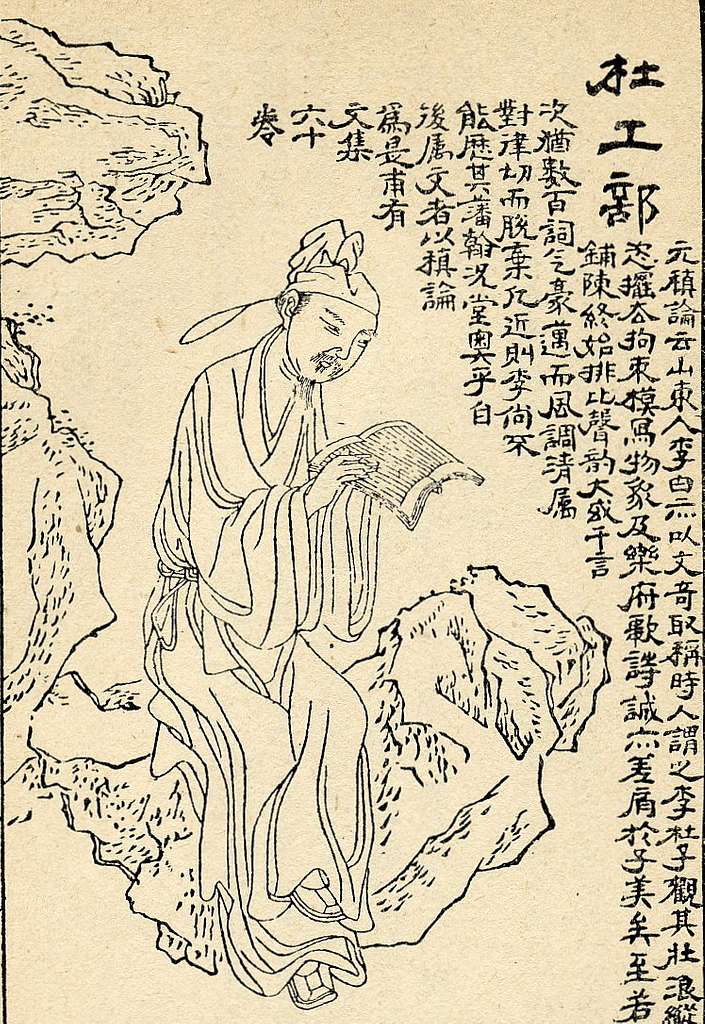
Poetry by George Freek

IN DECEMBER 
(Inspired by Du Fu, Tang Dynasty Poet)

The trees and the clouds
sway easily in the wind.
But beyond my vision,
stars are dying.
The sky is a lonely grave.
In the mirror, my face
looks rough. I need a shave.
With the winter snow,
the birds have vanished to
wherever they go.
Will I be here when
they come again?
Such thoughts go better
with wine, if at all.
I look out my window,
watching snow as it falls.
settling quietly like a pall.

Courtesy: Creative Commons

George Freek’s poetry has recently appeared in The Ottawa Arts Review, Acumen, The Lake, The Whimsical Poet, Triggerfish and Torrid Literature.

.

PLEASE NOTE: ARTICLES CAN ONLY BE REPRODUCED IN OTHER SITES WITH DUE ACKNOWLEDGEMENT TO BORDERLESS JOURNAL

Categories
Stories

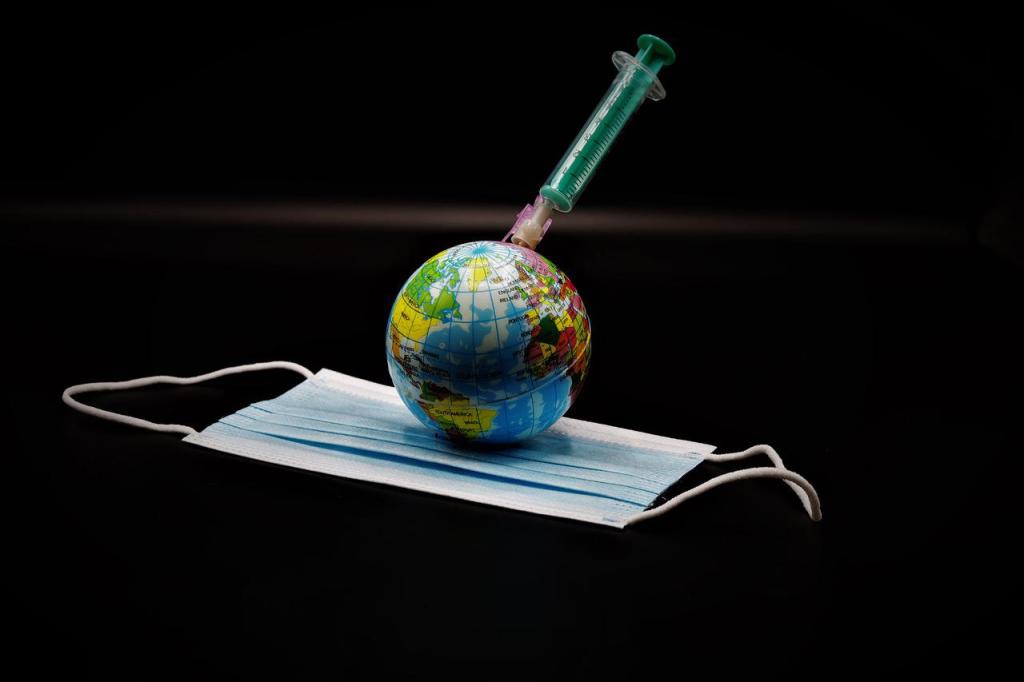
Viral Wisdom

By Rhys Hughes

Courtesy: Creative Commons

The Optimistic Hypochondriac

“I caught covid last week but I already had typhoid, rabies and malaria, and they all cancelled each other out.” The Optimistic Hypochondriac

I like the Optimistic Hypochondriac. I regard him as my friend, but not a close friend, oh no! I don’t want to get too close to him in case he gives me his germs. I am sure he has plenty of germs, more than he needs for himself. And he has always been a generous chap, the sort of man who would be very happy indeed to share his illnesses with anyone else.

I remember in the old days how hypochondria wasn’t an infectious disease. But there is now growing evidence that the virus that causes hypochondria has undergone a mutation and is starting to spread among people who never believe they are ill. This means that hypochondria will probably become rampant in the next few years. What a dreadful notion!

I keep myself fit by going for regular runs on the beach. This morning I ran five miles on the beach. I am pleased with my performance, but my fear is that after finishing I will be stopped by the police. “Why are you out of breath? Why are you sweating? Why do you have a high temperature? You must have the virus. It’s off to quarantine with you — on Devils’ Island!”

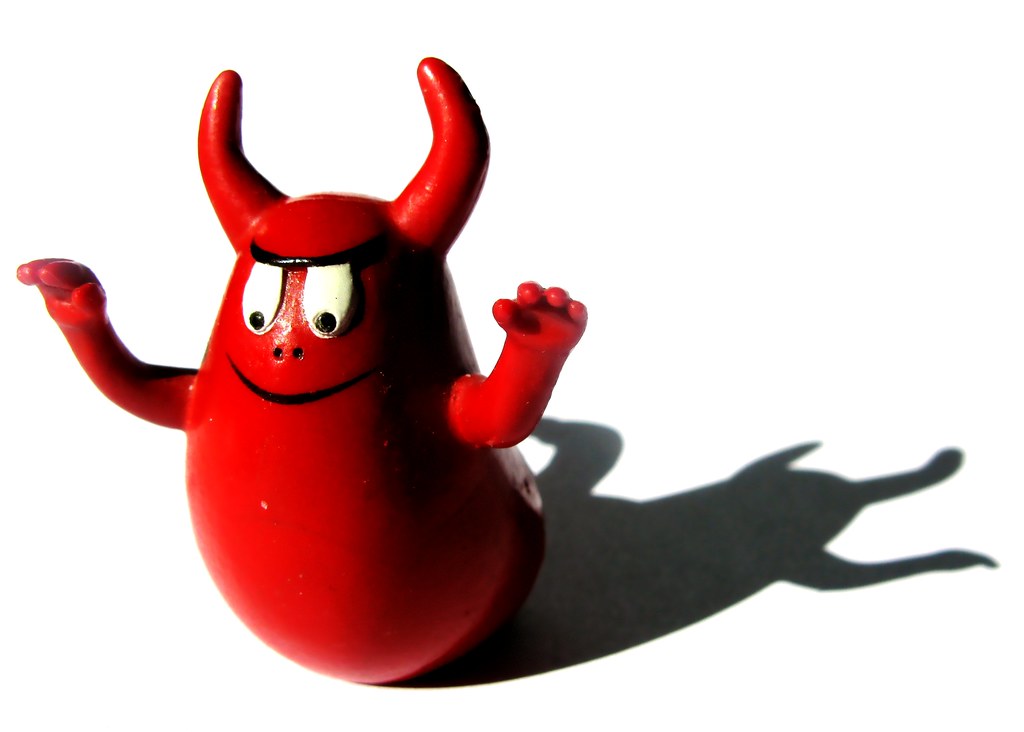
Devils’ Island is an extremely unpleasant place. It was where all the devils in the world lived before they emigrated. The devils’ diaspora is one that hasn’t been studied in great depth yet by academics. Some of the devils went North, East and South, but most of them went West.

To “go west” can also mean to perish or disappear. The devils who went North went west, if you see what I mean, but the devils who went East didn’t, nor did the devils who went South. It gets rather confusing. But if you meet a devil, no matter where you happen to be, you can be sure that originally he was an inhabitant of Devils’ Island, which is still covered with cooling lava. People who are imprisoned there have to keep hopping.

I keep hopping too, or rather I keep hoping — hoping that I will never be sent to Devil’s Island just because I have broken the quarantine rules imposed by my government at short notice. I ought to pack a swimsuit in a suitcase just to be prepared for that horrible eventuality.

Some women pack swimsuits that are radioactive in their luggage if they think there’s a chance they might be sent to Devils’ Island. Radioactivity keeps any remaining devils away. Are there any remaining devils? Difficult to say, but not as difficult to say as “imagine an imaginary menagerie” which is a sequence of words I often have trouble with.

Better to be safe than sorry! If you are a woman in danger of being sent to Devils’ Island, be sure to pack a radioactive swimsuit. Is it bad advice to suggest the wearing of a radioactive swimsuit? No, because there’s nothing wrong with bikinis atoll. Now let’s move on —

Well, I moved on, and here I am. The Optimistic Hypochondriac has called me on the telephone to tell me that a new pandemic has started.  The singer Buster Octavius is going to give a concert to raise money, but no one knows what the money is being raised for. Buster Octavius says it is being raised because that’s better than letting it fall onto the ground.

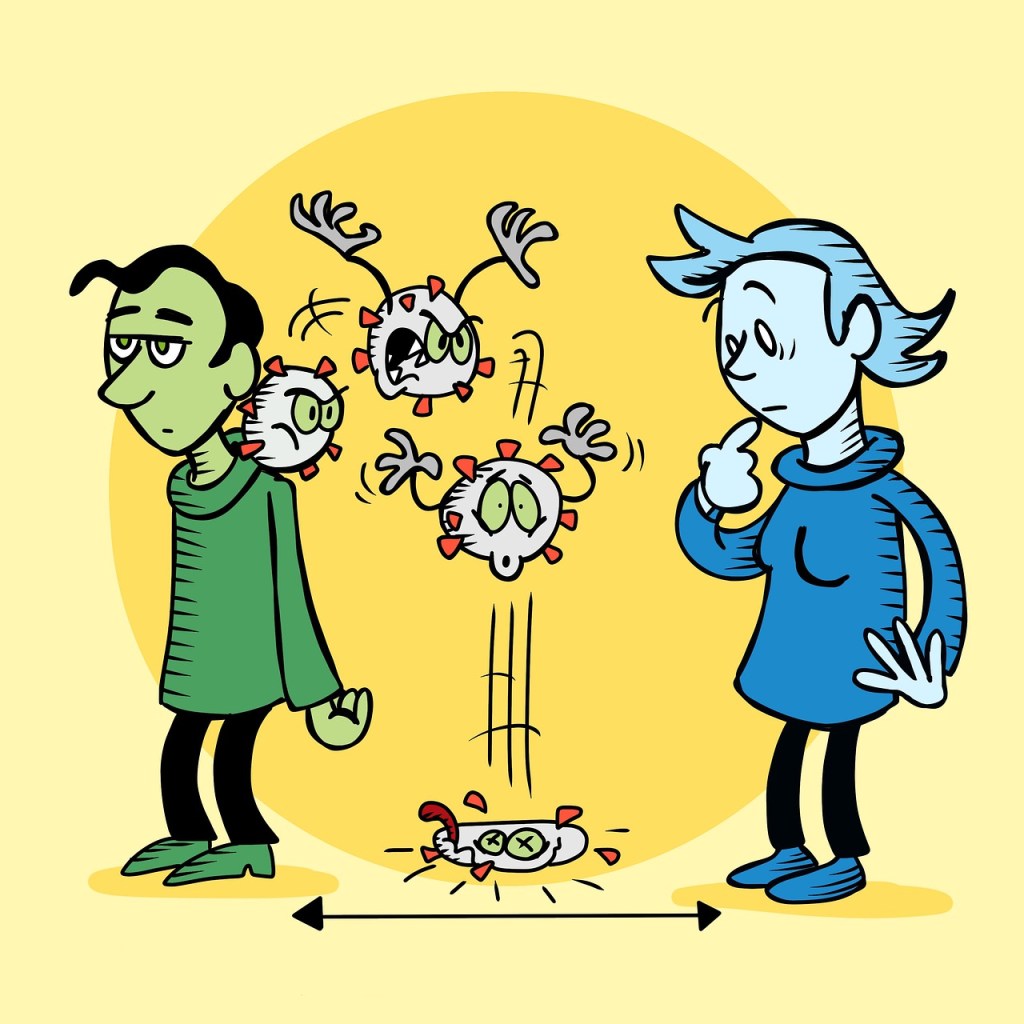
It will be a socially distanced concert, which means that members of the audience will have to stand six feet apart. Most audience members don’t have six feet. They are human beings and only have two legs, like you and I. The six feet rule might be good for insects but for mammals it’s a disaster waiting to happen. And have you ever seen a disaster waiting to happen? They get nervous and pace up and down and growl in the wings.

The reason they wait in the wings has nothing to do with the fact that such shows as Buster Octavius is planning usually take place in a theatre. No, they wait in the wings because birds have wings and bird flu is a disease that is always a strong pandemic candidate.

Buster Octavius is a pseudonym. His real name is a closely guarded secret and the guards who guard it cannot be bribed. I have already tried. And so has the Optimistic Hypochondriac. He says, “He broke twelve semitones and that’s why he calls himself Buster Octavius.”

Quarantine regulations are coming into force and it has only been a couple of hours before the new pandemic was officially announced. My movements will be restricted once again to my home and a small area around it. I might begin to dig a tunnel in my cellar, both to pass the time and to enable me to travel further than I am allowed. The tunnel will point in the opposite direction to my office. Just to give me some illusion of freedom!

I can’t honestly say I dislike my job. When I started there last year, I was warned by my new colleagues that my new boss was a “micromanager” but when I started work at the laboratory the conditions were relaxed and no one criticised the details of anything I did.

In fact, there didn’t seem to be a manager of any sort present in the work space. Then one morning I happened to glance through a microscope and saw him jumping about on the slide and tearing his hair out. He was very angry but his voice was far too quiet to be heard.

I had never expected him to be a virus instead of a man!

The Optimistic Hypochondriac advises me to wear a mask. In fact, he tells me to wear two masks — over my ears. If the singing of Buster Octavius doesn’t kill the virus in a fifty-mile radius and help to end this new pandemic, then nothing will. It is good advice and I take it. But then, having taken it, I change my mind and put it back. But he doesn’t want it back. We argue and tussle for almost half an hour before we both admit defeat.

If the pandemic is already here, then why not just quarantine the whole world in one go, instead of sections of it? That way, we will technically be in quarantine, as all the health authorities recommend, but able to travel around freely just like we used to, and everything will continue on the surface of the planet as before. I think this is an excellent solution. A win-win!

We would only have to deal with that tiny minority who call themselves “astronauts” by refusing to let them back into the atmosphere and presto! This approach would save a lot of money and time and effort. Lots of my friends at school were interested in outer space and wanted to be astronauts but I don’t think many of them managed it. When I was little and was asked what I wanted to be when I grew up, I replied, “An adult.”

An impractical choice, I feel.

Buster Octavius is allowed to sing his doleful dirges, highly amplified, out at the captive inhabitants of the innocent city, but all the theatres have been closed and actors are out of work. This seems unfair.

To put it another way: thanks to this new pandemic, all theatre has become Japanese in style because ‘Noh Plays’ are being performed on every stage. Even Shakespeare’s Globe Theatre is about to close. But I bet they will stage one last play there… “Two Gentleman of Corona”.

The rules are being tightened. Now we aren’t allowed out of the house at all. I doubt if the Optimistic Hypochondriac will conform to this restriction. He will be arrested for breaking the law and sent to Devil’s Island instead of me. One thing I still find baffling. If people aren’t allowed out at all because of the risk of spreading the virus, why are the police allowed to approach and arrest those who do venture out? Surely the police spread the virus just the same as any other human? Oughtn’t there to be a second set of police to approach and arrest the first set, and a third set to approach and arrest the second set, and a fourth to approach and arrest the third.

And so on, forever? If not, the process isn’t logical.

As part of the fight against the virus I note that Washington DC has changed its name to Washinghands DC.  This news doesn’t concern me very much at the moment, but when I have finished tunnelling under the Atlantic Ocean I surely will sit up and take notice

It will take me at least nine months to tunnel as far as the comfortable home of the Optimistic Hypochondriac. In the meantime, Devils’ Island is rapidly filling up with arrested police officers. It will take me centuries to tunnel as far as the city of Washinghands DC. Even nine months is too long to dig tunnels. But that is how I intend to keep myself busy.

How will other people occupy their enforced leisure time? I am supposing that there will be a baby boom in nine months. And thirteen years after that, we will witness the rise of the “quaranteens”.

It turns out that the Optimistic Hypochondriac is also digging a tunnel of his own — in the direction of my house.

Therefore, we meet each other after only four and a half months of toil. He has some strange news for me. The virus responsible for this pandemic is one that hypochondriacs are immune to. But everyone else can catch it. He knows that I have never been a hypochondriac.

“I think you should change your name,” he tells me.

“To what?” I ask him.

“Virusman,” he says, and he grins.

Virusman. Unlike other superheroes he never catches criminals, they catch him instead! There is a little song that will be associated with him and it goes like this: “Virusman, Virusman / does whatever a virus can. / Can he replicate inside the cells / of all the jails in Tunbridge Wells? / You bet! / Atchoo! / Here comes the Virusman…” But I have my doubts. I have never been to Tunbridge Wells. What if it is worse than Devils’ Island?

I knew it was rash to sign the new contract sent to me by my virus provider, but I never imagined how itchy the rash would be. Fortunately, I was able to use the get-out claws to scratch myself.

Buster Octavius has been sent to Devils’ Island. Those poor remaining devils, how I feel sorry for them!

Courtesy: Creative Commons

The Polite Antibody

An antibody met a germ and said, “How do you do? I am very happy to make your acquaintance. Would you like a cup of tea? May I fetch you a cake? If you require anything to improve your comfort, please let me know and I’ll do my best to provide it. I like your colour, shape and other physical characteristics. What a fine germ you are! I admire you so much.”

 “Well, that reaction wasn’t what I was expecting!” cried the germ. “I came here to infect this bloodstream, but I don’t think I’ll do that now. I am too charmed by your kind words.”

 “It’s a new style of resistance and I’m glad it seems to work. It’s called diplomatic immunity,” said the antibody.

Courtesy: Creative Commons

Rhys Hughes has lived in many countries. He graduated as an engineer but currently works as a tutor of mathematics. Since his first book was published in 1995 he has had fifty other books published and his work has been translated into ten languages.

.

PLEASE NOTE: ARTICLES CAN ONLY BE REPRODUCED IN OTHER SITES WITH DUE ACKNOWLEDGEMENT TO BORDERLESS JOURNAL

Categories
pandies' corner

Children of Nithari: The story of Rajesh

Written in a mix of English and Hindi  by Yogesh Uniyal, translated fully to English by Nirbhay Bhogal

Yogesh Uniyal is now a banking professional, currently working with Kotak Mahindra Bank, and has a Masters in Finance. He joined workshops lead by pandies’ theatre in 2006 and has performed in all the shows put up by the youth associated with Saksham, Nithari, including at the American Center, Delhi in 2010. A consistent performer and singer, he performs with the pandies’ besides doing street plays with Nithari friends and like-minded people on women’s education, cancer, and many other themes.

The Story of Rajesh

Somewhere in this wide, wide world, lived an eighteen-year-old boy (quite sensible and honest) going by the name of Rajesh,  in a small village, where he had a family with his  parents. Since childhood, Rajesh had always liked watching movies. Despite not having a television at home, he would commute a kilometre within their village, to the home of his paternal uncle ( being a good friend of his father’s) to watch movies on that uncle-by-sentiment’s TV. While watching a film at his uncle’s, one day Rajesh made a plan to venture outside their village after finishing his intermediate education. Rajesh had no idea that there was a huge gap, between this real world and the fictional world of movies, almost as if one were Purgatory and the other Heaven.

Rajesh’s Decision to go to Delhi

This is the story of that boy from an underprivileged family who came with big dreams to Delhi – “The City of Hearts, Brimming with Living and Giving” – leaving behind his village, his home, his parents, his everything. Rajesh had come to this city after completing his schooling with a great hope kindled in his heart – a desire to earn buckets of cash. But little did he imagine what he would lose while trying to fulfil that dream.

Living in their village home were Rajesh’s elderly parents. Leaving them behind and coming here wasn’t easy for him. But he left them and moved  nevertheless, for his happiness and theirs, which revolved around his attaining a higher standard of living.

Rajesh’s life in Delhi

He started lodging in a room that he rented in “The City of Hearts, Brimming with Living and Giving, also The Capital of India”. He stumbled wandered around the city for two to three months, looking for a decent job. But he did not get any employment. Then he came across a person who promised to get him a job, in return for Rs 20,000[1].

Rajesh, gathered the money from multiple sources – including some remitted by his parents from the village on his request. He paid the agent an advance of Rs 15,000, and promised to pay the remainder after securing the job.

After waiting for many days, Rajesh secured this job in a company that would pay him Rs 9,000 a month, at a workplace that was 4 kms from his room in the city. This salary certainly sounded small as Rajesh had to pay for his lodgings, food, water…and also send some money home.

Every morning, he would walk to the company where he was employed. And, every evening, he would walk from there to his neighbourhood. He knew that every expense, such as commuting by vehicles in a city like Delhi, wasn’t possible on just Rs 9,000.

He threw himself with all his heart and mind into his nine-hour job. Many times, however, he was made to stay back and work for ten to twelve hours a day. That earned him Rs 70 for every extra hour. He continued to work with dedication. What he didn’t know was that you needed to be street smart to compound your dedication to get a raise in such a place. Even after working so hard, he wasn’t getting the increment or promotion that he was worthy of. He brought this up many times, in conversation with his manager, but the manager would keep evading him on this. After one year, Rajesh decided to leave the company. After quitting his job, he gave job interviews at many other companies, and eventually did get hired. He joined this other company on 1st January 2020.

In the new company, he was paid more than double his last salary, and he was happy that he could manage all his expenses. But his struggle had just started.

For two months, everything was fine. Then, suddenly, a disease called Corona started to fester and spread. Cases of its transmission were quickly increasing in India. Observing this COVID-outbreak, the Central Government declared a lockdown in all of India on 22nd March 2020. Rajesh and all other employees of his company were kicked out of their jobs.

When the fired employees protested, the company said, “Whoever have their own computers can work from home.” But employees who’d been hired only in the past two months, how were they supposed to afford a personal computer? Some of the employees still managed to arrange computers for themselves, and they were re-hired. But what about people like Rajesh?

Eventually, Rajesh too was fired, which was a huge blow for him. He had no means of livelihood. His monthly expenses were piling up, and the spectre of groceries loaned from his regular shops kept looming over him.

After losing his job, Rajesh sat in his room, spending time on the same old TV news channels. But none of these channels gave the truth: about how the pandemic was hurting families like his, how they were living, what was the solution, and what were the safeguards that were being put in place?

Who knows how many families had people like Rajesh, who lost their jobs? What on earth was Rajesh going to do now?

For ten days, Rajesh kept brooding over the job he’d lost. Rajesh asked a neighbouring Uncleji[2], “Would any of the nearby bungalows have need of car-cleaning personnel?” Uncleji was moved to tears by seeing him in such a state. He said to Rajesh, “Why would you…a computer-operating professional…be doing such work?” And he started providing Rajesh food from his own domestic kitchen.

But how long was he supposed to feed Rajesh? Uncleji’s wife would taunt every now and then. This eventually became too much for Rajesh to bear, and he decided once again to clean cars for a living.

Rajesh had been reduced to the condition of one who belonged neither here nor there. And he was worried about his parents. He was managing to arrange two meals’ worth on certain days, and not even one meal’s worth on other days. Some evenings he would line up, for a meal at food stalls, set up by anyone wishing to feed the poor. Other evenings, he would scrape together a meal in other ways. What else was he supposed to do? Borne to the City by Hopes, and Buoying Himself Against the Blows He Received, He Was Still Not Able to Get Enough Food.

A person contracted Corona in the neighbourhood. This cast a spell of fear over all the residents. Now all of them, including Rajesh, were taken to a hospital and tested in isolation. Rajesh tested negative, but he still had to suffer his neighbourhood being barricaded. Now nobody could either go out or come in. This meant Rajesh couldn’t go to clean cars in the morning. He had no means of arranging food for himself. For seven days, he subsisted on water and one meal a day.

He then somehow got permission for resuming cleaning cars for the rich. But back home in his village, his parents both contracted the virus, and they were soon in a critical condition.

Rajesh had no means of going back to his village, which was 700 kilometres away. He didn’t know what to do. He began to recall his old life in the village, when he lived without any tension, amidst the warmth and safety of his home. Whatever presumptions he’d had about Delhi, and big cities in general, were proving to be opposite of what he had hoped and dreamt. All he could think of was going back to living with his parents in the village. He wished to rid himself of his current situation come-what-may.

Initially, he couldn’t come up with a plan, since he didn’t know any route back to his village, even if he started back on foot. Finally, he decided that he would follow the rail track to reach his village. He started on this path, hungry and thirsty.

On the way, some people were handing out food to migrants like Rajesh, who were journeying back home. For two days, Rajesh kept walking like this, surviving on such charitable provisions somewhere or the other, and thus he would store food for breakfast as well at dinner.

One such night, after eating and storing the food for the next meal, he resumed walking along the railway line. That night, he felt very tired, so he lay down on the track. Exhausted, he drifted off to sleep.

That very night, a train passed by on those tracks. And, after that, his eyes never opened.


[1] Indian Currency rupees: $1= Rs76

[2] An elderly gentleman in often referred to as uncleji in North India, ji being an honorific title

Nirbhay Bhogal is a 32-year-old amateur actor, with pandies’ theatre since late 2014, when she first experienced with them an altogether improvisational mode of workshopping a script chosen by the group. She’s currently pursuing a Bachelors in English Literature and hopes to make a career out of translating literary and non-literary works from Hindi into English, and vice versa. She was involved with the tail end of pandies’ workshop theatre at pre-pandemic Saksham school in Nithari and has also co-facilitated Zoom-based workshop theatre with Shakti Shalini’s shelter for women survivors of gender-based violence.

.

PLEASE NOTE: ARTICLES CAN ONLY BE REPRODUCED IN OTHER SITES WITH DUE ACKNOWLEDGEMENT TO BORDERLESS JOURNAL. 

Categories
Poetry

‘Will Hudson have a chance to live in a Golden Age?’

Poetry by Ron Pickett

Courtesy: Creative Commons
THE GOLDEN AGE

Did I miss it?
No, I was there – I loved it!
Stuff was there when you wanted it.
Shelves were full and that was normal.
Workers were there when they promised.
Fuel was cheap – and available.
Solar was growing and getting cheaper.
I know it now I missed it then.

Stocks were up, dips were for buying.
401k and IRA were fat and getting fatter.
New stuff kept coming. I want some.
News was flat and boring and predictable.
And that was good.
Trump was starting to fade.
Was the election really rigged?
I never knew.

There were too many people.
The virus helped – but not enough.
Demands were blatant and excessive.
Work was optional. For idiots.
Stupidity became normal, praised even.
History is irrelevant – We will do it differently.
Free is a right
Free is a minimum.

Is it all downhill from here?
Will Hudson have a chance to live in a Golden Age?
Will shelves ever be filled?
Will energy ever be cheap?
Will the world become available to me again?
Will the idiots win? – They are now. 
Did the Golden Age just end?
Can it ever return?

The optimist becomes a pessimist 

AGAIN -- STILL -- NO -- IT’S NOT FUNNY 

6000 new cases in California yesterday,
Again.
The COVID curve is beautiful – now – now that it’s bent down, 
Again.
I forgot my mask yesterday,
Again.
I thought it was a fixed part of my leaving the house check-off list,
Again.
I must wear a mask – even exercising!
Again.
I have natural immunity – that’s what we call having had COVID19,
Still.
I resist,
Again
It doesn’t matter,
Still.
We hear orders and mandates - pontifications, because they can!
Still.
They aren’t wearing masks!
Again.
I check the statistics and the curve is down,
Still!
Have we learned anything?
No!

Ron Pickett is a retired naval aviator with over 250 combat missions and 500 carrier landings. His 90-plus articles have appeared in numerous publications. He enjoys writing fiction and has published five books: Perfect Crimes – I Got Away with It, Discovering Roots, Getting Published, EMPATHS, and Sixty Odd Short Stories.

.

PLEASE NOTE: ARTICLES CAN ONLY BE REPRODUCED IN OTHER SITES WITH DUE ACKNOWLEDGEMENT TO BORDERLESS JOURNAL

Categories
Poetry

Pandemic Panic

By Rhys Hughes

Courtesy: Creative Commons
PANDEMIC PANIC

Pandemic panic.
Influenza bonanza.
I make a mask from an old shoe
and wear it out.
Is this what I am
required to do? I suppose so.

The smell is worse
than the curse
of the virus. I feel like a badly
sung note in an old
song, but one irony
is certain and it cheers me up:

Zorro also
wore his mask wrong
.

Rhys Hughes has lived in many countries. He graduated as an engineer but currently works as a tutor of mathematics. Since his first book was published in 1995 he has had fifty other books published and his work has been translated into ten languages.

PLEASE NOTE: ARTICLES CAN ONLY BE REPRODUCED IN OTHER SITES WITH DUE ACKNOWLEDGEMENT TO BORDERLESS JOURNAL

Categories
The Observant Immigrant

A Post-Pandemic Future …?

By Candice Louisa Daquin

Courtesy: Creative Commons

Having been a reluctant fan of apocalyptic fiction since I read George Orwell’s Nineteen Eighty-four (1949), I had studied virology when the AIDS pandemic struck and read a great number of virus-related books on infectious diseases. Despite this preparedness and the knowledge that it was not a case of IF, but WHEN, the next virus would strike, I think I speak for most of us when I say we were still all unprepared for Covid-19.

What the pandemic has taught us thus far is immeasurable and I believe it will last several generations, or I hope so. That said, it’s our human nature to want to move on. Not because we don’t care, but part of being alive is putting trauma and suffering behind us and ensuring those who survive, truly survive, which means living. Is that insensitive or just the nature of the beast? It can be insensitive, especially to the millions who have lost loved ones, but it’s also how humans generally operate.

Is it possible to move on and live a full life irrespective of this global tragedy without losing our compassion and responsibility to stop this from ever happening again?

The reality is; it will happen again, and for many of us, in our lifetime. What we can do is be better prepared and all that this entails.

What are the steps being taken to move toward the new post pandemic future? What are we doing differently? And why?

The pandemic divided us, it physically kept us apart. Some who were well versed in social skills and true extroverts, struggled when they emerged from the worst of the pandemic. They found it hard to do the things they used to be so skilled at. From lack of practice. I recall sitting at lunch with a friend who used to be the life-and-soul of any social event. She struggled for, as she put it; ‘her words’. Having become so used to speaking less and not being face-to-face, she said it felt ‘overwhelming’, ‘strange’ and she looked forward to going home.

That is a habit we must break. The comfort of the living room and the immediate family is intoxicating. We can rapidly get used to living in a smaller-seemingly safer, changed world where we see less people, go out less, and become accustomed to an intimate circle. For some of us this was always our life, and maybe not as challenging — a shift as it was for those who previously socialised a great deal.

In a way the pandemic was harder on the extrovert than the introvert. Because while introverts aren’t averse to socialising, they can find it exhausting; whereas extroverts gain energy from it. When you put an extrovert in a forced setting without social opportunity, they may struggle more than someone used to their own company.

But it’s not as simple as extrovert and introverts. Many of us are a little of both, depending on the situation. I can go out with a big group one day. But on other days I want to be alone. Few of us are extremes. Most are like ‘ambiverts’ a combination of extroverts and introverts.

For those who do thrive on socialising, the pandemic was particularly challenging, but there are many ways to be affected, not least the tension and anxiety all of us picked up on or directly experienced.

Fortunately, technology became our best friend as we Zoomed more and met via video chats throughout the world. It opened up an international stage more than we’ve ever experienced and gave children a new normal in terms of how they learned online. Learning solely online had deleterious effects on underperformers. This ‘unfinished learning’ [1] particularly impacted youth who might have already been struggling in the educational system.

Having taught Critical Thinking online for years, I genuinely believe online learning cannot replace in-class learning. There are huge draws to learning from the comfort of home, especially for adult learners who do so after work [2]. “In comparisons of online and in-person classes, however, online classes aren’t as effective as in-person classes for most students. Only a little research has assessed the effects of online lessons for elementary and high school students, and even less has used the ‘gold standard’ method of comparing the results for students assigned randomly to online or in-person courses.” [3]The amount of information retained is drastically smaller and the social engagement of a classroom has benefits that are hard to quantify but necessary for social development. When you rob children of the opportunity to socialize with each other you isolate them at a crucial stage in their development.

Some kids with learning disabilities[4] are particularly affected by this, as are those who come from unsafe or impoverished backgrounds, where they may not have equal access to technology or reliable internet. They may not have parents who can help them if they are stuck or be able to work from home or have access to lunch. All those necessary elements to the education system were lost in our need to stay home and protect each other. A generation of children will always remember this time as a result.

On the other hand, they have mastered technology in a way that few older generations can boast of, and they are conversant in all the myriad ways of communicating with a wide range of technologies and devices. They are adaptable, versatile and fearless when it comes to tackling the rigors of online learning. For some who dislike social settings, it may also be a vast improvement[5].

Women left the workforce in droves [6]when the pandemic hit, with 2 million less in the work-force. The inverse of this was men began to return to work having been dropping in numbers whilst women rose. The Pew Research Center found “What accounts for the larger labor force withdrawals among less-educated women than men during the pandemic? It is complex but there seems to be a consensus that it partly reflects how women are overrepresented in certain health care, food preparation and personal service occupations that were sharply curtailed at the start of the pandemic. Although women overall are more likely than men to be able to work remotely, they are disproportionately employed in occupations that require them to work on-site and in close proximity to others.” Jobs men traditionally do like physical labor, were in high demand, whilst many jobs traditionally filled by women, were shut down, often not returning[7].

We can be glad our restaurants are open again; we’re opening borders, we’re flying abroad, we’re living again. But let’s also spare a moment to think of those who lost so much it’s almost impossible to conceive. Covid was the third leading cause of death in America during the height of the pandemic, how did this many deaths become normal? Covid killed an estimated 13% of people over 80. Aside the tragedy of a generation of elderly dying[8] and the loss of grandparents, and parents for so many, we’ve also seen younger people dying from a virus, which has shaken the belief younger people have that they are impervious to viruses similar to the flu, what effect with this have on their sense of safety going forward?

And what of the health consequences of those who technically survived bout of the pademic but developed ‘slow Covid’ or worse, the side-effects and lingering legacy of being seriously ill with the virus?[9] How many lung transplants will occur? How will ‘long haulers’ cope with lingering serious effects? What of those who live in countries where this isn’t an option? How many chronic illnesses will continue for decades as a result of this pandemic? It’s not enough to point to those who have died but also include those who survived but at such a high cost.

Financially we have collectively poured money into research, vaccines, countermeasures and prevention, but where has that money actually come from? And can we feasibly borrow that much money from our coffers without a reckoning? Economist Anton Korinek, an associate professor with a joint appointment in the University of Virginia’s Department of Economics and the Darden School of Business thinks: “People sometimes frame the policy response to COVID-19 as a trade-off between lives and livelihoods, and they ask whether it’s worth killing our economy to save people’s lives. But what they forget is that people won’t go back to a normal life and consumer demand won’t really recover if the virus is spreading through our country and killing people.” But the result of these hard choices and repeat closures, is they now predict an impending worldwide recession of global proportions, which had already been mounting prior to the pandemic, but promises to be far greater in its aftermath. I don’t think we’ve even begun to see the fall out; it begins with massive inflation but that’s just the start[10].

History tells us when we go through challenging times and survive, ‘the near miss experience’ as it’s known as, we want to live more than ever before[11], but economically this will not be possible for so many who are robbed of their financial security because of inflation, redundancy, underemployment and post-covid illness. We should be mindful that none of us are all right if many of us are still suffering and if we can support those who struggle, this battle with covid should have taught us all that we should care more about each other.

Perhaps these are the steps we can take to move toward a new post-pandemic future, where we consider ways, we may be better prepared for an invariable future of emerging viruses. We can try to find ways to avoid spilling into areas with high disease potential. “According to a group of UN biodiversity experts, around 1.7 million unidentified viruses circulate in animal populations, of which 540,000 to 850,000 have the capacity to infect humans.” So, we can avoid wet markets, and sloppy scientific research, both of which are vectors for the spread of viruses. We can pay more emerging virus hunters [12] to seek out those emerging viruses and begin work on treatments before they devastate countries. We can be borderless in our unanimous approach to equity for all, especially access to healthcare.

In America, we learned we were far from unassailable. In a New York Times article about Covid Deaths, the authors wrote: “For all the encouragement that American health leaders drew from other countries’ success in withstanding the Omicron surge, the outcomes in the U.S. have been markedly different. Hospital admissions in the U.S. swelled to much higher rates than in Western Europe, leaving some states struggling to provide care. Americans are now dying from Covid at nearly double the daily rate of Britons and four times the rate of Germans.” Nothing can diminish that fatal statistic or rectify the unnecessary deaths[13]. Our healthcare system, considered superior, proved to be full of holes. Without some type of socialised healthcare our costs and resources are too high and scarce. We don’t value the front-line workers like nurses, porters, assistants and care staff and we do not pay them for the risks they take, and whilst we do pay doctors good wages, we have severe shortages of knowledge and progress. Finding out we didn’t have enough ventilators, masks for medical staff, PCP equipment and beyond, exposed the shame of putting profit over people. [14]

It is no surprise then that the UK and USA were among the top offenders in the rise and spread of the pandemic and their death rates exposed this. No one ethnic group appears to be at greater risker of dying from the virus based on ethnicity alone, but Hispanic, Black, and native Americans or AIAN people are about twice as likely to die from COVID-19 as their White counterparts and that Hispanic and AIAN people are at one and a half times greater risk of COVID-19 infection than White people[15]. This is caused by social reasons (inequality) not ethnicity, as can be proven by Africa and some AIAN countries having some of the lowest Covid mortality rates. In the article ‘Racism not Genetics’ in Scientific American, the authors point out “the genes that influence skin colour are distributed independently of genes that influence the risk for any particular disease. Given the heterogeneity of groups we call “black” or “white,” treating those categories as proxies for genetic variation almost always leads us astray.”[16]

Even if there are increased susceptibilities related to blood type[17] and age (More than 81% of COVID-19 deaths occur in people over age 65. The number of deaths among people over age 65 is 97 times higher than the number of deaths among people ages 18-29 years). The real risk is how healthy the population is and whether they have safe access to healthcare[18]. Both America and the UK failed because they put profit above people and have large populations of sickly people[19]. Going forward this needs to change, which means redesigning what we prioritise. People need to have access to healthcare and make lifestyle changes that will reduce their risks which they cannot do if they cannot afford to see a doctor or in the case of the UK find it hard to see a doctor because of long wait times and reduced staffing. It’s not as simple as socializing healthcare as the UK proved, this alone doesn’t save lives, what saves lives is considering the larger picture.

But politicians gain from older populations dying, consider what happened in Brazil when the President denied the danger of Covid and for a time Brazil had the highest Covid mortality[20]. This is the harsh truism rarely mentioned: It benefits those in control of a society to lose the most fragile members who will suck up precious resources, much like a form of eugenics, it behooves them to let it happen and there are many examples[21]. For a politician who is looking for ways to reduce healthcare costs, what is better than some of the potentially most expensive ‘customers’ dying? This happened in France where number of elderly people died one Summer, shockingly little was said at the time, but all signs pointed to a collective signal of relief from those in power who benefited from less older people making claim on an already taxed medical system[22].

When Italy [23]and Spain [24] and Brazil [25] became epicenters of Covid 19 deaths, they did so because of ill preparedness and it’s a cautionary tale to witness which countries succumbed to the ravages of covid 19 repeatedly, versus those who learned from them. What we have learned is more, not less, needs to be done and if a country keeps its borders open including air-travel and business-travel, then as much as they hope to save their economy, they do so at the expense of their most vulnerable. For some countries this was a conscious choice (economy over lives) whereas for others it was poor communication and slow response times. For some a lack of money, for others a desire to gain at any cost. All this speaks of the tapestry that is the pandemic’s aftermath (and truly, is it really vanquished?)[26].

I’d love to say a new post pandemic future looks rosy, but the only way that happens is if we learn from our mistakes, which history tells us, we rarely do. The most important thing is empathy, when we saw others take their masks off and simply not care if the vulnerable died, we saw how bad we as humans can fall. But we also saw how wonderful humans can be, including the infinite sacrifice and compassion of thousands who sought to help strangers. If there is a way, we can reward the good and not the bad, if we can get our priorities right and stop paying sports figures astronomical sums but perhaps emphasise on compassion, kindness, and diligence, we can all grow together.

I was particularly moved by youth who in the turmoil of the pandemic created inventions or systems to help others[27]. Believing youth are our future, and thus, our hope, it gives me great faith in the future when I see those too young to vote, care for strangers and seek to do their part. We should always encourage this as we should encourage a continued dialogue into how we can create an international rapid response to emerging diseases. It is not if, but when, and now all of us should know this and have no excuse for putting our heads in the sand again. Yes, it hurts to think of it, yes, we’d rather go off and have fun, but what fun is it if we are only postponing the inevitable return of a lethal virus? Part of being responsible for our planet and each other, is not avoiding the harsh truths; of environmental changes and devastation, global poverty, continued inequality and elitism, and of course, the increasing risk of deadly diseases.

We have within us all, the power to effect change. The steps we should take to move toward a post pandemic future must necessarily include keeping our eyes open and not taking the easy road. Sure, governments don’t want to spend the money on research, science, virus hunters, predictions. And preparedness, but I challenge anyone to say this isn’t exactly what they need to do. It is necessary we keep this in mind when we vote and protest. We should be marching about this as much as any other cause, because it affects us all and equally, brings us all together with one cause.

Thinking in terms of one world, we are less divided than ever before and whilst we were separated, I think we also found ways to come together if we choose to. I say, we should. Because, together globally, we learn more than we ever would divided. With the offensive by Russia on Ukraine, we see the lunacy of war, the futility, the devastation and waste. Instead of pouring millions into wars and keeping the rich, rich at the cost of the poor and overworked, we should consider how we can all rise out of the mire and evolve towards a better future. But in order to achieve this we cannot be complacent, and we cannot let our guard down.


[1] https://www.mckinsey.com/industries/education/our-insights/covid-19-and-education-the-lingering-effects-of-unfinished-learning

[2] https://www.forbes.com/sites/dereknewton/2021/03/31/the-worst-of-times-for-online-education/?sh=401d57623a5a

[3] https://www.edweek.org/technology/opinion-how-effective-is-online-learning-what-the-research-does-and-doesnt-tell-us/2020/03

[4] https://www.washingtonpost.com/education/2021/05/20/students-disabilities-virtual-learning-failure/

[5] https://penntoday.upenn.edu/news/how-technology-making-education-more-accessible

[6] https://www.shrm.org/resourcesandtools/hr-topics/behavioral-competencies/global-and-cultural-effectiveness/pages/over-1-million-fewer-women-in-labor-force.aspx

[7] https://www.pewresearch.org/fact-tank/2022/01/14/some-gender-disparities-widened-in-the-u-s-workforce-during-the-pandemic/

[8] https://www.statista.com/statistics/1191568/reported-deaths-from-covid-by-age-us/

[9] https://www.hopkinsmedicine.org/health/conditions-and-diseases/coronavirus/covid-long-haulers-long-term-effects-of-covid19

[10] https://news.virginia.edu/content/economist-societal-costs-covid-19-outweigh-individual-costs

[11] https://www.psychologytoday.com/us/blog/understanding-grief/201803/aftereffects-the-near-death-experience

[12] https://www.france24.com/en/africa/20201218-gabon-s-virus-hunters-in-search-of-the-next-covid-19

[13] https://www.nytimes.com/interactive/2022/02/01/science/covid-deaths-united-states.html

[14] https://www.theguardian.com/us-news/2022/feb/06/us-covid-death-rate-vaccines

[15] https://www.cdc.gov/coronavirus/2019-ncov/community/health-equity/race-ethnicity.html

[16] https://blogs.scientificamerican.com/voices/racism-not-genetics-explains-why-black-americans-are-dying-of-covid-19/

[17] https://www.ncbi.nlm.nih.gov/pmc/articles/PMC8286549/

[18] https://www.bbc.com/news/world-us-canada-52245690

[19] https://theconversation.com/why-has-the-uks-covid-death-toll-been-so-high-inequality-may-have-played-a-role-156331

[20] https://www.thelancet.com/journals/lancet/article/PIIS0140-6736(21)00529-8/fulltext

[21] https://foreignpolicy.com/2021/03/18/china-covid-19-killed-health-care-workers-worldwide/

[22] https://www.nbcnews.com/news/world/hong-kong-covid-outbreak-rcna20033

[23] https://www.france24.com/en/tv-shows/revisited/20210528-covid-19-in-europe-codogno-the-italian-town-where-it-all-began

[24] https://www.nytimes.com/2020/03/13/world/europe/spain-coronavirus-emergency.html

[25] https://www.scielo.br/j/rsbmt/a/8FzbQZY57WRTwYL9MnBKBQp/?lang=en

[26] https://www.nature.com/articles/d41586-021-03003-6

[27] https://circle.tufts.edu/latest-research/deeply-affected-pandemic-youth-are-committed-helping-others

.

Candice Louisa Daquin is a Psychotherapist and Editor, having worked in Europe, Canada and the USA. Daquins own work is also published widely, she has written five books of poetry, the last published by Finishing Line Press called Pinch the Lock. Her website is www thefeatheredsleep.com

.

PLEASE NOTE: ARTICLES CAN ONLY BE REPRODUCED IN OTHER SITES WITH DUE ACKNOWLEDGEMENT TO BORDERLESS JOURNAL.

Categories
Tribute

Celebrating Tagore

Was he a poet? A writer? A humorist? A social reformer…

At an intellectual plane, we could keep arguing about labelling Tagore. He was truly a polymath. But, the most important thing is he touched our hearts with his words and used that to earn and pour into projects that benefitted the underprivileged. This year, on his 161st birth anniversary, we will explore some lesser known aspects of the maestro: Rabindranath, the social reformer and the humorist weaving both the Gregorian calendar (7th May) and the Bengali calendar (9th May) dates into our celebrations.

Tagore, the Humorist 

Many of us from Bengal grew up reading light pieces by Tagore embracing his creations as a much-loved part of our hearts. We present translations by Fakrul Alam and Somdatta Mandal of Tagore’s humour — a light poem about a giraffe and playlets by the maestro. 

Giraffe’s Dad by Tagore: Giraffer Baba (Giraffe’s Dad), a short humorous poem by Tagore, has been translated from Bengali by Professor Fakrul Alam. Click here to read.

Playlets by Rabindranath Tagore : Two skits that reveal the lighter side of the poet. They have been translated from Bengali by Somdatta Mandal. Click here to read.

Tagore, the Social Reformer

Tagore thought his “life work” lay in developing villages and bridging gaps. A recent book by Uma Dasgupta brought this to light. We have an interview and review of her book, A History of Sriniketan: Rabindranath Tagore’s Pioneering work in Rural Reconstruction Along with that we have some translations of his poetry focussing on his call to bridge gaps — one of them by Fakrul Alam and another that has been mentioned in Dasgupta’s book as a description of his mindset that led to the Sriniketan project. Meenakshi Malhotra’s review of Radha Chakravarty’s translation of Mahasweta Devi’s Our Santiniketan and an interview with translator Somdatta Mandal, an ex-professor of Visva Bharati shifts the focus to Santiniketan. However, the icing on Tagore’s birthday cake is yet another excerpt from Radha Chakravarty’s latest translation of Char Adhyay or Four Chapters, his last and thirteenth novel which takes up issues of nationalism, gender, gaps in upbringing against the setting of a budding romance. The heroine is truly modern in her outlook and passionate about service to humanity. 

Sriniketan: Tagore’s “Life Work” :In Conversation with Professor Uma Das Gupta, Tagore scholar, author of A History of Sriniketan, where can be glimpsed what Tagore considered his ‘life’s work’ as an NGO. Click here to read. (Review & Interview).

Oikotan (Harmonising) has been translated by Professor Fakrul Alam and published specially to commemorate Tagore’s Birth Anniversary. Click here to read.

Ebar Phirao More (Take me Back) a poem that calls for bridging gaps between the rich and poor translated by Mitali Chakravarty … Click here to read.

Mahasweta Devi, Our Santiniketan : Meenakshi Malhotra reviews Mahasweta Devi, Our Santiniketan translated by Radha Chakravarty. Click here to read.

Where the Whole World Meets in a Single Nest: In Conversation with Somdatta Mandal, a translator, scholar and writer who has much to say on the state of Santiniketan, Tagore and more. Click here to read.

Rabindranath Tagore Four Chapters: An excerpt from a brilliant new translation by Radha Chakravarty of Tagore’s controversial last novel Char Adhyay. Click here to read.

Categories
Tagore Translations

Tagore Translated by Fakrul Alam

Rabindranath’s Oikotan (Harmonising) was first published in 1941. It has been translated by Professor Fakrul Alam specially to commemorate Tagore’s Birth Anniversary.

Courtesy: Creative Commons
HARMONISING

How little I know of this immense world,
Of its countless countries, cities, capitals,
And the never-ending deeds of its peoples
As well as its rivers, hills, deserts and seas
And innumerable animals and strange trees—
So many things fated to be forever unknown
Such a vast assemblage
And yet my mind has to be content with only a corner!
Frustrated, I read as many books and travel tales as I can
With boundless enthusiasm.
I pick up too vividly written accounts I come across
With never-diminishing eagerness,
Satiating my knowledge deficit
With treasures I’ll gather by scavenging for them!
    
I am the world’s poet. Whatever of its sounds I hear
I try to reverberate in my flute later
But though this may be my intent
Many of earth’s notes still elude me
For despite my efforts, gaps remain!
I intuit earth’s amazing harmonies
Through leaps of my imagination
On many an occasion intense silence fills my soul
Notes sounding across remote snowy mountains
And the azure stillness of the sky too
Invite me to commune with them again and again!
The unknown star at the apex of the south pole
Reigning illustriously	through long nights
Illuminates my sleepless eyes on midnights.
Distant waterfalls cascading down
With immense force, flooding everything in sight,
Transmit their harmonies to the innermost me.
I connect intuitively as well with poets everywhere
Contributing to nature’s harmonies
All keep me company and give me immense delight
I receive offerings of lyric notes from the muse of songs
As well as intimations of the music of the spheres.    

The outside world can’t fathom fully
The most inaccessible of being residing in us
For He is in our innermost part
And only when one enters it
One gets to know the Being who is truly Him
But I can’t find the door with which to enter there
Since I’ve erected fences in pathways everywhere!
Farmer who keep tilling the soil
Weavers threading yarn and fishermen casting nets—
Varied professions having far-reaching impact
On them all depend whole families and lifestyles.
But the honour due to them is confined
To people of the top tiers of the society I live in
We can only peep at them from narrow openings! 
At times I’d take paths fronting their neighbourhoods
But never ever was resolute enough to enter inside!
If one can’t connect one’s life with another’s though
The songs one composes can become cumbersome
And so, I concede to charges levelled against me
And admit my own songs’ limitations.
I know my verses may have traversed varied paths
But they haven’t reached everywhere!
The one who can share a peasant’s life
And whose words and deeds are kins
Is the one who is truly close to the soil
And I’m all ears to listen to that kind of poet.   
I may not have created a feast of literary delights
Yet, what I couldn’t attain I keep questing for
Let what I discover ring true
And let me not mislead others’ eyes with fakery
It’s not right to earn fame without paying its true price
It isn’t right at all to indulge in any kind of foppery!

Come poet, retrieve as many as you can
Of those voiceless ones whose minds are unheard
And relieve those nurturing deep hurt inside
In this land lacking spirit
Bereft of songs being sung on any side,
A land which has become an arid desert
For want of joy and the strain created by neglect
Fill with the essence of everything beautiful
And untie the spirit residing in one’s innermost being
 In literary festivals and musical concerts organised,
Let those playing the one-stringed ektara be duly feted.
And the muted ones who can’t express either joy or sorrow
And those whose heads are bowed and voices silent
While facing the world—
Oh gifted one,
Let me hear them all—near or far
Let them partake of your fame
As for me—
Again and again, I’ll pay homage to you   

Fakrul Alam is an academic, translator and writer from Bangladesh. He has translated works of Jibanananda Das and Rabindranath Tagore into English and is the recipient of Bangla Academy Literary Award (2012) for translation and SAARC Literary Award (2012).

.

PLEASE NOTE: ARTICLES CAN ONLY BE REPRODUCED IN OTHER SITES WITH DUE ACKNOWLEDGEMENT TO BORDERLESS JOURNAL