Categories
Musings

Wanderlust or Congealed Stardust?

By Aditi Yadav

We are but stardust, swirling and travelling eternally across the universe. The interweaving of matter and energy in the cosmic space-time tapestry has always struck us with wonder and curiosity. As the Japanese poet Basho resonates in his Narrow Road to the deep north, “The months and days are passing wayfarers through endless ages, and travelers too the years that come and go. Those who float their life away on boats or meet old age plodding before a horse- they spend their days in journeying and call the journey home.”  Humans have marched on, often quite literally so, in the journey of life’s evolution.

To evolve one needs to survive despite all odds. It is an enterprise in desperation, driven by the basic instinct for survival. For several millennia, wandering to forage for food, moving on for a safe shelter and fleeing away from inclement weather or wild animals was the only way of life — on one’s toes, on the run, hanging on to dear life. Braving through raw and ruthless nature — the scorching sun, blistering winds, numbing snow, bone-chilling blizzards, tempests on seas, ravenous typhoons– what an extraordinarily heroic travelogue has been the journey of homo sapiens!

When the ‘wanderer-hunter’, settled as a farmer, the new sense of settlement brought in the novel element of ‘belongingness’ to a certain place, and the consciousness of possession or ownership. A brand-new idea of life bloomed. A settled and relaxed idea of ‘home’ now formed a part of new civilization. As a consequence, resource ownership in itself gave rise to trade, conflicts and wars. All of this entailed travel.  The merchants traveled distances to barter and earn. Many religious leaders travelled around to propagate and preach faith and worship – perhaps, as service to humanity, or maybe, as an attempt to know human consciousness. In another dimension, the ambition to rule over land and capture resources drove people in leaps and bounds on land, and establish colonies across oceans. What was once a globe of free vagabonds turned into a battlefield of fragmented land, air and water masses with contest for boundaries.  Most of it were accompanied by bloodshed and colossal loss of human life and bio-spheric devastation.

But there was a class of travellers of the other kind — the ones who travelled for the joy of travel, excitement of discovery, to pen a new story, or write a new song. Freebirds like Alberuni, Fa-Hsein, Hyecho, and their ilk left behind valuable records and are documented in history. I often wonder about the history of female travellers. Who was the first female who ventured forth all by herself? What became of her? Did she disguise herself as a male? There is no way of knowing. Maybe she could not document it due the lack of knowledge of the written word, or perhaps, she did not want to be discovered at all. Although in my heart, I do pray she had a safe and happy journey.

The eternal flame to travel has propelled us to reach escape velocity and launch travel into space. The space programs, the Mars rover, the moon missions are our most fascinating travel adventures. Sun light or star light that we bask in at any given time is a light from the past travelling toward us. The future light may be travelling too, waiting for us to reach out perhaps.

Even with such incredible progress, there is so much that suffocates us. What is home, when the soul does not feel at ease? The Vedic sages taught that for those with open hearts, the world is but one country — everywhere one goes is home. The earth we know, owes its existence to migrating populations. It’s ironic how immigrants are discriminated against in the modern times. May be the suffocation we often feel is only the pettiness that has crept in.

Travel to free yourself of these shackles, dear heart! Despite the constraints of finances, opportunities, fetters of the 9-5 schedule, travel – what are you living for, if not for the liberation of the self? My thoughts don’t wait for spring. They forever bloom and fall off like the petals of cherry blossoms. Yet, there is joy in visualizing how they blow with the wind, rest on someone’s shoulders or gently settle on the surface of river, drifting along without a thought about the destination. They die somewhere, without even knowing. To have blossomed and traveled is fulfilling enough.

The instinct to wander and travel, is as old as life itself — for that’s how life has propagated. The roots of life find nourishment through the peripatetics of body and mind. It is a malady that humans are born with; a melody in sync with one’s heartbeat. “Travel inside out and outside in. That’s the fate humans are born with”, sings the systole-diastole of the heart, resonating the cosmic big bang-big crunch. A whole world lies outside your window, and several worlds live inside you. Traverse the infiniteness of yourself, measure the earth in your stride while Keats sings on, “Let the winged Fancy roam, Pleasure never is at home.”

.

Aditi Yadav is a public servant from India. As and when time permits she engages in creative pursuits and catches up her never-ending to-read list. Her works appear in Rain Taxi Review of books, EKL review, Usawa Literary Review, Gulmohur Quarterly, Narrow Road Journal and the Remnant Archive.

PLEASE NOTE: ARTICLES CAN ONLY BE REPRODUCED IN OTHER SITES WITH DUE ACKNOWLEDGEMENT TO BORDERLESS JOURNAL

Click here to access the Borderless anthology, Monalisa No Longer Smiles

Categories
Poetry

The Moon Rises…

Poetry by George Freek

A POEM OF MOURNING 
(After Su Tung Po)

The moon rises without pity.
It rises indifferently. 
When I’m no longer here,
it will rise again,
for billions of years
oblivious to human fears.
A dead leaf,
that shivers violently,
then falls so quietly, 
means nothing to me.
You are dead. Your ashes
are in the ground,
and I’m now alone.
Nothing more can be said.


IN MEMORIAM 
(After Mei Yao Chen)

As the night begins,
a dismal line of people crawls
in slow procession
along the darkening street.
Stars throb like blue guitars
playing somber hymns
in other worldly rhythms.
I draw my shades.
I turn off my light.
As darkness approaches,
I have only this to write.
It is getting very late.
A distant moon,
barely shining
is a silent reminder of our fate.

George Freek’s poetry has recently appeared in The Ottawa Arts Review, Acumen, The Lake, The Whimsical Poet, Triggerfish and Torrid Literature.

PLEASE NOTE: ARTICLES CAN ONLY BE REPRODUCED IN OTHER SITES WITH DUE ACKNOWLEDGEMENT TO BORDERLESS JOURNAL

Click here to access the Borderless anthology, Monalisa No Longer Smiles

Categories
Stories

Balak or the Child by Munshi Premchand

Translated from Hindi by Anurag Sharma

Munshi Premchand. Courtesy: Creative Commons

Premchand is the pen name adopted by the Indian writer, Dhanpat Rai Srivastava (31 July 1880- 8 October 1936).  He was a pioneer of modern Hindi-Urdu literature which focused upon contemporary social issues including caste, the treatment of women, day labour and other socio-political concerns. He remains one of the most heralded writers in South Asia. His oeuvre includes more than a dozen novels, about 300 short stories, numerous essays as well as translation of foreign literary works into Hindi.

Balak or the Child

1

All the servants greeted me from afar, as soon as they saw me. Gangu being the only exception, he never greeted me. He probably expected a palagan [1] salute from me. Everyone said he was a Brahmin. I bet he was because he never touched my dirty utensils [2]. Even in the hot and sweaty summer, I never dared to ask him to fan [3] me. When Gangu saw that I was sweaty and there were no other servants around, he picked up the fan on his own. But his posture made clear that he was doing me a favour and I snatched the fan away from his hand.

Gangu could not tolerate disrespect from anyone. He had few friends. He didn’t mix with my other servants. He couldn’t socialise easily either. He was full of contradictions. Unlike my other servants, he neither smoked, nor drank. On the other hand, despite being called a Brahmin, he seemed illiterate. I never saw him worship like most Brahmins do, nor take a vacation to visit pious rivers. He still expected the respect generally offered to a Brahmin, which seemed reasonable. When non-Brahmins have rights to material assets inherited from their ancestors as if they had earned those themselves, then why would Gangu renounce the prestige and honour that was earned by his forefathers through selfless dedication and sacrifices of many generations? That was his proud legacy.

Being an introvert, I spoke very less to my servants. I didn’t want them to approach me without being called. And I didn’t like calling them for simple tasks. It was much easier to pour water from a pitcher myself, light a lamp, put on my shoes, or take out a book from the shelf without waiting for a servant. My servants had also become accustomed to my personality, so they didn’t approach me without need.

They generally came to me for advance payment of wages, occasionally to complain about another servant. I despised both actions. I paid everyone’s salary on the first day of the month. I hated anyone asking for something extra in the middle; I couldn’t keep an account of two or four extra rupees. Besides, when a person had a full month’s wages, he had no right to spend it in fifteen days and beg for a loan or an advance? I was equally disgusted by their complaints. I considered these complaints to be a sign of weakness, or the petty gesture of toad-eating.

So, one morning when Gangu entered my room and stood in front of me, it made me unhappy.

Shrugging my shoulders, I asked, “What’s wrong? I didn’t call you.”

I was struck by the unexpected humility, and hesitation on Gangu’s normally sharp and arrogant face. It appeared as if he wanted to answer, but he couldn’t find the right words. I paused, and asked again, with a little humility this time, “What is the matter? Speak up. You know that I am getting late for my walk.”

Gangu sounded disappointed, “No problem, sir, please go and enjoy fresh air, I will come later.”

His response worried me. If he told his story then and there, I could ask him to finish quick as he knew that I was in a hurry. Postponing it to another occasion could cause a disturbance in my writing and reading later since the servants may not even have considered that as serious work. They may have just considered my thinking time, which is the most difficult practice for me, as my rest time. I didn’t want him to come and irritate me while I was working on a plot. Considering all these consequences of delaying the discussion, I relentlessly said, “If you come to ask for advance payment, the answer is no.”

“No sir, I never asked for an advance payment.”

“Well, do you want to complain about anyone? I hate complaints.”

“No sir, that’s not my nature.”

Gangu stood up straight. It was clear from his gestures that he was gathering all his strength to make a move. He paused and spoke in a faltering voice, “Let me leave you sir. I can no longer work here. I want to quit.”

His proposal surprised me. It hurt my ego. I considered myself a reflection of humanity, I never insulted my servants, I tried to be as humble as possible. I was shocked at this proposal. I asked in a curt voice, “Why? What’s your complaint?”

‘I have no complaints sir. You have got a good temperament. You are the best master a servant can get. But I can’t work here anymore because I don’t want you to feel upset because of me.”

I got confused. My curiosity flared up. I sat on a porch chair and asked with a sense of surrender, “What’s going on? Speak up clearly?”

Gangu said very humbly, “The thing is… that… Gomati Devi, the woman, who has just been expelled from the widows shelter home …”

He paused. I got impatient and said, “Yes, she was fired, then what? What does she have to do with your job here?”

Gangu paused for a moment as if he was trying to remove some heavy burden from his head, “I want to marry her sir!”

I stared at him with astonishment. This illiterate Brahmin of antiquated ideas, who never caught the breath of modern civilisation, was going to marry a woman of such questionable character that she would not even be allowed to enter any gentleman’s home.

Gomati had caused a bit of a stir in the peaceful atmosphere of her locality. After her husband’s death, she was moved to the shelter housing widows. She was made to marry by the staff of the shelter thrice, but each time she returned within 10-15 months. The last time she returned to the shelter, the minister of the home for widows threw her out. After being banished from the shelter, she lived in a closet in the neighbourhood. She soon became the centre of gossip for the loners of the entire locality.

I was angry after hearing about Gangu’s poor choice. This idiot couldn’t find another woman in the whole world to marry. I also felt sorry for his simplicity. I was sure that the woman who ran away from three comparatively rich husbands wasn’t going to stay for long with him. Had he been wealthy, the relationship would probably have lasted for six months. This naïve man didn’t even have a chance for a week.

“Do you know the life story of this woman?” I asked him with a sense of warning.

“All lies sir, people slandered her,” Gangu replied with the confidence of an eyewitness.

“What are you talking about, didn’t she run away from three husbands?”

“What if they kicked her out of their homes?”

“Are you foolish? Why would a man who comes to the shelter to marry abandon the woman after spending thousands of rupees?”

Gangu said passionately, “No woman can live in a place where there is no respect for her. A woman deserves some love and affection, not just bread and clothes. Those men would think that they had done a great favour by marrying a widow. They wanted to own her body and control her mind. They don’t understand that you can’t enslave other humans. To make others your own, you need to surrender first. Moreover, she has some health issues too. Sometimes she passes out suddenly. Those men considered her a burden because of her sickness.”

“Do you really want to marry such a woman?” I shook my head, “Understand that such a marriage would make your life bitter.”

Gangu said excitedly like a would-be martyr, “I understand everything sir, God willing!’

I insisted, “So you have made up your mind?”

‘Yes, sir!”

“In that case, I will accept your resignation.”

I was not afraid of futile conventions. But keeping a servant who married a wicked woman was a complicated problem. Every day could throw up new issues, new problems, and possibly police cases, and lawsuits. There could also be an accusation of domestic violence, or theft. It would be good to be away from this swamp. Gangu appeared to act like a monkey jumping at the sight of bread without realising that the bread was greasy, stale, dry, and completely inedible. I explained him the situation, but he didn’t care. It was difficult for him to work with thought and intelligence.

2

Five months had passed since Gangu married Gomati. They lived in the same locality in a tiny house. Whenever I saw him in the market, I checked to ask how he was. I had developed a curiosity about his new life. It was a test of psychological as well as social issues. I wanted to see the result of his bold action. I always found him happy. He appeared to be careless, somewhat prosperous, and confident. He had a daily sale of 20 to 25 rupees resulting in a saving of approximately 10 rupees. This was a meagre livelihood; But he certainly had a boon of some God. Because he had no sign of poverty, shame, or disgrace. There was a glimpse of self-development and joy on his face, a reflection, perhaps, of his peace of mind.

One day, I heard that Gomati ran away from Gangu’s house. I was strangely delighted. Not that I was jealous of Gangu’s contented and happy life. But I was waiting for something to happen to him – a bad thing, a catastrophe, a shameful event. I warned him earlier because I had my own doubts. Now my fears had been confirmed. Gangu had to bear the brunt of his short-sightedness. He, then lunged as if he was getting a rare substance. As if the gates of paradise had opened for him. Alas, now he would realise that those who tried to prevent this marriage were his true well-wishers. We warned him about that woman’s character. We reminded him that she had not been faithful in her earlier relationships, and he too would be cheated ultimately. But he didn’t pay any attention. I was eager to meet Gangu and remind him of his mistake in confusing this woman with a boon from the Goddess.

By chance, I ran into Gangu in the market that same day. He appeared depressed, anxious, and totally lost. On seeing me, he started crying. He didn’t cry out of embarrassment when he saw me; he cried out of grief. “Sir,” he said when he approached me, “… Gomati left me.”

“It’s your fault Gangu. You didn’t listen to my advice. I warned you, but you didn’t care. Now tell me, what can you do except bearing the pain patiently?” I showed him superficial sympathy, “Did she take all your money or left something?”

Gangu placed a hand on his chest as if my question pierced his heart.

‘No sir! Please don’t say that … she took nothing. She left everything behind, even her personal belongings. No idea what evil she perceived in me. I guess I was not worthy of her. She is educated, and I am as illiterate as a buffalo. I am fortunate that she stayed with me for so many days. Had she lived with me for some more time, she would have turned me into a fine man. I will be indebted to her forever. She was like a divine blessing of a deity to me. I must have done something seriously wrong because she always ignored my everyday mistakes with grace. After all, I am a man with no status. She managed the home so well with my petty earnings.”

I was deeply disappointed to hear these words. I thought he would tell the story of her infidelity and I would get a chance to express sympathy for his blind devotion. But the fool’s eyes had not opened yet. He was still reciting her mantra. Of course, he was still in shock.

“Are you certain she didn’t steal anything from your house?” I teased him.

“Not even a rag, sir,” he replied.

“But she left you…. And you think she really cared about you?”

“You’re right, sir; I’ll cherish her love until I die.”

“She abandoned you despite all the love?”

“That’s the mystery I can’t decipher, sir. “

“Have you ever heard the term ‘Triya-Charitra’ [4]?”

“Hey sir, don’t say that. I will sing her praise even if someone puts a knife on my neck.”

“Then go and find her.”

“Yes, sir. I am not going to give up until I find her. I’m confident that once I find her, I can convince her to come back to me. And sir, my gut tells me she will return to me without a doubt. She didn’t run away from me out of rage. I will go and look for her, even if it means wandering for several months. I will search for her everywhere –the woods, the mountains, and the deserts. I’ll come back to see you if I succeed in my mission.”

Before I could reply, he quickly walked away from me.

3

After a few days, I had to go to Nainital for a month-long assignment. I had just returned from Nainital when Gangu approached me holding a new-born infant in his lap. He exuded fatherly pride and joy in every aspect of his appearance, including his walk, posture, face, and eyes.

I asked, “Maharaj [5], you went to find Gomati, did you find her?”

“Yes Sir, with your blessings, I found her in a maternity hospital in Lucknow. Before leaving, Gomati instructed a girlfriend of hers to keep checking if I started getting too nervous about her absence. That friend told me where Gomati was. I ran to Lucknow and met her in the hospital, where she gave birth to this adorable child.” He raised the child with pride and came closer to me. As if a player is displaying the trophy after winning the match.

I asked sarcastically, “Well, she gave birth to this boy? Perhaps that’s why she ran away from here. Is this your child?”

“This is God’s gift for me.”

“So, he was born in Lucknow, right?”

“Yes Sir, he is just a month old.”

“How many days have you been married exactly?”

“… nearly seven months sir.”

“So, he is born within sixth month of your marriage?”

“Correct sir.”

“And you think of him as your son?”

“Yes, sir.”

“Have you lost your mind?”

He either ignored, or completely missed my intention. He exclaimed, “She had almost died sir. For three days and three nights, she kept on suffering. I can’t tell more but it’s like a new birth for her.”

I got a bit sarcastic now, “This is first time that I saw a child born in six months.”

He got my point this time, and smiled, “Okay, I understand! I did not even notice it earlier. Gomati ran away from home because of this fear only. But I told her not to care about what people say.”

He continued, “I told her she was free to leave me if she got tired of me. I would leave so as not to bother her ever again, but I would always be available should she require assistance. I told her that I had married her because I loved her and believed she wanted me, not because she was a Goddess. I am the parent of this child. He was born to us after our marriage.” saying this, he laughed loudly.

My eyes started to shine. I forgot how exhausted I was after the long trip. All my inherent hatred was suddenly washed away by a fresh shower of love. I kissed that little boy as I held him in my lap. Probably I didn’t show that much affection to my own children as I did to the helpless child in my lap.

“Sir, you are a wonderful gentleman.” Gangu continued, “I keep mentioning you to Gomati. I’ve asked her to come here with me so we can meet you once. But she is hesitant to meet new people.”

Me and gentleman? The innocent demeanour of Gangu had just opened my eyes. I was ashamed of my narrow-mindedness, my voice was filled with devotion towards him as I uttered, “No, I am not a gentleman, you are one. And this child is the fragrant flower that results from your kindness. Why would Gomati come here to meet a shallow man like me? Come on, I’m coming with you to see her.”

I walked towards Gangu’s house, holding the child close to my chest.

Translator’s notes:

[1] Palagan was a common respectful greeting offered to the brahmins in Hindi belt of North India

[2] Indian culture is very particular about purity of kitchen and observance of cleanliness of food and utensils. Any utensil that has been used once for serving or eating food or touched by someone is considered unfit for use until washed and cleaned properly.

[3] Except for a few princely states like Mysore, most Indian homes didn’t have access to power supply during British rule. Hand fans were commonly used during summer months in every household.

[4] Triya-Charitra – Complex character of a women, as discussed in Indian literature.

[5] Maharaj – Literally king of kings, a respectful address for the brahmins throughout India and Nepal

Anurag Sharma is  a writer and the co-founder of Radio Playback India. Anurag has been instrumental in podcasting over 300 short stories, radio dramas and Vinoba Bhave’s lectures on Gita. He is the editor-in-Chief of Setu, Pittsburgh.

PLEASE NOTE: ARTICLES CAN ONLY BE REPRODUCED IN OTHER SITES WITH DUE ACKNOWLEDGEMENT TO BORDERLESS JOURNAL. 

Click here to access the Borderless anthology, Monalisa No Longer Smiles

Categories
Notes from Japan

Sweet Diplomacy

By Suzanne Kamata

 Courtesy: Creative Commons

Many readers of a certain age are familiar with the story of Mary Poppins, a spirited British nanny with supernatural powers. (She could fly with just an umbrella, for example.) Although the book version didn’t include any songs, the film rendition was a musical, and even now those tunes are lodged in my brain, especially the one about a spoonful of sugar helping the medicine go down.

Sugar gets a bad rap these days all around the world. My Japanese husband was adamantly opposed to letting our children have sweets when they were small. I, however, had grown up in a household where dessert was served after every lunch and dinner – mostly cookies and pies baked by my mother. He did give in when our kids had the flu.  I recall one sticky afternoon when we melted chocolate and sprinkled bitter powder into molds in order to get our children to take their medicine.

Chocolate is a big deal in Japan on Valentine’s Day. In the weeks before, stores are filled with an array of chocolates in various shapes and sizes, which women are expected to give the men in their lives. But generally, cakes and cookies are often seen as feminine. It’s not manly to confess to a sweet tooth.

In Japan, I’ve found that desserts do exist, and they are often exquisite and delicious, but they are mostly shared on special occasions or when diplomacy is required. Cake can serve as an apology, while candy might be a form of persuasion, a way to literally “sweeten the pot.” To wit, a few years ago, our next-door neighbor came to the door with a white carton with the name of a popular bakery on the side.

“We are going to have some construction done on our house,” she said. “It will be noisy for a while. I apologise in advance.” She handed over the box with a bow. Later, when I looked inside, I found the box full of cream puffs. Although, as our neighbor said, the next few weeks were noisy, each hammer pound reminded me of the flaky pastry balls filled with custard. I could hardly be annoyed.

More recently, I answered the door to find another neighbor bearing a big box of cookies.

“Sorry about the commotion earlier,” he said.

Later, I found out that his car had exploded or at least caught on fire. Apparently, he had left a laptop with a lithium battery on the car seat on that hot day. The police and fire department had come by.

To be honest, I hadn’t really noticed that anything out of the ordinary was going on, but I appreciated his consideration, and my family and I enjoyed the cookies.

These days, when I take a trip out of town, I bring back something sweet as a souvenir for my neighbors. Also, when the farmers who live around here bring us vegetables from their fields, I usually reciprocate by baking carrot cake for them.

In my own country, people sometimes have noisy parties, which lead to complaints and phone calls from irritated others. As a person who likes to sleep in on weekends, I have been peeved by neighbours who cranked their lawnmowers at the crack of dawn. A little bit of sugar, however, can go a long way in keeping the peace and smoothing out relations.

.

Suzanne Kamata was born and raised in Grand Haven, Michigan. She now lives in Japan with her husband and two children. Her short stories, essays, articles and book reviews have appeared in over 100 publications. Her work has been nominated for the Pushcart Prize five times, and received a Special Mention in 2006. She is also a two-time winner of the All Nippon Airways/Wingspan Fiction Contest, winner of the Paris Book Festival, and winner of a SCBWI Magazine Merit Award.

PLEASE NOTE: ARTICLES CAN ONLY BE REPRODUCED IN OTHER SITES WITH DUE ACKNOWLEDGEMENT TO BORDERLESS JOURNAL

Click here to access the Borderless anthology, Monalisa No Longer Smiles

Categories
Poetry

When the Road is Wet

By Saranyan BV

Courtesy: Creative Commons
There are times in life you want
Grandkids crowding around your legs,
And you want to be patient with them.
And times when you don’t want all this.
Want to quietly read books,
To punch the pedals on your bicycle.
There are times when neighbour’s kids
Come to play, they are old enough
To know this is not their home,
But they can come and go.
Fill your life with borrowed joy,
And fill it with space.
It’s time to feel like grandpa
When the road is wet 
And without potholes.

Saranyan BV is poet and short-story writer, now based out of Bangalore. He came into the realm of literature by mistake, but he loves being there. His works have been published in many Indian and Asian journals. He loves the works of Raymond Carver.

.

PLEASE NOTE: ARTICLES CAN ONLY BE REPRODUCED IN OTHER SITES WITH DUE ACKNOWLEDGEMENT TO BORDERLESS JOURNAL

Click here to access the Borderless anthology, Monalisa No Longer Smiles
Categories
Musings of a Copywriter

Camel Ride in Chandigarh

By Devraj Singh Kalsi

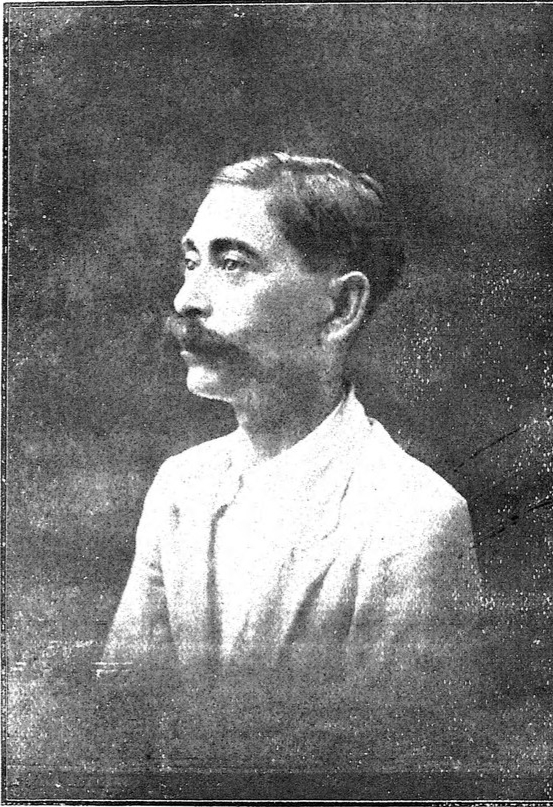
Camel in Chandigarh. Courtesy: Creative Commons

Many of us derive a high after a bout of successful bargaining without realising that the moment of euphoric win soon peters out, only to be replaced by an embarrassing defeat as we get snubbed without a dash of realisation that the same old game checkmates us at some point.  

Years ago, a bosom friend of mine found Rs 30 to be a whopping fee for a camel ride in Chandigarh. He did not add up the extra cost of transporting the animal from Rajasthan and denied the owner the legitimacy to charge at will, arguing that the owner would also be selling camel milk to recover its maintenance cost from Punjabis who would relish the refreshing change from the usual buffalo milk, without calculating the quantity of milk a single camel would deliver every day. He did not admit that the opportunity to experience what he would only get to ride in Rajasthan was made available in the local zone and, for that, he should be thankful to the entrepreneurial owner who preferred to bring a novelty item instead of a typical pony from the nearby hill state of Himachal Pradesh.

All he did was sit with the obedient camel tied to a pole, waiting for customers to approach him for a single round of a circular ride of the cemented garden track. My friend looked horrified when he had to shell out the fee before riding the camel, much like a pre-paid cab ride. As was his wont, he bargained hard and brought it down to Rs 20 before mounting the camel that observed the entire exchange in the sitting position, masticating something like chewing gum as the owner did and winking at him. After my friend had made himself comfortable, the owner whispered something, and the camel stood up without a fuss. My bosom friend looked confident and showed me a thumbs-up sign as if he was inside a fighter jet, ready to take the first solo flight. 

That the owner was up to some mischief became evident as the pick-up speed looked unusual. He pulled the strings and made the camel run faster along with him so that he could save some time to recover the loss in the ride fare. My friend’s growing discomfort was visible as the camel galloped faster than a horse. He closed his eyes and clutched whatever appeared in sight to prevent a fall. He was no trained horse rider either, and I ran behind the camel carrying my dear friend, like a morning jogger offering moral support, to grab him if toppled, requesting the owner to slow down and stop before something tragic happened. But he did not stop before the round was complete. 

When the camel reached a standstill position, the owner was breathless, and the animal waited for further instructions. My friend had started hurling slang words again to order the camel to sit down and enable him to dismount. Finally, after a while, the owner signalled in his preferred language set, and the obedient camel went down on his legs. My rattled friend came down with a hand on his back, almost ready to pounce on the camel owner for endangering his life, threatening him to report the matter and seek cancellation of his licence to operate the camel with tingling bells around the neck in the beautiful city of Chandigarh. I told him it was the direct fall-out of the bargaining process he did to invite this trouble. The camel owner asked him to disappear when another person approached him for a ride and paid the total amount. He went around the park in a slow, languid manner. This pleasant sight further angered my friend. He agreed that the owner took nasty revenge in this manner and threatened to get the camel seized by using his contacts. He tried mobilising the small crowd against him, called him a rough driver who would have been lynched, beaten up black and blue. But nothing happened as the people looked mighty impressed with the novelty and instead blamed him for bargaining with a poor man to be as offensive as cheating and exploitation. 

He narrated those terrifying minutes in greater detail as he felt it was a close shave with death. He saw the gates of heaven open up for him as he closed his eyes to envision a Saviour. The chances of a heart attack were the highest during this brief phase. What he expected to be a leisurely ride had turned out to be nightmarish, and he blamed me for not lending him vocal support. He had conveniently brushed aside the bargaining gaffe and concentrated on the life-threatening outcome. He asked the camel owner to pay for an ointment to heal his painful back, but he took small steps and slipped out to serve another customer who was ready to mount despite the dire warnings of my argumentative friend in accented Hindi. 

As it is clear, my bosom friend was taken for a bumpy ride no less thrilling than a giant wheel ride as he drove a hard bargain. The camel owner also applied his tricks to outsmart him, proving again that the best bargaining deal often invites trouble for the one who hails himself as the big winner but ultimately ends up as a big loser. 

.

Devraj Singh Kalsi works as a senior copywriter in Kolkata. His short stories and essays have been published in Deccan Herald, Tehelka, Kitaab, Earthen Lamp Journal, Assam Tribune, and The Statesman. Pal Motors is his first novel.  


PLEASE NOTE: ARTICLES CAN ONLY BE REPRODUCED IN OTHER SITES WITH DUE ACKNOWLEDGEMENT TO BORDERLESS JOURNAL

Click here to access the Borderless anthology, Monalisa No Longer Smiles

Categories
Poetry

The Not-So-Glum Panjandrum

Nonsense verses by Rhys Hughes

Courtesy: Creative Commons
The Not-So-Glum Panjandrum
likes to play the drums
on every day of the month of May
and in the night-time too.
If you happen to be his guest
when his fingers are twitching
and his drums are itching
to be played, you will surely find
it most bewitching
while he sits in the kitchen
to listen to his rhythms. They go:
        tikky tak tok, boom blam bash,
        takky tok tik, blam boom bong!

And often when the owls hoot
in the garden where the suits
are flapping on the washing line,
he adds a cymbal to his kit,
hits it with a thimble on the end of a stick,
keeps the rhythm steady.
It must be a symbol
of something profound,
and the total result, at least I have found,
sounds somewhat, if not a lot,
like this… Are you ready?
        tikky tak tok, boom blam ting,
        takky tok tik, ping ding bling!

He often smiles while drumming
and his eyes are running
with tears of joy. His drums are toys
that must be played with
in order to make a compelling noise
and if you aren’t careful
he’ll expect you to sing along
in the music room
while his fingers rapidly tap
a pulsating jazzy racket
after he removes his jacket:
        boom shack, a whack and clack,
        ching bing bong, shack a boom!


Sing along? you cry in alarm
for you know that your voice
can do great harm
to innocent bystanders
but the Not-So-Glum Panjandrum
refuses to accept excuses.
And so, abandoned by the Muses,
you open your mouth
while he beats out his rhythm,
like a mathematical lumberjack
chopping up logarithms,
and this is what you croon:
       yowdle curdle, furdle durdle,
       screechy vichy, bongo blighty,
       bangy wangy, shrieky speaky,
       warble burble, yubble wubble! 


And now the month of May is over
and silence reigns
yet again.

Rhys Hughes has lived in many countries. He graduated as an engineer but currently works as a tutor of mathematics. Since his first book was published in 1995 he has had fifty other books published and his work has been translated into ten languages.

.

PLEASE NOTE: ARTICLES CAN ONLY BE REPRODUCED IN OTHER SITES WITH DUE ACKNOWLEDGEMENT TO BORDERLESS JOURNAL

Click here to access the Borderless anthology, Monalisa No Longer Smiles

Categories
Stories

Letting Go

By Tasneem Hossain

Courtesy: Creative Commons

“If only you had some wisdom, then you would not have raised that issue. I am going to block you. I am going to sever all ties with you. Bye!” The harsh words kept echoing in Farzana’s head. Her eyes moistened. She could not control the incessant tears rolling down her cheeks. The man behind the counter looked at her sympathetically. Farzana tried to smile back but her face distorted. She had never ever been able to control her emotions.

She was standing in the immigration line to board the next plane to New York from Dhaka.

The last one year came flashing back.

She had come in contact with Tariq during an official online meeting in Bangladesh.

He was a man of great repute. They had to contact each other often for business purpose. Gradually, their relationship changed from that of an acquaintance to very close friends. They would talk almost every day. He would go on telling her about his life. How he had built a million dollar business. How unfortunate he had been in his personal life. She would listen patiently.

She met him twice during two workshops on financial management. Tariq had invited her many times but somehow they had never been able to meet in the real world.

Tariq was a short squarely built man. But there was an air of personality that was undeniably magnetic. His well-articulated deep voice and the twinkling smile in his eyes were enough to make women swoon over him. He was witty and had a sense of humour that made him very attractive. He had sharp twinkling eyes but something told Farzana that he was a sad man, hiding behind his witty and jovial nature.

Their professional relationship turned into friendship.

Tariq would tell her details of the problems he faced in life and ask her to pray for him. Farzana became emotionally attached to him as a friend and would pray for him religiously every day.

Four months passed. One day they were chatting lightly and having fun in an online conversation on Messenger. Suddenly, Tariq got irritated and muted the Messenger box. She had never faced anything like this before. She felt insulted. She called and urged him to unmute, but he was reluctant.

A week later Farzana sent Tariq birthday wishes on his phone.

He called her and apologised. He told her he was very sick that day and couldn’t control his anger and, hence, had muted her.

Life became normal. Months passed. Farzana would wait for him to call or message her. When he called he would go on talking about his problems, his life and sometimes even flirt with her. Farzana knew he was just having fun. She would ask him to be serious and then again they would have the normal conversations.  

She never called him because he was a busy person and he would remain sick for days too. Sometimes Farzana had doubts that he was lying to her.

“Why? We are not romantically involved. We are just friends so why does he lie to me?” she would ponder.

*

She was getting ready to meet Tariq today. He had invited her for a candle light dinner in one of the fanciest restaurants ‘Rose La France’. This was the first friendly meeting with him. Farzana wore a pink chiffon blouse and saree. The white pearl necklace set with earrings and bangles were a perfect match: simple, yet elegant.  As she looked in the mirror, a smile curled up on her face. The reflection of a tall fair woman with an athletic supple and strong physique with a pair of hazel coloured eyes and thick black eyelashes stared back. She brushed her shoulder length wavy auburn hair. She was an attractive woman in her 30s. She was aware of the fact that her presence, anywhere, made quite a few heads turn.

Tariq picked her from her home and they drove to the restaurant. Somehow Farzana felt very conscious of herself as Tariq smiled at her.

“You look ravishing.”

“Thank you,” she smiled.

“Is it happening? Is he falling in love with me?” Farzana was quiet for a while.

Farzana wanted to change the topic, “You can recite so well. Please recite the poem you were reciting on that day over the phone.”

“First you have to kiss me,” Tariq said mischievously.

Farzana burst into laughter. She couldn’t stop laughing.

Tariq looked intently at her.  

*

“Why do you text? Don’t text me.” suddenly Tariq fumed one day.

Click!No sound on the other end. Farzana called every other day to check but the calls would only show ‘calling’, no ‘ringing’ sign. The messages she sent also didn’t pass through.

After trying a few days she realised he had blocked her everywhere without any reason that she could think of. She would cry long nights. No one knew that she was suffering inwardly as she would act totally normal in front of her family.

Farzana knew that Tariq was the only child and couldn’t control his emotions, but deep down he was a compassionate man. He always made amends so sweetly and genuinely that it was impossible to resist.

*

Tariq loved the way Farzana talked. The smile on her lips and twinkle of her eyes somehow vibrated through the calls. He could visualise the innocent smile on her happy face talking with fervour. She would also listen to him talk patiently for hours.

“Oh Lord I am in love with this angel!” The moment it popped in his head, he felt his nerves playing havoc in his mind. He cut off the line. He blocked every single thing: Telephone, Facebook, WhatsApp and Viber.

“No, I cannot destroy her life. She is such a kind soul. I am not suitable for her. I am a devil, and she is an angel. What if I propose her and get married? What then?” He kept rambling, “I am sick and she will suffer seeing my illness. I cannot let anything sadden her.”

Tariq had a very traumatic childhood. His father was an alcoholic and mother was on drugs. Almost each day they would have fights. The fights did not end just in verbal abuse but would turn into physical scuffles.

He lived in terror of such violence as sometimes he would also become the victim.

His father would point at him and say: “Ah. This bastard! Who is his father? Tell me now or I will kill him.”

His mom would just sit there and keep laughing and say. “Why? aren’t you man enough to have a child of your own?”

His father would then push away Tariq and start kicking his mother.

One day Tariq’s grandparents came and took him away. That was the turning point for him. He had a loving aunt who started looking after him. Slowly his life became more meaningful. He started to have great results at school.Soon he got involved in sports. The confidence in him attracted the attention of his teachers and they started mentoring him for inter school competitions.

Success followed him everywhere. It was as if he was with vengeance erasing his past life and pouring the best that he had into his present. Rather than being defeated by the harsh childhood he had had, he became adamant to succeed. But the trauma remained with him. Often he would have panic attacks and it was difficult to calm him down.

On top of that he was diagnosed with bi-polar disorder on his 39th birthday. Occasionally, he would become violent and would hurl abuses at anyone who came in contact with him. It seemed as if his parents’ demons overpowered him during those times. He seldom remembered what he had done. He was an informed man and knew the consequences and symptoms of this disease.

As he had suffered in his childhood, he didn’t want anyone to be hurt by his behaviour. So he asked his caretaker to tell him everything that happened during those attacks. Later when he regained sanity, he would beg forgiveness in such a gentle way that no one could stay angry with him.

Though he was a famous and moneyed man, his compassionate nature earned him respect from everyone who came in contact with him.

*

For some days she had been having stomach aches. She saw a doctor and had to do some tests.

“You have appendicitis and need surgery,” the doctor informed.

“If something goes wrong and I die?” she mused.

She knew it involved a major surgery. Though fatality was rare but it could happen.

She didn’t want to leave the world with the regret of not having talked with Tariq. So she contacted Tariq’s friend, told him about her surgery and requested him to tell Tariq to call.

That evening Tariq called. He was very rude with her and threatened that he would not unblock her. She pleaded that she wanted just to talk normally with him before the surgery. She wanted to be mentally strong and prepared. She just wanted him to be friends again. He cut off the line.

The next evening Farzana called him. He had unblocked her. They talked for an hour. Farzana disclosed to him about the surgery next morning. The call ended on a friendly note of wishes and prayers.

The next morning, as Farzana was getting ready, he called her and wished her. These small little gestures made him irresistibly charming.

The surgery was successful.

Days passed. Farzana was happy. Sometimes in the mornings Farzana would see that Tariq had called her at night, knowing fully well that she did not take calls at night. She would say “sorry” in her texts.

“Has he fallen in love?” She would muse.

Another evening he called and told her that he was sick. Farzana was concerned.

“You know I have been praying the whole night for your…”

Stop! She was cut short in the middle of her sentence.

“You know what? This is why I don’t want to talk to you. If only you had some wisdom, then you would not have raised that issue. I am going to block you; I am going to sever all ties with you. Bye!”

*

Tariq knew that Farzana had developed a soft corner for him over time. He had fallen madly in love with her. She was there all the time in his heart.Whatever he did he could not get her out of his head. Her gentle sweet smile was like a magnet and oh her eyes! Those had so much innocence and concern that they were irresistible. He had fallen madly in love with her.

He knew that if she saw his condition when he had those panic attacks, she would not be able to bear it. She was too gentle. She would be heartbroken for him and he could not let that happen.

He would call her but somehow it was so painful not to be with her that he would become rude and cut the line off. There was an unbearable silence as Farzana sat dumbfounded. She couldn’t say a word.

Suddenly all emotions dried up. She knew that Tariq was a self-made man. Though soft at heart, it had made him proud and egoistic too. But it did not give him the right to be so discourteous and ungrateful towards her. He knew fully well that she wished him well unconditionally and his welfare had always been a priority for her. 

“This is the end,” she muttered. “I have been supportive of him all through, prayed for him every day. Yet, he treats me like trash. He knows that I care for him too much. Perhaps, this is why he has taken me for granted.”

The thought of abandoning him suddenly made her realise that she was in love with him. It would be unbearable for her to part with him. 

She couldn’t take it anymore. “I have been sympathetic all through but there’s a limit to being compassionate. He has his tantrums, but I am also human. I have my pride.”

In her heart she knew that she loved him. But there was no hope for this love to materialise. So she needed to leave him before she did anything irrational.

Her decision was final.

She decided to go back to the USA. She knew if he was ever alone and needed her, she would come back to help him; give him company in his old age. But right now she needed to leave.

“Your ticket Madam.”

“Oh, sorry,” Farzana replied unmindfully. She showed the ticket and passport to the immigration officer.

Leaving Tariq without telling him was painful. She couldn’t hold back her tears. The man behind the counter looked concerned. Farzana gave him a reassuring smile and wiped away her tears confidently.

She felt a heavy stone lifted away from her chest. Too much neglect and verbal abuse had made her strong. She was free now.

“Thank you,” she smiled and waved. “Have a wonderful day!”

As she walked towards the shuttle bus, she felt the warmth of the sun on her face. Everything around her wore a brighter look. She was ready to face the world: alone but stronger. The needle pricked her heart and she flinched in pain.

“Is he thinking about me and in pain?”

Whenever Tariq needed her she had this feeling inside.

“It can’t be!” Her pace slowed down.  

Tariq stood behind the glass looking at the girl whom he loved with all his heart. He prayed silently. Teardrops rolled down his cheek for the first time

She would never know…

.

Tasneem Hossain is a multilingual poet, op-ed, columnist, fiction writer, translator and trainer. Her writings have appeared in different countries. She has authored two poetry books and a book of prose.

PLEASE NOTE: ARTICLES CAN ONLY BE REPRODUCED IN OTHER SITES WITH DUE ACKNOWLEDGEMENT TO BORDERLESS JOURNAL

Click here to access the Borderless anthology, Monalisa No Longer Smiles
Categories
Poetry

Rendezvous

Poetry By Sanjukta Dasgupta

RENDEZVOUS

Every midnight I live a little
As you appear out of the horizon
To hold me in a dream
Every night sleep seems
To be an entry ticket 
To the boudoir of fantasies

As we hold each other
The grip sways 
Between a clutch and a touch
The embrace of the vibrant Unreal
Enlivens the comatose Real

Every midnight I die a little
I stretch my arms
And hold each dream 
Breathless in ecstasy 
Drunk with the elixir
That only dreams can stir

Happiness jerks me out of sleep
Dreams disturbed
Lie like glass shards underfoot
The dreamless daze of day
Living death everyday

Waiting to wake up 
In your arms again my love
When midnight strikes
And dreams of you 
Dispel living death. 

 Sanjukta Dasgupta is a poet, critic, short story writer and translator. Indomitable Draupadi (2022) is her eighth book of poems.

PLEASE NOTE: ARTICLES CAN ONLY BE REPRODUCED IN OTHER SITES WITH DUE ACKNOWLEDGEMENT TO BORDERLESS JOURNAL

Click here to access the Borderless anthology, Monalisa No Longer Smiles

Categories
Essay

Where Three Oceans Meet

By P Ravi Shankar

Vivekananda Rock Memorial. Courtesy: Creative Commons

I had always looked forward to visiting Kanyakumari. The idea of standing at the southernmost tip of India and gazing at the vastness of the Indian ocean was irresistible. There is no major land mass till you reach the southern continent of Antarctica. The union of the waters of the Arabian Sea, the Indian Ocean, and the Bay of Bengal make this area, referred to as Triveni[1]Sea, unique.

We wanted to visit the Southern most part – the Vivekananda rock, where Swami Vivekananda meditated before going to Chicago in 1893. However, the gate slammed shut as we rushed to the ferry terminal. It was past four in the afternoon, the hour when the last ferry departs for the rock that was at a point peaceful and calm. With it evaporated our hopes of visiting the Vivekananda rock memorial at Kanyakumari.

We were not deterred by having failed in our endeavour. We decide to continue our exploration on the mainland to see as much as we could. Huge crowds were everywhere. It was school holiday season, and everyone seemed to be travelling. Chaotic was the word that would best describe the situation. As my travel companion, Subhish, and I moved around, we noticed nearly every house in Kanyakumari seemed to have been converted into a restaurant and a homestay though waste management was poor and the toilets – especially in the tourist spots — were unsanitary and unusable.

We went to the Gandhi Mandapam by the Triveni Sea from where the Vivekananda Rock could be viewed. You can get an excellent view of the Vivekananda memorial and the statue from the top floor. In February 1948, Mahatma Gandhi’s ashes were immersed at this intersection. The memorial building houses several old photographs relating to Gandhi’s life but the museum needs maintenance and cleaning.

Kanyakumari houses ancient history. Our journey had started at the Sree Adi Kesava Perumal Temple, a temple dedicated to Vishnu, a major Hindu God, had been built in the Dravidian style and dates back at least to the seventh century. The stone and wood carvings speak of the deep devotion of the craftsmen.

Kanyakumari district had been part of the erstwhile kingdom of Travancore. King Marthanda Verma, who lived in the eighteenth century, is regarded as the founder of the Kingdom of Travancore. He had defeated the Dutch East India Company. A staunch devotee of Vishnu, he would pray before all his campaigns. Kanyakumari district had been the granary of the Travancore kingdom and was handed over to Tamil Nadu during the re-organisation of India along linguistic lines in 1956. Subish mentioned how his parents had told him about the fear and violence that existed for several years after the handover. Some of the monuments in the district are still maintained by the Kerala government under a 99-year lease. 


Just before lunch, we had visited the Padmanabhapuram palace, the capital of the Travancore kings which was rebuilt on an earlier structure from in the sixteenth century. King Marthanda Verma dedicated his kingdom to Lord Padmanabha, a manifestation of Lord Vishnu. The King and his successors saw themselves as Padmanabha dasa or subjects of the lord. The palace was vast and sprawling and situated in a four-kilometre-long fortress. Made entirely of wood, it had exquisite carvings. Though in some places, only the frames remain to suggest a story. There seemed to be massive halls where up to a thousand people could be fed at one time. They suggest a testament to the generosity of the kings. The palace unfortunately does not provide a glimpse into the life of its royal inhabitants. Having visited several museums and palaces elsewhere, I believe serious thought and action may be required on how to present this cultural gem better to visitors.

Pechiparai Reservoir

The Pechiparai Reservoir, where we stopped, has an interesting history. The dam was built across the Pechai River by a British engineer, Mr. Minchin working in the Travancore irrigation department. The site is peaceful, away from the hustle and bustle, and surrounded by green hills. In the 1880s when the dam was being built this would have been a remote location. Mr. Minchin’s grave has a home here – far from his own homeland in Britain.

Mathoor Aqueduct

We also visited structures closer to our times — the Mathoor Aqueduct, built in 1965. This is among the longest aqueducts in India. I was reminded of the Roman aqueducts. The view of the surrounding valley and hills from the aqueduct was spectacular. A rich agricultural area, you can walk along the aqueduct, come down and walk through the garden and playgrounds and then climb back to the starting point.

We drove to Sunset Point to watch the sun dip into the ocean after a hard day’s work. The sunset was spectacular. The few clouds had disappeared. The circular orb slowly sank into the silver sea.

Sunset Point

As dusk set in we started to drive back to Eraniel, Subhish’s hometown where we were staying. Subhish worked in Dubai and was on holiday like me. We stopped at Kilometre Zero on the national highway. The Indian politician, Rahul Gandhi had started his Bharat Jodho yatra[2] here a few months ago. ‘Kashmir to Kanyakumari’ is a popular slogan in India and this spot is a popular starting or ending point for political and other such marches.   

Kanyakumari has red bananas everywhere. They grow well in this soil. I am partial to this variety and enjoy them whenever and wherever I can. The district has several ancient Hindu temples. We were now returning from Kanyakumari. Dusk had settled in and there was a huge line of cars going back to Nagarkovil (Nagercoil in English). We were searching for the nongu fruit also known as ice apple, palmyra palm, and by several other names. We eventually located one at a roadside stall. Eating nongu was one of the best experiences of my life. An absolute delight.

Kanyakumari district has seen great progress over the last few decades. People from all over India have settled here. There are several water bodies scattered throughout the land and several wind farms. Tamil Nadu is among the wind energy giants in India. The climate here is less harsh compared to other parts of Tamil Nadu. Indians now have a good disposable income and are eager to explore their vast country. Will the tourism authorities pick up the gauntlet and cater to this population or will they continue along the old self-centred ways? Only time will tell!      


[1] Translates to where three sacred rivers – in this case oceans — meet

[2] Unite India March carried out in 2022 by the Congress Party

*Photos by P Ravi Shankar and Subhish, where unacknowledged

.

Dr. P Ravi Shankar is a faculty member at the IMU Centre for Education (ICE), International Medical University, Kuala Lumpur, Malaysia. He enjoys traveling and is a creative writer and photographer.

.

PLEASE NOTE: ARTICLES CAN ONLY BE REPRODUCED IN OTHER SITES WITH DUE ACKNOWLEDGEMENT TO BORDERLESS JOURNAL

Click here to access the Borderless anthology, Monalisa No Longer Smiles