Jatri (Passenger) was a part of Tagore’s collection, Khanika (moments), published in 1900.
Art by Sohana Manzoor
PASSENGER

 There’s place on my ferry.
You are alone. You have
      Only one bundle of paddy.
It may be a bit crammed,
But not that heavily jammed.
My ferry could be
  A bit overloaded —
      But you don’t have to leave.
            There’s a place for you!

    Come, come to my boat!
If your feet are dusty,
     Let them be mud-coated.
Your body is like a creeper.
Your eyes are restless.
Your garb’s blue-green,
       Flowing like water —
          There’ll always be place for you —
                      Come, come to my boat!


             There are many passengers.
      Their destinations are varied.
         They are all strangers.
You’ll also for a while
Sit on my ferry
Till the end of the ride.
          A denial will make no difference —
             If you want to come, join us.
                  There are many passengers.

   Where’s your jetty?
Where’s the store
    For your paddy?
If you do not state,
What will be our fate?
I’ll have to ponder
         At the end of the ride —
             Where’s your shore,
                   Where’s your home?
*The interesting thing about this poem is that it seems to be complete reversal of the poem Sonar Tori(Golden Boat), published in 1894, with the ferryman welcoming passengers aboard, whereas in the earlier poem, the ferry woman sails off with the bundle of paddy belonging to another, leaving her passenger behind.
This poem has been translated from Bengali by Mitali Chakravarty with editorial input by Sohana Manzoor
.
PLEASE NOTE: ARTICLES CAN ONLY BE REPRODUCED IN OTHER SITES WITH DUE ACKNOWLEDGEMENT TO BORDERLESS JOURNAL
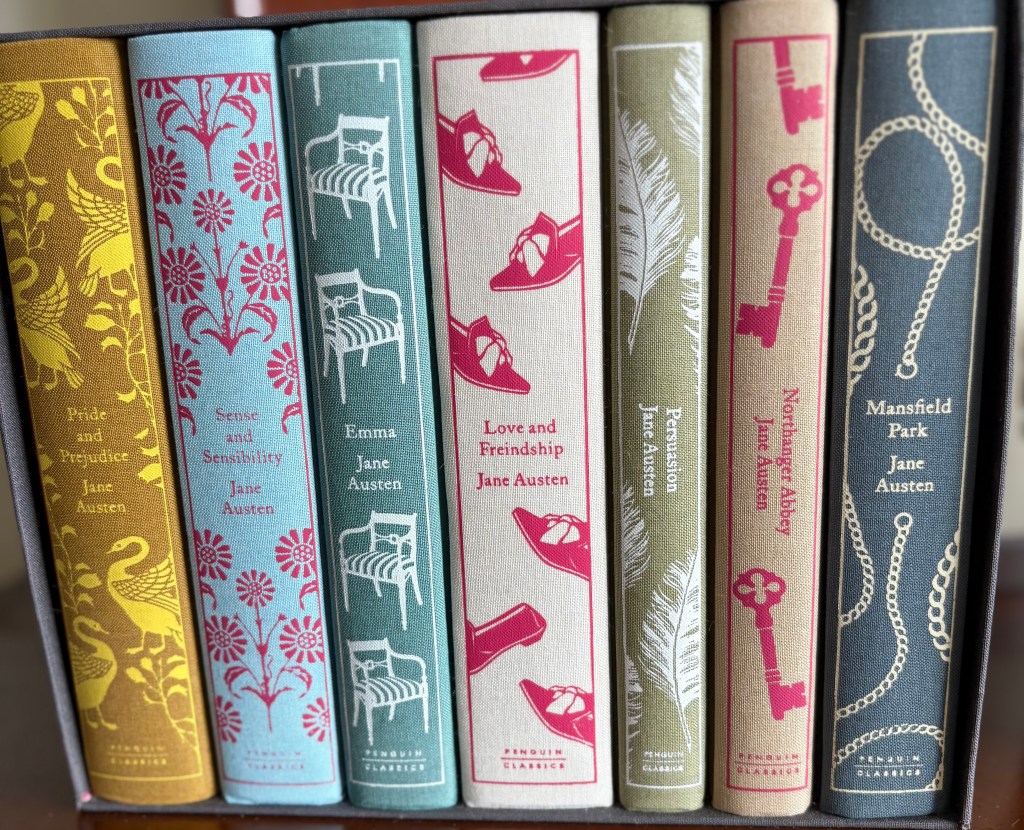
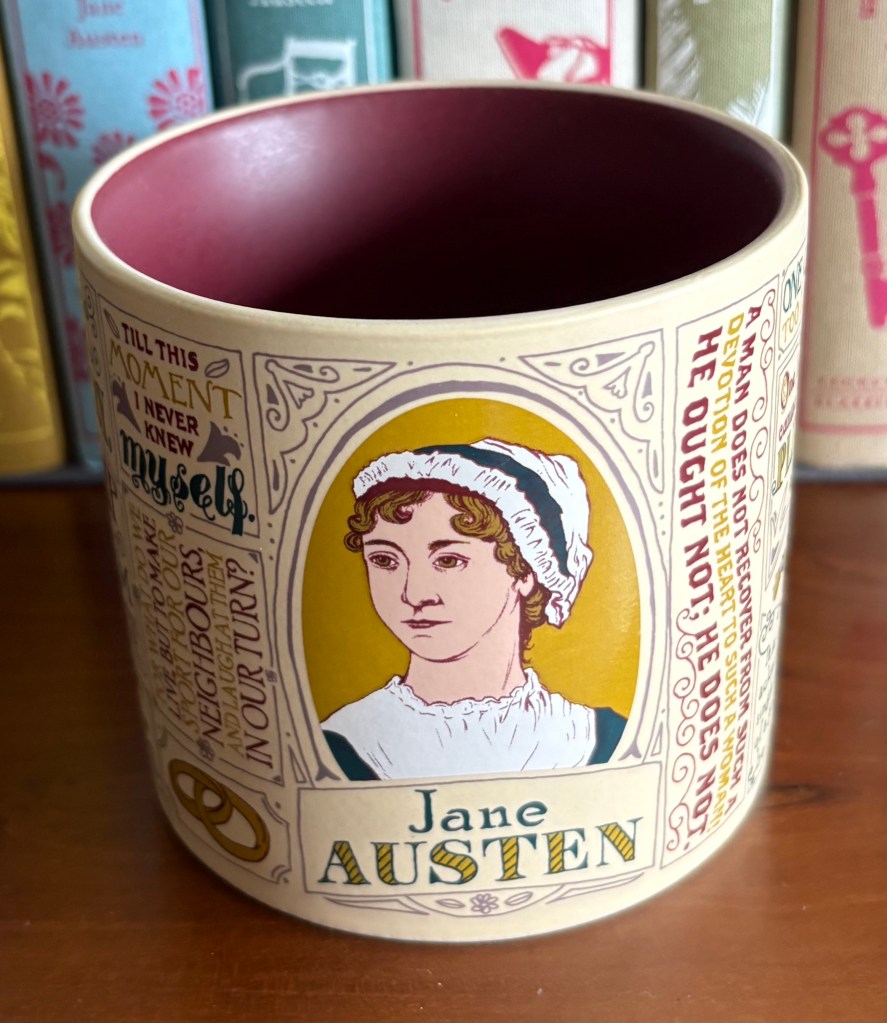
It is a truth almost universally acknowledged that Jane Austen is a great writer. The world created by her in just six novels continues to regale generations of readers with tales of love, marriage and money, a sentiment which would be reiterated by substantial numbers of her fans all over the globe. We could well echo Evelyn Waugh on the comic writer P. G. Wodehouse: that his (Wodehouse’s) inimitable world could never grow stale….that he has made a world for us (readers) to live in and delight in…
Jane Austen(1775-1817) has acquired a kind of cult status in the last couple of centuries. Such is her reputation that it has helped birth a veritable Jane Austen industry, replete with museums, memorabilia and mementos. There have been numerous novels and films inspired by Pride and Prejudice and Emma and many films (and remakes and adaptations) based on her novels.
16 December 2025 marks her 250th birth anniversary. Many museums in the UK and the USA have showcased exhibits which give viewers delightful glimpses into her life and writing. Her novels, full of wit and satire, provide an insightful commentary on the social hierarchies, as well as the quirks and oddities of her milieu.Their plots and themes are woven around women and the necessity of marriage, money and the determining power of money.With considerable irony and subtlety, she turns the mirror on how manners are a function of morality and good sense and not just a matter of appearances. Rarely didactic or preachy(with Mansfield Park as the only exception), her novels convey in perfectly nuanced and measured prose, how difficult and crucial it is for women to find the right spouse and space.
As the youngest daughter of a poor clergyman, mostly educated at home, Jane Austen was well aware of the value of an independent income and a home of their own. After the death of her father, she, her sister Cassandra and mother, rather like the Dashwood women in her novel Sense and Sensibility, had to move around as they were dependant on the financial support of her brothers, especially her wealthy brother, Edward. The pain of this unequal fortune and frequent shifts, which Jane and her sister Cassandra may have experienced, is expressed by Elinor and Marianne in the novel where they have to practice small economies and learn to scale their expectations according to their situation.
Austen led a largely sheltered and sequestered existence, surrounded by her family, bound to family duties which “might have been the more expected of a dependent spinster aunt such as she was.”[1] Many intelligent women, like Charlotte Lucas, Elizabeth Bennett’s friend in Pride and Prejudice are shown to accept inferior matches to escape from spinsterhood and the expectations of their natal families. The absence of livelihood opportunities for women in her day and the lack of any income of her own would have proved irksome to Austen and provided her with a further impetus to “write her way into some money,” as she wrote in a letter to her brother, Captain Francis Austen, in July 1813. Further, in another letter to her niece Fanny Knight, she writes that “single women have the propensity to be poor which is one very strong inducement for women to marry.”
Her novels often do not always reveal the full measure of Jane Austen’s remarkable achievement: how she, constrained by genteel poverty, “the lack of a room of her own”, and writing materials which had to be put away often to attend to obligatory family commitments, wrote her novels based on such close observation of, and acute insight into contemporary life. Her eye for detail is such that it invites frequent references to her own words: “A little bit of ivory, two inches wide, on which I work with a brush so fine as to produce little effect after much labour.” This modest disclaimer and “little effect” have, however, fascinated generations of readers and inspired hosts of writers.
That Jane Austen’s 250th anniversary is being celebrated and commemorated all over the English-speaking world perhaps comes as no surprise but it still leaves us with some questions. What is the relevance of her novels now? Are her novels relevant to present-day political realities, in addition to their astute observations on graded social hierarchies? Can we view her as a feminist? Does she merit inclusion and study in universities of the global south at a time when there is a strong drive to decolonise English, the language of the erstwhile colonial masters?
In her book Jane Austen: The Secret Radical, Helena Kelly writes of the subversive and radical potential and intent of Jane Austen’s novels. Kelly goes a step beyond Marilyn Butler’s 1987 Jane Austen and the War of Ideas that had suggested that Austen leaned on the conservative Burkean side when challenged by new-fangled Jacobinism with its ideas of equality and brotherhood, coming from France which disturbed hierarchies, ideas and values long held to be sacrosanct in traditional English society. Kelly suggests that far from being conservative, insulated from contemporary political concerns, Jane Austen held radical and possibly subversive views which she did not express openly but which are clearly configured in the world of her novels. In doing so, she made the novel a meaningful art-form and a vehicle for the expression of ideas around love, marriage and additionally also of debates on slavery, female education and emancipation.
“It is a truth universally acknowledged that a single man in possession of a good fortune must be in the want of a wife.”[2] This famous ironic opening sentence of Austen’s has captured attention and elicited many critical commentaries. It’s a brilliant masterstroke where Austen underlines the mindset of young women and their anxious mothers on the lookout for eligible bachelors. Articulated like a truism, it seeks to facetiously universalise a partial truth. The omniscient authorial tone and tenor encompasses the dominant themes of Pride and Prejudice in the opening statement itself. Marriage, women’s responses, men’s reactions, social rank and wealth — all the principal subjects of Austen’s writing are near universal themes. In her novels, Austen communicates the constraints within which women function and the limited or literally the only ‘choice’ available to them. Having experienced financial instability and economic dependence, she had a clear understanding of the constraints experienced by women in early nineteenth-century England.
The happy ending that we see where Elizabeth Benett indeed becomes “mistress of Pemberley” symbolises the moment when some women, having acquired a certain status, become custodians of the home and the private sphere. Some feminist historians like Gerda Lerner, however, have pin-pointed this moment as one where the economic marginalisation of women is complete, in the aftermath of the Industrial Revolution, and they are pushed back from the public sphere.
Even as women were participating in print culture and taking their place as readers and writers, they were increasingly relegated to the private sphere. The tendency to relegate women to the private sphere and making them responsible for the entire range of domestic tasks of nurturing and care-giving and thereby sustaining the edifice of domestic life is something that persists even now. The fact is that women’s participation in the paid economy and public sphere has added to their ‘double’ burden in the 21st century.
Many critical voices have pointed out that Jane Austen’s writings do not directly mention the political situation, philosophical debates or religious discourses of the day centering on questions of social equality, justice, economic questions or the rights of man. Yet her fine crafted depiction of socio-economic relations, the dynamics of human relationships shaped and moulded by the struggle for wealth or power or status exposes the political reality, social hierarchy and the economic structure in society which shaped and informed all social transactions.
While the position of women may have improved in some spheres, there are still glaring gaps when it comes to women’s access to equality or justice. Changes in the last two centuries have gone beyond superficial tokenism. There are still miles to go in our march towards equality. It is in this larger context where there is a grudging acceptance or disavowal of women’s rights that the Jane Austen heroine’s negotiations with patriarchy remain relevant.
They demonstrate a mode of assertion, of agency in the face of inequality and in socially disadvantaged situations, which sustain an illusion of female empowerment and wish-fulfilment. It is this vision of romance, which, informed by a comic and somewhat ironical view of life, consolidates the exercise of female agency and makes the reading and re-reading of Jane Austen’s novels a rewarding and enriching experience. Her astute delineation of human delusion and human folly holds up a mirror to her society that often impels recognition on our part and remains forever relevant. Her perceptive analysis of the warp and weft of her society remains almost unmatched.
…yet he (Byron) cannot match the shock she (Austen) gives me;
Beside her, Joyce is as innocent as young grass. I feel truly uneasy, my mind unsettled,
Watching the English middle-class spinster
describe the power of money to attract love,
so plainly and soberly revealing
the economic foundations that sustain human society.
W.H.Auden’s lines on Jane Austen and the unlikely comparison with the prince of notoriety, Lord George Byron, never fails to instruct or entertain us. Such is the mark of great literature which leaves its imprint decades and centuries after its inception.
Meenakshi Malhotra is Professor of English Literature at Hansraj College, University of Delhi, and has been involved in teaching and curriculum development in several universities. She has edited two books on Women and Lifewriting, Representing the Self and Claiming the I, in addition to numerous published articles on gender, literature and feminist theory. Her most recent publication is The Gendered Body: Negotiation, Resistance, Struggle.
.
PLEASE NOTE: ARTICLES CAN ONLY BE REPRODUCED IN OTHER SITES WITH DUE ACKNOWLEDGEMENT TO BORDERLESS JOURNAL
What if I crossed the border after 50 springs, summers, falls, and winters? After all the learning, the forgetting, the labour, and lost loves, after all the growing pains, the births, deaths, and family joys and tragedies? What if I returned to the land of my youth, a much older man than the seven-year-old, wide-eyed boy? I will offer the best of me. Who will offer me the best of them? I will have to find a place to call home, a seat at a table where I will have my meals, a place where I could have a conversation with someone other than myself, a room where I could read and write, and most of all sleep. Who will break bread with me, help me decorate the house with books and flowers, with paintings and plants, and share stories, laughter, and wine from time to time? As I write these words, other words are being twisted, designed to make people like me to return to the place of our birth, if we are fortunate enough.
BUCKETFUL OF RAIN
If it is goodbye, I could use a bucketful of rain to drench this fire. Reduce it to smoke before this heart becomes ash.
Even the light trembles and the sun is blushing seeing this conflagration. I should have seen the signs but I hope too much.
Play that violin soft and slow. Speed up the pace as the fire spreads out of control. I can take the heat just a little bit longer.
LIMITS
I climb the branch to the flower; the spider-from-mars’ web-to-the-stars; I flow and fly with the wind further still; through time and newborn worlds; I allow my thoughts to remain on earth; keep the sun and magnifying glass away from me; even an ant has its limits.
Luis Cuauhtémoc Berriozábal was born in Mexico, lives in California, and works in Los Angeles.He has been published in Blue Collar Review, Borderless Journal, Chiron Review, Kendra SteinerEditions, Mad Swirl, and Unlikely Stories. His most recent poems have appeared in Four FeathersPress.
.
PLEASE NOTE: ARTICLES CAN ONLY BE REPRODUCED IN OTHER SITES WITH DUE ACKNOWLEDGEMENT TO BORDERLESS JOURNAL
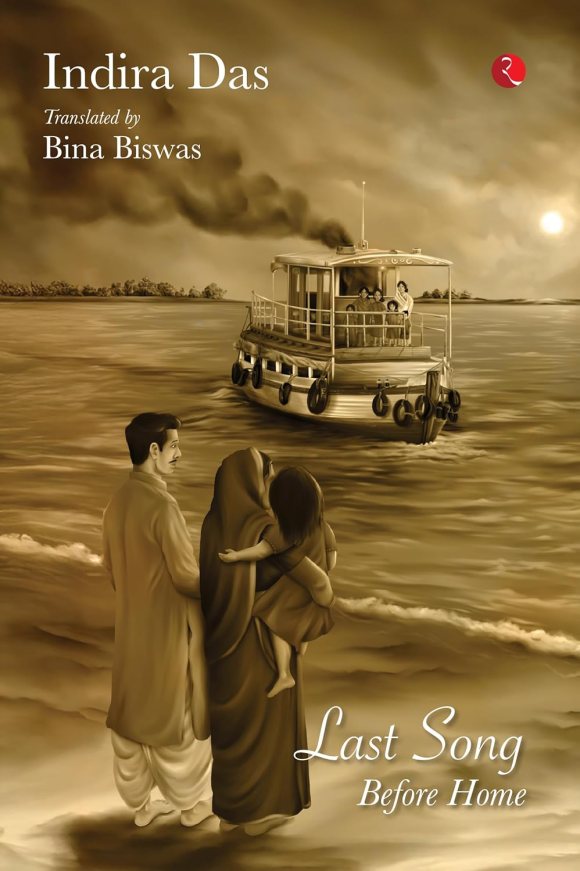
Last Song Before Home, the English translation of Indira Das’s Bengali memoir Shuru Theke Phera – Mayer Smritikatha[1], emerges as a luminous elegy to the fragility of memory and familial bonds. Translated by Bina Biswas, the book chronicles the author’s mother, Gayatri Das, navigating vascular dementia post-stroke. Through an epistolary structure of imagined letters, Das captures the slow erosion of self, where recollections surface like half-remembered melodies amid Bengal’s partitioned landscapes. The thematic depth and stylistic finesse position it as a vital contribution to South Asian memoir literature.
Central themes orbit memory as both lifeline and tormentor. Dementia strips Gayatri of chronology, yet fragments—rain-soaked courtyards, Partition’s unspoken wounds—resurface as anchors of identity. Das reframes loss as resistance, transforming maternal decline into a testament to resilience. Sisterhood underscores this; bonds with siblings weave a tapestry of shared silences, countering isolation’s void.
Partition looms subtly, not as a historical spectacle but an intimate scar—displaced homes echo in Gayatri’s fading queries: “Where is home?” This mirrors postcolonial Bengal’s flux, where personal trauma intersects collective upheaval. Dignity persists through ritual: songs hummed off-key, hands folding faded saris. Das elevates the mundane, critiquing modernity’s erasure of oral legacies. Resilience triumphs, not via triumph, but quiet defiance—memory’s “last song” before oblivion. The memoir critiques gendered aging in India, where women’s stories dissolve unspoken, urging reclamation.
A practicing gynaecologist, Das’s prose, via Biswas’s fluid translation, mimics dementia’s rhythm: elliptical sentences drift, loop, and fracture like synapses firing erratically. “The courtyard bloomed once, or was it twice? Rain came, carrying voices from across the river.” This stream-of-consciousness narrative eschews linear plot for associative flow, evoking Woolfian interiority fused with Bengali lyricism—sensory motifs—jasmine perfume, monsoon mud—ground abstraction, rendering emotion tactile.
In the translator’s note, Biswas, who is a poet and academician, says: “This book is not simply a narrative-it is a mosaic of survival, and the search for belonging. As John Berger once wrote, ‘Never again will a single story be told as though it is the only one.’ The protagonist’s journey is part of a greater collective-a shared history of migration, exile, and emotional displacement. Her voice rises in a chorus of the grieving, each thread woven with shared loss and a fierce resolve to cling to identity.
“She is a figure many will recognize: a woman who, though exiled by circumstance, carries the remnants of home in every gesture and memory. Her story becomes a vessel for inherited struggle, for resilience passed from one generation to the next. As Milan Kundera so memorably stated, ‘The struggle of man against power is the struggle of memory against forgetting.’”
Epistolary form innovates: letters to an absent self-blur authorial voice, fostering intimacy without sentimentality. Repetition (“Remember? No, forget.”) mirrors cognitive loops, building hypnotic cadence. Das avoids melodrama; understatement amplifies pathos— a single, misplaced utensil evokes existential ache. Cultural bilingualism enriches: Bengali idioms, untranslated, preserve authenticity, challenging monolingual readers. Pacing accelerates in crescendo passages, where songs bridge eras, culminating in cathartic release.
Last Song Before Home transcends memoir, becoming a philosophical meditation on impermanence. Its strengths—haunting style, layered themes—outweigh minor translation hiccups, like occasional stiffness. Essential for readers of Partition literature or aging narratives, it earns four stars for profound humanity. Das not only mourns but hymns endurance, leaving echoes that linger.
[1] Translates to: Returning from the Beginning: Memories of Mother
.
Bhaskar Parichha is a journalist and author of Cyclones in Odisha: Landfall, Wreckage and Resilience, Unbiased, No Strings Attached: Writings on Odisha and Biju Patnaik – A Political Biography. He lives in Bhubaneswar and writes bilingually. Besides writing for newspapers, he also reviews books on various media platforms.
PLEASE NOTE: ARTICLES CAN ONLY BE REPRODUCED IN OTHER SITES WITH DUE ACKNOWLEDGEMENT TO BORDERLESS JOURNAL
Columns stand on columns, the high arch flares light like white torchfire illuminates the marble hill, you transform the enclosure, you filigree clear sleeves of imagined air to gather camellias the winter sky emptied, bled in ashes on the snow.
Winter. Photo Courtesy by John Swain
John Swain lives in Le Perreux-sur-Marne, France. His most recent chapbook, The Daymark, was published by the Origami Poems Project. Additional information may be found at www.john-swain.com.
PLEASE NOTE: ARTICLES CAN ONLY BE REPRODUCED IN OTHER SITES WITH DUE ACKNOWLEDGEMENT TO BORDERLESS JOURNAL
Keith Lyons in conversation with Harry Ricketts, a writer and mentor who found himself across continents and oceans
Harry Ricketts has authored thirty books and mentored many writers, including Keith Lyons. Photo Courtesy: Robert Cross
Harry Ricketts is a New Zealand poet, essayist, and literary biographer whose work has gained recognition for its wit, lyricism, and insight into memory, identity, and everyday life. He has published widely across poetry, biography, and literary criticism, and his writing blends formal elegance with accessibility. After studying at Oxford University, he taught in the UK and Hong Kong before moving to New Zealand in the early 1980s. A respected teacher and mentor, Ricketts has shaped both the literary culture of New Zealand and the broader English-language literary world through his poetry, essays, and guidance to emerging writers. His works include a major biography of the British India-born journalist, novelist, poet, and short-story writer Rudyard Kipling, The Unforgiving Minute, Strange Meetings: The Poets of the Great War, and his most recent books, the memoir First Things, and the poetry collection Bonfires on the Ice. His How to Live Elsewhere (2004) is one of twelve titles in the Montana Estates essay series published by Four Winds Press. The press was established by Lloyd Jones to encourage and develop the essay genre in New Zealand. In his essay, Ricketts reflects on his move from England to New Zealand. In this interview, he brings to us not only on his writerly life but also his journey as a mentor for other writers.
KL: Tell us about your early life?
HR: My father was a British army officer, and we moved every two years till I was ten: England, Malaysia, two different parts of England, Hong Kong, England. My first words were probably Malay. From eight to eighteen, I went to boarding schools in England; apart from the cricket and one or two teachers, this was not a positive experience.
KL: How do you think moving around affected you, and your sense of self and being in the world? Does that transience shape your perspective and writing now?
HR: I think constantly moving around gave me a very equivocal sense of belonging anywhere and also a strong sense of needing to adapt (up to a point) to wherever I found myself. I was an only child, and friendship became and remains incredibly important to me. Perhaps this hard-wired sense of temporariness has contributed to my trying to produce as many different kinds of books as possible, but eventually you discover what you can and can’t do: I can’t write novels.
KL: How has your sense of ‘home’ evolved in your work over the years?
HR: As above, but I’ve lived in New Zealand for more than forty years, so that must count for something. My second wife, Belinda, was a Kiwi; for thirty years, she was a lovely person to share the world with. I’d say I like to live slightly at an angle to whatever community I’m in.
KL: How did books and poems come into your life, and what do you think have been influences on your later work?
HR: My mother was a great reader and read me Beatrix Potter, A.A. Milne etc as a child. When I was seven, I had measles and had to stay in bed for a fortnight. I read Arthur Ransome’s Peter Duck and then I couldn’t stop. Books were a protection and a passion at boarding school. As for poetry, at school we had to learn poems by heart which I enjoyed and later recited them in class which was nerve-wracking. When I was fifteen – like many others – I fell in love with Keats, then a few years later it was Sylvia Plath, Ted Hughes, T.S. Eliot, Gerard Manley Hopkins, C.P. Cavafy ….. I was also listening to a lot of music, particularly singer songwriters like Bob Dylan, Leonard Cohen, Richard Thompson, Joni Mitchell.
Everything you read and listen to is an influence. My mind is a lumber-room of things I’ve read and listened to, things other people have said, things that have happened to me and to others, places I’ve been, love and friendship – and all that crops up in my poems in one way or another. Plath and Hughes were a wrong trail. It took me a while to work that out. Well into my twenties, I couldn’t stand Philip Larkin, but not now. I like witty, melancholy poets.
KL: Your first book, People Like Us: Sketches of Hong Kong was published when you were 27. How did that come about.? What satisfaction did you get from seeing your name in print?
HR: People Like Us is a mixture of short stories and song lyrics. Hong Kong, as I experienced it in the 1970s, (still very much a British colony) was a heterogeneous mishmash of styles, and I tried to mimic that mishmash in the pieces I wrote. I was pleased when it got published but it wasn’t much good.
KL: Can you describe your writing space?
HR: I have a small study, but since Belinda died two years ago, I’ve shifted to the kitchen table. She wouldn’t have approved, but the kitchen is light and airy and the stove-top coffee-maker close by.
KL: What is your writing process from start to finish?
HR: I do a lot of drafts. First thoughts can almost always be improved. A friend likes to say, ‘It’s not the writing; it’s the rewriting’, and I agree. But some poems have come quite quickly. When I’m writing prose, I often play music, but not when I’m working on a poem.
KL: What usually sparks a new poem for you: an image, a phrase, or a rhythm?
HR: It can be anything really. I’m usually doing something else entirely – writing an email or some piece of prose or just walking around – and something will interrupt me. It’s often a phrase which for some reason acts like a magnet, attracting another phrase or an images or an idea. It might be something I’m reading; this has happened with English poets like Edward Thomas, Philip Larkin, James Fenton, Hugo Williams and Wendy Cope and New Zealand poets like Bill Manhire, Fleur Adcock and Nick Ascroft. Occasionally, I’ve written a commissioned poem: for a friend’s wedding, say.
KL: How do you balance experimentation with accessibility in your work?
HR: I don’t think like that, but I do try not to repeat myself if I can help it. However, several poems of mine have had successors; so I wrote a poem in the mid-1980s about my six-year-old daughter Jessie called ‘Your Secret Life’, imagining her as a teenager and me waiting up late for her to return home, and my latest collection contains a ‘Your Secret Life 5’, written when she was forty. I’ve found myself writing a few poem-sequences recently, including one about an imaginary New Zealand woman poet. That was quite new for me.
KL: How do your roles as poet, biographer, and critic feed into each other?
HR: Constructively, I hope. I think you can always get prose out of yourself if you sit there long enough (fiction writers might disagree), but not poems. Some initial reverberation/interruption has to happen, some ‘spark’, as you put it. It’s all writing, of course, and writing is a habit. You have to keep doing it, otherwise that part of you switches itself off or attends to other things.
KL: Looking back across more than thirty books, what evolution do you see in your writing life, and what themes do you keep on coming back to?
HR: I think lots of writers (except the very vain ones) suffer from versions of ‘imposter syndrome’ and have problems with their personal myth — that they are a writer. I’ve got a bit more confident that I am a writer and in particular that I can write poems. Getting published helps a lot with the personal myth: something you’ve done is now out in the world. Once you publish a book, though, you lose any control you had over it. People may love it, hate or, worst of all, ignore it. But that’s just the deal.
I prefer the term preoccupations to themes. I’m preoccupied with people, places, trying to make sense of the past, happiness, the role of luck, life’s oddities, incongruities and ambiguities….
KL: You often talk about ‘gaps’, doubt, and ambiguity as central to your work. How do these function in your poetry today?
HR: To measure gaps, to be in doubt, to see the ambiguity in things: that just seems to me to be human. Poems can be acts of discovery or at least partial clarification. They can also simply preserve something: an experience, a moment, a realisation, some sense of those we love.
KL: You describe teaching as a kind of midwifery: helping writers bring out what is already within them. How did you arrive at that approach?
HR: Decades of teaching suggest to me that encouragement is more likely to help someone tell the stories they have it in them to tell rather than giving them a hard time. Writing can be a bit like giving birth and, for some, having support and encouragement is more helpful than trying to do it all on your own. Of course, in the end you do have to do most of it on your own.
KL: What advice did you find yourself giving students most often, and does it still hold true for you?
HR: I have taught poetry courses, but over the last twenty-five years I’ve mostly taught creative non-fiction. I often quote Lytton Strachey’s comment that ‘Discretion is not the better part of biography’ and then add: ‘Nor the better part of autobiography.’ I also suggest that mixed feelings are more interesting to write out of and about than clearcut ones. If you’re writing about someone else, pure admiration tends to produce hagiography, pure dislike a vindictive portrait – all warts, rather than warts and all. Serious doesn’t mean earnest; you can be serious and funny at the same time.
KL: What is the best advice you’ve received as a writer?
HR: The best advice it would have been helpful to be given (but no one did) would have been: ‘Don’t eat your heart out trying to be a kind of writer you aren’t (say, a novelist). Try to find out what kind of writer you are and pursue that as hard as you can.’ Chaucer knew: ‘The lyf so short, the craft so long to lerne.’
KL: Which authors do you most often recommend to students or emerging poets?
HR: I mostly suggest they should read as widely as they can and that they should read as a writer.
KL: What writers are you returning to most these days?
HR: I often go back to Montaigne’s essays and Orwell’s and Virginia Woolf’s. Poets I often reread include: Derek Mahon, Hugo Williams, Thomas Gray, Wendy Cope, Fleur Adcock, Edward Thomas, Andrew Marvell, Seamus Heaney, Lauris Edmond, Anne French, Robert Browning, Thomas Hardy, Philip Larkin …
KL: What responsibilities do reviewers have to writers, and what responsibilities do they have to readers?
HR: Reviewers have an obligation to be fair-minded towards their subject and to write something as worth reading (ie well-written and enjoyable) as any other piece of prose.
KL: How can reviewers give criticism that is honest yet constructive?
HR: They should try to understand what the writer was aiming at (rather than the thing they think the writer should have been aiming at) and judge the work accordingly. This is easier said than done. Writers rarely remember the positives reviewers say, and rarely forget the negatives. Reviewing is hard, if you’re trying to do a good job. In a small country like New Zealand, there’s only one-and-a-half degrees of separation, which makes puffing and pulling your punches a tempting prospect.
KL: What kind of legacy do you hope to leave through your poetry and teaching?
HR: Whatever legacy you might leave (and few writers or teachers in the scale of things leave any) is not up to you. But of course writers hope people will positively remember something they’ve written and that their work will continue to be read after their death. When I think of the teachers who have matter to me, I think of them with immense gratitude and I hope some of my pupils might feel something of that, too.
KL: Is there a question about your work that you wish people asked more often?
HR: Interesting question, but I don’t really have an answer. Perhaps ‘Why, given that you also write plenty of poems in free verse, do you still think that there are possibilities in fixed poetic forms like the sonnet, villanelle and triolet?’ I could talk about that for a long time.
KL: If your life was a movie, what would the audience be screaming out to you now?
HR: Keep going! Well, I’d like to think they might.
KL: What’s next for you? What are you working on now?
HR: I’m threequarters of the way through a second volume of memoirs and about to write about a particularly difficult part of my life. I want to finish that and then a third volume, if I can. And write more poems.
*This interview has been conducted through emails.
Keith Lyons (keithlyons.net) is an award-winning writer and creative writing mentor originally from New Zealand who has spent a quarter of his existence living and working in Asia including southwest China, Myanmar and Bali. His Venn diagram of happiness features the aroma of freshly-roasted coffee, the negative ions of the natural world including moving water, and connecting with others in meaningful ways. A Contributing Editor on Borderless journal’sEditorial Board, his work has appeared in Borderless since its early days, and his writing featured in the anthology Monalisa No Longer Smiles.
.
PLEASE NOTE: ARTICLES CAN ONLY BE REPRODUCED IN OTHER SITES WITH DUE ACKNOWLEDGEMENT TO BORDERLESS JOURNAL
Here’s your voice from across the world, the kind of time you tend to call. Still magic: “Hi Dad! How are you?”
You’re walking to the train. It’s cold. Your voice breaks up, reassembles, breaks up, reassembles again.
“Something important to tell you.” As you talk, thirty years roll back, telling my father the same thing.
“Are you quite sure?” I hear him ask. Oh yes, quite sure. Sure then and now. But you’ve missed your train; it must’ve left
early for once. That’s all you need. You protest to the official, prepare for coffee and your book.
No, here is your train, after all – running late (leaves on the line?). You’re aboard. You’ve started to move.
(Excerpted from Bonfires on the Ice, Te Herenga Waka University Press, 2025).
Harry Ricketts is a poet and scholar who has published around 30 books. He has lived in Wellington, Aotearoa New Zealand, since 1981. Until his retirement in 2022, he was a professor in the English Programme at Te Herenga Waka—Victoria University of Wellington. His books include the internationally acclaimed The Unforgiving Minute: A Life of Rudyard Kipling (1999) and Strange Meetings: The Lives of the Poets of the Great War (2010). His recent books include the poetry collections, Winter Eyes (2018) and Selected Poems (2021) and the memoir, First Things (2024). With historian David Kynaston, he is the co-author of Richie Benaud’s BlueSuede Shoes: The Story of an Ashes Classic (Bloomsbury, 2024).
.
PLEASE NOTE: ARTICLES CAN ONLY BE REPRODUCED IN OTHER SITES WITH DUE ACKNOWLEDGEMENT TO BORDERLESS JOURNAL.
Sunset at Colaba, Bombay, which is currently referred to as Mumbai. From Public Domain
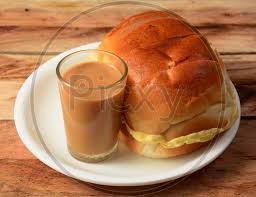
To think that Bombay is attainable is the first mistake of the rookie. And though this city attracts and repels in equal measure, it is the former that makes me want to linger all the more. And linger I do, over a cup (or was it two?) of piping hot Irani chai and bun maska at the Persian Cafe in Cuffe Parade. The rain starts just as soon as I step out of the metro station and make for the safer confines of the cafe, reminding me of home in more ways than one. It is only in Bombay that I am reminded that the culture of the Zoroastrians flourishes somewhere outside of Hyderabad as well.
Colaba lures me, but Kala Ghoda’s immense detachment from its suburban-esque walkways seems more pensive. With Mahatma Gandhi Road sweeping past the Fort and Dr Dadabhai Naoroji Road intersecting it at Flora Fountain, Bombay’s charm offensive lies bare. It is only much later, after I step into Kitaab Khana, the Bombay equivalent of Madras’ Higginbotham’s and Calcutta’s Oxford, that I strongly feel the Raj’s tentacles of reunion. On the other side of the road, the college named after Lord Mountstuart Elphinstone, who twice gave up the chance to be appointed governor-general of India, preferring to finish his two-volume work, History of India (1841) instead, is a reminder of the good that existed among our colonial masters.
*
But the second mistake that the rookie can make is by affirming that all of Bombay lies within the island of Colaba. While it did, in the days of the Raj, it no longer holds the sanctity of tradition as much as it does for the affluent who have no idea of when the last local leaves from Churchgate to Borivali. Versova, much a fishing village as Bandra had once been, is as far away from Colaba as Islamabad is from Vancouver, and Jogeshwari is a mere landing ground for the aristocrats of the north, for whom Thane is where the merely envious congregate and share stories over pav bhaji. A hint of Marathi wafts over the air, sprinkled generally with salt from the sea, and the Bambaiya of Parel and the Hindi of the island city are forgotten.
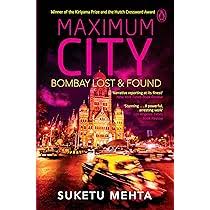
For what does a gentleman bred in the now-reclaimed Old Woman’s Island, fondly called Little Colaba, know of the fighting on the streets of Dadar? The Gateway of India, looming far beyond the ordinary, takes no part in the skyline of this Bombay, where political representatives of all hues and colours sell dreams just as kaleidoscopic as their ever-changing loyalties. Areas where no cars enter are not strictly unheard of in the Bombay of the north, and as Suketu Mehta so lovingly painted in Maximum City, it is a conurbation not afraid of its past, and one that is constantly stuck in an identity crisis. For there are more millionaires in Bombay than in any other city in the country, and they are only matched by the number of people who go to bed hungry. The Marine Drive becomes an elongated resting place for the unfortunate, the destitute or the merely curious once the lights on the Queen’s Necklace get turned on. I would have seen it had I known where to look.
*
To reclaim the days of the Raj, there are few places more apt to while away an evening than Colaba. There are certainly no places as germane as the cafes Mondegar and Leopold, which happily serve continental fare to their patrons after all these years without a trace of embarrassment at the culinary debaucheries they joyfully commit. Old men, with fedoras last seen in fashion in 1930 (before World War II took away the joys of wearing headgear, apart from sola topis, in a country where the sun has been awarded citizenship), and with shirts tucked into waistbands up to their lower chest, order bottles of grizzled beer with a side of mashed potatoes. Cholesterol and high blood sugar are forgotten when relieving one’s youth, especially with Spanish women gawking at the absurdity of it all in the flea market on the causeway outside. With the stroke of a pen, these men bring to life the jazz clubs of the early 1950s, recollecting the trumpeter Chris Perry at Alfred’s. And then they remember Lorna Cordeiro, of whom they speak as if she were a loved one.
The scarcity of vada pav in the vicinity of Kala Ghoda scares me until I remember that even autorickshaws are banned from this part of town. Much like a man seeking water from the desert atrophies of the Middle East, I lunge into a seller close to the Victoria Terminus. When he asks for a mere INR 30 for two vada pavs, I am shamed into submission, looking towards my shoes — coloured an extravagant yellow — and murmur notes of dissent that even my ears cannot pick up. A jet-black Mercedes-Benz skids past the puddle of water that has gathered around Flora Fountain, dousing me with dredges of obstinacy. There are two worlds that we live in, and Bombay may have achieved its supremacy over both yesterday.
Bun Maska can be found in Iranian cafes in Mumbai Pav Bhaji, a popular street food of Mumbai From Public Domain
Mohul Bhowmick is a national-level cricketer, poet, sports journalist, essayist and travel writer from Hyderabad, India. He has published four collections of poems and one travelogue so far. More of his work can be discovered on his website: www.mohulbhowmick.com.
PLEASE NOTE: ARTICLES CAN ONLY BE REPRODUCED IN OTHER SITES WITH DUE ACKNOWLEDGEMENT TO BORDERLESS JOURNAL.
It begins with that angled sidewinder of yellow curbing,
a planned pile of artisanal rocks at the base of a rounded shrub,
and spaces for all the cars, you can count them if you want,
more yellow lines that match the leaves of the trees in season.
And that chipmunk fighting with a crow over unseen bounties
while a bushy black squirrel runs under parked cars
across from the large soapy windows of the car wash place that keeps everyone looking their best.
From Public Domain
Ryan Quinn Flanagan is a Canadian-born author residing in Elliot Lake, Ontario, Canada with his wife and many bears that rifle through his garbage. His work can be found both in print and online in such places as: Evergreen Review, The New York Quarterly, Borderless Journal, GloMag, Red Fez, and Lothlorien Poetry Journal.
PLEASE NOTE: ARTICLES CAN ONLY BE REPRODUCED IN OTHER SITES WITH DUE ACKNOWLEDGEMENT TO BORDERLESS JOURNAL
Around the World in Eighty Days was the first film I saw on a big screen, or at least half-saw, as my parents, sitting in the front seat of our Plymouth, blocked my view. They’d taken us to King Center Twin Drive-in, five-minutes from our house. When you arrived and found the best available viewing spot, you parked your front wheels on the crest of the raised ground. Walking to the concession stand was like surfing a small set of waves. A metal speaker was cradled atop an iron pole next to the car. The speaker was to be attached to the side window glass, half-rolled up. They didn’t always work, and if not, you kept driving until you found one that did. Parallel rows of cars stuffed with people faced the screen, waiting to be entranced. To me, there was a festive glamor about it all. I ignored the screams of inappropriate laughter, smokers walking in front of our view, the honking horns and the loud drunken arguments. I was swept up in a tsunami of wonder. The idea that all these different people came together to forget their ordinary lives and enjoy the same story was spectacular.
*
Films and filmmaking have played a huge part in my life. Brenda Carmichael, a lithe young blonde woman I’d lusted after for a year, broke my heart because I couldn’t see the deeper meaning in 2001: A Space Odyssey. The first time my brother and I bonded was in London after seeing and enjoying Truffaut’s Day for Night. I extended my stay in NYC so I could see Eastwood’s Bird. It enflamed my passion for jazz. I’ve seen hundreds of films, but an experience that comes back to me now, was the first time I saw a movie alone.
I was young, maybe nine or ten, when my mother dropped me off at the cinema. There were matinees on Saturday and my mother had some errands to do in town. I would have preferred to see Jason and the Argonauts but the only screening that fitted the time slot my mother allowed was South Pacific, a musical celebrating war’s happy moments. It was enjoying a second life. Given the choice of going shopping with my mother or seeing South Pacific, I chose the latter. Seeing a movie on my own was the fun part, more than what I saw.
“When the movie finishes come straight out,” she told me, after she’d bought my ticket. “I’ll be waiting in the car. No wandering around.”
“Can I get some popcorn or a drink?” I asked, already knowing the answer.
“You’re just here to see the picture, that’s all. We’re not made of money,” my mother reminded me.
The theater was almost empty, it being an afternoon screening of a movie that had already been out for a couple of years. I chose a seat in the middle, the best seat in the house. Once the lights dimmed, the credits rolled and the movie began, an adult man came and sat next to me. He had a large carton of popcorn. Even with all the empty seats, he wanted to sit next to me. I knew not everybody liked to see movies on their own, or maybe he was after the second-best seat.
He had a friendly smile. “You don’t have any popcorn.”
“Nope, we’re not made of money.”
This made him chuckle. “Would you like to share mine. I bought too much.”
I really didn’t like people talking to me while I was watching a movie, but I didn’t want to be rude either. The smell of his popcorn was melting my resistance. “If you don’t mind,” I told him.
He put the popcorn between us. “Help yourself.” He seemed a bit jittery, looking from the screen then to me. I returned his smile.
We may have been mid-way through the movie, the popcorn was almost gone, when he put his hand on my thigh. His eyes were on the movie, but his other hand was buried in his pants. I hadn’t noticed him loosening his belt. The man groaned, looked at me and started crying, which didn’t make sense since the actors were singing “Happy Talk”.
“I’m sorry,” he told me, before he got up and walked out. He left his popcorn.
My mother was waiting in our car, and I got in.
“Did you like the movie?” she asked, starting the car’s engine.
“Happy talkin’, talkin’, happy talk, talk about things you like to do…” The lyrics weren’t that hard to remember and there were two hands talking to each other. I was demonstrating when my mother noticed some popcorn on sweater.
“There’re crumbs on your clothes. Did you eat something?” she wanted to know.
“It must have been on the seat,” I told her. I didn’t want to explain something she wouldn’t understand. My mother wouldn’t believe I could make friends so easily.
.
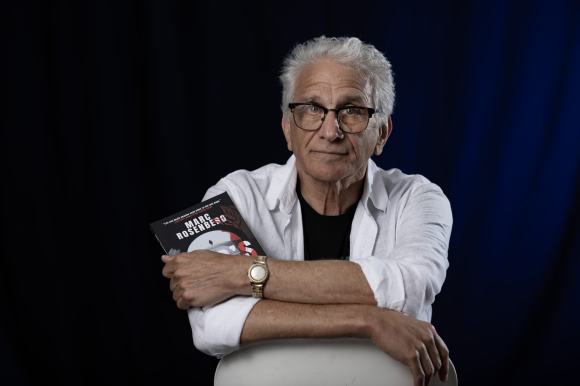
Marc Rosenberg has written seven feature films, producing three. He’s worked with Miles Davis, Daniel Radcliffe and Jeremy Irons.
.
PLEASE NOTE: ARTICLES CAN ONLY BE REPRODUCED IN OTHER SITES WITH DUE ACKNOWLEDGEMENT TO BORDERLESS JOURNAL







 Borderless