Written by Krishna Bajgai, translated from Nepalese by Dr. Rupak Shrestha
Krishna Bajgai
Alphabet Adoration

Since the thirst of alphabets
Was witnessed in his young eyes,
The illiterate parents made him
Swallow all the alphabets,
Forcing him to memorise.

As soon as he was strong enough
To carry on his back
A bag of alphabets,
His teachers forcefully fed him
Tough words from books.

As he grew,
He started to learn by rote
History and politics,
Finally, philosophy,
From the professors' antiquated notes.

He grew up with alphabets,
Learned to play with them,
Understood layered
Meanings of words and sentences,
By days and by nights.

He stuck on his routine life,
Made books his pillow at night,
Surrounded himself with the alphabets
In classrooms and libraries
For hours and hours, days and nights.

One day,
All of a sudden,
A gigantic price was put on his head,
Charged for playing with
Weapons made of alphabets.

The next day,
An arrest warrant was issued in words.
Soon he was freed
by the rallying of sentences.

Again, he wrote
More and more with alphabets
While he continued to live,
Till the last sentence he wrote was –
‘’I adore alphabets.’’
Krishna Bajgai leads the Samakalin Sahitya Pratisthan that he founded in 2014. He publishes and edits www.samakalinsahitya.com. He has thirteen published books, three of his which are taught at the Universities in Nepal for Bachelors’ in Arts degree. Two have been part of research for the Master’s degree curriculum at Tribhuvan University. Decorated by seven prestigious awards in his literary career, he is also affiliated with many literary institutions.
Rupak Shrestha, a renowned figure in the Nepalese Diaspora in the United Kingdom writes free verse, ghazals, songs, muktaks (quatrains), and haiku, does literary criticism and translates. He has been felicitated by different literary institutions for his contribution. He has authored Big Ben ra Samay (Poetry Collection) 2011, Pokhtak (Muktak Collection) 2014, Butte Kimono (Haiku Collection) 2017, and Rupak (Songs’ Album) 2018.
.
PLEASE NOTE: ARTICLES CAN ONLY BE REPRODUCED IN OTHER SITES WITH DUE ACKNOWLEDGEMENT TO BORDERLESS JOURNAL
Translated to English from Bijan Najdi’s essay in Persian by Davood Jalili
Bijan Najdi is often identified with the collection of short stories, Cheetahs who ran with me. But he was a poet at heart. His melodic prose and his powerful stories have the traces of poetry between words. The flow of poetry in his stories evolved into a very exquisite flow of thoughts and perceptions. Najdi wrote an article entitled ‘The Third Perception of Man’ in which he considers poetry to be the outflow of the most intense emotions.
Man’s first perception of fire must have been to touch and burn himself, that is, to feel the burning with direct contact. The next step was to understand the fire to learn from his earlier experience. That is, we see the fire, and without touching it, we know that it burns. This third stage is understanding the fire of “poetry”. That is, if you can, without the fire in your presence, think of it, feel the burning in your fingertips that you have to put your hands under the tap, you have achieved a poetic moment in your life, without the help of words.
Now you can transpose this third stage from fire to the suffering of others, to the history of your land, to the massacre in Palestine, to freedom, to the mass burials in Herzegovina. Poetry does not need “words” in such circumstances. It is the highest form of expression of the most intense suffering of humankind.
The study of the traces of life and the survey of dreams, the nightmares of cavemen and the psychoanalysis of designs and shapes carved in stone prove that even before the advent of calligraphy and language, man had experienced all three stages of perception. The drawings on the stone that depict a human with bird wings on the back and legs of a deer and a human profile are an object of the same third sense.
Is suffering and love born of lines and words the only foundation for poetry? Does our understanding of God depend on our learning to write the word “God”?
However, it was but natural that after the evolution of language and the emergence of calligraphy, man tried to write that “third comprehension”. Henceforth, poetry was no longer seemingly independent of time. Poetry proved its objectivity with the help of the “word”.
In simpler language, basically, any kind of understanding does not necessarily need words, but with words, understanding can be built.
Form and content are a philosophical and academic discussion. They have nothing to do with poetry or at least they have nothing to do with the moments of composing poetry.
There are two types of thinking. Both can, perhaps, influence poets as well.
Some people look at their surroundings with inductive reasoning and want to get a whole by identifying and analysing the details. On the other hand, some people deduce by accepting and prove from a general rule. They would accept the thought for the presence of each component.
Both methods have scientific values. Poetry as the “third perception” is born of intense feelings that frees the poet from both when writing poetry: form and content.
There are poets who believe that form is the manifestation of poetry. In my opinion, this kind of formalism is just a way of thought; that they want by looking at an apple, to get an idea of its taste and smell, with the help of the word, and they want to reach “sense and understanding”. There is nothing wrong with that, but I think it conflicts with the “essence of knowledge.”
However, no one can stop this group from trying.
Volume has dimensions in its geometric definition, so it has an inside and an outside. However, the enclosed space is not the object of discussion. Every point of space is either in or out. That is, each point of it can be both inside and outside at a time. Volume poetry[1], according to Royaee[2], one of the most famous poets of this school, is the transcendence over length, width and height to float in the contraction and the expansion of the soul of the universe, which the poet enters with the “help of words”.
Volume poetry is a look at nature, objects and words that create a sense of yearning by discovering the form and inherent talent of the word to explain the inside and the out to escape from volume.
The spatial poetry of Royaee steps out of the volume enclosed in the words, to get help from the hidden spaces between words, oblivious to the consciousness of being a man. But in such poetry, you can neither sense the history nor the historical identity of the poet.
Nevertheless, poetry of Royaee is full of eagerness to know. But because he is not able to convey his eagerness in his manifesto of volume poetry, his adherents and he have diametrically opposing outputs. I think this is a kind of crisis in poetry, but we should not be afraid of it.
A real crisis arises in poetry when people’s eyes, ears, and minds become accustomed to only one type of poetry.
The crisis was the same as we had in the years before the revolution, when some people did not consider Sepehri[3] a poet because of his Marxist views.
The crisis was that under the pretext of modernism, poetry based on belief and mysticism could be rejected in a society. The culture of any society is the result of social behaviors. If these behaviors are restricted in a certain way, a crisis does arise.
The basic bedrock of any art is freedom, and no one should and can ignore the value of lyricists or post-revolutionary idealist poetry because of their interest in white poetry[4].
However, I do not know what poetry is and what good poetry is.
I have no reason to like a good poem as I feel a burning sensation in my fingertips without touching the fire. Believe me, I am neither a poet nor a novelist, I just love the literature of my country very much.
.
(Published with permission from Bijan Najdi’s wife and family)
Bijan Najdi (Persian: بیژن نجدی, pronounced [biːʒæn nædʒdiː]; (15 November 1941 in Khash, Iran – 25 August 1997 in Lahijan, Iran) was an Iranian writer and poet. Najdi is most famous for his 1994 short story collection TheCheetahs who ran with me (Persian: یوزپلنگانی که با من دویدهاند)).
Davood Jalili (1956, Iran) is an Iranian writer, translator and poet. He has published many articles on Iranian websites and magazines and has three published books.
[1]– Volume Poetry is a type of poetry written evolved around 1967. In 1969, Royaee and several poets published the essence of the volume poetry. Volumeism, mental movement, volumetric vision, mental distances, three-dimensional attitude, are other names that have been applied to this type of poetry
[2] – Royaee is an Iranian poet (1932) who now lives in Paris. He wrote a Manifesto of volume poetry
[3] –Sohrab Sepehri (born October 6, 1928 in Kashan – died May 1, 1980 in Tehran) was an Iranian poet, writer and painter. He is one of the most important contemporary poets of Iran and his poems have been translated into many languages including English, French, Spanish and Italian.
[4]White Or Sepid poetry or Shamloui poetry is a type of modern Persian poetry that appeared in the 1930s with a collection called Fresh Air by Ahmad Shamlou and may be compared to free poetry (in French : vers libre ) in Western literature. The main difference between these works and previous examples of new poetry was in the form of poetry. In this style, the rhyme of prosody is generally not observed, but the song and music are reflected. In the classification of modern Persian poetry, sometimes any poem that does not fit in the form of Nimai poetry (Nima Youshij the innovative of New Poetry) is called white poetry.
.
PLEASE NOTE: ARTICLES CAN ONLY BE REPRODUCED IN OTHER SITES WITH DUE ACKNOWLEDGEMENT TO BORDERLESS JOURNAL
Aditya Shankar translates Sandhya NP‘s poetry from Malyalam to English
Sandhya NP
 Photograph

 This photograph
 Like the solitary bogie
 That was arrested to a halt
 Even as the rest of the train
 Sped past.

 (Photo, translated from Malayalam by Aditya Shankar)

 Solitary

 Would the yolk of the egg
 Be wondering
 If it is alone in this world?

 Even if it assumes so,
 Would it consider
 Posing that query to anyone?

 Once the egg hatches,
 It would know by default—
 Even the 'I'
 Is absent in this world.

 (Otta, translated from Malayalam by Aditya Shankar)

 Light at the Bottom of the Pond

 The sun gleams on me
 just as it does
 At the bottom of the pond.

 I will wipe it off with a cloth
 And go to bed.

 (Kulathinadiyile Velicham, translated from Malayalam by Aditya Shankar)
Sandhya N.P (b.1981) completed her education in Brennen College, Thalassery. Her poetry collection Svasikkunna Shabdam Mathram was published by Current Books, Thrissur.
.
Aditya Shankar is an Indian poet, flash fiction author, and translator. His work has appeared in international journals and anthologies of repute and translated into Malayalam and Arabic. Books: After Seeing (2006), Party Poopers (2014), and XXL (Dhauli Books, 2018). He lives in Bangalore, India.
.
PLEASE NOTE: ARTICLES CAN ONLY BE REPRODUCED IN OTHER SITES WITH DUE ACKNOWLEDGEMENT TO BORDERLESS JOURNAL
A translation from Bengali to English by Dipankar Ghosh of Nabendu Ghosh’s Traankarta, a story set during the Partition riots
Nabendu Ghosh
The bad news reached here too, the news of the rioting. The roads looked tense and empty. Even the pariah dogs that usually roamed the streets had disappeared. Only a few brash teenagers were bunched up in a group at the head of the lane, swaggering around with cigarettes hanging from their lips.
On the other side of the city, fires were raging, severed heads rolling on the blood-bathed streets; teenaged girls had their breasts cut off and little babies had been thrown head down into concrete floors. Tonight they were paying homage to Satan in the stygian darkness, on the other side of the city. The news wafted in the gentle breeze, and the horrifying tales of the day’s events spread through the grapevine to every household.
Gloom descended on everyone. They felt benumbed, paralysed, by a tidal wave of fear. Fear, unspoken fear. Fear that made the heart palpitate madly in the breast. Fear that made you seek the company of a crowd. Awful fear. The kind of fear that deprived one of the will to live.
The ladies proceed silently with their chores. Not too many items on the menu for tonight. Rice and boiled vegetables. The children don’t understand much, occasionally they were bursting out into giggles, running noisily up and down the stairs, squabbling amongst themselves. But, now and then, an older person would burst out like a sentry, “Silent! Or I’ll behead you with a smack!”
But they could think of very little that they could be done to save their own heads from the approaching holocaust. Everyone was discussing behind barred doors, what to do. Not just bad news, but terrible news that the people from the other side intend to attack them tonight. A cold wave of fear ran down their spines when they got the news. What to do, what on earth should they do?
The house of Mr Bose, a barrister who was the local leader, was brightly lit up. Arun was planning to quietly slip out, how long could one possibly stay cooped? But Mr Bose had his searchlight eyes on every possible exit, making it impossible for anyone to either enter or leave his fortress of Lanka without his knowledge.
“Where do you think you are going?” he asked in his deepest voice.
“Just out – for a dekko.”
“Just out! Forget it. Are you not aware of what’s going on in the heart of this city?! Go, get back and stay put in your room.”
Arun returned to his room.
His daughter Ruby came out. There were dark circles of anxiety under her large almond eyes. Her curly black tresses were floating in an unruly fashion, her usually healthy pink glow was replaced by sallow pallor. She was depressed, and fear had put its mark on her. Movies, parties, and picnics were suddenly out of question, the desire to fly around the flowers and taste their honey at will had suddenly flown out of the honey bee. Ruby was lost.
“Daddy –”
“Yes?”
“Will you take us to uncle’s house?”
Meaning Bhawanipore. Meaning a predominantly Hindu area, where perhaps she could put on her crepe silk sari and wander around at will, shaking her long coil of hair.
Mr Bose shook his head in frustration, “Uncle’s house? Now? Impossible! The roads are barren, not a man or a car about, we will have to cross many localities, driving through corpses and rivulets of blood, and more importantly, sudden unprovoked attacks! That important thing called life that we are trying to save, could very easily be ended en route! Stop making silly suggestions, go up to your room and stay there Ruby –”
But how on earth could Ruby sit calmly in her room! She felt frightened out of her mind. Occasionally the sound of shouting was floating in from afar. Awful noises. Last night she had seen the sky flare up in the east. She had heard all the beastly tales. It had all left a fearful imprint on her mind and every now and then, a spark of fear would set off a burst of anxiety in her mind. The nervous pulsating of the vessels under that pink alabaster skin of hers bore witness to her angry, frightened state of mind.
Now, it was one thing browbeating Arun and Ruby, but Mrs Bose? Perpetually conscious and tense about her obese abundance, she was an entirely different proposition. No doubt the dreadful news of the riots would put her in a fairly explosive state of mind — of that Mr Bose was certain. Therefore, when the substantial lady made her appearance Mr Bose felt a bit intimated, fairly aware that if he tried to browbeat her, the result could be counter-productive.
“Listen, I can’t go on like this — this suspense, this danger, it is unbearable.”
“But what — tell me what am I to do dear?” Mr Bose protested weakly.
“Do something, for Heaven’s sake! Don’t just sit still, quietly—”
“I am not sitting still. I am trying to think. Besides, we have two rifles, five hundred rounds of ammunition, we have a sentry, a bearer, a man servant and also a chauffeur, so what are you worried about?”
Mrs Bose collapsed on the sofa, there was a glint of fire in her bluish eyes, sharply she said, “Spare me a list of your rationale, please — your little group would disappear in front of a massive crowd. I’d like to see you stop them with those five hundred rounds. You don’t consider that an unending supply, do you? No, I’m sorry that is not enough to reassure me — I’ll faint any moment under the strain!”
Knock, knock. Somebody at the door.
“Sir,” the sentry’s voice outside the door.
“What is it Tiwari?”
“Some people of the community want to meet you Sir.”
“Offer them seats,” he spoke aloud, then continued to assure Mrs Bose, “Now listen, don’t get overexcited. Let’s wait and watch. We are due to have a meeting of the local defence committee. It is such a large community I am sure they are all willing to fight to protect us all. Don’t be nervous dear. If the situation deteriorates then of course we will have to take a risk — but the car will be ready to leave at a moment’s notice.”
*
In the margins of the so-called civilised society, at the end well-to-do side of the neighbourhood, separating them from the Others on the opposite side, lived a group of people who considered themselves a part of the same community. They were the untouchable Doms. Living in pigeon hole sized tiny hovels, they just about carried on living. They swept the roads, carried water for folks, washed their drains and lavatories. They collected night soil, got into manholes and extracted rubbish from them, they cleaned refuse bins and manned the garbage carts of the municipality. Their hovels were plastered with mud, and they ate from chromed metal plates of their dirt mixed rice. They sat in the light of little kerosene lamps and got boisterously drunk in the evening. And although they considered themselves to be part of the community, to the more genteel and affluent part of the community they were always a bit of an embarrassment.
These people in the no man’s land between the two communities numbered some two hundred. And the only man who had the absolute obedience of these two hundred odd bods was called Jhagru. Such was his hold over them that, if he chose to call daylight as night his men would do so without batting an eyelid. He was their unopposed and unanimous chief, their sardar.
Jhagru’s men had come to him. They had seen bits of what had happened on the other side, heard most of all the atrocities that had taken place, they had even helped the frightened people who had managed to flee from the fortress-like bounds of the place, and taken them to safety. But the question was, what would they do today? If what they had heard on the grapevine was proven true, then how were they to react?
Having binged on some onion bhajis (fritters) and the potent rice-wine of Tari, Jhagru was feeling content. The capillaries of his eyes were bloodshot, and in the cool evening breeze his large figure deemed ready to take off like a well inflated balloon. He eyed his wife’s, Suratiya’s, generous proportions as he was preparing himself for some decent basic entertainment for the evening, his men all descended on him with the bad news, and spoilt his mood.
“Bugger off !” he said crossly in Hindi. “What will be, will be. So what if they attack?”
Ranglal said, “But surely we must do something -”
“You buggers have ruined my drinking,” Jhagru barked at them.
Waving a hand, he demanded, “What the hell is there to worry about? If they attack, we will fight. What else? The main thing is, be prepared with your weapons, when the gong is rung, jump on them — end of story –”
“But sardar–”
“No buts, you all run off. Sitting here with my toddy, let me enjoy my drink — you blighters get back to your homes.”
They all left.
Munching his onion bhaji, he sipped from his earthen cup. Slowly but surely the warmth off the stinging spirit made his ears ring, his breathing got heavier, his eyelids drooped, his sight got hazy. Jhagru was drunk. In that state he was pleasantly surprised to notice that Suratiya had turned into an exceptional beauty, like an unattainable princess of a fairy tale.
“Suratiya dear –”
“What?”
“Come on, over here –”
“Unh-hun –”
“Have a bit of tari?”
“NNo – I won’t –”
In his stupor Jhagru was suddenly enraged by this rejection, and got headstrong.
“You coming here or not — you bitch!”
“No I won’t — I’ve enough work still to finish –”
“Then suffer the consequences –”
Jhagru got up. Walking with unsteady gait like a child, he reached Suratiya, caught hold of her and lifted her in his arms.
“You’ll kill me,” Suratiya screeched, “you’ll break every bone in my body!”
Pulling his wife close to him Jhagru guffawed loudly, “You frightened? Don’t be, woman. Go on, sit in my lap.”
Jhagru was drunk like a lord. No way could he hold on to a strong woman like Suratiya in his drunken state, let alone have his way with her. Giggling loudly, Suratiya ran away.
Ten or eleven o’clock in the morning. If it were an ordinary day, Jhagru would be up to his neck in work. But since the rioting was a good excuse not to be at work, why not have some fun.
“Ran away,” Jhagru laughed. “Bloody woman.” Got to do something, he thought to himself. The tari was finished, he was drunk, and Suratiya was gone. So he needed to do something. But what?
Suddenly in a dusty corner he noticed his forgotten dhol (drum). He pulled it out and started to beat it enthusiastically. He would sing. Never mind, if it scared the daylight out of people, Jhagru could not desist. He was in the mood for some singing, and sing he would.
Vigorously beating the drum, Jhagru started to sing widely. Amongst the incoherent lyric the audience could have deciphered only one line, which he kept repeating in a refrain:
Chhappar par kauwa naache, Bug bugoola/ Hanh hanh bug bugoola…
(The crow dances on the rooftop, bug bugoola)
Ya, Ya, bug bugoola —
What wonderful tune! What incredible control of voice! What melody and feeling in rendition! The entire slum of untouchables woke up to fact that Jhagru was drunk and was singing.
Respectfully they whispered, “Sardar is singing, by jove he is singing.”
*
The Defence committee meeting was on at Mr. Bose’s house. He himself was the chairman.
Almost all the important folks of the locality were gathered there. Venerable teacher Nibaran Mukherji, solicitor Haridas Mitra, Dr. Santosh Dutta (MBE, RCS), and iron merchant Sukumar Roy. There were also the young representatives of the Saraswati Orchestra Group, Youth Body-Culture Samiti, and the Evergreen Dramatic Club. A large blanket had been laid on the floor of Mr Bose’s inner courtyard. Seated on it, all the members were earnestly discussing the situation.
In a room across the corner Ruby had drawn the curtain aside to watch the proceedings. Sheer curiosity. Unable to get out of the house, the lack of parties, movies and picnics was getting unbearable. The meeting was an interesting diversion. If nothing else, she would see a wide spectrum of people. Ruby did not watch them passively, she tried to instinctively assess them. It pleased her to do so.
Mr Bose started in a deep, appropriately grave presidential voice. “You are all aware of the reprehensible events that have started in our city yesterday. Some of you may have witnessed the carnage. This is not the time, and I’m not the person, for long drawn speeches. Suffice it to say that we, especially us Bengalis, are witnessing the beginning of an evil period. Today we must bind together against this medieval barbarism. We have to fight it and stop it — meaning, we have to stop this aberration. We must forget the differences of our castes, our classes, high or low, who is untouchable and who isn’t– remembering only one thing– that we are Hindus and nothing else.”
Mr Bose stopped for a moment, took a hanky out of his pocket, wiped the tension-induced sweat off his forehead. Opening his cigarette case, he offered the expensive ‘Black and White’ cigarette to the assembled elders and lit one for himself. There was a murmur of appreciation in the gathering for his opening speech, Ruby was flushed with pride.
The iron merchant said, “Absolutely, there’s great merit in what you have just said. The time for squabbling about class, caste et cetera is gone — from now on we are all equal, we are all Hindus.”
Mr Bose said, “Now let us determine how we should go about it.”
“Right, right,” they said in unison, and leaned forward.
The venerable teacher said, “Let’s divide the neighbourhood into four parts, each one keeping guard in their side of the four directions.”
The solicitor said, “Let’s use a siren or conch shells to signal danger to others.”
The doctor said, “A group of youths should stand guard, by rota, and blow on a conch three times at the first sign of danger. The siren should go off then. There should be red beacons in the last row of houses in the four main directions, and if danger approaches, the beacons should be lit up to let the others know which direction the danger is approaching from.”
The industrialist said, “The women, children, and the elderly should remain in the top floor or in the terrace armed with bricks and stones. The men should stay on the ground floor, armed with sticks and other weapons.”
All the suggestions were passed. The defence committee meeting was progressing nicely, but suddenly, a young lad called Jatin, created a problem. He wore clothes of hand woven khadi, which meant he was a nationalist, he had short cropped hair, and he was rough-spoken.
He said, “You have arranged everything. But if they really do attack us, then who is going to engage in a hand to hand fight?”
It seemed like a bomb had been set off. Everything felt hazy and nebulous like smoke. Not for a moment had they considered this! Really worth thinking.
The industrialists said, “Why, won’t we all fight them? Let all of us get to grips with them.”
The teacher shook his head in dissension, “That does not sound reasonable. It would mean that a group of people would always have to be outside to fight the enemy. In other words, they would have to be prepared to sacrifice their lives. Can all the able-bodied men do that, or be willing to do that?”
Another explosion. Really, who should fight on ground, if there were a fight? If their worst fears materialised and thousands of people attacked them suddenly, then would people in individual houses, like disparate little islands, battling the enemy with bricks and sticks be able to save themselves?
Jatin said, “So, in spite of our well-organised meeting, and all our arrangements, we will not be able to save ourselves. So consider what ought to be done–”
Mr Bose was an intelligent man, having passed his bar at Law in the distant land across the seas had sharpened his instincts even more. He realised that since Jatin had raised this insoluble problem, it was fairly certain that he had pondered on the answer to it. And truly it was a serious point. He said, “I really have no solution to the problem Jatin has set before us, so I must request Jatin himself to show us a way out of this dilemma.”
Jatin smiled. “Fine,” he said, “I will resolve the problem. Have you any idea knowledge of the poor people who live between ‘Them’ and ‘Us’?”
“The Doms?”
“Yes. They don’t belong to the other community, they consider themselves part of us Hindus. And, although they cannot enter the Shiva temple at the other end of our colony, they worship the idol in that temple. Meaning, they are Hindus –”
Mr Bose smiled appreciatively at him, “The idea.”
Jatin continued, “They might earn little and eat less but they are hardy and strong. The instinct that we have lost, which is presently making us timid despite our numbers, is fully active in them. So if you really want to perform as a defence committee, and live on, then you better bring them into this meeting. And raise a fund-immediately!”
The mention of money made the industrialist take note, “Fund for what?”
“It is best to give some salted yeast to the cow when it’s in milk,”Jatin smiled.
“Meaning what? Cough a bit freely, son –” the industrialist said, testily.
“The meaning is self-evident. We must give them weapons, good food, and a decent flow of liquor.”
“That is true. Those who are going to put their lives on line must be well tended,“ Mr Bose agreed with Jatin.
“Don’t waste time in thinking,” Jatin stressed. “Atrocity has to be stoutly countered with ferocity, so we must be prepared. And let there be no doubt in your minds that they will attack us tonight.”
There was a rustle of notes and coins changing hands. Then and there a collection of fifty rupees was raised, more funds would be forthcoming later. Who could object to a bit of wise investment when one’s life was at stake? Nothing is quite as deep as one’s life — so let the blighters have good food and potent country liquor. Not a lot to pay for the bargain. They might attack this very night. If the cruel pack of animals descend in the dark of the night, then these men will pour out their life blood for our protection. Wasn’t this the least one could do for them? Surely they would serve them. It would be a good deed. Not just the joy of being alive but also the gratification of doing a good deed, by giving the money. So let them eat, let them get drunk.
*
Jhagru suddenly tired of the drum and put it down. He kicked it to a corner, swearing, “Hell, I think I’m sober –”
No work today. How long can a person enjoy staying within the house? It would be fine if there was toddy around. That was gone. A bit of monkey business with Suratiya might have been fun, but she, wretched girl, had scampered. Maybe she really had work to do. Even bonking wasn’t much fun any more, but what he did enjoy was good liquor. This approaching sobriety, clearness of vision, reality creeping into the drowsy stupor of alcoholic haze was most disagreeable to Jhagru. What was termed as normal life was totally abnormal as far as Jhagru was concerned. To him normalcy was epitomised by gallons of drinks followed by drunken fisticuffs, singing and dancing bare-assed, puking the guts out and lying down inebriated.
This was rotten. Must get some more toddy. Must get back into the mood.
“Suratiya –O Suratiya–”
“What do you want?”
“Give us a couple of annas, dear.”
“Don’t have any.”
Jhagru jumped up and roared, “You going to give me the money without hassle, Suratiya?”
Suratiya answered back in the same pitch, “No hassle, no tassle — simple fact, I don’t have the money.”
Suddenly, Jhagru lunged at Suratiya — pulling her by her short pigtail he thumped a few hefty blows on her back, “You ungrateful slut–”
“Oh my Ma — he’s killing me!” Suratiya wailed out loud. There was no need for the wailing, but Suratiya had talent for dramatic exaggeration.
“Are you gonna gimme the money or not, you wretched witch?”
The people of the hovels took note, and respectfully whispered amongst themselves, “Sardar is giving his wife a thrashing, a good hiding.”
It was at that moment they heard two or three voices call out, “Jhagru? Is Jhagru in?”
The voices were barely audible above Suratiya’s caterwauling. Again the voices were heard, this time a notch higher, “Jhagru? Jhagru sardar— are you in? Jhagru–”
Suratiya stopped her yowling, looked out and said, “Some people looking for you –”
“Me?”
“Yes, some gentlemen.”
“Gentlemen?!”
Caught unawares, Jhagru tried to collect his thoughts as he came out to meet the three ‘gentlemen’. Jatin was one of them.
“Are you Jhagru?”
“That’s me.”
“You have been sent for.”
“Who has sent for me?” Jhagru was a bit puzzled.
“Bose Saheb, the barrister– don’t you know of him?”
Jhagru’s pupils dilated anxiously, shaking his head vigorously he said, “Sure I know him sir, of course, yes.”
“He has sent for you — now–”
“Me? Oh my lord, what would he want with Jhagru Dom?”
“He needs you. Won’t you come?”
“Yes, yes, certainly I will come, sir. Barrister Saheb has sent for me, goodness–”
“Salaam squire, salaam babus–”
Jhagru stood in front of the defence committee. He was still rather drunk, he swayed a bit on his feet as he waited. They all gazed at him. There was a fine sheen of sweat on his hairline pate, and the pupils of his small eyes flickered a bit anxiously. He was wearing a dirty torn loincloth and a thick loose shirt, an angry boil on his left cheek. That was Jhagru.
Ruby stood close behind the curtain. Her nose in the air, she muttered to herself, “How ugly and dirty!”
All the inspecting keen eyes seemed to pierce Jhagru like needles.
He smiled a bit uncomfortably, blurting out, “Forgive me sirs, I am a bit drunk on rice wine–”
Mr Bose leaned forward to ask, “So you are Jhagru?”
“Yes sir, Jhagru Dom.”
“And you are drunk?”
“Yes sir.”
“You enjoy your booze?”
Hanging his head, Jhagru said, amused, “Certainly do sir.”
A bit more forcefully, Mr Bose asked, “Are you the leader of the Doms?”
“Yes sir.”
“Well then, listen Jhagru. We will let you, and your comrades, have as much drink as you want. And not just drinks, we will give money for food too.”
Jhagru wondered if he was dreaming. He looked all round, somewhat warily. No, everything looks quite real. He wondered if he was he awfully drunk. Never, he had barely wet his snout. It wasn’t false, it was all true, real.
“You are very kind sir, but –”
Mr Bose interrupted, “I’ll tell you. You have heard about the disturbances, haven’t you Jhagru?”
Jhagru nodded, yes.
“Tonight they might attack us here.”
“Yes sir.”
“We are Hindus, and you all are also Hindus.”
“Sir.”
“If Hindus don’t save Hindus then who will save them?”
“Certainly sir, absolutely right.”
“If they attack us, you will all fight? We — we shall certainly join you, we will fight together.”
Suddenly, Mr Bose noticed that amidst the seated gathering Jhagru was the only one standing up. In an excited voice he said, “What’s this Jhagru, why are you still without a seat? Come take a seat, sit.”
Jhagru’s was stunned. The sudden, unexpected cordiality overwhelmed him, he uneasily said, “But –”
“No buts, no formalities, don’t be shy, take a seat.”
“I am an untouchable Dom, sir.”
“Dom?” Mr.Bose lifted his eyes to heaven, his voice quivering with feeling he said, “Dom so what? Untouchable?! You are a human being just like us. A Hindu just like us. Sit down, brother.”
Suddenly, to emphasise that he meant what he had uttered, Mr.Bose walked up to Jhagru, took the astounded man’s arm and sat him down on a chair.
Jhagru tried to say something but his chocked vocal cords would not cooperate. The man who could talk nonstop even when he was completely inebriated, was struck dumb through a combination of amazement, gratefulness, and a feeling of unprecedented happiness.
The soft crackling of notes being counted could be heard.
Moments later Jhagru came out of the house.
On his way back home, as he passed by the temple of Lord Shiva, Jhagru stopped short. He went up to the temple, moved his calloused hands over its mossy wall, and chuckled, “Lord Shiva, you are so kind, so good.”
*
All at once an air of festivity engulfed them all in the slums. Ramprasad Singh’s distillery of illicit liquor was drained within the hour. Banwari’s Confectionery shop had empty shelves, so had Tiwari’s eatery.
Occasionally the sound of a clash in the distance would float in. The battle-crazed sound of destruction, “Allah-Ho-Akbar!” It sounded like the sea from a distance, like waves the sound overpowered the senses.
Every now and then, a dog or two would respond to the danger of the distant noise. In the deepening silence of the dark night, the leader of the slum-dwelling Doms sat awake and alert. His eyes pierced the unknown before him, his ears pricked, attuned to every sound and echo.
At about one o’clock in the morning They declared war.
“Allah-ho-Akbar–”
“Pakistan zindabad–”
Jhagru started to beat his drums. Doom-doom-doom-doom. Every slum-dweller was awake. Without a word, they all ran out to the meeting point.
They came playing a band, with torch flares alight. A feeling of hellish surreality descended with them. Like a mass of primitive malevolent spirits, some blood-thirsty phantoms seemed to have taken possession of their dark souls.
The main assault was aimed at the Shiva temple, the purpose being its destruction and after that, the colony beyond.
The entire neighbourhood was overcome with fear. Sirens were blaring, the blood-red lights at the top of the buildings sent out a morse flicker of fright, children could be heard crying as windows banged and doors rapidly closed. The sound of fleeing feet was challenged by the conches.
The whole colony in fear roared, “Vande Mataram* –”The battle cry that was used to liberate the country from foreign rule was the very one they now used to strike at their own countrymen.
Jhagru had stopped beating his drum by then. Quietly they waited.
“Make no noise brothers– let them get close–” Jhagru directed them.
“Allah-ho-Akbar–”
Suddenly they descended like floodwater. In the bright light of the torches their knives and swords gleamed wickedly.
Jhagru was swaying to the beat of the band music, now he shouted, “Go strike now brothers– let’s clear this rubbish–”
The slum-dwellers let out a roar.
The Shiva temple whose walls had never granted them entry, the deity whose blessings they sought merely by touching its moss-covered walls, whom they prayed to and sought solace by beating their head in despair, the unresponsive stony God who never objected to the poverty and deprivation of His people, in His name, Jhagru joined the battle today.
“Har har Mahadev– Jai Shivji ki jai—” Glory to the God of Gods–victory to Lord Shiva.
Then, it seemed as if two mountains had clashed. Not soft mud-hills of earth but two primordial masses of rocks.
Blood flowed in streams. Arms, legs, and decapitated heads fell and floundered on the soil. Shattered skulls poured out their contents like an outpouring of ghee. The sharpened knives pierced a chest or belly and emerged victorious, dripping blood.
Overhead, in the dark blue of the eternal sky the stars flickered weakly. Scraps of cloud floated noiselessly. Somewhere in the sooty night surely flowers were opening their petals, some child was peacefully sleeping, a lover was holding his beloved to his chest motionlessly. Somewhere, surely people were dreaming, someone was singing, making love. And yet…
*
The rioting stopped. They accepted defeat and retreated. Jhagru’s band had cooled their ardour for battle. The Shiv temple stands untouched.
But many had lost their lives. On both sides. On this side, only the Doms. All the genteel folks were watching the rear end of the battlefield, but the battle did not extend that far. If it had done, of course they would have pitched in, sacrificed their lives.
In the deserted battlefield only the corpses remained. The stench of spilt blood and decomposing bodies was stifling the breeze.
Outside Mr Bose’s house the car stood with its engine idling in the semi-dark of early dawn. Next to it stood an army truck, with four armed soldiers.
“Are you all ready, Ruby?” Mr Bose urgently called out. “Hurry up, the military escort will not hang about much longer.”
Ruby nodded in assent, “Yes, we are ready, let’s go. You know Daddy, Maa is still in a shock.” They all came out.
“Quite natural,” Mr Bose said, “Do you think I am my own self? The good Lord saved us so we are alive to talk about it. Now hurry up.”
Mr Bose got into the car. It sped off. They were going to the safety of Bhowanipur.
Arun said, “Jhagru was our saviour, dad! The man put up some fight.”
Mr Bose lit up a cigarette, until now he did not have the state of mind to do so. Letting off a mouthful of smoke, he said, “Hunh — it was their kind of work. Do you think you all could have done that? Certainly not. Anyway, we did not fail to compensate with money, he was well paid.”
Ruby heaved a sigh of relief, what a close call. Thankfully picnics, parties, and movies would not go out of her life, the butterfly had not come to the end of her days.
The car disappeared into the distance.
In the slums of the untouchable community, the women mourned their dead.
Numerous women had lost their fathers, brothers, husbands and sons. Their cries of mourning rose like a flame into the morning sky.
Suratiya wept. Jhagru was dead.
Yes, Jhagru is dead, but then people like him are born to die so that may save the Mr Bose of this world. Without five sacrificial deaths in the highly combustible lac house of Jatugriha, the five Pandav princes of Mahabharat could not have been saved.
.
*Vande Mataram — A song by Bankim Chandra written for his novel Ananda Math in the nineteenth century and used during the Indian independence movement widely.
(Published with permission of the translator’s and writer’s families.)
Nabendu Ghosh‘s (1917-2007) oeuvre of work includes thirty novels and fifteen collections of short stories. He was a renowned scriptwriter and director. He penned cinematic classics such as Devdas, Bandini, Sujata, Parineeta, Majhli Didi and Abhimaan. And, as part of a team of iconic film directors and actors, he was instrumental in shaping an entire age of Indian cinema. He was the recipient of numerous literary and film awards, including the Bankim Puraskar, the Bibhuti Bhushan Sahitya Arghya, the Filmfare Best Screenplay Award and the National Film Award for Best First Film of a Director.
Dipankar Ghosh (1944-2020) qualified as a physician from Kolkata in 1969 and worked as a surgical specialist after he emigrated to the UK in 1971. But perhaps being the son of Nabendu Ghosh, he had always nursed his literary side and, post retirement, he took to pursuing his interest in translation.
.
PLEASE NOTE: ARTICLES CAN ONLY BE REPRODUCED IN OTHER SITES WITH DUE ACKNOWLEDGEMENT TO BORDERLESS JOURNAL
Once there lived a king who ruled a certain land. He had a son, whose mother passed away during his childhood. The prince was so handsome that no boy or girl in the land surpassed him in good looks. Time passed and the prince became a young man. The king looked forward to his wedding with wedding songs, drumbeats and dance. He gave a picture of the prince to one of his most trusted slaves and assigned him the task of finding an equally beautiful girl for his son in the neighbouring kingdoms.
The slave took the picture and set out on his mission. After travelling for several days and nights, he finally reached another land and spent the night at the hut of an old woman. Next morning, he resumed his journey and went from door to door till at last he found a beautiful girl in the house of a poor man. The beauty of the girl stunned the slave. When he regained his senses, he pulled out the picture of the prince and compared the two — once gazing at the girl and then at the picture. He believed the girl was worthy of being the prince’s bride.
At last, he turned to the owner of the house and addressed him: “I’m the slave of the king so-and-so. He has given me the task of finding a bride for the prince. I have been wandering from city to city and house to house looking for a beautiful girl. The beauty of your daughter surpassed that of all other girls I’ve seen so far.”
He presented the prince’s photograph to the girl’s father who after looking at the picture said: “How can a poor man like me dare to compare himself to a rich prince? I think you are making fun of me.”
The slave turned to him and said: “I swear by the honour of your chaste daughter that whatever I told you is true. I believe your daughter is worthy of being my master’s bride.” He then asked him for a picture of his daughter and urged him to accept the proposal.
The man took the prince’s picture from the slave and gave him one of his daughter in return. Early in the morning, the slave took leave of him and set out for his own home. After having travelled for half-a-day, he reached a small hamlet and went into a house to rest. It was the house of a maidservant. She welcomed him. After exchanging greetings with him, she inquired: “Where have you been and where are you heading?”
The slave confided the details and the purpose of his journey. In the middle of the conversation the maid expressed her desire to see the photograph of the prince’s would-be-fiancé. Actually, the maid was the paramour of the prince. But the slave did not know that. The moment her eyes fell on the photograph she went almost numb with trepidation. She had never seen such a beautiful girl in her entire life. She feared the prince would discontinue his attentions to her after he tied the knot with the pretty girl. The prince would most likely not spare her a single glance.
A myriad of thoughts flooded her mind. Hideously envious of the girl, she gave the photograph back to the slave and excused herself and strolled out of the door. Sometimes later, when she returned, she found the slave fast asleep. She surreptitiously took out the photograph from his pocket and cunningly left a scratch mark on the picture – on one of the eyes of the beauty — and slipped it back into his pocket. When the slave woke up, he took leave of the woman and resumed his journey.
Late in the evening he finally reached his destination and gave an account of his journey before the king, presenting him the photograph of the girl as well.
When the prince returned from a hunting trip the king told him that they had found for him a beautiful girl and within a few days he would be married to her. The prince happily returned to his bedroom. Dreams and desires blossomed in his heart. But the moment he took out the picture from his pocket, his glowing face almost turned pale. The girl was exceedingly gorgeous but alas she looked blind in one eye. Anyhow, the prince submitted himself to his father’s will. Soon drum beats, the sounds of shehnais and wedding songs reverberated in all corners of the land. Amidst music and dancing, the prince was conducted to the nuptial chamber. However, he was not happy with the marriage and thought it to be a burden unleashed by his father on him. On the very first night he ordered the maidservants thus: “Lay my bed away from that of the bride’s and put out all the lamps and lights.”
The lamps were blown out and the prince and the bride slept separately in the dark house. It became the routine with the prince. He spent the day outside hunting and, at night, he slept away from his wife in the darkness.
The girl was worried about the strange behaviour of her husband. She was desperate to please, but she couldn’t ask him anything. She was worried. She thought something might be ailing the prince and he didn’t want to disclose his illness. And that was the reason for his sleeping separately and blowing out the lamps. She also wondered if she had made a mistake or the slave had told him something against her.
People began to whisper and gossip about the king’s daughter-in-law for not giving the prince an offspring. Sick of people’s gossip, the young girl began to devise a plan. Secretly, she wove winnowing baskets and sold them door to door. One day she happened to go to the house of the maidservant who was responsible for the agony she was going through. She was shocked to see her husband sitting with the maidservant. The maidservant was almost stunned. The prince had his eyes fixed on the beautiful lady. He took pity on her as he thought poverty had forced her to sell straw-baskets. He couldn’t help but call out to her: “O basket-seller! Come here.” She strolled forward.
He asked her: “Do you live in this city?” The girl replied in affirmative.
The prince asked her again: “Where do you live by the way”?
“I live in a dark house somewhere in this city,” replied the girl.
“Dark house?” The prince slipped into deep thought. A moment later he turned to the girl and said: “Anyhow, I’ve to discuss something with you. Where shall you meet me?”
“I shall wait for you by the riverbank tomorrow,” the girl responded.
Next day, she asked her maidservant to accompany her to the river to wash her hair. She picked up the mirror, hair oil and soap, and, together with her maidservant, went to the river bank. Through the strands of her open hair covering her face, she saw the prince ride up on his horse. She turned to the maidservant and said, “Give me the bottle of hair-oil.”
The next moment, she broke the bottle and pierced her hand with a shard. She began to cry. In the meantime, the prince went to her. When he saw blood dripping from girl’s hand, without any hesitation he tore his chador and dressed her wound with the strip of cloth.
The girl turned to the prince and regretted, “Today our meeting was spoiled by this unexpected incident”.
The prince said, “We shall meet sometimes in the future.” The prince rode back to the palace. The girl and her maidservant took a different route back.
At night, as usual the prince blew out the lamps and slept on his bed. When his wife was sure he was fast asleep, she dragged her bed near to her husband’s. The prince turned on his bed and his hand touched his wife’s wounded hand. The girl cried out aloud:
“O God! Ah! My wounded hand. You touched my wounded hand.”
He asked him what happened to her hand. The girl replied: “Didn’t the shard pierce it on the riverside?”
“A shard?” The prince was taken aback.
“Yes, it did,” replied the girl.
The flabbergasted prince got up. He was surprised to see his wife’s bed placed by his own. He asked his wife: “How do you know a girl’s hand was pierced by a shard on the riverside? She was someone else”.
The girl said, “She was none but me.”
The prince could not believe his ears and said, “You are telling a lie.”
The girl said, “If you don’t believe, turn on the lights and look for yourself.”
He asked all her maidservants to go away that very instant. He turned on the lights. The moment he saw his beautiful wife he was mesmerised. He cursed himself in his heart. He pulled her into his embrace and apologised, “Forgive me my beloved! I was mistaken. Rather I’ve been betrayed. I… when I saw your photograph, I noticed a blemish in your eye… I didn’t know…”
In the morning, the slave was summoned to the court. He told his entire story. The maidservant with whom the slave had stayed that night was summoned to court. The king warned her with dire consequence if she did not tell the truth. Finally, she was forced to admit her wrongdoing. And the king ordered the maidservant to be hanged and adjourned his court.
(This folktale retold by Rahman Murad, originally appeared in Quarterly Drad Gwadar, Dec 2001-Jan 2002).
Fazal Baloch is a Balochi writer and translator. He has translated several Balochi poems and short stories into English. His translations have been featured in Pakistani Literature published by Pakistan Academy of Letters in 2017 and in India.
.
PLEASE NOTE: ARTICLES CAN ONLY BE REPRODUCED IN OTHER SITES WITH DUE ACKNOWLEDGEMENT TO BORDERLESS JOURNAL.
Written in Balochi by Mereen Nizar, translated by Ali Jan Maqsood
That unpleasant winter night breaks my heart. My mother sobbed loudly and stated with tearful words, “Better than this life, I had tied a rope on my neck and killed myself. What misfortune! What sin have I committed that I am being punished?”
After these words, Mother wiped her tears.
I was caged with chains of childhood and immaturity. My thoughts were next to nothing. I could not start to comprehend the anguish of my mother. I felt so vague and dumb.
While I shed tears in a corner by the wall, my mother, lay on her stomach and continued to sob.
Time moved faster. I, as a lame, was dragged along with time towards an unknown destination.
I felt my experiences were maturing me.
And then I witnessed again a similar winter night — my mother — the exact walls and home, but there appeared marks of cruelty on her.
She had lost the courage to be alive. She was inconsolable. Crying and lamenting had depleted her youthfulness. Age had crept in on her and humbled her.
The mother, sitting on the funeral of her innocent child, was missing him.
I continued to be the same person, attached to the same walls of the home. I wandered like a lost soul with grief haunting my thoughts. My eyes began to rain with tears. By then, my mother was not alone. I, too, was torn with pains and worries.
The world had changed: many had lost the game of life, many had won. Many were homeless. People were yet moaning under the fallen walls of weariness. One among them was the same old lady who had lost the game of life and was shouldered by four people. She was kept under sanctuary of the Motherland.
I realised the place and situations had changed. My mother’s laments had ceased. The Motherland had sheltered my mother. The sky began to shed its tears along with mine. I apprehended my mother was shedding her tears for me from the sky.
Mereen Nizar is a Balochi fiction writer and an M.phil scholar in the field of Botony. He writes for different local newspapers and magazines.
Ali Jan Maqsood is a student of Law at University Law College Quetta and can be reached at alijanmaqsood17@gmail.com. He tweets at @Alijanmaqsood12
Originally published in Balochi language in Tawar newspaper in 2015.
PLEASE NOTE: ARTICLES CAN ONLY BE REPRODUCED IN OTHER SITES WITH DUE ACKNOWLEDGEMENT TO BORDERLESS JOURNAL
A story about Man and Nature written in Bengali by Rabindranath Tagore in 1928, translated by Chaitali Sengupta.
Simul tree, also known as Rokto Simul in Bengali. Photo Credit: Wiki
It is often said that human life is a culmination of various other life forms in this world. In our daily lives, most often, we come across diverse characteristics of other animals in a human being. Honestly said, in the character of a human, we see a blend of attributes usually found in animals. The domesticity of a cow and the ferocity of a tiger reside in the same human; it is, as if, the snake and the mongoose are both put together. It is somewhat like the melody that is created when the entire range of notes come together. Only then, a raga is formed. However, in a raga, one note can be more prominent than the other.
In the character of my nephew Bolai, I believe the affinity for flora and fauna, perhaps, reigned supreme. He was an observant child rather than an active one. Even at an early age, he’d quietly observe Nature around him. The dark, billowing clouds in layers, on the eastern sky would collect and pour. They would moisten his heart and bring forth the untamed breeze of the forests. It was, as if, his entire being could hear the pitter-patter of the rain.
He seemed to want to fill his being with rays of the departing sun, perhaps, in an attempt to collect something precious from it. In the end of Magh (the month of January), when the trees would be laden with the tiny fruits, an intrinsic, deep happiness, a joy defying description awakened in him. His inner nature would blossom forth, expand and take on a deeper shade of colour, much like those flowering Sal trees, with the advent of Falgun (the month of February). In those moments, he had a deep urge to sit in solitude, in conversation with himself, piecing together the various tales he’d heard. Like the story of that very old pair of birds, who had made their nest in the deep crevice of the ancient banyan tree. He never talked much, this wide-eyed, staring boy. In the silence of his being, his thoughts ran deep.
Once, I took him along on a trip to the mountains. His joy was immense, when he saw the lush carpet of the green grass, sprawling across the valley from our house at the top. In his mind, the grass carpet on the slope was not an inanimate, lifeless thing; he felt it to be a living one, that rolled playfully down. Often, he would roll down the slope, become a part of the grass, enjoy it tickling his back. He giggled aloud.
After a rain-washed night, when the first rays of sun gently broke free, and its golden light kissed the tops of the clustering deodar trees, he would tip-toe out of our home, alone. He would walk to those tall trees, and stand in awe, watching the motionless mighty trunks. In them, he’d envision a living spirit, a human presence, as it were. The spirits who wouldn’t talk but would know all our secrets like our ancestral grandfathers, from times immemorial.
His deep-thinking eyes weren’t always heavenwards. Many a times, I’d seen him roaming in my garden, his eyes on the ground, as if in quest something new or unusual. His curiosity knew no bounds, when he discovered new seedlings piercing out of the soil. Each day, bending down, he would talk to them, as if asking, “What’s next? Now what?” Those were, like his eternally incomplete stories — like those new, tender leaves, with whom he shared a strange affinity, verging on companionship.
And they, too, would be eager to ask him questions. Perhaps, they asked him his name. Or, about his mother, where was she? In his mind, Bolai perhaps would reply, “But I don’t have a mother.”
When someone plucked a flower from the tree, it hurt him. He realised soon enough that his concern or hurt was not at all important to others. He tried to hide his pain. When the young boys of his age threw stones at the trees, trying to bring down amlokis (gooseberries) from fully laden branches, he ran away from the scene. To tease him further, his companions would walk through the garden, thrashing the row of shrubs on both sides with their sticks; they would tear the branch of the bakul tree (Minnesap species) — he felt like crying but couldn’t. Then, others might have thought of him as mad. The worst days in his life were when the grasscutter came to mow the grass in the garden.
For he would have noticed the small tendrils of creepers, rousing their heads within the patch of grass, and those purple-yellow tiny nameless flowers, embedded with them. Here and there, the kantakari (wild eggplant) shrubs, with small bluish flowers sporting a speck of gold in their hearts. Those creepers of kalmegh (bitter medicinal plant) near the fence borders, and the anantamul (a medicinal plant) displaying their leaves; the sprouting neem that blossomed forth out of the seeds dropped by birds, how beautiful they looked! And all these were brutally mowed down by the cruel grass mowing machine. Nobody listened to their pleas or protests, for these were not the most sought-after plants in the garden.
Somedays, Bolai would come to his aunt, sit on her lap and wrapping his small arms around her neck. He would only say, “Why don’t you ask those grasscutters not to kill my plants?”
His aunt replied, “Bolai, don’t be a fool. These are overgrown weeds, almost a jungle, these must be cleaned.”
Bolai had by then understood that there were some pains, some sorrows, that were exclusively his own. Those never resonated with others.
Bolai probably was truly born in that age and time, when the universe first swam out of the womb of the ocean, taking its first breath, eons of years ago. At a time, when on the newly formed layers of mud, the nascent forests rose and cried out for the first time. Then, there were no birds, no noise, no life — only layers of rocks, slime and water. Those tall trees, heralding other life forms on the path of time, calling out to the glowing sun, with their raised hands, saying, “I’ll live, I’ll exist, I’ll survive, like the eternal traveler, through the cycles of death, through days and nights, rain and shine, I’ll progress on the path of my growth, my evolution.”
Those murmurings of trees can be heard still, through the forests and the hills; on the tendrils of their leaves the life force of Earth murmurs, “I’ll live, I’ll exist.” These mute trees, like foster mothers of the Earth, have milked the heavens for endless time, to gather life’s nectar, it’s radiance, for this planet. And endlessly, they raise their eager heads to the air, expressing their soul’s call, saying, “I’ll live.” In some strange, miraculous way, Bolai could hear that calling in the blood that coursed through him. The very thought had made us laugh.
One fine morning, as I was reading the newspaper, Bolai came up and took me to the garden. Pointing out to a small shrub, he asked me, “Uncle, what’s that plant?”
It was a small shoot of a simul (silk cotton) tree, growing through the crack of our gravel road. Bolai had made a mistake by bringing me there.
The sapling was a tiny one, just like the first babbling of a child; it was then that Bolai noticed it. Thereafter, Bolai had himself tended to the plant, watering it, checking it earnestly to monitor its growth, each morning and evening. Though the silk cotton plant grows fast, it could not keep pace with Bolai’s eager wait. When it grew to a certain height, Bolai observing the beauty of its rich leaves, was certain it was a tree of a special kind. His observation was quite similar to that of a mother who after observing the first hint of intellect in a child, marks him as a wonder. Bolai, too, had thought that he’d astonish me with his tree.
I said, “I’ve to tell the gardener to uproot the tree.”
Bolai was aghast. Those words were terrible for him. He said, “No Uncle, I beg of you, please don’t get it uprooted.”
“I truly don’t understand you,” I told him. “It stands right on the middle of the path. It’ll spread cotton all over, once it grows bigger. It’ll be a nuisance.”
Bolai realised it was no use arguing with me. The motherless boy then went to his aunt. Sitting on her lap, with his arms around her neck, he sobbingly said, “Aunt, please tell uncle not to uproot the tree.”
His plan worked. His aunt called me and said, “Oh listen, please let his plant be.”
I let it be. Had he not shown me the sapling, I would have surely not noticed it. But now, I notice it every day. Within a year, the tree grew taller shamelessly. As for Bolai, he reserved his best adoration for this tree.
The tree continued to grow in a ridiculous manner, without paying any respect at all to anyone around. It grew to its full height, standing on that inappropriate spot. Whoever saw it, wondered why it was placed there. A couple of times more I proposed to uproot it. I tempted Bolai with my offer of nice, high quality rose saplings. I also proposed, “If you still opt for the silk-cotton tree, then let me get you a fresh sapling. We can plant it next to the fence. It’ll look pretty there.”
But any talk of uprooting it, alarmed Bolai. And his aunt said, “Oh, it doesn’t look that bad there.”
When Bolai was an infant, my sister in-law had passed away. The grief, perhaps, made my elder brother careless; he went abroad to study engineering. Motherless, this child grew up in my childless home, in the lap of his aunt, my wife. Ten years later, my brother returned and took Bolai to Shimla to school him so that he could accompany his father abroad. He was given western education in Shimla.
Bolai cried inconsolably as he left our home, turning it into an empty house.
Two years passed. During this time, Bolai’s aunt, saddened by his absence, dried her tears in solitude, and spent her time in Bolai’s room, arranging and rearranging a single torn shoe that he wore, a damaged rubber ball he played with and that picture book of animals. She wondered if Bolai had outgrown all these by now.
In between, the wretched silk cotton tree continued to grow shamelessly; so tall it had grown, that it was now absolutely mandatory to cut it down. I chopped it down one day.
Very soon after this, Bolai’s letter reached us from Shimla. “Aunt, do send me a photograph of my silk-cotton tree.”
Before going overseas, Bolai was supposed to come and meet us once. But since that had now been cancelled, Bolai wished to take his friend’s photograph along.
His aunt called me, saying, “Listen, please bring a photographer.”
I asked, “Why?”
She showed me the letter in Bolai’s childish handwriting.
I said, “That tree has already been chopped off.”
Bolai’s aunt didn’t touch food for the next couple of days and stopped communicating with me for even longer. When Bolai’s father had taken him away from her, it was the severing of her umbilical cord; but when Bolai’s uncle uprooted his favorite tree forever, it shattered her world and deeply wounded her heart.
For, that tree was, to her, a reflection of Bolai, his substitute image.
Amloki tree
Author’s Bio:
Rabindranath Tagore (1861 to 1941) was a brilliant poet, writer, musician, artist, educator – a polymath. He was the first Nobel Laureate from Asia. His writing spanned across genres, across global issues and across the world. His works remains relevant to this day.
Translator’s Bio:
Chaitali Sengupta is a published writer, translator, journalist from the Netherlands. Her works have been regularly published in both Dutch and Indian literary platforms, her poems also been anthologized in many acclaimed collections.
.
PLEASE NOTE: ARTICLES CAN ONLY BE REPRODUCED IN OTHER SITES WITH DUE ACKNOWLEDGEMENT TO BORDERLESS JOURNAL.
(Translated from Russian to English by the poet herself)
I think life is
like a cauldron of boiling water:
No matter which side you touch,
you’ll get burnt.
I think life is
a rosehip bush:
Beautiful on the outside,
But it hurts a lot.
I think of life,
and its many aspects,
but I’m looking at the world
through my camera’s lens,
and it sees the world
with no lattice.
The Sad Philosopher
(Translated from Ukrainian to English by the poet herself)
How have I earned
such happiness?
This is more than good
for me.
I want to stay
a sad philosopher,
forever.
No changes.
No events.
No growth.
.
Lesya (Oleksandra) Bakunis a polyglot poet and non-formal educator who resides in Ukraine. She has been writing since the age of 14, in Ukrainian, Russian, and English; her poems were published in the local young poets’ anthology. Oleksandra has the ‘young’ and ‘adult’ periods of her writing life, and challenges of each are vividly seen in the words she’s sharing – both as texts and in poetry readings. Her poems revolve around complex themes like trauma, gender, societal issues, relationships, and mental health.
.
PLEASE NOTE: ARTICLES CAN ONLY BE REPRODUCED IN OTHER SITES WITH DUE ACKNOWLEDGEMENT TO BORDERLESS JOURNAL.
A part of Bichitro Probondho(Strange Essays) by Rabindranath Tagore, this essay was written in 1885. It has been translated from Bengali by Chaitali Sengupta from Netherlands
Rabindranath Tagore
The stillness inside the library can be compared to the thousand-year-old roar of the mighty ocean that has now been tamed to sleep. A deep, peaceful slumber of a baby. A place where language is on hold, its rhythmic tide is locked and the brightest light in our souls is imprisoned behind the black and white words. I wonder, what would happen, if one day, the words revolt, breaking free of the bondage? Just as the Himalayas contain in its frozen ice a thousand floods, in the same way this library too preserves the best of human emotion in its breast.
Humans have been able to fence in electricity with iron wires, but who knew that man would lock words behind silence? Who knew that he could trap music, boundless hopes, the happiness of an awakened soul and the prophecy of the oracles in the pages full of words? That he would imprison the past in the present? And create a bridge upon the infinite ocean of time just with the help of a mere book?
We stand at the crossroads of a hundred roads in the library. Some paths lead to the boundless sea, some to the topmost peak, and yet another meanders to the inner crevices of the human heart. There’s no barrier, no matter where you wish to go. Man has created his salvation within the small perimeter of a book.
In this library, one can very well listen to the rise and fall of human emotions, like the echoing of the sea resonating through the conch shells. The living and the dead co-exist in close proximity here and opposition is a close relative of compliance. Trust and doubt, research and discovery are mates here. The popular and less popular live together amidst great peace and harmony. None ignore the other with contempt.
Crossing several rivers, oceans, mountains the voice of humans have reached here, galloping through several ages of time. Come, come here, for here we’re singing the birth song of light.
The Great One, who after discovering heavens, had given out a clarion call to all humans — ‘You all are the sons of heaven, this earth is your heavenly abode’ — it is his voice and millions of other similar voices, that reverberate within these walls through the years.
Have we then, from the foot of Bengal, got nothing to say, no message to give out to the human civilization? In the unified music of the world would Bengal’s contribution be only silence?
Doesn’t the sea at our footsteps speak out to us anymore? Doesn’t the Ganga bring forth the song of Kailas for us? And the vast blue canopy- isn’t it anymore there above us? And the galaxy of stars there, are they not for us?
Each day brings messages to us from far away countries from past and present. In response, are we only going to produce a few flimsy English newspapers? The countries around the globe are writing their names with the ink of immortality. Would we, Bengalis, be happy to put our names only on the application papers? Humanity is putting up a stiff fight against the preordained destiny; with the bugle calls, soldiers are being called upon. At a time like this, are we only going to be immersed in petty affairs?
Bengal’s heart is full after a long silence. Let her once speak out, in her own tongue. Her voice would indeed add melody to the music of the world.
Author’s bio
Rabindranath Tagore(1861 to 1941) was a brilliant poet, writer, musician, artist, educator – a polymath. He was the first Nobel Laureate from Asia. His writing spanned across genres, across global issues and across the world.His works remains relevant to this day.
Translator’s bio
Chaitali Sengupta is a published writer, translator, journalist from the Netherlands. She is involved in various literary & journalistic writing, translation projects for Dutch newspapers (Eindhoven News, HOWDO) and online platforms, both in the Netherlands and in India. Her works have been extensively published in many literary platforms like Muse India, Indian periodical, Borderless Journal, Setu Bilingual, The Asian Age. Her recently translated work “Quiet Whispers of our Heart” (Orange Publishers, 2020) received good reviews and was launched in the International Book Fair, Kolkata, India.
.
PLEASE NOTE: ARTICLES CAN ONLY BE REPRODUCED IN OTHER SITES WITH DUE ACKNOWLEDGEMENT TO BORDERLESS JOURNAL
The witch isAruna Chakravarti’s translation of a short story by renowned writer, Tarasankar Bandopadhyay. The original storytitled, Daini, was first published in 1940 in Probashi magazine in Bengali.
No one knows who gave the tract of land its name. Or when it was given. Those facts have been lost and buried in the annals of history. But the name has survived to this day as a vibrant reminder of its past glory. Chhati Phataar Maath — the field of the bursting chest.
There is no water here. Nor a speck of shade. No trees. Only a few thorny bushes of seyakul and khairi. The land stretches to the horizon in a shimmering sheet at the end of which the clumps of trees that signify the existence of villages appear as a dark blur. Looking on it the heart grows heavy; the mind listless. Travellers walking from one end to another are apt to lose their lives, their chests bursting from thirst, by the side of some ancient water body dead and dry for centuries.
The number of deaths increase in the summer months. In this season it seems as though Chhati Phataar Maath springs into a new unholy life. Its tongue slavers for the taste of blood and it exercises all its powers to attain the dimensions of a mighty pestilence. Dust, dense as smoke, rises in swirls from the ground, higher and higher, till it meets the sky. Burning heat and the stench of death hit the unwary traveller’s senses. But he sees nothing for the thick pall hanging in the air renders Chhaati Phaatar Maath invisible to the human eye.
Tiny hamlets dot the four sides of this field. They have simple homesteads in which unlettered peasants live. They tell a story, heard over generations, of a gigantic snake that once lived in Chhaati Phaatar Maath. The poisonous fumes from its nostrils gradually destroyed all animate and inanimate life. Trees and animals perished. Even the birds and insects flying in the air felt their wings singe and crumble to ash and dropped to the ground like dead leaves straight into the jaws of the mighty reptile.
That snake is no more but some of its power still clings to the atmosphere. Chhaati Phaatar Maath is cursed territory. To its east is a marshy tract which the locals call Daldalir Jalaa. Daldalir Jalaa had been a shallow bog of slime and rotting vegetation, the size of a lake, till the Sahas of Ramnagar bought theland, drained it and planted mango saplings. In time these grew into fine trees. But alas! Forty years ago, an old witch with fearful powers of destruction took possession of the orchard and made her home there.
People are still afraid of going near her for her ruthlessness is well known. Children see her at a distance and run for safety. Yet everyone can describe her. Her matted hair, crooked limbs and, best of all, her eyes. Those eyes, they say, have not blinked in forty years.
Beneath one of the mango trees is an earthen hovel. It has only one room with a dawa, a veranda thatched with straw, jutting out of it. The witch sits here all day long her body still as a statue. Her unwavering gaze is fixed on Chhati Phataar Maath.
She gets up once a day to sweep the mud floors and smear them with cow dung. That done she goes to the village to beg. She doesn’t need to stand outside many doors. Two or three are sufficient for the housewives are afraid of her and pour more rice into her tattered anchal* than they need to in the belief that their generosity would keep the evil eye away from their husbands and children. Once she is able to collect a seer of rice her begging is over for the day. On the way back she stops at the grocer’s and exchanges half her stock for some salt, mustard oil, chillies and kerosene. She goes out once more in search of kindling. She picks up whatever she can find. Fallen leaves and twigs, dried cowpats and bits of broken bamboo. Once she has cooked and eaten her meal there is nothing left for her to do except sit on her perch and stare unblinkingly on Chhati Phataar Maath.
The old woman does not belong to these parts. No one knows where she was born. But of one thing everyone is certain. She had lived in three or four villages in the vicinity and destroyed them all. Then, forty years ago, she had darted across the skies on a flying tree and looked down on Chhati Phataar Maath. Charmed by its desolate splendour, she had come down and made her home there. Beings like her prefer to live in isolation. Human society frightens them. For the moment they see a human being, a deep-rooted instinct to hurt and destroy flares into life. This malignant force hisses like the tongue of a snake and spews venom into the air. Fanning out like the hood of a cobra, the unholy urge dances in glee. Powerless to control it she submits to its strength. After all she, too, is human.
The knowledge of her own power makes her shiver. She has a mirror, dim and dusty with age, in which she examines her face from time to time. Two eyes look back at her, tiny eyes with bronze irises, the lights from them sharp and glittering as knives. Her hair is the colour of shredded jute; her mouth a gaping hole. Looking at her reflection she feels a stab of fear. Her lips tremble and turn blue. She puts the mirror down and looks out again on Chhati Phattar Maath.
The wooden frame of the mirror has blackened with age. It had been a lovely rose brown once, gleaming with polish. The glass, now spotted with mildew, once had the shining clarity of a sun warmed lake. The face that had looked out of it had been another face. A small forehead surrounded by waves of hair. Not black; dark brown with reddish glints. Below the arched eyebrows a delicate nose rose in an aquiline curve. The eyes were small, even then, but they shone like pieces of topaz. People were afraid of her eyes, but she loved them. Crinkling them even smaller she felt as though she could see the full expanse of sky from one end to another.
Those razor-slit eyes had a strange power. Whoever they looked upon with love came to harm. She had no idea of how it happens. But it did.
She remembers the first day…
She was standing on a cracked slab of the ancient bank of Durga Sagar lake facing the shrine of Burho Shibtala. She could see herself in the water; undulating, changing contours. Her body was swaying, growing longer and longer. All at once the ripples ceased and she saw herself whole and clear. A pretty ten-year-old girl looking at her with a shy smile.
Suddenly she felt a tug at her head. Haru Sarkar, of the Brahmin palli*, was behind her. Seizing the hair at her nape he twisted it viciously. “Haramjadi*!” he roared throwing her down on the broken flags, “How dare you cast your evil eye on my son? I’ll kill you for that.”
She remembers the hate and revulsion on Haru Sarkar’s face to this day…
“O go babu*!” she had cried out in terror. “I don’t know what I have done! I beg you…”
“I’ll tell you what you have done. The boy has been tossing and turning, screaming with belly cramps, ever since you left the house. If your tongue had watered with greed when you saw him eating muri and mango why didn’t you ask for some, you bitch?”
It was true. The saliva had gushed into her mouth at the sight. But why that should give the boy belly ache—she hadn’t a clue. She wonders about it to this day. She remembers going to Haru babu’s house and crying at his wife’s feet. Crying and praying… “Make him well Thakur*! Please make him well. I’m taking back the evil glance I cast on him. Here… I take it back.”
Then the strangest thing had happened. The boy vomited a couple of times and rose from the bed completely cured. A relieved Haru Sarkar turned to his wife. “Give her some muri* and a mango,” he said. Sarkar ginni* picked up a broom and waved it in the girl’s face. “Mango and muri indeed!” she hissed. “I’ll stuff her greedy mouth with ashes instead. Ma go*! I’ve taken pity on her and given her food whenever she came to the house. A poor orphan girl…I’ve thought. And the ungrateful witch returns my goodness by casting her evil eye on my son! Look, look at those eyes. I’ve had my suspicions for a long time. I’ve taken care never to feed the children in her presence. She snuck in today when I was away at the ghat and did this vile thing.”
Trembling with shame and fear the girl had run away. The story had spread in the village and people had started shunning her. Not allowed in any house he had slept that night on the portico of the shrine of Burho Shibtala. No… she hadn’t slept. She had kept awake all night weeping bitterly, praying, “O go Thakur! Purge my eyes of the unholy power. If not, strike me blind.”
…The old woman stirs. A deep sigh escapes her. The thin lips quiver; tears glitter in the tiny eyes. She knows, now, why God was unable to answer her prayer. The malignant power she bore was her punishment for the sins of a past life. She had to live with it. What could poor God do? It was wrong to blame him…
That night she had decided never to cross a householder’s threshold again. She would stand outside the door and beg the way other beggars did. It had been difficult the first time. Her throat was choked, and her tongue refused to articulate the words. But she forced herself and suddenly they came out in a high unnatural voice. “Ma go! Can I be given some alms Ma? Hari bol! Hari bol*!”
“Ke re*? Who is that? Oh, it’s you. Stand where you are. Don’t dare come into the house.”
“No Ma. I won’t come in.”
But the very next moment a strange feeling had come over her. A greedy craving rose from her belly like a darting flame and made the saliva squirt into her mouth. What a lovely smell was coming from the kitchen! They were frying fish. Big fat chunks of fresh fish. She sucked in her cheeks. A ha ha! She breathed deeply.
“Ei Ei Haramjadi! Look…look at her peeping into the kitchen with her snake eyes!”
Chhi! Chhi! Chhi*! The memory makes her bite her tongue in shame. She had peeped into the kitchen and her eyes had searched it from one end to another. It was not the first time that such a despicable urge had risen in her. Nor the last. It does to this day…
The motionless form, once moulded out of rich earth, is dilapidated now; colourless as dust. Slowly the chipped joints of the ancient limbs flex and loosen. Breaking out of their shackles they shudder into life. The twisted nails dig into the earth of the dawa. The white head bobs up and down in agitation. Why do these things happen? She has asked herself the question over and over again, all her life, but never found the answer. What should she do about it? What could she do? If only somebody would tell her. Aanh! Aanh! Aanh! She squeals in the voice of a beaten beast. Clamping her toothless gums in helpless rage she raises her hands to her dreadlocks and pulls them cruelly by the roots. Her eyes, sharp as a kite’s, scans the endless sweep of empty earth.
It is the month of Chaitra. The last month of the year and the first of the hot season. The cool of the morning has given way to a blazing afternoon. A haze of heat and dust shimmers over Chhati Phataar Maath rendering it almost invisible. But the razor slit eyes can see better than most. What was that trail of light flickering across the field? She could, if she wished, have blown the dust away with a puff from her lips and seen what it was. Ah… it was gone now but she could see something else. Something solid, substantial, in the smoky haze. Arre*! It was moving. What was it? A living being? Human? Yes, yes, she could see it now. It was a woman. Suddenly the old hateful urge rose from within her. Should she blow a breath on the creature and make it disappear? Her toothless mouth opened in a cackle of cruel laughter. She rocked herself to and fro like a mad woman.
And then she pulled herself together. Balling her fists till the sharp nails dug into her flesh she fought the blood thirsty urge. No…no… she would turn her eyes away. She wouldn’t look towards Chhati Phataar Maath. If she did, the poor woman would die of asphyxiation. She would sweep the floor of her hut instead. Or she could stack the dry leaves and twigs she had gathered that morning into neat piles…
Unlocking her inert limbs, she picks up the broom and starts sweeping the floor. But the dust and leaves she gathers together take on a life of their own. Wriggling away from the end of her broom they coil around her form like snakes, hissing and spitting at the withered skin. Dust stings her eyes and nostrils. She doesn’t know how to withstand the assault. She bares her empty gums like a mangy old cat. “Out!” she shrieks waving her broom helplessly in the air. “Out I say! Leave me alone.”
But the snakes do not heed her. They wind about her form tighter and tighter till she can scarcely breathe. “Out! Out!” she howls in despair flailing herself with the broom. Suddenly, with cackles of rasping laughter, the snakes release her from their coils. Loosening their hold, they fly, as though on wings, in the direction of Chaati Phataar Maath. Dust and dead khairi rise in swirls to greet them and together they form a giant tower that spirals its way to the sky. More such columns spring up in the air. Spinning in a joyous dance. There are a thousand now. Big and small. Chhati Phataar Maath grows dark and terrifying.
Looking on the scene, the old crone is filled with glee. Waves of rapture lap around her. She chortles with laughter. Raising her bent body, she spreads her out her arms, broom in one hand. She twirls her limbs, slowly at first, then fast…faster. Round and round she goes, round and round, till overcome by fatigue, she sinks to the ground. She tries to stand up and resume her dance, but her legs will not support her. Her head spins and the world grows dim. Her chest crackles with thirst. Dropping on her hands and feet she crawls, like a baby, to the clay pot of water in the corner of her room…
“Is anyone at home? O go! Is anyone at home? Can I come in?”
“Ke? Who is that?”
A young woman, coated with dust from head to foot, poked a long pale face through the door. She was clutching something to her breast, hiding it under her tattered anchal. It was dark within and all she could see was a knot of crooked limbs huddled together like a bunch of rotten twigs. She felt a stab of fear and moved back a few steps. “Water,” she murmured faintly, “A few drops of water.”
The old woman sat up slowly. “A ha ha! My poor child,” she clicked her tongue in sympathy. “Come in. Sit down and rest yourself.” The girl’s frightened eyes darted this way and that. Then, slowly, reluctantly, she seated herself at the farthest edge of the dawa. “Give me a drink of water Ma,” she said faintly, “I die of thirst.” The old woman’s heart melted. She poured out a large tumbler of water then, digging a bony hand into another pot she groped for a piece of gur* murmuring all the while, “Poor child! Poor child! What made you think of crossing that field of death in this terrible heat? You could have died.”
“I’m on my way to see my sick mother. Her village lies at the eastern boundary. But I lost my way and found myself in the middle of Chhati Phaatar Maath.”
Coming out on the dawa with the water and gur, the old woman got a shock. A male infant, a few months old, was lying on the floor. The poor mite was drenched in sweat and his tiny limbs sagged like boiled spinach. “Come, come,” she prompted pushing the tumbler towards the girl. “Sprinkle some on the child’s face. Quick.” The girl obeyed. Wetting her anchal with water she wiped the tiny face and limbs and poured some into his mouth.
The old crone sat and watched them from a distance. The woman was young and healthy and the infant, perhaps her first, had a plump tender body, moist and supple as a tendril on a bottle gourd vine. Saliva squirted into her toothless mouth. She sucked in her cheeks and swallowed.
A ha re! The child’s chest was going up and down like a pair of bellows. Perspiration was pouring out of him. More and more and more. A patch of damp was forming on the mud floor on which he lay. The eyes were misting; turning crimson. Was it…was it? But what could she do? What could she do? Why did they come into her presence? Why? The strangest sensations were pricking in her blood. A frantic urge to pick up the bundle of human flesh and hold it to her breast. To squeeze and mash it, like a pat of dough, against her ribbed, hollowed chest. To press the cool, watery limbs against her fevered skin.
Baap re! How the child was sweating! All the water was being drained out of his body. She knew it from the sap that was filling her own mouth… warm and sweet. Oozing from the corners. Dribbling down her chin. “O re kheye phellam re*!” An anguished cry tore its way from her throat. “I’m…I’m swallowing the child. Run. Run for your life. Pick up your baby and run.”
The young woman who was drinking water in large thirsty gulps looked up with a gasp. The tumbler clattered to the ground. “You!” she muttered, her face as white as a sheet. “Is this Ramnagar? Are you… the one?” Without waiting for an answer, she snatched up the child and flew out of the house, the little one hanging from her arms like a fledgling folded in a mother bird’s wings. The old woman watched her flight. The tiny eyes dimmed with self-pity. She was helpless. If it were possible, she would have pierced her sharp twirling nails into her withered breast and torn the shameless urge out of it. She would have cut off her tongue. But all this, she knew, was useless. The malaise lay deeper. Far deeper.
Chhi! Chhi! Chhi! How would she set foot on the village path tomorrow? How would she show her face? The child would be dead by then and everyone would know the reason. They wouldn’t taunt her with it. They wouldn’t dare. But the disgust and hate in their eyes would shame her more than words. Even now children ran away at the sight of her. They could burst out weeping. Some could even faint and fall to the ground. Chhi! Chhi! Chhi!
A similar self-aversion had led her to flee the village of her birth, in the dark of night, years ago. She was a little older then — approaching womanhood. A friend of hers, a girl from her own community, had delivered a male child the night before and she had gone to see him. Savitri was sitting in the yard sunning her limbs, her new-born lying beside her on a kantha*. What a lovely baby! Plump and healthy with a shining black skin. She felt her heart swell with love. She wanted to fondle the tiny bundle and squeeze it tight against her breast. To kiss the drooling mouth with hungry lips. She was unaware, then, of the evil power in her. She thought her feelings were those of maternal love.
All of a sudden, Savitri’s mother-in-law came rushing in. “Haramjadi!” she screamed at her daughter-in-law. “Have you lost your mind? Chattering and giggling with the accursed creature! If anything happens to my grandson, I’ll flay you alive.” Then, turning to the visitor, she pointed to the door and said grimly, “Get out you slit eyed witch. Don’t dare come here again.”
Savitri’s limbs, still weak from childbirth, had trembled in fear. Picking up the baby she had run indoors and slammed the door. And she? She had walked out of the house head hung in humiliation. Tears had gathered in her eyes. Everyone said she was a witch. They could be right. She did not know. But even if she was a witch would she, ever, ever harm Savitri’s baby? “Dear God,” she prayed, “Be the judge and prove them all wrong. Give the boy one hundred years. Let everyone know how much I love Savitri’s child.”
As afternoon came on the mother-in-law’s fears began manifesting themselves as the indelible truth. News rippled through the village and reached her ears. The baby was very sick. The tiny limbs were flailing and threshing, and the small trunk was twisting into an arch. Turning blue. Exactly as though some malignant creature was sucking the lifeblood out of him.
She had run away in shame. Avoiding the village paths, she had pushed her way through the jungle and taken refuge in the burning ghat. She had hidden herself behind a bamboo thicket and thought of what she had done. But…but if she had drunk blood, as everyone was saying, it would be in her mouth would it not? Crouching on her haunches she spat on the ground. Thoo! Thoo! Several times. But where was the blood? Her spit was as innocently white as foaming milk. She dug her fingers into her throat and threw up. Yes, now she could see some dark flecks in her vomit. She dug deeper and a gush of fresh blood filled her mouth, warm and salty.
There was no doubt in her mind now. What people said was right. She possessed a demoniac power which surfaced whenever she looked on any human being with love in her heart. Love turned sour in her; took the form of hate and destruction…
It was well past midnight. Was it the fourteenth day of the waxing moon? Yes, of course it was. The old woman could hear the beating of the drums from the temple of Tara Devi. Tomorrow was purnima, the night of the full moon. The shrine would be full of people. They would sacrifice goats and ask for boons. Tara Ma was a powerful deity and no one who approached her for favours went away disappointed. Only she had been denied Tara Ma’s blessing. She had offered prayers year after year and begged, “Take pity on me Ma. Change me from a witch to an ordinary woman. I’ll slit my breast and offer you my blood.” But the goddess hadn’t heeded her prayers.
A deep sigh rose from the shrivelled chest. Sorrow and despair were her constant companions now. She didn’t even resent them anymore. Thoughts drifted through her head like kites on broken strings. Floating this way and that on the whims of the wind. Dipping to the ground. A lost look came into the aged yellow eyes. She sat motionless looking on Chhati Phataar Maath. There was nothing to see. Only a dun coloured pall of dust. Still and unwavering. Not a whiff of breeze to stir it…
The child died a few hours later while the woman was still on her way to her mother’s house. Nothing she did would stop the perspiration that kept pouring out of him. Perspiration? Or was it something else? Someone was drawing the life blood out of him; sucking him dry. And who could it be but the diabolic creature in whose hut she had taken shelter? Whose water she had poured down the baby’s throat? “O go! What have I done?” She beat her breast and howled, “What possessed me to go there? To let the wicked creature set her eyes on my little darling? O go! Ma go!”
The villagers gathered around the weeping woman and her dead child. Some commiserated with her. Some cursed and threatened the witch. A band of ruffians made their way to her hut vowing revenge. She saw them from afar and started muttering in self defence, “It wasn’t my fault. Why did she come to my house? Why did she hold out the beautiful baby before my eyes?” Suddenly she felt a current of mixed emotions sweep through her. A shiver ran down her spine and the hair on her head stood up and spread around her face like a cobra’s hood. She screamed abuses at the approaching men in a voice that was no longer human. It was a predator bird’s screech — shrill and penetrating.
Her would be assaulters turned pale with fear and backed away. But the old woman’s fury hadn’t abated. Curses, bitter and corrosive, continued to fall from her lips, spiked with the poison she had held in her breast for so many years. Her breath came out, hot and hissing, like a wounded snake’s. Her arms, the skin on them thin and papery as a bat’s wing, flailed the earth. And then she started laughing. A ear splitting metallic laugh burst from her, ringing through the length and breadth of Chhati Phataar Maath. She pulled her hair by the roots weeping and laughing by turns. “Tck! Tck! Tck!” she cackled like a brooding hen. “What fun! No need to light the kitchen fire. No need to set rice on the boil. I’ve devoured a whole human child. Sucked it dry. I’ve had my fill for the day.”
Night came on. It was the nineth night of Shukla Paksha and Chhati Phataar Maath lay shrouded in silver moonlight. Jhir…jhir…jhir… a gentle breeze rippled the leaves of the mango trees. Crickets chirped and an unknown bird’s song, sweet and fluty, came wafting on the air. The old woman pricked up her ears. She could hear voices from behind her hut. Had the goons of the morning returned to harm her? She rose and turned the corner on cautious feet. There was a couple standing under the gopal bhog tree at the edge of the stream. She knew them. The Bauri* girl whose husband had abandoned her and the boy she loved. She crouched on the ground, a few yards away, listening.
“I’m going home,” the girl whispered, “Someone may see us.”
“Heh! Heh!” Her companion laughed away her fears. “No one comes here even during the day. As if they’ll come at night.”
“Even so,” the girl persisted. “I’m not staying here with you. Your father isn’t allowing us to marry. Then what’s the point…?”
Chhi! Chhi! Chhi! The old woman bit her tongue. If the two were in love and wanted a quiet place to meet why didn’t they come into her hut? Why stand outside where someone might see them? Were they embarrassed to take her help? But why? She was an old woman…their grandmother’s age. She understood their predicament.
And now the boy was saying something that made the withered lips curl with amusement. “If we are not allowed to marry,” he whispered, “we’ll run away and settle in another village as far from here as possible. I cannot live without you.”
Aah maran*! The old woman snorted in contempt. Can’t live without her indeed! A girl as black and round bellied as a clay pot! Suddenly another scene came before her eyes. Another time. Another place. She had seen someone in the long mirror that hung over a wall of the paan shop in Bolpur. A tall slim girl, fourteen or fifteen years old, with a head of rough reddish hair, a small forehead, a delicate nose and thin lips. The eyes were small, it was true, but attractive… bright brown with golden flecks. Charmed with her own beauty she had kept smiling at her own image. She had never seen herself in a mirror before.
“Arre! Who in the world are you?” A man’s voice came to her ears. A young man, tall and strapping. “Where do you come from?” This had happened on the day after the incident in Savitri’s house. She had run away from the village that same night and come to Bolpur. She had liked the look of the man but taken umbrage at his tone. “Where I come from is my business,” she had glared at him, “Not yours.”
“Your business! Not mine! Do you know who you are talking to? One blow and you’ll fall to the ground like a dead leaf. Have you seen the size of my fist?”
She had stared at the stranger. At the sculptured black marble torso, the strong thighs rippling with muscles, and had willed herself to suck the blood out of him. She had gritted her teeth and mouthed a stream of silent curses. Her tongue had watered like a fountain. But nothing happened. Throwing a bitter glance at him she left the place.
She encountered him again the same day. She was sitting on a bank of the big pond at the far end of Bolpur town, beyond the railway line, eating muri from a mound in her anchal. The sun had just set, and a saffron moon was rising like an enormous platter from the east. The light hadn’t turned silver yet. The sky was covered in a dim yellow haze. Suddenly she heard footsteps approach and looked up in alarm. It was the man of the morning. “Why did you run away?” he asked laughing, “I only asked you a question.”
She remembers the laugh to this day and the two dimples that pitted his cheeks…
“I don’t want to answer your question. Please go away. I’ll scream if you don’t.”
“You’ll scream, will you? I’ll wring your little neck before a squeak comes out and bury you in the weeds and slime.” He pointed to the pond. “No one will find you again. Ever.”
She had looked at him with terror-stricken eyes and remained silent. All of a sudden, he stamped his foot and shouted “Dhat!” Jumping up in fright at his menacing tone she burst into tears. The muri fell out of her lap and rolled all over the bank. The man was embarrassed. “You little ninny,” he said in a softened voice. “Stop snivelling.” He smiled as he spoke and there was tenderness in his voice. But that hadn’t taken away her fear. “You’re not going to beat me, are you?” she had asked between sobs.
“Arre na. Why should I beat you? All I did was ask you where you’ve come from and you snapped my head off. That’s why…” He started laughing once more, the dimples deepening in his cheeks.
“I’ve come from far. V-e-r-y far. All the way from Patharghata.”
“What’s your name? What caste are you?”
“My name is Shordhoni. Everyone calls me Shora. We’re Doms*.”
“I’m a Dom too.” The man sounded pleased. “So…tell me. What made you run away from home?”
The tears brimmed into her eyes again. She remained silent not knowing what to say.
“Did you have a fight with your parents?”
“I have no parents.”
“Then…?”
“There’s no one to look after me in the village. No one to give me food and shelter. I came to the town to work for a living.”
“Why didn’t you get married?”
Married! She had looked at the stranger with wonder in her eyes. What was he saying? Who would marry a witch like her? But… there was something in his voice that was unnerving her. She trembled and a strange shyness came over her. She felt her cheeks flush and her heartbeat with an unknown emotion. She lowered her eyes and her fingers fiddled with the broken stones of the bank…
Suddenly the needle with which she was stitching her old memories fell to the ground. The thread snapped and her mind went blank. But the shy rapture of that moment stayed with her. The old woman sat with her head bowed like a young girl in the first flush of love. Like on that evening, her hands moved involuntarily gathering leaves and pebbles into a mound.
Oof! There was a cloud of mosquitoes swarming around her. Humming like bees from a broken hive. Why! The pair under the gopal bhog tree must have left. She couldn’t hear their voices anymore. She rose softly and crept back to her perch smiling to herself. They would be back tomorrow. There was no other place in the village more suitable for a lovers’ meeting. No one dared come near her hut. But those two would come. Love knew no fear.
And now she felt a strange feeling coming on. The old urge was rising within her; the urge to hurt and annihilate. Should she suck the blood from the young man’s body? Such a strong, supple, muscular body! But the very next moment she shook her head violently. No…no… never. She mouthed the words. He was young and in love. No harm should come to him. She sat silent for a few minutes then started swaying gently, thoughts running in and out of her head. She was carrying a burden already. As heavy as a block of iron. She had drunk the blood of an innocent child. There would be no sleep for her tonight.
She wished she could cross Chhaati Phataar Maath and go far away… very far away. People said she had special powers. She could put wings on a tree and make it take her wherever she wished. How wonderful it would be if that were true! If she could sit peacefully in a cluster of leaves and be borne over the sky; drifting on cool breezes, floating between clouds. But then… then she wouldn’t see the young couple again. They would be sure to come tomorrow…
Hee! Hee! Hee! The lad was here. She could see him sitting by the stream his eyes darting this way and that. He was waiting for his love. Her eyes twinkled with amused affection. Be patient, the withered lips murmured in reassurance, she’ll come.
A scene such as this had played itself out in her own life years and years ago. Yet it came before her eyes, sharp and clear. The young man who had accosted her near the pond had returned the next day. To the same place; at the same time. He was sitting on the bank swinging his legs and gazing on the path which she would take.
“You’ve come! I’ve been waiting for ages.”
The old woman was startled. It was the boy’s voice. He was speaking to the girl who had walked in silently through the trees. But what a coincidence! The young Dom who had waited for her had spoken exactly the same words. She had pursed her lips and looked demure. She couldn’t see very well in the dark, but she could swear that the girl had the same expression on her face.
The young man had brought a leaf cone full of food that day. “Take it,” he had said holding it out, “You dropped your muri yesterday because of me.” But she hadn’t put out her hand. She couldn’t. The strangest emotions were coming over her. Desire, swift and sudden, was leaping up in her blood. Swaying and swinging like a snake to a snake charmer’s flute. Venom and fangs forgotten; it was tossing its head in an ecstatic dance.
And then? What had he done then? The memory made her blush. The youngsters of today, she thought smiling, have no idea…O Ma! O Ma! The boy was doing exactly the same thing! He was putting something, was it a sweet, in the girl’s mouth. Filled with glee, the old crone flailed her arms in the air and laughed quietly to herself.
Suddenly she stopped laughing. Stifling a sigh, she leaned against a tree trunk lost in thought. The strangest thing had happened next. The young man had looked at her with unblinking eyes and asked, “Will you marry me Shora?” She was so startled she lost her voice. She could feel her ears blazing and her hands and feet grow cold and clammy. Sweat rolled off her forehead in large drops. “I work in Marwari Babu’s factory. I earn lots of money. But no one in Bolpur is ready to give his daughter to me. That’s because I am an untouchable. But you and I are from the same caste and we’re both orphans.” He had held her light eyes with his fine dark ones. “Marry me Shora,” he had urged…
The two sitting by the stream were speaking softly but the silence around them was so deep she could hear every word. “The people of the village are against us,” the boy was saying, “your family as well as mine. They’re making life hell for us. Let’s run away. We’ll go to some distant village where nobody knows us. We’ll marry and be happy.”
O Ma! That was exactly what she and the young Dom had done. They had cut off ties with everyone in the world and built themselves a shack by the side of the factory. His work was stoking the fire under an enormous barrel like contraption called a boila or something like it. He was paid higher wages than all the other workers.
“N-o-o-o.” The girl’s voice came to her ears, sulky, demanding. “You’ll have to buy me silver bangles first. And tie a ten rupee note in my anchal. Only then I’ll go with you. I’m not ready to starve in a faraway village for want of money.”
Chhi! Chhi! Chhi! The old woman spat on the ground in disgust. She felt like thrashing the girl with her broomstick. Did she have no faith in her man? Such a strong, sturdy handsome youth who loved her so much! Would such a man let her starve? “Death to you,” she muttered indignantly, “Silver bangles indeed! Why …if you stay loyal to him, you’ll wear conch bangles encased in gold one day. Chhi!”
The girl waited for a reply but there was none. “Why don’t you speak?” she snapped at him, “Have you gone dumb? Say what you have to say quickly. I can’t wait here all night.” The boy sighed. A deep sigh that hung on the air for a long time.
“What is there to say?” he murmured, “If I had the money, I would have given it to you. And the bangles too. I wouldn’t have waited for you to ask.”
“I’m going.” The girl tossed her head and swayed her body lasciviously.
“Go.”
“Don’t call me anymore.”
“Very well.”
She went away. Her white sari melted into the moonlight and disappeared. The dejected lover kept sitting by the stream, his head in his hands. Poor lad! The old crone clicked her tongue sadly. What would he do now? Would he leave the village never to return? Or would he, God forbid, take his own life? Drown in the pond or hang himself? No…no. He mustn’t do that. It would be better for him to give the girl the silver bangles. She had twenty-one rupees hidden in a clay pot in her hut. She could give him two out of it. Or even five. Five rupees would be enough. Once she got her bangles the girl wouldn’t make any more fuss. Aa ha! He was so young! Youth was the time for love. For happiness. She would give the boy the five rupees and tell him to look on her as his grandmother. She would laugh and joke with him. She would wipe the sorrow from his face.
She rose slowly, painfully, putting her weight on her hands. She tried to straighten the hump on her back but it was as stiff and heavy as stone. Hobbling towards the stream she called out with a merry laugh, “Poor little down cast lover! Do not despair. Your troubles are about to end. I’ll give you…”
The boy looked up startled. He saw a strange creature creeping towards him in the dark, closer and closer, like a giant crab. And now a face was thrust into his. A face as ridged and contorted as a dried mango. And out of the ridges two tiny eyes glowed like pinpoints of amber light. The mouth was a gaping cavern. The boy’s blood froze. His heart started hammering like a blacksmith’s anvil. Springing up, he ran screaming into the woods.
Within seconds the old woman’s face changed. The amused indulgence vanished and hate and loathing took its place. The hackles on her neck rose like an angry cat’s and her slit eyes glittered with venom. Pulling her lips back from her toothless gums she snarled at the fleeing figure. “Die!” she screeched, “Die!” And now the old urge rose snaking up from deep within her bowels. She would destroy the ungrateful creature; suck all the blood out of him. Not only the blood. Flesh, fat, sinews, bones and marrow…she felt like consuming it all.
Suddenly the boy sank to the ground with a howl of agony. Then, picking himself up, he limped his way slowly through the trees. She could see him no longer.
Next morning a rumour spread through the village, leaving everyone turned to stone. The she-devil, who lived by the stream, had shot a Bauri boy with a flying missile. He had gone there in the evening and the blood sucking fiend had smelled his presence the way a tigress smells her prey. She had crawled stealthily towards him not making a sound. Then, when the frightened boy had tried to escape, she had brought him sprawling to the ground by blowing a dart through her lips. It was sticking to his heel when he reached home, a long thin bone sharp as a needle. The boy had tried to pull it out, but it was stuck so deep, the blood had gurgled out like a fountain. High fever and convulsions had wracked him through the night and now his body was arching exactly as though some malignant spirit had seized him by the head and feet and was squeezing the blood out of him.
The news reached the old woman’s ears. She tried to feel concern but couldn’t. An inexplicable apathy came over her. Never in her life had she felt so weary, so listless. The boy was dying. But what could she do about it? He shouldn’t have tried to run away. How dare the little weakling run away from her? Even the toughest, most stout-hearted man she had known in her life, a man who had warred with fire all his waking hours, had not escaped her evil power.
More news came the next day. The boy’s father had sent for a clairvoyant who had promised to cure him. The old woman shrugged. The physician in Bolpur had said the same thing. He would cure her husband. But was a slow fever and a dry wracking cough a disease? He had left medicines, but they hadn’t helped. The symptoms had persisted. And, little by little, the flesh had fallen from the magnificent limbs and the skin that had once gleamed like polished ebony had turned to ash. What had happened to him? And why did he vomit blood in the end?
Her eyes looked out on Chhati Phataar Maath. It lay like a bleached corpse under the midday sun. Not a breath of wind anywhere. Not a leaf stirred.
A strange restlessness seized her. She rose from her perch and walked about in the yard. Round and round she went, her thoughts running ahead of her. She had loved the man more than life itself. She had given him all she had to give. Heart, soul, mind and body. Yet she couldn’t protect him from her own evil power. It had drained him of his life force. Emaciated his body and left it dry and brittle as a fish bone.
Suddenly she laughed. A harsh metallic laugh that rang through the length and breadth of Chhati Phataar Maath. Who was this clairvoyant who thought he could cure the Bauri boy? She had cast a malevolent glance on the fleeing figure, hadn’t she? There was no way he could counter that. Not all the clairvoyants in the world could save him.
Oof! How hot and still the air was. She could barely breathe. She felt a weight on her chest. Suffocating her; crushing her lungs. Was the clairvoyant using his powers on her? Mouthing his most deadly mantra? Perhaps he was. It didn’t matter. Let him do the best he can she thought scornfully. But the pain…the pain was excruciating. It was killing her. If only her heart would burst open and the grief and agony she had held in it, for decades, well out in blessed release.
One thing was certain. She couldn’t live here anymore. She would have to escape the irate villagers. They would come after her any moment now, as the people of Bolpur had done after her husband’s death. They had hounded her out of the town. And all because of an indiscreet remark she had made to the wife of a worker in Marwari Babu’s factory.
Shankari and her husband belonged to the Harhi community. Being fellow untouchables, a friendship had sprung up between the two women and they often confided in one another. Some days after her husband’s death, out of a desperate need to lighten the load of guilt she carried, Shora had opened her heart to her friend. She had told her about the evil power in her, a power that destroyed everyone she loved.
What happened next? Well…here she was living at the edge of a desolate tract of land at a safe distance from human habitation. She had fled from village to village, in the intervening years, but nowhere had she found a permanent home. It was time for her to move once more. But where would she go?
O Ki! The sound of lamentations, loud and bitter, tore the silence of the hot somnolent afternoon. The old woman’s blood froze with terror. She sat, immobile, for a few minutes. Then, tossing her head this way and that like one possessed, she crawled into her room and locked the door. A few hours later she stepped out of her hut, a small bundle at her hip, and walked into the deepening dusk.
All of a sudden, the world went dark. A deep, dense, unnatural dark. A thin trail of dust followed the feet of the fleeing witch. All else was still. Chhati Phataar Maath lay trapped and lifeless under a black velvet shroud.
After walking for a while, she sank to the ground. She couldn’t take another step. Her heart was pounding with exhaustion and her hands and feet felt numb and heavy. What do I do now… she thought fearfully.
Suddenly, after years and years of frozen silence, a wail rose from her breast. A wail of lamentation for her dead husband. “O go!” she cried out wildly, “Come back. Come back to me.” She looked up. The black cover had shifted, and she could see a part of the sky. It was the colour of her eyes.
Moments later the storm broke. The first Kalbaisakhi of the season. Great clouds of dust rose from the earth and went spiralling across the field carried by cyclonic winds. Trees were pulled out by the roots. Animals were swept away. And the old woman…
Next morning, after the storm had subsided, the villagers found her hanging from a khairi bush at the extreme edge of Chhati Phataar Maath. Her body, light and fluttering like a bird’s, was pinned to the highest branch. There were patches of blood on the ground; the dark unholy blood from a witch’s veins. The men looked at one another. What had happened was obvious. She had tried to escape on her flying tree when a powerful mantra from the clairvoyant’s lips had entered her breast and brought her tumbling down like a bird shot in the wing. She had fallen on the khairi bush and, pierced by hundreds of thorns, had died an agonising death.
Today Chhati Phataar Maath is deadlier than ever before. Mixed with the venom of a prehistoric snake is the blood of a malignant witch. Reeling under a pall of dust that clings to it from dawn till dusk, it stretches to unseen horizons…
And now some specks appear through the haze. Tiny black moving dots. They grow larger. Then sounds are heard. A mighty flapping of wings. A cloud of vultures are swooping down on Chhaati Phataar Maath.
.
(Published with permission from Amalasankar Bandopadhyay, grandson of Tarashankar Bandopadhyay)
Tarasankar Bandopadhyay, Wiki
Tarasankar Bandopadhyay (1898-1971) was a renowned writer from Bengal. He penned 65 novels, 53 books of stories, 12 plays, 4 essay collections, 4 autobiographies, 2 travelogues and composed several songs. He was awarded the Rabindra Puraskar(1955), the Sahitya Akademi Award(1956), the Padma Shri(1962), the Jnanapith Award(1966) and the Padma Bhushan(1969) in India.
Aruna Chakravarti (India) has been the principal of a prestigious women’s college of Delhi University for ten years. She is also a well-known academic, creative writer and translator with fourteen published books on record. Her novels Jorasanko, Daughters of Jorasanko, The Inheritors have sold widely and received rave reviews. Suralakshmi Villa is her fifteenth book. She has also received awards such as the Vaitalik Award, Sahitya Akademi Award and Sarat Puraskar for her translations.
Index of Bengali Words:
*anchal: The loose end of a sari
*palli: colony
*Haramjadi: Bastard or bitch
*O go babu: Oh sir
*muri: Puffed rice
*Thakur: God
*ginni: mistress
*Ma go: Oh mother
*ghat: Bank of a water body
*Hari bol! Hari bol: In God’s (Hari’s) name
*Ke re: Who’s it
*Chhi: An expletive expressive of shame
*Arre: An expletive to express urgency
*gur: jaggery
*O re kheye phellam re: I am eating him up
*kantha: A rug made out of old rags
*Thoo! Thoo: The act of spitting
*Aah maran: Oh Death
* dhat: An expletive expressive of frustration
*paan: betel leaf
*O Ki: What was that?
*Bauri: An indigenous community of Bengal. Could be related to Bhils.



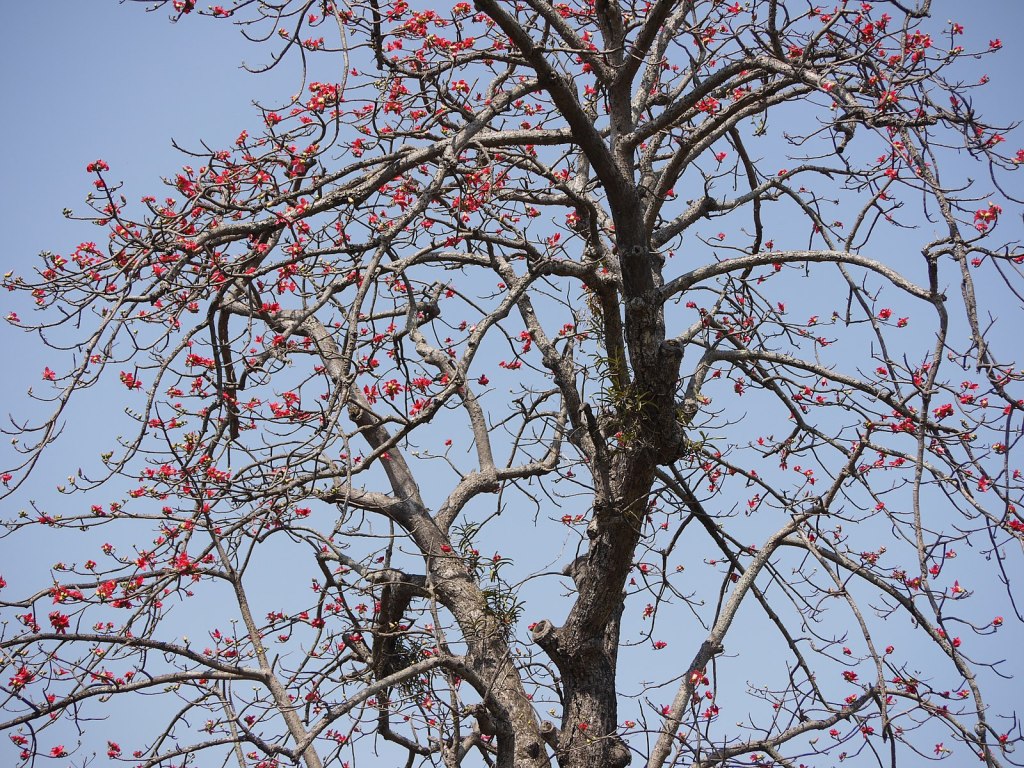



 Borderless
_(5486246516).jpg)