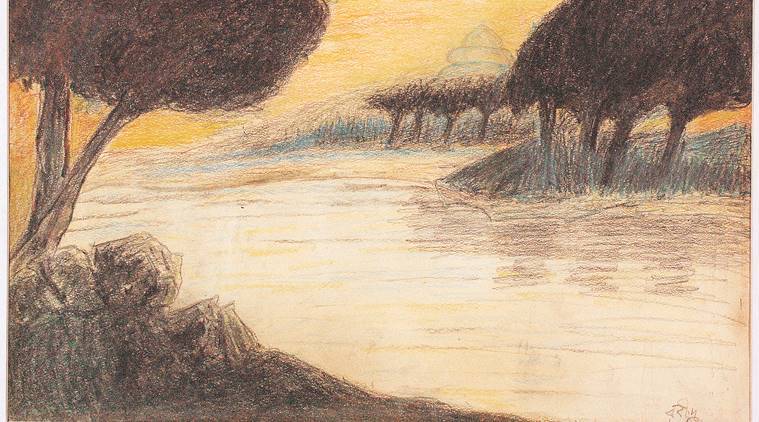
Asha or Hope is a poem from Tagore’s collection, Kalpana (Imagination, 1900).
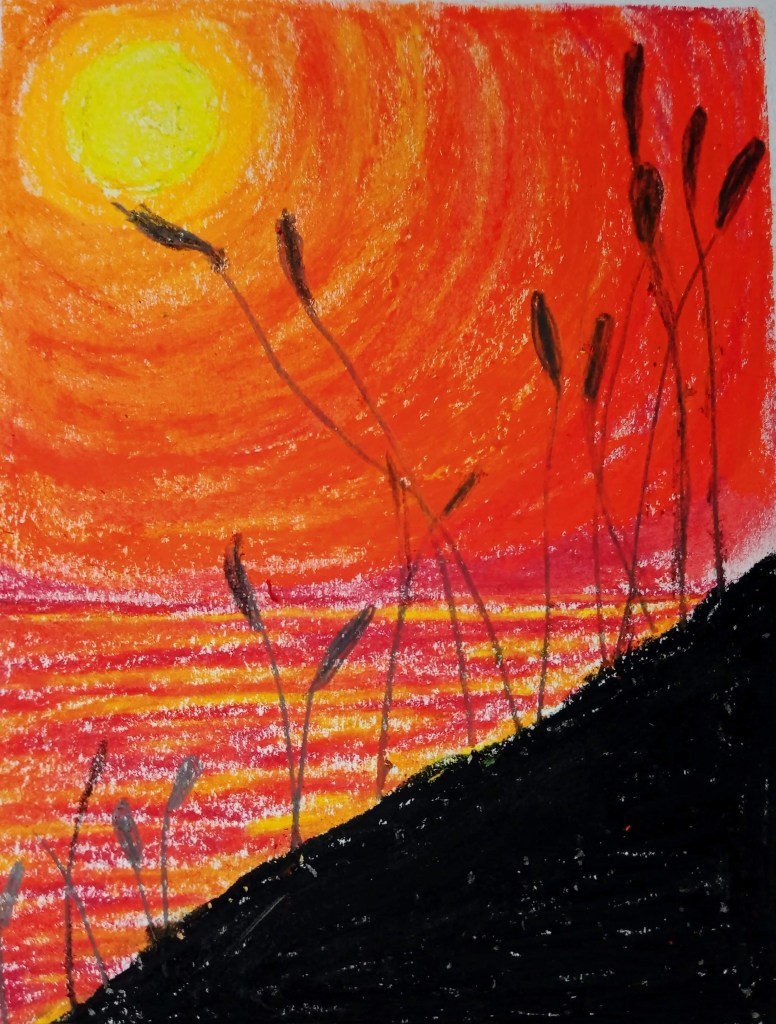
Art by Sohana Manzoor
HOPE

When the sun set on my life,
You welcomed me, O mother of mine.
Opening the doors of your inner sanctum,
You planted a kiss on my temples,
Lit a timeless lamp at my bedside. My neck
Was with a string of thorny blooms decked
To honour my songs. It hurt, it burnt —
Till taking off the wreath, you plucked
Each thorn off with your own hands,
Washed the dust. That garland —
With blooms now clean and white —
You draped on me as your eternal child.
My eyes opened as tears streamed.
I woke up to find it was only a dream!
This poem has been translated from Bengali by Mitali Chakravartywith editorial input from Sohana Manzoor.
.
PLEASE NOTE: ARTICLES CAN ONLY BE REPRODUCED IN OTHER SITES WITH DUE ACKNOWLEDGEMENT TO BORDERLESS JOURNAL
The twenty fifth of Boisakh Draws my stream of birthdays Closer to death. Sitting on that wafting mat, an artisan is making a garland With small statuettes of Many mortal Rabindranaths.
Time travels on his chariot. The pedestrian lifts his bowl While walking, he gets a drink. When he finishes, he recedes into the darkness. His bowl is crushed to dust under the wheels. Behind him, Follows another with a new bowl. He savours a fresh flavour. Eventhough he has the same name, He is a different person.
Once I was a child. Within a few birthdays, An entity was sculpted Who no one recognised. The people who would have known him Are not around. The being of that child is non-existent, Nor does anyone remember him. He has disappeared with his little world. His past sorrows and joys Find no reverberations. The pieces of his broken toys Cannot be seen in the dust. He would sit and calf-like Gaze outside, with longing. His world was Framed by the opening in the window. His innocent glance Would halt at the Coconut trees along the fence. His evenings were steeped in fairytales. There was no insurmountable barrier Between the real and unreal. His mind would skip between The two effortlessly. In the gloaming of light and darkness, The shadows wrapped around spring, Drawing close with belonging. Those few birthdays, For some time, Were like a brightly lit island. But the past has sunk into the darkness of the ocean. Sometimes, during low tides, We can see that mountain peak. We can see a shoreline of blood-red corals.
Over time, The twenty fifth of Boishakh Assumed Vivid vernal hues. Youthfulness played a melody Of yearning on the ektara, Questing for intangible Invisible inspirations. Hearing that music over time, The celestial Lakshmi’s throne swayed She sent over Few of her ambassadors, To earth to spew colours On the palash woods, Enticing, alluring to forgetfulness. I have heard their voices speak softly. I understood some. Some I didn’t. I have seen dark eyelashes damp with wetness. I have seen lips tremble with unspoken agony. I have heard the tinkle of bracelets vacillate with eager surprise. Unbeknown to me, On the first conscious morning, Of the twenty fifth of Boisakh, They left behind a Garland of jasmines. My dream at dawn Was heady with their fragrance.
That birthday was youthful with Fairytales woven by communities and villages, Some we knew, some doubted. There, princesses with their hair undone Were sometimes asleep, Sometimes, they awoke in surprise Touched by magical golden wands. Over time, The ramparts that walled the Vernal pochisheBoishakh broke. The path laden with the sway of Bokul leaves Trembling shadows, Murmuring breeze, The lovelorn kokil’s pleading call That turns the morning to afternoon, The bees buzzing their wings Towards the invisible scent of nectar -- That grassy path arrived At the stone paved road of adulthood. The ektara that played the haunting melody In youth changed its old string for new. That twenty fifth of Boisakh, Exposed me To a rough road, Bore me like a wave to the ocean of humanity. Morning and night, I have woven tunes and Caste a net mid-river – Some have been caught, Some have fled the fragile net.
Sometimes, the day has been faint, Motivation disappointed, Sadness filled the mind. Unexpectedly, in the midst Of such depression, I found Inspiration in Amravati’s mortal idol. They beautify the world, Offering vessels of nectar To the weary. They insult fear with billowing Waves of laughter. They fan flames of courage From ash-smothered smouldering fires. They arouse celestial voices to ignite meditative words. They have lighted the flame in my nearly suffused lamp. They have given melody to the strings with their cool breeze. They have garlanded me with honour On the twenty fifth of Boishakh. My songs, my words, Still reverberate with their Magical touch.
From then, in the battle of life, Conflicts raged like Thundering clouds. I had to abandon the ektara. Sometimes, I had to pick up the trumpet. Under the hot mid-day sun, I had to take on A battle. My feet are injured with thorns, My wounded heart bleeds. The Merciless harshness of waves Have beaten my boat, left and right, Muddying with criticism, Drowning with transactions. Hatred and love, Envy and friendship, Music and courage, My world has been stirred By the mists of all these emotions.
In the midst of this revolutionary-crisis, As the twenty fifth of Boishakh grows older, You have all come to me. Do you know – Despite my attempts, much is still left unexpressed, Much is in disarray, much is neglected?
From inside and outside, Good and bad, clear and unclear, famed and unknown, A vain, complicated character, You have created an idol With your regard, your love, Your forgiveness. Today you have brought this garland, I accept this as a recognition of The aging twenty-fifth of Boishakh, As an acknowledgment of my years. Heartfelt blessings from me to you. As I prepare to take leave, my human idol Remains in your heart. As the future is unknown, I cannot be arrogant.
Then give me your leave In this lifetime from all relationships Strung with black and white threads. Lonely, nameless, solitary – Let me look for a melody amidst Many tunes, many instruments, In the depth of all songs.
*Ektara-Bengal folk instrument
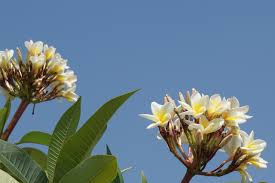
Palash flowersKokils or Asian KoelsFrom Public Domain
Tagore celebrated his birthdays by the Bengali Calendar on Pochishe Boisakh with poetry. This poem was dedicated to Amiya Chandra Chakravarty (1901-1986), a critic, academic and poet. He was a close associate of Tagore. The Pochishe Boisakh arrived in late spring as he mentions in this poem.
From Public Domain: The long stringed instrument is an ektara and the other another folk instrument called dugdugi
This poem has been translated from Bengali by Mitali Chakravartywith editorial input from Sohana Manzoor.
.
PLEASE NOTE: ARTICLES CAN ONLY BE REPRODUCED IN OTHER SITES WITH DUE ACKNOWLEDGEMENT TO BORDERLESS JOURNAL
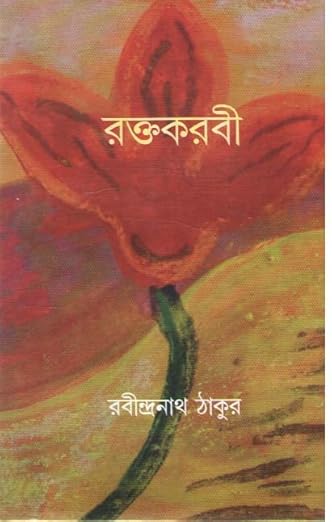
An excerpt from Professor Fakrul Alam’s unpublished translation of Rabindranath Tagore’s Raktakarabi or Red Oleanders (1924) from Bengali: It was first published in Prabasimagazine. This play rebels against totalitarianism.
Roktokorobi (Red Oeander) by TagoreRed Oleanders. From Public Domain
Introduction
This play is based on truth. However, any reader who turns only to historians to ascertain the authenticity of events is bound to be left unfulfilled by it. Let this suffice then as an explanation: as far as this poet is concerned, they are based fully on truth.
It is possible also that geographers will differ on the play’s actual setting. But everyone knows that the setting is informally known as Lucre Land. Scholars say that the mythical Lucre Land was the site of the gilded throne of Mammon, the God of Wealth. But it will not be right to see this play as one set entirely in a mythical period; it should not be classified as a fable either. The land that it deals with it has in its mines the most precious of minerals. Its discovery led to tunnel-digging. This is why people fondly calls it Lucre Land. We will get acquainted with some of the diggers involved in due course.
No one can expect historians to agree on the real name of the monarch of Lucre Land either. The one thing that I know is that the moniker used for him is “The Dreaded”. In due course it will be clear why this is the name by which he is called.
Outside the king’s palace walls are latticed windows. It is from a room with such windows that The Dreaded One chooses to meet any number of people he wants to talk to. Why he acts so bizarrely is something that we know nothing more about than what becomes apparent from the exchanges taking place between the main characters of this play.
The chieftains who run the kingdom on the king’s behalf are well-suited to carry out their work. They are also supposed to be far-seeing—all of them are members of the King’s inner council. Their carefully taken measures ensure that there are no lapses in the work being done by the diggers. And so this is how Lucre Land has developed steadily. The supervisors, once diggers themselves, have earned on their own merit the titles they now have. Indeed, in efficiency they often surpass the chieftains they once worked for. If the laws governing Lucre Land can be called euphemistically “The Full Moon’s Beams”, the responsibility of enforcing them are entrusted to the supervisors manning what can be called its Department of Disgrace.
In addition, there is the “Holy One”. He always swears by God but lives off what is allotted to him by the chieftains. He is believed to be responsible for a lot of the “good things” that are benefitting Lucre Land.
From time to time, inedible marine animals get stuck in the net of the fishermen casting their nets here. They are of no value though—either as edible creatures or as ones that can be traded for cash. On the contrary, every now and then they leave behind holes in the nets they get entangled in. In a net flung in the course of the plot of the play, however, a girl called Nandini shows up—a girl seemingly destined to tear apart the intricate net that separates the King of Lucre Land from the rest of the world.
As far as we can see at the start of the play, the events it dramatizes take place outside the room with the latticed windows where the king lives. We get to know very little of what is happening inside the palace though.
This play is set in the country called Lucre Land. The workers here are employed to dig gold. Its king remains hidden behind a thick screen. Only one scene of the play, however, is set behind the screen. The remaining scenes all take place outside.
From Public Domain
Enter Nandini and Kishore—a young man employed in digging mines
Kishore: Nandini! Nandini! Nandini!
Nandini: Why keep calling my name again and again young man? Do you think I have a hearing problem?
Kishore: I know you have no hearing problem. I keep calling you by your name because I like doing so. Do you need more flowers? If you do, let me go and get some.
Nandini: Go, go back to work. Don’t waste any more time here.
Kishore: What I do all day long is dig for gold. Whenever I can steal some time away from such digging to search for flowers for you. That makes me feel alive.
Nandini: Young man—don’t you know they’ll punish you if they find you not at work?
Kishore: But didn’t you say you really, really want the red oleanders? What delights me is that you can’t find them easily anywhere nearby. I found only one red oleander tree behind the rubbish dumped all over the place and that too after searching hard for it.
Nandini: Show me the place and I’ll go pluck the flowers myself.
Kishore: Please don’t say such a thing again. Don’t be so cruel Nandini! Let the tree remain as my one secret. Bishu sings for you songs he composed himself. From now on, I’ll get you the flowers you want and flowers that I can call my own.
Nandini: But the beastly people of this place keep punishing you. My heart breaks whenever they do so.
Kishore: The pain I endure makes the flowers that blossom even more dearly mine. They are the harvests of my sorrow!
Nandini: But how will I endure the pain and the suffering you have to endure on my account?
Kishore: What pain? That there will come a day when I’ll sacrifice myself fully for you is the thought that comes to my mind again and again.
Nandini: You keep giving me so much. Tell me, what can I give you in return?
Kishore: Make this pledge to me—every morning you’ll take the flowers from me.
Nandini: Fine, I’ll do that. But careful….
Kishore: No way I’m going to restrain myself! No way! I’ll bring you flowers even if I have to face their lashes every day!
Exit Kishore
The Professor Enters
Professor: Nandini! Don’t go; look at me!
Nandini: What for Professor?
Professor: Why do you keep surprising me again and again only to disappear afterwards? Since you succeed in stirring my mind, why don’t you then stir it up fully? Just stay for a minute and let me say a few things to you.
Nandini: Why do you need to talk to me?
Professor: If I’m to talk about what is of importance, just take a look! Our diggers climb up to the top from the tunnel with what they have mined from the heart of the earth and then carry burdens on their head like termites do. All the wealth of Lucre Land comes from that dust-mixed source—gold is the outcome! But beautiful one, you are golden not because of such dust but because of the light you emit. How can only the need for wealth detain you?
Nandini: You keep saying the same thing again and again. What amazes you so whenever you look at me Professor?
Professor: There is nothing surprising about the light that brightens the flower gardens in the morning. The light that comes through cracks in the wall are something else though. In Lucre Land you are that kind of unexpected light! Tell me—what could you for be possibly thinking about as far as this place is concerned?
Nandini: I am amazed to see the whole city’s focus to explore what is underground and all the groping in the dark that goes on. They keep digging in these underground tunnels for treasures that have been fossilising there for ages. These are treasures earth buried there.
Professor: What we do is exhume the corpses of such resources devotedly. We want to tame the ghosts within them. If we can tie the golden lumps up and retain them so that they don’t seem strange, we’ll have the world in our grasp.
Nandini: What is more shocking is that you have your king covered up in a wall made up of weird nets. It is as if you wouldn’t like people to find out that he is human. I feel like either opening the cover of that dark tunnel or flooding it with light. I feel like tearing up such a weird net and rescuing the man trapped inside.
Professor: Just as the ghost of fossilised wealth can be scary, the king we have can terrify us because of the power he has to scare his subjects.
Nandini: Everything you keep saying is so concocted.
Professor: Yes, I’ve made them up for sure. A nude need not be identified; only his tailored clothes will mark him as a king or a beggar! Come to my house—I’ll be delighted to make you wise with words of wisdom.
Nandini: Just as your diggers bury themselves when digging the soil, you seem to be digging deeper and deeper into your books. Why would you waste time on someone like me?
Professor: We are dense, thick-headed creatures, submerged in opaque scholarly work. You are the evening star we see when we have nothing else to do; seeing you makes our wings restless. Come home with me; let me spoil myself for a change.
Nandini: No, not now—I’ve come to see your king seated in his chamber.
Professor: He stays within his latticed wall; he won’t let you in for sure.
Nandini: No wall can block me; I’m here to spend time with your king in his chamber.
Professor: You know what Nandini—I too live inside a wall. I’ve sacrificed a lot of my human side; only my scholarship stirs in me. Just as our king is awesome, I’m an awe-inspiring scholar.
Nandini: You must be joking! You don’t seem frightening at all. Let me ask you this question: If they could bring me here, why didn’t they bring Ranjan to this place as well?
Professor: Their strategy is to tear up everything. In any case, let me say this: why bring your precious soul to a place so full of lifeless treasures?
Nandini: If Ranjan is brought here, their dead hearts will stir again.
Professor: Nandini alone has been enough to strike the chiefs of Lucre Land dumb; imagine what will happen if Ranjan is brought here as well.
Nandini: They have no idea how strange they can be. If God could make them smile, the spell they are in would be broken. Ranjan’s smile is God’s smile!
Professor: The smile of God is like sunlight—it melts ice but doesn’t move boulders. If you want to stir our chieftains, you need to be forceful.
Nandini: Ranjan’s strength is like your Shankhini River. Just like that river, he’ll be all smiles at one moment and a destructive force in another. Professor, let me tell you what has been a secret till now. I’ll be meeting Ranjan later today!
Professor: How do you know this?
Nandini: We’ll meet, for sure we will. The news has come that we’ll be united soon.
Professor: How can such news travel without attracting the attention of the chiefs?
Nandini: They’ll come through the same route that ushers news about spring. It’s touched with the colour of the sky and the lilt of the wind.
Professor: In other words, the colours of the sky lilt the breeze that ushers in spring.
Nandini: When Ranjan comes, I’ll be able to show you how news that has been flying can land on earth.
Professor: Once the subject of conversation turns to Ranjan, there is no stopping Nandini from talking. Never mind! Since I’ve mastered real knowledge, let me enter its depths; I myself don’t dare do anything now.
He comes back after advancing a little.
Nandini, aren’t you frightened at the thought of being in Lucre Land?
Nandini: Why should I be?
Professor: Animals fear solar eclipses but not the round sun. Lucre Land is a place where an eclipse of sorts has taken place. The sun was bitten when it got into a gilded crater during an eclipse. Since it itself wasn’t full, it didn’t want anything else to be fully developed. Let me advise you—don’t hang around this place. When you leave these craters, they will be yawning before us—but I’ll keep insisting—flee! Be happy with Ranjan anywhere else where people don’t shred the borders of Mother Earth’s sari into bits!
He goes some distance and then returns
Professor: Nandini, won’t you give me one of the red oleander flowers you are carrying in your right hand?
Nandini: Why? What do you want to do with it?
Professor: On many occasions it occurred to me that the red oleanders you wear have some significance for you.
Nandini: I have no idea what they could possibly mean.
Professor: Perhaps the Divine Dispenser of your fate does. The red color emits mysterious negative vibes and not only ones that delight.
Nandini: Things that can frighten me?
Professor: God has in this case painted beauty with a brush dipped in blood! I have no clue to what you were scribbling in red as you came. There are malati, mallika, chameli flowers aplenty that you overlooked. What made you pluck flowers only from this particular flowering tree? Know that people only do unthinkingly what they are fated to do.
Nandini: Every now and then Ranjan will fondly call me “Red Oleander”. I don’t know why the thought occurs to me that my Ranjan’s love is of that colour. It’s the colour I wear on my neck, my bosom and my hand.
Professor: So why not offer me a flower only for a while so that I can figure out the essence of that flower?
Nandini: Here, take this one. Ranjan will be here today. I’m so happy that I’ve decided to gift you this red oleander.
The Professor departs.
Gokul, a Tunnel Digger, Enters
Gokul: Turn your face this way for once. I can’t seem to figure you out! Who could you be?
Nandini: I’m exactly what you see. Nothing else! Why do you need to know anything more?
Gokul: Not a good idea to not know. Has the King of this realm summoned you here for any reason?
Nandini: For no good reason!
Gokul: What a thing to say! He is trapping us all. You are the cause of the danger we all are in.
Anyone bewitched by your beautiful face is doomed. Let’s take a look—what is that swinging there where you hair is parting?
Nandini: Red Oleander flowers!
Gokul: What do they signify?
Nandini: Nothing!
Gokul: I don’t believe you at all. You must be up to something. There is bound to be trouble before the day is over. That is why you decked yourself so. What a dreadful trick!
Nandini: What makes you think I’m so terrifying just by looking at me?
Gokul: You remind me of a torch lighted up in many colors. Go and fool innocent ones by telling them— “Take care! Beware!”
Gokul Exits
Nandini is now outside a latticed window
Nandini (Striking the latticed window): Can you hear me?
Voice: I hear you Nanda! But don’t keep calling me again and again; I have no time left, not a bit.
Nandini: I feel very happy today! So happy that I’d like to enter your room.
Voice: No need to come in. If you have anything to say, do so from outside the room.
Nandini: I’ve brought you a garland made of jasmine flowers. It’s covered with lotus leaves.
Voice: Wear it yourself!
Nandini: It doesn’t suit me. I wear red oleander garlands
Voice: I am like a mountain peak. I look best unadorned.
Nandini: From such peaks waterfall stream. A garland will sway in your neck as well. Open the net—I’d like to go in.
Voice: I won’t let you in. Say what you want to now. I don’t have any time to lose.
Nandini: Can you hear any song from where you are?
Voice: What song?
Nandini: A song about the winter month of Poush[1]! A song calling all to harvesting!
Poush calls us all
Come, come away
Its tray is full this day
With harvested crops galore
Come, come away
Don’t you see how the harvested rice’s loveliness mingles with the wintry sky?
In the heady wind
Goddesses work
Across rice fields
All over the land
A golden hue spreads
So good to see. Ah me!
Come outside King! Let me take you to the field.
The sky is happy to hear in fields flutes play.
 Who’d want to stay indoors any longer today?
 Open, open all doors
Voice: I go to work? What work am I good for?
Nandini: Harvesting is much easier than the kind of work you do for Lucre Land.
Voice: The work which seems easy to you is actually hard for me to do. Can a lake dance like the foams of a waterfall?
Nandini: Your strength is truly amazing. The day you let me enter your treasury, I wasn’t a bit startled by your gold piles. What truly fascinated me then is the way you managed to put things into an orderly heap effortlessly despite your immense strength. Nevertheless, I’ll have to say this: can lumped up golden balls respond to the amazing rhythms of your hands as well as a rice field? Tell me O King, aren’t you at all afraid to handle the fossilised resources of the world day after day?
Voice: Why, what is there to fear?
Nandini: The earth bestows on us joyfully things it holds dear. But when even dead bones are snatched away by those who value them merely as precious things what they really do is dig up from the dark depths things a blind giant had cursed. Don’t you see that everyone here is edgy? Either that or they are scared.
Voice: Scared of what?
Nandini: The fear that things will be snatched away and of the killings that might follow.
Voice: I don’t know of any curse involved. What I know is about the power we can evoke. Does my immense strength make you happy Nandini?
Nandini: Very happy indeed. That is why I’ll insist: come out into the light; put your feet on the soil; let earth rejoice.
The light joy brings
Daubs ears of corn with dew
Why not feel the joy of touch?
Nature’s joy knows no bounds
A sight so good to see
—ah me!
[1] Ninth month of the Bengali calendar coincides with December-January of the Gregorian calendar.
This essay was first published in Tattwabodhini Patrika, Ashwin issue, 1319 B.S.(September-October, 1912) and reprinted in Pather Sanchoy (Gleanings of the Road). It has been translated from Bengali by Somdatta Mandal.
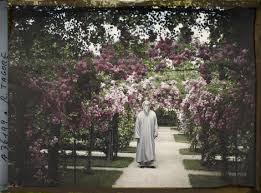
Tagore at Paris, 1921. From Public Domain
When we travel to Vilayet[1], then it is not simply going from one country to another; for us it is like entering a new household. The external differences of lifestyle are not that important. It is expected that there will be a difference between us and the foreigners in our dress, ornaments, eating and pleasure habits and so that doesn’t bother us too much. But not only in lifestyle, there is a deeper dissimilarity in our evaluation of life and to find a sense of direction there suddenly becomes a very difficult task.
We start feeling this from the moment we board the ship. We understand that we will have to abide by the rules of another different household. This sudden change is not to the liking of man. This is why we do not try to understand it very clearly; we somehow try to follow it or feel disgusted and then utter to ourselves—their manner and behaviour is too artificial.
The truth is that what is important is the difference we have with them regarding our social position. Our society has come and stopped within the limits of our family and village. Within those limits we have evolved certain fixed rules about how to behave with one another. Keeping those limits in mind it has been decided what we should do and what we should not. Some of those rules are superficial whereas others are quite normal.
But the society which is the target of these rules being framed is not very big in size and it is a society of relatives. So, our habits are quite domesticated. You cannot smoke tobacco in front of your father, you are supposed to pay obeisance to the guru and pay him some money, the sister- in- law must cover up her face in the presence of the elder brother-in-law and close proximity to your uncle- in- law is totally prohibited. Those rules that are outside the family or village society are based on caste(varna) differences.
It can be said that the thread of caste difference has tied our village society and families like a chain or necklace. We have reached a conclusion. India has resolved its societal problems once and for all and she feels that if this system can be permanently retained then there is nothing to worry about. That is why modern India is trying to strengthen in all manner this family and social bonding laws woven through the thread of varnashram[2].
It has to be admitted that India had been able to find a solution to the problems it was facing at one point of time. She has somehow reconciled the differences between diverse castes, she has pacified the struggle between diverse classes; by classifying professions she has managed to contain competition and disputes and has staved off the vanity created by differences of wealth and capacity through the fence of caste differences. Though, on the one hand, India has maintained through all means the independence of Brahmins who are at the helm of society to the people belonging to other castes, at the same time, she has also spread out small and big processes through which all facilities and education could be disseminated among the others. This is why what the rich person enjoys in India is also partly distributed among the ordinary people on various pretexts and in this way, by giving shelter to the ordinary and appeasing them, the powerful retains his power. In our country, there is no reason to go into a major clash between the rich and the poor and the necessity has not arisen by which the incapable person has to be protected by legal means.
The Western society is not family oriented; it is an open and large society which is much more widespread than ours. It is more on the outside than on the inside. The concept of family that is there in our country is absent in Europe and that is why the people of Europe are spread everywhere.
The nature of this spread-out society is such that on the one hand it is loosely assimilated and on the other it is more diverse and stronger. It is like composing a prose piece. Poetry is restricted within its rhymes and that is why its binding is simpler. But the prose spreads out. That is why on the one hand it is independent and on the other its steps are bound through logic and reason, through diverse rules on ideas about the development of the mind in a greater way.
Because the English society is so spread out and because all its activities are externally motivated, it must be always prepared for different social rituals. It hardly has time to wear casual domestic clothes. It must remain dressed up because its social area is not that of relatives. Relatives pardon you, tolerate you, but you cannot expect such tolerance on the part of outsiders. Everyone must do each and every work in due time, otherwise one will encroach upon another. If the rail line is in my area or is under the control of a few of my friends and relatives, then we can run the train as we wish and can even halt each other’s train as and when we desire. But if we try to detain a train for five minutes in the ordinary train route where lots of trains move up and down, then there will be lots of problems and that will be difficult to tolerate. Because our society is extremely domesticated or maybe because we are habituated with domestic practices, we behave with each other very loosely—we spread ourselves as much as possible, waste time and criticise formal behaviour as lacking in fraternal feelings. This is the first thing that prevents us from feeling at home in English society—there one cannot act in a carefree manner and then expect that people will pardon us. They have created different rules that will on an average benefit the maximum number of people. They have set up fixed rules for meeting each other, for invitation formalities, for dressing up, for entertaining guests. If we try and impose the laxity that we display with relatives in a place that is not actually a society of relatives, then everything turns out to be horrible and life becomes impossible.
Till now this wide European society has not come up with any solutions. It has made an effort through certain rules and regulations in external rituals and behaviour to retain self-restraint and gracefulness but is unable to make arrangements by which the internal strife at a personal level can be resolved. Europe is only going through experimentation, change and revolution. There is a constant rivalry cropping up between men and women, between religious society and professional society, between the power of the ruler and the ruled, between businessmen and worker groups. It has not pacified itself like the halo round the moon. Even now it is ready like a volcano waiting to erupt.
But how can we say that we have solved all our problems, have finalised our social structure, and are resting as peacefully as dead bodies? Even though time has elapsed, we can retain the system for some time, but we cannot keep the situation in chains. We are facing the entire world, now we cannot do with our domesticated society; these people are not merely our fathers, grandfathers or uncles, they are outsiders. They belong to different countries and so we should be extremely alert while interacting with them. If we are absent-minded and behave in a loose manner, then one day we will be totally unfit to act.
We are proud of our tradition, but it is not at all true that the society of India has not evolved through history. In different situations even India had to go through newer revolutions—there is no doubt about that—and history is replete with instances. But I don’t want to even utter that it is the end of all treading for her and from now on till eternity she will just be there and hold on to her traditionality. Society gets fatigued after each large revolution; during that time, it shuts its doors, switches off all lights and prepares to go to sleep. After the Buddhist revolution India had gone off to sleep latching her doors and windows with the hook of strict laws. She was sleepy. But to boast about this as eternal sleep will become a laughable though pitiable thing. Sleep is good only during the night, when there are no crowds of people outside, and when all the big shops and markets are shut down. But in the morning when everyone is awake and there is activity all around, if you go on quietly lying down and close all the old doors and windows, then you will be the loser.
The rules of the night are very simple. Its arrangements are sparse, and its requirements are very little. That is why we can complete all our tasks and go to sleep in an unperturbed manner. Then things go on lying where they were kept because there is no one to move them. The arrangements during the day are not so simple and completing the job once and for all in the early morning does not mean that one can relax and smoke tobacco the rest of the day. Work keeps pouring down our necks. We must keep attempting new things and if we cannot adjust ourselves to the flow of the outside world, then everything else falls out of place.
For some time, India has spent her nights in a system of strict and fixed set of rules. That does not mean that that situation will permanently remain very comfortable. Getting a beating is most painful and difficult, especially when it falls upon a sleeping body. Daytime is the period to receive such blows. That is why it is most comfortable to remain awake during the daytime.
It is time for us to wake up whether we wish it or not, whether we are full of laziness or not. We are constantly being hurt both internally and externally in society and so we are sad. We are suffering from poverty and famine. The society is breaking down; the joint family system is being split into bits and pieces. And the role of the Brahmins in society has become so demeaning that with the aid of ‘Brahmin societies’ and such other things, they keep on shouting loudly to prove their existence and thus only attest to their weakness. The panchayat[3] system worn in the neck by the government’s chaprasi[4] has committed suicide and its ghost is dominating the village. The food in the country is incapable of satiating the small village schools. Due to famine, they are now relying on the charity of government dole. The rich people of the country have doused the light in their birthplaces and are roaming around in Calcutta in motor cars, and people of noble descent are ready to sacrifice their entire wealth and their daughters at the feet of a graduate groom. There is no point in blaming the Kaliyuga[5], or the foreign king or the native English-speaking people for this misfortune. The truth is that our lord has sent his assistant during the daytime, and he will not stop till such time he can drag us out of our traditional bedrooms. So, we cannot forcibly close our eyes and try to create the night at odd hours. The world that has come to our threshold has to be welcomed inside our house. If we don’t give it a cordial welcome, then it will break open our doors and gain entry. Hasn’t the door not yet been broken now?
So once again, we must think about resolving our problems. It cannot be done by imitating Europe, but we must learn from her. Learning and imitating are not the same thing. Actually, if we learn in the correct way, we will be relieved from the art of imitating. If we cannot know the other truly, then we cannot understand the truth ourselves.
But I was saying that we cannot adjust ourselves in the European society with our loose domestic habits. We can never prepare ourselves in any way. It seems that everyone is pushing us aside, no one is waiting for us for a moment. We are pampered human beings; we feel out of place without our relatives in society. After coming here, I have noticed that since our students are not used to entering other people’s houses, most of them come here and learn things by heart but they do not keep any contact with the society here. The society here is large and so it has more responsibilities. Only if we undertake those responsibilities, can we find a sort of connection with the people of this society. If we cannot connect then we shall be deprived of the greatest learning prevalent here. This is because society is the greatest truth here. The greatest strength, the greatest sublimity is in the society here and not in the battlefield. Sacrifice and self-respect suitable for a broad-minded society are being expressed at every step. They are nurtured here and are preparing themselves in different ways to sacrifice their lives for the welfare of man. In modern India, the educated class of people still consider school education to be the true education. They are deprived of the education of greater society. Even after coming here and entering the school factory, if they come out simply as mechanical things and do not enter the birthplace of humanity visible here then they will be deprived even after coming to a foreign country.
[5] The current age in Hindu mythology which ends when the Kalki avatar comes to rescue humanity from darkness.
Somdatta Mandal is a critic and translator and a former Professor of English at Visva-Bharati, Santiniketan, India.An earlier version of this essay was published in Gleanings of the Road (Niyogi Books, pg 20).
.
PLEASE NOTE: ARTICLES CAN ONLY BE REPRODUCED IN OTHER SITES WITH DUE ACKNOWLEDGEMENT TO BORDERLESS JOURNAL
Esho Bosonto, Esho Aj Tumi (Come Spring, Come Today) was part of Tagore’s collection called Smaran (Remembrances) in 1903. Here is a translation of the poem.
Art by Sohana Manzoor
O Spring, come today,
Welcome to my world steeped
In untidy darkness and emptiness.
The flowers remain unplucked.
Mock at the poverty
And disarray if you must.
Still O Spring, today,
Do visit my home.
Today, all my windows—
all of them — are open.
The day stretches without hindrances.
There is no hope, no work.
The heart swings as
All the windows stay open
In the empty house.
For many days, laughter and tears
Have not been heard here.
Let them find freedom in your skies.
Let them breathe your breeze.
Let them be reborn with
Blooms of bokul and champa.
The past is over —
all its tears and laughter.
Revel with your festivities
Amidst the wounds in my heart.
Play your flute.
Blossom in abundance.
Let all the returning birds
Sing in chorus.
Celebrate your vernal festivals
Tuning in with my pain.
I will heal with the joy
Of your celebrations.
The heaven and Earth will
Come together as you celebrate.
They will laugh at death’s door
Repeatedly. Such festivities
Will heal, touch deep within
My being to find closure.
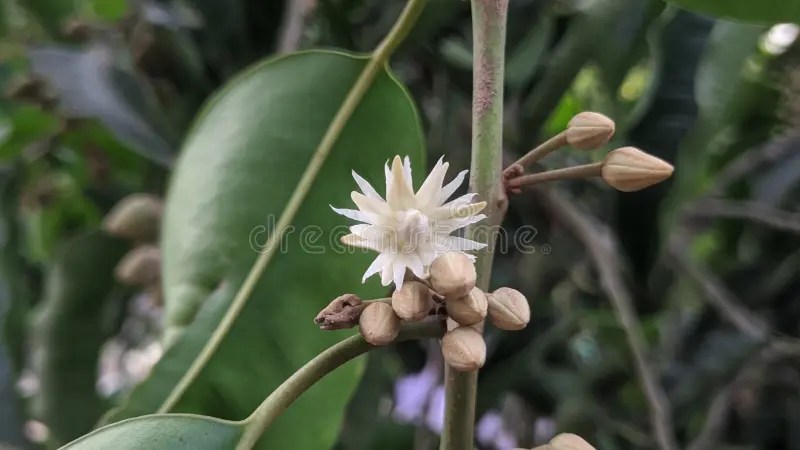
Champa FlowersBokul Blooms From Public Domain
This poem has been translated from Bengali by Mitali Chakravartywith editorial input from Sohana Manzoor
.
PLEASE NOTE: ARTICLES CAN ONLY BE REPRODUCED IN OTHER SITES WITH DUE ACKNOWLEDGEMENT TO BORDERLESS JOURNAL
Kheya (Ferry) by Tagore is the titular poem in a collection called Kheya published in 1906.
Art by Sohana Manzoor
KHEYA OR FERRY

Who are you traversing the shores,
          O boatman!
I sit at my doorstep,
        And gaze,
          O boatman!
As the haat* closes,
People to the ghat flock.
Then I imagine
        Myself among them
          O boatman!


In the gloaming, you row the boat
       To the other shore.
My heart soars to sing
       As I gaze upon the scene,
         O boatman!
The dark waters gurgle as the golden glow
Spreads across the other shore.
My teardrops flow
     With euphoria
         O boatman!


You have no words to express,
         O boatman!
I gaze to read
     What your eyes speak,
        O boatman!
Momentarily, if your gaze,
Falls on my face,
Then I imagine
     Myself among them
        O boatman!
This poem has been translated from Bengali by Mitali Chakravartywith editorial input from Sohana Manzoor
.
PLEASE NOTE: ARTICLES CAN ONLY BE REPRODUCED IN OTHER SITES WITH DUE ACKNOWLEDGEMENT TO BORDERLESS JOURNAL
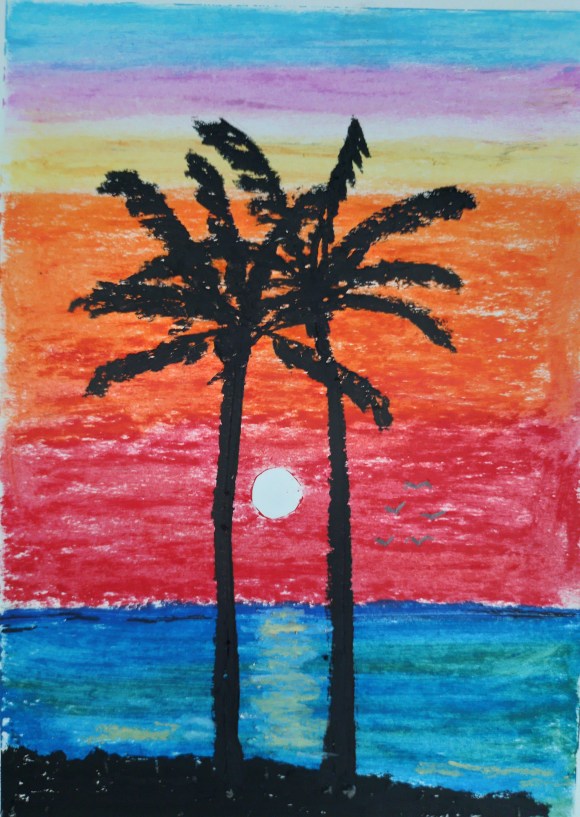
Probhat or Dawn by Tagore was first published in a collection called Chaitali in 1897.
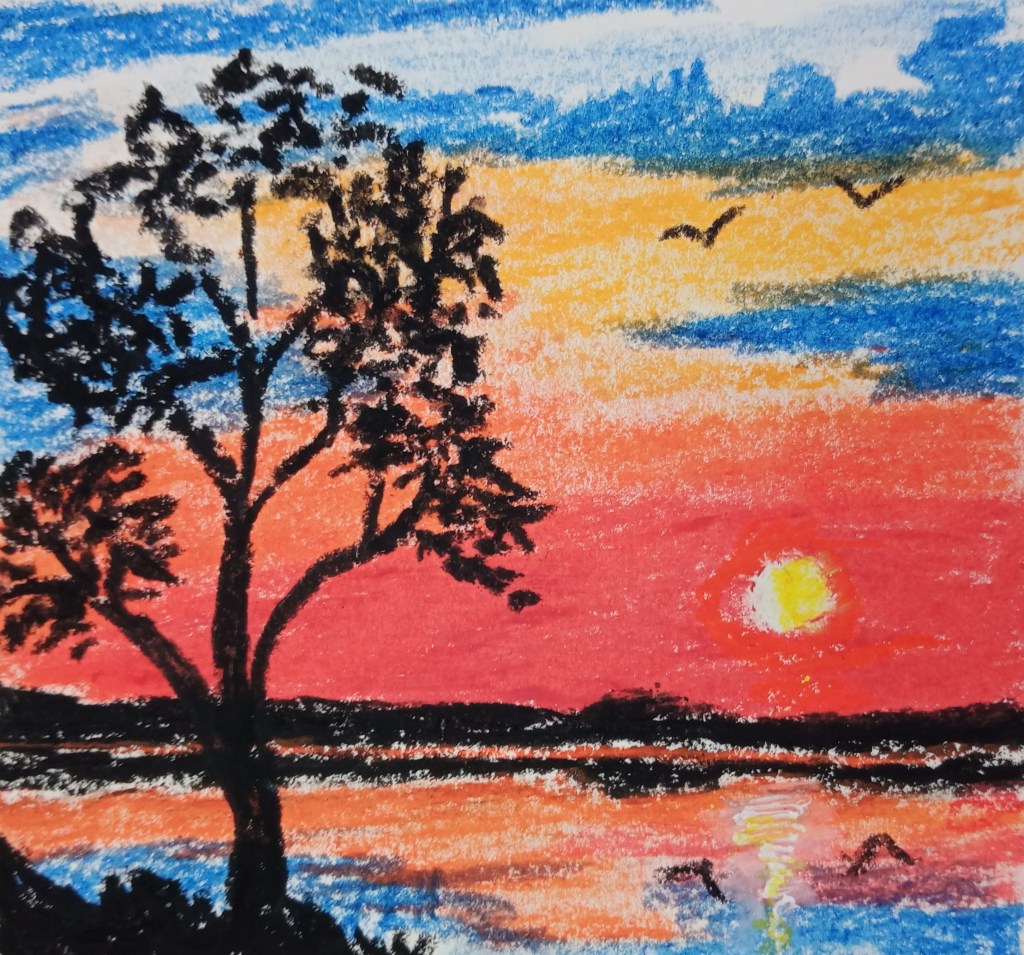
Painting by Sohana Manzoor
Dawn

In the serene, young dawn, the cool breeze
Sets aquiver the river that had been at peace.
The swans have not yet started to swim
Nor has the boat raised its white sail trim.
The village brides have not yet come to the ghat,
The cows aren’t grazing, nor the farmers walking down the path.
Only, I sit by an open window to gaze
Spellbound at the free sky, amazed.
As the breeze caresses my hair, sun rays
Dance happily on my face.
Merry birdsongs fill the air,
Enchanting the skies everywhere.
I feel blessed for this sky, so luminous.
I feel blessed to be in love with the world.
This poem has been translated from Bengali by Mitali Chakravartywith editorial input from Sohana Manzoor
.
PLEASE NOTE: ARTICLES CAN ONLY BE REPRODUCED IN OTHER SITES WITH DUE ACKNOWLEDGEMENT TO BORDERLESS JOURNAL
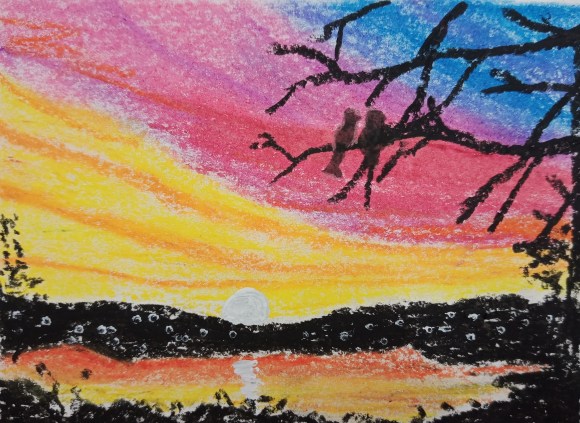
Published as part of Naibedya (1901) Tagore’s Shotabdir Surjo Aji(This Century’s Sun Today) remains relevant to this day.
Art by Sohana Manzoor
THE CENTURY’S SUN

The century’s sun sets today amidst clouds that are blood-red.
Revelling in violence, the crazed ragini* of death
Plays a fierce tune. Civilisation’s merciless serpent raises
Its evil hood, its concealed fangs with deadly venom laced.
Conflicts are born of self-interest.
Wars are fought to satiate greed.
Hurricanes rage in distress and churn
Barbarism that rouses from filth
Shamelessly, disguised as decorum.
Terrible outrages are committed.
Faith is pushed adrift by force,
Ostensibly, for the love of the race.
Poets scream stirring fear in hearts.
Dogs in the graveyard snatch and bark.

*Female raga
This poem has been translated from Bengali by Mitali Chakravartywith editorial input from Sohana Manzoor
.
PLEASE NOTE: ARTICLES CAN ONLY BE REPRODUCED IN OTHER SITES WITH DUE ACKNOWLEDGEMENT TO BORDERLESS JOURNAL
Phul Photano (Making Flowers Bloom) by Tagore was first published in 1906 in Kheya (Ferrying), a collection of 55 poems. The book was dedicated to the Indian scientist, Jagadish Chandra Bose (1858-1937), who discovered plants can feel pleasure, pain, understand affection and make sounds of distress.
From Public Domain
MAKING FLOWERS BLOOM

You cannot force,
    Force flowers to bloom.
Whatever you say or do,
However hard you try,
Day and night, excitedly
      Striking the stem —
None of you can force,
      Force flowers to bloom.

You can repeatedly
Fatigue with your glances.
You can tear the bunches,
       And throw them in the dust —
In such extreme chaos,
If they break their silence,
Their colours could spill,
      Their perfumes could overwhelm.
None of you can force,
      Force flowers to bloom.

He who can make flowers bloom,
          Does so on his own.
He radiates
With his eyes rays
Of the lifeforce
          To enchant the stem.
He who can make flowers bloom,
          Does so on his own.

Just his breath, seems
To make the flowers yearn to fly.
With wings made of leaves,
          They waft in the breeze.
Vibrant varied hues bloom
Like the heart in a swoon.
Many are drawn to them,
         Allured by the scents.
      He who can make a flower bloom,
          Does so on his own.
This poem has been translated from Bengali by Mitali Chakravartywith editorial input from Sohana Manzoor
.
PLEASE NOTE: ARTICLES CAN ONLY BE REPRODUCED IN OTHER SITES WITH DUE ACKNOWLEDGEMENT TO BORDERLESS JOURNAL
From the fount of darkness emerges light. That is your luminescence. A beacon shines amidst all rebellions, conflicts. That is your radiance. The hut that lies along a dusty path, That is your abode. Being immortalised by war is cruel affection. That is your love. When all is lost, what remains, That is your invisible gift. Death contains life like a vessel. That is the life you give us. The dust that lies under our feet laces the land. That is your heavenly land. Amidst all of us, you conceal yourself. That is You for me.








 Borderless