In 2007, Sybil Pretious travelled to spend a night with a local family in rural China and lived in a ‘hundred-year-old home’. She writes of her experiences with photographs and aplomb.
“Respect is a two-way street. If you want to get it, you have to give it.”
— R G Risch
Sometimes I wonder why people travel. I especially wonder when someone travelling in a foreign land asks me the way to the nearest MacDonalds. Of course, that can be seen as being judgemental, but I don’t think of myself as over critical, because I travel to experience different cultures as they are and not as I am. When anyone asks me, which is the best country in the world my reply is simple,
“The best country in the world is wherever I am.”
Travelling alone means that I have to communicate with people. And in general, responses are kind, positive and helpful. This is just one experience I have had while living six years in China but there are many more and equally as interesting.
As I travelled home to Suzhou from Shanghai on the train, a young Chinese lady sitting next to me was laden with packages. I smiled and asked her what she had bought. She smiled and proceeded to hold up many items for my inspection telling me the miniscule prices she had paid for them and where she had bought them and then offering to take me there. The two-hour train trip passed very pleasantly.
Back in my apartment I had a phone call from Jessica, my friend from the train asking if there was anything she could do for me. As I had been unable to get plain yoghurt, I asked her if she knew where I could get some. Next morning, on my doorstep were six small yoghurts.
I found throughout my six years in China that I had nothing but kindness and people going out of their way to help, either with an explanation or an address written in Chinese to show to the taxi driver or an offer to accompany me and be my interpreter.
The friendship with Jessica progressed. She introduced me to her fiancé, Jack. Their families were good friends and the marriage seemed almost expected. Jessica was not keen but was fulfilling her family’s wishes.
After many outings with the two of them, Jessica asked me if I would like to accompany her and Jack on a weekend trip to visit her parents and grandfather in Baoying.
Before giving my answer, I enquired of the Chinese teachers at school where Baoying was and what I should expect. Baoying is a county under the administration of Yangzhou, within Jiangsu Province about 170 miles north of Suzhou where I lived. They painted a very rural picture, and I was intrigued. When would a foreigner like me ever get this chance to experience China with a family in their rural home setting? I accepted.

Jessica’s family 
Grandfather 
Me, her dad and Jessica
We travelled on a very overcrowded bus from Suzhou, me squashed in and clutching the presents I had bought for the family, mainly luxury food and special tea, on my lap, together with my backpack. It was not a comfortable position for a four-hour journey.
The bus stopped twice for toilet breaks. The toilets were the usual Asian ones, where my poor knees suffered as I bent them delicately while desperately looking round for something to hold onto so that I didn’t collapse into the deposits beneath. This is when I wish I was a man. Jessica stood guard outside to make sure I came out unharmed.
The roads, all beautifully tarred and lined with lovely trees were not what I had expected out in the country. When we finally arrived at the bus station in Yangzhou, we were met by Jessica’s father who had borrowed the second uncle’s car. Her second uncle owned a construction firm and he appeared to have Government contracts for the construction of offices — hence the smart car. Jessica’s father was slim, with startlingly fine features and a ‘naughty boy’ look about him. Her mother was more solidly built with a kindly, patient demeanour and slightly protruding front teeth.
I was thoroughly welcomed by the two of them with the double hand clasp. We proceeded to an unpretentious restaurant, up the stairs and into a room where a round table with the usual round swivel in the centre, was set. I was welcomed into the seat of honour. That means you get to sit in the chair that directly faces the door – possibly to detect if unwanted guests might enter. And of course, I was introduced to the one rule of dining that embarrassed me – I, as the honoured guest, had to take the first taste of special dishes before anyone else.
As is usual with Chinese meals, dishes were brought out in endless succession – vegetables, salads and meat. Chicken soup in an enormous pot had every part of the chicken in it, including heads and feet. I tasted everything and really enjoyed it all, especially some of the fish dishes. I was complimented on my adeptness with chopsticks and was happy to use my fingers as well. Lots of lovely slurping sounds signalled appreciation of the meal. Bones, skins and other inedible bits were just put in a pile on the table next to you, to be cleared away later.
There was one whole fish, and I was told the eyes were the best part and naturally as the honoured guest I got to eat them. I tried to look delighted. I ate them when they were offered – well I think I swallowed them whole and tried not to think of what I was consuming! I said they were very tasty, and they might well have been.
Second and third uncles and aunts were there to greet me. Grandfather was there as well. He was a very distinguished looking old man who reminded me of Paul Newman, one of my favourite actors, though I never thought that Paul looked Asian.
Throughout the meal everyone toasted everyone else with much back slapping and laughter, shouting, “Ganbei”, especially every time grandfather drank or smoked.
As a mark of respect, you had to imitate what grandfather did. The men drank wine and beer while the women only drank orange squash. I got to drink a small glass of beer. It pays to be the honoured guest.
Jessica was really mad with Jack who seemed to be involved in more toasts than anyone else. She said he was saying all the wrong things.
Everyone smoked endlessly but I tried not to cover my face. Smoking in China was very popular at that time and was only banned in stages. In 2009, it was announced that there would be no smoking in all health care facilities by 2011. At that time, there were 350 million smokers in China.
Throughout the time since we had left Suzhou, I had not seen another European, nor had I heard any English apart from what was spoken to me by Jessica and Jack. Many people stared and of course the kids were really curious about me, hiding behind their mothers and peeping out. I just made funny faces and hid my face behind my hand which made them laugh. My Chinese friends could not understand how I got around China without speaking Mandarin! My communication, however, is not always with words. The body and especially the hands perform wonders of enlightenment in many different languages.
Time to get into the car again — four of us squashed in the back to go to view the new Government buildings built by uncle’s construction firm — very big, modern and impressive they were too.
I noticed that the family had been chatting and gesturing animatedly amongst themselves and looking at me whilst doing so. Eventually, Jessica asked me if I would like to stay in a hotel or stay in their home. No contest. I asked to stay with them. I was here for new experiences.
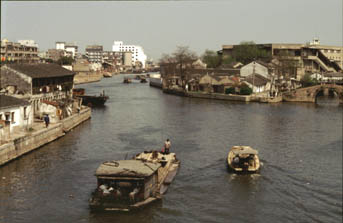
At last, we were on the road where the countryside borders on the Grand Canal.

This canal runs from Beijing to Hangzhou, a distance of 1776km and the oldest part of it was started in fifth century BC. It has twenty-four locks and sixty bridges.
“Don’t these people build anything small?” I wondered to myself.
On the canal, great barges plied back and forth carrying sand, pebbles and rocks used in construction. Beside the canal were great heaps of rock and stone.
Then came the best part of the adventure, the China that my family had thought I had come to. We turned onto a narrow concrete road (one car width and not another car in sight) with narrow water filled furrows alongside and fields of ripened wheat yellow waving beyond them.
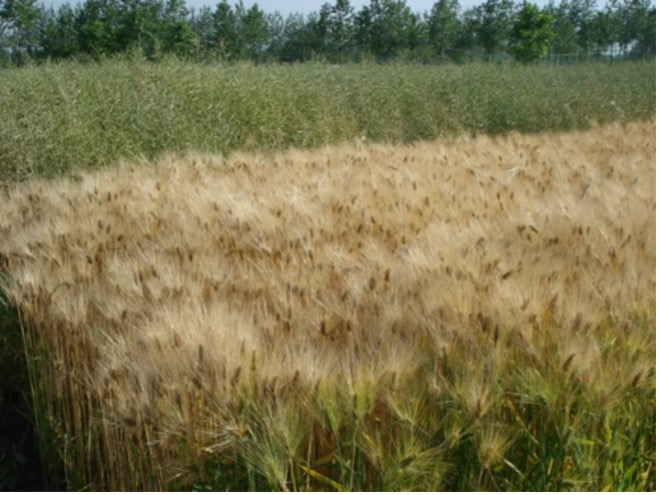
Wheat Fields 
A grandmother placing fishing nets
This was the season of wheat. After it is harvested, they would plant rice which would be reaped in October — fertile land indeed. Jack informed me that the Government instructed the farmers what they should plant each season.
We turned down an even narrower road made of red bricks and later just sand. Melons growing in greenhouses covered in plastic on one side and further along the road a put-putting pump engine, which was moving water from one canal to another, blocked our way. Jessica’s father eventually called the owner and together they moved it and we squeezed past, a hair’s breadth from falling into the furrow below.
Finally, we arrived at Jessica’s parent’s house in the country.
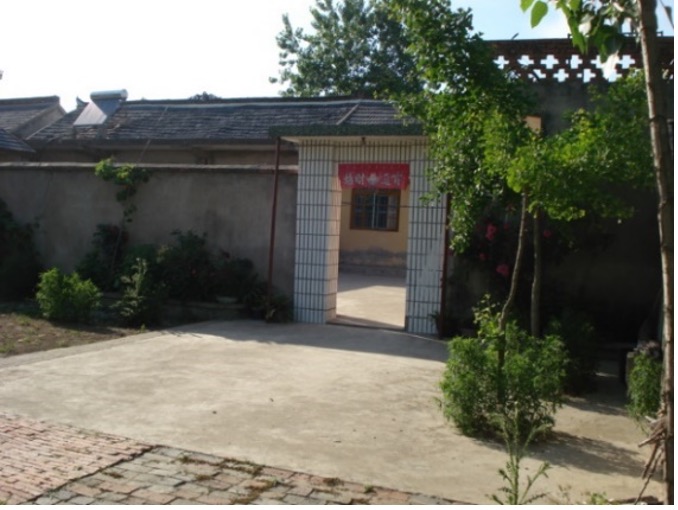
Entrance to Jessica’s parents house 
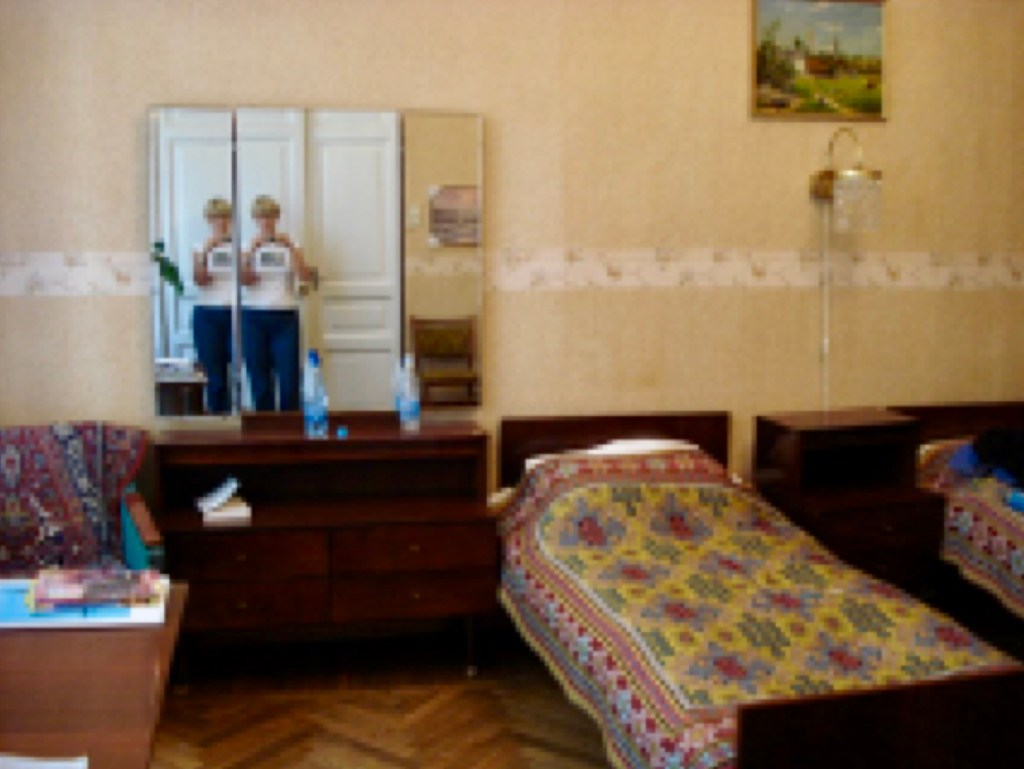
The bedroom
I was told it was over 100 years old. It was quite basic, with rough pealing, painted walls and an entrance arch with old roses on either side. This led into an open courtyard with a clean concrete floor. Up some steps and inside were three identical rooms connected by a passageway in the front. Plain concrete floors and odd furniture as well as suitcases and cases of drinks and duvets all piled on the sides against the walls. Jessica said that her parents did not often use the house. They usually stayed with grandfather and his new wife just down the road.
I really needed to stretch my legs while Jack and Jessica had a sleep. They were both very tired as they worked long hours. I was happy to go alone and set forth with a fresh breeze brushing my cheeks and unpolluted air drawn into my lungs. The narrow walkways, with ducks and geese paddling furiously in shallow furrows were a lovely respite from the tarred roads and manicured gardens of Suzhou. This all took me way back to early childhood memories of farms in Rhodesia.

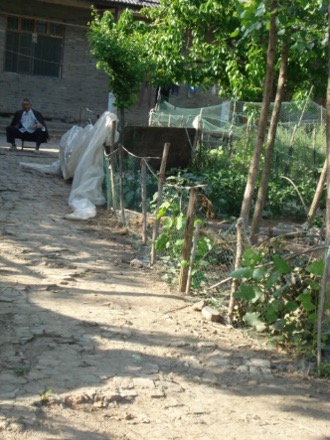

I soon had that feeling of being followed, and realised Jack was wearily walking some way behind me. I felt guilty, having deprived him of his sleep but I appreciated his caring. So often I had occasion to feel this towards my Chinese friends. I apologized and walked back with him.
There was no bathroom in the house and in the evening, I was taken next door to another aunt whose home had a shower.
Hmmmm, yes, a shower? It was like an attic room on the ground floor with a really low ceiling and a bath/shower that I couldn’t possibly get into without bumping my head! So I just used the loose shower head to vaguely water myself, bending double to soap and wash the nether parts. I then dried with a tiny towel I had remembered to bring with me. Finally I tried getting into my pyjamas which was even worse as I couldn’t stand up. In the middle of it all, with the bottom half of my pyjamas round my ankles, Jessica popped her head in to see how was doing – me in the dripping half nude and trying to point my foot in the right direction to get it into the leg part.
“Um, okay,” I mumbled, trying to place the small towel strategically over the parts that hadn’t got into the pyjamas yet.
Finally, I stepped out and feeling somewhat strange I put a jacket over the pyjamas as I still had to walk out into the road to get back to the house! The fact that, in China, many people walk round in their pyjamas even in Shanghai streets escaped me at that moment. One of the aunts walking with us stroked my tanned, freckled arm and asked Jessica what was wrong with my skin.
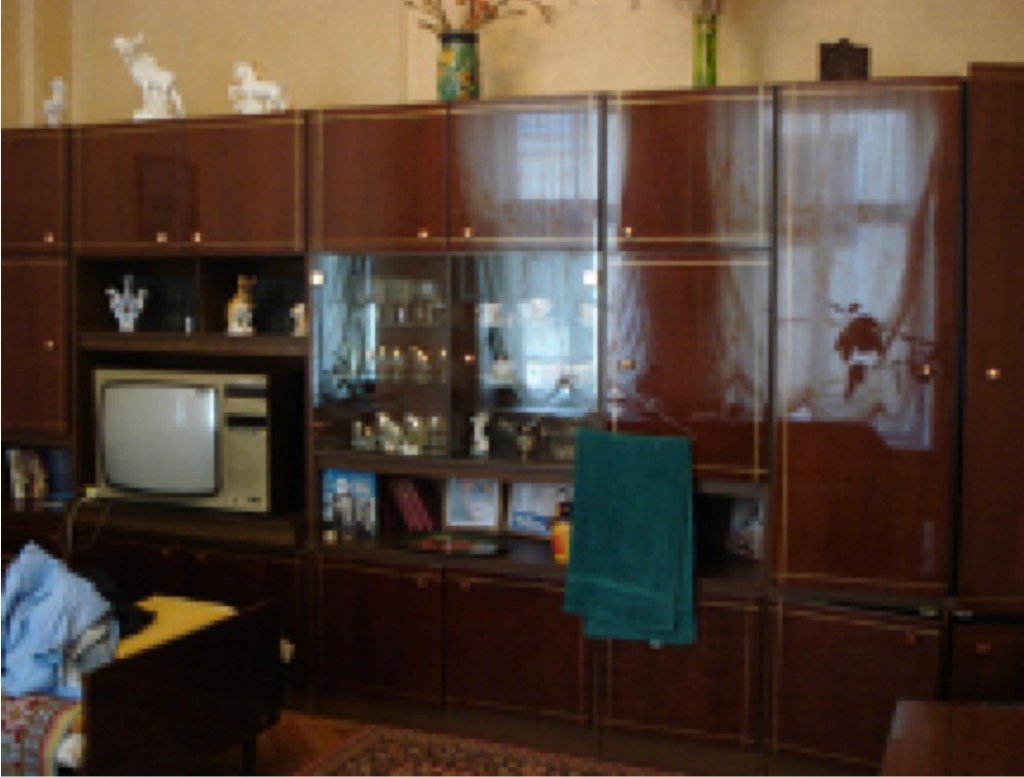
In the evening, we sat in one of the rooms which doubles as a bedroom/lounge watching TV all in Chinese and everyone chatting in Chinese. It was interesting to observe the interactions.
A light supper of rice porridge and beans was served which was very pleasant. Jessica asked me if I minded sharing a double bed with her. No problem. Before bed I had to go to the toilet. She apologized and brought out a cute china potty with a lid. I did my bit in that and she carted it away for me – shades of my early childhood in Rhodesia (Zimbabwe) again! The bed was a typical hard Chinese one with one thick quilt each. I snuggled in and I was surprised at how well I slept – not even the slightest backache.
However, before we nodded off, I became Jessica’s confidante as she told me of her love problems and asked my advice. I was mostly at a loss to advise her as I was not really well versed in Chinese customs, but she seemed happy to listen to what I had to say. Maybe my voice was consoling, and she didn’t really have anyone else to tell. I was woken at 5am, not to the song of birds or a cock’s crow but to a loud caterwauling which apparently signalled all the workers to begin their day!
Later I rose and went to wash my teeth in the kitchen sink and then off to the toilet. Oh dear! Outside in the courtyard an opening into a room with no door and a rectangular sloping away pit of which the bottom slush was visible. I got in and out of there really quickly.
Breakfast was simple and included fascinating rice wrapped in cane leaves to look like an ice cream – delicious.
Lunch is always the main meal and that morning Jessica’s mother had got up at five to go to the market to purchase a duck, fresh fish, prawns and vegetables. There were strange looking creatures that looked like great big cockroaches. They were alive and kicking. The fish were swimming around in a bowl. All the vegetables – eggplant, Chinese cabbage, other greens and beans were being meticulously prepared on the pristine concrete floor of the courtyard. Five relatives/friends had come to help. One lady was cutting off the legs of the still kicking ‘cockroaches, a goose was also being prepared – I didn’t view the slaughter or de-feathering of that. The ingredients for the meal were definitely as fresh as you could get.
During the morning I was taken to pick my own watermelons, round and green striped, but when broken open were yellow, not pink. Sweet and juicy, six of them were boxed on the spot for me to take home as a present.
During lunch time I was surrounded by ten men (Jessica’s father had invited all his work mates) and Jessica sat beside me. Her mother and the other ladies, who had toiled all morning, did not take part in eating the meal. We drank and ate and went through numerous toasts. I was allowed some rice wine, and everyone wanted to toast me with, “Ganbei” and bottoms up! It seems that I was accepted as ‘one of the boys’ for the moment.

Jessica’s mother setting the table at which she would not eat 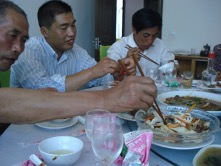
A wonderful celebratory meal
Finally after relaxing, we were driven in yet another car belonging to Jessica’s uncle and we made our way back to catch the bus and to take the four hour return journey to Suzhou.
My chance to repay Jessica’s kindness came a couple of weeks later. I was going to be away for a weekend, and she asked me if it would be possible for a couple of her relatives to stay in my apartment for that weekend. She had many visitors arriving to plan her wedding and not enough accommodation. Of course, I was delighted to oblige. Some of my colleagues were sceptical about the idea. I ignored them.
I felt blessed to be accepted as part of the family and I knew that being on my own was a distinct advantage. If I had been on that train initially with many friends, I would not have started the conversation with Jessica or uniquely experienced rural Baoying.
.
Sybil Pretious writes mainly memoir pieces reflecting her varied life in many countries. Lessons in life are woven into her writing encouraging risk-taking and an appreciation of different cultures.
.
PLEASE NOTE: ARTICLES CAN ONLY BE REPRODUCED IN OTHER SITES WITH DUE ACKNOWLEDGEMENT TO BORDERLESS JOURNAL








 Borderless
