Categories
Contents

Borderless, April 2025

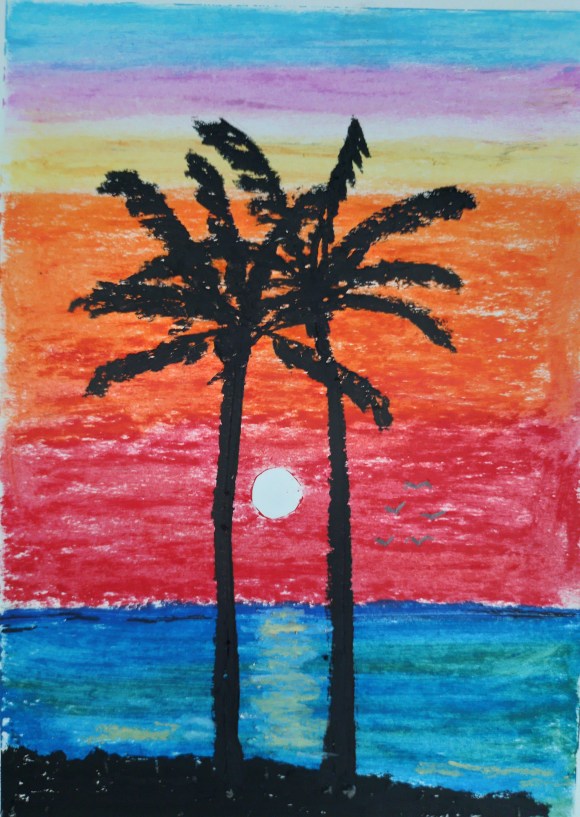
Art by Sohana Manzoor

Editorial

Seasons in the Sun?….Click here to read.

Translations

An excerpt from Tagore’s long play, Roktokorobi or Red Oleanders, has been translated by Professor Fakrul Alam. Click here to read.

Tagore’s essay, Classifications in Society, has been translated by Somdatta Mandal. Click here to read.

Poems of Longing by Jibananada Das homes two of his poems translated from Bengali by Professor Fakrul Alam. Click here to read.

Four cantos from Ramakanta Rath’s Sri Radha, translated from Odiya by the late poet himself, have been excerpted from his full length translation. Click here to read.

An excerpt from Syad Zahoor Shah Hashmi’s Nazuk, has been translated from Balochi by Fazal Baloch. Click here to read.

Disappearance by Bitan Chakraborty has been translated from Bengali by Kiriti Sengupta. Click here to read.

Roadside Ritual, a poem by Ihlwha Choi  has been translated from Korean by the poet himself. Click here to read.

Tagore’s Pochishe Boisakh Cholechhe (The twenty fifth of Boisakh draws close…) from Bengali by Mitali Chakravarty. Click here to read.

Poetry

Click on the names to read the poems

Luis Cuauhtémoc Berriozábal, Thompson Emate, Pramod Rastogi, George Freek, Vidya Hariharan, Stuart McFarlane, Meetu Mishra, Lizzie Packer, Saranyan BV, Paul Mirabile, Hema Ravi, Ryan Quinn Flanagan, Rhys Hughes

Poets, Poetry & Rhys Hughes

In Three Gothic Poems, Rhys Hughes explores the world of horrific with a light touch. Click here to read.

Musings/Slices from Life

The Day the Earth Quaked

Amy Sawitta Lefevre gives an eyewitness account of the March 28th earthquake from Bangkok. Click here to read.

Felix, the Philosophical Cat

Farouk Gulsara shares lessons learnt from his spoilt pet with a touch of humour. Click here to read.

Not Everyone is Invited to a Child’s Haircut Ceremony

Odbayar Dorje muses on Mongolian traditions. Click here to read.

From a Bucking Bronco to an Ageing Clydesdale

Meredith Stephens writes of sailing on rough seas one dark night. Click here to read.

Musings of a Copywriter

Stay Blessed! by Devraj Singh Kalsi is a tongue-in-cheek musing on social norms and niceties. Click here to read.

Notes from Japan

On Safari in South Africa by Suzanne Kamata takes us to a photographic and narrative treat of the Kruger National Park. Click here to read.

Essays

Songs of the Adivasi Earth

Ratnottama Sengupta introduces us to the art of Haren Thakur, rooted in tribal lores. Click here to read.

‘Rajnigandha’: A Celebration of the Middle-of-the-Road

Tamara Raza writes of a film that she loves. Click here to read.

‘Climate change matters to me, and it should matter to you too’

Zeeshan Nasir writes of the impact of the recent climate disasters in Pakistan, with special focus on Balochistan. Click here to read.

Bhaskar’s Corner

Ramakanta Rath: A Monument of Literature: Bhaskar Parichha pays a tribute to the late poet. Click here to read.

Stories

Jai Ho Chai

Snigdha Agrawal narrates a funny narrative about sadhus and AI. Click here to read.

The Mischief

Mitra Samal writes a sensitive story about childhood. Click here to read.

Lending a hand

Naramsetti Umamaheswararao takes us back to school. Click here to read.

Conversation

Ratnottama Sengupta talks to filmmaker and author Leslie Carvalho about his old film, The Outhouse, that will be screened this month and his new book, Smoke on the Backwaters. Click here to read.

Book Excerpts

An excerpt from Anuradha Kumar’s Wanderers, Adventurers, Missionaries: Early Americans in India. Click here to read.

An excerpt from Snigdha Agrawal’s Fragments of Time (Memoirs). Click here to read.

Book Reviews

Somdatta Mandal reviews Sheela Rohekar’s Miss Samuel: A Jewish Indian Saga, translated by Madhu Singh. Click here to read.

Gracy Samjetsabam reviews Tony K Stewart’s Needle at the Bottom of the Sea: Classic Bengali Tales from the Sundarbans. Click here to read.

Bhaskar Parichha reviews Raisina Chronicles: India’s Global Public Square by S. Jaishankar & Samir Saran. Click here to read.

.

Click here to access the Borderless anthology, Monalisa No Longer Smiles

Click here to access Monalisa No Longer Smiles on Amazon International
Categories
Tagore Translations

‘Pochishe Boisakh Cholechhe…’ Rabindranath Tagore’s Birthday Poem

Art by Sohana Manzoor

Tagore’s Pochishe Boishak Cholechhe (The twenty fifth of Boisakh draws to a close…), was published in a collection called Shesh Shaptak (Final Week) in 1935. Pochishe Boisakh ( coinciding with 7-9 May on the Gregorian calendar) was his birthday.

             BIRTHDAY POEM

The twenty fifth of Boisakh
Draws my stream of birthdays
Closer to death.
Sitting on that wafting mat, an artisan is making a garland
With small statuettes of
Many mortal Rabindranaths.

Time travels on his chariot.
The pedestrian lifts his bowl
While walking, he gets a drink.
When he finishes, he recedes into the darkness.
His bowl is crushed to dust under the wheels.
Behind him,
Follows another with a new bowl.
He savours a fresh flavour.
Eventhough he has the same name,
He is a different person.

Once I was a child.
Within a few birthdays,
An entity was sculpted
Who no one recognised.
The people who would have known him
Are not around.
The being of that child is non-existent,
Nor does anyone remember him.
He has disappeared with his little world.
His past sorrows and joys
Find no reverberations.
The pieces of his broken toys
Cannot be seen in the dust.
He would sit and calf-like
Gaze outside, with longing.
His world was
Framed by the opening in the window.
His innocent glance
Would halt at the
Coconut trees along the fence.
His evenings were steeped in fairytales.
There was no insurmountable barrier
Between the real and unreal.
His mind would skip between
The two effortlessly.
In the gloaming of light and darkness,
The shadows wrapped around spring,
Drawing close with belonging.
Those few birthdays,
For some time,
Were like a brightly lit island.
But the past has sunk into the darkness of the ocean.
Sometimes, during low tides,
We can see that mountain peak.
We can see a shoreline of blood-red corals.

Over time,
The twenty fifth of Boishakh
Assumed
Vivid vernal hues.
Youthfulness played a melody
Of yearning on the ektara,
Questing for intangible
Invisible inspirations.
Hearing that music over time,
The celestial Lakshmi’s throne swayed
She sent over
Few of her ambassadors,
To earth to spew colours
On the palash woods,
Enticing, alluring to forgetfulness.
I have heard their voices speak softly.
I understood some. Some I didn’t.
I have seen dark eyelashes damp with wetness.
I have seen lips tremble with unspoken agony.
I have heard the tinkle of bracelets vacillate with eager surprise.
Unbeknown to me,
On the first conscious morning,
Of the twenty fifth of Boisakh,
They left behind a
Garland of jasmines.
My dream at dawn
Was heady with their fragrance.

That birthday was youthful with
Fairytales woven by communities and villages,
Some we knew, some doubted.
There, princesses with their hair undone
Were sometimes asleep,
Sometimes, they awoke in surprise
Touched by magical golden wands.
Over time,
The ramparts that walled the
Vernal pochishe Boishakh broke.
The path laden with the sway of Bokul leaves
Trembling shadows,
Murmuring breeze,
The lovelorn kokil’s pleading call
That turns the morning to afternoon,
The bees buzzing their wings
Towards the invisible scent of nectar --
That grassy path arrived
At the stone paved road of adulthood.
The ektara that played the haunting melody
In youth changed its old string for new.
That twenty fifth of Boisakh,
Exposed me
To a rough road,
Bore me like a wave to the ocean of humanity.
Morning and night,
I have woven tunes and
Caste a net mid-river –
Some have been caught,
Some have fled the fragile net.

Sometimes, the day has been faint,
Motivation disappointed,
Sadness filled the mind.
Unexpectedly, in the midst
Of such depression, I found
Inspiration in Amravati’s mortal idol.
They beautify the world,
Offering vessels of nectar
To the weary.
They insult fear with billowing
Waves of laughter.
They fan flames of courage
From ash-smothered smouldering fires.
They arouse celestial voices to ignite meditative words.
They have lighted the flame in my nearly suffused lamp.
They have given melody to the strings with their cool breeze.
They have garlanded me with honour
On the twenty fifth of Boishakh.
My songs, my words,
Still reverberate with their
Magical touch.

From then, in the battle of life,
Conflicts raged like
Thundering clouds.
I had to abandon the ektara.
Sometimes, I had to pick up the trumpet.
Under the hot mid-day sun,
I had to take on
A battle.
My feet are injured with thorns,
My wounded heart bleeds. The
Merciless harshness of waves
Have beaten my boat, left and right,
Muddying with criticism,
Drowning with transactions.
Hatred and love,
Envy and friendship,
Music and courage,
My world has been
stirred
By the mists of all these emotions.

In the midst of this revolutionary-crisis,
As the twenty fifth of Boishakh grows older,
You have all come to me.
Do you know –
Despite my attempts, much is still left unexpressed,
Much is in disarray, much is neglected?

From inside and outside,
Good and bad, clear and unclear, famed and unknown,
A vain, complicated character,
You have created an idol
With your regard, your love,
Your forgiveness.
Today you have brought this garland,
I accept this as a recognition of
The aging twenty-fifth of Boishakh,
As an acknowledgment of my years.
Heartfelt blessings from me to you.
As I prepare to take leave, my human idol
Remains in your heart.
As the future is unknown, I cannot be arrogant.

Then give me your leave
In this lifetime from all relationships
Strung with black and white threads.
Lonely, nameless, solitary –
Let me look for a melody amidst
Many tunes, many instruments,
In the depth of all songs.


*Ektara-Bengal folk instrument

Tagore celebrated his birthdays by the Bengali Calendar on Pochishe Boisakh with poetry. This poem was dedicated to Amiya Chandra Chakravarty (1901-1986), a critic, academic and poet. He was a close associate of Tagore. The Pochishe Boisakh arrived in late spring as he mentions in this poem.

From Public Domain: The long stringed instrument is an ektara and the other another folk instrument called dugdugi

This poem has been translated from Bengali by Mitali Chakravarty with editorial input from Sohana Manzoor.

.

PLEASE NOTE: ARTICLES CAN ONLY BE REPRODUCED IN OTHER SITES WITH DUE ACKNOWLEDGEMENT TO BORDERLESS JOURNAL

Click here to access the Borderless anthology, Monalisa No Longer Smiles

Click here to access Monalisa No Longer Smiles on Kindle Amazon International