Categories
Review

Job Charnock and the Potter’s Boy

Book Review by Somdatta Mandal

Title: Job Charnock and the Potter’s Boy

Author: Madhurima Vidyarthi

Publisher: Niyogi Books

The nomenclature ‘historical fiction’ is sometimes quite confusing for the reader who keeps on wondering how much of the novel is real history and how much of it is the figment of the author’s imagination. Beginning in 1686, and set in the later part of Aurangzeb’s reign, this work of historical fiction named Job Charnock and the Potter’s Boy charts the turbulent history of an insignificant hutment in the inhospitable swamps of Sutanati in Bengal that becomes one man’s unyielding obsession. This man is no other than Job Charnock whom we all claim to be the original founder of the city of Calcutta.

Bengal during that period was the richest subah of the Mughal Empire and the centre of trade. The English were granted a toehold in Hugli when Shah Jahan ousted the Portuguese in 1632 and made it a royal port. Since then, they had been worrying Shaista Khan, the current nawab at Dhaka, to give them permission to erect a fort at the mouth of the river but the wily old nawab did not agree and dismissed their petitions repeatedly. This was a period of extreme flux when the European powers like the Dutch, the Danes, the French and the English were all playing out age-old rivalries in new battlefields, aided and abetted by individual interests and local conflicts. This is when Sir Joshua Child was at the helm of East India Company’s affairs in London throughout the 1680s and his plans were brought to fruition in faraway Bengal by William Hedges and then Job Charnock.

Of the earliest champions of the British Empire, none was as fanatic or single-minded as Job Charnock. He evinced no wish for private trade or personal gain, and unlike many of his contemporaries who returned to England as wealthy ‘nabobs’, he lived and died here as a man of modest means. His life’s work was only to identify the most strategic location on the river and secure it for his masters.

Sutanati, with its natural defences and proximity to the sea, appealed to his native shrewdness and he applied himself in relentless pursuit.  The story of this novel begins in Hugli in 1686, on the first day of the monsoon, when a poor potter, Gobardhan, and his wife, Indu, find it difficult to make ends meet and their life is centred around their young son Jadu. In the guise of Gobardhan relating bedtime stories to his son, the novelist very tactfully gives us the earlier historical background of the place. He tells us how during his great-great-grandfather’s time, two hundred years ago, Saptagram was the greatest city in the country, the greatest port in the Mughal Empire where ships and boats came from all over the world. Later the Portuguese bought land and built a fort at Golghat, but the Mughals grew jealous of them and finally attacked Hugli and ousted them from there.

Coming down to the present time, Jadu is twelve years old when his parents are burnt to death in front of his eyes as they were innocent bystanders in the struggle for power between the East India Company and the Nawab of Bengal. By a quirk of fate, Jadu is rescued by his father’s Mussalman friend, Ilyas, who is really protective of the boy and acts as a substitute father figure. But soon Ilyas leaves for Dhaka on a diplomatic mission and thrusts the young boy in the hands of a trusted Portuguese sailor and captain called D’ Mello. Since then, Jadu is drawn into the whirlwind of events that follow. He spends a lot of time on the river, and from December 1686 to February 1687, stays at Sutanati. Then, he moves from Sutanati to Hijli, and back to Sutanati up to March 1689, till at last he stands face to face with the architect of his misfortune — Job Charnock himself.

The rest of the tale hovers around how Jadu becomes one of his most trusted aides and though Charnock’s grand dreams did not come to fruition during his lifetime. When he died in 1693, the place was still a clutch of mud and timber dwellings still awaiting the nawab’s parwana[1] to build and fortify the new settlement. The English finally managed to acquire the zamindari rights to Sutanati, Kolkata and Gobindopur in November 1698, when the area had become quite lucrative by then.

In exploring the how, but more importantly the reason for this coming into being, the story then speaks of the motivations of the great and good and the helplessness of the not so great, all of whom in their own way contributed little nuggets of history to the city’s birth.  The novel is also filled with common folk, both local natives as well as foreigners, who watch unheeded while destinies are shaped by the whims of rulers. Interwoven with verifiable historical events and many notable characters from history, the novel therefore is above all primarily the story of an innocent boy Jadu who navigates the different circumstances he is thrust in and emerges victorious and hopeful in the end. As the narrative continues, he also moves from innocence to maturity. Through his eyes we are given to read about a wide range of characters who form the general backdrop of the story.

In the ‘Author’s Note’ at the end of the novel, Madhurima Vidyarthi categorically states that this is not a history book, but she has strung together imaginary events over a skeleton of fact, based on the sum of information available. She states, “While trying to adhere to accepted chronology, the temptation to exercise creative license is often too great to be overcome”. The most significant character in this perspective is Job Charnock’s wife, who has been the subject of much research and her treatment in the Company records is typical of the time. But though a lot of information is available about Charnock’s daughters repeatedly in letters, Company documents, baptismal registers, and headstones, their mother is conspicuous by her absence. This is where the author applies her ‘creative license’ and makes Mrs. Charnock’s interactions with Jadu reveal his coming of age, and with her death, he symbolically reaches manhood. Vidyarthi also clarifies that several characters in the novel like Jadu, his parents, Ilyas, Manuel, Madhu kaka and Thomas Woods are also imaginary, and they represent the nameless, faceless masses during that period and therefore provide a ‘slice of life’ that make up history. All in all, this deft mingling of fact and fiction makes this almost 400-page novel a page-turner, ready to be devoured as fast as possible.

[1] Written permission

Somdatta Mandal is a critic, translator and a former Professor of English, Visva Bharati, Santiniketan.

.

PLEASE NOTE: ARTICLES CAN ONLY BE REPRODUCED IN OTHER SITES WITH DUE ACKNOWLEDGEMENT TO BORDERLESS JOURNAL

Click here to access the Borderless anthology, Monalisa No Longer Smiles

Click here to access Monalisa No Longer Smiles on Amazon International
Categories
Review

A Captivating Narrative Spread across Five Decades of Changes

Book Review by Bhaskar Parichha

Title: Tempest on River Silent: A Story of Last 50 Years of India 

Author: Sandeep Khanna

Publisher: Niyogi Books 

From sipping Campa-Cola to buying only half a loaf of bread from TV serials like Hum Log [1]to the phenomenon of Tendulkar[2],  Tempest on River Silent – A story of Last 50 Years of India, takes you on a nostalgic and exhilarating journey through India’s transformative decades. 

Sandeep Khanna, a graduate of the Faculty of Management Studies and Shri Ram College of Commerce at the University of Delhi, conceived the idea for this novel during his extensive travels. His trips allowed him to explore the captivating socio-cultural diversity of India and the world while also recognising the commonalities that unite humanity. 

Devavratt and his companions embark on a remarkable journey through the swiftly evolving landscape of their native land, a journey that encapsulates the essence of a nation in transition. Their story begins in the vibrant hallways of schools and colleges during the 1970s and 1980s, a time marked by youthful idealism and a burgeoning sense of identity. In these formative years, the group, full of dreams and ambitions, navigate the complexities of education, friendships, and the socio-political climate of India. The classrooms buzz with discussions about the future as they grapple with the ideals of nationalism and cultural pride, often inspired by the rich tapestry of their heritage.

As they move into the 21st century, the energetic corporate workplaces becomes the backdrop for their evolving aspirations. The transition from the academic environment to the corporate world is both exhilarating and daunting. Devavratt and his friends find themselves at the intersection of tradition and modernity, where the values instilled in them during their school days clash with the fast-paced demands of contemporary life. The corporate landscape is rife with opportunities, yet it also presents challenges that test their resolve and redefine their understanding of success.

Throughout their journey, the characters engage in sincere discussions and lively debates that reflect the socio-economic transformations sweeping across India. They explore the impact of globalization, the rise of technology, and the shifting dynamics of class and privilege. These conversations are not merely academic; they are deeply personal, as each character grapples with their place in this changing world. The weight of their aspirations is often lightened by light-hearted antics and fond reunions, moments that remind them of the bonds forged in their youth and the importance of friendship amidst the chaos of adult life. 

As they navigate the complexities of love and relationships, the characters also delve into themes of spirituality and self-discovery. The pressures of the corporate world often lead them to seek solace in their cultural roots, prompting reflections on what it means to be truly fulfilled. Through their experiences, they learn that success is not solely defined by professional achievements but also by the depth of their connections with one another and their commitment to their values.

In this rich narrative tapestry, Devavratt and his companions embody the spirit of a generation that is both proud of its heritage and eager to embrace the future. Their journey is a microcosm of India’s evolution, a story of resilience, hope, and the enduring power of friendship in the face of change.

Khanna writes in the preface: “Tempest on the River Silent is a story of India as I have seen since the 1970s till present day. Overlaid on this factual story of India is a fictional account of a few imaginary characters, some of whom are portrayed as my friends. The third thread of the book is the spiritual lessons that I draw from the socio-economic changes in India and the tumultuous journey of my ‘friends’. Perhaps the word ‘spiritual’ is too big for me to use; it would be more appropriate to describe them as lessons of life that I have tried to unravel alongside the growth of a nation and the life stories of my ‘friends. The three threads hang off each other, and I narrate the book in the first person. Thus, the book is both a story of India and a story from India’s last 50 years.”

It’s a captivating work of fiction!

.

[1] We People, an Indian TV serial, 1984-85

[2] Sachin Tendulker, Indian Cricketeer and Parliamentarian

Bhaskar Parichha is a journalist and author of Cyclones in Odisha: Landfall, Wreckage and ResilienceUnbiasedNo Strings Attached: Writings on Odisha and Biju Patnaik – A Political Biography. He lives in Bhubaneswar and writes bilingually. Besides writing for newspapers, he also reviews books on various media platforms.

.

PLEASE NOTE: ARTICLES CAN ONLY BE REPRODUCED IN OTHER SITES WITH DUE ACKNOWLEDGEMENT TO BORDERLESS JOURNAL

Click here to access the Borderless anthology, Monalisa No Longer Smiles

Click here to access Monalisa No Longer Smiles on Amazon International
Categories
Review

Nineteenth-century Bengal and Tales of Early Magic Realism

Book Review by Basudhara Roy

Title: Tales of Early Magic Realism in Bengali

Author: Trailokyanath Mukhopadhyay

Translator: Sucheta Dasgupta

Publisher: Niyogi Books

A good translation is a sorcery of desire, determination, and language. It opens a portal into not just another culture, reminding us of the texts, subtexts, contexts and conned texts richly underlying words but involves an admission into a whole new world that the reader would have missed altogether had it not been for the sincere striving of a visionary translator.

For, indeed, all translation is built around a vision that extends beyond that of giving life to a work in another language. There has to be a rationale as to why this reincarnation should, at all, be necessary or worthwhile, a logic as to how this can be effectively worked out in the asymmetrical arena of languages, and a dream as to what can be accomplished through this.

In Sucheta Dasgupta’s case, the translation of Trailokyanath Mukhopadhyay’s Tales of Early Magic Realism in Bengali stems from a desire to introduce readers of English to the wide, vibrant, unusual and remarkably fabulist world of the author as a pioneering attempt in the field of global speculative fiction.

Speculative fiction as a genre, is an umbrella term that stands for all modes of writing that depart from realism. It includes myth, fable, fantasy, surrealism, supernaturalism, magical realism, science fiction, and more. Being a speculative fiction writer herself, Dasgupta finds in Trailokyanath’s world an interesting attempt at “creating these genres and bending them in Bengali, in nineteenth-century United Bengal” which, to her, was a revelation of sorts.

Her intention to bring Trailokyanath Mukhopadhyay to the attention of a wider international audience has helped to add to our understanding of the rich and diverse society of nineteenth-century Bengal and its conflicting intellectual inheritance. This translation, in vital ways, also does service to Bengali literature in which Trailokyanath’s reputation has remained eclipsed and which, following Tagore’s estimation, has mostly looked upon him as a children’s writer.

A mere glance, however, at the six interesting translations in Tales of Early Magic Realism in Bengali will clarify that they are far from yarns meant for children. Driven by a clear vision to make sense of their times by negotiating between two distinct epistemologies – the native and the colonial, these are essentially narratives of ideas that speak to the confused public conscience of the age.

The tales, in question, are ‘Lullu’, ‘Treks of Kankabaty’, ‘Rostam and Bhanumati’, ‘The Alchemist’, ‘The Legend of Raikou’ and ‘When Vidyadhari Lost Her Appetite’. These are, properly speaking, ‘tales’ that stem from and echo a fecund oral tradition of storytelling and answer to no formal conceptions of the short story genre. They are indiscriminate with regards to length, plausibility, fineness, and intention and except for the last story which exemplifies a certain tightness of plot and effect, these tales are characterised by a clumsy looseness which marks oral forms.

Rich in description and sensory detail, each of these stories has its own distinct style and flavour. While ‘Lullu’ and ‘Treks of Kankabaty’ are pure fantasy, ‘Rostam and Bhanumati’ and ‘The Legend of Raikou’ weld elements from myth and folklore. ‘The Alchemist’ attempts to combine moral treatise and scientific history together while ‘When Vidyadhari Lost Her Appetite’ sticks to realism, emerging as the most well-told tale in the collection terms of both craft and cultural representation.

How far it is justified to call these six narratives ‘tales of early magic realism’ remains a question well-raised in the ‘Foreword’ to the book by Anil Menon where he points out that the bringing together of realism and fantasy sans the socio-political context of the twentieth century seems inadequate. “What we can say is that there is a magic realist reading of such-and-such work. The classification refers to the relationship between the reader and text, and not to some essence in the text itself.”

Trailokyanath’s world, whether realist or fabulist, is the world of a robust, liberal, discerning intellectual who is well aware of the various currents and counter-currents of native and colonial reflection of his times, all of which he adroitly conjures in his fiction to offer readers sumptuous food for thought. While these tales might want in artistry and unity of effect, they revel in ideas and the multiplicity of points of view which offer readers today a very faithful portrait of nineteenth-century Bengal and the intellectual debates that actively ranged on issues such as religion, widowhood, sati, women’s education, fashion, the codes of marriage and remarriage, caste, family, and economy.

Dasgupta makes sincere efforts to offer as honest a translation as possible, (“I fully intend my work to be the ‘same text in a different language’ and not a transcreation”, she points out in her ‘Translator’s Note’.) retaining native words where there are not acceptable substitutes and offering a well-researched and nuanced glossary at the end of each tale to point out Bengali meanings and usages. The prose style of the book, following the original, tends to be ornate at places but the humour and satire that gives sinewy form to these tales is unmissable.

In ‘Lullu’, for instance, Aameer insists that the only qualification for an editor of a newspaper is the ability to curse and his purpose in choosing to appoint a ghost as editor was that “…all the curse words known to man have been spent or gone stale from overuse. From now on, I will serve ghostly abuse to the masses of this country. I will make a lot of money, I am sure of it.” In our own times, the experience of sensational headlines and of fake news, and the sight of bickering spokespersons and screaming anchors in newsrooms makes us smile at Trailokyanath’s foresight.

In ‘Treks of Kankabaty’ which attempts to be a Bengali adaptation of Lewis Caroll’s Alice’s Adventures in Wonderland (1865), a mosquito informs the protagonist that the true purpose for which humans have been created is so that mosquitoes “can take a drink of their blood”. “All mosquitoes,” states Raktabaty “know that humans have brains, but no intelligence. The foolish amongst us are called humans in the pejorative sense.”

A comic geographic, cosmic and karmic purpose for the traditional religious prohibition on travel for Indians emerges in this tale:

“India is surrounded by the black waters on three sides while on the other, there are gargantuan mountain ranges. Just as animals are kept inside a paddock, so, too, we had kept Indians enclosed by the means of these natural fences. By staying in India, Indians so far had remained at our service and humbly donated their blood for the purpose of our nourishment. Not so any longer. Today, some of them are waging attempts to cross the high seas and conquer the mountains. That if they behave thus and deprive us of their blood, they commit a great sin is common knowledge.”

Again, on hearing that “the British have banned the custom of sahamaran[1]”, the monster Nakeshwari says:

“Well, the British did ban the custom, but do you know what the young and educated Bengali men believe today? They believe in restarting old customs in the name of Indian pride. They have gone stir-crazy in the name of throwing their grief-stricken mothers and sisters into the burning fire. And we, monsters, heartily support them in their mission.”

In ‘When Vidyadhari Lost Her Appetite’, humour aligns with stark realism in this argument between two maids:

“One day, Rosy addressed Vidyadhari, ‘Have you lost your judgement? Just this morning, you went to the confectioner’s shop and bought Sandesh for the master. Before serving it to him, you let the brahmin lick at it twice and then you, yourself, gave it ten good licks. When did you say to me, “Rosy, why don’t you, too, give it a couple of licks?” If one attains something, one’s duty is to share it with others.”

Common to all these tales is the empowering of the marginalised, a challenge to status quo, and a sustained intention to speak the truth for empowerment. In that sense, these narratives are all anti-authoritarian and disrupt various forms of hegemony to establish a vision of life that is swift, changing, capable of responding to oppression with wit, and where the spoken word has sacral value. That is why in ‘Lullu’, Aamir’s thoughtless remark ‘Le Lullu’ to frighten his wife actually summons a ghost called Lullu who spirits her away. Similarly, in ‘Treks of Kankabaty’, the moment Kankabaty’s father says, “…if a tiger appears in this very moment and asks for Kankabaty’s hand, I shall give it to him”, a roar is heard and a tiger appears seeking her hand in marriage.

Language, in its diverse potential, becomes an important thematic link in these tales and in this immensely polyphonic text that unleashes a host of voices, human and non-human, to capture a reality that operates on multiple axes and can be best appreciated through the third eye of the imagination.

.

[1] Dying together — A wife(or Sati) was burnt in the funeral pyre of her husband. This custom was banned in India by the British in 1829 and continues banned.

Basudhara Roy teaches English at Karim City College affiliated to Kolhan University, Chaibasa. Author of three collections of poems, her latest work has been featured in EPW, The Pine Cone Review, Live Wire, Lucy Writers Platform, Setu and The Aleph Review among others. 

.

PLEASE NOTE: ARTICLES CAN ONLY BE REPRODUCED IN OTHER SITES WITH DUE ACKNOWLEDGEMENT TO BORDERLESS JOURNAL

Click here to access the Borderless anthology, Monalisa No Longer Smiles

Click here to access Monalisa No Longer Smiles on Kindle Amazon International

Categories
Stories

Viceregal Lodge

By Lakshmi Kannan

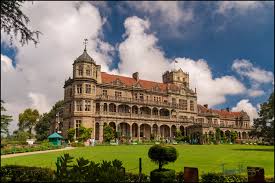
It took a couple of days to sink in, the serene beauty of the place on Summer Hill, Shimla, and the quiet atmosphere of the campus. Indian Institute of Advanced Study (IIAS), now housed in the regal ambience of the Viceregal Lodge[1], still wore its grandeur well, filtering into interior, the corridors, foyer and the conference room that had a stamp of history. Momentous decisions had taken place in this very room. The sylvan surroundings seemed to have rubbed off on the people too who worked in the offices, for they functioned with a quiet harmony, like it was an unstated requirement.  

Tulsi Shankar’s paperwork went off smoothly in the office. She was given the keys to her allotted flat, a man was assigned to go along with her to help, and she was asked to tell the housing department if she would need anything more for her flat, the kitchen and the washroom. The man helped her unpack her big boxes of books and folders and set up her laptop. The vessels in the kitchen were minimal and very basic. She added the small items that she had got from her home, a saucepan, a ladle, spoons, cups, mugs, tea, coffee, sugar and milk powder. That would do. The man offered to fix a milkman who would deliver fresh milk every morning. The mess served two meals in a day, so there was nothing more to be done except rustle up an occasional upma or poha[2], if one fancied a change.  

Tomorrow, she would explore the books for her area of research in the library, and start her work. She sank into her mattress and made a mental list of the reference books but soon slipped into a deep slumber.

The next few weeks rolled by in a rhythm of studies, notes, typing points on her laptop to draw a skeletal sketch of the chapters for her book. Little did she know how the details she sought would soon rain down on her and submerge her overwhelmingly in. They were right there, within her reach, in the huge library. Sure enough, there were some gaps, but she could always visit the Nehru Memorial Museum and Library at Teen Murti Bhavan in Delhi to fill them up.   

She met the three other Fellows who were also working on their manuscript for their books. Whenever they met, at the dining area in the mess, or while strolling back to the institute after meals, or their shopping trips to the mall, the four Fellows  exchanged notes about how much easier it was when they wrote their dissertation for Ph.D. years ago. They knew exactly what was expected from them — their chosen topic in itself ‘set limits’ for their scope and research took them forward with a controlled sense of direction. But a book? A BOOK? Good Lord, it seemed to be like entering an unchartered territory. It felt adventurous, thrilling even, but alternated with bouts of uncertainly and panic. It often loomed like a road not taken, yet to be explored. Exciting, and scary at the same time.

They decided to help each other with their research for the background. Sudipta Banerjee who taught history, offered to help Tulsi with Hari Mohan Maitee’s notorious case of brutally raping his eleven-year-old child bride, Phulmani Dasi,  causing her death. The case was committed to the Sessions Court in Calcutta in 1890, but Justice Wilson let off Maitee lightly by saying that he had just committed ‘a rash and negligent act’. It was Gidumal Dayaram, a reformer from Bombay, who relentlessly pursued the case of Dasi. On his recommendations, Sir Andrew Scoble based his in 1891. Tripti Sharma from Political Science was equally interested in the steps that led to raising the ‘Age of Consent’ from ten to twelve years, from a legal angle. She had a project for which she needed to know more Sir Andrew Scoble (1831-1916), and the legal aspects of his contribution.   

And all three of them took some lessons in yoga from the fourth Fellow Namrata Tripathi in her flat, just before dinner. She had trained in the Tushita Mahayana Meditation Centre. Namrata often warned them – and herself – of the hazards of sitting down on a chair for long hours to read or write. ‘We’ve to move our limbs and walk, or else we’ll become stiff,’ she laughed, even as she herself spent hours poring over her books for her research on the ghats in Varanasi. Sudipta, Tripti and Namrata looked to Tulsi, a published author, for help in writing their drafts.

“Please, Tulsi,” said Tripti. “We’re painfully conscious that we’re not here to write a Ph.D. dissertation. It is a book, a BOOK, for God’s sake.”

“Yes,” said Sudipta. “We’re anxious that thechapters are readable and don’t come across as boring information. You’re a creative writer, so you can tweak our lines.’

*

Then there were the Associate Fellows (called AFs) who could visit the IIAS three times in a span of three years or more, and were allowed each time to stay for one month to consult books in the library and work towards their M.Phil thesis. Hopefully, after their M.Phil, they would be admitted to Ph.D. programmes in their colleges. Each AF was given a single room in the hostel.

 The women were nearly through with their lunch. Over the dining table, they whispered to each other about the time they would meet Namrata in her flat in the evening, for yoga lessons. Also learn some tips for meditation, a most elusive practice for them.   

The Associate Fellow sitting across two tables was loud. No surprise. Ever since he came from Hyderabad, he has been the most vociferous critic of the food served by the Mess. He was unsuccessful in forming a lobby to join him in his protest and ‘do something’ about the ‘atrocious food’. The others AFs heard him out, some nodded in agreement, but carried on with their work.

Tulsi and her friends considered all that as noise and hurried through their meals.

The man from Hyderabad came over to their table.

“How can you stand this horrible food?” he asked.  

“Well…it’s a change, certainly, from what we are used to,” said Namrata, in a placatorytone.

“A change! It’s appalling. You can do something about it. Each one of you haveakitchen in your flat,” he said.

“What!” said Sudipta, getting up from her chair.

“You’re four ladies. You can easily take turns and cook,” he said, glancing at the other AFs over his shoulder.

.

[1] Viceregal Lodge, formerly the residence of the British Viceroy of India, is the present Indian Institute of Advanced Study that has a library with archival acquisitions that go back to the times before the British rule in India.  The magnificent building is also a tourist attraction for its stunningly regal structures designed by the British architect Henry Irwin, built in the Jacobean style during Lord Dufferin’s tenure as Viceroy.

[2] Upma—Semolina based savoury dish: Poha – A savoury preparation of flattened rice

Dr. Lakshmi Kannan is a poet, novelist, short story writer. Her recent books include Guilt Trip and Other Stories (Niyogi Books, 2023) and Nadistuti, Poems (Authors Press, 2024). For more details, please see http://www.lakshmikannan.in and her entry in The Routledge Encyclopedia of Indian Writing in English (2023).

PLEASE NOTE: ARTICLES CAN ONLY BE REPRODUCED IN OTHER SITES WITH DUE ACKNOWLEDGEMENT TO BORDERLESS JOURNAL

Click here to access the Borderless anthology, Monalisa No Longer Smiles

Click here to access Monalisa No Longer Smiles on Amazon International
Categories
Excerpt

Spellcasters

Title: Spellcasters: A Novel 

Author: Rajat Chaudhuri

Publisher: Niyogi Books

Imprint: Olive Turtle

It was dark outside but for a faint yellow glow hanging like a cobweb around the gate lamp. She saw two figures moving stealthily, sneaking up the verandah. They were coming in her direction. As they approached the façade of the house they scanned the wall, and then the pillars.

The two men came right up to where she was hidden behind the window, and one was pointing above their heads at the exterior wall. He was well-built, about six feet, and wore a long raincoat speckled with rain and a cap with a chinstrap. He had something in his hand which looked like a crowbar for jimmying locks. The other man, much shorter, had a thickset brutish face, and he had such a cruel look in his eyes that Sujata gasped when she saw him standing so close. He was carrying a jerrycan. This guy had a vermilion streak on his forehead, and his bucktooth was shining in the faint light.

Will they try to break in? She could call out for help with the hope that someone would hear. But the nearest house belonged to a private school, and there would be no one there except for the caretaker who would be dead drunk. The hotel further down the road was still waterlogged, and the labourers—even if they heard her—won’t be able to make it here in time. Too late to call the police, and then there would be many questions.

The shorter of the two opened the jerrycan and began to splash some liquid on the walls and on the chairs kept outside. Petrol! His partner pulled a tool from his pocket and reached up to the wall. The electricity metres were just above his head. What! They were trying to short circuit the electric wires and start a fire! That’s what she thought they were upto. And when she rushed out, they would shoot her and dump her body into the flames.

She went stiff for a second but was alert right the next moment. With a swift movement she swept away the curtains, pushed the shutter and stood straight in front of the window.

The thuggish-looking character with the jerrycan took a step back at the sound and then he saw her. He gave out a low whistle to warn his companion while trying at the same moment to draw his gun. But whatever happened after that was too fast for him, or anyone for that matter.

It is impossible to provide an exact record. If someone was watching, they would have seen her cross her hands after she swept away the curtains to face the hired hitmen. She joined her hands, crossing her arms in that millennia-old swastika mudra—which they say can even stop the devil in his tracks.

It could have ended there but didn’t. As she made the hand gesture, buck-tooth whistled but he couldn’t draw his gun. An ice shower from another world froze his muscles. He turned to stone, buried as if under an avalanche of ice.

Through that daze he saw the curls of her hair writhe and twist, having come to life, animated and growing longer. Sinuous dark ribbons hissing their way out through the window, hoods raised, fangs exposed. Till there was no one on this side, only these swarthy hissing messengers of death slithering into the verandah.

The taller of the two hearing the other whistle, cursed under his breath, ‘Damn! What is it yaar?’

He glanced to his left but it was all too late. All that Sujata heard as she stepped back was a blood-curdling cry of agony as a blue tongue of fire leapt out from the metre box lashing at the two, flinging them back. Both were knocked out cold. It was only left for the fire to do the rest.

A hot train of sparks charged ferociously through the wires and licked the petrol doused wall. Within seconds the lawn lit up with this eerie blue light. Blue changed to white. Flames shivered like teasing tongues. Now they leapt through walls and doorways, and were streaking across the ceiling of her room in angry crimson arrows.

She threw on her jacket and rushed towards the passage for the kitchen exit. Amitav Ghosh’s book about climate change still lay open on the couch where Chanchal had left it. She stopped, scooped it up and stuffed it into her knapsack. A book is always a good weapon, hardbacks are even better. Below the book was a half-eaten bar of Atman dark chocolate; she had given it to him.

She took a bite and jammed it into her pocket. The curtains in the passage had caught fire from the radiated heat coming from the next room. She made a dash for the kitchen. If it got hot beyond a point, the gas tank would explode. Not another moment to lose!

But the kitchen door leading out to the backyard was jammed. She struggled with the oil and grime-caked bolt, losing precious minutes. Is this how she will go then?

ABOUT THE BOOK

Chanchal Mitra wakes up in a far-off desert town, sharing a dingy hotel room with the flamboyant Mr. Kapoor, who is planning to abduct a billionaire. Kapoor insists that the billionaire tycoon is an impostor. Chanchal is unwittingly drawn into the plot. Soon they are joined by the mystery woman Sujata, her eyes dark like murder; and then a crutch-clutching ex-sailor, who is quick with a gun.

In the smog-swathed capital city of Aukatabad, an organic chemist engaged by the tycoon to design a mind-altering drug, is found dead from an overdose. Elsewhere, the billionaire industrialist’s chocolate factory is contaminated by salmonella while Sujata fights a fiery death at the hands of hired killers. As weird weather overtakes the land and Kapoor sets out with his accomplices to kidnap the businessman, the flimsy lines between friend, foe and lover begin to quickly disappear.

ABOUT THE AUTHOR

Rajat Chaudhuri’s works include novels, story collections, edited anthologies and translations. He curated The Best Asian Speculative Fiction and co-edited the Multispecies Cities: Solarpunk Urban Futures (Asia-Pacific) anthology.

His most recent novel, The Butterfly Effect was twice listed by Book Riot (US) as one of the ‘Fifty must read eco-disasters in fiction’ and among ‘Ten works of environmental literature from around the world’. Acclaimed for its exploration of a ‘Ballardian near-future’, this novel is now taught in Indian, American and European universities. His short fiction has also appeared in the internationally acclaimed climate fiction video game, Survive the Century. Chaudhuri has received writing fellowships from Charles Wallace (UK), Hawthornden Castle (Scotland) and Livonics (India) and residency awards from Arts Council Korea-InKo (South Korea) and Sangam House (India).

ABOUT THE PUBLISHER

An internationally acclaimed publishing house, Niyogi Books, established in 2004, has more than 650 titles today. They not only specialize in textual context but also strive to give equal importance to visuals. They purvey a wide range of content on art, architecture, history, culture, spirituality, memoirs, and every aspect, which connects with our rich heritage. Under their umbrella, they have fiction and non-fiction that cover books on social science, cookery, and self-help as well as English Translations of modern classics from different Indian languages. Niyogi Books has recently launched four new Imprints: Olive Turtle (English fiction), Thornbird (English Translation), and Paper Missile (English non-fiction) and Bahuvachan (Hindi Translation: Fiction & Non-Fiction). Also, they have co-published a number of critically acclaimed books with reputed institutions like the British Library, Rietberg Museum Zurich, IGNCA, National Gallery of Modern Art, Ministry of Culture (Govt. of India), National Manuscript Mission, Sahitya Akademi, among many others.

.

PLEASE NOTE: ARTICLES CAN ONLY BE REPRODUCED IN OTHER SITES WITH DUE ACKNOWLEDGEMENT TO BORDERLESS JOURNAL

Categories
Review

Guilt Trip and Other Stories

Book review by Anita Balakrishnan

Title: Guilt Trip and Other Stories

Author: Lakshmi Kannan

Publisher: Niyogi Books

The short story distills within its succinct form a moment from the amorphous flow of life experiences and re-presents it with a crystalline clarity.  A reader cannot help but be transformed by this epiphanic moment as it serves to illuminate some of life’s most baffling ambiguities. Lakshmi Kannan’s latest book of short stories, Guilt Trip and Other Stories, published in 2023, includes thirteen such stories that provide an insight into the lives of people navigating the vicissitudes of life.

In a similar vein, the entry on Lakshmi Kannan in the Routledge Encyclopedia of Indian Writing in English, Eds Manju Jaidka and Tej N. Dhar (2023), observes that her short stories “are explorations of lived experience that create an apocalyptic dimension. They pitch the reader between the luminal space of the living and the dead”.

 Several writers have commented on the exacting nature of the short story form, as it denies writers the space to develop their themes or trace the arc of their characters’ lives, its taut boundaries requiring every word to be justified. Given the number of women indulging in practising this genre and attaining great acclaim, it has been suggested that the short story is particularly suited for women’s subjects, the preoccupation with domestic life and the vagaries of human relationships. It is thought that the inflexible limits of the form serve as a restraint on elaborate descriptions of the sprawl of family life, condensing them to into chiselled vignettes that allow gleaming insights to shine.

 Lakshmi Kannan, a virtuoso of the short story, has published twenty-eight books, including collections of poetry, novels in both English and Tamil and translations. She is a bilingual writer who writes in Tamil under the penname Kaaveri. She is a prolific writer whose recent books include a historical novel The Glass Bead Curtain (2020, c2016), an English translation of Tamil writer T. Janakiraman’s acclaimed novel The Wooden Cow (2021) and a collection of poetry Sipping the Jasmine Moon (2019).

This collection Guilt Trip and Other Stories contains eleven short stories and two longer   stories, ‘Janaki turns a Blind Eye’ and ‘VRS’. Although pan-Indian in nature, Lakshmi Kannan’s stories are able to effortlessly showcase the ineffable flavour of Tamil culture. Her protagonists are frequently educated women, who struggle to reconcile their desire to be treated as equals within their families, dealing with the cultural mores that seek to restrict them to their homes and kitchens. The varied themes of Lakshmi Kannan’s stories include the spiritual awareness of the transience of human life as seen in the story ‘Open the Gate’. Another story that evokes spiritual transcendence is ‘Floating Free’, where a grieving daughter is comforted by a hummingbird which she sees as the reincarnated spirit of her mother.

A recurring trope among the stories is the equating of women with food and cooking, a reflection of the way women are often perceived in Indian society. Lakshmi Kannan elaborates on this idea observing that in the Tamil cultural milieu the regressive rural-urban divide continues as the norm. Several people, particularly men, do not have a progressive outlook even when they interact with contemporary women who are successful professionals. The author notes: “In Tamil Nadu, the retrograde maxim that a ‘woman’s place is in the kitchen and backyard’ still functions with a mind-numbing attitude irrespective of her economic, social or professional status”. The author employs this trope in the stories ‘Dregs’, ‘Kitchen Fire’, ‘The Colour Green’ and ‘Ladies Watch’. The latter two stories also delineate an allied theme, the insensitivity of adult children in the diaspora who do not hesitate to use their aging parents as unpaid domestic help. Another food related subtext that Lakshmi Kannan introduces is the selfishness of men who demand that the women serve them plenty of food, yet callously consume it without caring to check if there is enough for the women and children of the household.

Nevertheless, the author does not fall into the trap of essentialising Indian men as selfish, uncaring boors. In the story ‘As Dapper as the Come’ she turns the notion of a well-dressed, attractive man being arrogant and self-obsessed on its head. The dapper young man lends a ready helping hand to an older couple in distress unmindful of sullying his expensive suit. Furthermore, in the charming story ‘A for Apple’, the author explores the delight that a small-town boy from Karnataka takes in the rhythms and sonic vibrations of his vernacular, Kannada.

It is perhaps in narrating the strength of the bonds formed among women who use them to circumvent or subvert the rigid hierarchies and oppressively restrictive customs that govern traditional families that Lakshmi Kannan is at her most impressive. She explores the corrosive jealousies, subterfuges and pettiness that undermine relationships within a family. The long story ‘Janaki turns a Blind Eye’ is replete with irony. Narrated in five sections, the story relates how a nearly blind matriarch Janaki helps a young bride defeat the machinations of the senior members of the family who are plotting to steal her jewellery and silverware. ‘Addigai’ and ‘Annapurna Bhavan’ are two stories where the interaction between women may be set in counterpoint.

In the former, a grandmother furtively bequeaths an heirloom necklace on her granddaughter, warning her never to wear it at family celebrations. When Priya, the granddaughter, wears it just once several years later to a family wedding, she is rudely interrogated by the hostess as to how she came by it. The acquisitiveness and jealousy within this affluent family is in stark contrast to the warm camaraderie that characterizes the bonds between women in a small middle-class eatery in the story ‘Annapurna Bhavan’. The well-to-do narrator insists on eating at the same eatery as her driver where she is assailed by the aromas of the food she had earlier eaten in her childhood. The unabashed enjoyment of their food by the women at the eatery, their friendly banter, their freedom from family constraints and their closeness exhilarates the narrator. 

Yet it is not just Lakshmi Kannan’s significant themes — the refusal to be bound by narrow definitions of womanhood, the flowering of the creative impulse, a child’s playful linguistic experiments, the conflicts between appearance and reality – that make her work stand out. It is her prose that evokes both the asymmetries and passions in everyday life with a poetic intensity that is remarkable. An acutely observant chronicler of the incongruities, the asymmetries, the felicities and the marvellous absurdities of life, Lakshmi Kannan is able to express it with precision, empathy and humour. She has an innate sensitivity to the jealousies, treasons, duplicities, compromises, evasions, tender feelings and sentimentalities that characterise human relationships.

Lakshmi Kannan’s stories highlight the extraordinary within the quotidian, revealing the layering of the concrete and the mysterious, the interweaving of diverse elements that reveal that nothing is ever as it seems on the surface. She shows us that even the most ordinary individual has hidden facets that can never be completely known. It is her treatment of the special bonds that can be forged among individuals and contradictory nature of human relationships that makes Lakshmi Kannan’s fiction so special.

.

Dr Anita Balakrishnan is the author of Transforming Spirit of Indian Women Writers published in 2012. She is a contributor to the Routledge Encyclopaedia of Postcolonial Studies edited by Sangeetha Ray and Henry Schwarz.

Email ID: shalkri@gmail.com

PLEASE NOTE: ARTICLES CAN ONLY BE REPRODUCED IN OTHER SITES WITH DUE ACKNOWLEDGEMENT TO BORDERLESS JOURNAL

Click here to access the Borderless anthology, Monalisa No Longer Smiles

Click here to access Monalisa No Longer Smiles on Kindle Amazon International

Categories
Review

The Warrior Queen of Awadh

Book Review by Somdatta Mandal

Title: Begum Hazrat Mahal: Warrior Queen of Awadh

Author: Malathi Ramachandran

Publisher: Niyogi Books

Over the past few decades there has been a surge in the publication of Indian historical fiction where the authors are fascinated by India’s rich past, and the many human stories of love and loss buried beneath the larger narratives. Simplistically speaking, historical fiction is a literary genre in which the plot takes place in a setting related to the past events, but is fictional.  An essential element of historical fiction is that it is set in the past and pays attention to the manners, social conditions, and other details of the depicted period. Authors also frequently choose to explore notable historical figures in these settings, allowing readers to better understand how these individuals might have responded to their environments. After The Legend of Kuldhara (2017) and Mandu (2020), Malathi Ramachandran has now presented us with a fascinating novel, Begum Hazrat Mahal: Warrior Queen of Awadh (2023). She endeavours in her novel not just to re-create history as it happened long ago, but to also explore the lives and relationships of those who lived in those times.

The setting of the novel is Lucknow, 1857 where the First War of Independence against the British is fought. Wajid Ali Shah, the last Nawab of Awadh has been exiled by the British to Calcutta along with his courtiers and his coterie some months ago. Only his second wife, the beautiful queen Begum Hazrat Mahal, who had refused to accompany her husband to Calcutta stays back with her young twelve-year old prince Birjis Ali. Hazrat vows to fight the British and win back her beloved Awadh for her people and the crown for her son. She builds a rebel army and high drama ensues as they besiege the Residency, the walled British cantonment, for five months. A fictional saga based on actual events, this book takes us within the walls of the Residency where love and passion rage alongside the battle, and into the world of Begum Hazrat and her loyal band. From the beginning we encounter Hazrat’s interactions with Major Kenneth Murphy, the Company’s liaison officer who is enamoured by the beauty of the Begum and succumbs to her machinations. She wants his help to crown Birjis Ali the next Nawab and win back their lands and their properties. Then there are many stereotypical British characters – women who came from England to seek husbands and worked in evangelical missions, doctors, sergeants, and officers who took up native women for sexual gratification, and the like.

When Hazrat decides on action against the Angrez1, she forms baithaks2 comprising of the rich and poor, powerful and subordinate, Hindu, Muslim and Christian, all of whom feel that they had had enough of subjugation by these tyrants from another land. They would not take any more of their religious conversions, their oppression on the streets, their suppression in the garrisons. Her friendship with Jailal Singh, based on a shared love for Hindustan, blossomed and he promised her his allegiance in the fight against the British. She had found in Jailal a confederate, an able accomplice.

A large section of the narrative is then devoted to the details of the fight that ensued. There were times when the natives thought that they had managed to restrict the British soldiers from winning; at other times the tide of fortune turned in their disfavour when even after forming women’s brigade and defiant groups among the natives, success didn’t come in their favour. The reader is kept guessing whether the rebel army would storm the British bastion before their relief forces arrived or the tide would turn in a wave of loss and grief, crushing Hazrat Mahal’s dream for Awadh and her son. In November 1858, after more than nine months of fighting in Lucknow, and finally establishing complete control over North India, the Governor General, Lord Canning, presided over the Queen’s Durbar in Allahabad and read out the Proclamation from Queen Victoria. The territories of India, up until now governed by the East India Company, would now come directly under the Crown, and be governed by the Queen’s civil servants and military personnel.

After several turns of incidents Hazrat realises that defeated she and her army may be, but they would never be vanquished in spirit. In her chamber in the Baundi fort, she paces back and forth, the printed proclamation crumpled in her hand. Her close supporters watched in mute frustration. She would never agree to the British offer of clemency with all its benefits. She would rather live in penury than become one of their vassals. Deep inside the stone fortress, she sits huddled in her quilt, and feeling the loneliness and desolation of one who had fought and lost everything. The story ends with Hazrat and her son silently leaving the already orphaned Awadh and heading into the forests to cross over to Nepal on the other side and seek asylum there.  

Malathi Ramachandran must be appreciated for the racy narrative style of the novel that does not weigh down under the plethora of historical events. Here one must mention the similarity of incidents narrated about the plight of another Indian queen in another historical fiction titled The Last Queen written by Chitra Banerjee Divakaruni. This novel also tells us the story of Jindan Kaur, Maharaja Ranjit Singh’s youngest and last queen, his favourite. She became regent when her son, Dalip, barely six-years-old, unexpectedly inherited the throne. Sharp-eyed, stubborn, passionate, and dedicated to protecting her son’s heritage, Jindan distrusted the British and fought hard to keep them from annexing Punjab. Defying tradition, she stepped out of the zenana, cast aside the veil, and conducted state business in public. Addressing her Khalsa troops herself, she inspired her men in two wars against the ‘firangs3.’ Her power and influence were so formidable that the British, fearing an uprising, robbed the rebel queen of everything she had, including her son. She was imprisoned and exiled. But that did not crush her indomitable will. Like Begum Hazrat Mahal, she also had to live the last years of her life in exile, shorn of all her power and wealth. In both the novels, we learn about the strong and determined will power of Indian women who wanted to retain the pride of their motherland despite all odds and machinations of the British. A perfect blending of fact with fiction, the novel is strongly recommended for all categories of readers, serious and casual alike.

  1. British ↩︎
  2. Concerts ↩︎
  3. Foreigners ↩︎

Somdatta Mandal, author, critic and translator, is former Professor of English at Visva-Bharati University, Santiniketan, India.

PLEASE NOTE: ARTICLES CAN ONLY BE REPRODUCED IN OTHER SITES WITH DUE ACKNOWLEDGEMENT TO BORDERLESS JOURNAL

Click here to access the Borderless anthology, Monalisa No Longer Smiles

Click here to access Monalisa No Longer Smiles on Kindle Amazon International

Categories
Review

Behind Latticed Marble: Inner Worlds of Women

Book Review by Somdatta Mandal

Title: Behind Latticed Marble: Inner Worlds of Women

Author: Jyotirmoyee Devi Sen, translated from Bengali by Apala G. Egan

New Delhi: Niyogi Books

The very mention of the name of Jyotirmoyee Devi (1894 – 1988) brings to our mind the strong feminist Bengali writer, author of the famous Partition novel, Epar Ganga Opar Ganga (The River Churning), mainly depicted the lives of the women in Bengal who bore the burden of this communal divide, their bodies being inflicted with sexual violence, rape, and social exclusion as a consequence to the former two. Owing to the dearth in the literature that records such gruesome atrocities that were inflicted upon women, till date her work is extremely important. This present anthology however focuses on a totally different perspective of the writer where she tells us interesting stories about the life of the women and little girls of Rajasthan, and the discriminatory gender and caste norms that policed and defined their existence. 

Jyotirmoyee Devi was born in Jaipur in an upper-caste and economically well-off family. Her grandfather, who had emigrated there from Bengal during the British Raj, rose to occupy a high administrative position as the dewan or prime minister to the Maharaja of Jaipur. Thus, Rajasthan had a profound impact on her writings in the later years. Not being given an opportunity for formal education, her sole means to establish a relationship with reading became her grandfather’s library where she, along with her sister, were assigned to arrange newly arrived books and magazines. Therefore, even though she was a little girl, she attempted to make use of her multiple privileges that could help her access books and writing material. Married at the age of ten and widowed at twenty-five, she returned to her parents’ home along with her children and became a prolific writer during her long period of widowhood.

The ten fictional narratives in this anthology are all set in Rajasthan, and they create an elegant tapestry amidst the backdrop of Rajput grandeur and chivalry. Based on an eyewitness account of life in royal harems, these stories describe the very human interaction between men and women in this milieu. They highlight power play, disinheritance, and the threat of assault, which are perennial concerns for women. These include fascinating narration about the machinations that went on inside the royal households, as well as stories which tells us the plight of the veiled women in different strata of society. For instance, in “Beneath the Aravalli Hills,” a young village girl Dhapi disappears in the city where her father sold her for two hundred rupees. She is kept in a harem and punished for entering the festive hall without permission, she ends her life in prison. In “Frame Up” when the king dies, there is a heavy pall of suspicion in the kingdom that the queen had murdered him. Two decades later, when she is on her deathbed, she calls her son to tell him that the harem housekeeper and the chief eunuch had hatched a plot to kill his father but the young king walks away without acknowledging his mother’s innocence. In “The Child Bride” we read about the plight of a young widow Kesar whose jewellery is unlawfully snatched from her by the in-laws and she spends the rest of her life in poverty by serving like other destitute widows in the Govindji temple at Vrindavan.

Women-centric issues also recur in a story called “The Queen and the Concubine” where despite having plenty of riches befitting the Rajput royals, the ladies muse secret sorrows since their husbands, seldom, if ever, visited them. They spent their time in their sumptuous villas by holding pageants, dance dramas, and musical soirees. It tells the story of how the protagonist Kesar moved to the king’s harem upon his desire, metamorphosed from a mere maid to a courtesan, till she was burnt to death in the end. As per the rules of the state, sons of courtesans and concubines also lived luxurious and leisure lives, but somehow there always existed a fine dividing line between these men and the real heir to the throne. “The Taint” tells us of the king’s youngest son Samudra, who after receiving college education decides to take up a simple job in the British Indian army while his father arranges for his marriage with plenty of dowry albeit without his consent.

The human side of man is beautifully expressed in “Ungendered” where the royal eunuch decides not to have an heir and lets two young boys live a normal man’s life. Several other stories reiterate tragic tales of women in purdah and how many of them reach unfortunate ends when they try to escape from the strict socially imposed patriarchal norms that keep them totally voiceless. “The Princess Baby” (Beti ka Baap or Father of a daughter) calls for attention towards the evil of female infanticide by feeding them with an overdose of opium and focus on the limited social interactions allowed to young women. Though sometimes repetitive, the stories overall try and tell us about the miserable plight of women in Rajasthan, whether they were commoners or part of the royalty.

Before concluding, a few words about the translation. This anthology contains ten stories, each of which had been translated and published in different journals abroad (nine in different American journals and one in Turkey) before collating them into this present volume. The translator, residing in the USA, obviously had the western reader in mind and sometimes several complicated and difficult words and phrases are used probably to remain politically correct to the original text. But what this reviewer finds problematic is the introduction by the author. Who are the targeted readers? In her introduction, she mentions at random women’s issues from around the world and in different ages one wonders why the context of the stories translated here is not provided at all — except for giving us a bio-note of Jyotirmoyee Devi which is briefly included in the back flap cover. Also, the page-long bibliography provided at the end of the rather out-of-context introduction seems totally redundant. Apart from this lacuna of course, the volume will interest those readers who marvel at the eyewitness accounts of life of women and men, common and royal alike, in Rajasthan in the first few decades of the twentieth century.

Somdatta Mandal, author, academic and translator, is former Professor of English at Visva-Bharati, Santiniketan, India.

.

PLEASE NOTE: ARTICLES CAN ONLY BE REPRODUCED IN OTHER SITES WITH DUE ACKNOWLEDGEMENT TO BORDERLESS JOURNAL. 

Click here to access the Borderless anthology, Monalisa No Longer Smiles

Click here to access Monalisa No Longer Smiles on Kindle Amazon International

Categories
Interview Review

In Search of a Pitcher of Nectar by Samaresh Bose

A conversation with Nirmal Kanti Bhattacharya, the translator of Samaresh Bose’s In Search of the Pitcher of Nectar, brought out by Niyogi Books.

In 2017, the Kumbh Mela (the festival of the sacred pitcher) was declared an Intangible Cultural Heritage. A Times of India report read: “The committee noted that as the largest harmonious conclave in the world, Kumbha Mela stands for values like magnanimity and patience that are very beneficial for the modern humanity. Moreover, the concept of Kumbha Mela goes well with the current international human rights tools because the festival welcomes people from all corners of the world without any differentiation.”

Five years down the line, Niyogi Books brought out a translation of Samaresh Bose’s[1] In Search of a Pitcher of Nectar, an epic travelogue translated from Bengali by Nirmal Kanti Bhattacharjee on the festival at the confluence of the three rivers, Ganga, Saraswati and Jamuna — in Allahabad. An eminent acknowledged writer, whose stories won not just literary acclaim like the Sahitya Akademi award but were translated to prize winning films, Bose’s solo voice stands alone in the translated version — as that of Kalkut, one of the pseudonyms he assumed.

In the early part of the book, Bose gives the reason for his journey into this crowded event which even in the middle of the pandemic (2021) had 3.5 million visitors: “Observing this great variety of humankind on the move is a thirst that is not easily quenched.” Bose’s exploration came long before the pandemic as his book was published in 1954. Then a Bengali film was made on it in 1982.

The writer claimed to have set out to look into the heart of the nation: “I would dive deep into that heart of India. I would identify my own face in this strange mirror of India. That face is my mind. My religion.” And he discovers, “the poor India was there like a faded cloth by the side of a muslin chunni.” While peeling layers of poverty and ‘respectability’, he introduces us to a bevy of characters which include not just Godmen, but also women, who evolved from wifehood to prostitution to godwomen, to young girls forced to marry polygamous octogenarians, to people in quest of lost family members, to men in search of the intangible — and all united together for a dip in the holy ‘sangam[2]’ of three rivers, the ultimate panacea for all ailments and ills for believers. That the author is not part of the believing crowds, but a sympathetic, humane commentator is obvious from his conversations with various people and his actions, which defy boundaries drawn by the respectable god minding devotees thronging the festival. He uses the event to pinpoint the flaws of socially accepted norms and to find compassion for the less fortunate. He laces his narrative with love and compassion for humanity.

The title itself both in Bengali and English conveys the quest for nectar or the divine amrita of immortality which led to a festival that washes away sins with a dip at the confluence. Legend has it that the gods and the rakshasas worked together to draw out the ambrosial drink at this sangam and then, the gods cheated and consumed all of it, judging the other party as too evil to be handed eternal life in a cup. The unbreachable walls had started and perhaps continue even to this date.

The real origin of the festival as Bose contended remains disputed like that of many other cultural lores, though people do continue to quest for miracles in the waters that were supposed to have thrown up the ambrosia. The narrative implies the educated and schooled rarely participated in this event. There is a mention of the prime minister at the festival, but that would be as a dignitary, and not as part of the crowd.

The crowd in its urgency to take a dip at the holy hour, results in a stampede and many deaths. It is a sad and philosophical ending which clearly takes us back to the questions raised at the start of the narrative. “If lakhs of people are blinded by faith, then why not search for the reason? What is that celestial blinker which can blind lakhs of eyes?”

While questioning faith, the narrative exposes the gaps in society with compassion — even between the educated and uneducated that has become a severe point of contention as more fissures into society and creating more boundaries. At the end of the book, one wonders have things really changed from the 1950s when Bose wrote the book to the current experience where the UNESCO, a modern-day construct and belief, has dubbed this festival as a juncture where all humanity congregates? Do they?  To enlighten us on this issue, we conversed with the eminent translator of this powerful book, Nirmal Kanti Bhattacharjee.

Nirmal Kanti Bhattacharjee

What led you to translate Samaresh Bose’s In Search of a Pitcher of Nectar?

Samaresh Bose was a celebrated novelist. Th social relevance of his novels can never be over-emphasised. But when he started writing travelogues under the pseudo-name Kalkut, he invented a new creative trajectory. Amrita Kumbher Sandhaney, Kothay Pabo Tarey [4]are all classics in Bengali literature. I have been reading and rereading Amrita Kumbher Sandhaney for decades and always felt it should be presented on a national and international platform. Hence, when time and opportunity arose, I took up the translation work and the result in In Search of the Pitcher of Nectar.

There was a Bengali film (Amrita Kumbher Sandhaney, 1982) made with the story of this book. Did you use this as a resource too for your translation? What do you think of the film? Did it capture the book well?

Yes, I have watched the film when it was released. I don’t remember the details now, but the impression remains that it was a reasonably well-made film. But I don’t think it has acted as a resource for my translation work. On the contrary whenever I tried to think of Shyama, the sophisticated face of Aparna Sen[5] would appear in my vision.

In 2017, UN declared the Kumbh-mela as an intangible cultural heritage. And yet, here Samaresh Bose mentioned a stampede within the Mela that killed many people. Do you think things have changed since he wrote this travelogue?

Definitely. Now, the Kumbh-mela is an extremely well-organised event. The way in which the administration handles the flow of lakhs of people is something to be seen to be believed. Even Harvard University researchers had undertaken a study to analyse how an ephemeral city comes up with all the civic, municipal and medical facilities for a temporary period of time. The stampede that Bose mentions are things of the past.

Have you ever been to a Kumbh-mela? Is it as he describes?

Yes, once; obviously inspired by the reading of the book. It was in early 70’s. I found it tallying with Bose’s description to a large extent. It was a lifetime experience for me, because I also went with an open mind, an agnostic as I am.

What in this book strikes you the most?

Two things struck me most in the book. One, unlike all other visitors, Bose’s was not a pilgrimage. He did not even take a dip at any of the auspicious dates and moments. He was in quest of understanding man’s urge for piety. It was as if an atheist’s search for the godhead. Secondly, the technique of writing was a unique blend of travelogue and fiction. His character sketches are something unparalleled in the history of travel writing anywhere in the world. I hope I am entitled to give this opinion, having a modest exposure to the world literature.

You are a felicitated translator. When you translate from Bengali to English, what strikes you as the biggest hurdle? And how do you get over it?

The biggest hurdle in translating from Bengali into English is the problem of culture specific transfer. Here one is not translating from an Indian language into another. Here translation is not just linguistic transfer, but culture transfer also. One has to be very careful where to valorise the source language and where to make some sacrifice for attaining compatibility to the idiom of the target language. I guess I have learnt to strike a balance between the two.

You have translated the Bengali portions fully in this book but not always the Sanskrit or Hindi? Why not?

The Sanskrit and Hindi portions in the text are very well-known quotes from Tulsidas and other celebrated poets. I thought they would communicate even without translation. More importantly, they are all in rhymed couplet or quartet. If the rhyming is done away with, their linguistic impact will drastically reduce. And maintaining a semblance of rhyming in English was beyond me. So, I left them as they were. The case of the Bengali quotes is totally different. There I could confidently take some liberty and attain the desired impact.

Do you think a translation is better if it is closer to the text or if it captures the spirit of the piece and conveys it to the readers, though it departs from the text as in Edward Fitzgerald’s translation of Omar Khayyam’s Rubaiyat?

It depends on the motive of the translator. Gayatri Chakravarty Spivak in her celebrated essay ‘Politics of Translation’ suggested that we should approach the text with love and empathy. If that is achieved, the translator remains as close to the text as possible; and yet he/she can take occasional liberty to capture the spirit of the original. But if the motive is to sanitise the text to cater to a particular reading community, as Tagore wrongly did or civilise the text from the point of view of master-slave attitude, as Fitzgerald did, then it is wrong. We now know how much of Tagore or Khayyam is lost in these English versions.

You have translated major writers from Bengal like Mahasweta Devi, Sunil Gangopadhyay, Sirshendu Mukhopadhyay and Samaresh Bose. Which has been your favourite author to translate and why?

Well, all the authors I translated so far are my favourite authors. I can not translate unless it is so. I greatly enjoy Sirshendu Mukhopadhyay’s young adult stories, Sunil Gangopadhyay’s romantic novels, Samaresh Bose’s dexterity in narration and characterisation, Mahasweta Devi’s socially conscious works. I have translated two novels of Tagore also for their universal appeal and extremely thought-provoking themes.

After translating this many novels, are you planning one of your own?

Oh no, I am not a creative person. I hopelessly lack imagination.

Do you have any advice for upcoming translators?

Well, I don’t feel entitled to give advice to anyone, I can only say that a wannabe translator should live with a book for some time before venturing into translation. You should not take up any translation work unless the book resonates with you or speaks to you, so to say.

Thank you for bringing the book to non-Bengali readers and also your time.

[1] Also known as Samaresh Basu (1924 to 1988)

[2] Confluence

[3] Translates to ‘ On the Golden Peak’, part of Kalkut Rachna Samagra (Kalkut’s collected writings), published in 1957 and made into a Bengali film in 1970

[4] Translates to ‘Where will I find Him?’, published as a part of his collected writings in 1957

[5] Aparna Sen, the legendary actress from Bengal, acted as a character in this film

(The book has been reviewed and the interview conducted online by emails by Mitali Chakravarty)

PLEASE NOTE: ARTICLES CAN ONLY BE REPRODUCED IN OTHER SITES WITH DUE ACKNOWLEDGEMENT TO BORDERLESS JOURNAL

Click here to access the Borderless anthology, Monalisa No Longer Smiles

Categories
Review

The Shaping of Modern Calcutta through Lottery Sales

Book Review by Somdatta Mandal

Title: The Shaping of Modern Calcutta: The Lottery Committee Years, 1817 – 1830

Author: Ranabir Ray Chaudhury

Publisher: Niyogi Books

If you ask any layman about the city of Calcutta (now rechristened as Kolkata) you will get three major pieces of information — namely, it was founded by Job Charnock in 1690; it was the seat of East India Company and capital of British India till 1911; and that it was divided roughly into two sections — the white English town at the centre and towards the south and the native town in the north. Beyond that, very few people have the idea of how the city developed spatially and how several major arterial roads, tanks and squares were built systematically during the beginning of the nineteenth century and this is where The Shaping of Modern Calcutta: The Lottery Committee Years, 1817 – 1830 by Ranabir Ray Chaudhury gives us plenty of information about the gradual development of Calcutta. This was undertaken by raising money through sale of lottery tickets and implemented by the creation of a Lottery Committee which functioned specifically for thirteen years from October 1817 to 1830.

Under the system then prevalent, the surplus lottery funds remained with the Bank of Bengal which would continue to be involved in the sale of tickets and the payment of prizes but would have nothing to do with other payments. The three senior members of the committee were John Eliot, Charles Trower and Henry Wood who had already looked after the construction of the square and tank at Baparitala (Wellington Square) and the new road being built from Dharamtala Road to Bowbazar. Later officials like Henry Shakespear and Barwell, G. Gordon and A. Colvin were inducted, and featuring in various sub-committees, they were also deeply engaged in the city’s development work.  

In 1830, for all practical purposes, the functions of the committee relating to the improvement of the city ceased effectively. Though the beneficial impact of the committee’s work affected everyone, native and European alike, and there was nothing remotely furtive about it, yet the Directors of the East India Company in London were not happy with what was happening in distant Calcutta on the city-development front, choosing to view the evolving picture in a different light. Keeping in mind the virtues of economy in expenditure, the Company wrote to its Government of Bengal that whenever there was any activity relating to general and public utility, some part of the charges ought to be borne by the inhabitants. Further, the Lottery Committee was handling large sums of money and perhaps there was the Company’s deep-seated skepticism about the sensibility of such expenditure in general and a tendency to conclude that the money was not being spent efficiently. The work done by the committee was phenomenal because the projects conceived and implemented by it still cast a long shadow on life in modern Calcutta. 

It becomes very clear that the city of Calcutta gained immensely from the development work carried out by the Lottery Committee since October 1817. The Strand Road had spruced up the eastern bank of the River Hooghly beyond recognition; the western side of Tank Square (today’s BBD Bagh) down to the Maidan till the West Bengal Legislative Assembly, had been given its modern shape with its grid of streets; pucka drains had been built and upgraded all over the city; the major north-south arterial road extending from Park Street in the south to Shyambazar in the north with four squares along it had been constructed; Free School Street had been made; the entire area south of Park Street up to Circular Road had been transformed into ‘virgin’ land ready to be settled in by the genteel (for the most part, sahib) population of Calcutta; and the modernisation of the Garden Reach area, reaching up to Khidirpur in the north, had been begun.

Among other things, the Lottery Committee built the major arterial roads in the northern and central parts of the city, which in time determined the layout of the contiguous residential areas. Dalhousie Square and the entire ground between Park Street and Circular Road were developed by the committee. Previously, a large part of the ground south of Park Street was low-lying and marshy, generating pestilence all around. Bustee clusters were located here probably because of the availability of Gangajal from Tolly’s Nullah (the Adi Ganga) through the existing network of drains, the river being some way off to the west.

The story of the making of Strand Road is narrated in detail, as with increasing economic activity and population pressure, it would provide the inhabitants with easier access to the river, both for recreation and commerce. The Lottery Committee was also responsible for putting up the first brick-and-mortar decorative balustrade which still adorns the Chowringhee area and Red Road. Thus, in its 13 years of effective functioning (till 1830), the committee had been successful in providing the critical push necessary to transform Calcutta from the topographical shape it had inherited since the years immediately following the landing of Job Charnock at Sutanati in August 1690 into one which, in a manner of speaking, would make the city ready to be launched into the 20th century and beyond.

The interest in reading the book persists throughout because apart from the maps, figures, numbers, statistics, and other logistic details, we get a lot of information of the different hindrances the Lottery Committee faced while implementing their projects. Human nature has not really changed much and so we read about people at that time who flouted the rules to line their own pockets and for whom profiteering was the norm.

The basic premise here is that human nature being what it is, there are some aspects of life and behaviour which are universal in their reach, both temporally and spatially. Another very interesting area of study is how the officials encountered the problem of encroachment, the process of land acquisition and the demand for compensation by native plot holders. The committee was aware of matters affecting the native sentiment and there are instances of how they altered the alignment of a major road to suit the convenience of the natives. Even then in some instances tiffs and legal hassles with local residents in North Calcutta were also recorded. Apart from private property rights, religious considerations too played an important role in the decision-making process of the committee.


Before concluding it is worthwhile mentioning a few lines about the author of this volume. During his quarter-century with The Statesman in Calcutta (1970-94), principally as a leader writer, Ranabir Ray Choudhury became interested in the past of a great city which the East India Company had selected as the nerve centre for its operations in the Indian subcontinent and further to the east, extending to Singapore and beyond. In time, this growing interest led to three compilations – Glimpses of Old Calcutta 1835-1850 (1978), Calcutta a Hundred Years Ago 1880-1890 (1987), and Early Calcutta Advertisements 1875-1925 (1992). He next wrote The Lord Sahib’s House, Sites of Power: Government Houses of Calcutta 1690-1911 (2010). A City in the Making, Aspects of Calcutta’s Early Growth (2016).

This volume under review is his sixth book and thematically is a sequel to the last one. That work ended with the formation of the Lottery Committee in 1817: this book takes up the story from there. From a connoisseur of the city, we get details of its development to a point that a lot of unknown facts are provided to the reader which the author garnered from documents and archival material available at the West Bengal State Archives.

Though he is not a historian, trained or otherwise, the author mentions in the ‘Introduction’ how he faced the constant struggle to avoid getting enmeshed in detail and to refocus attention on the broad current of policy and the effects of its implementation. Attention to the specific problems faced in the day-to-day execution of projects also does help to throw light on the precise nature of hurdles encountered at the grassroots level. The book is therefore highly recommended for scholars of history, architecture, town planning and every layman reader who is interested in Kolkata – a city which has been defined in multifarious ways as a city of joy, a city of palaces, a dead city, and so on.

.

Somdatta Mandal, an academic, critic and translator, is a former Professor of English at Visva-Bharati, Santiniketan, India.

PLEASE NOTE: ARTICLES CAN ONLY BE REPRODUCED IN OTHER SITES WITH DUE ACKNOWLEDGEMENT TO BORDERLESS JOURNAL

Click here to access the Borderless anthology, Monalisa No Longer Smiles