Categories
Review

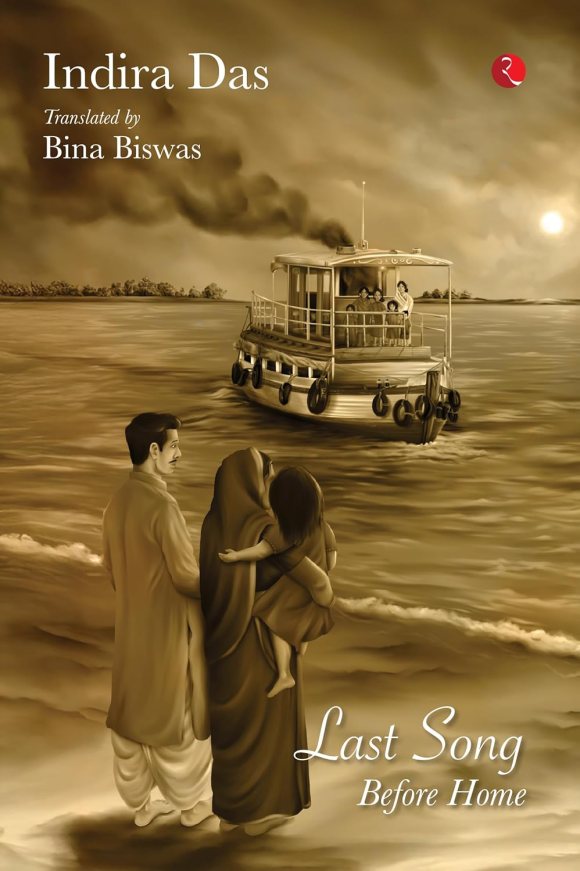
Last Song Before Home

Book Review by Bhaskar Parichha
Title: Last Song before Home

Author: Indira Das

Translator: Bina Biswas

Publisher: Rupa Publications

Last Song Before Home, the English translation of Indira Das’s Bengali memoir Shuru Theke Phera – Mayer Smritikatha[1], emerges as a luminous elegy to the fragility of memory and familial bonds. Translated by Bina Biswas, the book chronicles the author’s mother, Gayatri Das, navigating vascular dementia post-stroke. Through an epistolary structure of imagined letters, Das captures the slow erosion of self, where recollections surface like half-remembered melodies amid Bengal’s partitioned landscapes. The thematic depth and stylistic finesse position it as a vital contribution to South Asian memoir literature.

Central themes orbit memory as both lifeline and tormentor. Dementia strips Gayatri of chronology, yet fragments—rain-soaked courtyards, Partition’s unspoken wounds—resurface as anchors of identity. Das reframes loss as resistance, transforming maternal decline into a testament to resilience. Sisterhood underscores this; bonds with siblings weave a tapestry of shared silences, countering isolation’s void.

Partition looms subtly, not as a historical spectacle but an intimate scar—displaced homes echo in Gayatri’s fading queries: “Where is home?” This mirrors postcolonial Bengal’s flux, where personal trauma intersects collective upheaval. Dignity persists through ritual: songs hummed off-key, hands folding faded saris. Das elevates the mundane, critiquing modernity’s erasure of oral legacies. Resilience triumphs, not via triumph, but quiet defiance—memory’s “last song” before oblivion. The memoir critiques gendered aging in India, where women’s stories dissolve unspoken, urging reclamation.

A practicing gynaecologist, Das’s prose, via Biswas’s fluid translation, mimics dementia’s rhythm: elliptical sentences drift, loop, and fracture like synapses firing erratically. “The courtyard bloomed once, or was it twice? Rain came, carrying voices from across the river.” This stream-of-consciousness narrative eschews linear plot for associative flow, evoking Woolfian interiority fused with Bengali lyricism—sensory motifs—jasmine perfume, monsoon mud—ground abstraction, rendering emotion tactile.

In the translator’s note, Biswas, who is a poet and academician, says: “This book is not simply a narrative-it is a mosaic of survival, and the search for belonging. As John Berger once wrote, ‘Never again will a single story be told as though it is the only one.’ The protagonist’s journey is part of a greater collective-a shared history of migration, exile, and emotional displacement. Her voice rises in a chorus of the grieving, each thread woven with shared loss and a fierce resolve to cling to identity.

“She is a figure many will recognize: a woman who, though exiled by circumstance, carries the remnants of home in every gesture and memory. Her story becomes a vessel for inherited struggle, for resilience passed from one generation to the next. As Milan Kundera so memorably stated, ‘The struggle of man against power is the struggle of memory against forgetting.’”

Epistolary form innovates: letters to an absent self-blur authorial voice, fostering intimacy without sentimentality. Repetition (“Remember? No, forget.”) mirrors cognitive loops, building hypnotic cadence. Das avoids melodrama; understatement amplifies pathos— a single, misplaced utensil evokes existential ache. Cultural bilingualism enriches: Bengali idioms, untranslated, preserve authenticity, challenging monolingual readers. Pacing accelerates in crescendo passages, where songs bridge eras, culminating in cathartic release.

Last Song Before Home transcends memoir, becoming a philosophical meditation on impermanence. Its strengths—haunting style, layered themes—outweigh minor translation hiccups, like occasional stiffness. Essential for readers of Partition literature or aging narratives, it earns four stars for profound humanity. Das not only mourns but hymns endurance, leaving echoes that linger.

[1] Translates to: Returning from the Beginning: Memories of Mother

.

Bhaskar Parichha is a journalist and author of Cyclones in Odisha: Landfall, Wreckage and ResilienceUnbiasedNo Strings Attached: Writings on Odisha and Biju Patnaik – A Political Biography. He lives in Bhubaneswar and writes bilingually. Besides writing for newspapers, he also reviews books on various media platforms.

PLEASE NOTE: ARTICLES CAN ONLY BE REPRODUCED IN OTHER SITES WITH DUE ACKNOWLEDGEMENT TO BORDERLESS JOURNAL

Click here to access the Borderless anthology, Monalisa No Longer Smiles

Click here to access Monalisa No Longer Smiles on Amazon International
Categories
Bhaskar's Corner

The Riverine Journey of Bibhuti Patnaik

By Bhaskar Parichha

Bibhuti Patnaik (born: 1937). Photo provided by Bhaskar Parichha

Bibhuti Patnaik’s literary career unfolds like a long river—steady, persistent, and quietly transformative—running through the landscape of Odia literature for more than six decades. From the late 1950s onward, he wrote with a rare combination of emotional honesty and narrative discipline, giving voice to the evolving inner lives of middle-class Odias.

His writing emerged at a time when Odia literature was searching for a new expression after Independence, trying to reconcile classical traditions with modern psychological sensibilities. Into this space stepped a young writer who was not concerned with ideology or grand social systems, but with the stirrings of the human heart.

A defining feature of Pattanaik’s oeuvre is his meticulous representation of the Odia middle class. His novels, whether Aswamedhara Ghoda (Horse of Aswamedha)Sesha Basanta (Last Spring), or Prathama Sakala (First Dawn), foreground the ethical tensions, emotional fragilities, and moral negotiations embedded in quotidian life.

What distinguished Patnaik from many of his contemporaries was his unwavering commitment to emotional realism—a faith that the complexities of human relationships, especially love and desire, could carry as much literary weight as any political or social theme.

In his earliest works, Patnaik revealed a sensitivity to the fragile moral dilemmas that shape everyday life. His characters were not heroic figures or tragic archetypes; they were ordinary men and women negotiating expectations, impulses, and the confines of middle-class respectability. His prose, clean and unadorned, immediately established a new relationship with the reader—intimate, direct, and unpretentious.

For Odia readers of the 1960s, accustomed to more stylized narrative forms, this was refreshing. Young readers in particular embraced his novels, drawn to a writer who articulated emotional experiences with clarity and sincerity. Even at this early stage, Patnaik showed a remarkable ability to create female characters with depth and interiority, granting them agency in a literary culture that often placed women on symbolic pedestals rather than treating them as independent subjects.

As Patnaik moved into the 1970s and 1980s, his literary world expanded. The emotional tensions that shaped his early novels did not disappear, but they began to encounter new social realities. Odisha was changing—economically, culturally, and morally—and Patnaik’s novels became sensitive mirrors to these shifts. Urbanisation, job insecurity, the erosion of joint families, and the anxieties of modern aspiration found their way into his fiction.

He continued to write about intimate relationships, but these relationships were now embedded in broader pressures: generational conflict, economic burdens, and shifting gender dynamics. His characters struggled not only with their feelings but also with the demands of a changing society. Through this evolution, Patnaik maintained a narrative clarity that made his writing accessible to a wide audience, allowing him to be both widely read and critically noticed.

The 1990s marked a turning point in his career. While he continued to produce fiction, Patnaik increasingly turned his attention toward literary criticism and self-reflection. His essays—fearlessly honest, sometimes provocative—revealed a writer deeply engaged with the ethical health of the literary world. He wrote about the politics of awards, the failures of institutions, the erosion of literary standards, and the compromises that authors often make.

These writings unsettled the comfortable spaces of Odia literary culture but also enriched the discourse by demanding accountability and sincerity. At a time when many writers preferred diplomatic silence, Patnaik chose frankness. This choice, while controversial, made him an indispensable voice in understanding the dynamics of Odia letters in the late twentieth century.

His memoirs and autobiographical writings in the 2000s and 2010s further broadened his contribution. They are not mere recollections of a long literary life but important historical documents that offer insight into the personalities, politics, and conflicts of Odisha’s literary circles. The candour with which he narrates his experiences—sometimes tender, sometimes critical—makes these works stand apart in Odia autobiographical literature.

They reveal a writer who, despite being celebrated, never hesitated to critique himself or the milieu in which he worked. The tone of these later writings is marked by a late-style simplicity: calm, distilled, and enriched by decades of observation. Unlike many of his generation who grew stylistically heavier with age, Patnaik’s prose became lighter, clearer, and emotionally more resonant.

One of the most enduring features of his work is his representation of women. Throughout his career, Patnaik returned again and again to the complexities of female experience—women torn between personal desire and social expectation, women who resist, women who compromise, and women who assert themselves. His empathy for his female characters is evident not in idealisation but in the dignity he grants to their doubts, choices, and vulnerabilities. In a literary tradition long dominated by male narratives, this alignment with women’s emotional truth marked a significant departure and set a model for subsequent writers.

What ties Patnaik’s diverse phases together—novels, essays, memoirs—is an ethical thread. At the heart of his writing lies an insistence on sincerity: sincerity in feeling, sincerity in storytelling, sincerity in literary practice. His criticism emerges from the same commitment that shaped his fiction—the belief that literature must remain close to life, uncorrupted by pretension or institutional manipulation. Even when he critiques, he does so with the conviction that honesty is necessary for a healthy literary culture.

Today, looking back at his multi-decade journey, it becomes clear that Bibhuti Patnaik’s importance extends far beyond his widespread readership. He shaped the emotional vocabulary of several generations of Odia readers. He penned some of the most psychologically astute portrayals of love and moral conflict in Odia fiction.

He exposed the fissures in literary institutions through his bold essays. And he preserved the history of Odia literary life through his memoirs. His evolution—from a young chronicler of quiet emotions to a mature critic of cultural politics—mirrors the transformations of post-Independence Odisha itself.

Bibhuti Patnaik’s legacy is defined by this continuity of purpose. Whether writing a tender love story or a sharp critical essay, he remained committed to the integrity of human experience. His work endures because it speaks, with remarkable clarity, to the fears, hopes, and contradictions that shape ordinary lives.

 In doing so, he carved a place for himself as one of the most authentic voices in modern Odia literature—unshakeable in sincerity, unafraid of truth, and unforgettable in the emotional clarity of his storytelling.

.

Bhaskar Parichha is a journalist and author of Cyclones in Odisha: Landfall, Wreckage and ResilienceUnbiasedNo Strings Attached: Writings on Odisha and Biju Patnaik – A Political Biography. He lives in Bhubaneswar and writes bilingually. Besides writing for newspapers, he also reviews books on various media platforms.

PLEASE NOTE: ARTICLES CAN ONLY BE REPRODUCED IN OTHER SITES WITH DUE ACKNOWLEDGEMENT TO BORDERLESS JOURNAL

Click here to access the Borderless anthology, Monalisa No Longer Smiles

Click here to access Monalisa No Longer Smiles on Amazon International
Categories
Bhaskar's Corner

‘Language… is a mirror of our moral imagination’

By Bhaskar Parichha

Prof. Sarbeswar Das (1925–2009): A scholar of depth, a teacher of light. Photo Provided by Bhaskar Parichha

In the intellectual history of modern Odisha, Professor Sarbeswar Das stands as one of those rare figures who seamlessly bridged scholarship, ethics, and social commitment. A luminous teacher, an erudite writer, and a quiet Gandhian, his life and work embodied the moral seriousness and intellectual curiosity that marked a generation shaped by the freedom struggle and the promise of a newly independent India.

Born in Sriramchandrapur village in the Puri district of Odisha in 1925, Sarbeswar Das grew up in a milieu where simplicity, discipline, and community values were deeply ingrained. His brilliance shone early—he topped the matriculation examination across Odisha and Bihar, a distinction that foreshadowed a lifetime of academic excellence.

His educational journey took him first to Ravenshaw College, Cuttack, the cradle of higher education in Odisha, where he absorbed the liberal spirit and rigorous intellectual training that the institution was known for. He later studied at Allahabad University, one of India’s foremost centers of learning, before proceeding to the University of Minnesota, for advanced studies in English literature.

His exposure to American academia at a time when few Indian scholars ventured abroad profoundly shaped his intellectual orientation. The years in Minnesota opened to him a new world of thought—modern literary criticism, American fiction, and the philosophy of democratic humanism—all of which left a deep imprint on his teaching and writing in later years.

On returning to India, Das joined the teaching profession, which he would pursue with remarkable dedication and grace for several decades. He served as a professor of English in some of Odisha’s most respected institutions—Christ College (Cuttack), SCS College (Puri), Khallikote College (Berhampur), and Ravenshaw College (Cuttack).

As a teacher, he was known not only for his formidable command of English but also for his clarity of expression, quiet humour, and empathetic engagement with students. He could bring Shakespeare and Emerson alive in the classroom, weaving them into the moral fabric of everyday Indian life. His pioneering initiative was the introduction of American Literature as a formal subject of study in Indian universities, long before it became fashionable to do so.

In an age when English studies in Odisha were largely confined to the British canon, he expanded its horizons by introducing writers like Walt Whitman, Emily Dickinson, William Faulkner, and Mark Twain to Indian classrooms.

Das believed that literature must connect with lived experience. He often told his students: “Language is not just a means of expression; it is a mirror of our moral imagination.” This conviction shaped generations of students who went on to become writers, teachers, and civil servants. Among them was the late Ramakanta Rath, later one of Odisha’s most celebrated poets, who fondly remembered Prof. Das as a teacher who inspired intellectual courage and aesthetic sensitivity.

Alongside his teaching, Prof. Das was a prolific writer and scholar. He authored around twenty-five books spanning essays, literary criticism, translations, and reflections on education and society. His writings in English and Odia reveal a mind steeped in both classical and modern traditions. Fluent in English, Odia, and Sanskrit, he was at ease quoting from the Bhagavad Gita and Hamlet in the same breath.

His essays in English reflected on the role of language in education, the cultural responsibility of intellectuals, and the need for moral clarity in modern life. He consistently argued for a vernacular humanism—a belief that English education must not estrange Indian students from their cultural roots but rather help them view their own traditions through a broader, universal lens.

As a principal, he brought administrative efficiency and human warmth to his role. His tenure is remembered for reforms that encouraged academic discipline, faculty collaboration, and student participation. He believed that education was not merely about acquiring degrees but about shaping ethical citizens.

Prof. Das’s intellectual life was inseparable from his moral and civic commitments. As a young man, he participated in the Quit India Movement, aligning himself with the Gandhian values of simplicity, non-violence, and service throughout his life.

Late in life, Prof. Das turned inward to recount his journey in his autobiography, Mo Kahani (My Story), which has since acquired the stature of a modern Odia classic. Spanning eight decades of personal and social history, it offers not only a memoir of a life well-lived but also a vivid ethnography of Odisha across the twentieth century.

In Mo Kahani, he paints rich, affectionate portraits of his family—his parents and sisters, Suruji and Hara Nani—and evokes the rhythms of village life, with its festivals, hierarchies, and hardships. His account of the great famine of 1919, passed down through family memory, is a haunting narrative of suffering and resilience.

The autobiography captures the moral universe of rural Odisha—its compassion, faith, and silent endurance—while chronicling the social changes wrought by modernity, education, and political awakening.

The book transcends personal recollection to become a social document of rare authenticity, preserving the voices and values of an era in transition. Scholars have hailed it as a valuable resource for understanding Odia social and cultural history, as well as a significant contribution to Indian autobiographical writing.

Prof. Sarbeswar Das passed away in 2009 at the age of 84, leaving behind a legacy of intellectual depth and human kindness. Those who knew him remember his calm demeanour, his Gandhian simplicity, and his unwavering belief in the power of education as a moral force. His students and colleagues regarded him not merely as a teacher but as a guide who exemplified integrity and humility in every aspect of life.

His contributions to English literary education in Odisha were transformative. By introducing American literature, promoting cross-cultural study, and insisting on a pedagogy grounded in ethical reflection, he helped modernise the study of English in the state and inspired a generation to approach literature as a bridge between worlds.

Even today, his writings—both critical and autobiographical—continue to speak to the challenges of our times: the search for meaning in education, the reconciliation of global and local cultures, and the enduring need for moral clarity in a rapidly changing world.

In the final measure, Prof. Sarbeswar Das remains not only a scholar and educator but also a moral historian of his age—one who chronicled the soul of Odisha with the sensitivity of a poet and the precision of a teacher. His Mo Kahani endures as his final lesson: that learning is not a mere accumulation of knowledge, but a lifelong practice of understanding, empathy, and truth.

.

Bhaskar Parichha is a journalist and author of Cyclones in Odisha: Landfall, Wreckage and ResilienceUnbiasedNo Strings Attached: Writings on Odisha and Biju Patnaik – A Political Biography. He lives in Bhubaneswar and writes bilingually. Besides writing for newspapers, he also reviews books on various media platforms.

PLEASE NOTE: ARTICLES CAN ONLY BE REPRODUCED IN OTHER SITES WITH DUE ACKNOWLEDGEMENT TO BORDERLESS JOURNAL

Click here to access the Borderless anthology, Monalisa No Longer Smiles

Click here to access Monalisa No Longer Smiles on Amazon International

Categories
Review

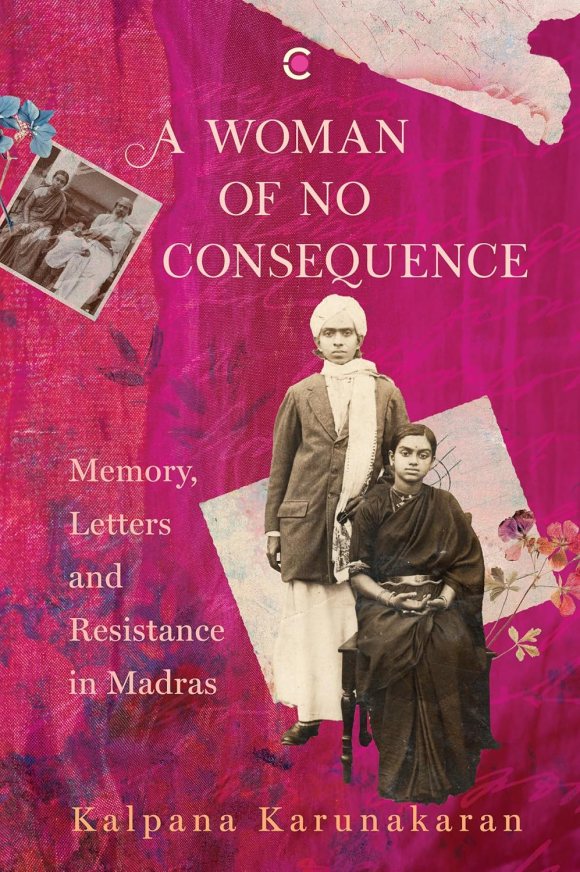
A Woman of No Consequence

Book Review by Bhaskar Parichha

Title: A Woman of No Consequence: Memory, Letters and Resistance in Madras

Author: Kalpana Karunakaran

Publisher: Westland/Context

When a historical account of a housewife’s quest for intellectual growth and her quiet defiance of twentieth-century orthodoxies in Madras comes alive through words and memory, it has every reason to be celebrated. A Woman of No Consequence: Memory, Letters and Resistance in Madras by Kalpana Karunakaran is a remarkable work precisely for that reason—an intimate, yet deeply analytical, exploration of the life of the author’s maternal grandmother, Pankajam (1911–2007).

Kalpana Karunakaran, Associate Professor in the Humanities and Social Sciences Department at IIT Madras, is known for her research on gender, poverty, microcredit, women’s work in the informal sector, and solidarity-based collective action. In this book, she brings both her academic depth and personal tenderness to bear on the telling of one woman’s extraordinary life.

Karunakaran achieves something rare: she captures the singularity of an exceptional woman while situating her firmly within the complex social universe of Tamil Brahmin orthodoxy. She shows how the “utterly ordinary” life of a “woman of no consequence,” as Pankajam once described herself, was in truth far from ordinary.

Drawing upon letters, semi-autobiographical short stories, and a lifetime of writing—from Pankajam’s first autobiographical fragment in 1949 to her final reflections in 1995—the book offers a riveting portrait of a woman’s inner world. Through heartbreak and endurance, yearning and creativity, Pankajam emerges as a housewife with a philosopher’s mind and an artist’s courage, whose friendships and intellectual pursuits transcended cultural and geographic boundaries.

In her foreword, Karunakaran reflects on Pankajam’s motivation to write: “A humble housewife tied to mundane work may have a story or two worth telling,” Pankajam writes, “and I write to show that my soul has ever been trying to soar up and break the bondage of the flesh.”

It is here that the book finds its deepest resonance. Pankajam understood that women—forever consigned to their bodies—were denied a life of the mind. Yet she wrote as a way of freeing herself, of realising a soul not enslaved by gender or domesticity. Her faith offered a language of liberation, but her writing offered the means to enact it in the here and now.

Set against the vast canvas of twentieth-century India, Pankajam’s story unfolds amid momentous change: the World Wars, the freedom movement, the Japanese bombing of Madras in 1943, and the dawn of Independence. Through her eyes, we see a young mother building a home and nurturing her children while also fashioning herself as a progressive patriot in a nation-in-the-making.

In its essence, this is as much a social history as it is a biography. Pankajam’s writings provide a unique window into the domestic, cultural, and intellectual world of an era often missing from mainstream histories.

 In one of her later Tamil essays—written, perhaps, in the 1960s—she muses that history only records “governments, kings, wars, and conflicts,” not the “people’s everyday lives.” She wrote, therefore, so that her grandchildren might know her not merely as a loving grandmother but as a witness to history, a woman who lived fully and thought deeply.

Through Pankajam’s voice and Karunakaran’s scholarship, A Woman of No Consequence restores dignity to what is often dismissed as ordinary. It chronicles the spiritual and intellectual evolution of a woman who sought transcendence within the rhythms of domestic life, turning the everyday into a site of resistance and renewal.

Ultimately, this book is not only about one woman’s life but also about the birth of a nation as seen through its daughters—restless, self-aware women who compelled both home and nation to confront their own contradictions.

A Woman of No Consequence is a moving, layered, and profound testament to women’s inner lives, and to the quiet power of writing as an act of freedom.

.

Bhaskar Parichha is a journalist and author of Cyclones in Odisha: Landfall, Wreckage and ResilienceUnbiasedNo Strings Attached: Writings on Odisha and Biju Patnaik – A Political Biography. He lives in Bhubaneswar and writes bilingually. Besides writing for newspapers, he also reviews books on various media platforms.

PLEASE NOTE: ARTICLES CAN ONLY BE REPRODUCED IN OTHER SITES WITH DUE ACKNOWLEDGEMENT TO BORDERLESS JOURNAL

Click here to access the Borderless anthology, Monalisa No Longer Smiles

Click here to access Monalisa No Longer Smiles on Amazon International
Categories
Review

Boats in a Storm: Migrant Narratives

Book Review by Bhaskar Parichha

Title: Boats in a Storm: Law, Migration, and Decolonization in South and Southeast Asia, 1942–1962

Author: Kalyani Ramnath

Publisher: Westland/Context

The legal frameworks established during the period from 1942 to 1962 in South and Southeast Asia played a crucial role in shaping migration patterns and influencing decolonisation processes. This era witnessed significant changes as countries in these regions sought to redefine their legal systems in the wake of colonial rule, which in turn affected the movement of people across borders.

Migration patterns were influenced by various factors, including the aftermath of World War II, the struggle for independence, and the establishment of new national identities. Additionally, the decolonisation processes during this time were marked by the emergence of new legal frameworks that aimed to address the complexities of post-colonial governance and the rights of migrants. Understanding the interplay between these legal frameworks, migration trends, and decolonisation efforts provides valuable insights into the socio-political landscape of South and Southeast Asia during this transformative period.

Boats in a Storm: Law, Migration, and Decolonization in South and Southeast Asia, 1942–1962  authored by Kalyani Ramnath is a thoroughly researched work. This book is  part of the series South Asia in Motion and was originally published by Stanford University. Ramnath serves as an Assistant Professor of History at the University of Georgia and has conducted extensive research on migration.

Says the blurb: “For more than a century before World War II, traders, merchants, financiers, and laborers steadily moved between places on the Indian Ocean, trading goods, supplying credit, and seeking work. This all changed with the war and as India, Burma, Ceylon, and Malaya wrested independence from the British empire.”

This captivating book is set against the backdrop of the tumultuous post-war period. It delves deeply into the legal struggles encountered by migrants who are determined to maintain their traditional ways of life and cultural practices. The narrative highlights their experiences with citizenship and the broader process of decolonisation. Even as new frameworks of citizenship emerged and the political landscapes of decolonisation created complexities that often obscured the migrations between South and Southeast Asia, these migrants consistently shared their cross-border histories during their engagements with the legal system.

These narratives, often obscured by both domestic and global political developments, contest the notion that stable national identities and loyalties emerged fully formed and free from the influences of migration histories after the fall of empires.

In her book, Kalyani Ramnath draws on archival materials from India, Sri Lanka, Myanmar, London, and Singapore to illustrate how former migrants faced legal challenges in their efforts to reinstate the prewar movement of credit, capital, and labour. The book is  set against the  backdrop of a climate marked by rising ethno-nationalism, which scapegoated migrants for taking away jobs from citizens and monopolising land.

Ramnath fundamentally illustrates in the book that the process of decolonisation was marked not just by the remnants of collapsed empires and the establishment of nation-states emerging from the debris of imperial breakdown. It also encompasses the often-ignored stories of wartime displacements, the unexpected consequences that arose from these events, and the lasting impacts they have had on societies.

This perspective highlights the complex and multifaceted process of decolonisation, demonstrating how it was shaped not only by significant political transformations but also by the personal narratives and experiences of individuals who faced the challenges of conflict and displacement.

An excellent book to read!
.

.

Bhaskar Parichha is a journalist and author of Cyclones in Odisha: Landfall, Wreckage and ResilienceUnbiasedNo Strings Attached: Writings on Odisha and Biju Patnaik – A Political Biography. He lives in Bhubaneswar and writes bilingually. Besides writing for newspapers, he also reviews books on various media platforms.

PLEASE NOTE: ARTICLES CAN ONLY BE REPRODUCED IN OTHER SITES WITH DUE ACKNOWLEDGEMENT TO BORDERLESS JOURNAL

Click here to access the Borderless anthology, Monalisa No Longer Smiles

Click here to access Monalisa No Longer Smiles on Amazon International
Categories
Review

Tales of Secrets and Darkness

Book Review by Bhaskar Pariccha

Title: Keep It Secret

Author: Snehaprava Das

Publisher: Black Eagle Books

Snehaprava Das, a former Associate Professor of English, is a noted poet and translator. She has translated many Odia works into English and published five poetry collections. Her translations have received several awards, including the Prabashi Bhasha Sahitya Sammana, the Jibanananda Das Award, and the Fakir Mohan Anubad Sammana.

Keep It Secret is a collection of ten short stories. The relatively lengthy narratives are equally grounded in reality and fantasy. In the author’s view, these narratives strive to traverse the delicate, ephemeral boundary that exists between reality and illusion. They delve into the inner jungle to uncover the secrets that are meticulously hidden behind a facade of pretense and the artifice of a pleasing and socially acceptable exterior.

Engaging with her stories provides a rewarding experience. These tales encompass a diverse array of themes, including life and death, the supernatural, the real and the surreal, peculiar coincidences, and the intricacies of human relationships.

 In the Preface, Das provides a rationale for her stories, which contributes to their uniqueness. Citing Regina Pally, a distinguished psychiatrist and therapist based in Los Angeles, Das states, “Most of what we perceive occurs non-consciously and effortlessly, and according to her, this process can be described as a ‘survival instinct’.” This may lead the guilt-ridden mind to interpret and shape a future aimed at compensating for past wrongs. This ‘survival instinct,’ which entices individuals to assume and perceive various things, can even distort the true impact of actual events, creating multiple and bizarre interpretations of a single incident that may approach the surreal.

She bases her stories on the presumption made by Freudian scholars: “From error to error, one discovers the entire truth, observes Freud. Some of the stories aim at exposing the errors man is forced to commit, lured by compulsive emotions, which leave life irrecoverably difficult, and could at times prove fatal in that self-destructive process of discovering the truth. Some stories attempt to study the complex and shifting patterns of human relationships that hang precariously balanced between trust and distrust, and to observe the reaction of the characters while confronting the secret of that relationship, which was kept closely guarded till the end. The experience of that confrontation could be subversive in that specific moment of anagnorisis.”[1]

Some stories may not always offer a seemingly logical, definable, or happy ending.

Das’s short stories possess a cerebral quality, posing a challenge for discerning readers to fully appreciate her offerings.

.

[1] ‘The other Freud: Rethinking the philosophical roots of psychoanalysis’ by Parker & Donald Lewis

.

Bhaskar Parichha is a journalist and author of Cyclones in Odisha: Landfall, Wreckage and ResilienceUnbiasedNo Strings Attached: Writings on Odisha and Biju Patnaik – A Political Biography. He lives in Bhubaneswar and writes bilingually. Besides writing for newspapers, he also reviews books on various media platforms.

PLEASE NOTE: ARTICLES CAN ONLY BE REPRODUCED IN OTHER SITES WITH DUE ACKNOWLEDGEMENT TO BORDERLESS JOURNAL

Click here to access the Borderless anthology, Monalisa No Longer Smiles

Click here to access Monalisa No Longer Smiles on Amazon International
Categories
Bhaskar's Corner Tribute

Bidyut Prabha Devi – The First Feminist Odia Poet

By Bhaskar Parichha

Bidyut Prabha Devi

Bidyut Prabha Devi (1926 – 1977) is celebrated as one of the most prominent female poets in Odia literature. Hailing from Natara village in the Kendrapara district, she was the second daughter of the esteemed writer, Nimai Charan Das, and Rekha Devi.

Raised in a traditional family in Bamphisahi, Cuttack, she received most of her education independently, attending Ravenshaw Girls’ School until the ninth grade. Inspired by her father and notable Odia poets like Nanda Kishore Bal and Kunja Bihari Das, she began her journey into poetry in 1940.

Her first collection, released in 1944 when she was merely 18 years old, featured patriotic poems that celebrated the cultural and natural heritage of Odisha. It highlighted her early ability to create vivid imagery and convey emotional depth, drawing from her rural background and the literary traditions of Odia.

Her 1950 collection, Utkal Saraswata[1], was recognised as a significant contribution to education, being included as a poetry textbook at Utkal University. In addition to poetry, she also wrote for children, for which she was awarded by the Government of India in 1955, acknowledging her impactful contributions to children’s literature.

Bidyut Prabha’s poetry explores the challenges faced by women, societal limitations, and the theme of empowerment, weaving together both personal and universal experiences. It embodies her feminist viewpoint, tackling matters such as gender inequality within a conservative framework, all while preserving a lyrical and approachable style.

She authored numerous plays, although specific titles are not extensively recorded. Her theatrical pieces frequently conveyed social messages, resonating with her socialist and feminist principles. Her writings were recognized for their clarity and moral depth, rendering literature accessible to younger audiences. Some of these later works are less documented but showcase her reflective and philosophical nature.

Influenced by socialist principles, her poetry examined social disparities and advocated for the marginalised. Her self-taught approach was characterised by clear and evocative language, rendering her work both relatable and profound.

Bidyut Prabha’s writings were revolutionary for their era, especially in their focus on women’s issues within Odia literature. Her son, Sachidananda Mohanty, a distinguished educationist and litterateur, has translated her works, thereby preserving her legacy.

Writes Sachidananda Mohanty[2]: “In recent decades, feminist historiography in eastern India has paid welcome attention to issues of education, creativity, and sisterhood across linguistic barriers. It has recognised women’s pivotal role in shaping the public space at the intersection between feminist history and literary creativity. Scholars like Judith Walsh, Tanika Sarkar, Malavika Karlekar, and others have brought to our attention forgotten life-narratives of literary women of the region who have created a tradition of their own.  Bidyut Prabha Devi, recognised as a major female voice in pre-modern Odia poetry, belongs to a poetic tradition represented by an illustrious sisterhood, comprising Reba Ray, Kuntala Kumari Sabat, Haripriya Devi, Debahuti Devi, Nirmala Devi, Tulasi Das, and Brahmotri Mohanty, among others. 

“While Bidyut Prabha may be known in Odisha, her feminist poems, based on her deep understanding of domesticity and patriarchy, have not been sufficiently read outside the state. Even in Odisha, her ‘romantic poems’ are widely anthologised at the cost of the more powerful compositions that address the woman’s position and identity in terms of the entrenched power structures in society.”

According to Mohanty, Bidyut Prabha’s feminist poetry stands out distinctly from the prevalent ‘Advice-for-Women’ genre in the region. She bases her work on her own life experiences and resonates with the growing feminist consciousness in Odisha, which is championed by literary feminists and social reformers like Sarala Devi[3], who played a pivotal role as a mentor to Bidyut Prabha. This journey was marked by its transnational influences. Sarala Devi had a strong connection with poet Annada Shankar Ray, a key figure in the Odia Romantic movement.

Her impact on Odia literature is significant, particularly as one of the earliest notable female poets in a predominantly male literary environment. Her contributions are rooted in her capacity to merge lyrical elegance with social critique, enhancing the inclusivity, reflection, and cultural relevance of Odia literature. Her work continues to serve as a foundational element for feminist and regional narratives in Odisha.

She was married to Panchanan Mohanty. Following health challenges in 1966, her literary output took on a spiritual dimension, shaped by her connection to the Sri Aurobindo Ashram, Pondicherry. Unfortunately, she took her own life.

Bidyut Prabha Devi’s poetry, deeply rooted in feminist and socialist ideals, continues to motivate and inspire, with her centenary of birth being commemorated in 2025 as a representation of women’s empowerment in Odisha.

[1] Odia Literature

[2] A literary sisterhood, Vol. 65, No. 6 (326) (November-December 2021), Published By: Sahitya Akademi

[3] Sarala Devi (1904-1986) – Odisha’s first Satyagrahi, first female legislator and first feminist writer.

.

Bhaskar Parichha is a journalist and author of Cyclones in Odisha: Landfall, Wreckage and ResilienceUnbiasedNo Strings Attached: Writings on Odisha and Biju Patnaik – A Political Biography. He lives in Bhubaneswar and writes bilingually. Besides writing for newspapers, he also reviews books on various media platforms.

PLEASE NOTE: ARTICLES CAN ONLY BE REPRODUCED IN OTHER SITES WITH DUE ACKNOWLEDGEMENT TO BORDERLESS JOURNAL

Click here to access the Borderless anthology, Monalisa No Longer Smiles

Click here to access Monalisa No Longer Smiles on Amazon International
Categories
Review

Six Economists and the World they Made

Book Review by Bhaskar Parichha

Title: Apostles of Development: Six Economists and the World They Made 

Author: David C. Engerman

Publisher: Penguin Viking

David C. Engerman is a Yale University professor focused on twentieth-century international history. He has authored two books on Russia and the USSR’s influence on American politics and has extensively studied international development assistance. His key works include the co-edited volume Staging Growth: Modernization, Development and the Global Cold War (2003) and the monograph, The Price of Aid: The Economic Cold War in India. His research was featured in his 2016 presidential address to the Society for Historians of American Foreign Relations. He is currently writing a comprehensive history of international development, tentatively titled International Development: A History in Eight Crises.

Apostles of Development: Six Economists and the World They Made by Engerman focuses on six influential economists from South Asia : Amartya Sen, Manmohan Singh, Mahbub ul Haq, Jagdish Bhagwati, Rehman Sobhan and Lal Jayawardena.

All six were born as colonial subjects in the British Empire and studied at Cambridge University. They emerged as pioneering “Third World development experts”, playing central roles in shaping global debates on poverty, inequality, and economic development.

The book highlights that the fight against global poverty, which began in the aftermath of World War II, represented a monumental effort that brought together economists, engineers, and a multitude of organisations.

This period marked the emergence of economists as a vital force in global affairs, playing a crucial role in shaping international dialogues focused on poverty alleviation and development strategies. Their contributions were essential in formulating policies and initiatives aimed at addressing the complex challenges of poverty on a worldwide scale.

Writes Engerman in the introduction: “The Apostles’ careers — and their home countries — demonstrate that there was no one path to development. Many governments in new nations opted to build factories. Others focused on roads and power plants, or on schools and hospitals. Some, like India, stressed economic self-reliance while others, including Pakistan and Ceylon, pursued international trade. Whatever the strategy, debates over the role of government-which frequently divided these six-resonated with the growing tensions of the Cold War, which pitted contrasting economic and political models against each other. Yet development was no mere creature of the Cold War, especially when examined from the perspective of the former colonies.” 

He further contends: “Core ideas and practices of development changed dramatically over the Apostles’ long careers. Debates roiled academic conferences, di- vided planning commission discussions, and dominated international venues — and the Apostles participated on all sides. Was the goal of development to alleviate poverty or was it to reduce inequality? Was the best solution to expand the economic role of government or to reduce it? Was national development better served by becoming self-sufficient was economic theory universal or did a different set of economic rules (and therefore economic tools) apply to poor countries than to rich ones? Development was always contested. 

“The Apostles’ turn to economics was in keeping with the spirit of the age. Economic questions loomed large in the middle of the twentieth century and economists proved ready, willing, and able to offer answers. Political leaders frequently sought their expertise and the century’s leading economists answered that call. The Depression cried out for an explanation that suggested a solution; the doyen of Cambridge economics, John Maynard Keynes, took on that task with gusto. The fate of World War II was determined as much by each side’s ability to mobilize resources as it was by battlefield tactics– hence Paul Samuelson’s boast that it was ‘an economist’s war’. And the problems of the postcolonial world arose precisely as economics was becoming what one historian called ‘the master discipline of the 20th century’.”

The book emphasizes that the origins and driving force of development were rooted in the Global South, aiming to improve the conditions of the world’s poorest countries, rather than being a project imposed by the West.It explores the different economic philosophies of these six economists and the ongoing debate about how economic theory should differ for poor versus rich countries.

Engerman challenges the idea that development is simply a tool for rich countries to dominate or a pure expression of humanitarianism. Instead, he argues that successful development comes from practical solutions tailored to real-world problems, not rigid ideological frameworks.

The book advocates for a modest, pragmatic approach to development, prioritising the reduction of gross inequality and insisting that development means more than just economic growth.

The narrative situates these economists’ work in the broader context of the Cold War and the shifting global landscape, highlighting how their ideas shaped and were shaped by international politics and economic crises.

This extensively researched and substantial book is acknowledged as a significant and timely addition to the literature concerning economics, economic history, and the progression of development thought, particularly in light of current global discussions regarding inequality and the prospects for economic growth.

Apostles of Development is suggested for those who are interested in the historical context of development economics, the influence of the Global South on global policy formulation, and the life stories of several of the most impactful economists of the 20th century.

.

.

Bhaskar Parichha is a journalist and author of Cyclones in Odisha: Landfall, Wreckage and ResilienceUnbiasedNo Strings Attached: Writings on Odisha and Biju Patnaik – A Political Biography. He lives in Bhubaneswar and writes bilingually. Besides writing for newspapers, he also reviews books on various media platforms.

.

PLEASE NOTE: ARTICLES CAN ONLY BE REPRODUCED IN OTHER SITES WITH DUE ACKNOWLEDGEMENT TO BORDERLESS JOURNAL

Click here to access the Borderless anthology, Monalisa No Longer Smiles

Click here to access Monalisa No Longer Smiles on Amazon International
Categories
Bhaskar's Corner

Can Odia Literature Connect Traditional Narratives with Contemporary Ones?

By Bhaskar Parichha

Odia literature is characterised by a profound tradition of classic narratives, with notable examples such as Fakir Mohan Senapati’s timeless Chha Mana Atha Guntha[1].  This literary corpus is further enhanced by an array of mythological and folk narratives that hold significant importance in the cultural legacy of Odisha.

These narratives persist through time because they reflect universal human experiences, encompassing themes such as land, power, family, and morality, all while being intricately linked to the historical context and cultural identity of the region. They serve not only as stories but also as reflections of society, having been shaped and refined over the years.

Readers are consistently attracted to these literary works for reasons similar to those that draw us to the writings of Shakespeare or the epic narrative of the Mahabharata: their themes are enduring, and the insights they provide remain pertinent. Similarly, publishers and curators, even at the national level, often revisit these classic tales, a trend that is entirely justifiable.

However, it is the transition to contemporary matters that strikes a significant chord. Odia literature has been progressing, albeit perhaps not as prominently or visibly as certain other Indian literary landscapes. Modern voices are addressing current issues—urban isolation, the influence of technology, caste relations, and environmental deterioration. The change is evident, yet it remains less pronounced than it has the potential to be.

What accounts for this? There may be multiple reasons.

The literary tradition of Odisha is profoundly embedded in its heritage. Classic literature is not only revered and taught but frequently eclipses modern works. Both publishers and readers exhibit a conservative inclination, preferring established texts. This trend is not unique to Odia literature; for example, Tolstoy remains a central figure in Russian literary discourse. As a result, this inclination obstructs the acknowledgment of new authors.

Modern Odia literature faces considerable challenges in its distribution. In contrast to Bengali or Tamil literature, which benefits from larger urban readerships and established translation networks, Odia books often struggle to reach broader audiences.

While digital platforms are making significant strides in this domain, the overall development is still sluggish. Without a strong market, numerous authors may opt to concentrate on more conventional themes that are viewed as more commercially viable.

The demographic composition of Odisha is primarily rural, where numerous readers find a stronger connection with stories that delve into village life or ethical dilemmas, as opposed to genres like cyberpunk or themes focused on existential angst. Although there are urban Odia authors, their readership is frequently limited in range. As a result, contemporary themes may seem alien to those who maintain a deep bond with traditional cultural settings.

The literary language of Odia typically possesses a formal tone, significantly influenced by its classical roots. This can lead to a conflict with modern terminology and global themes, posing challenges for writers who wish to innovate without jeopardising their connection to the audience. In contrast, languages such as Hindi and Malayalam readily incorporate colloquial expressions, which thrive in contemporary literature.

Nonetheless, modern Odia literature is dynamic and progressing. Short story writers are exploring a variety of topics including religion, science fiction, feminism, leftist ideologies, and climate change. Prominent authors such as Sarojini Sahu, Satya Mishra, Rabi Swain, Sadananda Tripathy, Jyoti Nanda, Bhima Prusty, Janaki Ballabh Mohapatra, Ajaya Swain, Biraja Mohapatra, Sujata Mohapatra and young writers like Debabrata Das  are actively investigating these contemporary themes. Publications like Kadambini, Rebati, and Katha are offering platforms for these creative narratives.

Despite this, the main obstacle remains the need to improve visibility. Social media and over-the-top (OTT) platforms have the potential to revolutionise this landscape—just picture an Odia adaptation of Black Mirror[2]!

There is an immediate need for greater investment in Odia storytelling to effectively bridge the gap between traditional and modern narratives.

.

[1] Six acres and a Third, a novel by Fakir Mohan Senapati(1843-1918) published in 1902

[2]Black Mirror is a British dystopian science fiction television anthology series that started in 2011 and is still on the run.

.

Bhaskar Parichha is a journalist and author of Cyclones in Odisha: Landfall, Wreckage and ResilienceUnbiasedNo Strings Attached: Writings on Odisha and Biju Patnaik – A Political Biography. He lives in Bhubaneswar and writes bilingually. Besides writing for newspapers, he also reviews books on various media platforms.

.

PLEASE NOTE: ARTICLES CAN ONLY BE REPRODUCED IN OTHER SITES WITH DUE ACKNOWLEDGEMENT TO BORDERLESS JOURNAL

Click here to access the Borderless anthology, Monalisa No Longer Smiles

Click here to access Monalisa No Longer Smiles on Amazon International

Categories
Bhaskar's Corner Tribute

Ramakanta Rath: A Monument of Literature

By Bhaskar Parichha

The death of Ramakanta Rath, a provocative figure in contemporary Odia poetry, has left a considerable gap in the literary landscape. Born on December 13, 1934, in Cuttack, Ramakanta was a prominent modernist poet in Odia literature. He obtained his Master’s degree in English Literature from Ravenshaw College and joined the Indian Administrative Services (IAS) in 1957.

His work was significantly shaped by the influences of poets such as T.S. Eliot and Ezra Pound, often delving into themes of mysticism, mortality, and human isolation. Ramakanta Rath’s contributions have profoundly impacted modern Odia literature in various ways. He brought modernist themes and styles to Odia poetry, drawing significant inspiration from Western poets such as T.S. Eliot and Ezra Pound. His examination of topics like the search for the mystical, the concepts of life and death, and the experience of inner solitude facilitated a transition in Odia poetry towards more contemporary and universal themes.

 Rath’s poetry is marked by symbolic references to spiritual and metaphysical dimensions of existence, which enhanced the intellectual richness of Odia literature. This methodology enabled readers to engage with intricate philosophical concepts through the medium of poetry. Rath’s poetry is noted for its somber tone and symbolic references to the spiritual and metaphysical dimensions of existence.

His significant literary contributions include Kete Dinara (Of Bygone Days, 1962), Aneka Kothari (Many Rooms, 1967), Sandigdha Mrigaya (Suspicious Hunting, 1971), Saptama Ritu (The Seven Seasons, 1977), Sachitra Andhara (Picturesque Darkness, 1982), Sri Radha (1984), and Sri Palataka (Mr Escapist, 1997). Rath was honoured with the Sahitya Akademi Award in 1977, the Saraswati Samman in 1992 for Sri Radha, the Bishuva Samman in 1990, and the Padma Bhushan in 2006. He also received the Sahitya Akademi Fellowship in 2009 before which he was the vice-president of the Akademi.

Rath is particularly celebrated for his lengthy poem, Sri Radha, in which he reimagines Radha, freeing her from theological limitations and depicting her as a remarkable character who embodies deep emotions, love, defiance, and resilience. This poem uniquely intertwines themes of erotic love with existential introspection. This notable work initiated a new trend in Odia poetry that echoed the confessional styles of poets like Sylvia Plath, infusing a personal and introspective quality into Odia literature.

He skillfully combined traditional Odia poetic meters and techniques with contemporary free verse, creating a unique hallmark of his artistic expression. Odia poetry is characterised by its extensive use of classical meters and forms, such as chhanda, chautisa and  champu which serve to articulate intricate emotions and themes in a structured and rhythmic manner. By incorporating these traditional elements, Rath infused his poetry with cultural richness and musicality, thereby amplifying its emotional resonance and thematic depth.

Ramakanta Rath’s integration of traditional Odia meter enriched his themes in multiple ways. By using these familiar poetic forms, his work connects more profoundly with readers who recognise them. This cultural connection amplifies the emotional resonance of his themes, making them easier for his audience to relate to. Additionally, traditional Odia meters often hold symbolic significance, which Rath skilfully utilises to deepen his modernist themes.

The combination of symbolic annotations and modernist concepts enhances Rath’s poetry, adding depth and encouraging reflection. By contrasting traditional forms with modernist ideas, his work creates a dynamic tension. This tension amplifies the emotional resonance of his poetry, prompting readers to navigate the clash between traditional values and contemporary realities, which adds layers to his themes. Rath’s incorporation of traditional meters with modern free verse invites readers to think critically about his poetry.

This fusion of styles encourages a deeper exploration of his themes, leading to a more profound appreciation of his work. While the traditional Odia meters offer a cultural base, Rath’s modernist themes keep his poetry relevant on a global scale. This interplay between tradition and modernity enables his work to reach beyond local confines, attracting a wider audience interested in existential and philosophical questions.

Rath’s poetry stands out for its masterful incorporation of irony and wit, elements that add depth and complexity to his body of work. Critics note that his use of irony can often be challenging to interpret, reflecting the nuanced and multifaceted nature of his poetic viewpoint. This unique approach, combined with his thematic explorations, has sparked a resurgence among a new generation of Odia poets, playing a crucial role in the advancement of modern Odia literature.

Ramakanta Rath’s impact has been instrumental in shaping the landscape of contemporary Odia poetry, solidifying his reputation as a monumental figure in the realm of Indian literature today. His passing signifies the conclusion of a significant era in the narrative of Odia literature, leaving behind a legacy that will continue to inspire future writers and poets.

.

(First published in Odisha Plus)

Read his translated poems by clicking here.

Bhaskar Parichha is a journalist and author of Cyclones in Odisha: Landfall, Wreckage and ResilienceUnbiasedNo Strings Attached: Writings on Odisha and Biju Patnaik – A Political Biography. He lives in Bhubaneswar and writes bilingually. Besides writing for newspapers, he also reviews books on various media platforms.

.

PLEASE NOTE: ARTICLES CAN ONLY BE REPRODUCED IN OTHER SITES WITH DUE ACKNOWLEDGEMENT TO BORDERLESS JOURNAL

Click here to access the Borderless anthology, Monalisa No Longer Smiles

Click here to access Monalisa No Longer Smiles on Amazon International