Title: A Woman of No Consequence: Memory, Letters and Resistance in Madras
Author: Kalpana Karunakaran
Publisher: Westland/Context
When a historical account of a housewife’s quest for intellectual growth and her quiet defiance of twentieth-century orthodoxies in Madras comes alive through words and memory, it has every reason to be celebrated. A Woman of No Consequence: Memory, Letters and Resistance in Madras by Kalpana Karunakaran is a remarkable work precisely for that reason—an intimate, yet deeply analytical, exploration of the life of the author’s maternal grandmother, Pankajam (1911–2007).
Kalpana Karunakaran, Associate Professor in the Humanities and Social Sciences Department at IIT Madras, is known for her research on gender, poverty, microcredit, women’s work in the informal sector, and solidarity-based collective action. In this book, she brings both her academic depth and personal tenderness to bear on the telling of one woman’s extraordinary life.
Karunakaran achieves something rare: she captures the singularity of an exceptional woman while situating her firmly within the complex social universe of Tamil Brahmin orthodoxy. She shows how the “utterly ordinary” life of a “woman of no consequence,” as Pankajam once described herself, was in truth far from ordinary.
Drawing upon letters, semi-autobiographical short stories, and a lifetime of writing—from Pankajam’s first autobiographical fragment in 1949 to her final reflections in 1995—the book offers a riveting portrait of a woman’s inner world. Through heartbreak and endurance, yearning and creativity, Pankajam emerges as a housewife with a philosopher’s mind and an artist’s courage, whose friendships and intellectual pursuits transcended cultural and geographic boundaries.
In her foreword, Karunakaran reflects on Pankajam’s motivation to write: “A humble housewife tied to mundane work may have a story or two worth telling,” Pankajam writes, “and I write to show that my soul has ever been trying to soar up and break the bondage of the flesh.”
It is here that the book finds its deepest resonance. Pankajam understood that women—forever consigned to their bodies—were denied a life of the mind. Yet she wrote as a way of freeing herself, of realising a soul not enslaved by gender or domesticity. Her faith offered a language of liberation, but her writing offered the means to enact it in the here and now.
Set against the vast canvas of twentieth-century India, Pankajam’s story unfolds amid momentous change: the World Wars, the freedom movement, the Japanese bombing of Madras in 1943, and the dawn of Independence. Through her eyes, we see a young mother building a home and nurturing her children while also fashioning herself as a progressive patriot in a nation-in-the-making.
In its essence, this is as much a social history as it is a biography. Pankajam’s writings provide a unique window into the domestic, cultural, and intellectual world of an era often missing from mainstream histories.
In one of her later Tamil essays—written, perhaps, in the 1960s—she muses that history only records “governments, kings, wars, and conflicts,” not the “people’s everyday lives.” She wrote, therefore, so that her grandchildren might know her not merely as a loving grandmother but as a witness to history, a woman who lived fully and thought deeply.
Through Pankajam’s voice and Karunakaran’s scholarship, A Woman of No Consequence restores dignity to what is often dismissed as ordinary. It chronicles the spiritual and intellectual evolution of a woman who sought transcendence within the rhythms of domestic life, turning the everyday into a site of resistance and renewal.
Ultimately, this book is not only about one woman’s life but also about the birth of a nation as seen through its daughters—restless, self-aware women who compelled both home and nation to confront their own contradictions.
A Woman of No Consequence is a moving, layered, and profound testament to women’s inner lives, and to the quiet power of writing as an act of freedom.
.
Bhaskar Parichha is a journalist and author of Cyclones in Odisha: Landfall, Wreckage and Resilience, Unbiased, No Strings Attached: Writings on Odisha and Biju Patnaik – A Political Biography. He lives in Bhubaneswar and writes bilingually. Besides writing for newspapers, he also reviews books on various media platforms.
PLEASE NOTE: ARTICLES CAN ONLY BE REPRODUCED IN OTHER SITES WITH DUE ACKNOWLEDGEMENT TO BORDERLESS JOURNAL
After Geetanjali Shree’s Tomb of Sand, the first novel to receive the International Man Booker Prize in 2022 for a work of fiction written in an Indian language and translated into English, history repeated itself once again when this year in 2025, Banu Mushtaq’s book of selected short stories Heart Lamp, written originally in Kannada and translated into English by Deepa Bhasthi, was recipient of the same coveted prize. It proved that translating from Indian bhasha languages to compete worldwide with other canonical literatures has gained maturity to impress the jury who finally evaluate the prize.
In the twelve stories of Heart Lamp, published originally in Kannada between 1990 and 2023, Banu Mushtaq exquisitely captures the everyday lives of women and girls in Muslim communities in southern India. As a journalist and lawyer, most of the stories are women-centric and in all of them she tirelessly champions women’s rights and protests all forms of caste and religious oppression. As a believer in the highly influential literary movement in Kannada during the 1970s and ‘80s – the Bandaya Sahitya tradition – that started as an act of protest against the hegemony of upper caste and mostly male-led writing that was then being published and celebrated, Banu Mushtaq’s literary career therefore gave importance to dissent, rebellion, protest, resistance to authority, revolution and its adjacent areas at par with the movement that urged women, Dalits and other social and religious minorities to tell stories from their own lived experiences.
The author goes on to highlight several harmful social practices that are still prevalent in the Muslim community and even supported by law, which impede girls including women of all ages, from having freedom to make positive choices, thus hampering them from realizing their full potential. In story after story, the deeply patriarchal structure of Muslim society is depicted in such a manner that it is not only applicable to the Muslims living in villages and town in south India but can be applicable elsewhere too. She shows how child marriage is still in practice and mentions the suffering and trauma women experience because of legally sanctioned polygamy which causes social and financial insecurity and hardship for women and their offspring. The curse of teen talaq[1]and the practice of issuing multiple fatwas[2] which are deliberately aimed at constricting women are urgently in need of being addressed legally.
In the very first story, ‘Stone Slabs for Shaista Mahal’, we find Iftikar’s too much effusive declarations of love for his wife Shaista vanish into thin air immediately after her death and he soon marries a young girl leaving all his children to be looked after by his eldest daughter. The ‘Fire Rain’ has mutawalli[3] Usman Saheb heading the community and making hundreds of decisions for others, but when her sister comes begging he refuses to give her the legitimate share of his ancestral house. Whereas the ‘Black Cobras’ has the mutawalli saheb refuse to help a woman whose husband has deserted her for giving birth to three daughters and provide any support for her youngest sick daughter who dies without any treatment. The story ends with a focus on female revolt when his own wife decides to go and have an operation to stop childbirth. In an interesting story ‘A Decision of the Heart’ the author narrates the plight of a man called Yusuf who is unable to balance the love between his wife and his mother and finally decides to arrange a nikah for his mother Mehaboob Bi.
One story that delves deep into Muslim customs that we generally are not aware of, is entitled ‘Red Lungi’. It tells us about a mass circumcision programme at the mosque for the poor where a young boy Arif undergoes the procedure and is cured in due course. His plight is then contrasted with Samad, the son of a rich man who remains weak and unfit despite the elaborate festivities for his circumcision and the gifts.
The titular story ‘Heart Lamp’ centres around Mehrun who is left to fend for herself as her husband falls for another woman. When she goes to her parents’ house for support, her brothers send her back. Leaving the responsibility of her children upon her eldest daughter Salma, she attempts to burn herself to death. The scene where her daughter begs her to stop and so finally, she aborts her suicide attempt, is extremely moving. The depiction of rural Karnataka comes out very clearly in ‘Soft Whispers’. The story narrates in detail the childhood antics of an eight-year-old girl visting her grandparent’s house in Mabenahalli village. Her young playmate, Abid, who would join her to play tricks, turns into the supervisor of a dargah[4]. When he comes to invite her to join the festival, he keeps his head lowered and does not even meet her eye.
Despite mentioning serious social issues pertaining to the average middle and lower-middle class Muslim families, Mushtaq’s stories are laced with a sense of wry humour and pathos. For instance, in ‘High-Heeled Shoes’, Niaz Khan envies his sister-in-law who comes from Saudi Arabia wearing gorgeous high-heeleded shoes and, in the end, manages to buy a pair for his pregnant wife Arifa which does not fit her at all. The difficulty in walking with those shoes on, and the interaction she has with her unborn child in her womb takes this story to a different level altogether. ‘A Taste of Heaven’ has Bi Dadi, who turns into stone after her ja-namaz[5]is soiled, gaining solace by drinking Pepsi and thinking it to be aab-e-kausar, the nectar from heaven, and starts living in a delusory world of her own in the company of her long-lost husband. In ‘The Arabic Teacher and Gobi Manchuri’, the young Maulvi Hazrat’s penchant for eating “gobi manchuri[6]” is the comic fulcrum on which the story turns. Again, Shazia’s desperate attempts in ‘The Shroud’ to locally procure a kafan[7] and sprinkle it with the holy zamzam water from Mecca after having callously forgotten to bring one for poor Yaseen Bua from her Hajj pilgrimage, makes her grief and being conscience-stricken rather ludicrous.
In the 2025 International Booker Acceptance Speech Mushtaq said: “This book is my love letter to the idea that no story is ‘local’ – that a tale born under a banyan tree in my village can cast shadows as this stage tonight…. [It] was born from the belief that no story is ever ‘small’ – that in the tapestry of human experience, every thread holds the weight of the whole.”
Her observation power is indeed very strong. Muslim women have been victims of deprivation and discrimination in various matters owing to a dearth in education and awareness. To bring a change in the family, a change in mentality is very crucial. The last story of this collection, ‘Be A Woman Once, Oh Lord!’ is a typical tale of male chauvinism, where deprived a dowry, a man throws out his sick wife and children to get married again.
A woman must construct her own identity besides being someone’s daughter, somebody’s wife or someone’s mother. Only education and self-dependence can establish a woman as a human being beyond her religious and family identities. But as her translator rightly points out, it would be a disservice to reduce Mushtaq’s work to her religious identity, for stories transcend the confines of a faith and its cultural traditions. So, she should not be seen as writing only about a certain kind of woman belonging to a certain community, that women everywhere face similar, if not the exact same problems, and those are the issues that she writes about.
Before concluding, a few words need to be written about the translator and the translation too. In the Translator’s Note, titled ‘Against Italics’, Deepa Bhashti reiterates that the “translation of a text is never merely an act of replacing words in one language with equivalent words in another: every language, with its idioms and speech conventions, brings with it a lot of cultural knowledge that often needs translating too.” She mentions that she was very deliberate in her choice to not use italics for the Kannada, Urdu and Arabic words that remain untranslated in English. She believes that italics serve to not only distract visually, but more importantly, they announce words as imported from another language, exoticizing them and keeping them alien to English. She also mentions that there are no footnotes used at all.
In her separate International Booker Prize Acceptance Speech, Bhasthi also tells us how through the work they could bring out what would otherwise be unread, uncelebrated texts to a new and very different sets of readers. She stated how the story of the world was really a history of erasures. It was “characterized by the effacement of women’s triumphs and the furtive rubbing away from collective memory of how women and those on the many margins of this world live and love.” Therefore, the stories in this collection are recommended for reading not by reducing Mushtaq’s work to her religious identity, but by transcending the confines of a faith and its cultural traditions.
[1] It’s an Islamic practice in which a Muslim man could divorce his wife by uttering the word “talaq” (divorce) three times.
Contours of Him: Poems has been edited and introduced by Malachi Edwin Vethamani, a Malyasian academic of repute. The book has a rich assemblage of poetical voices — from both men and women — representing the contours and nuances of the many aspects and shades of masculinity. The poems explore the male body as a symbol of identity, art, and humanity, delving into themes of masculinity, strength, vulnerability, and beauty. It also examines the male body and psyche as the site of hurt and wounding. The book features poems that scrutinise the male form revealing or concealing it to explore these themes.
The focus on corporeality or the somatic coexists with the psychological in many poems in the anthology. Childhood innocence and curiosity coexist and yield to what could be viewed as growing pains or the challenges of maturation and understanding. There are several poems on the father-son theme, with poems that express homage to the father. Christina Yin’s prose poem ‘To My Father’ and Gopal Lahiri’s ‘My Ideal Man’ are cases in point. Sudeep Sen in the poem, ‘Baba/Father’, captures the enormous vacuum left by the loss of the father as Sen completes the elaborate death rituals as the eldest son of his dead father, performed as per brahminical prescriptions. In a gnomic and nuanced vein, Vethamani , the editor of the anthology, gives his take on father-son intimacies.
This book examines the contours of the male body and psyche at different stages of life and could be viewed as a psycho-somatic exploration of masculinity across diverse cultures. It also explores the strength and fragility of the male physique, occasionally dipping into cultural repertoires of male archetypes, human and divine. At the same time, it acknowledges societal expectations from men and their concomitant cultural insecurities, particularly regarding their identity and the search for acceptance.
A common motif in many of the poems is about the unwitting and unwillingly borne burden and baggage of masculinity. The protagonists/personae of many of these poems seem to be conscious that masculinity is but a performance, involving the display of muscles and embodying a certain swag. Yet this definition of and expectation from men within patriarchies, can be a cage and straitjacket which binds, restricts and confines the human being. If patriarchies bind women, men are not exempt from it either. It is this theme that resonates(among others) in Angshuman Kar’s poem called ‘Tears’: “When mountains cry, rivers are born/From a woman’s tears, pearls have always been born/And when mothers cry, dormant volcanoes awaken…No one in the world knows/why a strong man cries/or why, when he does/he looks so sacred and beautiful.”
The predominant focus, however, is on corporeality that has led to the exploration of its many aspects of the body in the poems. The many facets locates the male body along a spectrum of materiality, vulnerability, relationality and the transcendental possibilities of the body. In recent years, there have been a plethora of poems by women discussing corporeality in multiple registers, exploring female subjectivity, desire and sexuality. Focus on the psychosomatic aspects of the gendered body has led to numerous explorations and analyses of femininity, on being/becoming women, on trans-identities. Many poems have been written on the human-divine aspect of the female body. Kamala Das and others (including Pakistani women poets) have written evocatively about the transgressive desires and the many hungers of the female body .
Voices from the global south recording the voices of men was perhaps the need of the moment. The anthology includes a few poems on masculinity as a construct, especially focusing on the male body through various lenses — vulnerability, performance, shame, violence, and transformation. These poems offer a critical lens rather than idealising masculinity, exposing its social constructions and internal contradictions. They also highlight the relational nature of masculinity which are often traditionally embedded within family structures in South Asia. There are glimpses of guilt in Arthur Neong’s poem, “At this juncture of age, I feel like a teenager again,” where the persona/speaker seems keen to shed and slough off the burdens of masculinity and be in an escapist mode. He writes “At times I go to my wife for a little reprieve/Yet eyes open, think of ways to cheat”. Some of the poems read like love poems, like David C.E. Tneh’s poem, ‘Crossings’, that memorialises his dead friend. Tneh writes: “between the shared spaces and/ private moments come a synergy of collective memories/that I have of you.”
A writer writing on the female body once referred to it as a story discussed by men. Similarly, the anthology at hand discusses the contours of male corporeality and affect. The anxieties of masculinity, of literally not measuring up, pepper these poems and forms one of the vital themes of this anthology. Occasionally, a kind of narcissism creeps in, often giving way to musing or self-introspection. After voicing the common masculine concerns(and anxieties) of corporeal self-consciousness, the poet Kiriti Sengupta declares:
“I don’t look at veiled people anymore.
It is either my age or my hormones.
I now look beyond the flesh, bone and keratin.”
In the last revelatory line, there is a movement towards transcendence: “I have been told /the finer body dwells undressed.”
In a different context but similar vein, Sandeep Kumar Mishra in ‘The Canvas of Form’ writes, “The naked body, stripped of all pretence,/Breathes honesty, raw beauty, fragile strength.” The profundity of the closing lines is inescapable: “The body, bared, is neither shame nor pride/But speaks of histories, of fears ,of love. It tells of burdens carried, joys embraced/And in its stillness, whispers human truth.”
Much canonical poetry, including that of the famed icon of modernist poetry, T.S.Eliot, writing a century ago, display a preoccupation with masculine anxieties in his iconic ‘The Love Song of Alfred J Prufrock’. The effete personae/protagonist , immortalised in the eponymous poem, Felix Cheong writes of ‘Middling Age’ that it’s “So unbecoming to have become so old? You’d sooner wear the ends of your frailty rolled”, lines echoing T.S.Eliot’s The Love Song of Alfred J Prufock, “I will wear the bottoms of my trousers rolled.”
From Justin Baldoni’s Man Enough to Shyam Selvadurai’s Funny Boy, there are many coming of age stories in our cultural landscape-on book lists and bestseller lists. While the sociology of sex and gender has long been a part of sociology and social psychology, the growth and development of a field of knowledge –gender studies– in the last four decades or so, has thrown into relief the fact that if femininity is a construct, so is masculinity.
Meenakshi Malhotra is Professor of English Literature at Hansraj College, University of Delhi, and has been involved in teaching and curriculum development in several universities. She has edited two books on Women and Lifewriting, Representing the Self and Claiming the I, in addition to numerous published articles on gender, literature and feminist theory. Her most recent publication is The Gendered Body: Negotiation, Resistance, Struggle.
.
PLEASE NOTE: ARTICLES CAN ONLY BE REPRODUCED IN OTHER SITES WITH DUE ACKNOWLEDGEMENT TO BORDERLESS JOURNAL
Rose’s Odyssey:Tales of Love and Loss is a translation of ‘Gulafsangako Prem1’, a short story collection in Nepali by Sangita Swechcha. Jayant Sharma, the translator, has displayed his incredible skill transmitting the essence and the texture in his translation as they are in the original version.
Swechcha’s writing moves across geographies and emotional landscapes. In Rose’sOdyssey, we see the influence of her own journey: born and raised in Nepal, her time spent in Australia, and her life in the UK. Her experience of multiple cultures gives her work both depth and relatability. She writes not just as a woman, or a feminist, or a diasporic voice, but as a humanist. Her stories resonate because they are grounded in truth and told with generosity.
Several reviewers on Amazon have echoed the sentiments generated by the stories. Dr. Tamer Mikhail describes the experience as “mesmerising,” noting how vividly the characters come to life. Ketan Varia praises Swechcha’s exploration of how life unfolds and the unintended consequences of human choices, while Nirmala Karanjeet highlights the wit, humour, and deep perception of human emotions in every story. These voices of readers moved by the same qualities.
Among the twenty stories, a few stood out with particular force. The titular story, ‘Rose’s Odyssey’, reminded me in scope and ambition of Homer’s Odyssey. Yet this is no imitation. Swechcha’s tale of love, betrayal, vengeance, and repentance transcends a simple love story. It is a story within stories, a tapestry woven with dramatic shifts and psychological insight.
Another memorable piece is the final story, presented in diary format. The narrative offers a poignant glimpse into diasporic life, told in a male voice, which is an unusual and ambitious choice for a female writer. The story’s ability to inhabit male psychology with such authenticity is no small achievement.
The shortest story, ‘Ram Maya’, dealing with the issue of human trafficking, is devastating. In just a few pages, it trembles with urgency. Then there is ‘Shattered Dream’, a story I had previously read in its original Nepali and was eager to revisit in English. The translation, no easy feat, is executed beautifully, preserving cultural nuances while making the narrative accessible to a broader audience. In fact, I was reminded of Toni Morrison’s The Bluest Eye (1970), particularly in how Sweccha addresses themes of bodily autonomy, survival, and the commodification of womanhood.
What ties all these stories together is Swechcha’s ability to write about complex emotional terrain with elegance and restraint. Each story is deeply personal, yet universal. The immigrant experience, cultural duality, gender, longing, and resilience are all present without ever feeling heavy-handed. It is heartening to see readers on Amazon responding so positively. One reviewer calls it “an easy and interesting read,” while another from Holistic World notes how each tale is “captivating and alluring,” connected by “the thread of love.” This feedback is not only encouraging, it also affirms the book’s power to reach readers from all walks of life.
In addition to the warm reader responses and literary features, I also recall Shahd Mahanvi, author of White Shoes, at the launch event aptly described Rose’s Odyssey as “a powerful exploration of human emotions.” She added that it is “a compelling collection that delves into themes of control, mistrust, the impulse to hurt those we love, and the complex intersections of human relationships, provoking deep reflection.”
In the year since its release, Rose’s Odyssey has had a successful run, from warm reader responses to literary features, several book signings in the UK and Nepal, and community events. Its journey is far from over. The success of the book is not just a testament to Swechcha’s literary talent, but to her ability to connect across continents, cultures, and hearts.
Dr. Rupak Shrestha, a London-based Nepali poet from Pokhara, is acclaimed for diverse literary forms and translation. He also serves as Advisor to the International Nepali Literary Society (INLS) UK Chapter.
.
PLEASE NOTE: ARTICLES CAN ONLY BE REPRODUCED IN OTHER SITES WITH DUE ACKNOWLEDGEMENT TO BORDERLESS JOURNAL.
A review of Jaladhar Sen’s The Travels of a Sadhu in the Himalayas, translated from Bengali by Somdatta Mandal, published by Speaking Tiger Books, and a conversation with the translator.
Jaladhar Sen (1860–1939) travelled to the Himalayas on foot with two sadhus[1] in quest of something intangible. His memoir makes us wonder if it was resilience, for after all he lost his daughter, wife and mother — all within a few months. He moved to Dehradun from Bengal for a change of scene after his tragic losses before journeying into the hills.
Written in Bengali and first published as a serial in the Tagore family journal, Bharati, in 1893, the book was brought out in 1900 as Himalay. It has been brought to Anglophone readers by Somdatta Mandal, an eminent translator who has extensively translated much of Tagore’s essays and journals. She is a critic and scholar, a former professor of Santiniketan, an excellent translator to bring Jaladhar Sen’s diary to light. Mandal has given a lucid and informative introduction to Sen, his book and her translation — very readable and without the use of scholastic language or words which would confuse readers. Her commentary adds value to the text by contextualising the people, the times and the circumstances.
Her translation is evocative of the journey, creating vivid visual impact with the play of words. Sen is a Bengali who has picked up Hindi during his brief stay in Dehradun. That he uses multiple vernaculars to move around with two more Bengali migrants who have turned to a religious life and meets locals and pilgrims from a variety of places is well-expressed with a smattering of expressions from various languages and dialects. Mandal has integrated the meanings of these words into the text, making it easy for readers unfamiliar with these phrases to read and enjoy the narrative without breaking the continuity.
Sen is secular and educated — not ritualistic but pragmatic. You can see his attitudes illustrated in an incident at the start of the book: “We quickened our pace, but when we caught up to the two sanyasis, I felt a mix of amusement and irritation. One of them turned out to be my former servant, whom I had dismissed twenty or twenty-five days earlier for theft. His transformation was remarkable—dressed in the elaborate robes of a sanyasi, with tangled hair and constant chants of ‘Har Har Bom Bom’, he was barely recognisable as the thief he once was. It was sheer bad luck on his part that our paths crossed that day.”
At the end of the journey too, Sen concludes from his various amusing and a few alarming experiences: “Many imposters masquerading as holy sanyasis brought disgrace to the very essence of renunciation. Most of these so-called sanyasis were addicted to ganja[2], begged for sustenance, and carried the weight of their sins from one pilgrimage site to another.”
Yet, there is compassion in his heart as the trio, of which Sen was a part, help a sick young youth and others in need. He makes observations which touch ones heart as he journeys on the difficult hilly terrain, often victimised by merciless thunderstorms, heavy downpours and slippery ice. He writes very simply on devotion of another: “I felt happy observing how deep faith and belief illuminated his face.” And also observes with regret: “We have lost that simple faith, and with it, we have also lost peace of mind.” He uses tongue-in-cheek humour to make observations on beliefs that seem illogical. “In such matters, credit must be given to the authors of the Puranas. For instance, Hanuman had to be portrayed as colossal, so the sun was described as being subservient to him. However, with the advancement of science, the estimated size of the sun grew larger, and instead of diminishing Hanuman’s glory, his stature had to be exaggerated even further. Similarly, Kumbhakarna’s nostrils had to be depicted as enormous, so that with each breath, twenty to twenty-five demon monkeys could enter his stomach and exit again.”
Mandal has translated beautiful descriptions of the Himalayas from his narrative with lucid simplicity and elegance. When Sen chances to see the first snow peaks, the wonder of it, is captured with skill: “We were amazed to see a huge mountain of snow, its four large peaks encircling us. The sun was already quite high in the sky, and its bright rays fell upon those mountain peaks, radiating hues that cannot simply be described in words. Even the best painter in the world could not replicate the scene with his brush.” And: “Yet the scenery that unfolded before my eyes was simply magical. Standing in front of this pristine beauty, man’s power and pride were humbled. He could recognise his own triviality and weakness very clearly and, to a certain extent, grasp the greatness of the creator within his heart.”
And of course, there is the typical Bengali witty, sardonic banter creeping in to the narrative: “On certain days, when I felt inclined to indulge in minor luxuries, I would purchase a few pedas. However, such bravado was rarely worth the effort, as one might have needed the assistance of archaeological experts to determine the sweets’ actual date of origin—no one could tell how many generations of worms had made their home inside them!”
The translation has retained the simplicity of the narrative which Sen tells us was essentially his style. He had no intention of publishing what he wrote. He had started out in company of a sadhu with a staff, a blanket and a stock of Baul Kangal Harinath’s songs. He writes at the end: “I didn’t intend to write a diary. I had a songbook with me, and when that book was being bound, I had added a few blank pages with the idea of writing down new songs if I came across them.” He scribbled his notes in those blank pages.
The journey makes a wonderful read with its humorous descriptions of errant sadhus, frightening storms, descriptions of geographies and travel arrangements more than a hundred years ago, where the pilgrims live in shop houses and eat meagre meals, the perseverance, the wonder, the love and friendship one meets along the way. Though there is greed, theft and embarrassment too! Some of his narrative brings to my mind Nazes Afroz’s translation of Syed Mujtaba Ali’sIn a Land Far from Home: A Bengali in Afghanistan.
Mandal tells us: “A prolific writer, Sen authored about forty-two books, including novels, travelogues, works with social messages, children’s literature, and biographies.” In real life, she describes Sen as “a writer, poet, editor, philanthropist, traveller, social worker, educationist and littérateur.” That’s a long list to wear. There’s more from Mandal about what the book offers and why she translated this unique travelogue in this exclusive interview.
Traveller-translator Somdatta Mandal
How did you chance upon this book and why did you decide to translate it? How long did the whole process take?
I have been writing and researching on Indian Travel Writing for almost over two decades now and so was familiar with the sub-genre of travel writing about the Himalayas. In Bangla, there exists a great number of books on travel to holy places as part of a pilgrimage from the mid-19th century onwards. But this book was unique because it was written by a secular person who did not go to the Himalayas as part of a pilgrimage but nevertheless got influenced by the other pilgrims with whom he went along. It was in the summer of 1890 when he actually travelled, and later in 1893, his perilous experience was published serially in the Bengali periodical Bharati which was then edited by Rabindranath Tagore’s niece, Sarala Devi Choudhurani.
During that period, with the proliferation of travel narratives being regularly published in several contemporary Bengali periodicals, Jadadhar Sen’s narration became very popular and after 1900 when it was published in book form, it took the Bengali readers of the time by storm. Its popularity led to it being included as part of the syllabus at Calcutta University. Feeling that pan-Indian readers who could not read the original text in Bangla should get to read this interesting text in English, I was inspired to translate this travelogue for a long time and Speaking Tiger Books readily accepted my proposal a couple of years ago.
The places visited by Sen might not seem unique in the present context, but the period during which he undertook the travel and the culture-specificity of it needed special attention. I was busy editing two volumes of travel narratives to Britain then, and after I finished my project, I took up translating this text in full earnest. It took me about three months to complete the translation, and I send the manuscript to the publishers in January this year. After several editorial interventions, it ultimately saw the light of day in July 2025.
Did you need to input much research while doing the translation? How tough was it to translate the text, especially given that it has multiple language and cultural nuances?
I did have to do some biographical research on Jaladhar Sen as his narrative is absolutely silent about why he moved from Bengal to Dehradun and the actual reason for his setting out on this particular journey. Interestingly, I was also researching about Swami Ramananda Bharati, who was the first Bengali traveller to Tibet and Manas Sarovar, and who wrote the famous book Himaranya (The Forest of Snow) whom Sen knew earlier and with whom he actually undertook the journey. With several cross references I could fill in a lot of biographical gaps in the narrative.
Regarding translation, it must be kept in mind that though something is always lost in translation, one must always attempt to strike the right balance between oversimplification and over-explanation. Translation is also a sort of creativity and the challenges it poses are significant. The intricate navigation between the source language and the translated language shows that there are two major meanings of translation in South Asia – bhashantar, altering the language, and anuvad, retelling the story. Without going into major theoretical analyses that crowd translation studies per se, I feel one should have an equal grasp over both translated and source languages to make a translated piece readable.
What are the tools you have used to retain the flavour of the original narrative? Please elaborate.
Readability of this old text Himalay in the present context is of paramount importance and though it is very difficult to replicate the grandiose writing style of late nineteenth-century Bangla, I have attempted to retain as much of the original flavour of the text as possible. Without using glossary or footnotes, the meaning of certain words becomes evident through paraphrasing the text. Thus, in keeping with Jaladhar Sen’s original work, the names of some words have been retained as they are. For example, the words dharamshala and chati—resting places on the pilgrim’s path—are so culture-specific that they are retained in their original forms. Sen also uses other culture-specific words such as panda (the Brahmin middleman who acts as the intermediary for worshipping the deity), the kamandalu (the water jug carried by sanyasis), lota-kambal (the jug and blanket that emphasise one’s identity as a sadhu), the jhola (the typical cloth bag that hangs from the shoulders), and the mahanta, or the head priest of the temple. Again, different terms such as sadhu, sanyasi, and yogi are used at different points to define ascetics and are often employed interchangeably. The term math, denoting seats of authority and doctrinal learning, has also been retained in its original form. As a Bengali gentleman settled in western India— Dehradun—the author often refers to Bengal as his desh, which literally means ‘country’, but in his parlance refers to the region of Bengal, which is as much a part of India as Dehradun. This definition should not create any confusion in the reader’s mind.
You, like the author, never clearly tell us why Sen starts out on such a perilous journey. Why do you think he went to this journey?
From evidential sources we get to know that like any other domestic person Jaladhar Sen began his career as a teacher in a High School in 1883 in Faridpur in Bengal. He got married in 1885 but however, a few years later he endured a great personal tragedy, losing his family members in quick succession. In 1887, his newborn daughter died on the twelfth day after her birth, and his wife passed away another twelve days later. Within three months, his mother also died. Overwhelmed by grief and seeking solace, he moved to Dehradun at the foothills of the Himalayas, where he worked as a teacher.
It is known that Sen did not venture into the Himalayas out of wanderlust. Dejected with domestic life, he apparently went to Kumbh Mela in Haridwar, where he chanced upon Swami Ramananda Bharati, an elderly Bengali sadhu whom he had known previously. He decided to accompany him on a trek all the way to Badrinath on foot. This was the background to his Himalayan travels and how he became a paribrajak sadhu or a traveller saint. The year was 1890.
Even though the memoir spans only a month, the author underwent many changes. Would you regard this book as a bildungsroman of sorts, especially as there is a self-realisation that comes to Sen at the end? Please elaborate.
In his travel account Sen documents his experiences of journeying to various places of religious significance, namely Devaprayag, Rudraprayag, Karnaprayag, Vishnuprayag and Joshimath before reaching the temple town of Badrinath in the upper Himalayas. He undertook this journey as a secular sojourner. But the travel impacted his soul in such a way that at the end of his narrative he admits that he had ventured in the Himalayas with a funeral pyre burning within his heart; and he merely embraced the cool breeze of the mountains with his hands and pressed the hard snow against his chest. He is doubtful whether he had the time or the state of mind to witness the eternal glory of the Lord revealed in the heavenly scenes around him. Could he lift his head and look towards heaven? That sense of wonder was absent within him. But some sort of change had already appeared within him. In this context, I feel the last two sentences of his narrative to be very significant when he states: “If anyone feels inspired to visit the Himalayas after reading this simple travel narrative of mine, then all my writing will have been worthwhile. And if anyone journeys towards the feet of the god of the Himalayas, my life would have been fulfilled.”
What was your favourite part of the book. Did you enjoy translating some things over others? Please elaborate.
There are several sections in the book which I really enjoyed translating. Most of them relate to specific incidents that Sen encountered during his travels and how human nature was the same everywhere. The first one was when they were on their way to Devaprayag and in his diary entry on 11th May, he tells us about the incident when his money pouch along with the Swamiji’s tiger skin was stolen on the way and how with the help of a panda he managed to retrieve it after a lot of effort. Though they were not very much spiritually inclined, they realized that there were crooks on the way to the pilgrimage sites who also dressed up as sadhus and everyone could not be trusted in good faith.
The second memorable incident is when trekking during extremely inclement weather — rain and thunderstorm– and when stones rushed down from the mountain slopes nearly killed them, how Achyutananda or Vaidantik who was accompanying them managed to protect him by shielding from the natural calamities with his own body as a mother hen does to protect her chicks.
The third interesting incident that Sen narrates is dated 3rd June when they got stranded at a chati in Pipul Kuthi. The head constable or jamadar sahib arrived there to enquire about a theft and Sen tells us how even in that remote mountainous region, the police had the reputation for rudeness and stern behaviour as the Bengal police had. He writes, “These officers, tasked with restraining wrongdoers and protecting civil society, displayed the same demeanour no matter where they were stationed. It seemed that the police were the same everywhere.”
Another memorable section is when they chance upon a young boy who probably ran away from his house and was trekking with them for some part of the way. The way in which the sick lad was ultimately deposited under the care of a doctor in the local hospital is extremely moving. Several other sections can also be mentioned here but it will turn my reply excessively long.
Why did you feel the need to bring this book to a wider readership? Are you translating more of his books?
I have already mentioned the importance of Sen’s travelogue in charting the long tradition and rich repertoire of Bengali travel narratives on the Himalayas that focus on travel as pilgrimage. As early as 1853, Jadunath Sarbadhikari embarked on a journey from a small village in Bengal to visit the sacred shrines of Kedarnath and Badrinath. Returning in 1857, he chronicled his travels in Tirtha Bhraman (1865). Two lesser-known pilgrimages to the Himalayas were undertaken by monks of the Ramkrishna Mission order – Swami Akhandananda and Swami Apurvananda—in 1887 and 1939, respectively. Their travelogues were published many years later by Udbodhan Karyalaya, the official mouthpiece of the Mission. In both narratives, we find vivid details of the hardships of travelling during that period, marked by limited financial resources and minimal material comforts.
Jaladhar Sen’s narrative also holds a significant position in this chronological trend of writing about travelling in the Himalayas. From the 1960s onwards we find a proliferation of Himalayan travel writing in Bangla by writers such as Prabodh Kumar Sanyal, Shonku Maharaj, Umaprasad Mukhopadhyay and others, and many of these texts need to be translated provided one finds a responsive publisher for them. I am not translating Jaladhar Sen anymore, though as a prolific writer Sen authored about forty-two books, including novels, travelogues, works with social messages, children’s literature, and biographies.
How do you choose which text to translate? You always seem focussed on writers who lived a couple of centuries ago. Why do you not translate modern writers?
There is no hard and fast rule for selecting which text I want to translate. I have already translated several travel texts by Bengali women beginning from Krishnabhabini Das’s A Bengali Lady in England, 1876, to later ones. But I have not translated any travelogue about the Himalayas before. Here I must be candid about two issues. I pick upon writers usually whose texts are free of copyright as that does not entail a lot of extra work securing permissions etc. The second more practical reason is that I still have a long bucket list of translations I would like to do provided I find an agreeing publisher. But that is very difficult because several of my proposals have been rejected by publishing houses because they feel it will not be marketable in the current scenario.
As for the query about translating modern writers let me narrate a particular incident. As a woman writer and as someone interested in translating travel narratives of all kinds, I had approached Nabanita Dev Sen through a willing publisher to translate her visit to the Kumbh Mela that she wrote about in her book titled Koruna Tomar Kone Poth Diye[3]. After seeking necessary permission and meeting her personally on several occasions to discuss several chapters, I gradually got frustrated because even after three sets of corrections, the translation did not satisfy her.
She consulted several other people, including her own daughter, and ultimately told me that she couldn’t accept my translation because she ‘didn’t find herself in it.’ The colloquial Bangla humour in some places were not sufficiently translated. As far as I got to know from the publisher, she changed editors thrice, and in the end the translated book was published with one of the editors named as the ‘translator’. When I chanced to meet her at my university on a different occasion, Nabaneetadi told me that she had mentioned my name in the acknowledgement section of the book, which of course I didn’t bother to buy or check. From such a bitter experience, I feel staying with writers dead long ago is a safer bet for me.
You are working on a new translation. Will you tell us a bit about your forthcoming book?
As I have already mentioned, I found Swami Ramananda Bharati’s Himaranya (The Forest of Snow) to be a companion piece for translation. Not only is this significant because it was the same Swamiji with whom Jaladhar Sen travelled to the Himalayas, and though his name is not mentioned anywhere by Sen, we get to know a lot about him already through his narrative. As a monk, Bharati travelled to Mount Kailash and Manas Sarovar in Tibet during 1898, the first Bengali to do so. These travels form the basis of Himaranya. It was not entirely ‘spiritual’ or ‘theological’ but rather depended on the traveller’s own temperament. There are presentations of secular interests and considerations, and modern readers can relate to them easily, especially because the route to Kailash and Manas Sarovar has now been opened for Indian pilgrims once again and several groups are going there every other day. The manuscript is already with the publisher and hopefully the book should see the light of day by the end of this year if everything goes well.
You have translated so many voyages by Tagore, by Sen, do you now want to bring out your own travelogues or memoirs?
I have been translating travel narratives of different kinds for a long time now. I still plan to do a few more if I get a proper publisher for the same. I am an avid traveller myself and have actually trekked to Kedarnath, Badrinath, Gangotri and Yamunotri twice. I have also trekked for fourteen days to visit Muktinath in Nepal way back in the early 1980s, and during the pandemic days when I was confined at home, I managed to key in that experience in Bangla from the diary I kept at that time. That narrative was published in the online journal Parabaas which is published from the United States. But I have never taken writing about my own travelogues or memoirs seriously. Of course, last year and also forthcoming this year, a special Puja Festive number of a Bengali magazine has been publishing my travel articles. But there is nothing serious or academic about it.
Do you have any advice for fledging writers or translators?
Translating has caught up in a big way over the past five or six years. Now big publishing houses are venturing into publishing from regional bhasha literatures into English and so the possibilities are endless. Now every other day we come across new titles which are translations of regional novels or short stories. My only advice for young writers or translators is that since copyright permissions have become quite rigid and complicated nowadays, it is always advisable to seek permission from the respective authorities before venturing into translating anything. I was quite young and naïve earlier and just translated things I liked without seeking prior approval and as usual those works never saw the light of day. Also, as time went by, I learnt that translating should have as its prime motive current readability and not always rigidly adhering to being very particular about remaining close to each individual line of the source text. The target readership should also be kept in mind and so the choice of words used and glossary should be eliminated or kept to a minimum. The meaning of a foreign word should as far as possible be embedded within the text itself. All these issues would definitely make translating an enjoyable experience.
Thanks for the wonderful translation and your time.
[1] Mendicants. Sadhu and swami also have the same meaning
[3] Translates from Bengali to The Path to Compassion, published in 1978. The translation was published by Supernova Publishers in 2012 as The Holy Trail: A Pilgrims Plight. Soma Das is mentioned as the translator.
(This review and online interview is by Mitali Chakravarty)
Title: Rising From the Dust: Dalit Stories from Bengal
Selected and Translated by Aruna Charavarti
Publisher: Om Books International
Though Bengali Dalit writing is comparatively newer compared to Dalit writing in Marathi and other Dravidian languages, nevertheless it has already carved a niche for itself in a significant way. The main difference between the Dalit writing emanating from other regions of India and that of Bengal is that whereas the thrust area elsewhere is primarily on the untouchables, the downtrodden and the way the Dalits have been marginalised in society for a long time, in Bengal the problem is further complicated by caste and class issues which is not so significant elsewhere. This collection of twelve Dalit short stories from Bengal, carefully selected and translated by Aruna Chakravarti, spans a long period and what distinguishes it is the gendered lens that explores the Dalit woman’s cause and holds it up to the light.
There is a difference in the style of narrating the Dalit experience from writer to writer and accordingly it can be divided into two groups. In the first category are writers who themselves belong to the Dalit community and their writing stem out of experiential feelings. The second group of writers belong to the upper castes, and their writing stems from a feeling of empathy for the marginalized and the downtrodden. Spanning a long period of almost a century, Aruna Chakravarti has decided to blend both these categories and has meticulously translated the dozen stories from well-known writers to those a little lesser known. While literary stalwarts like Mahasweta Devi, Saratchandra Chattopadhyay, Tarashankar Bandopadhyay and Prafulla Roy share their profound understanding of the Dalit woman’s fears and traumas, hopes, dreams and aspirations, contemporary voices from the Dalit community itself like Manoranjan Byapari, Bimalendu Haldar, Manohar Mouli Biswas, Kalyani Thakur Charal, Anil Ghorai and Nakul Mallik explore aspects of survival and social ostracisation with both sensitivity and angst. On the one hand we have centuries of oppression being still carried upon these subaltern people, and even within that restricted space, we also often find protest and upheaval that the doubly marginalized womenfolk attempt to revolt against.
In the opening story titled “Fortress” by Manoranjan Byapari, we find Nakul’s widow Sarama, unwillingly forced to sell her body to oppressive menfolk everyday finds her unique way of protest by deliberately copulating with her ex-husband Ratan who is inflicted with venereal disease, thereby driving out all her fear and henceforth would ‘welcome every touch’ and ‘would wait outside her door in delicious anticipation.’ In Bimalendu Haldar’s “Salt” we are shown how a fisherman Madhai who works for his employer Nishay Ghosh, goes missing and his wife Chintay, collecting three other suffering women registers their protest in a unique way. In “Shonkhomala” Manohar Mouli Biswas tells us a relatively contemporary and true story relating to the grabbing of agricultural land in the fertile Singur area by the government for setting up of the Tata Motor Factory. It tells us of how Shonkhomala Dom, a Dalit woman, changes her name to Tapashi Malik and is gangraped and murdered because she was unwilling to give up her land and organized a protest march instead. Incidentally, till date, the court case for identifying the murderer and the rapists of Tapashi Malik is unresolved.
Another very touching story “Illegal Immigrant” by Nakul Mallick brings in the plight of refugees from erstwhile East Bengal coming to India after the partition. It tells us of the plight of an extremely poor jhalmuri seller called Madhav who, along with his wife Shefali, lives in a slum beside the train track and somehow manages to eke out a decent living. When Madhav is picked up as an illegal Bangladeshi immigrant and thrown out of the country, his wife’s life goes haywire as she goes to the Petrapole border looking for her husband in vain. Kalyani Thakur Charal deliberately adds the word ‘Charal’ meaning ‘Chandal’ or ‘untouchable’ to her name in order to take pride of her Dalit identity. In “Motho’s Daughter” she tells the story of one Nishikanta who wants to get his children educated first and foremost and is frustrated in the end because his stray son gets married to a woman who doesn’t encourage education. Anil Ghorai, another powerful Dalit writer, tells an interesting story about Larani, belonging to the tanner caste, her relationship with Hola Burho, a dhol[1] repairer and his son Pabna. The main thrust of the story “The Insect Festival” is of course the attack of locusts in the village and how the majority of the illiterate villagers take resort to superstitious rituals in order to ward off the menace instead of confronting the situation in a scientific manner.
As mentioned earlier, each story by the four empathetic writers goes on emphasizing the pressures of caste and class upon the lower classes of people in different situations. In “The True Life Story of Uli-Buli’s Mother” Mahasweta Devi tells us the story of a helpless woman who becomes a destitute after being thrown away for having four daughters. She lives under the delusion that someone has stolen her young twins Uli and Buli. Again in “Nalini’s Story” she draws a beautiful pen picture of Nalini, who after being abandoned by her husband, lives with her grandson and ekes out her living by working as a maid. Years later, her estranged son along with his wife and her landlord Gobindo all desire to take possession of her house by arranging an elaborate shraddha ceremony for her estranged husband. Nalini understands their ploy and, in the end, she puts her foot down, unwilling to be in eternal debt for the extravagant rituals proposed by them.
Prafulla Kumar Roy’s “Snake Maiden” gives us an inside story of the gypsies or nomads who are known as ‘bedyes’ and who deal with snakes and charms. Here Shankhini is the mistress of a band of bedeys who come and settle in Sonai Bibir Bil for the season and accidentally meets her ex-lover Raja saheb. She is in a quandary because he wants her to renounce the bedeni’s life and settle down in one place and turn into a farmer’s wife. The tug between domesticity and the age-old tradition of this nomadic gypsy tribe’s rituals and customs is elaborated through the rest of this interesting story. The powerful storyteller Tarashankar Bandyopadhyay gives us two stories with totally different locales and characters. In “The Witch” he elaborates upon the idea of a woman who is defined as a witch and is ostracised by society because she is said to cast an evil eye upon everything she sees. She dies an agonising death in the end as her dark and unholy blood oozes out from her veins. Incidentally, even to this day the idea of identifying certain low caste woman as witches and even burning them to death persists in several villages in rural Bengal and such superstitions are not overcome at all.
In the second story “Raikamal”, Tarashankar gives us an in-depth picture of a Vaishnav community, their rituals and their manner of living. The protagonist Kamalini had to abandon her crush on Ranjan because he belongs to another caste, weds Rasik who consumes poison in the end out of jealousy and ultimately Kamalini has to live all alone. Sarat Chandra Chattopadhyay’s eponymous story “Abhagi’s Heaven” is once again a depiction of Bengali society strictly divided according to caste lines. In this story, Kangali’s mother Abhagi, an untouchable, a ‘duley’ by caste, watches the funeral pyre of a Brahmin lady and imagines her going to heaven in a golden chariot. She nourishes the desire to be cremated in a similar fashion when she dies, but after her actual death she is denied the privilege of being burnt and has to be buried near the riverside as per societal norms.
The stories in this collection capture the essence of a way of life marked by the enduring defiant spirit of the dispossessed and the marginalised. This is a must-read not only for literary enthusiasts, but also for students and scholars of Dalit and caste studies, development studies, Indian literature in translation and gender studies. In her foreword, Meena Kandasamy categorically states that “every short story in this collection holds together a precious, precarious universe – the old order continues with its oppression, the new is struggling to be born; everyday life is a struggle and yet, struggle itself is the terrain, where life, liveliness, and being alive come into their full glory.” This translated volume is therefore strongly recommended for non-Bengali readers who are not aware of the nuances of Bengali Dalit writing at all and it will dispel the notion that all kinds of Dalit writing cannot be brought together under a single umbrella. Kudos to Aruna Chakravarti for her excellent selection and meticulous translation of these one dozen stories.
[1] Musical instrument akin to a drum but hung from the neck
.
Somdatta Mandal, critic and translator, is a former Professor of English at Visva Bharati, Santiniketan.
PLEASE NOTE: ARTICLES CAN ONLY BE REPRODUCED IN OTHER SITES WITH DUE ACKNOWLEDGEMENT TO BORDERLESS JOURNAL
Title: Boats in a Storm: Law, Migration, and Decolonization in South and Southeast Asia, 1942–1962
Author: Kalyani Ramnath
Publisher: Westland/Context
The legal frameworks established during the period from 1942 to 1962 in South and Southeast Asia played a crucial role in shaping migration patterns and influencing decolonisation processes. This era witnessed significant changes as countries in these regions sought to redefine their legal systems in the wake of colonial rule, which in turn affected the movement of people across borders.
Migration patterns were influenced by various factors, including the aftermath of World War II, the struggle for independence, and the establishment of new national identities. Additionally, the decolonisation processes during this time were marked by the emergence of new legal frameworks that aimed to address the complexities of post-colonial governance and the rights of migrants. Understanding the interplay between these legal frameworks, migration trends, and decolonisation efforts provides valuable insights into the socio-political landscape of South and Southeast Asia during this transformative period.
Boats in a Storm: Law, Migration, and Decolonization in South and Southeast Asia, 1942–1962 authored by Kalyani Ramnath is a thoroughly researched work. This book is part of the series South Asia in Motion and was originally published by Stanford University. Ramnath serves as an Assistant Professor of History at the University of Georgia and has conducted extensive research on migration.
Says the blurb: “For more than a century before World War II, traders, merchants, financiers, and laborers steadily moved between places on the Indian Ocean, trading goods, supplying credit, and seeking work. This all changed with the war and as India, Burma, Ceylon, and Malaya wrested independence from the British empire.”
This captivating book is set against the backdrop of the tumultuous post-war period. It delves deeply into the legal struggles encountered by migrants who are determined to maintain their traditional ways of life and cultural practices. The narrative highlights their experiences with citizenship and the broader process of decolonisation. Even as new frameworks of citizenship emerged and the political landscapes of decolonisation created complexities that often obscured the migrations between South and Southeast Asia, these migrants consistently shared their cross-border histories during their engagements with the legal system.
These narratives, often obscured by both domestic and global political developments, contest the notion that stable national identities and loyalties emerged fully formed and free from the influences of migration histories after the fall of empires.
In her book, Kalyani Ramnath draws on archival materials from India, Sri Lanka, Myanmar, London, and Singapore to illustrate how former migrants faced legal challenges in their efforts to reinstate the prewar movement of credit, capital, and labour. The book is set against the backdrop of a climate marked by rising ethno-nationalism, which scapegoated migrants for taking away jobs from citizens and monopolising land.
Ramnath fundamentally illustrates in the book that the process of decolonisation was marked not just by the remnants of collapsed empires and the establishment of nation-states emerging from the debris of imperial breakdown. It also encompasses the often-ignored stories of wartime displacements, the unexpected consequences that arose from these events, and the lasting impacts they have had on societies.
This perspective highlights the complex and multifaceted process of decolonisation, demonstrating how it was shaped not only by significant political transformations but also by the personal narratives and experiences of individuals who faced the challenges of conflict and displacement.
An excellent book to read! .
.
Bhaskar Parichha is a journalist and author of Cyclones in Odisha: Landfall, Wreckage and Resilience, Unbiased, No Strings Attached: Writings on Odisha and Biju Patnaik – A Political Biography. He lives in Bhubaneswar and writes bilingually. Besides writing for newspapers, he also reviews books on various media platforms.
PLEASE NOTE: ARTICLES CAN ONLY BE REPRODUCED IN OTHER SITES WITH DUE ACKNOWLEDGEMENT TO BORDERLESS JOURNAL
Title: Thorns in My Quilt: Letters from a Daughter to her Father
Author: Mohua Chinappa
Publisher: Rupa Publications
Mohua Chinappa’s Thorns in My Quilt: Letters from a Daughter to Her Father is a quiet and visceral exploration of memory, grief, and the often-fraught space between love and silence. Drafted in the form of a collection of letters to her late father, the book is less about resolution than about reckoning – more an attempt to articulate what remained unsaid while he was alive. Chinappa, through this profoundly personal lens, not only offers a portrait of a relationship but also a reflection on absence, yearning, and the emotional inheritance that we all carry forward sometimes.
Mohua Chinappa is an author, a columnist, a renowned podcaster in India, a TEDx speaker, a former journalist and a corporate communications specialist. Her other initiative—NARI: The Homemakers Community—provides a platform for homemakers to voice their everyday challenges.
The letters in this book, seamlessly weave together fragments of childhood and adulthood, moving fluidly between time and place. One moment, Manu the daughter, beckons the warmth of her early years in Shillong — vanilla flavoured butter cookies and the hush of rain-soaked afternoons, then the shelter of a harsingar[1] tree in their government house in Delhi, while in the next, she confronts the frailty of her marriage, the weight of her Baba’s illness, or the sting of words that sometimes remained unsaid. The form of writing echoes the workings of memory. Not linear, but recursive, continually turning back to moments that remain unresolved. Each letter seems like an appliqué sewn into the fabric of remembrance, creating a quilt with seams held together by both tenderness and pain.
At the centre of the book is the paradoxical figure of her Baba, portrayed with candour as a man who is loving yet aloof, erudite yet impractical and admired yet sometimes resented. Manu longs for his approval but also grapples with the ways his criticism and aloofness diminishes her. The letters vacillate from affection to accusation and from gratitude to grievance. In the acceptance of these contradictions, there seems a resistance to recall the memory of a father in an idealised tone. Instead, Chinappa manages to present a figure whose complexity remains inseparable from her own. The portrait revealed, thus, appears all the more moving.
The narrative also reverberates with a strong theme of displacement. The family’s history of migration, the shifts between Shillong, Delhi, and Bengaluru, create a sense of being both rooted and uprooted at once. Places do not act merely as backdrops but are living repositories of memory, holding within them the sweetness of belonging and the ache of estrangement. This sense of dislocation extends inward in the narrative. Chinappa captures not only her alienation from her father but also the broader struggle of carving an identity in a world shaped by expectation and silence.
The language of the narrative is lucid, and doesn’t tip into ornamentation. Everyday details—trees, rain, food, household objects—become charged with metaphorical weight, carrying emotional resonance far beyond their surface. The letters are suffused with sensory detail, grounding the reader in the textures of lived experience while also opening space for reflection. The writing exercises restraint. Even at its most poignant, it doesn’t spill into melodrama.
The emotional honesty of the book is equally striking. Manu does not shy away from confessing anger or disappointment; nor does she smooth over her father’s failings in the name of filial devotion. She admits to her vulnerabilities—the yearning for acceptance, the bitterness of abandonment, the pain of reinvention when life’s foundations collapse. These allow the readers to relate with the story. Though the particulars may differ, but the longing for parental approval, the hurt of unspoken words, and the struggle to reconcile love with resentment are universal.
However, some constraints in the narrative cannot be overlooked. The epistolary form, while effective in evoking intimacy, also narrows the perspective. Baba appears only through Manu’s voice, his presence mediated entirely by her memories and emotions. At some places, the narrative shifts abruptly, from addressing second person (father) to third which makes the reading a bit disconcerting. At times, the absence of other perspectives leaves the figure of father more shadow than substance, defined by what he was to her rather than who he was in himself. The letters also occasionally return to the same emotional terrain, circling around familiar grievances and sorrows. While this mirrors the looping nature of grief, the repetition creates a sense of exhaustion.
These reservations, however, do not diminish the book’s overall appeal. Its power lies not in neatness but in its willingness to dwell in ambiguity. It does not offer easy closure, nor does it attempt to tidy grief into a narrative of redemption. Instead, it embraces complexity, acknowledging that love is rarely unblemished, that absence can wound as much as presence, and that the act of writing itself can become a form of survival.
Thorns in My Quilt resonates because it is both deeply particular and quietly universal. While grounded in Chinappa’s personal history, it speaks to the wider human experience of fractured relationships, cultural displacement, and the longing to be heard. In cataloguing both the thorns and the blossoms of her bond with her Baba, Chinappa creates a testament that is as much about resilience as it is about grief.
Rakhi Dalal is an educator by profession. When not working, she can usually be found reading books or writing about reading them. She writes at https://rakhidalal.blogspot.com/ .
.
PLEASE NOTE: ARTICLES CAN ONLY BE REPRODUCED IN OTHER SITES WITH DUE ACKNOWLEDGEMENT TO BORDERLESS JOURNAL
Sir Philip Sidney, in his AnApology for Poetry, argues that the primary purpose of poetry is to “teach” and “delight”. Kiriti’s Sengupta’s Selected Poems serves both purposes though the poems do not preach at any point but leave the readers mulling over the ideas with the play of words. The book contains more than 125 poems, selected by Dustin Pickering, a writer and the founding editor of Transcedent Zero Press. The content covers an eclectic range of subjects—from personal musings to ecology, memory to myths and more — mostly republications from his earlier collections and some from journals.
An award-winning poet, publisher, editor, translator and critic, Sengupta believes himself twice-born as he states in his poem of the same name — ‘Twice Born’, written specially for this collection. He has embraced the calling of a poet, forsaking the lucrative profession of a doctor. It’s not that he doesn’t vacillate: “The ink has dried on the paper; the pot can’t be refilled with scribbles. Do I now surrender my pen?” But poetry is his vocation; it would sound ludicrous if someone could ask a noted poet, “What if you weren’t a poet?”(“Intrinsic’)
There is a sense of flow in the poems despite his stylistic terseness. Water permeates his poetry. The poet believes: “…water is achromatic and otherwise called life.” As the poet is a deep observer of nature and its surroundings, he observes that water carries out its own duty: “Water has no call, no décor either; it floats the bone and/ the ash free.” In ‘Evening in Varanasi’, the poet assigns the water of the Ganges with exceptional qualities: “The water here is not/a fire extinguisher. /Flames rise through the water.” He connects the water to the Sun: “O Sun, I remember/I’ve bathed your feet/with the water of the Ganges”. ‘River of Tears and Mother’ airs the deep concern about the recalcitrance of those who ignore ecological issues: “Ganga has her stories to tell;/wish she had someone to listen to her.”
Ecological strains seep through Sengupta’s poems. In ‘The Pillars of Soil’, he draws a fine connection between human beings and trees through the image of the roots. The poet invokes a supreme spirit: “the world would need another maestro/who could sing for the seasoned flesh—/those who walked the earth—/whose roots ran deep into the ground”. In ‘Hibiscus’, he evocatively draws a curious connection between the colour of hibiscus flower and human blood: “…I’ll bloom/like a hibiscus:/the blush will endorse/my bloodline.” The epigraph of the poem, translated by Sengupta from a poem by the noted ‘rebellious’ Bengali poet, Sukanta Bhattacharya, re-enforces his stance.
Concern for extreme air pollution in cities yields sardonic poetry: “Nature made the nasal frame fragile. /How do they breathe the vain air?” He also highlights pollution caused by plastics: “The earth has grown plastic. Water takes eons to seep”.
Some of Sengupta’s poems convey a sense of domesticity. “Clarity”deals with gastronomy as the poet succinctly invites the reader to succor ghee with all their five senses. In this piece, the poet reminisces about the aroma of ghee that his mother used to prepare. The poet here compares his mother’s organic ghee with his organic memory: “So organic is my memory—/the granular residue lifted us to heaven. /Ah! Pious Ghee, and incorrigible.”
In poems such as ‘Experience Personified’, the poet records his experience of the commonplace things: “Tiny droplets envelop my feet/and permeate the toes. /I don’t call it a feeling, I will name it/my experience”. It reminds a me of lines by Tagore: “But I haven’t beholden/what lies two steps away from my home/on a blade of paddy grain, a dazzling drop of dew”. Sengupta also doesn’t shy away from the recent happenings in India. In ‘The Untold Saga’, the poet recalls the abominable “Nirbhaya episode” and rues that, unlike Durga, Nirbhaya could not create an epic due to her untimely death.
The poet turns metaphysical – almost like John Donne[1]— when he asserts, “I now look beyond the flesh, bone and keratin, /I’ve been told/the finer body dwells undressed.” Though most of the poems are contemplative, the book offers some light-hearted ones too: “To my complete bewilderment, if the ghost appears, I’ve decided to offer it a chair first, and then I’ll plead, ‘Take a seat and relax! Let us share our stories.’” In ‘Gravity’, the poet offers a lighter note for the turbulence caused in the aircraft due to the inclement weather. He gives solace to his terrified son: “Relax, Bumps help us/ realize the earth.” In a haiku, punning on the word ‘wisdom’, the poet realises that it’s a test of a surgeon’s wisdom to pluck out a wisdom tooth (biologically called ‘the third molar’) of a patient.
Sengupta’s Selected Poems is a fabulous collection. These poems are like chosen seeds that contain intrinsic vigour to sprout through the age-old concrete floor, giving a message of hope in the face of all odds. Sengupta’s penetrating observations, coupled with his poetic prowess, can be vividly experienced by delving into the rich treasures hidden in between the covers.
Pradip Mondal teaches at L. B. S. Govt. P. G. College Halduchaur, Nainital (India). He has been published in journals like Suburban Witchcraft (Serbia), Muse India (India), and Indi@logs (Spain).
.
PLEASE NOTE: ARTICLES CAN ONLY BE REPRODUCED IN OTHER SITES WITH DUE ACKNOWLEDGEMENT TO BORDERLESS JOURNAL
Let me be honest enough. When I received this book for review penned by a Sri Lankan author, I expected it to be a debut novel written by a person who is one of the many new voices that keep on emerging in sub-continental English fiction every other day. But the unusual name of the author made me enquire a little further to find out that he was half Tibetan and half English, educated at Eton and Durham in England, and has been managing an international school in Sri Lanka for thirty years. All these issues account for and contribute to the background of the novel’s setting. More surprise was in store when I found that Chhimi Tenduf-La has been writing fiction for the past ten years and his first novel, The Amazing Racist, was published way back in 2015. Since then, he has penned two more books and now his fourth book, A Hiding to Nothing, is what he himself defines as his “first domestic thriller.”
Such background information therefore definitely helps the reader to understand the nature of this present novel, which is set in Colombo’s manicured gardens owned by rich, elite and sometimes dicey people, and simultaneously moves to the activities set in England in Durham’s cobblestone streets.
The central issue of the story revolves around the miscarriage of Neja Pinto after she marries Ramesh in England and her subsequent inability to conceive which results in taking recourse to surrogacy. Believing in the stigma of South Asian sensibilities when a woman is looked down upon if she cannot give birth to her own off-spring, they want to keep the entire matter as secretive as possible so that they can come back from England to Sri Lanka and claim the child, Devin, as their own biologically born offspring till a point when the child is kidnapped by unknown people. From this point begins a lot of questions like who would dare take Devin – and why? As the incidents of the story march forward at electronic speed, creating the right atmosphere of a well-devised whodunit, the novel is crowded with innumerable characters, some unique, others quite stereotypical, but none out of suspicion. Is it the swimming coach Neja gets too close to? Could it be the ghosts of their past – the ruthless creditors Ramesh deceived in a Ponzi scheme, now back for blood? Or is it the enigmatic Dr Haksar who helped them have a child? And what of the mysterious woman from the British High Commission, whose probing questions hint at knowledge she shouldn’t possess? As the whispers grow louder, one name resurfaces with terrifying weight: Satya Basu, who actually bears the child in lieu of money. Is she back to settle an old score?
As mentioned earlier, at the centre of the story are the protagonists Neja and Ramesh Pinto, who are now husband and wife, but are also portrayed in their pre-marital days in England. Then there is Ramesh’s mother Loku Madam who is a stern and powerful woman with complete control over her son, which results in a sort of mother fixation. Loku Madam is planning a fourth marriage with a rich tea garden owner.
There is a swimming pool trainer called Johnny Dias with whom Neja has a fling resulting in several complications in the plot; the child Devin who disappears after he is kidnapped and from where many more eventful activities take place in the story; then there is Mercy Mbangwa who works at the British High Commission but also takes too much of an interest in the affairs of Neja and Ramesh Pinto. The Pintos take on names as Nita and Ravi Ponniah when they live in Durham because they want to remain incognito and take possession of a surrogate child in the making by another character called Satya Basu ( I am surprised because though ending with an ‘a’, in Bengali Satya is usually a male name and not a female one), Dr. Haksar and several other characters, all of whom are illegal immigrants in England. There are bartenders, hustlers and many other minor characters that crowd the scene too.
Chhimi Tenduf-La unravels a suspenseful tale where the truth is elusive – and the cost of uncovering it may be too high to bear. He brings in all possible locations and situations with very intense visual details which makes us feel it to be the right ambience for a Netflix movie. The novel is architecturally very carefully set through fifty-six chapters (some as short as one and a half pages) to others slightly longer, and the chapters are very carefully juxtaposed by alternating between Sri Lanka, 2024 and London/England 2015, 2016, 2017 and 2018. In fact, the last chapter brings us to the present Sri Lanka in 2025 where finally all the mysteries are unravelled and the author hints at a positive and optimistic note where all the sound and fury is resolved to a quiet ending.
The racy speed at which the author takes the readers through this 310 page-turner mystery at times makes one confused and it seems that since he is attempting a new sub-genre of what he calls a first attempt at a ‘domestic thriller’, he has attempted to put in as many things as possible. Some of that could probably have been avoided. But his innovative style and deft handling of the English language needs special mention, and this reviewer strongly recommends everyone to read and appreciate the novel.
.
Somdatta Mandal, critic and translator, is a former Professor of English at Visva Bharati, Santiniketan.
PLEASE NOTE: ARTICLES CAN ONLY BE REPRODUCED IN OTHER SITES WITH DUE ACKNOWLEDGEMENT TO BORDERLESS JOURNAL
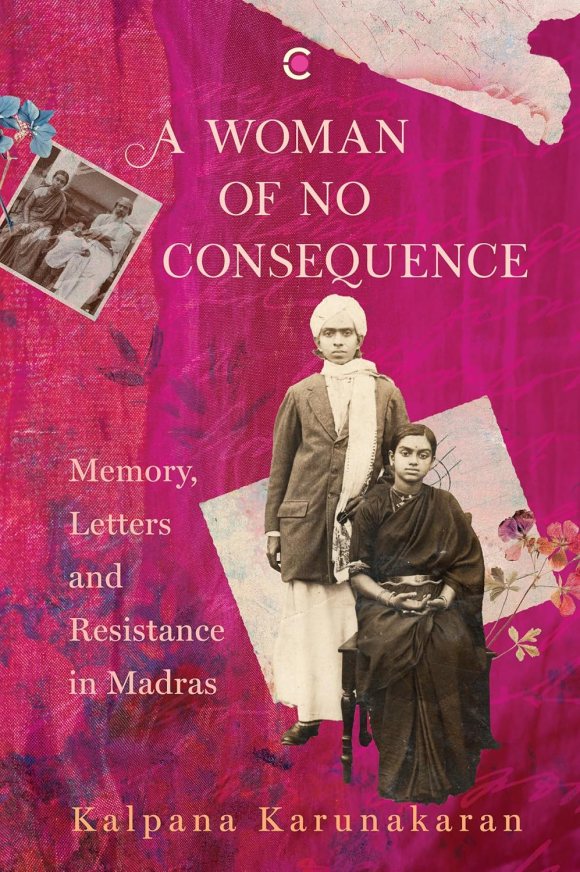

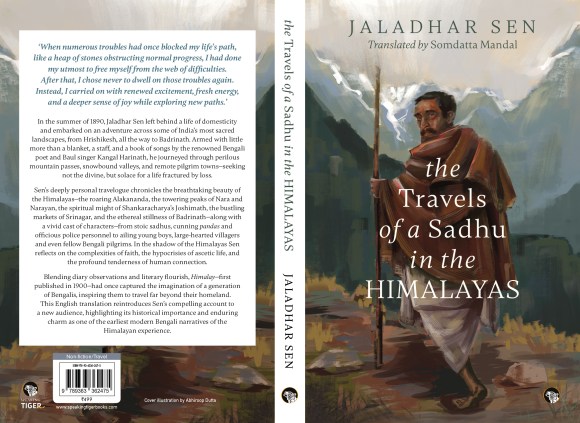
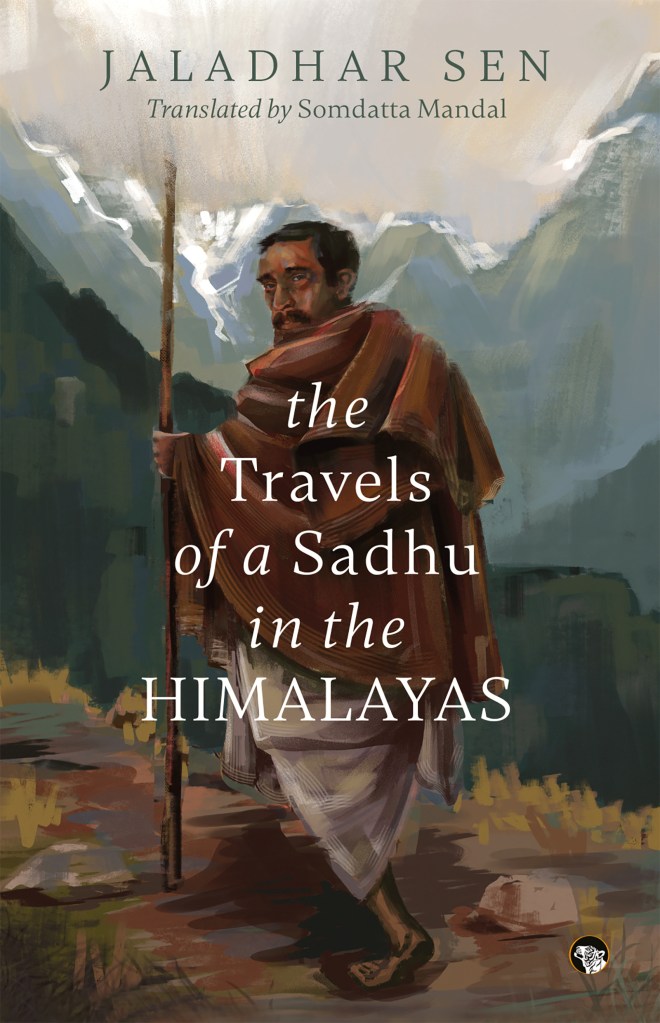
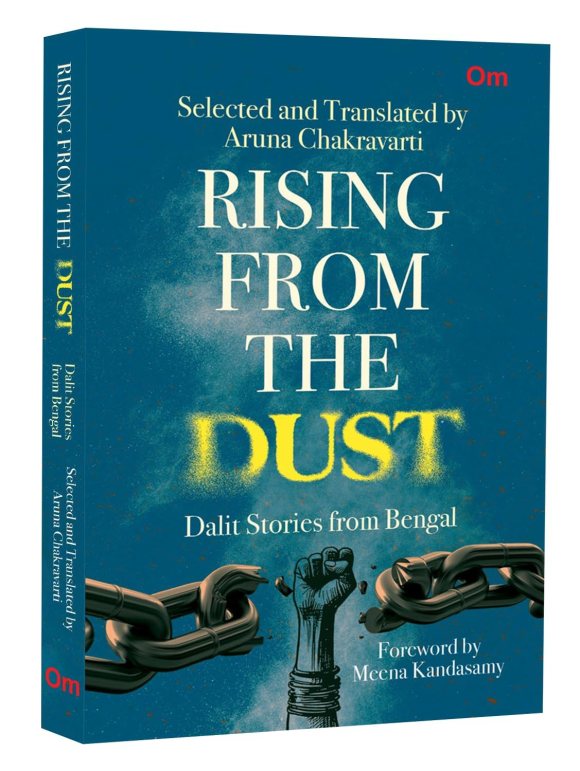

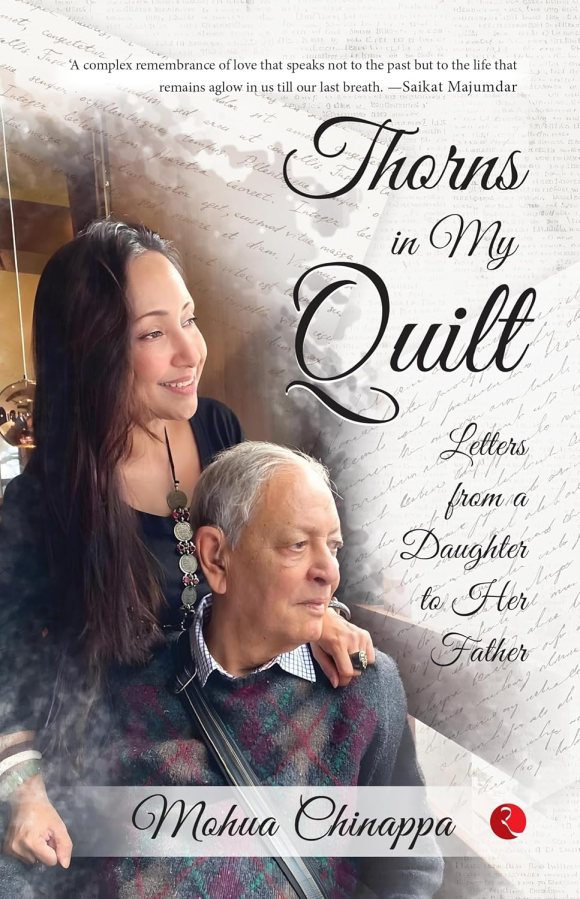
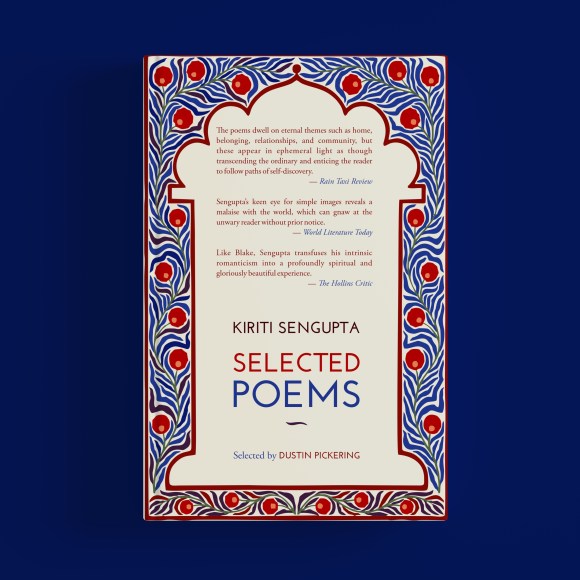

 Borderless