Keith Lyons interviews Jessica Mudditt, who spent four years in Myanmar and wrote a book about it
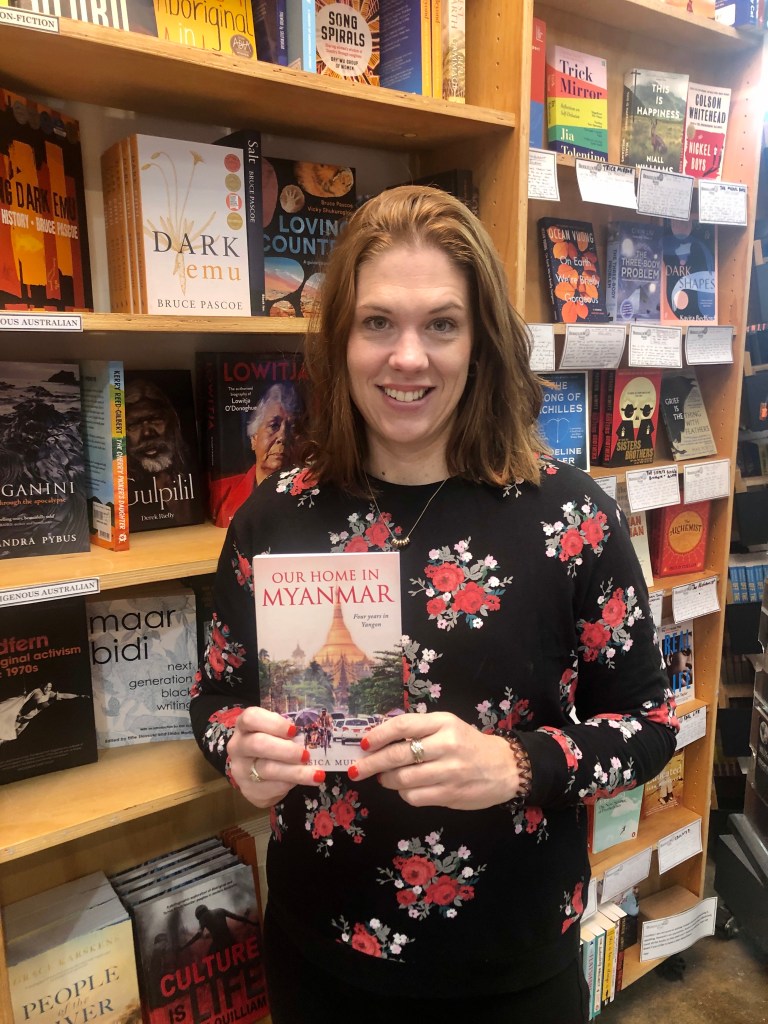
Jessica Mudditt holding her book. Photo sourced from author
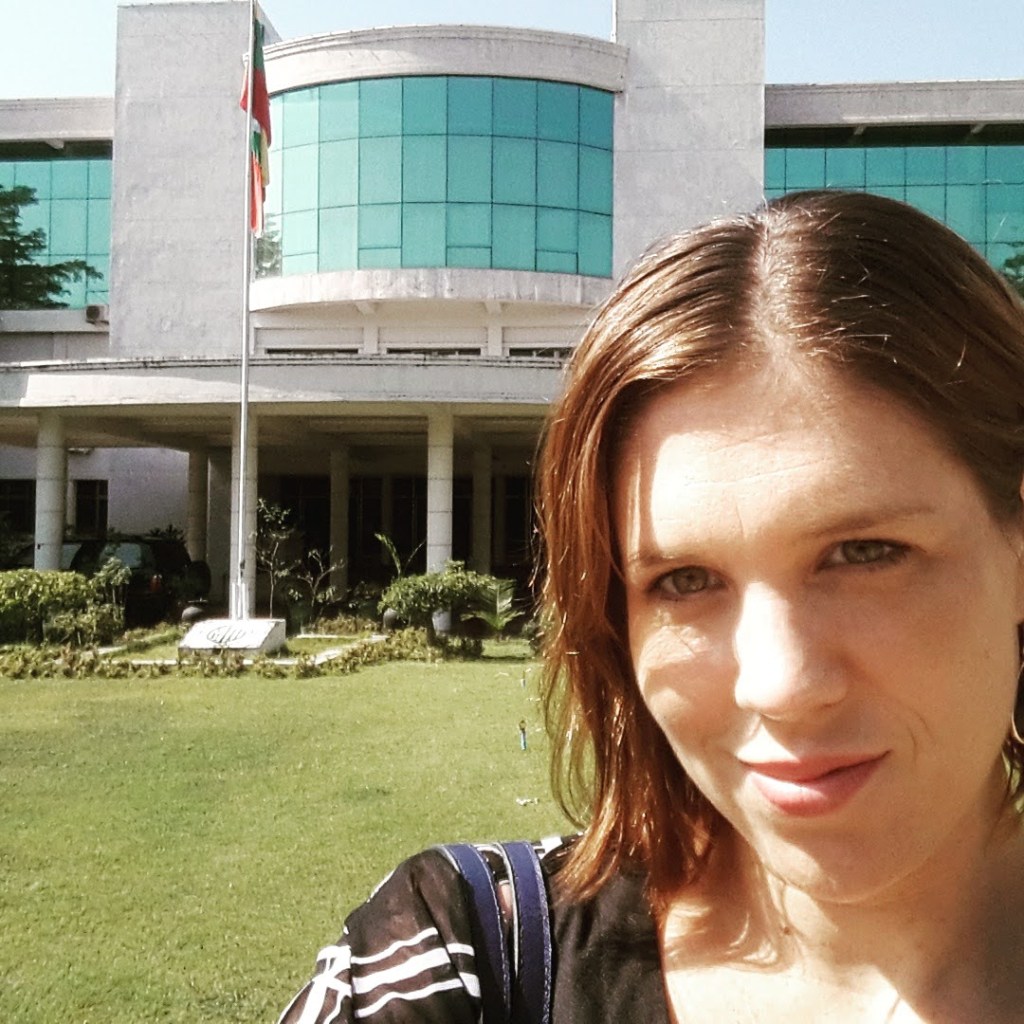
Australian author and journalist Jessica Mudditt studied and worked in the UK, but it is the seven years she spent in Bangladesh and Myanmar which seems to have made the most significant impact on her professional career and personal life. Mainly covering business, technology and lifestyle, her articles have appeared in The Economist, BBC, The Telegraph, The Guardian, CNN, GQ and Marie Claire.
She lived and worked in Myanmar’s former capital Yangon in the mid-2010s, and after returning to Australia, Our Home in Myanmar – Four Years in Yangon (Hembury Press, May 2021) was published with an Epilogue placing the book’s focus in the context of the military coup which stole back power in February this year following democratic elections.
From Sydney, Jessica reflected on her time in Myanmar, and the recent events which have curtailed hopes for democracy, freedom and economic growth.
Looking back on what happened this year, does it make your time in Myanmar seem more special?
In a way, it makes even my most happy and carefree memories bittersweet. When I was reading back over the book as part of the editing process, some of the situations I described became quite poignant, knowing what I know in hindsight. For example, after the 2015 elections, it was Senior General Min Aung Hlaing who was the first to come out and say that as the commander-in-chief, he would respect the election results and the will of the people in voting for Aung San Suu Kyi’s party. Five years later, it was he who staged this terrible coup and is holding the entire country hostage. What changed for him, I wonder, between then and now? It was like he tried the shoe on one day and decided that it didn’t fit.
If you were still in Myanmar at the time of the coup, would you get out or stay given the dangerous time for journalists right now?
I would leave. It is simply too unsafe. There are no newspapers left to write for at any rate, other than The Global New Light of Myanmar. Mizzima and Irrawaddy and others have been stripped of their operating licenses and as such, are illegal entities. If you go on The Myanmar Times website, it turns black, and then a pop-up notice announces that the newspaper has been suspended for three months. That was six months ago. There are very, very few foreign journalists left inside the country. Of course, every expat was heartbroken to leave and many have expressed that they feel guilty about the people they have left behind. Everyone is in an impossible situation right now.
You added to the book from 2015 with updates on where some of the key players are now: The Myanmar Times co-founder Ross Dunkley was pardoned after the coup and is now back in Australia, have you had any contact with him, and if so, how do you feel about how it all panned out for him?
When Ross got a 13-year sentence in 2019 on drugs charges, I worried that he may not survive such a long period in prison. He is not a young man anymore. However, Ross turned out to be a cat with nine lives. He was released shortly after the coup (he joked in an interview that he is the only person to have benefitted from the coup). What astounded me was that despite everything he has been through in Myanmar, he expressed a wish to return there. I suppose it is his home, after all the years he has spent there. But even so! I sent him a message on Facebook just saying I was glad and relieved for him. However, I don’t think he has logged onto it since his release.
Photos of jailed former advisor to Aung San Suu Kyi, Sean Turnell, being vaccinated were released recently; are you concerned about his fate and also that of journalist Danny Fenster from Frontier who is also in Insein?
I feel sick when I think about them. I don’t know Danny personally, but Sean was a source for a few stories, and I met him in Sydney. I have so much respect for him, and he was always so kind and helpful. I am friends with his wife, Ha Vu, on Facebook, and her anguished posts are deeply upsetting. Yesterday was her birthday and she wrote that it was the first time in a decade that her husband hadn’t been able to wish her a happy birthday. She knew it would upset him. Sean has done nothing wrong – nor has Danny, of course – and I just wish that the military would let them go – along with the other 6,000 innocent people they have arrested.
Do you think you were lucky to have been in the country during its opening up and transformation?
I was incredibly lucky. The pace of change was so fast that I often had the sensation that I was watching history unfold in front of me. That may never happen again in my life. The liberalisation of the media was incredible. As a freelance journalist, when I had an idea for a story, I would google the topic to see what had been previously written. There were many instances when there was virtually nothing at all because it had never been possible to write of such topics under the draconian censorship laws (most of these laws were lifted not long after I arrived). I wrote the first stories on Myanmar’s human hair trade, cobras being found inside peoples’ homes in Yangon, children with cancer and elderly care. Journalism was challenging in Myanmar because there was a dearth of reliable data and finding sources could be tricky, as people were not always willing to speak as they still mistrusted the military (with good reason, it turned out). But it was also rewarding because it gave people the chance to tell their stories for the first time, and to provide information to readers that had perhaps not been in the public domain before.
What do you think attracted others from overseas to witness, take part or benefit from the changes?
One of the reasons I loved living in Yangon was because the ex-pat community was very interesting. At a party, for example, I could walk up to someone and ask, “What brought you to Myanmar?” or “What are you doing in Myanmar” and the answer would just about always be fascinating. Myanmar is a beautiful country with wonderful people, but it isn’t an easy place to live and many of the things associated with the ‘good life’ are unavailable. I think that if you moved to Myanmar, you wanted something different out of life, or to do things in a different way.
I’m pretty sure that there were a host of motivations though, and I’m sure that a few were motivated partially by greed. Myanmar was an untapped market with a large population, although spending power is comparatively low. There were also few laws regulating business dealings, so it was a bit of a wild west and that attracted a few shandy operators. But I think, for the most part, people’s intentions were good. They were there because they wanted to make a difference as well as to witness something really historic, in a political sense.
As a woman in Myanmar how safe did you feel, and do you think that helped or hindered your work?
I felt safe in Myanmar, as it has some of the lowest crime rates in Asia. I remember reading in Lonely Planet that muggings and pickpocketing are rare, and that if you accidentally drop money on the ground in a big city like Yangon, it’s more likely that someone will come chasing after you to return it. That actually happened to me. I would sit at a beer station in the evening with my bag slung behind my chair or on the ground or whatnot, and I never gave it a second thought. I wouldn’t do that in Sydney.
Sexual harassment is nowhere near as prevalent as it is in places such as India. In saying that, I am referring to sexual harassment against expat women. There were frequent reports of Burmese women being groped on crowded buses, for example.
Someone in Yangon told me last week that even though the current situation is desperate, and millions of people are starving and displaced, there is a huge amount of cooperation among the people, who help each other in any way they can. Sadly, we all know that the criminals in Myanmar are the military. The reams of razor wire that sit atop six-foot fences around people’s homes are there not because there are a lot of burglaries, but because the military comes for people in the night. They were doing it for decades before I arrived, and they are doing it again now.
What misconceptions about Myanmar do you think are held outside the country?
I’m not sure if it’s a misconception, but Myanmar’s political history is so complex that it can be difficult for people to get their head around it, and difficult to explain. The first thing most people say to me when the subject of Myanmar comes up is “What is the deal with Aung San Suu Kyi? I thought she was a good person – why did she fall from grace?” Or they will say they have heard of the terrible situation with the Rohingya, but they don’t understand how the genocide came about, or why they are still living in refugee camps. Most people outside Myanmar assume that Buddhism is a religion of peace, so they don’t understand why so much violence has taken place, or that Buddhism can turn militant and be infected with extreme nationalism.
Were you more surprised about the frosty reception you got from fellow ex-pats at your first newspaper job, or the treatment you got working for a newspaper once considered a mouthpiece for the military and government?
I was more surprised by the frosty reception I got at The Myanmar Times. I was wildly excited to be working there and went through a lot of difficulties to get my first visa (I brush over it in the book, but Sherpa and I initially applied from Bangladesh and were denied visas, so in the end we had to apply from Thailand). My colleagues at newspapers in Bangladesh had always been fantastically friendly, so it just never crossed my mind that my expat colleagues in Myanmar wouldn’t be friendly. My expectations were way too high, but I was pretty crushed, I have to say. Over time though, things improved, and I ended up with a terrific group of friends at work. We had a lot of fun nights out too.
My colleagues at The Global New Light of Myanmar were really kind and wonderful. I learnt so much about Myanmar from them, both on the job and during the casual conversations we’d have while smoking cigarettes or drinking whisky together after work. Myanmar people are so kind –so it wasn’t my colleagues’ kindness that surprised me. It was how strongly opposed to the military they were. I had not expected them to be staunch supporters of Aung San Suu Kyi, or even to themselves be former political prisoners. Many worked at the state-run newspaper because it was one of the few opportunities to use English in a professional context. To me, it showed just how pervasive the desire is for democracy and human rights among the people of Myanmar.
When did you get the idea for writing a book about your time in Myanmar?
I got the idea after I returned from Myanmar to Australia. Funnily enough, while I was living in Myanmar, I had been writing a book about Bangladesh. When I got back to Australia, I had no luck getting a publishing deal for the memoir on Bangladesh, so I decided to put it aside and start one on Myanmar. I started it in 2018 and finished it in April 2021. I’m glad that I decided to do that, because it would be hard to write the same book knowing that a coup would take place after I left. I am sure I would write it differently — with less optimism. As I mention in the epilogue, I thought I was simply writing about the ‘new Myanmar’ and that many books would follow in the same vein. I had no idea that I was inadvertently writing a history book.
In light of the events of 2021 with the military coup and Covid, do you see any hope for Myanmar, or is it a failed state?
There has possibly never been a darker time in Myanmar’s history, with the twin crises of COVID-19 and the military takeover to endure. But I don’t believe that this is how the story ends for Myanmar. It is evident that the people are unwilling to give up their democratic freedoms and human rights – I get the sense that they will fight until there is no one left standing.
However, the country is on the brink of becoming a failed state, if it isn’t already, and the suffering has already been immense. I know from my time in Myanmar that building back after half a century of dictatorship and a mismanaged economy was already difficult enough – I worry about how much this puts the country back on the path to progress. I take a long-term view of things though, and I believe that democracy will be restored, and the military will be booted out of all aspects of civilian life, including their 25% quota of parliamentary seats. I have no idea when this may occur, but I do believe that it will.
Keith Lyons (keithlyons.net) is an award-winning writer, author and creative writing mentor, who gave up learning to play bagpipes in a Scottish pipe band to focus on after-dark tabs of dark chocolate, early morning slow-lane swimming, and the perfect cup of masala chai tea. Find him@KeithLyonsNZor blogging at Wandering in the World (http://wanderingintheworld.com).
.
PLEASE NOTE: ARTICLES CAN ONLY BE REPRODUCED IN OTHER SITES WITH DUE ACKNOWLEDGEMENT TO BORDERLESS JOURNAL
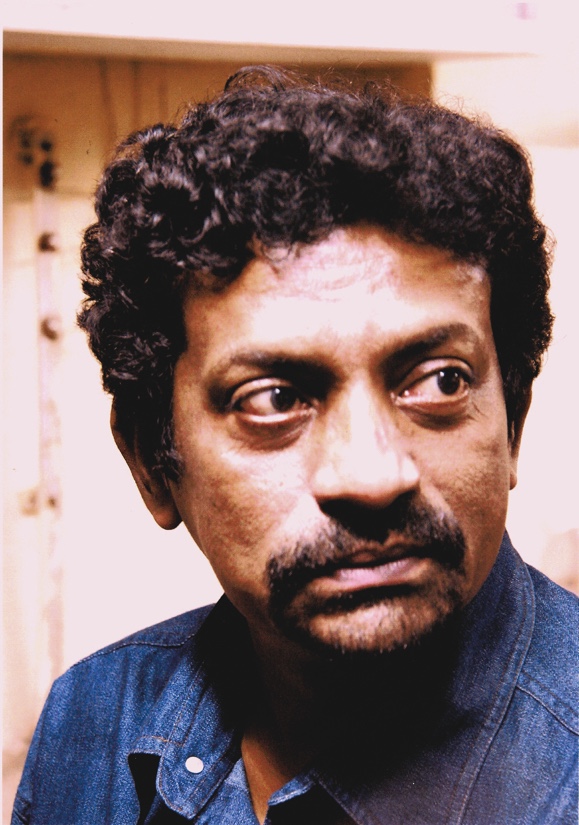
Goutam Ghose is a well-known award-winning film director, scriptwriter and even actor. He has been the only Indian to have received the Vittorio Di Sica Award from Italy in 1997 and was awarded the Knighthood of the Star of the Italian Solidarity in July 2006. Ghose has won fifteen National Awards, besides Filmfare Awards and a number of international awards like Silver Balloon, Nantes Film Festival, UNESCO Award at Venice, Golden Semurg at Tashkent, Fipresci Award and Red Cross Award at Verna Film Festival.
But did you know he has also authored a number of books? Just as he bridges borders with his poetic films that touch the human heart with a range of emotions, he does the same with his books. He takes up burning issues with artistry, never inciting with rage or hatred but conveying by his skill with the camera and words. He has created a world without borders with his transcontinental outlook and approach.
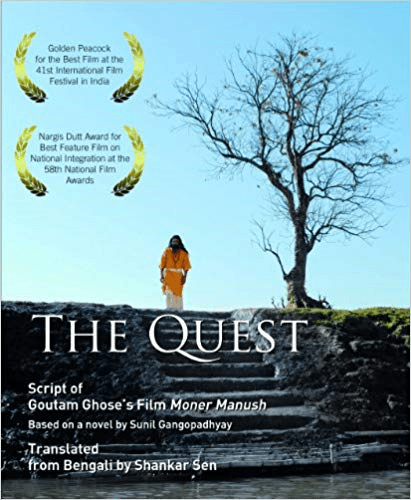
His reaction to the Ram Janmabhoomi riots was Moner Manush(2010), a film based on Lalon Fakir’s life, knitting together the best in Muslim and Hindu traditions instead of filming the clashes and the violence. Published in English as The Quest (2013), the book is a powerful dramatisation with pictures from the film. The book, like the film, is also an emotional lesson in humanism. Based on Sunil Gangopadhyay’s novel on Lalon Fakir’s life, the film is beautiful. But the book allowed me to mull over the words, which have been translated by Sankar Sen. It is a book that needs to be read when casteism and religious divides take precedence over humanitarian values. By bringing these songs into translation to readers unfamiliar with Bengali, both Ghose and Sen have opened a world of love and tolerance to new readers, who will hopefully find the time to mull over the wisdom of these songs.
‘What was your caste when you came here,
What caste did you take on arrival, dear,
What would be your caste when it’s time to go --
Ponder and tell me if you know.’
-- Translated by Sankar Sen, from The Quest
His other book that traverses the silk route and journeys through China, Beyond the Himalayas(2019), transcends boundaries and fills the reader with a sense of exhilaration. It is based on his documentary of the same name. Both these recordings of their journey along the silk route are worth viewing and reading. They show humans are the same across all borders. The book, interspersed with lovely pictures of the landscape and mature writing pauses on history at the right junctures. The narration is poetic in both the book and the documentary.
Though Ghose claims that these texts and photographs capture memories of the film, both his books transported me to a different time and space. I saw the films after reading the books, but both were energising, emotionally charged and entertaining. The journey takes one through different parts of the world and gives a new perspective to a 4000-year-old route. Initiated and organised by Major Hari SinghAhluwalia and Deng Xiaoping’s son, the travels in Beyond the Himalayas took me across borders to areas I have never visited and now, I hope to visit post pandemic. Both the book and the film acquainted me with cultures that excite. And The Quest reinforced the belief, through the depiction of Lalon’s life, that humanism exists despite the degradations of history. That riots can be calmed with the soothing notes of Lalon’s lyrics, rich in wisdom, would be a win for the human spirit.
Like all great artistes, Ghose speaks in beautiful poetic sentences about concepts that touch the human heart and imagination. In this exclusive, he speaks not just about his film-books, but about the real journey and issues he is facing through the pandemic, including the delay of his film with an Italian male lead and his new short film on the current times, Covid-worn and waiting…
You are a very well-known film director, cinematographer, and music director. You have directed award winning Bollywood and Tollywood movies. Normally books come before films but from two of these films, you have made books. Why did you go in for making books of the films?
I have loved books since my childhood. The shape and form of it, the touch and smell of a book fascinate me. They will never die even if we read on the screen rather than by turning pages of a physical object. A certain sense of the sacred has surrounded books from civilisations’ inception. In cinema, be it fiction or non-fiction, we write a script at the pre-production stage. A film-book is all about times gone by — a book of memories, of both cyclic and linear time. My producer from Bangladesh, Habibur Rehman Khan, had liked the idea of film books and had published three wonderful books on Padma Nodir Majhi(Boatman of the Padma River, filmed in 1993), Moner Manush (filmed in 2010 ) and Shankhachil (Unbound, filmed in 2016) in Bengali. Niyogi books of India has published a beautiful pictorial English version of Moner Manush as The Quest and also Beyond the Himalayas, my journey along the Silk Road. Another lovely film book is Pratikshan’s bilingual centenary tribute to Bismillah Khan (Bismillah in Banaras the film Goutam Ghosh made, 2017).
Is dubbing or subtitling the film not an easier option than doing a film-book?
Well, dubbing or subtitling is for watching a language film, but a film book is meant for reading. It becomes a part of your book collections. I have some wonderful film books published from Europe and United States.
Moner Manush is based on Lalon Fakir’s life and on the novel by Sunil Gangopadhyay. Why did you feel there was a need for a separate book after you made a very powerful film on it?
Lalon Fakir is an eternal savant. Scholars have been doing research on Lalon’s life and philosophy since long. It is heard that Lalon was an illiterate man. But going through the words of his songs and the implied significance, it seems as if he was an erudite scholar tutored in an age-old system of education. His faith was not guided by any particular religion, rather it could be said to be comprised of the mysticism of Sufi and the love and forgiveness of Vaishnavism and the liberalism of the tantric sect of Buddhism. My film on Lalon fakir is research on this great man aswell. The Bengali film book contains important articles by scholars besides the script, reviews and memoirs.
Do you feel that the message of Moner Manush is relevant in a world beset by not just divides but even a pandemic? Is there something we can learn from the story?
Yes, of course the message of Moner Manush is even more relevant in today’s intolerant world, a world of greed and opportunism. The pandemic has victimised the togetherness of the human race but how can we survive without empathy? I don’t know how good the film is, but Moner Manush will serve as a gospel to those who revere humanity.
Lalon says as his own introduction “I am a human.” How important is that for humankind to see themselves as humans over titles of caste, profession, and economics?
The baul (minstrels in Bengal) community had renounced all recognised institutions of religion and revolted against long established rites, customs and faiths. Breaking down the barriers of the narrow confines of communal faith, they had found a large expanse under the sky which had served as a bountiful meeting place of many religions. Under that open sky, Lalon had found the truth in Humanism.
Lalon dreamt of a borderless world. Do you think adopting his outlook can change the outlook of nations which draw borders between the species? Do you think it is implementable at a personal, national or international level?
I think all mystics believe in borderless space of Earth where all centennial beings live in peace and harmony. But the wheel of time had moved in the direction of Divide and Rule. John Lennon’s Imagine has become the iconic song on the dream of a borderless world. It may have been a failed dream, but I confess it might have been one I shared growing up in India and will cherish till the last breath of my life. Let it be a dream and a wonderful utopia.
Beyond The Himalayas was first a documentary film. How long was it and when was it screened? How many episodes is the film?
Beyond the Himalayas was made as a documentary film during our expedition through the Silk Road in 1994. The final edited version is four-and-a-half hour long. It was shown in Discovery Channel in five parts in the late nineties. A shorter version was screened in BBC as well. The Indian national TV had screened a Hindi version of all five episodes.
The book seems to cover lesser than the documentary. Is that true or do the visuals/ music just seem to impact us more? Why did you leave out Pakistan?
Well watching the film with arresting visuals and absorbing the soundtracks of the trail is a linear viewing of our journey along the fabled Silk Road. It is very, very exciting indeed. But the film is also a journey back in time with many references and anecdotes from history. For instance, while showing the travel through the deadly Taklamakan desert, I referred to Sven Hedin’s(1865-1952) expedition of the region. I quote: ‘The first European to map this desolate region was the Swedish explorer, Sven Hedin. His first expedition in 1895 was very nearly his last. The local guide supplied enough water for four days in the desert instead of ten requested. When the caravan lost its way, the guide was the first to die. The others became insane with thirst, drinking anything — even Sheep’s blood and camel’s urine. By the fifth day, the men, camels and other livestocks were all dead except for Sven Hedin and one other man. Hedin writes in Through Asia, “If I was doomed to die in the sand, I wanted to be properly attired. I wanted my burial clothes to be both white and clean.” But fate was on its side. Spying the dark green side of an oasis, he dragged himself to safety. “I stood on the brink of a pool with fresh cool water, beautiful water. I drank, drank, drank time after time. Every blood vessel and tissue of my body sucked up the life-giving liquid like a sponge.”’
Here the film-book helps the readers. One can refer back to the time past and time present more deeply to understand time as a metaphor of history.
How many days were you on the road? What was the experience like?
We were out for almost ten weeks covering a distance of 14,000 kms. The journey was fascinating for the entire team. There can be no journey more enchanting than the route we took. The collective trove of memories has made the Silk Road so memorable. We had to negotiate extreme weather conditions in Central Asia and Tibet. In a single day, we experienced two extremes. While negotiating the desert, temperatures rose to 48 degrees Celsius, and by nightfall when we pitched camp at Tianshan mountains, the temperature fell to 2 degrees. The situation is almost like the scenes of Satyajit Ray’s Goopy Gyne Bagha Byne — desert to snow in the blink of an eye.
Did you travel through the part of the route Marco Polo used? Did you find it much different from what you had imagined?
Well, the travels of Marco Polo described the wonders of the silk road, cities far greater than his own and a world more significant than anything imagined by the insular backward Europe of the thirteenth century. But he was a late traveller. The silk road was one of the greatest trade routes in history and men had already been travelling along for 4,000 years. Before sea routes were discovered in the fifteenth century, this trans-Asian highway was the sole link between the East and the West. It ran from Xian in China to all the way to the Mediterranean. There were many tributaries to the mighty river, not least of which were caravan routes across the Himalayan mountain range between India and Central Asia. We could not follow the planned route through Pakistan and Afghanistan to Central Asia via Khyber Pass because of the civil war. The government of India did not want us to take such risks. All the members of the expedition, including the jeeps and equipment, were flown from Delhi to Uzbekistan on 18th May, 1994.
With the silk route being revived, do you think this film has significance?
Xuanzang took back over 600 Sanskrit text. Courtesy: Creative Commons
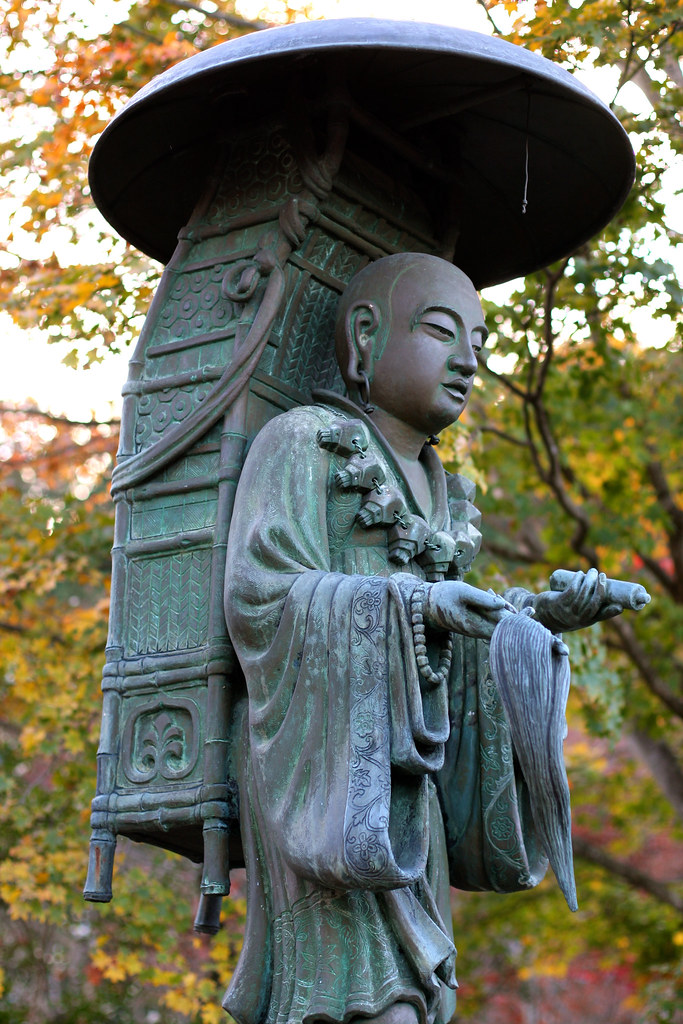
Yes, the film is still significant because it carries the memories of time. We were the first group of travellers after many, many years to cross three new republics after the collapse of Soviet Union and a vast territory of China. Now, the route is open to tourists, and I was told that many travel packages are available all along the mighty river and its tributaries. I would like to revisit the cauldron once again to understand how those multi-ethnic republics have survived the onslaught of modern times with its regional rivalries, new mafias, and consumerist pressures. I wish the new silk route trade brings peace and harmony in this intolerant world. Travellers today can choose from many trails as we did during our expedition. My favourite was Xuanzang’s (602-664 AD) trail. I quote from my book. “At 27, he set out his pilgrimage until he was 43. Unconvinced by the translations available in China, he sought the true teachings of Buddha in the holy lands of India. He walked alone into the great unknown, crossing the world’s greatest deserts and its highest mountain ranges. He faced death many times and his courage and equanimity impressed kings, bandits and barbarians alike. He lectured at monasteries and debated with learned monks and by the time he reached his destination, his reputation as a great sage had already preceded him. Xuan Zhang was not the only Chinese pilgrim to visit the homeland of Buddhism, but he was the most important. Like a death star that keeps releasing energy for thousands of years, he continues to be a valuable source of knowledge and inspiration.”
You are making a new film I believe rooted in the present pandemic. What is it about? Will you be making that too into a book?
My 2019 film Rahagir or Wayfarer, starring Adil Hussain, Tillotama Som, Neeraj Kabir, had travelled to many festivals and received awards and appreciations but unfortunately, we could not release it in public theatres due to the pandemic. Another multilingual film is also stuck for obvious reasons. I could finish the Italian shoot in January 2020, but the Indian shoot did not happen till date. It is so frustrating.
Meanwhile, I have finished a short film Memories of Time on pandemic days. It is about a happy, cultured couple living in the heart of Kolkata. Like everyone else, they are caught in the claustrophobia of the pandemic and the consequent lockdown. The film travels back and forth in time as they try to navigate through these hard times and search for fresh air and sanity. The film is an exploration of their fears, realisation and going back to nature. It’s from my own experience — how I have navigated 2020 and moving through the course of this pandemic. I think one can really publish a film-book because it has so many elements, the fear of people and the inhuman approach of the human race and then the migrant labours — their terrible conditions, the psychological problem of people confined inside their home and the most importantly, the problem of the children. They are confined as if in a prison. They can’t go to school. They can’t really meet their friends. I think this could be a very, very interesting material for a film-book.
we are known globally
as a nation of multi-cultures
but we are united as one people.
not an easy goal to realise
knowing how differences divide
and make unity problematic.
-- Reaching Out... Kirpal Singh, 2021
Kirpal Singh is a poet and a literary critic from Singapore. An internationally recognised scholar whose core research areas include post-colonial literature, Singapore and Southeast Asian, literature and technology, and creativity thinking, Singh has won research awards and grants from local and foreign universities. He was one of the founding members of the Centre for Research in New Literatures, Flinders University, Australia in 1977; the first Asian director for the Commonwealth Writers’ Prize in 1993 and 1994, and chairman of the Singapore Writers’ Festival in the 1990s. In 2004, he became the first Asian and non-American to be made a director on the American Creativity Association’s board. He retired dean of Singapore Management University.
Singh was born as a part of Malaya in 1949 to a father of Sikh descent and a Jewish-Scottish mother. He lived through three regimes in this part of the world: colonial, Malayan and Singaporean. His poetry is perhaps what best tells us about his faith in the little island state that came to its own in 1965. In this interview, he shares his life story with us, the last being a huge donation of books that he is making to the National Library of Singapore – a donation of 3,000 books collected over decades.
You are an academic, critic and writer who stretches out across SE Asia. When did your ancestors move to Singapore from India and why?
My paternal grandparents moved to Singapore from Punjab in 1901. They came to the then Federation of Malaya in search of a better life.
You have never lived in India but shuttled between Singapore and Malaysia. Probably at that time it was all part of Malaya. Can you recall Singapore/Malaya during your childhood?
Yes, though born in Singapore in March 1949, I was taken back to be with my dadiji (paternal grandma) in Malaya when I was two months old. However, I was brought back to Singapore when I was seven to begin school. My grandparents thought Singapore was a better place to receive an English education.
Your mother was Scottish and father, an Indian. What languages did you grow up speaking? What language is most comfortable for you to write in?
I grew up speaking bits of Punjabi, Malay and, of course, English. In my teenage years I also picked up some Chinese dialects. Though I did study Mandarin in school, I am not too good at it. I can only speak a smattering of it. I am most comfortable writing in English.
You have seen Singapore move from infancy to its current state. Can you tell us what this journey has been like?
It has been an astonishing journey. When I was young-preschool age — Singapore was a British colony. In 1963, Singapore joined Malaya to become part of a new entity then known as Malaysia. However due to basic differences, Singapore pulled out of Malaysia and became an independent, sovereign nation in August 1965.
You are an academic who retired dean of Singapore’s major management institute. And yet, you write poetry. Can you tell us a bit about your journey?
At the then newly established Singapore Management University which I was invited to join as Founding Faculty in 1999, I was told to introduce Creative Thinking as a new mandatory module for all undergraduates. I helmed this exciting and new programme for ten years. SMU was the first University in the world to make Creative Thinking a compulsory course for all undergraduates. Sadly in 2010 this was made optional.
You have a huge collection of books —25,000. How long has it taken you to collect these books?
It has taken me more than 50 years.
Tell us a bit about your book collection. What are your favourite books?
My collection is eclectic. Most of my books, however, belong to the humanities, and within this, most belong to the literary genre. I loved reading from a very young age (being alone at home, reading brought me solace and also knowledge). Among my favourite books, the tragedies of Shakespeare and Sophocles feature prominently. Some 20th century books (those of D H Lawrence and Aldous Huxley in particular), I value tremendously. I should also add that I have been very blessed to have met many of the more well-known/established writers of the 20th century and blessed to have been given signed copies by these wonderful authors: among them Doris Lessing, William Golding, Brian Aldiss, and numerous others.
Did your reading impact your writing?
Quite naturally, yes. I think it’s hard not to be affected by what one reads when it comes to one’s own writing. Even with writers who consciously try to ensure that no clear influences obtain, critics have frequently found far too many disguised references not to infer which authors influenced those writers.
Recently, you made an announcement that you will donate 3,000 books to promote love of reading in Singapore. Do you think donating these books will be enough to make book lovers of non-readers?
I doubt if the mere act of donating will create readers. However, I feel that having a few thousand additional books in a library will, hopefully, draw at least the attention of a few readers and maybe among these will be new readers.
Most people read bestsellers. What do you think will attract more to appreciate literature like EM Foster, DH Lawrence, and Coleridge?
Yes, in the age of commercialisation, classic writers may not obtain immediate readership– hence schools and colleges/universities play a vital (and necessary) role to ensure that our graduates are educated– at least minimally– in the works of writers who helped change and shape new sensibilities.
"Beauty is truth, truth beauty,—that is all
Ye know on earth, and all ye need to know."
Ode to a Grecian Urn, John Keats, 1819
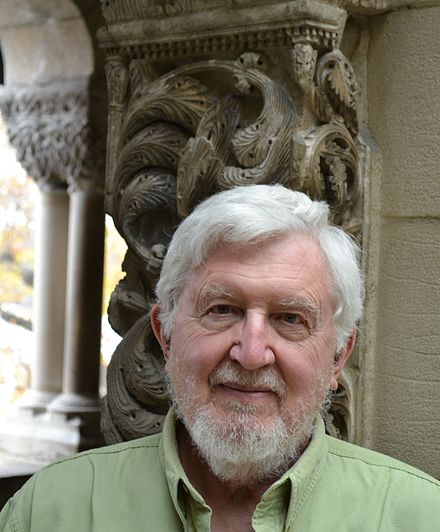
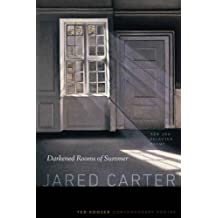
It was a challenge to interview a poet who does not want to talk of his work or of himself. And yet, here was a person whose poetry moved me and from who, I was sure, we had much to learn. I am talking of an acclaimed poet from America, Jared Carter. He permitted me to introduce him with this: “Jared Carter is an American poet who has published seven books of poetry. His volume of new and selected poems, Darkened Rooms of Summer, was issued in 2014 by the University of Nebraska Press. He lives in Indianapolis, Indiana.” If you are more curious about him, his achievements, education and awards, visit his Wiki Page.
Jared Carter
Carter’s poetry is remarkable in giving us glimpses of American life and thoughts, especially as he talks of the wind, the snow and cicadas, as he wrenches poignancy in the hearts of readers bringing out the cruelty in the slaughter of cattle. He draws from the life of common people and their work. At times, he could write of changing a lightbulb and yet create a sense of wonder with his crafting. Despite his obvious Western outlook, he has written of the elusive Yeti – a most beautiful composition. He does tell us in the interview how he wrote it. One would also wonder why he selected to represent ephemerality with such a mythical creature from the East when most of his poems reflect life in America. The poem strangely captures the quality of elusiveness perfectly with extensive crafting.
For him, poetry is more than the first part of the Wordsworthian concept , “the spontaneous overflow of powerful feelings”. It is about working on the concept further “in tranquillity” and making it exquisite, like an artifact. We started this interview by reflecting on artifacts that impacted him. Despite his reluctance to speak of himself, Carter does tell us much about his Victorian upbringing and the impact it has had in making him who he is and writing as beautifully as he does. And perhaps, we can also get a glimpse of why he wrote of the “Yeti”. Let us now step into the world of Jared Carter.
You are fascinated by certain artifacts from India and China. Tell us the story around those. Why do they move you?
I mentioned those two heirlooms — a chess set made of ivory, from China, and a carved wooden box, from India — because they provided my first introduction to those two great cultures, when I was a boy growing up in a small town in Indiana, a state near the center of the United States.
My father had purchased the chess set in September of 1945, in a pawnshop in Chicago, when he was on the last leg of his journey home from serving three years in the war in the Pacific. It was a set of delicate white and red figures, in elaborate costumes, the white side in Victorian dress, the red side in traditional Chinese robes, and on both sides, horses rearing and elephants carrying castles.
If my memory is correct, the attire of the pieces was the very embodiment of colonialism. I was told much later that the set was among several that had been made for the export trade in the nineteenth century.
As a child, of course, I had heard the word “China” and the country was mentioned in school, which I was just beginning at the age of six. But in those days, I had no strong impression of China, nor even much interest in it. In contrast, my father’s ivory chess set was a tangible object that I could look at and admire, and sometimes even be allowed to touch. It had traveled many thousands of miles, from the other side of the world, to be in our home, and was held in great esteem by my father and my older brother, who were both avid chess players.
Once a year, on my father’s birthday, as I recall, they would take down the set from the glass case they had built to display it and play a game of chess with those fantastic pieces. This was always a solemn occasion in our household, and a memorable one. In my young mind, it was an almost ceremonial way of being in touch with a mysterious land that lay far across the seas.
If today, almost eighty years later, I try to think back to my first awareness of China — what it was, where it is, what it might be like — I return to my memory of that chess set. I return to the sight of those delicately carved pieces, in their remarkable formality and fragility, arranged in rows on a chequered board. That image is suspended now, and outside of time, and yet in my mind’s eye, the figures are still waiting to be moved, in ways that will begin once more that most ancient and traditional of games. In this way I was first introduced to the very idea of China’s existence.
By our best estimates, chess was originally invented in India, although I did not know this at the time. In a way, as I look back now, perhaps my memory of the ivory chess set puts me in touch, even now, with something great and lasting about the contributions of both of those cultures.
The elaborately carved box from India had a similar effect on my young imagination. It was a box in which my father’s mother kept her few items of simple jewelry. Sometimes she would let me and my two cousins take it down from her dresser and examine it more closely. There were already a few books in my grandfather’s library about India. We were familiar with the name of that country, and we knew it was quite distant. But the box was an actual object that had come all the way from India, we were told, and that made it special.
The box had been given to my grandmother by her only brother, who was an artist, and who had purchased it sometime in the 1930s, along with a great many other art objects and artifacts with which I would become familiar as I grew older. But this box — again, something made in the nineteenth century — spurred my first awareness of India. I could peer into its carvings of elephants and monkeys and exotic plants and imagine that I was seeing into the heart of that mysterious, far-off place.
India and China of course constitute much, much more than what was suggested by those two objects. But we are speaking of first impressions here, which are precious to a child, and which, in my case, have proved to be lasting.
You had an interesting story about your aunt being in India. Can you tell us about that?
The artist mentioned, my grandmother’s only brother, took as his second wife, in the 1930s, after the death of his first wife, a teacher of English literature, who taught for the Baltimore school system. She had been brought up in India and was evidently the child of missionary parents.
She may actually have been born in India, and most likely left it in about 1923, to attend an American university. She lived until 1959, and I was taken to visit her on several occasions, and when I was old enough to drive, I would ferry my grandmother down to visit her, in a summer studio located in southern Indiana. She spoke with a British accent — perhaps the first I had ever heard — and preferred tea rather than coffee. After the artist’s death, in 1946, she would speak knowingly of his own works of art, and of the various items and artifacts he had collected during his lifetime.
Those things were from many cultures, many eras — a handsome 15th-century refectory table from Italy, a pair of large, nineteenth-century ceramic jars from China, an unglazed wine vessel that may have been Etruscan, a variety of pieces in English pewter, and so on. The spacious, high-ceilinged, two-story building had been a lodge hall before it was converted into the artist’s studio by my father and grandfather. It was utterly chock-a-block with beautiful objects and gorgeous paintings.
On a number of occasions I was allowed to wander through those rooms on my own, and to consider those different objects. There was no teacher, no guidebook, except for the widow’s occasional comment about where this or that artifact had come from, or when he had acquired it. I simply looked at what was there. This was a part of my informal introduction to art, and exotic places, a tutelage that had begun with the chess set and the carved box. If nothing else, the experience may have made me into a lifelong museum goer, especially when museums of art are available.
But you asked about my Aunt Carolyn, as we called her, and her origins in India. She sometimes referred to that Indian childhood, although unfortunately I remember little of what she said. I do recall her speaking of a time in the early 1920s when she witnessed a crowd of Indian nationalists demonstrating in a non-violent manner. Raj policemen carrying lead-weighted wooden cudgels waded into the crowd, shattering the kneecaps of the demonstrators with their clubs. The authorities knew, she said, that a broken kneecap was not a mortal injury, but that it would render a demonstrator unable to walk for months on end, thus preventing that person, for a time, from joining future demonstrations. To say nothing of discouraging him from joining any demonstrations at all. Aunt Carolyn seemed to have a very low opinion of the British.
Are you familiar with Indian and Chinese literature?
Only as a reader and an amateur. In about 1961 a younger sister brought home from college, as a houseguest, an Indian student she had met. He was very polite and serious, and generously gave me a copy of a translation of the Gita, which I still have, and which was my first introduction to the classic literature of India. I’ve been sampling that literature ever since, reading essays and an occasional book, attending a lecture or two, taking in a traveling exhibition. So, I have a layman’s understanding of subcontinent history and culture, but it is no more than that, and I am far from being well-versed.
My introduction to the history, art, and culture of China came slightly earlier and has been a bit more extensive. As an undergraduate at Yale, I studied history of art with the scholar Nelson Ikon Wu. It was an introductory course, but he placed special emphasis on landscape paintings of the Southern Song, and with that influence, in later years, I seem to have gone on to develop an interest in many things Chinese, especially art of the T’ang dynasty.
Also while an upperclassman at Yale, I had the good fortune to make the acquaintance of a young graduate student from Clare College, Cambridge, named Jonathan Spence, who subsequently became a well-known scholar of Chinese history and culture. Over the years, my conversations with Jonathan, and my having read his numerous books, have formed an important part of my informal education.
For two semesters in the 1980s I served as a visiting writer at Purdue University in West Lafayette, Indiana, where I met and talked with Professor Sanford Goldstein, the eminent Japanese scholar and specialist in tanka, who for many years now, following his retirement, has resided in Japan. Thanks to Professor Goldstein, and one of his students with whom I am still in touch, and not immediately, but gradually, my awareness of Japanese literature in translation has increased, along with my curiosity about haiku and tanka in English. I have published a few haiku and tanka, and have corresponded with other scholars in that field, such as Professor Bryce Christensen, who is only recently back from a year of lecturing in Taiwan. By virtue of my acquaintance with these talented individuals, I hope I have developed a better understanding of both Japanese and Chinese literature — especially the poetry of the T’ang dynasty, in translation, for which I have a great liking.
Do you read translations? What is your opinion on the role of translations?
Without translators and translations, we would be utterly lost. For example, whatever I am privileged to know about the poetry of Li Bai (701-762) and Du Fu (712-770, also spelt as Tu Fu) and all of their marvelous contemporaries, I know their poetry only because they reach me through various translations. So, I have accumulated a small library of translated works by the major world poets — Sophocles through Dante, Basho to Neruda. Every serious poet does this. I would like to think we are perhaps the wiser for it.
Any poet writing in English is immeasurably indebted to Arthur Waley for his masterful translations. Another translator I might mention is the American, Kenneth Rexroth, who happens to have been a fellow Hoosier — which means he was born in the state of Indiana. Rexroth emigrated eventually to California, where after World War Two he became an eminent poet, scholar, and translator of poetry from both the Chinese and Japanese traditions.
I possess a number of Rexroth’s books, and thanks to them, and to other translations by many different hands, I have come to have a great admiration for the T’ang poet Du Fu. He is my favourite, perhaps the poet that I return to, most frequently, in my own reading. In the following quotes, Rexroth, in a book published in 1971, employs a transliteration of the poet’s name different from the one in general use today. Rexroth alleges that Du Fu is
in my opinion, and in the opinion of a majority of those qualified to speak, the greatest non-epic, non-dramatic poet who has survived in any language. Sappho, for instance, can hardly be said to have survived. He shares with her, Catullus, and Baudelaire, his only possible competitors, a sensibility acute past belief.
I agree with that, except the part about his competitors, since there are a few more who might be mentioned. But the remark about Du Fu having “sensibility acute past belief” — surely that is apt. And for me, as for Rexroth, there is even more to Du Fu. It is something almost personal. Rexroth attempts to sum it up:
Tu Fu comes from a saner, older, more secular culture than Homer and it is not a new discovery with him that the gods, the abstractions and forces of nature, are frivolous, lewd, vicious, quarrelsome, and cruel, and only man's steadfastness, love, magnanimity, calm, and compassion redeem the night bound world. It is not a discovery, culturally or historically, but it is the essence of his being as a poet.
Rexroth goes on to say how Du Fu’s writing has affected him as a person, an admission with which I happen to agree, and have found to be true in my own life:
I am sure he has made me a better man, as a moral agent and as a perceiving organism. I say that because I feel that . . . the greatest poetry answers out of hand the problems of the critic and the esthetician. Poetry like Tu Fu's is the answer to the question, "What is the purpose of Art?"
What writers do you read? Why?
As a young person, in university and later, dreaming of becoming a writer, I read a great many novels and short stories, and was initially drawn to the work of the American novelist, William Faulkner.. The world he created seemed recognizable to me, and authentic. I hoped to create a similar world. Other American authors I have admired, and tried to learn from, have been Sara Orne Jewett, Willa Cather, and Sherwood Anderson. But there are dozens more, and dozens more European and world writers whom I admire.
I have been fortunate, too, in having known Joseph Love, a prominent historian of Brazilian history, and author of a splendid study of a remarkable moment in Brazilian history, The Revolt of the Whip. He and I were undergraduates together (he was at Harvard), and I have known him ever since, and through his many gifts and thoughtful recommendations, I have been introduced to a great deal of the literature and culture of Central and South America.
In the last few years most of my reading has been in history. I am a great admirer of the British historian Richard J. Evans, whose history of the Third Reich is unrivaled. Another of my favorites is John Julius Norwich and his history of the Byzantine Empire. I am extremely fond of Shelby Foote’s history of the American Civil War. And at the moment I am reading the late Tony Judt’s Postwar, a history of Europe from 1945 to the near present and am finding out how little I knew about that period, even though I lived through it.
These days I spend much more time reading history than either fiction or poetry. I have a large bookcase full of nothing but books about classic Egyptian history and art, and I have a smaller group of books about Meso-American prehistory and culture, and particularly Mayan art. I am simply curious about such matters.
Which are your favourite poets? Why?
I would have difficulty naming even a few. I have attempted to read them all, which of course is impossible, since new ones appear every day, and one is constantly discovering earlier ones. It has never seemed acceptable to me to list the names of poets who “influenced” me or the way I write. There are a few poets whose work I keep at my bedside, and whose books I still read. Two in particular are poets writing primarily in German, Rilke and Hölderlin. Among Americans, Frost. Among the English, Hardy and Larkin.
What do you learn from these writers? Do they impact you in any way?
I really don’t know. They’re just writers that I particularly like, and find myself re-reading, over the years. Kafka is another. So is Flaubert. I continue to read Henry James and Turgenev — all of those persons on whom, as James pointed out, “nothing is lost.”
Why is it you are reticent to talk of your work and poetic sensibilities?
I seem to be naturally reticent, even introverted. As a child I spent a certain amount of time with my grandmother and with a great-great aunt, both of whom were born in the 1870s. Both were thoroughgoing Victorians who exemplified the traditional virtues — thrift, honesty, industry, steadfastness. And perish the thought of anything vainglorious. I think a bit of that rubbed off on me.
I’ve done a little talking about myself in this interview, but only because you asked. My parents, too, taught me that one should avoid talking about oneself to others. It is also a professional attribute — physicians and attorneys traditionally do not advertise or promote themselves — and although I do not consider myself a professional in that sense, I can understand the reasoning. Professionalism in any undertaking is not a matter of office, title, or entitlement; it is a standard to be lived up to.
At university, it was explained to me that in polite society one does not discuss politics, religion, or how one earns a living. Ezra Pound says somewhere that you can always spot the bad critic if he focuses on the poet and not the poems. Add all of that up, and I seem to have little to say about myself or what I do.
I really loved your poem “Yeti”. You had said that while writing “Yeti” you disposed of a number of lines and picked a few. Would it be possible to share this part of your poetic process with us?
Well, again, “poetic sensibilities,” “poetic process” — I am not a critic, scholar, or professor, and I have no insights to offer about such matters. It is not my business to do so. Instead, I make poems, and I have been privileged to have published a few of them. So that our readers will know what we’re referring to, here is my poem “Yeti,” which your journal kindly published, for the first time, in its May 2021 issue. The poem conjures up the mysterious creature of the Himalayas, whose existence has never been verified, but which continues to haunt the imagination:
Yeti
Tell me again that nothing’s there,
that never was
At all, except in places where
things slip, or pause,
Yet register, on some high ridge
where something moves
And then is gone. As though a bridge
of snow should lose
Its grip, and drop away, but leave
a shadow where
Such vanishing might still deceive
in that thin air.
The first thing one notices about this poem, which is in a relatively new form called an Alexandroid, are its formal aspects — its lines end with rhymes, and it has repetitive stanzas and lines of a predictable length. A second thing one notices is its brevity — twelve lines in all, and a total number of syllables amounting to half of those in a typical sonnet in English. It is a small poem, then, in a range of length favoured by the American poet, Emily Dickinson. Longer than a haiku or tanka, but still very brief.
A third characteristic, perhaps not immediately apparent, is the way in which the “sh” sound in the closing lines — should, shadow, vanishing — suggests the texture of something slipping away. Or the sound of a bridge of snow suddenly collapsing into a crevasse. In certain cultures, it is the same sound we make when we put a forefinger to our lips to signal for silence — shhhh.
That sound is followed by the stark, icy i’s and e’s, at the poem’s very end, of might, deceive, thin, and air. The trail has gone cold, the Yeti has disappeared. That poetry can suggest strange moments like this, with such minimal input, is one reason why I like it so much.
In the making of such a poem there is, literally, no place to hide. Whoever reads it will be affected, consciously or not, by the smallest detail. It goes almost without saying that to make a poem within these parameters, the writer must, to borrow your phrase, “dispose of a number of lines and pick a few”. This is inescapable. There is simply no room in which to say whatever one likes, or to run on interminably. No room for the vainglorious.
Somewhere there may be a poet who can write a similar poem without hesitation, as though copying it out, not pausing to substitute or change a single word.
I suppose I do the opposite. I experiment and try out many different words, many lines, many drafts, in order to arrive at what I believe to be a poem. In doing this I don’t think I am any different from most other poets.
It has been pointed out that one interesting thing about poems is the way they can talk about one thing while implying something entirely different. “Yeti” is presumably about an elusive, folkloric creature, but at the same time it is talking about poetry, and how it disappears even while you are reading it, and sometimes you are not sure about what you have just read. Something still seems to be there, even while it vanishes into thin air.
What is it you look forward to?
I look forward to making more poems, and more books of poems. There’s an old American saying, from the days of vaudeville, which holds that “You ain’t seen nothing yet.”
But clearly I am an old man of the forest now, and I think the best claim from an aging artist, about what can still be accomplished in the years ahead, is by the Japanese painter and printmaker, Hokusai. Since we’re discussing art and culture of the East, I’ll suggest that his marvelous statement, in his colophon to One Hundred Views of Mount Fuji, is a perfect way to end this interview:
From the age of six, I had a passion for copying the form of things and since the age of fifty I have published many drawings, yet of all I drew by my seventieth year there is nothing worth taking into account. At seventy-three years I partly understood the structure of animals, birds, insects and fishes, and the life of grasses and plants. And so, at eighty-six I shall progress further; at ninety I shall even further penetrate their secret meaning, and by one hundred I shall perhaps truly have reached the level of the marvelous and divine. When I am one hundred and ten, each dot, each line will possess a life of its own.
In some translations, Hokusai adds, at the very end, with reference to what he has just affirmed, this invitation: “I beg those who live as long as I to see if I do not keep my word.”
Hokusai lasted until he was 88. That final sentence has always seemed to me to be a blessing he is bestowing on readers and admirers — a wish, for whoever might be listening, that those persons too might have long and fruitful lives.
I would hope Hokusai’s spirit still lingers, and that I might join him in wishing that for you, Madame Chakravarty, and for all of your journal’s most admirable readers, there on the other side of the planet Earth. Thanks to all of you for allowing me to come into your world.
Thank you very much Mr Carter for your kind words.
Click hereto read the more from Jared Carter in Borderless Journal.
(This is an online interview conducted by Mitali Chakravarty.)
.
PLEASE NOTE: ARTICLES CAN ONLY BE REPRODUCED IN OTHER SITES WITH DUE ACKNOWLEDGEMENT TO BORDERLESS JOURNAL
Radha Chakravarty has, for many of us, been synonymous to translations that we read – excellent translations of Tagore, Bankim and Mahasweta Devi – major names from Bengal in Literature. A well-respected academic who specialises in translations, Tagore, Mahasweta Devi, Women’s Literature, South Asian Literature, Subaltern Writings and Comparative Literature, in this exclusive she talks to us of the multiple journeys in her development as a translator, critic and writer.
You are an eminent translator, editor, critic and writer. What started you out on this path?
These are separate yet interlinked roles, different journeys yet part of the same narrative of my involvement with the world of words. I started writing when I was a child, but came to think of publishing my creative work many years later, when journal editors began to solicit my poetry for publication. My poems have now appeared in many books and journals, in India and internationally. It was a wonderful collaborative experience to contribute to Pandemic: A Worldwide Community Poem (Muse Pie Press, USA), nominated for the Pushcart Prize 2020.
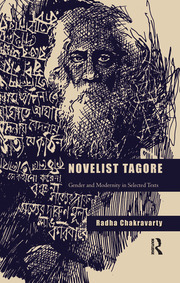
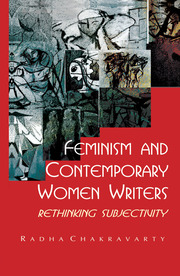
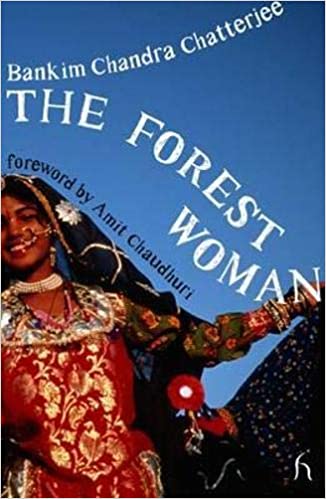
My work as a critic evolved through engagement with research. Feminism and Contemporary Women Writers(Routledge, 2008) for instance, emerged from my doctoral research, a cross cultural study of writers such as Mahasweta Devi, Anita Desai, Doris Lessing, Toni Morrison, Margaret Atwood and Buchi Emecheta. Novelist Tagore (Routledge, 2013) draws upon my research on gender and modernity in Tagore’s novels. My essays and reviews come from my areas of specialization, including Tagore Studies, women’s writing, South Asian Studies, Comparative Literature and Translation Studies.
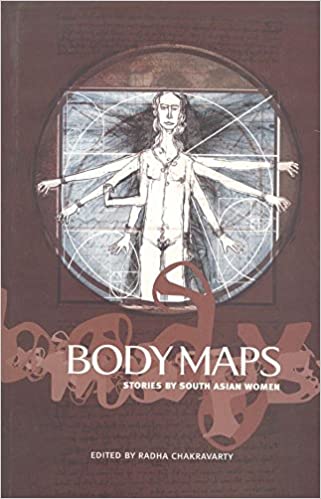
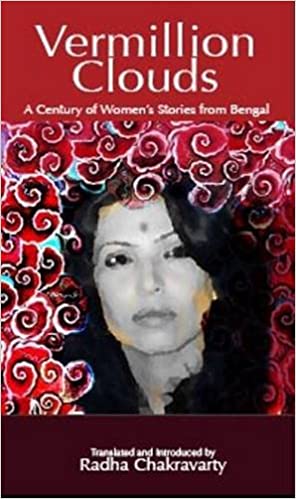
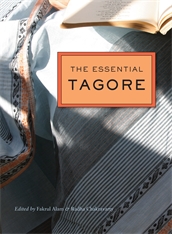
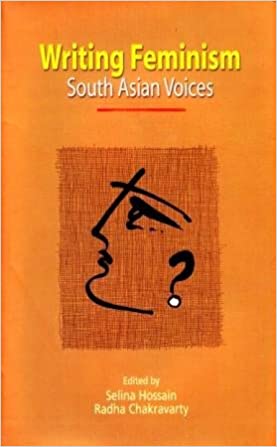
As an editor, my work is inspired by the idea of sahitya, the Bengali word for “literature” that Tagore interprets as “being with” or “being together”. This idea of collaboration and dialogue across heterogeneities fascinates me. My edited volumes, such as Bodymaps (Zubaan, 2007), a collection of South Asian women’s stories on the body, Vermillion Clouds(Women Unlimited, 2010), an anthology showcasing a century of fiction by Bengali women and Writing Feminism (co-edited with Selina Hossain; UPL, 2010), containing selections of South Asian feminist writing, are inspired by this principle. My most exciting collaborative project as an editor, so far, was The Essential Tagore (Harvard and Visva-Bharati, 2011), where my co-editor Fakrul Alam and I worked with thirty reputed South Asian translators located in different countries, on the largest anthology of Tagore’s writings across ten genres. The volume, named the ‘Book of the Year’ 2011 by Martha Nussbaum, has since become a standard reference for Tagore scholars worldwide.
As for translation, I started dabbling in informal translations, across Bengali, English and Hindi, even as a child. My grandfather, who taught me advanced Bengali at home, often involved me in these linguistic experiments. My first published translation happened almost by accident, in the 1990s. A friend, an Israeli art historian, asked me to explain the lyrics of the Bollywood song daiya re daiya re charh gaye papi bichhwaa(the poisoned scorpion climbed on me), because she was researching the scorpion motif in the Khajuraho scultpures. I ended up translating the entire song into English, in verse! My friend was amazed. She included my translation of the song with due credit, in her essay on the scorpion, published in the Journal of the Asiatic Society of India. As for my early books in translation, I must thank my friends, the editors and publishers who urged me to take up those projects. They saw in me a potential I had not fully recognised myself. Later, the overwhelming recognition that these books received transformed my self-image. I began to think of myself as a translator, among many other things.
You started by translating Mahasweta Devi. When and why did you start translating Tagore? What moved you from Mahasweta Devi to Tagore?
At the turn of the century, I was immersed in the challenge of translating into English the heterogeneities of contemporary Bengali fiction. Crossings: Stories from Bangladesh and India (2003), my first published book of translations, included the stories of twenty living writers. Alongside, I was working on In the Name of the Mother, my translations of some powerful, unusual stories about motherhood by Mahasweta Devi. The volume appeared soon after Crossings.
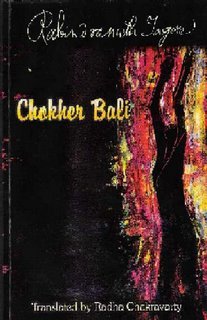
Meanwhile, I received a sudden call from Rani Ray—once my teacher, now a friend, mentor and figure of inspiration—urging me to translate Tagore’s Chokher Bali (A grain of Sand) an important but neglected text. I remember the shock and awe I felt at that moment. I protested that I was no Tagore expert, much as I loved and admired his work, but Rani di was adamant. “I think you are the right person to translate this novel,” she insisted. I found myself promising that I would try. And that was how my journey as a Tagore translator began. I read the novel, was struck by its boldness as a path-breaking modern text, and felt daunted but also tremendously excited at the challenge of trying to translate this hundred-year-old text that was at once so rooted in its context, and yet so far ahead of its time. Translating Chokher Bali was an immersive experience. It transformed me, drew me into a lifelong relationship with Tagore, and there has been no looking back.
Was translating Tagore different from translating Mahasweta Devi or Bankim? How was it similar/ different?
As I said, I first translated contemporary writing before turning my attention to Tagore. My translation of Bankim’s Kapalkundala came in 2005, after I had also translated Tagore’s Shesher Kabita as Farewell Song. So the transition from Mahasweta and other contemporary figures, to Tagore’s early twentieth century texts, and then to Bankim’s nineteenth century novel was like a journey back in time, delving further and further into the Bengali literary past. Of late, I have been translating parts of the Chandrabati Ramayana, a sixteenth century composition. Each step in this journey has been a process of exploration and rediscovery through translation, of familiar and much loved texts that I had read avidly in my early life, never dreaming that I might one day aspire to translate these literary jewels.
After working with living writers, the transition to Tagore was not easy. When translating Chokher Bali, I felt the need to evoke the flavour of a bygone age, even in a contemporary translation for the twenty-first century reader. This involved complex creative experiments with style and vocabulary that stretched my abilities as a translator. One felt the importance of bringing to life the cultural ethos of Bengal in the late nineteenth century, a world in many ways unfamiliar to readers of our time. Simultaneously, I recognized the modernity of Tagore’s novel, the new element of interiority that transformed the Bengali novel at his magic touch. That needed to be brought to life too.
Moving from Tagore to Bankim offered a fresh set of challenges. The lyrical, Sanskritised cadences of Kapalkundala are far removed from the more modern idiom of Tagore’s novels. Bankim’s text is set in the Mughal period. Hence the translator must actually negotiate the past at a double level, to bring to the modern reader the late medieval ethos as represented through Bankim’s nineteenth century sensibility. Crossing these temporal and cultural divides demanded daring experiments with language, as well as considerable research to contextualize the source text. It was a learning process for me.
Working with the ChandrabatiRamayana is a different experience altogether. A radical text for its times, and one that challenges the mainstream literary tradition, it remains a text worth returning to in our own context, because it destabilizes monolithic conceptions of our premodern religious and social traditions. Finding in English an idiom that will capture the poetry as well as the content is a hard task though.
These adventures in translation have compelled me to read the Bengali literary tradition from a different angle, from a writerly perspective, as it were. I have realized that translation involves a creative element, but also works as a form of interpretation. It has become clear to me why translation can be described as the most intimate act of reading.
In the Jaipur Literary Festival (2017), you made a very interesting observation that if one does not get into the skin of a writer, one cannot capture the essence of the writer in entirety. Are all good translations more of transcreations that literal translations?
Translation often appears to me a form of ventriloquism, the translator’s voice making itself heard through the voice of the source text. It produces a double-voiced text. My endeavour, when translating, is to bring to life the spirit rather than the literal vocabulary of the source text. One struggles to apprehend, interpret, and then, through one’s own creative ability in the target language, to approximate the impulse behind the original. A doubleness comes into play here, due to the gap in time, location, language, culture and context that separates the translation from the source text. In this tension resides the dynamic potential of translation to simultaneously recognize and displace the original. The success of a translation often depends on the translator’s creativity, as well as the author’s.
What is your opinion of Tagore’s own translation of his works? Can you expand on that?
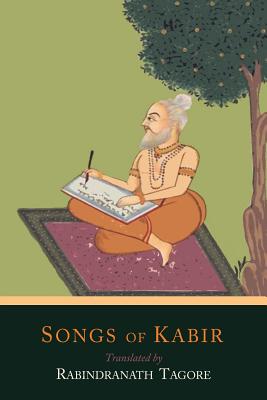
Tagore’s English translations of his own work shot him to international fame and led to the Nobel Prize. Yet he was diffident about his own command of English, and unsure about the quality of his translations. Some of these translations resorted to archaisms and a rather stilted style that did not weather the test of time very well. They were partly responsible, I feel, for the fluctuations in Tagore’s international reputation after the initial flush of success. Certainly, they are not close copies of the original Bengali texts; rather, they are re-creations in a different language, for a different readership. While some readers may cavil at the gap between the source texts and their English versions, these translations, in my opinion, remain important instances of the ways in which translation can connect different cultures through dynamic border crossings. The Kabir translations for instance, drawing upon the work of Kshitimohan Sen, and produced by Tagore in collaboration with Evelyn Underhill, provide a fascinating instance of the translingual and transcultural border-crossings that were involved in this process.
Sometimes Tagore adopted unorthodox collaborative measures when working with translations.
We know about the English translations of course, but it is worth remembering that Tagore also translated numerous premodern poets into Bengali and English, from a range of different languages, often drawing upon eclectic sources and relying on the assistance of others more knowledgeable about the languages and literary cultures of the source texts. I have recently published an essay on Tagore’s translations of medieval poetry, where I argue that these should be read, not as literal, faithful renderings that seek to cling close to the source texts, but rather, as transcreations that resituate these early texts in new, unfamiliar contexts. What takes place in his translations of Bhakti poetry, for instance, is also a meeting of different faiths, across diverse histories and geographies.
Can a translation be done from a translated piece into the same language? Would such a revision be of value?
Intralingual translations can be found in many literary cultures. Sometimes, texts in formal or classical versions of a language get translated into a modern, colloquial idiom, to reach a wider audience in a different time period. Often, these can be read as democratizing moves, arising from dynamic historical shifts that bring about an interrogation of social and linguistic hierarchies. The bridging of gaps between “high” and “popular” cultures can be attempted through such processes. These translations imagine into being new readerships for older texts, giving them a new and altered “afterlife”. The market also dertermines some of these things, especially when it comes to promoting modern versions of enduring texts that are regarded as classics. Intralingual translation can blur the borderline between translation and adaptation.
Can a translation to another language be done from a translation say in English, and still have the authenticity of the original writer?
It is currently a widely prevalent practice to use English translations as source texts for re-translation of texts into other languages. English as the language of global currency provides a useful medium for such translingual, often transnational interchanges. In India, despite our multilingual culture, there is dearth of translators who can work across Indian languages without taking recourse to English as a via media. This is part of the colonial legacy, which transformed our premodern polyglot culture through the compartmentalization and codification of the “modern Indian languages”. Today, bilingual and multilingual Indian scholars and translators are scarce. Hence, traffic across Indian languages tends to take place via English. The need of the hour is to regenerate a culture where the true potential of our multilingualism can be acknowledged, through a revaluation of polyglot scholarship.
Collaborative translation also holds immense possibilities for South Asian cultures, where diverse forms of linguistic and literary expertise can be harnessed, to work directly across our many languages, without always using English as a crutch. We already possess a rich history of collaborative translations in our literary past. This can inspire us to develop models for translation that involve mutual relationships between translators working in different languages.
How do you deal with translating multiple languages used by a writer into English? How would you indicate the presence of dialects or another language in the text you are translating from Bengali to English?
This question is particularly pertinent to the writings of Mahasweta Devi, where we find extraordinary instances of heteroglossia and multilingualism, in ostensibly monolingual texts. In a single story, such as “Draupadi”, we find chaste and colloquial Bengali, Santhal song, Hindi words and phrases, and English expressions, as well as quotations from various sources. Such texts challenge the monolingual paradigm to indicate that our cultural ethos, and also our sensibility, is always already multilingual. The idea of “pure” language is destabilized, to dramatize, in the words of the text, the dynamic interaction of various languages and linguistic registers. The social and political hierarchies that underlie this interplay of languages come to the fore through the rhetoric of the text. In such instances, the translator faces a tremendous challenge, especially with English as a target language so far removed from South Asian linguistic cultures. This tests the translator’s imagination and creativity, and demands the ability to summon up suitable strategies to deal with the challenges posed by the source text.
In my own translations, I prefer to highlight the forms of otherness operational in the source text, instead of erasing these markers of difference in order to create a smooth and easy style that would comfort a reader unfamiliar with written Bengali or South Asian cultures. To a great extent, I try to retain “untranslatable” cultural elements such as kinship terms, or names of trees, flowers, food and clothing. The use of italics also needs to be rationalised, depending on the demands of the source text, as well as the context, purpose and target audience for the translation. I prefer to keep notes and glossaries to a minimum, wanting instead that the reader engage actively in making meaning of the translation. In other words, I like to foreground the “translatedness” of the translation, as a text from elsewhere. At the same time, though, I don’t carry the process of defamiliarization so far as to completely destroy the readability of the target text. After all, I translate in order to be read. And I translate for the general reader, because I want my translations to have as wide and eclectic a readership as possible. It is my mission to bring writers from our own culture to the rest of the world, not just for a select coterie of erudite scholars.
Has translating all these writers impacted your own writing and thought processes as a critic? How?
As a critic, one reads a book from the outside, as it were. It is the analytical faculty that comes to the fore, even in close reading. When translating, something different happens. Translation, like literary criticism, involves close reading, interpretation and contextualization. But the actual process of translating also involves other faculties beyond the rational and intellectual. A feel for language is required, an element of emotion, and a creative ability to find strategies that will make the text viable in a new language for a new audience. One gets drawn into the source text through the process of rewriting or reinventing it, instead of striving for critical distance. Elements of affect, and the pleasure of the text, bring the process of translation alive. Criticism treats the text as a stable entity to be interpreted and analysed, while translation destabilizes the fixity of the “original” and makes us aware of its potential mutability. As a practising translator, I think I have become more sensitive to the “writerly” aspect of the texts that I read as a critic. I have also become more sharply aware of the way canons are formed, and the ways in which translation can trigger transformations in prevalent literary and linguistic hierarchies..
How do you find the time to juggle between academics, translations and writing?
It can be a tightrope walk. But if something matters enough, one tries to make time for it. Always, one is up against the feeling of racing against time. So much to do, and so little time. A lifetime is too short.
What are your future plans? Do we have anything new in the offing?
I find myself immersed in many different adventures with words. Currently, I am working on The Tagore Phenomenon (Allen Lane, forthcoming), a giant anthology that showcases Tagore’s works as a polymath whose oeuvre covers an extraordinary range of subjects, including nationalism, internationalism, education, social issues, nature and environment, spritituality, science, literature and the arts, rural reconstruction, religion, philosophy and humanism, to name a few. A new translation of Char Adhyay (Four Quartets), Tagore’s last novel, is on the way.
Our Santiniketan, to be soon published by Seagull, is my English translation of Mahasweta Devi’s recollections of her days in Santiniketan as a little schoolgirl. An entire ethos, a bygone era, comes to life in these memoirs, invoking the world of Santiniketan in the living presence of Rabindranath Tagore, during the 1930s. Mahasweta Devi: Writer, Activist, Visionary, an edited volume, will bring together scholarly essays and translations showcasing the writer’s life, work and critical reception across cultures. I am also translating selected essays by Kazi Nazrul Islam, whose prose deserves far more attention than it has so far received.
Alongside, my poetry continues to appear in print, in diverse forums. Translations of my poems have also been published. Drawing my poems together in a collected volume is a long overdue project, waiting to happen …
Thank you for giving us your time Professor Radha Chakravarty.
Click here to read Tagore’s prose translations by Radha Chakravarty.
Click here to read Tagore’s poetry translations by Radha Chakravarty.
.
(This is an online interview conducted by Mitali Chakravarty on behalf of Borderless Journal.)
.
PLEASE NOTE: ARTICLES CAN ONLY BE REPRODUCED IN OTHER SITES WITH DUE ACKNOWLEDGEMENT TO BORDERLESS JOURNAL
Fakrul Alam, an eminent translator, critic and academic, has been impacted by major voices in both scholarship and history. Edward Said, who is known for his work on orientalism and postcolonial studies, and the ‘father of Bangladesh’, Bangabandhu Sheikh Mujibur Rahman, were the major influencers in his life. We can see the impact of Said in Alam’s critical viewpoints perhaps when we look at his latest venture, an upcoming publication, Reading Literature in English and English studies in Bangladesh Postcolonial perspectives (2021), a sequel to an earlier book of essays, Imperial Entanglements and Literature in English (2007). He has more books on the pipeline, both on criticism and another translation of nearly three hundred Tagore songs.
A recipient of the Bangla Academy Literary Award (2012) and SAARC literary award (2012), Alam, born in 1951, has lived through history. This interview with him takes us on an adventure in time — mulling over different phases of South Asian struggles to gear up as individualistic, independent entities based on the concept imported from Britain, nationalism. It is an interesting journey moving with him through Pakistan dominated East Pakistan to modern Bangladesh under Sheikh Hasina where he not only translated Mujibur Rahman’s autobiography but also the nineteenth century Bengali epic Bishad Sindhu and the poems of Jibanananda Das. Without more ado, we are privileged to present to you Professor Fakrul Alam —
What got you interested in translations?
In Dhaka’s St. Joseph’s High School where I did my “O” levels, we had a Bengali teacher who was a great fan of Sarat Chandra Chattopadhay. Sir would ask us students to translate passages from his novels fairly regularly. Since he was the only Bengali teacher we had for four years, I ended up translating quite a few pages of the novelist’s work in school! But our teacher taught us almost nothing and just graded our papers after skimming through our work without saying much about the work we had submitted. Then in 1992, when I was hard up for money, a friend working in the World Bank said I could make some by translating government documents for them. This I did for more than a year. But I hated the work and gave it up. Once again, it was work that taught me nothing much and interested me only marginally. In other words, my initial ventures into translating once again did not really get me interested in translation.
I really became interested in doing translation in the mid-1990s when I started reading Jibanananda Das’s poems. They possessed me and I read them again and again. Without thinking about what I was doing, I began translating lines from his signature poem, “Banalata Sen” into English. Once I had started, I went on and on. After I had finished this poem, I took up another of his poems. I showed my work to a few people I was close to. Encouraged by what they said, I published them. Readers seemed to appreciate them as well. That encouraged me a lot. And that is how I really got interested in translating literary works. Looking back, I realize that there was something obsessive about my Jibanananda translations. But I guess I also wanted to come close to the poems and find out why they were so beautiful, haunting and overwhelming. You could certainly say this was translation as possession!
You are bringing out a book of translated Tagore songs in Bangladesh. How many songs have you picked and what was the basis of selection?
Yes, I hope to have a book of my translations of Rabindranath’s song-lyrics out in a few months’ time. I haven’t really counted, but I think I’ll have over 300 of them collected in the book.
What was the basis of my selections? Most important was my love of them. I listen to Rabindra Sangeet, that is to say, the songs of Rabindranath Tagore, every day without fail, unless I am travelling outside Bangladesh. Over the years, some songs by a few singers became so much a part of me that I began translating them. As was the case with my Jibanananda Das translations, you could say that translation was an act of homage as well as a way of coming really close to what you love. It strikes me also that many of the songs I ended up translating are by my favourite Tagore song singers — artistes like Debabrata Biswas and Kanika Bandhopadhyay for instance. Once again, translation as an act of possession!
As I contended in an essay I wrote some years ago which is now part of my collection, Once More into the Past, I grew up with Rabindranath’s songs, for my father loved them immensely. Whenever he was home and Rabindranath’s songs were being played on the radio, he would increase the volume so that we could all listen to them with him. My sisters learnt the songs formally from music teachers at home. I even accompanied one of my sisters on the tabla for a few years as she learnt Rabindra Sangeet or the songs of the poet. And the songs were very much part of the resistance movement against Pakistan — the nationalist movement that led to the birth of Bangladesh. The songs that I end up translating are very much influenced by my experience and love of them.
Recently in an article in Daily Star based on a lecture that you gave in Berkley, you quoted Tagore who had said : “Sometimes the meaning of a poem is better understood in a translation, not necessarily because it is more beautiful than the original, but as in the new setting the poem has to undergo a trial; it shines more brilliantly if it comes out triumphant.” What exactly did you mean by using this quotation? Would this be applicable to Tagore’s own songs?
I wanted actually to say that when we hear someone singing a song, it is the melody that primarily grips the listener; the lyrics tend to be secondary for most of us. The tune will stay in memory for a long time with the best songs; but their words won’t. At best, and unless you have an exceptional memory, you will remember only the opening lines after a while. But it is only when you translate a song that you can savour the way the composer has blended words with the music throughout to make an organic composition. The sound echoes the sense and the way the poet-musician strings words with music is what is most compelling. I think only the translator and the singer who has given thought to what the song is about can get to understand the song in its fullness and grasp the essence of the composer’s work. And just as a singer feels triumphant when she or he has captured the essence of the song through his or her rendering, the dedicated translator can get the satisfaction of catching a lot of what is intrinsically elusive through her or his work.
Of course, most of the music is inevitably lost in translation, but it is at least something if translators can come somewhat close to the original by making use of their auditory imaginations as well as their ability to interpret the words on the page. I had used as an epigraph to my Berkeley lecture the opening line of a Rabindranath song-lyric where the poet expresses his delight at catching “uncatchable loveliness in rhyme’s bids”; that is exactly how a translator feels when she or he has captured the essence of a Rabindranath song-lyric, although, and of course, I’m always aware that there is a lot lost —after all, the original composition’s melodic elements can’t be captured fully in translation. But if the best of the original can be approximated surely the translated poem will shine in a new context.
You have translated both Jibanananda Das and Tagore. What made you opt for two Brahmo poets?
First of all, and as far as I can tell, Jibanananda’s Brahmo family background has had little or no impact on his work. To me, he became more and more of a modernist with every passing decade of his life. With Rabindranath, however, his religious background is central to many phases and aspects of his creativity. Indeed, there was a period when he was completely immersed in Brahmo religious thinking and deeply influenced by its practices. But to me, also a student and admirer of Emerson and the Transcendentalists of mid-19th century America, this was something to contemplate and admire but it did not become a part of me except when I listened intensely. To present my position somewhat differently, though I am captivated by the religious poems of Rabindranath, the non-religious poems where Brahmo beliefs don’t matter are equally appealing to me. Rabindranath surely does not have to be restricted to his Brahmo origin and beliefs. I opted for poets affiliated to the Brahmo Samaj by birth or inclination, but they speak to me because of their poetic/lyric qualities and of feelings that go way beyond religion.
Did you find a lot of cultural difference while translating the above two poets as technically, they live on the other side of the border? Do you feel Bangladesh is culturally closer to West Bengal or Pakistan? Why?
You forget that Jibanananda spent most of his life in East Bengal. He spent only a few years in Kolkata. He did higher studies there for a few years and spent only the last decade of his life in the city. His Ruposhi Bangla poems are all about the flora and fauna of our part of the world. Indeed, has anyone represented our part of Bengal as feelingly as him? As for Rabindranath, let me remind you that coming to Shelaidaha and getting exposed to the Padma and the lush, green landscape of riverine Bengal was decisive for a lot of the poems, songs and short fiction he wrote. And of course, the bulk of the superb letters of Chinnopotra originate in East Bengal. Indeed, I have never felt that Rabindranath and Jibanananda are writers from the other side of the Bengal. I can’t resist saying to you in this context that the first time I went to Jorasanko during my second visit to Kolkata, once I got down from the taxi and asked people the exact location of the Tagore family home, I came across some who seemed not to be able to speak Bengali or could do so only using a non-Bengali accent! In Central Kolkata, you may even get the impression you are not in Bengal. And of course, we have a shared culture with West Bengal, the key here being not only language but also geography and proximity. The border is a divide, but only up to an extent!
Bangladesh uses Bengali a little differently from West Bengal. Would this be a true statement? Does that make translating from the other side of the border more difficult?
I don’t find this to be the case for educated people writing in Bengali. We may have different or distinctive accents, depending on the level of our education and the part of Bangladesh we are from, and a few words that we use of the language here and there may be unique and unfamiliar to people in West Bengal, but I have rarely found myself misunderstood or out of place when I speak to people in my visits to, let’s say, Kolkata or Santiniketan. This means that my use of Bengali is at best marginally different from a West Bengali’s use of the language.
How many dialects of Bengali are in use in Bangladesh? How is it there are so many dialects of Bengali?
The reason why we have so many dialects in Bangladesh, however, has to do with geography. We are a land of rivers and some of them are huge. It is almost always the case that in a big river like the Padma or Jamuna, people on either side have different dialects because of the physical separation. After all, in the past communication was difficult and economic exchanges were limited. In Sylhet and Chittagong, the hills have played their part in the formation of distinctive dialects. And in the heart of Dhaka, the Mughal heritage has meant that we have the distinctive Dhakaia dialect, uniquely favoured by Urdu/ Persian diction. In other words, there are all sorts of reasons why we have so many different dialects in Bangladesh. I don’t know exactly how many dialects, but the wiki entry lists seven.
What are the hurdles of translating from Bengali to English?
In my own case, the first hurdle is my limited Bengali vocabulary. When I was translating the late nineteenth-century Bengali novel, Bishad Sindhu (Ocean of Sorrow in my translation), I had to consult at least two Bengali-to-English dictionaries all the time as well as look for archaic/obsolete words in a Bengali-to-Bengali dictionary. When I am translating Rabindranath’s song-lyrics, quite often I come across words no longer used in everyday speech or even contemporary written prose that send me to the dictionary repeatedly. The problem is not only that these words are no longer in use but that before I took up translating Jibanananda, my exposure to the Bengali language was somewhat limited by an English medium education in an “O” level school in the Pakistani period where only “easy” Bengali was taught, and where literature was scanted except for the Sarat Chandra novels I mentioned earlier. Indeed, I sat for an “Easy” Bengali examination for my “O” levels. And as I indicated above, our teacher taught us almost nothing there.
The other hurdle, and this is true for all translators, is translating the musical elements of a song-lyric. Bengali is a language that to me is intrinsically melodious. Rhymes come naturally when you speak in Bengali and soft and musical cadences abound. It is more difficult to rhyme in English and if you try to do so consciously, you sound artificial, especially in our time when rhyme is no longer in fashion. And yet in translating song-lyrics from Bengali, one must retain at least some of the music. This, however, is an almost impossible task. Not poetry but it is melody that is lost in the translation of Bengali song-lyrics into English!
You had written an interesting piece on Shakespeare bringing in Tagore’s poem on Shakespeare. Did Shakespeare influence Tagore or have an impact on Bengali literature?
The influence is no doubt indirect. But we know that Rabindranath translated parts of the Macbeth at an early age. And it is well known that Shakespeare was very popular in the late nineteenth Kolkata where he grew up. The English Bard clearly had an impact on the stage then as we know from the translations done at that time. But any influence must have been indirect and limited. Tagore’s dramaturgy is completely different from that of Shakespeare.
You have translated Mujibur Rahman’s autobiography, Oshampto Atmojibani (The Unfinished Memoirs). Can you please tell us a bit about it?
Sometime in late 2006, I was invited by a very good friend whose family is closely connected to that of the man we called Bangabandhu—Sheikh Mujibur Rahman—to meet Sheikh Hasina, then the Leader of the Opposition, and for a long time now the Prime Minister of our country. She had obviously heard of my Jibanananda Das translations and knew perhaps as well that I was beginning to translate Rabindranath’s poems and song-lyrics. She wanted me to translate the work that we now know as Oshomapto Atnojibani from the manuscript left behind by Bangabandhu that she and others had managed to first retrieve and then copyedit. I was delighted at the opportunity and began work. But because she was imprisoned by the caretaker government that usurped power in Bangladesh, the work stopped for a while. I had received only part of the manuscript by then. In the end, work resumed after Sheikh Hasina settled down as our Prime Minister and resumed supervising the translation project. The translated book was eventually published in 2012. I should add that I subsequently translated two other manuscripts that were also rescued from oblivion by our present Prime Minister and her sister. These are The Prison Diaries (2019) and New China—1952 (2021). The Unfinished Memoirs was published jointly by UPL in Bangladesh, Penguin India and Oxford UP, Pakistan and has by now been translated into several other languages. The two other volumes have been published by Bangla Academy but have not yet reached the international market.
We had heard of Mujibur Rahman as a national hero of Pakistan when we were kids, right after the 1971 war. Did you meet Mujibur Rahman in person ever? What was the impact he had on you?
Sheikh Kamal, Bangabandhu’s older son, was my batch mate at the university of Dhaka. He was friendly, unassuming and full of life and ideas. Soon after we met in the campus in late 1969, he took me to his house on at least a couple of occasions, along with a few other friends. On one of these occasions, he introduced us to his father. On another occasion, when the election campaign that would soon lead to an overwhelming majority for his party was on, Sheikh Kamal took me and a few other friends one day to attend at least two public meetings where Bangabandhu would be speaking. I missed the most important public speech that he gave, which was on March 7, 1971 (I have, however, translated it and it is available in websites) but I was there to listen to his second most important speech, which is the one that he gave on his return to Bangladesh from a Pakistani prison on January 10.
Of course, he impacted me. In fact, he is unforgettable. He is for us not only “Bangabandhu” or the “friend of Bengal” but also “jatir pita” or “father of the nation”. If you are a Bangladeshi at heart, you will have to acknowledge him in that manner. The more you know about him, the more you will be overwhelmed by his love for Bangladesh and its people, his courage, indomitable spirit, and self-sacrifices.
Having worked intensively on Rahman’s autobiography, do you feel, looking at the course of history, the Partition based on religious differences was a necessity?
In retrospect, Partition was perhaps not necessary, but surely it was inevitable the way things had been going. I have written about this a bit elsewhere but let us remember that there were three partitions– “Bongobhongo” (the breaking of Bengal) — or the short-lived partition of Bengal in 1905; the partition of the subcontinent in 1947; and the parting of ways for us in East Pakistan from the people of West Pakistan in 1971. It is easy to be wise after the event, but it is also easy to see now that in 1905 most educated East Bengali Muslims welcomed a split that would give their backward region not only autonomy but also economic and political empowerment. This partition was of course revoked in 1911 but it did give East Bengali Muslims a feeling of the kind of empowerment they had been denied previously. The 1947 Partition looks decisive now, but that it was not the last word is testified by 1971, when Pakistan split into two and we departed permanently from Pakistan. I should add that I am totally secular and regret that religion-based politics has made a comeback all over the world. I keep hoping we will have something like the European Union in the subcontinent — where though there are borders, we can move freely and connect with each other easily —border or no border — whenever we want to — and travel with only an ID cards and/or our passports and sans visas.
While writing of the founding of Dhaka university, you wrote of the Muslims keeping away from institutions of higher learning in pre-Partition India. Why was that the case? Was it because they did not want to be part of the British babu syndrome or was it some other reason?
There are two things to keep in mind. The fall of the Mughals and Siraj ud-Daulah’s defeat meant that the Muslim aristocrats would no longer be in power. They also either fell out of favour with the British or were steadily deprived of the culturally rich/lavish lifestyles they had been used to. Upper class Hindus in and around Kolkata, however, not only came closer to the British but also embraced English education and prospered in every way. This meant that Muslims on the whole would be late to realize the benefits of higher education in English. It took a while for Bengali Muslims to realize that though they constituted the majority in East Bengal, they were in the minority as far as jobs and upward economic mobility were concerned and would stay that way unit they resorted to higher education.
You are an established critic too. I read something about an upcoming book of essays. Can you tell us a bit about it?
Actually, translation is only a part of what I do and it is something I came to only mid-way in my academic career. By training I am a literary critic. I specialized in 18th century British literature and the American Renaissance writers. Back home after graduate work in Canada in the mid-1980s I became a postcolonial critic. That led me to South Asian writing in English and eventually Jibanananda Das. I am saying all this because I initially published a book on Daniel Defoe and then one on Bharati Mukherjee. I edited a big book on South Asian writers in English for the Dictionary of Literary Biography series in 2006. And in 2007, I brought out a fairly substantial collection of postcolonial critical essays and reviews on south Asian writing in English titled Imperial Entanglements and Literature in English. The book of essays that you mentioned is another large collection of critical essays I have assembled on postcolonial and South Asian literature in English. I have titled it English, the Language of Power, and the Power of Language: Essays and Reviews. It should come out as soon as the pandemic is on its way out.
Bangladesh and West Bengal seem to share much in common, including the three great poets Tagore, Nazrul and Jibanananda. You have translated two of them. What about Nazrul? Any plans afoot to translate him?
Actually, I have translated at least a dozen Nazrul poems, a couple of songs and one short story. Perhaps I will translate a few more. But Rabindra Sangeet will always make me do more and more translations of his songs. And I do plan to go back to Jibanananda Das’s poems, since so many of them came out after I had published my selections of translations of his poems in 1999.
But as I end, let me say: “Thank you” and all good wishes for you and the journal.
Thank you very much for your time and your lovely responses.
In Conversation with Arindam Roy, Founder, Publisher and Editor-in-Chief of Different Truths
Arindam Roy and Different Truths have become synonymous with publishing anything that does not fit into genres of various literary journals. The site carries opinions, humour, semi-news stories, academic papers, poetry, stories, and you name it. Roy, who completes forty years as a journalist this month, has wide experience in his profession, including in newspapers like the Times of India and the Hindustan Times. He has mapped the history of media and journalism in India with his candid responses to questions about his latest and much appreciated venture, Different Truths, which this year has been given a registered trademark. In this exclusive, he tells us about his life experiences, including starting as a writer of love letters for his friends who were less proficient in English, much in the tradition of the French character, Cyrano de Bergerac, and ending as the bureau chief of the Allahbad branch of the Times of India, the managing editor of the Citizen Journalist portal, and a founder of an unusual online webzine.
We all know you as the founding editor of Different Truths, a platform for social journalism. Can you tell us what you mean by social journalism?
When we conceived Different Truths, in September 2015, we created its vision too. We had defined Social Journalism in our page, ‘About Us’. I quote from there, Different Truths is a Social Journalism (a form of collaborative journalism) platform. Based on the tenets of Participatory Journalism, Social Journalism creates a synergy between Citizen Journalists (any lay person, who is not trained as a journalist to voice their opinions) and Professional Journalists. I feel Citizen Journalism/Journalist is a misnomer. Journalism is as much a profession as doctor, engineer, advocate, architect, or a CA, to name a few. If we cannot have Citizen Doctor/Engineer, et al., how can we have a Citizen Journalist?
Social Journalism is a media model consisting of a hybrid of professional journalism, contributor, and reader content. It is similar to open publishing platforms, like Twitter and WordPress.com, except that some or most content is also created and/or screened by professional journalists. Examples include Forbes.com, Medium, BuzzFeed, and Gawker. The model, which in some instances has generated monthly audiences in the tens of millions, has been discussed as one way for professional journalism to thrive despite a marked decline in the audience for traditional journalism.
“Social Journalism helps to strengthen and deepen Democratic Values. It upholds the best traditions of secular, non-violent, non-racist and casteless society. Different Truths upholds non-discriminatory traditions, where Special Needs people have equal opportunities. It aims at unifying the peoples from various parts of the globe to create the world without boundaries – a Global Village where Peace and Prosperity rules.
“The visionary John Lennon’s Imagine (UNICEF: World Version) is our Guiding Light, our shared Anthem at Different Truths” (we shared the video link too).
We are happy to inform you that we have had a good mix of trained journalists and non-journalists (erudite scholars, poets, teachers from universities, colleges and schools, research scholars, doctors, psychiatrists, people from the bank and insurance sectors, traders, quite a few social activists, artists, musicians, students…the list is exceedingly long. Almost anyone who wishes to write).
How old is Different Truths? What made you come up with it?
We are still young, in our sixth year. Different Truths was conceptualised in September 2015. From December 2015-January 2016, we started picking up. Initially, there were a handful of people who shared our vision. Then there was no looking back. We always have had amazing writers and poets. This trend continues.
Interestingly, our Social Journalists (SJs) were, and are, from various countries. Editorially, we are an Indo-US venture. My Co-Founder and Managing Editor, Anumita Chatterjee Roy, is based at Columbus, Ohio, the USA.
There were several factors that led to the start of Different Truths. Firstly, my wife passed away in April 2014, after a prolonged illness. Her kidneys had failed. I was her caregiver. Suddenly, I had nothing to do. No one to look after. My two children had left the nest. When I lost my wife, I found one of my Facebook friends, my kin, Anumita, stepped forward and talked to me, even if it was for a few minutes, every day. I would not be able to do so with such regularity – rain or shine.
Life sent a very dependable, trustworthy friend. She would admonish and chide me too. Reason was that I had lost my sleep and remained awake all night. I needed something to keep me busy. Turn another of my failures, sleeplessness, into success.
I knew that she and I together could launch a digital publication. Though Anumita was a little uncertain, she took a leap of faith for herself and all of us. Different Truths was born.
Secondly, as journalists, writers, and poets, most of us dream of launching a newspaper, magazine, or a TV channel. Like actors dreaming of taking on the role of directors. Before I reveal the deep personal reasons, let me tell you that after my father’s demise, I had to relocate to Allahabad. I had just married. My little sister was still in school, and my mother was shattered. My wife and I decided to return home. It was an emotional decision – perhaps this generation would not do so – and it meant that my career, which had just about taken off, would nosedive. As I look back, I realise that I was more than compensated in a different way. The Allahabad chapter of my career saw me launch several publications and supplements in newspapers. As a launcher, I had a complete overview of the publication, much like a project head.
I saw promising, quality publications gasp for survival and shut down, while not-so-good publications (including a salacious one) become a runaway success. It’s quite similar to a meritorious good child not succeeding in later life, while the street smart, neta-type (political leader-type) succeeds and shines. Interestingly, all newspapers, magazines, books, digital platforms, and films, have no magic formula of success. Each is born with its own fortune.
My experience and understanding as a launcher of publications were invaluable. Like my editor, Krishna Raj, in Economic and Political Weekly (EPW), Mumbai, used to say, “We should know what not to select before we know what to choose.” This became a lifelong mantra for me. With limited funds, digital media was the obvious choice.
Thus, we decided that Different Truths would be an online magazine (Webzine). Now, we have two registered trademarks, Different Truths (DT) and Kavya Kumbh (KK). These trademarkregistrations were received last year, amidst the gloom and doom of the pandemic. Our extended DT family – we call them DTians – and we were thrilled. Our brands, DT and KK, have global recognition because of these trademarks.
What is it you look for from your contributors?
Like all editors, a clean copy. But that’s quite difficult considering the divergent backgrounds, cultural, educational, etc. Also, these writers have not been through the grind.
I remember you and I chatting the other day, between our works, on WhatsApp. After a thorough training, we found that we as cub journalists (writers and editors, much later) were green. A true journalist is forged in fire. Newsrooms are humbling experiences. Those – we have seen a few – who are full of themselves, have had a huge fall too. In frustration, quite a few indulged in substance abuse (alcohol, drugs, etc). Many of them were very promising. We lost so many talents. It saddens me.
All contributors need to trust us. We are hard-nosed professionals. They must give up their egos – though painful, we had to do it too. All writers, me included, should not be airheaded.
Young and not-so-young poets and writers judge themselves by Facebook likes and comments. Instant gratification is like drug abuse. It gives us an instant high. Virtual reality isn’t real. It certainly alters our perception of reality pushing us toward multiple personality disorder, if not schizophrenia.
It’s worth remembering that writing is a vulnerable process. All writers face emotional and intellectual erosion over time. Also, it’s not fair to say that grammar does not matter in a poem. It does. Free verse is exceedingly difficult. We need long practise to be able to perfect it. It’s not just a jumble of words, heaped on each other for then it becomes a glorious heap of garbage. Such poems (and prose) are instantly rejected. I recall what one of my schoolteachers used to say, “Good riddance to bad rubbish.”
Humility and eagerness to learn is most important for all contributors, no matter where they are writing.
I recall a well-known quote of APJ Abdul Kalam, “If you want to shine like a sun, first burn like a sun.”
You have a fairly popular programme called Kavya Kumbh. When did you start and why? What have been the responses to it?
It all began last year. We had decided to organise a mega poetry meet on the World Poetry Day, March 21, 2020. We had confirmed participation of around 185 poets (some with spouses and children, 223 guests) from the length and breadth of the country, from Gujarat to Sikkim, and from Kashmir to Tamil Nadu. Other than that, we had poets from five other countries. If you recall, the nationwide lockdown had begun around that time. I thanked my stars that I postponed the dates by six months around March 15 or 16.
The event was named Kavya Kumbh (KK). We decided to get a Trademark registration for KK. Thereafter, from September beginning to mid-December we had an online poetry meet in various languages. We also discussed cinema and art during the KK meet. This event strengthened our brand DT too.
All our future events, online or in person, will be held under the KK brand.
What were you doing before Different Truths?
Immediately before I started DT, I had been invited by the Banerjees, who own AH Wheeler Co. that has bookstalls in nearly 250 railway stations. AHW has been into selling books from 1877. An iconic brand, this company was started by a Frenchman, Émile Moreau. There’s an interesting story. Moreau was a bibliophile. He had books all over the house. His wife warned him that either the books or she would stay at home. He took it lightly at first. Her admonitions grew. One day, he took a table, a bedsheet, and his books to the Allahabad railway station, which had been set up in 1859, two years after the Sepoy Mutiny or India’s First War of Independence. He kept the books for travellers to pick up free. They paid instead. A business model was born. The rest is history. Later, Moreau inducted Tinkouri (TK) Banerjee and made him a co-founder of the company. After independence, he handed over AHW to Tinkouri Babu. Now, his fourth generation is running the company.
I knew all about publication launches. I had no idea about the nitty-gritties of publications’ distribution and marketing. I joined as the Head, Business Strategy and Corporate Communications of AHW, on March 1, 2014. Two years later, in 2016, I left AHW. During this time, its swanky bookshop was under my wings. I got to read all the books months before these hit the stands. It was a lovely experience. Meanwhile, DT was growing by then. It needed my attention. My stint at AHW gave me first-hand experience in distribution and marketing of publications.
Before that I was engaged in journalism, working with various publishing houses. I was asked to lead an online magazine at Gurgaon as its Managing Editor (2007 to 2009). Under my wings, it grew phenomenally. I was heading the entire editorial functions of the fifth largest Citizen Journalist portal and was responsible for bureau operations in various cities of the country with return on investment accountability. I boosted content volume by 967%, over the previous year with significant improvement in quality of that portal. I led and inspired a team of reporters and editorial desk. Enriched, I returned home, once again, now to look after my ailing wife.
Around this time, I took a sabbatical and co-authored a novel, Rivers Run Back, with my American co-writer, Joyce Yarrow (more of it later).
Meanwhile, from 2001 onwards, I was involved with several Coffee Table Books (CTBs). The first was for an Italian publisher, Jaca Books, based at Milan. Other than journalism, it opened a new channel of co-authoring and planning CTBs.
Oft and on, I was called as a guest faculty at several Mass Comm colleges, some of these were Symbiosis Institute of Mass Communications, Pune, GB Pant Institute of Social Sciences, Allahabad, Photojournalism department of Allahabad University, Jaipuria Institute of Mass Communication, Lucknow, Amity, Lucknow, Bhavan’s Journalism Department, Allahabad, etc. (though not in this order).
I was penning poems in between too. This was more for me. I have not been careful with my poems and have lost most that were written during school days till now. I remember that after my intermediate boards, I began participating in Yuvavani, reading poems, and earning my pocket money.
My father was against poetry writing and reading. He saw it as a waste of time. But I saw a glint of joy in his eyes and that of my Jetha (father’s elder brother), when they heard me recite on the radio. He melted when I bought fish for home with my first earning of Rs 140/- (Rs 35/- per week). I also gave my mother Rs 40/- in the year 1977. My father was happy that poetry could help me buy fish. It gained acceptance at home. He was also against my becoming a journalist. But after I joined EPW, things changed. During one of his visits to Mumbai, he hugged me and said, “Forgive me, I was wrong. Remember, it’s not just a job. It’s a mission.” I touched his feet. Our eyes had pools of tears.
I am happy that I followed his advice, even if it meant suffering for my wife and children. Thankfully, they understood and stood with me, through thick and thin.
You have been a journalist for a number of years. How many? Where all have you worked?
This month, on June 4, 1981, I began my career. Today, I completed 40 years as a scribe. It’s an incredibly special day for me, Mitali. It has been a long journey. Full of highs and lows. As I look back, I find that two small magazines, immensely respected, laid the foundation stone of my career. These were Himmat (Courage in English, headed by Rajmohan Gandhi, grandson of Mahatma Gandhi and C. Rajagopalachari) and Economic and Political Weekly or EPW (headed by the illustrious editor, Krishna Raj). At both these places, I did everything from proofreading to subediting to writing. It taught me that no work was small. I lived value journalism here. It went amiss later in life, with many other publishing houses, big and small. I also had a stint with Associated Press before I was asked to join The Times of India at Allahabad once again. I led the East UP edition, as the bureau chief.
How is mainstream journalism different from running a webzine?
It’s as different as chalk and cheese. Mainstream journalism needs a huge setup. It’s capital intensive. Also, it depends on advertisement revenue. When the advertisers pay the salaries of all journalists, they call the shots. Before I talk about webzine, I must add that I was at the transition of journalistic values. There was a time when the owners/managers thought twice before talking to an editor. They sought appointments from his personal assistant and would ask if he/she was in a good mood to talk. The chairman of a big media house, I was told, would ask the editor of that newspaper if he could join him for a cup of coffee. And if he weren’t free, he could check later.
In the mid-80s, four or five years after I began my career, there was a tug-o-war. The advertisement director/manager (depending on the size of the media house) was the kamau putra or the successful son, who earned the most. The circulation department made some money that perhaps paid for the newsprint and ink. He was to emerge as the mejda (the second eldest brother), but the editors and their teams were the ones that created costs by spending money. Though they might have given the house/brand a strong image, they were marginalised. A major media house said that they were there to fill the news-holes in the dummy – the space left in the page after the advertisement department sent the page-dummy showing advertisement placements. By the 1990s, editorial departments around the country had lost much ground. It was grabbed by the two earning sons of the family. Since they earned most, they got the creamy layer of the milk.
Sadly, most editors compromised. Those who did not toe the line had to leave, nursing their wounds. This meant that more and more editors agreed to play the second or the third fiddle.
In editorial meetings, one could hear that we are a newspaper, not an advertisement paper. Soon, free yellow pages emerged. These had just advertisements and perhaps a couple of rehashed stories that were written by the content writers. Somewhere in the 1990s, Advertorials began appearing. If the advertiser was ready to pay, an editorial write-up with high sales pitch was allowed. This shattered the editors and the editorial department of media houses. They had to sit and lick their wounds. The advertisement department(s) grabbed the last mile – writing – from them too.
Meanwhile, the corporate egos of media houses were to take a huge beating in the next decade, at the turn of the millennium. New media or the webzines were emerging. The advertisers were no longer sure how much of their money resulted in actual footfalls. Now, the new mantra in the various webzines were pay per click (PPC). The circulation department was soon to be replaced by the Search Engine Optimisation (SEO) teams. Now, they too had to work in tandem with the editorial department. The webzine editors soon learnt what were keywords, which news was trending. The medium and big webzines metamorphosed soon. Meanwhile, the webzine editor had learnt a few invaluable lessons. He was more like a commando. He was emerging as the news guerrilla. He was the product manager, and once again the blue-eyed boy of the team. He was responsible for the company’s return on investment. It was more like the return of the Prodigal Son for the webzine editors.
Several media houses were in the doldrums. Medium and small media houses who were blind to the new media or the webzines were pushed into penury or extinction. Big media houses were forced to incorporate the new media and integrate. They not only survived, but they also thrived.
An emerging trend that needs study is what will happen after the pandemic. Ad revenues have totally dried up. There’s no business. No buying-spending. Big media houses are seeking donations or subscriptions, something that webzines like Guardians and few others were doing, earlier.
Once again, content is the king.
Other than the TV channel, new media is the fastest, with their huge armies of citizen and social journalists. Webzines are here to stay. It’s now a 21st century reality. There is space for big, medium, and small players (like us) in the world wide web. Newer social media tools are being integrated too.
It’s exciting and exhilarating to witness so many changes, from hot metal (lino or mono typesetting) to offset printing and then to become paperless in the new media. Our lives had epic ramifications – at least for some of us, who began our careers in the 1980s or 90s.
Do you write? Tell us about your writing — especially the experience you had with bringing out books with the Times group.
Writing is my oxygen. I have been writing since my college days. First, it was nesha (addiction), then it became pesha (career). It helped me earn my pocket money. My father didn’t have to provide me with a monthly dole.
There were weird demands. Two of my friends, in the railway colony, where I spent my formative years, decided to woo two girls. Now, they were Hindi medium students, while these two girls were ‘convent educated’. Love letters had to be written in English. I became their letter writer. When these girls agreed to date these guys, they found to their dismay they couldn’t even speak proper English. One of them had seen me with her friend. She made him confess the truth. Later, all of us had a huge laugh.
There were others who wanted me to word the invitation cards for their sister, bhabi’s (sister-in-law’s) sister and so forth. There were demands for shraddha (funeral peace prayers) and sacred thread ceremony functions too. These grew. Then I decided to stop writing invitation card content. Kins and friends in business wanted me to word letters for them too. The list is endless.
I helped launch several small publishing houses. I became their free ghost writers too. This too had to stop.
Meanwhile, in 1987, I decided to do copywriting for an upcoming advertisement agency. They paid well. I attended client meetings and led sales pitches too. I still do it. But I ensure that I am paid in advance.
As I said earlier, I was contacted by an Italian publishing house in 2001. The Internet was new then. I was an early bird. I got a good deal. This book was read by my bosses and friends. When TOI was doing a Coffee Table Book (CTB project for the Information Directorate, on Kumbh) my bosses and friends remembered my Italian book and felt that I could do it. That’s how I got involved in the projects. My stories were interview-based, involved legwork, and contacting people. My friends in the Information Directorate insisted that I write the sarkari (government) version too. Of the 10 articles in the CTB for Kumbh, I wrote five stories (later two were merged into one) and I had four stories in it. Again, when the TOI was bringing out a CTB on Uttar Pradesh, I was given the lion’s share. Out of the nine chapters, I wrote three (one-third of the book). These were: Art & Craft: Art makes us human; Folk Traditions and Festivals: Songs and dances as life discourse, and Classical Music and Gharanas: Melodious tunes from the land of harmony.
There were many other projects, where CTBs and other books needed my inputs. I wrote and wrote.
You co- authored a novel. Tell us about that. What was your experience in co- authoring because writing is an individual experience? How do you coordinate?
I became a novelist rather accidentally. I have many writers and poets on my Facebook. Often, we writers talk and share what’s the work in progress. Joyce Yarrow, an American mystery writer, is a good friend. She was telling me on Skype chat (WhatsApp, Telegram, etc were not there then) that she had planned her next book’s location in Cuba. I mildly suggested that after this book, why don’t you come to India. She could weave rich materials and history into her book. Suddenly, she was all ears. Over the next month, I kept on telling her about India. I spoke of Tagore, Nazrul, Vivekananda, Premchand and many others.
One evening, Joyce suggested that I co-author a novel with her. I developed cold feet. I had written on facts mostly, except for a few short stories. But a novel, no way! Somewhere along the line, I agreed, though unsure. Over the next three years, we talked on Skype, phone, video chats on weekends, from about 8pm to 10pm, my time. Both of us were amazed that the entire story plot was bottled in me. I did the scaffolding of the novel, while she created its brick-and-mortar structure. We shared notes. Since there was a huge gap in our writing styles, she wrote the texts mostly, with agreements, disagreements, fights, and laughter.
It was a great learning experience. Our novel was launched at the American Centre, New Delhi, in January 2015. My Delhi-based school buddies had come to cheer me, other than my classmate Dr Sunjoy Joshi, who is heading the Observer Research Foundation. My son and nephew had attended the launch programme, other than my cousin and his wife. One person who would have been incredibly happy was my wife, Ruma. She left us nine months before the event.
Between editing and writing, which is a more preferred task?
Writing is far more fulfilling than editing. I often laugh and say that editors are like safai karmacharis (cleaning crews). We are here to dust, mop and shine works that are not upto the mark. It’s a thankless job. However, on a more serious note, editors create writers – like directors create actors – and that is a huge joy. My editors made me. It’s payback time for me, I think.
What is the future of Different Truths? What do you see as your own future?
As a Founder, Publisher, and Editor-in-Chief of Different Truths, with my Co-Founder and Managing Editor, Anumita Chatterjee Roy, we can shape the present of the webzine. We can look back in glee at the past too. But it’s impossible to say what the future holds. This uncertainty helps us put in our best. It makes us challenge ourselves too.
As I am writing today (June 4), we have 5,418 posts in Different Truths. It has taken us almost six years to achieve this. We published 17 online anthologies so far. We have published several thematic issues and are still counting.
We are the only webzine that creates its own visuals. Anumita does a wonderful job. I remember you and most writers, columnists and poets appreciate her creative work.
We two at the core form the nucleus, while the rest of the Editorial Team may be likened to the electrons of the smallest unit, the atom of the webzine.
In March 2019, we were awarded the prestigious Double Cross Gold Medal. In fact, Different Truths was chosen by an illustrious person, Knt. Sir Silvano Bortolazzi, whose name was proposed eight times for the Nobel Prize, “proposed in six occasions as candidate to the Nobel Prize in Literature and proposed in two occasions as candidate to the Nobel Peace Prize.”
Prominent writers wish to publish with us. This is a good sign for the future. As long we are honest and committed and we continue to allow all kinds of political opinions, leftist, rightist, or centrist to find space in our webzine, we shall continue to be non-partisan and democratic. We do not allow bigotry and jingoism.
No subject is taboo in Different Truths. To quote from ‘About Us’ again, we had stated, “At Different Truths (differenttruths.com), we intend to speak about issues that are kept in wraps. We wish to unravel the truth, no matter how unsavoury or bitter. We wish to challenge the taboos. We wish to be heard over the din and noise of the traditional media, most of which, we all know, has collapsed under ugly money-power. When journalists are fair, the houses are not. All media houses have their ‘Holy Cows’, areas that cannot be ever touched.”
As I look back on my 40th work anniversary today (I walked into Himmat’s office at Arun Chambers, Tardeo, Mumbai, on June 4, 1981), I am happy that we have been able to keep the promise we made to ourselves and the world, in September 2015.
Last but not the least, we two as captains are as good as our team (writers and poets). At the end of the day, they make or mar us. If we learn from our past and focus on our present, the future shall take care of itself.
I enjoyed responding to your perceptive questions. Thanks a lot.
Thanks Arindam.
The Core team of Different Truths: Arindam Roy & Anumita Chatterjee Roy
(This is an online interview conducted by Mitali Chakravarty.)
.
PLEASE NOTE: ARTICLES CAN ONLY BE REPRODUCED IN OTHER SITES WITH DUE ACKNOWLEDGEMENT TO BORDERLESS JOURNAL
Two communication scholars, Dr. Manisha Pathak-Shelat and Kiran Vinod Bhatia, from a management institute in Ahmedabad, India got together to write a book, Raising a Humanist; Conscious Parenting in an Increasingly Fragmented World.How relevant is that in the current world where people are crumbling not just under the pandemic but also under the burdens of a changing,turbulent era where nothing seems as it was earlier! The impact on children cannot be undervalued. In a time when masks and social media seem to be the only way to survive, how would we bring up our youngsters to be considerate good human beings?How do parents need to respond to their children’s needs to prepare them for a challenging future? In this exclusive, the two scholars answer questions on how to address issues we face bringing up children. Kiran Vinod Bhatia moved to University of Wisconsin- Madison midway to complete her PhD. They completed the book together and answered these questions to give us a glimpse into their book and their ideas.
How did the idea for this book come about? How difficult was it to coordinate across the ocean and get it out?
The book is one of the outcomes of our several years of collaborative work. So, it was kind of a natural progression from writing purely academic papers- which we have several by now and an academic book- and then wanting to share the insights with a larger audience. My meeting with Manisha Mathews from Sage was a catalyst because she immediately saw the merit in the idea in our first meeting at MICA (Mudra Institute of Communications, Ahmedabad, Gujarat, India) and kept pushing us till we delivered the book.
Our collaboration started way back in 2017 in India soon after Kiran joined the FPM (Fellow Programme in Management) at MICA so Kiran moving across the ocean hasn’t made a huge difference in our capacity to work together. Technology of course helps but we do miss the face-to-face conversations over tea or lunch.
You have spoken extensively of the role of family, school and media in child rearing. Can you reflect briefly on these three issues? Especially media?
These three, family, school and media surround a child constantly and there are many informal, sub-conscious lessons learnt ever day. We still look at media such as cartoon shows, mainstream movies, lyrics of the pop songs, and mythological stories as benign entertainment but they heavily influence the discourse on class, gender, caste, religion and so on. They make systemic discrimination acceptable. Of course, they also have the power to bring positive change in the hands of sensitive and thoughtful people.
You have spoken of the process of unlearning. Why do you see it as a necessary tool in parenting? How important is openness and transparency in parenting?
Openness and transparency are the backbones of conscious parenting. Gone are the days when children will mutely accept everything you say. They have a vast number of alternate sources of information, they would want to know the reason, the rationale backing your claims. At times they are much more progressive than you are and you have much to learn from them. Encouraging your children to question things and critically introspect can be very beneficial to parent’s worldview too!
What would happen if we stopped bothering about what others say? You have emphasised that it is not good to bother about other’s opinions — what others will say to be precise. Would you have people disregard and openly rebuff each other’s views?
There is a difference between being genuinely concerned about other people’s feelings, rights, and lives and pandering to their opinion to keep appearances even if you strongly believe in the justice of your action. You must have noticed that in our book we constantly emphasise dialogue, respect, and tact in interpersonal interactions. We encourage critical thinking where you do consider all opinions. We argue that you have a right to stand by your values if they do not harm others. Ultimately, when you recognise discrimination and unjust behaviour you have to be brave to do what feels right to you.
One of the things I have sensed is a hatred between the genders in India. Women have a sense of resentment towards the patriarchal norms imposed on them and men feel that marriage is unnecessary (I have read articles) if women do not role-play. How do you bridge this gap and make parenting work? What would be the impact of such an issue on children?
This is a very complex issue and both parents normally bring their own baggage to marriage and parenting. Open communication, a genuine concern for each other’s well-being, openness to new ideas and to questioning harmful serotypes, and treating marriage and family as a collaborative undertaking and not a role-playing game to serve one’s self-interest are the practices that would keep family dynamics healthy.
Many ‘successful’ women no longer want children in India. Some think marriage as an institution has failed. Do you think it is alright to feel this way?
We are nobody to pass a judgment if someone feels this way. Personally, I have found marriage and motherhood fulfilling but there is no way I can impose this experience on others who do not see them this way.
How are children impacted if parents believe in caste or class and impose it on them? If parents employ domestic help and shout at them, what would be the impact on children?
There could be several different outcomes. Some children would internalise these values unquestioningly and turn into similar insensitive and entitled adults. Some would get exposed to other ways of thinking and behaving and would question their parents. This might result in conflicts, at least initially, until the parents see merit in their children’s questions. Some might just decide to focus on their own practice and behaviour become sensitive, humane adults.
How do we give our children a safe home, even technologically? Is a peaceful life necessary for children to thrive, focus and grow as human beings? Why is tolerance and compassion important in child rearing?
It is too utopian to expect that life will always be peaceful. To be resilient and realistic children do need to be exposed to conflict and risk but not in a way that numbs them into insensitivity or harms them irrevocably. They should be brought up to value peace, harmony, justice, and compassion but with the realisation that the reality out there is grey. If we can help them see the darkness in the world and at the same time feel hopeful enough that in their small ways, they do have the power to shape their own and other lives in a positive way it would be an important contribution.
How important is learning to forgive the perpetrator of an abuse towards yourself in parenting? Is it not right that justice be meted out to the perpetrator? Is tolerance and forgiveness of patriarchal mindset acceptable when it comes to parenting?
As they say, forgive but don’t accept. Keep striving to bring the change. Forgiveness does not mean encouraging the same abusive behaviour again and again.
What is the impact on children of news on rape, lynching, communal violence on TV and social on a young child in the age range of 1 to 10? How do we explain this to the child?
We have published another book- Bhatia, Kiran & Pathak-Shelat, Manisha (2019). Challengingdiscriminatory practices of religious socialisation among adolescents- Critical media literacyand pedagogies in practice. Springer Nature-Palgrave UK.
In this book we talk about many pedagogic strategies to help young people become media and information literate.
Do you think that exposure to these can affect children?
Yes. Absolutely.
How authoritative does a parent need to be? Are laying out rules not necessary to a child’s disciplined growth?
Rules are necessary but at an appropriate age they can be co-created and with a reason. All adults and children must be then expected to obey them, not just children.
How important is it to communicate with your child to raise a humanist? How do you communicate with your child, given that he has no time after school, friends and social media and your own career and social needs? Especially for adolescents.
Communication is the key to a healthy parent-child relationship. At least keep some no-distraction one-on-one time with each other and these times don’t have to be preachy — have fun together and have unstructured but deep and meaningful conversations; get them interested in your own career, get genuinely interested (not snooping around) in their friends, the games they love, their technology interests; have a practice of doing chores together…earlier all this begins in the family the easier it is. Have family movie nights or cookouts. Seek their opinion on important family matters when they are old enough.
This is an online interview conducted by Mitali Chakravarty.
Sonya J Nair and Samyukta Poetry were suddenly making waves in social media with a festival of poetry called Anantha. An academic and writer, Nair spoke to Borderless Journal about their venture and their work and a bit about her own writing which flickers to life every now and then with a searing brilliance, much like the short intrusions she made during the Anantha sessions — are well-informed and apt rising to the situation. As Samyukta Poetry seems to be associated with the name of the two decades old Samyukta Journal of Gender and Culture, is it only for academics or is it for all of us? Venture into this interview to uncover the intricate workings of the Samyukta Research Foundation, its various associations, new projects that will evolve under its banner and Samyukta Poetry, which homes many poets.
Tell us how Samyukta Poetry came about. It started in April, 2020, during the pandemic lockdown. So, what made you start this venture?
Samyukta Poetry was the result of a thought that came barrelling across a long time ago. I always had the idea of starting a vlog that featured the latest in fiction. But like with everything else, I was taking my own time and in the interim, Samyukta Research Foundation, of which I am the Director of Research, asked me if I would look at poetry instead. As I do write poetry myself, the offer was too good to pass-up. And thus, was born samyuktapoetry.com. Interestingly, we started off with a laptop and a friend whose brother who handled all the initial tech matters. And now the whole enterprise has grown, there have been a lot of people who have come in on a voluntary basis, on the basis of goodwill and lent us their creative and technical know-how and made subtle-yet-strong differences in the way we look and come across today.
What is the link between you and the Samyukta Journal of Gender and Culture, which is a peer reviewed journal?
The Samyukta Journal of Gender and Culture, founded in 2001 by Prof. G. S Jayasree, is a journal that comes with quarter of a century worth of legacy behind it. In fact, Samyukta Poetry draws on a lot of goodwill thanks to the journal. There has been some cutting-edge research on Women’s Studies that the journal has presented over the years. And there have been some great collaborations with names such as Dr. Malashri Lal, Ritu Menon, Leela Gulati, Sanjukta Dasgupta, Uma Chakravarti, Sneja Gunew and Margot Badran.
You will soon be launching another off shoot of the journal. What will this one be? When will it be launched?
The Samyukta Research Foundation is the organisation that has the overall responsibility of the academic, creative and publishing wings. There are a lot of journals that are in the offing in the coming years. As of now, there is a journal of Film Studies and another one on Sexuality studies that are being readied for launch in the current year. There is a very good team in place at the Samyukta Research Foundation that helms these initiatives, and it is their vision that drives us forward. In the coming years, there are going to be serious endeavours to place before people, quality research that is rooted in integrity. Which is the benchmark of the Foundation. The publishing wing, Samyukta India Press, is a very vital agency in helping us realise these aims.
What are the kind of writers you hope to attract at Samyukta Poetry?
Samyukta Poetry does not work with a clear mandate regarding the people we want to feature. The only ground rule is that it must be honest poetry that speaks fearlessly. We look for the human…for that primordial connection that comes through and forms extraordinary narratives of everydays, of the everywhere in the nowhere…of places that are real in the imagined and vice-versa. For us, the story of the poem, where it comes from– the histories it contains is as important as the art, the craft and the technique.
Our readership is for everyone who loves poetry, who loves the intricate mesh of narratives that govern our lives. Its for everyone who would like to understand the majesty of the universe. It is not a grandiose statement that I make here. If you read our features, you will understand that we draw the poet from the many circumstances that they may not have visited, but are ever-present in. We are all about discovering the joys of that relatability of these experiences.
You just hosted a huge online festival, Anantha, to commemorate your first anniversary. Was that for Samyukta Poetry solely or for the journal. How did that go? Tell us a bit about it.
Anantha was initially conceptualised to mark the first anniversary of Samyukta Poetry. But looking at the response we got in terms of participation and the conversations that we had going on; it was decided mid-stream that we would make it an annual affair. We had tremendous goodwill and cooperation from all the people we approached when we were planning the festival. There was a lot of thought that had been put into the panels of poetry readings — my idea was to mix it up, have seemingly dissonant voices in some panels, have poets with vastly different styles and approaches in some other panels, focus groups in certain slots… it was a very trying initial time, curating the names in terms of who went where…but it worked. The poets connected, their voices rang out, there was tremendous energy, and the viewers loved the vibe.
The book launches were another thing we were particular about, we had six books released at Anantha and each of them was unique in terms of their subject and treatment. We went all out to ensure that it was an event to remember for the poets.
Our panels were moderated by some of the best-known names in Indian poetry. Menka Shivdasani, Gayatri Majumdar, Ra Sh, Jaydeep Sarangi, Ashwani Kumar, Amit Shankar Saha, Kashiana Singh, Sanket Mhatre responded brilliantly to our requests to moderate our panels and to bring in their voices to weigh and contemplate. To have more than seventy poets zooming in and out of our portals at various times of the day for seven days was both exhilarating and at the same time nerve wracking — the electricity, connectivity and the looming miasma of the second wave of the pandemic making it a very trying time- emotionally and otherwise.
Anantha was a festival with a clear vision, to discuss the majesty of poetry with all its polyphony and to understand the beauty of the creative process. Our panels on translating Kashmir, Tagore, Multilingual poetry, Bhasha poetry were all eagerly anticipated and well received.
The In Conversation sessions with Priya Sarukkai Chabria, Arjun Rajendran, K. Satchidanandan, Anju Makhija, Anupama Raju, K. Srilata, Ranjit Hoskote and Arundhathi Subramaniam crossed frontiers in terms of the ways the poets spoke about how they see writing and the architectonics of their writings.
Now, your own journey. Since when have you been writing poetry?
Ah well, I have been writing poetry since childhood…the usual, initial rhyming ones about flowers and cats gave way to non-rhyming ones about angst and then love and then life.
Do you think publishing poetry/ prose gives the same fulfilment as the process of writing? You are planning a book. What is your forthcoming collection about?
Those are very deep questions. I think each of these processes gives a special sort of joy. Different, albeit special.
When I write, I am very happy because I always think the previous poem might have been my last. I am very aware of the mortality of my poetry. The idea that I may never write again. So each poem, is a personal testimony of being able to be moved, to be inspired, to want to feel alive and accountable.
Seeing your name in print is a very different sort of experience. It is a sort of permanent praise. An engraving of the acknowledgement that someone out there thinks you have something worth listening to and feels that others ought to hear it too. At that point, a part of you crosses over to immortality. A little part. But still.
I am in the middle of writing a biography of a transperson from Kerala. A truly inspirational figure ad it will be a book with a very different narratorial voice and very different things to say.
And yes, I am also putting together a collection of my poems. It’s an exploration of the many ways we can view the world. There are flatbed trucks, there are polaroids strung along roads, there are the places I grew up in and the people I fell in love with. It is also about people, places, trains, tunnels and the vast unknown that is the Mind.
And there is a plan evolving for an anthology of poems by Samyukta Poetry. So chaotic times ahead!
You are an academic. How do you shuffle the multiple tasks of writing, running a journal and teaching?
By not thinking about it. Honestly! I keep these worlds apart — or atleast, I think I do and trust my instincts and ensure I’m not crowded out. Also, I believe in the elasticity of Time. So, I stretch it. Thankfully, it all works out in the end. It is not for nothing that Lucky Jim is one my all-time favourite works. That’s who I identify with.
What is the future you see for yourself as a writer, an academic and for Samyukta Poetry?
My future as a writer is only as good as my next poem or prose piece. That and whatever the readers allow me. I like that edgy feel.
The academic in me and the Samyukta Journal of Sexuality Studies are going to live symbiotically. We have a fantastic network of scholars across the world who are working in tandem. So great things are expected.
Samyukta Poetry is branching into reviews and taking on a more vocal role in promoting different, organic voices and building a community of people who realise that though they are hungry, there is enough space under the sun for everyone. That graciousness is what Samyukta Poetry wants to stand for. The recognition that there is no I without a WE.
(This was an online interview conducted by Mitali Chakravarty on behalf of Borderless Journal.)
PLEASE NOTE: ARTICLES CAN ONLY BE REPRODUCED IN OTHER SITES WITH DUE ACKNOWLEDGEMENT TO BORDERLESS JOURNAL.
Does she need an introduction? Arundhathi Subramaniam who has taken the world by storm with her poetry, reinforcing God, using English as a medium of writing over what we call a mother tongue, and voicing her stand on her own concept of national identity, and yet she has won the Sahitya Akademi award for 2020 for her collection, When God is a Traveller. She has broken rules that defined the modern literary world and moved towards creating her own individual brand of writing. Her writing is full of vivacity and makes the reader emote. She writes from the core of her being — that is clearly evident in the flow of her poems. Clarity, preciseness and perfection in linguistic usage enhance her ideas and grasp the reader in their fulcrum to lever their thoughts and emotions into her world. In this exclusive with Borderless Journal, read about Arundhathi’s journey.
Tell us about your journey as a writer and a poet. When and why did you start writing?
I’ve been excited by poetry for as long as I can remember, Mitali — the swing, the rhythm, the velocity, the precariousness of it. Thankfully, none of my early efforts at writing it have endured! But I composed many bits of doggerel as a child. In my adolescence and early adulthood, poetry was catharsis and emotional self-expression, as it is for so many. I think it was in my late twenties and thirties that I began to come into my own as a poet.
My first book, On Cleaning Bookshelves, happened in 2001. I felt I’d been waiting a long time to be published. But in hindsight, it was a good thing. It took me time to find the timbre of my voice, to allow it to embody a mix of assurance and doubt. At least I now began to know the poetry I aspired to. It is what I still aspire to — a kind of textured clarity, a poised uncertainty.
What gets your muse going?
I’m still finding out! I know some measure of quiet helps. Long days, devoid of agenda, help. And yet, so much writing also happens on flights, in cab rides, in coffee shops, waiting for a friend to arrive. Poems happen when I’m able to strike a certain creative tension between urgency and unhurriedness.
When you were a child, what were your aspirations? What did you want to become?
There was a fleeting aspiration at age five to join the army. But I think I realized pretty soon that the path to field marshaldom was an arduous one. It was always poetry after that!
In 1997 you had a life changing experience. What was it and has it impacted your writing?
It was a naked-wire experience of emptiness, if you will. A brush with life without form, without any graspable meaning. There was terror in it, but later, also a kind of freedom. I’m never quite sure what brought it on. But the experience faded in a week, leaving in its wake a strong, unwavering awareness that I needed to live my life differently, to commit myself to making my peace with this vacancy. That turned me into a seeker, first and foremost. All the writing – both prose and poetry – that came afterwards probably reflected this shift in some way.
What have been the influences that impacted your writing?
The literary influences have been as varied as all the poets whose work I’ve ever loved: TS Eliot, Basho, Wallace Stevens, Donne, Neruda, Rilke, Anne Sexton, Denise Levertov, Arun Kolatkar, AK Ramanujan, John Burnside, and so, so many more. But as my spiritual journey took on a certain momentum, I also rediscovered the Bhakti poets for myself, and realized they were an integral part of my literary lineage. They are my ancestral guides and companions, in a sense: Nammalvar, Annamacharya, Tukaram, Akka Mahadevi, among others. And there are so many other mystic poets I’d add to that list: Issa, Buson, Ryokan, Ikkyu, Dogen, St John of the Cross, Hafiz, Rumi, among them.
But we aren’t shaped only by what we read, are we? My life experiences have also impacted my writing. I’ve met some extraordinary people, had some fascinating conversations, travelled to some unforgettable places, had some deeply life-altering (and not always easy) experiences, and I’m sure all of those have contributed to who I am and how I write.
You have done a book on Sadhguru and another with him. What was it like working with him?
Sadhguru can be funny, profound, provocative, compassionate, a friend, a remote spiritual master — sometimes all in the course of a single interaction. So, I learnt to go into every book session, prepared to be startled. It’s been interesting — the way I have felt provoked, unsettled, singed, during many of our meetings, and still emerged, feeling oddly energized, invigorated, alive. As the writer of his biography, I was struck by the freedom he allowed me, his refusal to micro-manage the writing.
You have written books on Buddha and Sadhguru. Why did you opt to write on men associated with religion?
Well, I’ve also edited an anthology of Bhakti poetry, Eating God, and have a forthcoming book on four contemporary little-known women who walk the spiritual path in their own deeply individual ways, called Women Who Wear Only Themselves. So, my fascination is with the realm of the sacred – and not just with men who commit themselves to it, but with women too.
I am emphatically not fascinated with the exoteric aspects of religion. But I am interested in the nascent experiential insights around which faiths are often built. So, the Buddha has long interested me as the fearless amateur questor, the compassionate guide who showed us a direct path back to ourselves – one that allows us to bypass all the institutional middlemen who ‘sell water by the river’, as it were. Sadhguru fascinates me for similar reasons, as a contemporary mystic – irreverent, flamboyant, and deeply human all at once.
You have got God back into poetry. Eating God, a recent book of yours, even says it in the title. What made you opt for bringing God back in where the modern trend is to shun the spiritual? What is your perception of God?
Eating God is an anthology of sacred verse – of devotional poetry. So, it was difficult not to have god on the menu. The bhaktas wouldn’t have forgiven me for it!
My own book of poems, When God is a Traveller, also uses the word ‘god’. But the god of this book is not a deity in a temple, but a heroic adventurer who, like so many others in world myth, takes off on a journey around the world and returns to find the answers lie within him. So, the god, Muruga, is a kind of alter ego in this case; a pilgrim/ traveller/ vagabond archetype who mirrors us back to ourselves.
My perception of the divine? It’s still unfolding and is best implicated in poetry. So, let me simply share my poem, ‘Goddess – II’, with you. It’s from my most recent book, Love Without a Story.
Goddess II
(after Linga Bhairavi)
In her burning rainforest
silence is so alive
you can hear
listening.
Have you ever written in any other language other than English? Why?
No, I haven’t. English is my first language, and it is an Indian language. It may be ours due to unfortunate historical circumstances. But it is no longer a foreign import. It is as much ours today as democracy, or cricket, or chai, or the chili, or tamarind, or okra, or the nose ring! I have translated poems from Tamil and Gujarati into the English, however, working with fellow-translators for whom those are their first languages.
In your poem, To the Welsh Critic, you have said: “This business about language, / how much of it is mine, /how much yours”. By saying this, in a way you critique the commonly held belief that writers should write in their mother tongue to express themselves. Can you explain your views on this?
Well, I often say that my mother speaks many tongues. She is a Tamilian, raised in Burma and Delhi, married in Mumbai, and has chosen now to live in Chennai. Consequently, she speaks Tamil, English and Hindi fluently, and is now studying Spanish online! Like most Indians, she has bequeathed to me a multilingual inheritance. I grew up in Mumbai where I heard Bambaiyya Hindi, Marathi, Gujarati, Tamil and English around me. English, however, was the language I formally studied, and the language I heard plentifully at home, so it is my first language. It is the language I dream in, express rage and grief in. It is the language closest to my skin; it is the language I need, therefore, to write poetry in.
Rather than impose some doomed project of cultural jingoism upon ourselves, rather than try to aspire to some mythic state of cultural purity, it would make our lives infinitely richer and more exciting if we embraced our pasts. My ‘Welsh Critic’ poem is addressed to all those – in our country and elsewhere — who offer us absolutist formulae for belonging, who would have us believe there is only one way to be ourselves. As I say in the poem, ‘I stammer through my Tamil,/ and I long for a nirvana that is hermetic,/ odour-free, bottled in Switzerland’. My cultural identity is polyglottal, happily hybrid, and for those very reasons and other indefinable ones, I believe I am as Indian as they come.
How do you think language should be perceived? Should it be bound to the umbilical bonds? Or should a writer, like an artist, be free to choose his medium of expression — for language is merely his tool, his colour or paintbrush?
Language is and must always be about freedom of choice. Only when we choose freely can we express freely. Rather than chop and hack at a diverse cultural legacy, it makes sense to enjoy its abundance and savour its many flavours. This is why so many Indian poets I know are translators as well. We enjoy the challenges of bringing the textures and insights of one literature into another, opening up new worlds of aesthetic experience. I have worked for years as editor of the India domain of the Poetry International Web, a small but significant online archive of contemporary Indian poetry. It entailed working with poets working in over twenty Indian languages. The work on this website, as well as all my book of Bhakti poetry, has been about translation – allowing literatures to roam freely from one linguistic context to another.
It is time to talk unapologetically about the language of poetry. Poets everywhere recognize each other because of this kinship. It has nothing to do with jaded arguments around language politics. Those belong to politicians, not poets.
Some of your poems talk of establishing an identity as a woman and express a fierce desire for an independent existence. “I erupt from pillars, / half-lion half-woman.” Do you think this need is gender related? Or is it the call of poetry?
Well, yes, some of my poems do consciously assert a female identity. It is one of the many identities I own – alongside being Anglophone, Indian, contemporary, among other things. In ‘Confession’, the poem you mention, the entity that erupts from pillars, ‘half lion-half woman’, is clearly an allusion to the Narasimha avatar of Vishnu – and yes, I’m definitely presenting a female version of that archetype here. I remember the surge of freedom and joy when crafting that metaphor.
There is an early poem, ‘5.46, Andheri Local’, in which I speak of a women’s compartment in a peak-hour Mumbai local train being transformed into ‘a thousand-limbed, million-tongued, multi-spoused Kali on wheels’. And in my most recent book, I have a song for ‘catabolic women’ – women who are happily ‘unbuilding, unperpetuating, unfortifying, disintegrating’. These are some of the poems in which the female identity is asserted strongly, emphatically.
‘Catabolic Woman’ is a poem that binds you to both your identity as a woman and an Indian. Do you see nationalism as a necessary part of a writer’s identity?
Well, there’s a playful paradox in one phrase — ‘proudly Indian, anti-national’ — but other than that, the poem doesn’t really dwell on national identity. It’s more about growing into oneself as a woman (something that happens usually in one’s forties and fifties, or at least, did for me), a woman who’s no longer fooled by self-serving rhetoric, vested interests, hidden agendas. As I said of the poem, ‘To the Welsh Critic’, I see myself as deeply Indian. But I’m uncomfortable with dogmatic definitions of what it means to belong to a particular country, a particular faith, or even a particular gender. There are many ways of being not just Indian, but woman, as well. I would like to believe that my work reflects that complex sense of identity.
Tagore, perhaps the most acclaimed poet from India, wrote in the start of his essay on Nationalism, “Our real problem in India is not political. It is social.” Would you agree with that?
Well, I know that there are ways of belonging that lie beyond a glib cosmopolitanism and what I think Tagore called ‘the fierce idolatry of nation-worship’. Belonging anywhere is not about passivity. It is always an act of negotiation. It takes time to see plurality as a possibility, rather than a liability. As richness, rather than confusion. Countries everywhere are grappling with this in their own way – how to celebrate diversity, but without hierarchy, a diversity rooted in justice, in equality. That is our challenge too.
What is your perception of the role of a poet or writer in the world? Is it only aesthetics or something further?
We sometimes tend to polarize the morality-aesthetics debate. Being morally attentive doesn’t mean turning heavy-handed or perennially indignant, and valuing aesthetics doesn’t mean turning ethically laissez-faire or politically indifferent. The role of a poet, as I see it, is to be true to the way she sees the world and to use language with precision and thoughtfulness. A mix of authenticity and artistry, integrity and craft – both are essential to poetry.
Poetry alters human beings in very deep and enduring ways. But those changes aren’t accomplished by turning self-conscious, but by growing more conscious – aiming for greater exactitude and greater nuance, but without losing intensity, without losing the fire that burns, and must always burn, at the core of this art.
Thank you Arundhathi for giving us your time.
Photo Credit: Meetesh Taneja
This interview was conducted online by Mitali Chakravarty on behalf of Borderless Journal.