Categories
Musings

Core Values

A discussion by Candice Louisa Daquin based on reading Candace Owens’ book Blackout: How Black America Can Make Its Second Escape from the Democrat Plantation

According to the author, Candace Owens:

Hilaría Baldwin is NOT Spanish.
Rachel Dolezal will NEVER be black.
A biological man is NOT a woman.
A biological female will never be a man.

These people are just ‘playing pretend’ and as such, it’s not real. Obviously, her rhetoric has caused a mixed response. Many would agree with the first two examples, and be offended by the last two. Yet in some ways, the same argument is being used. Let’s pick this apart some.

Candace Owens in her book Blackout: How Black America Can Make Its Second Escape from the Democrat Plantation makes some points that really question what we assume. She’s not politically correct and maybe that’s not such a bad thing in some regards, although how far we can take this, is still up for debate.

When white people (identified as people with white skin) appropriate ‘white guilt’ they can be argued to be patronizing the experiences of the non-white on behalf of whom they experience guilt. It is worth pointing out, few of us come from one racial lineage, few, aside ironically the Nazis, have ever put a ‘number’ on the quota of DNA we need to possess to ‘belong’ to a single group (Native Americans and Jews define based on blood quota but they also accept people into their groups who do not possess this specific blood quota, through marriage and religious conversion). As much as we may want to quantify ‘belonging’ using race, it’s immediately challenging when we get clear exceptions to the stereotype of what we ‘perceive’ as solid racial identifiers, and that’s happening more and more as we become more homogenized and universal.

It used to be we argued a man’s propensity for violence, criminality, lunacy, based on his physiognomy and that perspective of ‘telling what someone is by how they look’ hasn’t left us as much as it should have. Whilst we may have stopped assuming men with big noses are Jewish, we continue to judge when we say someone is black because their skin is not white, or white, because their skin is not black. It leaves too many in-betweens out.

It can be argued that the guilt associated with past historic colonialism or racism is owning one’s ancestors’ ‘mistakes’ or, contextualizing based on the past culture and the time-period by stating that such practices are not longer socially acceptable and were never acceptable morally. Surely that is a very good thing?

The reverse argument looks unapologetically at things in their time period and context only. If a former President used a racist word, it may have been the usage in a racist society, and we are not in that context any longer. Nonetheless racism is racism. So, was it the President who was racist? Was the use of the word racist? Or was it par for the course and if so, is that acceptable in historical context? Should we eradicate any mention of that President, should we give reparation? What should we do to ensure we’re inclusive today about something we feel is intolerable?

For example, when we tear down ‘heroes’ of the past for being racist, we demolish role models who have been beloved for centuries. This causes very strong feelings from both sides. Winston Churchill was apparently quite the racist, but he also saved a continent in WW2, do we eliminate his statue and eliminate him or do we forgive him (and can we ever condone forgiveness for an atrocity, and what constitutes an atrocity versus ignorance) for his racism in context or do we put it in its social milieu? Those are all questions that have many aspects to them.

Take a President who has mixed-race children in a consensual relationship with a black woman, and who loves all his children, but still uses the ‘N-Word’ and has slaves? What about the black men who had black slaves? What of the child who is of mixed-race but passes as white? How about the woman who chooses to be with the President even though she’s at a disadvantage? Where do we quantify the level of disadvantage to understand the inequity and thus, discover the guilty party and misjustice committed? Why would we use this calculation for some scenarios but not others? Why do we pick and choose our outrages?

Imagine you are a woman who was raped, can you understand people like Steven Spielberg saying that Roman Polanski should be ‘forgiven’ because he’s paid his dues (by being exiled, which was really him on the run for decades, in relative luxury) for his child-abuse and other sexual assault charges (which he absconded to Europe from, instead of facing justice). Do you condemn Spielberg et al as being ‘male heterodoxy’ or patriarchy gone wild? Same with Woody Allen. Same with Bukowski. We pick and choose our villains. We could even argue, if we changed the colour of the villain would our response be different and if so, why?

The argument in the artworld, given how many ‘creatives’ commit atrocious acts, has always been ‘try to separate the artist from the act’ but when do you stop doing that? If you found out Woody Allen called black people the “N Word’ would you say that’s enough I can’t support him? What if he called gays, “fags and degenerates” — would that be enough? When David Bowie died and it came out, he wasn’t the paragon of virtue, people said; Oh, but he was so talented, he is my hero, I can’t give him up. When Michael Jackson was revealed to be a paedophile, people said; But he had a hard childhood it wasn’t his fault. When we excuse one and not the other, what message are we sending? Same with Bill Cosby and those ‘father’s we adored on TV growing up.

When Larry King died, the dialogue focused on his positive impact in society and little was said about the accusations of sexual misconduct that caused him to step down from his late-night show. Is that because ‘now is not the time to mention those things?’ When did that rule get applied? What if we changed the gender, would men be as forgiving of not mentioning it? Look at the discrepancies given in sentencing between those with money and influence versus those without and men versus women. Had Aileen Wuornos more money, maybe she wouldn’t have got the death penalty? How much of why she was punished that harshly was to do with not understanding the body politic and the survivor? Just as we dismiss those without celebrity attorneys. We know ‘justice’ isn’t blind or fair, but what about us? Do we analyze and judge fairly?

Is it right of us as a society and as an individual to ever pick and choose ‘what is enough’ and if we do, what are we saying about those things we decide are ‘not’ enough? In other words, if we argue that we like Bukowski because we divorce who he was in his personal life from his life as an incredibly talented writer, then we’re saying those acts were ‘not enough’ but if we find out he used the “N Word” how many of us would then agree it ‘was enough’ to condemn him and divorce him from his artistic-license?

In other words, is it ever acceptable to pick and choose without diminishing what we ‘choose’ not to condemn a person for?

I suspect, if any large name white artist of any kind were to go around saying the “N Word” and “fags and degenerates” many people would stop supporting them. But if that same artist were to go around saying “I’m anti-Muslim” or “I’m anti-Jewish” or we found out they were implicated in a #metoo outcry, we might say, “I’m going to separate the artist from the act.”

If the same artist were black, they would be socially permitted to use the “N-Word” because it’s acceptable in society to reappropriate a racial word and use it on your own race. We have some strange tolerances and rules as a society don’t, we? The same is true with friendships. How many people do we know say things like: “If you support Trump unfriend me now”, whereas if someone supported ‘Pro-Life’ even all their friends were ‘Pro-Choice’ they may not cut them off. Why do we have a notion of what is a breaking-point and what is not? Is it entirely our own breaking-point or deeply influenced by cultural perceptions of the moment?

Only fifteen years ago, people didn’t defend or talk of LGBTQX anywhere like they do now. Nobody thinks fifteen years is a long time. Social media makes ‘trends’ come and go; we change without realizing how much we are changing. What we applaud, stand for, condemn, all shift according to the whim of a mass which is greater than our singular sum. Fifteen years ago, when I told friends it ‘hurt’ me to see signs saying ‘marriage equals a man and a woman’ all over my town, they nodded and said nothing. Now it would be a march and a hash-tag. Then there’s the nuance behind the nuance, like ‘pretend acceptance’ but you’re still not invited over to their house, so it’s superficial at best. That’s rampant. Do we talk about that kind of pretense too?

Some of this is about what is perceived and what is the breaking point, or the socially perceived intolerance. Ask yourself, are you doing this because of inflamed momentum or are you being hypocritical? In theory, if you don’t have the same responses to all the things you believe are wrong, should you have any at all? Likewise, there are critical themes to most people’s personal sense of morality, that they rarely shift from. This explains why a Latino could vote for a politician who is blatantly being racist toward Latinos. They are not voting because of that; they are voting because that politician represents a party who is Pro-Life and Pro-guns and maybe that’s what their core values are.

It’s never as simple as we like to think it is. In an ideal world we’d all have a shared moral compass but we really don’t. For some, the freedom to bear arms far outweighs climate change, or women’s rights or immigrants’ rights, and we may condemn them for that, but we should consider for a moment if we are just as rigid. We may defend a Pro-Choice candidate who is against Israel even as we are Jewish. It’s never about one thing. It’s often not about what you think it is.

One might argue, this is black and white thinking and it is. But that’s where we get into trouble, by thinking dogmatically about complicated things. It’s simply not that simple and that’s part of Owens’ over-arching point in her book Blackout: How Black America Can Make Its Second Escape from the Democrat Plantation.

Some non-black people will be offended or angry that they are not being ‘included’ in the right to be outraged about racism. After all weren’t most of the protesters in Portland, Oregon white? And didn’t they protest for #BLM for weeks? Why doesn’t that count?

It does count. But every time a non-black person stands up for a black person, Owen says, it discounts the black person’s response by appropriation. And this well meaning ‘white guilt’ overlays the natural response of black people to oppression and prejudice and racism. It’s just another way of keeping (the black person) on the plantation, according to Owen.

Owen is brave to write this, because it’s poking the bear. Another example would be the women’s movement in the 60/70s and how ultimately the black women’s movement divorced from the white women’s movement for that exact reason. Appropriation. But is Owens’ right about all of it? Some cases are more easily dissected than others. Let’s look at her examples:

Hilaría Baldwin is NOT Spanish. Rachel Dolezal will NEVER be black. Those are accurate. Rachel Dolezal has gone on to ‘identify’ as Black, the argument being, whilst she knows she is not biologically black she identifies as black. Owen’s points out, whilst this may be the case, she cannot know what it is like to be prejudiced against for the color of her skin because she was born white and remains biologically white.

The argument is similarly applied to Baldwin. But there’s another side to this. Many of us know black people who don’t look black but are biologically black (take Wentworth Miller from Prison Break). We know people who look black but are not nearly as black as others who don’t, and we know people who are Spanish but don’t speak Spanish or relate to it. It’s simply not as easy as that … or is it?

Dolezal was born white, she inherited ‘white privilege’ and now identifies as black and has black biological kids. She may have had no more white privilege than some black women who do not look black and ‘pass’ as white just as she tried to ‘pass’ as black. The difference being, Dolezal was NOT black. Where do we draw the line? Are we angry at what she did more than the reality of her experience? Are we punishing her or really trying to define something that isn’t always as simple as it seems?

Just as much as there is a black and white set-in stone, there is not. Twins can be born one black and one white, does the white one says ‘I am white’ and the black one says ‘I am black’ and that’s all there is to it? They can say mixed-race but what do people see? Do we need disclaimers? Or are things based on snap-judgement of perception. I would say the later, and as such, we are all prejudiced because black people make snap judgements about black and white faces as much as white people do.

The difference here is the power in society and what you can do with it. Historically white oppression meant if a white person WAS prejudiced because of a person’s skin colour they would be racist; whereas if a black person was prejudiced because of a person’s skin colour, it would be seen as a response to the racism inherent in society.

But how do we know this?

Within all cultures there have been casteism and racism and prejudice among similar groups, based on skin colour and other aspects. If a black person says to a darker skinned black person, they are inferior, they are technically not being racist, they are thought to be appropriating racial bigotry. But isn’t that patronizing and assumptive?

In India because they were a colonial country, they inherited casteism that came with prizing fair skin over dark, and it is argued, the white man bequeathed this. But many Indians have since said, this predated the white man, just as slavery predated the white man in Africa. Whilst nobody is taking away the damage and harm done BY the white man, it’s never as cut and dry as it seems.

What we can use as an ultimate determinant is our biological status. I am biologically mixed-race; nobody can change that. But what of a biological gender?

Owen’s says; A biological man is NOT a woman. And a biological female will never be a man. So, all the arguments earlier, are moot. If your biology is NOT black you are not black. If your biology is not Spanish heritage you are NOT biologically Spanish, even if you identify as such, bad luck. How does this work when looking at transgender folk?

The very nature of being transgender is you are biologically born as one gender and you may wish to physically alter that gender, but you ‘identify’ as either no gender (androgynous) or another gender than your biological one. In recent years, identification has soared in terms of youth especially, identifying as non-binary or not wishing to label themselves with a gender. But ‘trans’ is different to someone who wishes not to identify as a gender, it also means they may wish to physically change their inherent biological gender.

If someone born female undergoes gender reassignment surgery, they are F2M. If they identify as male and do not undergo gender reassignment surgery, they will still call themselves male even if they continue to have the biology of a woman, because they ‘identify’ as male. Thus, it is ‘identity’ that is the key here, NOT the absolutism of biology which no matter what you do, you cannot completely alter.

Owens’ argues that using this logic, a woman who ‘identifies’ as black cannot be black because identity doesn’t trump biology. And therefore, transgenders are not what they ‘identify as,’ they continue to belong to the gender of their birth. She uses this as partial argument for why she does not believe transgender should be permitted into the military in the USA.

It’s quite a bold argument and she’s received a huge amount of backlash from it, although the LGBTQX community has been quieter than had Owens’ herself not been black because of course, if you are calling a black person out for calling you out, that’s another hornet’s nest. The cardinal rule book has been thrown out because it really depends whom you are accusing of what and when. One person will be forgiven if they apologise, because we like them, the next person will be vilified because we do not like them so much. Our double standards dictate our sense of truth as much as truth does.

Ultimately a liberal might say: Where is the HARM in identifying as anything as long as it doesn’t hurt someone? But Liberals were especially mortified at the two cases of women identifying as a different race/culture, because they thought it was offensive. Again, we have a group of people ‘defending’ another group by being offended on their behalf. Ironically most people of colour laughed it off and thought it was madness. Some pointed to the unfairness of Dolezal getting a job on the basis of being considered black as she was seen to benefit from a falsity. Some thought it smacked of white appropriation at its worst.

People who have an issue with trans, typically feel they are pretending to be another gender and they take issue with that because they don’t want them in the ‘wrong toilet’ or ‘peeing next to my son’ – the thought there being: there’s something dangerous or wrong or threatening.

Let’s look at that. Are trans more likely to commit a crime? No. Are they more likely to be paedophiles? No. So the ‘fear’ is more the fear of the unknown, something they do not understand. Can the same be said of white people appropriating the black culture, or a non-Spanish person pretending to be Spanish? Is it more a case of cultural/racial disrespect? In which case what is disrespectful about a man identifying as a woman or vice versa? Where is the harm?

It is about harm? A biological man can rape a biological woman. Harm and its myriad definitions, is as much about a deep-rooted sense of fear. What Roman Polanski did to kids was ‘harm’ but some say ‘let sleeping dogs lie, he’s paid for it.’ Does harm have an expiry date or a forgiveness quota? One thing I notice is, when it comes to women being sexually assaulted, it’s relatively diminished by society if you look at how many convictions occur. When it comes to famous people committing crimes, more people defend them. When it comes to talented people committing crimes, more people say, ‘separate the artist from the act’.

If brick layer Barry down the road, slept with a 12-year-old I’m not sure people would be saying ‘separate the art from the act’. So, are we giving talented people we admire, an out?

When we talk of harm, we can consider Economist Dierdre McClusky, who M2F claims she can understand the oppression of women now that she is one. Some Feminists argue a M2F is the ultimate appropriation of gender and men dictating the female. Just as it can be argued a man cannot truly understand a woman’s experience any more than a non-black can be black. Conversely, Theorist Kamla Bhasin believes: “Feminism is not biological. Feminism is an ideology.” Can being black be an ideology? No. So why can being female be an ideology?  Can you experience by proxy or is it the lack of ‘born into it’ experience that denies true understanding rather than chosen experience? What of those within a group who don’t understand their own racial or gendered experience?

Likewise, are we too quick to condemn say, someone we do not understand, just because it makes us feel uncomfortable? How much is influenced by those factors we don’t even consider, but colour our sense of how far we go on any given subject? How much is natural bias versus appropriated outrage, versus subject du jour? Owens’ points out that white protests were as much about whites as about blacks and as such, they defeated the purpose and were patronizing and insulting to blacks. She believes blacks need to do their own things, and not get re-appropriated by white groups seeking to ‘defend’ them. Is there any merit to that?

When I grew up it was de riguer to say things like: “Your mum’s a lezzie”. And no way was I going to come out during those days and admit to being queer. Nowadays we can come out to things far more easily, and some argue, it’s a slippery slope, what’s next? Where will it end?

As much as you want tolerance and acceptance and an end to prejudice, racism, bigotry, you are also opening a flood gate. Some think, next it will be polyamory, just as it went from marriage to divorce — living together unmarried — gays living together — gays marrying/adopting — more than two people living together in a sexual relationship. If we apply the ‘if it’s not hurting anyone’ rule, then so what? But what about possible next steps? Already organisations of paedophiles, including under-age children, have been lobbying for recognition.

Paedophiles believe, if it is consensual then there is no harm, and their kind of love should be accepted. BDSM groups are doing the same. Whilst in theory we should be able to deal with this by applying the ‘do no harm’ rule, it begins to get more cloudy, as more complicated elements are under consideration. After all, human beings are perverse folk at best.

One might argue, there is a black and white. A wrong and right. A good and bad. A woman and a man. And there is a comfort in reverting back to those old tropes because they’re immutable. Until they’re not. And what we say in polite company as we all know, is quite different to what we say behind closed doors. How often do my LGBTQX friendly neighbors call me ‘the next-door lezzie’ even now? What would they say if I had a non-binary child? How often do my friends roll their eyes at ‘another Jewish post’ and how many times do black people get sick of white people talking about black issues?

On the other hand, if we do nothing and are true armchair liberals/conservatives, then ‘nothing comes from nothing.’ How do we give people the respect they deserve in how they identify, as we continually evolve a sense of what is permanent, biological, social, emotional, psychological? Where does that end? When an eight-year-old decides they are trans and wants an operation at thirteen, do the parents respect their right? Or worry about if they’ll change their mind in adulthood? How can you accomplish both? None of these subjects are easy. Many believe they are overly pathologized, but there remains some value in seeking therapy if nothing else, to work through the myriad considerations of any life-altering change.

Questioning these things leaves most of us really perplexed and possibly frustrated. Not questioning them is worse. We should not condemn those who have the courage to question them, even if we disagree. We have often learnt more from contention than from agreement. Whilst I may not agree with Owens’ in many ways, I appreciate her willingness to engage.

Candice Louisa Daquin is a Sephardi immigrant from France who lives in the American Southwest. Formerly in publishing, Daquin is now a Psychotherapist and Editor, having worked in Europe, Canada and the USA. Daquins own work is also published widely, she has written five books of poetry, the last published by Finishing Line Press called Pinch the Lock. Her website is www thefeatheredsleep.com

.

Disclaimer: The opinions expressed are solely that of the writer.

.

PLEASE NOTE: ARTICLES CAN ONLY BE REPRODUCED IN OTHER SITES WITH DUE ACKNOWLEDGEMENT TO BORDERLESS JOURNAL

Categories
Poetry

A Casteist Poem

By Sutputra Radheye

If my face brings hatred

to your heart

and your eyes behave

with intolerance

that I am in the same hostel

as you have been allotted,

I shall hang myself

to the ceiling fan.

But before that

I must

write on the wall:

if my caste is filthy

yours ain’t clean either.

(A poem written as a protest against the discriminatory caste system.)

Sutputra Radheye is a young poet from India. He has published two poetry collections as of now- Worshipping Bodies (Notion Press) and Inqalaab on the Walls (Delhi Poetry Slam). His works are reflective of the society he lives in and tries to capture the marginalized side of the story.

.

PLEASE NOTE: ARTICLES CAN ONLY BE REPRODUCED IN OTHER SITES WITH DUE ACKNOWLEDGEMENT TO BORDERLESS JOURNAL. 

Categories
Excerpt

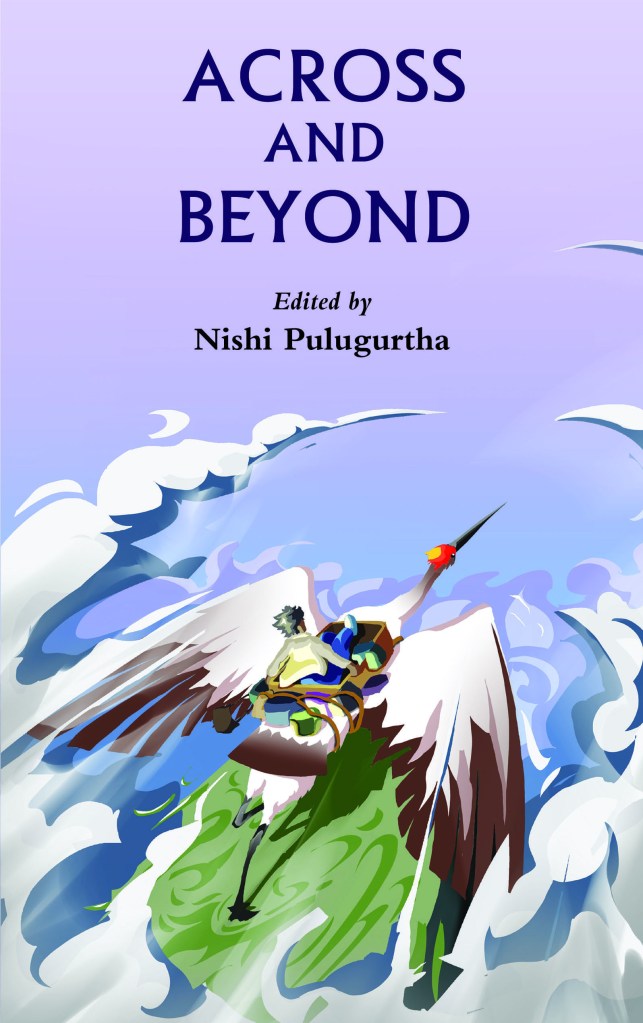
Across and Beyond, Essays on Travel

Excerpted from the Introduction of a book of travel essays  

Title: Across and Beyond, Essays on Travel

Editor: Nishi Pulugurtha,

Publisher: Avenel Press, 2020

Small little things – a place, a book, a poem, an image, an incident, an anecdote, the memory of a journey, a short walk, a sight, a monument, a photograph, a magazine article, a snippet of history,  the train whistle, a meal, a trinket, a souvenir, someone I met, help received at some point of time — these and many more things like these often remind me of journeys, of my sojourns, some taken, some still to be taken, a story that is waiting to happen or a story that has become a part of my being. Nostalgia, memory and longing are closely intertwined in my mind whenever the word travel comes to mind.

Travel is about negotiating with the known and the unknown, the familiar and the unfamiliar. It brings in ideas of negotiation, urban planning, history, architecture, space, food, memory, exile, emigration, and colonialism. As a free, voluntary, spontaneous movement, travel could be contrasted to ideas of displacement. This brings into contention as to who can and who cannot travel, an important idea in today’s world, where violence has caused forced displacement of people. There are places where one cannot travel to because of restrictions. This counters the basic idea of travel as a free, spontaneous movement. There is also the travel of certain people that is necessitated by work – for instance, journalists travelling to war ravaged zones.

*

Since time immemorial travel has excited and enticed people. Inspite of the fact that not all travel has had or has happy associations, people have written about their voyages in strange and new lands, opening new vistas, people and places. These works of travel, of experiences and adventures have enriched literature, and have worked at recreating social, cultural, political and economic history.

Travel writing is not just about travel. It is about one’s experiences, about places, people, culture. It is the subjective that matters more, or should matter more. Travel is about observations, it is about lives lived differently, in places that are so very different from what one is used to, the land, the history, the culture, the people, the food, the music, the textiles, the sights and sounds, the weather, everything that one gets to see is so very different. The personal, the subjective, becomes important, whether it is a personal narrative, or one that has a particular agenda to serve, whether it is about experiences pleasant or those unpleasant. Memory plays an important role in writing about travel experience. History, politics, geography, almost all branches of life feature prominently in works that talk about travel. 

Travel and writing on travel bring up various issues and themes. What makes people travel? How does the idea of travel work to re-present one’s lived place? How do the familiar and well-known take on a charm so very different? How do people and places seem to interact to create a sense of lived experience? What role do memory and nostalgia play in travel? Does writing about travel bring about a re-living of the whole experience? How do bad experiences while travelling colour one’s experience of the place visited? Who travels, for what purpose, and how does the purpose or nature of travel determine itineraries? Do images/ narratives/ descriptions produced by travellers influence or present constructions of identity? What is the role of travel writing in colonialism? How does travel writing work to present the little known or almost forgotten places and people? At a time when more and more women are beginning to travel alone or in women-only groups for pleasure, how do their experiences of travel add to the genre of travel narratives? Could travel writing be gendered?

The essays range from personal accounts of travel that interweave food, music, textiles and books into them, that speak of the nuances of language and words, of culture and its influence on things, of place and memory, critical essays on literary texts which have travel as an important aspect of their narrative or deal with travel as a metaphor, essays that deal with travel in the nineteenth century, to essays that talk about the fear that instinctively comes to the mind of a solo woman traveller conditioned socially to be wary of people and /or places, travel in popular culture, essays that bring together notions of identity, politics, diplomacy, geography and history, of work related travel and the experiences wrought thereof.

About the Book

An edited volume of a collection of essays by travel enthusiasts and scholars that range from personal accounts of travel that weave together food, music, textiles and books to essays that speak of the nuances of language, words and culture, of place and memory. There are essays that speak of travel in popular culture and bring together notions of identity, politics, geography and history. The volume also contains critical essays on literary texts which deal with travel, essays on travel in the nineteenth century, to essays that reveal the experiences of the solo woman traveller.

About the Editor

Nishi Pulugurtha is an academic and creative writer. Her research areas are British Romantic poetry, Indian Writing in English, diaspora literature, Shakespeare adaptations in film and she has presented papers and published in these areas extensively. She writes short stories, poems, essays, travelogues, and on Alzheimer’s Disease. Her creative writings have been published in anthologies, journals and magazines. She is the author of a monograph on Derozio (2010),  a collection of essays on travel, Out in the Open (2019), and has a volume of poems, The Real and the Unreal and Other Poems (2020). 

.

PLEASE NOTE: ARTICLES CAN ONLY BE REPRODUCED IN OTHER SITES WITH DUE ACKNOWLEDGEMENT TO BORDERLESS JOURNAL
Categories
Poetry

Three Poems

By Matthew Friday

 
 A White Feather
  
  
 A white feather fell slowly
                            down,
 as light as a tear.
 It brushed up against the window
 and for a second was held there
 by an invisible thermal, a tiny
 hand that rocked it back and forth,
  
 speaking of miracles:
 invisible air resisting,
 the illusion of gravity that shocks
 every child, then questions 
 about the bird it fell from, 
 carbon atoms boiled up and spewed 
 out in an ancient supernova
 long before there were birds
 or human observers, the trick
 of flight we have all envied,
 asking what happens 
 to all the feathers in the world?
  
 Then it continued to fall
                          down
 softly, so very softly,
 like we all fall - at different rates
 but we all fall.


 I Feel, Jazz
  
  
 Second lockdown looming.
  
 A cocktail of anxiety and wine
 swirling in my soul. No one knows.
 The future is just scat.
  
 I turn to jazz again. 
                     Miles,
 you’re there for me
 mimicking the universe
 with the chaos that can
 coalesce into occasional
 meaning and melody
        Then leap 
        apart again.
  
 When I listen to you,
 I am altered, reassured, at peace.
  
 I dance around the empty apartment,
 spilling myself in arms and heart,
 accepting what chaos creates.
   
  
 The Candle
 
 
 Start with the flame,
 that beautiful spark
 of entropy proving itself,
 compounds combusting,
 changing solid wax to molten
 rivers that mourn, cool and harden, 
 heaping new 
            forms on old, 
 re-creating but 
 reducing,
  
 all the while less and less,
 structured energy to heat loss.
  
 As your candle burns up, 
 taking years, if you are lucky
 enough to deny the 2nd Law, 
 the lengthening yellow hand waves shadows
 on a white wall, while shadows that grow confident
 as the night darkens, softly dim.
  
 All that fading, dissembling
 can be cheated 
 a while, 
 the brief
 breathe 
 of 
 a 
 poem. 

Matthew James Friday has had poems published in numerous international magazines and journals, including, recently: All the Sins (UK), The Blue Nib (Ireland), Acta Victoriana (Canada), and Into the Void (Canada). The mini-chapbooks All the Ways to Love, Waters of Oregon and The Words Unsaid were published by the Origami Poems Project (USA).

.

PLEASE NOTE: ARTICLES CAN ONLY BE REPRODUCED IN OTHER SITES WITH DUE ACKNOWLEDGEMENT TO BORDERLESS JOURNAL. 

Categories
Poetry

An Anguished Father

By Ashok Suri

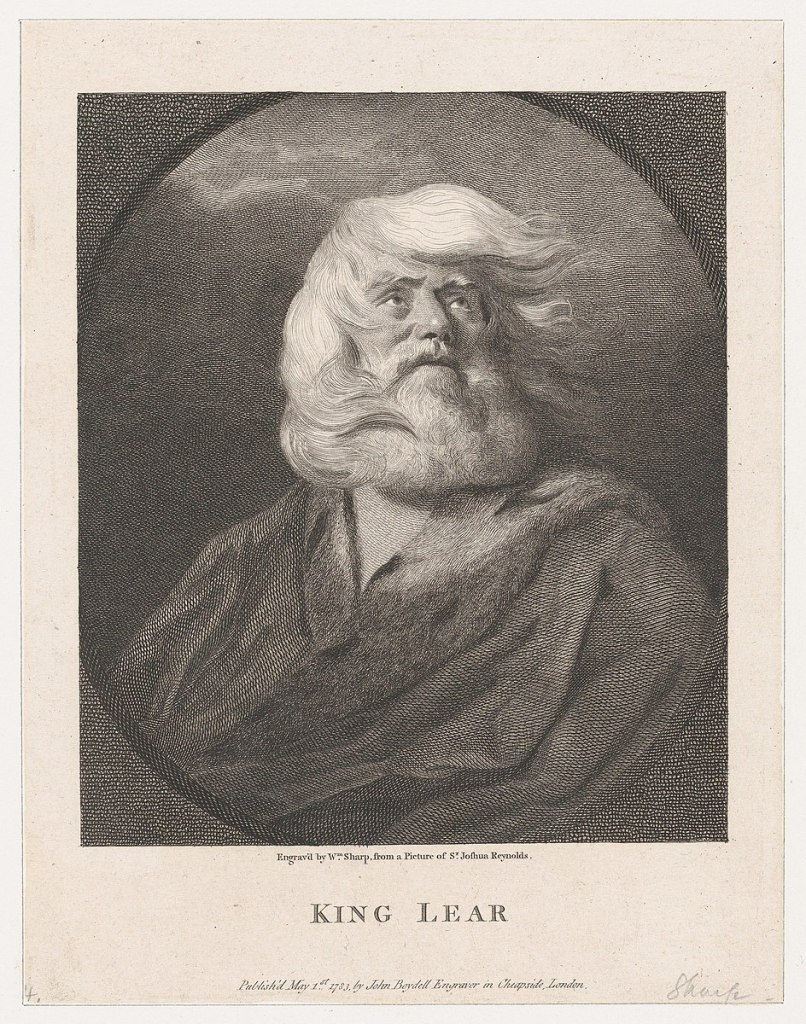
King Lear by Joshua Reynolds: Wiki


 An Anguished Father
  
  
 Happy he was 
 To be the rock,
 Out of which flowed  
 Streams of their delight.
  
 Now that age is no more on his side,
 At home, he is lavishly criticized.
 His jokes are no longer funny, 
 His talks are considered silly and despised.
  
 Slowly, he returns home,
 With his head bent down
 Pondering his own plight --
  
 No wonder,
 With thankless kids around,
 He feels eternally exiled.
  
 Perhaps what The Bard* said was right:
 “How sharper than a serpent’s tooth it is
 To have a thankless child!” 

*The Bard: William Shakespeare. The quoted lines are from King Lear

Mr. Ashok Suri retired from Revenue Service, and is settled with his family in Mumbai. He loves to read and sometimes write. He tries to convey in simple words what he wants to say.

Categories
Slices from Life

Who’s the Dummy?

By Will Nuessle


“That within you that draws breath is where the music is.” Elena Gillespie


One thing I had not counted on when I signed up to coach new fathers were the numerous and seemingly constant hoops one has to jump through to have a job, even a part-time one, in healthcare. This week’s Cavalcade of Whimsy was my assigned and nearly overdue Advanced Life Support recertification training. You know — what they used to call CPR (cardiopulmonary resuscitation).

I mean, come on, besides watching two children, running a small business and writing a novel, what else did I have going on?

With some difficulty (ever tried passing a timed multiple-choice test whilst keeping a four-year-old from dumping water over the head of his two-year-old brother?), I managed to complete the online portion of the training, so it was just the on-site, iPod led, mannikin thumping portion awaiting me.

Lucky for me — I hoped — the on-site, iPod led, mannikin thumping training room would be available for the said thumping twenty-four/seven/fifty-two.

(Huh? Twenty-four hours a day, seven days a week, fifty-two weeks a year. I know that’s not the common way to say it, but my way involves a cleaner progression; hours/days/weeks rather than hours/days/days. Plus, the other way leaves out every-four-years February 29th completely. It’s time we changed that.)

When I woke up at 2:33 this morning and gave up trying to get back to sleep at 3:33 a.m., since everybody else was zonked out, there was nothing keeping me from slipping out of the house and driving in the freezing cold to the hospital and finding the Official Thumping Room.

Come with me on the magical mannikin journey, won’t you?

Around 4:10 A.M. I woke up the iPod at the First Mannikin Station; I watched the instructional video. I started the timed session and began compressing a plastic dummy. Took me a couple of tries to figure out the iPod screen was showing me where my compressions were going wrong, but I was a smart if exhausted cookie and I got it sorted. I need an 84 to pass the test, and I keep getting 74s and 78s and 80s.

Until my last attempt at that particular station, which I did not even bother to finish, as something had gone wrong. The 3×3 square readout that told me if I was too shallow or too deep on the up-down part and too slow or too fast on the left-right part was pegged up at the top; no matter how hard or deeply I shoved my hands into that plastic chest, it said my compression technique was off-the-charts shallow.

That’s fine. It was only 4:23 A.M. in the morning; nobody else was using the room. I would just disconnect from the station I was using and move over to the another.

Unfortunately, the adult dummy at the other station could not be connected to the iPod’s Bluetooth no matter what I tried.

That was fine. It was only 4:27 A.M. in the morning; nobody else was using the room. I would just change the station again.

And lo, dear readers, did the humble Daddy Boot Camp coach and father of three finally manage to complete the first of six certification techniques at the third station after only twenty minutes of thumping effort? Justifiably proud of myself, I started the second module, with the bag and the air into the plastic dummy’s mouth.

Except that the bag-breathing readout did not seem to be functioning. Could have been an user error; eight hours’ sleep in two days did not speak well for me — but no matter what I did, no bag breathing showed up on the readout.

That’s fine. It was only 4:35 A.M. in the morning; nobody else was using the room. I would just move over to the final station, possibly said a couple of bad things under my breath.

God be praised — this mannikin had a working respiratory system. And once I figured out all the instructions and offered the life-saving breath every 5-6 seconds instead of pumping the poor guy like I was trying to inflate a bicycle tyre, I passed the second of six modules after only thirty minutes of overall effort. Basic understanding of statistical analysis told me I would be done in another ninety minutes or so.

The third adult module put the first two together in an unholy concoction; thirty compressions that needed to go in that little green square indicating they’re not too fast, slow, hard or soft and then three breaths from the bag.

The bag, the same one from the previous successful test, mind you, from which I would sometimes get a ‘nothing happened’ reading and sometimes get a ‘you just blew this guy’s lungs apart’ reading despite applying, I swear to you, exactly the same amount of pressure every single time.

I needed an 84 to pass. I had been in this room for what felt like hours. I got a 78. I adjusted my technique and tried again. 74. I watch the instructional video again. I didn’t even finish the next attempt after two ‘lung bursting’ mistakes. I took a couple of deep breaths and tried again. 80. I stepped away from the station, did a couple of laps around the tiny room, and tried again.


And…I…lost it. I cursed that lifeless ALS Certification dummy, I cursed the factory that made him and for good measure I cursed the Red Cross founder, Clara Barton.

After I got it all out of my system, I did arguably the only smart thing I could claim in the past couple of hours; I abandoned that particular module and turned over to the infant tests. Passed the compression test on Junior in my second try; had similar ‘not enough’ vs ‘kid’s head just exploded’ bag squeezing problems but managed to overcome them, and the little baby dummy lived to see another plastic day.

It was after 5 A.M. in the morning. Just that one test remained. I don’t mind saying I prayed for grace and (the appropriate amount of) strength. I only sort-of mind admitting that I actually asked the plastic ALS Certification dummy out-loud to be nice to me; promising that if he would just give me a break on this once, I would go away and leave him in peace.

And I started the blessed Compression/Ventilation Certification test once more time.


First person to tell me that B stands for ‘Barely Passing’ will get a free sample of my recertified Chest Compression skills.

I turned off the equipment and grabbed my jacket. It was only as I was leaving the Mannikin Thumping room that I realised.

The room is located in the Birthing Recovery wing with beds sporting recently delivered mothers and fathers and newborns on either side.

It wouldn’t have kept me from my angry fit, knowing that — I would’ve tried to lower the volume.

Nobody banged on the wall or called the nurses’ station at least.

Meanwhile, it was 6:38 A.M.; I would really try and get some sleep.

.

Will Nuessle is a primary caregiver (two male homo-sapiens), a small business owner, and novelist who claims he can recite the alphabet backwards in less than ten second. He blogs at thestorysofar650777992.wordpress.com or search Will Nuessle on Amazon.com; print, digital and read-by-the-author audiobooks available in a variety of flavors)

.

PLEASE NOTE: ARTICLES CAN ONLY BE REPRODUCED IN OTHER SITES WITH DUE ACKNOWLEDGEMENT TO BORDERLESS JOURNAL

Categories
Poetry

Companions

By Tom Merrill

Companions
 
Composing the flock I thought I heard
     When wonder drew me out the door,
A solitary mockingbird,
     Busily being more,
 
Absorbed in his little crowd of sounds,
     A parody of me,
Was gathering in his singleness
     Some songs for company.

First published in The HyperTexts

Poems by Tom Merrill have recently appeared in two novels as epigraphs. He is Poet in Residuum at The HyperTexts and Advisory Editor at Better Than Starbucks.

.

PLEASE NOTE: ARTICLES CAN ONLY BE REPRODUCED IN OTHER SITES WITH DUE ACKNOWLEDGEMENT TO BORDERLESS JOURNAL

Categories
Interview

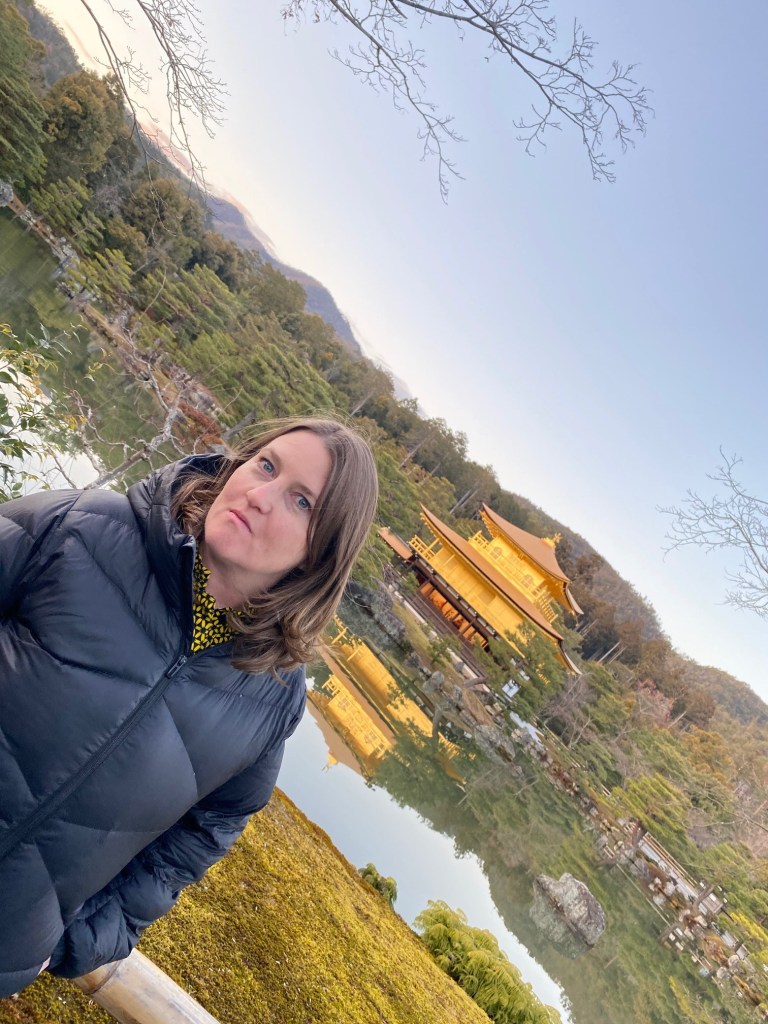
In Conversation with Suzanne Kamata

Suzanne Kamata is different. She is a mother writing for her children, who are uniquely placed in Japan – products of syncretic lore, an American mother and Japanese father. Recipient of a number of prestigious awards, Kamata represents the best in the mingling of the East and the West. Her writing flows well and is compelling — exploring areas that are often left untouched by more conventional writers.

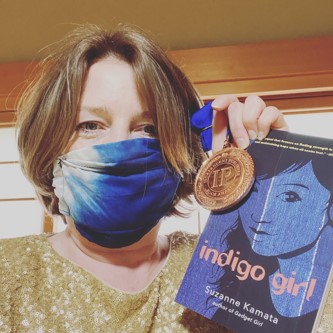
Kamata has lived in Tokushima Prefecture, Japan, for more than half of her life. She is the author or editor of 14 published books including, most recently, The Spy (Gemma Open Door, 2020), a novella for emerging readers; the middle grade novel Pop Flies, Robo-pets and Other Disasters (One Elm Books, 2020) which won an American Fiction Award and was recently released as an audiobook; and Indigo Girl (GemmaMedia, 2019), winner of an SCBWI Crystal Kite Award and named a Freeman Book Awards Honor Book, as well as one of the Best Children’s Books of 2019 by Bank Street College. Her work also appears in The Best Asian Travel Writing 2020 (Kitaab, 2020),  The APWT Drunken Boat Anthology of New Writing, What We Didn’t Expect: Personal Stories About Premature Birth ( Melville House Publishing, 2020), Inaka: Portraits of Life in Rural Japan(Camphor Press, 2020), and The Phantom Games (Excalibur Press, 2020). Her adult novel The Baseball Widow is forthcoming in October 2021 from Wyatt-Mackenzie Publishing.

When and why did you move to Japan? What made you start writing? At what age did you start writing?

I came to Japan to work as an assistant English teacher on the JET Program in 1988, shortly after I graduated from college. I’d wanted to experience living abroad for a year or two before I began my “real job,” which was not yet determined. I partly wanted to accumulate material for writing future stories and novels. I started writing as a child and never quit. I think my love for writing developed from my early love for reading.

What was your first book and how did it come about?

The first book that I published was actually The Broken Bridge: Fiction by Expatriates in Literary Japan (Stone Bridge Press, 1997) an anthology of short stories by foreigners who lived or were living in Japan. I’d read an article about editing anthologies, and I read several short stories by expatriates in Japan which I felt deserved a wider audience, so I wrote a letter to a publisher that specialised in books about Japan with the idea of a collection. Little did I know, I wasn’t the first person to come up with such an idea, but I was perhaps the most persistent, so even though I was only in my twenties and had only published a couple of short stories in obscure journals, the publisher was willing to give me a shot at it.

What influenced your writing? Books, authors, music? And how?

My writing style is probably most influenced by reading. Early on, I was strongly attracted to the minimalist style of Ann Beattie and I tried to imitate that. Some other influences would be Marguerite Duras, particularly the collage aspect of The Lover, and Lorrie Moore’s dark humor. As far as subject matter goes, I am influenced by confluences of culture, by travel, by motherhood, by my daily life, and sometimes by quirky facts that I come upon.

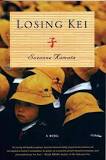
You have a book called Losing Kei, in which a child born of a mixed marriage is torn by cultural differences and the parent’s inability to adjust to each other’s heritage. It has been compared to Kramer vs Kramer. Why the comparison and do you think it is justified?

Kramer vs. Kramer is about a custody battle, so I can see why my publisher used that comparison. I don’t know of any other novels about in-court custody battles over children of international marriages published at that time, so I think it’s more or less apt. In Losing Kei, the father is granted full custody of the couple’s son, against the mother’s wishes, but the child, Kei, is mostly taken care of by his grandmother. In the movie, the Kramer father is taking care of his son by himself because his wife has deserted them, but then she tries to get her son back.

Having grown up in America, do you actually think of the Japanese culture as ‘repressive’ or ‘xenophobic’ as says author Ellis Avery, author of The Teahouse fire, while commenting on Losing Kei?

Hmm. Things are changing, a bit, but I think that there is still a lot of resistance to foreigners in Japan. During the pandemic, which is on-going as I write, for a time only Japanese nationals were allowed to leave and re-enter the country. If a permanent resident – even someone with a home, job, and family – were to leave Japan during the early part of the pandemic, they weren’t allowed back into the country. Many foreign residents have seen this as discriminatory. Laws have changed, since I first arrived, allowing more foreign workers to come to Japan, but I think a lot of people worry that an influx of people from other countries will change Japan, and not in a good way.

You often write on or for children. Is there a reason for it?

I started writing for children when my own children were small. Being biracial/bicultural and living in Japan – and disabled, in the case of my daughter — their experiences were quite unique and rarely represented in books, so I tried to write a few stories to help fill that gap.

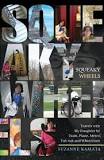
Squeaky Wheels, your immensely moving novel that won the inaugural Half the Globe Literati award (Best novel) in 2016, explores a mother’s travels with a child on a wheelchair. Can you tell us how this book came about?

Thank you so much for your kind words! Although the book won the award for “novel,’ it is actually a memoir of traveling with my daughter. When she was around twelve, she declared that she wanted to go to Paris. At the time, I was working as an adjunct, and we didn’t have a lot of money. So, I came up with the brilliant (ha ha) idea of writing a proposal for a book on traveling with my daughter, who is deaf and uses a wheelchair. It would be, I proposed, like Elizabeth Gilbert’s Eat, Pray, Love, but in different countries – France, not Italy; Japan, not Indonesia – and it would explore issues of accessibility in each country. I knew that Gilbert had gotten a huge advance to write her book. I also knew of a father of a child with autism who had gotten a million dollars to write a book about taking his son to visit a shaman in Tibet to be cured or whatever. So, I thought that I had a shot. No publisher, however, was willing to give me a contract and an advance to fund our trip, but I had a pretty decent book proposal by then, which I used to apply for a grant. I was extremely fortunate to be awarded a generous grant by the Sustainable Arts Foundation. We went to Paris, and I wrote the book.

Your last novel was Indigo Girl. The Kirkus Review said it was “a lovely sequel that focuses on finding strength in one’s self and maintaining hope when all seems lost.” It was a sequel to Gadget Girl. Tell us a bit about the two books.

A lot of people think that Gadget Girl, the story of the fourteen-year-old daughter of an American mother and Japanese father who has cerebral palsy, is based on my daughter’s actual experiences, but that’s not really true. I started writing the book when my daughter was quite small. I wanted to write a book that she might be able to enjoy as a teen. The main character, Aiko, is an aspiring manga artist, who has grown up as her sculptor mother’s muse. I wrote frequently about my children when they were small, so I imagined what my children might feel about those stories once they hit adolescence. In the first book, Gadget Girl, Aiko travels to Paris with her single mother. In the follow-up, Indigo Girl, which is a stand-alone sequel, Aiko visits rural Japan in the aftermath of the March 11, 2011 triple disaster (earthquake, tsunami, and nuclear meltdown) to finally connect with her biological father, who is an indigo farmer.

How many books have you authored? Are they all centred around young adults or children? Which one did you enjoy writing the most and why?

I have authored 12 including a picture book, a couple of titles for emergent readers, a short story collection, a memoir, three novels for adults (one forthcoming) and four novels for younger readers, the most recent of which is Pop Flies, Robo-pets and Other Disasters (One Elm Books, 2020). The first two novels that I wrote (but not the first two that I published) were The Mermaids of Lake Michigan (Wyatt-Mackenzie Publishing, 2017) and Screaming Divas (Simon Pulse, 2014), which were both initially intended to be adult novels, but which concern young adults. When I wrote those books, I was in my late twenties/early thirties, when I felt that I didn’t have enough distance or perspective to write about my adult experiences. And then later, I intentionally wrote for children and young adults. It’s really hard to say which one I enjoyed writing the most, but Squeaky Wheels was fun for me. I loved traveling with my daughter, and I loved reliving those experiences when I was writing and revising the book. And writing nonfiction is a lot easier than writing fiction.

You teach at Naruto University of Education. What is it like to teach students who have been brought up in an entirely different culture from you? How does this experience translate to your own writing?

Japanese students tend to be a bit conservative, so I am always striving to open their minds, and to help them see that being receptive to other cultures and travel can be mind-blowing as it has been for me. I also learn a lot from them, because their upbringing has been so different from mine. One very concrete way in which teaching has affected my writing is that I have started to write stories for emergent readers. I realise that a lot of my books are too difficult for the average Japanese reader of English, but many students are interested in reading my writing. So far, I have written two hi/lo books for the Gemma Open Door series. These books are short, and the level of language is a bit easier.

How has the pandemic affected Japan, you and your work?

Japan hasn’t suffered as greatly as many other nations, perhaps because it is a mask-wearing culture, and also because as soon as news of a break-out aboard the cruise ship the Diamond Princess appeared, people started being cautions. In Tokushima, where I live, there have been fewer than 400 documented cases since the start of the pandemic. Since I haven’t had to travel for conferences, and I have been teaching online, things have been pretty calm and peaceful. Surprisingly, I have written quite a bit. I actually started a new novel!

What are your future plans? Do you have a new novel/books in the offing?

I hope to continue writing and publishing! I have a couple of adult novels – a historical novel, and one set slightly in the future – in progress, as well as a few picture book manuscripts that I have been tinkering with. In October of this year, my adult novel The Baseball Widow, will be published by Wyatt-Mackenzie. I started writing it shortly after I finished Losing Kei, but I abandoned it a few times. Anyway, I am happy to announce that it will finally make it into print! It’s a family drama about an international/interracial marriage in crisis told from multiple points of view. I hope you will enjoy it!

.

This has been an online interview conducted by Mitali Chakravarty.

.

PLEASE NOTE: ARTICLES CAN ONLY BE REPRODUCED IN OTHER SITES WITH DUE ACKNOWLEDGEMENT TO BORDERLESS JOURNAL
Categories
Stories

The Dark House

A Balochi folktale translated by Fazal Baloch

Once there lived a king who ruled a certain land. He had a son, whose mother passed away during his childhood. The prince was so handsome that no boy or girl in the land surpassed him in good looks. Time passed and the prince became a young man. The king looked forward to his wedding with wedding songs, drumbeats and dance. He gave a picture of the prince to one of his most trusted slaves and assigned him the task of finding  an equally beautiful girl for his son in the neighbouring kingdoms.

The slave took the picture and set out on his mission. After travelling for several days and nights, he finally reached another land and spent the night at the hut of an old woman. Next morning, he resumed his journey and went from door to door till at last he found a beautiful girl in the house of a poor man. The beauty of the girl stunned the slave. When he regained his senses, he pulled out the picture of the prince and compared the two — once gazing at the girl and then at the picture. He believed the girl was worthy of being the prince’s bride.

At last, he turned to the owner of the house and addressed him: “I’m the slave of the king so-and-so. He has given me the task of finding a bride for the prince. I have been wandering from city to city and house to house looking for a beautiful girl. The beauty of your daughter surpassed that of all other girls I’ve seen so far.”

He presented the prince’s photograph to the girl’s father who after looking at the picture said: “How can a poor man like me dare to compare himself to a rich prince? I think you are making fun of me.”

The slave turned to him and said: “I swear by the honour of your chaste daughter that whatever I told you is true. I believe your daughter is worthy of being my master’s bride.” He then asked him for a picture of his daughter and urged him to accept the proposal.

The man took the prince’s picture from the slave and gave him one of his daughter in return. Early in the morning, the slave took leave of him and set out for his own home. After having travelled for half-a-day, he reached a small hamlet and went into a house to rest. It was the house of a maidservant. She welcomed him. After exchanging greetings with him, she inquired: “Where have you been and where are you heading?”

The slave confided  the details and the purpose of his journey. In the middle of the conversation the maid expressed her desire to see the photograph of the prince’s would-be-fiancé. Actually, the maid was the paramour of the prince. But the slave did not know that. The moment her eyes fell on the photograph she went almost numb with trepidation. She had never seen such a beautiful girl in her entire life. She feared the prince would discontinue his attentions to her after he tied the knot with the pretty girl. The prince would most likely not spare her a single glance.

A myriad of thoughts flooded her mind. Hideously envious of the girl, she gave the photograph back to the slave and excused herself and strolled out of the door. Sometimes later, when she returned, she found the slave fast asleep. She surreptitiously took out the photograph from his pocket and cunningly left a scratch mark on the picture – on one of the eyes of the beauty — and slipped it back into his pocket. When the slave woke up, he took leave of the woman and resumed his journey.

Late in the evening he finally reached his destination and gave an account of his journey before the king, presenting him the photograph of the girl as well.

When the prince returned from a hunting trip the king told him that they had found for him a beautiful girl and within a few days he would be married to her. The prince happily returned to his bedroom. Dreams and desires blossomed in his heart. But the moment he took out the picture from his pocket, his glowing face almost turned pale. The girl was exceedingly gorgeous but alas she looked blind in one eye. Anyhow, the prince submitted himself to his father’s will. Soon  drum beats, the sounds of shehnais and wedding songs reverberated in all corners of the land. Amidst music and dancing, the prince was conducted to the nuptial chamber. However, he was not happy with the marriage and thought it to be a burden unleashed by his father on him. On the very first night he ordered the maidservants thus: “Lay my bed away from that of the bride’s and put out all the lamps and lights.”

 The lamps were blown out and the prince and the bride slept separately in the dark house. It became the routine with the prince. He spent the day outside hunting and, at night, he slept away from his wife in the darkness.

The girl was worried about the strange behaviour of her husband. She was desperate to please, but she couldn’t ask him anything. She was worried. She thought something might be ailing the prince and he didn’t want to disclose his illness. And that was the reason for his sleeping separately and blowing out the lamps. She also wondered if she had made a mistake or the slave had told him something against her.

People began to whisper and gossip about the king’s daughter-in-law for not giving the prince an offspring. Sick of people’s gossip, the young girl began to devise a plan. Secretly, she wove winnowing baskets and sold them door to door. One day she happened to go to the house of the maidservant who was responsible for the agony she was going through. She was shocked to see her husband sitting with the maidservant. The maidservant was almost stunned. The prince had his eyes fixed on the beautiful lady. He took pity on her as he thought poverty had forced her to sell straw-baskets. He couldn’t help but call out to her: “O basket-seller! Come here.” She strolled forward.

He asked her: “Do you live in this city?” The girl replied in affirmative.

The prince asked her again: “Where do you live by the way”?

“I live in a dark house somewhere in this city,” replied the girl.

“Dark house?” The prince slipped into deep thought. A moment later he turned to the girl and said: “Anyhow, I’ve to discuss something with you. Where shall you meet me?”

“I shall wait for you by the riverbank tomorrow,” the girl responded.

Next day, she asked her maidservant to accompany her to the river to wash her hair. She picked up the mirror, hair oil and soap, and, together with her maidservant, went to the river bank. Through the strands of her open hair covering her face, she saw the prince ride up on his horse. She turned to the maidservant and said, “Give me the bottle of hair-oil.”

The next moment, she broke the bottle and pierced her hand with a shard. She began to cry. In the meantime, the prince went to her. When he saw blood dripping from girl’s hand, without any hesitation he tore his chador and dressed her wound with the strip of cloth.

The girl turned to the prince and regretted, “Today our meeting was spoiled by this unexpected incident”.

The prince said, “We shall meet sometimes in the future.” The prince rode back to the palace. The girl and her maidservant took a different route back.

At night, as usual the prince blew out the lamps and slept on his bed. When his wife was sure he was fast asleep, she dragged her bed near to her husband’s. The prince turned on his bed and his hand touched his wife’s wounded hand. The girl cried out aloud:

“O God! Ah! My wounded hand. You touched my wounded hand.”

He asked him what happened to her hand. The girl replied: “Didn’t the shard pierce it on the riverside?”

“A shard?” The prince was taken aback.

“Yes, it did,” replied the girl.

The flabbergasted prince got up. He was surprised to see his wife’s bed placed by his own. He asked his wife: “How do you know a girl’s hand was pierced by a shard on the riverside? She was someone else”.

The girl said, “She was none but me.”

The prince could not believe his ears and said, “You are telling a lie.”

The girl said, “If you don’t believe, turn on the lights and look for yourself.”

He asked all her maidservants to go away that very instant. He turned on the lights. The moment he saw his beautiful wife he was mesmerised. He cursed himself in his heart. He pulled her into his embrace and apologised, “Forgive me my beloved! I was mistaken. Rather I’ve been betrayed.  I… when I saw your photograph, I noticed a blemish in your eye… I didn’t know…”

In the morning, the slave was summoned to the court. He told his entire story. The maidservant with whom the slave had stayed that night was summoned to court.  The king warned her with dire consequence if she did not tell the truth. Finally, she was forced to admit her wrongdoing. And the king ordered the maidservant to be hanged and adjourned his court.

(This folktale retold by Rahman Murad, originally appeared in Quarterly Drad Gwadar, Dec 2001-Jan 2002).

Fazal Baloch is a Balochi writer and translator. He has translated several Balochi poems and short stories into English. His translations have been featured in Pakistani Literature published by Pakistan Academy of Letters in 2017 and in India.

.

PLEASE NOTE: ARTICLES CAN ONLY BE REPRODUCED IN OTHER SITES WITH DUE ACKNOWLEDGEMENT TO BORDERLESS JOURNAL.

Categories
Poetry

Poetry that Makes You Smile

By Rhys Hughes


 The Pedlar on the Roof
  
  
 On the roof
 across the way
 a man is perched
 like a hawk
 hawking his wares
 without any care
 for his safety.
 Where does he think
 his customers
 will come from?
  
 He is selling bicycles
 high up there
 and daring those
 below to try them out
 with a shout
 that is like the squeal
 of rusty brakes.
 “These bikes are real,
 not fakes!”
  
 He has won me over
 with his words
 and over I cross
 from my roof to his
 on the tightrope
 of the washing line.
  
 The loss of
 coins jangling
 in my pocket
 and notes folded
 in my wallet
 is no big deal
 when in exchange
 I receive
 a sturdy frame
 on two wheels
 that I can ride.
  
 The transaction is made
 and back along
 the perilous line
 I now promenade
 with the bicycle
 on my shoulder.
 If I was bolder I might
 trundle across
 like a circus acrobat
 but the risk is too great.
  
 Back on my roof
 I mount the saddle
 and set off on a journey
 entirely in tight
 circles: how divine!
 I ring my bell
 to express my delight
 to the man
 who sells these things.
  
 He is a pedlar on his roof.
 I am a pedaller on mine.
  
  
 Robotson Crusoe
  
 There was a robot named Crusoe
 who belonged to the crew of a cruise ship.
 He scrubbed down the decks
 and cleaned all the cabins
 until he was unfortunately shipwrecked.
 A dreadful storm bashed a hole
 in the hull and into the sea he was hurled
 but because he mostly had air
 in his head he floated quite well for several
 days until he washed up on an island.
 A totally deserted island.
  
 Robotson Crusoe was lonely and sad
 but decided to do the best that he could
 like a dutiful mechanical lad.
 He made some trousers and also a shirt
 from the biggest leaves on the trees
 and though for his dinner
 he usually ate bolts (rusty bolts)
 he made do with nuts (coconuts)
 and grew somewhat thinner,
 and though he liked hotels he lived in a hut.
 He was onto a winner but…
  
 One morning he found a footprint
 in the sand that belonged not to himself.
 Had someone else been stranded?
 He searched the island and found an android
 who called himself Diode Defoe.
 The stranger explained, “I fell from a plane
 while I was cleaning the wings.
 I fumbled and tumbled and plunged through
 the clouds and after landing I shouted
 aloud but no one came to my aid
 but I feel fine because I’m very well made.”
  
 Robotson Crusoe bade him welcome
 and they soon became best friends,
 two cybernetic maroons mentally
 in tune, for there was plenty of room
 on the island, that totally and utterly
 and not very subtly remote and pristine
 island. And boom! the waves crashed
 down on the beach and they surfed
 the breakers though it might seem rash
 for metal beings to sport in the brine,
 and in the evenings they drank coconut
 oil, which to robots is just like wine.
  
 The things they did were jolly good fun,
 they slid down the dunes and basked
 in the sun and played bongo drums on
 driftwood logs and blew mellow tunes
 on seashell flutes. How cute they looked
 in banana leaf suits but the point is moot.
 They went to the cinema arm in arm
 to watch the manatees play in the sea
 and that was their Saturday matinee.
 Beach cricket too and oh! what a view
 was had when they climbed the trees.
  
 “Let’s build a canoe,” suggested Crusoe
 on a day when the sea was all smooth,
 “and paddle away and pray that we may
 arrive on an inhabited shore.” But Diode
 Defoe shook his head and roared, “No!
 I beg you, dear Robo, to forget that idea.
 I love it here and wish to remain. Don’t
 you feel the same? I hope you will agree
 to stay. Finally free and very happy, our
 troubles all in the past, never again will
 we slave on behalf of human depravity.”
  
 Oh, his words rang true and old Crusoe
 thought so too, after a little pondering.
 “Then all our wandering is at an end
 and this is our home,” he said at last.
 They embraced, danced and pranced,
 as you might do too (if they were you)
 and to celebrate the momentous decision
 they thought it better to take a siesta.
 Robotson Crusoe and Diode Defoe are
 dozing now, swinging not fast but slow
 on a hammock with nowhere to go… 


Rhys Hughes has lived in many countries. He graduated as an engineer but currently works as a tutor of mathematics. Since his first book was published in 1995 he has had fifty other books published and his work has been translated into ten languages.

.

PLEASE NOTE: ARTICLES CAN ONLY BE REPRODUCED IN OTHER SITES WITH DUE ACKNOWLEDGEMENT TO BORDERLESS JOURNAL.