Categories
Ghumi Stories

Madam D’Souza

Nabanita Sengupta explores taboos around teenage values in a compelling read

Mrs. D’Souza taught at the school. A thorough city bred woman, she had come to this place with her husband, who was in charge of the fire safety and security department of the factory at Ghumi.

The tiny township fascinated her. The greenery all around, the British style bungalow with sloping roof and high ceiling, the small garden patch in front and a bigger courtyard — all these mellowed her heart. She was drawn to the quietness of the place that stirred itself to make some noise only during certain times of the day — such as at the beginning and the end of school time, the afternoons when children came out to play and at the start of the various shifts of the factory, the main lifeline of the little town, when people filed on the single straight road connecting their estate to their workplace.

Contrarily, all her life she had lived among various noises born out of movement. The windows of their apartment in Kolkata opened into one of the busiest streets of the city — the street that did not sleep at any point of the day. Honks, whistles, shouts, sounds of passing vehicles — her ears had forgotten the music of quietude. Now, surrounded by silence, she felt rejuvenated; and was seized by a sudden desire for action. Perhaps, the energy that an urban existence had sucked out of her, now remained untouched within her body, and that in turn, stirred in her a desire to do something; to find an outlet for the unused life force that had accumulated within her.

She loved to teach, a passion from her younger days, which till then had only found sporadic manifestations in her career as a wife of an engineer with a risk management specialisation. It was inevitable that within this small township, she and the school would find a symbiotic requirement for each other. Her husband was either in office or buried nose deep in files at home for most part of the day, The children were grown up and out of the nest. Mrs. D’Souza had time on her hands.

School kids, especially those at the threshold of teens fascinated her. She was intrigued by the hormone induced unruliness and iconoclasm that characterised this difficult to handle age-group. Adolescence, for her was both intriguing and challenging. And now, well settled into the post-middle-aged complacency of a woman who has led a more or less satisfying life, she thought she could explore this particularly interesting period of growth towards adulthood.

She often remembered her own children at this stage — the daughter and the son — both suddenly turned into you-don’t-tell-me-what-to-do types! The memories of their tantrums and obstinacy at any sign of authority still made her smile. Now, both of them were in their late twenties. Separated by a couple of years, the siblings had regained their composure. It was as if with the shedding of the teens another new personalities emerged from their being — personalities that made them more understanding, patient and caring and with the swoosh of a magic wand that impetuous, querulous nature had vanished!

But she had enjoyed their teens — their energetic righteousness, the desire to change the world, the longing for some kind of positive action — all these would fill her with a sense of happiness and pride. She understood those as the blooming of that courage and integrity which would remain lifelong with her children, safeguarding them from turning towards evil. Their itchiness and impatience that often bordered on rudeness, were the birth pangs of something positive within their soul — the birth pangs of the consciousness that made them recognise that this world was not the rose tinted one they had experienced in their childhood. It was a recognition of the world’s true colours, the colours of love mixed with that of hatred, peace with war, kindness with cruelty and all the greys between the binaries.  She was eager to enjoy those doldrums of that age once again

Students of ninth grade knew that they were going to be assigned a new English teacher. Anticipation ran high in the class. And speculations too. When Mrs D’Souza stepped into the class, she could feel the eager eyes taking in every bit of her handloom cotton sari clad, no-makeup, no-accessories getup. She felt as though the class had been wound up by some invisible key on a high alert position which would require a gradual attempt to move towards a more relaxed and open mindset.

Raya still remembered the day when Madam D’Souza entered their class for the first time. Initially, she did not seem impressive. In fact, the commonplaceness had put her and her friends off quite a bit. When anticipating something new, we often colour our expectations with the exceptional, forgetting that the new person or object might, in all probabilities, resemble the old or the common. But before the class ended, almost all of her classmates, including herself, had fallen for the unassuming charm and openness of Mrs. D’Souza.

Very easily the class was all admiration for their new teacher. They enjoyed her classes which were different from just textbook explorations. Drama, music, recitation, storytelling — her tools made the class animated and eager to learn. The students accepted her with an openness not very common among this age group. So, it was quite obvious that Raya would turn to her when adolescent issues of a co-educational institution started making their presence felt.

Returning from a lunch break, one day Raya reached her seat to find a small piece of paper surreptitiously kept under her pencil box on her desk. Three innocuous words — ‘I love you’ written on it.

Raya’s adolescent sense of propriety was considerably outraged, more so because the discovery was made in presence of two of her friends. All determined to act the ‘good’ girl, Raya decided that the correct course of action would be to complain to the teacher, who could then establish the identity of the offender by examining the handwriting and punishing him. Of course, it must be one of the boys in her class, who else would have such impunity! She was reminded of a similar incident that had taken place in another class quite some time back. There too was a similar declaration of the unruly teenage heart and it was punished with a call to the parents. It was the age when disgrace hurt more than physical pain. Raya wished for a similar retribution here too.

She rushed out of her class and ran towards the teacher’s room. The next class was with Mrs. D’Souza and Raya wanted to meet her before she entered their class so that she could complain to her in detail. Mrs. D’Souza listened to her with full attention but did not say anything. Raya had thought that her sense of outraged modesty would sufficiently work up Mrs D’Souza and was a bit disheartened by her composure. They entered the class together and Mrs D’Souza took the class attendance with a completely unperturbed attitude and then proceeded with their studies.

Raya, that day, could hardly keep her mind on the lesson. Conflicting emotions ran high. On one hand, she was excited about the pending talk, which she was sure would take place after the class, on the other hand she was starting to harbour misgivings about Madam D’Souza’s attitude towards the issue.

For Mrs. D’Souza too, it was a crucial battle. She knew that co-ed set up had its own challenges, yet she felt it to be the best microcosmic representation of the outside world. Still new to the school, she knew it was her one wild card chance to reach out to them. And matters of hearts were always the trickiest. She did not want to attach undue significance to the episode, yet she needed to treat it with consideration, she knew how prickly these new teens were in such matters.

The best course, she thought, would be to speak to them in their own language. One of her personal and lifelong crusades was, in her own words “against the inadvertent insensitive behaviour of anxious parents to their teenage children for the cause of moral and social uprightness”. She had seen two generations of teens — her own and her children’s; and, blessed with a keen perception, she remembered how the mildest of reprimands often resulted in the most volatile reactions.

It was towards the end of the period that Mrs D’Souza put down the book from which she was teaching, looked at the entire class, smiled slightly and said: “I want you all to concentrate on my words. As you are growing up, you will develop feelings that you will find are quite unprecedented and overwhelming. But those are natural, nothing to be afraid or ashamed of. It requires a lot of courage to let a person know that he or she is appreciated. If you like someone, please do not send nameless chits, rather have the courage to strike up a positive friendship with the person. If friendship succeeds, there will be time for more, else the liking is not worth anything.”

She paused, allowing her words to sink in.

Then, in a very casual, nonchalant way, looking directly at Raya, she added, “By the way, I personally, would not have minded having a secret admirer. After all we all want to be appreciated, isn’t it?”

Raya saw her teacher’s twinkling, mischievous eyes look in her direction.

The whole class gasped before they could grasp her meaning. No one had told them before that matters pertaining to the teenage heart could have some kind of legitimacy or acceptability. They had been taught just the contrary — that such things are unspoken, hushed matters, and to declare it was sinful. For the first time in their lives, they found an adult acknowledge their heart burns and even take it seriously. These words showed them that feelings need not always be tabooed and repressed, that one need not be outraged by every trivial issue. The most important lesson was that friendship should be the stepping stone towards other relationships.

With these few words, Mrs D’Souza had won all their hearts.

.

Nabanita Sengupta is an Assistant Professor of English by profession and creative writer by passion. Translation remains one of her chief areas of work and interest. Her works can be read in various journals, anthologies and e-zines.

.

PLEASE NOTE: ARTICLES CAN ONLY BE REPRODUCED IN OTHER SITES WITH DUE ACKNOWLEDGEMENT TO BORDERLESS JOURNAL

Categories
Poetry

The Rain-meditation


By Sunil Sharma

 The clouds grey and pregnant
 With condensed water,
 Bend down and
 Kiss the parched earth,
 In a gossamer embrace:
 And,
 At the same time,
 Sweep past,
 Caressing your oval face
 With their light fluffy cotton hands,
 Leaving your beautiful face wet
 with the spray of the passing shower
 Thrilled to the core 
 Of your sacred being,
 Your long eyes closed, 
 Thin curved lips, pouting a bit, 
 Revealing a white set of gleaming teeth,
 like the swaying silver birches,
  
 Singing a melody not heard so far
 By any mortal on this earth.
  
 The distended large clouds
 Are
 Now --
 Spread out like an unfurled black giant umbrella,
 Dripping water divine,
 On the people huddled in leaky corners
 on this Mumbai street,
 And, other creatures of God,
  
 Reviving the inner child
 who loved the racing monsoons, 
 From his tiny barred windows of a
 Deserted, dim, shabby home
 Of a tenant farmer,
 In a green rich meadow
 Of a now- forgotten ancestral land
 Left behind;
 Shrinking -- receding fast--
 Like the old river weighed down,
 Breathless, under the debris
 Of a city, of late,
 Indifferent to a dying river God.


.

Sunil Sharma is the editor of SETU. He is a senior academic, critic, literary editor and author with 21 published books, seven collections of poetry, three of short fiction, one novel, a critical study of the novel, and, eight joint anthologies on prose, poetry and criticism, and, one joint poetry collection. 

.

PLEASE NOTE: ARTICLES CAN ONLY BE REPRODUCED IN OTHER SITES WITH DUE ACKNOWLEDGEMENT TO BORDERLESS JOURNAL
Categories
Index

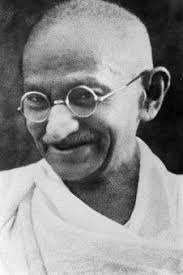
Remembering Gandhi …

A man lives as long as does his ideology

Poetry

Click on the names of the poets to read

Dr Piku Chowdhury, Milan MondalNavneet K MaunDr Laksmisree BanerjeeSoumik DeAminath Neena

Musings

Bapu Walked Here

A thoughtful walk down the memory lane with the shades of Bapu influencing the author, Lina Krishnan. Click here to read.

Travels with Gandhi

Dr. Nishi Pulugurtha meanders through the passages of Aga Khan Palace in Pune, where Gandhi had been imprisoned, and wonders… Click here to read.

Story

When Bapu met MLK Jr…

Santosh Bakaya takes us on a journey among clouds and chirruping birds. Click here to read.

Essays

Gandhi — an enduring vision — and those spectacles

 Keith Lyons applauds the Mahatma from New Zealand. Click here to read.

‘If humanity is to progress, Gandhi is inescapable’

Rakhi Dalal says it all through this quotation of Martin Luther King Jr. Click here to read.

Interview

Santosh Bakaya, an academic and writer who has written a book on Gandhi in verse, speaks of Gandhi and Gandhian beliefs. Click here to read.

Review

Gandhi & Aesthetics : Edited by Tridip Suhrud, the nine essays are a fitting tribute to the inventive beauty of Gandhiji and its wide-ranging applicability in present-day society… says reviewer Bhaskar Parichha. Click here to read.

Categories
Contents

Borderless, January 2021

Interviews

A conversation with Devaki Jain, a Padma Bhushan recipient, an author at eighty eight, an economist who found inclusion for women and a strong human who lives her life on her own terms. Click here to read

A conversation with Dr Mossarrap Hossain Khan, the founding editor of Cafe Dissensus. Click here to read.

Stories

The Literary Fictionist

Near the River Chenab and Under The trees

Sunil Sharma in a poignant telling takes us on a journey to the banks of a river where life, love and death sheathed in terrorism cumulate to a peak. Click here to read.

Magic Afloat in the Air

A short story by Gauri Mishra that takes us into the crowded lanes of Paharganj, New Delhi, on an adventure with surprise tilt. Click here to read.

Ghumi Stories: The New Year’s Gift

Nabanita Sengupta explores how rumours can be quietened with an unusual plot. Click here to read

Flash fiction: Déjà vu

Aminath Neena from Maldives explores rebirth despite religious prejudices. Click here to read.

Translations

Tagore Stories in Translation: Bolai: A story about Man and Nature written in Bengali by Rabindranath Tagore in 1928, translated by Chaitali Sengupta. Click here to read.

Flash Fiction: Tears of a Revered Mother A poignant mood driven piece from Balochistan. Written in Balochi by Mereen Nizar, translated by  Ali Jan Maqsood. Click here to read.

A Request To A Son is a Nepali poem by Swapnil Smriti, translated by Pranika Koyu. Click here to read.

Poetry

Click on the names to read the poems

Tom Merrill, Gauri Mishra, Soma Debray, Sanket Mhatre, Aditya Shankar, Michael Burch, Maithreyi Karnoor, Sabreen Ahmed, Ihlwha Choi

Humour: Vatslala Radhakeesoon, Rhys Hughes, Tom Merrill

Musings

Musings of a Copywriter

In Private Lessons, Devraj Singh Kalsi takes us through a hilarious episode of elopement with surprising conclusions. Click here to read.

Hope comes in strange shapes

Keith Lyons from New Zealand looks back at challenges of 2020, and expectation that lessons learned will translate into action in 2021. Click here to read.

In the Winter Sun

Written specially by Nishi Pulugurtha keeping the Indian Republic Day in mind, what can we anticipate for a year with pandemic protocols? Click here to read.

From the Pages of a Soldier’s Diary…

Mike Smith takes you on a journey through the pages of a colonial diary and muses on choices he has made. Click here to read

No Longer Smug in South Australia

Meredith Stephens gives a first person account of how the pandemic free South Australia is faring balancing fears. Click here to read.

Pandemic Tales: The Diary of a Hypochondriac

 Mayuresh V. Belsare takes us on a hilarious journey through his battle with the pandemic with thanks to divine intervention. Click here to read.

Essays

Type, Stereo, Stereotype

Devraj Singh Kalsi gives a unique perspective on the Farmer’s Protests. Click here to read.

The Worshipper of Mother Earth: A Nostalgic journey

Ratnottama Sengupta journeys to show how past and present are interlinked in art and pays tribute to a polyglot, Maniklal Chatterjee. Click here to read.

The Syncretic Lore of Guru Nanak’s Legacy

While skirmishes continue to line the borders of India, Sameer Arshad Khatlani, author of The Other Side of the Divide, explores the deeply embedded syncretic elements in the heritage left behind by the founder of Sikhism. Part of his legacy still lives on in Pakistan. Click here to read.

Neither Tranquil Mandarins, Nor Yellow Devils

While the impasse over the McMahon Line continues and the outgoing POTUS rages over not only the election results but also the Yellow Peril, John Drew gives us an interesting perspective on the perception of both these giants, US & China. Click here to read.

Book Excerpt

The Brass Notebook by Devaki Jain, an autobiography. Click here to read.

Book Reviews

Gone Away by Dom Moraes, reviewed by Bhaskar Parichha. Click here to read.

No Strings Attached: Writings on Odisha by Bhaskar Parichha, reviewed by Bijaya Kumar Mohanty. Click here to read.

Waiting for the Dust to Settle by Veio Pou, a novel dealing with the conflict in Northeastern India, reviewed by Rakhi dalal. Click here to read.

Sara’s Selections

January 2021

A potpourri of hope for the new year by young writers from Bookosmia. Click here to read.

Editorial

Liberté, Égalité, Fraternité — Has democracy failed? Click here to read

Categories
Editorial

Liberté, Égalité, Fraternité

“All the world’s a stage, and all the men and women merely players. They have their exits and their entrances; And one man in his time plays many parts.”

— William Shakespeare, As You Like It

The theatrics in the US Capitol at the outset of 2021 might make us think bleakly, but they have exposed the flaws of a system that obviously needs changes. Does this mean democracy has failed? There have always been challenges, sometimes of colonialism, sometimes, of wars. But as long as mankind survives, they will have a voice and the voice will always sound out against injustice.

The uneducated exist in all systems and mob attack is not an unknown phenomenon. Education along with the ability to examine and correct one’s biases could perhaps bridge the gaps. Think of the French Revolution. How many were guillotined? And some among the beheaded were innocent. Yet these killers also were part of a movement that spoke of liberty, equality and fraternity. We grew up believing in these tenets. As such, these are good tenets.

I see the January sixth attack as an attempt to disregard and humiliate an institution. Mankind is resilient enough to withstand such an assault. One has to remember that there are miscreants in every system and society and that is why we have laws. It is time for a number of exits; of the current man in the chair of the POTUS; of COVID-19 via the vaccines or herd immunity, have it your way; of dark clouds that have gathered over positive actions to heal our planet and make it a wonderful home for our species. The darkest hours are said to be before the advent of dawn. Things can only get better with a soupçon of love, kindness and generosity. It is again a time to hope, the theme of Borderless Journal in this edition.

We have hope pronouncedly from our young people’s section hosted by Nidhi Mishra and Archana Mohan from Bookosmia and also in our poetry. Michael Burch’s poetry resounds with hope. The voices of children from Gaza — pleading with the hope of redemption from the darker events in their lives — much as we are doing in the current crisis, looking for mercy and hope in a pandemic-worn world. We have poetry by Sanket Mhatre on hope.

Vatsala Radhakeesoon has given us a brilliant piece in ‘Queenie the Sloth‘ — check it out. Rhys Hughes has taken on mythology and given it a spin that not just makes us laugh but also think. Aditya Shankar has given us a poignant poem concerning the Human Immortality Project(HIP), a rich man’s dream of being above death, which has been under fire in Yuval Noah Harari’s Homo Deus too. Our poetry section still has a very colourful borderless veneer with poets contributing from multiple countries, including Korea. I love the narratives that Ilhwa Choi weaves into his poetry.

The reason I am pausing on poetry is also to inform readers that we have decided to pull up our socks and be very selective about the poems we publish. Michael Burch is on the panel helping select poetry and he is truly a connoisseur as you can see from the collection in his blog, The Hyper Texts. Though Sunil Sharma has poetry there, we have his stories here. He has given us a wonderful story by the banks of the river Chenab — a story of hope, love and terror. The piece de resistance, I would say, among our stories is one by Tagore — a translation of ‘Bolai’ by Chaitali Sengupta. A story that talks trees and children – a powerful one that moves with its vibrancy, captured very well by the translator.

We have some interesting essays including one by our humourist Devraj Singh Kalsi, in which he explores the ongoing protest of Sikh farmers with humour and another by John Drew on China, the West and Bangladesh. Thanks to Sohana Manzoor for helping us access it. Another one I particularly liked is by Sameer Arshad Khatlani, author of The Other Side of the Divide, on the syncretic lore of India and Pakistan. It is a perfect essay towards the upcoming celebration of the anniversary of the declaration of democracy by India on 26th January 1950 – when it had done away with all individual dynastic regimes. And yet one wonders if that was or is a reality?

Nishi Pulugurtha has given us a musing on how the pandemic affects children and how it might affect this year’s celebrations of the Indian Republic Day. We have an ex-colonial’s son Mike Smith from UK reflecting on the regime prior to the Partition, the rule that tickled the divisive mindset of the Indian subcontinent, through the pages of his father’s diary. This mindset has also been dwelt on by Maithreyi Karnoor in her poetry. And we have our dollop of humour in Musings of the Copywriter with a fun filled narrative of an elopement. We have a whiff of hope from the Southern hemisphere with writings of Keith Lyons from New Zealand and Meredith Stephens from Australia. These also add to the colours of our journal.   

The book excerpt is from Devaki Jain’s autobiography, The Brass Notebook. A powerful book that generates hope and was reviewed last month. This particular bit is about her driving trip with students from different countries – all the way from England to India. We have an invigorating interview with her too this time. The other interview is with Mosarrap Hossain Khan, founder of Café Dissensus, and hopes to enlighten readers more about this well-loved website and also gives a glimpse of the ideology and the man behind it.

Books reviewed include Bhaskar Parichcha’s No Strings Attached by Bijaya Kumar Mohanty, Dom Moraes’s Gone Away by Bhaskar Parichcha and Waiting for the Dust to Settle by Rakhi Dalal. These are a few of the highlights I have mentioned. We have a wide selection of writings. Till now we have managed to showcase writers from twenty-eight countries, and we hope to can continue expanding virtually across more political borders.

The other news I would like to share is our last month’s interview with Aruna Chakravarti other than being republished in Countercurrents.org was translated to Persian by Davood Jalili and published in an Iranian journal called, Arzhang. We are grateful to both Davood Jalili of Arzhang and Binu Mathews of Countercurrents.org for supporting our efforts and finding us wider readership. We are happy that our journal’s content has crossed borders to unite us all together in one world – a world of hope that stretches out its arms towards a future that can only get better!

We wish all our readers and contributors a year filled with hope towards a better future.

Thank you all for accompanying us on our journey.

In hope of a better future,

Mitali Chakravarty

Categories
Essay

Type, Stereo, Stereotype

Devraj Singh Kalsi gives a unique perspective on the Farmer’s Protest in India

Farmers’ protest in India, December 2020. Photo courtesy: Wiki

The nation knows them as truck-drivers, transporters, dhaba-owners (eatery-owners), soldiers, and farmers who made the nation green with revolution (and envy) half a century ago. They perform these jobs so well that nobody in India wants them to do anything else. It would be a waste of time and resources if they show interest in other pursuits. Alerts and friendly suggestions include forget creative gigs and focus on down-to-earth digs. Get back to the fields and grow some figs instead of falling in love with trance – to transplant figments of imagination. Talk about reap, forget repeal. Focus on harvest, forget unrest. Don’t care two hoots? Return to the roots.

If you know a Sardarji in the bulb with malice towards one and all, consider it an exception instead of the changing trend in their professional choices. The Sardarji in the bulb failed to inspire and light up the brains of his community that is perfectly okay with intellectual poverty so long as material prosperity comes their way. Sardar (Sikh) and Kirdaar (character) make an uncharacteristic pair. Pen in his grip looks weak while the sword is mightier even today.  

Crack silly, vulgar Sardar jokes and stereotype them the way you like, but the fact remains that Bhangra, banter and bass show their swag. You enjoy full freedom of expression to hurt the sentiments of the Sikh community and get away with it. With a big heart they always love to give and forgive. Even if you find no art in their dance form, you raise the legs to lift the spirits and feel energised.  

Instead of banking on education to seek greener pastures abroad, they are ready to grab the steering wheel, to steer their future in the direction of prosperity. If diligence is the seed of success, they are ready to toil in the farms as sons of the soil under extreme weather conditions – whether it is about growing sarson (mustard) here or strawberries there. The enthusiasm to feed humanity takes them to the fields, to grow food for all, or set up eateries along the highways to serve truckers and travellers with good food.

The farm protests, spearheaded by the Sikhs, made the entire nation suspect whether they have the brains to understand the farm laws or the misled battalion simply marched ahead with tractors and trolleys under the influence of opposition leaders and alcohol. This narrative was fairly convincing on TV screens as Sikhs have yet to showcase their logical quotient. With no Nobel Laureate to amplify their pedigree, pegging the idea of a Sardarji winning it for science, economics, literature or peace turns out to be a hilarious joke.  

From fibre to fibre optics, they have made significant contribution but the world looks reluctant to recognise their talent in diverse fields. These warriors who break barriers are the carriers of chutzpah and they deliver the impossible. While the national average income struggles to reach a decent level, they have taken agriculture to a new level. So much so that they earn enough to buy jeans on account of hard work in their genes.   

Starving farmers wearing torn clothes and banging empty utensils is the stereotyped image of protesters in India. This is perhaps the first time that the entire nation witnessed stereos playing full blast at the protest site, with a feast of delicacies served to all, with book launches and motivational songs to keep the spirits high. From pizza to pinni (sweet), from badam (almond) sherbet to gajar ka halwa (carrot halwa), from foot massagers to geysers, the visuals emerging from Delhi borders have awakened the collective imagination and consciousness of the people in their heated drawing rooms. The hordes of protesters including elderly citizens, women, and children looking cool, calm and resilient even in biting cold conditions reminds people of Chhardi Di Kala – the expression to convey their buoyant attitude and will power.

When farmers look healthy and well-fed, they weaken their bargaining position as the authorities tend to think they are already prosperous and the new farm laws are sure to double their income. No sympathy or empathy comes their way. Seek repealing of laws and they keep appealing to soften the stand. The deaths and suicides of fellow farmers in this chilling cold do not generate the fear of death. Call it determination, tenacity, or moronic display of obdurate behaviour, they stand united to treat with love and care but never ready to retreat.

Farmers eating stuffed parathas, paneer (cottage cheese), kheer (sweetened and thickened milk), fruits, dry fruits, and jalebis(sweet) make prime time news. The image of struggling, bare-bodied farmers ploughing the fields, surviving on porridge, mashed potato, and boiled rice disappears from the screens. With simmering anger inside and langar (community kitchen) outside, they sit and wage a crowded struggle for their rights, sleeping under tractors and trolleys, waiting for the withdrawal of draconian and now drag-on-ian farm laws.

A diet meal plan sanctioned for healthy living is likely to win more sympathy from the masses and the authorities. Do not jeopardize the mission to bring the farmers of the nation at par with the Punjabi brethren. This scheme is for them, to double their income, to reduce income equality between marginal farmers and march-in-al farmers first. Do not behave like a big brother and a bigger fool. Your doubling of income has to wait till the farmers of India achieve your level first. In the meanwhile, continue serving mankind and feel a surge of collective pride, serve the poor and those in distress, reduce the level of stress, go back, and buy new dress for the next music video. The festivals are all lined up, get ready for Baisakhi (Punjabi new year) and balle-balle, and say cheers to the good life.

.

Devraj Singh Kalsi works as a senior copywriter in Kolkata. His short stories and essays have been published in Deccan Herald, Tehelka, Kitaab, Earthen Lamp Journal, Assam Tribune, and The Statesman. Pal Motors is his first novel.  

.

PLEASE NOTE: ARTICLES CAN ONLY BE REPRODUCED IN OTHER SITES WITH DUE ACKNOWLEDGEMENT TO BORDERLESS JOURNAL. 

Categories
Poetry

Dreams of Children

By Michael R Burch

Unknown place near Sderot, last swing before Gaza Strip (in the background)
Courtesy: Wiki

I, too, have a dream

I, too, have a dream …

that one day Jews and Christians

will see me as I am:

a small child, lonely and afraid,

staring down the barrels of their big bazookas,

knowing I did nothing

to deserve their enmity.

―The Child Poets of Gaza

Published by Toronto for Kashmir, Poems for Gaza, Promosaik (Germany), Irish BlogFans of Justice, Zeteo Journal and Kenyatta University (Kenya)


My nightmare …


I had a dream of Jesus!
Mama, his eyes were so kind!
But behind him I saw a billion Christians
hissing “You’re nothing!,” so blind.
―The Child Poets of Gaza

Published by The HyperTexts, Poems for Gaza, Ishmael Gaza, Promosaik (Germany) and Tanzania German Youth

Something

for the children of the Holocaust and the Nakba 

Something inescapable is lost—

lost like a pale vapour curling up into shafts of moonlight,

vanishing in a gust of wind toward an expanse of stars

immeasurable and void.

.

Something uncapturable is gone—

gone with the spent leaves and illuminations of autumn,

scattered into a haze with the faint rustle of parched grass

and remembrance.

.

Something unforgettable is past—

blown from a glimmer into nothingness, or less,

which finality swept into a corner … where it lies

in dust and cobwebs and silence.

.

Published by There is Something in the Autumn (anthology), The Eclectic Muse (Canada), Setu (India), FreeXpression(Australia), Life and LegendsPoetry Super Highway, Poet’s Corner, Promosaik (Germany), Better Than Starbucks, The Chained Muse; also used in numerous Holocaust projects; translated into Romanian by Petru Dimofte; translated into Turkish by Nurgül Yayman; turned into a YouTube video by Lillian Y. Wong; and used by Windsor Jewish Community Centre during a candle-lighting ceremony.

.

Michael R. Burch has over 6,000 publications, including poems that have gone viral. His poems have been translated into fourteen languages and set to music by eleven composers. He also edits The HyperTexts (online at www.thehypertexts.com).

.

PLEASE NOTE: ARTICLES CAN ONLY BE REPRODUCED IN OTHER SITES WITH DUE ACKNOWLEDGEMENT TO BORDERLESS JOURNAL.

Categories
Interview

Unveiling the Ideology of Dissent

A conversation with Mosarrap Hossain Khan, the founding editor of Café Dissensus

Dr Mossarap Hossain Khan

A popular online journal called Café Dissensus kept cropping up on my Facebook page every now and then till curiosity drove me to delve further. In this exclusive, we meet one of the founding editors, Mosarrap Khan, who brought the journal to life with Mary Ann Chacko in New York almost seven to eight years ago. Now Café operates as an independent magazine of culture, literature, and politics, publishing writers and novices, bringing out well edited issues.

Dr. Mosarrap Hossain Khan completed his undergraduate and postgraduate studies at the University of Burdwan and the University of Hyderabad respectively. He obtained a doctorate in South Asian literatures and cultures from the Department of English, New York University, USA, in 2018.

His most recently published academic essays have engaged with the question of motherhood in the literary productions around Bangladesh Liberation War (1971) and the role of literary/filmic representation as an alternative archive of the Partition of India. He is currently co-editing (with Dr. Mursed Alam) a book, Mapping Muslim Life in West Bengal: History, Politics, and Culture and has completed translating Sankha Ghosh’s three partition novellas. Both these proposed books are now undergoing or about to undergo review with a university press. In addition, he is about to start work on converting his doctoral dissertation into a monograph. His research interests include South Asian literature and culture, postcolonial theory, theories of everyday life, religion and secularism, and Muslim life in West Bengal. His creative writings and political commentary pieces have appeared on various popular portals. He is currently working as an Assistant Professor of English at Jindal Global Law School, O.P. Jindal Global University, Sonipat, Haryana, India.

In this interview, we focus only on his work and contribution to a journal that so many of us love, Café Dissensus.

How old is Cafe Dissensus? When and how was it ‘born’ in New York? Why did you move to India?

Café Dissensus was founded on February 15, 2013 in New York City, USA. However, we bought the domain sometime before that.

Until 2011, I was never inclined to or thought of writing for a popular publication, although I had started posting on my personal blog from mid-2010. However, those were sporadic posts on topics ranging from the literary to the political. In 2011, I was moved by the Anna Hazare movement and wrote a piece. It went unpublished.

In the middle of 2012, there was a violent demonstration held by Muslims in Mumbai to protest again the Rakhine riots. I had been regularly following Indian newspapers and wanted to write something on the issue. One evening I sat down and wrote up about 1000 words on a whim and sent it off to Newslaundry which was a new portal at the time. To my surprise, it was published. However, the final edits to the piece left me dissatisfied, as it was given a ‘liberal Muslim’ tone to suit the ideology of the portal.

This made me think about creating a platform where we could write on issues of our choice and in a manner, we were comfortable with. In more contemporary language, you could call it an effort to create an independent platform.

Online publishing was still at a nascent stage in India. Barring the already established newspaper portals and magazines, and a couple of blogs, none of the news portals that operate today existed at the time. Since print publication was not an option given the cost and infrastructure involved, I thought of tapping the potential of the online space. I broached to my then partner, Mary Ann Chacko, who is still the other editor of Café Dissensus, and bought the domain for the magazine. However, we dithered for next year or so as we juggled our PhD and other academic responsibilities. It was only toward the end of 2012 that we started planning about the first issue of the magazine.

We spoke to our friends who could contribute to the first and future issues of the magazine. We were surprised by the very positive and encouraging response we received from them. That’s how the first issue of the magazine was published on February 15, 2013 on the future of Indian Muslims. In that sense, the theme of the first issue came from the article I wrote in 2012. After we published the first issue, we applied for the ISSN from the US Library of Congress and we received it by the middle of 2013.

The blog of the magazine, Café Dissensus Everyday, started on March 4, 2013, as we thought we needed to engage more regularly with the other events happening around us.

I moved back to India by the end of 2016 and since then Café Dissensus has partly operated from India, as Mary Ann was still in the US. Café Dissensus was transnational at the time in its location, if we could say this in the age of World Wide Web. It still is transnational in its spirit and ideas.    

What is the difference between operating from NY and India? Is there a difference, considering it is an online magazine?

As an online portal without any physical infrastructure, there isn’t much of a difference really, barring different time zones. Being away from India also gave us the mental space to engage with ideas that sometimes becomes difficult in a ‘noisy’ place like India. The other difference is, of course, the glamour associated with anything that comes out of the West! Many of our readers and contributors still think we are based in New York City. Technically, our ISSN is still registered with the US Library of Congress. In that sense, we are in some way connected to the US. When I moved back to India, the idea was to keep it operating as a quality space for ideas. And we do have contributors from around the globe.   

How does your magazine operate? Do you have many working on it? How many in your team?

When we first started the magazine, we did set up an editorial board with friends and acquaintances. Over time, Café Dissensus has very much operated like a revolving door, barring the editors! We did and do have people in different editorial roles for a while and then they moved on. Bhaswati Ghosh was literature editor for a while, Rashida Murphy worked as a Books Editor, Urba Malik acted as a political editor. Murtaza Ali Khan still remains our Films Editor. Also, Adil Bhat has remained as an associate editor. We also took on board some interns from time to time. Since we don’t generate any money from the magazine and we are not able to pay, it becomes difficult to burden them with work and retain quality people. The revolving door policy has worked so far. However, we wish we could have a permanent team that would unburden me to some extent. Let’s see how the future unfolds.  

Your logo says, “we dissent”. What is it you dissent? What is your intent?

When we started, the idea was not to align with any particular ideology, as is often the practice among publications. We wanted to propagate the idea of ‘dissensus’ (Jacque Ranciere’s word) for the strengthening of democracy, that is, move beyond the idea of ‘consensus’ being the cornerstone of democracy. As Ranciere says, dissensus or difference builds a stronger democracy. In that sense, ‘we dissent’ implies resistance to dogmatic ideologies of both the Right and the Left. I have had cases in the past where one of our well-wishers chose to castigate Café Dissensus for critiquing the Left because people think a progressive platform should be silent about one particular ideology, while tearing into the other. In these deeply polarised times, it is important to be critical and speak truth to power. We, at Café Dissensus, publish pieces that critique the excesses of any ideology.    

You have guest editing. What is it you look for in a guest editor? Why have guest editing? Does it add to your journal?

From the very beginning we had planned on having guest editors for our issues. There are multiple reasons for this. First, if we are to edit all the issues in a year, it would become an onerous task with our teaching, research, and academic writing commitments. Guest-editors take that burden off us. However, we editors also edit some of the issues.

Second, guest-editors bring in wonderful diversity to the table. Since they have been already working in interesting areas, Café Dissensus acts as a site to tap into their current work – research and otherwise – and showcase it to our readers. I would say, guest-editors bring in a diversity of approaches that enrich the magazine.

Third, we are able to build a network of scholars, academics and writers because of guest-editing. We have forged wonderful relations with some of them who have edited issues more than once. The idea is to create a large family of thinkers. I don’t want to take any individual names, but we are thankful to all our guest-editors for enriching Café Dissensus over last so many years. However, there are downsides to working with guest-editors, as some have backed out at the last moment, despite their issue being scheduled. This is part of the process and we take it on our chin and move forward.

When we invite someone to guest-edit an issue or evaluate a proposal sent to us by a potential guest-editor, we look for novelty and do-ability. We are always open to new ideas that we could explore in some depth. While most of our guest-editors have been academics, we also have writers and other practitioners edit issues for us. We welcome people with compelling ideas to edit an issue for us.   

Sometimes you become a part of literary festivals. Exactly what happens there? I remember seeing you host an IIT festival.

Recently, we were part of the IIT Kanpur annual fest, Antaragni. We were approached by the literary society at the institute to partner with them. Since we can’t sponsor any of the events, we acted as their media partner. We circulated information about the literary component of the fest and carried the prize-winning entries in the fest. This was a very positive experience as we already cater to a younger readership. We are open to such collaborations in future as well.

What are the things you look for in a submission?

We look for novelty of ideas, a critical eye, and a compelling writing style. We don’t restrict ourselves to any particular set of ideas. Since we deal with ideas, the ideas presented in a piece must excite us enough to publish it. We don’t really look at the contributor generating/writing up/presenting that idea. What I mean is that an idea is more important for us than the person presenting that idea. We try to avoid publishing the same hackneyed pieces we see floating around us. We do publish some literary pieces in Café Dissensus Everyday, too.    

Who are your contributors and who are your readers?

Ans: We have contributors from across the spectrum of academics, researchers, writers, artists, community organizers, etc.

Well, it is very difficult to say who our readers are! I guess our readers also come from a large cross section of people including the ones I mentioned already. Sometimes we do receive appreciative messages from our readers belonging to different strata of society.  

I remember one of your guest editors did a book with your content. Do you bring out books too? Tell us about it.

So far, a couple of our issues got published as books, edited by Debaditya Bhattacharya and Nishi Pulugurtha. These books have come out from established publishers. In fact, I am currently co-editing (with Mursed Alam) a book based on one of our issues (albeit in an expanded and academic form). So far Café Dissensus has not been able to publish them as books on its own. However, I will not rule out the possibility of launching our own imprint in future to publish some of these issues as books.

You are an academic. Please tell us how you juggle time between editing and teaching. Is it tough? What is it you learn from bringing out such a journal? Is there a learning?

It’s an extremely difficult task to juggle between all that I do: full-time teaching, researching, academic writing, editing, management of the magazine, etc. I guess being a bit of a workaholic helps! The whole editing process has helped me immensely in a being a better reader and writer. Then there is the other aspect of interacting with people and managing the show. There are times when we face rejections and there are times when we are jubilant for being able to publish a good issue or a good piece of writing. It’s all part of the job I do.      

Do you write often? Why or Why not?

I did write a lot for first five years or so, especially for Café Dissensus Everyday. It was primarily to keep it alive when we still had to build credibility and trust. I write occasionally now as we have quality contributors writing for us. These days I write only when I am compelled by an idea.

What is the future you see for Cafe Dissensus? And yourself?

We will reach our first milestone in February 2023 when we complete our ten years! When we started, we had no idea we will reach this stage. Café Dissensus started as a fun act and I still have a lot of fun editing it. Since there is no commercial aspect to it, it allows us leg space to publish whatever we are convinced about.

However, we do have a plan to build an integrated, reader-friendly website of international standards. The idea is to bring Café Dissensus and Café Dissensus Eevryday in one platform. Also, we are thinking of the possibility of registering it as a trust so that we could raise some donations to run the show. However, I am not sure when that is going to happen. These are plans at this stage.

As for me, I have a wish. Before I shut it down or die, I wish to run it for one day as a mainstream, commercial platform to see what it feels like! As of now what keeps me going is what an 18-year-old recently wrote to me when she pitched an article, “It will make the planet a better place to live in.” That kind of idealism about the role of writing inspires me.  

How lovely! Thank you Mossarap for taking the time to answer our questions.

This has been an online interview conducted by Mitali Chakravarty.

.

PLEASE NOTE: ARTICLES CAN ONLY BE REPRODUCED IN OTHER SITES WITH DUE ACKNOWLEDGEMENT TO BORDERLESS JOURNAL

Categories
Poetry

Human Immortality Project

By Aditya Shankar

Human Immortality Project (HIP)

Never pictured itself

beneath the dark skin of a Dalit,

sipping tea from a stained glass

that hung outside the restaurant.

As a microcosm of the conventional eye,

he stood there, alone, ignored,

separated from the gala inside.

The stray cat that dashed over the wall

won the loving glance of the lady.

Through the tube,

the world poured into that room

with news of war and blood.

A brand-new car on the street

kept the young man hooked.

A bagatelle heightened the

emptiness of paper light happiness.

Yet the rejoicing world

failed to notice that deserted man

like the far side of the moon.

The rope to which

his mug was tethered

felt like the chains of a slave.

His, a sip of survival, a sip bereft of taste.

The techno futurism of HIP saw

only those in the gala: maybe,

shame wasn’t worth prolonging.

.

Aditya Shankar is an Indian poet, flash fiction author, and translator. His work has appeared in international journals and anthologies of repute and translated into Malayalam and Arabic. Books: After Seeing (2006), Party Poopers (2014), and XXL (Dhauli Books, 2018). He lives in Bangalore, India.

.

PLEASE NOTE: ARTICLES CAN ONLY BE REPRODUCED IN OTHER SITES WITH DUE ACKNOWLEDGEMENT TO BORDERLESS JOURNAL

Categories
Essay

Neither Tranquil Mandarins, Nor Yellow Devils

While the impasse over the McMahon Line continues and the outgoing POTUS rages over not only the election results but also the Yellow Peril, John Drew gives us an interesting perspective on the perception of both these giants, US & China. 

Credits: Collage by Sohana Manzoor

Many centuries ago, Chinese pilgrims came up the Bay of Bengal on their way to Buddhist sites in the Subcontinent. We have no record of their conversations with the people of Bengal but it was the accurate accounts of early Chinese travellers that enabled archaeologists in the 19th century to rediscover the lost Buddhist sites like that inside a hill at Paharpur (Bangladesh).

A more modern Chinese settlement in Bengal that has left us the word chini for sugar was largely curtailed sixty years ago by the dispute over the Himalayan border, the McMahon Line above Bengal, a remnant of aggressive British imperialism earlier in the 20th century.

Today, Bangladesh, like other sub-continental countries, has its Chinese neighbours within the gates, driving the building of the prodigious rail bridge across the Padma, developing a port hub at Chattogram and proposing a rail link across Myanmar. The Celestial Empire is once again a superpower but this time expanding as never before to the Indian, and perhaps every other, ocean.

The people of the Bengal delta have suffered greatly from empires, whether Persian, Portuguese, British or Pakistani: empires are not a win-win situation and never will be. But while it is as well to be wary of empire-building, also important is to be wary of the stereotypes that invariably accompany it.

When the Japanese were at the gates of Imphal in 1944, they presented themselves as liberators, a clever, ingenious people who were successfully freeing Asia from European rule. The British rulers of India pictured them as cunning and cruel. Both images were stereotypes that served the purposes of those producing the propaganda for or against.

What images does Bangladesh have of the Chinese? No doubt, given the colonial legacy, some of these have, willy-nilly, been bequeathed to us by the West. It is instructive to see how the stereotypes change with the times.

Mandarins

For Europe unlike India, China remained off the map until the 13th century when Marco Polo, among others, made his epic journey to Cathay and reported on a China full of marvels. This report chimed nicely with a superstitious, religious European culture already given to believing in the miraculous and fantastic.

The European Enlightenment in the 18th century ridiculed this farrago, offering a very different view. Leibniz, Voltaire and Quesnay, most notably, canvassed the idea of China as an ideal Confucian state where civil harmony and stability prevailed. Ironically relying on the researches of their opponents, the Jesuit missionaries, rationalist European thinkers used this image to show that a society did not need any religious sanction to be ethical.

Oliver Goldsmith wrote his Letters of a Citizen of the World (1760-1) in the guise of a Chinese visitor, satirizing Europeans for preferring to acquire Chinese frippery rather than to try and understand China. He mocked the way that even the uses of fashionable trinkets, including the pots for infusing a popular new herb, tea, were generally misunderstood.

The idealised view of Chinese civilisation was never uncontested. Moreover, the older images often resurfaced. Coleridge, famously, in his poem “Kubla Khan” returned to the medieval travellers’ image of China as a marvellous place: “It was a miracle of rare device/  A sunny pleasure dome with caves of ice”.

Likewise in the 20th century, Lowes Dickinson, following Goldsmith’s epistolary method with his Letters of John Chinaman (1901) adopted the 18th century Enlightenment outlook on China. So did Vikram Seth in his mannered sonnet sequence, The Humble Administrator’s Garden (1985).

Peasants

Less happily, in the 19th century as European capitalism and imperialism destroyed the old feudal order at home, feudal China was increasingly dismissed as decadent and backward, its largely symbolic fleet destroyed by the British. Bangladeshis need no reminding of the wretched history of the cross-border trade in tea and opium.

Thereafter the dominant image of China that emerged was of the cunning peasant, especially following the “Boxer” uprising against the foreign imperialists and missionaries. Chinese labourers came to be used as cheap labour across the world, building the American railroads, for instance, and, after being conveyed secretly in sealed trains across Canada, providing labour battalions for the Allies in World War I.

Masters have a way of blaming slaves for their own condition and so was born the ugly racial concept of the Chinese as a Yellow Peril, perhaps a subconscious fear that the roles of masters and slaves might one day be reversed. In one frequently reproduced lithograph, even the meditating Buddha was enrolled as the Peril’s presiding genius!

The peasant figure that displaced the mandarin still belonged to the same feudal order. Ah Sin, a comic stereotype created on page (1870) and stage (1877) by America’s most celebrated writers, Bret Harte and Mark Twain, was shown as debased and thievish. Whatever the intention of the writers, the effect, at a time of anti-Chinese rioting on the West Coast, was pernicious.

Jack London’s portrait of the peasant Ah Cho in The Chinago (1909) was something of an exception to the general run. The French colonial authorities in Tahiti are exposed for the racism that hangs a man even when they find he is the wrong one, so cheap is the life of a Chinese coolie.

That the image of a sly Chinese peasant is not necessarily untrue can be determined from the way it was also used by Lu Xun, China’s foremost short story writer in the 20th century. Ah Q (1921) tells the story of a bully and coward who prevaricates in the face of, among other things, revolutionary change. For Lu Xun, a peasant uprising in China would not be successful until the peasantry was properly educated and genuinely spirited.

Fu Manchu

In the 20th century, while China underwent almost permanent revolution in an attempt to free itself from feudalism and foreign domination, the single most influential and lasting image Western culture threw up in response was that of Dr Fu Manchu who, with the manners of a mandarin and the craftiness of a peasant, was a perfect fusion of the two previous stock figures.

For almost the entire century Dr Fu Manchu filled the minds of first book and comic-reading and then film-going and television-watching public. Urbane and fiendish, he was involved in gambling and drugs as part of a plan to bring Europe and America under Chinese control. Historically, of course, the opposite had been true.

As Sax Rohmer admitted, he made his name as the creator of Fu Manchu because he “knew nothing about the Chinese” (depicted in his books as “the most mysterious and most cunning people in the world”). He got no closer to China than the East End of London but his fevered imagination has proved as contagious as any virus.

It is indicative, and also ironical given the British treatment of China in the Opium Wars, that such virulent dreams of a racist, imperialist China seem to have originated in the drug-fuelled nightmares of Thomas De Quincey, the English Opium-Eater.

Pretty Much Alike

When the incumbent President of the USA describes the racially-indiscriminate Covid-19 as the Chinese virus he is evidently trading on the 19th century image of the Yellow Peril, updated as that became in the 20th century to the Red Peril. It is an old trick to deflect attention from your own shortcomings by blaming somebody else.

The images of China they elaborate tell us as much about Western culture as about China. As we saw with the stock image of the peasant, the image is not necessarily untrue: it is that it is inadequate, incomplete. The real problem is that a stereotype essentializes a vast and various place. People and places are diverse.

Timothy Mo, in his novel Sour Sweet (1982), parodies the silly prejudice that “all Chinese look alike” by having his Chinese protagonist Lily complain that all the “bland, roseate occidental faces” look the same to her compared with “the infinite variety of interesting Cantonese physiognomies: rascally, venerable, pretty, raffish, bumpkin, scholarly.”

In the 21st century we could do worse than let an 18th century English mandarin have the last word. Lord Macartney, Britain’s first Envoy to China (1793-4), wrote: “The Chinese, it is true, are a singular people, but they are men formed of the same material and governed by the same passions as ourselves.”

Goldsmith, in the introduction to his Letters, had written: “The truth is, the Chinese and we are pretty much alike. Different degrees of refinement, and not of distance, mark the distinctions among mankind.”

But Macartney went further. He suggested that before we looked at others we had better take a good look at ourselves. If the English found the Chinese proud of themselves and contemptuous of others, it was because these were the characteristics the English themselves displayed when travelling the globe.

The world we see mirrors us. The first place to look for the Yellow Peril – and the Red and the Black – is in Whitehall and in the White House.

John Drew has been a university teacher on both sides of the Himalaya and of the Atlantic.

First published in the literary page of  Daily Star, Bangladesh.

.

PLEASE NOTE: ARTICLES CAN ONLY BE REPRODUCED IN OTHER SITES WITH DUE ACKNOWLEDGEMENT TO BORDERLESS JOURNAL.