In the world of short-lived relationships, I used to believe that taking chances with strangers was a folly.
While trying to learn Korean, something that I did during the pandemic while locked up in my hometown, I chanced upon a post on a language learning community. A woman, not much older than me, from Incheon in South Korea, was looking for a language partner, who could help her with English. In return, she was happy to help out the partner with Korean. She was fairly comfortable with English, just that she needed somebody to have conversations with to build fluency.
In one of my rare bouts of extraversion, I told her that I would love to be her partner, the only caveat being that I was just starting out with Korean and would therefore need a lot of help. She agreed.
My efforts with learning a third language (English and Hindi being the first two) had turned out to be major disasters in the past, with multiple failed attempts at mastering French and Italian. I thought that my journey with Korean too, would not be very different. Writing it off as a fleeting distraction, I was sure that I would turn to other things once the world opened up. But…
With the days of handwritten letters and pen pals being a thing of the past, I never thought that this exchange would be anything more than a dusty memory, locked away in my mind’s attic after a few months.
Avid planners that both of us were, we started by laying down a pretty elaborate map to conquer the languages ‘foreign’ to us, painstakingly chalking out the routes we’d take, the pit stops we’d make and the milestones we’d cross together. We were both equally excited to embark on this journey, with all the prep work done successfully– books bought, stationary stocked and motivational quotes ready on the walls to fire us up. We took the first steps cautiously, like accidental travelers thrown together by the circumstances. We had no choice but to lean heavily on each other. With mutual support fueling our desire to keep moving, we gradually broke into short walks and came to enjoy them. We were soon walking about in abandon, with our conversations peppered with Korean and English phrases, slang and more.
A few months in, we started sharing glimpses into our lives: the spaces we lived in, the people we loved, the films we adored, the music that inspired us, the food we loved and the places we wanted to travel to. She had studied in Moscow, been all over Europe and Southeast Asia, being a textile trader and now lived in South Korea. I, on the other hand, had lived all my life in India with a few years spent in Colombo. She preferred films to books and cats to dogs, unlike me. I loved collecting old books and postcards, a pursuit she couldn’t fathom in this day and age.
I often wonder about the point when we made the transition from unfamiliarity to friendship to sisterhood. I started calling her Unnie (Korean for a woman/sister older than you) and we started speaking in Banmal (casual Korean) instead of formal Korean. She would try out my mother’s recipes that I shared while I would listen to Korean music and watch films she recommended. She agreed to give reading fiction a shot and ended up crying over characters who fell on hard times. I used to help her make posters for a pet shelter that she volunteered for while she helped me build study material for English lessons that I would take for an NGO. I shared snippets of the refreshing monsoons and chai while she sent me pictures of the remarkable cherry blossoms, the snow piling up and steaming bowls of ramen.
We were soon sharing our hopes and dreams across the countless miles that separated us, across cultures that had moulded us into two very different people. We had grown to find a ‘home’ in each other; long conversations in Konglish (a mix of Korean and English) about joys and sorrows of moving jobs, leaving our families behind, losing a pet and thinking about the kind of future we wanted for ourselves. Calming my frantic soul, Unnie had opened a new world of living and of simply ‘being’. Learning to be my own woman, I could have never imagined that a stranger, I hadn’t met and who lived countries apart, would become a cherished part of my life.
A year down, I still wonder about the stroke of fate that got two kindred spirits together, trying to navigate their way though the confused age of late 20s and 30s. Wrapped in the wind, feeling aflutter, I am learning to take chances, bet on people and drench myself in the ‘kaleidoscope of experiences’ that life brings.
.
NityaPandey is an Organisational Learning Advisor with a degree in History. An avid Austen fan, she loves all sorts of fiction and prefers staying in to read over weekends. She likes to journal her experiences as a way of capturing some of her cherished memories and has a fascination with all things ‘old’– forts, art, books, music and cinema.
PLEASE NOTE: ARTICLES CAN ONLY BE REPRODUCED IN OTHER SITES WITH DUE ACKNOWLEDGEMENT TO BORDERLESS JOURNAL
Longing

As flowers are to a plant,
So is longing to my life.
While a flower offers fragrance,
Melancholic is the poetry I offer.
While a bouquet offers exuberance,
My poetry has only tears to offer.

The spring brings a ray of hope
And the buds spring out in plants.
The spring pricks me like thorns,
So scarred at present is my heart
By the burden of longings
That nest in its core.

Flowers sway in the breeze,
Singing joyous songs of bliss,
With each petal joining the choir.
My longings play the violin
And its eloquence stirs in me
The quivering lips of my love.

The clouds have covered the sky.
The sunflowers long for the sun
With their joy mellowed down a shade.
Dense clouds of loneliness have
Long since wandered over my life
As I long to kiss those lucid eyes.

I have seen flowers wither,
Longing for rain to fall,
But who knows how much I long
For the time to rewind to my youth,
To see me surrender to her embrace
As I pin a flower on her braids?
Pramod Rastogi is an Emeritus Professor at the Swiss Federal Institute of Technology (EPFL) in Lausanne, Switzerland. He is a Member of the Swiss Academy of Engineering Sciences. He is the 2014 recipient of the SPIE Dennis Gabor Award. He is currently a guest Professor at the IIT Gandhinagar, India.
.
PLEASE NOTE: ARTICLES CAN ONLY BE REPRODUCED IN OTHER SITES WITH DUE ACKNOWLEDGEMENT TO BORDERLESS JOURNAL
A morning in the doctor’s clinic, a retired teacher was apprehensive about the nagging pain she had over her left nipple. Her beloved sister had succumbed to dreaded breast cancer. Naturally, she was concerned.
She came with a stack of her medical reports, old ultrasound pictures and mammography prints.
“You know Doctor, I have brought all these films for you to see,” she said. “Well, my late sister died at the age of 35 due to breast cancer.”
Her conjunctiva, showing strains of not sleeping well the night before, was flushed. There was a weakness in her voice. She hoped that it would just turn out to be a red herring, something superficial without much fanfare. After all, she had just undergone a major gastrointestinal surgery four months ago. Indeed, God couldnot be so unkind. She had done her duty as a human, paid her dues to humanity.
“I cannot be so despicable to get a double whammy,” she thought, gazing at the doctor who was scrutinising intently into her medical records. “I have been a good person.”
“I see you have kept all your records nicely, pictures from 1996 all the way to 2006,” the doctor blurted out, looking directly at her eyes. He turned back to his perusal of the documents.
The teacher opened her mouth to say, “I don’t know why, Doctor, my hospital stopped giving my ultrasound pictures for the past few years.”
“I wonder why?”
Still deep in thoughts, halfway looking at her and the other at the notes, he verbalised. “They are scared. With the increasing complaints against hospitals and the litigious nature of the society, they may find it better not to give out reports freely.”
A long pause.
“There are many people out there just to find fault with others… to kick dirt. They create problems only to exert power because they can. And there are many pseudo-intellectuals to douse the fire with kerosene,” the doctor added, sounding frustrated as if he was one of such victims.
The patient was quick to rebut: “No, I am not that of person. I was a teacher, I know.” She appeared slightly irritated that the good doctor was wasting time talking rather than diagnosing her! “I hold the medical profession close to my heart with the utmost respect. I don’t find fault.”
“Why is the doctor smiling?” the teacher wondered. “This cynical doctor better not keep me in further suspense. I don’t think my heart can take all these uncertainties.”
Time almost stood still.
In what appeared like aeons later, the healer vocalised. She could not believe what she was hearing. It could not be accurate. After all, she had been keeping these documents so carefully.
“Ms Nayagam, do you know that the last film that you have been safeguarding for the — the past 15 years actually belongs to a 30-year-old Malay lady, not yours!”
“What!?”
“You see here,” he pointed to the printed corner of the ultrasound picture. “Anyway, the rest of the images and your clinical examination are normal.”
Ms Nayagam felt overwhelmed with an avalanche of relief. Suddenly she felt empty. That is how she had been all her life, anyway. Constantly worrying about something or someone, so much so that her children must have decided to stay away.
“No, this cannot go on!” she thought.
“Doctor, can I have the films? I have to go back to the breast clinic to kick up some dirt.” She suddenly found new strength. “I have to complain about this foul-up to the highest of authorities. Some heads need to roll!”
The smiling doctor broke into a wide grin revealing his coffee-stained teeth.
“Well, well, well! Now you know why people are becoming defensive these days.” the doctor went into lecture mode again. “One small error and the whole twenty years of good work done on you gone down the drain. Nice!”
Silence.
“What is that, Ms Nayagam?” the doctor chided as he gazed directly at his first patient of the day’s eyes. He could see clearly her cholesterol deposits of arcus senilis on her sclera.
He thought to himself, “What is there in your mouth, Ms Nayagam? A hot potato?” as he scrutinised her slightly agape lower jaw and her face pale with embarrassment.
.
Farouk Gulsara is a daytime healer and a writer by night. After developing his left side of his brain almost half his lifetime, this johnny-come-lately decided to stimulate the non-dominant part of his remaining half. An author of two non-fiction books, ‘Inside the twisted mind of Rifle Range Boy’ and ‘Real Lessons from Reel Life’, he writes regularly in his blog ‘Rifle Range Boy’.
.
PLEASE NOTE: ARTICLES CAN ONLY BE REPRODUCED IN OTHER SITES WITH DUE ACKNOWLEDGEMENT TO BORDERLESS JOURNAL
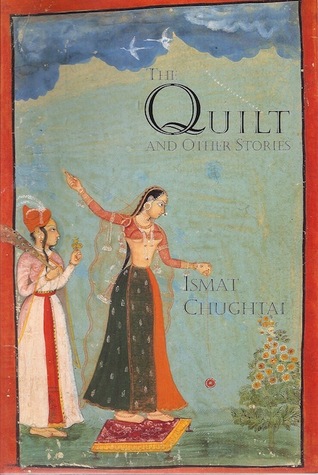
When iconic Urdu writer Ismat Chughtai (August 21, 1915-October 24, 1991) wrote ‘Lihaaf’ (quilt) and made waves by portraying alternative sex in 1941, second-wave feminism was still around two decades away. Her feminist subversion of patriarchy with the portrayal of a woman’s conditioning vis-à-vis her body had no parallels in the West then. ‘Lihaaf’ predated Simone De Beauvoir’s The Second Sex by five years. Chughtai’s journey to becoming South Asia’s top feminist writers began in Aligarh where she had her literary grounding at a school affiliated with the prestigious Aligarh Muslim University (AMU). The school was upgraded to a college in 1937, nineteen years before Delhi’s premier Lady Shri Ram College was founded and when the literacy rate among women was just three per cent in India.
The AMU Women’s College was the labour of love and realisation of the dream of its founders, Sheikh Abdullah and his wife, Wahid Jahan, of educating and empowering women in a dusty inland town while western education had just begun to flourish in far off coastal centers. It was not an easy task for them. Both Hindus and Muslims opposed Abdullah’s movement to educate women, fearing it would lead to ‘immorality’. Many years later, he told the students of the college with a sense of triumph and pride: “When, after innumerable odds, we came out of the darkness, it was found that education had the same bright effect on them as silver polish has on pots and pans. Educated girls have illuminated our society.”
The movement for educating women in Aligarh started during the lifetime of AMU founder Sir Syed Ahmad Khan, who, in celebrated historian Ramachandra Guha’s words, ‘propagated liberal values and rational outlook to oppose blind adherence to traditional values’. As a result, the Muslim Educational Conference formed a separate department for women’s education in 1898. It promoted the idea through Aligarh Institute Gazette. Abdullah, who was close to Khan, was appointed to look into the women’s educational project in December 1902. A special ‘Aligarh Monthly’ issue was published in November 1903 for the purpose. Abdullah, who was educated at AMU after migrating from Poonch in Jammu and Kashmir, later started a dedicated journal Khatoon (woman) for the promotion of women’s education in 1904. He simultaneously founded Female Education Association in 1904 to promote his cause and provide support to institutions working for it. Abdullah got a shot in the arm when Bhopal’s ruler, Begum Sultan Jahan, offered him a grant. Thus Aligarh Girls School took off with five students and a teacher on October 19, 1906. Science and social science were part of the initial syllabus.
The school was the first for Muslim girls in north India, where Abdullah’s daughter Rashid Jahan honed her rebellious streak. Rashid was trained as a doctor, who chose a radical path of a communist and a rebel. She went on to study at Lucknow’s Isabella Thoburn College after her schooling in Aligarh. Rashid was among the first Muslim women to be trained as a doctor at Delhi’s Lady Hardinge Medical College. She was a woman ahead of her times — both in personal life and the literature she produced. Rashid was unusual in the choice of her profession of a gynaecologist, her dress — a khaddar sari with sleeveless blouse — and style — short hair. She travelled to far-off places to treat the needy and the poor. All this was rare for any woman of her generation particularly in Uttar Pradesh in the first half of the 20th century before independence.
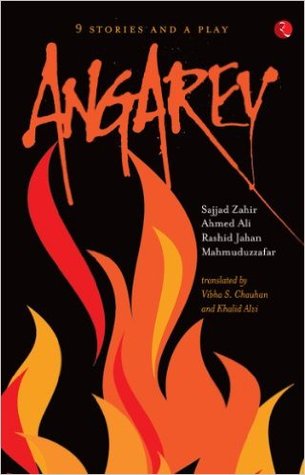
Rashid was one of the four authors of a polemical collection of stories, Angaarey (embers), which provoked outrage in 1932 with its attack on religious conservatism and British colonialism. The collection was banned in March 1933. But it led to the formation of the Progressive Writers’ Association, which attracted the likes of Kaifi Azmi, Ali Sardar Jafri, and Chughtai and revolutionised Urdu literature. Rashid wrote about female bodies with the exactness that only a doctor with intricate knowledge of human anatomy would. She attacked purdah, patriarchy, and misogyny. Rashid influenced Faiz Ahmed Faiz with Marxist ideas along with her husband Mahmuduzzafar, while the latter was Amritsar’s Muhammadan Anglo-Oriental College principal while the poet taught English there.
Besides Faiz, Rashid influenced successive generations of Indian and Pakistan feminist Urdu writers and inspired them to explore forbidden subjects such as love and sex. This included her junior at school, Ismat Chughtai. Like‘Angaarey’, ‘Lihaaf’triggered a storm as it humorously dealt with lesbianism and sexual desires of women. The British colonialists charged Chughtai with pornography and she was summoned before a court over it. Yet years after her death her legacy lives on. According to Chughtai’s translator Tahira Naqvi, in nearly every department where South Asian Studies, Women’s Studies, Feminist/Gender Studies, and South Asian literature are taught, her work draws as much attention as her Western peers. Chughtai is often described as one of Urdu fiction’s pillars. She has deeply influenced the likes of Khadija Mastur, Hajira Masroor, Bano Qudsia, etc. Naqvi believes Pakistani poets like Kishwar Naheed and Fehmida Riaz have ‘derived inspiration from her bold, uninhibited style of writing’. Other notable alumni of AMU Women’s College included artist Zarina Hashmi, Pakistani film actor Nayyar Sultana, and writer Kusum Ansal, etc.
Many AMU Women’s College alumni may not have realised their full potential had not it taken its present shape in 1937 when India’s female literacy rate was less than three per cent. This is up to 65% now. Much credit for this goes to the pioneers of female education in India. Among them, Abdullah would be in the same league as the founders of India’s first women’s college, Calcutta’s Bethune College, in 1879 and Lucknow’s Isabella Thoburn College (1886). Abdullah’s efforts were recognised in 1964 when he was awarded the country’s third-highest civilian award — Padma Bhushan.
This is a slightly edited version of a piece published in The Times of India, the author’s former employer, in 2014. And then republished in his blog. Republished with permission of the author.
Sameer Arshad Khatlani is an author-journalist based in New Delhi. He has been a Senior Assistant Editor with Hindustan Times, India’s second-biggest English newspaper. Khatlani worked in a similar capacity with The Indian Express. Penguin published Khatlani’s first book The Other Side of the Divide: A Journey into the Heart of Pakistan in February 2020.
.
PLEASE NOTE: ARTICLES CAN ONLY BE REPRODUCED IN OTHER SITES WITH DUE ACKNOWLEDGEMENT TO BORDERLESS JOURNAL
Home Schooled

I eat a new word
everyday
for breakfast.

You butter the newspaper
and down it with a cup of sugarless tea
leaving behind crumbs on the chair.
After you leave,
I regurgitate my newly acquired set of letters,
spit them out,
and let them bounce off the walls.
Some settle on my broom-wielding hand
like henna
so I softly trace their beauty
like a baby’s sleeping face.
I revel in their temporary freedom
and pound the floor
with my bare fists
and elegies.

When you’re back,
I swallow them whole,
caging them as before,
allowing you to believe that
Yes,
Right away
and Thank you
are the sum total of my vocabulary.
Baisali Chatterjee Duttis a domesticated nomad who writes, edits, dabbles in theatre and teaches. Her poetry has been published in various anthologies and magazines, print as well as online.
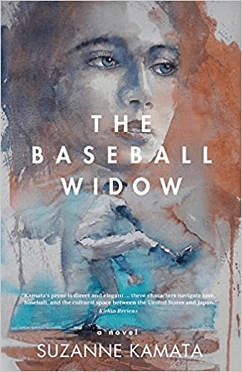
Suzanne Kamata is an American writer, academic, and a fiction editor, who resides in the Tokushima Prefecture, Japan. She has authored or edited 14 books including, memoirs and award-winning books. Her anthology The Broken Bridge: Fiction from Expatriates in Literary Japan (1997) was nominated for the Kiriyama Prize. She is a winner in the best novel category of the Half the World Global Literati Award. The Baseball Widow (2021) is her latest book.
The Baseball Widow (2021) is the tale of the life and aspirations of a passionate young American teacher Christine as she juggles through encounters in a multi-cultural setting and with having a child with special needs. Christine falls in love and marries Hideki Yamada, an aspiring Japanese high school baseball coach despite the complicacies that may arise due to cultural differences. She settles down with Hideki in Japan with dreams of teaching English and travelling to lower income Asian and African countries to help the underprivileged with English language skills.
Their daughter Emma has cerebral palsy. She is wheelchair bound and communicates through sign language. Emma is named with love after Queen Emma of Hawaii (1836-1885), who promoted a multicultural outlook. Their younger son Koji is sensitive and undergoes bullying in school because of having a specially abled sister. Stereotypes and societal judgments over their cross-cultural marriage, having a child that needs frequent hospital visits and extra care, and the other child getting harassed in school are a constant sources of anxiety for Christine and Hideki. Moreover, Hideki’s wholehearted dedication as a coach, who considers his baseball team as his first “family” and as someone who takes the demands of his job seriously, heightens Christine’s responsibility as a wife and a mother in the family.
The story has a lot to offer for cross-cultural enthusiasts. Through a host of characters, one gets to look closely into some aspects of life in Japan and into a mish mash of cultures. Interestingly, Kamata also manages to juxtapose the perspectives of Japanese and Americans on baseball as a sport, schooling, varying rituals of birthday celebrations, ways of coping with old age, accent issues, food culture, mannerism, a father-daughter relationship that Kamata calls “skinship” and so on. The story takes a larger overtone as it gives a glimpse of experiences on the notion of the term “Hafu”, which means a Japanese biracial. Half-Japanese or half-American, both in Japan or in America, such persons seem to face more societal hurdles than advantages. Additionally, the main plot along with the other sub-plots has a lot more to speak about relatable experiences of cross-cultural encounters in terms of love, education, health, travel, companionship, and the expectations and realities of life and relationships in general.
Kamata gives a unique take on disabilities and disparities of life experiences through Christine and her family’s experience with their own family and society. As parents, Christine and Hideki tried to cater to the needs of both the children and stay strong. Even though, their family was often subjected to gossip and rumours born of Emma’s condition, they reconciled to her disability. As Koji was victimised, they struggled to change him to a private school. They struggled to make life better for their children and family.
The story runs in two parts. In the first part, Kamata takes the reader back and forth from present day to a flashback as she introduces us to the story and the myriad themes of the novel. The story starts with Christine and her views on Japan and her life in Japan. She sets off to Thailand on a mission to help Cambodian refugees. She walks through her dream of helping needy and disenfranchised kids exploring the bigger questions of dreams and reality, love and longing, and the purpose of life. Experiencing a sort of “compassion fatigue” and looking at the brighter side of life, she returns to Hideki and Japan with hopes for a better future. Hideki coaching the baseball team at the Tokushima Kita High School dreams big and works hard to secure a place for his team to the prestigious national baseball tournament at Koshien. Kamata beautifully portrays how life is complicated with love, dreams and responsibilities through the shorter stories within the framework of the main narrative.
Part two of the novel takes a new turn as Christine comes to her mother’s place in South Carolina for a vacation and she meets her old school friend Andrew, an American Iraq War vet, whom she got to reconnect through the Internet. A fatal attraction and an affair ensued to bring out the raw side of reality. Hideki speculates saying, “… there was no such thing as pure joy, that even the greatest happiness was tarnished somehow, temporary, but worth striving for all the same”. Christine motionlessly undergoes strong emotions as she sees Hideki in the hospital. He too reminisces over lost time with Christine that he over dedicated to his career and reaches out to Christine to start all over again saying, “… Please come home”.
The Baseball Widow is a gripping novel that powerfully explores issues of responsibility, disability, discrimination, violence, dreams, love, longing, health, career, parenting, youth and old age through a cross-cultural spectacle. Hope and forgiveness overrule the human flaws in the story. Christine positively declares “everything is fine!” about Emma’s disabilities to rise about the surprise, pity, apologies and embarrassment of daily encounters. Beautifully embellished with an exquisite watercolour artwork cover by Giorgio Gosti, dark yet shaded in harmony, humour and positivity, The Baseball Widow will touch lives across ages, genders and cultures.
.
Gracy Samjetsabam is a research scholar at the Manipal Institute of Communication (MIC), MAHE, Manipal. She is also a freelance writer and copy editor. Her interest is in Indian English Writings, Comparative Literature, Gender Studies, Culture Studies, and World Literature.
.
PLEASE NOTE: ARTICLES CAN ONLY BE REPRODUCED IN OTHER SITES WITH DUE ACKNOWLEDGEMENT TO BORDERLESS JOURNAL
Off the I:10

Off the I-10 I am guided
by memory in my quest
to relive the past. The
ghost of my father’s shop
remains. The name has
changed. I hear the sound
of sewing machines, of
scissors cutting fabric, and
the hammer and staple gun
of the carpenter. In his 70’s
in the 80’s, I am certain he
is dead and buried like my
father. The past has come
and gone and all I have is
a memory of ancient days.
It is getting too late to stay
around. It makes me sad
being in these streets.
I drive back to the house
that my father and mother
bought, where I feel the
sadness come and go as
well until I drift off to sleep.


Waiting Around

Waiting around
like always,
the story of
my life: whether
it is for food,
love, or a
better job,
the wait is
always a part
of it. It is the hardest
part if you
listen to Tom
Petty.  Sometimes
It is worth it
and sometimes
it is not. It is
best to walk
away sometimes
and leave
the waiting for
someone else.


The Last Cold

Here it is, the last cold
of all the colds I have
had in the whole of this
life. Soon I will have a
last sneeze once and for all.
I might not blow my nose.
My head will ache worse than
ever and this so-called
condition will be an
afterthought. This poet
has seen much better days.

This is the last goodbye.
I cannot face the sun
lying on this bed. I
will turn all the lights down.

Here it is, the last cold.
It is a physical
thing. Keep the aspirin.
Luis Cuauhtémoc Berriozábal is a Mexican-born author, who resides in California and works in the mental health field in Los Angeles. His poems have appeared in Blue Collar Review, Kendra Steiner Editions, and Unlikely Stories.
.
PLEASE NOTE: ARTICLES CAN ONLY BE REPRODUCED IN OTHER SITES WITH DUE ACKNOWLEDGEMENT TO BORDERLESS JOURNAL
Sometimes we know that something is untrue but we decide to believe it anyway. There may be several points in its favour, clues that seem to add up to a revelation. Then one shortcoming is noted and the speculation is ruined, revealed to be utterly implausible. Yet we keep hold of the notion because it remains aesthetically pleasing.
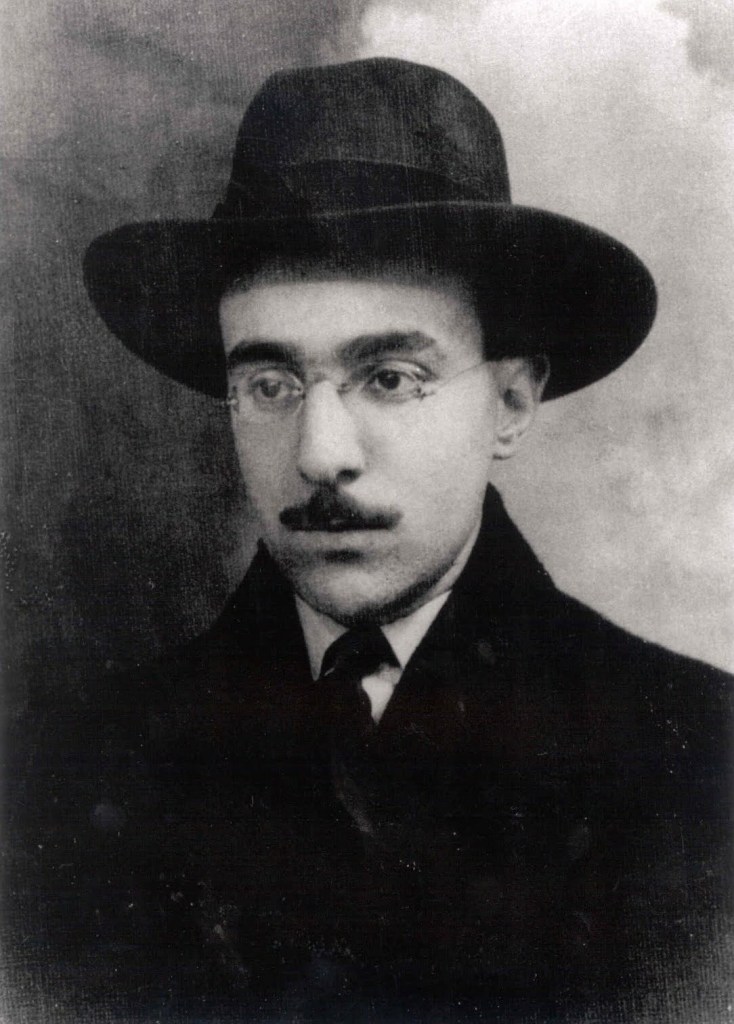
Such is the situation with my contention that the poet Pessoa (1888-1935) was the same man as the poet Cavafy (1863-1933) I discovered the work of both these special individuals in recent years. Pessoa I knew first, I have travelled to Lisbon often, I saw his statue sitting outside his favourite café, heard his praises sung by lovers of fine literature. Then I began reading him and I found a remarkable voice, a highly original talent.
Cavafy intruded later into my consciousness. His name was bandied about in Lawrence Durrell’s wonderful Alexandria Quartet (1957-1960) and I saw a copy of his collected poems in a very curious bookshop outside a peculiar village in a remote part of an obscure region of rural England. I felt a pull to that volume but I neglected to buy it on that occasion. Only when I saw a reprint of one of his poems called ‘The City’ standing alone did I realise that he had a supreme talent for pithiness.
And so I became a reader of these two luminaries, poets who excel in embossing their subliminally potent but often wistful visions onto modern reality. They are both among the best poets I have read. But I began to see an odd congruence between the pair. I started to link them together in my mind. There were so many points in their lives and working methods that seemed to correspond closely, too closely, that I finally wondered: Might they be the same man? Was this possible?
Yes, it is possible, even if not especially practical. There are cases in the history of literature that are no less extraordinary. Sometimes one man turns out to be several men. The author Luther Blissett is a case in point. He is an amalgam, or rather a conglomeration, of several individuals and as a result he barely exists in his own right. More frequently two or more men turn out to be one man. Kurban Said and Essad Bey are examples of this situation, for both are facets or sides or masks of one person, a true enigma by the name of Lev Nussimbaum (1905-1942).
Both types of deception are intended to create mystery and to baffle investigators, to allow those who indulge in the trickery to experience the displaced objectivity that comes with the transmigration of identity. On occasion identities multiply so prolifically that it is difficult to keep track of them all, and while we may wonder who exactly is who, the individual who is the original source of the identities acquires a status akin to that of the trunk of a venerable tree. The flowers and leaves on the branches are noted while the trunk is neglected or even forgotten about. This is clearly what some trees and some authors want.
Even a hasty examination of the respective lives of Fernando Pessoa and Constantine Cavafy will throw up some intriguing parallels and a few distorted symmetries. Pessoa was born in 1888 and died in 1935 at the age of 47, still a relatively young man. Cavafy was born in 1863 and died in 1933 at the age of 70. These dates show that they are absolutely not the same man. Pessoa lived in Lisbon, at the far western end of that longish body of water called the Mediterranean. Cavafy lived in Alexandria, at the far eastern end, and on the other shore.
So they lived far apart, almost as if they wished to throw people off the scent who might otherwise have remarked on the similarity of their appearance and eccentricities. If we draw a straight line between Lisbon and Alexandria and plot the halfway point, we end up in Tunisia. Were there any poets of great skill living in Tunisia at the time of Pessoa and Cavafy? There was Mahmoud Aslan, for one, and Aboul-Qacem Echebi, for another. What does this have to do with the subject in question? Not a great deal. But if a person had two identities and had to be in Lisbon at certain times and in Alexandria at others, then to base oneself right at the midway point of those two cities is wise.
This is idle conjecture and nonsense and yet Pessoa and Cavafy both lived and breathed in the medium of enigma. Neither man submitted work for publication, preferring to share it only with a few friends, or with the darkness inside a large wooden trunk. Pessoa wrote under many different names, which he liked to call his ‘heteronyms’. A school friend described him later as “pale and thin and imperfectly developed. He had a narrow chest and was inclined to stoop. He had a peculiar walk and some defect in his eyesight gave to his eyes a peculiar appearance, the lids seemed to drop over the eyes.” He studied diplomacy but was a poor student. Then a sizeable inheritance from his grandmother allowed him to set up his own publishing house, which he named ‘Ibis’.
The Egyptian bird chosen for this business venture is perhaps a clue that I have seized on too eagerly. Alexandria is in Egypt, of course, and Cavafy worked his entire life in an office, as Pessoa had expected to do. Both men travelled when young because of family commitments, Pessoa to Africa and Cavafy to England, but after their return they preferred to remain exactly where they were and never travel again. Pessoa lived in a series of cheap rented flats, Cavafy lived in one cheap rented flat, each man pretending to be unaware of the other, partly because it would have been very difficult for Pessoa to have access to Cavafy’s poems, and vice versa, but also in order to preserve the illusion they were different men? I am clutching at straws, I know, but straws can thatch roofs, and roofs are what best protect us from the elements.
Pessoa enjoyed setting puzzles for his readers and swathing himself in clouds of obscurity while hiding in the passages of a labyrinth. Cavafy on the other hand appears less mischievous on the surface but certainly was also interested in transformations of identity, in particular the way that an individual in the present can absorb some of the sentience, attitudes, even wisdom of those who are long dead. Both poets are considered loners and yet their work yearns for connection. Was isolation necessary in order to continue with the elaborate deception?
No, of course not, and yet I wish that was the answer. If Cavafy was really one of the heteronyms of Pessoa, I would regard the trick as surely the greatest ever played in the history of literature. But Pessoa died first. So might Pessoa have been a reverse-heteronym of the older but longer-lived man? We tend to believe that a subset must exist inside the set it belongs to. Perhaps Cavafy was a heteronym that was so realistic it came alive and hopped off the page into the world. He might have been a tulpa, one of those mythical entities brought into life by an act of sheer thought. A wish made true.
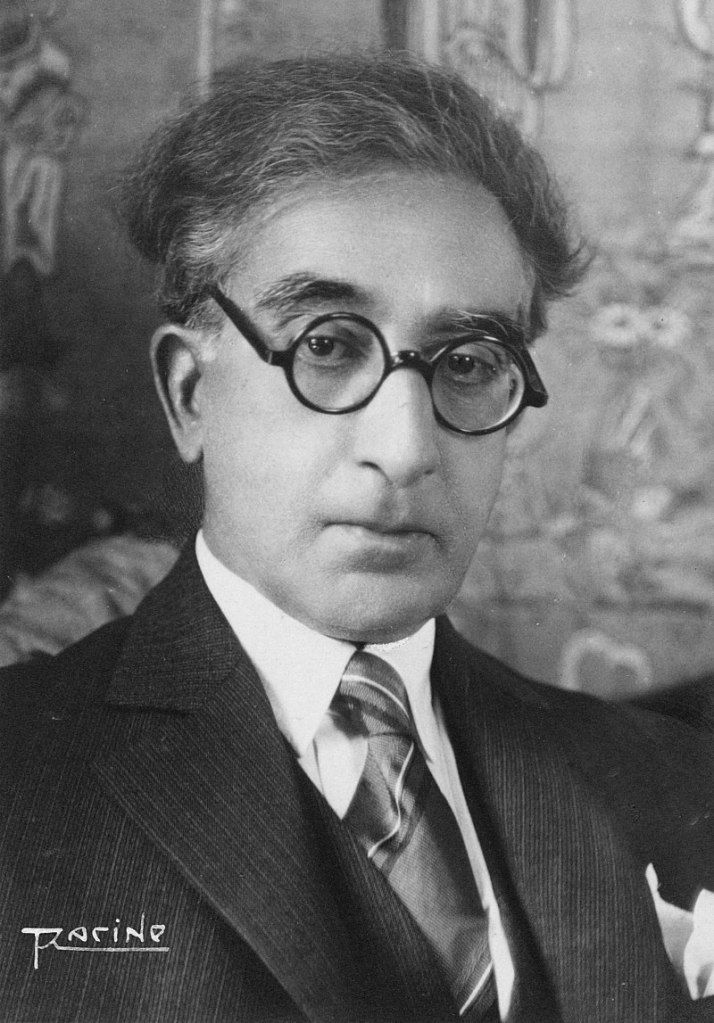
None of this speculation has any place in serious poetic studies, but I am not here to be serious, I am here to scratch an intellectual itch. Habits can be shared by men, talent too, but if we look closely at photographs of Pessoa and Cavafy we see the same elusive quality in their eyes, sadness and strength mixed together, interiority without inferiority, a deep ironic wisdom. They are figures who exist outside the time that frames them, a pair of warped mirror images, somewhat neglected during their lives but always with the promise of greater recognition later. And that recognition came in a surge and lifted up their reputations to such a high point that we now acknowledge them both as obvious geniuses and find it very difficult to believe they were ever unappreciated.
Pessoa employed at least seventy-two heteronyms, identities not only with individual names but distinct signatures, temperaments, biographies, ambitions and destinies. And if Cavafy was the secret seventy-third of the heteronyms? Is there any evidence for this wild proposition? Consider the Cavafy poem entitled ‘Nero’s Deadline’ and the essential function in the text of that same number, seventy-three.
Nero wasn’t worried at all when he heard
the utterance of the Delphic Oracle:
“Beware the age of seventy-three.”
Plenty of time to enjoy himself still.
He’s thirty. The deadline
the god has given him is quite enough
to cope with future dangers.

Now, a little tired, he’ll return to Rome—
but wonderfully tired from that journey
devoted entirely to pleasure:
theatres, garden-parties, stadiums…
evenings in the cities of Achaia…
and, above all, the sensual delight of naked bodies.

So much for Nero. And in Spain Galba
secretly musters and drills his army—
Galba, the old man in his seventy-third year.
Spain is not Portugal but it is an adjacent country. Cavafy was not an ancient Roman, but he was an adjacent sort of fellow, a modern Greek. It is very unlikely that he was a heteronym but would he have been willing to admit it if he was? None of Pessoa’s other heteronyms were especially keen to reveal themselves as fictional. Nero thought that the oracle was a reference to himself and his own age whereas in fact it alluded to the age of the man who soon succeeded him.
And why is seventy-three a magical number? It is a prime number and Pessoa died in the prime of his life. In binary it is written as 1001001, the neat symmetry of a line with one end in Lisbon, one in Alexandria and a middle in Tunisia. In octal it is written 111, three men or the same man in different positions? It is a star number, a centred figurate number that can form a regular hexagram, and both Pessoa and Cavafy were stars. It is an emirp number, meaning that written in reverse it is also a prime. It is used by radio operators as a substitute for “best regards” because when written in Morse Code it is also a palindrome and sounds the same forwards as it does backwards, another mirror image.
Shall I continue in this fashion? It is unnecessary.
I will finish by pointing out that 73 is the atomic number of tantalum and that both poets remain tantalising. At no point do I really believe that Pessoa and Cavafy were the same man.
Yet there is something satisfying about the idea.
.
Rhys Hughes has lived in many countries. He graduated as an engineer but currently works as a tutor of mathematics. Since his first book was published in 1995 he has had fifty other books published and his work has been translated into ten languages.
.
PLEASE NOTE: ARTICLES CAN ONLY BE REPRODUCED IN OTHER SITES WITH DUE ACKNOWLEDGEMENT TO BORDERLESS JOURNAL
Euphoria


Stealthily, I crept up to the tall tree-top,
And, sat reclined in the cozy loft.
Tuning pages of legacy, ‘The Saga of Indian Tea’,
My mind diverted by the tweet of myriad birds.
I glanced from the heavenly machaan
Acres of undulating tea bushes lay onward.
A goblet of sizzling first-flush from the emerald lawn,
I sat snug on the tree-house, gazing at the divine dawn.

Horizon dipped in lavender splash,
Dam-Dim Estate draped in awe-struck flash.
Chic Swiss country-house veiled in misty streak
Orange coppice, crimson orchid fringes the nearby creek,
Ethnic cuisine, colonial suites, carpeted jade tea-brushwood
Sinuous rivulet Chel brimming in classical rosewood.

As I stood by the brook, to have a lucid look
I heard a placid din. Was it the trumpet of the wild?
Beyond Chel, I stood beguiled.
Their trumpets ricochetted with the adjacent mountain range.
Hiking downhill, I felt blessed, wasn’t nature’s obscurity strange?
Rupali Gupta Mukherjee has a passion for reading, writing and reciting poetry. She is a nature enthusiast, loves to travel and has a zeal for photography.
.
PLEASE NOTE: ARTICLES CAN ONLY BE REPRODUCED IN OTHER SITES WITH DUE ACKNOWLEDGEMENT TO BORDERLESS JOURNAL
Drunken cockroach in my wine glass

Dear Panchami,
Today I woke with a new angle to look at the way
The world revolves.
Panchami, don’t get hassled about my drinking,
Things could have been worse like for the cockroach
I met this morning
After I got off the bed.
By the way Panchami, how are you?
How sound was your sleep? Let me know.
The lone cockroach, Americana Periplaneta,
Suffering loneliness like I do
Had fallen last night
In my empty cup of wine.
Oh Panchami, my soul,
As you always complain
I had forgotten to clear the table.
There was this residue of that purple vintage
That stayed in the cup through the warm night,
Upon which, the roach floated
On its dorsal, looking up,
Beating its six legs, two antennas
Like old women in old days
When someone old died.
Dear Panchami,
I didn’t want to play God,
Didn’t upturn the fellow, I let him remain
In that unfussy state of combat with air.
Panchami, my soul which stands apart,
I didn’t want to play the devil either,
Didn’t want to reclaim him
From his stuporous state of inebriation
Where the universe seems faultless.
Dear Panchami,
After all he chose to drink,
Partake a sip of the Bacchus without encroaching into mine.
What if I didn’t clear the table
Put away the empty glass, wash, dry
And stack it where you always did.
Dear Panchami,
We are not here in this infinitesimal life
To play God or Devil, judge and judge not.
I am sure you are angry, but please.….
I don’t even ask your forgiveness
Dear Panchami.
For I don’t want to let you suffer the burden of
Judging and being entangled
In matters of judgement knots.
Roaches are survivors Panchami! So am I.
Saranyan BV is poet and short-story writer, now based out of Bangalore. He came into the realm of literature by mistake, but he loves being there. His works have been published in many Indian and Asian journals. He loves the works of Raymond Carver.





 Borderless