QUIETLY

Roses do not speak,
But spread sweet scents.
Cool calm lakes
Cast lasting spells.

High in the air,
Eagles fly.
Without a whisper,
Rainbows appear in the sky.

Quietly the sun rises.
Leaves grow on trees.
Stars shine in darkness,
Rocks stand against the roaring seas.

Quietly the moon shines,
Inspiring songs which the world sings.
And quietly the braves soar
Despite their wounded wings
Ashok Suri is a retiree and is settled with his family in Mumbai. He tries to convey in simple words what he wants to say.
.
PLEASE NOTE: ARTICLES CAN ONLY BE REPRODUCED IN OTHER SITES WITH DUE ACKNOWLEDGEMENT TO BORDERLESS JOURNAL
Kenny Peavy, an environmentalist, revisits his trip across Asia, exploring the enormous biodiversity and conservation efforts.
Bamboo Bicycle. Photo provided by Kenny Peavy
An idea is born
Like all good adventures, it started in a pub.
I was attending a weekend workshop on service learning and how to implement service projects with students. One of the other participants, Jamie, had come into Kuala Lumpur from Japan. We’d partnered on a few of the activities during the day and hit it off immediately. I was eager to get to know him better so invited him out for a beer to show him around town. I always liked sharing local restaurants and watering holes with visitors and this time was no exception.
Jamie agreed and we visited a few trendy spots in Bukit Bintang, downtown Kuala Lumpur.
After a walking tour of a few famous walking streets, we hit the town for a bit of street food. As Fate would have it, we soon ended up sharing a couple of drinks at Little Havana, a cool hang out spot on the corner with live music and, pub grub and nice draught beers.
After a couple of drafts of Guinness Stout, I boldly announced to Jamie my intentions to leave classroom teaching and set out on an adventure. I was burnt out and needed a break.
Hiking across Malaysia was being floated around as an idea. Being from the USA, we have plenty of cross-country trails such as the Appalachian Trail and the Pacific Crest Trail that, in my youth, had inspired me as bucket list adventures I would aspire to complete someday.
Now was the time. I needed play time. I needed adventure time. I needed to explore and roam for a spell. Hiking across a rainforest didn’t seem as feasible since there really were no trans Malaysia trails to be found. Cycling was also tossed about as an idea. Cycling across Asia had been done before. It seemed a more achievable adventure.
Back in 2012, I was not very Internet savvy and the number of blogs, vlogs and social media sites with information about how to cross Asia on a bicycle was scarce. As a result, we had to rely on our imaginations, grit and a bit of pragmatic know-how and determination to figure out what we would do and how we would do it.
During the excited and rambunctious discussion in the pub we let every wild idea and notion fly. I could ride across China. I could ride around Thailand. Maybe I could venture into Vietnam, Laos or Cambodia. All sorts of options were tossed about and floated around.
After the weekend workshop, Jamie returned to Japan. We stayed in touch.
More ideas were thrown about, and we eventually decided that a trip from Thailand to Bali would be a good course of action and something that could be achieved. Soon thereafter, Jamie announced that he’d join me!
The plan was coming together slowly but surely. An idea was taking shape.
We wanted to do something centered around conservation or environmental issues. We could focus on that during our bike ride. The idea fit because cycling is eco-friendly. No fossil fuels. No pollution. Since Jamie was joining me, it would have to be done during the school holidays which meant we had approximately six weeks to complete the adventure in July and August. Yes. We could do it!
I talked to people in my network. Someone knew someone and they sent the word out to bike shops, cycling enthusiasts and adventurers. Shortly, Sunny from Singapore reached out to us and said he made bamboo bicycles. He asked if we’d like to try them out on our Thailand to Bali adventure.
Sure, why not?!
Sunny himself had ridden a bamboo bike across China and was designing and building bamboo bikes for long haul trips. We’d get to test one out and provide feedback. The experimental science guy in me said YES!
He sent us images and catalogues and we picked a mountain bike model since we figured the roads would get a bit messy at some point and we would want fat tires for any back roads, dirt roads, palm plantations, or gravel we might encounter.
We finally had bikes! Now we just needed a route!
We’d make our way through Thailand on to Malaysia across into Singapore and then onwards to Java and eventually end up in Bali for the grade finale.
We finally had a route! Now we just needed a name!
I honestly don’t remember how the name came about but I do remember quite a few failed attempts.
I wanted something that made us sound like superheroes! Green Warriors! Eco-Adventurers!
Firstly, it was one of the oldest and most biodiverse rainforests in southeast Asia. Secondly, I knew a guy that had a resort, and he could sponsor our first night by giving us accommodation and food!
We spent the first night in a small bamboo chalet next to a gorgeous turbulent river amidst the sounds of cicadas, swirling rapids and a myriad of jungle critters making their nightly sojourn throughout the forest by moonlight. It was paradise on Earth. The next morning, the sound of gregarious chirping birds welcomed the morning through the open-air bamboo chalet and mosquito nets.
With brand spanking new bamboo bikes, way too much gear, an adventurous spirit, and no idea on how the adventure might play out, we hit the road. Within a hundred meters my bike rack fell off and eagerly dispersed its burdensome contents onto the rich humus of the rainforest floor! Apparently, the marriage between an overburdened metal bike rack and a bamboo bike frame was not a match made in Heaven.
With plenty of laughing onlookers from the launch of Green Riders, Jamie and I made short work of the repairs and set off on the road.
During the six-week adventure we saw numerous indescribably beautiful and wild places.
We made acquaintance with numerous interesting and intriguing people and immersed ourselves in a wide array of cultural diversity ranging from the village life of rural Thailand and Malaysia to the hyper-developed modern city state of Singapore on to the chaos of the port of Jakarta and finally the super touristy island of Bali. With a tip from a local at a roadside food stall and coffee kiosk, we ended up visiting the first rubber tree planted in Thailand. Apparently, the rubber sapling had been stolen from the botanical gardens in Singapore and smuggled across borders in 1899 that eventually resulted in the booming and habitat destroying rubber industry of the 1980’s and 1990’s.
We spent the night in a pristine an efficient locally run Eco-village situated in a mangrove on the Isthmus of Kra which lies on the border of Thailand with Malaysia. There children roamed freely playing, exploring, and jumping in the brackish water as part of their daily free time. A place where a deep connection with the rhythms of the tides, the moon and the daily fishing harvest are intimately woven in the psyche of the Thai villagers that inhabit that ecosystem.
With yet another tip from a local in a pizza joint in Krabi, we made an unplanned sidetrack to see a very cool playground in a small village in Thailand that had been built from recycled and repurposed tires pulled from their local river. We ended up helping a nearby village copy the design and build their own playground and plant shade trees at a local school.
We ferried from Singapore to Jakarta aboard a defunct cruise ship, full of deportees and work permit violators from Java and Sumatra that were being deported back to their country of origin. Another crazy adventure we could not have planned.
We learned the hard way that Baluran National Park in East Java was dry and had not even a single measly roadside stall to sell water or food, making an arduous trek uphill even harder. Within the first hour of that particular day, we quickly depleted our supplies and road around for six sweaty, throat parching hours in search of liquids and sustenance. On the last leg of the ride, we sprinted as fast as we could to exit the park and crashed into the first shop to empty their barren stock of the bottles, water and soft drinks!
When we finally landed on the shores of West Bali National Park, we stood in amazement of all we had seen, done and accomplished.
Photos provided by Kenny Peavy
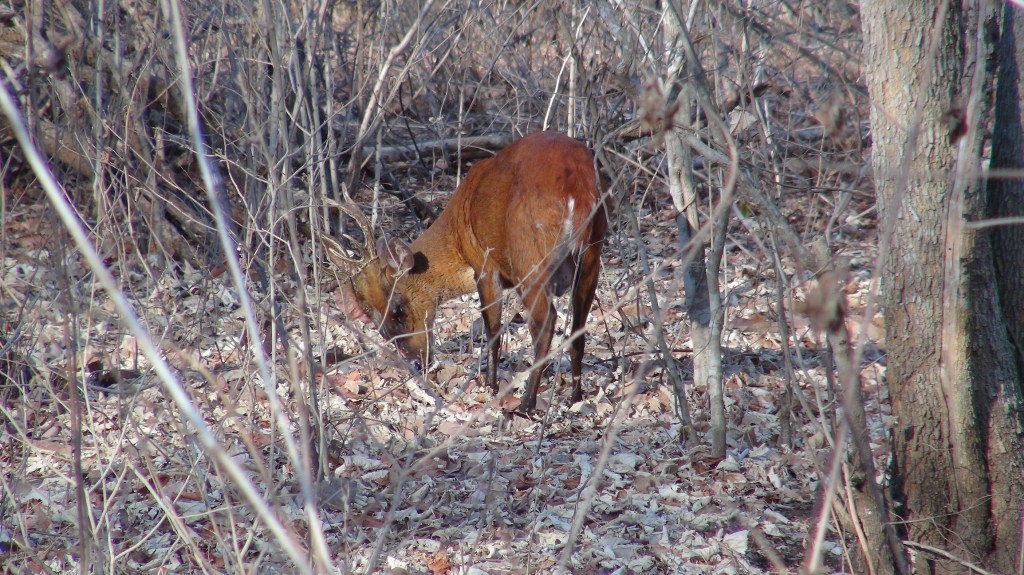
We spent the last days wallowing in the company of Menjangan deer, water monitors, mangrove trees, wild boar, ebony langurs, various shore birds and the coveted Bali starling, an endangered endemic species of gorgeous bird in its protected habitat. Green Riders provided more explorations and adventures that we had counted on or even imagined!
On the road, we became absorbed in a Zen like trance that comes from 8 to 10 hours of singular focus on pedaling and riding. We learned the value of clearing the mind through the monotony of riding all day every day with a single purpose to keep pedaling.
The experience of being connected with self, with others and with Nature were priceless and life changing.
7 BLOCKS

7 blocks from an untenable position,
the boys in the service fill sandbags,
pack them high as the walls of the
county courthouse.

6 blocks of freshly paved roads,
the fowler’s avian arms outstretched
like the masts of barnacled boats
in the shallow harbour.

5 blocks is a fair distance for laboured breathers,
a peace offering in a brown paper bag,
the smell of the tobacconist’s all through
my clothes and peerless smoke signal mind.

4 blocks where the cramps set in,
I was once a young man:
sinewy, bothered, flooded as basement
apartments during the rainy season.

3 blocks of office tower stairwells,
long lines for all the food trucks,
enough polished shoes to never bang
on greasy thrift shop windows again.

2 blocks from a joint decision,
all that sobbing and tears over the phone,
switching ears with an impatient receiver.

1 block of small boutiques,
the chocolatier with crushed nuts over everything,
not a mother in sight nor strollered
push cart child.
Ryan Quinn Flanagan is a Canadian-born author residing in Elliot Lake, Ontario, Canada with his wife and many bears that rifle through his garbage. His work can be found both in print and online in such places as: Evergreen Review, The New York Quarterly, Borderless Journal, GloMag, Red Fez, and The Oklahoma Review.
.
PLEASE NOTE: ARTICLES CAN ONLY BE REPRODUCED IN OTHER SITES WITH DUE ACKNOWLEDGEMENT TO BORDERLESS JOURNAL
Short-story writer, publisher and writing advocate, Steve Carr, has helped many writers around the globe get published for the first time. The author speaks to Keith Lyons about his prolific output and the best way to conquer writer’s block by being abundantly productive and creative.
Steve Carr is on the quest to write the perfect short story. But perfectionism isn’t putting him off the challenge. Since his first short story was published half a dozen years ago, he’s had over 600 short stories published internationally.
The native of Cincinnati, Ohio has travelled extensively outside the United States, serving as a military journalist in the Army and Navy before switching to fiction. As well as his work appearing in print and online in magazines, literary journals, and anthologies, eight collections of his short stories have been published, including ‘A Map of Humanity’ in 2022. He’s even released a paranormal/horror novel ‘Redbird’.
He was editor of literary magazine ‘Short Story Town’ and is the founder and publisher of Sweetycat Press whose goal is to support emerging writers by providing opportunities to getting published, primarily in anthologies.
When did you first discover your talent for writing?
From the earliest grades in school, I excelled in writing and English. By the time I reached high school the word had gotten around with the English Composition teachers that I had talent as a writer. In my senior year I had an English teacher, Mrs. Katz, who went out of her way and far beyond the curriculum to challenge my writing abilities. She encouraged me to pursue a writing career after I completed high school. Thanks to her support, and my own curiosity about what was happening in Vietnam (during the war), instead of going to college I enlisted in the Army to become a military journalist.
What encouraged you along the way to express yourself through writing?
My teachers in school and I took to writing the way fish take to water.
Tell us about your career as a military journalist? What did that involve? What kind of writing did you do in the army and navy?
I attended the prestigious joint military school, The Defense Information School, where I learned journalism and photojournalism. My intention was to go to Vietnam to see and report first-hand on what was happening over there. Fate intervened, and I was sent to the District Recruiting Command in Jacksonville, Florida as an Information Specialist, which involved me travelling around Florida and Georgia writing articles about the war about the war, as conveyed to me by military channels and returning soldiers, for local newspapers. I spent three years in that position and decided to end my enlistment to begin my college education in Cincinnati, where I’m from. Being the restless sort, I got bored after my Freshman year and enlisted in the Navy, and following the path of my favourite writer, W. Somerset Maugham, who had trained as a doctor, I enrolled in the Hospital Corps School, to become a Navy medic (a Hospital Corpsman). Because I did well during that training, I was offered the opportunity to attend the Neuropsychiatric Technician Program in San Antonio, Texas. Completing that, I was sent to the Portsmouth Virginia Naval Hospital where I quickly advanced to the position of the only enlisted instructor for the Psychiatric Technician School, Phase II, and for the next three years I worked with psychiatric patients while also teaching. During that time my writing was entirely medical/ psychiatric-based. That proved as beneficial to my writing as the skills I learned in the Army as a journalist.
Where in the world did your early career take you?
It took me first to the Army and then to the Navy. I traveled to a number of states and saw things and experienced life in ways I never thought possible or imaginable as I grew up.
How did you get into fiction writing?
My path as a writer, leading me to writing fiction, zigzags all over the place. If writing plays can be considered writing fiction (which it is), it wasn’t until after college where I double-majored in English and Theater, completed after my enlistment in the Navy, that I turned to writing plays, resulting in a few of them being produced in several states. During the next few years while writing plays I also wrote grants for non-profit health care providers, another unexpected benefit to my eventual path to writing fiction, which didn’t begin in earnest until years later, after I retired from owning my own theatrical production company. Writing fiction didn’t happen until I was mentoring a college student interested in learning to write fiction, and wanting to show him how it was done, I wrote a short story and then submitted it to a publication that quickly accepted and published it. Thinking that was really easy, the same thing happened with my second story. That was where my fiction writing career began.
What’s one of your first success stories in getting published? How did you feel seeing your name in print?
In June, 2016, the online publication, Literally Stories, accepted my first story “Eleanor” about the life of a modern-day reclusive woman who lived on the edge of the South Dakota Badlands. To tell you the truth, I don’t recall how I felt, other than being surprised that getting my first fiction story was so easy. I must have also felt encouraged because I quickly followed that with a second story. 600-plus stories – new and reprints – published since then tells me that from the beginning I must have liked the experience of being published because as evident, I haven’t stopped.
What’s your motivation for writing, given that rewards are scarce in a monetary sense?
I’ve been asked that question a lot, and honestly, I have no idea what motivates me to write. I don’t need the money, so that wasn’t a motivator from the very beginning. Maybe what motivates me is the challenge of writing good fiction. Now, I’m on the conquest to write the perfect short story. Someone told me that I may have already done that and don’t realise it. I have my doubts about that, so I continue to write short story fiction.
Does writing fiction involve a different part of your brain or different process than non-fiction writing such as journalism? If so, how?
The process of journalistic writing and writing fiction is somewhat similar. The best in both forms of writing involves making the individuals (characters) in the work, engaging, compelling and relatable, and bringing the events in the piece to life. For me, writing begins with observation and intellectual curiosity. Both journalistic writing and fiction almost demands that. I have no idea which parts of my brain I’m using, but I think I was wired to observe and give thought to the world and people around me from a very early age.
If writing is a creative process, how does the aspiring writer manage the creative side with the more mundane, organised side, such as having a schedule for writing and submitting, and meeting deadlines?
That’s a hard question to answer since every individual has their own methods and abilities to be organized in anything they do. I have a guidebook, Getting Your Short Stories Published, published by Clarendon House Publications, that is available on Amazon, that provides the method I use for organising my writing and submissions. Even in that I caution the reader that it is my method, and it may not work for everyone. If I can be conceited about the guidebook, it has some very useful information in it, including the importance of knowing grammar and punctuation, why reading the submission guidelines is essential, and understanding how editors evaluate submissions.
How do you get motivated to write?
Motivation has never been a problem for me. What helps is that I set goals and quotas: how many stories do I want to write in a given month? How many words do I want to write on any given day? Am I on track for my yearly quota of published stories?
Where do you get your ideas, and how do they form into a story?
I begin with a title that has popped into my head, not always inspired by anything in particular, but sometimes a result of reading a news article or seeing something happening while outside. I’ve also been fortunate enough to travel, to meet lots of interesting people, and I have a very fertile imagination born of a love of art, music and movies, so those things are always stirring around in my head. Once a title has been formed, I then think about how the story will begin and end. In that way I am a “plotter,” (someone that plots out the entire story). I fill in the middle as I write. In that way I am also a “pantser.”(someone who flies by the seat of their pants all the way through their pants).
What’s your actual writing process –– and is it fuelled by anything?
I don’t really have a process. I tend to write in shifts throughout the day or night, mostly when I feel like it. I have goals, as I said, but I don’t allow myself to become stressed if I lag behind or don’t meet them. I enjoy the process of writing, of seeing the words, sentences and paragraphs appear on the blank page.
How do you find out about opportunities for submissions, for example for literary journals and anthologies?
I have a subscription to Duotrope which is a publication search site. Their fee for use is either $5.00 per month or $50.00 per year. The great thing about them that is unlike any other search site is that they send out a weekly email that lists publications looking for submissions. I get about 80-90% of my submission opportunities from Duotrope. They can be found at https://duotrope.com/search/catalog.aspx. I also subscribe to Authors Publish https://authorspublish.com/ and to a number of publications that send out monthly newsletters and calls for submissions. I also find opportunities for submissions on social media, both in the large number of Facebook writing groups I belong to, and on Twitter. There are a number of editors who like my work and ask for stories from me.
What do you attribute to your incredible success in having over 600 short stories published?
This is going to sound like bragging, but I’m a good writer. I have a thorough understanding of short story structure and I write stories that have a broad appeal. I was told by another editor that I’m a “commercial writer,” meaning I write what readers want. I also write stories based on what publications are looking for. I found out early it was a waste of time and energy to write a story and then try to find a home for it. I use what the publications are seeking as prompts, and then I write a story from the prompt. I also write a lot of stories, so it’s a simple law of averages that the more stories I submit, the more of them get accepted – of course if only they are well-written. I also write in every genre which is extremely helpful in being able to adjust my themes, plots and characters to match a genre.
Tell us about your efforts to support emerging writers through Short Story Town and publishing anthologies with Sweetycat Press?
Short Story Town is a Sweetycat Press online literary magazine that paid emerging for their stories and narrative poems. It will be closing down on June 1 after a year of operations to allow me to focus on the anthologies. Under the Sweetycat Press publishing imprint over 1,000 prose writers and poets worldwide have had their works published. The anthologies are varied and each one has a theme. So far Sweetycat Press has published an episodic crime anthology titled The Whole Wide World, an anthology titled Landscapes & Cityscapes, followed by A Love Letter (Or Poem) To . . ., Stories and Poems in the Song of Life, Beautiful: In the Eye of the Beholder, and Movement: Our Bodies in Action. On July, I will be giving out $900 in combined cash awards in the Jewels in the Queen’s Crown contest to 20 writers poets who have had a prose work or poem published in one of the anthologies judged by a small panel to be the best of the best.
What’s your advice for aspiring writers?
Never take advice about writing from anyone who has less experience with writing than you do. Readers are important but being told what a reader likes or dislikes about what they read is a lot different than being told how to write. Also, don’t get freaked out about a rejection. Everyone gets them. Shrug it off and move on. A rejection will never cause you physical harm.
And your next projects?
An anthology will be published from the Jewels in the Queen’s Crown contest and then two anthologies are planned for later in the year. Anyone interested in writing a story or poem for inclusion in an anthology should check in regularly with the Sweetycat Press website https://www.sweetycatpress.com/ Unfortunately, I don’t pay the writers/poets whose works are accepted, but the anthologies do provide platforms for showcasing a writer or poet’s talent and skill.
Keith Lyons (keithlyons.net) is an award-winning writer, author and creative writing mentor, who gave up learning to play bagpipes in a Scottish pipe band to focus on after-dark tabs of dark chocolate, early morning slow-lane swimming, and the perfect cup of masala chai tea. Find him@KeithLyonsNZor blogging at Wandering in the World (http://wanderingintheworld.com).
PLEASE NOTE: ARTICLES CAN ONLY BE REPRODUCED IN OTHER SITES WITH DUE ACKNOWLEDGEMENT TO BORDERLESS JOURNAL
ROSE PETALS IN A DARK ROOM

I’m but a poet of this ministry,

rose petals in a dark room fall.
Everyone’s life is a conflict.

But mine is mastery of light and neon night
and I walk behind
these footsteps of no one.

RAIN

In the rain,
this thunder
on his way home,

he rebelled.
He a disco dancer,
High school dropout.


DECEMBER HOLIDAYS

December 24th

 I find footprints
 in this snow,

yours frozen,
with our
broken dreams.
Michael Lee Johnson is a poet, freelance writer, amateur photographer, and small business owner in Itasca, DuPage County, Illinois. Mr. Johnson is published in more than 2033 new publications. His poems have appeared in 42 countries; he edits and publishes ten poetry sites.
.
PLEASE NOTE: ARTICLES CAN ONLY BE REPRODUCED IN OTHER SITES WITH DUE ACKNOWLEDGEMENT TO BORDERLESS JOURNAL
We had an incredible weekend at one of the most scenic spots in the Western coast of the United States, which boasts of diverse ecosystems — endless stretches of alpine meadows and forests, large temperate rainforests, rugged Pacific coastline, snow-capped hills, meandering rivers, glacial-carved lakes and more. A fun-filled weekend sojourn that brought along experiences ranging from invigorating to introspective.
Before I continue, let me tell you that it is not a mere recording of places visited at the Olympic National Park. Well, we visited several fascinating places that include Hurricane Ridge, Crescent Lake, Mary mere Falls, Dungeness Spit among others.
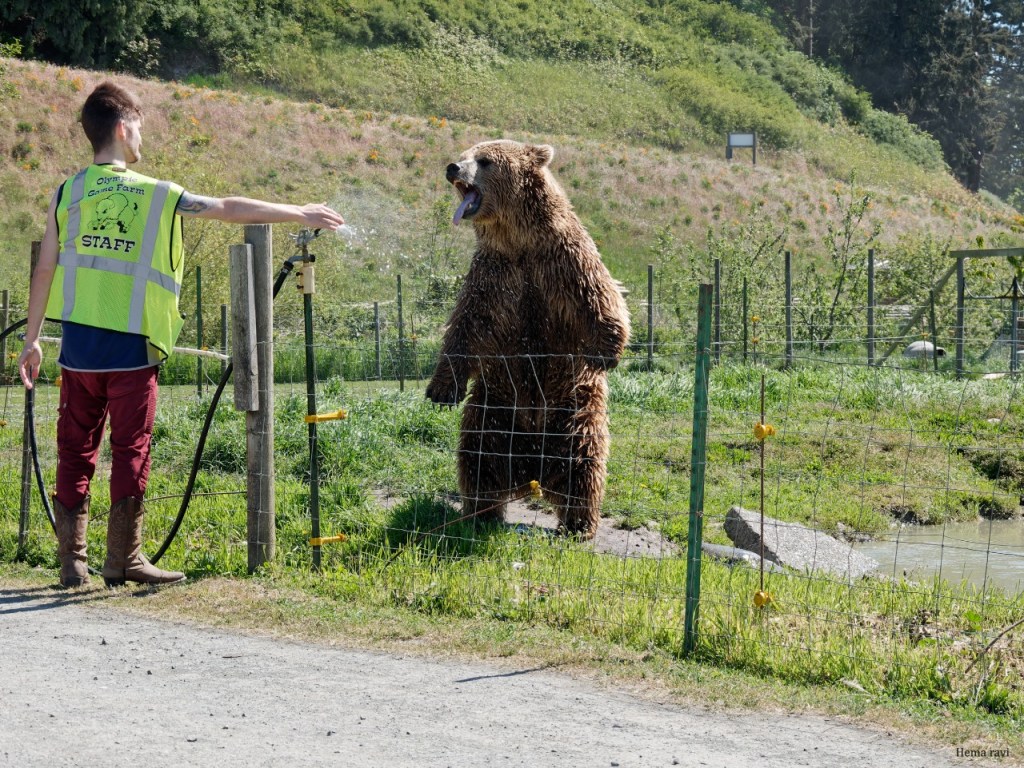
I would like to highlight our visit to the Animals Farm. Other places were already in the itinerary; this place came up during a chance meet with a friend. He strongly recommended that we visit this farm, where animals that once acted in Disney films are housed. On their website, I read that for about 28 years, the Olympic Game Farm worked exclusively for Walt Disney Studios. Sadly, after the death of Walt and Roy Disney, Disney studios moved away from such films. Consequently, after securing the right permissions, the founding members of the Olympic Game Farm opened it to the public, and concentrated on offering ‘in need’ services to captive-bred animals.
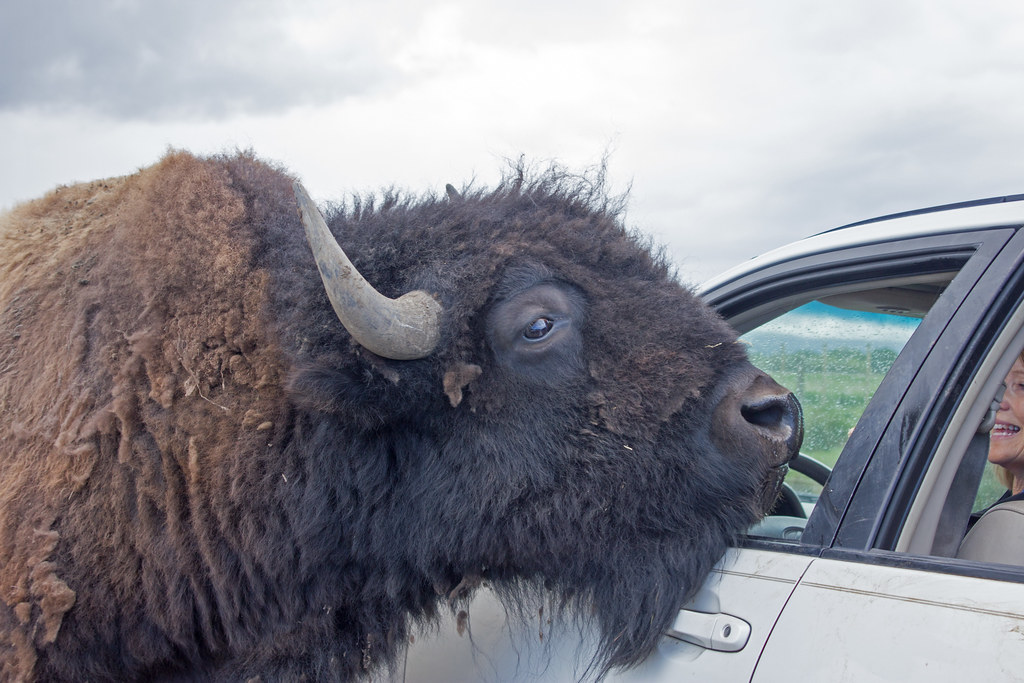
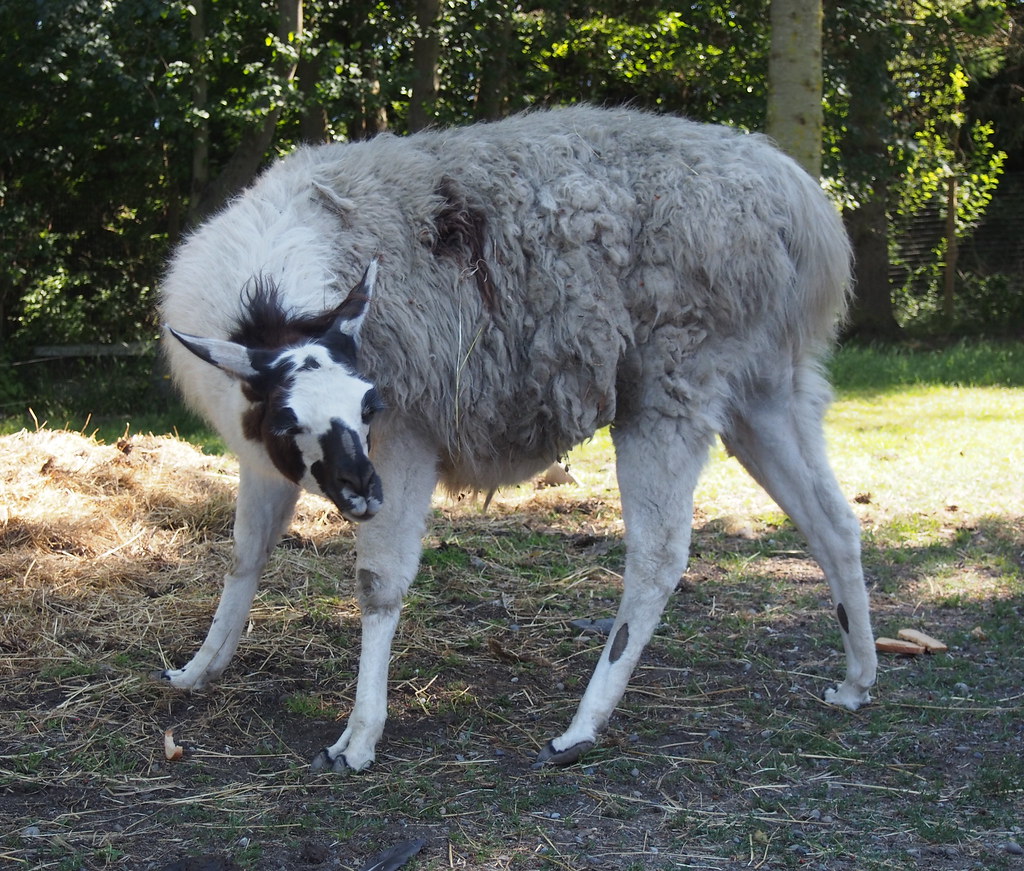
The hour long drive-through experience at Olympic Game Farm was exhilarating, surreal and fascinating. We drove through rugged pathways with car windows shut, occasionally opening a chink to feed llamas, elk or any other young animal that we thought would not ‘charge’.
The smell of fresh bread (bought at the farm, outside food is a no-no!) attracted the animals to us. While we were throwing slices to the young llamas, small groups of older llamas came up and that was rather intimidating; at times, we were surrounded, rather imprisoned in the car for several minutes until another passing vehicle caught their attention. Llamas, Tibetan yaks and elks daringly peeped from outside, smeared the glass windows abundantly with their saliva, especially when we did not open them to offer food.
Brown Bear at the FarmBull elk looking for breadPhoto Courtesy: Hema Ravi
The most interesting field was the enclosure that had over a dozen brown-bears. For over five minutes, we watched and took pictures of one of them drinking water, simultaneously enjoying a shower. Beckoning the ranger, the playful bear opened its mouth wide and let out its tongue, gesturing him to place the pipe over its open mouth…..through gestures, it signalled that it wanted water over its body. The spectators watched through their car windows in childlike glee.
This awesome and unforgettable scene urged me to share my thoughts. I strongly believe these wild creatures have a heart and mind; they enjoy company as much as we do. The lanky ranger was enjoying this act as much as the bears were; yet another bear held its paws open to drink water. Another large one was pacing anxiously, possibly waiting for its turn.
Rangers were constantly circling around on vehicles and speaking through loudspeakers telling visitors not to stop near the American bisons and the bull elks. They could turn aggressive, if provoked. We did, as we were directed. We quickly drove past the cages where the Siberian tigers, lynx and a few other animals were housed.
As we made a reluctant exit (More sightseeing!), the high-pitched calls of the beautiful peacocks, whistling sound of a passing eagle, the shriek of the gulls and a raven’s caw continued to echo in the vast space.
I had witnessed one such scene earlier in a zoo in India, when I watched an Australian cassowary following a staff as he swept the cage; the large colourful bird followed him meekly until he cleaned the cage and sat down to spend some cuddly moments with it; however, at this point of time, the adorable brown bear is a favourite for my pen.
.
Hema Ravi describes herself as a part-time language trainer by profession, writer by passion. She is a poet, author, reviewer, editor (Efflorescence), event organiser, independent researcher, and resource person for language development courses
.
PLEASE NOTE: ARTICLES CAN ONLY BE REPRODUCED IN OTHER SITES WITH DUE ACKNOWLEDGEMENT TO BORDERLESS JOURNAL
Throughout the year, sunflowers bloomed.
The sunflowers opened petals even when the frosts formed,
Even if the snow fell, the flowers would bloom.

The flowers used to be the bread and hope for the people,
Used to be the silent landscape and peaceful pictures of the country.
It was on the day when the snows fell heavily.
The flower fields were burned to ashes with fierce flames.

Citizens escaped desperately from collapsed apartments.
The cannon smoke gushed out like the curse of devils.
Nightmares became the daily routine there.

Deaths spread like mysterious diseases in the cities.
The screaming snowflakes and the cries of sunflowers
Tore at the tranquillity of the earth and sky.
Streams of blood flowed from the heart of Mariupol and the
limbs of Donbas.

Now the red river of cruel history flows across the world.
The sunflowers always bloomed -- even on snowy days,
but now the blood waters flow across the lands.
The flower fields are filled with cries.

Golden sunflowers! Bloom brightly again like peace in the land of Ukraine.
Ihlwha Choi is a South Korean poet. He has published multiple poetry collections, such as Until the Time, When Our Love will Flourish, The Color of Time, His Song and The Last Rehearsal.
.
PLEASE NOTE: ARTICLES CAN ONLY BE REPRODUCED IN OTHER SITES WITH DUE ACKNOWLEDGEMENT TO BORDERLESS JOURNAL
Dr. Dalip Kaur Tiwana (4 May 1935 – 31 January 2020) is recognised as one of the most consequential Punjabi authors who substantially contributed to the development of modern Punjabi literature. Prior to her death, she published twenty-seven novels, seven collections of short stories as well as a literary biography. Tiwana was also a distinguished academic. She was the first woman in the region to obtain a Ph.D. from Punjab University in 1963. She joined the Punjabi University at Patiala from which she retired as a Dean as well as a Professor of Punjabi. Dr. Tiwana garnered innumerable regional as well as national awards within India, including the prestigious Sahitya Akademi Award and the Padma Shri, India’s fourth largest civilian honor. She surrendered her Padma Shri in 2015 expressing “Solidarity with other writers who are protesting against the increasing cultural intolerance in our society and politics and the threat to free speech and creative freedom.”
The Bus Conductor
Art by C Christine Fair
The lady doctor, Polly, had been transferred from Nabhe to Patiala. Her family members were trying to get the transfer rescinded. That is why, instead of taking a house and living in Patiala, she got permission from the senior doctor to come from Nabhe every morning by bus and return in the evening.
She felt ill at ease because of the shivering sound of the idling buses, the heat, the sweat, the crowds, the ludicrous indolence of the conductors, and the rude banter. Thinking to herself, “But this is just a matter of days,” she suffered it all. On the days when Jit was on duty for that bus, she would feel a bit comfortable because that conductor seemed to be good natured.
One day, a man asked Jit, “Where does that girl with the bag work?”
Jit said discretely as he was handing over the ticket, “Aho[1] sir! She is a lady doctor. A very senior lady doctor. People say that her salary is a full three hundred rupees.”
“Sir, these days women are earning more than men. That’s why men are no longer the boss,” said the man as he sat down on a seat nearby.
“Sir, no matter what they earn, girls of a good household still must lower their eyes when they speak…and this lady doctor, I go to Patiala all the time and by god, she doesn’t even speak…,” said the Sardar who was sitting behind while gazing towards Polly.
“By god! I also….” He stopped mid-sentence when Jit, while handing the ticket to this dandy in a pink shirt, glowered at him and said, “So, brother. Do you want to go? Or should I toss you off the bus now?”
“Conductor Sir. I didn’t anything. Why are you getting angry like this?”
While Jit was handing the ticket over to Polly, she began to give him the ten she took out.
“I don’t have any change. Forget about it and pay in full tomorrow.” Having said this, Jit moved on.
Ahead, there was elderly woman who also took out a ten. “Ma’am, I don’t have change. The entire fare is 10.5 annas[2] and you take out such a large note and hand it to me? Fine. Go and get change and then come back,” Jit said in a rather stern voice.
“Young man! In that time, the bus will have left and it’s urgent that I go. You can return the rest of the money to me in Patiala,” the elderly woman begged of him.
“Fine, ma’am. Sit down,” he said as he began to cut her a ticket.
Polly was thinking about the hospital, all of the patients, the medicines, the nurses, and the various duties as the bus left behind Rakhra, then Kalyan and then Rony and neared the Chungu toll booth.
Jit told the driver, “Yaar[3]! Today drive towards this blue building right here.”
The passengers who were travelling to the gurdwara grumbled a bit, but by now the bus had turned and was once more on the direct route. Near the Flower Cinema the conductor rang the bell to stop the bus, opened the door, and began to tell Polly, “You get down here, the hospital will be nearby.”
Polly got down quickly. She even forgot to say thank you. She thought to herself, “That poor fellow is such a nice conductor.”
By the time she reached the bus station that evening to begin her journey home, the bus was already full. With great difficulty she waited 45 minutes for another bus. A bus conductor, with his shirt unbuttoned, passed her three times while mumbling the song from the film Awaara[4]. He gave an anna to a female beggar to get rid of her for some time. She didn’t know why, but people were staring at her wide-eyed.
The next day, it happened by chance, that when she reached the Nabha bus station, the buses were already full, and Jit was turning away additional passengers without a ticket. Jit approached her and said, “You can pick up the bag on the front seat and sit down. I saved a seat for you.”
Polly passed by several gawking passengers and sat down. Jit immediately rang the bell for the bus to move forward.
“This conductor is so good-natured,” Polly thought to herself.
As the delays in getting her posting to Nabha stretched over time, she became depressed. The sound of the idling buses and fears of the bus leaving were constantly on her mind. Whenever she was forced to sit next to a fat passenger, her nice clothes would get wrinkled, and the stench of sweat would make her dizzy.
Then one day when she was about to give money for her ticket, Jit said, “No madam, forget about it,” and moved ahead.
“No sir, please take the money,” Polly emphatically requested.
“What difference will it make whether I take your money or not?” he asked. He walked further ahead and began to give a ticket to someone.
Polly, feeling self-conscious from the argument, sat down quietly but throughout the journey she was wondering why the conductor didn’t take money from her. She did not like it at all. For someone earning Rs. 300 what is the value 10.5 annas?
The next day she intentionally left five minutes late, thinking, “Today I won’t go on the Pipal Bus. Instead, I’ll take the Pepsu Roadways Bus. What nonsense is this that he won’t take the money!”
She was stupefied to see that the driver had started the bus and was standing yelling at the conductor.
“Oye! I am just coming. Why are you yelling? Why do want to leave so early? Is it about to rain?” Jit said, while walking very, very slowly.
“Are we going to the next station or not? You’re taking your sweet time getting here,” the driver said.
“Get over here, Madam and take the front seat, and open the window,” Jit said to Polly.
“How can the bus leave without Madam?” mumbled a clerk in the back who took the bus from Nabhe to Patiala every day.
Jit glared at him. Everyone fell silent. The bus left. Polly took out the money but despite her repeated attempts, Jit refused to take it. Polly became very angry. “Jit is making me a part of this scam…But why is he neither charging me nor giving me a ticket?… Still, this is defrauding the company…” She was thinking this just as the bus stopped and a ticket-checker boarded. When he was checking the tickets of the other passengers, Polly broke out in a nervous sweat.
“How humiliating it is that I don’t have a ticket…. I will tell him that the conductor didn’t give me a ticket even though I asked for one,” she thought. “But what will the poor man say? No. I will tell him that I forgot. But no. How can I lie,” she debated with herself.
Then the checker approached her.
As soon as he said, “Madam…ticket,” Jit, taking a ticket out of his pocket, called out, “She…. she…This woman is my sister. I have her ticket.”
Seeing the ticket, the checker glanced at the conductor whose pants were threadbare at the knees and whose khaki uniform was worn at the elbows. Then, he looked over the woman in the expensive sari. He smiled with his eyes.
Jit became flustered. The checker quickly got down from the bus.
Polly, surprised and worried, was thinking that perhaps this man, who earns a paltry Rs. 60 per month, didn’t eat during the day so that he could pay for my entire fare.
In the hospital, she kept thinking about this. She felt so uneasy about it.
In the evening when she reached the station, Jit was sad as he slowly made his way towards her.
“My older sister also studied medicine in Lahore…and she died there during the riots of partition. The rest of my family perished too. I somehow managed to make it here alive. How could I even think about studying when I could barely feed myself? Then I became a conductor. When I saw your bag and stethoscope, I remembered Amarjit…and…and….” Then he choked up.
Polly was very distraught. She didn’t know how to respond.
Meanwhile, the bus came. He quickly walked towards it and Polly kept on watching him walk away with affection in her moist eyes.
C. Christine Fair is a professor in Georgetown University’s Security Studies Program. She studies political and military events of South Asia and travels extensively throughout Asia and the Middle East. Her books include In Their Own Words: Understanding the Lashkar-e-Tayyaba (OUP 2019); Fighting to the End: The Pakistan Army’s Way of War (OUP, 2014); and Cuisines of the Axis of Evil and Other Irritating States (Globe Pequot, 2008). She has published creative pieces in The Bark, The Dime Show Review, Furious Gazelle, Hypertext, Lunch Ticket, Clementine Unbound, Fifty Word Stories, The Drabble, Sandy River Review, Barzakh Magazine, Bluntly Magazine, Badlands Literary Journal, among others. Her visual work has appeared in Vox Populi, pulpMAG, The Indianapolis Review, Typehouse Literary Magazine, The New Southern Fugitives, Glassworks and Existere Journal of Arts. Her translations have appeared in the Bombay Literary Magazine, Bombay Review, Muse India and The Punch Magazine. She reads, writes and speaks Punjabi, Hindi, and Urdu.
.
PLEASE NOTE: ARTICLES CAN ONLY BE REPRODUCED IN OTHER SITES WITH DUE ACKNOWLEDGEMENT TO BORDERLESS JOURNAL
ON THE BANKS OF THE BLUE RIVER
(After Mei Yaochen* )

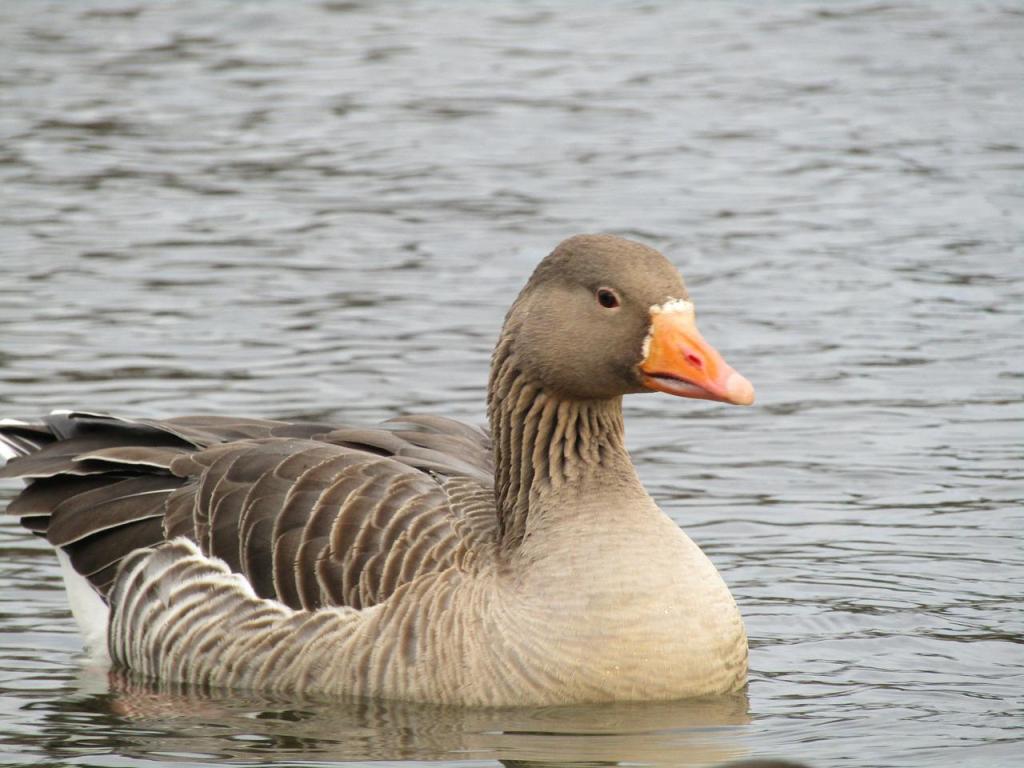
A goose floats on the river,
so near I can almost touch him.
In an ugly mood, he honks at me.
It’s what he has to say.
On this wind-blown day,
leaves fall, denuding the trees.
I can’t see that wind,
but I feel its chilling breeze.
We only know what
we can see. But who sees
the atoms in a cup of tea?
Life is a brief fantasy.
Fat clouds drift insouciantly,
then disappear. The river
wanders ambiguously,
until it’s finally swallowed
by a distant sea. I gaze
at it with querulous eyes,
And see confusion,
but that is only me.
and I’m just a momentary illusion.
*Mei Yaochen (1002-1060) Poet of the Song Dynasty
George Freek’s poetry has recently appeared in The Ottawa Arts Review, Acumen, The Lake, The Whimsical Poet, Triggerfish and Torrid Literature.
.
PLEASE NOTE: ARTICLES CAN ONLY BE REPRODUCED IN OTHER SITES WITH DUE ACKNOWLEDGEMENT TO BORDERLESS JOURNAL
Frankly speaking, I am bored of shopping for festivals and marriages every season. The similar, predictable choices inside the stores put me off. I do not want to see myself in the full-length mirror wearing that premium suit. This narcissistic balderdash shrinks my zeitgeist. I cannot fashion myself in that dapper three-piece with padded shoulders to look broader and fuller while the truth abstains from voting in favour of my suave appeal.
I am seized with spinning new legerdemain that topples all established notions of going on a shopping spree. Since life is all about gathering new, amazing experiences, I am dying to hit the fashion street to grab chic stuff for my D-Day (to be read as Departure Day).
Almost all the leading brands have announced mega discount offers, but I am not allured to Buy 2 and Get 2 free. The sales pitch flounders to grab interest. I have no intention of taking some other people along with me to the world beyond. I prefer something like 60% off or an even more handsome discount. I am still not sure whether I would like to wear something traditional like a kurta-pajama set or the usual trouser-shirt combination. I am also quite okay with considering athleisure[1] because they say the soul has to travel a long distance to reach heaven. I would prefer comfy wear that enables me to run faster to meet my Creator.
I entered one store selling branded traditional wear. I asked the salesman following me to show me a funeral wear collection. Stumped, he looked at me and then at the salesgirl, perhaps waiting for some sort of clarification. Perhaps I was the first customer who walked into the store asking for funeral wear. Before he pressed for my size, I disclosed my right fit. There was some kind of scramble and a rushed attempt to pull out the sober pieces for a somber occasion. I said I am perfectly okay with flashing a bright red or golden look. So, the idea of sticking to white and cream[2] should be abandoned.
I wanted to be sure of what I would wear on the day of my death. Instead of the full-length mirror, I felt like lying down straight as if in a coffin – right on the display counter with a marbled top and asking one of those sales guys to click me in that flat posture wearing my new apparel. My imagination was turning wilder and wilder and I needed to rein myself in or the lackeys would lend their shoulders to carry me out of the shop and drop me on a towing vehicle parked somewhere nearby. This trial episode of being raised on four shoulders would give me the rare experience of what it feels to be lifted for the last journey.
Switching from traditional wear, I went around the store for something trendy. The casual shirts, with floral print, offered 80% off. The size was perfect and the fabric was pure cotton. I was dazzled by the rust-brown shirt with green flowers and made up my mind to go for this before the sales guy disclosed two buttons were missing. Since this was going to be my last wear, I should not behave like a perfectionist and informed the salesman with a glum face that this would be one-time wear for me as it would be consigned to flames with me. Before the nervous guy pressed the fire alarm, I needed to clarify how the fire thing crept into the conversation. Softly, just for his ears, I said I am shopping for my funeral. He almost fainted on hearing my disclosure, but I chose to proceed to the billing counter. I was a living example of the truth that there are all kinds of crazy people in this world.
My next stop was a premium store for trousers, with the tagline of something like smart dressing for the successful male. Well, I had never been after success and this is perhaps why I was excited to try out something that successful men wore. The tapered fit was difficult for me to wear but the store man insisted this was in vogue. Maybe soon in the morgue as well, I said to myself. I checked out the one with a fabulously smooth, soft texture. The store man offered discount vouchers for shopping again.
I asked him if he had anything immediate to offer. He said it was 50% off now and additional 25% off was given on the next purchase. I recycled the cliché: life is too short. And added I do not know whether I would be alive to visit again for the next shopping trip to redeem the coupon. He wished me a long life with a wide smile and claimed he was always right in his predictions.
I was left with the task of buying shoes. Death is always a stealthy affair and makes no sound when it arrives at the doorstep so I wanted to try something that made no noise when I said goodbye to this world. I should certainly be a good match. I opted for the hush-hush variety before saying Ta-ta. The pure leather shoes were comfortable to wear and I felt like I wore nothing. I was impressed with the hefty 70% discount on the leather pair and picked up white socks as well.
With these three shopping bags, I felt I had done a hell lot of good shopping and had a gala time alone. I ducked into the nearest fast food outlet and ate junk food and ice cream. I was keen to pack more calories and enjoy a loaded brunch.
When I looked at the items I had bought for my funeral, I felt I was not dying today and the urge to wear them grew. Death is still a long way to go and I have experienced the pleasure of shopping for death. But I cannot keep these items in my wardrobe without wearing them now. The temptation grew and the coming weekend bash at a friend’s place saw me wearing the coolest combination. The beautiful people there noticed my iridescent presence. I surprised them and regaled them with my shopping plans for my funeral and these latest grabs were meant for that farewell journey.
A friend of mine said you are not going to die so soon. Yes, he was right, and this is why I did not have the patience to wait so long to try these on. My crazy shopping gig excited many others to go on a similar shopping binge.
[1]A type of hybrid clothing typically worn during athletic activities and in other settings, such as at the workplace, at school, or at other casual or social occasions.
[2] Indian and Chinese funeral wear is often white or cream.
.
Devraj Singh Kalsiworks as a senior copywriter in Kolkata. His short stories and essays have been published in Deccan Herald, Tehelka, Kitaab, Earthen Lamp Journal, Assam Tribune, and The Statesman. Pal Motors is his first novel.
PLEASE NOTE: ARTICLES CAN ONLY BE REPRODUCED IN OTHER SITES WITH DUE ACKNOWLEDGEMENT TO BORDERLESS JOURNAL.









 Borderless