‘I may go away from Shillong, but the month of Agrahayan can’t suddenly slip away from the almanac! Do you know what I shall do in Calcutta?’
‘What will you do?’
‘While Mashima makes arrangements for the wedding, I must prepare for the days that are to follow. People forget that conjugal life is an art, to be created anew each day. Do you remember, Banya, how King Aja had described Indumati in Raghuvamsha?’
‘‘‘My favourite pupil has artistry in her blood,’ ’ quoted Labanya.
‘Such artistry of the blood belongs to conjugal life,’ declared Amit. ‘Barbarians generally imagine the wedding ceremony to be the real moment of union, which is why the idea of union is often so utterly neglected afterwards.’
‘Please explain the art of union as you imagine it in your heart. If you want me to be your disciple, then let today be the first lesson.’
‘Very well, then, listen. The poet creates rhythm out of deliberately placed obstructions. Union, too, should be rendered beautiful by means of deliberately placed obstacles. To cheapen a precious thing so that it is to be had for the asking is to cheat your own self. For the pleasure of paying a high price is by no means negligible.’
‘Let’s hear how the price is to be calculated.’
‘Wait! Let me describe what my heart has visualized. Beside the Ganga, there will be a garden-estate on the other side of Diamond Harbour. A small steam-launch would take us to Calcutta and back, within a couple of hours.’
‘But why the need to travel to Calcutta?’
‘Now there is no need to, please be assured. I do visit the bar- library, not to engage in trade but to play chess.The attorneys have realized that I have no need for work and, therefore, no interest in it. When a case comes up, concerning some mutual dispute, they hand me the brief but nothing more than that. But right after marriage, I’ll show you what it means to set to work, not in search of a livelihood but in search of life. At the heart of the mango lies the seed, neither sweet, nor soft, nor edible; yet the entire mango depends on it, takes shape from it. You understand, don’t you, why the stony seed of Calcutta is necessary? To keep something hard at the core of all the sweetness of our love.’
‘I understand. In that case, I need it, too. I must also visit Calcutta, from ten to five.’
‘What’s wrong with that? But it should be for work, and not in order to explore the neighbourhood.’
‘What work can I take up, tell me? Without any wages?’
‘No, no, a job without wages is neither work nor play: it’s mostly all about shirking. If you wish, you can easily become a professor in a women’s college.’
‘Very well, that shall be my wish.What then?’
‘I can visualize it clearly: the shore of the Ganga. From the lowest level of the paved bathing area rises an ancient banyan tree, laden with aerial roots. While cruising down the Ganga to Ceylon, Dhanpati may have tethered his boat to this same banyan tree and cooked his dinner under its shade. To the south is the moss-encrusted paved bathing ghat, the stone cracked in many places, eroded in patches. At that ghat is tethered our slim, elegant boat, painted green and white. On its blue flag, inscribed in white lettering, is the name of the boat. Please tell me what the name should be.’
‘Should I? Let it be named Mitali, for friendship.’
‘Just the right name: Mitali. I had thought of Sagari, in fact I was rather proud of having thought up such a name. But you have defeated me, I must admit.Through the garden flows a narrow channel, bearing the pulsebeat of the Ganga. You live on one side of the channel, and I live just across, on the other side.’
‘Would you swim across every evening, and must I await you at my window, with a lighted lamp?’
‘I’ll swim across in my imagination, crossing a narrow wooden footbridge. Your house is named Manasi, the desired one; and you must give a name to my house.’
‘Deepak—the lamp.’
‘Just the right name. Atop my house, I shall place a lamp to suit the name. A red light will burn there on the evenings when we meet, and a blue one on nights of separation. When I return from Calcutta, I shall daily expect a letter from you. It should sometimes reach me, sometimes not. If I don’t receive it by eight in the evening, I shall curse my ill-fortune and try to read Bertrand Russell’s textbook on logic. It will be our rule, that I must never visit you uninvited.’
‘And can I visit you?’
‘Ideally, both of us should follow the same rule, but if you occasionally break it, I shall not find it intolerable.’
‘If the rule is not to be observed in the breaking, what would be the condition of your house! Perhaps I should visit you in a burkha.’
‘That’s all very well, but I want my letter of invitation. The letter need contain nothing but a few lines of verse, taken from some poem.’
‘And will there be no invitations for me?Am I to be discriminated against?’
‘You are invited once a month, on the night when the moon is at its full, after fourteen days of fragmented existence.’
‘Now offer your favourite pupil an example of the kind of letter to be written.’
‘Very well.’ He produced a notebook from his pocket and wrote, first in English, then in Bengali:
Blow gently over my garden
Wind of the southern sea
In the hour my love cometh
And calleth me
Labanya did not return the piece of paper to him.
‘Now for an example of the kind of letter you would write. Let’s see how much you have gained from your lessons.’
Labanya was about to write on a piece of paper. ‘No,’ insistedAmit, ‘you must write in this notebook of mine.’
Labanya wrote, in Sanskrit, and then in English:
Mita, twamasi mama jivanam, twamasi mama bhushanam,
Twamasi mama bhavajaladhiratnam.
Mita, you are my life, my adornment,
The jewel in the ocean of my world.
‘The amazing thing is, I have written the words of a woman, and you the words of a man,’ remarked Amit, putting the notebook in his pocket. ‘There is nothing incongruous about it. Whether the wood comes from a red silk cotton tree or from a bakul tree, when set alight, the fire looks the same.’
About the Book
Rabindranath Tagore reinvented the Bengali novel with Farewell Song, blurring the lines between prose and poetry and creating an effervescent blend of romance and satire. Through Amit and Labanya and a brilliantly etched social milieu, the novel addresses contemporary debates about ‘good’ and ‘bad’ writing, the nature of love and conjugality and the influence of Western culture on Bengali society. Set against the idyllic backdrop of Shillong and the mannered world of elite Calcutta society, this sparkling novel expresses the complex vision and the mastery of style that characterised Tagore’s later works.
About the Author
Rabindranath Tagore (1861-1941), the Renaissance man, reshaped Bengal’s literature and music, and became the first non-European to win the Nobel Prize in Literature in 1913. He introduced new prose and verse forms and the use of colloquial language into Bengali literature, thereby freeing it from traditional models based on classical Sanskrit. He was highly influential in introducing the best of Indian culture to the West and vice versa, and was a living institution for India, especially for Bengal.
About the Translator:
Radha Chakravarty is a writer, critic and translator based in New Delhi, India. She has co-edited The Essential Tagore and translated Rabindranath Tagore’s major works including Chokher Bali, Gora, Farewell Song, Four Chapters, The Land of Cards: Stories, Poems and Plays for Children and Boyhood Days. She has also translated other Bengali writers from India and Bangladesh, such as Bankimchandra Chatterjee, Kazi Nazrul Islam, Sunil Gangopadhyay, Nabaneeta Dev Sen, Mahasweta Devi, Anita Agnihotri, Selina Hossain, Hasan Azizul Haq and Syed Shamsul Huq. She is the author of Feminism and Contemporary Women Writers and Novelist Tagore. Her latest books in translation are Our Santiniketan by Mahasweta Devi and Four Chapters by Tagore. Nominated for the Crossword Translation Award, she also is also a widely published poet. She taught Comparative Literature & Translation at Dr B R Ambedkar University Delhi.
Reflections by Paul Mirabile on James Joyce’s Stephen Dedalus who found fruition in A Portrait of the Artist as a Young Man (1916) & a key role in the 1922 classic, Ulysees
“You have a queer name, Dedalus,” says Brother Michael to Stephen Dedalus, the hero of A Portrait of anArtistas a Young Man in the first chapter. Strange perhaps, but quite significant for this tale : Daidalos in Greek means ‘architect, wiseman, artist, craftsman’[1]. He was the universal artist in Greek mythology, the ingenious Athenian architect, who exiled to Crete, designed the labyrinth within which the terrible Minotaur was kept, a complex formation which analogues Dedalus’ intricate or labyrinth-like thinking patterns. A formidable name, thus, for Joyce’s protagonist, one in fact that evokes many of the author’s own traits.
James Joyce (1882-1941) once remarked that a male artist (writer, painter, musician) generally inherits many effeminate attributes from his mother (or from other female figures of the family), and as he matures and grows conscious of them, exploits them to create. Effeminate characteristics in a male engenders a sensitivity that overshadows the ‘virility’ of the father. This is certainly the case with Stephen Dedalus in our story, and perhaps too with James Joyce.
In chapter one, Stephen’s leanings towards his mother appear to be projections of Joyce’s, although the reader should be aware that A Portrait of an Artist as a Young Man, published in 1916, is not an autobiography per se. However, Stephen’s word-associations and flashbacks dissociate, and concomitantly link the ‘masculinity’ of his boarding school surroundings with happy memories which depict his mother and her daily gestures and occupations. There is little doubt that these depictions were drawn from Joyce’s own experiences during his boarding school years.
Stephen felt lonely at the boarding school, studying and playing with boys who were tough, hardened by their fathers’ stern discipline and rough language, many of whom were footballers, pranksters or schemers. He had been brought up by his mother. She never taught him to play football, be a prankster or a schemer. Should that have been his father’s task ? His mother would never have taught him to rub rosin in his hands to harden them against flogging. Fleming, a school comrade, did, and you can be sure that his father had counselled him on that point. When Stephen was flogged along with Fleming, we are witness to the differences in their domestic upbringing : Stephen describes his flogger Father Dolan with great vividness ”looking through his glasses”, those same glasses that were seen through by his father in the first passage at the beginning of chapter one. Had Father Dolan — his ‘brotherly’ father– a ‘tough’ man indeed, misunderstood the scorn that young Stephen’s artistic propensities led him to experience?
Perhaps it is the lack of sympathy and understanding on the part of the father-figures he encounters throughout life that transports Stephen into a lonely, private world dominated by the mother-figure. When he is ill in the infirmary he is quick to address a letter to his mother ; his mother who smells ”nicer” than his father. Joyce, the narrator, also informs us that she played the piano, whereas the father did not …
The boys at the school teased him because he would kiss his mother every night before going to bed, something quite normal for him, yet ”girlish” for the boys. And even if they did kiss their mothers they would never have admitted it in front of the other boys, a habit that their fathers probably told them not to disclose when at school. Stephen had no ‘official training’ in these delicate matters by his father.
He discovered this lack of ‘manliness’ in him through his sensitive, perceptive insight into all that he felt, heard, smelt and observed. His mother’s sensitive world was an innate attribute, one that he consciously cultivated in a creative fashion, examining all that took place, criticising what he felt had been unjust or false. In fact, the opening chapter draws a suggestive parallel of Stephen’s (Joyce’s?) life as an artist and his inner relationship with his mother (and his father to a certain extent) as if she were an inseparable ally on his path to artistic glory.
”He longed to be home and lay on his mother’s lap,” grieves the narrator, defending the downcast Stephen, for indeed the boarding school proved terribly trying for him, violent in many ways, even physically violent by the flogging administered by the brothers and the fights against his comrades. Stephen would reminisce : ”She was a nice mother but she was not so nice when she cried.” Did this prevent him from crying when flogged by the brothers or humiliated by the boys ?
Stephen opens chapter one by recounting what his father had told him when he was a baby. But his father’s language is a child’s, spoken exactly as a child would. On the contrary, Stephen’s childish attempts at communication : too many pronouns, the repetition of a song sung by Betty Byrne : “O,the green wothe botheth … ,” his insight into the ages of his immediate family : “[T]hey were older than his father and mother but Uncle Charles was older than Dante,” and his eventual intellectual developments and abandonment of a Jesuit education due to a very severe and masculine environment, all bespeak a precociousness of character inherited from his mother, which did not prevent him, however, from showing great respect for his father.
At the end of chapter two, he stumbles across a prostitute. Stephen is greatly distressed. He is drawn towards this female but, ”His lips would not end to kiss her. He wanted to be held firmly in her arms, to be caressed slowly, slowly.‘‘ Like his mother would do ? This being said, the poor, lonely Stephen yielded to the prostitute’s charms …
Stephen’s love for his mother is deep: when he ‘exiles’ himself to Paris to study medicine in the first chapter of Ulysses (1922) he receives a letter that his mother has taken to bed very ill. He returns quickly, but refuses to kneel at her bedside and pray for her : ” ‘You could have knelt down, damn it, Kinch, when your dying mother asked you,’ Buck Mulligan said.”[2] Buck even accuses him of killing his mother: “He kills his mother but he can’t wear grey trousers.”[3] It goes without saying that Stephen did not kill his mother ; he deeply regretted her death. However, this disgraceful act towards her pleadings is explained by the fact that to kneel down on both knees represents a Church rite, ”the Jesuit strain in him”[4]. The tortured Stephen disavows this ‘ecclesiastical’ gesture, this gesture of absolute obedience before authority. It were as if at that difficult moment his confused state of mind confounded the love of a mother and the hate of a Jesuit institution that Stephen (and Joyce) bore. It is true that the severity and pain of his seminary years had all but deadened the youth’s love for his mother. However, if he did feel a disliking at his mother’s bedside for those few moments, they should not be interpreted as hate for her, but rather as a transient absence of love. He will be redeemed of this absence of love by the love of languages, especially his ‘mother’ tongue, in spite of the sorrow he bore within him like some original sin.
Born from the mother, the mother breathes into her child the force and the will to live. Wrought from the womb, the child bathes in the sounds, accents and musical rhythms of his or her mother: the lullabies and nursery songs, the praises and reproaches. And a day will come when he or she must be weaned, and although the umbilical cord is cut the cultural cord continues to nourish the child, of which language is the most vital nourishment.
It is the mother tongue that motivates Dedalus/Joyce to desire his language … and the Others’ languages ! The desire to possess or master English, Italian, French, German, Norwegian, Latin and Greek. A polyglot’s desire to penetrate the womb of the Other out of which all languages have been wrought.
Throughout A Portrait of an Artist as a Young Man Joyce is very methodical in developing Stephen’s acumen in word usage. The hero’s pursuit of intellectual ‘purity’ oftentimes turns him into a pedantic perfectionist correcting a word used outside its proper context with the person whom he is addressing. This preoccupation with perfection in proper word usage is only natural for someone who studies languages and realises that verbal force can be a veritable weapon. A word, above all other linguistic features, can be an instrument of puissance and persuasion when wielded with accuracy and precision. Stephen’s effort to instrumentalise English and use it to overpower his ‘opponent’ is manifest in his attempts to seek the word which best fits the circumstances of his daily human intercourse.
In chapter one, even at an early age, Stephen is asking himself ethnico-linguistic questions, making word comparisons when used in idiomatic expressions. For example, ”that was a belt round his pocket. And belt was also to give a fellow a belt.” (page 9) Stephen’s extraordinary memory focuses in and captures the moment the word or expression is used from which he could then make his point :”Go and fight your match. Give Cecil Thunder a belt.”
He knew this was not a ‘nice’ word, as his mother had told him, but one which belonged to a certain class of people. The youngster would soon come to accept these ‘not nice words’ however, comprise the very beauty of language, their social realism and above all their power to persuade! These idiomatic expressions were surely not learnt from his mother; they were acquired from his daily brushes with the many folds of social commerce.
In the same chapter he utters to himself the word ‘wine’ ; it immediately gives him the image of ”… dark purple because the grapes were dark purple that grow in Greece…” (page 43). Uttering a word and conjuring up its ‘topographic image’ also developed his intricate word-image analogies.
Stephen Dedalus hears: ” You are McGlade’s suck. Suck was a queer word,” reports the narrator. Stephen learns the meaning of this word by observing dirty water going down the drain in a wash-bowl; it made a sound like a suck, and he resumes : “The sound was ugly.” Here he devises an ‘aural relationship’ to word signification which one may define as an ‘onomatopoeic analogy’.
Similar word-image associations emerge in the boy’s mind with expressions such as ‘Tower of Ivory’ and ‘House of Gold’ spoken by his father, and whose precise significance escaped his young mind. It would take some time before he understood their semantic impact. The occasion occurred when he stole a glance at the cool, soft ‘ivory-like’ hands of a girl, and at ”her fair hair streaking behind her like gold in the sun.” And he concluded : “By thinking things you could understand them.” In other words by ‘visual analogical’ efforts Stephen could relate to and grasp the meaning of words.
The first chapter of the book represents a young boy beginning his intellectual-linguisitc voyage, and as the story unfolds and Stephen’s mental capacities become more and more meticulous and keener, his discernment into word usage becomes more demanding when speaking to his peers or to elders.
The second chapter deals with his mental and physical vicissitudes : his father sells the house. The family moves to Dublin. Stephen goes to college. These changes affect his way of thinking, for he is a boy who is already conscious of his detachment from the rest of his schoolmates. He excelled in essay writing and was good in Latin. Stephen’s remark concerning his friend Heron is worthy of mention. Stephen ruminated over the fact that Heron, like the bird, had the same bird-like features. The name Heron suited the boy’s features quite nicely : ‘‘Vincent Heron had a bird’s face as well as a bird’s name. A shock of pale hair lay on his forehead like a ruffled crest.” His forehead too was ”narrow and bony” and he possessed ”a hooked nose.” (page 70) Again, Stephen’s capacity to ‘see’ and associate, analogically, words, or as he says their ”logical parallel”, marks a perspicacious penchant for conjoining the signifier with the signified. In the case of Heron: the name fitted the face. For Heron indeed was the perfect heron.
On page 83, again, whilst attending a seminar in the anatomy theatre, Stephen found the word foetus carved into a desk. This made him suddenly concentrate deeply on the meaning of this odd word. Did it portray reality, a raw and life-like reality, beyond all formal study and ‘higher’ education ? Did this word represent mankind in both its primitive and highest stages ? Did it not evoke the image of the mother … his mother ? Indeed fœtus remained in Stephen’s thoughts for the entire day. He wrestled with it, coming to the conclusion that a word is what man is : ” in the outer world a trace of what he had deemed till then a brutish and individual malady of his own mind.” The words brutish and malady are significant inasmuch as they actually do go far beyond the formal education that Stephen was pursuing. In fact, fœtus provoked yet another urge in the need for reality in language, which his studies in Latin certainly strengthened by discovering the origins of words and their semantic impact on human communication ; they taught him to train his mind to think in terms of precision, brevity and beauty. However, Stephen’s plunge into reality was more often forged outside the sacred walls of that ‘manly’ institution, amongst his myriad frequenting with the world of words uttered by the ‘womanly’ creatures of the whore-filled Dublin streets. This remarkable double-life, in chapter three, manifests itself sharply when Stephen is torn from those ‘womanly’ streets and is plunged into a ‘manly’ Jesuit retreat, where by the force of many well-delivered Hell-fire sermons a multitude of salacious temptations put his semantic perspicacity to trial.
In the Jesuit homilies or sermons during mass, the power of word usage is fully revealed to our heroic hero. So powerful is this usage that he confesses his previous dealings with prostitutes to a father confessor after listening to the ravings of a Jesuit concerning Judgement Day, death, hell, brimstone, fire and other Catholic-contrived image-filled words. The barrage of religiously-orientated words left him reeling in disbelief, which in turn obliged him to ‘believe’ the meanings of all the words which resonated clearly in his mind: judgement, death, soul and heaven. Yet, where were their true meanings? Were they what Stephen really thought them to be, or were they the Jesuit brothers’ invention, forcing themselves upon his young mind? Indeed, the answer becomes clear at the end of the book: Stephen sought his own definitions, his own knowledge, not the knowledge delivered from the books or the sermons of erudite Jesuit priests and brothers. Every word preached were weighed carefully to suit the disposition of the students, to create an ambiance of need, of weakness; a weakness to be satisfied in the pure thought and ‘word’ of God. Every ‘priestly’ word declaimed during mass weighed heavy upon Stephen’s mind. It only lightened when our hero was able to ‘think it through’ and not fall into an abominable, guilt-riddled contempt of himself.
A decisive step in Stephen’s life occurs in chapter four. Instead of accepting a career as a novice, then as a Jesuit priest, he strides out into the world on his own, knowing well his method of attaining knowledge would never have found favour in the eyes of the Jesuit brothers. To give an example, during a long conversation with a Jesuit priest, Stephen again scrutinises word usage. The priest mentions his journey to Brussels. He remarks that the people there wear ‘jupes[5]‘, and when they ride bicycles, it makes them look ridiculous. The mention of this foreign word causes Stephen to smile : ”The vowel was so modified as to be indistinct”. Stephen’s thought was obviously an attack against the priest’s pronunciation of the French word, an attack that went far beyond this one priest to humiliate the Jesuit institution as a whole. The word ‘jupe’ also emitted an olfactory sensation ; a perfumed fragrance. Stephen says that when articles of clothing were mentioned he could actually smell perfume. Here again we read another indication of a word’s power upon Stephen’s mind, whether it be aural, visual or olfactory ; that is, the ‘femininity’ of the image-sensation overrides the ‘masculine’ pronunciation of the word. The loquacious priest’s voice faded into the background as Stephen’s innate linguistic conscious rose to the surface : ”As the priest spoke, Stephen’s mind erred : ‘The echoes of certain expressions used in Clongrowes[6] (his boarding school) sounded in remote caves of his mind. At this point he was interrupted …”’ Stephen’s linguistic prowess acts like an etymological Time Machine, now straining back in intellectual pleasure, now fixed in the present which creates a spiral movement to his thought patterns. Chapter four ends with this beautiful passage which depicts the young artist’s sagacious ability to put into motion that spiral rhythm. I shall quote the passage in full.
”He drew forth a phrase from his treasure and spoke it softly to himself.
“-A day of dappled seaborne clouds-
“The phrase and the day and the scene harmonised in a chord. Words. Was it their colours ? He allowed them to glow and fade, hue after hue ; sunrise gold, the russet and green of apple orchards, azure of waves, the grey fringed fleece of clouds. No, it was not their colours ; it was the poise and balance of the period itself. Did he then love the rhythmic rise and fall of words better than their association of legend and colour ? Or was it that being as weak of sight as he was shy of mind, he drew less pleasure from the reflection of the glowing sensible world through the prism of a language many coloured and richly storied than from the contemplation of an inner world of individual emotions mirrored perfectly in a lucid supple periodic prose ?”
Here the past has been contracted into Stephen’s present circumstances: And no doubt, Joyce’s, too.
“Bous Stephaneforos!” mock his comrades. Yet, Stephen took great pleasure in the distorted orality of his name: did not ‘Bous’ in Greek mean ‘cow’ or ‘bull’ and his first name ‘Stephen’, ‘crown’? He was indeed the ‘crowned bull’! The ‘engarlanded bull’! ”His strange name seemed to him a prophecy. […] He would forge a legend, his name a symbol of the artist forging anew in his workshop out of the sluggish matter of the earth a new soaring imperishable being?” Was Stephen not the sacred bull of distant mythological or legendary heroes? Could he also be the victorious bull in the Irish epic tale the Tain Bo Cuailngy ? Whatever bull it be, Stephen knew his Destiny would be a glorious one, bathed in golden aura. Did his comrades know it?
Chapter five opens with Stephen’s acute criticism when reading poetry; certain verses arrest his attention: “Whoever heard of ivy whining on a wall ? And what about ivory ivy ? […] The word now shone bright in his brain, clearer and brighter than any ivory sawn from the mottled tusks of elephants’‘. Perhaps this poetic oddity of ‘ivy’ reminded him of the ‘Tower of Ivory’ that his father had mentioned, and recalled, too, those of the girl’s soft hands. Could analogical processes elicit such linguistic associations ? In Stephen’s case they certainly did.
Chapter five also initiates the beginning of Stephen’s literary career, his life as an artist, dedicated to ”putting words on paper”. Although the spiral rhythm of his mind abets him in his linguistic and poetic quests, he realises, too, that words belong to the epochs in which they were couched. Whilst reading Ben Jonson: ”He thought : ‘The language in which we are speaking is his before it is mine. How different are the words home, Christ, ale, master on his lips and mine ! I cannot speak or write these words without unrest of spirit. His language, so familiar and so foreign, will always be for me an acquired speech. I have not made or accepted its words. My voice holds them at bay. My soul frets in the shadow of his language.’”
How perspicacious Stephen has become at the end of his formal education : He understands that words of past literature, however potent or poetic, are acquired speech, whereas his present tongue, his ‘mother’ tongue, is innate. It would seem that once again he refutes the authoritative voice of the past, its literary ‘fixedness’, its stringent rules which must be acquired — as if these usages were quite artificial, dead — museum pieces for show and admiration. Stephen strains towards the future … towards horizonless linguistic freedom: His own invented Discourse because now innate (his mother’s), now acquired in the daily social practice of language production or creation.
Indeed his comments on word usage reflect a growing intellectual acumen, and permits us to comprehend fully his overpowering knowledge of ‘innate’ language. Stephen defines beauty and art in this chapter, surpassing Artistotle and Thomas d’Aquinas (or so he believes!). He rebukes his father’s ”curious idea of gender‘‘ ; Mr. Dedulas calls his son ”a lazy bitch”. Stephen muses mockingly: ”he has a curious idea of gender if he thinks a bitch is masculine” (page 259). A snippy remark aimed at his father’s linguistic ignorance, which in fact represents a critique of authority : the church … the father-image … the Jesuit priest. Only art will triumph. Art as a spiral cadence of an alternating succession of static and kinetic energies that leads us ”to action, to do”. Static energy holds or arrests our attention, as do words said by others that arrest Stephen’s attention. Kinetic energy thrusts words into our present circumstances which in turn sends them hurtling into the future. For example, further on in the chapter, Stephen is speaking with a Jesuit priest about his decision to take leave of the school ; the word ‘funnel’ is brought up in their conversation pertaining to the pouring of oil into a lamp. Stephen is quick to point out that funnel is out of place here, and that the word ‘tundish’ should be employed in this function. The priest confessed that he had no idea that the word existed and promised Stephen that he would look it up. Stephen insisted on its semantic veracity as if the priest did not take him ‘on his word’.
It is at this moment in the book where Stephen’s expanding linguistic knowledge runs parallel to his diminishing reverence towards those who had educated him.
Again on page 227 we read the word tundish, only this time written in Stephen’s diary : ”… that tundish has been on my mind for a long time. I looked it up and find it English and good old blunt English too. Damn the dean of studies and his funnel! What did he come here for to teach us his own language or to learn it from us? Damn him one way or the other!”
This plain-spoken critique and rejection of authority, and Stephen’s meticulous manner, had made him a better man than even his mentors. Is our hero then a self-sufficient snob ? An overweening upstart ? A pompous prig ? No doubt he can be characterised by all three … Yet, his passion for language spurred him on to become the artist he longed to be after experimenting with the tools of empiricism, since language, being both innate (the mother) and acquired (schooling/social intercourse), can only be learnt with the tools with which it had been forged. Language is human ; it is an integral part of humanity and not the sole property of an authoritative elite.
Stephen plunged into the complex world of word usage at all levels, a sort of socio-linguistic adventure and scrutiny, and like his narrator, James Joyce, emerged from it in all his ‘graphic’ self : The young writer-artist who rebelled against ‘good grammar’, refusing to put hyphens between nouns, or nouns and qualifying adjectives to create compound words ; it was his way of rebelling against prescribed grammar ; that is, against authority. Here is a short list of the ‘rebels’ taken at random : “moocow, hornpipe, terrorstricken, softhue, priestridden, seventyseven, seventysix, whitegrey, granduncle, strangelooking, deathwound, ironingroom, slateblue, rainladen, priestlike, darkplumaged, carriagelamps, suddenwoven (anger), freshfaced, hollowsounding, curtainrings, etc.” The long ligatured or hyphen-less words contrast greatly with Joyce’s use of short, choppy, racy, sentences; sentences devoid of detail. The characters are description less. ‘Literary’ or Dickension-type interpolated clauses are rare (he ejaculated, she ruminated, etc.). Joyce oftentimes has recourse to the simple ”he/she said”.
The rhythm of writing is a flux of Stephen’s verbal consciousness or series of dialogues with brief, curt responses or questions. We are no longer reading ‘classical’ literature but not exactly something that Joyce will experiment in Ulysses or in Finnegans Wake (1939). Something perhaps unfamiliar, estranged from the reading habits of the early twentieth century reader, not the story-plot, but the form in which the story-plot has been cast. It were as if Joyce turned to the languages of the Other in order to express both his own mother tongue and a discourse of his own, embedded within that mother tongue. As if the mature writer-artist in trespassing the rules of ‘good’ English grammar, not only trespassed the authority of the ‘father-figure’, be it his father, Father Dolan or any Jesuit priest, but also instituted an invented discourse which distanced him from the mother tongue (the mother?) only tocome back to it in a creative attempt to strike out on his own.
There is no doubt that Stephen Dedalus/ James Joyce is indeed the ”prince of words” …[7]
Burgess, Anthony, Re Joyce Here comes Everyone, (W.W. Norton Company, London England) 1965.
[1] The verbal form in Greek of the proper name is ‘daidallo’ ‘to work, adorn’, the nominal form ‘daidalon‘ ‘a work of art’ and the adjectival form ‘daidalos’ ‘cunning’. These forms have given the French noun ‘dédale‘ ‘maze, labyrinth’.
[7] Anthony Burgess, Re Joyce. Here comes Everybody. Faber and Faber, 1963.
Paul Mirabile is a retired professor of philology now living in France. He has published mostly academic works centred on philology, history, pedagogy and religion. He has also published stories of his travels throughout Asia, where he spent thirty years.
.
PLEASE NOTE: ARTICLES CAN ONLY BE REPRODUCED IN OTHER SITES WITH DUE ACKNOWLEDGEMENT TO BORDERLESS JOURNAL
On the last day of the year, the line at the carwash snakes all the way into the street. My family and I wait patiently in our mini-van, preparing to hose and hoover, and to slather wax onto metal. Our bodies are tired and slightly grimy. For the past two weeks, we’ve been consumed by O-soji, the traditional thorough end-of-the-year cleaning. Every window in our house has been washed. Old newspapers have been bound and toted off to the recycling center. Our floors are as shiny as mirrors.
O-soji, or “Big Cleaning”, can be quite a task for my organisationally-challenged family. As an American, I come from a country where a leading magazine encourages women to aspire to “good enough housekeeping.” Better to become a lawyer or a doctor than spend all my spare time chasing dust bunnies, I learned.
Here in Japan, however, where wiping the floor is part of a kid’s education, cleaning is serious business. And Japanese women seem to spend far more time pushing a vacuum around than their counterparts across the sea. The mother of one of my daughter’s kindergarten classmates told me that she vacuums every day! This, in a country where one has to take off one’s shoes before stepping into a house. Another mother confessed that “tidy up” were among the very first words that her son learned. On a visit to our house, my own mother-in-law once took it upon herself to line up all of the socks in my children’s sock drawer.
However, if the tendency to tidiness is hereditary, my husband apparently missed out. He often leaves a trail of dirty, balled up socks, plastic snack wrappers and empty beer cans, and the car that we are about to wash is cluttered with trash. And although my daughter is often praised by teachers at her school for her obsessive-compulsiveness – i.e., she can’t concentrate unless her pencil case is perfectly aligned with the edge of her desk and she dutifully lines up hers and others’ shoes at the entrance of her classroom – at home, she lapses into sloppiness. And my son? The floor of his room is usually layered with cast-off clothes, comic books, and school papers.
But on the last day of the year, at least, our house is as neat as the proverbial pin.
The car ahead of us finishes, and we pull up in front of the hose. The four of us clear out the empty drink containers, vacuum up crumbs and dirt, and scrub the outside of the car. When we are finished, we go home and collapse on the sofa. We will eat noodles at midnight, and then wake feeling fresh and pure, ready for the first sunrise and the first dreams of the new year.
Suzanne Kamatawas born and raised in Grand Haven, Michigan. She now lives in Japan with her husband and two children. Her short stories, essays, articles and book reviews have appeared in over 100 publications. Her work has been nominated for the Pushcart Prize five times, and received a Special Mention in 2006. She is also a two-time winner of the All Nippon Airways/Wingspan Fiction Contest, winner of the Paris Book Festival, and winner of a SCBWI Magazine Merit Award.
PLEASE NOTE: ARTICLES CAN ONLY BE REPRODUCED IN OTHER SITES WITH DUE ACKNOWLEDGEMENT TO BORDERLESS JOURNAL
NEW YEAR’S COIN FLIP

Rise and shine,
The world is mine!
Let’s get ahead!

Or ...

Back to bed,
Old sleepyhead,
Dull and supine.

A POSSIBLE EXPLANATION FOR THE MADNESS OF MARCH HARES

March hares,
beware!
Spring’s a tease, a flirt!

This is yet another late freeze alert.
Better comfort your babies;
the weather has rabies.


SONG CYCLE

Sing us a song of seasons—
of April’s and May’s gay greetings;
let Winter release her sting.
Sing us a song of Spring!

Nay, the future is looking glummer.
Sing us a song of Summer!

Too late, there’s a pall over all;
sing us a song of Fall!

Desist, since the icicles splinter;
sing us a song of Winter!

Sing us a song of seasons—
of April’s and May’s gay greetings;
let Winter release her sting.
Sing us a song of Spring!

THE UNREGAL BEAGLE VS. THE VORACIOUS EAGLE

I’d rather see an eagle
than a beagle
because they’re so damn regal.

But when it’s time to wiggle
and to giggle,
I’d rather embrace an angel
than an evil.

And when it’s time to share the same small space,
I’d much rather have a beagle lick my face!


OVER(T) SIMPLIFICATION

“Keep it simple, stupid.”

A sonnet is not simple, but the rule
is simply this: let poems be beautiful,
or comforting, or horrifying. Move
the reader, and the world will not reprove
the idiosyncrasies of too few lines,
too many syllables, or offbeat beats.

It only matters that she taps her feet
or that he frowns, or smiles, or grimaces,
or sits bemused—a child—as images
of worlds he’d lost come flooding back, and then . . .
they’ll cheer the poet’s insubordinate pen.

A sonnet is not simple, but the rule
is simply this: let poems be beautiful.
Michael R. Burch’s poems have been published by hundreds of literary journals, taught in high schools and colleges, translated into fourteen languages, incorporated into three plays and two operas, and set to music by seventeen composers.
PLEASE NOTE: ARTICLES CAN ONLY BE REPRODUCED IN OTHER SITES WITH DUE ACKNOWLEDGEMENT TO BORDERLESS JOURNAL
I am from Wales but now I live in India. I am therefore in a very good position to note any differences between life in the two different countries. The first of these differences concerns food. Indian food is the main kind of food in public eating places in both locations. But the food itself isn’t quite the same. Indian food in India is Indian by default. In Wales no one knows whose fault it is. I fell into a curry in Wales once. I slipped on discarded laddoo peel (we peel laddoos over there because we think they grow on trees) and into the pot I went. It was a good curry and might be considered authentic. After I fell into it, ‘in authentic’ was the correct term for it. I wiped myself clean with a large naan bread. Later I wore the naan bread as a cloak. Waste not, want not.
So much for food. I am writing this short essay at the end of November. India is especially different from Wales at this time of year. Here I am playing badminton in shorts and a t-shirt. Back in Wales it is so cold that the sunbeams have frozen solid and I would be hanging my washing on one of the horizontal rays. In the afternoon, here in India, I will probably read a book of poetry under a banyan tree while drinking mosambi juice and listening to sitar music. But in Wales, I would be snapping off that frozen sunbeam and using it as a long lance while riding my yeti[1] over the misty mountains.
Traffic is another difference. In India the roads are choked with cars, autos, tuk-tuks (yes, I know that autos and tuk-tuks are the same thing but I need more wordage in this essay), trucks, buses, bicycles, wheelbarrows and cows. Wales doesn’t really have roads and the only traffic consists of crows. A crow perched on the back of a cow would make a perfect official emblem for a Welsh-Indian Friendship Association. If there are no roads in Wales, how do we get about? It is a pertinent question. We jump, is the answer. This not only enables us to reach our destinations but keeps us warm in winter.
In India there are monsoons but in Wales they are never soon, they are here already. The only time it stops raining in Wales is when the clouds go on strike for more pay. Lightning also goes on strike. There are puddles everywhere, even on the surfaces of lakes and ponds. Because we jump everywhere, there is a lot of splashing in Wales. This splashing puts most of the moisture back into the air where it forms clouds and perpetuates the cycle. I once perpetuated a cycle. It was a bicycle originally but I sent it away to get an education and it came back as a unicycle. I connected it to a motor powered by a rainfall gauge. Off it went on an endless journey around Wales. I would never attempt something like that in India. So there’s another big difference.
India is actually a very advanced country in terms of technology. Based in Bangalore, I am able to order anything I like with an app on my mobile phone. If I want food or drink or a bicycle, I just have to tap a few keys and a delivery guy will turn up with the ordered stuff. I once ordered a delivery guy using one of these apps and a different delivery guy turned up carrying the first delivery guy over his shoulder. But then I decided I didn’t really need a delivery guy so I sent him back and obtained a full refund.
It’s not like that in Wales. We only acquired mobile phones very recently in history and they are of a decidedly primitive sort. We started with parrots that one keeps in a pocket and speaks the messages to before releasing them to land on the shoulders of the recipients, where they recite the messages. This meant the pockets of our trousers had to be enlarged but we felt it was worth the cost. The parrots didn’t like flying through the endless rain and the messages usually went astray. So we progressed to a more advanced model, which consisted of riders on bicycles holding tin cans connected by string. You can’t order food on our mobile phones or even new trousers.
Wales is behind the times in other ways too, in fact in all ways. Wales is so belated in every respect that when the end of the world finally takes place, the country will continue for a few more years as if nothing has happened. I suspect that very slow processes, such as continental drift, evolved in Wales. I suppose that even evolution evolved in Wales, considering how slow it is and how long it takes a dinosaur to change into a chicken. I can change into a chicken with a great deal more efficiency, but I prefer pretending to be a gorilla or a chimp. It’s a very relaxing thing to do. Why not try?
Also in India you have holy men, but in Wales we only have holy socks. A holy man can open himself to the secrets of the universe. A holy sock is open to the weather, which is generally wet, and not much else. Holy men can levitate if they are sufficiently pure in spirit, or so I have been told. I once saw a flying sock, but it had been lobbed at me by a neighbour and wasn’t pure at all. That’s not the only thing I have seen rushing through the atmosphere in Wales. Parrots with sad expressions, of course, but also gloves. Why this should be so was a mystery for ages but recently the enigma was solved by an enigma machine and the answer is that “glove is in the air, everywhere I look around”. Or perhaps it is just the wind. Yes, I think it’s the wind.
The Enigma machine was used in the early- to mid-20th century, especially in WWII, for commercial, diplomatic, and military communications. Courtesy: Creative Commons
An enigma machine, incidentally, is a device invented in Wales that looks like an abacus, but it has small onions on wires instead of beads. Crows perch on the wires and peck the onions and move them into different positions, which gives the answer to any question. But the answer is cryptic and must be studied by a druid, who will interpret it. Druids are common in Wales. They aren’t holy men, strictly speaking, but are highly respected because they wear intact socks. They also wear cloaks made from naan breads but if you ask them, they insist they are made from wool and cobwebs.
You are probably beginning to ask yourself, is this a serious essay? And at this point you might be harbouring doubts that it is. There are many harbours in Wales, which has a convoluted coastline, but not many in the interior of India. That’s another difference. I have already mentioned laddoos and the fact that we peel them (and I mentioned it in brackets) but we also peel bells. I don’t think bells are ever peeled in India. They are rung instead. The peel of Welsh bells is used to make the tall hats that old women wear, conventionally on their heads, that you might have seen in vintage photographs. Bell peel is more enduring than satin or any other kind of fabric. It means that every old woman always knows what the time is when their hat bongs.
India is full of palaces. Not long ago, I visited Mysore Palace and found it truly impressive. In Wales we have nothing quite like that, but I often mention Mysore Feet after all the jumping I have to do to get anywhere. And now one final difference before I go. In India, the essays that writers write are generally detailed, comprehensive and lengthy. In Wales they often end abruptly in the middle with three dots, as if the writer was eaten by a yeti unexpectedly… but not this one. No yeti. Not yet anyway.
[1] The Welsh yeti, Abominablis Boyo, is only distantly related to the Himalayan species.
.
Rhys Hughes has lived in many countries. He graduated as an engineer but currently works as a tutor of mathematics. Since his first book was published in 1995 he has had fifty other books published and his work has been translated into ten languages.
.
PLEASE NOTE: ARTICLES CAN ONLY BE REPRODUCED IN OTHER SITES WITH DUE ACKNOWLEDGEMENT TO BORDERLESS JOURNAL
Waking up in the ambrosial wee hours of the morning to find my silk scarf dragged to the bathroom door sent shivers down my spine. I suspected the sneaky presence of a stranger in the house, most likely a petty thief who fancied this extravagant piece of clothing around his neck to rev up his vagrant style. Rattled by this intrusion, I turned around, with one eye stationed on the wall. I tried to track shadows lurking behind me to hammer my moderately creative head. Nothing appeared in sight or peripheral vision, so I looked up for open ventilators or any broken windowpane to unravel the mystery of the great escape of an agile thief who decamped with more valuable stuff than what had come to my notice so far.
Picking up the scarf and dumping it in the woven basket, I retraced my steps to enter the bedroom and checked the cash box in the wardrobe. I was about to step in when something scurried very fast along the base of the wall in front of me, squeaking behind the refrigerator in search of a haven, probably feeling scared and jittery of a predatory attack and sending distress signals to its fraternity to stay holed up underground.
The supposed culprit – a squeaking rat – had made a fleeting appearance. I confess I do not possess the olfactory vigour to smell its presence like many others do. But there was no denying the fact that there was a family of rats residing at my address without my knowledge and permission. The tell-tale signs were their droppings splattered on the marble slab in the kitchen and the dining space. One rat would surely not have such a bulky output even if it enjoyed a wholesome feast every night. Besides, dragging my silk scarf was a specimen of well-orchestrated teamwork.
As the storytelling instinct does not let go of an opportunity to find a crack for a new narrative, the presence of a ghost could well be another strong possibility. Possibly the rat was not the culprit but the saviour to chase away the spirit in search of salvation or relief from the wintry chill as it rested on the mango tree in the backyard. Spirits enter and exit through closed doors and windows with ease, so this was another fascinating interpretation that engaged me for a while when I traced no sign of pilferage in my wardrobe.
Since I had witnessed the presence of a shy rat lacking the courage to own up its mischief, I was inclined to go with this credible version. With another rat collaborating to displace my favourite scarf. It was quite a distinct possibility though I was yet to attach a motive to it. Were they just trying to foment trouble in the household? Were they having good fun with my scarf to end their boredom? I had checked the scarf for possible tears but it bore no sign of violence.
I must praise their good behaviour and upbringing. Though they could have wreaked havoc on my belongings lying in the open, they exercised remarkable restraint. Or perhaps, they had damaged things I had not examined yet. Maybe, the cloth bags, the plastic containers on the kitchen shelf, the woollen carpet, or the backside of the leather sofa were what they preferred to bite into. On the upside, there was still no clinching evidence of their destructive avatar in the household. Playing the devil’s advocate, I thought the rats tried to take my scarf to the washroom and plunge it into the water drum to serve me a reminder. Washing it was a pending task for quite some time. The stubborn stains of tomato sauce on the scarf were unlikely to go away if there were any further delays.
Instead of thanking them for the timely assistance, I chose to be thankless, like humans tend to do all the time. I preferred to place a rat trap with irresistible bait: jam cookies for dinner. With those tantalising pieces dangling from the iron hook inside the wooden box, a fool-proof trap was laid, like those gorgeous dresses displayed to entice shoppers into a store. The rat trap was not big enough for the pair to walk into comfortably without jostling for space. However, in the cover of darkness, I was sure at least one would go inside to fetch the gourmet food while the partner waited outside, just as a biker ducks into a takeaway snack counter and his pillion-riding girlfriend guards the bike.
My concern regarding the safety of bestselling books was paramount though I was okay if they chewed the books written by me, to cut their teeth and gain experience of what they were best at. I was impressed with their perfect coordination, fighting like a healthy couple, making a big noise on piffling issues but staying united to stave off external attacks.
Getting the rats out of their hiding place was a problem that plagued me. I hoped the bait would work as a talisman for me. But deep within, I thanked them for doing good work instead of damaging the items. This was a radical change that deserved praise instead of this brazen attempt to evict them. Human beings find innovative ways to eliminate rivals of all species. My eviction drive was a moderate and tolerant act though I had the freedom to snuff out their precious lives with a mild dose of poison sprayed on bread crumbs or try a glue mat that immobilise them once they have stepped on it accidentally and keep screeching for relief till their last breath.
I thought the next morning I would push the wooden box out of the house, lift the cage door and set it free to roam the big, bad world instead of remaining cloistered here. But the rats were intelligent and clever to guess my moves. Staying close to books led to some transfer of knowledge. I saw the trap door still open and the jam cookies lying untouched. It proved to be quite a greed-resistant pair, unlike human beings. Let me not read too much into it. Maybe they were fasting that night, maybe the cookies were placed a bit too far beyond their reach, or maybe, they were having something yummier than what I had served them.
The next day, I placed the same delicacy in a different spot. Closer to the cavity behind the door to shorten its travel distance and switched on a mellow yellow night bulb for ease of movement without stumbling in the dark. It would be quite a romantic setting for the couple to waltz for a while before getting inside the cosy cabin to feast on jam cookies.
I was growing impatient to get them inside the rat trap. By hook or by crook. Surprisingly, this time it worked. Early in the morning, I spotted a long tail swishing. Curious eyes looked at me with horror and betrayal. There was a tacit appeal to reciprocate goodness just as they had been good to my belongings even though they had the power to ruin everything. I dragged the box out of the house, wore the gloves of a gardener, and put on a mask as if I were about to perform a surgical experiment. I pushed the wooden box down the stairs and it was a tumble, a freefall, a deep dive like a car plunging into the deep gorge from a mountain road.
The world of the rat also turned as topsy-turvy as mine. When he finally crashed and landed on the cement floor with a thud, the shocked rat recovered from the initial rude jolt and looked through the grille at the vast blue sky before establishing eye contact with me. I pushed the entrance door open to set him free. He came out quickly and vamoosed, taking a diagonal route to enter a pesky neighbour’s compound. This was my unintended gift to his house but I hoped the rat would make it hell for him, and settle scores on my behalf, for dumping all his dry waste in front of my house to keep his façade look super clean.
I abandoned the gloves after the successful operation and washed my hands with anti-septic liquid before going for a breakfast of oats. A day of peace later, I found disturbing noises again. Deprived of its companion, the surviving partner in the household was making fervent screeching pleas to be reunited. I was afraid she would seek revenge this time so I should get it out at the earliest.
I was mistaken in thinking trapping her would be a challenge. The rat was more than willing to be trapped as it knew this was the vehicle that carried its partner away. Placing a bit of walnut cake slice inside the rat trap allured the survivor though I knew she would have stepped in even without the bait. I found her lying inside listlessly the next morning, without any visible effort to move an inch. She was eager to be ferried out of the house. So, I did what was necessary.
When I finally set her free, she went in the same diagonal direction the earlier one had gone even though I did not provide any clues or hint of direction to proceed. She was rather quick and entered the compound of the same pesky neighbour who would now have two unwanted guests in his elegant villa.
I know they would recollect memories of happy days spent in my humble abode and glorify my benevolence. I set them free, but they were destined to be united again. Even if the neighbour poisons the two after detecting their presence, they would still be happy to die together instead of living sad lives in separation.
Devraj Singh Kalsiworks as a senior copywriter in Kolkata. His short stories and essays have been published in Deccan Herald, Tehelka, Kitaab, Earthen Lamp Journal, Assam Tribune, and The Statesman. Pal Motors is his first novel.
PLEASE NOTE: ARTICLES CAN ONLY BE REPRODUCED IN OTHER SITES WITH DUE ACKNOWLEDGEMENT TO BORDERLESS JOURNAL
Christmas is coming,
the goose is getting fat,
the moose is getting fatter
(he has eaten all your hats).
Your baldness is appalling
under the midnight sun,
the polar bears are warming
their thumbs around a drum.
Who set the drum on fire?
It wasn’t me or even you,
I think it must have been
that cold mutineering crew
from the good ship Caribou
that sailed to Arctic latitudes
simply to enjoy the view.

Christmas is coming,
the serpent is rather thin,
the stick is getting thinner
(it never poked your dinner).
Your moustache is atrocious
under the northern lights,
the penguins are out of place
after their long-haul flight.
What agent gave them tickets?
It wasn’t me or even you,
I think it must have been
Rubadub Gimp, the limping
chimp or maybe London Zoo.
And as for the walrus: his
bigger moustache appals us.

Christmas is coming,
the rain remains the same,
but now it is frozen hard
(shards bombard the yard).
Your elbows are despicable
under my critical gaze,
the narwhals are practising
seasonal songs of praise.
Who made them so devout?
It wasn’t me or even you,
I think it must have been
Graham Greene in a dream
researching a future theme.
Now regarding the festivities,
I’ll have more pudding, please.
Rhys Hughes has lived in many countries. He graduated as an engineer but currently works as a tutor of mathematics. Since his first book was published in 1995 he has had fifty other books published and his work has been translated into ten languages.
.
PLEASE NOTE: ARTICLES CAN ONLY BE REPRODUCED IN OTHER SITES WITH DUE ACKNOWLEDGEMENT TO BORDERLESS JOURNAL
A young man was visiting the family of his girlfriend over the Christmas period for the first time. “I don’t believe in ghosts,” he said, as she led him into the house. In the parlour they sat down together for dinner.
“Careful you don’t swallow the hidden sixpence!” she warned, when the pudding was served.
“Cough, cough, cough, splutter!” he replied.
When he had recovered, she tenderly touched his arm. “What did I tell you? Puddings can be lethal at this time of year. You were lucky not to choke to death!”
He smiled in return but said nothing.
Concerned, she added, “Go into the kitchen and drink a glass of water. You’ll find it through that door there.”
Standing up and moving stiffly, he nodded and followed her advice, but he took a shortcut through the wall.
Three Friends
The three friends were mountain climbers who had trekked to the roof of the world. They had encountered many dangers on the way and each had taken a turn to plunge down a crevasse. Bound together by ropes as well as friendship, it seemed they had all escaped death by the narrowest of margins. One by one, they had praised their luck and had agreed that teamwork was wonderful.
After the end of one particularly difficult day, as the crimson sun impaled itself on the needle peaks of the horizon, the three friends set up their tent on a narrow ledge. The first friend, who had survived the first crevasse, boiled tea on his portable stove and lit his pipe. Stretching out his legs as far as the ledge would allow, he blew a smoke ring and said:
“Do any of you know what day it is? It is the second day of December. While timid souls are snug indoors, we are out in the cold. The wind whistles past this mountain like the voice of a ghost, shrill as dead leaves. The icy rock feels like the hand of a very aged corpse. Those lonely clouds far away have taken the form of winged demons.”
Then after a pause he added, “Everything reminds me of the region beyond the grave. I therefore suggest that we all tell ghost stories, to pass the time. I shall go first, if you like.”
Huddling closer to the stove, the first friend peered at the other two with eyes like black sequins. “This happened to me a long time ago. I was climbing in Austria and had rented a small hunting lodge high in the mountains. Unfortunately, I managed to break my leg on my very first climb and had to rest in the lodge until a doctor could be summoned. Because of a freak snowstorm that same evening, it turned out that I was stuck for a whole week. The lodge had only one bed. My guide, a local climber, slept on the floor.
“Every night, as my fever grew worse, I would ask my guide to fetch me a drink of water from the well outside the lodge. He always seemed reluctant to do this, but would eventually return with a jug of red wine. I was far too delirious to wonder at this, and always drank the contents right down. At the end of the week, when my fever broke, I asked him why he gave me wine rather than water from the well. Shuddering, he replied that the ‘wine’ had come from the well. I afterwards learned that the original owner of the lodge had cut his wife’s throat and had disposed of her body in the obvious way…”
The first friend shrugged and admitted that his was an inconclusive sort of ghost tale, but insisted that it was true nonetheless. He sucked on his pipe and poured three mugs of tea. Far below, the last avalanche of the day rumbled through the twilight. The second friend, who had survived the second crevasse, accepted a mug and nodded solemnly to himself. He seemed completely wrapped up in his own thoughts. Finally, he said:
“I too have a ghost story, and mine is true as well. It happened when I was a student in London. I lived in a house where another student had bled to death after cutting off his fingers in his heroic attempt to make his very first cucumber sandwich.
“I kept finding the fingers in the most unlikely places. They turned up in the fridge, in the bed, even in the pockets of my trousers. One evening, my girlfriend started giggling. We were sitting on the sofa listening to music and I asked her what was wrong. She replied that I ought to stop tickling her. Needless to say, my hands were on my lap.
“I consulted all sorts of people to help me with the problem. One kindly old priest came to exorcise the house. I set up mousetraps in the kitchen. But nothing seemed to work.
“The fingers kept appearing on the carpet, behind books on the bookshelf, in my soup. I grew more and more despondent and reluctantly considered moving. Suddenly, in a dream, the solution came to me. It was a neat solution, and it worked. It was very simple, actually. I bought a cat…”
The second friend smiled and sipped his tea. Both he and the first friend gazed across at the third friend. The third friend seemed remote and abstracted. He stared out into the limitless dark. In the light from the stove, he appeared pale and unhealthy. He refused the mug that the first friend offered him.
The first two friends urged him to tell a tale, but he shook his head. “Come on,” they said, “you must have at least one ghost story to tell. Everybody has at least one.” With a deep, heavy sigh, the third friend finally confessed that he did. The first two friends rubbed their hands in delight. They insisted, however, that it had to be true.
“Oh, it’s true all right,” replied the third friend, “and it’s easily told. But you might regret hearing it. Especially when you consider that we are stuck on this ledge together for the rest of the night.”
When the first two friends laughed at this, he raised a hand for silence and began to speak. His words should have been as cold and ponderous as a glacier, but instead they were casual and tinged with a trace of irony. He said simply:
Christmas is coming, the goose is getting fat, please put a penny in the old man’s hat. Yes, but we first require more information about the goose, the penny and the hat. We can’t be too careful these days. How fat is the goose getting and what connection does it have with the old man? Is the goose getting so fat that it is likely to explode with disastrous results for the nation? How will paying the old man a penny prevent this outcome? The situation is unclear. We are on more certain ground when it is explained that the following fictions have been assembled in their present form in order to celebrate the festive season. They include work from the span of the past quarter century. The first twenty-four tales form a weird advent calendar from December 1st to 24th. Then it is Christmas Day and time for the stocking and the twenty-eight little strange tales inside it.
About the Author:
Rhys Hughes has been writing fiction from an early age. His first book was published in 1995 and since that time he has published fifty other books, nine hundred short stories and many articles and poems, and his work has been translated into ten languages. He graduated as an engineer but currently works as a tutor of mathematics. Having lived in Britain, Spain and Kenya, he is now planning to move to India. His poetry tends to be humorous light verse and offbeat lyrical fantasy, influenced mainly by Don Marquis, Ogden Nash, Edward Lear, Richard Brautigan, Ivor Cutler and Spike Milligan.
PLEASE NOTE: ARTICLES CAN ONLY BE REPRODUCED IN OTHER SITES WITH DUE ACKNOWLEDGEMENT TO BORDERLESS JOURNAL
Title: Flaming Forest, Wounded Valley: Stories from Bastar and Kashmir
Author: Freny Manecksha
Publisher: Speaking Tiger Books
People who have never lived in or around conflict riddled zones, have a scant notion of how the politics of a nation impact survival in such places. In the name of curtailing extremism, the punitive measures adopted, achieve little more than turning daily living into a nightmare. How would one feel if the forces employed by a state, supposedly to safeguard the common people, barge into their homes unannounced at any time whether day or night and leave them terrified? Or, if a group of civilian people are fired at by the forces while sitting in their fields discussing as routine a thing as celebration of a festival?
In a country like India where the mainstream media turns a blind eye and sometimes help propagate a biased and false narrative, it takes courage of a few who, despite looming threats, try to bring in stories from such places, stories that tell of the oppression of common people both at the hands of extremists and the state.
Flaming Forest, Wounded Valley by Freny Manecksha is one such attempt towards bringing out truth from two militarized zones of the country – Bastar and Kashmir. Manecksha is an independent journalist from Mumbai. She has worked with Blitz, The Times of India, Mid-Day and Indian Express. She has travelled and written extensively from Kashmir and Chhattisgarh. She is the author of Behold, I Shine: Narratives of Kashmir’s Women and Children.
In documenting the accounts from these restive places, Manecksha draws parallels between the everyday struggle of people to live in their villages or homes, the distrust for the forces or police system because of the brutalities suffered, the hesitation to file reports because justice is seldom achieved, the state narratives which usually demonstrate scant regard for the people and their right to live with dignity, the impunity with which their lives and their bodies, especially those of women, are disregarded and desecrated.
In case of Kashmir, “the Armed Forces Special Powers Act (AFSPA) gives blanket immunity to the security forces against crimes like unlawful detentions, torture and custodial killings.” As a result, they can force enter a home at any time for a raid and search the entire house while deploying a member as a ‘human shield’. This makes the concept of home as a safe and inviolate space alien for the people because anything can happen at any time.
Neither home nor outside is safe. Whereas in Bastar, public institutions like schools become places for interrogation and torture, in troubled towns of Kashmir, the hospitals becomes places for identifying and arresting protestors. Shot with guns or pellet guns, the bodies become spaces trampled by coercion and ruined or silenced by violence. Their stories of suffering and pain find echo in a poet’s words:
“At an avant-garde cafe in uptown Pune
the reserved tables celebrate
a teenager’s birthday in cosmopolitan English
My nearly dead phone flares up with a call from home
My mother laments in frayed Kashmiri:
I am happy you aren’t at home, two other boys
Were shot dead today.”
The reports from these fractured lands are harrowing and forces one to delve into the motives and repercussions of State’s militarisation policy which, instead of maintaining peace, has brought unrest to people’s lives. Whether it is through Ikhwanis[1] in Kashmir or Salwa Judam[2]in Chhattisgarh, the state, irrespective of the Government at Centre, has tried to constrain people through violence. In the name of national interest, their lives have been dispossessed of the merit to normality. At stake as ‘collateral damage’, a term used by state or forces as matter of fact, has just not been their lives but also the dignity in death. The struggle, whether of the Adivasis of Bastar or of people from Kashmir, has been to reclaim their everyday life, their land and their homes.
These stories, however, are also those of resilience. The book celebrates the idea that even in the face of tortures and abuse, collective grief transforms into collective sharing which make people stand together and claim their rights to live. Manecksha writes with empathy and tenderness. Her reportage reflects the efforts that are put in collecting these narratives. It is a book as critical as it is relevant to our times.
[2] Militia employed to crack down on counterinsurgents
Rakhi Dalal is an educator by profession. When not working, she can usually be found reading books or writing about reading them. She writes at https://rakhidalal.blogspot.com/ .
.
PLEASE NOTE: ARTICLES CAN ONLY BE REPRODUCED IN OTHER SITES WITH DUE ACKNOWLEDGEMENT TO BORDERLESS JOURNAL.
Asma, the mother of two children, was deep in thought. She mumbled, “Poverty has a similar picture everywhere; a vast void, an ugly monster crying with endless wants.” She was thinking out loud.
The early hours of the day were peaceful for her, with children sleeping, and it was the only part of the day that she could enjoy solitude. She would get the mud stove going and cook the rice when the sky became brighter. The fire was kept going with sticks and dry leaves her daughter, Sumi, collected from the nearby thickets.
Poverty, malnourishment, and hard work made Asma look older than her actual age. At mid-thirty, most of her hair had turned white. As she reflected on her complicated life in Ramna, a village in Bangladesh, tears welled in her eyes. As a farmer’s wife, they had good days in the past when harvests were good crops, and they had enough rice to eat for the year. But farming for a couple of years was riddled with natural calamities in the delta. Monsoons were unpredictable; either drought or flooding affected their crops.
“Somehow, life seems to pressure people like us, the needy all the more,” Asma continued in her monologue. Talking to herself had become a thing lately. While the heart and the mind battled over reasons and passions, she found it easier to voice her worries to herself. Asma heard a yellow bird calling loudly from a nearby tree. The bird’s “Coo, coo.” broke into the quiet morning. The villagers believed yellow birds call to announce forthcoming weddings. Asma wondered who was getting married and what message the bird was bringing. She smiled as daydreams came with thoughts of having her daughter, Sumi, a twelve-year-old daughter married — the sooner, the better. Sumi was not a teenager and hadn’t had her first menstruation cycle, but that didn’t mean she had to wait long. Girls got married as early as eleven or twelve in the village. Asma could well imagine how days would fly. Her daughter would reach puberty, and there would be a hurry to find a husband.
On the other hand, she remembered some television programmes she had watched in the landlord’s house about the adverse effects of early marriages. Belonging to the village meant abiding by its norms and marrying off girls as soon as possible. The older girls had fewer chances of finding a husband. It seemed to Asma that men looked at girls like guavas, neither too young nor too old, just the right crunch to satisfy their desires. “Those TV ads about the marriage age for girls at eighteen, who cares about them?” she spoke aloud as if asking the gust of wind that touched her face. The coconut trees standing in the corner of the yard had droopy branches that swayed with the wind as if nodding in agreement. Asma reached for her long hair hanging down her back and, with an expert twist, made a bun that settled on her nape. Her gentle eyes, pert nose, and wide mouth on her oval face held an air of quiet grace and kindness. She smiled as she heard the yellow bird call again.
She wondered if the bird was a messenger for the girl named Lucky from the village. Lucky’s mother had confided that her daughter had just had her first menstruation. And if that was so, it would mean a little feast waiting for them. She hoped that Lucky’s mother would send an invitation. It seemed ages since she had some excellent food like pulau and korma.
Her happy thoughts suddenly broke the note when a crow called out ominous notes of “Caw, caw”. The bird dimmed the lights of hope for Asma. Something sad about that bird’s call sent a shiver down her spine. The crow was not a bird the villagers favoured. A gust of cold wind swept through the trees around the yard, and it was a reminder that winter was not far away. The sun climbed higher. Although the sky was bright with the rising sun of autumn, she worried about the coming cold days when her children would suffer from a lack of warm clothes. God, why did the cold days have to come? It only brought more trouble for her. Asma had a firm belief in God but often could not connect to harsh life and the different ways of life He gave to people. There was discrimination somewhere; why did the village landlord have so much wealth and her husband, such a good man, had so little? This was a puzzle. Asma stared at the infinite sky with endless unanswered questions.
The rising sun’s warmth reminded her that it was time to prepare food. She knew that the little bit of rice was in the pot was not enough for all of them. That meant borrowing again. She called out to her daughter, “Sumi. Sumi, wake up and get some rice from the Boroma[1] from Jamindar Bari. We don’t have enough to cook today. “
Jamindar Bari was the landlord’s house, and they had always been kind enough to lend some rice every now and then. Sumi joined her mother on the porch and asked, “Will they allow us to borrow? We didn’t return the last rice.”
“Hmmm?” Asma carefully observed her daughter’s sleepy face, noting the unkempt hair that framed her oval face. The girl’s large, dark eyes were questioning as she looked at her mother. Her eyes closed for a second, reflecting momentarily on the possibility of not having any meals for the day. She could picture her two children sitting with empty plates with hunger raging in their stomachs. Tears welled up in her eyes. Drying them with the end of her sari, she came up with an idea.
“Tell your Boroma that your father has gone to the next village for some work and when he returns, we will be sure to return the rice.”
Boroma was a kind woman, and it was challenging to think up excuses every time she failed to keep her word and return the things she took from her rich neighbour. She felt resentment against her husband, Kutub, for his inability to provide them with enough food and clothing. But then she told herself that at least she had a good man who had not married a second wife, a man who did not beat her and, most importantly, had not been unfaithful to her. And Asma felt relieved that her husband did not visit any red light areas. If he did, she would have heard the rumours. Though a small community, the villagers were undoubtedly quick to catch on gossip.
As Sumi started to walk toward the landlord’s house, Asma sighed. Despite the sorrows about life’s unfairness, she felt proud to be the only wife of a good man. She had endless unfulfilled needs, but at least she could hold her head high regarding family matters. The vicious cycle of poverty had gnawed at that. Manik, Asma’s four-year-old son, came out of the house to ask for some sweets, and he was hungry upon waking from sleep.
“Where can I get sweets all of a sudden?” She asked her son as she lovingly hugged his frail little body. He had been in better health when she had been breastfeeding him. But now, with the bit of food she managed to put on his plate, he had grown much thinner.
Manik looked at his mother for a while and then asked,”Where did Ruku get his sweet? I just saw him eating some yesterday.” Ruku was the son of Hiram Khan, the owner of the only barber shop in the village. They were pretty well off, with the store doing good business.
“They have bought it from the sweet shop, but I don’t have the money to buy any for you.” Asma looked at her son’s crestfallen face and added,” Maybe when your Baba comes, he will get some for you.”
“Why don’t you have money? Ruku’s mother gave the sweets to him.”
Asma wished that she had an answer to her son’s question. She said, “It is Allah’s will, son, and don’t question His ways.” She could not find better words of consolation for her little son. Perhaps someday things would change, and maybe she would have enough to eat and have proper clothes to wear. Possibly her husband will eventually own a shop and not depend on nature for rice.
*
As Asma waited for her daughter to return with the rice, she continued to look at the sun, climbing higher in the sky. She needed to cook the rice soon, for Manik would ask for food. Just then, her husband Kutub walked into the yard. She was surprised that he was two more days earlier than his due day. But she noted that he was smiling and looked happy. Maybe he found some unexpected money and had come home before.
Asma’s hopes spread wings and filled her heart with excitement. Her husband’s smiling face touched her with joy, and she smiled back. “Why, you are up early. Have you got some good luck?” She asked, taking her husband’s shirt from his hand.
“Wait, let me sit down, and then I have something to tell you,” Kutub said, settling down on an old bamboo bench that served as a sitting place for him. Asma sat still with rapt attention, wondering what right turn was coming from her husband.
Kutub began, “There is a village nearby called Shaina, and I went to work there for a rich farmer last month, remember? The farmer has his sons in Saudi Arabia who send him money and are rich. The farmer has a widowed daughter.” Kutub paused, looking intently at his wife. Asma listened with anticipation, getting more hopeful every moment. She knew about that look on her husband’s face, the rare light that lit up his eyes.
While they were talking, Sumi returned with rice, her mother instructed her mother to start cooking the rice. Kutub was silent until his daughter moved away. And then he continued,
“It seemed the farmer knows our landlord and asked him about me. Our landlord praised me. The root of all this is that the farmer wants to get his daughter married to me. And since having a second wife is allowed in the village and common too, I was the man of choice.” Here Kutub stopped. He looked for a long while at his wife’s sweet, honest face. “And so, the farmer wants me to marry his daughter, and in return, he will send me off to Saudi Arabia. Imagine how much money I could earn once in the country of the Saudis. Why we will be rich! You should have seen the farmer’s grand house filled with expensive furniture and the food they eat. They live like kings. I should accept the offer. What do you think?”
Asma could hardly grasp what he was talking about at first, then slowly, the reality of the sacrifice and the reward sunk in. Her husband was about to get a second wife in return, and she could enjoy some good days. Her first impulse was to shout, “No!” and run away.
But then, a voice seemed to tell her that Kutub was doing this for her and the children. The marriage would bring money into her home; they would finally not be hungry anymore. Yet another voice wailed inside her; the dignity of being her husband’s only wife would be lost. Why had she strutted like a proud peacock because her husband had no second woman?
Asma thought of the poverty and all that they needed and didn’t have. A marriage to bring in money from Saudi Arabia would be the solution to their poverty.
Asma had tears running down her face as she asked, “Is the rich man’s daughter beautiful?”
Suddenly, she began to see her husband in a new light. She still liked to believe in his goodness and wanted to think that what he was about to do was for their good, for their children’s sake. She tried to feel good with the thought that he was only going away to Saudi Arabia to bring money for them. The second marriage was a medium to bring happiness to her and the children.
She half listened to Kutub talking away about how wealthy his to-be in-laws were and how well off Asma and the children would be if only he could enter that luxurious house. They could even make a new home in the village, and all could live happily. “You will always be my first wife, the Borobou ( Senior wife); the second one shall look up to you for advice.”
Asma sat there listening to her husband, trying to picture happier days when her children would have their plates filled with rice. She felt gladto think the weight of poverty would lighten. Yet, somewhere deep in her soul, she felt a deep void, as if somebody was stealing something—a puzzled expression set on her eyes. Indeed, life can be perplexing; poverty can play vicious games.
The yellow bird called again, and Asma wanted to say aloud to her husband, “I didn’t know the wedding messenger bird was bringing news of my husband’s second marriage.” No wonder the crow had joined the yellowbird and sent its warning notes too.
Asma thought life reflected two sides of the mirror. She had yet to find if there were a third perspective too.

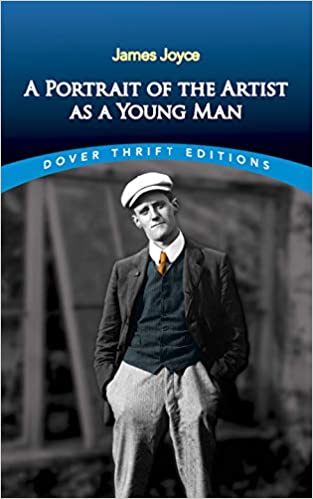






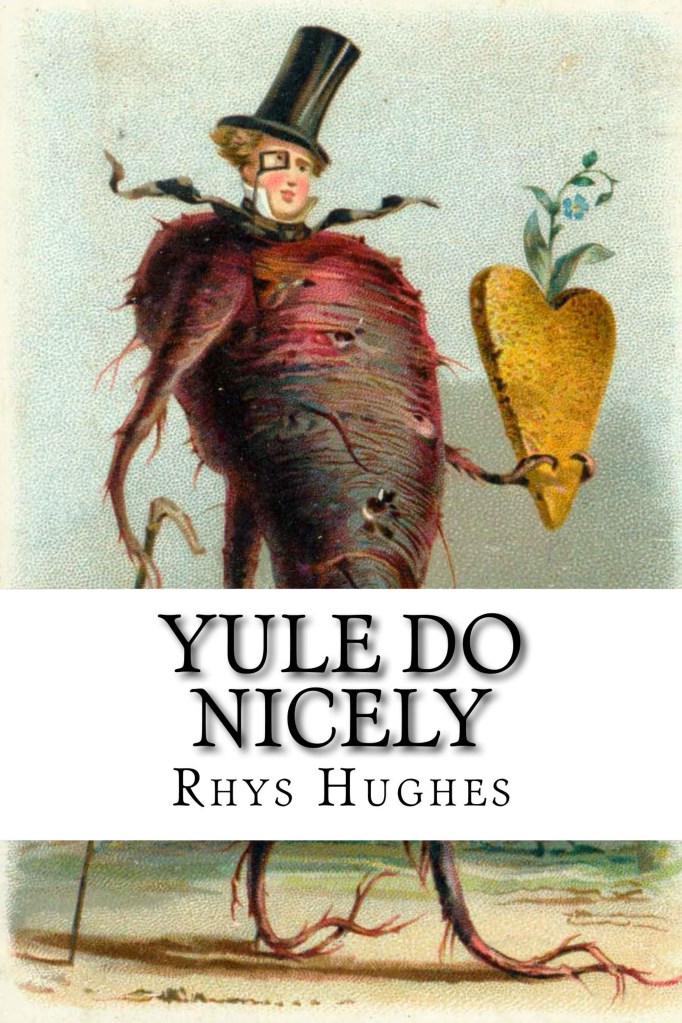
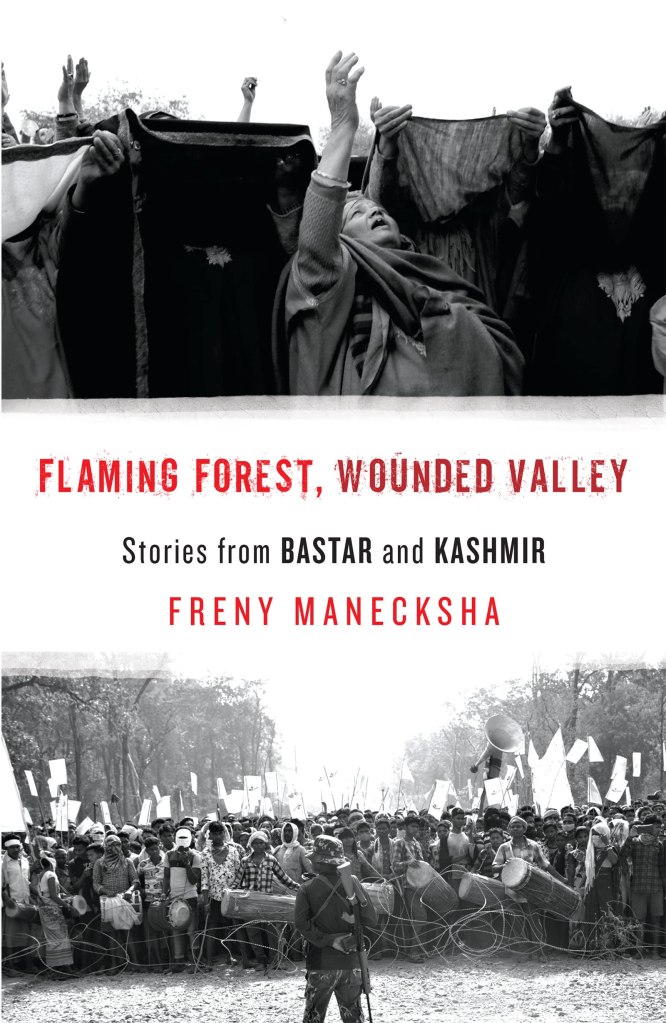

 Borderless