Categories
Poetry

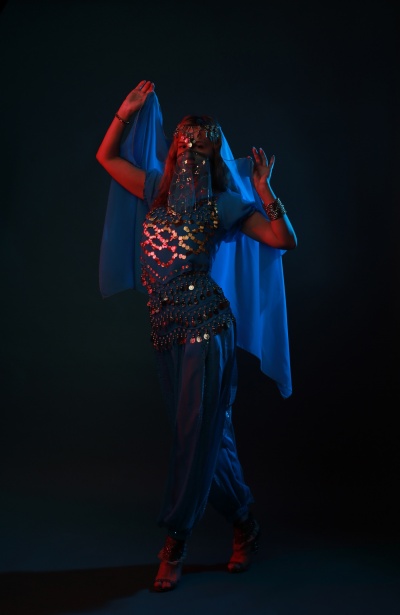
Dancer: A Balochi poem by Bashir Baidar

Translated by Fazal Baloch

Courtesy: Creative Commons
O dancer!
Come and dance
with ecstasy and trance
to set my heart aflame.

This dark and ebony night
may never see dawn's light.
May the jingle of your anklets
never cease into silence,
even for a moment.

As long as lingers the hangover, 
Move forth, stretch out your hands
and see how the colourful cash floats.

Why think of honour and modesty?
You're helpless, so am I.
You're famished, so am I --
You, for a crumb of bread.
I, of an anguished heart.
Who is chaste? Who is wanton?
Who is innocent? Who a sinner?
I know each and everyone.
Sealed are my lips.

These perfidious Masters and Chiefs,
shameless Mullahs and Pirs,
blood sucking oppressors
Are Man's eternal enemies.

Keep shaking your body,
till it crumbles apart
and all your organs shatter
like crystal on the floor.

O dancer!
Come and dance
With ecstasy and trance
And set my heart aflame.

.

Bashir Baidar belongs to the generation of the Balochi poets that emerged on the horizons of Balochi literature in the 1960s. Drawing inspiration from Progressive Writers Movement, Baidar’s poetry is widely cherished for his political undertone. So far, he has published four anthologies of his poetry. This poem is taken from Gowarbam (second edition) published by Pak News Agency Turbat in 2021.

.

Fazal Baloch is a Balochi writer and translator. He has translated many Balochi poems and short stories into English. His translations have been featured in Pakistani Literature published by Pakistan Academy of Letters and in the form of books and anthologies.

PLEASE NOTE: ARTICLES CAN ONLY BE REPRODUCED IN OTHER SITES WITH DUE ACKNOWLEDGEMENT TO BORDERLESS JOURNAL

Click here to access the Borderless anthology, Monalisa No Longer Smiles

Click here to access Monalisa No Longer Smiles on Kindle Amazon International
Categories
Review

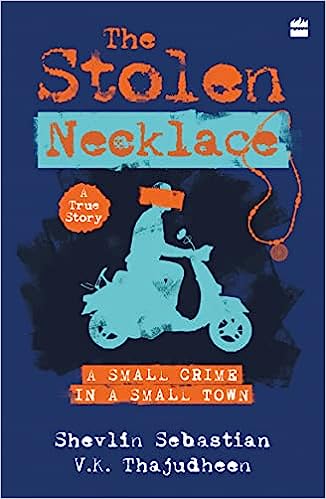
The Stolen Necklace: A Victim’s Saga

Book Review by KPP Nambiar

Title: The Stolen Necklace: A Small Crime in a Small Town

Authors: Shevlin Sebastian and VK Thajudheen

Publisher: HarperCollins India

With an enigmatic cover, reflecting the nature of the content, this is the true story of a small-town crime. A gripping narrative, it is the poignant saga of an innocent citizen, forced to suffer incarceration due to the mishandling of a theft case by the police.

Veteran journalist Shevlin Sebastian, and businessman, VK Thajudheen, are the authors. Thajudheen is the kingpin of this book, and also the victim. The incident took place a few years ago in the historic town of Thalassery in north Kerala.

Shevlin is based in Kochi, which is hundreds of kilometres away, in the south. Shevlin and Thajudheen came together following the media hype. With his impressive credentials, and long-standing in the journalistic field, Shevlin has proven his mettle by publishing more than 4500 feature articles in reputed periodicals. He has authored four children’s novels also.

Thajudheen, around whom the thriller revolves, has his home in Kadirur, a suburb of Thalassery. A middle-class businessman in Qatar, he had left his family of wife and three children at Kadirur. A God-fearing upright man, he is middle-aged and balding. His courage led him to an adventurous love marriage with his teenage sweetheart. Nasreena, being from a financially backward family, the alliance was considered of low status for his wealthy family.

Nevertheless, he had the temerity to ignore and disobey even his patriarchal father, in carrying on his long affair. However, before his secret wedding, his father passed away. Even then Nasreena had to wait for three years to be accepted in his home. That was after the birth of their second child – a son. The arrival of a boy child in his family after a long gap, mellowed his mother and two sisters who changed their hostile attitude against Nasreena.

All this happened years ago. Meanwhile, Thajudheen had a checkered  career spread over different locations, which ended up with a business in Doha. That was when he fulfilled his dream of marrying his daughter to an eligible young man, Shiraz Abdulla.

The tragic turns of events, entangling Thajudheen in the stolen necklace fiasco, commenced a couple of days after the celebration of Thazleena’s wedding. The family was returning from his sister’s home after a sumptuous dinner hosted for the newly-wedded couple.

It was a rainy night. Suddenly, they spotted two police jeeps with eight occupants waiting near their Kadirur home. Three of the men were in uniform. The rest were also from the same genus, it was revealed.  They were from a station outside Kadirur police control called Chakkarakkal. Stopping their car, their leader, approached the family with an expression of “You are all prey. I am a lion looking for a meal”.

Biju, having already earned a name as being reckless in controlling crime, was a known terror. He and his team had arrived armed with a phone evidence showing that Thajudheen was the culprit in a necklace-snatching crime. The incident was reported in his station a few days back. The CCTV camera that showed the purported thief cannot lie, they thought. It showed someone exactly resembling Thajudheen! But was it Thajudheen?

Thus started the ordeal of an innocent family man in the presence of his loving wife, and children. After a heart-breaking scene, near his home, Thajudheen was offered a compromise — pay the price of the stolen necklace and avoid litigation.

The offer was with a friendly ‘advice’: “I heard your daughter has just got married. The reputation of your family is at stake. We will inform the media that you are the thief.”

Anyone with a chicken heart would have yielded, but not Thajudheen, who always admired his late father for standing up to injustice. That was how Thajudheen had to languish in Thalassery sub jail till the story led to the final proverbial ‘happy ending’, nearly seven weeks later.

As a remand prisoner Thajudheen had the most undesirable company of robbers, underworld gang members, sex offenders, political workers, and so forth. At the same time, outside, his shattered family and Abdulla, the father of Shiraz, Thajudheen’s son-in-law, did not leaving any stone unturned to unravel the mysterious crime. They were making all-out efforts to obtain bail as well.

But Sub Inspector Biju was not to give up the big catch that easily. The police were even trying to trap Thajudheen in some other unsolved cases as a possible culprit.

This included even a murder case where the perpetrator was missing.  

Ultimately, when the higher court decided to let him free, the readers, along with Thajudheen himself, are left to wonder about the dispensation of justice by the police in a democracy. It is true that the politicians, the legislature, and even the Chief Minister had to interfere in ensuring proper investigation in this case. But still the question remains: what can one do to enforce timely change in the method of handling of criminal cases by the police?

Imprisonment of innocents and their vindication in the end is nothing new in the annals of ‘crime and punishment’. Fiction being a reflection of fact, such cases are not uncommon in world literature. Inspector Javert of Victor Hugo’s ‘Les Miserables’ (1862) can very well match up with the modern-day Biju, the sub inspector.

Likewise, in Leo Tolstoy’s short story, ‘God Sees the Truth but Waits’ (1872), a young merchant named Ivan Dmitrich Aksionov was accused of a crime he did not commit. One can see the forerunner of Thajudheen! After all, human nature is basically the same whether in France, Tsar’s Russia or India.

Undoubtedly, Shevlin and Thajudheen have succeeded in bringing out the darker side of the police force. However, though the narrative is touching, one wonders at the intent of the book.  Have the authors succeeded in openly projecting the atrocities of the police force to draw the attention of the establishment to prevent such incidents in future? Apart from presenting the insensitive and sadistic attitude of Sub Inspector Biju, little effort seems to be expended to indict the system to which he is linked. The fact that Biju is ‘punished’ for his ‘crime’ by just a transfer and withholding a few increments is an eloquent testimony to the laissez-faire attitude of our society at large.

Dr. KPP Nambiar, formerly a Consultant/Technocrat at the UN Food and Agriculture Organisation, is the author of many scientific papers and books, including a 1500-page Japanese-Malayalam dictionary.

PLEASE NOTE: ARTICLES CAN ONLY BE REPRODUCED IN OTHER SITES WITH DUE ACKNOWLEDGEMENT TO BORDERLESS JOURNAL. 

Click here to access the Borderless anthology, Monalisa No Longer Smiles

Click here to access Monalisa No Longer Smiles on Kindle Amazon International

Categories
Poetry

Rani Pink

By Carol D’Souza

RANI PINK

Oh Lord, trees. How they dress and undress
unhurriedly through geological time!
This one I pass on my way to tea
is presently putting on a blush
of rani pink that stands out so
jauntily against the clear blue
drape of the April sky in Chennai.
Oh, how the colour becomes it!
I stop dead in my tracks every time,
staring anew. Life in hues. So old. So new.

Carol D’Souza lives in Chennai. 

PLEASE NOTE: ARTICLES CAN ONLY BE REPRODUCED IN OTHER SITES WITH DUE ACKNOWLEDGEMENT TO BORDERLESS JOURNAL

Click here to access the Borderless anthology, Monalisa No Longer Smiles

Click here to access Monalisa No Longer Smiles on Kindle Amazon International
Categories
Essay

‘Wormholes to other Worlds’

Ravi Shankar writes about museums in Kuala Lumpur

Perdana Botanical Gardens. Courtesy: Creative Commons

I had a feeling of quiet satisfaction. I was finally able to locate the passage. I had spent a few weeks trying to do so without success. At ten in the morning, the iron gates of the passage/tunnel under the busy road were open as mentioned in the video on YouTube.  I could see the lakes of the Perdana Gardens ahead. The Perdana Botanical Gardens is one of the major attractions of Kuala Lumpur.

There are also several attractions located around the garden. Among these are the KL Bird Park, the Butterfly Park, the National Planetarium, the Islamic art museum, the Royal Police Museum, and the Tun Razak Memorial. I visited these museums over several weekends. Walking to and from and within these museums keeps me active. Many are located around the Perdana Botanical Garden. Two are around the Dataran Merdeka, the Merdeka Square. The Royal Museum is separate but not very far from these two locations. KL has several other museums that we will examine in a later article.

The pandemic had created a sense of fear within me. In late 2000, COVID was still under control in Malaysia and the national museum was open with pandemic protocols. I was apprehensive but my entry to the museum was smooth. The National Museum of Malaysia (Muzium Negara in Malay) is an impressive structure inaugurated in 1963. The museum was designed in the style of a Malay palace and UNESCO had provided consultants from different countries. The museum is impressive and modern.

The ground floor details the history of Malaysia from ancient times to the Sultanate of Melaka. Kedah in the north was a major historical centre. Excavations have revealed old civilisations. Melaka was a major trading post. Various European colonial powers had fought over the state.  The second-floor deals with the colonial and modern history of the country. I was fascinated by images of the Japanese occupation and the civil war. There are various exhibits located outside on the museum grounds. As the pandemic has slowly declined, the museum has come to life again attracting crowds, especially on weekends. There are local crafts and food items on display and sale.

There is a museum café on the premises that serves good Malay food. I often have lunched there while visiting the botanical garden and surrounding attractions. The textile museum or Muzium Tekstil is in a beautiful old heritage building near Merdeka Square, the country’s historical heart. The building started as the headquarter of the Federated Malay states railways and served later as the main office for different government entities.

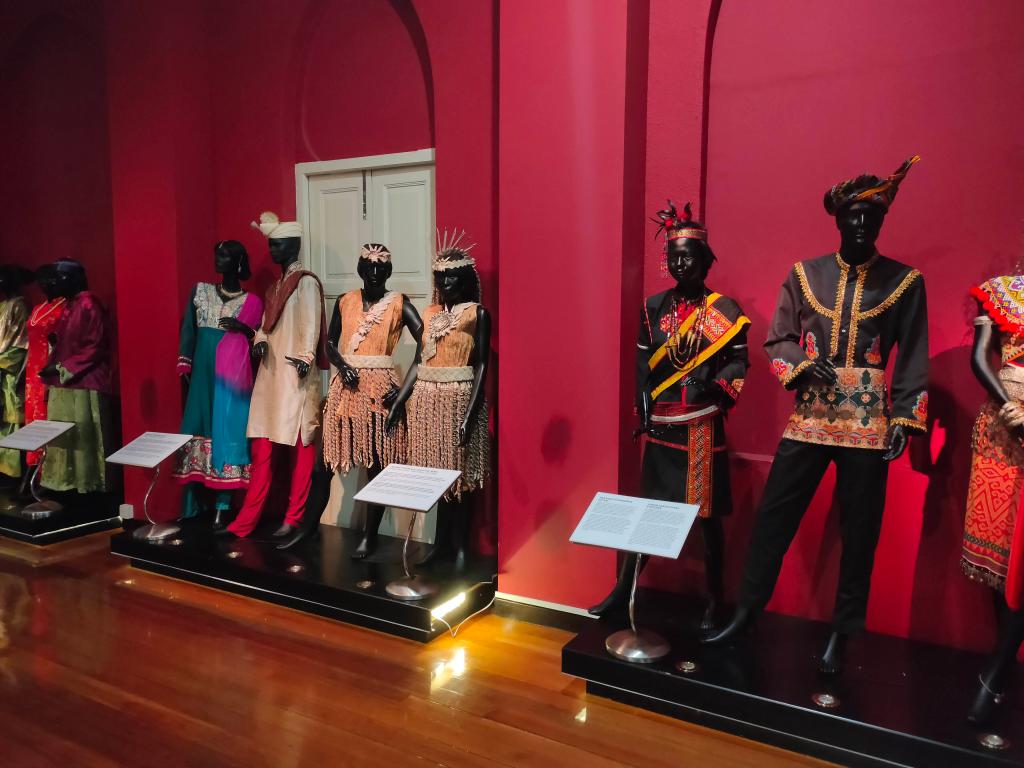
The textile museum was opened in 2010. There are four galleries over two floors. The Pohon Budi Gallery deals with the tools, materials, and techniques of textile making over the ages. The Pelangi Gallery deals with batik. I visited the museum with a friend who hailed from Gujarat, and he was fascinated by how batik had been adopted here . The Teluk Berantai gallery concentrates on the teluk berantai (interlocking bays), a harmonious motif made up of individual flower designs stitched together into geometric patterns. The Ratna Sari gallery is also located upstairs. The British had brought in artists and artisans mainly from India to construct several colonial-era buildings in the Mughal style. The museum is within walking distance from the Masjid Jamek station on the Sri Petaling line.

The KL City Gallery tells the story of the city from its founding as a tin mining town to eventually becoming the capital of British Malaya and modern Malaysia. Kuala Lumpur comes from two Malay words meaning the muddy confluence of two rivers. The town at the confluence of the Gombak and the Klang rivers grew rapidly into a modern metropolis. The gallery is operated by ARCH, a Malaysian brand making hand-assembled collectibles and gifts. The story of the city is told through old prints, miniatures, and photos. The centrepiece is the hand-assembled KL City model with over 5000 miniature buildings. The gallery has a café, and the city’s love of food is well showcased. At the entrance there is an I love KL sign popular with tourists and locals as a backdrop for photos.

The National art gallery (Balai Seni Negara) is within walking distance from the KL Hospital station on the newly opened Putrajaya line. The gallery is designed as spaces flanking the circular ramp to serve as exhibition areas for more intimate and contemplative viewing. The spiral ramp in the middle provides a dynamic visual experience to visitors showcasing the building from different angles at every level.  There are galleries located on three levels. There is a mixture of different media like paintings, a few miniature paintings, sculptures, installations, and projected images among others. I love the space and feel of the building. There is a good collection of paintings and other works by Malaysian artists. British colonial artists and their impressions of life in colonial Malaysia are also featured. The gallery makes for an interesting and contemplative outing. 


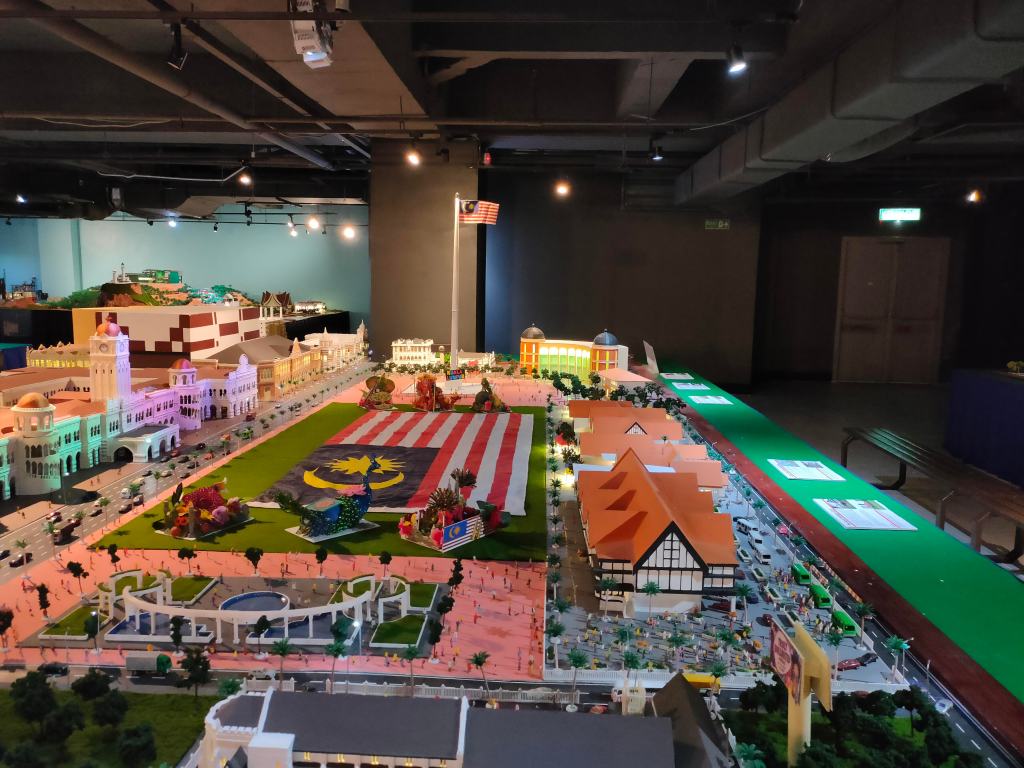
Minnature Gallery advertises itself not as a museum as the pieces on display were all created specifically and are not of historical value. There are thousands of miniature pieces, and the buildings were 3D printed. The location is within the Sungai Wang Plaza, near the Merdeka Square. The recreation of the Dataran Merdeka or the Independence Square and the light show at this historic location (in miniature) is impressive. are miniature models of several locations in the country. While the pandemic protocols lasted, these served as a good introduction for me to the attractions of other states in the country. They have a small store selling merchandise. Most museums in Malaysia have a gift shop and a dining area. The models of different foods from Malaysia in the Minnature gallery are impressive though I am not sure if there is a restaurant on the premises. The amount of detail is huge and the proportions of the structure correspond to the real world.

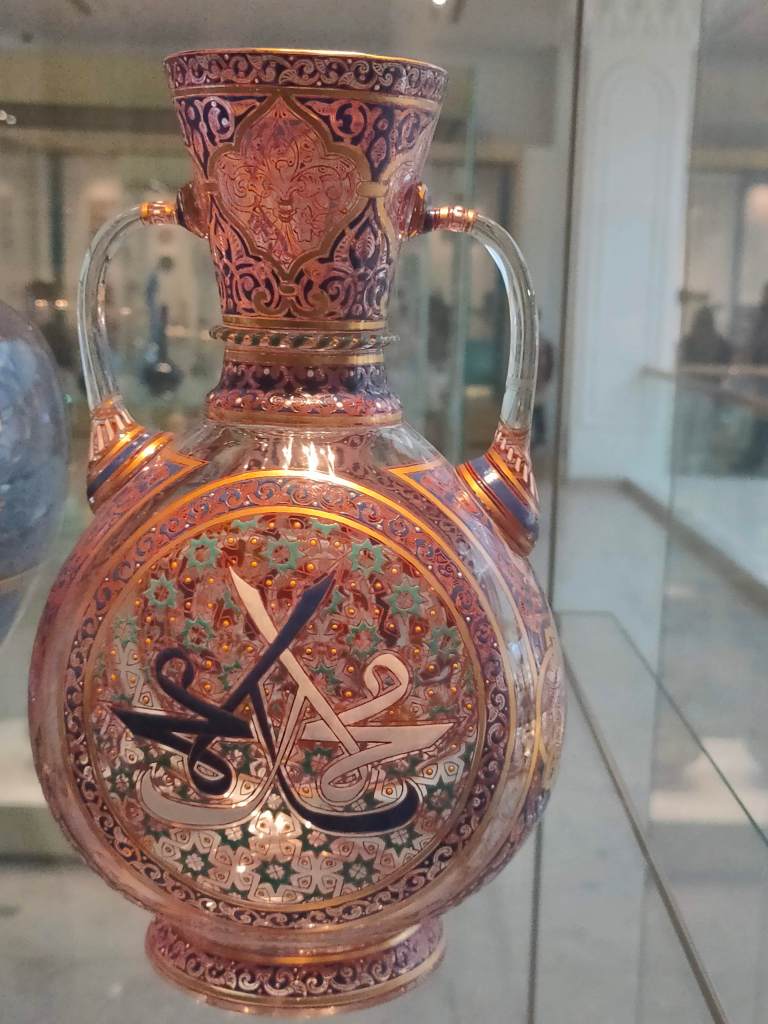
An artifact from the Islamic Museum. Photo Courtesy: Ravi Shankar

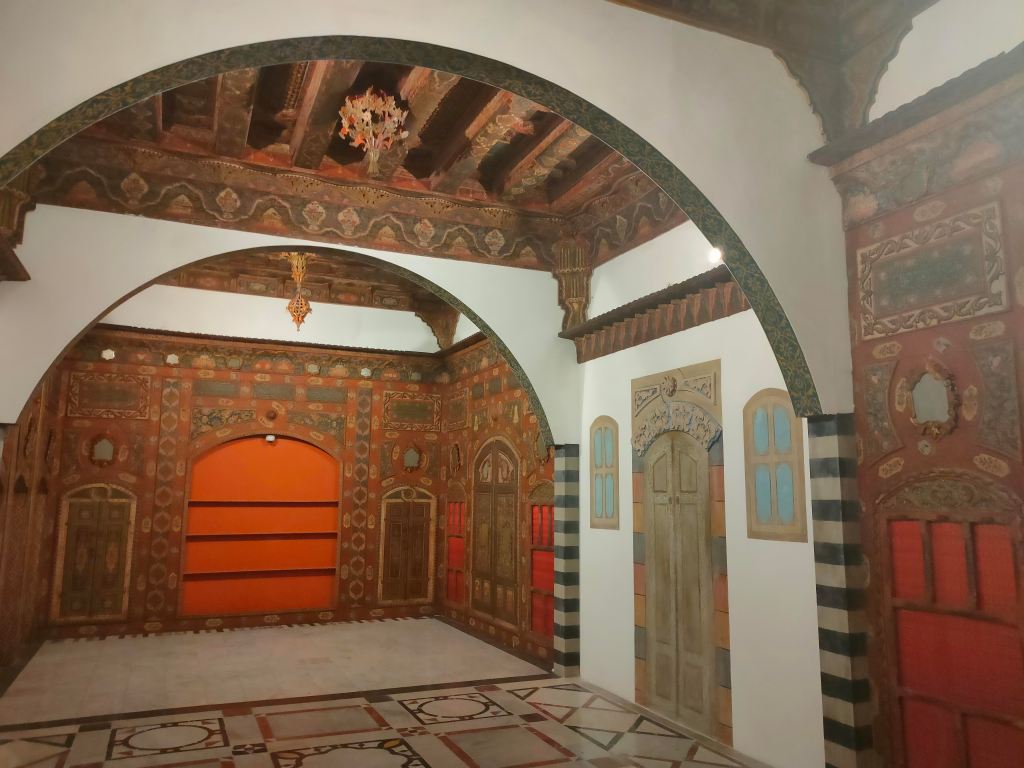
The Islamic Arts Museum (Muzium Kesenian Islam Malaysia) is located around the perimeter of the Perdana Garden. The museum claims to be the largest one on Islamic art in Southeast Asia. The Nusantara region including Malaysia and Indonesia claims to have the largest Muslim population in the world. There are more than 7000 artefacts. The building is spacious with large glass frames letting in plenty of light. The museum is spread over two levels. Level one contains galleries devoted to architecture, the Quran, and other manuscripts, and a gallery each for the art of India, China, and the Malay Peninsula. The second level is dedicated to Arms and Armours, Textiles, Jewelry, and Coins, and three galleries consisting of artworks categorised by their materials – Metal, Wood, and Ceramics. The craftsmanship of some of the pieces is sublime. The dedication of the craftsmen and the time they devoted to their tasks has to be admired. The highlight of the gallery to me was the delightful and elaborate roofs. Each is a masterpiece of design! There is also a fine dining restaurant on the premises.

The original Royal Malaysia police museum (Muzium Polis di Raja Malaysia) was built in 1958. The new building located on the outskirts of Perdana Garden was inaugurated in 1998. There are three galleries: one deals with policing during the early days of the Malay sultanate, the other, with the Colonial Era and the last with the period called Emergency, the Anti–British National Liberation War (1948-1980) which involved guerrilla warfare. There are a variety of materials used by the police force over the ages in the collection. There is a good collection of motorcycles and other vehicles. The police persons on duty at the museum are very friendly. There is a large collection of armoured vehicles and cars and a plane model on the grounds of the museum.

The Royal Museum (Muzium di Raja) was inaugurated in 2013 and was the residence of the King of Malaysia till the royal family moved to a new residence. The huge two-story property was built in 1928 by a Chinese mining tycoon for his huge family and was one of the biggest residences in Kuala Lumpur (KL). The museum provides a glimpse into the life of the royal family though most rooms can only be seen from the walkway. There is a good view of the KL skyline, including the iconic Petronas Tower.

All these museums are visitor friendly and provide a unique glimpse into the history of the city, the state of Selangor, and Malaysia. Tourists might need around three or four days to do justice to the richness on offer. Museums take you to other worlds and times. The American art critic, Jerry Saltz says, “Don’t go to a museum with a destination. Museums are wormholes to other worlds. They are ecstasy machines. Follow your eyes to wherever they lead you…and the world should begin to change for you.”  

A restored museum room in the Islamic Arts Museum. Photo Courtesy: Ravi Shankar

Dr. P Ravi Shankar is a faculty member at the IMU Centre for Education (ICE), International Medical University, Kuala Lumpur, Malaysia. He enjoys traveling and is a creative writer and photographer.

.

PLEASE NOTE: ARTICLES CAN ONLY BE REPRODUCED IN OTHER SITES WITH DUE ACKNOWLEDGEMENT TO BORDERLESS JOURNAL

Click here to access the Borderless anthology, Monalisa No Longer Smiles

Click here to access Monalisa No Longer Smiles on Kindle Amazon International

Categories
Poetry

South Pacific in the Palace Cinema

 By Robert Nisbet

We were all romantic heroes, back in 1958.
We’d line the good guys up, go with them scrapping,
outwitting villains, wooing and winning the girls,
the final clinch, the fade-away, the ever-after.

South Pacific was tricky, from the very start.  
De Becque the hero was the same age as our Dads,
and his little boy and girl too much to cope with,
even with Mitzi Gaynor as the prize.

But then the sub-plot came and we found our hero,
Lieutenant Cable, and after mystery journeys
and boat trips through exotic seas, he found the girl,
a pearl of South Sea Island beauty. 

We were settling to the film’s rhythms now,
De Becque and Cable off to war, a matter of time,
surely, before they foiled the enemy, went back
for the final clinches, fade-away, the ever-after. 

And Cable died. Uneasily, some half-hour later, 
we stumbled home, with a lot to assimilate.
A native girl? Were they saying it was all for the best?
Was that the idea? It was bloody sad, all the same.

Robert Nisbet is a Welsh poet widely-published in Britain, where he won the Prole Pamphlet Competition in 2017, and in the USA, where he is a four-time Pushcart Prize nominee.

PLEASE NOTE: ARTICLES CAN ONLY BE REPRODUCED IN OTHER SITES WITH DUE ACKNOWLEDGEMENT TO BORDERLESS JOURNAL

Click here to access the Borderless anthology, Monalisa No Longer Smiles

Click here to access Monalisa No Longer Smiles on Kindle Amazon International

Categories
Review

The Many Dimensions of India’s Covid Tragedy

Book Review by Bhaskar Parichha

Title: Burning Pyres, Mass Graves and A State That Failed Its People : India’s Covid Tragedy 

Author: Harsh Mander

Publisher: Speaking Tiger Books

Many parts of India were in a state of frenzy as a result of the pandemic. The official figures of sickness and mortality have been widely disputed, and most agree that they have been significantly underestimated.

Burning Pyres, Mass Graves and A State That Failed Its People: India’s Covid Tragedy by Harsh Mander is a comprehensive account of the humanitarian crisis and the appalling state response. Human rights campaigner Harsh Mander is one of India’s most trusted and courageous activists. He is also the author of several acclaimed books on contemporary India, among them, Looking Away: Inequality, Prejudice and Indifference in New India; Ash in the Belly: India’s Unfinished Battle Against Hunger; Fatal Accidents of Birth: Stories of Suffering, Oppression and Resistance; and This Land Is Mine, I Am Not of This Land: CAA–NRC and the Manufacture of Statelessness.

The book examines the events around the year 2020, that led to food shortages for the urban poor and pushed them to the brink of starvation due to food scarcity. There is a compelling argument to be made that the timing of the lockdown was directly related to public policy choices, specifically the decision to impose the lockdown with only four hours’ notice to the media. As Mander recounts in his book, things got even worse in the following year, as everything from hospital beds to medical oxygen to essential medicines ran short of supplies to function properly. Mander chronicles the disaster in an in-depth manner by combining ground reports with hard data from the scene. 

According to the book’s blurb: “The summer of 2021 saw a massive rise in the number of infections and deaths from Covid-19 in India. Even by conservative estimates, at least 1.5 million people had lost their lives by June; several times the official figure. As in the first wave of the pandemic, this time, too, the chaos and suffering was in large measure, as Harsh Mander shows, due to mismanagement by an uncaring and cynical state.”

This book contains two parts. The first part, titled ‘Locking Down the Poor’, describes how the urban poor were being driven to the brink of starvation due to the severe humanitarian crisis that was sweeping across the globe in 2020. According to the study, this was a direct consequence of the policy decisions that the government made. It led to the imposition of the world’s longest and most stringent lockdown, along with the smallest relief packages, as a direct result of the government’s public policy choices.

 As the story unfolds, we hear the voices of out-of-work daily-wage and informal workers, the homeless and the destitute, all of whom overwhelmed by hunger, humiliation, and a sense of dread. There are over 3 crore migrant workers in India whose livelihoods have been destroyed and they had been forced to walk hundreds of kilometres back to their villages as they had no means of surviving in the cities and no way to get home other than by foot. He brings us stories of those migrant workers from the highways and overcrowded quarantine centres.

The second part of the book, entitled ‘Burning Pyres, Mass Graves,’ is the account of what took place the following year, when everything from hospital beds to oxygen and essential medicines were still in short supply. The underlying cause of these shortages, according to Mander, is the criminal neglect of public health care in India, a situation which worsened under the Narendra Modi government, resulting in the extortion of a beleaguered population by everyone from oxygen suppliers to pharmaceutical billionaires. The author holds the state culpable for indulging in pageantry – with the PM advertising himself as a messiah – when the country needed to brace for the impact of the second wave of terrorism.

Using an invaluable combination of ground reports, hard data, and firsthand experiences to describe the worst humanitarian catastrophe India has experienced in a century, and which will have a lasting impact on the country for decades to come, Mander provides a detailed account of this cataclysmic phase. It is a powerful book and sometimes it is even shattering. In a way, the narrative is a live remembrance of a national tragedy that too many of us wish to forget when we should, instead, etch it in our minds so that we can prevent another national tragedy like this one from recurring in the future.

.

Bhaskar Parichha is a journalist and author of UnbiasedNo Strings Attached: Writings on Odisha and Biju Patnaik – A Political Biography. He lives in Bhubaneswar and writes bilingually. Besides writing for newspapers, he also reviews books on various media platforms.

.

PLEASE NOTE: ARTICLES CAN ONLY BE REPRODUCED IN OTHER SITES WITH DUE ACKNOWLEDGEMENT TO BORDERLESS JOURNAL

Click here to access the Borderless anthology, Monalisa No Longer Smiles

Click here to access Monalisa No Longer Smiles on Kindle Amazon International

Categories
Poetry

The Wind and the Door

Poetry & translation from Korean by Ihlwha Choi

Courtesy: Creative Commons
The door slammed shut with a thud.
And then, with another thud, it swung open again.
The door that should have remained closed,
Opened, allowing the unwanted noises and the wind
To fill the room.
The wind outside and the clamour assail me,
So, I gather myself and politely shut the door once more.
The door becomes calm again.
The wind finds its own path among the alleys of wind,
And the room becomes tranquil,
Filled with the stillness of the room, the air of the room,
And the thoughts of the room.

Ihlwha Choi is a South Korean poet. He has published multiple poetry collections, such as Until the Time When Our Love will Flourish, The Color of Time, His Song and The Last Rehearsal.

.

PLEASE NOTE: ARTICLES CAN ONLY BE REPRODUCED IN OTHER SITES WITH DUE ACKNOWLEDGEMENT TO BORDERLESS JOURNAL. 

Click here to access the Borderless anthology, Monalisa No Longer Smiles

Click here to access Monalisa No Longer Smiles on Kindle Amazon International
Categories
Stories

A Troubled Soul

By Mahim Hussain

Amma[1], it . . . it feels like fire is running through my veins!”

These were the words Abir uttered sitting on the rear seat of their car. His mother, a fifty-five-year-old woman, was sitting right beside him. She was trying to help her son any way she could to relieve him of his suffering. With moist eyes, she kept massaging Abir’s hands and neck constantly.

“Everything is going to be all right, abba[2]. Try to relax,” she said to her son.

Leaving other cars behind, the white Toyota sped through the street – piercing the thickness of the night. Their deft driver devoted all his attention to dodging and overtaking other cars on the road. The car had headed to the Labaid Hospital, situated in the Dhanmondi area of the bustling city of Dhaka.

Abir’s older brother, Rafique, was sitting in the front seat next to the driver. He kept turning back frequently to see how his younger brother was doing.

Amma . . . I can’t breathe . . . I can’t breathe amma!” Abir cried out to his mother.

Abir’s mother pleaded with Rafique to lower the wind shield on his side. Without being asked, the driver flicked a switch swiftly, and the windshield came down with a whirring sound. Abir, with the help of his mother, managed to get his head out of the window to breathe fresh air. With his head sticking outside the car, he could see the taillights of the passing cars growing faint in the distance. To the boy, it seemed like red and yellow fairies were flying in the darkness. Soon, Abir slid back on his mom’s lap, as he could no longer bear the weight of his head.

“Don’t worry, amma. We will get their soon,” Rafique tried to console his anxious mother.   

About forty minutes later, the car entered through the lofty gate of the hospital – battling an abysmal traffic jam. They were lucky it was a weekend. On any other night of the week, it would have taken them at least an hour and a half to get there from the Mirpur area. By the time they arrived at the emergency entrance, Abir had already lost his consciousness. He could not move any of his limbs or open his eyes.

A door man and two female nurses came out of the emergency department running. They carefully hauled Abir out of the car. Then, putting him on a stretcher, they hastily took the boy inside the emergency department. Rafique and his mother ran after them, frantically.

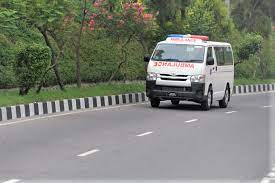
Passing a long corridor, they entered a ward. The nurses again lifted Abir gently off the stretcher and laid him on one of the empty beds. At ten-thirty of the night, the whole ward was empty and quiet. The nurses started to commence their usual protocol. One nurse put a clip of a pulse meter on the boy’s index finger of his right hand. It was attached to a screen above the bed with a cord. Another nurse tied the strap of a blood pressure machine, connected to the same screen. While Abir’s family was worried to see him unconscious, one of the nurses tried to calm them down. She told Rafique to accompany her to the information desk and fill out some forms. The other nurse kept her eyes on the screen, monitoring the patient’s vitals.

After observing the patient for about ten minutes, the nurse blurted out: “His pulse is too weak. I am calling the duty doctor.”

“Ha! What happened nurse? What’s wrong with my son?” cried out the mother.

Without responding to her, the nurse ran out of the ward in a hurry. Abir’s mother was in tears. She started rubbing Abir’s chest incessantly, overwhelmed by apprehension.

Before long, the nurse came running with the duty doctor. After glancing at the monitor for a moment, the doctor turned around and said to the nurse: “The pulse and pressure rates are too low. We can’t treat him here.”

By this time, Rafique was back. The female doctor told him that they didn’t have all the equipments in the emergency ward to treat a critical patient like his brother.

While the doctor and Rafique were engaged in a discussion, suddenly, Abir started having convulsion.

“Nurse, call the ICU upstairs. Tell them that we are bringing a patient, quickly!” the doctor passed the order.

As the hospital staff pushed the movable bed and took the boy inside an elevator, Abir’s mother started to lament.

“What’s happened to my little boy, Rafique? Bring my Abir back to me . . .  bring him back!”                     

Rafique took his mother in his arms and held her tightly. He too was on the verge of falling apart. But he bit his lips and managed to keep his poise. Rafique was the eldest son. If he had broken down, who was going to take care of his family? With glistening eyes, Rafique recalled the fateful day when it all started.

Rafique entered their apartment of a three-storied building with a heavy, black briefcase in his hand. Their family doctor walked behind him with brisk steps. Going past the dining room, they walked straight inside Abir’s bedroom.

As soon as they entered, Rafique felt a piece of glass getting crushed under his left shoe. Raising his head, he saw broken pieces of a plate and some food were strewn all over the floor. His mother was cleaning up the mess with a sweep and a scraper. His father, seated on Abir’s bed, stood up seeing the doctor.

“Look, doctor, what he has done to himself this time,” said Abir’s father, pointing at his son in the bed.

The doctor looked at the boy over his reading glasses.

Sixteen-year-old Abir was lying in the bed quietly. But his chest was rising and falling in quick succession. He had his face covered with his forearms. A white bandage was wrapped around his left wrist. On one side of the bandage, blood had seeped through and had left a big stain.

“Some time last night, he tried to cut the veins of his wrist with a blade,” Abir’s father related with a distressed tone. “This morning we found him in the bed with blood all over the bed sheet.”

The doctor kept his gaze fixed on the boy and listened to Abir’s father intently.

 “Moreover, he has not eaten anything in two days. A few minutes ago, his mother brought some food for him. But as soon as she got close to him, he took the plate off her hand and smashed it on the floor. He has been having angry outbursts quite frequently these last few days,” added the father.

The doctor slowly walked to the bed and sat beside the boy warily.

“Well, dear boy. Let uncle see your hand,” saying this, he gently picked up Abir’s wounded hand. The doctor examined his wrist from different angles and tried checking his pulse.

Only a few moments had passed, when suddenly, Abir sat up and pulled his arm out of the doctor’s hand with a savage jerk.

“Let go of my hand, you devil!” screamed the boy.

The doctor jumped off the bed, and Abir’s parents lunged to restrain the boy. Rafique kept the doctor from losing balance, and quickly took him in the dining room.

He sat the doctor at the table and poured him a glass of water.

Glug, glug, glug, ahh . . .

“Rafique, I don’t think Abir was able to cut any of his major veins. If he did, he would have bled out over the night and have been unconscious by now. The bandage on his wrist was done nicely and the bleeding has stopped.” confirmed the doctor. “However, as you have shared with me earlier, Abir has been showing such erratic behavior for several months now. So, his problem is actually psychiatric rather than physical.”

“Yes, doctor. We have taken him to a psychiatrist named Samsul Huq, twice. But during the last session, he suddenly got violent and hurled a glass of water at the doctor. Thankfully no one got hurt. But after that, we could not take him to the doctor again,” shared Rafique.  

“Humn . . . At this moment, he is not in the condition to be taken anywhere. So, I suggest you go back to the psychiatrist and tell him about Abir’s present condition,” concluded the doctor.                                                                     

*

Doctor Huq’s chamber was in a mental health rehabilitation center in the affluent neighbourhood of Gulshan. Rafique had been sitting outside his chamber with other visitors. It was a big lobby under a wooden shed. There were about thirty people outside the chamber, waiting for their turn. A middle-aged man was sitting behind a small table facing the visitors. As patients were coming out of the room, the assistant was calling the next person in serial. Rafique had been waiting there for about two hours now. Feeling bored and exhausted, he was snoozing sitting on his cozy little chair.

“Mr. Rafique Ahmed . . . who is Rafique Ahmed?” inquired the assistant sternly.

When his name was called loudly a second time, Rafique woke with a shudder. In frenetic motion, he got off the chair and almost dashed inside the chamber.

It was a spacious, soundproof room with a gigantic air-cooler hanging above the door. On the far end of the room, there was a big mahogany desk. In the middle of the desk, there was a plastic dummy head with an open brain coming out of it. Beside it, there was a pile of big, thick medical books and journals on one side of the desk. On the other side were two pen holders containing pens of different colors and design. In the front of the desk, there were two cane-made chairs for the visitors to sit on. A few feet from them lay a big, comfortable couch on which a patient could easily lie down. The doctor was sitting on the other side of the desk on a reclining chair the size of a throne.

Professor Huq was an elderly man with long, cotton-like beard and hair. He always wore a fatua[3] and loose pajamas and a big smile on his face. As soon as Rafique entered, the doctor recognised him. It was Rafique who had accompanied Abir to his clinic a week ago. The doctor nodded and made a gestured with his hand, telling him to take a sit.

“How are you doing? Didn’t you bring your brother today?” asked the doctor.

“No, doctor, Abir is not doing too well. He is having mood swings again. Two days ago, he tried to kill himself by slashing his wrist. We don’t understand what is going on with him. Why is he acting like this, doctor?” exclaimed Rafique in a tensed voice.

“Well, Mr. Rafique, I’ve told you on the first day that Abir is showing symptoms of bi-polar disorder. A typical bi-polar person has periods of energetic activities followed by bouts of severe depression. But some of these symptoms may vary from person to person. In your brother’s case, he has moments of angry outbursts followed by long periods of depression. And it’s not uncommon for bi-polars to have suicidal thoughts,” informed the doctor.

“But, doctor, how are we supposed to thwart him from harming himself?” inquired Rafique.

“The condition he is in right now, he needs to take some medications. Here, I am writing down the name of a medicine called Lithosun SR, which contains the chemical lithium. Across the world, lithium has been proven to prevent suicidal thoughts. But there is a catch. Too much of lithium can cause toxicity in the blood, which could be fatal. Therefore, he should take exactly 400 mg per day, and not more than that. In addition, Abir needs to have his blood tested every fortnight to check the level of lithium in his body,” enlightened the doctor.

After that, he tore a page from his pad and handed it to Rafique.

*


At six in the evening on the Friday night, Abir was sitting on his study table. It was a medium sized table with a bookshelf attached on one side. The shelf was laden with books, copies and note papers. A history book was open in front of him. Because of his illness, the boy had not been able to attend his school for two months. His final term exam was in two weeks. After taking the prescribed medication for a month, his thoughts of self-harm started to subside.

It had been an hour. The boy was struggling to focus on the book. But so far, he had not been able to read a single line. He was having difficulty concentrating. All kinds of negative thoughts were churning inside his fragile mind. Soon, fat tears started trickling down his cheeks. Abir could not fathom, why was he unable to control his emotions? Why did he feel so gloomy and miserable all the time?

Unable to bear the frustration anymore, suddenly he stood up with a grunt and tore the book into small pieces. Then, he picked up other books from the bookshelf and started throwing them in the air. This rampage lasted a few minutes. Then, he dashed away from the table, crashed on his bed and started to sob burying his face in the pillow.

After lying there motionless for a while, the boy raised his head for a moment. Incidentally, his eyes fell on the side table attached to his bed. He saw the container of his medication lying on the table, beside his bottle of water.

If I took some extra pills, it should help me get rid of the melancholic thoughts.

Slowly, he clambered on the side of the bed and picked up the container. Popping it open in a fit of impulse, her started pushing several pills down his throat at once and drank a lot of water. Afterward, he lay in the bed, still struggling to harness his emotions.

Around 08:00 p.m., Abir’s mother knocked on his door.

Baba[4] Abir? Come out, son. Dinner has been served.”

Not getting any response for a while, she opened the door which was unlocked from inside. Walking in, she was flabbergasted to find torn books and papers scattered on the floor. Facing the other way, her son was lying in the bed and seemed to be asleep.

The mother walked to the bed and sat next to him.

“Abir? What’s wrong, abba?”                        

There was no response. His mother got little concerned. She held his shoulder and turned his torso toward her.

“Wake up, sweetheart. The dinner is getting cold.”

After calling him several times, the boy lifted his heavy eyelids gradually.

Amma . . . I am not feeling so well. My . . . my head is throbbing in pain.”

Saying these words, the boy closed his eyes again. His mother nudged his shoulder several times, trying to keep him awake. But the boy slowly succumbed deeper and deeper to the side effect of the medicine.

“Mr. Rafque . . . Mr. Rafique!”

The voice of the duty doctor brought the man back to present time.

“What’s going on, doctor? How is my little brother doing,” asked Rafique agitatedly.

“Your brother has been shifted to the ICU. The overdose of the medicine has rendered him unconscious. We are trying to separate the toxic substance in his blood with some medicines and saline. But his pulse rate is still low. Nothing can be said until few hours pass,” reported the doctor and walked away.

Hearing this news, Abir’s mother started wailing and was at the brink of losing her senses. Rafique laid his mother on a bed and tried to pacify her.

Meanwhile, Abir lay in one corner of the ICU with all kinds of tubes and electric wires attached to his body – battling with death.

.

[1] Mother

[2] Father

[3] A short, kameez-like collarless shirt worn by people of South Asia

[4] Father

Mahim Hussain is a 38-year-old man and lives in Dhaka, Bangladesh. He couldn’t finish high school diploma. However, that did not deter him from reading and learning on his own.

PLEASE NOTE: ARTICLES CAN ONLY BE REPRODUCED IN OTHER SITES WITH DUE ACKNOWLEDGEMENT TO BORDERLESS JOURNAL

Click here to access the Borderless anthology, Monalisa No Longer Smiles

Click here to access Monalisa No Longer Smiles on Kindle Amazon International
Categories
Poetry

The Precious Cargo

By Dr Kanwalpreet

THE PRECIOUS CARGO

As the mean machine rises,
Its blades whirring,
Its wings cutting,
Through the air,
A silent prayer
Escapes the lips,
From many who
Stand and stare.

Parched lips,
Beating hearts,
Controlled tears,
From eyes
That avoid looking
Into the other.
Forced smiles,
Shaky hands,
Does the mean machine know,
That it carries precious cargo?

Men and women in uniform.
The story repeats,
Across countries,
And continents,
Uniforms that define soldiers --
Olive, green, blue, black,
Soldiers who move on orders,
Leaving behind parents,
Spouses, siblings, children.
Men and women who are soldiers
Lug their heavy hearts,
Putting up a façade of bravery,
Stoic and composed.
Men and women who as human beings,
Are allowed to carry only memories,
Precious as treasures from the deep.
Men and women who cannot tarry,
As they have sworn their loyalty,
To their respective countries.
Men and women who as soldiers,
Move as one.
Men and women who shudder,
For any loss here or there,
As each relationship
Is very dear.

As the plane lifts,
Human hearts beat
In the heart of the machine.
Does the mean machine know
It carries precious cargo?
A  father’s companion,
For his twilight years,
A mother’s heart,
The loving mentor,
Of their children,
The prankster sibling,
The loving husband,
Whose hugs would be missed,
Does the mean machine know
It carries human hearts?

The question looms --
Why these wars?

Dr. Kanwalpreet teaches Political Science to undergraduate students in a college affiliated to Panjab University, Chandigarh, India. She has written 12 books that include books for children as well as biographies. Writing is a passion and she delves into it frequently. Living in a male dominated society Kanwalpreet, usually, writes about the pain that women go through. Her book, Rings of Life a collection of 13 short stories tries to show the struggles of women.

.

PLEASE NOTE: ARTICLES CAN ONLY BE REPRODUCED IN OTHER SITES WITH DUE ACKNOWLEDGEMENT TO BORDERLESS JOURNAL

Click here to access the Borderless anthology, Monalisa No Longer Smiles

Click here to access Monalisa No Longer Smiles on Kindle Amazon International

Categories
Slices from Life

Awesome Arches and Acrophobia

Narrative and photographs by Meredith Stephens

My partner, Alex, has always been enthralled with the natural beauty of the west of the United States, having spent sixteen years studying and working there in his youth. He wanted to share his love of this part of the world with me, so took me on a seven-day road trip from his base in the Sierra Nevada Mountains to Fort Collins in Colorado and back.

“You must see Arches National Park in Utah!” urged Alex’ long-time friend Ryan. “Bryce National Park is worth visiting too.”

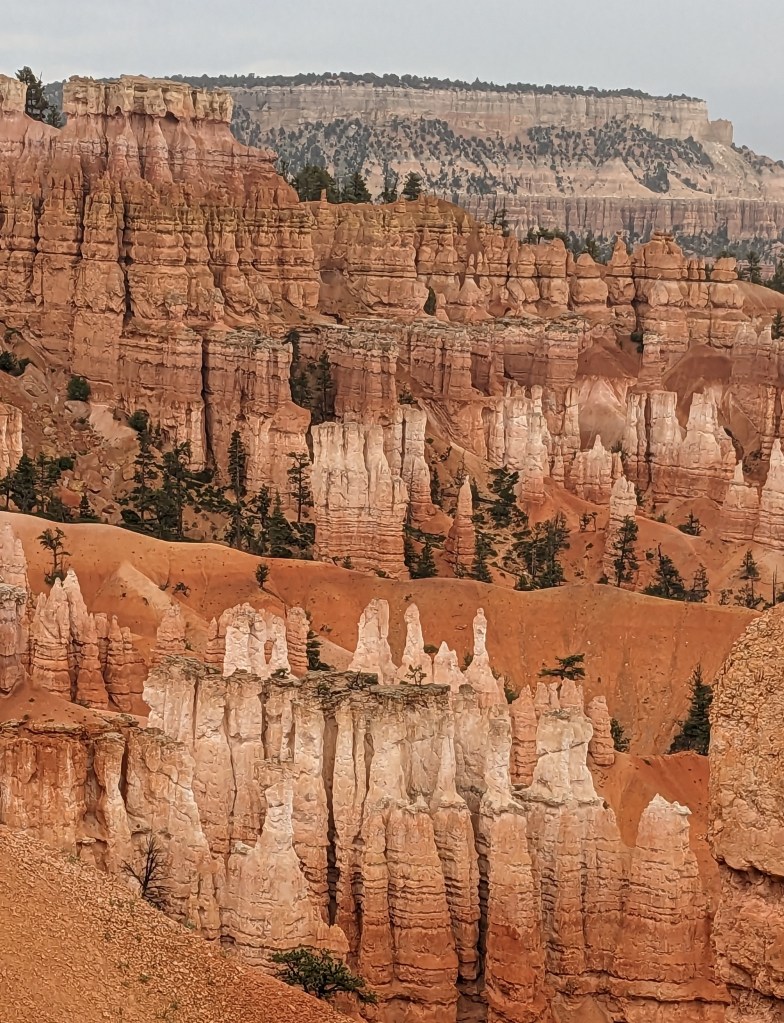
Two days later we arrived at Bryce National Park. At first, the scenery was pleasant but unremarkable. I wondered why there were so many tourists and so many cars in the carpark. We donned our raincoats and walked towards the trail to follow the other tourists. It started hailing and I pulled my hood around my face. Thunder and lightning resounded. A tall thin park ranger approached us from the other direction and looked directly at me.

“We advise you to turn around immediately and seek shelter. We have lost ten people in twenty-five years in these weather conditions.”

We looked at the brochure to confirm this and read that there had been four fatalities and six injuries. I would have been happy to follow the park ranger’s advice, but we had driven for eleven hours to get there and were too curious to turn back. We started walking towards the Navajo Loop trailhead at Sunset Point. Tourists were posing for photographs at the rim. I wondered what the attraction was and peered over the rim myself. Suddenly, I understood why the site was so crowded.

Navajo Loop

I gingerly placed one foot after another to carefully descend the steep muddy trail. Each time I planted my foot down I held it steadily to ensure I would not slide. A couple approached us from the opposite direction as they ascended the trail.

“We strongly recommend you turn around immediately!” they warned. “It’s treacherous in these muddy conditions.”

Muddy trail

We thanked them, but I continued to gingerly traipse through the mud along the downward trail for a few metres.

“You go ahead,” I urged Alex. “I can’t go any further.”

It continued to hail, and we could hear thunder. I turned around and slowly plodded back up the muddy trail back to the edge of the rim, closely followed by Alex. We contented ourselves with the less slippery 2 km walk along the rim to Sunrise Point and back. Back at the car, we scraped the mud off our shoes, fairly unsuccessfully, and continued our drive to Arches National Park.

The Arches National Park is so popular that visitors have to book through a timed entry system. At 6 pm, when the booking system opened, Alex opened the booking site and secured one of the few remaining availabilities for a 7am entry the next day. He hoped we could also enter just before sunset that day, after 6pm when entry was not timed.

Four-and-a half-hours later we arrived at Arches National Park. The drive had been uneventful along straight desert roads and it had been difficult to force myself to stay awake, as I sat in the passenger seat.

“If we are too tired, we can go straight to our accommodation,” suggested Alex.

I hoped we would do so. I needed to escape from the enclosed space of the passenger seat. Suddenly huge rock formations loomed just beyond the park gates, and we decided to enter. I was lulled from my stupor into a sense of shock from the grandeur of the giant ochre rocks emerging from the plains. I could sense the onset of palpitations.

“I think I’m going to faint, Alex,” I warned him.

“I think you’re experiencing ‘geophilia’,” he responded.

Suddenly, I realised why people found the study of geology so fascinating. Strata upon strata of ochre rocks rose before us. Their layers indicated the movement of the earth’s surface over eons of time,

Entrance to the Arches

The sunset light flattered the rock formations. Cars lined the road heading to the distant formation of Delicate Arch thirteen miles into the park, and tourists parked their vehicles at the many carparks along the wayside to walk amongst the various giant rock formations.

The next morning, we rose to meet our 7am booking to enter the park. The light portrayed the rock formations in a slightly different way from the light of the evening before. We headed to the trail leading to the Delicate Arch. Even at that early hour, the carpark was almost full, and we secured a space before following the throng of tourists walking the trail heading to the arch. We scrambled across rocks and boulders in the piercing sunshine. I glanced at the climbers ahead of me and thought it would be impossible to reach where they were climbing, but with Alex’s encouragement found myself joining them. After a series of false summits, we found ourselves within sight of the arch. I looked at the abyss below and suddenly decided I would content myself with watching others pose for photographs in the arch rather than entering myself. A photographer was set facing a couple posing in the arches perilously close to the drop-off. Couples and children walked across the rocks in front of me towards the arches.

“I feel sick, Alex! I can’t go any further.”

I wondered why the others were walking so freely along the rocks in front of me, in full view of the yawning abyss.

“I promise I’ll hold your hand.”

“I don’t want to drag you down!”

“You won’t!”

I continued to worry I would drag Alex down with me in the abyss, but as usual, succumbed to his confidence. I gripped his hand and refused to gaze below me, carefully placing one foot in front of the other. Fellow tourists were taking turns to pose under the arch. A couple noticed us heading towards the arches.

“Shall we take your photo for you?” they offered.

Alex accepted and handed them his phone.

We continued to inch towards the arch. Finally we reached it and posed beneath it. I tried to assume a confident stance that I did not feel, all the while steeling myself away from glancing down at the abyss. I was naturally inclined to hold myself steady in a tense position, but instead decided to stretch my free arm outwards and pretend to exert confidence.

Arches

After standing there for long enough for the couple to take turns photographing us, we returned to the smooth large boulders ready for our trail down the mountain. As we walked down, I started reflecting on the contrast between how brave others seemed to feel as they freely walked over the boulders facing the abyss, and how timid I had felt.

“I think I have a fear of heights!” I announced to Alex. “I don’t know how I made it to retirement age without noticing this.”

There was one more trail we wanted to pursue, namely, the Devil’s Garden. As before, there were few empty places in the carpark. We finally edged into a free space, and then headed to the trail on our way to the Landscape Arch. This time I decided to read the information posted on the sign at the entrance. It read “Drop-offs on both sides challenge those with fear of heights”. I realised that there must be at least some people who shared my fear.

Arches National Park remains the most impressive national park I have ever visited. The force of nature had never felt so overwhelming.  I felt small in this vast ancient landscape but privileged to be able to witness it.

Meredith Stephens is an applied linguist from South Australia. Her work has appeared in Transnational Literature, The Muse, The Font – A Literary Journal for Language Teachers, The Journal of Literature in Language Teaching, The Writers’ and Readers’ Magazine, Reading in a Foreign Language, and in chapters in anthologies published by Demeter Press, Canada.

PLEASE NOTE: ARTICLES CAN ONLY BE REPRODUCED IN OTHER SITES WITH DUE ACKNOWLEDGEMENT TO BORDERLESS JOURNAL

Click here to access the Borderless anthology, Monalisa No Longer Smiles

Click here to access Monalisa No Longer Smiles on Kindle Amazon International