Published in 1972, this novel by Italo Calvino explores Marco Polo’s journey to China and is in the form of a conversation between Marco Polo and Kublai Khan.
Last year I began work on a project called City Life, which will consist of fifty short stories that are each exactly 500 words in length. I don’t know where the idea for this project came from, but I suppose it must have been influenced by Italo Calvino’s Invisible Cities. Perhaps my project is a modest tribute to that magnificent author, my favourite writer of fiction, but there are differences in approach. His cities are imaginary; mine are real. I tell the stories of my cities from the viewpoint of the cities themselves.
I feel a little uncomfortable trying to compare myself to Calvino. I stand in his shadow. City Life will never match Invisible Cities, yet I am pleased with my progress so far. I have written 32 instalments to date. I am at present unsure how I will go about finding a publisher for the book when it is completed, especially as my ideal format is for the book to be published in a box, with each individual city on a separate piece of paper, meaning that the tales can be easily read in any order. I will deal with that issue in good time.
Meanwhile, the following two extracts are told in the voices of Bangalore and Colombo.
City Life: Bangalore
Bangalore in 1890sModern day Bangalore
Once I was a garden city, full of lakes and trees, an environment with a climate very conducive to good health. But someone in another country discovered the transistor and then the computer chip. How did these technological innovations change me? I rapidly became a major centre for the new industries generated by those inventions. I expanded, lost my original definition, acquired a new one. A human being who expands too rapidly does so because of misapplied greed and a reckless disregard of bodily danger. I had no choice in the matter. I turned into an electronics hub, one devoted to the money that can be made from computers, those miraculous and alarming devices.
Yet my appearance matches no true vision of an imaginary future. Do not suppose that I am clean and beautiful, filled with crystal towers and monorails of gleaming glass. My roads are clogged with traffic, I am dusty, cracked, prone to flooding, polluted and overstressed. My air smells of smoke and chemicals. I am ashamed of my lakes, plastic-choked and foamy with effluent. I have grown huge and ugly, I tremble with the urgency of the commercial transactions taking place inside me, as if I have a nervous disorder, damage to my spinal cord. Yes, I generate enormous wealth, but who for? Not for the majority of the inhabitants who fight for the daily right to survive.
We think of deserts as empty wastelands and we suppose that the addition of a thousand lakes would transform them into paradisal realms. But deserts can be created by intense ambition as surely as by weather patterns and geography. Cut down trees, build roads, pound the ground flat in order to erect buildings, absorb villages on the edge of the sprawl. The process is too late to arrest. It will keep going until I am unable to recognise myself in my dreams. Not that I sleep enough these days for dreams to be common. I am a restless giant. The noise of the traffic is permanent. It reduces at night but never ceases. The coming and going of freight trains keeps me awake.
But I am not yet ready for despair that resembles an infinite resignation. Every desert, even one manufactured for profit, should contain an oasis. Near my heart, at the centre of my flux, there is a certain street and halfway along it can be found the greatest bookshop in the world. Blossom Book House not only has a tremendous selection of titles, it also provides the burning desert traveller with pools of thoughtful quiet. I am a city that contains a bookshop. How can I enter and browse that store without turning myself inside-out? This is a mystery with a solution I intend to keep secret. Perhaps a city’s spirit can enter a human consciousness every once in a while?
I immerse myself in books full of pictures of the way I was. When I was the fairest one of all on my high plateau.
City Life: Colombo
Colombo
There is crime in all big cities, that’s a law of life, and a certain amount of crime occurs in me too. On the western shores of the island of Sri Lanka I recline, but it is difficult to relax for long. There are sirens, shouts, a scuffle. Someone is robbing pedestrians at knifepoint or breaking into a shop again. What is to be expected? There is even murder on occasion.
The police frequently arrest those responsible, but sometimes the best detectives are mystified by a cunning theft or abduction. They admit defeat. One day there is a spectacular homicide near the ocean. The perpetrator leaves no clues at all. The experts are baffled. At last, a forensics specialist comes up with the ingenious idea of turning the case over to me.
I am the city itself and must be fully aware of every incident that happens within me. If anyone can solve this case, it is I, the capital of my modest nation. When I am approached with the proposal, I agree immediately. There’s no need for me to examine evidence, which is non-existent anyway. The usual methods of the criminologist are suitable for human beings only.
I am a metropolis, not huge but significant enough, and the killing took place inside my body. I tightly shut my notional eyes and concentrate. Where do I feel a peculiar itch? In one of my southern suburbs, in a particular street. I narrow it down quickly enough, to a house and a room in that house. A man is sitting on a chair at a table. He is eating his dinner.
I speak to him. He is so surprised that he drops his spoon. But he is rather a resourceful person, able to recover his composure in a matter of moments, wide grin on his mouth, his eyes full of mockery. It is clear he feels safe from arrest, an assassin who carefully covered his tracks after the deed.
Securing his confession is the only way he can be prosecuted and he has no intention of admitting anything to a disembodied voice, a voice he assumes is his own guilty conscience toying with him in order to test the firmness of his resolve. I ask him questions about his movements on the night of the murder and he answers in an offhand manner.
He doesn’t even pause while eating his meal. He has an alibi, a plausible answer for everything. Half an hour of questioning and I am ready to give up. I tell him this and he smiles thinly and nods. I turn to leave. On the threshold of his consciousness, I suddenly stop and turn.
“Just one more thing,” I say, and I reveal that I am the city of Colombo, that he lives inside me and I’m aware of everything he has done. He is deeply shocked. His confession follows. How could it not? We might betray the people we love, but who willingly betrays their own home?
Rhys Hughes has lived in many countries. He graduated as an engineer but currently works as a tutor of mathematics. Since his first book was published in 1995 he has had fifty other books published and his work has been translated into ten languages.
.
PLEASE NOTE: ARTICLES CAN ONLY BE REPRODUCED IN OTHER SITES WITH DUE ACKNOWLEDGEMENT TO BORDERLESS JOURNAL
I mostly stare at the empty ceiling;
watching the imaginary pink bees,
I sometimes try to match up with people, chaos in my wake, no one sees.
You will never know how your absence strikes my heart,
until you are in my place.
Every time I watch “The Notebook”,
I see your non-existing face in front of me --
Enjoying, laughing, seeing the miserable shredded parts of me.
My heart always ached to hear the echoes of your soul;
But you were never ready to hear.
Because you did not feel me as I felt our deja vu.
I screamed and screamed, loudly and madly just to be with you.
But you turned yourself off like a Deaf Cockatoo.
Afrida Lubaba Khan is an aspiring poet, writer, and translator from Dhaka, Bangladesh. She is one of the Sub-Editors of ULAB-MUSE Magazine, and she is currently pursuing a Bachelor of Arts in English Humanities at University of Liberal Arts Bangladesh.
.
PLEASE NOTE: ARTICLES CAN ONLY BE REPRODUCED IN OTHER SITES WITH DUE ACKNOWLEDGEMENT TO BORDERLESS JOURNAL
These days, it seems to sixty-year-old Husna that the past is clearer than the blur of her mirror…
The black Morris had come to a halt near the major crossing on Top-Khana road. In the back seat, feeling as plump as the upholstery, Husna was sweating and dabbing her pretty twenty-year-old face and neck with the anchal end of her cotton Jamdani sari.
Pregnancy had made it hard for her to fit into the long tunics and gathered pants of her hitherto comfortable shalwar-kameez outfits. Beside her lay the folded newspaper that Baba, her father Dr. Rahman, had left behind that morning, when he got dropped at the Dacca Medical College. She picked it up to fan herself. It was the Bengali language daily, Azad[1], dated February 20, 1952. The headlines wafted back and forth, screaming in print the news of the continuing agitations around Dacca, East Pakistan, on the language issue.
Without needing to look at the paper, she knew about the meeting that day of the Language Action Committee from her youngest brother Shonju, the student activist. She knew that they were meeting to discuss a nationwide hartal[2]scheduled for tomorrow, a general strike against the government’s repressive policies and disregard for the legitimate demand of the people that their mother language be given its rightful place as one of the two state languages of the country.
Since January, when she had returned home from West Pakistan for her confinement, all the discussion around the family dinner table involved the Prime Minister Khwaja Nazimuddin’s reiteration of Governor-General of Pakistan, Jinnah’s enraging declaration of two years ago that “Urdu, and only Urdu shall be the state language of Pakistan.”
She glanced at driver Rashid Miya. The middle-aged man seemed unaffected by the heat, unlike Husna. She was due for delivery in a “matter of days”, as Daktar Chacha[3], her father’s MD friend, had promised during the last check-up, patting her head as if she were still the teen-aged, newly married bride, who had left for West Pakistan a year ago with her banker husband, Jamil.
In a way she was glad that Jamil and she had left their familiar world of Dacca immediately after their arranged marriage, helping two newlywed strangers to bond over the shared adventure of starting life as Bengalis new to the quasi-foreign, Urdu-speaking territory of Karachi in West Pakistan.
Not that Urdu was unfamiliar to Husna. Despite problems with gender in the language, she could manage basic social conversation (though, it annoyed her that she never found any Urdu speaking Pakistani who could utter even a word of Bengali, or tried to). But she was proud that just by listening to the radio she had learnt to sing the popular film ghazals of her favourite Indian playback singer Talat Mahmood, or Noor Jahan, now a Pakistani singer, who migrated to Lahore recently, after the Partition of India five years ago.
It was a bit disappointing that Jamil preferred her to sing the Tagore and Nazrul songs her music teacher had taught her since childhood, when all along her heart hummed with film songs. Songs from Bengali and Hindi films that her strict mother had seldom allowed her to see, unless escorted to the cinema halls by friends and relatives, and on special occasions, like Eid.
She had hoped to right this wrong immediately upon getting married. After all, Ma always said, “Do whatever you wish….after you’re married.” And Jamil did take her to the cinema, though, mostly to see English films. Matinees or late shows at the Rex or Ritz, or an early show at the Odeon followed by dinner in a hotel like Beach Luxury. Once she had seen a belly dancer from Beirut or Cairo perform there and had felt embarrassed yet fascinated by the lissom female body, the unfettered, uninhibited moves. She had felt a dizzy sense of freedom just watching the dancer.
She sighed, running her hand over the watermelon that was her belly! Today she didn’t feel like that bright eyed young girl in Karachi anymore. Nor even a mother-to-be. She just felt like a bloated animal, she sulked looking out of the car window. They were at a standstill for what seemed like an hour. Minutes crawled like the runnels of sweat under Husna’s new high-necked blouse, inspired by the popular Indian Bengali actress Suchitra Sen. She dabbed the constant beading of her nose and upper lip that Jamil always said he found endearing.
She started a mental reply to his last letter. “Dearest one. . . ” She began, then floundered. This would be her third letter to him since she arrived in Dacca, but she was still not convinced about how to address him in writing. Some of her Urdu-speaking female acquaintances in Karachi called their husbands by name, though often using the polite pronoun “aap[4].” Ma always called Baba “Ogo[5]” or “Shuncho?” as in “Are you listening?” That was funny because even if Baba were not listening, Ma would chatter on.
She felt awkward and insincere mimicking the spontaneous affection in Jamil’s letters, calling her “Beloved” and his “Myna bird” and so many other endearments, while she was unable to address him in a way that felt comfortable and not a lie. As usual, she settled for no salutations but an outright “Kemon acho?”
How’re you? I’m as well as can be expected. It’s only February and already Dhaka is uncomfortably warm. How is Karachi? Here, it’s not just the weather that’s heating up, but the political environment as well. The ‘bhasha andolon’, which the English newspapers refer to as ‘the Language Movement’ is going on full force. Baba and Ma are always worrying about Shonju, who is out on the streets every day and in student meetings at all hours. He creeps home late and stores all his protest posters and fliers under my bed and fills me in on what’s going on. I often have to cover for him to the family….”
She pulled forward the end of her sari and tried to cover her belly and wipe her glistening face. Oh! Pregnancy was so boring; and this heat was claustrophobic. If only she could be like Shonju, free to just come and go, walk the streets or ride the cycle or take a rickshaw.
“Ki holo, Rashid Bhai? What’s up?” she asked, as she wound the window all the way down.
“Apa[6], I think there’s a procession approaching. I feel we should take a side street. This road is blocked.” Rashid was already turning the steering wheel.
“Oh! Then, no New Market today? I wanted to collect my harmonium that I left for tuning.” Husna’s voice was lost in a volley of shouts that came from somewhere ahead. Meanwhile, a rickshaw edged close to the car, and two boys, possibly students, with cloth bags hanging from their shoulders, started throwing pamphlets through the windows of a few buses and into other rickshaws that were milling around.
One pamphlet landed on Husna’s lap like the silly, anonymous love-note she had once received while being driven to college, just two years ago. She smiled. She had often wished the author had been her elder brother’s friend and her girlhood crush, Farid. But he was hardly the type to write something romantic to her. Certainly not “Beloved one” or “My Myna bird.” No, it was hard to imagine that serious, brooding, good-looking face bent over anything but medical books.
Rashid stopped to make way for a group of demonstrators, banners folded under their arms. Some raised a slogan and the rest joined in. “Manbo na! Manbo na! Never will we accept!” Husna’s heart pumped. Ah! Unlike her, these boys dared to proclaim that they rejected whatever was being imposed on them. Was this possible? She wished she could get out of the car and walk with the boys, raise her voice in slogans. Unthinkable and unladylike, of course; plus, she was a waddling, pregnant beast.
Rashid Miya swung the car around and they entered a narrow street that led out to a wider road. He braked to give way to a truck that sped past, full of khaki-uniformed police, their rifles flashing in the sun. “Too many demonstrations today near the university, Apa. I hope tomorrow, your father will not go to Medical College. And our Shonju Bhaiyya should be careful. He and his friends were getting on a rickshaw at the gate this morning, when I was wiping the car, and they were talking about processions tomorrow. I kept hearing the date. 21st…Ekushey February. God only knows what will happen!”
“We better go home, Rashid Bhai. Shall we pick up Baba?”
“No, it’s only past 5. I’ll come for him later. Let me drop you first.”
Suddenly, preceded by the rumble of microphone, a van came into view. As it crawled past, it left the sputtering debris of words in crackling Bengali. She could decipher only: Section 144 imposed in the city… for 30 days…a ban on gatherings of more than 4 people in public places…processions or demonstrations to be severely punished…
Husna grew restless for Shonju. She prayed he would come home safely and not get embroiled in something foolhardy. He usually confided in her. At least, he used to till Husna got married. They were the closest among their many siblings. Even on the eve of her wedding, it was he and not one of her sisters who had insisted that if she had any doubts about this arranged marriage, it was not too late to speak up.
But she had never mustered enough courage. Or conviction. After all, Farid had not really confessed his feelings for her, and, from what she discovered about Jamil, he was a perfectly decent human being. In fact, she had no complaints about her husband, except that he was not the one her heart had chosen. If only she had met him on her own, and he had not been imposed on her, as if by state decree: “Jamil, and only Jamil shall be your husband!” And… if only elusive Farid had been clear about his feelings. Even if it were non-reciprocal, she would have felt free. Her heart would not now feel so mute.
Why was the language of the heart so complicated, so hard to decipher? It was as if its familiar truths, which could be accessed non-verbally, instinctively, were now locked in a foreign alphabet that she had to relearn in order to decode their meanings. Almost like that ridiculous proposal in the Legislative Assembly two years ago that Shonju had laughed with her about, regarding the use of Arabic script to write Bengali!
“Just imagine, Bubu, the word ‘mother’ would still be pronounced ‘Ma’ but not written ‘moye-akar’ but ‘meem-alef’! Our Brahmi script curling and prancing forward gracefully from left to right would be attacked from right to left by the slanting arrows of the Nastaliq squiggles, and then both colliding explosively in the middle!”
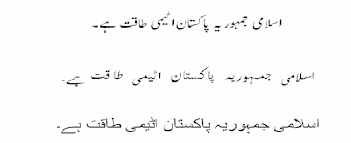
NastaliqBengali script
Oh! Shonju was so dramatic! A laugh escaped Husna, then she fell silent.
They were driving past the Ramna Racecourse. Her baby shifted in her womb. Later. . . many years later, she would think that her son Azeem knew that they were passing what in two decades would be a historical spot: the pulse point of an unprecedented political gathering on a March morning in 1971. On the seventh day of that month, a voice would rise like a colossal bird filling the Dhaka sky with its fateful, uncompromising call, announcing that the time had come “for the ultimate struggle, the struggle for freedom”: Ebarer shongram, shadhinotar shongram!
Had she been clairvoyant, known that the heady creature would swoop down and snatch her son and hurl them all into the whirlpool of destiny, perhaps she would have told Rashid Miya to change route, take another road. But would that have changed the course of history, erased the scribbling of fate?
For the moment, the Black Morris like a rigid pen on paper drives inexorably forward, and the future is drowned out by the sporadic shouts in the distance of “Rashtro bhasha Bangla chai! We demand Bangla for national language!”
The baby came early. In fact, the very evening after she returned from her outing, the pains started. There was no time to shift her to the maternity ward of the private clinic of Daktar Chacha, so he sent a nurse over to help deliver her baby at home. Early in the morning of February 21, her baby son arrived.
A trunk call was made to Karachi to give Jamil the good news. Then there was much rejoicing in the house with relatives dropping in to see the baby. By late afternoon, however, the atmosphere in the house became subdued as disturbing news from the streets filtered through.
The police had opened fire on protesting students. There were hushed discussions so she would not hear. But she overheard the day nurse telling the night nurse before she left that injured students had been taken to the Medical College. The very next day, Husna’s elder brother, the final year medical student, Monju Bhaijan, had come to the breakfast table shouting in rage that a student had succumbed to his wounds, and the body of another had been found on the floor behind the Anatomy room. Baba confirmed it with sadness.
Even Jamil’s letter to her after the joy of the news of Azeem’s birth contained a postscript: “Stay safe. These are volatile times. Worried about Shonju. The Dawn newspaper here carried an editorial saying that the people of West Pakistan have no objection to Bangla getting a status equal to Urdu. Why is there always such a divide between the wielders of political power and the populace?”
A few days later, Husna wasn’t sure if it was the 25th or 26th, Ma and the nurse had just taken away the baby when Shonju arrived. He was carrying a box of sweets. “Moron Chand and Sons” it said on the box. Inside were her favourite sweets: the soft, creamy white, renin-based balls of rose-scented pranhara-shondesh.
Ma must have bought the sweets and forced him to come visit his newborn nephew. Husna breathed a sigh of relief, seeing her brother, who paced restlessly, refusing to sit.
“I saw the baby in Ma’s room on my way in. Looks like Dulabhai.”
“Really? I think he has our family nose.”
“Poor kid! Hope not.” Shonju finally grinned, but his mind was elsewhere. He was wearing a black badge of mourning on his white kurta sleeve.
Husna stretched her arm and took his hand: “My heart aches for those who died, Shonju. But I’m so grateful you are okay.”
He didn’t let go of her hand but turned his angry face away.
“We students are still in battle mode. It will continue, the andolon, the protests, the confrontation. The Shaheed Minar memorial we constructed outside Medical College was destroyed, but we will rebuild it.”
He pulled his hand away, clicking his tongue: “Oh! Don’t worry. Nothing will happen to me. When you fight for a cause you feel superhuman, invincible. The collective spirit strengthens us, makes us feel immortal. We are more than an individual life. What will our enemies do? Kill or wound one person, right? But the cause… they can’t defeat that. We are the multitudes… ”
“Uff! Stop this speechifying!” Husna rolled her eyes. “Mothers don’t want multitudes. They just want their sons. Sisters want their brothers. Yes, even though you’re a moron, I’d rather have you than a street full of heroes.”
Shonju laughed. “In that case, Bubu, you better start speaking only in Urdu. Sell your mother tongue to these politicians.”
After Shonju left, the nurse brought the baby to be fed. Husna touched baby Azeem’s toes, his petal-like fingers. Once, she had laughed at her elder sister for her incessant baby talk when her son was born. Now it spilled out of her, and she felt no embarrassment. Soft, mashed up balls of Bengali words lisped with maternal love, sweeter, and more tender than the pranhara in the box.
Was that how all mother tongues started? With silly, besotted mothers cooing to the babies in their language? She realised that if she had to make up baby talk in another language, she probably couldn’t do it. There was something about expressing oneself in one’s own tongue, heard from infancy. It was the home that one carried within, because the earliest memories of the mother’s voice absorbed from the womb animated it. It was a birth right that no one could be permitted to take away or undermine.
But was it worth dying for? Worth being martyred like the student the police had shot on Thursday, the twenty-first?
A week later, after lunch, the house suddenly filled with voices. Shonju entered, followed by Monju Bhaijan, and Farid. Husna looked at him surreptitiously. His face was impassive and he gave her a distracted nod. What else could he do, or say, Husna could understand. After all, there she was, much married and a mother, to boot.
Loudly ordering tea to be served, sounding like a housewife, she left the room, disappointed in herself that despite her show of poise and indifference, her heart still ached in a dim way.
She asked herself, if, in the past, she and Farid had been granted the opportunity and the courage to express to each other what she was certain was a mutual attraction, would her life be different? Would the knowledge that her feelings were requited, or not, have made a difference to her sense of self?
When Jamil’s proposal of marriage came to her parents, and they had accepted on her behalf. It was too late. Farid was not around, having gone to visit his parents in Barishal, so nothing had been acknowledged. There had been no beginning, and subsequently, no closure.
During her impending wedding she had to make sure her feelings did not go into a Bhasha Andolon of sorts within her, agitating and demanding the right of her heart’s true language to be respected. Instead, she had gagged her heart, imposed on herself another language: a formal, emotionally correct, and socially acceptable language. The vocabulary of wedded propriety appropriate to an obedient daughter and daughter-in-law. An official language, foreign to her, like Urdu.
She sighed. Language supposedly empowered humans and differentiated them from animals. But if, despite the ability to verbalise, people could not make their wishes known or heard, were they not equal to dumb beasts? What use was the mother tongue when ones’ own mother had not understood her daughter’s unspoken wish just because she could not speak out: “I don’t want to marry, yet. I want to wait! Manbo na! Manbo na!” And what use was language when Farid too, had failed to use his tongue, express himself at the right time, ask her clearly to wait and not accede to the arranged marriage.
*
No, it was better that the Bengalis had spoken out. It was better that they had taken to the streets. This andolon would lead them to express their rights and desires, claim what was true. Of course, it would take four more years for Bengali to be constitutionally recognised as a state language of Pakistan, along with Urdu. But time was a tiny link in the cosmic chain of historical and personal events. Obviously, this last was not something thought up by Husna at the time, but by the Husna of today, watching her past self.
Today, she observed herself through the telescope of time, on the first day the young mother Husna nursed her baby son. Surely, she was unaware at that moment that everything was connected: her breast milk and baby talk in Bangla nourished not just her child, Azeem, but through him later, Shonju’s “multitudes” of a future generation, as a whole nation journeyed from Ekushey or twenty-first, to Ekattor or seventy-one: from the upheaval for language of February 21, 1952 to claiming a home for it in the war of independence of 1971. All were linked, even if separated by time and generation. In the end, everything existed in a grand NOW, where past and present simmered together.
Needless to say, all this was what she would think many years later, as an older sixty-year-old woman, looking back on her life as she wrote her journal, sitting in her room in her daughter’s suburban home in Maryland, in the US.
She dusted the photo frames on the painted bureau. Her doting late husband Jamil, and her gentle yet impassioned elder son Azeem looked at her from the distance of lost eras. One was gone in 1966 in a helicopter crash. The other in 1971, as a freedom fighter.
Farid, unframed, was a forbidden, almost forgotten memory. Lost like an unspoken language. Lost, because she had never fought for him.
She has a fanciful wish: in some after life she would like to ask those who had agitated and fought for a cause, and even laid down their life for it: in the end, was the sacrifice worth it?
“Today is February 21, 2002. Commemorated as Omor Ekushey in Bangladesh. But just another day here…” She wrote in her diary in Bangla, a language that her grandchildren could not speak.
She pulled out from under her bed the harmonium her daughter had recently bought for her from an Indian family that was moving back to India. She sat down on the rug, stroking the black and white keys with one hand and pumping lightly on the bellows at the back of the instrument.
On top of her harmonium lay open her old songbook, marked and written on by the music teacher of her childhood. She was a trained singer, and in 1950, she with a group from her school had performed some mass anthems and marching songs on what was then Radio Pakistan Dacca. There, they had met a musician named Abdul Latif, who would later put to melody a poem written by a journalist named Abdul Gaffar Choudhury for the student who had died on February 21. Later, the song would be recomposed by a noted composer named Altaf Mahmud and emerge as an anthem for what became Mother Language Day.
For her, of course, the day had a different and personal significance. It was the sacred anniversary of her motherhood that she had entered so reluctantly. On this day, every year, she sang to the son who had taught her the ultimate lesson of love and sacrifice and of never forgetting.
She started to hum the familiar refrain as she tried out a few chords.
Her granddaughter Zainab peeked through the door.
“What’re you singing, Nani[8]?” She said in her American accent.
“It’s a song about love, sweetie. About loving one’s language.”
“Which language, Nani?”
“Any language that you love, sweetheart. For me it’s Bangla, which you hear me speak with your mom.”
She sang the first lines. Zainab sat down beside Husna, gazing at her moving fingers.
“Cool! It’s like a portable piano! Can I learn to play it?”
“Well, only if you also learn to sing this song with me.”
“Deal!”
In bed that night, Husna wrote in her journal: “Today is February 21. International Mother Language Day. Today Zainab learnt to sing the Ekushey song, especially the refrain ‘Ami ki bhulite pari?’ And when I tested her on what it meant, she got it right as she ran away giggling and yelling: ‘Can I ever forget it?’
So, today turned out to be. . . not just another day, after all.”
Husna closed her eyes with a smile on her face. Just before she fell asleep, she felt as if she understood the world not with the uttered meanings of any language, but like an unborn baby breathing in the womb its mother’s voice, dreaming his or her first spoken word.
Dreaming in whatever language would become their home, their motherland.
Neeman Sobhan is anItaly based Bangladeshi writer, poet, columnist and translator. Till recently, she taught Bengali and English at the University of Rome. She has an anthology of columns, An Abiding City: Ruminations from Rome; fiction collection: Piazza Bangladesh; Poetry: Calligraphy of Wet Leaves. Armando Curcio Editore is publishing her stories in Italian. This short story was first published in Ekhushey Anthology 1952-2022, edited by Niaz Zaman, writers.ink in 2022.
.
PLEASE NOTE: ARTICLES CAN ONLY BE REPRODUCED IN OTHER SITES WITH DUE ACKNOWLEDGEMENT TO BORDERLESS JOURNAL
The girl caught in a dream                                                                                                                                           threw off her bedspread in response                                                                                                                       to chords rattling somewhere                                                                                                                                                           in her brain, feet                                                                                                                                                                  unfurling, feeling the floor                                                                                                                                                                 foot after foot                                                                                                                                                                                   as if it were school time                                                                                                                                                                   but where was her school bag?


She walked as if urged along                                                                                                                                           by an inner deity, as if the yakshis*, those                                                                                                                   malevolent spirits, carried for her trays                                                                                                                                of paddy grains, tender coconuts, lamps, zari*.


Sometimes a girl thinks she is in good company                                                                                                                                                                                 but what were the Saptha Kannis* doing?                                                                                                                     It was only dusk, the midnight jasmines                                                                                                               bloomed, snakes plaited themselves like couples.                                                                                                                   Maybe it is all trickery of Kuttichatan*.                                                                                                                                        Who has ever seen him?


Something must have                                                                                                                                       snapped. Half asleep half awake, she bolted                                                                                                                     upright and walked and walked                                                                                                                                                    till her feet felt their own blisters.


Why were all the household people snoring                                                                                                               like porcupines, when she had reached                                                                                                                                       the doorstep of her school?


In the morning, they would tell her all about it.                                                                                                        They would even ask if she had any unfinished                                                                                                                  homework.


Sometimes we walk                                                                                                                                                      not knowing our destination or purpose--                                                                                                     sometimes, great men in history like the Buddha                                                                                                                             just walked, until they found their tree.


*Yakshi—female nature spirits

*Zari—thread made of silver or gold

*Kuttichatan – a portly spirit from Malabar lore

*Saptha Kannis – the seven embodiments of Shakthi, the Mother Goddess
Sivakami Velliangiri has been included among the women poets in the History of Indian Writing in English (1980). She has a chapbook, In My Midriff, and her debut poetry book is How We Measured Time. Her poems appear in The Penguin Book of Indian Poets (2022).
.
PLEASE NOTE: ARTICLES CAN ONLY BE REPRODUCED IN OTHER SITES WITH DUE ACKNOWLEDGEMENT TO BORDERLESS JOURNAL
By Jyoti[1], translated from Hindustani by Lourdes M Supriya
Songs of Freedom bring stories from women — certainly not victims, not even survivors but fighters against the patriarchal status quo with support from the organisation Shaktishalini[2].
–Sanjay Kumar, founder, pandies‘
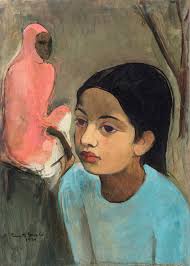
Painting by Amrita Shergil (1913-1941)
What are the Options?
“So then what happened?”
Nothing. My father came and took me back to his house. My nana-nani[3] didn’t stop him. He put me in a good school though, so this time I didn’t mind going back there. Last time he took me, I hated it.
“Why did you hate it?”
He wasn’t a nice man. I think that’s why my grandparents took me in. They knew what kind of a man he was. I loved being at my grandparents’. My mama, mother’s brother, he would take me shopping during holidays. I could pick anything in the entire shop, he’d never say no. Whenever I wanted new clothes, my masi, mother’s sister, took me to the markets\. She was like my mother. I was so loved there. But then my father took me away…
He had too many restrictions. My mother and I weren’t allowed to leave the house. I couldn’t leave after I came back from school. He kept an eye on us from his shop, it was down the street. Then the drinking got too much, the yelling, the swearing. I was afraid of his footsteps. I could tell from the sound of them what the night was going to be like. My mother was very scared of him, she couldn’t protect me from him. She felt helpless, I felt really bad for her. Then I was sent away again to my grandparents. I liked it there. I was studying in a government school. I did well in studies. I liked it. But then he came and took me back to the village. I had to repeat my third standard[4] there. I cried a lot at first, but it was a private school, better than the government one in Delhi.
“So this was the second time you were going there?”
Yes. I’ve lived at my father’s a couple of times. Sometimes I ran away and came back to my grandparents’, sometimes my mother brought me with her and stayed. But she always went back pretty soon. The first time he took me, I used to cry to my grandparents every night to take me back. I had to repeat classes so many times, I’m really behind on my studies. This has ruined my education. That’s why I hate it.
“What about the last time you were there? What happened then?”
Nothing. The same. But worse. He was more violent. My mother herself asked me to go with her to my grandparent’s. But I had exams in a month. I was a good student. I’d worked so hard. That year was especially bad at home; I’d put all my energy into school. I didn’t want to just drop it all and repeat the class again. I begged my mother to stay till the end of the term. He would beat her over everything. So I had to beg her. I promised her I would support her if she’d just let me give those exams. I was 14. I was old enough to start working.
“So did she stay?”
Yes. And then I came back to my grandparents’. But she went back the second day. Then she stopped taking my calls. Finally, I called her from someone else’s phone. She recognised my voice. I could tell. She didn’t say anything for a long time. I kept asking her to come. Then she said, “Aaj se tera mera rishta khatam; you’re not my daughter anymore. Don’t call again.”
I felt very alone. Things at my grandparents’ were also changing. My aunt was getting married. Everyone was busy with the preparations.
Nana[5] used to drive the auto 15 hours a day to save up for it. But he first had to pay back the loan he took out for the auto before he could save for the wedding. It was his last installment and they were really breathing down on him. One day he came home and told us he was short of 1000 bucks and it was time to make the payment. He asked my uncle, who was married by then, but his wife said they couldn’t spare it since they were also paying for the wedding and saving for the baby they planned to have next year. My uncle didn’t even have the balls to refuse his father himself. His wife had to do it. My grandfather turned to my mother, but she said, she couldn’t spare it either, she’d spent it all on me.
“Wait, your mother was there?”
Yes. She’d come eventually, some two months after me. She was working as a cook. It was really nice. For the first time, it felt like she was there. But that day she had used me as an excuse. I didn’t see any of that money. She wasn’t even paying for my school fees. I took tuitions and paid for it. I was starting to resent her too, I could see why the rest of them hated her.
“Wait, who hated her? Why did you resent her, you just said she was there for you.”
She was. When she came. She got a job. She got offs on Sunday and she would spend those with me. On Sundays, I didn’t have to cook for the family, she did. She even gave me money for school supplies, like new copies or pens, whenever I asked for it. She got me a small phone too. But this didn’t last long. She met someone. She used to take the same rickshaw to work everyday. He’d take her from one place to the next, they used to talk, then she’d talk to him at night too. She kept to herself. She started spending her Sundays with him. He wasn’t a good man. One day, he went to the village.
I thought it would end but her late-night conversations continued. They hated her, my grandparents and my uncle, his wife, even my mother’s sister. She knew her sister was to get married soon but she was roaming around with a man. All the neighborhood knew about it. What would they think? And then she stopped contributing to the house. How much could my grandfather do? She didn’t even give me any money anymore. Not even for notebooks. I had to work. And it was so difficult. I had to make breakfast for everyone in the house in the mornings, pack my lunch, rush back and do all the cleaning of the house, make lunch for everyone, then clean up the kitchen and wash the vessels. Then my kids would come. But everyone was selfish then. They were angry with my mother, and then with me. I gave my grandmother a part of my earnings, and I paid for my school. I did everything. She’d stopped staying home on Sundays too, so I had to do the work. That day, when my grandfather asked for money, she said she didn’t have any. He got so angry with her, he called her a slut, a leach, a parasite, draining him, killing him slowly, he slapped her. She ran away. I noticed that he didn’t react the same way when his daughter-in-law had refused to give him the money. But he was just so upset, he started crying. I couldn’t bear it. So I took one thousand from the money I’d saved for all those months and gave it to him. My grandmother took me aside and told me I shouldn’t have done it, that she could have dipped into the money I gave her. I told her that was for her. She didn’t have any money at all. And she’d been so kind to me. She was the only one who didn’t resent me. But she respected my grandfather too much to contradict him when he called me names.
“I thought your grandparents were supportive, that you’d felt safe in their house?”
I did. But my aunt was getting married, that changed everything. And I understand why they were angry with my mother. She brought us so much shame. One day, that man that she’d been having an affair with, he went to her workplace and started beating her up. He forced her onto his rickshaw, holding her hair throughout, and then brought her to our neighborhood and dragged her through the streets by her hair to his friend’s house. She’d started an affair with his friend when he’d gone to his village, and he found out about it. All the people heard him that day. She was so scratched up when he finally let her go. I took her to the police station but they didn’t file a complaint. My grandparents also encouraged her to file a complaint. But she didn’t. The new man she was seeing told her he was going to help her. So she listened to him, trusted that he would get her justice. I’ve never seen him, none of us had. But she really trusted him.
One day my aunt was really anxious. She came into the room when I was taking a class, and she asked me to go to the terrace because she needed the room. I had to move all the kids upstairs, take all the chairs. When I came back after the class, she started yelling at me, telling me I’m a burden, then she started beating me, abusing my mother too. I didn’t say anything to her when she was beating me; she left me in the room. I waited for my mother to come and comfort me. But she didn’t come. So I went looking for her, thinking this could bring us together. But I found her on the terrace, talking to her new boyfriend, telling him about all this. I felt really abandoned. She couldn’t even bother to check on me but she wanted his sympathy. Then they got into a fight. At one point, I overheard her begging him not to leave her or she’d kill herself. It made me so angry, I felt like I could break something. I didn’t like this man at all. One day, she just got up left. I asked my grandparents to file a missing person’s report but they didn’t want to do it because it would bring shame to the family and my aunt was getting married. So they waited till it was over and then filed it, three years later. But I haven’t seen her since. I think she’s missing, we need to find her.
“How long ago was this?”
I don’t know. I can’t tell.
“What happened after your mother left?”
They all blamed me, they said I drove her to do it, that I hated her, that I was like her. They asked me to start contributing to the house, to stop living like a freeloader. I started giving all my tuition money home. I couldn’t continue school anymore. But they were so angry. One day, after my aunty’s marriage, the police came to our house in response to the missing person’s complaint I’d made them file. They wanted to ask questions about my mother and her boyfriend. I think she planned her escape. She’d been staying overnight at his house 2-3 times a week, and slowly taking her clothes there. The police pointed this out, how she couldn’t have taken a big bag when she escaped, or we’d have seen her packing. I think they’re right. She abandoned me.
“Do your grandparents believe she’s okay, living somewhere else?”
Yes. It makes sense. She didn’t like it at home. They felt so ashamed by the police visit. They were angry that I’d made them file the complaint only to find out that their daughter had run away willingly. My grandfather was livid that day. He beat me up, then tried to drag me down the stairs. But I fell down at the 3rd floor landing so he started kicking me. Then he left me lying there. My grandmother didn’t come to help me. I was so distraught. I couldn’t even go to school, everyone hated me. What future did I have? No one wanted to help me, I didn’t know anyone who could help me or even who to turn to. I jumped off the landing there. I tried to commit suicide. That’s why I’m here now. Now I go to school.
[1] Note: Loosely based on the writer’s lived experiences
[2] “Establishing itself as a premier women’s organisation in India from 1987, Shaktishalini has spread out and deals with all kinds of gender based violence. A shelter home, a helpline and more than that a stunning activist passion are the hallmarks of this organisation.
“pandies and Shaktishalini – different in terms of the work they do but firmly aligned in terms of ideological beliefs and where they stand and speak from. It goes back to 1996 when members of the theatre group went to the Shaktishalini office to research on (Dayan Hatya) witch burning for a production and got the chance to learn from the iconic leaders of Shaktishalini, Apa Shahjahan and Satya Rani Chadha. And collaborative theatre and theatre therapy goes back there. It is a mutual learning space that has survived over 25 years. Collaborative and interactive, this space creates anti-patriarchal and anti-communal street and proscenium performances and provides engaging workshop theatre with survivors of domestic and societal patriarchal violence. Many times we have sat together till late night, in small or large groups debating what constitutes violence? Or what would be gender equality in practical, real terms? These and many such questions will be raised in the stories that follow.” — Sanjay Kumar
A fakir sings of life,
In abandon,
He plays his string instrument.

Who said you can't
Pluck a smile and
Garden millions of them?

Writing the pain
And erasing it is
Like the ocean
Washing the shore.

The dew of dawn glistens
After night closes its purdah*.

Autumn's bare fate
Is spring's blooming reason.

Seasons follow one another;
Life sets and shines
Like seasonal sunshine.

Life can bloom,
While you appreciate
Waiting on a bench,

Under the reddish
Rhododendrons
That decorate and
Light up the landscape.

The seashells long to be collected!


*Curtain
Sushant Thapa writes poetry, book reviews and flash fiction. He has an M.A. in English from JNU, New Delhi. He is a lecturer of English and Business Communication in Biratnagar, Nepal.
.
PLEASE NOTE: ARTICLES CAN ONLY BE REPRODUCED IN OTHER SITES WITH DUE ACKNOWLEDGEMENT TO BORDERLESS JOURNAL
In the heart of a bustling metropolis, where neon signs battled the stars for supremacy, stood a high-rise that pierced the sky. On the 42nd floor, amidst the hum of advanced technology and the glow of omnipresent screens, lived Michael and Apollonia. Their apartment, a futuristic enclave, was filled with gadgets and gizmos that spoke of an age where technology reigned supreme.
Michael and Apollonia, once a couple whose love story could have inspired poets, now found their bond fraying in the unrelenting embrace of the digital world. Their home was an altar to the modern age, with walls adorned with the latest ultra-thin screens, surfaces cluttered with virtual reality gear, and AI assistants that responded to their every whim.
Michael, a software engineer with a passion for gaming, spent his days and nights in alternate realities. His VR headset was more a part of him than his own limbs. In these digital realms, he was a hero, a conqueror, a legend. Apollonia, a digital marketing strategist, found her solace in the lives of others through her social media feeds. Her world was one of perfectly curated images, witty captions, and vicarious living through the adventures of influencers.
Their apartment, high above the city’s ceaseless rhythm, had become a silent bubble. Conversations, once filled with laughter and shared dreams, were now a series of emotionless texts and emojis, even when they lounged on the same sofa. Dinners were silent, save for the soft tapping of their devices; their eyes rarely met, each lost in a personal digital labyrinth.
.
Michael’s world was one of fantastical landscapes and impossible quests. His laughter, once a melody that Apollonia adored, was now a rare sound, often drowned out by the synthetic scores of his games. Apollonia, whose zest for life and storytelling had captivated Michael, now channeled her creativity into crafting an enviable online persona, her real emotions hidden behind a filter of digital perfection.
Their home was a stark reminder of a past filled with genuine connection. Framed photographs of their early adventures — hiking trips, impromptu road trips, and lazy Sundays in the park — were now just relics of a bygone era. Michael’s guitar, once a source of serenity, lay in a forgotten corner, its strings still. Apollonia’s collection of travel books, which had fueled her wanderlust, now served as mere decorative trivia, untouched and gathering dust.
.
It was on a stormy evening, as the city beneath them was a spectacle of rain-drenched lights, that their worlds momentarily collided again. Michael, his VR adventure paused due to a rare glitch, noticed Apollonia. She sat curled on the couch, her face illuminated by the soft light of her tablet, scrolling endlessly. For a fleeting moment, he saw not the Apollonia lost in the digital world, but the woman he had fallen in love with.
Moved by a surge of nostalgia, Michael reached out and gently touched her shoulder. Apollonia looked up, her eyes wide with surprise, as if seeing Michael for the first time in ages. Their eyes locked, and for a brief moment, the digital fog lifted, revealing the raw, vulnerable humans beneath. A torrent of memories flooded back — their first date, the late-night talks, the tender moments.
But the magic of the moment was fleeting. Apollonia’s gaze shifted back to her screen, the ghost of a smile fading as she immersed herself once again in the digital stream. Michael, a wistful sigh escaping his lips, re-entered his virtual world. The screens that had grown between them were too strong, their digital habits too ingrained.
Their night did not end in a dramatic confrontation or a tearful goodbye. Rather, it faded, like the last bars of a forgotten melody. They continued to share their high-rise haven, yet their worlds were galaxies apart. Their love, once vibrant and tangible, had dissolved into the ether of cyberspace. Around them, the city throbbed with life, but in their high-rise sanctuary, they existed in a state of digital solitude, side by side yet worlds apart. As the city lights flickered and danced below, they sat together in their digital cocoon, a testament to a world where hearts beat in sync with bytes, and love stories are written in the code of a bygone era.
Apurba Biswas is a Ph.D. scholar at the School of Humanities and Social Sciences, National Institute of Science Education and Research Bhubaneswar (An Autonomous institute under the Department of Atomic Energy, Govt. of India), and an OCC of Homi Bhabha National Institute, Mumbai. Apurba Biswas specialises in bridging gaps between science and humanities.
.
PLEASE NOTE: ARTICLES CAN ONLY BE REPRODUCED IN OTHER SITES WITH DUE ACKNOWLEDGEMENT TO BORDERLESS JOURNAL
Crabs scuttle there, lonely hearts of purblind pleasure

You yearn to scoop up with a child’s shovel,

Relishing the tingle of sand’s reanimated matter.

In the corkscrewed nexus of a god’s naked palm

You discover butts and unusable flotsam

Blackened by barnacle rust from history’s rime:

The timelessness where you bear witness

To a soggy past with these craggy sentinels

Watching marshmallow clouds slowly morph

Through hazy days of mist-ridden skies.

Rock becomes pillow to your nodding head,

For one cannot sleep under destiny’s rainbow

With scattered rain eclipsing the diurnal wend

Of conflicting elements?

Your lips bear a garlanded surprise, perhaps,

Of entwining seaweed still growing yet,

Into lungs of possibly pandemic rot

Where the airs of your humanity expire

Under the crags of dubious spiritual shelter;

You’re no longer witness to urban banality

Outside where a gross mechanised landscape

Looms in retinal configurations of cold dust.

You won’t have to breathe airborne droplets

Fastening a bleak curtain of acidic rain, either:

The grey confetti choking those homeless ones

Pushing shopping carts filled with dumpster leftovers,

While sparrows with limpid wings descend

To peck at that detritus of rife, decaying flora.

Under the crags the helix of humanity crumbles

As you finally emerge to sit atop one,

Meditating as an outcast Buddha of sorts

On the inevitability of seasons forever

Eroding these basaltic, ocean thrones –

and the secrets beneath left to other sad beachcombers?


****


Under the crags you found an old cell phone

Ringing, and the voice said “under the crags

Hip crabby beachcombers live scuttling there,

And they forage under the littoral’s rocks

Of old volcanic upheaval beneath cloud-ridden skies

Where brave explorers once ruled the sea.

They mapped nearby landscapes, my friend,

As long-billed terns strutted gaily everywhere,

Pecking for food … (Under the crags of eternity,

Or boulders of outsized granite, with gemstone stanchions

Like god pebbles thrown there by Gulliver’s sturdy hand):

Until you’re meditating with the drowning Buddha today

On the inevitability of seasons eroding these ocean thrones

You sit like a beached saviour in silence beneath …”


Then I hung up –
Peter Magliocco writes from Las Vegas, Nevada, where he’s been active as writer, poet, editor, and artist. He has recent poetry in A Too Powerful Word, Trouvaille Review, Lothlorien Poetry Journal, Flashes of Brilliance, dyst, Dreich, and elsewhere. His latest poetry books are The Underground Movie Poems (Horror Sleaze Trash), Night Pictures from the Climate Change (Cyberwit.net), and Particle Acceleration on Judgement Day (Impspired press).
.
PLEASE NOTE: ARTICLES CAN ONLY BE REPRODUCED IN OTHER SITES WITH DUE ACKNOWLEDGEMENT TO BORDERLESS JOURNAL
Title: Faking It : Artificial Intelligence In a Human World
Author: Toby Walsh
Publisher: Speaking Tiger Books
AI, or Artificial Intelligence, has become an integral part of our daily lives. It has revolutionised industries, from healthcare to transportation and manufacturing. However, some people may seek to artificially enhance AI to deceive others. This is called “faking AI”. There are several reasons why someone might fake AI.
Faking AI can enable individuals to impersonate someone else or appear as experts in a particular field. This can have negative consequences, such as fraud or phishing scams. Creating AI from scratch can be complex and time-consuming. By pretending to have AI, individuals can save time and effort while still achieving their desired results. In some cases, individuals may prefer to keep certain aspects of their AI-driven projects confidential. Faking AI can provide privacy and discourage further investigation.
One of the most common methods of fake AI is to manipulate data. By selectively choosing or modifying data, individuals can create artificial patterns or results that seem AI-generated. Another approach is to use pre-trained models, which are AI systems based on large datasets. These models can be repurposed and fine-tuned to deliver specific results without significant effort.
Machine Learning as a Service (MLaaS) platforms enable individuals to create AI models without technical expertise. These platforms often offer pre-trained models to generate fake AI results. Fake AI APIs, or Application Programming Interfaces, can simulate AI functionality. These APIs provide AI-driven responses or data but rely on predetermined algorithms or scripts.
While pretending to have AI may have certain advantages, it also has several disadvantages. Faking AI can mislead consumers about AI quality and authenticity. This can erode trust in AI technology and hinder its widespread adoption.
Faking AI may violate ethical guidelines and legal requirements. The use of AI without disclosing its true origins or limitations can contribute to legal consequences, including breach of contract or fraud. Faking AI can result in inaccurate predictions and decisions. This can lead to serious consequences in industries where AI plays a significant role, such as healthcare or finance.
Faking It: Artificial Intelligence In a Human World by Toby Walsh goes into the subject. A world leader in artificial intelligence, Walsh has spent his life dreaming about and researching how machines think. Scientia Professor of AI at the University of New South Wales and Fellow of the Australian Academy of Science. Toby is passionate about ensuring AI improves, not harms, our lives. He authored It’s Alive! From the Logic Piano to Killer Robots, which was named one of the year’s best books by the New Statesman. Toby contributes to American Scientist, New Scientist and The Guardian.
The blurb says: “Faking AI has become an increasingly prevalent concern in today’s digital age. It is crucial for individuals and organizations to be aware of the methods and motivations behind faking AI and take appropriate measures to detect and protect against it. By implementing best practices and promoting transparency, we can build trust and preserve the integrity of the AI-driven world. Artificial intelligence is, as the name suggests, artificial and fundamentally different to human intelligence. Yet often the goal of AI is to fake human intelligence. This deceit has been there from the very beginning. We’ve been trying to fake it since Alan Turing answered the question ‘Can machines think?’ by proposing that machines pretend to be humans.”
As Walsh argues in his book, we are on the verge of developing artificial intelligence that can be used to deceive us. ChatGPT is an example of an artificial intelligence that is capable of fooling us into believing that it is intelligent and blurring the line between what is real and what is not. The truth is that they are devoid of true understanding, sentience, and common sense.
In spite of this, they are still capable of making a difference in the world. He raises fundamental questions in the book, including: Can artificial intelligence be creative? Can they be moral? What can we do to ensure they are not harmful?
Toby Walsh takes us through all the ways artificial intelligence mockups human emotion in this exciting and fascinating book. Also, he examines the implications of this for humanity in the present and the future of our planet.
.
Bhaskar Parichha is a journalist and author of Unbiased, No Strings Attached: Writings on Odisha and Biju Patnaik – A Political Biography. He lives in Bhubaneswar and writes bilingually. Besides writing for newspapers, he also reviews books on various media platforms.
.
PLEASE NOTE: ARTICLES CAN ONLY BE REPRODUCED IN OTHER SITES WITH DUE ACKNOWLEDGEMENT TO BORDERLESS JOURNAL
Down with these bloodied walls,

where love is held prisoner,

life’s journey stalls.

Time has no purpose.


Down with these graffitied walls,

where hate binds all pain,

voices imprisoned in

confined spaces echo.


Down with these white-washed walls,

where prejudice abides,

ignorance crawls,

dust never settles.


Down with these bullet-holed walls,

where peace is wanting,

liberty mauled,

humanity cries.


Down with these surrounding walls,

so, birds return to nest,

dreams reinstalled,

and life breathes again,


    and souls become songs,

    and spirits begin to sing,

    and the lame dance,

    being alive to the heartbeat,

    as the healing begins.
Sanjay C Kuttan, poet, philosopher and writer, was born in Malaysia, lives in Singapore, has his poetry published in Where Fires Rage, In One Breath, Under the Spell of Flickering Lights, Quilted Sails and in other anthologies.
.
PLEASE NOTE: ARTICLES CAN ONLY BE REPRODUCED IN OTHER SITES WITH DUE ACKNOWLEDGEMENT TO BORDERLESS JOURNAL








 Borderless