Categories
Essay

When a New Year Dawns…

Ratnottama Sengupta writes she does not junk all the old Calendars and Diaries…

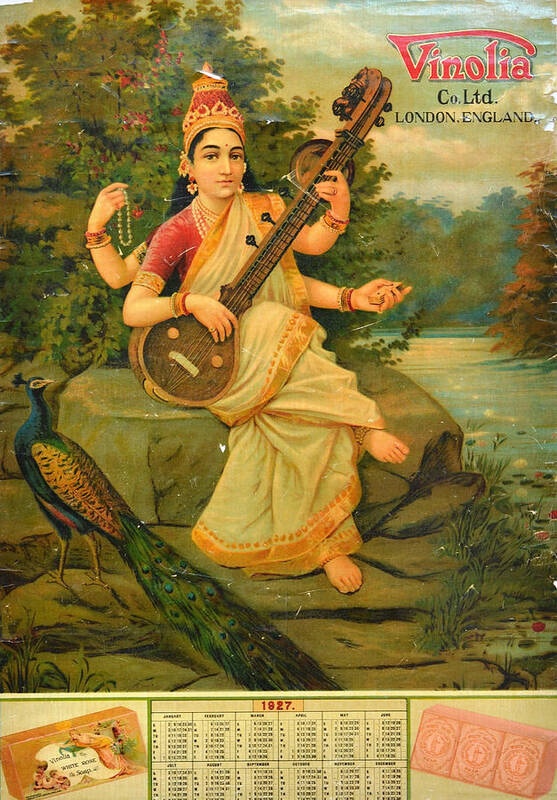
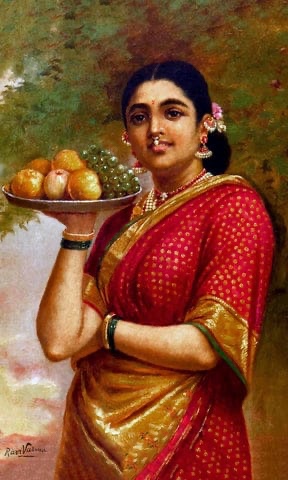
The dawn of every New Year brings with it the need for a new calendar and a couple of new diaries. So, wholesale markets in every major city on the map flourishes with these items in every shape and size. In the years of my growing up, a government organisation calendar, with only the dates and simply no illustration, was routine. Forget 12 images for as many months, even half that number was a rarity. This, even though in the previous decades Raja Ravi Varma’s [1] evocation of Saraswati, Shakuntala, Nala Damayanti or Lady with a Lemon, were coveted adornment for the walls. In certain instances, these images were individually dressed up with sequins and pearls too! Oleographs and mechanical reproductions had, by this time, won past hand paintings that once covered the mud-plastered walls with stories of Ram-Sita Vivaha[2], among others.
Since the turn of this century, which saw dealings in art skyrocket, galleries have made it a custom to bring out calendars on either a theme that’s tackled by a number of artists, or on works by one chosen artist. Simultaneously artists themselves became proactive in bringing out calendars sporting images of their own work. These are not driven so much with the need to publicise their creativity as to lend a personal touch to the annual give and take of ‘Season’s Greetings’.

I particularly cherish the textile scrolls published annually as calendar by my friend Subrata Bhowmik, one of India’s leading graphic designers. This ‘Design Guru’ has eighteen awards from the President for accomplishments in textiles, publications, advertisement, photography and craft communication. He was motivated to do these calendars in order to share what he learnt in Switzerland as also from his experience in the Calico Museum of Ahmedabad. And they spread a deep understanding of the contextual framework of design in the real world. I still cherish one such tapestry designed with Ajanta style beauties, though the year rang out seven years ago.

My friend Jayasree Burman’s desk calendar with detailed images of Laxmi Saraswati or Durga have, likewise, remained in my collection years past their expiry dates. Sohini Dhar used to regularly commemorate the memory of husband Ramlal Dhar with images of his landscape that shared pages with her own Bara Maasa, miniature style narration of the seasons. Ajay De’s limited-edition calendar published by Art and Soul gallery this January is in line with this custom.
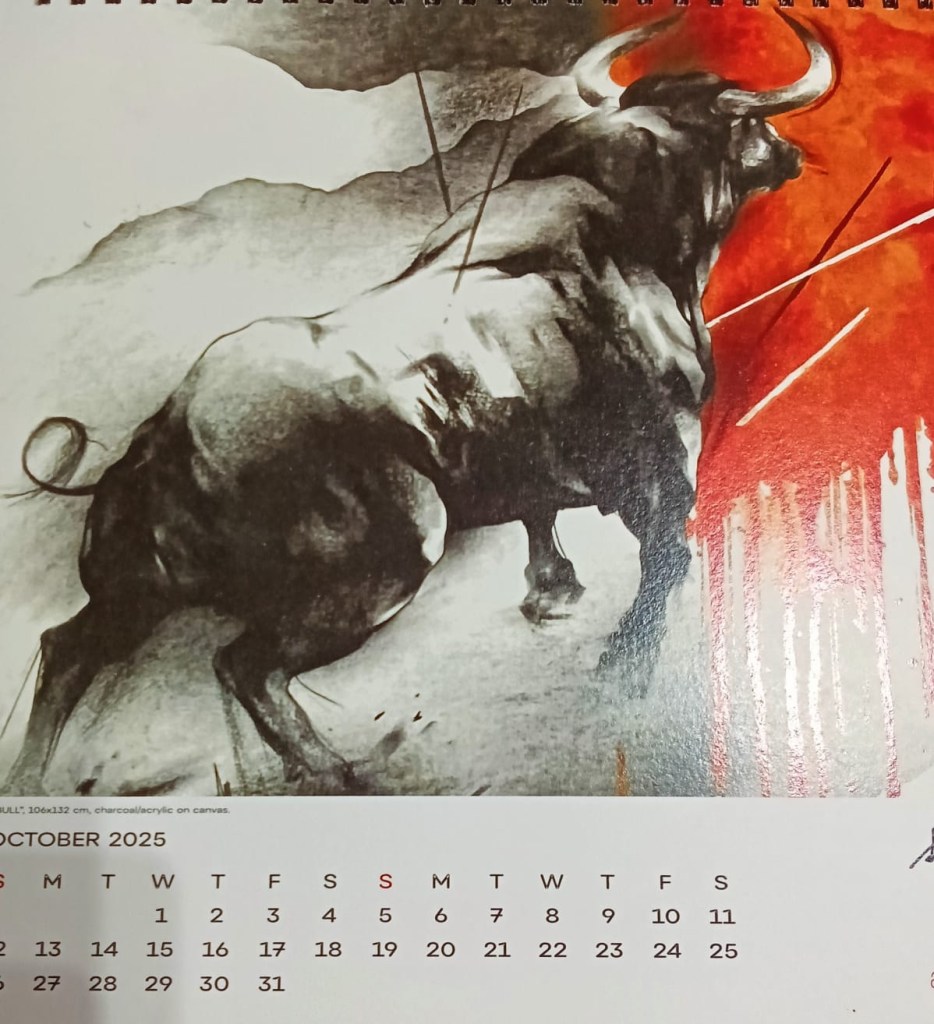
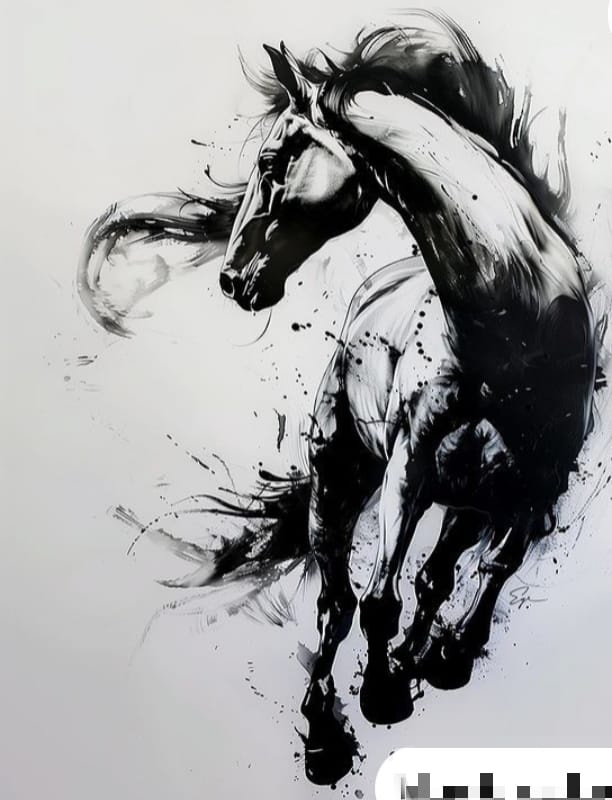
The passion in Ajay’s charcoal paintings of bulls and the stamina of his stallions bring to mind the energy of Assam’s wild boars that Shyam Kanu Borthakur familiarised; the vitality of the horses Sunil Das studied in Kolkata’s stables; the vigour of Husain’s much auctioned equines; even the animation of Paris-based Shahabuddin’s abstractions. However, the amazing vibrancy of Ajay’s treatment of a black and white palette acquires a touch of magic, with a red dot here or a wash of yellow there. And when he places the charging bull against a wall dripping the salsa red of blood, I recall the vivacity of a ‘Bull Fight’ that I had a chance to witness in Southern France a quarter century ago – before its forceful evocation in Pedro Almodovar’s Talk To Her (2002).

*

Prabal Chand Boral, as his name suggests, boasts kinship with Raichand Boral, a pioneer of Indian film music in 1940s. Not surprising that Prabal oftentimes breaks into songs on the terrace of his Kolkata home. Every Durga Puja finds him dancing with earthen dhunuchi[3]. And his diurnal routine finds him painting. Sketching. Outlining. Portraits. Flowers. Supernatural creatures. Illusive figures. Capricious forms. He creates videos to involve attentive viewers. And every year, out of his own pocket he brings out a wall calendar for private collection. “An artist craves to express himself in so many ways,” he told me last year when his calendar had sported six portraits in his signature style.
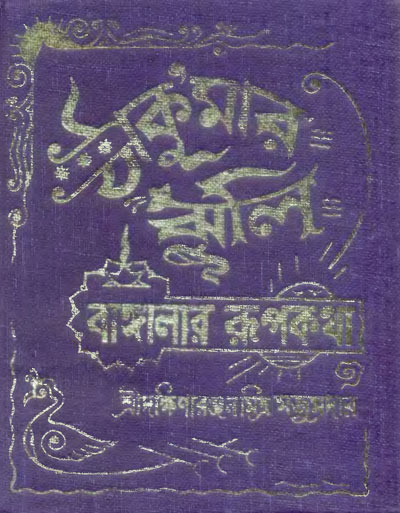
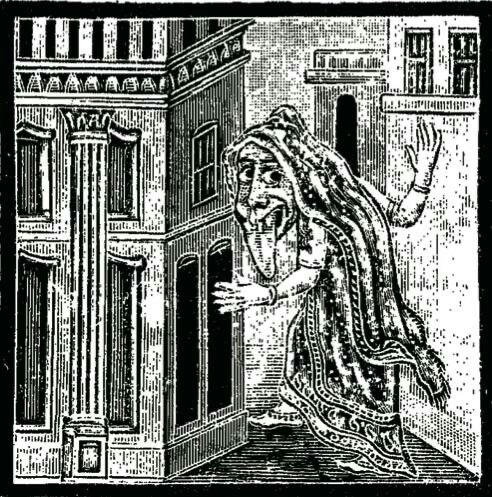
This year Prabal pays an ode to Thakurmar Jhuli (Grandma’s Satchel). Written in 1907 – year 1314 of Bengali calendar — by Dakshina Ranjan Mitra Majumdar this landmark in Bengal’s pre-Independence literature compiles stories that have been orally handed down from one generation to another in the villages and backwaters of undivided Bengal. This was in the manner of the Brothers Grimm who wrote and modified Germanic and Scandinavian tales that have been translated, like Hans Christian Andersen, into every language spoken in the world. In the process they embedded in the collective consciousness of the West lessons of virtue and resilience in the face of adversity.

 Much like them Dakshina Ranjan had gone around mechanically recording the tales of Lalkamal Neelkamal, Buddhu Bhutum, Dalim Kumar and Byangoma Byangomi. When first published, Nobel Laureate Rabindranath had written the foreword because he felt that publication of these legends was a need of the hour in order to counter the sense that only the European rulers had fairies, elves and ogres, imaginary beings with magical powers, to entertain and educate their young. Educate? Yes, because the dark and scary beings, even when they did not metamorphose like the Frog Prince, were metaphors for a state where the victim, though less powerful, always overcame the tormentor. Not only children and young adults but grown-ups too liked the stories that broke down the boundaries of time and culture. They encouraged and even emboldened the readers to look for wonder in their own lives.

Prabal had long cherished the desire to reinterpret the illustrations by Dakshina Ranjan himself. He has brought this to fruition with a touch of his own imagination. The result might not be a fairy tale – read, decorative – but none can deny the originality of this calendar.

*

I have personally felt happy to write for a diary – rather, a notebook – that has been published by Nostalgia Colours, a Kolkata based gallery that holds an annual exhibition in other metros of India. A number of the 17 exhibited artists are no longer with us in existential terms. K G Subrmanian, Paritosh Sen, Suhas Roy, Sunil Das, Robin Mondal, Prakash Karmakar — they do not eat-drink-chat with us across the dining table as they once did. Or as Anjolie Ela Menon, Jogen Chowdhury, Ganesh Haloi, Subrata Gangopadhyay and Prabhakar Kolte still do. But their watercolours and gouaches, contes and temperas continue to bring us as much pleasure as when these majors of art signed off their canvases. Only our viewing now is tinged with a certain sadness at the thought that they will no longer add new dimensions to Indian contemporary art scene with their thoughts, their arguments and their palette.

This precisely is what heightens the joy of an undated notebook richly decorated with aesthetic reproductions of not six or twelve but 52 works of art.

A thing of beauty, be it a calendar, a diary or a notebook, is joy forever. Raja Ravi Varma (1848-1906) can vouch for that.

.

[1] Raja Ravi Varma, an artist from the nineteenth century who mingled Indian and European styles

[2] Marriage

[3] Bengali incense burner

.

Ratnottama Sengupta, formerly Arts Editor of  The Times of India, teaches mass communication and film appreciation, curates film festivals and art exhibitions, and translates and write books. She has been a member of CBFC, served on the National Film Awards jury and has herself won a National Award. 

.

PLEASE NOTE: ARTICLES CAN ONLY BE REPRODUCED IN OTHER SITES WITH DUE ACKNOWLEDGEMENT TO BORDERLESS JOURNAL

Click here to access the Borderless anthology, Monalisa No Longer Smiles

Click here to access Monalisa No Longer Smiles on Amazon International
Categories
Poetry

Tale of the Old Sunlight, Drumbeats and Rhythm

By Thompson Emate

From Public Domain
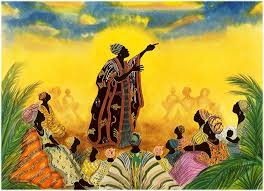
TALE OF THE OLD SUNLIGHT 

The old sunlight left men in awe and wonder,
It kept at bay the spirits that troubled during the day,
Those who played with minds and disrupted its tranquil flow,
Those that cocooned the soul’s glow.

I was told a tale of the old sunlight,
How it blessed the labour of men,
Even the crafts of women,
It was the benevolent glory of the land.

I was told a tale of how we wearied this sunlight,
We toxified its abode,
We threw dirt on its road till
It emerged from its chamber to meet our mess.

Though we didn’t hinder its ascent and descent,
We retreated its amiable hand,
Brought trouble to the sky and land,
And so we wallow in the mire.

This was a tale I was told,
By the wise and the bold,
Those whose voices pierce the darkness,
Those by whose feet I long to sit.

DRUMBEATS AND RHYTHMS

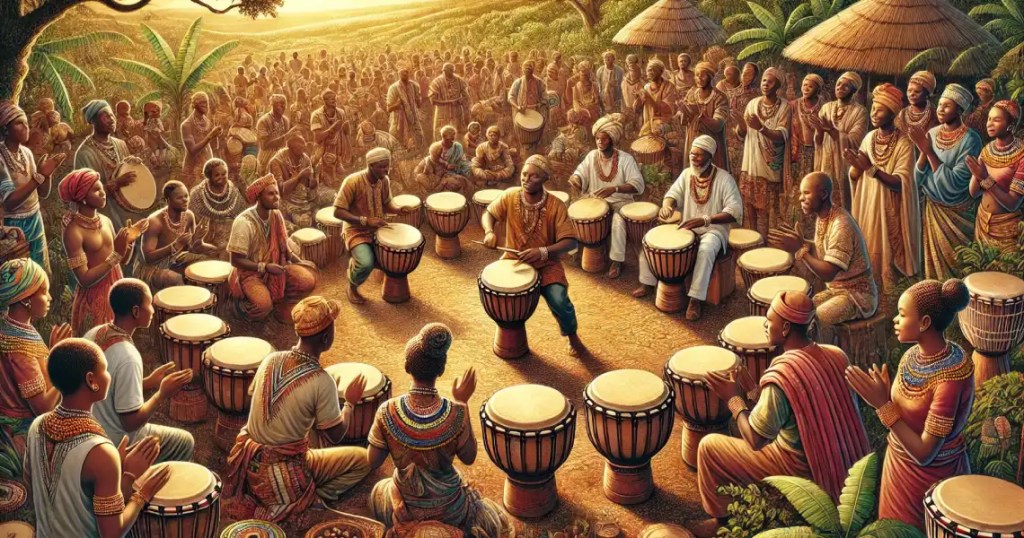
The beating of the drums,
Songs arise from the depth of the soul,
Summoning of the spirits,
It’s the end of the year.

The beating of the drums,
Produces rhythms that transcend and bring forth a descent,
Soon the twelfth door will close,
We’re oblivious to the next twelve that approach.

The beating of the drums,
River of songs flow to the room where the seers dwell,
Their bodies are with us but their souls commune with the Highest,
To bring the tidings for our abiding.

The beating of the drums,
Our souls seek redemption,
Darkness has trailed us,
Gloom stands at our doors.

The melody pierces through the Stygian veil,
There’s an ascent from the Light,
The seers are drenched in an outpouring,
We listen to understand, to withstand and to sojourn.


Fom Public Domain

Thompson Emate spends his leisure time on creative writing. He has a deep love for nature and the arts. He lives in Lagos, Nigeria.

PLEASE NOTE: ARTICLES CAN ONLY BE REPRODUCED IN OTHER SITES WITH DUE ACKNOWLEDGEMENT TO BORDERLESS JOURNAL

Click here to access the Borderless anthology, Monalisa No Longer Smiles

Click here to access Monalisa No Longer Smiles on Amazon International
Categories
Musings of a Copywriter

The Heroic Fall

By Devraj Singh Kalsi

From Public Domain

Those were not the days to honour bravery on the domestic front. But if an award gets constituted to recognise such acts of valour, my grandmother would emerge as a strong posthumous contender. What she did remains remarkable, audacious, and inspirational to several generations of our family and relatives who idolise her for this singular outstanding quality that pushed her into the realm of greatness.

From the balcony of the second floor of the house in the village my grandmother was dumped – and assumed dead – by the band of veteran dacoits that had entered the mansion with the ulterior motive of robbery after a tip-off from some reliable sources that all the male members had gone to the city to place bulk orders for the upcoming festive season. Her agility to oppose the intruders and block their path was a source of irritation as they suspected their flawless plan would flounder in its execution if such resistance garnered support from the other families. Before conducting their operation in peace, they chose to get rid of the disturbing element. But they forgot to get the keys of the locker almirah from her.

Unfortunately, what they felt was designed to succeed had ended in disappointment as the old lady landed on a mound of haystack, suffering injuries that threatened to break her back but not her spirit. When one of their acolytes rushed down to search for the keys, she pretended to be dead by holding her breath. They could not find the key. The truth was that she had buried the bunch of keys in the haystack as soon as she crashed on the ground.

After the dacoit left her, she composed herself, swallowed her pain, and screamed louder than before, ensuring that the lamps in the neighbourhood lit up bright out of curiosity as the word daku[1] rend the air. Soon there were flames marching ahead to attack and overpower the intruders who thought it was better to retreat instead of facing the irate mob. With village folks arriving in droves to rescue her, the dacoits fled the scene without the booty, carrying with them only the jars of mango pickle lifted from the attic.

When she heard so many voices around her, including some familiar ones, she slowly opened her eyes but could not manage to get up on her own. She was carried inside the house and the medical examination revealed a fracture of the hip. After her sons and their families returned home to discover her in this state, they regretted their decision to leave her behind. But she said it was God’s plan to save the family fortunes. Within a few months, she regained the ability to walk slowly and she narrated dramatised tales of her big fight with dacoits. It was a fine blend of reality and her imagination. She became a feted character with immense popularity in the surrounding villages on account of her encounter and survival skills.

The trail of destruction that the intruders had left behind was in the form of overturned tables and dislodged beds, with sharp tools lying scattered in their hurry to escape the mob that her shout had garnered. Her narrative went through additions and alterations, making some infer what she reminisced was tweaked due to memory loss although it was her clever ploy to retain fresh appeal. Many people suspected she would never manage to regain her full strength and firmness, but her speedy recovery confirmed her bones had suffered minimal damage.

She basked in the glory of her valour and thanked God for giving her the opportunity to showcase this side of her personality that would never have emerged if this incident had not occurred. She averred she did not worry about personal safety for a single moment and acted the way her husband would have done. Such disclosures signified she was making a gender statement of equality, that she was no less courageous than her male counterpart who had settled well into his heavenly abode some years earlier. Now it was posing a challenge for her sons and daughters to set a higher benchmark though none of them looked capable of surpassing her next level of courage.

My grandmother herself was not sure how she gathered the intrepidity to stand in front of armed goons. Like flashes of brilliance, bravery also came in sudden spurts. Standing in the courtyard of the house, the sons assured boldly that if any dacoits made another daring attempt in their presence, they would chop their heads off with swords. Their stentorian voices did not carry an iota of conviction but they tried to convince their mother that they were equally brave and prepared to face life-threatening situations without any fear.

During their entire lifetime, the next generation did not suffer any violent attack or external aggression though they themselves were engaged in petty fights and quarrels that did not make them eligible for any honour. My grandmother lived a long life and always gave the family some reason to feel inferior. Without going to the battlefield, she had fought and survived a dangerous attack. As this story was still in circulation during our childhood, we grew up hearing it repeated with great interest from none other than our grandmother. She was corrected by other members of our family for introducing changes in the narrative she had shared earlier.

Mythological tales did not catch our imagination as much as her own story. We loved to hear it retold in her voice. The element of suspense retained freshness in her narrative and we were hooked to her storytelling. Although dacoits became a rarity by the time we were growing up, and their attacks were seen only in Hindi masala films, there was a recurring dream of facing a similar crisis where a band of dacoits would hold us hostage, but we would somehow manage to escape unhurt from their clutches.

Contemporary dacoits have become multi-tasking experts with a diverse set of skills as their earlier focus on the few wealthy families in rural areas has now shifted to other profitable, prepaid criminal gigs like contract killing and shoot-outs. They prefer to work from remote locations on a freelance basis just like writers and copywriters. The middle-class families now face burglary from thieves armed with daggers wafting in their apartments like evil spirits.

Travelling by train to visit central India, crossing the Chambal Valley known as the hub of dacoits, I was expecting dacoits on horseback, galloping ahead along the railway track, to catch up with the superfast train, to latch on to the door and enter the air-conditioned coach and hold the passengers on board captive at gun-point. This would be an ideal opportunity as I would –at the right time — emerge from the toilet and catch the ‘Gabbar’ [2] of their gang from behind, snatch his weapon and point it at his tilak[3]-smeared forehead, ordering his team mates to jump off the train before I finished counting fifty. This would be the best outdo the family record of heroism. Saving the lives of fellow passengers would make me eligible for the highest bravery award for civilians.

As I sat brooding over this possibility, the train crossed the Chambal region safely and the passengers heaved a sigh of relief. That the fear of such attacks still resides in many hearts was evident as the curtains of the windows were pulled apart only after the train had crossed the danger zone. My window seat had the emergency exit and I am sure if the attack had taken place, I would have been the first one to jump out to save my life and wait for better heroic opportunities.

Dacoits have appeared as positive characters with a sad story of exploitation that compelled them to pursue this profession. They have been glorified in our films for carrying a heart of gold, not just pots of gold. As some of them became political leaders after winning elections, one is forced to take a relook and believe in the forgiving nature of the masses who elect them and give them the chance to rule and become an integral part of the mainstream. Though I must admit I have no idea of how many dacoits turned politicians have helped the nation grow as their personal rivalries and internal fights culminated in their untimely end. However, the sobering impact of such narratives makes one reflect on the entire concept of who loots and plunders at an individual level and how the colonisers looted and robbed in an organised and official manner. It should not come as a surprise if their tales of violence and exploitation get compared with those who plundered cities and states though they were entrusted with the task of protecting them.

Returning to my earlier tale, my grandmother’s framed and garlanded portrait on the wall urged me to seek her blessings. Even though it was not exactly a case of getting thrown off by pillaging dacoits, my late grandmother blessed me one day with a chance to survive a similar attack. Getting pushed down the staircase by a nefarious businessman but landing safely without sustaining head injuries due to my proven skills of tackling motion while disembarking from moving local trains as they entered the platform, I was able to retain my balance and save myself, which made me think of the miraculous escape and how I got the privilege to emerge as a hero for the current generation. Perhaps the spirit of my grandmother stood firmly behind me and saved my head from cracking up like a coconut.

This scary episode made me feel closer to my grandmother. I have contributed to the glory of the family, preserving the rich legacy by making worthy additions to it. Those who were eagerly expecting to crush my skull were surprised to see me unhurt. Full credit goes to my grandmother for supporting me invisibly – though she is not around to see me replicate her distinction. Now we share a special bond and a common fate of surviving a deadly attack and telling the tale, rising in stature and esteem after the heroic fall.

[1] Dacoit

[2] An allusion to a Bollywood hit dacoit leader called Gabbar Singh from the film Sholay (1975)

[3] A mark in the centre of the forehead with vermilion or ash to show devotion to a deity.

Devraj Singh Kalsi works as a senior copywriter in Kolkata. His short stories and essays have been published in Deccan Herald, Tehelka, Kitaab, Earthen Lamp Journal, Assam Tribune, and The Statesman. Pal Motors is his first novel.  


PLEASE NOTE: ARTICLES CAN ONLY BE REPRODUCED IN OTHER SITES WITH DUE ACKNOWLEDGEMENT TO BORDERLESS JOURNAL

Click here to access the Borderless anthology, Monalisa No Longer Smiles

Click here to access Monalisa No Longer Smiles on Kindle Amazon International

Categories
Poetry

Search…

By Lokenath Roy

From Public Domain
SEARCH FOR CONSCIOUSNESS

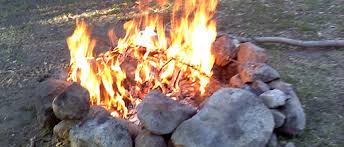
the expanse of the splintering fire flames flash
across space time, pouring onto grey pupils.
I like how they appear once, and then in another form: another.

lanterns of tinted glass in power starved the rural households,
streaking through bland darkness.
arrival of the faintest rays from the shaded corner of the
mud brick encased kitchen,

lights the letters on the pages to life.
rice puffs and fluffs on the oven pit, letting out splinters,
across the skin of burnt deadwood, like sparks in the void
of silence.

the newborn within me giggles to the flickering flames.
carried by the wind across the face of decades of dead, burnt leaves,
I search for consciousness.

I SEARCH FOR A FRIEND

I left my home; not knowing where I'd go. I
search for my friend in

the narrow alleys led on by dim lit street bulbs.
it is the aftermath of the Bengali New Year;
feels like the last one to bless us.

my friend, he has a voice. he wants to sing.
I run off in my pajamas for a front row seat

to the courtyard converted into an
auditorium. I knock at his front door.
years of knocking scatter to dilution.

the deserted terrace smiles at me. empty smile.
empty house. rust crawls to my palm

from the railings. darkness piles on
my sweaty shirt collar.

hands grappling through piles of epitaphs among
cluttered newspaper columns. I search
for a corpse.

Lokenath Roy, a writer from Kolkata who explores themes of society, memory, and the human experience, has published  in several literary journals and online magazines like The Cawnpore Magazine, The Monograph Magazine, The Aeos Magazine and the Borderless Journal.

PLEASE NOTE: ARTICLES CAN ONLY BE REPRODUCED IN OTHER SITES WITH DUE ACKNOWLEDGEMENT TO BORDERLESS JOURNAL

Click here to access the Borderless anthology, Monalisa No Longer Smiles

Click here to access Monalisa No Longer Smiles on Kindle Amazon International

Categories
Poetry

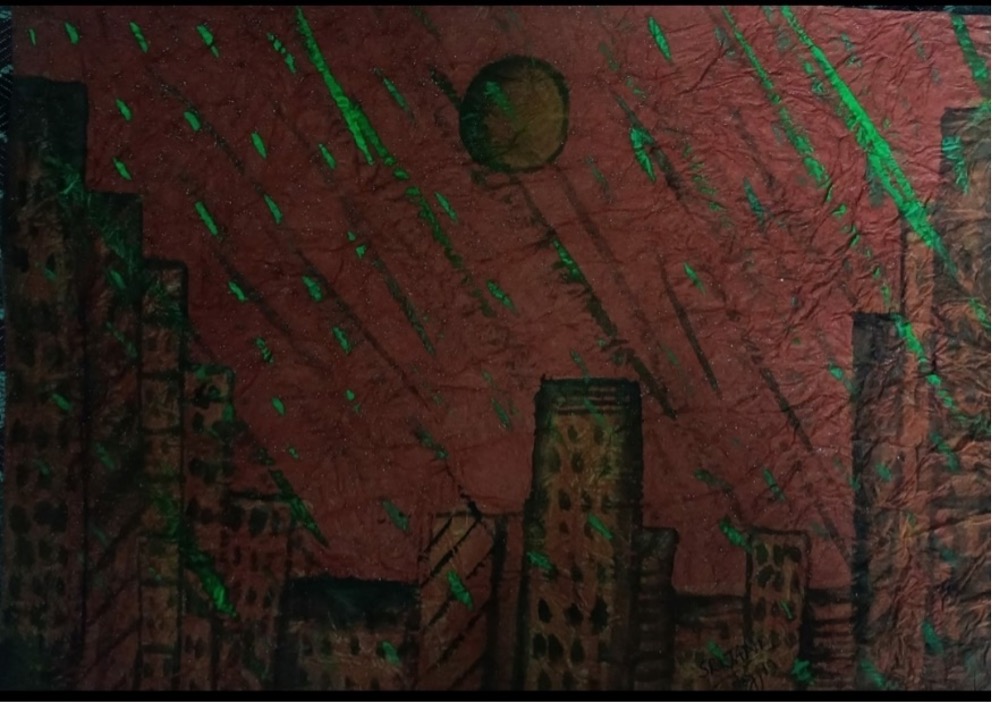
The City

Poetry and Art by Srijani Dutta

The City (2019) by Srjani Datta
THE CITY  

In the deep, deep, dark woods,
The youth is lost.
In the vast sky,
The red-yellowish moon is sublime;
Twisted --
Tangled --
Twice told tales
Of yellowish noon of last summer --
Lascivious rippling of
Mirth, dancing in the heart
Of passers-by --
Today’s dunce is tomorrow’s poet.
Philosophers smile at words of the prophets.
The city of dreamers,
The city of blue nights,
The city of fascism,
The city of silent cries,
The city of dew drops,
The city of lost souls,
Hunchbacks, bird catchers --
Are making this city their homes;
Insomniacs start listening to
Lunatic melodies
Of the unseen microcosms,
Buds bloom between
Two skyscrapers
Made of debris
And
Of chaos.

Srijani Dutta is a post graduate from Visva Bharati University. She has published in Parcham, Contemporary Literary Review India, Story Mirror, EKL review journal, Setu, Plato’s cave, The Antonym etc. Her paintings have been published in Borderless Journal, Creative chromosomes, Rappahannock review, Fourth River Journal.

.

PLEASE NOTE: ARTICLES CAN ONLY BE REPRODUCED IN OTHER SITES WITH DUE ACKNOWLEDGEMENT TO BORDERLESS JOURNAL

Click here to access the Borderless anthology, Monalisa No Longer Smiles

Click here to access Monalisa No Longer Smiles on Kindle Amazon International

Categories
Musings

As Flows the Gomti: A Palace of Benevolence

Narrative and Photographs by Prithvijeet Sinha

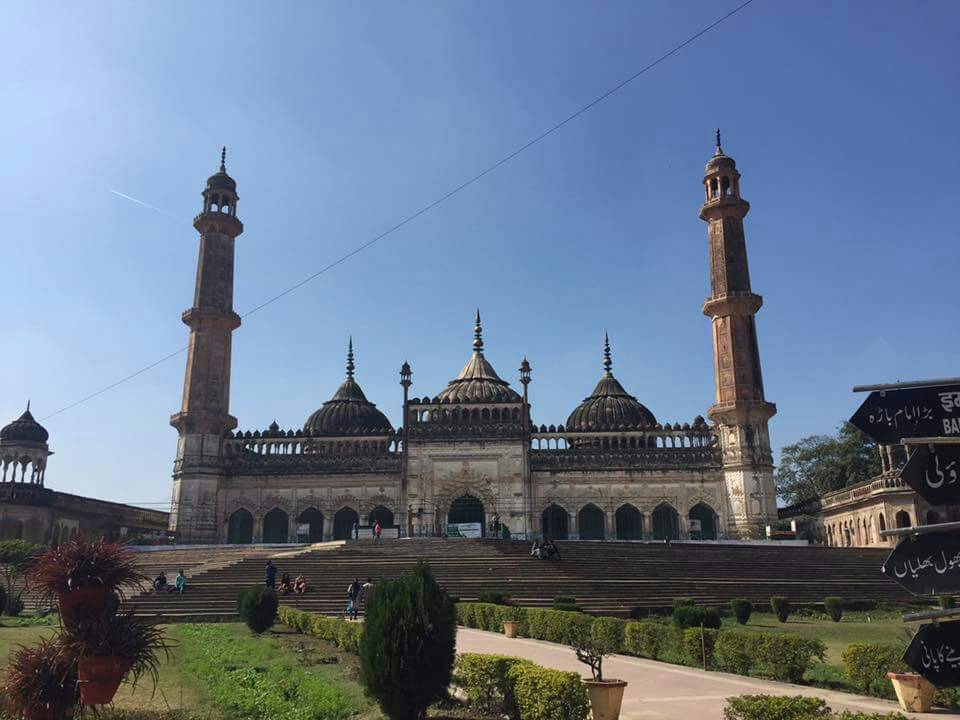
The Bara Imambara in Lucknow

Solitude hardly alienates us when our mind is at peace. It travels with us. It’s a profound pursuit when one embraces the solitude of a city like Lucknow. Our fates travel with the boat of time flowing on the languid currents of the river that flows through the town, Gomti.

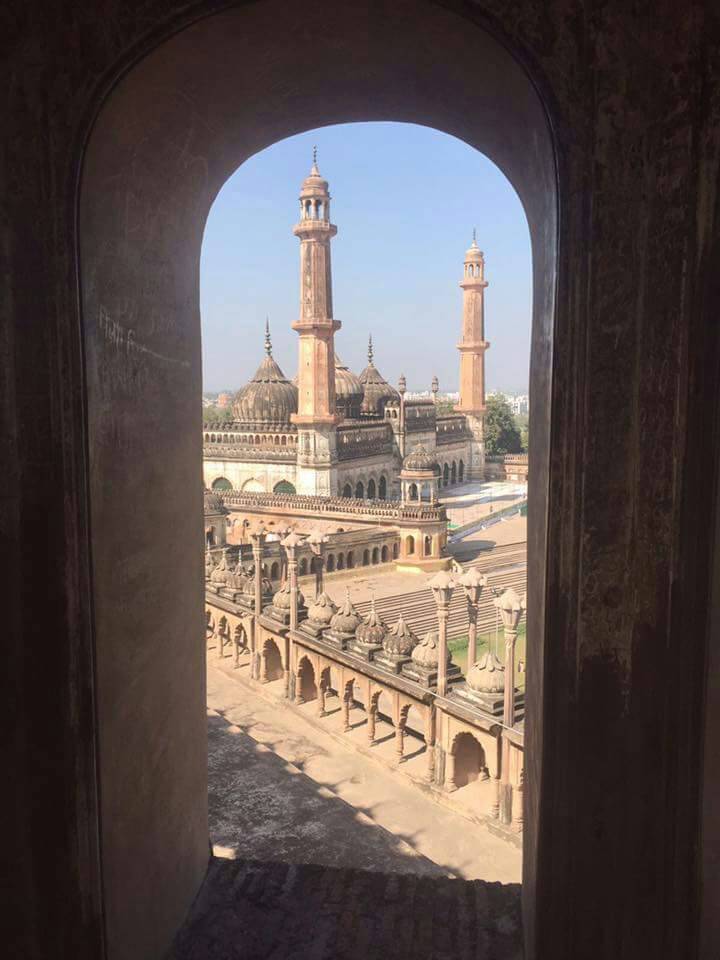
As someone born and brought up here, it’s a great joy to walk in the footsteps of those who gave exquisite shape to its countless monuments, their chisels and hammers turning stones into works of art, adorning the city with centuries of hard toil that created exquisite beauty. This beauty hewn into the Bara Imambara enchants me anew everytime I stroll through the compound. Those limestone pillars, graded by years of construction in its classical heyday, are miracles of human hands that mesmerise. The golden paint adorning its architecture courts the sun and that great orb of light gives in to the invitation to be eternal friends for life.

The Bara Imambara, also bestowed with the title of “Asafi Imambara”, was made by the king Asaf Ud Daula out of benevolence. He commissioned the building in order to employ the drought-stricken populace of the city in the 18th Century. Very soon, this structural project expedited as a corollary to supplement the dwindling fortunes of the region became more than a philanthropic feat. Over the centuries, Bara Imambara became a royal palace, a seat of power and knowledge and a quintessential component of the Awadhi [1]identity. It’s convenient to say that it’s the axis around which the entire city revolves. It’s the architectural apex around which Lucknow sculpts its identity with each era.

Throngs of revellers travel across the city to savour its beauty and historicity. The Imambada keeps its tryst with timelessness sacred, giving every discerning eye moments to cherish, feel the same timeless energy course through their mortal bodies, giving them the gift of the spiritual. Then there’s the mystical side to it where on each visit tugs my heart. It’s as if from some intensely private part of the soul emerge these words, “Thank God, you are alive to see it. Thank God that you were born to witness such sublime beauty.”

The story of arches, pillars, doorways, the zigzagging mysteries of the Bhool Bhulaiya — its fabled labyrinth, hallways that make a single lighting of the match echo with precision across great distances and the cool atmosphere that envelops it even on muggy or scorching days make it a unique experience. But as the horizon spills its canvas around it and the panorama of life becomes a live orchestra of colours, the Imambara transcends its solemn sanctity as the abode of imams, transcends the rails of religion to diffuse faith to every corner. From some high point in the parapet, when you look straight at the city, each angle reflects the union of the divine and the mundane. It’s a grand gesture that this timeless solitude is something that can be felt even among millions of other feet and voices. It’s the solitude of the dark alleys and the baoli or stepwell within these enchanting premises. It’s this solitude gliding with the birds above the soaring pillars and dome of the Asafi Mosque, making the secular transport tangible in the mouths of those who drink in the air contained in the edifice of this monument.

I may be a dreamer but, in a city, where so many parts feel like a dream come true, the Hussainabad corridor hosting Bara Imambada is immune to modernisation’s whims or the gritty nature of our societal churnings.

As tongas[2] carry dignified visitors on cobblestone roads, Lucknow’s epicenter of culture beseeches us like a best friend to partake in the poetry of its eternal axis. Which is why I always like to walk towards it, crossing a stretch of the road that finds beautiful buildings, parks, wide roads and secular spots lead towards that most handsome of structures. Time stops here yet moves like ripples. Time is of the essence. A lifetime of meetings with the Imambada makes one reconcile with the inherent meanings behind one’s attachment to Lucknow and its Awadhi cheer. I’m fortunate to live and tell the tale, a modest man made to feel grander by these inflections of architecture, stillness and cosmic solitude that only this city has to offer. The Imambada absorbs all of these inflections and stands in good stead, telling me, “You are not a dreamer, son. Your sense of your world is intimate to a fault. Come to us. Come again. There’s so much to seek from each other…”

[1] Awadh was the ancient name of Lucknow

[2] Horse drawn carriages

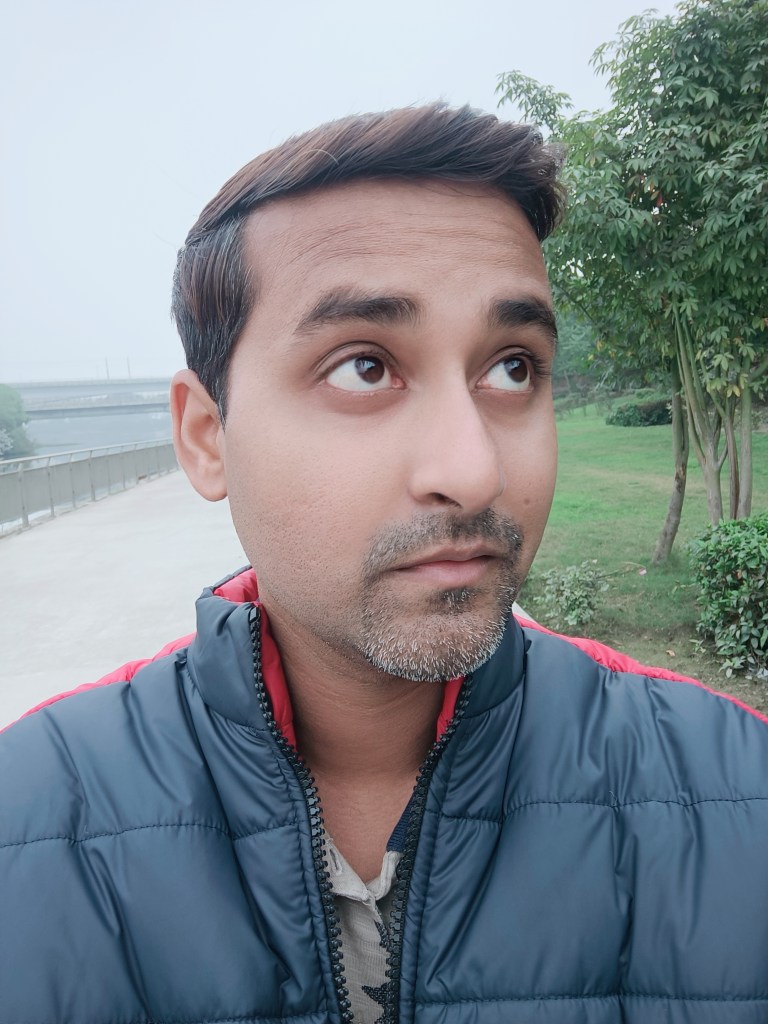
Prithvijeet Sinha  is an MPhil from the University of Lucknow, having launched his prolific writing career by self-publishing on the worldwide community Wattpad since 2015 and on his WordPress blog An Awadh Boy’s Panorama. Besides that, his works have been published in several journals and anthologies. 

PLEASE NOTE: ARTICLES CAN ONLY BE REPRODUCED IN OTHER SITES WITH DUE ACKNOWLEDGEMENT TO BORDERLESS JOURNAL

Click here to access the Borderless anthology, Monalisa No Longer Smiles

Click here to access Monalisa No Longer Smiles on Kindle Amazon International

Categories
Poetry

The Bird’s Funeral

Poetry and translation from Korean by Ihlwha Choi

Last night, in the bitter cold,
the bird died.
We decided on a five-day funeral,
debating whether to bury or cremate,
and finally chose a sky burial
on a sunlit grassy hill.
After preparing the body
and finishing the rites,
we headed to the burial site.
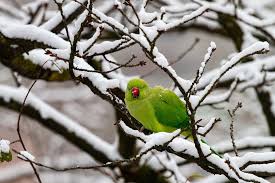
A green parrot,
untimely lost, died unaware of the season.
Leaves had just begun to sprout,
and the spring wind blew
across the bright meadow.
Driving the hearse to the site,
we scattered grains for the journey,
and laid the body gently
amid the dry grass.
In the distance, clouds billowed
like funeral banners,
and after a few sparrows
came to pay their respects,
the funeral was over.
The bird had died,
but its flight lived on.
When we returned for the third memorial,
the bird was nowhere to be seen—
its rain-soaked remains
had dried and scattered in the wind.

Ihlwha Choi is a South Korean poet. He has published multiple poetry collections, such as Until the Time When Our Love will Flourish, The Color of Time, His Song and The Last Rehearsal.

.

PLEASE NOTE: ARTICLES CAN ONLY BE REPRODUCED IN OTHER SITES WITH DUE ACKNOWLEDGEMENT TO BORDERLESS JOURNAL. 

Click here to access the Borderless anthology, Monalisa No Longer Smiles

Click here to access Monalisa No Longer Smiles on Kindle Amazon International

Categories
Poetry

As Time Exhales

By John Drudge

AS TIME EXHALES

Time twists
And folds itself
Like a silk scarf abandoned
In a room with no doors
The air heavy with the scent
Of forgotten lilacs
Each moment spiraling
Inward
Faces blurring into mirrors
And footsteps echoing
With the weight of things
Unsaid
Where the sky
Is not a sky at all
But a watercolour dream
Spilling across
An invisible page
Clouds moving languidly
Whispering secrets
To a teacup trembling
On the edge of a table
Filled with shadows
Of conversations
Where nothing
Is as it seems
Feeling the world
Tilt slightly
As existence
Exhales

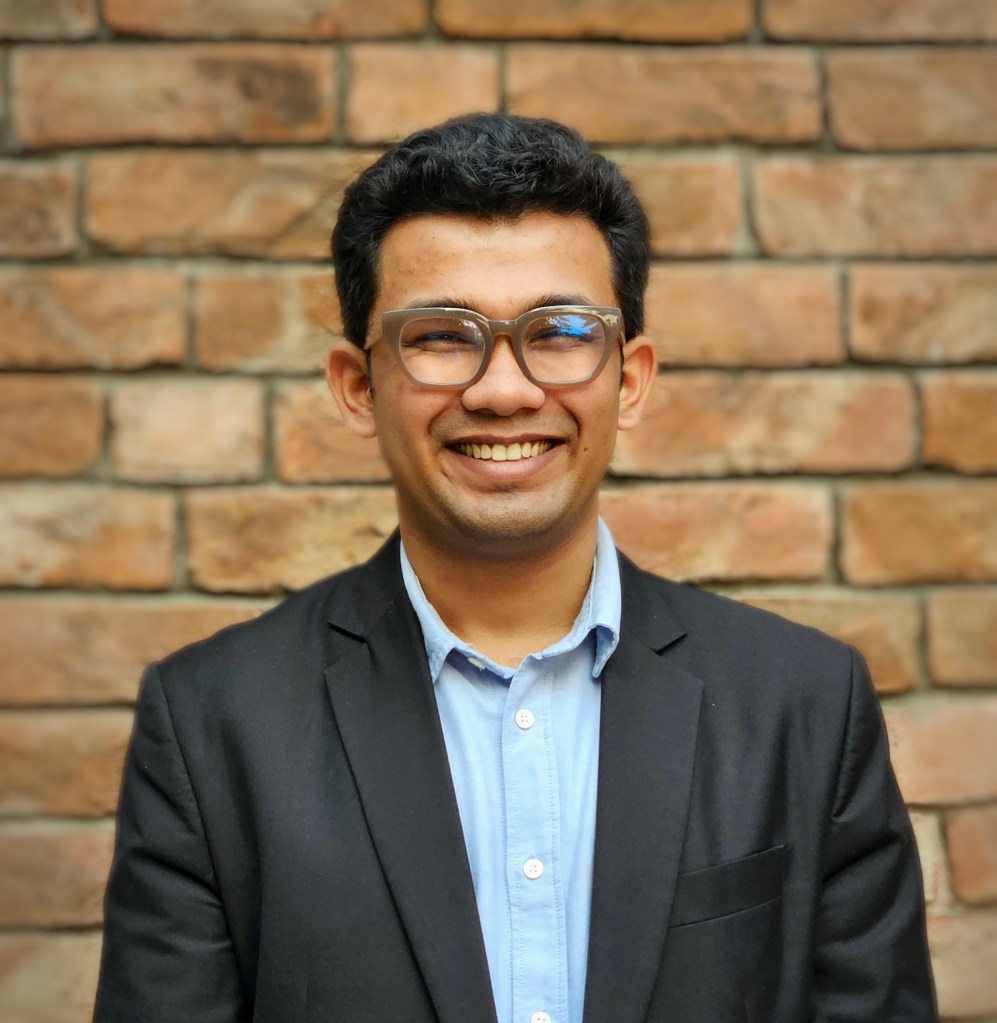
John Drudge is a social worker working in the field of disability management and holds degrees in social work, rehabilitation services, and psychology.  He is the author of seven books of poetry: March (2019), The Seasons of Us (2019), New Days (2020), Fragments (2021), A Long Walk (2023), A Curious Art (2024) and Sojourns (2024). His work has appeared widely in literary journals, magazines, and anthologies internationally. John lives in Caledon, Ontario, Canada with his wife and two children.

.

PLEASE NOTE: ARTICLES CAN ONLY BE REPRODUCED IN OTHER SITES WITH DUE ACKNOWLEDGEMENT TO BORDERLESS JOURNAL

Click here to access the Borderless anthology, Monalisa No Longer Smiles

Click here to access Monalisa No Longer Smiles on Kindle Amazon International

Categories
Stories

The Wise One

By Snigdha Agrawal

Dadu[1]…stop crying! Can’t you see her smile? She must be happy. That’s what you always say, right? Smile equals happy,” said nine-year-old Aanondo, tugging at his grandfather’s hand. His big brown eyes searched Dadu’s tear-filled ones, confused but earnest.

Dadu sniffled and tried to compose himself, wiping his glasses with trembling fingers. “Aanondo baba, it’s not that simple. Your Dida[2]…she’s gone. Forever. I’ll never hear her voice again, never see her smile, never feel her warmth.”

“But Dadu,” Aanondo tilted his head, his brows knitting together, “you told me people we love never really leave us. You said they stay in our hearts. So, is Dida in your heart now?”

Dadu sighed, his chest tightening. Sometimes this little boy sounded like he’d lived a hundred years. “Yes, baba[3], she’s in my heart,” Dadu admitted softly. “But it’s hard. It hurts knowing I can’t talk to her or hold her hand anymore.”

Aanondo climbed onto the bed and settled beside him, placing his small hand on Dadu’s weathered one. “Maybe Dida can still hear you. If you talk to her, she’ll know what you’re feeling. That’s what you told me to do when I miss Ma or Baba[4] when they are out of home, for long, during work trips, remember?”

Dadu gave a weak smile. “Yes, but it’s different. Your Dida was my best friend, my partner. We spent over fifty years together. Fifty years! How do I go on without her?”

Aanondo’s eyes widened. “Fifty years? Whoa! That’s almost as old as the dinosaurs you said weren’t real dinosaurs in the movies!”

Dadu chuckled despite his grief. “Well, not quite, but yes, it’s a long time.”

Aanondo’s face turned serious again. “You always said Dida was your sunshine. Doesn’t the sun come up every day, even when there are clouds? Maybe Dida is still your sunshine—you just need to look harder to find her.”

Dadu stared at the boy, his heart aching and marvelling at the same time. “You think so?”

Aanondo nodded vigorously. “See that picture of her?” He pointed to a framed photo of Dida, her smile as vibrant as a summer morning. “That smile isn’t gone. And you said she loved the garden, right? Maybe when the flowers bloom, that’s her smiling at you. Or when there’s a rainbow, that’s her telling you, ‘I’m here, old man!’”

Dadu laughed—a warm, real laugh. “Old man, huh? Sounds like something she’d say!”

Aanondo beamed, encouraged. “And in me, Dadu! You said I have her mischief in my eyes, her smile, and her kindness in my heart. So, if she’s in me, then she’s not gone, right?”

Dadu’s throat tightened as he pulled Aanondo into a hug. “You’re absolutely right, baba. She’s in you, in me, in everything she touched. I just need to remember that.”

Aanondo leaned back, giving his grandfather a stern look. “So, no more crying, okay? Or not too much. Dida would want you to smile. And I’m here to help. I’ll even smile extra if it helps you see her in me. Deal? Dida had told me to look after you after she’s gone.  I’m doing just that.”

Dadu nodded, his voice steadier now. “Deal. You’re a smart boy, Aanondo. Too smart for me sometimes.” Aanondo grinned. Then he puffed out his chest, his tone growing protective. “From now on, I’m in charge of keeping you happy. No frowning allowed. If you’re sad, just tell me, and I’ll fix it, okay?”

Dadu chuckled and kissed Aanondo’s forehead. “Okay, my little protector. We’ll be happy for her.”

“Good,” Aanondo declared, patting Dadu’s hand. “Now, let’s get some tea. Dida always said tea fixes everything!”

Dadu stood, feeling lighter than he had all day. “You’re right, baba. Let’s make some tea—and maybe sneak a biscuit too.”

Aanondo grinned mischievously. “Or two. Dida wouldn’t mind.”

And as they walked hand in hand, Dadu felt the warmth of Aanondo’s tiny grip anchoring him to a love that wasn’t gone, just transformed.

From Public Domain

[1] Grandfather

[2] Grandmother

[3] Used as a term of endearment, technically father

[4] Father

Snigdha Agrawal (nee Banerjee) is an author of four books and a regular contributor to anthologies and e-magazines published in India and overseas.  A septuagenarian, she writes in all genres of poetry, prose, short stories and travelogues.

.

PLEASE NOTE: ARTICLES CAN ONLY BE REPRODUCED IN OTHER SITES WITH DUE ACKNOWLEDGEMENT TO BORDERLESS JOURNAL

Click here to access the Borderless anthology, Monalisa No Longer Smiles

Click here to access Monalisa No Longer Smiles on Amazon International

Categories
Poetry

The Shipwreck

By Akbar Fida Ononto

I sit by my ship, holding its broken sail,
Drifting the tides of despair.
Bound by the sea that I love and cherish,
Yet lost in the world of blue oceans and breeze,
I try to retrieve …

I am not a good sailor, yet dared this far,
Guided by the waves of the sea,
And the soft morning star.
The horizon, once golden faded to grey,
Still, the ship plunged deeper as the light slipped away.

The currents once guided my vessel,
With mercy, care, and grace,
But I've lost her hull as the storm now rages.
Each ripple a secret, each tide a regret,
A tempest of scars ripped till broken and beaten.

The once familiar sea now sees no pain,
No guiding stars for this wreck remains.
My anchor once fastened, now shattered apart,
Lost my compass — Oh, the ache in my heart!

The waters, though vast, no longer seem kind.
It's her depth I loved, despite her storms leaving me blind.

Oh, sea, will you ever still your wild crest,
Or leave me forever with this ache in my chest?
For though I am broken, adrift on this wave,
It's your arms I’ll seek, till my ship meets its grave.

Akbar Fida Ononto is a student of the Department of English and Humanities at the University of Liberal Arts, Bangladesh.

.

PLEASE NOTE: ARTICLES CAN ONLY BE REPRODUCED IN OTHER SITES WITH DUE ACKNOWLEDGEMENT TO BORDERLESS JOURNAL

Click here to access the Borderless anthology, Monalisa No Longer Smiles

Click here to access Monalisa No Longer Smiles on Kindle Amazon International