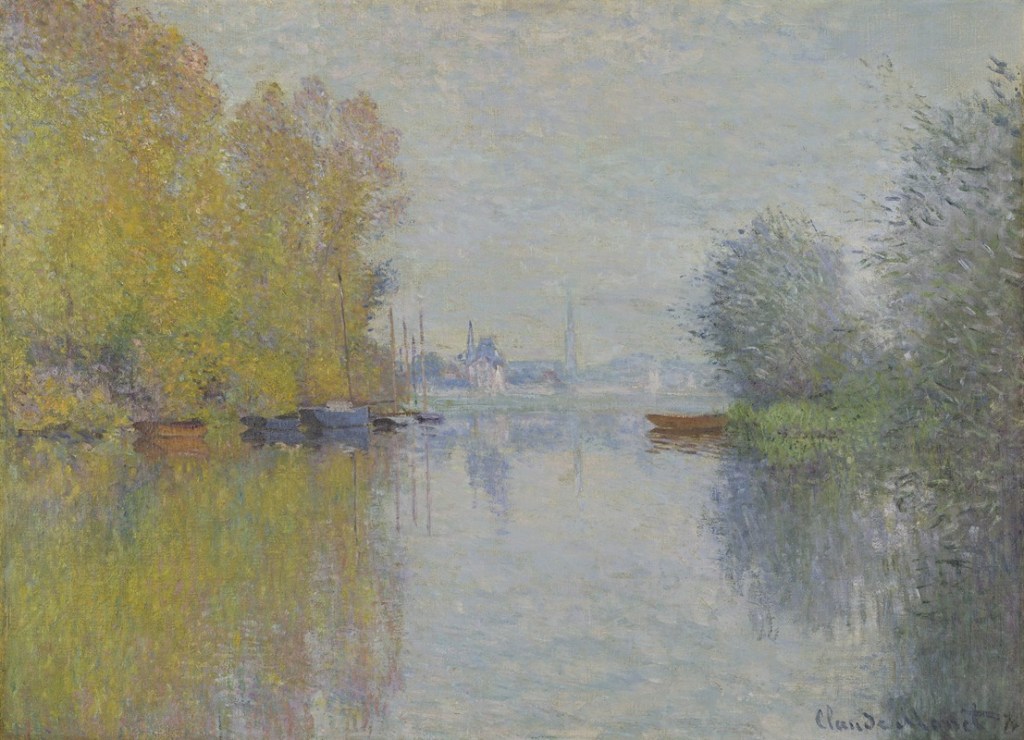
Autumn has arrived, like an expectant mortician, dressed in sombre grey. To whom can we pray? The flowers have died, and frantic squirrels scurry to salvage a few remaining nuts, where leaves fall to their rest in yellow, red and brown, falling to the ground, without making a sound. The moon’s silver light clings to the trees, then vanishes into eternity. If I look at the stars, I can barely see them. They’re without eyes, So they’re unable to even look back at me.
George Freek’s poetry has recently appeared in The Ottawa Arts Review, Acumen, The Lake, The Whimsical Poet, Triggerfish and Torrid Literature.
PLEASE NOTE: ARTICLES CAN ONLY BE REPRODUCED IN OTHER SITES WITH DUE ACKNOWLEDGEMENT TO BORDERLESS JOURNAL
Mongolians hold a special ceremony called the “haircut celebration” for young children, but not everyone is invited to this event. Especially not someone like me, who has gone through a divorce.
I had been meaning to write about this for a while, and now, nine months later, I finally find myself sitting in front of my computer, ready to share my thoughts. After coming to Japan as a student for the second time, I have had the opportunity to take many interesting classes. Among them, the most captivating one was Kamata-sensei’s English Language Cultural Class. Every week, the professor selected a story for us to read before class, and during the lessons, we would discuss our favorite parts and share our thoughts. Sometimes, the professor would ask thought-provoking questions, sparking lively discussions. This class quickly became one of my favorites, something I eagerly looked forward to each week.
We primarily read short stories written by foreign authors living in America. I was amazed by how much emotion, thought, and complexity could be packed into such short narratives. The professor’s careful selection of stories made me admire her even more.
One of the stories we read was Kyoko Mori’s Yellow Mittens and Early Violets. During our class discussion, we talked about cultural differences across countries. There were only four students in our class—one from Morocco, one from Mongolia (me), one from the Philippines, and one from Japan—plus our American professor. This small group allowed us to exchange ideas freely and truly listen to one another. It was fascinating to see how five people from five different cultural backgrounds could read the same story but interpret it in completely different ways.
During this discussion, I shared a personal story about Mongolian traditions, which I now want to write about here.
For Mongolians, hair holds deep symbolic meaning. For instance, women traditionally do not leave their hair loose; it is always braided. Only those in mourning let their hair down. Similarly, if a child’s hair is left uncombed and tangled, it is believed to shorten their lifespan and diminish their fortune.
One of Mongolia’s most significant traditions related to hair is the sevleg urgeh (first haircut) ceremony. Since ancient times, Mongolians have referred to a young child’s untouched hair as sevleg or daakhi, showing deep respect for it. The first haircut is performed with great care, wishing the child a long, prosperous life.
Traditionally, a girl’s hair is cut in mid-summer, guided by the call of the cuckoo, while a boy’s hair is cut in mid-autumn, following the sound of the stag. Families invite relatives and friends to participate in the ceremony. The ritual is conducted when boys reach an odd-numbered age (for example, 3, 5) and girls reach an even-numbered age (for example, 2, 4). This belief stems from the Mongolian spiritual concepts of arga (odd numbers, representing action) and bileg (even numbers, representing wisdom).
The ceremony begins with an elder—typically the most senior and respected person present—touching the child’s hair with a wooden knife before using scissors to snip the first lock. The elder then dips the wooden knife into a cup of milk, allowing a drop to fall onto the scissors. This ritual ensures that the blade does not “harm” the child, symbolically purifying the act. The child’s father carves the wooden knife himself, while the mother sews the child’s traditional deel(Mongolian robe) for the occasion.
Guests take turns cutting a small lock of hair, offering blessings as they do so. The cut hair is respectfully wrapped in a ceremonial scarf (khadag) and preserved. Those invited to touch the child’s hair are carefully chosen; they must be seen as virtuous, fortunate, and stable figures.
I, however, do not belong in this category.
I became a mother at nineteen, and although my daughter’s father and I once dreamed of a future together, our paths eventually diverged. In Mongolian culture, divorced individuals are not invited to participate in a child’s haircut ceremony. There is a belief that if someone like me were to touch a child’s hair, the child might also face a broken marriage in the future. This tradition, deeply rooted in the idea that a person’s energy influences a child’s life, means that people like me are excluded.
At first, it hurt.
Now, I have grown used to it. Though I have come to accept this tradition, I still wonder—should cultural heritage come at the cost of human connection? Perhaps the true essence of tradition is not just in preserving rituals, but in ensuring that no one is made to feel like an outsider in their own culture.
I sometimes wonder—have we become so devoted to tradition that we have forgotten the importance of human compassion?
This was the story I shared in class—the story of why I am not allowed to take part in one of my own culture’s most sacred ceremonies.
.
Odbayar Dorj is an international student from Mongolia currently studying in Japan. She reflects on cultural traditions, personal experiences, and the intersection of human connection and societal norms in her writing.
.
PLEASE NOTE: ARTICLES CAN ONLY BE REPRODUCED IN OTHER SITES WITH DUE ACKNOWLEDGEMENT TO BORDERLESS JOURNAL
Wake, my cherished daughter,
And see who waits at your door.
Step forward, welcome it warmly --
This dawn, a guest meant for your heart.

Dawn is a dense foliage, alive with its flame.
Look how it rushes to embrace you.
Pluck it from the sky, let its glow
Fill the vase of your waiting soul.

Inhale the sacred scent it offers,
A divine aroma to ease your sorrow.
Exhale your grief into the morning light,
For your heart -- steadfast and jewelled -- endures.

Through every shadow, my love remains,
A constant light to ease your pain.
No trial too heavy, no wound too deep,
My arms are here, your fears to keep.

Fairy tales are not birthed in heaven.
They do not spring from the void.
Remember, they are our creation,
And you, my dear, bring them to life.

Your father held you once in his arms,
Steadying you to explore new paths.
Be not despondent; time will mend the scars.
Dreams with edges are dreams that endure.
Pramod Rastogi is an Emeritus Professor at the EPFL, Switzerland. He is a poet, academician, researcher, author of nine scientific books, and a former Editor-in-chief (1999-2019) of the international scientific journal “Optics and Lasers in Engineering”. He was an honorary Professor at the IIT Delhi between 2000 and 2004. He was a guest Professor at the IIT Gandhinagar between 2019 and 2023. He is presently an honorary adjunct Professor at the IIT Jammu.
.
PLEASE NOTE: ARTICLES CAN ONLY BE REPRODUCED IN OTHER SITES WITH DUE ACKNOWLEDGEMENT TO BORDERLESS JOURNAL
“If you don’t put it to good use, you will not be allowed to use it at all.” My grandpa said in a stern voice, waving the magnifying glass on top of my eight-year-old head.
I had misused it twice in the past week and had already received a scolding from my grandma. To reprimand me and prevent any further mishaps, my grandpa decided to place it in the most unreachable top corner of the tall cupboard, where my height, even with the help of any furniture, would sadly not land me.
Apparently, my maternal grandpa, an eminent scientist in Odisha, wanted his firstborn granddaughter (me) to become a renowned physics teacher someday, while his grandson, my elder cousin, would become an engineer. After taking the liberty of deciding our careers—much to our discontent, as I wanted to be a lady police officer, influenced by my childhood soap Udaan[1], and my cousin dreamed of becoming a bus conductor (though I’m not sure of the source of his inspiration)— grandpa decided to teach us physics.
Of all the things he demonstrated in his lab, the one that made the strongest impression on me was how the lens of a magnifying glass, when focused on something, can set it on fire. My cousin, however, remained docile and completely uninterested in either the lens or the fire. He would roll the round Marie Gold biscuits on the floor, imagining them to be the tires of a bus, a bus for which he dreamed of being the conductor someday. My curiosity led me to do bizarre experiments with the lens. As long as I smouldered unused items, it went unnoticed, but eventually, I landed myself in trouble.
Mischief was my domain, not Tipu Bhai’s. Though my cousin was named Tipu, like the valiant Tipu Sultan, he would always retreat like a wet cat. His usual line was, “Do whatever you want, but don’t pull me into this, Nitu!”
Once, I asked him, “Tipu bhai, why do you want to be a bus conductor and not a driver?”
He simply said, “Driving is too much work. I don’t think I can drive such a huge bus. It looks like a gigantic beast. I would rather be a bus conductor.”
I knew bhai was that starry-eyed kid who loved watching the bus conductor almost falling out of the door, the wind playing in his hair, and his whistle piercing the air with a shrill sound. That must have seemed thrilling enough to spark bhai’s otherwise sorry imagination.
My grandma didn’t have many stringent parenting rules. Although she occasionally hollered at me when I was being naughty, most of the time, she pampered us with delectable food and gifts. I remember her sparing coins for us to buy chocolates.
Bhai and I would walk to the nearest market and buy lollipops in our favourite colours. People often asked if we were siblings, and I would reply, “We are cousins.” Sometimes, they would smile or say, “You both look so alike,” before resuming their stroll toward the stalls.
Bhai was too shy to even look at them, so I was usually the one to answer their curious questions when they saw two kids wandering around the market late in the afternoon.
*
We spent our school summer vacations at our grandparents’ house in Cuttack, about a fifty-minute bus ride from Bhubaneswar, where we lived with our parents. My grandpa’s house in Cuttack had a courtyard full of mango trees. That afternoon, my grandma and Malati, our seventeen-year-old maid, were busy collecting mangoes from the trees, most of them raw, to make mango pickles and chutney. The garden was covered with dried mango leaves, and my grandma had asked Malati to sweep them all to the far end and set them on fire.
I had two raw mangoes and a magnifying glass in the pockets of my overalls as I followed my grandma and Malati everywhere.
“Wait here, Nitu, while Malati climbs the tree to get more mangoes,” Grandma said, pointing toward the garden’s boundary wall before walking away.
Tipu bhai was fast asleep inside the house, and Grandpa was away at one of his meetings. I watched from a distance as Malati cautiously climbed one branch after another, tossing mangoes down for my grandma to collect. After a few minutes, I got bored standing in one place, watching Malati and Grandma work as a team while I stood feeling abandoned. I noticed a pile of dried leaves beside me and remembered the magnifying glass in my pocket—if I focused it just right, I could set anything on fire. So, I focused the blazing afternoon sun’s rays onto the leaves.
To this day, my grandma insists there wasn’t any kerosene on the leaves, while I still try to convince her that Malati must have spilled some, intending to sweep them to the other corner later. The leaves caught fire, and the flames quickly rose toward the branches of the tree, spreading fast. My grandma let out a scream and ran toward me, while Malati rushed in and together, they pulled me away from the fire. One of the burning branches fell onto the roof of the hut beside our house, setting it ablaze. The hut belonged to a woman named Foola, meaning flower, and it was her kirana[2] store.
Amidst the chaos, we didn’t realise that Grandpa had just arrived. Foola rushed out of the store in panic, and Grandpa quickly ran into the house to call the fire brigade. The fire brigade arrived ten minutes later and began pouring water on the Kirana store. By then, some neighbours, along with Malati, had already thrown buckets of water on the fire. The roof suffered some damage, but the store itself wasn’t affected much, thanks to the timely intervention. All the while, I stood there helplessly, engulfed by guilt.
In the evening, my grandma sat me down and asked if I knew how the fire had started. Her formidable figure loomed over my tiny one, her hands clasped behind her back, the serious green light from her eyes meeting my brown glaze.
“I didn’t do anything, nothing at all!” I blurted out but then grandma is an expert in studying body language and hearing the unspoken words.
“Look I know you had something to do about it. A fire doesn’t start out of the blue. Better confess it and I will not give you any harsh punishment.” Grandma said with her brows raised.
“It must have been completely accidental. I don’t remember much about how. I think there was kerosene in it.”
“There wasn’t any kerosene. I am positive.” This argument about the oil, as I mentioned, never really ended. I did my best to stay defensive without revealing any details.
Then, my grandma brought her right hand in front of my face, holding the magnifying glass. “I found this in your overalls. Any explanations about it? I may not be well educated but I had seen your grandpa demonstrating what it can do.”
That was it—I was caught red-handed. I knew any further argument would only spark more anger and trouble, so I bowed my head and kept my eyes on my toes. Suddenly, the idea of stealing my grandma’s nail polish and painting my toes red crossed my mind, but I quickly brushed it off.
My grandma pointed her index finger at me and said, “No lollipops for a week.”
“That’s too long!” I complained almost teary eyed.
“You argue more, I extend more. Your brother can have them though.”
I felt like Mowgli in The Jungle Book when he was abducted by the monkeys. However, Grandma paid no heed to my misery.
*
Foola came the next morning and stood on the veranda, sobbing. I could hear her telling my grandparents that although the fire brigade had extinguished the fire, the water had seeped into the sacks of rice and pulses, ruining almost a quarter of her grains.
“Babu, please pay for the damage. I am a widow, there is no one to look after me, with all this ruin I will be at a huge loss.” Foola said to my grandpa.
Grandpa knew that the fire had started in our courtyard, though he hadn’t bothered to find out the intricacies involved, and Grandma hadn’t cared to explain. She thought that barring me from eating lollipops for a while would be enough to teach me a lesson. I had felt guilty, then angry, and now I felt very sorry for Foola.
“How much do you think would be enough for managing the damage?” My grandpa asked Foola.
“I won’t quote more, Babu. I swear to God a hundred or two hundred rupees should be enough.” Foola answered with tears rolling down her cheeks.
My grandpa must have known that Foola was being honest. He exchanged a glance with my grandma, and she nodded in approval. I then saw him hand her two hundred-rupee notes. Grandma encouraged her to come again if she needed further help and the matter was somewhat settled.
Four days had passed without lollipops, and there were three more to go. I was craving them—their sweet and tangy taste, the scent that used to fill my nostrils. They always looked like my favourite coloured bulbs, capable of switching my mood to the happiest level every time I licked them. Furthermore, Bhai had committed the heinous crime of eating my favourite cola-flavoured lollipop the day before.
The guilt and desolation that had entangled me slowly began to be replaced by a sense of rage. I waited for my grandma to go to the bathroom, then reached under the mattress on her bed, where she kept the almirah keys. They were still there—two of them, one for the main door and the other for the locker inside.
Beside her jewellery box lay my magnifying glass. Her favourite green saree, the one she wore to the evening pujas, hung neatly on a hanger. When you’re a child and consumed by anger, reason hardly stands a chance. Without thinking, I focused the lens of the magnifying glass on the saree until it burned a hole through the fabric.
That was how, within a single week, I made two miserable mistakes. When Grandma found out, all hell broke loose in the house, followed by Grandpa reprimanding me.
*
When the anger and rage subsided, realisation dawned on me—guilt, more guilt, and an overwhelming sense of remorse, though I still occasionally craved lollipops. Grandma didn’t pamper me, and grandpa buried himself in his books, not once inviting me to his physics lab. Bhai was busy staring at every bus that passed by the house, lost in daydreams. Malati kept herself occupied with household chores and rarely engaged in outdoor activities. The mango trees had started bearing more fruit, some of them beginning to ripen. The sun was less scorching, though a hot loo blew occasionally, and a couple more weeks had passed. Soon, summer vacation would be over, and my father’d take me back home. He wouldn’t really be proud of my behaviour.
One afternoon it was hotter than usual. The sun blazed like a fiery orb, unleashing an army of relentless heat waves upon us. The air was thick with swirling dust. The garden hand pump and the water faucets in the house spewed only hot water. I sat on an armchair on the porch, with a mildly gloomy face, unperturbed by the heat.
Just then, a middle-aged woman in a saree, with a cloth bag slung over her shoulder, arrived at the gate. She looked fragile, as if the sun had drained all her energy. In a weak voice, she called out to me, “Girl, fetch me a glass of water, please.”
I rushed to open the gate and led her in by the arm. After making sure she was seated comfortably in the shade, I gave her the hand fan I wasn’t using and went inside to get some water.
“Grandma, come along. There is a woman at the door,” I said as I headed out with a jug full of water.
The woman gulped down the water, relaxed a bit, and wiped the sweat from her brow with the end of her saree. I sat close, fanning her, and asked, “Are you okay now?”
“I am, girl, I am. You saved my life!” The woman said with her hand on her chest.
“Do you want more water?” Grandma had just come out of the door.
“No sister. I am okay now. Have to get going.” The woman said, and with her hand patting my head, added, “She saved my life.”
She opened her cloth bag and gave my grandma a handful of ripe guavas. When my grandma offered to pay her, she gently refused, insisting they were a gift. She had traveled from a nearby village and often came to Cuttack to sell fruits and vegetables in the market. That afternoon, the ruthless sun had nearly exhausted her as she made her way to the bus stand. Desperate for some shade and water, she had somehow managed to reach our house.
After she left, grandma told me that good deeds bring blessings.
“You were very kind today,” she said with a smile. It had been a long time since she had given me such a radiant smile.
“And when you do wrong, Satan hovers nearby and doesn’t give you many chances to rectify your mistakes. This time, you did good. I will ask your grandpa to give you the magnifying glass back.”
She then handed me a few coins. “You can have lollipops tomorrow, but make sure to share some with Bhai.”
That was the last time grandma had been so strict, and I never got into such mischief again. After all, who would want to risk getting caught by Satan!
Mitra Samal is a writer and IT Consultant with a passion for both Literature and Technology. Her works including poems, stories, essays, and reviews have been published in The Hooghly Review, Muse India, Borderless Journal, Madras Courier, The Chakkar, and Kitaab among others. She is also an avid reader and a Toastmaster.
.
PLEASE NOTE: ARTICLES CAN ONLY BE REPRODUCED IN OTHER SITES WITH DUE ACKNOWLEDGEMENT TO BORDERLESS JOURNAL
Embraced in a friend’s arms,
a framed portrait enters the school gate.

Wearing glasses, dressed in a school uniform,
With a heavy backpack,
He walked sluggishly to school every day.
But today, it’s the last time, surrounded by friends.

The principal follows behind.
The homeroom teacher trails along, gloomy.
The old security guard stands in his booth,
watching the procession through the glass window.
A short while later, the procession leaves again.
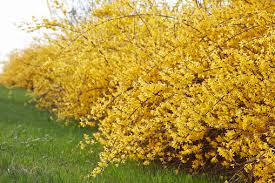
Along the school fence, yellow
forsythias bloom like black mourning ribbons.
Forsythias. From Public Domain
Ihlwha Choi is a South Korean poet. He has published multiple poetry collections, such as Until the Time When Our Love will Flourish, The Color of Time, His Song and The Last Rehearsal.
.
PLEASE NOTE: ARTICLES CAN ONLY BE REPRODUCED IN OTHER SITES WITH DUE ACKNOWLEDGEMENT TO BORDERLESS JOURNAL.
To say I was the wild one out of the four would be an understatement. The non-conformist in me surfaced very early on. I never tired of climbing trees, sitting on the guava tree branches, gorging on the half-ripe fruits, rescuing kittens from overflowing drains, cycling around the golf course, swimming and dancing in the rain. Activities one would tend to associate with boys. Indulging in these activities gave me a high, like no other, despite the occasional mishaps, sometimes returning home with cuts and bruises and once a sprained ankle. The latter memory still brings on chuckles and many more acts of dare-devilry, often landing me in serious trouble.
When I was about ten or eleven, I found myself clutching a squash racquet, sitting impatiently in the upper gallery of the court. My sibling and our best buddy were monopolising the game, deaf to my relentless pleas for a turn. Frustrated, I finally resorted to threats. “I’ll jump down and physically drag you two out!” I declared, pointing to the six-foot drop beneath me.
They burst out laughing, waving off my threat as an empty bluff. “Alright then, here I come!” I announced with dramatic flair before leaping off the gallery like a tragic superhero. Predictably, I landed flat on my skinny, bony backside, twisted ankle and all. Tears of pain and humiliation stung my eyes as I sat there, my busted pride compounded by the unmistakable warmth of pee spreading beneath me.
The scene was absurd: me, sprawled on the court floor, ankle throbbing, dignity in tatters and wet underwear adding to the shame. To their credit, the two culprits did feel a little bad. They hoisted me up and hobbled me home. Thereafter, I was sentenced to two weeks of house arrest with a plastered leg. My heroic leap had cost me not only a turn at squash but also a chunk of my pride.
The ‘Jamun’ (Java plum) season brings back more laughs—and another painfully ridiculous memory. The broad trunk of the Jamun tree in the backyard was too tall for us kids to climb, so we enlisted the gardener to shimmy up and shake the branches. The purple fruit rained down like magical stardust, scattering across the ground.
In a frenzy, I dashed across the open drain, gathering the fleshy fruits in my frock, which I’d rolled up to create a makeshift pouch. In my excitement, I missed a step and went flying face-first into the drain. The Jamuns soared into the air in protest, pelting down on me like purple confetti as I lay sprawled, filthy, and bruised.
My loyal partners-in-crime stared down at me, their goofy grins quickly morphing into full-blown laughter. Their hilarity was so contagious that even I couldn’t help but laugh at my misadventure. Covered in muck and Jamun juice, I climbed out of the drain, purple-tongued and scratched up, determined not to let Ma discover my mishap.
With my frock a casualty of war, I sneaked past her, heading straight for a long, scrubbing shower to erase all evidence of the day’s follies. No way was I going to cry or complain. If there’s one thing childhood taught me, it’s that a little dignity can survive even the most spectacular disasters.
Growing up with pets
During this period, the animal world entered our home, each one leaving under different circumstances. Out of the many, the first that appears in my mind is a monkey, kept in the garden shed, brought out occasionally to be fed, and patted. The gardener spotted the baby wandering around amongst the flower beds, looking lost and forlorn, in search of his mother, who probably had been chased back into the nearby Sal forests. Baba decided to parent this little guy till he was of age and able to fend for himself. Honestly, I never liked this furry creature, with large round eyes, vying for Baba’s attention. Six months later, he was seen bounding off with confidence, probably in search of a mate.
A parakeet with an orange beak, vibrant green feathers, and a long-spotted tail was the next addition to our home. This feisty little bird quickly made its presence felt, taking liberties whenever it was let out of its cage. It would hop onto the dining table and help itself to the food, unbothered by anyone’s protests. Though it was most attached to Baba, it also formed a special bond with Didi, the eldest sister. The bird would happily perch on her shoulder, observing the household with a sense of ownership.
Despite our many attempts to teach it to sing catchy tunes, the parakeet refused to comply, displaying an attitude far too big for its tiny frame. The only sound it ever uttered from its hooked beak was “khuku…khuku,” Didi’s pet name.
One day, the bird decided it was time to spread its wings—literally—and see the world beyond the confines of its cosy cage. The catalyst? A heated argument between Baba and Didi, during which Didi earned herself a thorough scolding for talking back. When she started crying, Laljhuti, the parakeet, seemed to lose its tiny green mind.
Squawking like an avian alarm, Laljhuti transformed into a miniature cyclone, zipping through the room at breakneck speed. It knocked over cups and sent saucers crashing, turning perfectly folded papers into a confetti of chaos. In its final act of rebellion, Laljhuti delivered precise nips to both Baba and Didi, leaving behind small but meaningful bite marks—souvenirs of its outrage. And then, with a dramatic flair, worthy of a Bollywood hero storming out after a family quarrel, Laljhuti shot straight out of the house.
Didi was inconsolable. Her beloved Laljhuti was gone. For days, she stood on the veranda, calling its name with the kind of desperation usually reserved for lost lottery tickets. But the green tornado had no intention of returning. Laljhuti had flown the coop, leaving behind only chaos, confusion, and a few well-placed dents in family egos.
To console her, Baba brought home a flock of colourful Budgerigars. These cheerful, social birds were more manageable and quickly became part of our household. They lived in a specially built cage, which Baba cleaned daily, ensuring their water and food bowls were always replenished. Their lively chatter often blended with our own, filling the house with a delightful din.
Over time, however, we lost a few of them and Baba decided to set the remaining ones free. With that, the “bird phase” of our lives came to an end, leaving behind memories of fluttering wings and chirping voices.
Next came a bunny rabbit, a fluffball with the whitest fur, pink glassy eyes, and a bushy tail that wiggled with mischief. This little creature was treated like royalty, roaming freely around the house and being pampered with baby carrots.
While everyone adored it, I had my grievances—specifically its habit of leaving tiny black droppings in the most inconvenient places. The worst was finding them nestled in my school shoes. There’s nothing quite like starting your day by gagging over rabbit poop.
To this day, I can’t recall what became of the bunny. One day it was there, twitching its nose and ruling the household, and the next, its cage had been unceremoniously relegated to the garden shed. Perhaps it hopped off to greener pastures, or maybe someone had finally had enough of the shoe sabotage. Either way, the bunny left its mark—quite literally—all over my childhood memories.
The last one was a surprise birthday gift for me and my twin, which arrived packaged in a shoe box, lined with layers of cotton. A two-week-old Siamese kitten got from a litter of eight and was as tiny as the palm of my hand. I watched Baba and Ma taking turns feeding this one with milk, prying open its mouth and squeezing the cotton ball soaked in milk. He was named “Tuuta” and as he grew, the colour of his coat changed from white to grey and then a darker shade of grey. From milk, he graduated to eating goat entrails mashed with cooked rice and was a happy camper, rubbing his back against Ma’s legs, perhaps as a reminder it was feeding time. My twin and I fought over him, as one would fight over toys, setting dates for Tuuta’s sleeping schedule under our blankets. One week in my bed, the next week in my twin’s bed. Soon enough the fights ceased, with “Tuuta“, going out for overnight dates with the stray cats in the neighbourhood, probably the most sought-after male in the cat kingdom. The reasons could be his debonair looks, his pedigree and the fact that he lived in a bungalow, served gourmet meals, slept on whichever bed he fancied and most importantly, had his toilet created out of a wooden crate, filled with sand, where he performed his daily business. Cleaned periodically. And if we so much as watched him at his job, he gave the stinky eye as if to say — “Get lost. Let me shit in peace!”
His entry/exit route for the overnight dates was through the open bathroom exhaust window. One morning when Ma found he had not turned up for his breakfast, we looked everywhere and found him in the half-filled bathtub with water up to his neck, trying to scramble out, with little success. The philanderer had missed his step on the ledge of the bathtub and landed inside. Of course, that didn’t change our love for him. He continued with such escapades, sowing quite a few wild oats, and ended up catching rabies. A very sad end for him and us. My twin and I had to take the rabies injection for a fortnight. Very painful shots in the hips, administered by the Company doctor in the hospital. Thus ended the saga of “Tuuta” the Siamese cat with whiskers that tickled, my favourite.
About the Author
Snigdha Agrawal (née Banerjee) is an aspiring writer who views herself as a perpetual learner on an ever-evolving creative journey. A graduate of Loreto Institutions and brought up in a cosmopolitan environment, she weaves a rich tapestry of Eastern and Western cultural influences into her literary work. Her writing is also shaped by two decades of corporate experience, which lends depth and realism to her narratives.
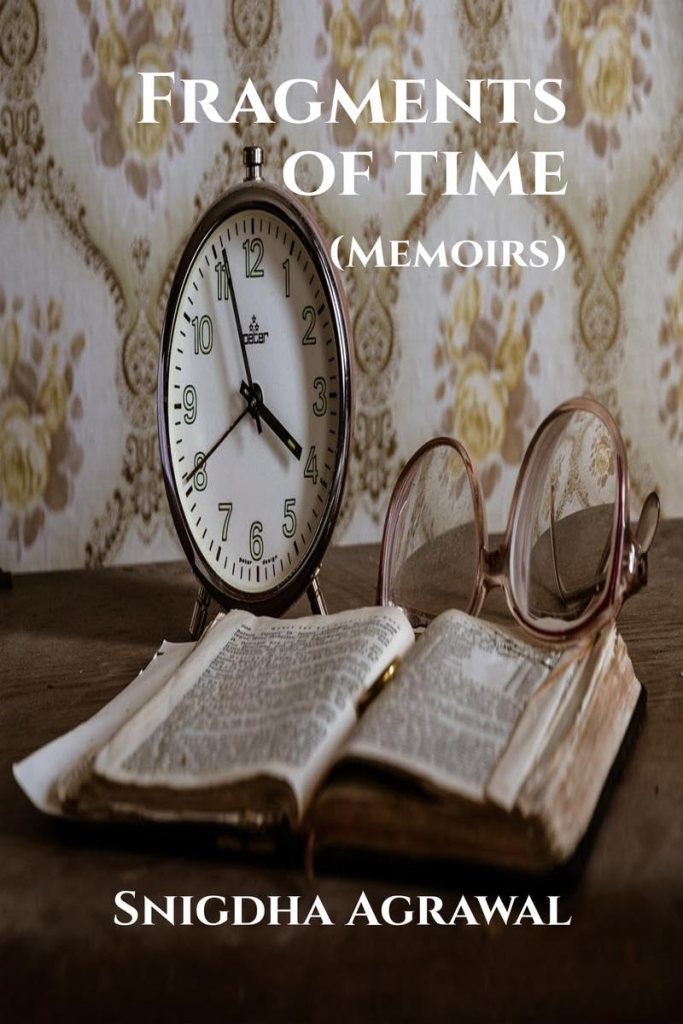
Spanning genres from short stories to poetry, her lifelong passion for creative writing is fuelled by a desire to connect with readers, evoke emotions, and spark reflection through her vivid storytelling. She is a published author of five books, the latest Fragments of Time (Memoirs)is available on Amazon worldwide and on Flipkart, in Paperback, Hardcover and Kindle formats.
Now in her 70s, she embraces life with curiosity and an unquenchable thirst for learning. When not immersed in writing, she explores new places and shares her adventures on her travel blog.
Based in Bangalore, India, Snigdha finds enduring inspiration in her husband, her partner of nearly fifty years. Together, they continue to cherish and celebrate the ever-changing journey of life, which serves as the foundation for her creative pursuits.
About the Book
Fragments of Timeis a heartwarming memoir that celebrates the beauty of life’s quiet yet meaningful moments. Written by a woman in her seventies, it offers reflections on childhood, love, loss, and ageing, transforming the ordinary into the extraordinary. With grace, humour and honesty, these stories reveal the richness of a life well-lived, reminding readers that even the simplest experiences hold profound value and are worth cherishing and sharing.
.
PLEASE NOTE: ARTICLES CAN ONLY BE REPRODUCED IN OTHER SITES WITH DUE ACKNOWLEDGEMENT TO BORDERLESS JOURNAL
Paul Mirabile is a retired professor of philology now living in France. He has published mostly academic works centred on philology, history, pedagogy and religion. He has also published stories of his travels throughout Asia, where he spent thirty years.
.
PLEASE NOTE: ARTICLES CAN ONLY BE REPRODUCED IN OTHER SITES WITH DUE ACKNOWLEDGEMENT TO BORDERLESS JOURNAL
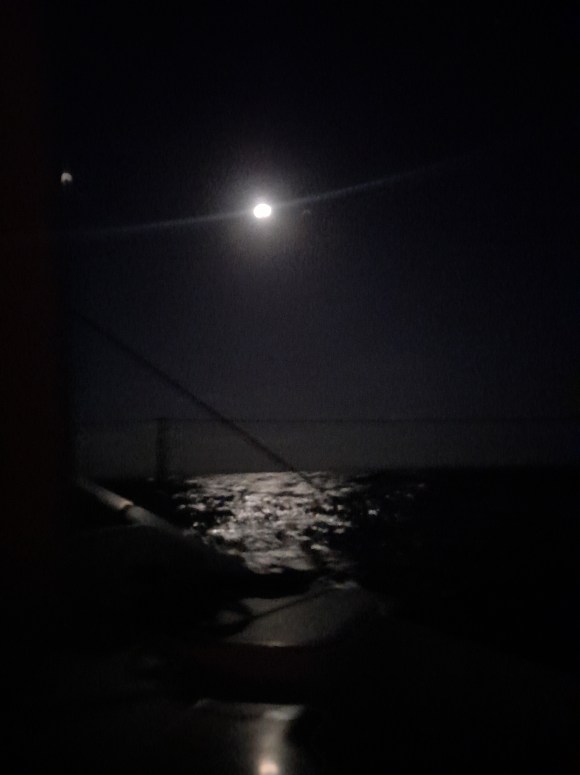
I looked out at the waters beyond the stern. The black waves danced in the moonlight. The swell pushed the boat in all directions, slapping against the water. I was unable to move around the boat without planning every movement. Thankfully, all the edges were rounded so even if I bumped into something I would not get hurt. I had remained in my pyjamas all day because I was unable to stay still enough to open drawers, retrieve clothing, and get dressed. I was unable to comb my hair because walking to the cupboard and retrieving my comb was too hard given all the bumps. Our bags had all fallen to the floor.
“I’m not scared,” replied Alex.
He looked at me straight in the eye. Suddenly I knew that it was not dangerous. If not dangerous, it was uncomfortable, but as far as Alex was concerned, we were not in danger.
We had left False Entrance off the mid-west coast of Western Australia at 4 am. There was an easterly wind predicted at this time. At 3 am, the anchor alarm had sounded. Alex rose and confirmed that this was because of the wind change. He spent thirty minutes trying to raise the anchor because the windless was malfunctioning. I could hear the anchor chain churning above the cabin where I was lying. Alex had to raise it by hand.
“At least I’ve done my morning workout!” he quipped.
Then I heard the motor turn on, and before long we left the safety of False Entrance for the swell of the Indian Ocean. The easterly blew for several hours pushing us south but then changed direction. This required us to head away from shore towards the Abrolhos Islands. Once the wind shifted Alex had to turn the motor on, and we thumped across the swell. Because of the high cliffs lining the mainland coast there would be no bay to shelter in for twenty-four hours. This wild stretch of coastline had claimed dozens of ships since Dutch vessels first arrived in the 1600s.
“What’s our latest estimated time of arrival?” I asked.
“The forecast was off, so we won’t be at Port Gregory until 3 am.”
We continued riding across the slapping swell. All I could complain about was the discomfort. I knew from Alex’s tone that we were not in danger, and we need not worry. He remained at the helm until we were safely at Port Gregory, while I rested in the cabin and braced myself for every slap against a wave. I put two pillows under my head to cushion myself.
I heard the familiar dropping of the anchor and realised we must be in Port Gregory. Alex spent the next ten minutes making everything ship-shape before going to bed. I looked at my phone. It was 2.57 am. Our voyage had taken almost 23 hours.
“It was tedious,” was his only complaint the next morning. Not scary, uncomfortable, or exhausting. Just tedious, in his typical understated way.
We gratefully slept until the sun forced its way through the cabin hatches at 8 am, and then, we roused ourselves for a comfortable breakfast at anchor. The skies were blue, and the waters calm.
“The wind is in the right direction. We’ll get to Geraldon in five or six hours. We should be able to sail the whole way, without motoring.”
How could the wind change so suddenly? How was it possible to have capricious winds one day and friendly ones the next? Alex raised the sails, and for the next six hours the wind ushered us on our way. Instead of erratic slapping, the keels produced a regular whooshing sound. The bucking bronco[1] had turned into a docile, ageing Clydesdale[2]. The first sign of the approaching Port of Geraldton was bulk carriers anchored out at sea, waiting their turn to load grains for export. As we entered the bay we had to make our way through the massive channel markers and dodge the lobster pot buoys. Once in the bay, we were greeted by live music from the amphitheatre on the shorefront lawns. We heard the sound of children playing in the water, on the beach, and on the playgrounds.
Alex anchored and by this time the windless had stopped malfunctioning. We then lowered the paddleboard. Alex knelt at the rear and I at the front, relieved to dismount our steed of the seas. I held myself steady as he paddled firmly behind me to the shore. We alighted at the sand, pulled the paddleboard to a safe height, and washed the sand off our flip-flops under a tap. A wall of hot air from the land accosted us, and the ground continued to gently canter beneath us as our bodies recalibrated to being on terra firma. Our discreet entry on the paddleboard had attracted no attention. We walked past children playing in the foreshore fountain, found a place to sit on the lawn alongside other family groups, and tuned in to savour the comforting 1970s pop music being performed by the live band.
Meredith Stephens is an applied linguist from South Australia. Her recent work has appeared in Syncopation Literary Journal, Continue the Voice, Micking Owl Roost blog, The Font – A Literary Journal for Language Teachers, and Mind, Brain & Education Think Tank. In 2024, her story Safari was chosen as the Editor’s Choice for the June edition of All Your Stories.
PLEASE NOTE: ARTICLES CAN ONLY BE REPRODUCED IN OTHER SITES WITH DUE ACKNOWLEDGEMENT TO BORDERLESS JOURNAL
The savage, unforgiving summer, took a toll on an amateur thief, who, only to beat the scorching heat, switched on the air-conditioner, succumbed to the chill, lost his will, fell asleep -- only to wake up to a cop’s baton poking him, the owner staring, caught him red-handed!
Meetu Mishra is extremely fond of reading and writing poetry, as it truly inspires her.
.
PLEASE NOTE: ARTICLES CAN ONLY BE REPRODUCED IN OTHER SITES WITH DUE ACKNOWLEDGEMENT TO BORDERLESS JOURNAL
Title: Raisina Chronicles: India’s Global Public Square
Author: S. Jaishankar & Samir Saran
Publisher: Rupa Publications
Raisina Chronicles: India’s Global Public Square by S. Jaishankarand Samir Saran commemorates a decade of the Raisina Dialogue, India’s flagship geopolitical and geo-economics conference. The book reflects on the journey of the Raisina Dialogue and its impact on global discourse. It brings together contributions from leaders, thinkers, and diplomats, scholars, and policymakers worldwide, offering insights into addressing global challenges through collaboration and dialogue.
S. Jaishankar has been India’s External Affairs Minister since May 2019 and represents Gujarat in the Rajya Sabha. He was the Foreign Secretary from 2015 to 2018 and has held ambassadorial roles in the U.S., China, and the Czech Republic, as well as High Commissioner to Singapore. He authored notable books like The India Way: Strategies for an Uncertain World and Why Bharat Matters. Samir Saran is the President of the Observer Research Foundation (ORF), a leading Indian policy think tank. He has enhanced ORF’s influence in the U.S. and the Middle East and provides strategic guidance at the board level. Saran curates the Raisina Dialogue, co-chairs the World Economic Forum’s Global Future Council on Geopolitics, and serves on the Board of Governors of The East West Centre in the US. He has written five books, edited key monographs and journals, and contributed to numerous academic papers and essays, appearing in both Indian and international media.
The book brings together voices from across the world—of leaders and thinkers reflecting on the Raisina Dialogue’s impact on how we may navigate global challenges and create solutions that work. Putting India at the forefront of leading the change, the effect of these Dialogues is felt across policies and projections.
The editors emphasise that diversity, dissent, discord, and divergence of opinion make for the necessary ingredients for a sustainable future, shaped and owned by all. Ten years since its inception, the Raisina Dialogue has become the paramount platform for bringing together cultures, peoples and opinions. It is now India’s flagship geopolitical and geo-economics conference and has truly become a global public square—located in New Delhi, incubated by the world.
It emphasises the importance of diversity in thought, approaches, beliefs, and politics. It highlights how pluralism and heterogeneity contribute to resilience and societal evolution. Raisina Dialogue serves as a platform for inclusive participation, welcoming voices from underrepresented geographies and institutions.
While it showcases India’s emergence as a global leader in addressing development challenges and fostering international cooperation, it reflects the philosophy of Vasudhaiva Kutumbakam (the world is one family) and its efforts to harmonise local solutions with global needs.
Through initiatives like the G20 Presidency, India has shared transformative models such as digital public infrastructure (e.g., India Stack), offering templates for financial inclusion and tech-enabled development globally.
Alongside the carefully organised discussions, Raisina Chronicles examines the evolution of the Dialogue and presents its audience with a comprehensive volume that offers deep insights and an unwavering optimism for achieving shared solutions to worldwide issues.
As the globe approaches significant structural and historical transformations, the core aspiration of this work is to ensure that the voices of the populace are prioritised in global politics and policymaking, echoing through influential circles and reaching the broader community. For leaders to effect change, it is essential for society to unite and take a decisive step forward in the right direction.
Raisina Dialogue is also portrayed as a crucial venue for bridging divides in a fractured world. It fosters open discussions among diverse stakeholders—diplomats, scholars, business leaders, civil society members—to discover shared futures and solutions. The book underscores the importance of dialogue over polemics and inclusivity over exclusivity in shaping global policies.
Contributions from high profile global leaders such as Kyriakos Mitsotakis (Prime Minister of Greece), Mette Frederiksen (Prime Minister of Denmark), Penny Wong (Australian Foreign Minister) and others enrich the book with perspectives on international cooperation, climate goals, defence partnerships, and multilateralism.
The book serves as both a retrospective of the Raisina Dialogue’s achievements over ten years and a forward-looking guide for navigating global challenges. It positions India at the heart of global conversations, highlighting its role in fostering equitable dialogue and creating solutions that resonate across borders.
This volume is not just a collection of essays but also an intellectual testament to the transformative power of dialogue in shaping a sustainable future for humanity.
Bhaskar Parichha is a journalist and author of Cyclones in Odisha: Landfall, Wreckage and Resilience, Unbiased, No Strings Attached: Writings on Odisha and Biju Patnaik – A Political Biography. He lives in Bhubaneswar and writes bilingually. Besides writing for newspapers, he also reviews books on various media platforms.
.
PLEASE NOTE: ARTICLES CAN ONLY BE REPRODUCED IN OTHER SITES WITH DUE ACKNOWLEDGEMENT TO BORDERLESS JOURNAL








 Borderless