In the evening at sea I fish the moon’s reflection. It is my recreation and my white whale. I never catch that moon but I like the challenge. The lost souls at sea sing throughout the night. They sing an old song lost for years. The song is a curse of course, a spell from the waning moon.
GONE INTO EXILE
Pretend I am not here. Pretend I am long gone. Imagine my leaving was no magic trick, but something ordinary. I do not feel my presence is at all necessary. Forget about me and do not expect my return.
FLY AWAY MOTH
Fly away moth To the moon Of the streetlight The hot bulb That is miles Away from the Actual moon Once you get To the light bulb Don’t let go You’ll be satisfied By the false moon Its bright light Warm and round Like a breast
Luis Cuauhtémoc Berriozábal lives in California, works in Los Angeles in the mental health field, and is the author of Raw Materials (Pygmy Forest Press). His poetry has appeared in Blue Collar Review, Borderless Journal, Escape Into Life, Mad Swirl, and Unlikely Stories. His latest poetry book, Make the Water Laugh, was published by Rogue Wolf Press. Kendra Steiner Editions has published 8 of his chapbooks.
.
PLEASE NOTE: ARTICLES CAN ONLY BE REPRODUCED IN OTHER SITES WITH DUE ACKNOWLEDGEMENT TO BORDERLESS JOURNAL
India is perhaps the one country where the Jews have maintained their identity without ever being exposed to antisemitism at the hands of their host. Although representing a microscopic segment of the Indian population, the Bene Israel is one of the largest and oldest of the three major Jewish communities of India, the other two being the Cochin Jews of the Malabar Coast and the Baghdadi Jews of Bombay and Calcutta. The Bene Israels arrived at the Konkan coast, shipwrecked, and have lived in India for more than 2,000 years and claim descent from the ten lost tribes of Israel. After they had settled down permanently in the Konkan villages of Western Maharashtra, the Bene Israels were called ‘Shaniwar Telis’ or Saturday oil pressers – a relatively low-caste designation – by the local population because they refrained from working on Saturday, the Jewish Sabbath. Later, they also farmed their land, peddled produce, and took up petty jobs, with the majority working as clerks in government offices and private firms. With time, they adopted Hindu names similar to their Biblical names and took up Marathi surnames such as Rohekar, Penkar, Palkar, and Ashtamkar by adding the suffix ‘-kar’ to the villages and town they came from. They adopted Marathi, the local language, as their mother tongue, and to outsiders, became physically indistinguishable from the local population. But within the village society, the Bene Israels were clearly differentiated from others because they adhered to Judaism. Initially overtones of a caste system coloured the Bene Israelis but they changed with time. Intermarriages between other Jewish communities became common.
With the formation of the nation-state of Israel in 1948, the exodus of the Jews of India took place on a very large scale, and only a few hundred members were left in Gujarat. Initially the integration of the Bene Israels into Israeli society was not easy and many of them returned to India but re-emigrated to Israel later after 1964 when their religious status was finally accepted.
Miss Samuel: A Jewish Indian Saga is written by Sheela Rohekar, a Bene Israel Jew, who is probably the sole-living Jewish Hindi author, and she managed to recreate the distinct identity of her own community. Bearing across life histories of her ancestors, she seeks answers to those questions that troubled her in the novel. Originally written in Hindi, it is aptly translated into English for the first time by Madhu Singh, a professor of English teaching at the University of Lucknow. The novel is narrated by Miss Seema Samuel, an almost 70-year-old Bene Israel living at an old age home called Parisar on the outskirts of Pune, and it portrays her unsuccessful struggle to fit into a majoritarian Hindu society along with the plight of being an unmarried woman in India. She tells the story of her community, of their trials and tribulations, love and loss, and their longing for ‘Aliyah’ — the return to the Promised Land of Israel. Shifting from the Konkani shores to the bustling streets of Ahmedabad (called Amdavad in the local parlance), and finally to the tranquility of an old-age home, each generation of Seema’s family grapples with the tension between their Jewish faith and Indian identity, struggling with their fear of persecution on the one hand and a yearning for acceptance on the other.
In the novel, apart from giving a macrocosmic view of the Bene Israel community which makes its members victims of isolation and alienation from mainstream Indians, and depicting their ancient history and present status, Sheela Rohekar also very deftly presents the microcosmic view of the extended family of her community along with the problems of cross-cultural liaisons and the problems each individual member of her family faces. She states: “But some images embed themselves in the mind, not in the eyes, and chase you – all your life. The role of time in fusing images is not much but the trick of a fading memory. They light up in a flash!”
Since her narration spans six generations and moves deftly backwards and forwards in time, in some places it becomes difficult for the readers to keep track of who’s who in the narrative and occasionally one must go back to the family tree chart at the beginning to place the characters in their proper perspective.
Miss Seema tells the story of Isaji Eloji, who, having married a Hindu woman named Narayani, is believed to have ‘blackened’ the Jewish name. Two generations later, burdened by his grandfather’s transgression, David Reuben stops at nothing to keep his Jewish identity pure, even poisoning his daughter Lily for loving a non-Jewish man.
Again, years later, his son Samuel David (Miss Seema’s father) finds that his Jewish identity makes him an outsider in his own country; and his grandson, Bobby, faces persecution of the worst kind – when he is murdered by a mob in Ahmedabad. It is through reading the loose notes and a long essay that Bobby had left behind that Seema manages to tell us the background history of their community. With his collection of yellow, crumbling newspaper cuttings about the Jews, old coins, badges, awards, certificates, degrees, and moth-eaten black and white photographs that were around 150 years old, Bobby tried to illuminate the path taken by the fellow members of his community – the Bene Israel, the pardesi, the foreigners – whom the people of Amdavad did not know in the twentieth century and believed to be Maharashtrians or converted Christians. The story of how his brother, David, and his Hindu wife. Jyotsna Prajapati, managed to throw Seema out of their apartment in Gitanjali Society also reminds us about such machinations that prevail in our Indian society in general. Through the different tales, the narrator remains a constant, and her memories commingling the past with the present are deftly handled by the novelist.
Further, Miss Samuel becomes a key novel to understand not only for its Indian-Jewish identity but also its multicultural Indian identity and its challenges in the present time. The old age home, Parisar, is not at all a closed space and it opens to new forms of solidarity among elderly abandoned women who, though belonging to different faiths and identities, abandon their frustration with the twists of patriarchal society to discover the meaning of friendship, love and solidarity.
Seema writes: “The campus where I live is surrounded by hills. There is silence, always. I can see residents of my age, some even older, shuffle from one room to another. Constructed at a distance of two hours from Pune, all stories seem to end up here, in this building.” Parisar is thus a model of a tolerant society that not only accepts differences but even respects, maintains and transcends them at the same time. The translation is lucid, and the translator labels her endeavour as ‘interpretive performance’ and a journey beyond imaginary borders. A good read indeed.
.
Somdatta Mandal, critic and translator, is a former Professor of English at Visva-Bharati, Santiniketan, India.
.
PLEASE NOTE: ARTICLES CAN ONLY BE REPRODUCED IN OTHER SITES WITH DUE ACKNOWLEDGEMENT TO BORDERLESS JOURNAL
The last, forlorn days of winter; still do they stubbornly cling. Idle thoughts turn to graveyards. I hear a mournful bell ring. Yet there stirs an awakening. I see a bluebird take wing. Violets bloom, and daffodils. I resist an urge to sing. My thoughts now turn to sunlight; to the new life it will bring. Farewell, the last days of winter. Behold! The first days of spring.
THE TREE MEN
I
Walking through the park, this winter morning, I saw how the Council's been at the trees. Some men, in heavy, black jackets, were throwing branches in the back of a truck. One was still sawing hard, finishing the job. The branch rolled onto the grass. The man wiped his brow with his leather glove.
II
They said the trees blocked the view; of what, exactly, it was hard to see. But trees, I suppose, you can't talk to; or urge to have smaller families. You just take an axe to them.
III
All along the avenue there are now trees marked with yellow paint. These are the next for hacking; and those, already cut, stand stark against the winter sky; their severed limbs now stacked in the back of council trucks. And, now, I wonder if, when the tree men are gone, maybe in the quiet of night, these mutilated stumps will still feel a spark crackle along a tattered nerve-way; that savage lunge, as a sharp blade splits the skin.
Stuart McFarlane is now semi-retired. He taught English for many years to asylum seekers in London. He has had poems published in a few online journals.
.
PLEASE NOTE: ARTICLES CAN ONLY BE REPRODUCED IN OTHER SITES WITH DUE ACKNOWLEDGEMENT TO BORDERLESS JOURNAL
Zeeshan Nasir writes of a region whose carbon footprint is next to zero, yet it suffers some of the worst climate-related disasters…
From Public Domain
The perennial consequence of climate change is affecting the lives of people all over the world, particularly in the remote and underprivileged parts of Balochistan.
Noora Ali, 14, was oblivious to the temperature shifts because she had grown up in Turbat, a city in the centre of CPEC (China-Pakistan Economic Corridor). They had frequent floods during the monsoon season and blazing heatwaves during summers, with temperatures rising above 51 centigrade. Compared to other cities in Balochistan, Turbat experiences hot summers and typical winters. As a result, the majority of wealthy families in the city travel to Gwadar, Quetta, or Karachi during the sweltering summers and return to Turbat during the winters. The Water and Power Development Authority (WAPDA) moved Noora’s father, who works there, to the neighbouring Gwadar in 2022.
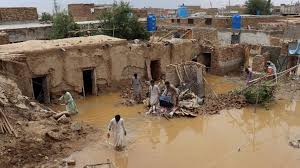
In the February of 2022, the sea seemed calm while boats of the fishermen busily dotted the waters of the Padi Zir (Gwadar’s West Bay). It was a typical Thursday morning when rain started pouring down. The rain was so intense that the sea became wild and uncontrollable. The roads were washed away, bridges collapsed, with streets being inundated with flood water and the port city became completely disconnected with the rest of the country. Back in Turbat, her ancestral hometown was also submerged under flood water.
Noora had also heard from her school fellows that Gwadar and Turbat had never experienced such heavy and intense rainfall before. She knew and felt that the temperature of her native city was rising and that Gwadar beneath flood water didn’t seem normal. “This is due to climate change.” Her elder brother told her. At the age of 14, typical children in Balochistan have no idea what climate change and global warming are but they are already feeling it impacts.
Like Noora, thousands of children in South Asia, particularly Pakistan, Bangladesh, Nepal, India and Afghanistan are at the risk of climate related disasters, as per the UNICEF 2021 Children’s Climate Risk Index. The report further reiterates that children in these countries have vigorously been exposed to devastating air pollution and aggressive heatwaves, with 6 million children confronting implacable floods that lashed across these countries in the July of 2024.
On the 11th and 22nd November 2024, over 20 youths urged the world leaders to come up with plans to mitigate the impacts of climate change on children at the 2024 United Nations Climate Change Conference (COP 29) held in Baku, Azerbaijan. Among those 20 resolute children was the 14 years old, Zunaira Qayyum Baloch representing the 241.5 million children and women of Pakistan.
Dressed in her traditional Balochi attire, with a radiant smile in her face and resolute in her commitment, Zunaira Qayyum Baloch, startled everyone. Hailing from the far-flung district of Hub in the Southwest of the Pakistan’s Balochistan, Ms. Baloch went to represent the children of a country whose carbon footprint is next to zero, yet it suffers some of the worst climate-related disasters. Her message to world leaders was clear: step up and combat climate-induced inequalities, particularly those affecting women and children.
She had always remained conscious about the changing climate in her city, observing the floods of 2022 that had wreaked havoc in Hub Chowki, initiating awareness programmes and youth advocacy guide training in her home city to advocate for girls right to education and climate change.
“After my father passed away, my mother became the sole breadwinner. She helped us get an education and met all our requirements.” Zunaira explains. “During the catastrophic rains of 2022, an incident changed my perspective on climate change. Rainwater had accumulated in the roof of our home and streets were flooded with water. The destruction was so overwhelming that I realised that such events were no longer rare but increasing constantly. “
During the COP29, Ms Baloch expressed her concerns with the experts how Pakistan, particularly Balochistan has been detrimentally affected by climate disasters like frequented floods, heatwaves, hurricanes and droughts. Lamenting that climate change was a child-rights crisis, she told the world how the changes in the climate had jeopardised the lives of millions of women and children throughout the world.
Asking the world leaders to join determined children like her to combat climate change, she addressed them in the COP29: “Climate change matters to me, and it should matter to you too.”
Stark Reality of the Past
Bibi Dureen, 80, is a testimony to how climate is continuously transforming. She hails from the outskirts of the Kech district in a town called Nasirabad.
“The seasons are changing.” She says with her voice laced with sorrow. “The heatwaves have become more aggressive, and floods are common. It all started around 1998 in Turbat. Then in 2007, a devastating flood destroyed our homes, date palm trees, livestock –and worst of all, it took lives.” She pauses, her wrinkled hands trembling.
As she talks to me in front of her thatched cottage, through which sunlight is streaming in, tears well up in her eyes as she recalls a painful childhood memory, “I was young at that time. It was a pitch-black night, and the rain was pouring down mercilessly when a man came shouting that the flood water had reached the fields.” She exclaims with grief. “My mother, desperate to save what little we had, sent her only son, my sixteen-year-old brother, Habib, our family’s only breadwinner, to find the only cow we had in the fields. Neither the cow nor Habib returned. Later some men found his dead body in the jungle.”
In June 2007, when the Cyclone Yemyin hit the coast of Balochistan, it wrought unprecedented damage to the province, particularly Turbat, Pasni and Ormara and rendered 50,000 homeless within 24 hours, including children. According to reports 800,000 were affected and 24 went missing.
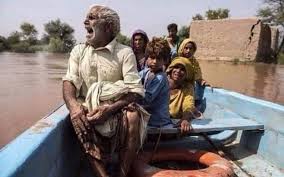
The 2022 floods had a devastating impact across Pakistan, with the province of Balochistan being one of the hardest hit. With 528 children dying nationwide, 336 people died in Balochistan, including children as per the reports of the Provincial Disaster Management Authority (PDMA).
Tragedy struck again in 2024 when torrential rains engulfed 32 districts of Balochistan, particularly, the port city of Gwadar and Kech district. The PDMA put the death toll of children dying due to the flood at 55 out of the total of 170, with 16 others injured.
The Double Crisis Facing Girls
Regions in Balochistan, such as Naseerabad, Jaffarabad, Sohbatpur, Nokundi, Sibi and Turbat have seen severe heatwaves in the past few decades. On May, 2017, the Mercury rose to a record breaking of 53.5 centigrade in Turbat, making the district to be the hottest place of the year after Mitribah, Kuwait. During heatwaves, cases of fainting and health-related illness among residents, particularly children are rarely uncommon. According to a 2023 report by the Pakistan Meteorological Department, Balochistan has seen a 1.8°C rise in average temperature over the past three decades, leading to longer and harsher heatwaves.
Dr Sammi Parvaz, a gynaecologist at the university hospital in Turbat, tells that rising temperatures in the district not only contribute to higher dropout rates among school-girls but their menstrual cycle is also affected.
“According to the recent research of the National Institute of Health (NIH) , menstruation– a biological process that occurs in females when they reach puberty — is severely affected in countries which are vulnerable to climate change and Pakistan is one them.” She explains. “The menstruation in girl children living in extreme heat, such as, in Turbat and Karachi, becomes very intense, painful and with cramps.”
Dr Sammi further elaborates that this phenomenon is linked to the increased release of cortisol and oestrogen, the hormones which regulate the female reproductive cycle. “Girl children exposed to harsher environments such as severe heat or cold, experience hormonal imbalances leading to irregular periods and severe menstrual cramps. The hospitals in Turbat are frequented by patients suffering from intense cramps or irregular periods.”
Hygiene becomes another pressing issue during floods, especially for young girls. Research published by the International Journal of Environmental Research and Public Health states that floodwater contains lead, polychlorinated biphenyls (PCBs) and other chemicals which are the cause for irregular periods.
During floods thousands of girl children struggle to manage their periods amidst the chaos of the disaster and remain without period products. For instance, after the 2022 floods, 650,000 pregnant women and girl children in Pakistan were without essential maternal care, with a significant proportion from Balochistan.
Admist all this chaos climate activist like Zunaira Qayyum Baloch raise awareness while women like Maryam Jamali work directly on the ground to ensure that every women has ration in her house and access to menstruation products during catastrophes.
Madat Balochistan[1]— a non-profit organisation — has supported more than 31,000 people across 34 districts in Sindh and Balochistan. With its major work concentrated in and around Quetta, Dera Bugti, Jaffarabad, Jhal Magsi, Sohbatpur, and Khuzdar, they are a women-led organisation fundamentally prioritising women and young girls in their work because even on the frontlines, they are bearing most of the cost of climate change, according to its co-founder, Maryam Jamali.
“Our conversations on climate change vulnerability often treat everyone as ‘equal’ in terms of impact, when that is far from the truth. Vulnerability is a multi-dimensional concept and in a country like Pakistan where most of the women and girls are pushed to the margins of society in every way possible — we cannot just overlook their struggles.” Maryam Jamali tells.
“Take the 2022 floods, for example — the most recent catastrophes etched in our memories. Women and girls were responsible for most of the labour when it came to evacuating to safer places. As soon as they did, their needs when it came to menstruation or pregnancy care were completely ignored by aid agencies as they sent out packages or set up medical camps. Most of our work at Madat was compensating for things like this. We worked with midwives to ensure that women, who could not stand in lines for ration, received it regardless or women who did not want to interact with male doctors didn’t have to. In our housing projects, we prioritise women especially those who don’t have a patriarch in the household because that severely limits their access to resources for rehabilitation.”
Floods, heatwaves and other natural calamities are gender neutral. However, female children are more likely to be affected by them. According to the UN Assistant Secretary-General Asako Okai that when disaster strikes, women and children are 14 times more likely to die than men. In Pakistan, 80% of people displaced by climate disasters are women and children.
In patriarchal societies in Pakistan, women and female children are the primary caregivers of the family and they are the sole persons to grow crop, do house chores, fetch firewood and water. With little to no potable water nearby, girls have to travel far to help their parents, further exacerbating their vulnerability.
These household responsibilities create an educational gap. Girls are taken out of schools in Balochistan during floods. With Pakistan’s lowest girl literacy rate at just 27 per cent, the International Rescue Committee (IRC) reported that the province of Sindh and Balochistan have seen greater educational disruptions due to heatwaves and floods, with the 2022 flood causing more educational institutions closure than the combined two-year COVID-19 pandemic.
Extreme heatwaves and recurrent flooding in Balochistan have further compounded this gap. For instance, the 2022 flood damaged or destroyed 7,439 schools in the province, affecting the education of over 386,600 students and 17,660 teachers and staff members. Reports also mention that most of the government school were used as flood shelters in the province. In the 2024 floods, 464 schools were again damaged.
The destruction of educational infrastructure has forced many children out of school, contributing to the province’s high out-of-school rate.
Monsoon Brides during Floods
Though floodwater is no longer accumulating in the Mulla Band Ward of Gwadar district in Balochistan, the damage it has wrought will stay with the people for a long time for many years. For Gul Naz[2],16, the loss has been devastating.She was only 16 years at the time when flood water entered their home in 2022. Her father, being a fisherman, struggled to make ends meet, as the sea was completely closed for fishing, cutting off the family’s only source of income.
“I was in the Jannat Market and when I returned home, I was told by my mother that my marriage has been fixed to a man twice my age in exchange for money.” She discloses that her parents were given Rs.50,000 ($178.50) which is a whooping sum for a poor family, who survive on around one dollar a day.
“I have two kids now and I am a child raising a child.”
The sadness in Gul Naz’s voice is palpable and she isn’t alone in her predicament. During floods and emergency situations, families in Balochistan resort to any desperate means for survival. The first and most obvious way is to give their daughters away in marriage for financial relief — a practice that usually surges during the monsoon season, hence, the name monsoon brides.
In the Sindh province of Pakistan, where this trend is more prevalent, there has been a spike in the number of monsoon brides during the last flash floods of 2022. In the Khan Mohammad Mallah Village, Dadu district, approximately 45 were married off in that year, according to the NGO organisation, Sujag Sansar[3], which works to reduce child marriages in the region.
Pakistan stands at the sixth position in the world when it comes to marrying children below eighteen. While there has been a reduction in child marriages in Pakistan in recent years, UNICEF warns that extreme weather patterns put the girl child at risk.
Madat Balochistan has also been on the forefront in the reduction of child marriages in Balochistan, “It’s not intuitive to think of girls’ education or loan relief or housing provision as measures to build climate change resilience, but in our contexts, these are the very things that drive vulnerability to climate change.” Says the Maryam Jamali. “We have been working on supporting farmers with loan relief so that young girls aren’t married off to compensate for the financial burden of loans after a lost harvest. We are also working on initiatives for sustainable livelihoods for women as well as ensuring that young girls in all the communities we work in have access to education despite geographic or financial limitations.”
Jamali thinks that gender inequality is one of the biggest aspects here which makes it absolutely necessary for a region like Balochistan, where physical vulnerability and socio-economic vulnerability is high, to have young girls at the decision-making table.
“Activists like Zunaira can ensure that when we come up with solutions for climate change, we contextualize them through a gender lens and make sure that this does not become another instance of taking away women’s agency but becomes an opportunity to involve them in climate change policy decision-making.” Jamali contends. “It is rewarding to see the girls we support do great things. One of our girls from Musakhel is studying at Cadet College Quetta, the first in her family to be able to pursue education beyond 8th grade.”
The Way Forward
“Extreme weather can fuel conflict and be a threat multiplier,” says Siraj Gul, a lawyer at the Balochistan High Court, Quetta, citing the recent research published in the journal Alternatives: Global, Local, Political. He stresses that the decades long running insurgency in Balochistan stems from human rights violations, inequality and government negligence. “Climate related catastrophes further destabilise the region’s development. For instance, there was a surge in the number of protests during the 2022 floods in Gwadar, Lasbela and Turbat, reflecting the deep frustration and despair of the people.” According to Mr. Gul if children like Zunaira are given a platform to speak and work for Balochistan, they are not merely advocating for the environment, they are working for a more peaceful and tranquil region.
A climate resilient infrastructure and child-oriented disaster relief have become a must in climate-torn regions like Balochistan.
Zeeshan Nasir is a Turbat-based writer and currently pursuing his MBBS Degree from the Makran Medical college, Turbat. He tweets on X @zeeshannasir972. He has contributed to Daily Dawn, Countercurrents, Pakistan Today, The Diplomat and others. A different version of this essay has been published earlier in Countercurrents and Pakistan Today.
.
PLEASE NOTE: ARTICLES CAN ONLY BE REPRODUCED IN OTHER SITES WITH DUE ACKNOWLEDGEMENT TO BORDERLESS JOURNAL
I go outside. Bounding back into childhood. Split melon in hand with infernal separation.
The fatherless sun above rips dancing cornea from my eyes.
While the garden lice under rocks ball up like dirt magicians.
And the balance girls walk the curb, arms extended.
Trying not to fall off.
Ryan Quinn Flanagan is a Canadian-born author residing in Elliot Lake, Ontario, Canada with his wife and many bears that rifle through his garbage. His work can be found both in print and online in such places as: Evergreen Review, The New York Quarterly, Borderless Journal, GloMag, Red Fez, and Lothlorien Poetry Journal.
.
PLEASE NOTE: ARTICLES CAN ONLY BE REPRODUCED IN OTHER SITES WITH DUE ACKNOWLEDGEMENT TO BORDERLESS JOURNAL
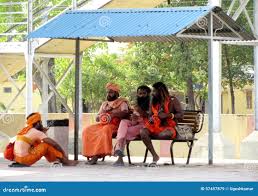
The sun beat down mercilessly on the railway platform of Karwar Railway Junction, where a group of rotund, saffron-clad priests huddled together, fanning themselves with cardboard pieces ripped from cartons. Their expressions were grim, their bellies noticeably less jolly than usual.
“It’s the end of an era, brothers,” sighed Pandit Upadhyaya, his triple chins wobbling like unset strawberry Jello. “First, they replaced bulls with tractors. Then, they put machines in our post offices. And now; NOW, they have brought AI into our temples!”
The sacred threads worn over their left shoulder, diagonally across the body, seemed to protest against their protruding bellies, yellowed and stringy, yet proudly declaring the caste hierarchy would soon be rendered null and void. The looks of concern on their faces screamed, “Not fair…not fair at all”.
From Public Domain
“I still cannot believe it!” moaned Pandit Shastri, wiping his forehead with the end of his dhoti[1]. “A robot priest? Is this then the end of the Kalyug[2]? Else, how can a machine do what we do?”
“They say it chants flawlessly,” added Pandit Joshi, shaking his head. “Not one mispronounced shloka[3]! No breaks for tea or chewing on betel leaves! No accidental burps during the aarti[4]!”
“Profaneness!” chorused the group, clutching their prayer beads in outrage.
“I even heard,” Pandit Sharma whispered conspiratorially, “that the AI priest does not accept dakshina[5]! No envelopes, no fruit baskets, no ghee-laden sweets. What kind of priest didn’t accept gifts?” they nodded looking puzzled.
Pandit Upadhyaya lamented. “What is our next recourse? If these AI priests take over, who will feed us? Who will drape us in silk? Who will offer us ghee-laden sweet boxes?”
A train pulled into the station just then; the platform transformed with the usual activity commencing on arrivals. Passengers stuck their heads out, looking around for tea and snacks. Pandit Sharma suddenly came up with an idea. “Not all is lost yet.”
“Meaning?” asked Pandit Joshi, narrowing his eyes suspiciously.
“We shall sell tea! But not just any tea—Prasad[6] Chai! Sacred! Blessed! Tea infused with the wisdom of the Vedas!”
The priests considered this. It was true. If there was one thing, they were experts in, it was making offerings with dramatic flair. Why not apply that skill elsewhere?
Within weeks, they set up stalls on the platform, offering passengers their special chai. As trains pulled in, the platform echoed with the chorus…”Om Chai Namah![7]” “Divine Masala Chai. Guaranteed to bring you good karma!” “Blessed by Brahmins, brewed with bhakti[8]!”
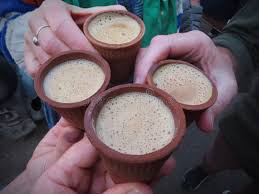
Soon enough, their stall was milling with passengers keen to taste this unique concoction, prepared by none other than the four Brahmin Head Priests. The spectacle of their tea-making performance, with dramatic gestures, had everyone gawking. Served in earthen cups, each sip elicited murmurs of appreciation from the passengers. The “Jai Ho” brand of tea didn’t take long to become a hot success.
Word spread like wildfire in the temple town. Business boomed. The tea, laced with just the right amount of saffron, cardamom, and sacred nostalgia, had an irresistible charm. Soon, the platforms were buzzing with satisfied sippers. Every train passing through the station had passengers stepping out to sip on this special tea.
As they counted their first earnings, Pandit Upadhyaya sighed, “Brothers, who knew AI would push us into a more profitable business?”
But then, one day, a group of railway officials swooped down on them in their khaki outfits with officious looks on their faces. One of them, a spectacled man with a voice that needed no loudspeaker, spoke, “Pardon me, Swamiji’s, but we’ve received some complaints. Your tea business is so blessed that passengers are delaying boarding their trains. This is causing major delays and loss of revenue to the railways. Moreover, it’s illegal to do business on the platform without a licence from the authorities. Can you show the vendor licence?” he asked hesitatingly.
The priests exchanged guilty glances.
The official adjusted his spectacles, “Of course, we can set that right, as we have received a special request from the high command. The Railway Ministry wishes to introduce your “Jai Ho” chai at all major railway junctions!”
Jowls dropped, mouths agape, the priests couldn’t believe they heard right. The tufts of hair on the back of their shaved heads stood erect in surprise.
Pandit Upadhyaya beamed, “Brothers, the Gods have truly blessed us! It no longer matters that non-humans have overtaken our profession, we continue to gain from selling the brew the Gods’ drink!”
As they sipped their divine brew, laughing heartily, they looked up at the temple in the distance, where the AI priest continued chanting slokas flawlessly.
“Well,” chuckled Pandit Sharma, “at least that machine can’t make chai!”
And so, from AI adversaries to tea sellers, the priests of Karwar found their unexpected salvation—not in temples, but in terracotta cups of steaming, saffron-infused chai.
From Public Domain
[1] A loose piece of cloth wrapped in the lower half of the body
[2] The current age according to Hindu eras, supposed to be dark.
Snigdha Agrawal (nee Banerjee) is an author of five books and a regular contributor to anthologies and e-magazines. A septuagenarian, she has recently published a book of memoirs titled Fragments of Time, available on Amazon and Flipkart.
PLEASE NOTE: ARTICLES CAN ONLY BE REPRODUCED IN OTHER SITES WITH DUE ACKNOWLEDGEMENT TO BORDERLESS JOURNAL
FAR NORTH QUEENSLAND
(Phil and Kaye’s place, Malanda FNQ June 2024)

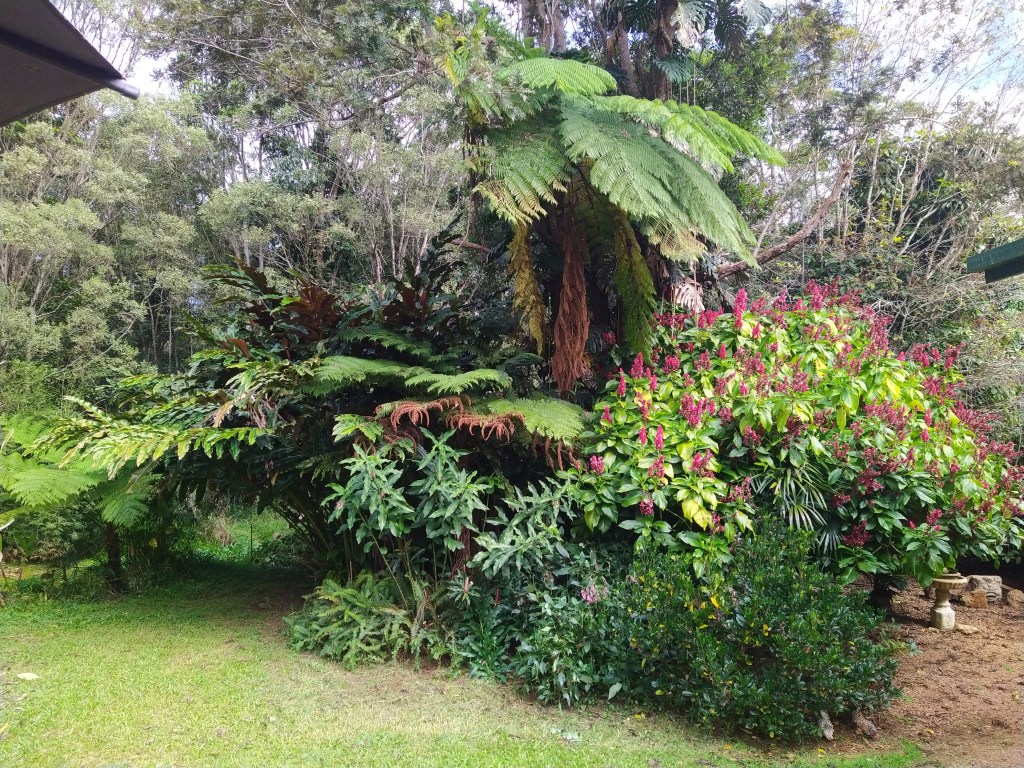
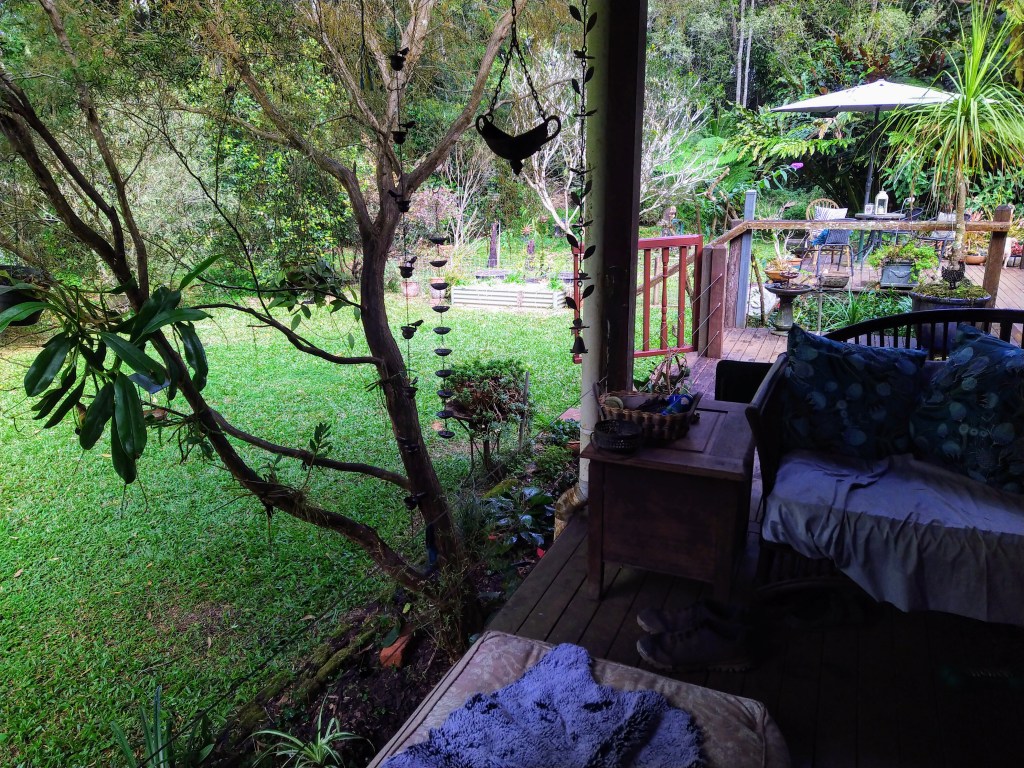
Overcast sky – air moist with pending drops – from the comfortable chair on the back verandah in this micro-Eden framed by roof and posts I watch the green King Parrots fly to the feeders and boot the Emerald Doves and little Mannikin Finches out. They soon return like a scherzo in a symphony – the Bar-shouldered Doves and cheeky Lorikeets follow. Almost everything else is green except the surprise of flowers in winter – Flame of the Forest and Morning Glory – red and purple survivors of uncertain weather – days of warmth and sunshine after a slow cold front.
On this afternoon it’s humid but cool enough for a cardigan. At dusk dwarfed by the Black Wattle and Kaurie Pines behind – the leafless Frangipani’s ghostly white limbs reach for the stars. It blooms in summer – an effusion of pink and yellow blossoms thick with bright green leaves – an arboreal attention-getter beside the huge Red Torch Ginger clump and the pond bursting with water lilies.
The old tall trees creak and chatter in the afternoon flurries –– stories and secrets veiled in their leafy realm – and I drift dreamily between the worlds –– here and there –– like the lovely Blue Emperor butterfly in the canopy.

TRIANGULATION OF HOME

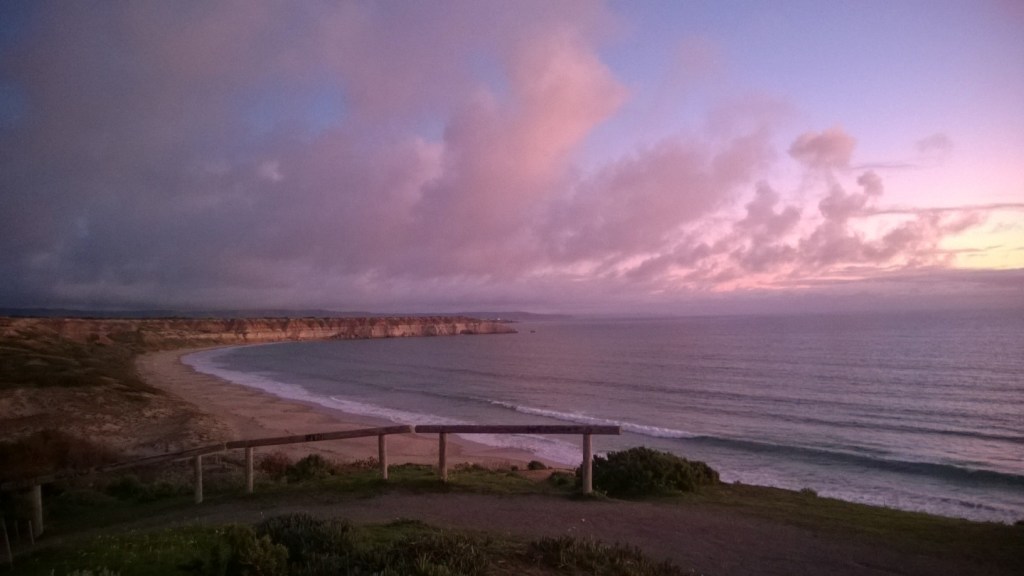
Home is barely more than 100 metres from the beach, though I rarely take the wretched stairs. I make the five-flight descent, all the way thinking about the return climb.
Walking with icy sand underfoot, in strong wind, as waves suck back, and forth again, I notice the seaweed, the shells, the crumbling cliffs, the open space, the expanse of sky.
But from the table high on the bluff, east-southeast I see the round hills of the Mount Lofty Ranges, the lush McLaren Vale vineyards, and full south, past the cliffs, I imagine the southern tip of Cape Jervis.
To the west at dusk, the sun sets over the gulf, most days in splendiferous colour. It’s a very long drop to the sea, and winter cold after heavy rain, with seagulls cawing overhead.
Disembodied in this timeless space above the wild grey ocean, my mind takes flight to the north
through the car park, over the combis, the SUVs, the 741 bus, and children playing on swings.
From the bluff, near home, it seems as though below the lone fisherman stands on the edge of the earth, and for a luminous moment, we merge in a quantum mist.
Atoms in fleeting form at the interstices.
Photo Courtesy: Lizzie Packer
Lizzie Packer is an experienced freelance writer, and an emerging poet. At Adelaide College of Arts, Lizzie established the online creative writing program and led it for over a decade.
.
PLEASE NOTE: ARTICLES CAN ONLY BE REPRODUCED IN OTHER SITES WITH DUE ACKNOWLEDGEMENT TO BORDERLESS JOURNAL
On our third morning in the Lowveld, my travel companion and I woke up at 4:00 A.M. for our third game drive in Kruger National Park. We’d signed up for this over a year ago when we first booked ourselves on this group tour. We didn’t know then that it would be raining.
The other ten members of our group had chosen other options. Some were planning to hang out at the lodge, probably anticipating a day of lounging by the pool while kudu and impalas lingered nearby nibbling grass. Another cohort had signed up for a different sightseeing tour, involving waterfalls, with a later starting time. My friend and I were here, however, for the animals.
She and I had first met in Japan. We’d lived in the same town. Our kids had gone to the same schools, and we’d taught at the same universities. When she had moved back to Australia, we’d remained in touch. Both of us loved to travel, and both had dreamed of going on safari in Africa. Neither of us knew of anyone else who shared the same dream, so we vowed to go together. I had imagined that it would be years before I would be able to afford such a trip, but a little over a year ago, she’d come across a great deal. And now here we were, in South Africa.
Half-asleep, we quickly dressed, stuffed our sack-breakfasts into our backpacks, and stumbled out the heavy wooden door into the still dark morning. A light rain was falling. Although signs warned of roaming wild animals, and we’d seen plenty, it seemed safe to walk up to the office building to find our driver. His Toyota safari truck was already parked outside. After a few minutes, he appeared, and we climbed into the back middle seats of the open-sided truck, hoping to stay clear of the rain.
Our driver and guide, a local who drove 20-40 kilometers per hour over the speed limit and doled out one interesting animal fact per sighting, handed us lined ponchos to keep us warm on the forty-minute drive to the park. Then we zoomed off, passing pecan and macadamia groves, on the way to Numbi Gate. People were already waiting at bus stops along the way, probably on their way to work.
As the sky gradually lightened, we could make out the names of the shops along the road: Dragon Flame Car Wash, No Error Driving School, Drama’s Sneaker Wash, God is Able Beauty Salon, and an alarming number of small businesses offering funeral services.
When we finally reached the entrance to the game park, the guide parked and got out to register. Although the parking area had been crowded the previous two days, on this morning, we were the only ones there.
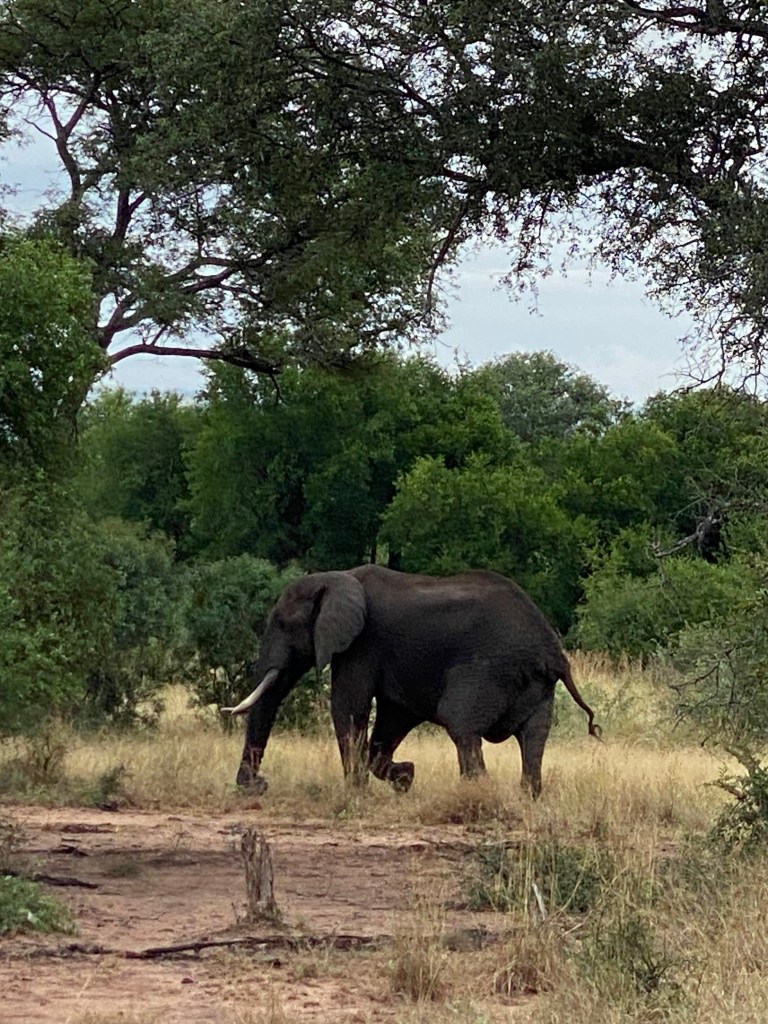
We had seen quite a few animals over the past two days, including elephants, giraffes, zebras, a rare white rhino, and a mama lion and cubs, albeit from a distance. We rattled off our wish list to the guide.
“A hippo out of the water,” my friend said. “And a male lion.”
I had been lucky enough to see both on a previous trip to Rwanda, but I had yet to see a leopard, one of the so-called “big five,” or a cheetah.
“When is the last time you saw a leopard or a cheetah?” I asked.
“I saw a leopard a week ago,” he said. “And a cheetah yesterday.”
He warned us, however, that because of the rain, we might not see anything at all. The animals might be seeking shelter. We understood and accepted that.
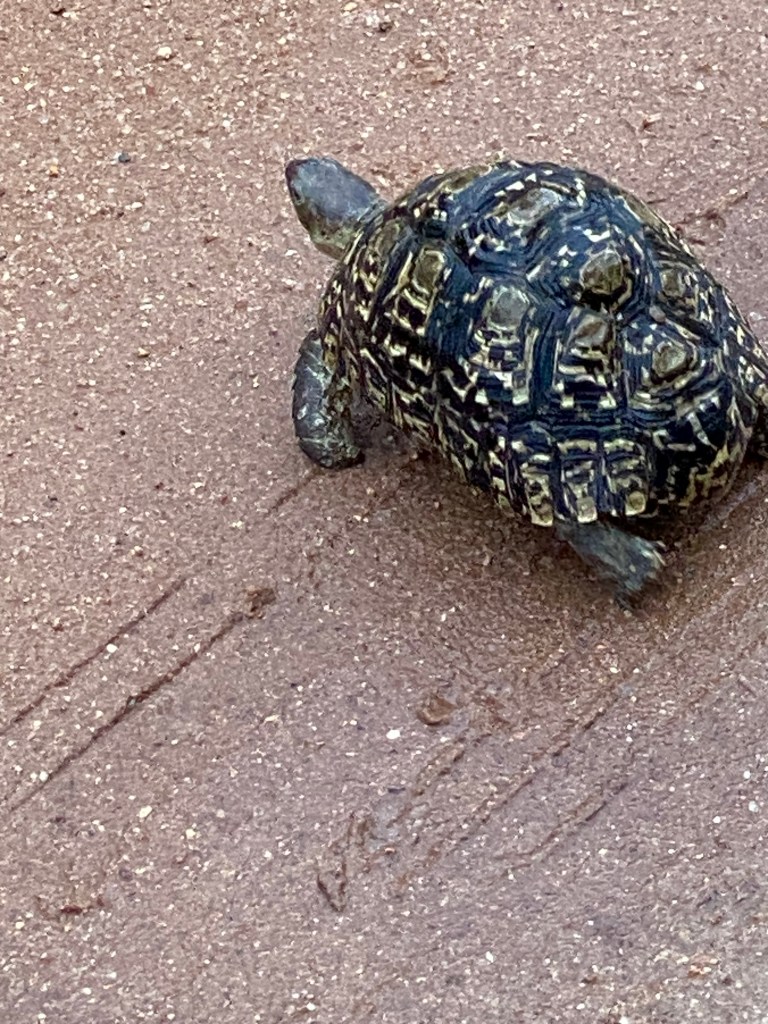
A few minutes into our drive, he braked the truck and pointed out a turtle making its way across the road. Understanding that this might be our biggest sighting of the day, I took a video of the creature with my smartphone. Soon after, we spotted some impalas. Although we’d seen so many the two days before that the guide no longer stopped for them, on this morning, we gave them our full attention.
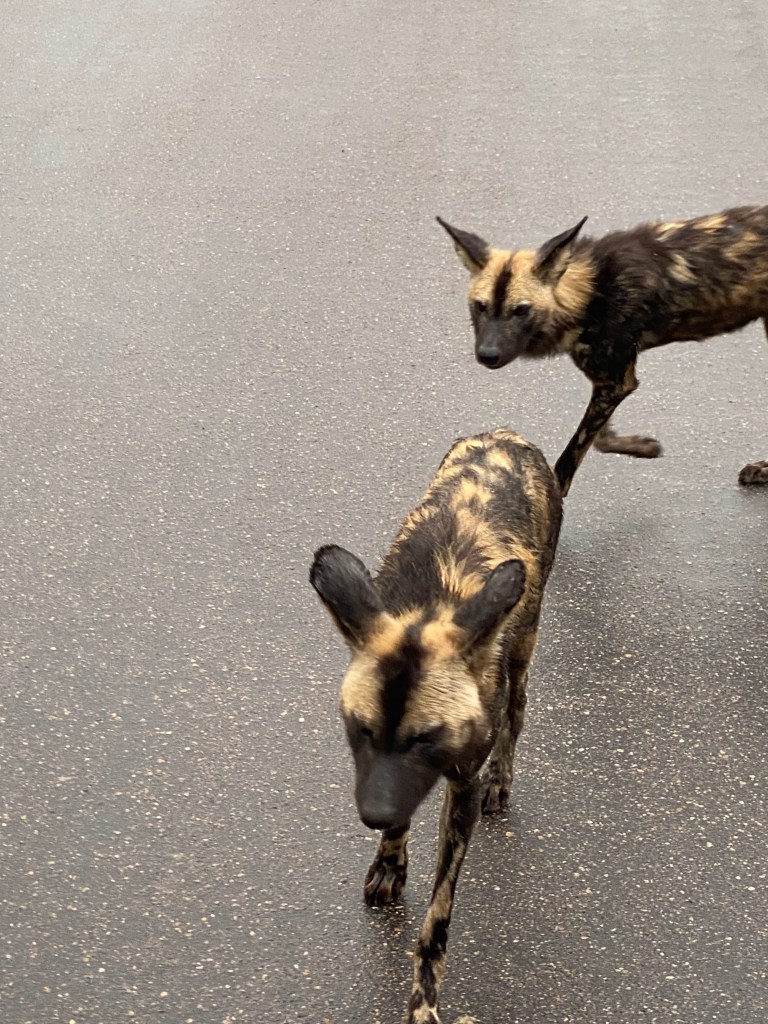
And then we saw something unusual—a pack of African wild dogs alongside and in the middle of the road. I had never seen canines with such colouring. Their fur was brown and black, almost tortoiseshell. These dogs were featured on a signboard at the park entrance indicating the day’s sightings.
“There are only about 150 of these dogs in the park,” our guide told us. He mentioned that they were expert hunters, that they attacked in groups. Since Kruger National Park is vast, with an area of 19,485 square kilometers, much of the terrain being well away from the road, I realized how lucky we were to see these dogs. They trotted along, sniffing at the road, mindless of the truck slowly following them.
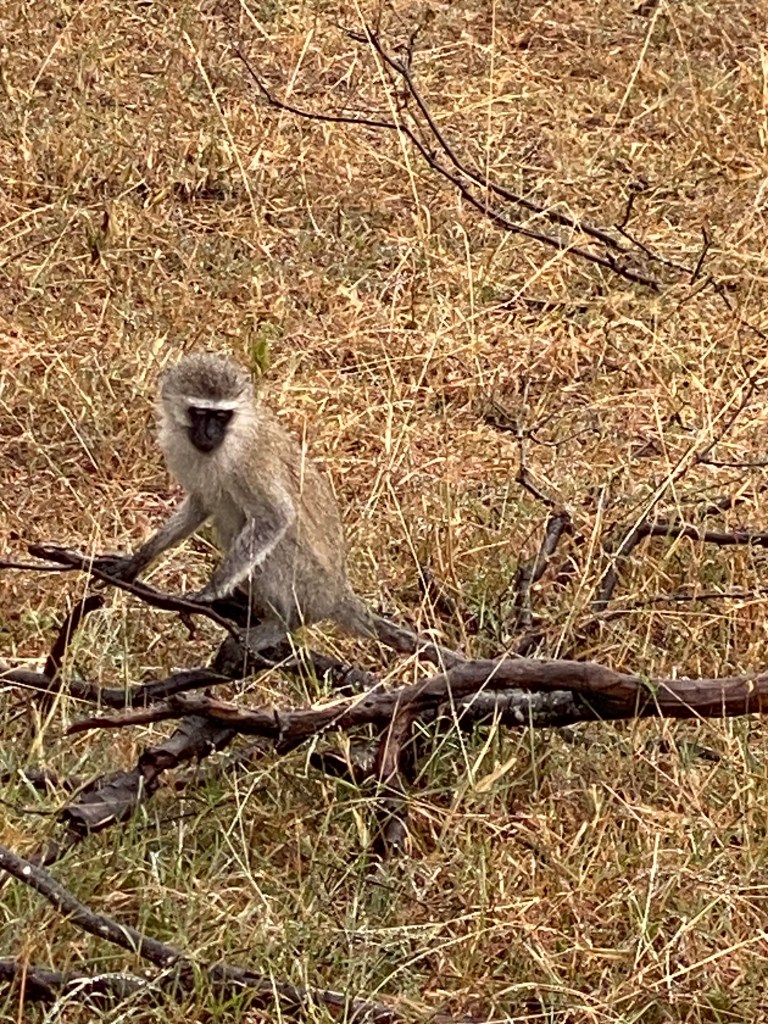
By this time, the rain had let up. Although we did not manage to see any hippos out of the water (they mostly come out at night to eat grass), we did see a herd of wildebeest, some vervet monkeys, an elephant, a water buffalo, baboons, and a Martial eagle perched on a high bare branch. And then our guide got a message on his phone and said, “From now, we’re not stopping for anything. Someone has spotted some cheetahs.”
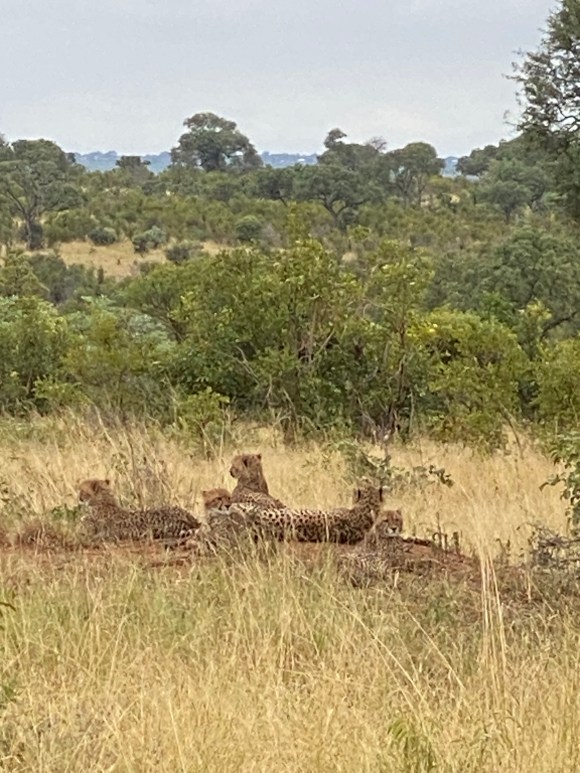
As he sped ahead, we crossed our fingers and readied our cameras. I expected the cheetahs to be far off in the distance, where they wouldn’t be scared off by the sound of cars, as the lions were. Why else would they stay in one place long enough for us to reach them? As it turned out, however, five cheetah cubs were gathered together, sitting still, gazing intently into the bush. They were near the road, only about fifty meters away.
“They’re waiting for their mother,” the guide said. “Maybe she will come back while we are waiting.”
My friend and I took turns admiring them through binoculars. How patiently they watched the impalas nearby. How diligently they groomed themselves. They were gorgeous, leaving us breathless.
We waited awhile, but there were others eager to see them, so our guide suggested it was time to move on. “Are you happy?” he asked us.
“Yes, very,” we both said.
Later, as we returned to the lodge, we thought about how jealous the rest of the group would be when they heard about the cheetahs. The rain started to fall again.
Suzanne Kamatawas born and raised in Grand Haven, Michigan. She now lives in Japan with her husband and two children. Her short stories, essays, articles and book reviews have appeared in over 100 publications. Her work has been nominated for the Pushcart Prize five times, and received a Special Mention in 2006. She is also a two-time winner of the All Nippon Airways/Wingspan Fiction Contest, winner of the Paris Book Festival, and winner of a SCBWI Magazine Merit Award.
PLEASE NOTE: ARTICLES CAN ONLY BE REPRODUCED IN OTHER SITES WITH DUE ACKNOWLEDGEMENT TO BORDERLESS JOURNAL
You are the fragrance of rocks, the lamentation of each flower, the unbearable heat of the moon, the icy coolness of the blazing sun, the language of my letters to myself, the smile with which all despair is borne, the millenniums of waiting without a wink of sleep, the ultimate futility of all rebellion, the exquisite idol made of aspirations, the green yesterdays of deserts, the monsoon in an apparel of leaves and flowers, the illuminated pathway from the clay to the farthest planet, the fantastic time that's half-day and half-night, the eternity of the sea's brief silence, the solace-filled conclusion of incomplete dreams, the dishevelled moment of an awakening with a start, the reluctant star in the sky brightening at dawn, the unspoken sentences at farewell, the restless wind sentenced to solitary confinement, the body of fog seated on a throne, the reflection asleep on the river's abysmal bed, the undiscovered mine of the most precious jewel, the outlines of lunacy engraved in space, and the untold story of lightning. You have, my dearest, always suffered all my inadequacies with a smile. I know I am not destined to bring you back once you've left. All I can do hereafter, till the last day of my life, is to collect the fragments of what you are and try to piece them together.
Sri Radha Canto 19
Come, take half of the remainder of my life, but fill every moment of the half that is mine with your infatuation. Was the bargain unfair? Then leave me with a single moment and take away the rest of my life, but like the sky, fill the whole space above that moment.
No, not like the sky. Come closer and become the cloud over my past, present and future so that, when I touched myself, I would touch the monsoon of your body. Your sighs would breathe the gale spewed by the despair of a distant ocean and, when I smile and touch myself, the gale would cease.
My lifetime, unconcerned with its nearing death, would everyday renew its pilgrimage to the early years of your youth. You would exist as a mass of blue carved by my command, or as the blue of all my known, partly known and unknown desires. Since I always dress in blue, you too must be blue. How can you have any other colour when it would break my heart if you had any other hue other than blue?
Was the bargain unfair? Then come, take away even that single moment. But do not bend down, look straight into my eyes. Meet the impudent traveller who has passed through hell after hell and, at the end of the very last hell, stands under a kadamba tree and awaits your coming.
Sri Radha Canto 25
It was a bad day yesterday. My husband dragged me by the hair and knocked my head against the wall several times, and insisted that I come out with the true account of where I had spent the previous night. It hurt for some time, but when he began an inspection of my body, I could not hold back my laughter.
God, I said to myself, what an imbecile I have for a husband! He is looking for proof of my infidelity in the body and at daytime too!
Sri Radha Canto 61
Reports of your passing away have reached us here.
Don’t count me among your widows or among those who carry your body in procession.
Your body, mercifully, Is far, far away.
In the parting of my hair, the vermilion mark is brighter than ever. Now stop joking, become the bridegroom, and come.
I wear the bride’s heavy silk and gold. My bangles tinkle And snub all sandals.
You no longer are anyone’s father, son, husband. You are the pure naughtiness of our last night together, the voice that teases me, and the touch that breaks the virginity of my loneliness. Just when I would stop crying, you will arrive and tickle my lifeless longing into unrestrained laughter.
When they deposit your body on the pyre, all that you ever meant to them will be consumed by flames. They would return home and, a few days later, would fill your absence with thoughts of you and a thousand other things.
My joy today is uncontrollable. If you had not died for them, you would not have become entirely mine.
Since everyone believes you are dead, my journey to the riverbank will now be without fear. All claims to you are now void, Except mine. They will forget I was ever there Or even know how I held on To your glamour-doll shoulders.
I fold up Under your common hand of desire As you disable my jelly-limbs Filling my spaces Beyond all that exists Or does not exist.
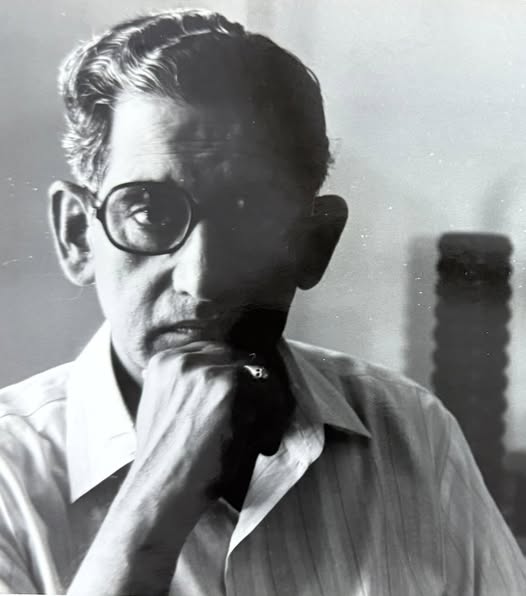
Ramakanta Rath is one of the most renowned modernist poets in the Odia literature. The quest for the mystical, the riddles of life and death, the inner solitude of individual selves, and subservience to material needs and carnal desires are among this philosopher-poet’s favourite themes. His poetry betrays a sense of pessimism along with counter-aesthetics, and he steadfastly refuses to put on the garb of a preacher of goodness and absolute beauty. His poetry is full of melancholy and laments the inevitability of death and the resultant feeling of futility. The poetic expressions found in his creations carry a distinct sign of symbolic annotations to spiritual and metaphysical contents of life. Often transcending beyond ordinary human capabilities, the poet reaches the higher territories of sharp intellectualism.
The contents have varied from a modernist interpretation of ancient Sanskrit literature protagonist Radha in the poem “Sri Radha” to the ever-present and enthralling death-consciousness espoused in “Saptama Ritu” (The Seventh Season). Some of his other major poetry collections include Kete Dinara (Of a Long ,Long Time), Aneka Kothari (Many Rooms), Sandigdha Mrigaya (Suspicious Hunting), Sachitra Andhara (Picturesque Darkness), and Sri Palataka (Mr. Escapist).
Ramakanta Rath was born in Cuttack, Orissa (India) on 13th December 1934 and passed way on 15th March 2025.
He obtained his MA in English Literature from Ravenshaw College, Orissa. He joined the Indian Administrative Service in 1957 but continued his writing career. He retired as Chief Secretary Orissa after holding several important posts in the Central Government such as Secretary to the Government of India. He received the Sahitya Akademi Award in 1977, Saraswati Samman in 1992, Bishuva Samman in 1990 and India’s 3rd highest civilian honour, the Padma Bhushan in 2006. He was the Vice President of the Sahitya Academy of India from 1993 to 1998 and the President of the Sahitya Akademi of India from 1998 to 2003, New Delhi. In February 2009 he was awarded a fellowship by the Central Sahitya Akademi.
These cantos have been excerpted from Ramakanta Rath’s own translation of his long Odiya poem, “Sri Radha”, by his son, Pinaki Rath.
.
PLEASE NOTE: ARTICLES CAN ONLY BE REPRODUCED IN OTHER SITES WITH DUE ACKNOWLEDGEMENT TO BORDERLESS JOURNAL.
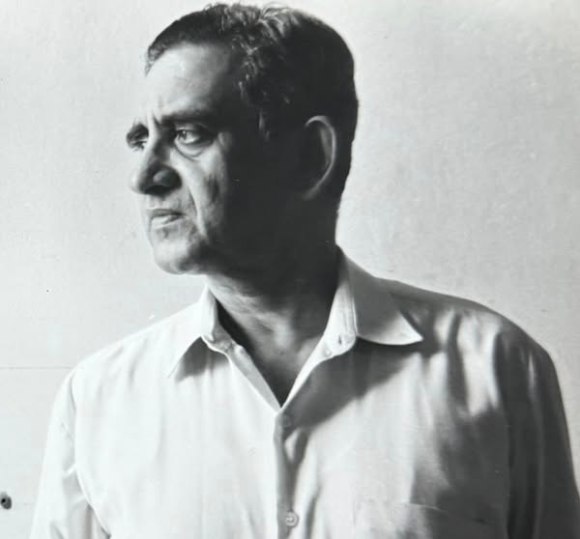
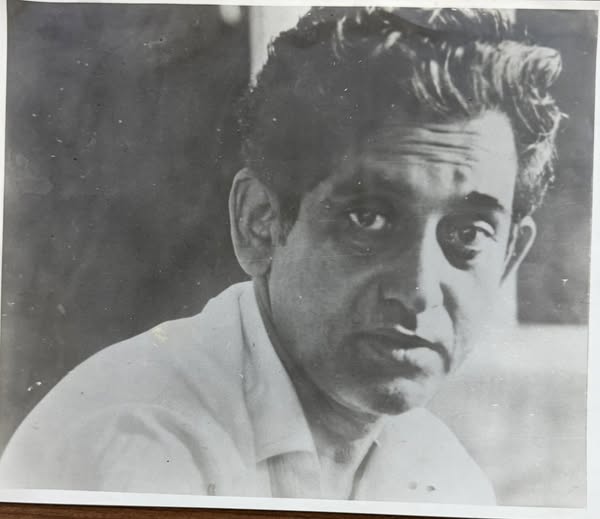
The death of Ramakanta Rath, a provocative figure in contemporary Odia poetry, has left a considerable gap in the literary landscape. Born on December 13, 1934, in Cuttack, Ramakanta was a prominent modernist poet in Odia literature. He obtained his Master’s degree in English Literature from Ravenshaw College and joined the Indian Administrative Services (IAS) in 1957.
His work was significantly shaped by the influences of poets such as T.S. Eliot and Ezra Pound, often delving into themes of mysticism, mortality, and human isolation. Ramakanta Rath’s contributions have profoundly impacted modern Odia literature in various ways. He brought modernist themes and styles to Odia poetry, drawing significant inspiration from Western poets such as T.S. Eliot and Ezra Pound. His examination of topics like the search for the mystical, the concepts of life and death, and the experience of inner solitude facilitated a transition in Odia poetry towards more contemporary and universal themes.
Rath’s poetry is marked by symbolic references to spiritual and metaphysical dimensions of existence, which enhanced the intellectual richness of Odia literature. This methodology enabled readers to engage with intricate philosophical concepts through the medium of poetry. Rath’s poetry is noted for its somber tone and symbolic references to the spiritual and metaphysical dimensions of existence.
His significant literary contributions include Kete Dinara (Of Bygone Days, 1962), Aneka Kothari (Many Rooms, 1967), Sandigdha Mrigaya (Suspicious Hunting, 1971), Saptama Ritu (The Seven Seasons, 1977), Sachitra Andhara (Picturesque Darkness, 1982), Sri Radha (1984), and Sri Palataka (Mr Escapist, 1997). Rath was honoured with the Sahitya Akademi Award in 1977, the Saraswati Samman in 1992 for Sri Radha, the Bishuva Samman in 1990, and the Padma Bhushan in 2006. He also received the Sahitya Akademi Fellowship in 2009 before which he was the vice-president of the Akademi.
Rath is particularly celebrated for his lengthy poem, Sri Radha, in which he reimagines Radha, freeing her from theological limitations and depicting her as a remarkable character who embodies deep emotions, love, defiance, and resilience. This poem uniquely intertwines themes of erotic love with existential introspection. This notable work initiated a new trend in Odia poetry that echoed the confessional styles of poets like Sylvia Plath, infusing a personal and introspective quality into Odia literature.
He skillfully combined traditional Odia poetic meters and techniques with contemporary free verse, creating a unique hallmark of his artistic expression. Odia poetry is characterised by its extensive use of classical meters and forms, such as chhanda, chautisa and champu which serve to articulate intricate emotions and themes in a structured and rhythmic manner. By incorporating these traditional elements, Rath infused his poetry with cultural richness and musicality, thereby amplifying its emotional resonance and thematic depth.
Ramakanta Rath’s integration of traditional Odia meter enriched his themes in multiple ways. By using these familiar poetic forms, his work connects more profoundly with readers who recognise them. This cultural connection amplifies the emotional resonance of his themes, making them easier for his audience to relate to. Additionally, traditional Odia meters often hold symbolic significance, which Rath skilfully utilises to deepen his modernist themes.
The combination of symbolic annotations and modernist concepts enhances Rath’s poetry, adding depth and encouraging reflection. By contrasting traditional forms with modernist ideas, his work creates a dynamic tension. This tension amplifies the emotional resonance of his poetry, prompting readers to navigate the clash between traditional values and contemporary realities, which adds layers to his themes. Rath’s incorporation of traditional meters with modern free verse invites readers to think critically about his poetry.
This fusion of styles encourages a deeper exploration of his themes, leading to a more profound appreciation of his work. While the traditional Odia meters offer a cultural base, Rath’s modernist themes keep his poetry relevant on a global scale. This interplay between tradition and modernity enables his work to reach beyond local confines, attracting a wider audience interested in existential and philosophical questions.
Rath’s poetry stands out for its masterful incorporation of irony and wit, elements that add depth and complexity to his body of work. Critics note that his use of irony can often be challenging to interpret, reflecting the nuanced and multifaceted nature of his poetic viewpoint. This unique approach, combined with his thematic explorations, has sparked a resurgence among a new generation of Odia poets, playing a crucial role in the advancement of modern Odia literature.
Ramakanta Rath’s impact has been instrumental in shaping the landscape of contemporary Odia poetry, solidifying his reputation as a monumental figure in the realm of Indian literature today. His passing signifies the conclusion of a significant era in the narrative of Odia literature, leaving behind a legacy that will continue to inspire future writers and poets.
Bhaskar Parichha is a journalist and author of Cyclones in Odisha: Landfall, Wreckage and Resilience, Unbiased, No Strings Attached: Writings on Odisha and Biju Patnaik – A Political Biography. He lives in Bhubaneswar and writes bilingually. Besides writing for newspapers, he also reviews books on various media platforms.
.
PLEASE NOTE: ARTICLES CAN ONLY BE REPRODUCED IN OTHER SITES WITH DUE ACKNOWLEDGEMENT TO BORDERLESS JOURNAL



 Borderless