Shadows vanish under his watch, seedlings sprout in the autumn sun, munching on unattended grass, a cow converses with the ants.
The silent hills open paths to a different plane, where one finds his space to smile. When the monsoon hits west, she awakens from her long slumber.
Mountains show beautiful avenues. Snow is replaced by shallow dunes. Rain fills the world. Man traces his existence.
Gautham Pradeep was born in Kerala, India. He is now pursuing an MBBS. He tries to explore the existential dilemmas of the present generation through his poetry.
PLEASE NOTE: ARTICLES CAN ONLY BE REPRODUCED IN OTHER SITES WITH DUE ACKNOWLEDGEMENT TO BORDERLESS JOURNAL
Talking about Vilayati Bagh as being an isolated cousin among the many gardens and monuments of Lucknow would be feasible given its elusive nature. I say elusive because it is nestled in the lush environs of the cantonment area and forested canopy that lies ahead of Dilkusha Palace which is one of the city’s many frequently visited wonders. Within this canopy lies Vilayati Bagh, “Vilayati”(foreign) referring in no small terms to not only a colonial past but also the stark fact that it is home to three tombs of erstwhile British officers who perished in the high noons of 1857’s First War of Independence. It was only a year ago that I, myself, had the opportunity to go there for the very first time. But that March morning changed everything. I have been there twice already to revel in its tranquility.
Its history is quite like other gardens and leisure spots of Awadh. It was built in the earlier parts of 19th Century by Ghazi Ud-Din Haider[1], the Nawab of Awadh, as a gift for his beloved European consort. During the revolt of 1857, it fell prey to shellings and other bombardments. But like most of Lucknow’s quintessential monuments, the spirit of renaissance did not elude it for long. In the present day, it is still tucked away in its quiet corner, slumbering and awakening for discerning eyes (and minds) who go there to capture crucial echoes of its unique identity.
Flanked by the Gomti close by and a cemetery in the middle of a spacious compound, the property begins its enchanting passage as one takes a straight drive (or walk) from Dilkusha Palace, approaches Kendriya Vidyalaya and then continues to move ahead to encounter a railway crossing, opposite which lies the cantonment granary, quarters and the grand and haunting Bibiapur Kothi. Taking a left turn from that location brings one to the verdure of old, huge trees, a moderately spacious road and pleasant sounds of cicadas and birds. In this pithy journey to Vilayati Bagh, the feeling of time-traveling to a gracious era of architectural elegance comes into sight the moment we reach its immediate premises. A beautiful Sufi dargah bathed in impressive green lies on the left and a few moderate homes of those who probably maintain this compound meet us.
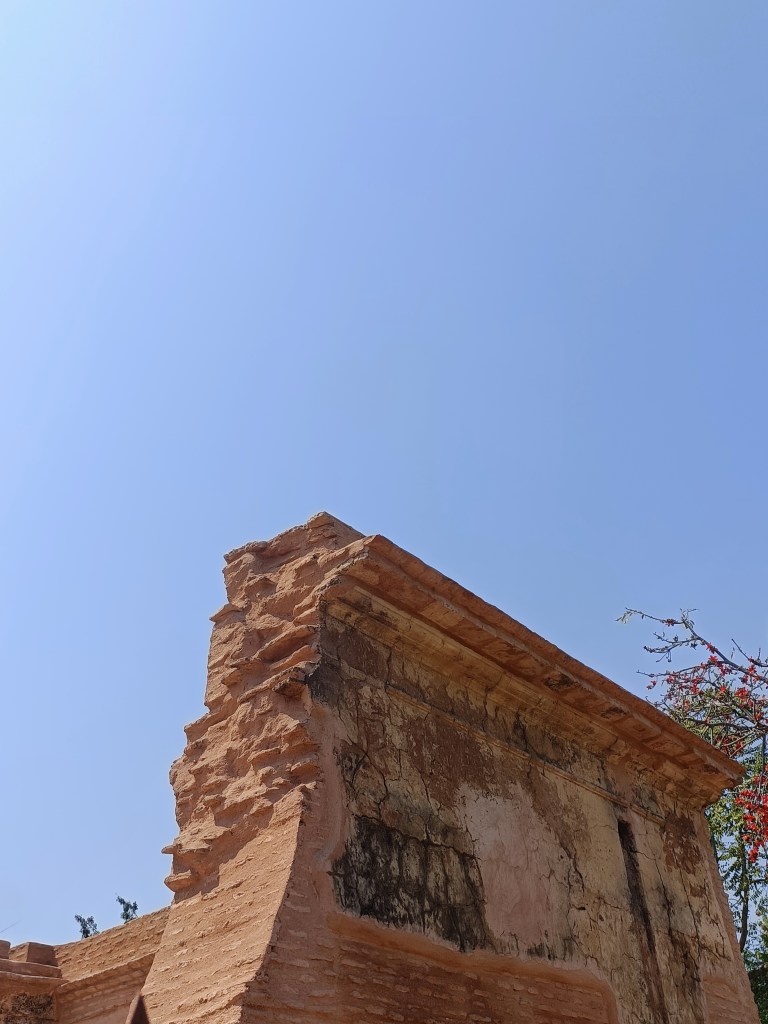
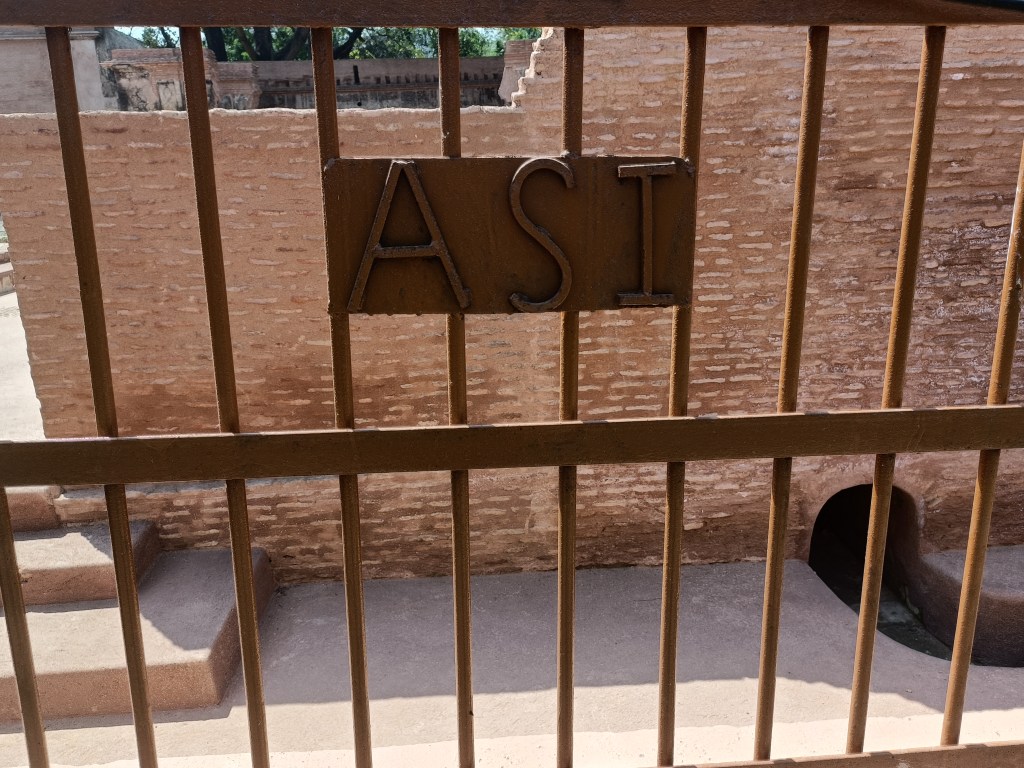
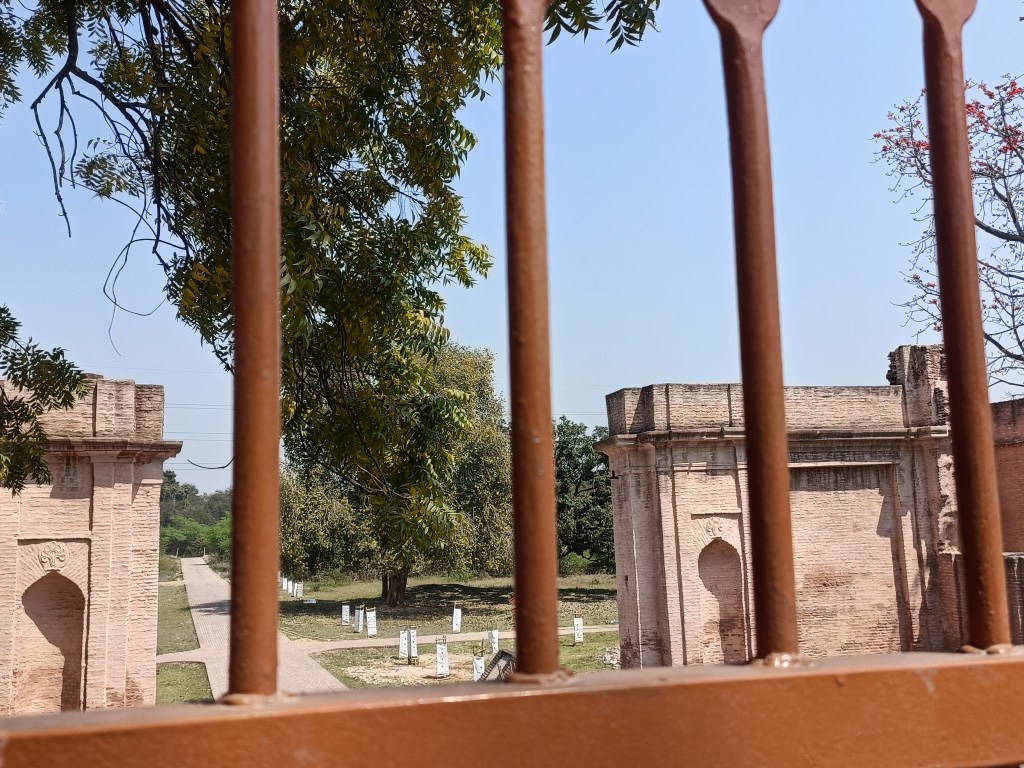
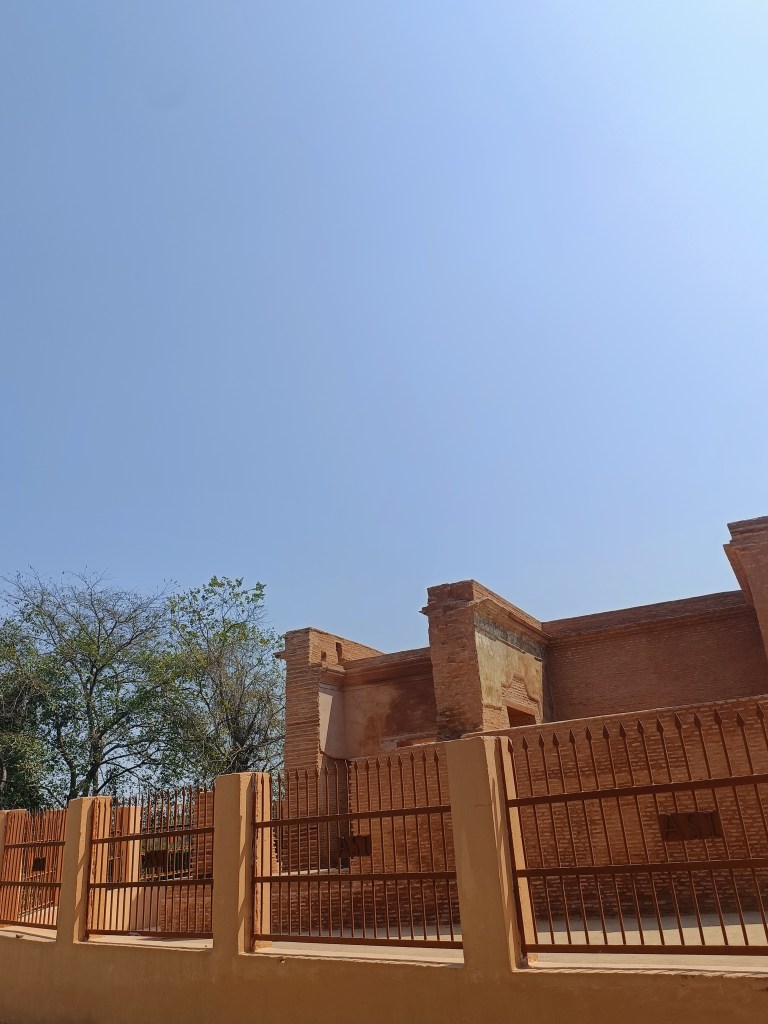
Then the real journey begins. A sophisticated sense of the building blocks of this elusive garden are elucidated by its brown- yellow, almost auburn walls. The lakhauri[2]paint and plaster give it luster on a sunny day. These ramparts retain their history of age, war and past reckonings. Yet it’s the sun that designs their colour schemes in the most sublime shades. Archeological Survey of India has restored its lost glory in recent years and the result is there for all to see.
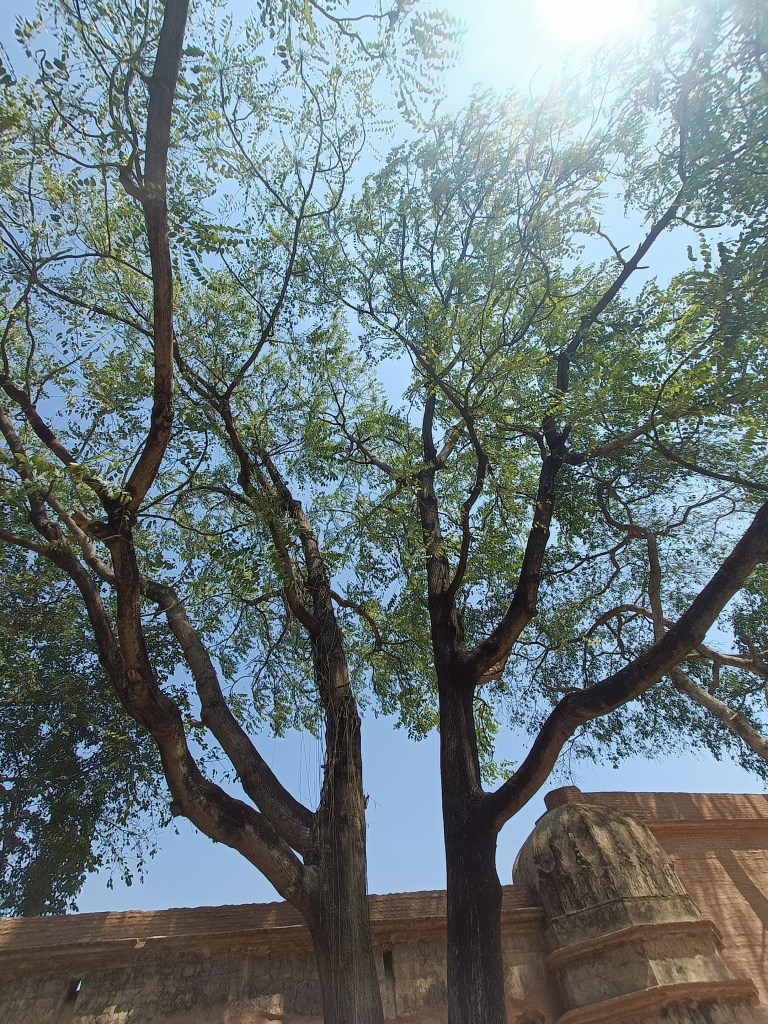
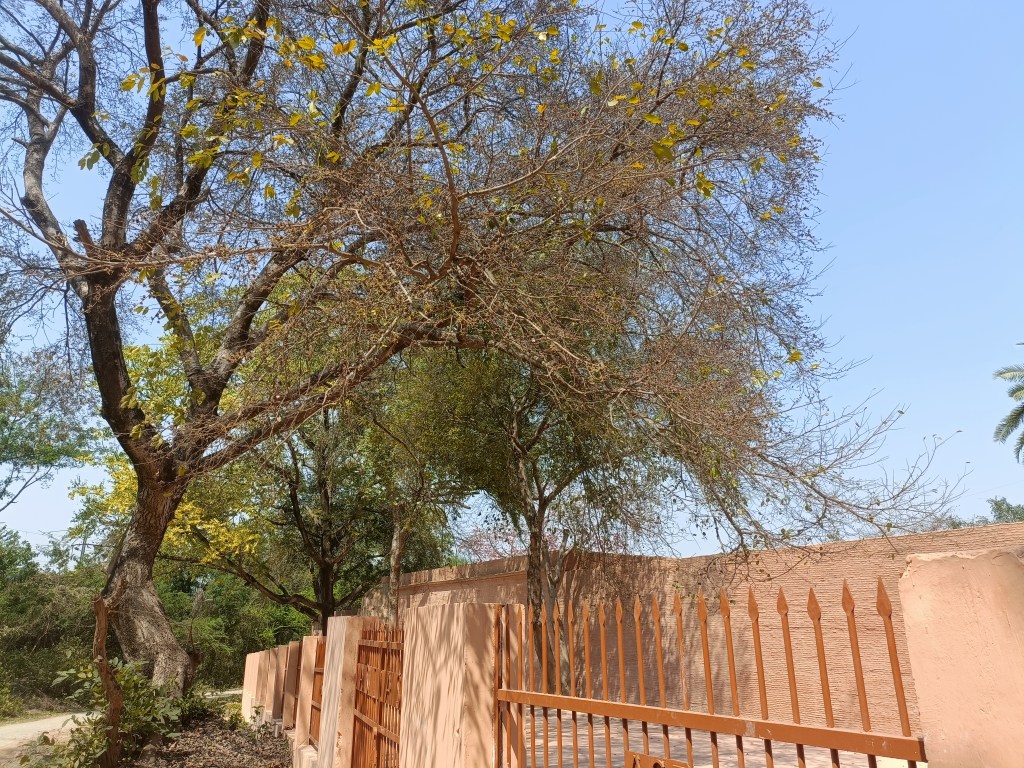
The boundary walls have a sturdy presence and are enclosed by arrow-shaped iron structures painted in pleasant brown. As one explores the interiors of the garden compound, little monoliths, corrugated outer flanks that look like barracks emerge, the exposed bricks red and pink in their sublimity of skin tones. A Y-shaped drain also flanks them. There is an aura of extraordinary peace all around. This isn’t meant to be a tourist spot. This is the one for aesthetes and true aficionados of history. The mind wanders and is arrested by trees whose branches are shaped like pitchforks.
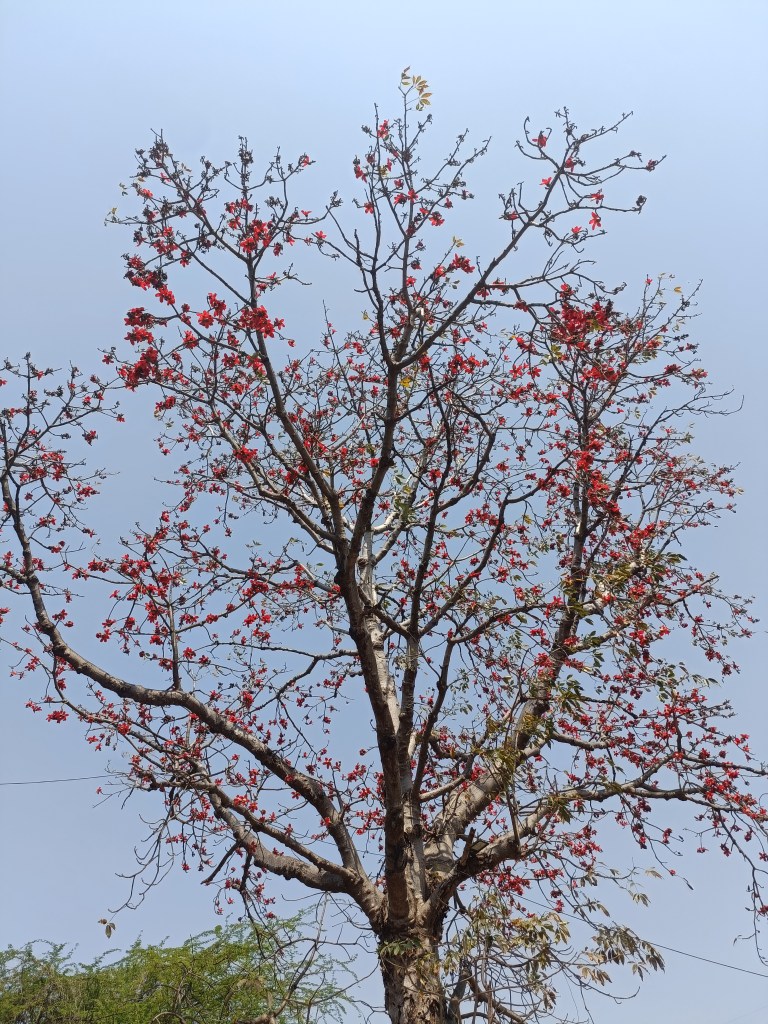
A dargah (miniature Sufi shrine) greets one at the outer end of the compound while a majestic gulmohar tree seems to appear like a tall fellow wearing red scarves. Arches and domes subsist in this sturdy network of walls.
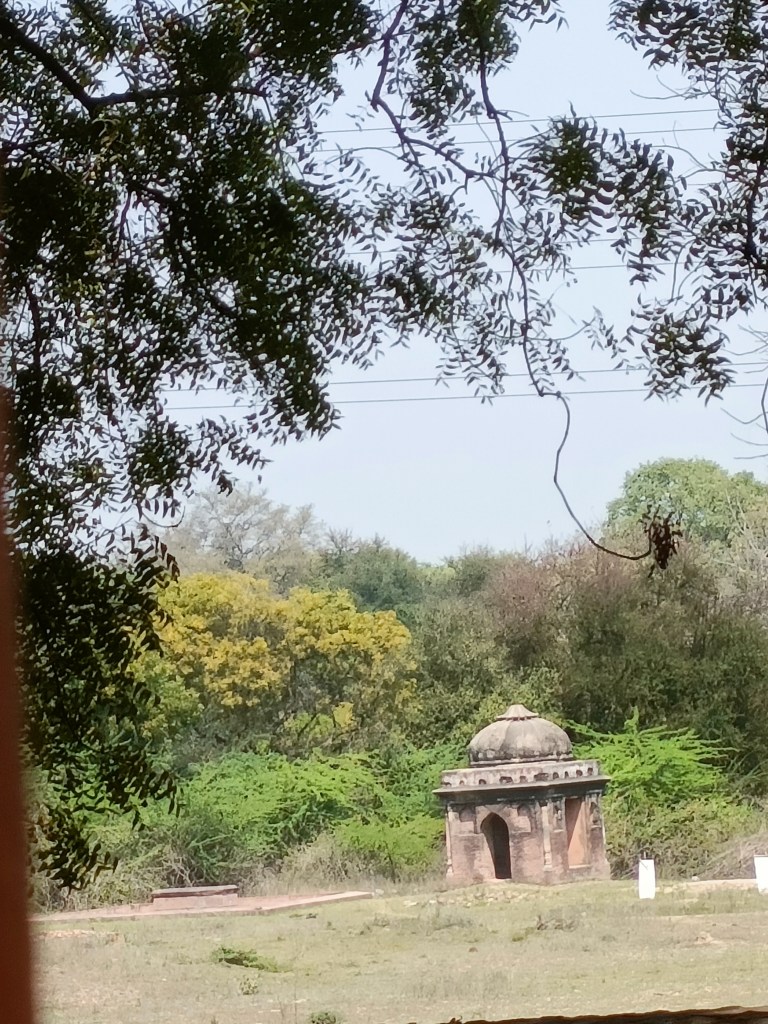
The saga of Vilayati Bagh is one of beauty but the starkness of its melancholy is evident in the cemeteries that lie in a little distance from the main gateway. They belong to fallen English soldiers Henry P. Garvey, Captain W. Helley Hutchinson and Sergeant S. Newman. These tombs are made in the image of a wide basin, crypts depicting that no one side can win or lose a war. Everybody has formidable stakes, and the dead don’t preach the gospel of victory or sombre defeat. Flanking these resting places are miniature pavilions with domes; they are surrounded by white rectangles made from cloth supported by twigs — sobering symbols of lives lost and the unpredictable designations of mortality.
Despite this unique mixture of melancholy and beauty, sobriety reigns. Of course, the obvious euphoria of discovery overrides every other emotion. Lucknow is a city that lives and breathes in such possibilities where a monument or elusive corner of its expanse can prompt an awakening for its discerning residents. Going further than the limitations imposed by acquired knowledge is always a source of deeper reckoning. This garden that houses nature and ghosts of mortality in its inner sanctum gives me another reason to keep my curiosity intact.
[1] Ghazi-ud-Din Haidar Shah (1769-1827), The first King of Oudh and the last Nawab Wazir of Oudh. He started a line of kingship which ended with the exile of Wajid Ali Shah(1822-1887).
[2] Traditional natural ingredients, often dyes or pastes from plants, used for coating buildings in Lucknow
Prithvijeet Sinha is an MPhil from the University of Lucknow, having launched his prolific writing career by self-publishing on the worldwide community Wattpad since 2015 and on his WordPress blog An Awadh Boy’s Panorama. Besides that, his works have been published in several journals and anthologies.
PLEASE NOTE: ARTICLES CAN ONLY BE REPRODUCED IN OTHER SITES WITH DUE ACKNOWLEDGEMENT TO BORDERLESS JOURNAL
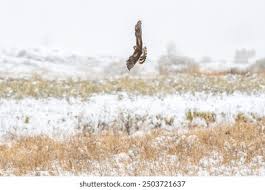
The sky is grey like the belly of a dead snake. The frail sun leans on a tree, as its leaves fall like children, rocking in their cradles to an old nursery rhyme, sentimentally, but icy rain arrives as a harbinger of winter snow, as an insouciant hawk circles in a display of hawkish pride. For this moment, he’s master of his world, but as the earth freezes, he’ll find himself lost in an overwhelming sky, baffled and weary, he, too, will also die.
WINTER AT EAST LAKE
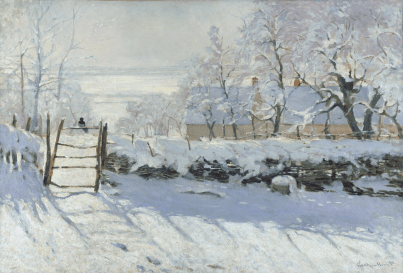
The flowers are buried under the frozen earth along with the residents on cemetery hill. Ancestors are there, who were dead at my birth. Like the flowers of October, this snow seems to have destroyed my will, as my roof groans, with the wind’s lethal blows. I’m snowbound. My fingers feel too cold to write, but the moon glides like a youthful skater, across a glass-like night, and I have to wonder if my dreary mood is because of winter, or because I suddenly find I’m growing old, and I’m unprepared for what I was never told.
Painting by Claud Monet (1840-1926). From Public Domain
George Freek’s poetry has recently appeared in The Ottawa Arts Review, Acumen, The Lake, The Whimsical Poet, Triggerfish and Torrid Literature.
PLEASE NOTE: ARTICLES CAN ONLY BE REPRODUCED IN OTHER SITES WITH DUE ACKNOWLEDGEMENT TO BORDERLESS JOURNAL
(This is in loving memory of my friend, Ethan Henkholen Doungel and my cousin, Nungsibi Sangdonjam, both of whom lost their lives to this conflict.)
The mist in those Imphal mornings clung to the world like a mother’s embrace, pooling in the hollows where night lingered longest. I can still feel it swirling around our bare ankles — mine pale as rice flour, Lalen’s golden like sun-warmed honey — as we raced through the dewy grass toward the river. Our bags would tangle in our haste as we stumbled over roots still drunk with midnight’s shadows. The damp hemp of our bags smelt of earth and childhood.
We’d arrive breathless at the water’s edge just as the first monsoon drops began to fall. Lalen would throw his head back, his laughter skipping across the river’s skin like the kingfishers we loved to chase, his tongue catching raindrops with the solemn concentration of a temple priest receiving blessings. I’d giggle until my stomach ached, until the cold water found its way down my collar in tickling rivulets that made me shriek. I remember how it fell in fat, warm drops as Lalen and I raced through the fields, our school bags abandoned by the roadside. We would catch fireflies as they buzzed over us…. We were fifteen that May of 2023, old enough to understand the tensions simmering around us, young enough to believe it wouldn’t touch us.
Our families were woven together. Every Sunday, Lalen’s father would arrive at our household carrying jars of wild honey, his laughter booming through our courtyard. My mother would press a steaming cup of tea into his hands while scolding him for leaving mud tracks on her freshly swept floors. Both our dads would sit on the porch sharing a single bottle of Yu (wine), and hamei (rice cakes). Their voices blending as they argued about football and nothing at all.
“To start off another season,” Ipa[1]would say, his eyes crinkling at the corners as he was cheering on for Northeast United, in the new ISL season kicking off.
“To the fools who can’t hold their liquor,”Lalen’s father would counter, making them both laugh until their shoulders shook.
As I was lost in these thoughts… a voice from behind broke the silence!
“Heyy, wait!”Lalen’s voice floated through the downpour as he slipped in the mud. I turned just in the nick of time just to see him crash into me, sending us both tumbling into the flooded field. The water was warm as blood against our skin.
That was the same evening, our fathers sat on the porch watching the news reports with grim faces. Two communities — the Kukis and Meiteis began protesting against each other. The first roadblocks appearing along the highways. Still, back home our father’s still shared their usual bottle of rice wine, their friendship stubborn as ever.
“Things will calm down,” Ipa said, his voice steady.
“This is all politics,” Lalen’s father agreed.
They were wrong.
By June, the valley smelled of burning. No one knows who attacked whom first. Maybe it was the Kuki villages in the hills — we’d wake to columns of smoke staining the morning sky. Then the retaliatory attacks began in Meitei neighbourhoods. The day they burned our school, Lalen and I stood on the ridge watching the flames consume the building of our school.
This was also the night, when our fathers had perhaps argued for the first time. The voices were loud:
“They’re burning our churches!” Lalen’s father shouted, his usual warmth gone.
“And your people are attacking our temples!” Ipa countered.
“They killed my neighbour last night,”Lalen whispered. His hands were shaking. “Said he was storing weapons.”
“My cousin disappeared at the protest yesterday,” I admitted.
We didn’t say anything besides this. The space between us had become a minefield.
The next morning, Lalen wasn’t waiting by our gate. His bicycle sat unused in their yard, its tires going flat with each passing day. People say his family moved back to Churachandpur. I did not think much of it then, but yes, I did miss him a lot.
But none of that mattered when the monsters came on August 3rd. This date I will never ever forget the date — Ima’s[2] birthday. She’d just pulled her pineapple cake from the oven, the sweet coconut scent wrapping around us like one of her hugs. Then the air turned sharp with kerosene.
Through our kitchen window, shadows moved wrong. Not the dancing light of lamps, but torch flames licking at night. Men — no, not men, shapes with black masks where faces should be. Their boots kicked over Ima’s potted marigolds as they came.
“Run to the back!” Ipa shouted as bullets zoomed through the window and exploded.
I remember the exact shade of orange the flames consumed my mother’s best silk phanek[3]. The sound Ipa made when the bullet found him — not a scream, just a soft “oh” of surprise. I ran until my lungs burned, until the screams faded behind me, until I collapsed in a drainage ditch with the taste of mud and blood in my mouth.
The Assam Rifles Refugee Camp at Moirang was a nightmare of flapping plastic tarps and wailing children. At night, I’d lie awake listening to the old women whispering about which family had been wiped out that day. When the news came about Lalen’s village, I didn’t cry. They said the militants had locked the doors before setting the houses ablaze. They said you could hear the screams from three kilometers away.
I turned sixteen in a makeshift tent, eating stale rice with fingers that still smelled of smoke. I wondered where Lalen would be now…
The day I saw him again was April 2024. Nearly more than a year since we’d last spoken. I was digging through the ruins of the market, searching for anything salvageable, when I felt eyes on me.
He stood between two gutted shops, taller than I remembered, his features hardened by hunger from what I could tell. Then something caught my eyes, and I could not believe it. The Kuki national army (KNA) armband on his sleeve was frayed at the edges. KNA is a prescribed terrorist outfit by the Government of India, and I never expected my best friend to wear their uniform… He is around the same age as me… The rifle in his hands looked too heavy, yet he carried it like an extension of himself.
“Wait … you…?” He called out and took my name. However, this time, my name sounded foreign in his mouth now, stripped of all the friendly warmth.
The jar of turmeric in my hands slipped, shattering at our feet. The yellow powder bloomed between us like a poisonous flower. “You’re alive.”
His knuckles whitened on the rifle. “No thanks to your people.”
The air smelled of rotting fruit and something worse beneath. A body, probably. There were always bodies now.
“They weren’t my people,” I whispered. “The men who killed my parents — your people killed my family. You are wearing the uniform of the people who killed Ipa and Ima…” I flinched as I could not express myself.
“Does it matter? What about what you all have done” His voice cracked. “Your cousin was in the mob that burned my sister alive. I saw his face.”
The words punched through me. I hadn’t known.
The rifle trembled as he raised it. I saw the exact moment his finger found the trigger — the way his breath hitched, the way his eyes flickered to the scar on my left wrist from when we’d both fallen out of the mango tree.
“I should,” he whispered. “For sis… For my parents.”
I didn’t close my eyes. “Then do it.” After all, what’s the point of living, when I do not have my family or even now my friend with me?
The seconds stretched. A drop of sweat traced the new scar along his temple. The rifle had slipped from his now trembling fingers like that of a dying man’s last breath hitting the dirt. The metallic clang as it fell, echoed through the ruined marketplace and the rubble of what was left, bouncing off bullet-riddled walls in a way that made my stomach twist.
His hand moved toward his pocket and my body had already reacted before my mind could catch up — a full-body flinch that sent pain shooting through my half-healed ribs. Every instinct screamed that he was reaching for another weapon, that this was some cruel trick. After everything we’d seen, after all the betrayals, how could I believe otherwise? But what he pulled out wasn’t a weapon.
A scrap of blue cloth, frayed at the edges. The Kangla emblem I’d clumsily stitched back in third grade — the symbol of kangleipak[4] — still visible beneath the stains of gunpowder and blood.
My breath caught. That stupid handkerchief. The one I’d given him when he scraped his knee falling off his bicycle. The one he’d pretended to lose when the boys teased him for keeping a girl’s gift.
“Don’t…” My voice cracked. “After everything… why would you still have this?”
His fingers trembled around the fabric. When he spoke, his words were barely audible over the distant gunfire.
“Because it was the last thing that ever smelled like home… And most importantly it reminded me of you…”
Then his other hand moved- too fast, too practiced-and suddenly I was staring down the barrel of his pistol. The standard-issue 9mm that people say were smuggled from Myanmar. The same weapon that had executed twelve Meitei civilians just last month.
I didn’t scream. The girl who would have screamed died the night I watched my parents being killed helplessly.
The shot never came.
Instead, the pistol’s muzzle tilted-just slightly-toward his own temple. His eyes locked onto mine one final time, and in them I saw the boy who used to share his tiffin with me under the Bonsum tree.
The explosion of gunpowder was deafening.
The shot echoed through the ruined market as Lalen collapsed. I caught him without thinking, his blood immediately warm against my chest. His lips moved against my ear, forming words lost to the ringing in my ears.
When the light left his eyes, I realised I was rocking him like a child. The handkerchief lay between us, with crimson everywhere.
The fireflies had never returned to Imphal valley after that. The monsoons still come, but the rain tastes different now — metallic, like blood. Some nights I swear I can hear our fathers laughing on some distant porch, their voices carried by a wind that no longer blows here.
What does it take to make a child point a gun to his best friend's head?
What does it take for neighbours to douse each other in gasoline?
What does it take for a land to forget how to love its own?
Most importantly, where is my country? Did everyone forget Manipur existed?

This is Manipur.
This is what happens when hate wins.
These are the children we sacrificed.
Till then its silence, just pure silence.
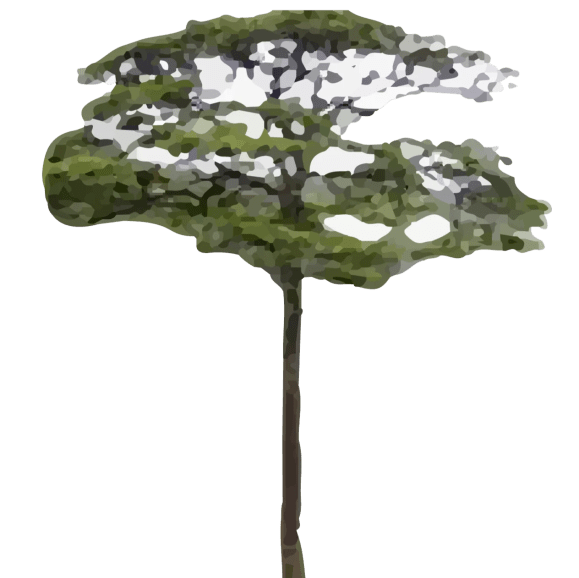
Bonsum tree, the state tree of Manipur. From Public Domain.
This is a work of fiction, but the horrors it describes are all too real. The violence in Manipur has torn apart communities that once lived as neighbours, friends, and family. What was unthinkable years ago has become commonplace- children recruited into militancy, villages burned to the ground, and lifelong bonds shattered within just months.
I did not write this story to take sides or point fingers at who is to blame. War has no heroes- only victims. The Kuki and Meitei people have both suffered unimaginable loss. Friends have become enemies, and children have been robbed of their futures. I wrote this therefore, not to sensationalise, but to mourn. Most importantly I hope that this would force us to confront what happens when hatred is allowed to fester. To remember that behind every headline from Manipur, there are real people-mothers, fathers, children-whose lives have been destroyed.
Leishilembi Terem is a student from Manipur with a quiet love for growing things– whether nurturing plants in her garden or stories in her notebook. When she isn’t studying plant biology or digging her hands into soil, she writes about the world she sees: the fragile beauty of her homeland, Kangleipak, the political storms that shake it, and the ordinary people caught between.
.
PLEASE NOTE: ARTICLES CAN ONLY BE REPRODUCED IN OTHER SITES WITH DUE ACKNOWLEDGEMENT TO BORDERLESS JOURNAL.
I got distracted and pressed delete by mistake --
a poem I had laboured over for more than ten days, gone.

I try to retrace it, like under hypnosis,
but only shattered words lie scattered in my mind.

I scramble to piece the fragments together,
but the lines in between are beyond recovery.

A poem has no blueprint,
just as life offers no formula to fall back on.

One poem, broken to bits.
One thought, fading into the distance.
Ihlwha Choi is a South Korean poet. He has published multiple poetry collections, such as Until the Time When Our Love will Flourish, The Color of Time, His Song and The Last Rehearsal.
.
PLEASE NOTE: ARTICLES CAN ONLY BE REPRODUCED IN OTHER SITES WITH DUE ACKNOWLEDGEMENT TO BORDERLESS JOURNAL.
Such a nice, perhaps one-of-a-kind, planet. Spacious. Water, oxygen, fertile earth. Let’s simply name it after what it is. Look at that waterfall, taste it, take a cold shower. You wouldn’t want to be anyone or anywhere else. Build shelter, pick fruit, grow food then share it with neighbours, invent language so you can compete with birds that make poems and songs to express the wonder of it all and praise Mother Nature and their luck for having survived arrival. You have never seen anywhere else except this generous plain but, surely, this must be a paradise without one flaw.
Allan Lake, originally from Canada, has lived in Saskatoon, Cape Breton Island, Ibiza, Tasmania, and Melbourne, Australia. His latest chapbook of poems, My Photos of Sicily, was published by Ginninderra Press. Such journals as The Hong Kong Review, Tokyo Poetry Journal, New Philosopher and The Fabians Review have published his poems.
.
PLEASE NOTE: ARTICLES CAN ONLY BE REPRODUCED IN OTHER SITES WITH DUE ACKNOWLEDGEMENT TO BORDERLESS JOURNAL
The nomenclature ‘historical fiction’ is sometimes quite confusing for the reader who keeps on wondering how much of the novel is real history and how much of it is the figment of the author’s imagination. Beginning in 1686, and set in the later part of Aurangzeb’s reign, this work of historical fiction named Job Charnock and the Potter’s Boy charts the turbulent history of an insignificant hutment in the inhospitable swamps of Sutanati in Bengal that becomes one man’s unyielding obsession. This man is no other than Job Charnock whom we all claim to be the original founder of the city of Calcutta.
Bengal during that period was the richest subah of the Mughal Empire and the centre of trade. The English were granted a toehold in Hugli when Shah Jahan ousted the Portuguese in 1632 and made it a royal port. Since then, they had been worrying Shaista Khan, the current nawab at Dhaka, to give them permission to erect a fort at the mouth of the river but the wily old nawab did not agree and dismissed their petitions repeatedly. This was a period of extreme flux when the European powers like the Dutch, the Danes, the French and the English were all playing out age-old rivalries in new battlefields, aided and abetted by individual interests and local conflicts. This is when Sir Joshua Child was at the helm of East India Company’s affairs in London throughout the 1680s and his plans were brought to fruition in faraway Bengal by William Hedges and then Job Charnock.
Of the earliest champions of the British Empire, none was as fanatic or single-minded as Job Charnock. He evinced no wish for private trade or personal gain, and unlike many of his contemporaries who returned to England as wealthy ‘nabobs’, he lived and died here as a man of modest means. His life’s work was only to identify the most strategic location on the river and secure it for his masters.
Sutanati, with its natural defences and proximity to the sea, appealed to his native shrewdness and he applied himself in relentless pursuit. The story of this novel begins in Hugli in 1686, on the first day of the monsoon, when a poor potter, Gobardhan, and his wife, Indu, find it difficult to make ends meet and their life is centred around their young son Jadu. In the guise of Gobardhan relating bedtime stories to his son, the novelist very tactfully gives us the earlier historical background of the place. He tells us how during his great-great-grandfather’s time, two hundred years ago, Saptagram was the greatest city in the country, the greatest port in the Mughal Empire where ships and boats came from all over the world. Later the Portuguese bought land and built a fort at Golghat, but the Mughals grew jealous of them and finally attacked Hugli and ousted them from there.
Coming down to the present time, Jadu is twelve years old when his parents are burnt to death in front of his eyes as they were innocent bystanders in the struggle for power between the East India Company and the Nawab of Bengal. By a quirk of fate, Jadu is rescued by his father’s Mussalman friend, Ilyas, who is really protective of the boy and acts as a substitute father figure. But soon Ilyas leaves for Dhaka on a diplomatic mission and thrusts the young boy in the hands of a trusted Portuguese sailor and captain called D’ Mello. Since then, Jadu is drawn into the whirlwind of events that follow. He spends a lot of time on the river, and from December 1686 to February 1687, stays at Sutanati. Then, he moves from Sutanati to Hijli, and back to Sutanati up to March 1689, till at last he stands face to face with the architect of his misfortune — Job Charnock himself.
The rest of the tale hovers around how Jadu becomes one of his most trusted aides and though Charnock’s grand dreams did not come to fruition during his lifetime. When he died in 1693, the place was still a clutch of mud and timber dwellings still awaiting the nawab’s parwana[1] to build and fortify the new settlement. The English finally managed to acquire the zamindari rights to Sutanati, Kolkata and Gobindopur in November 1698, when the area had become quite lucrative by then.
In exploring the how, but more importantly the reason for this coming into being, the story then speaks of the motivations of the great and good and the helplessness of the not so great, all of whom in their own way contributed little nuggets of history to the city’s birth. The novel is also filled with common folk, both local natives as well as foreigners, who watch unheeded while destinies are shaped by the whims of rulers. Interwoven with verifiable historical events and many notable characters from history, the novel therefore is above all primarily the story of an innocent boy Jadu who navigates the different circumstances he is thrust in and emerges victorious and hopeful in the end. As the narrative continues, he also moves from innocence to maturity. Through his eyes we are given to read about a wide range of characters who form the general backdrop of the story.
In the ‘Author’s Note’ at the end of the novel, Madhurima Vidyarthi categorically states that this is not a history book, but she has strung together imaginary events over a skeleton of fact, based on the sum of information available. She states, “While trying to adhere to accepted chronology, the temptation to exercise creative license is often too great to be overcome”. The most significant character in this perspective is Job Charnock’s wife, who has been the subject of much research and her treatment in the Company records is typical of the time. But though a lot of information is available about Charnock’s daughters repeatedly in letters, Company documents, baptismal registers, and headstones, their mother is conspicuous by her absence. This is where the author applies her ‘creative license’ and makes Mrs. Charnock’s interactions with Jadu reveal his coming of age, and with her death, he symbolically reaches manhood. Vidyarthi also clarifies that several characters in the novel like Jadu, his parents, Ilyas, Manuel, Madhu kaka and Thomas Woods are also imaginary, and they represent the nameless, faceless masses during that period and therefore provide a ‘slice of life’ that make up history. All in all, this deft mingling of fact and fiction makes this almost 400-page novel a page-turner, ready to be devoured as fast as possible.
O, once upon a mind in a dinner-strangled sea, Where pans clatter in the deep and the starving dare to dream, The rich feast on echoes of silent pleas.
In the cruel ballet of the haves and have-nots, we see The absurd dance of fortune's cruel extreme, O, once upon a mind in a dinner-strangled sea.
The banquet hall roars with gilded glee, While outside, hollow eyes of the hungry gleam, The rich feast on echoes of silent pleas.
"Feed us," cry the poor, "from tyranny free," But the wealthy's ears are stuffed with the cream, O, once upon a mind in a dinner-strangled sea.
The tables turn, yet no one flees, The starving serve, their spirits teem, The rich feast on echoes of silent pleas.
So dare the starving feed the rich? A twisted decree, In this dark, absurdist, cruel scheme, O, once upon a mind in a dinner-strangled sea, The rich feast on echoes of silent pleas.
O, WHEN ME AND MY DEAD LOVER
O, when me and my dead lover come glowering from mirrors, In the hush of night, our whispers dance in a spectral swell, Perhaps a keen dream will make us well.
Through the glass, our silent ballet conjures fears, Yet in this madcap song, our hearts rebel, O, when me and my dead lover come glowering from mirrors.
The world sleeps, but in our realm, time nears, To the rhythm of eternity, our souls compel, Perhaps a keen dream will make us well.
In the silvered pane, the past appears, And we waltz in the moon's soft pastel, O, when me and my dead lover come glowering from mirrors.
With every gaze, the boundary clears, In dreams, the living and the lost meld, Perhaps a keen dream will make us well.
So let the morning wait, as dawn nears, For in this mirror's depth, our love we'll tell, O, when me and my dead lover come glowering from mirrors, Perhaps a keen dream will make us well.
DO NOT GO ASIDE THE DARK TILL DEATH DAWNS ON MADMEN
Do not go aside the dark till death dawns on madmen, Where shadows weave the tales of silent might. Hold fast to dreams, where day's bright beams are spavine.
The gentle hum of life, a soft-spun cadence, Whispers through the void, a beacon's light. Do not go aside the dark till death dawns on madmen.
In twilight's grasp, where thoughts of lore are laden, Seek not the comfort of the fleeing night. Hold fast to dreams, where day's bright beams are spavine.
Through tempest's roar and peace the heart does harden, Stand firm against the tide, with all your might. Do not go aside the dark till death dawns on madmen.
With every dusk, let not your spirit sadden, For morrow's morn will chase the starless plight. Hold fast to dreams, where day's bright beams are spavine.
So here, my friend, as fates and time do bargain, Embrace the dusk, till dawn's forgiving light. Do not go aside the dark till death dawns on madmen, Hold fast to dreams, where day's bright beams are spavine.
Jim Bellamy was born in a storm in 1972. He studied hard and sat entrance exams for Oxford University. Jim has a fine frenzy for poetry and has written in excess of 22,000 poems. Jim adores the art of poetry. He lives for prosody.
.
PLEASE NOTE: ARTICLES CAN ONLY BE REPRODUCED IN OTHER SITES WITH DUE ACKNOWLEDGEMENT TO BORDERLESS JOURNAL
Let's just forget that you and I exist!
Let's just assume that you're an echo in the vales
and I'm the sky.
The echo cannot touch me,
but it gently reaches me, soothing my barren soul,
and in return,
I reach you through water droplets,
stopping by your side,
kissing you,
gliding down the vales…

We shall meet again, my love;
when mellifluous notes echo in the vales on starry nights,
you will travel to reach me
through whistles
and melodies.
Mandavi Choudhary is a poet at heart and professor by choice. Teaching English at Satyawati College (Evening), DU, she brews coffee, collects jewels, and lives where poetry begins.
PLEASE NOTE: ARTICLES CAN ONLY BE REPRODUCED IN OTHER SITES WITH DUE ACKNOWLEDGEMENT TO BORDERLESS JOURNAL
I live close by to the Brighton Jetty. Going for a walk there gives me my daily dose of sunshine and smiling faces, soothing me when I feel lonely. Sometimes, I’ve gone and bought a lemon sorbet or sausage roll, eating it whilst seated on a bench overlooking the jetty. On summery days, families play in the shade under the jetty, making memories that will last a lifetime. At sunset, you can see couples strolling hand-in-hand, stopping only to snap selfies against an impossibly photogenic crimson sky. From dawn till dusk however, when you walk upon the jetty, you’ll see fishermen, and the occasional fisherwoman. They have set up camp with foldable chairs and boxes of fishing gear. They sit slumped with their nose in their phones, waiting hours for a bite. Dismembered crab claws and fish guts add to the stained cement, making for a grotesque and pungent scene of nautical carnage.
Many years ago, if you walked out to the end of the jetty on any given day, you may have seen an unusual sight, a trolley with two blanket-covered chihuahuas snuggled in it. They belonged to an old man who sat and fished nearly every day. The tiny dogs were swathed in raggedy blankets and nestled within a trolley. One had a stained camo baseball cap on while the other had a beanie. They were equipped with tiny life vests, perhaps on the off chance that they decided to stumble into the sea. Instead, they sat shivering in the ocean breeze, staring with bleary eyes far out across the sea. Their wise pink eyes must have seen far beyond space-time.
Jetty Dog by Vela Noble
I had been a teenage artist with my heart set on an art school in California at the time. I plopped down in my baggy jeans on the fish-stained concrete and sketched the dogs with a pen. My agenda had been that acceptance into the school required a portfolio of artworks all drawn from life. Noticing my gaze, the old man hobbled proudly over to me and showed me an oily newspaper clipping in his wallet.
‘Look, my dogs ended up in the newspaper!”
Other Adelaidians had obviously also thought this scene was charming and worthy of being remembered. For simply sitting there in the salty air, the two dogs and their bristly bearded owner seemed to have become as much a part of the jetty itself as its barnacled steel beams. I visited the old man and his dogs a few afternoons while I was preparing a portfolio for art school, and then I was gone. Overseas to Los Angeles and other big cities and, for the longest time, I put my memories of little old Adelaide behind me.
This all happened a long time ago, around a decade to be precise. Fate had pulled me back to my hometown and back to my childhood home. Sometimes, when I stroll in the sunshine down to the jetty and sit there slurping my lemon sorbet, I almost expect to see that elderly owner with his two chihuahuas, perched in their rightful spot at the shaded end of the jetty. Instead, the newer generations of fishermen have taken over, more concerned with TikTok reels than fishing ones. I would love to know what happened to that old man and his two chihuahuas.
Vela Noble is a student at Adelaide University currently finishing her BA degree majoring in Creative Writing and Japanese Studies.
.
PLEASE NOTE: ARTICLES CAN ONLY BE REPRODUCED IN OTHER SITES WITH DUE ACKNOWLEDGEMENT TO BORDERLESS JOURNAL





 Borderless