There’s a kind of man who doesn’t need to announce his presence. You don’t see him on podiums, and his name rarely appears in headlines. He won’t interrupt a conversation, let alone command a crowd. And yet, if you were to trace the quiet veins of compassion that pulse through a place, you’d likely find him at their heart.
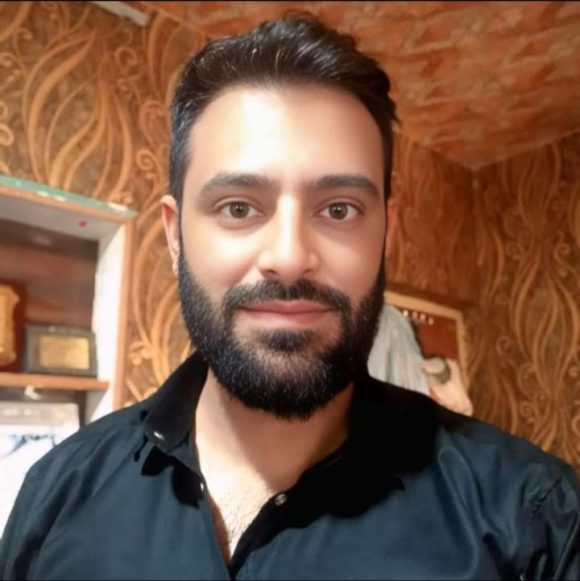
In Pulwama, that man is Gamgeen Majeed.
He doesn’t wear a badge. He doesn’t quote speeches. And yet, when someone needs a ride to the hospital, when a blood bank sends out a late-night request, or when a neighbour needs someone to listen as he’s already on his way. He doesn’t do it because he must. He does it because, for him, there is no other way.
In a time when kindness is often curated and shared online, Gamgeen’s way of living feels rare. It’s a quiet, unadvertised generosity. A way of being that seeks no witness. It is the opposite of performance as it is presence.
Gamgeen Majeed is from Pingalgam, a modest village in South Kashmir. If you ever pass through, you might notice the walnut trees, or the scent of burning wood curling up from small homes. You might see the narrow road that winds quietly through the landscape, lined with aging willows and old stories.
It’s not the kind of place you read about in books. But it’s the kind of place where lives like his are made humble, rooted, unwavering.
Gamgeen has spent decades doing what many people only dream of: living in service to others. He’s never been part of an NGO. He has no titles. There are no newspaper features with his name in bold. And yet, people remember him. Not for what he owns or says, but for the space he holds in the lives of others.
He has mopped hospital floors after storms, held hands in silence when words would only fail, and stood vigil in hospital corridors while doctors worked inside. His acts are not scripted. They are not fuelled by ambition. They arise, quietly and surely, like spring after a hard winter.
Perhaps the only visible trail of his quiet mission lies in the numbers: 207 pints of blood donated over the course of his lifetime. That number is staggering but not just for what it means physiologically, but for what it says about the man behind it.
But even numbers fail to tell the full story. Gamgeen didn’t walk into hospitals only when it was convenient. He answered calls in the middle of the night. He trekked in snow to reach clinics. He gave blood before breakfast. He often waited in hospital lobbies without being asked — just in case someone might need him.
He once said, softly and without ceremony:
“My blood is the least I can give. If it keeps someone breathing, that’s enough reward for me.”
There’s no fundraising banner that can capture that kind of thinking. No award can quite do it justice. Because his belief isn’t in acts of charity. It’s in human continuity — in being part of the thread that keeps another person alive, even if just barely.
From LD Hospital in Srinagar to the dust-covered wards of small rural clinics, Gamgeen’s blood has likely flowed through hundreds of lives. Children. Elders. Strangers. People he never met and never will. That’s the thing about quiet heroes: they don’t trace their impact. They simply live it.
It would be easy to call Gamgeen a saint or a hero. But doing so might miss the point. What makes his story remarkable is not grand achievement but his belief in small, repeatable, often unseen acts of goodness.
He visits patients he doesn’t know. He buys fruit for old men sitting alone in hospital lawns. He once stood for hours outside a labour ward because a nurse had mentioned they might need help if a donor didn’t show up. No one called him. He just showed up anyway.
There’s a term in philosophy — “ethics of care.” It speaks to a form of moral life cantered not on rules, but on relationships. It’s about showing up. Again, and again. Even when no one’s watching. Even when no one says thank you.
You might wonder where this kind of spirit comes from. Some say it’s upbringing. Others say it’s temperament. Maybe it’s both. But perhaps it’s also born from quiet observation from watching elders serve without speech, or mothers feed neighbours before eating themselves.
In the old ways of village life, compassion wasn’t taught. It was modelled. It was lived. You saw it when your uncle lent a hand to fix someone’s roof. You saw it when your grandmother lit an extra oil lamp — not for herself, but for the family next door.
It’s tempting to imagine that service comes only in certain shapes: doctors, social workers, teachers. But Gamgeen reminds us that you don’t need a role to make a difference. You don’t need an organization to help someone. You only need willingness and the courage to act.
Over the years, he’s become a sort of myth in the region — not because of anything he’s done to earn it, but precisely because he hasn’t tried to. His story spreads in whispers. A nurse tells a new recruit. A mother tells her son. A shopkeeper shakes his head in admiration when recounting how Gamgeen showed up one snowy evening, carrying warm tea and blankets for a patient’s family stuck outside.
He doesn’t knock. He doesn’t wait for praise. He just walks in, offers help, and leaves. Sometimes without even saying goodbye.
In a world where we’re often overwhelmed by scale — global problems such as climate change, mental health issues, deforestation — a man like Gamgeen is a kind of anchor. He reminds us that you don’t have to change the world to matter. You only have to show up for the person in front of you.
He reminds us that kindness doesn’t need to be viral. It needs to be real.
He reminds us that integrity doesn’t require recognition. It only requires consistency.
And perhaps, most of all, he reminds us that the greatest legacies are not built through declarations but through deeds.
We spend so much of our lives chasing light — chasing visibility, acknowledgment, a moment in the sun. But maybe the real task is not to find the light, but to let it fall where it belongs.
Because in every village, in every small place tucked away from the maps, there lives someone like him — someone who teaches, simply by living, showing that kindness doesn’t need permission.
It only needs practice.
.
Gowher Bhat is an author, columnist, freelance journalist, book reviewer, and educator from Kashmir. His work explores the human condition with depth and sincerity. He believes in the quiet power of words to inspire change and compassion.
.
PLEASE NOTE: ARTICLES CAN ONLY BE REPRODUCED IN OTHER SITES WITH DUE ACKNOWLEDGEMENT TO BORDERLESS JOURNAL
As the sea breeze brushed through my eyes, cleansing my nostrils managing to whisper into my ears, I smiled in an exulted exuberance. It had been a journey of colours from blue to green to violet and so many more.
"How much do you know me?"
" Well, for hundreds of years... "
" How do you say this?"
portals of mellowed concentric reconstructions
This journey has hopes of culminating into the next one. I wait. Recluse.
DEMISE
I write about you. A story with oxymorons of ecstatic numbness peeps into my lost longing. I die again to live with your happiness.
demise -- rekindled hopes dance to breath
I sustain to be the carcass of your pains.
DESTINY
I looked around in dismay. A ditch of my own catastrophic recklessness.
Did I hear something?
No, I didn't... Maybe, I did.
Did I hear him call "Radha"?
They say, I fell for a dark God. They also say, that he loved me dearly too.
destiny -- pickled in greasy detriments blissful pain
He belongs to all. I belong to Him.
BURNT ICE
Yamuna is puritan and so am I. She's polluted and so am I. But how's it so, that, she keeps on flowing and I struggle to move? And, moreover, she's the lifeline of Vrindavan, while, I am a piece of destitution, a sympathy for some, a joke for others.
Why?
And you say, You're God. You are a liar, a debauch.
ripples
flashed purges of divine
mouth reincarnates
I know, and you know too... Molten snow is Yamuna --
Burnt ice is Radhika.
PRONOUNCED
It was an afternoon of awkwardness and the rains called our shots. It was that stubborn stone, with imprints of holding hands. Your Radhika has blocked herself now.
return righteous scoops of time wait
You lived to love again, I was pronounced death -- till I die.
Rajorshi Patranabis is a multilingual poet, editor, translator, reviewer and nonfiction essayist dabbling into different forms of poetry. He has this knack of writing in fewer words with a lot for the readers to ponder about. A Wiccan by philosophy, he has eleven collections of poetry (ten in English and one in Bengali) and four collections of translations. He is also credited with the first ever collection of Gogyoshi titled Checklist Anomaly by a single author in English. Gossips of our Surrogate Story is his collection of Wiccan poetry published in January 2025.
.
PLEASE NOTE: ARTICLES CAN ONLY BE REPRODUCED IN OTHER SITES WITH DUE ACKNOWLEDGEMENT TO BORDERLESS JOURNAL
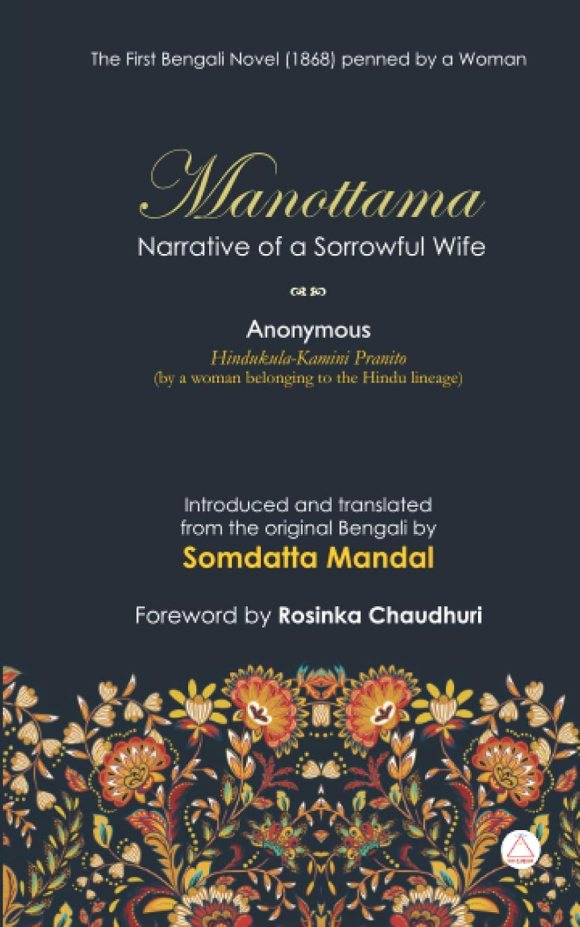
The translation published by Shambhabi The Third Eye in 2022
Published in 1868, Manottoma: Dukkhini Sati Charit (Manottama: Narrative of a Sorrowful Wife) the first novel written by an unnamed Bengali woman identifying herself as ‘A Woman belonging to the Hindu Lineage’, which is technically not a pseudonym, has been translated by Professor Somdatta Mandal and published recently in 2022. Somehow evading the attention of literary historians, the text, or any detailed information about it was unavailable for a long time till it was unearthed by a researcher in London only in 2010. In the foreword to the translated novel, Prof Rosinka Chaudhuri points out that the year 1868 was only a decade after the introduction of the main genres of modern Bengali literature: the modern novel, poetry and drama. This was a time of revision and reinvention, of recasting selves and literary forms and genres.
Manottama narrates the sufferings of a educated and long-suffering wife who labours under the petty punishments meted out to her by her uneducated husband, depicting the conflict between patriarchal expectations and prescriptions and women’s education and presumably, agency. The eponymous novel depicts a situation where Manottama, an educated woman, is married to an uneducated husband. Because of the latter’s profligate ways, she is subjected to penury and untold hardships, which she seems to accept without demur.
The narrator of Manottama claims it’s a ‘history’. Cast in a dialogic format as a conversation between two friends, Jadhav and Madhav, (a common format in its time) the novel, in one interpretation, tells us about the pitfalls of female education in the nineteenth century, a period that also saw the emancipation of Bengali women through education in a significant way. Written in the traditional Indian Puranic style of narration, with plenty of sub-plots and digressions and without conforming to the western dictates of unity of time, place, and action, it provides a domestic picture where an educated wife has to compromise with the activities and worldview of an uneducated husband. At one level of interpretation, it seems to be an attack on patriarchy. As an early narrative by an anonymous woman, the work needs — and in a way, demands — greater attention now after more than a century of neglect in order to reinterpret and reconfigure its didacticism and question its meek acceptance of status quo.
Can we accord this work the status of a novel? Also is there a way in which we can unpack the didacticism of the text and pave the way to a subversive reading of patriarchies?
In showcasing a woman who seems to meekly accept her lot in life without complaint, the intention purportedly was to show the benefits of education and how an educated woman navigates her destiny. There are many instances of rampant social injustices in the text. The husband’s profligacy, his marrying a second time and frittering away family fortunes — all these are accepted by the protagonist, Manottama, in a spirit of apparent equanimity. She seems to accept the social injustices meted out to her meekly, without demur or protest. She obeys and serves her father during his visit and continues to perform her conjugal and domestic duties vis-a-vis her undeserving husband. If anything, she continues in her endeavour to instruct her children and the children of the quarrelsome second wife. No complaint against marital injustices pass her lips, even when her father expresses concern over the indigent condition of the household. Her behaviour is ideal in every respect and she is upheld as a paragon.
“Manottama” in Bangla can be translated into someone with a superior mind or soul and the protagonist named as such fits the bill. She keeps quiet about her individual woes while trying to ensure the well-being of the whole family.
The novel shows the impact of the many instruction manuals and advice/conduct books that were plentifully available at the time and herein lies part of the problem of the book as a novel. For one, there is no attempt to depict the inner thoughts of the protagonist. She at times seems like a cardboard cutout, a compendium of all the virtues extolled by patriarchs and paternalists in 19th century Bengal and India. She is a stereotype and seems almost a parodic version of the ’good woman’ who sacrifices self-interest at all times. Whether this narrative qualifies/succeeds as a novel is something which has to be decided by the reader .She embodies the ‘patibrata’ or the devoted wife, a kind of woman who helps in the salvation of the husband and nation. To quote a writer at the end of the 19th century:
The Patibrata wife is the road to liberty and mobility of man. If the women of India follow the footsteps of Sita and Savitri, then this fallen country will be the blessed land again. (Chandranath Basu, Bagchi 85)
The discovery of this text forms a story by itself and is a precious nugget as it was located in the British library relatively recently, in 2010. The significance of this text is also that it is a woman’s voice addressing other women, advising them with a strong didactic intent. As readers, we can only speculate that the writer intends this homily as a form of advocacy to women that they should not abandon their traditions and customs, but use their education in order to better themselves, and devote themselves to serving their husbands.
The narrative in a dialogic style seems like an extended conversation or debate between a proponent of tradition and a spokesperson and modernity. Some of the conversation between Nilabrata, the irresponsible husband, and Manottama, echo aspects of this debate. According to Nilabrata, who is rendered somewhat insecure by his educated wife and voices the biases against women’s education, only foolish men will send their daughters to school in order to train their daughters as prostitutes. “Educating women and showing them the path to go astray are similar,” he asserts.
One is reminded of Bankim Chandra Chatterjee’s (1838-1894) essay on Prachina o Nobina or “The Traditional Woman and the New Woman”(Woman Old and New, 1879). The debate on whether to educate women were along the contours of conservatism versus progressivism, albeit with shades and finer nuances.We can suppose that the author is in conversation with a conservative perspective which argues against women’s education and where she attempts to demonstrate that tradition and women’s education are not mutually opposed or divergent.
Bengali literature offers many examples of women who were poised on the brink of the paradoxical conundrum of modernity, which made them embrace education and reform without abandoning traditional values. This attempt to recast and position the ‘new’ Indian woman was a pre-emptive gesture to counter the accusation of Westernization and deracination levelled against the reformist attempts to redefine gender roles and relations in late 19th century India.
While one can grasp the discursive aspect of the text, the lack of what we understand or perceive as a natural human response on Manottama’s part to any of her husband’s actions — misdemeanours, follies or vices — leave us feeling deeply dissatisfied. If the novel as a form shows the interactions of the individual with other individuals or with society, the lack of any credible response from Manottama casts her in the mould of a ‘patibrata’ woman but stifles the text as a novel.
However, if we keep in mind that many great writers novelists from Bengal and elsewhere — Bankim Chandra Chatterjee, Rabindranath Tagore and Sarat Chandra Chattopadhayay— have often used the novel as vehicles of ideas, which generate debate both within the world of the novel and in a larger socio-historical context, this novel can surely be counted as a precursor and a prototype of the discursive/social discussion novel in Bengali. As for the other question raised earlier about the possibility of a subversive reading, Manottama by showing the evils besetting patriarchal systems, manages to show the untenable nature of the same and the fact that men like Nilabrata, for all their bravado, are liable to collapse, unless rescued and sustained by sensible wives. In that sense, it hold a lesson for men to marry wisely and recognise the true worth of educated wives, without getting lured either by false friends or duplicitous women.
The book has received a fresh lease of life in the hands of a competent translator and commentator. The foreword similarly draws out the significance of the narrative, placing it in the context of its times and the larger context of Bengali literature. An exploration of its discursive trajectories and varying cartographies adds to the joys of discovering and reading the narrative.
.
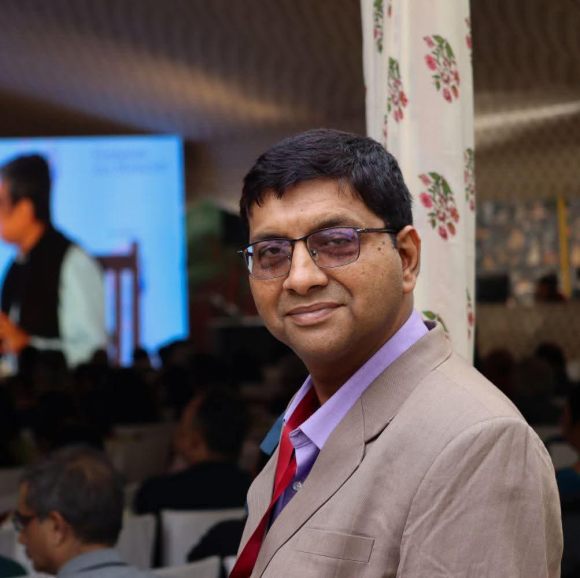
Meenakshi Malhotrais a Professor of English Literature at Hansraj College, University of Delhi, and has been involved in teaching and curriculum development in several universities. She has edited two books on Women and Lifewriting, Representing the Self and Claiming the I, in addition to numerous published articles on gender, literature and feminist theory.
.
PLEASE NOTE: ARTICLES CAN ONLY BE REPRODUCED IN OTHER SITES WITH DUE ACKNOWLEDGEMENT TO BORDERLESS JOURNAL
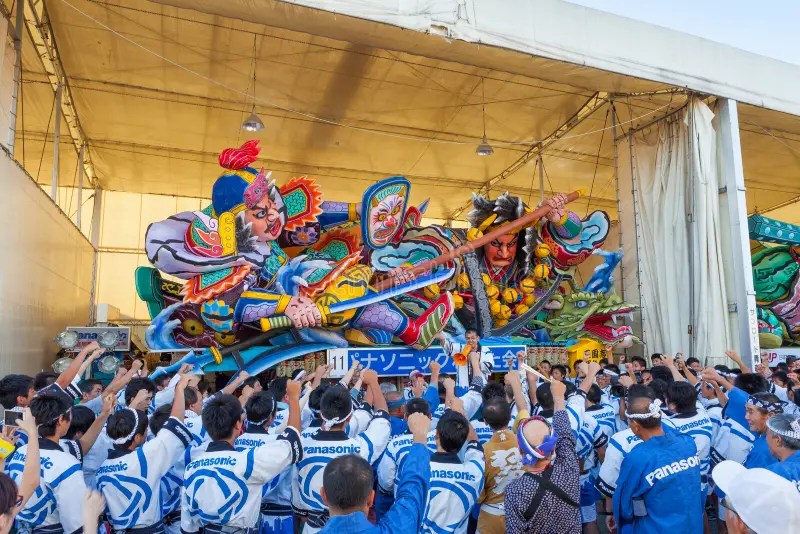
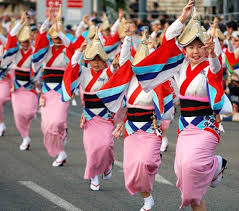
Suzanne Kamata shares a story from 1999, set during Obon or the Festival of Bon, a Japanese Buddhist custom that honors the spirits of one’s ancestors.
Obon Festival. From Public Domain
My husband is dancing.
The name of the dance is “Awa Odori,” “Awa” being the ancient name for Tokushima, where we live now, and “odori” being Japanese for “dance.” Its origins are unclear. Some say fertility rites, others claim it is a celebration of a good harvest.
My husband is thinking about none of these things as he dances with his friends of fifteen years. No doubt he is drunk on beer and fellow feeling, absorbed in the revelry of this annual festival.
I am at home alone in our apartment.
I could have gone, too, but I declined by way of protest. I’m demonstrating because while I am welcome to, indeed expected to, celebrate Japanese holidays, my own country’s holidays go ignored. When I’d wanted to do something special a month ago in observance of the Fourth of July, Jun had refused. “This is Japan,” he’d said, as if that would explain everything.
When I married Jun, I’d had a concept of international marriage as the combining of two cultures, not the elimination of one. True, I’d expected compromises, but on both sides, not just mine.
This time, however, I’m not giving in. I’m not going to budge. I didn’t go with him to visit his ancestors’ graves, and I am not going to don a cotton yukata[1] and dance in the streets to flute and drum. If he won’t see me halfway on Thanksgiving, Christmas, and Independence Day, then I’ll just sit this one out.
.
During Obon, the whole family usually gathers at some point. I’ll admit that I did go along with Jun to his parents’ house where his sister Yukiko and her family, his aunts and uncles and cousins, and his grandmother were assembled.
Uncle Takahiro said, “Hello. How are you?” in English, and everyone laughed as if he’d just told a joke.
I answered politely in Japanese, then my husband’s sister pushed her three-year-old toward me. “Go ahead. Say it, Mari-chan,” she said, beaming with motherly pride.
Dutifully, Mari recited the litany of English words that she had learned since I last saw her: “Horse. Cow. Pig.”
Yukiko looked to me expectantly, and I indulged her with words of praise for her daughter.
I can see it now. Yukiko will be the worst kind of “education mama,” as they call mothers who obsess over their children’s school performances.
“They’re teaching English at Mari-chan’s nursery school now,” Yukiko told me. “A foreigner comes once a week.”
Then, unbidden, Mari launched into a song. It was “Eensy Weensy Spider,” complete with gestures. Though she garbled some of the words, she earned a hearty round of applause from the adults.
.
Even after all this time, Jun’s relatives still don’t know how to talk to me. I make them uncomfortable, and sometimes I feel that I should apologise for being there, or better yet, just disappear. They have never tried to talk to me about everyday things like popular TV shows, bargain sales at Sogo, the big department store in town, or new recipes. When conversation is flagging, someone usually says to me, “Don’t you miss your home? Isn’t it hard being so far away?”
“It’ll be different after you have children,” my friend Maki said. “They’ll accept you then.”
Maybe so, but it looks like children are a long way off for Jun and me. Although we have been married for seven years, we have no kids. Mari was born just nine months after Yukiko and her husband were married. Their second baby – a boy – came along a year later.
We want children. We have even tried. I know that there’s nothing wrong with my body because I’ve been to specialists all over town, but Jun doesn’t seem interested in getting checked himself.
His mother would never believe there was a problem with her son. I’ve heard her whispering with Jun’s grandmother. “It’s because she’s American.”
Jun’s grandmother, who doesn’t know any better, nodded her head and said, “Ahh, yes. I’ve heard that gaijin don’t keep the baby in the womb as long as we Japanese do. Gaijin and Japanese can’t make babies together.”
And Jun’s mother, who should know better, nodded her head and said, “Yes, yes. You may be right.”
My mother-in-law also tells Jun’s grandmother that I’m a lazy wife. She tells the story in a whisper loud enough for me to hear that sometimes when she drops by our apartment, Jun is loading the clothes into the washing machine! Another time, he was standing at the stove with an apron on, cooking dinner!
“He should have married a Japanese woman,” Jun’s grandmother says. “A Japanese woman would take care of him.”
.
Jun and I sleep together in the same bed. His sister sleeps apart from her husband, in another room entirely, with her two children. His parents sleep in the same room, but one of them sleeps in a bed, the other in a futon spread on the floor.
Just before we got married, we bought furniture for our apartment. At that time, Jun suggested getting separate beds. He said that it was practical. With two beds, there would be no tussling over sheets, no accidental kicking in the night. I cried because whenever I had thought about marriage, I’d had an image of us sleeping in each other’s arms, breathing in unison.
Finally, we got one bed, a “wide double” that we cover with a double wedding ring quilt. It’s true that sometimes one of us winds up wrapped in all the sheets while the other one nearly freezes, and sometimes I find myself pinned into an uncomfortable position by Jun’s heavy limbs, but I don’t care. For me, one of the great joys of this life is waking up close to him, close enough to kiss him and run my hand over his bare chest.
.
Jun likes carpet and sofas and colonial style houses. I have always admired the simplicity of tatami mats and just a few cushions to sit on, rooms enclosed by sliding paper doors. My ideal room is an empty one, totally void of any unnecessary object. From studying home decorating magazines while in the US, I’d come to believe that in Japan this minimalism was typical. When I got here, I found that that wasn’t true at all. Tiny spaces were crammed with every imaginable appliance, Western furniture, and tacky knickknacks from other people’s vacations.
Jun likes to live in the Western mode. Like most people of his generation, he rejects tradition, or says he does. He sometimes rejects Japan, but he will never leave this place.
He watches CNN via satellite, eats popcorn and s’mores and coleslaw. He sleeps in a bed and sits on a sofa and he’s married to me, an American.
Sometimes, when he’s tired or angry, he forgets that this is an international marriage. He says, “Why can’t you be more Japanese?”
I look at myself in the mirror and see what others see: my blonde hair, blue eyes, and white skin. I can’t help but laugh. “Because I’m not Japanese,” I say. Even if I changed my citizenship, changed my name, and acted exactly like a Japanese woman, people would still look at me and say “foreigner.” Even if I dyed my hair black, got a tan, wore contact lenses, and had plastic surgery, they would still be able to tell the difference.
At times like these, I look at Jun and say, “If you wanted a Japanese wife, then why did you marry me?”
And he always replies in the same way. “Because I love you.”
.
My friends Maki didn’t marry for love. She chose her husband in the same way that I chose a college, poring over applications and photos. She invited me to help her pick one out. I was puzzled by this process. I watched the reject pile become higher and higher and I felt sorry for all those men whom Maki didn’t want to meet.
“This one’s too short,” she said, tossing an application aside.
The next one she picked up went into the “no” stack as well. “He’s handsome, but I don’t want to marry a farmer. Farmers’ wives have to work in the field all the time.” She wrinkled her nose and studied her manicured fingernails. Her hand had never known hard work.
The few who went into the other pile had good jobs with decent salaries, respectable families, and compatible hobbies.
At first, I imagined that all of those men were clamouring to marry Maki, but then she told me she’d never met any of them. The profiles had been passed along by a matchmaker. Those men were probably going through pictures of women, too, picking and choosing, making little stacks.
I thought about all the things that had made me fall in love with Jun – things that you can’t tell from a photo or a piece of paper, like the sound of his voice and the sweet strawberry taste of his mouth. I asked her if any of that mattered.
“You fall in love after you get married,” Maki said. “You Americans think that life is like a fairy tale, and then you get a divorce when you find out you were wrong.”
Maki has been married for two years and has one child. She is still waiting to fall in love with her salaryman husband. She doesn’t complain, though. He works for a good company, and she can stay home with their baby or go shopping whenever she feels like it. Sometimes she whispers to me about the possibility of having an affair with an American man.
I have known Maki for four years. When I met her, she was working for a travel agency and struggling to master English. I gave her private lessons which eventually metamorphosed into coffee klatches and late nights in discos. She is sometimes irreverent and wild and I can’t help but like her.
I can hear the chang-cha-chang-cha-chang of the festival music, a rhythm that never ceases or alters during the dance. I can picture the scene in my mind. The women are in yukata with hats that look like straw paper-plate holders folded over their heads. They wear white socks with the big toe separate, and geta, those wooden sandals. The men don’t wear any kind of shoes, just the tabi – the white socks, that will become soiled from the streets. They wear white shorts and the happi coats that brush over their hips. They tie bands of cloth called hachimaki around their foreheads.
The women dance upright, their hands grasping at the air above their heads as if they are picking invisible fruit. With each step, they bend a knee and touch a toe to the pavement, the thong driving between the toes and causing pain.
The men’s dance is freer and sometimes women deflect and join them. They dance bent over, arms and legs flailing. Their movements become wilder as the evening wears on. The dancers become more drunk, the music continues as before. Chang-cha-chang-cha-chang.
.
When I was a kid, we used to have big family picnics on the Fourth of July. My uncles and father and older male cousins played horseshoes, then later everyone would join in a game of volleyball. There was always too much food, and after gorging on fried chicken, potato salad, chocolate cake, and watermelon, we would hold our bulging bellies in agony. Then some of the adults would lie down and take naps while my cousins and I poked around in the creek, catching frogs and other slimy creatures.
As soon as dusk fell, and sometimes before, we would light sparklers under the close supervision of an adult. We waved them in the air, describing circles with crackling sparks, our faces full of glee.
Later, we’d all climb into my uncle’s station wagon and drive to the riverside to watch the real fireworks. Before the display began, the American flag was raised in a glaring spotlight and “The Star Spangled Banner” blasted out of loudspeakers. We all sang along, impatient for the show to begin. It always started out with small single-coloured bursts, like chrysanthemums or weeping willows in the sky. Then the fireworks got bigger, turning to rainbow blossoms worthy of our wonder. The adults oohed and ahhed and we said, “Wow! Look that that!” The very last was red, white and blue, and image of the flag we’d sung to earlier. Its shape hung in the sky for just a moment before falling like fairy raindrops.
During Obon, there are fireworks, too, but when I see them it’s not the same. I feel a tightening in my chest and the tears well up behind my eyes.
I go to a store nearby, one of the few businesses open during the holidays. The woman at the cash register greets me and smiles when I walk in the door. I wonder if she’d rather be dancing, and if she has been left behind while her husband parades in the streets.
.
I pick up a set of sparklers which are on sale and put them in a basket. I add a cellophane-wrapped wedge of watermelon. This one-piece costs more than the huge oval melons you can buy roadside where I come from. Into the basket also goes a package of frozen microwavable fried chicken and canned potato salad.
I pay for everything and go back to the apartment to prepare my feast. Night has already fallen. By the light of the overhanging kitchen lamp, I eat my chicken and potato salad. It’s the best meal I’ve had in a long time.
Later, when the dishes are done and drying on the rack, I take the package of sparklers and a box of matches onto the balcony. I light them one by one and watch them burn brightly in the darkness. I draw figure eights in the night air, write my name, etch zigzags of light.
When I’m finished, I lean over the railing and start to sing. I belt out “The Star Spangled Banner,” “America, the Beautiful,” and “I’m a Yankee Doodle Dandy.” My voice is so loud that a dog starts to howl.
I feel better. I go back into the apartment and push the kitchen table to one side. With my back straight and my elbows bent, I reach up as if I am about to pick an apple from a tree. There is a smile on my face as I start to dance. Chang-cha-chang-cha-chang.
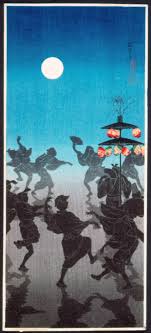
Dance for Obon Festival by Takahashi Hiroaki (Japan, 1871-1945). From Public Domain
Suzanne Kamatawas born and raised in Grand Haven, Michigan. She now lives in Japan with her husband and two children. Her short stories, essays, articles and book reviews have appeared in over 100 publications. Her work has been nominated for the Pushcart Prize five times, and received a Special Mention in 2006. She is also a two-time winner of the All Nippon Airways/Wingspan Fiction Contest, winner of the Paris Book Festival, and winner of a SCBWI Magazine Merit Award.
PLEASE NOTE: ARTICLES CAN ONLY BE REPRODUCED IN OTHER SITES WITH DUE ACKNOWLEDGEMENT TO BORDERLESS JOURNAL
This is where we draw the line between the etch and sketch of happiness
all up and down the mountain scrawled on cave walls
OF TORN LIMBS AND TARGET PRACTICE
Getting closer then casting off
we’ve been in the pull of waves and woes for ages
but inhalation precedes an exhale
and entropy follows creation before the next spin of spiral
cushion the blow expansion in shade of cover
expulsion of the venom by my own syringe inserted
softening the thorny scales a salve upon peeling flesh
help soothe this boil alkalize the primal pulses
the torch is scorching fingertips, held like a cockroach at the last burning
only wizened sorcerers enter the portal without hesitation
one misstep of paranoia and you’ll become a hobbled sheep in the herd primed for slaughter
OF PAWNS AND BOILED PEANUTS
mounting pressure cauldron bubbles
the portal was opened even before you begged at the altar
plasma intuitively folds into necessary creases
we’re in the humble process known as smoothing over
often cited following acts of love and war
condolences to all the egos scattered in the wake
Scott Thomas Outlar originally hails from Lilburn, Georgia. He now resides and writes in Frederick, Maryland. More about Outlar’s work can be found at 17Numa.com.
.
PLEASE NOTE: ARTICLES CAN ONLY BE REPRODUCED IN OTHER SITES WITH DUE ACKNOWLEDGEMENT TO BORDERLESS JOURNAL
It is always refreshing when trust can be established online without any face-to-face interaction. Social media is filled with scammers, making it challenging to trust individuals based solely on their stories. This becomes even more complicated when the relationship starts at a time when the internet was not easily accessible. In these situations, you have to rely only on the person’s words. Sincerity is difficult to gauge, even with the use of emotive and abstract language in any physical correspondence.
Many years ago, I found myself in a situation where I met a woman through physical correspondence, as encouraged by a friend. He advised me to introduce myself to the lady and share about my work teaching at the seminary, providing English tutorials for Koreans, and assisting a church in a suburban foothill. As it turned out, she was part of a Christian NGO based in the US, along with a few other senior citizens. The organisation’s mission was to provide funds for seminary scholarships, livelihood support, books, conference fees, further studies, and toys.
Our relationship was purely based on trust as we did not know each other personally and yet for a number of years, she supported me financially as she learned of my journey. She preferred to write her letters on an electric typewriter and on blue-coloured stationery with a lovingly short note of affirmation. She took my every word at face-value although at times, I sent her photos of myself and church activities to support my stories that she sometimes quoted in her monthly newsletter.
When a missionary friend detoured to the US prior to her Colombian street kids’ programme, she visited the organisation’s garage cum office and brought my gift of a passenger jeep replica made from the ashes of a previous volcanic eruption, which she greatly appreciated. The organisation’s resources were donated to a graduate-level seminary in the US, that included her book, Pilgrims and Strangers Seek The City Not Made with Hands, upon her demise and all her colleagues.
Words only have meaning when they are used in a relational context; otherwise, they are simply meaningless.
Years before the internet became readily accessible, I used to write letters to two friends who worked as domestic helpers in Singapore. Despite having college degrees, they were unable to find relevant jobs in our country due to its political turmoil. I myself was jobless for two years, and like many new college graduates, I succumbed to depression and questioned my faith and self-worth. The struggles were compounded by stress from family and friends. I found a way to vent my issues to these Overseas Filipino Workers (OFWs), who also had their fair share of misery and homesickness. My letters were selfish. Over time, the correspondence gradually faded, along with the photos that sometimes accompanied their stories. One migrated to Canada and the other one is retired and lives with her sibling who has a physical disability in a suburban locality. All my letters from my benefactors and friends were washed away in an unexpected catastrophic flood that swept my residence. Up to this day, the loss is still palpable.
I lost two aunts during the pandemic, who were the last of my father’s siblings. The younger one passed away in her late 70s, while the older one died in her early 90s. Both were based in the US and worked as medical professionals. Every Christmas, I make sure to send them individual greeting cards through the mail, along with a few personal thoughts. They lived separately in the same village in the US, and I believe they appreciated these physical cards for their nostalgic value. They didn’t usually respond to emails or cards, as technology can be bothersome for the elderly.
My older aunt once told my eldest brother, who also lives in the US, that my emails were too long and tended to put her to sleep. I also send them thank you cards for the occasional holiday cash they send. My relationship with my aunts is mainly through written correspondence, with only a few rare occasions of meeting in Manila. Despite this, they never fail to remember me and my younger sibling, sending us thoughtful notes. My dad passed away at 60, and my aunts fondly told me that I look like my father. Perhaps this resemblance was one of the catalysts that kept our correspondence going, even in its irregularity. Stories, however trivial, matter to them.
Letter writing can be tedious, especially when done by hand. However, it is also tiring to write letters on computers and share both trivial and significant stories to send by post, as we are not certain if our experiences matter to our recipients. Nevertheless, physical personal correspondence brings about a certain degree of warmth that is often lacking online. It takes more effort to scribble than to type. It is also more spontaneous compared to digital writing, where you can effortlessly edit and revise through AI tools. Sometimes, the physical paper used says a lot about the sender and receiver. I am particularly fond of lined stationery with religious quotes and maxims on recycled paper. The envelope is of equal value as well because it must similarly match its properties.
At times, I also use plain paper to write letters. I remember writing letters of regards and sharing personal news with a college classmate and friend who was stationed on one of the most remote islands in the country for a kids’ mission. She replied to me, but her letters took a long time to reach me through the mail. Both her letters and mine were written in longhand. We were able to reconnect through letters because there were no mobile phones or internet at that time. The distance and physical absence made our words more meaningful and profound.
They say that the post office is in its dying stage, but time and again, it has proven itself to still be relevant in the internet age. Not everyone is connected, especially in areas where there is no access to electricity.
In one of the upland villages in my municipality, which is just about a two-hour drive from the city, they have not had electricity for years. This is because streetlights have to be paid for by the consumer. If the area has rugged terrain, it will require a good number of posts to be erected to bring electricity. This is a common scenario in agricultural and upland villages. While solar power is an option, procuring panels can be quite expensive as the government has not taken any measures yet to bring the cost down. To connect, villagers go to stores that offer WiFi for a minimal fee. Mobile signals are not available in many remote locations, so the gap is still widespread despite technological tools. We must accept the fact that technology is limited. Physical correspondence is here to stay.
From Public Domain
Manuel A. Alindogan, Jr., also known as Jun A. Alindogan, is the Academic Director of the Expanded Alternative Learning Program of Empowered East, a Rizal-province based NGO in the Philippines and is also the founder of Speechsmart Online that specialises in English test preparation courses. He is a freelance writer and a member of the Freelance Writers’ Guild of the Philippines (FWGP).
PLEASE NOTE: ARTICLES CAN ONLY BE REPRODUCED IN OTHER SITES WITH DUE ACKNOWLEDGEMENT TO BORDERLESS JOURNAL.
Our bags stay forever packed
Notwithstanding any setbacks
We are struck with wanderlust.
Travelling is just part of who we are.
Sure, the world may be in chaos
But our knees and minds never dither
When travel is on the cards.

“Too old!” they say.
“Stay home. Be sensible!”
Honestly, such needless wisdom
Falls on deaf ears.
For us, who never tire of seeing new skies,
Stocked with coloured pills of different sizes,
We boldly step outside.

We’ve trekked through Roy's Peak Track,
With sanitiser bottles attached to our backpacks.
On the way down, our knees did protest,
Friendly hands did the rest.
Travel, they say, brings out the best.
Indeed, we have been through such tests.

“There's climate change!” experts declare,
But we still carry the attitude of Columbus
Questing for the unexplored, undiscovered,
Where the adventurous and the young are bound.
One little hiccup in Baku this May?
Did we let that stop us? Not a chance.
We’re off again soon to the seas
This time, to savour Goan Feni.

So let the sceptics scoff and frown,
We are the new age septuagenarians
Those who refuse to slow down.
With maps in hand, excitement in our hearts,
Somewhat dented, broken in body parts,
We continue to travel against all odds.
Snigdha Agrawal (nee Banerjee) has published five books, including Fragments of Time, her deeply personal memoir. A lifelong lover of storytelling, she blends fact and fiction with a keen eye for detail and emotion. Her works span diverse genres, reflecting her rich experiences and insightful observations.
.
PLEASE NOTE: ARTICLES CAN ONLY BE REPRODUCED IN OTHER SITES WITH DUE ACKNOWLEDGEMENT TO BORDERLESS JOURNAL
Snehaprava Das, a former Associate Professor of English, is a noted poet and translator. She has translated many Odia works into English and published five poetry collections. Her translations have received several awards, including the Prabashi Bhasha Sahitya Sammana, the Jibanananda Das Award, and the Fakir Mohan Anubad Sammana.
Keep It Secret is a collection of ten short stories. The relatively lengthy narratives are equally grounded in reality and fantasy. In the author’s view, these narratives strive to traverse the delicate, ephemeral boundary that exists between reality and illusion. They delve into the inner jungle to uncover the secrets that are meticulously hidden behind a facade of pretense and the artifice of a pleasing and socially acceptable exterior.
Engaging with her stories provides a rewarding experience. These tales encompass a diverse array of themes, including life and death, the supernatural, the real and the surreal, peculiar coincidences, and the intricacies of human relationships.
In the Preface, Das provides a rationale for her stories, which contributes to their uniqueness. Citing Regina Pally, a distinguished psychiatrist and therapist based in Los Angeles, Das states, “Most of what we perceive occurs non-consciously and effortlessly, and according to her, this process can be described as a ‘survival instinct’.” This may lead the guilt-ridden mind to interpret and shape a future aimed at compensating for past wrongs. This ‘survival instinct,’ which entices individuals to assume and perceive various things, can even distort the true impact of actual events, creating multiple and bizarre interpretations of a single incident that may approach the surreal.
She bases her stories on the presumption made by Freudian scholars: “From error to error, one discovers the entire truth, observes Freud. Some of the stories aim at exposing the errors man is forced to commit, lured by compulsive emotions, which leave life irrecoverably difficult, and could at times prove fatal in that self-destructive process of discovering the truth. Some stories attempt to study the complex and shifting patterns of human relationships that hang precariously balanced between trust and distrust, and to observe the reaction of the characters while confronting the secret of that relationship, which was kept closely guarded till the end. The experience of that confrontation could be subversive in that specific moment of anagnorisis.”[1]
Some stories may not always offer a seemingly logical, definable, or happy ending.
Das’s short stories possess a cerebral quality, posing a challenge for discerning readers to fully appreciate her offerings.
.
[1] ‘The other Freud: Rethinking the philosophical roots of psychoanalysis’ by Parker & Donald Lewis
Bhaskar Parichha is a journalist and author of Cyclones in Odisha: Landfall, Wreckage and Resilience, Unbiased, No Strings Attached: Writings on Odisha and Biju Patnaik – A Political Biography. He lives in Bhubaneswar and writes bilingually. Besides writing for newspapers, he also reviews books on various media platforms.
PLEASE NOTE: ARTICLES CAN ONLY BE REPRODUCED IN OTHER SITES WITH DUE ACKNOWLEDGEMENT TO BORDERLESS JOURNAL
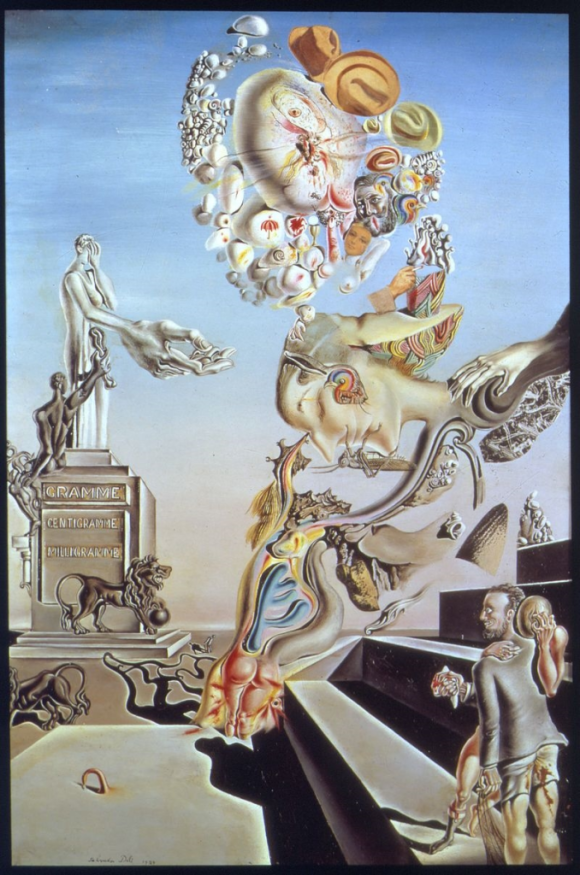
The Lugubrious Game by Salvador Dalí (1904-1989). From Public Domain
RIPPED NEUROLOGY

Humanity has succumbed
to a state of severe brain damage
The scariest part is the people revel
in the bramble of their thorny shackles
and shambles—in celebration
of a negative freedom tolling
in a resonance of an oncoming Oligarchy.


ODE TO NON-EXISTENT SPRINKLER ROOM

Tonight, the movie theatre’s essence has overdosed on the poisonous Simulacra it spits like the sprinkler room that is not located here—it's located somewhere else. There is also a mentally ill duck-billed platypus that is not currently here. There's a lot of things not currently here—but mainly the what's not here is the sprinkler room, tolerance, mercy, or empathy.


EMPTY SPACES

Nothing is more
eternally togetherly alone
than a parking lot at midnight.


VOIDED MORNING

You open
your door
to hear the doldrumesque dirges
of the Gasmask Choir.

Time to put toxins upon toxins.
Time to be outsmarted
by soulless artificial idiocy.


PEARL

Hold onto the silk
and satin you emanate.
Stay up on your rise.
Don’t let the omnipresent
negativity pierce your soft
skin with its cancerous
vibrations. Look for, and find,
the bright-bright white void
of evil. You are the virgin in the cesspool
and always will be. Stay
robed in the gossamer gown you created
and keep an open ear
for the Universe has something
it needs to tell you.
Heath Brougher is the Editor-in-Chief of Concrete Mist Press. He has published twelve books and after spending the last five years editing the work of others is ready to get back into the creative driver seat.
.
PLEASE NOTE: ARTICLES CAN ONLY BE REPRODUCED IN OTHER SITES WITH DUE ACKNOWLEDGEMENT TO BORDERLESS JOURNAL





 Borderless